Thursday, June 15, 2023

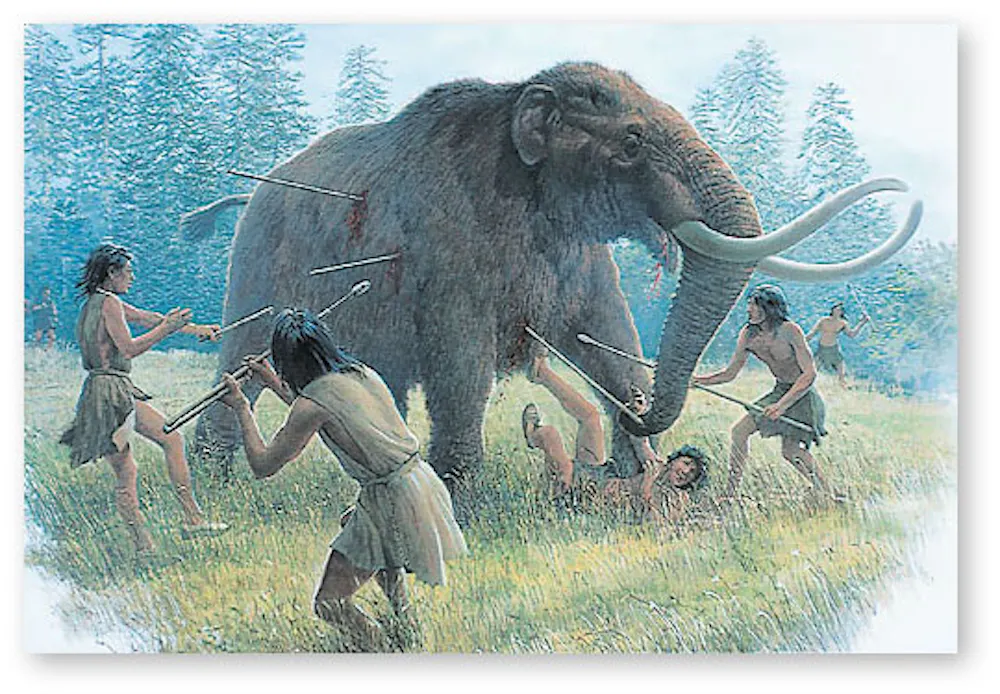
Forensic evidence suggests Paleo-Americans hunted mastodons, mammoths and other megafauna in eastern North America 13,000 years ago

David McBrayer
THE CONVERSATION
June 15, 2023
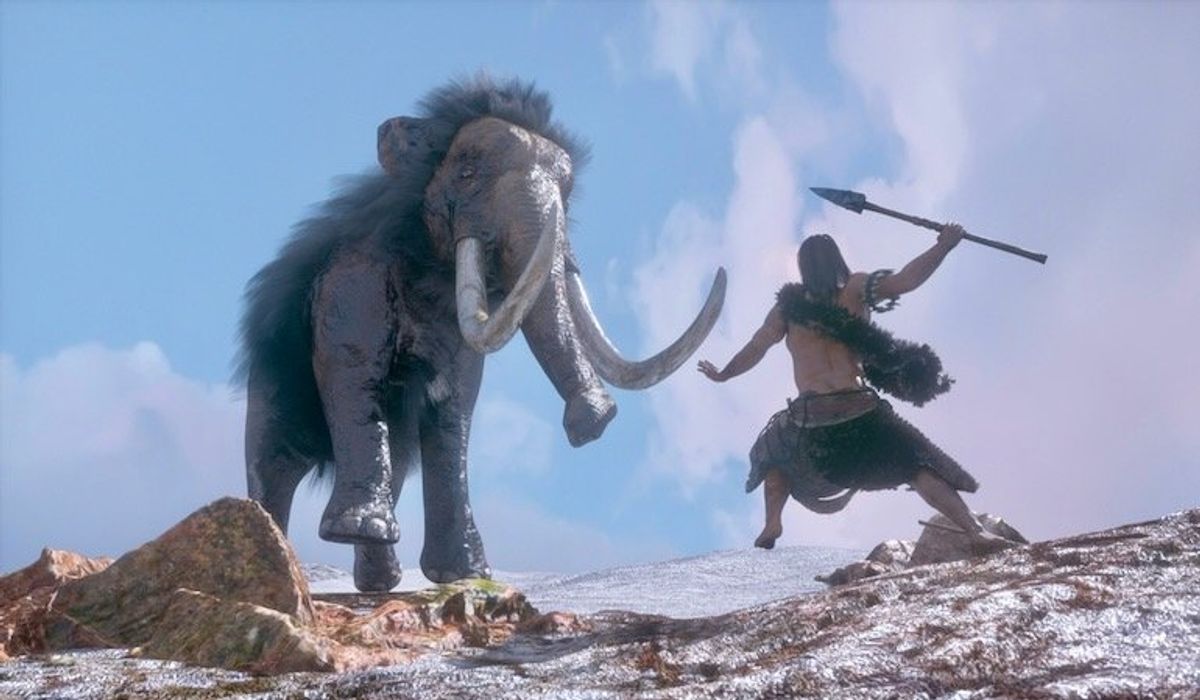
Mammoth and Hunter (Shutterstock)

The earliest people who lived in North America shared the landscape with huge animals. On any day these hunter-gatherers might encounter a giant, snarling saber-toothed cat ready to pounce, or a group of elephantlike mammoths stripping tree branches. Maybe a herd of giant bison would stampede past.

Obviously, you can’t see any of these ice age megafauna now. They’ve all been extinct for about 12,800 years. Mammoths, mastodons, huge bison, horses, camels, very large ground sloths and giant short-faced bears all died out as the huge continental ice sheets disappeared at the end of the ice age. What happened to them?

Scientists have pointed to various potential causes for the extinctions. Some suggest environmental changes happened faster than the animals could adapt to them. Others posit a catastrophic impact of a fragmented comet. Maybe it was overhunting on the part of humans, or some combination of all these factors.

One of my major interests as an archaeologist has been to understand how the earliest Paleo-Americans lived and interacted with megafauna species. Just how implicated should humans be in the extinction of these ice age animals? In a new study, my colleagues and I used a forensic technique more commonly used to identify blood on objects at crime scenes to investigate this question.
The video player is currently playing an ad.
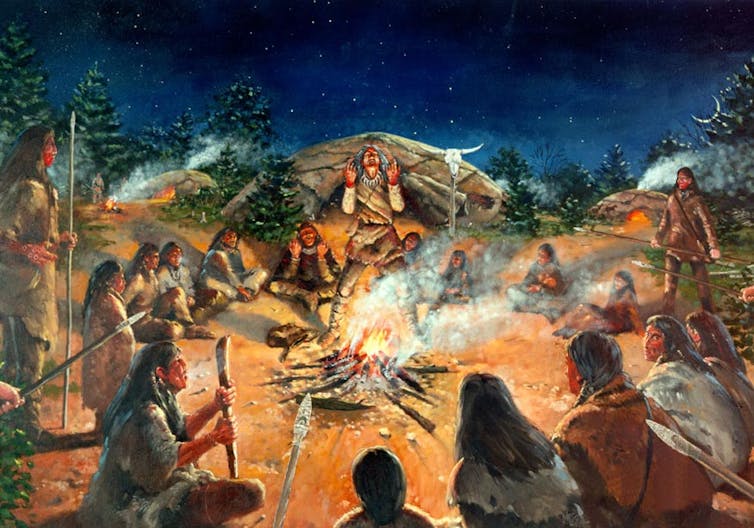

Clovis hunter-gatherers lived in small, mobile groups, likely following animal migrations over long distances. 
Martin Pate/Southeast Archeological Center, National Park Service

Testing stone tools like murder weapons

Archaeologists have uncovered a sparse scattering of stone tools left at the campsites of Paleo-American Clovis hunter-gatherers who lived around the time of the megafauna extinctions.


Early Paleo-American Clovis points (left) and Middle Paleo-American redstone points (right) have a distinct fluted shape, highlighted in yellow, likely designed to facilitate hafting onto a spear or knife handle for use in hunting and butchery. Darby Erd

These include iconic Clovis spearpoints with their distinctive flutes – concave areas left behind by removed stone flakes that extend from the base to the middle of the point. People most likely made the points this way so they could easily affix them to a spear shaft.

Based on sites excavated in the western United States, archaeologists know Paleo-American Clovis hunter-gatherers who lived around the time of the extinctions at least occasionally killed or scavenged ice age megafauna such as mammoths. There they’ve found preserved bones of megafauna together with the stone tools used for killing and butchering these animals. These sites are crucial for understanding the possible role that early Paleo-Americans played in the extinction event.

Unfortunately, many areas in the Southeastern United States lack sites with preserved bone and associated stone tools that might indicate whether megafauna were hunted there by Clovis or other Paleo-American cultures. Without evidence of preserved bones of megafauna, archaeologists have to find other ways to examine this question.

Forensic scientists have used an immunological blood residue analysis technique called immunoelectrophoresis for over 50 years to identify blood residue sticking to objects found at crime scenes. In recent years, researchers have applied this method to identify animal blood proteins preserved within ancient stone tools. They compare aspects of the ancient blood with blood antigens derived from modern relatives of extinct animals.

Residue analysis does not rely on the presence of nuclear DNA, but rather on preserved, identifiable proteins that sometimes survive within the microscopic fractures and flaws of stone tools created during their manufacture and use. Typically, only a small percentage of artifacts produce positive blood residue results, indicating a match between the ancient residue and antiserum molecules from modern animals.

A previous blood residue study of a small number of Paleo-American artifacts in South Carolina and Georgia failed to provide evidence that these people had hunted or scavenged extinct megafauna. The researchers found evidence of bison and other animals such as deer, bear and rabbit, but no evidence of Proboscidean (mammoth or mastodon) or of an extinct species of North American horse.

Identifying ancient prey of human hunters

My colleagues and I realized we needed a much larger sample of Paleo-American stone tools for testing. Since Clovis points and other Paleo-American artifacts are rare, I relied heavily on local museums, private collectors, collections housed at state universities and even military installations to amass a sample of 120 Paleo-American stone tools from all over North Carolina and South Carolina.

Because these artifacts are irreplaceable, I personally carried all 120 Clovis spearpoints and tools inside a protective case on a flight from South Carolina to the blood residue lab in Portland, Oregon. I coordinated in advance with the Transportation Security Administration so my collection of 13,000-year-old weaponry would make it through the screening process.

The blood residue analysis provided unambiguous proof that the tools had had contact with ancient animal blood proteins. The results included the first direct evidence on ancient stone tools of the blood of extinct mammoth or mastodon (Proboscidean) and the extinct North American horse (Equidae) on Paleo-American artifacts in eastern North America. This evidence is significant because it proves that these animals were present in the Carolinas, and they were hunted or scavenged by early Paleo-Americans.


It likely would have taken a group of hunters to take down a mastodon. 
Ed Jackson, CC BY-NC


In addition to Proboscidean and horse, bison (Bovidae) blood residues were most common, adding to earlier blood residue research suggesting a focus on bison hunting by Clovis and other Paleo-American cultures. Bison in North America did not go extinct but instead became smaller, most likely as a result of climate change as the last ice age ended and the climate warmed.

So, what do these results suggest for the extinction debate? While this study does not prove humans were responsible for the extinctions, it does show that early Paleo-Americans across the continent likely hunted or scavenged these animals, at least occasionally. The results also indicate that Proboscideans and horses were around when Clovis people were here – only a few hundred years before their eventual extinction in North America.

Another interesting finding is that while Proboscidean blood residues are found on Clovis artifacts, blood residues for horses (Equidae) are found on both Clovis and Paleo-American points that are slightly more recent younger than Clovis. This may suggest the extinction of Proboscidean was complete in the Carolinas by the end of the Clovis period, and the extinction of ice age horse species took longer.

Testing an even larger sample of Paleo-American stone tools from different regions of North America could help pin down the timing and geographic variability in the extinction of megafauna species and provide more clues about why these animals disappeared when they did.

Christopher R. Moore, Research Professor and Director of the Southeastern Paleoamerican Survey (SEPAS) at the South Carolina Institute for Archaeology and Anthropology, University of South Carolina

This article is republished from The Conversation under a Creative Commons license. Read the original article.
Climate change is making trees bigger, but also weaker

The Conversation
June 15, 2023

Forest Trees (Shutterstock)

As global temperatures rise, trees in colder areas are benefiting from an extended growing season. A longer growing season results in thicker growth rings and, as a result, higher overall wood production.


This article is part of La Conversation Canada’s series The boreal forest: A thousand secrets, a thousand dangers

La Conversation Canada invites you to take a virtual walk in the heart of the boreal forest. In this series, our experts focus on management and sustainable development issues, natural disturbances, the ecology of terrestrial wildlife and aquatic ecosystems, northern agriculture and the cultural and economic importance of the boreal forest for Indigenous peoples. We hope you have a pleasant — and informative — walk through the forest!


However, studies suggest that longer growing seasons contribute to weakening the wood, making trees structurally weaker. The poor quality of wood means that trunks break more easily.

We are forest ecologists who specialize in the anatomy and growth of wood. Let’s examine the most recent scientific studies available to try to map the future of our forests and analyze how the changing growing season is determining the characteristics of the wood produced.
Wood: What is it?

Wood is the product of the progressive accumulation of cells — xylem cells — in trees. The purpose of this accumulation is to renew the sap transport system and to provide mechanical support for the stem (trunk), branches and leaves.

A tree ring is the product of a growing season which, in temperate and boreal environments, runs from spring to autumn. Each year a new growth ring is formed. The thickness of a ring is dependent on a combination of factors inherent to the tree (its species and genetic factors) and environmental factors (such as soil type, sun exposure, climate and competition between neighboring trees).

In some species, especially in conifers, it can be quite easy to distinguish the rings from each other. This is due to the fact that during the growing season the tree produces two types of wood, characterized by cells with different forms and functions.

In spring, the tree produces many large, light-colored cells with a thin cell wall. This part of the annual ring is called “earlywood.” In late summer, growth slows down. The cells become smaller, but their walls become thicker. This “latewood” is the darker portion of the annual ring.


The thickness of a tree ring depends on a combination of factors inherent to the tree (species, genetics) and environmental factors (soil type, sun exposure, climate and competition between neighboring trees).
(Shutterstock)

The characteristics of the cells of wood are particularly important and are of great interest in ecological and economic terms. First of all, wood cell walls stock most of the carbon assimilated from the atmosphere by trees. Thus, a thicker cell wall means the tree is absorbing a greater amount of carbon. Secondly, the ratio of the number of earlywood cells to latewood cells determines the density of the wood, and, therefore, its potential use and material value.
Trees are growing faster

Over the past century, in the temperate regions of North America and Europe, trees have shown a faster growth rate, up to 77 per cent higher than in the previous century. This increase is related to the production of thicker growth rings.


At first sight, faster growth could be interpreted as higher biomass production, which would lead to a higher carbon storage capacity and, therefore, a greater contribution of our forests to the fight against climate change. In other words, a higher growth rate could mean that more wood would be available for our different needs.

But as William Shakespeare wrote: “Oft expectation fails, and most oft there where most it promises.”
Trees die younger

A study by the Technical University of Munich in Germany analyzed the growth rate of trees and the characteristics of their wood over the last century. They found that as the growth rate increased, the density of the wood dropped by eight to 12 per cent.

Furthermore, as wood density decreased, their carbon content also decreased by about 50 per cent. This suggested that the trees extracted less carbon dioxide (CO2) from the atmosphere.

In addition to a reduced capacity to absorb and store atmospheric carbon, reduced wood density can weaken the structural strength of the stems. Wood fulfills the important function of supporting trees. Reducing its density is therefore accompanied by a lower resistance to mechanical stresses that might come from wind or the effect of gravity on steep slopes.

To complicate matters further, another recent study has shown an association between growth and lifespan in trees: fast-growing trees have a shorter life expectancy.
Too much is not enough

In our latest study, we quantified the relationships between the length of growing season, productivity and wood cell characteristics in balsam fir.

The study confirmed that trees with a longer growing season produce more wood cells and a thicker growth ring. However, higher growth also corresponds to a change in the ratio between the amount of earlywood and latewood. For every day that the growing season length increased, the trees produced one more cell of earlywood.

The increase in the ratio between earlywood and latewood is reflected in the decrease in wood density. This shows that an increase in volume growth does not necessarily correspond to a higher biomass production.

What does the future hold for our forests?

The global average temperature has exceeded the pre-industrial average by about 1.15°C (1850-1900), and is expected to rise further in the coming years. Warmer temperatures could lengthen the growing season of trees and consequently increase their growth rate.

While, on the one hand, this may lead to an expansion of forests globally, the rate of carbon uptake from forests is likely to decrease.

Although our forests will make a substantial contribution to the fight against climate change, the results of these studies are further evidence that environmental problems cannot be solved without taking direct action on the causes that trigger global change.

In the context of climate change, reducing the anthropogenic emissions that cause global warming is not something we can afford to negotiate or postpone.

Roberto Silvestro, PhD Candidate, Biology, Université du Québec à Chicoutimi (UQAC) and Sergio Rossi, Professor, Département des Sciences Fondamentales, Université du Québec à Chicoutimi (UQAC)

This article is republished from The Conversation under a Creative Commons license. Read the original article.
Publix heiress gave millions more than previously known to organize Jan. 6 Trump rallies: report

Travis Gettys
RAW STORY
June 15, 2023, 

MSNBC

The heir to the Publix Super Markets fortune gave millions more than previously known to fund the "Stop the Steal" rally that preceded the Jan. 6 insurrection, according to a report.

Julia “Julie” Jenkins Fancelli, whose father founded the grocery store chain, gave at least $5 million of her roughly $9 billion fortune to "dark money" groups that challenged Donald Trump's election loss in 2020 and organized the rally that led up to the deadly U.S. Capitol riot, reported Open Secrets.

Fancelli is the sole funder and president of the tax-exempt George Jenkins Foundation, which in 2020 gave $1.3 million to rally sponsor Moms for America, and she had not previously reported that contribution or disclosed to the Jan. 6 select committee to which she gave testimony.

That and several other contributions are above and beyond the $3 million the House select committee estimated in its final report that Fancelli had given to groups involved in the rally.
The video player is currently playing an ad. You can skip the ad in 5 sec with a mouse or keyboard

Fancelli's money didn't necessarily go toward the rally itself, but also funded legal challenges to the 2020 election and multiple conservative nonprofit organizations, including $100,000 to Judicial Watch, and she also gave $100,000 to the law firm of Sidney Powell, the former federal prosecutor accused of attempting to overturn the election, Open Secrets reported.

Trump's political operation reported at least $2 million in donations from Fancelli since 2020, and her family members contributed the maximum amount to the former president's campaign during that election cycle.

She was a "guardian angel" donor that provided more than 90 percent of the funding in 2020 for a newly created super PAC called the Voter Accountability Project, which spent more than $240,000 on failed GOP congressional candidate Eric Esshaki in Michigan,

Fancelli gave at least $1 million to the group Turning Point Action "in relation to Jan. 6," according to the House select committee, which made up a substantial portion of the $11.2 million the conservative organization raised in the six months before and after the rally, according to the report.

She was also in frequent and direct contact with top Trump fundraiser Caroline Wren, who allegedly "parked funds" for the "Stop the Steal" rally and was listed as a "VIP advisor" on the permit for the event granted by the National Parks Service.

Fancelli paid $50,000 to retain Wren's services, according to the watchdog, and various entities associated with the heiress steered money toward groups involved in organizing the rally.
How today's GOP has embraced the 5 elements of fascism
Robert Reich
June 15, 2023, 

L-R) Rep. Lauren Boebert (R-CO), Rep. Matt Gaetz (R-FL) and Rep. Marjorie Taylor Greene (R-GA) attend a House Judiciary Committee hearing with testimony from U.S. Attorney General Merrick Garland at the U.S. Capitol on October 21, 2021 in Washington, DC. 
(Photo by Michael Reynolds-Pool/Getty Images)

The Washington Post calls Trump’s vision for a second term “authoritarian.” That vision includes mandatory stop-and-frisk. Deploying the military to fight street crime, break up gangs and deport immigrants. Purging the federal workforce and charging leakers.

“In 2016, I declared I am your voice,” Trump said in a speech at the Conservative Political Action Conference and repeated at his first 2024 campaign rally in Waco, Texas. “Today, I add: I am your warrior. I am your justice. And for those who have been wronged and betrayed, I am your retribution.”


How do we describe what Trump wants for America? “Authoritarianism” isn’t adequate. It is “fascism.” Fascism stands for a coherent set of ideas different from — and more dangerous than — authoritarianism. To fight those ideas, it’s necessary to be aware of what they are and how they fit together.

Borrowing from cultural theorist Umberto Eco, historians Emilio Gentile and Ian Kershaw, political scientist Roger Griffin, and former U.S. Secretary of State Madeleine Albright, I offer five elements that distinguish fascism from authoritarianism.

1. The rejection of democracy, the rule of law, and equal rights under the law in favor of a strongman who interprets the popular will.

“The election was stolen.” (Trump, 2020).

“I am your justice. … I am your retribution.” (2023).

Authoritarians believe society needs strong leaders to maintain stability. They vest in a dictator the power to maintain social order through the use of force (armies, police, militia) and bureaucracy.

By contrast, fascists view strong leaders as the means of discovering what society needs. They regard the leader as the embodiment of society, the voice of the people.


2. The galvanizing of popular rage against cultural elites.

“Your enemies” are “media elites,” … “the elites who led us from one financial and foreign policy disaster to another.” (Trump, 2015, 2016).

Authoritarians do not stir people up against establishment elites. They use or co-opt those elites in order to gain and maintain power.

By contrast, fascists galvanize public rage at presumed (or imaginary) cultural elites and use mass rage to gain and maintain power. They stir up grievances against those elites for supposedly displacing average people and seek revenge. In so doing, they create mass parties. They often encourage violence.


3. Nationalism based on a dominant “superior” race and historic bloodlines.

“Tremendous infectious disease is pouring across the border … The United States has become a dumping ground for Mexico and, in fact, for many other parts of the world.” (Trump, 2015)

“I think any Jewish people that vote for a Democrat, I think it shows either a total lack of knowledge or great disloyalty.” (2019)

“Getting critical race theory out of our schools is not just a matter of values, it’s also a matter of national survival … If we allow the Marxists and Communists and Socialists to teach our children to hate America, there will be no one left to defend our flag or to protect our great country or its freedom.” (Trump, 2022)

Authoritarians see nationalism as a means of asserting the power of the state. They glorify the state. They want it to dominate other nations. They seek to protect or expand its geographic boundaries. They worry about foreign enemies encroaching on its territory.

By contrast, fascists see a nation as embodying what they consider a “superior” group — based on race, religion, and historic bloodlines. Nationalism is a means of asserting that superiority. They worry about disloyalty and sabotage from groups within the nation that don’t share the same race or bloodlines. These “others” are scapegoated, excluded or expelled, sometimes even killed.

Fascists believe schools and universities must teach values that extol the dominant race, religion, and bloodline. Schools should not teach inconvenient truths (such as America’s history of genocide and racism).

4. Extolling brute strength and heroic warriors.

“You’ll never take back our country with weakness, you have to show strength and you have to be strong. (January 6, 2021).


“I am your warrior.” (2023).

The goal of authoritarianism is to gain and maintain state power. For authoritarians, “strength” comes in the form of large armies and munitions.

By contrast, the ostensible goal of fascism is to strengthen society. Fascism’s method of accomplishing this is to reward those who win economically and physically and to denigrate or exterminate those who lose. Fascism depends on organized bullying — a form of social Darwinism.


For the fascist, war and violence are means of strengthening society by culling the weak and extolling heroic warriors.


5. Disdain of women and fear of non-standard forms of gender identity and sexual orientation.


“When you’re a star, they let you do it. You can do anything. Grab ‘em by the pussy. You can do anything.” (Trump, 2005)

“You have to treat ‘em like shit.” (Trump, 1992)

I will “promote positive education about the nuclear family, the roles of mothers and fathers and celebrating, rather than erasing, the things that make men and women different.” (Trump, 2023)

Authoritarianism imposes hierarchies; authoritarianism seeks order.

By contrast, fascism is organized around the particular hierarchy of male dominance. The fascist heroic warrior is male. Women are relegated to subservient roles.

In fascism, anything that challenges the traditional heroic male roles of protector, provider, and controller of the family is considered a threat to the social order. Fascism seeks to eliminate homosexuals, transgender, and queer people because they are thought to challenge or weaken the heroic male warrior.


***

These five elements of fascism reinforce each other.

Rejection of democracy in favor of a strongman depends on galvanizing popular rage.

Popular rage draws on a nationalism based on a supposed superior race or ethnicity.

That superior race or ethnicity is justified by a social Darwinist idea of strength and violence, as exemplified by heroic warriors.

Strength, violence, and the heroic warrior are centered on male power.

These five elements also find exact expression in Donald Trump and the White Christian National movement he is encouraging. It is also the direction most of the Republican Party is now heading.

These are not the elements of authoritarianism. They are the essential elements of fascism.

America’s mainstream media is by now comfortable talking and writing about Trump’s authoritarianism. In describing what he is seeking to impose on America, the media should be using the term “fascism.”

'Little fires everywhere': Extremism expert warns of 'deep civil unrest' in US

Sky Palma
RAW STORY
June 15, 2023


Washington, DC - January 6, 2021: Pro-Trump protester with Christian Cross seen during rally around at Capitol building (Photo: Lev Radin/Shutterstock)

In the wake of Donald Trump's indictment over his handling of classified information, some worry that the anger and resentment that led to the Jan. 6 Capitol riot has been kicked back into high gear. According to extremism expert, author and podcast host Brad Onishi, the religious underpinnings that inspired the violence on Jan. 6 could spark violence once again.

Speaking to Rolling Stone, Onishi said that while it's good that no violence erupted outside the Miami courthouse where Trump was booked this week, "there are little fires everywhere that are pointing us toward deep civil unrest and deep mistrust in our public square."

Onishi says that "Christian nationalism is pervasive in right-wing American politics at the moment," and it emanates from politicians, pastors, and Fox News hosts.

Christian nationalism seeks a nostalgia for a time when America was the “city on a hill," Onishi says.

"The narrative now is that that city on the hill has been overrun by interlopers, and those for whom the country was never intended. So maybe we need to 'build a wall' around the city, because it needs protection — too many folks have gotten in and ruined it and eroded the order that we need in the country."

According to Onishi, when Christian nationalists talk about "freedom," what they really mean is "living out your role in God’s hierarchy."

"They may see the trans person, for example, as not living according to their God-given gender," Onishi said. "So just by being on the subway, or being in their kids’ school, they’re making them less free, because the order is all out of whack. And therefore they need to do something about it. They need to go tear down displays at Target or put forth anti-trans legislation."

Christian nationalists believe that America is on the precipice of an Apocalypse, but they don't see it as the end of the world -- they're more focused on the end of the United States, he said.

"It is a sense of a cosmic war between good and evil. Many Christians believe that they are characters in an epic, and that the ending hasn’t been written yet in terms of what happens to the United States," Onishi says.

Read the full interview over at Rolling Stone.
BEHIND PAYWALL
US Supreme Court upholds Native American adoption rights

Agence France-Presse
June 15, 2023

US Supreme Court (supreme.justia.com)

The US Supreme Court on Thursday upheld a law that gives Native American families priority in adoptions and foster care placements of tribal children.

In a 7-2 vote, the nation's highest court rejected challenges to the Indian Child Welfare Act (ICWA) brought by a non-Native American couple seeking to adopt an Indian child and the state of Texas.

They had argued that the ICWA, passed by Congress in 1978, was unconstitutional and discriminates on the basis of race.

"The issues are complicated," said Justice Amy Coney Barrett, who authored the majority opini

"But the bottom line is that we reject all of petitioners' challenges to the statute, some on the merits and others for lack of standing," said Barrett, who is herself the mother of two adopted children of Haitian origin.

Like in Canada, Native American children in the United States were for decades removed from their biological parents and placed in boarding schools or with non-Indigenous families as part of a policy of forced assimilation.

Congress sought to bring an end to the practice with the passage of the ICWA, which set strict standards for removing Native American children from their parents and required tribal families to receive priority for foster care placements and adoptions.

Republican-led Texas, as well as families restricted by the ICWA from adopting Native American children, filed a legal challenge under the US Constitution's 14th Amendment, which limits the differentiation between citizens on the basis of race.

Several Native American tribes, backed by the administration of President Joe Biden and the powerful ACLU civil rights organization, countered that the law was not based on race but on Indigenous groups' sovereign rights.

Under US law, Native American tribes have a special status with their own legal jurisdictions and court systems.

The Supreme Court decided to intervene in the case after lower courts issued divergent opinions.

Biden welcomed the court ruling.

"Our Nation's painful history looms large over today's decision," the president said in a statement. "In the not-so-distant past, Native children were stolen from the arms of the people who loved them.

"The Indian Child Welfare Act was passed to protect the future of Tribal Nations and promote the best interests of Native children, and it does just that."

© 2023 AFP

US music publishers hit Twitter with copyright suit

A music publishers' group says in a lawsuit that Twitter is a 'haven' for violating song copyrights and that the platform's internal operations for handling such complaints are in 'disarray' under owner Elon Musk

AFP
June 14, 2023,

A music publishers' group says in a lawsuit that Twitter is a 'haven' for violating song copyrights and that the platform's internal operations for handling such complaints are in 'disarray' under owner Elon Musk

San Francisco (AFP) - Major music publishers on Wednesday filed a federal lawsuit accusing Twitter of failing to stop "rampant" copyright infringement on the platform.

The National Music Publishers' Association (NMPA) and its members argued in the suit that the social media company should pay as much as $150,000 per work infringed, with the potential tab climbing into the hundreds of millions of dollars.

"Twitter stands alone as the largest social media platform that has completely refused to license the millions of songs on its service," NMPA chief executive David Israelite said in reply to an AFP inquiry.

"Twitter knows full-well that music is leaked, launched, and streamed by billions of people every day on its platform."

Twitter's treatment of copyright complaints has not improved since Elon Musk bought the platform late last year for $44 billion, the suit contended.

"On the contrary, Twitter's internal affairs regarding matters pertinent to this case are in disarray," argued the lawsuit, which was filed in the state of Tennessee.

Twitter's head of trust and safety earlier this month confirmed she had quit the company, not sharing her reason publicly.

The executive was the second head of trust and safety to quit Twitter since the eccentric billionaire Musk bought the platform and reduced content moderation.

Since taking over Twitter, Musk has repeatedly courted controversy, sacking most of its staff, readmitting banned accounts to the platform, suspending journalists and charging for previously free services.

"Twitter refuses to stop the rampant infringement of copyrighted music... because it knows that the Twitter platform is more popular and profitable if Twitter allows such infringement," the lawsuit argued.

Allowing unlicensed music to be used in Twitter posts gives the platform an advantage over competitors such as TikTok, Instagram and YouTube that pay fees to music publishers, the suit reasoned.

"Twitter fuels its business with countless infringing copies of musical compositions," the suit said.
WHO ARE THE 1%
Report: Eight Silicon Valley households have six times more wealth than bottom 500,000

2023/06/14
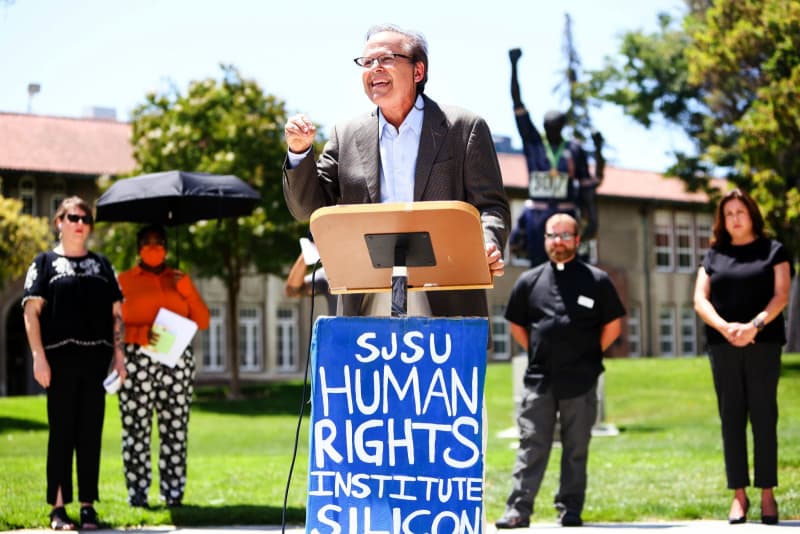
Scott Myers-Lipton speaks during a news conference discussing the 2022 Silicon Valley Pain Index at San Jose State University in San Jose, California, on June 22, 2022.
 - Randy Vazquez/Bay Area News Group/TNS

Silicon Valley is an embarrassment of riches for some and a struggle to get by for many who live there, but a report Tuesday puts the gap between rich and poor in the cradle of technology and innovation into stark relief: Just eight households in the California region hold more wealth than the 500,000 at the other end of the earnings scale.

The Fourth Annual Silicon Valley Pain Index published Tuesday by San Jose State University’s Human Rights Institute features new data that highlights the region’s persistent earnings inequalities and the astronomical concentration of wealth into the hands of a very small number of households and companies.

“After producing the Silicon Valley Pain Index for the fourth time, we have a clear understanding of the astronomical wealth gap,” said Scott Myers-Lipton, a San Jose State sociology professor and lead author. “It is time for the community and elected officials to create social solutions to address the ‘social pain’ that is highlighted in this annual report.”

Myers-Lipton launched the Pain Index in 2020 after protests over the death of George Floyd, a Black Minneapolis man, pinned to the ground by a police officer over an alleged counterfeit $20 bill, to highlight racial injustice. Myers-Lipton said he was inspired by a similar effort after Hurricane Katrina exposed racial inequalities in the official response to the disaster.

The index is a meta-analysis of more than 60 recent studies and reports on Silicon Valley, defined as Santa Clara and San Mateo counties, published in the year since the third report in June 2022. The index presents 110 statistics laid in numbers from 0 to 1.5 trillion that show how racial minorities received less of Silicon Valley’s economic, political, educational and social rewards.

“There is a power in reading it this way,” Myers-Lipton said, “as the inequality is dramatized as the numbers increase.”

The Silicon Valley Leadership Group, which represents the valley’s leading technology companies, said in response to the index that its members support efforts to ease the societal challenges spawned by their success.

“This year’s report underscores the myriad social and economic challenges facing our region, which have only deepened in the wake of the post-pandemic economic volatility,” said SVLG CEO Ahmad Thomas. “It’s why SVLG and our member companies remain committed to a new vision of leadership for Silicon Valley — one that is focused on creating a more equitable, inclusive and sustainable future for everyone. We hope that leaders across the Valley can leverage these insights to strengthen our collective commitment to addressing these profound and systemic challenges.”

New in this year’s index are data breaking down the wealth of the region’s billionaire class, whose earnings put them in the top hundredth and thousandth of a percent. Previously, data only was available for the top 1%, a group that includes many comfortable people, but not in the same stratosphere.

The top thousandth of a percent of households in Silicon Valley own $50 billion in liquid assets or cash, which is six times more than the total wealth of the bottom half of the region, or about 500,000 households.

That figure, the report said, from the Joint Venture Silicon Valley think tank’s February Silicon Valley Index, one of the studies analyzed for the Pain Index, had prompted its president and CEO Russell Hancock to state that “if Silicon Valley were a country, that kind of wealth disparity would be considered politically unstable.”

Among other Pain Index numbers:

•1: San Jose’s rank in the U.S. for homelessness among young adults ages 18-24, with 85 per 100,000 people.

•28: The percentage of Silicon Valley households that don’t earn enough to meet their basic needs without public or private assistance.

•460,000: The number of residents who received monthly grocery bags from charity, up 80% since 2019.

•$72 million: What Google, Adobe, Intel and Zoom donated to local nonprofits in 2021, about 0.02% of their total revenue.

•$280 billion: Google’s revenue last year, up from $258 billion in 2021.

•$1.5 trillion: The total wealth of Silicon Valley households, including real estate.


The index found several things have worsened in the valley: fentanyl deaths, food insecurity, eviction filings, the graduation gap between White and minority students, homeless families with children, monthly mortgage costs and median household income. Homelessness overall hasn’t risen though, he said.

Myers-Lipton said he hopes the report inspires local leaders to act, citing as an example Senate Bill 333 by state Sen. Dave Cortese, that would guarantee $1,000 to graduating homeless high school seniors.

“We don’t say what they should do,” Myers-Lipton said, “but they should do something to deal with this staggering inequality.”

© The Mercury News
Christian nationalism and biblical literalism independently predict conspiracy thinking, study finds

2023/06/11


A new study has found that both Christian nationalism and biblical literalism are independently associated with a greater tendency to believe in conspiracy theories. When people believed in both Christian nationalism and biblical literalism, their distrust of government officials increased significantly. The findings, published in the Journal for the Scientific Study of Religion, provide insight into the sociocultural factors that contribute to the spread and persistence of conspiracy beliefs in certain populations.

The researchers were motivated by the growing concern over the harmful effects of conspiracy theories, such as the spread of misinformation about the COVID-19 vaccine and the belief in the stolen election narrative, which led to the January 6 insurrection at the United States Capitol. They sought to better understand the factors that contribute to the endorsement of conspiracy theories within specific religious and ideological contexts.

Biblical literalism refers to an approach to interpreting religious texts, such as the Bible, in a strictly literal and word-for-word manner. It involves the belief that the Bible is an accurate historical and scientific account, and every passage should be understood as directly and precisely true.

Christian nationalism, on the other hand, is a political ideology that combines Christianity with a sense of national identity and seeks to establish a close relationship between religion and the state. It views the nation as fundamentally rooted in Christian values and principles, and it often advocates for policies and laws based on those beliefs.

“Like many, we were deeply affected by the sharp divisions, fueled by conspiracy theories, that arose around COVID-19 and the 2020 presidential election,” explained study author Brooklyn Evann Walker, an instructor of political science at Hutchinson Community College.

“We noted that conspiracy theories related to both COVID-19 and the Big Lie gained traction in religious communities that tended towards biblical literalism and Christian nationalism, leading us to wonder if either of these two aspects of American religion (biblical literalism and Christian nationalism) were related to a broader tendency for Americans to think in conspiratorial ways.”

To conduct the study, the researchers used data from the 2019 wave of the Chapman University Survey of American Fears (CSAF), which included measures of Christian nationalism, biblical literalism, and various demographic variables. The survey was administered online to a nationally representative sample of American adults, resulting in a final sample size of 1,219.

The survey asked respondents to indicate their level of agreement or disagreement with the idea that the government is concealing information about different events. These events included conspiracy theories related to government cover-ups of extraterrestrial life, the belief that the 9/11 attacks were not solely carried out by terrorists but involved government involvement or a cover-up, belief in a secretive group or organization that controls world events (e.g. the Illuminati), and more.

The measure of conspiracy thinking including both popularized conspiracy theories as well as one contrived event, allowing the researchers to assess respondents’ adherence to a generalized conspiracy mindset rather than just specific theories.

The study found that there is a positive association between Christian nationalism and belief in conspiracy theories. In other words, individuals who held stronger Christian nationalist beliefs (e.g. “The federal government should declare the United States a Christian nation”) were more likely to endorse conspiracy thinking. This relationship held even when considering the fictional conspiratorial event introduced in the survey, indicating a general propensity for conspiracy thinking.

Furthermore, the study suggested that biblical literalism plays a role in shaping conspiracy thinking. Those who adhered to a literal interpretation of the Bible were more likely to adopt conspiracy thinking, and biblical literalism was found to amplify the effect of Christian nationalism on conspiracy thinking. This suggests that the elevation of religious authority over scientific sources and an anti-elitist sentiment within the Christian nationalist identity contribute to the adoption of conspiracy theories.

“Christian nationalism links being Christian to being American. In the view of many Christian nationalists, this linkage is threatened by secularization and other social changes. Biblical literalism is the belief that each word in the Bible should be accepted as God’s word spoken directly to readers, not to be filtered through religious elites,” Walker told PsyPost.

“Using survey data, we find that the sense of a threatened nation inherent in Christian nationalism and the anti-elite tendencies in biblical literalism amplify conspiracy thinking, and that the two have especially strong effects when they occur together. We conclude that Christian nationalist and biblical literalist support of COVID-19 and the 2020 election conspiracy theories are not a one-off; Christian nationalists and biblical literalists are likely to buy into future conspiracy theories, too.”

Importantly, the findings held even after controlling for demographic variables such as race, gender, age, education, and political leanings. The researchers found that conservative ideology was correlated with conspiracy thinking, while attending religious services had a negative relationship, possibly due to the social capital and trust-building aspects of religious engagement.

“We were surprised at the effect sizes we observed. When occurring together, biblical literalism and Christian nationalism had a much stronger effect than well-established predictors of conspiracy thinking, like education,” Walker said. “It’s also important not to lump all religious activity together — religious service attendance was consistently associated with less conspiracy thinking.”

However, the researchers acknowledge some limitations in their study. They were not able to account for certain psychological factors related to how people perceive and interpret information, such as the need to find patterns among events. They also note that their measure of conspiracy thinking focused on specific conspiracy beliefs and may not capture the full range of conspiracy thinking.

“We measured conspiracy thinking by respondents’ agreement with eight different conspiracy theories,” Walker explained. “Social scientists have developed other measures of conspiracy thinking that don’t rely on respondents’ knowledge of specific conspiracy theories. Replicating our models with one of these more general measures would certainly strengthen the findings.”

“Also, we can’t stop with diagnosing the problem — we need to think deeply about how Christian nationalists and biblical literalists might become less susceptible to conspiracy thinking.”

The study, “Christ, Country, and Conspiracies? Christian Nationalism, Biblical Literalism, and Belief in Conspiracy Theories“, was authored by Brooklyn Walker and Abigail Vegter.

© PsyPost


Homework will 'never be the same' says ChatGPT founder

Agence France-Presse
June 12, 2023, 

AI will revolutionize education but won't supplant learning, ChatGPT's 
founder Sam Altman told students in Tokyo© Philip FONG / AFP

Artificial intelligence tools will revolutionize education like calculators did, but will not supplant learning, ChatGPT's founder Sam Altman told students in Tokyo on Monday, defending the new technology.

"Probably take-home essays are never going to be quite the same again," the OpenAI chief said in remarks at Keio University.

"We have a new tool in education. Sort of like a calculator for words," he said. "And the way we teach people is going to have to change and the way we evaluate students is going to have to change."

ChatGPT has captured the world's imagination with its capacity to generate human-like conversations, writing and translations in seconds.

But it has raised concern across many sectors, including in education, where some worry students will abuse the tool or turn to it rather than producing original work.

Altman was in the Japanese capital as part of a world tour where he is meeting business and political leaders to discuss possibilities and regulations for AI.

He has regularly urged politicians to draft regulations for AI, warning "if this technology goes wrong, it can go quite wrong".

"The tools we have are still extremely primitive relative to tools we are going to have in a couple of years," he said Monday, again urging safety measures and regulation.

He said he felt "positive" about new regulatory frameworks for AI after meeting world leaders, without offering details, but reiterated his fears.

"We will feel super responsible, no matter how it goes wrong," he said.


He also repeated previous attempts to calm fears that AI could make many existing jobs obsolete, though he conceded that "some jobs will go away".

"I don't think it is going to quite have the employment impact that people expect," he added, insisting that "new classes of jobs" will emerge.

"Almost all of the predictions are wrong," he said.

New Jet's ranch dressing pizza was developed with artificial intelligence
2023/06/12
On the menu until July 10, Jet's new "ranch veggie pizza" was created using an AI-powered chatbot, the company said. - Jet's Pizza/TNS/TNS

DETROIT — Sterling Heights, Michigan-based pizza chain Jet's already uses artificial intelligence as part of its ordering technology, and now it's using AI to come up with new menu ideas.

The "ranch veggie pizza" was developed using an AI-powered chatbot. The pizza has the chain's famous ranch dressing, plus mozzarella, feta cheese, mushrooms, onions, green peppers, black olives and tomatoes.

"Though an interactive exchange, the chatbot AI contributed unique insights and innovative ideas," according to a Thursday press release.

"We're in the era of AI and Jet's is continually exploring ways to utilize this technology. As many know, we use AI for ordering and now we used it as a fun experiment to see if it could come up with something we could add to our menu," said John Jetts, CEO of the chain, which has more than 400 locations nationwide. "The Ranch Veggie Pizza is a must-try and we are excited to see the reaction this pizza gives to our customers."

© The Detroit News


How common are shark encounters in California? New research uses drone video to find out

2023/06/11
A sign warning beachgoers about shark activity is posted at the top of the trail leading down to Beacon's Beach in Leucadia on July 26, 2019, in Encinitas, California
- Hayne Palmour IV/The San Diego Union-Tribune/TNS

How common are encounters between sharks and humans off California’s coast?

According to new research conducted by California State University, Long Beach’s Shark Lab, there’s a surprisingly high amount of overlap between the places people and sharks hang out.

The research team — led by Chris Lowe, professor of marine biology at CSU Long Beach — used drones to document human water activity and shark distribution.

Researchers conducted more than 1,500 drone surveys from 2019 to 2021 across 26 different southern California beaches — going as far north as Santa Barbara and as far south as San Diego.

Water users came into contact with sharks in aggregation sites on 97% of the days surveyed, according to the study, the first of its kind.

The study was published in the Public Library of Science in June of 2023.

“I think people will be shocked by these findings,” Lowe said.

Where were sharks spotted off California coast?

Researchers found that juvenile white sharks spend more than 50% of their time within 110 yards of the wave break. Some were observed as close as two yards from the wave break.

Overlap between sharks and humans was most frequent at beaches in Carpinteria in Santa Barbara County and Del Mar in San Diego County.

“What’s really special about Southern California in particular is that it contains a lot of nursery areas for the juvenile white sharks,” said Emily Spurgeon, research technician.

According to Spurgeon, overlap between sharks and humans has been historically high in areas near the shore that provide protection, food and ideal thermal conditions — especially for juvenile white sharks, which are more thermally sensitive than adult sharks.

Rising water temperatures are increasing the number of sites with perfect conditions for juvenile white shark nursery sites, Spurgeon said.

“We’re now seeing aggregations and nursery sites in Monterey and possibly the Central Coast,” Spurgeon said.

While humans and sharks had the most encounters during the summer on calm, sunny days, such interactions occur all year long, according to the study.

Stand-up paddleboarders had the most encounters with sharks, the study found.

However, because surfers are more common across the coastline, they are the most likely to have encounters, researchers said.

Do frequent shark encounters mean more attacks?

Despite the frequency of human-shark encounters, the shark bite rate has not gone up, according to the research.

Over the entire two-year surveillance period, there were no confirmed shark bites on people in Southern California, the study found.

“We never expected to see so many encounters every day with no incidents,” Lowe said.

Evidence of a growing white shark population and rising public use of beaches for recreation have led to increased concerns about safety.

In 2021, a man died in a fatal shark attack while bodyboarding in Morro Bay on Christmas Eve.

Another man was left with severe injuries after a separate shark attack at Lovers Point Beach in June 2022.

However the Shark Lab’s new research suggests that shark attacks are very rare given the frequency of shark and human encounters.

Spurgeon hopes that the Shark Lab study will provide beachgoers with more context and education on sharks.

“People don’t need to worry,” Spurgeon said.

The state of California’s shark beach safety program also operates out of the Shark Lab and is dedicated to researching sharks and educating the public on how to safely enjoy the beach.

“It’s not just about sharks. It’s about people,” Lowe said. “This study may change people’s perception of the risks sharks pose to people that share the ocean with them.”

For more information go to csulb.edu/shark-lab.

____

© The Sacramento Bee