Friday, June 23, 2023

Zambia Wins Debt Relief, Sets Precedent for Stressed Nations

Ania Nussbaum, Taonga Mitimingi and Matthew Hill
Fri, June 23, 2023 


(Bloomberg) -- Zambia reached an agreement in principle to restructure $6.3 billion of debt with bilateral lenders, setting a precedent for a growing list of countries struggling to service their liabilities. The nation’s dollar bonds rose.

On Twitter, Zambian President Hakainde Hichilema called the agreement “a significant milestone in our journey towards economic recovery and growth.”

The accord marks the first major relief won by a developing country under the Group of 20 nations’ Common Framework that brings the traditional creditor nations of the Paris Club around the same negotiating table with China and India.

Details remain unclear, beyond that the creditors led by China and France agreed to extend the maturities on their loans over some 20 years, with a three-year grace period, according to a French official, who announced the deal on Thursday.

Calling the pact a “significant milestone” for the Common Framework, IMF Managing Director Kristalina Georgieva said creditors agreed “deep debt relief for Zambia.”

It specifies both a baseline and a contingent treatment that would be automatically triggered if the assessment of Zambia’s economic performance and policies improves, she said in a statement, without providing more detail.

Urge Conclusion

US Treasury Secretary Janet Yellen, who has long sought solutions on the debt issues plaguing Zambia and other emerging nations, welcomed the consensus.

“During my trip to Zambia earlier this year, I saw firsthand how the weight of default and a stalled debt-restructuring process can bring suffering to ordinary families and hold back economic growth,” she said in a statement. She urged creditors to finish restructuring the debt quickly.

The parties are expected in coming weeks to sign a memorandum of understanding for the debt treatment that Zambia’s finance ministry said included “significant maturity extensions and reduction in interest rates.”

This could lead the way for other nations — including Ghana, Sri Lanka and Ethiopia — locked in negotiations with creditors from China, the Paris Club and bondholders. More than 70 low-income nations face a collective $326 billion burden, with more than half of them already in or near debt distress, according to the IMF.

Zambia’s dollar bonds gained Friday, with 2027 securities adding 3.5 cents to 54.26 cents on the dollar by 8:10 a.m. in London, according to CBBT pricing. Ghana’s 2030 dollar notes climbed a cent to 65.63. Dollar bonds of Sri Lanka and Pakistan also advanced.

“This agreement marks a crucial milestone in Zambia’s ongoing efforts to strengthen its economy and improve the quality of life for its citizens,” Finance Minister Situmbeko Musokotwane said in a statement. “We will now work to achieve a swift resolution with our private creditors and deliver opportunity and economic stability to the Zambian people.”

Zambia’s currency has rallied 12% this month in anticipation of the agreement, the biggest gain among 150 currencies tracked by Bloomberg. Its eurobonds have delivered a performance only exceeded by El Salvador and Argentina.

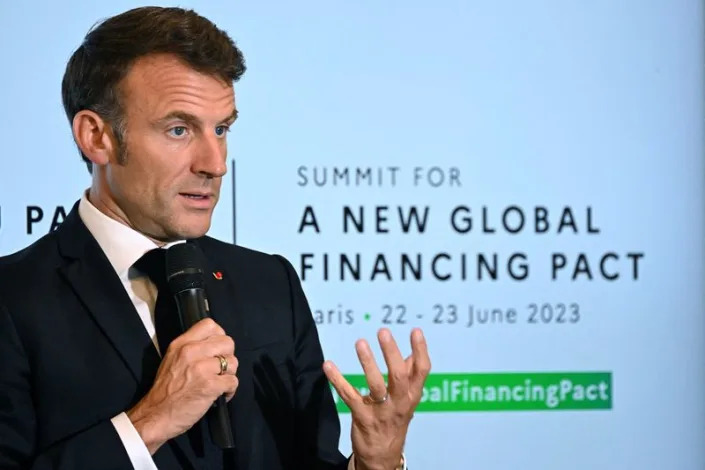
A meeting to mark the agreement will be attended by French President Emmanuel Macron, Hichilema and Chinese Premier Li Qiang on the sidelines of the Summit for a New Global Financing Pact in Paris, the French official added. It’s a major step in the process of ending the default of the first African nation to do so in the pandemic era, and will unlock a $188 million disbursement from the IMF.

Zambia’s private creditors “need to urgently agree significant debt cancellation,” says Tim Jones, head of policy at UK-based Debt Justice, previously known as the Jubilee Debt Campaign, which lobbies for poor countries’ loans to be written off.

The organization is calling external private and government lenders to cancel two-thirds of Zambia’s debt to place its finances on a more sustainable path.

Zambia in October said it was seeking to revamp $12.8 billion in external debt, and it’s unclear if this amount has changed following negotiations in which China called for more relief from lenders such as the World Bank, and for some of its own debts to be excluded. Zambia owed about $6 billion to Chinese lenders, around one-third of its total foreign liabilities.

Years of Waiting


While the memorandum marks a major milestone, it is not legally binding and Zambia still must sign bilateral agreements with each creditor. It has also yet to conclude restructuring talks with holders of $3 billion in eurobonds, which had accrued more than $500 million in arrears by the end of last year. Other commercial creditors are likewise yet to strike a deal.

The memorandum with the official creditors includes a clause requiring comparability of treatment for Zambia’s commercial debts, the French official said.

It gives Macron a concrete breakthrough at the summit he has convened in Paris to overhaul financing for the poorest countries that face the greatest funding risks. His administration was also a key proponent of the creation of the Common Framework to expand the Paris Club creditor group to include China in debt restructuring.

Key Details in Finance Ministry Statement:

Official creditors will provide a debt treatment contingent on Zambia’s debt-carrying capacity at the end of the 38-month IMF-supported program approved in August

The relief will be adjusted if conditions have improved enough to justify an upgrade from “weak” to “medium” debt-carrying capacity, in which case principal reimbursements would be accelerated and interest payments increased

--With assistance from Alan Katz and William Horobin.

Debt-plagued Zambia reaches deal with China, other nations to rework $6.3B in loans, French say


 People gather to buy charcoal at a busy market in Lusaka, Zambia, July, 5, 2021. The French government says Thursday, June 22, 2023, that Zambia has reached a deal with China and several other government creditors to restructure $6.3 billion in loans. 
(AP Photo/Tsvangirayi Mukwazhi, File)

SYLVIE CORBET
Thu, June 22, 2023

PARIS (AP) — Zambia and its government creditors, including China, have reached a deal to restructure $6.3 billion in loans, the French government announced Thursday on the sidelines of a global finance summit in Paris.

The agreement covers loans from countries including France, the UK, South Africa, Israel and India as well as China — Zambia's biggest creditor at $4.1 billion of the total. The deal, announced by officials who spoke anonymously in accordance with the French government's customary practices, may provide a roadmap for how China will handle restructuring deals with other nations in debt distress.

The International Monetary Fund approved the deal, meaning it’s going to allow Zambia to receive more financing from the institution, the French said. A representative from the IMF did not immediately respond to a request for comment.

The Zambia deal came at a summit with more than 50 world leaders, finance officials and activists to discuss ways of reforming a global financial system to better help developing nations struggling with debt, climate change and poverty.


Zambia — the continent's biggest copper producer— became Africa’s first coronavirus-era sovereign nation to default when it failed to make a $42.5 million bond payment in November 2020. The debt has prevented the democratic nation from developing economically and taking on new projects. Experts have said such prolonged debt crises can send nations deeper into poverty and joblessness and exclude them from the credit they need to rebuild.

U.S. Treasury Secretary Janet Yellen, who is attending the summit, welcomed news of the Zambia deal. She visited Lusaka in January to meet with Zambian President Hakainde Hichilema and bring attention to the ramifications of its debt crisis.

“I saw firsthand how the weight of default and a stalled debt restructuring process can bring suffering to ordinary families and hold back economic growth,” Yellen said. She urged both official and private-sector creditors to quickly finalize debt restructuring to “encourage the private investment that is needed to jump-start the economy.”

Full details of the deal weren't announced. The French officials said Zambia's debt would be reorganized over 20 years, with a three-year grace period. It also includes a clause aimed at ensuring that Zambia gets similar treatment from private creditors, who hold an additional $6.8 billion in loans to Zambia, but it wasn't clear that those private creditors could be required to do so.

“Private creditors know they’re going to need to restructure (the debt), they have been warned they’ll need to make a similar effort,” a French official said.

A memorandum of understanding is expected to formalize the deal in the coming weeks.

The deal is the second to be agreed under a mechanism — called the Group of 20 Common Framework — created at the end of year 2020 to associate the Paris Club of government creditors and other major economies from the Group of 20, including China, in debt negotiations.

The first was struck last year with Chad.

Yellen has called for debt overhang in other countries like Sri Lanka to be addressed as well.

___

Associated Press reporter Fatima Hussein in Washington contributed to this report.


Explainer-What is China's position on restructuring debt owed by poor nations?


A Chinese national flag is pictured

Wed, June 21, 2023 
By Joe Cash

(Reuters) - China's Premier Li Qiang and dozens of world leaders will meet in Paris on Thursday and Friday to discuss ways to help low-income countries manage their debt burdens and free up funding for climate financing.

As the world's largest bilateral creditor, China is central to talks on making tangible progress in providing debt relief to Zambia, Chad, Ethiopia and Ghana through the Group of 20-led "Common Framework."

WHAT IS THE COMMON FRAMEWORK?

The Common Framework was set up by the G-20 in late 2020 during the COVID-19 pandemic as an initiative to expedite and simplify the process of getting indebted countries back onto their feet.


The aim was to bring together big creditors like China and the traditional group of developed creditor nations, known as the Paris Club, to negotiate restructuring plans with defaulters.

But nearly three years later, it is yet to provide any relief, partly due to disagreements between the rich countries and China, which over the past decade has emerged as a major international creditor.

WHAT IS CHINA'S POSITION ON DEBT RESTRUCTURING?

China wants multilateral lenders like the International Monetary Fund (IMF) and World Bank to absorb some of the losses, which those institutions and many developed nations, notably the United States, are resisting.

The U.S. and European governments have argued that acceding to Beijing's demand would be tantamount to a bailout for China.

A case in point is Zambia, which owes $6 billion to China and has been locked in default for almost three years. The southern African country has been unable to secure further loans from the IMF because Beijing insists multilateral development lenders, which don't usually take haircuts, should participate in debt relief.

The Common Framework requires debtor countries to secure restructuring assurances from any bilateral lenders first and commercial and multilateral lenders second - to Beijing's dismay.

China continues to negotiate with debtor nations on a bilateral basis, urging that debt disposal be dealt with on a "case-by-case" basis despite the Common Framework's aim to standardise access to debt relief.

China's central bank chief Yi Gang reiterated "China is willing to work with all parties to implement the Common Framework for debt disposal," at a gathering of G20 finance ministers and central bank governors at the World Bank and IMF Spring Meetings in Washington in April.

"Official bilateral loans related to China only account for less than 5% of Ghana's external debt," Mao Ning, a Chinese Foreign Ministry spokesperson, told a press conference in Beijing in March, when asked whether China would agree to restructure the $1.9 billion Ghana owes it.

"We call on multilateral financial institutions and commercial lenders, who are the main creditors for developing countries, to participate in developing countries' debt relief efforts," Mao said.

WHY IS CHINA WILLING TO WRITE OFF SOME DEBTS BUT NOT OTHERS?

In January, China's Foreign Minister Qin Gang announced a partial and undisclosed cancellation of the $13.7 billion that Ethiopia has borrowed from China since 2000 while visiting Addis Ababa.

And last August, China waived 23 interest-free loans to 17 African states that had expired at the end of 2021.

China's interest-free loans are funded from its foreign aid budget and are easier to waive.

Interest-free loans account for less than 5% of the $843 billion in Chinese loan commitments to 165 governments globally between 2000 and 2017, according to AidData.

WHAT SUPPORT IS CHINA OFFERING?

In early May, China attended the first meeting of Sri Lanka's creditor nations only as an observer. Japan, India and France initiated the discussions despite China being Sri Lanka's largest bilateral lender, with the island nation owing Chinese lenders $7.4 billion at the end of 2021.

In discussions over Ghana later in May, China took its involvement further and agreed to co-chair a committee of Ghana's official creditors alongside France.

And in Zambia's case, "China has always taken Zambia's debt issues seriously and will jointly work for a better solution," according to Wang Wenbin, another Chinese foreign ministry spokesperson.

WHAT NEXT?

In Paris, analysts expect China to continue to voice support for the Common Framework but for debt relief to be dispensed "case-by-case".

The last time global policymakers met to discuss the Common Framework in Washington, China proposed the IMF should speed up and improve information sharing on debt sustainability analyses.

China will need more coaxing before it agrees to haircuts.

(Reporting by Joe Cash; Editing by Ryan Woo; Editing by Shri Navaratnam)


The Paris summit on finance and climate comes to an end. Time for concrete steps?

 Climate activists Patience Nabukalu, of Uganda, left, and Mitzi Jonelle Tan, of the Philippines, participate in a demonstration ahead of the Global Climate Finance Summit, Wednesday, June 21, 2023 in Paris. The aim of a two-day climate and finance summit in Paris that ends Friday, June 23, was to set up concrete measures to help poor and developing countries better tackle issues like poverty and climate change. (AP Photo/Michel Euler, File)

 CEO of the European Climate Foundation Laurence Tubiana, from left, climate activists Ineza Grace, of Rwanda, Vanessa Nakate, of Uganda, Helena Gualinga, of Ecuador, Mitzi Jonelle Tan, of the Philippines, and Greta Thunberg, of Sweden, attend a news conference in Paris, June 22, 2023. The aim of a two-day climate and finance summit in Paris that ends Friday, June 23, was to set up concrete measures to help poor and developing countries better tackle issues like poverty and climate change. (AP Photo/Lewis Joly, File)


- Brazilian President Luiz Inacio Lula Da Silva speaks during the Power Our Planet concert on the sideline of the Climate Finance conference in Paris, June 22, 2023. The aim of a two-day climate and finance summit in Paris that ends Friday, June 23, was to set up concrete measures to help poor and developing countries better tackle issues like poverty and climate change. (AP Photo/Lewis Joly, File)


SAMUEL PETREQUIN and SYLVIE CORBET
Thu, June 22, 2023 

PARIS (AP) — After all the talking, time for tangible solutions?

The aim of the two-day climate and finance summit ending Friday in Paris was to set up concrete measures to help poor and developing countries whose predicaments have been worsened by the devastating effects of the COVID-19 pandemic and the war in Ukraine better tackle poverty and climate change.

Even though the gathering of world and financial leaders has no mandate to make formal decisions, French President Emmanuel Macron has pledged to deliver a to-do list that should be accompanied by a progress-tracking tool.

“We have to come up with mobilizations, commitments, new instruments and very concrete solutions that will change life on the ground in countries facing these challenges,” Macron said.

U.S. climate envoy John Kerry was on the same wavelength, telling The Associated Press the conference would aim to “come out with some results that are specific to how you can mobilize finance” in a bid to reduce emissions faster.

Several activists and non-governmental organizations have urged the summit participants to ensure that rich countries commit to debt relief for poor nations, including the cancellation of loans. A debt suspension clause for countries hit by extreme climatic events was also discussed.

In addition, the idea of implementing a tax on the greenhouse gas emissions produced from international shipping has been gaining traction, with possible adoption at a July meeting of the International Maritime Organization. Some experts believe that a tax on shipping alone could raise $100 billion a year, and a strong declaration on this in Paris might provide Macron with a symbolic win, especially if it gets backing from the IMO next month.

To bring in more money, activists are pushing for a tax on the fossil fuel industry and another one on financial transactions — but those two proposals appear to have little support from wealthier nations.

Ineza Grace, a young climate activist from Rwanda, said a good outcome for the summit would be the emergence of a new vision in developed countries for what they need to do.

“To understand how they can replace the current financial structures that are reproducing the colonial structure,” she said.

Fellow activist Greta Thunberg, speaking alongside Grace on the sidelines of the meetings, agreed.

“The aspect of climate justice and equity has been more or less excluded from the global climate negotiations and the discourse,” Thunberg said.

The summit's first day included announcements of a pair of deals. French officials said debt-burdened Zambia reached a deal with several creditors including China to restructure $6.3 billion in loans. And Senegal reached a deal with the European Union and western allies to support its efforts to improve its access to energy and increase its share of renewable energy to 40% by 2030.

Many officials from poor and climate-vulnerable nations attended, with only two top leaders from the Group of Seven most developed countries — Macron and German Chancellor Olaf Scholz — in the audience.

The U.S. was represented by Treasury Secretary Janet Yellen and climate envoy John Kerry. Other attendees included China’s Prime Minister Li Qiang, Brazil’s President Luiz InĂ¡cio Lula da Silva, European Commission President Ursula von der Leyen, World Bank head Ajay Banga and IMF President Kristalina Georgieva.

___

Associated Press writer Frank Jordans in Berlin contributed. ___ Associated Press climate and environmental coverage receives support from several private foundations. See more about AP’s climate initiative here. The AP is solely responsible for all content.

Climate finance summit wraps up eyeing bigger progress


Kelly MACNAMARA
Thu, June 22, 2023 


Debt in emerging and developing countries

A global summit seeking to overhaul the international financial system wraps up Friday after taking small steps towards easing the debt burden of developing nations weighed down by climate and economic crises.

While host country France pitched the conference as a consensus-building exercise, leaders are under pressure to produce clear outcomes from the two-day meeting as economies stagger under growing debt after successive crises in recent years.

The summit comes amid growing recognition of the scale of the financial challenges ahead, with warnings that the world's ability to curb global warming at tolerable levels is reliant on a massive increase in clean energy investment in developing countries.

With trust in short supply over broken climate financing promises from richer countries, developing nations are looking for tangible progress.

The V20 group of countries on the climate front lines -- which now includes 58 member nations -- has said restructuring the global financial system to align with climate targets must be completed by 2030.

"We come to Paris to identify the common humanity that we share and the absolute moral imperative to save our planet and to make it liveable," said Barbados Prime Minister Mia Mottley, whose Caribbean island nation is threatened by rising sea levels and tropical storms.

She has become a powerful advocate for revamping the role of the World Bank and International Monetary Fund in an era of climate crisis.

Barbados has put forward a detailed plan for how to fix the global financial system to help developing countries invest in clean energy and boost resilience to climate impacts.

One key announcement came from IMF director Kristalina Georgieva, who said a pledge to shift $100 billion of liquidity-boosting "special drawing rights" into a climate and poverty fund had been met.

World Bank president Ajay Banga said the lender would introduce a "pause" mechanism on debt repayments for countries hit by a crisis so they could "focus on what matters" and "stop worrying about the bill that is going to come".

Separately, Senegal was promised 2.5 billion euros ($2.7 billion) by a group of wealthy nations and multilateral development banks to help the west African country reduce its dependence on fossil fuels.

And Zambia, which defaulted on its debt after the Covid pandemic broke out, secured some financial relief as its main lender China and other creditors agreed to restructure $6.3 billion in loans.

On Twitter, Zambian President Hakainde Hichilema called it a "significant milestone in our journey towards economic recovery & growth".

- Turning 'billions to trillions' -


But much more is needed to help developing countries combat climate change.

Macron said he was hopeful that a pledge to deliver $100 billion a year in climate finance to poorer nations by 2020 would finally be fulfilled this year -- although actual confirmation the money has been delivered will take months if not years.

This week, the International Energy Agency said annual investment just for clean energy in these countries will need to jump to nearly $2 trillion within a decade.

This is crucial to keep alive the Paris Agreement goal of limiting global warming to "well below" two degrees Celsius since pre-industrial times, and below 1.5C if possible.

Ideas for how to turn "billions to trillions" for these climate and development goals include using multilateral development banks to help unlock climate investments, as well as taxation on fossil fuel profits and financial transactions to raise climate funds.

France backs the idea of an international tax on carbon emissions from shipping, with hopes for a breakthrough at a meeting of the International Maritime Organization in July.

Countries also want disaster clauses added to new debt arrangements to allow a country to pause repayments for two years after an extreme weather event.

Climate activist Nakate urges rich countries to cancel debt, grant climate finance at Paris summit


1 / 16
Vanessa Nakate asks for a minute of silence for people suffering all over the world at the New Global Financial summit in Paris Thursday, June 22, 2023. Facing an audience packed with world leaders and finance officials in suits, Vanessa Nakate silenced the room, then made everyone listen to some uncomfortable facts. World leaders, heads of international organizations and activists are gathering in Paris for a two-day summit aimed at seeking better responses to tackle poverty and climate change issues by reshaping the global financial system.
 (Ludovic Marin, Pool via AP)

SAMUEL PETREQUIN and SYLVIE CORBET
Wed, June 22, 2023 

PARIS (AP) — Facing an audience packed with world leaders and finance officials in suits, Ugandan climate activist Vanessa Nakate silenced the room, then made everyone listen to some uncomfortable facts.

Speaking at a two-day summit aimed at seeking better responses to tackle poverty and climate change issues by reshaping the global financial system, the UNICEF ambassador and campaigner was in a somber mood and asked for a moment of silence.

Dressed in a black t-shirt with the slogan “Divest Now,” Nakate said the silence was for "people around the world who are already suffering, starving, being displaced, dropping out of school, being forced into child marriages, losing their cultures and history, those who are already helpless, hopeless and dying due to the devastating impact of the climate crisis.”

Speaking right after summit host French President Emmanuel Macron, Nakate then urged delegates to put people first instead of profits, to make polluters pay, to cancel debt and direct climate finance toward the most vulnerable countries that did not create the climate crisis, while making sure fossil fuels are not part of their development.

“You must be thinking in trillions, not billions,” she said, punctuating her speech with depressing statistics about pollution and the world's growing inequalities between the rich and the have nots.

The summit brings together more than 50 heads of state, world finance officials and activists. They will discuss ways of reforming the global financial system and address the debt, climate change, and poverty crises.

Macron called for massive investment for developing countries in his address, saying that no country should have to choose between “reducing poverty or protecting the planet.” He insisted on the need for more investment from both the public and private sectors, and the crucial role played by international institutions.

Among concrete steps taken Thursday, Senegal reached a deal with the European Union and western allies including France, Germany, the United Kingdom and Canada to support the country’s efforts to improve its access to energy and increase its share of renewable energy to 40% by 2030. The deal will mobilize 2.5 billion euros ($2.7 billion).

“Diversifying our energy sources and our supply chains will increase our resilience,” Senegal president Macky Sall said.

The Paris talks come as the COVID-19 pandemic, the war in Ukraine and a global debt crisis have led to a drop in life expectancy and an increase in poverty in most countries around the world, the United Nations Development Program reported.

Developing nations point to an outdated system where the United States, Europe, China and other big economies that have caused most climate damage are leaving the poorest countries to deal with the consequences.

Amid key topics to be discussed in Paris are changes needed in the way the World Bank and the International Monetary Fund are lending and granting money to the most vulnerable countries. Both institutions have been criticized for not factoring climate change into lending decisions and being dominated by wealthy countries like the U.S.

Macron praised the International Monetary Fund’s initiative to allocate more funds to low-income countries through Special Drawing Rights, which are an IMF international reserve asset that can be exchanged for hard currency.

“The international financial system is in crisis,” said U.N. Secretary-General Antonio Guterres. He commended the Special Drawing Rights initiative, but criticized how funds were allocated, with the European Union receiving $160 billion to Africa's $34 billion.

"A European citizen received on average almost 13 times more than an African citizen. All this was done according to the rules. But let’s face it: these rules have become profoundly immoral,” he said.


Mosimann performs during the Power Our Planet concert on the sideline of the Climate Finance conference in Paris, Thursday, June 22, 2023. World leaders, heads of international organisations and activists are gathering in Paris for a two-day summit aimed at seeking better responses to tackle poverty and climate change issues by reshaping the global financial system. (AP Photo/Lewis Joly)

A climate activist holds a banner as co-chair of the Bill & Melinda Gates Foundation Melinda French Gates, Indian Finance Minister Nirmala Sitharaman and U.S. Treasury Secretary Janet Yellen, left, attend a session at the Global Climate Finance summit, Thursday, June 22, 2023 in Paris. World leaders, heads of international organizations and activists are gathering in Paris for a two-day summit aimed at seeking better responses to tackle poverty and climate change issues by reshaping the global financial system. (AP Photo/Christophe Ena)


The Paris summit comes in the wake of a plan championed by Barbados Prime Minister Mia Mottley to ease access to financing for climate-vulnerable countries. Mottley and other proponents have argued that developing countries are forced to pay such high interest rates that they struggle to finance adaptation projects, like sea walls, or green energy initiatives, like large solar farms, or simply make payments on outstanding loans when climate-infused disasters strike.

“What is required of us now is absolute transformation — and not reform — of our institutions," Mottley said.

"I hope that we leave Paris therefore not only secure in our determination to protect the planet, to protect the biodiversity, to protect people, but to recognize that if we do not act today, at scale, with pace, we will not be able to get there in time to save more people,” Mottley said.

The Paris summit has no mandate to make formal decisions, French organizers stressed, but it aims to give a strong political impetus to key issues to be discussed in upcoming climate conferences and other international meetings.

Climate activists and developing nations also urged rich countries to deliver on their existing commitments.

Macron tweeted Thursday that experts said the pledge to provide poor nations with $100 billion in aid each year to tackle global change “is very likely to be met this year!” First made in 2009 and reaffirmed at the 2015 Paris climate summit, the promise has never been fulfilled.

Summit participants could back a tax on the greenhouse gas emissions produced from international shipping, with the aim to enable its adoption at a July meeting of the International Maritime Organization.

To bring more money in, activists are pushing for a tax on the fossil fuel industry and another one on financial transactions — two proposals that appear to have little support from wealthier nations.

Debt restructuring and cancellation are also to be debated, as a growing number of countries are struggling with unsustainable debt aggravated by climate change issues. Participants were to discuss a debt suspension clause for countries hit by extreme climatic events.

Many officials from poor and climate-vulnerable nations attended the summit, with only two members of the Group of Seven most developed countries — Macron and German Chancellor Olaf Scholz — in the audience. The U.S. was represented by Treasury Secretary Janet Yellen and climate envoy John Kerry.

Attendees included China’s Prime Minister Li Qiang, Brazil’s President Luiz InĂ¡cio Lula da Silva, European Commission President Ursula von der Leyen, World Bank head Ajay Banga and IMF President Kristalina Georgieva.

___

Associated Press climate and environmental coverage receives support from several private foundations. See more about AP’s climate initiative here. The AP is solely responsible for all content.


'We only have this planet': Barbados PM urges unified climate finance response

Kelly MACNAMARA
Thu, June 22, 2023 


Barbados Prime Minister Mia Mottley called for 'absolute transformation' of global institutions like the World Bank (JOEL SAGET)

Between brainstorming ways to fix the global financial system and appearing onstage at a Paris pop concert, Barbados Prime Minister Mia Mottley stopped to record a message about the storm looming near her Caribbean nation.

"This is our new reality in a climate crisis world," she told AFP in an interview in the snatched minutes between events linked to a summit hosted by France to rethink how the world funds international goals to end poverty and halt global warming.

News of the storm had made Mottley, who co-headlined the summit, agonise about whether to rush home, underscoring the challenges small island nations face.


In the end, she told fellow leaders at the opening of the meeting, she decided to stay to help push for action.

Mottley has played a key role in galvanising world leaders on reforms that had languished on the global to-do list for years, but she is keen underscore that this is an "inclusive process" involving a host of other countries, organisations and civil society.

"We only have this planet and unless you have a plan to live on Mars that I don't know about then we need to work together to make it better," she told AFP.

Mottley, who on Thursday called for "absolute transformation" of institutions like the World Bank and International Monetary Fund, sounded a note of caution about the level of political will.

"I think that there are problems in getting governments to overcome domestic politics and geopolitics," she said.

But on Thursday evening, ahead of her appearance onstage at Global Citizen's "Power Our Planet" concert featuring Billie Eilish, Mottley was celebrating a win.

"Today is a good day in that we have had almost everybody accept the validity of natural disaster clauses," she told AFP, referring to one of the key items in the Barbados proposal for retooling the financial system.

Earlier, World Bank president Ajay Banga said the lender would introduce a "pause" mechanism on debt repayments for countries hit by a crisis so they can "focus on what matters" and "stop worrying about the bill that is going come".

That is important for countries facing increasingly ferocious storms, floods and droughts that can wipe out chunks of an economy virtually overnight.

Speaking onstage with Banga, Mottley said Barbados had campaigned for years on this issue and praised him for agreeing to it just days into his new role.

"Your shoulders have to be broad for this moment," she told him, after commending Emmanuel Macron's climate leadership in the face of chants from the mainly young crowd against the French leader.

- Storms brewing -


The Paris summit comes amid growing recognition that curbing global warming at tolerable levels will require a massive increase in spending by poor and emerging economies on climate resilience and clean energy investment.

Other proposals from developing countries include how to turn "billions to trillions" for climate and development goals using multilateral development banks to help unlock private sector investments, as well as taxation on fossil fuel profits and financial transactions.

For many nations participating in the Paris talks, particularly those in the V20 group of more than 50 climate vulnerable countries, those ideas are based on painful experience.

Countries are being lashed by ever more expensive impacts, on top of a range of other challenges -- from inflation to collapsing ecosystems.

Mottley said the storm threatening Barbados is likely to brush north of the country.

"But we still have to be careful," she said, adding that storms used to hit from June to October or November, but now they can batter the country from May to December.

And she said "immediately after this one, there's another one coming".

Barbados PM fights for shake-up of global climate finance


Justin Rowlatt - Climate editor in Paris
Wed, June 21, 2023 

Barbados Prime Minister Mia Mottley says rich nations must help developing countries pay for impacts of climate change

World leaders meeting in Paris on Thursday could give poorer countries access to hundreds of billions of dollars to tackle climate change.

Mia Mottley, Barbados' first female PM, is leading the global fight for this money and tells BBC News that her tiny country urgently needs help.

Poorer nations want more money because they did little to cause climate change but face its worst effects.

They also struggle to afford expensive projects like renewable energy.

Climate finance, including funding for flood defences or solar plants, has long been one of the biggest sticking points in climate negotiations.

But Ms Mottley has built a global coalition to support her demand that the international financial system be fundamentally reformed.

"We are all in this together", Ms Mottley told BBC News in Paris. "If we don't realise that, we will not act with the urgency that's necessary to save the planet and save lives."

The Barbadian prime minister is joint host of the Paris conference with President Emmanuel Macron of France.


Island nations like the Maldives want help to build defences against flooding linked to climate change

Dozens of world leaders are attending the Summit for a New Global Financing Pact, including the German Chancellor, the president of Brazil and the new president of the World Bank as well as the prime minister of China and the US Treasury Secretary.

The UK is sending its minister for development, Andrew Mitchell.

Ms Mottley is determined the meeting deliver results.

She describes the threat of climate change as "a death sentence" on the world. "If it is a death sentence, then we need to move with urgency," she explains.

Insiders at the summit are expecting an announcement that a target for $100bn worth of a kind of international currency called Special Drawing Rights (SDRs) has been met.

These assets will be transferred to low-income countries to be used for climate programmes.

But Ms Mottley has an even bigger prize in her sights, a plan dubbed the "Bridgetown Agenda" after the Barbadian capital.

It wants to generate more finance for the countries that need it most through a wholesale modernisation of the international monetary system.

The current institutions - including the World Bank and the International Monetary Fund (IMF) - were set up by the victorious nations towards the end of the Second World War at a conference in a ski resort called Bretton Woods in New Hampshire, US

The so-called "Bretton Woods system" will celebrate its 80th anniversary next year.

Ms Mottley says she wants to make it fit for the challenges of the modern world by moving the focus away from richer nations and towards delivering outcomes that benefit the entire world, like helping developing countries tackle climate change.


Many countries are facing extreme drought as global temperature rises

"The reason why these institutions exist is that they were created to help the world in the reconstruction effort after World War Two. We are in a moment that is equal to World War Two with respect to climate," she said.

This week the International Energy Agency warned annual investments in clean energy in developing nations will need to triple from $770bn in 2022 to as much as $2.8tn by the early 2030s if the world is to avoid the worst impacts of climate change.

One proposal is that institutions like the World Bank offer cheaper loans for climate action projects.

It is much more expensive to build flood defences in Barbados or Angola than it is in the Netherlands or the UK, Ms Mottley points out.

The same goes for erecting wind turbines or installing solar farms.

That is because low-income countries are charged high interest rates - often two or even three times the rates developed nations face.

Yet the risks of individual projects don't vary anywhere near as much as that.

Another suggestion is that institutions like the World Bank should agree to guarantee loans for climate action in developing nations. That would encourage the private sector to lend at lower interest rates.

Experts say these initiatives could generate hundreds of billions of dollars' worth of loans for climate projects in low-income countries.

Another proposal involves the creation of an auction in which developing nations would bid for cheap finance for climate projects.

This "Climate Mitigation Trust Fund" would be funded by tens of billions of dollars' worth of SDRs and overseen by the IMF and the UN.

The winners would be the projects that reduce global warming fastest.

It is not expected that a final decision will be made on these proposals, but Ms Mottley is confident that progress will be made.

We tell our children we shouldn't put off to tomorrow what we need to do today, Ms Mottley says.

"I find myself actually repeating a lot of things that we would say to children, in order to inform global behaviour today," she continues. "That tells us a lot."


Paris climate summit ends without a deal on global tax on shipping


SAMUEL PETREQUIN and SYLVIE CORBET
Thu, June 22, 2023

PARIS (AP) — Participants at the Paris summit on finance and climate stopped short of a deal to create a tax on greenhouse gas emissions produced from international shipping.

The two-day gathering of world leaders and finance bosses, aimed at tackling climate change and poverty, ended without a major announcement Friday. French President Emmanuel Macron, who hosted the summit, said upcoming reforms of the international finance system would be assessed within the next two years.

The idea of a global tax on the greenhouse gas emissions produced from international shipping has been gaining traction and could potentially be adopted at a July meeting of the International Maritime Organization, the United Nations’ agency regulating shipping.

Some experts believe that a tax on shipping alone could raise $100 billion a year, and a strong endorsement of it in Paris would have provided Macron with a symbolic win.


“This is tax-free sector. And there’s no reason why it’s not taxed,” Macron said.

But the French president suggested that China and the U.S were not supporting the idea.

“If China and the U.S. and several key European countries are not on board, then you would put a tax in place that would not have any impact,” he added.

The money raised through taxation would be directed toward developing countries to help them deal with the challenges of climate change.

U.S. Treasury Secretary Janet Yellen called the tax “a very constructive suggestion."

"I think I would agree with President Macron’s description of the logic of why it would be appropriate, and it’s something that the United States will look at,” she added.

It was unclear which countries attending the summit supported the proposal, which could be an important step toward getting a heavily-emitting industry to pitch in to the cost of fighting climate change.

Shipping accounts for almost 3% of greenhouse gas emissions, according to the International Maritime Organization. A European Parliament report has warned that share could increase dramatically by 2050.

The gathering wrapping up in Paris had no mandate to make formal decisions, but Macron had pledged to deliver a to-do list that would be accompanied by a progress-tracking tool. Such document has not been released yet.

Several activists and non-governmental organizations had urged the summit participants to ensure that rich countries commit to debt relief for poor nations, including the cancellation of loans. A debt suspension clause for countries hit by extreme climatic events was also discussed.

To bring in more money, activists are also pushing for a tax on the fossil fuel industry and another one on financial transactions — but those two proposals appear to have little support from wealthier nations.

In terms of concrete announcements in Paris, the International Monetary Fund has made $100 billion worth of assets — called Special Drawing Rights — available to certain vulnerable countries. The French presidency then said France would share 40% of its own assets from the COVID-19 pandemic.

The summit's first day included announcements of a pair of deals. French officials said debt-burdened Zambia reached a deal with several creditors including China to restructure $6.3 billion in loans. And Senegal reached a deal with the European Union and western allies to support its efforts to improve its access to energy and increase its share of renewable energy to 40% by 2030.

Many officials from poor and climate-vulnerable nations attended, with only two top leaders from the Group of Seven most developed countries — Macron and German Chancellor Olaf Scholz — in the audience.

The U.S. was represented by Yellen and climate envoy John Kerry. Other attendees included China’s Prime Minister Li Qiang, Brazil’s President Luiz InĂ¡cio Lula da Silva, European Commission President Ursula von der Leyen, World Bank head Ajay Banga and IMF President Kristalina Georgieva.

Yellen said during Friday’s closing ceremony she was pleased that the U.S. and China were able to collaborate on the fight against climate change, with Qiang also attending.

“As the world’s two largest economies, we have a responsibility to work together on global issues," she said. "It’s something we can do and something the world expects of us.”

Her remarks came after U.S. President Joe Biden defended his harsh public remarks on China, in which he called President Xi Jinping a dictator. Biden said his words would have no negative impact on U.S.-China relations and that he still expects to meet with Xi sometime soon.

Climate activists gathered in central Paris on Friday to make polluters pay for climate damage.

“There will be no climate justice without making the polluters pay,” said Patience Nabukala, part of the Fridays for Futures Uganda activist group. “People from countries like mine, we cannot afford to lose more lives, we cannot afford to lose more properties.”

___

Associated Press reporters Masha Macpherson and Catherine Gaschka in Paris and Frank Jordans in Berlin contributed. ___ Associated Press climate and environmental coverage receives support from several private foundations. See more about AP’s climate initiative here. The AP is solely responsible for all content.

Shipping emissions tax still stuck in port


AFP
Fri, June 23, 2023 

Macron said backing from China, the United States and other European nations was still needed (Lewis Joly)

Efforts by France to build a consensus for a global carbon tax on the shipping industry failed to produce significant results at a summit in Paris on Friday.

French President Emmanuel Macron put the item on the agenda of the two-day Summit for a New Global Financing Pact which brought together around 40 heads of state and government.

The shipping industry transports around 90 percent of traded goods worldwide and accounts for around three percent of global carbon emissions.

The Marshall Islands and Solomon Islands have been pushing for a $100-per-tonne tax on emissions which would raise approximately $60-80 billion (55-73 billion euros) of tax receipts per year, according to the World Bank.


At a closing press conference, Macron said that backing from China, the United States and other European nations was still needed in order to bring the idea to fruition.

"We are in favour of taxing shipping, it's a sector that isn't taxed," he told reporters. "To make it work, you need a group of countries that follow us.

"If China, the United States and other key European countries which host major companies, if they don't follow then it won't have any effect."

He cited France's decision to put in place so-called "green taxes" on airline tickets and some financial transactions in the past, saying other countries had not followed suit, putting the country at a disadvantage.

"We can't continue to do harm to ourselves on our own," he said.

US Treasury Secretary Janet Yellen told the same press conference that "it's something that the US will look at".

"We are very focused on the need to raise substantial additional resources to address climate change, poverty reduction and other global challenges," she added.

A Treasury official had previously described the proposal as "in its very early days."

The International Maritime Organization (IMO), a United Nations agency, is set to host a summit in two weeks' time where the carbon tax is expected to be discussed.

German Chancellor Olaf Scholz also lent only lukewarm support to the idea, which has been pushed by two Pacific nations, the Marshall Islands and Solomon Islands, over the last decade.

"It's an interesting proposal but we need to work on it more," he told reporters. "There are some countries that are worried because they can only be reached by boat."

Even if a shipping tax is approved, there remain disagreements over how the money raised would be spent.

The industry would like it to be re-invested in technology to reduce shipping emissions, while the original backers of the idea want the funds used to finance climate change adaptation efforts in poor countries.

A total of 18 countries are currently in favour of the idea, according to a French diplomatic source.


Most Canadians on board with government cash for zero-emission shipping

Story by The Canadian Press • Yesterday 


Canadians are generally pretty foggy about how much shipping emissions are fuelling the climate crisis.

But as soon as they learn that the sector produces a billion tonnes of carbon dioxide each year, the majority are on board with government investment in zero-emission ports, an Abacus Data poll indicates.

More than 80 per cent of Canadians surveyed believe it’s important for Canada to invest in zero-emission ports, vessels and shipping routes, the poll finds. Quebec is a hot spot of support, with 72 per cent saying such funding is extremely or very important.

It wasn’t a big surprise that shipping emissions are flying under the radar of most Canadians, said Brent Dancey, marine climate action director for Oceans North, which commissioned the poll.

“It’s a question of out of sight, out of mind,” Dancey said.

“There's increasing pressure to address shipping emissions, so we wanted to see what Canadians are thinking.”

Although 90 per cent of the volume of global trade is moved on boats, more than half of Canadians aren’t aware shipping creates three per cent of the globe’s fossil fuel emissions — roughly equivalent to countries like Japan or Germany and more than all the CO2 produced by the aviation industry.

The poll confirms more than three in four Canadians are concerned about climate change and are conscious of the carbon footprint of air travel. But there’s a blind spot when it comes to shipping, Dancey said.

“Canadians haven’t connected all the things we have in our houses to the emissions generated by getting those things to us across oceans,” he said.

“So, a poll like this is useful to start making that connection for folks.”

It appears there’s broad support for investing in the green future of shipping regardless of political affiliation, Dancey added.

“It’s interesting when we’re in an often polarized political environment,” he said
.

“Investing in zero-emission ports and shipping isn’t a partisan issue”

There’s also a growing wave of pressure in the international arena to make urgent and effective changes to drive down the sector’s emissions, Dancey said.

The agency that sets standards for the marine sector, the International Maritime Organization (IMO), has a target of cutting emissions in half from 2008 levels by 2050.

But little progress has been achieved since the IMO set the target in 2018, Dancey said. The IMO’s latest estimates suggest shipping emissions are set to surge by 90 to 130 per cent by 2050.

The United Nations agency is meeting next week to update the global plan and agree on measures to cut shipping’s carbon footprint with new zero-carbon fuels, infrastructure and technology.

However, Canada doesn’t have to lag behind by tying the country’s pace of change to the IMO, he added.

“Most, 85 per cent, of the infrastructure needed to decarbonize shipping requires investment on land in terms of zero-emission fuel production and [port] infrastructure,” Dancey said.

The European Union, for example, is moving forward faster than the IMO, he said.

The EU has mandated a number of measures — like massive investments in zero-emission fuel production, rules to drive the use of cleaner fuels, carbon pricing on international vessels and limits on vessels’ use of shore power — that jibe with the global commitment to limit global warming to 1.5 C above pre-industrial levels.

“There are many opportunities for countries to lead and be out in front of the IMO in terms of ambition by investing in zero-emissions infrastructure,” Dancey said, referring to a recent study by Oceans North on how Canada’s ports could spearhead a transition towards green shipping.

“Real solutions can happen at home, right now.”

Rochelle Baker / Local Journalism Initiative / Canada’s National Observer

None

Rochelle Baker, Local Journalism Initiative Reporter, Canada's National Observer
Countries on Front Lines of Climate Change Seek New Lifeline in Paris

Catherine Porter
Thu, June 22, 2023

Workers laying out pipes for installation at an oil site run by TotalEnergies in Tilenga, Uganda on Jan. 16, 2023. (Arlette Bashizi/The New York Times)

PARIS — An unusual if guarded optimism has descended upon Paris, along with hundreds of world leaders, bankers and climate activists. They have come for a two-day conference billed as the new Bretton Woods.

The reference is to the 1944 gathering in New Hampshire where diplomats hammered out the monetary institutions to rebuild countries after World War II — the World Bank and the International Monetary Fund. Now, the goal is to rebuild those systems to weather a looming crisis: the entwined dangers of poverty and climate change.

“We don’t have to choose between the fight against poverty and the fight for the climate and biodiversity,” President Emmanuel Macron of France argued last year.

Many believe a new international monetary system, one that offers developing countries facing climate crises not more crippling debt but financial support, might be in the making.

On Wednesday, on the eve of the conference, 13 world leaders, among them President Joe Biden, published a public letter in some 40 newspapers, including Le Monde, saying they were determined “to forge a new global consensus” and that the summit would stand out as a “decisive political moment.”

There is also trepidation. Some worry that the conference could prove to be another grand summit held by a leader who loves his self-appointed role as multilateral consensus builder and disrupter — but does not always deliver results.

“The French president has a taste for international initiatives, except it’s been more than six years now that he’s been president, and he’s exhausted energy and trust,” said CĂ©cile Duflot, director general of the poverty-fighting group Oxfam in France. The summit, she said, should result in concrete promises of debt relief and not just “chitchatting.”

“When you have 62 countries today that are paying more on debt payments than on health care, it’s obvious that we are in a dysfunctional system,” Duflot said.

The conference grew out of the ideas not of Macron but of Prime Minister Mia Mottley of Barbados.

In November, Mottley sketched out a proposal for financial reform from the stage of the United Nations climate change summit, known as COP27, in Sharm el-Sheikh, Egypt. She and her team called it the Bridgetown Initiative.

Mottley described the financial systems created three-quarters of a century ago as “imperial,” set up as they were before many countries in the world had become independent. She called for a major overhaul so that developing countries most prone to climate change disaster — and already facing debt crises — could access capital to address poverty and damage, and to pay for their transition to a green economy.

“Yes, it is time for us to revisit Bretton Woods,” Mottley said.

The response was resounding, if unexpected: Kristalina Georgieva, the head of the IMF, endorsed the need for reforms. Biden’s special envoy for climate, John Kerry, announced that he, too, was on board. So did the CEO of Bank of America.

Macron, who already hosted international summits on biodiversity, protection of oceans and forests, was also effusive. The project seemed a natural fit for the president of the country that hosted the Paris climate agreement, and he soon announced a summit in Paris to make headway on some of the proposals.

On the agenda are many of the things Mottley has called for: using public money to leverage large-scale private investment for developing countries; increasing the access of those countries to financial support from the IMF; and allowing countries to pause payments on international loans after climate-related disasters.

German Chancellor Olaf Scholz and the Chinese Premier Li Qiang, will be among the attendees. So will U.S. Treasury Secretary Janet Yellen.

“In the eight years I’ve been campaigning, there has never been anything like this — these kinds of heads of state with the political will to do a deep reform of the architecture of international finance,” said Daniel Boese, a campaigner with the advocacy group Avaaz.

Just five years ago, a discussion on World Bank reform would have been taboo, said Laurence Tubiana, CEO of the European Climate Foundation and one of the architects of the 2015 Paris Agreement. But since then, the economic situation facing many of the world’s developing countries has significantly worsened, she said.

“We need political leadership, and he is positioned to do that because he understands all these issues,” Tubiana said of Macron. “I hope he really looks for a legacy on that.”

The summit is drawing the heads of state or top ministers from about 80 countries, including leading world economies, and smaller, indebted countries already suffering from climate change-related effects, such as Guinea-Bissau, Haiti and Saint-Vincent and the Grenadines.

Last week, Macron’s team put out reminders that the event is not geared to concrete announcements but to ease the path to agreements at later gatherings, notably the World Bank and IMF annual meetings, the G20 summit, the next U.N. Climate Change Conference and the general meeting for the International Maritime Organization, which is under pressure to tax emissions from the shipping industry.

“If that gets a lot of support here, and then actually gets agreed to at the IMO summit in July, that’s huge,” Boese said. “Three years ago, we would have celebrated at a climate conference for an outcome like that.”

Many of the activists pouring into the city say they are happy to see more seats at the table for leaders from the global south, and Macron use his powerful office to amplify the proposal of a woman of color from a small island country — Mottley. But they are lobbying for more contentious issues to be put onto the agenda, particularly a tax on the fossil fuel industry, as well as on the superrich who lead jet set lives.

“Climate finance is great, but if we don’t stop the fossil fuel industry, then it’s just a Band-Aid solution,” said Mitzi Jonelle Tan, a climate justice campaigner from the Philippines, a country regularly pounded by typhoons. “I grew up being afraid of drowning in my own bedroom.”

Patience Nabukalu came from Uganda, where the French oil company TotalEnergies is funding oil wells and the 870-mile East African Crude Oil Pipeline. The project has been deemed a “carbon bomb” by its opponents and a potential threat to the drinking water of 40 million people living around the basin of Lake Victoria. The Macron government has quietly supported the project.

“Let him prove us wrong for thinking these are just empty promises, but show they are true by stepping up and calling for this project to be stopped,” said Nabukalu, 25. “There will be no finance reform when you are still financing fossil fuel projects.”

c.2023 The New York Times Company
HIGHLIGHTS-What world leaders said at the Paris finance summit

Reuters
Thu, June 22, 2023 

U.S. Treasury Secretary Janet Yellen delivers her speech at the U.S embassy to France in Paris


PARIS (Reuters) - Following are highlights of what world leaders said at a summit in Paris on Thursday to boost crisis financing for poor countries, reform post-war financial systems and free up funds to tackle climate change.

ON REFORM

"Even with the capital that the World Bank and the MDBs (multinational development banks) have, there is clearly potential ...to increase financing capacity," said U.S. Treasury Secretary Janet Yellen, whose country is the World Bank's biggest shareholder.

Yellen said an additional 200 billion dollars could be unlocked over a decade.

"We are certainly not ruling out at some later stage a capital increase. But I think that these banks need to function better individually and as a system first, expand their mission to address global challenges, better utilize the capital they have."

ON NATURAL DISASTER CLAUSES

"We would also like to see the World Bank offer borrowers the option to add climate resilient debt clauses to their loan agreements. These clauses would help ease pressures on countries if a natural disaster strikes," Yellen said.

ON UNLOCKING PRIVATE SECTOR FINANCING

"We need to mobilise the private sector a lot more, there is a lot of liquidity, a lot of money in that world," said French President Emmanuel Macron.

ON FAILURE OF INTERNATIONAL FINANCIAL ARCHITECTURE

"It is clear that the international financial architecture has failed in its mission to provide a global safety net for developing countries," said U.N. Secretary General Antonio Guterres.

(Reporting by Leigh Thomas, John Irish, Elizabeth Pineau, Silvia Aloisi; Editing by Christina Fincher)

Rich nations pledge to unlock hundreds of billions of dollars for climate fight


Fri, June 23, 2023 
By John Irish and Leigh Thomas

PARIS (Reuters) -Multilateral development banks like the World Bank are expected to find $200 billion in extra firepower for low-income economies by taking on more risk, a move that may require wealthy nations to inject more cash, world leaders said on Friday.

The leaders, gathered at a summit in Paris to thrash out funding for the climate transition and post-COVID debt burdens of poor countries, said their plans would secure billions of dollars of matching investment from the private sector.

An overdue pledge of $100 billion in climate finance for developing nations was also now in sight, they said.

Many in attendance, however, said over the two-day summit that the World Bank and the International Monetary Fund were increasingly ill-suited for tackling the most pressing challenges and needed a broad revamp.

"We ... expect an overall increase of $200 billion of MDBs' lending capacity over the next ten years by optimizing their balance sheets and taking more risks," the summit's final statement obtained by Reuters said.

"If these reforms are implemented, MDBs may need more capital," it added, recognising in a final summit document for the first time that wealthy nations may have to inject more cash.

U.S Treasury Secretary Janet Yellen, whose country is the largest shareholder of the IMF and World Bank, had said ahead of the summit that development banks had to first squeeze out more lending themselves before the possibility of capital increases was considered.

The final summit document called for each dollar of lending by development banks to be matched by at least one dollar of private finance, which analysts said should help international institutions to leverage an additional $100 billion of private money in developing and emerging economies.

The announcements mark a scaling up of action from the development banks in the fight against climate change and set a direction for further change ahead of their annual meetings later in the year.

However, some climate activists were critical of the results.

"While the roadmap from the Paris Summit acknowledges the urgency for substantial financial resources to bolster climate action, it leans too heavily on private investments and ascribes an outsized role to multilateral development banks," said Harjeet Singh, head of global political strategy at Climate Action Network International.

DEBT RELIEF

At the summit, the United States and China - long at odds on how to tackle debt restructurings for poor countries - sought to strike a more conciliatory tone after a landmark deal was reached on Thursday to restructure $6.3 billion in debt owed by Zambia, most of it to China.

"As the world's two largest economies, we have a responsibility to work together on global issues," Yellen said on a summit panel shared with Chinese Premier Li Qiang among other leaders.

However, differences remain. China - the world's largest bilateral creditor - has been pushing for lenders like the World Bank or the IMF to absorb some of the losses, which the institutions and Western countries oppose.

"China is ready to be engaged in debt relief efforts in an effective, realistic and comprehensive manner in keeping with the principle of fair burden sharing," Li said.

CLIMATE PLEDGE

The summit statement said there was a "good likelihood" of finalising this year a $100-billion climate finance pledge to developing countries.

Many of the topics discussed in Paris took up suggestions from a group of developing countries, led by Barbados Prime Minister Mia Mottley, dubbed the 'Bridgetown Initiative'.

"There is the political consensus that this issue is bigger than each of us and we have to work together and multilateral development banks will have to change how they do business and that is accepted," Mottley said at the summit's closing panel.

"We leave Paris not with speeches simply, but a commitment to get down into the granular details to make sure that what we agree here can be executed."

The $100 billion pledge falls far short of poor nations' actual needs, but has become symbolic of wealthy countries' failure to deliver promised climate funds. This has fuelled mistrust in wider climate negotiations between countries attempting to boost CO2-cutting measures.

"If we can't shape the rules in this time like others before, then we will be accountable for what potentially can be the worst reality of mankind," Mottley said.

(Additional reporting by Casey Hall in Shanghai, Simon Jessop and Marc Jones in London; writing by John Irish and Silvia Aloisi; editing by Toby Chopra)

At Paris summit, World Bank, IMF take steps to boost crisis financing


Wed, June 21, 2023 
By Leigh Thomas, John Irish and Elizabeth Pineau

PARIS (Reuters) -The World Bank will ease financing for countries hit by natural disasters, it said on Thursday, as the International Monetary Fund announced it had hit its target of making $100 billion in special drawing rights available for vulnerable nations.

The two announcements were made at a gathering in Paris of some 40 leaders, including about a dozen from Africa, China's prime minister and Brazil's president, that aims give impetus to a new global finance agenda.

It aims to boost crisis financing for low-income states and ease their debt burdens, reform post-war financial systems and free up funds to tackle climate change by getting top-level consensus on how to promote a number of initiatives struggling in bodies like the G20, COP, IMF-World Bank and United Nations.


An announcement about Zambia's debt was also expected later on Thursday after its creditors indicated this week a restructuring proposal was nearly ready after more than two years of negotiations.

"It is clear that the international financial architecture has failed in its mission to provide a global safety net for developing countries," United Nations Secretary General Antonio Guterres said, calling the system outdated, dysfunctional and unjust.

Leaders are set to back a push for multilateral development banks like the World Bank to put more capital at risk to boost lending, according to a draft summit statement seen by Reuters.

In remarks to a panel on Thursday, new World Bank president Ajay Banga outlined a "toolkit", including offering a pause in debt repayments, giving countries flexibility to redirect funds for emergency response, providing new types of insurance to help development projects and helping governments build advance-emergency systems.

"We need a robust and predictable financial safety net," Ethiopian Prime Minister Abiy Ahmed told the conference, calling for a boost to below-market financing and more grants.

"African countries are facing an unprecedented funding squeeze which have aggravated the vulnerabilities," he said.

While the new World Bank measures are designed to give developing nations some breathing space, there was no discussion of multilateral lenders offering debt writedowns - so-called haircuts.

China - the world's largest bilateral creditor - has been pushing for lenders like the World Bank or the IMF to absorb some of the losses, which the institutions and rich countries oppose.

NEW VISION

Citing the war in Ukraine, climate crisis, widening disparity and declining progress, leaders said the World Bank and other multilateral financial institutions needed a new vision.

French President Emmanuel Macron, hosting the summit, said it was time to act or trust would be lost.

The summit aims to create roadmaps for the next 18-24 months, ranging from debt relief to climate finance. Many of the topics on the agenda take up suggestions from a group of developing countries, led by Barbados Prime Minister Mia Mottley, dubbed the "Bridgetown Initiative".

The coronavirus pandemic pushed many poor countries into debt distress as they were expected to continue servicing their obligations in spite of the massive shock to their finances.

Africa's debt woes are coupled with the dual challenge faced by some of the world's poorest countries of tackling the impacts of climate change while adapting to the green transition.

Wealthy nations have yet to come good on climate finance that they promised as part of a past pledge to mobilize $100 billion a year, a key stumbling block at global climate talks.

Nearly eighty years after the Bretton Woods Agreement created the World Bank and IMF, leaders aim to squeeze more financing from multilateral lenders for the countries that need it most.

IMF Managing Director Kristalina Georgieva told the summit it reached its target of making $100 billion in special drawing rights available for vulnerable countries.

Rich countries agreed in 2021 to re-channel some of their unused IMF special drawing rights, an international reserve currency, to poor countries.

U.S. Treasury Secretary Janet Yellen, whose country is the World Bank's biggest shareholder, said multilateral development institutions should become more effective in the way they use their funds before more capital was added.

The summit also wants more engagement from the private sector. A coalition of countries said it would provide 2.5 billion euros ($2.7 billion) to Senegal to help it achieve its target of 40% of installed capacity from renewable energies by 2030, President Macky Sall said on Thursday.

The agreement with Senegal is the fourth such Just Energy Transition Partnership (JETP) and follows deals with Indonesia, Vietnam and South Africa struck since 2021.

(Reporting by John Irish, Leigh Thomas; addiitonal reporting by Elizabeth Pineau and Karin Strohecker; writing by John Irish and Silvia Aloisi; editing by Christina Fincher, Andrew Cawthorne and Mark Potter)

World Bank should add disaster clauses to debt agreements- Yellen


Treasury Secretary Yellen testifies on Capitol Hill in Washington


Reuters
Thu, June 22, 2023 

PARIS (Reuters) -U.S. Treasury Secretary Janet Yellen said on Thursday the World Bank should add disaster clauses to debt agreements with poorer countries, speaking ahead of a summit in Paris that will discuss how to boost crisis financing for low-income nations.

Such clauses could be part of a broader reform of the World Bank to free up more funds, Yellen told journalists in the French capital.

"We would also like to see the World Bank offer borrowers the option to add climate resilient debt clauses to their loan agreements. These clauses would help ease pressures on countries if a natural disaster strikes," she said.

Yellen, whose country is the World Bank's biggest shareholder, added multilateral development banks should be reformed to become more efficient before shareholders think of injecting more money into them.


"Even with the capital that the World Bank and the MDBs have there is clearly potential ...to increase financing capacity," she said, adding an additional 200 billion dollars could be unlocked over a decade.

"We are certainly not ruling out at some later stage a capital increase. But I think that these banks need to function better individually and as a system first, expand their mission to address global challenges, better utilize the capital they have."

(Reporting by Leigh Thomas, writing by Silvia Aloisi, editing by Toby Chopra)

Lula Weighs Cuba Debt as Brazil Pushes to Revive Relations


Samy Adghirni
Thu, June 22, 2023

(Bloomberg) -- Brazil President Luiz Inacio Lula da Silva is assessing how much money Cuba owes his country as the two nations push to normalize relations after years of frozen ties, a senior Brazilian official said.

Lula met with his Cuban counterpart Miguel Diaz-Canel on the sidelines of a global finance summit in Paris on Thursday. Brazil plans to send a business delegation to Cuba, according to the official, who briefed reporters on the condition of anonymity.

Cuba’s Foreign Ministry did not immediately respond to an email and phone call seeking comment. Cuba’s embassy in Washington said it currently had no news to share about the issue.

Ties between Brazil and Cuba turned sour in 2016, when the communist regime withdrew its ambassador in Brasilia to protest the impeachment of then-President Dilma Rousseff, who like Lula is a member of the leftist Workers’ Party.

Relations further deteriorated after far-right Jair Bolsonaro became Brazil’s president in 2019, although they were never fully cut off.

The lack of political ties deepened Brazil’s struggle to recover hundreds of millions of dollars it lent Cuba through its development bank, BNDES. Brazilian loans helped Cuba build its flagship Mariel port. The exact amount of Cuba’s debt is unclear.

The push for bilateral normalization started after Lula, who previously served as president from 2003 to 2010, returned to Brazil’s top office in January. The Cuban embassy in Brasilia now has an ambassador, and Brazil’s Senate approved Lula’s new envoy to Havana in late May.

--With assistance from Jim Wyss and Daniel Carvalho.
Exclusive-Group backed by India's Vikram Solar to invest $1.5 billion in new US factories


 Workers clean panels at a solar park in Modhera

Thu, June 22, 2023 
By Nichola Groom

(Reuters) - A new venture backed by Indian solar panel maker Vikram Solar Ltd said on Thursday it will invest up to $1.5 billion in the U.S. solar energy supply chain, beginning with a factory in Colorado next year.

The newly formed company, VSK Energy LLC, aims to leverage India's extensive solar manufacturing know-how in the U.S. push to build a clean energy manufacturing sector to compete with China.

The announcement is the latest by an overseas manufacturer seeking to capitalize on incentives in President Joe Biden's landmark climate change law, the Inflation Reduction Act (IRA), to boost renewable energy production.


VSK is a joint venture between Kolkata-based Vikram and two New York-based partners - sustainability-focused private equity firm Phalanx Impact Partners and Das & Co, an investment and development company with solar holdings in both the United States and India.

"It's a great thing for us to be bringing an Indian company to the table here," said Sriram Das, a managing director at Das & Co and chairman of the joint venture. "You've seen a number of Indian companies get into the manufacturing space and do quite well, and Vikram is the best of them."

The company will begin producing modules in Brighton, Colorado, next year and plans to open a second facility in an undisclosed southern state in 2025 that will produce cells, wafers and ingots, the building blocks for solar panels.

The $250 million Colorado facility will create more than 900 jobs and be capable of producing 2 gigawatts (GW) of modules a year initially, with plans to double that amount.

Colorado Governor Jared Polis called the announcement "a big deal" for his state, which was able to attract the facility with its educated workforce and central location near large U.S. solar markets. The state is also offering VSK up to $9.1 million in tax credits tied to job creation.

"We're excited as a state to be able to be a major manufacturing center for the renewable energy economy," Polis said in an interview.

VSK will invest up to $1.25 billion in its second factory, which is expected to create more than 1,500 jobs.

Gyanesh Chaudhary, chairman of Vikram Solar, said the investment decision was based largely on U.S. policies encouraging clean energy manufacturing.

"For us to take this step forward is because of all of the positive policy initiatives by the government and the Biden administration to promote renewable energy," he said in an interview.

Under the IRA, solar projects built with panels containing domestically made cells may receive a lucrative bonus tax credit worth 10% of a project's cost. Most solar components in U.S. projects today are imported from Asia.

Biden wants to decarbonize the U.S. power grid by 2035, an ambitious goal aimed at both fighting climate change and creating jobs.

Like the United States, India has subsidized domestic solar production and taxed imports to reduce its reliance on Chinese imports and is on track to be self-sufficient by 2026, according to the Institute for Energy Economics and Financial Analysis.

(Reporting by Nichola Groom in Los Angeles; Editing by Matthew Lewis)
About 350 Pakistanis were on migrant boat that sank off Greece and many may have died, official says


 In this photo released by Press Information Department, Prime Minister Prime Minister Shahbaz Sharif, right, chairs a meeting regarding ongoing crackdown against human smugglers, in Islamabad, Pakistan on June 21, 2023. The government has also launched a crackdown on the human traffickers who arranged travel for the Pakistanis on the fishing boat, many of whom were seeking jobs in Europe. So far, police have arrested at least 17 suspected traffickers in connection with the case.

(Press Information Department via AP, File) 

MUNIR AHMED
Fri, June 23, 2023 

ISLAMABAD (AP) — Pakistan’s interior minister said Friday that an estimated 350 Pakistanis were on board an overcrowded fishing boat carrying migrants that sank off Greece last week, and many remain missing and may have died in one of the deadliest incidents in the central Mediterranean Sea.

Interior Minister Rana Sanaullah Khan told lawmakers in the National Assembly that an estimated 700 migrants were on the boat when it sank June 14. Only 104 people, including 12 Pakistanis, were rescued and 82 bodies have been recovered.

The total number of people on the ship has not been confirmed.

Khan said many of the missing Pakistanis are feared dead. “So far, 281 families have contacted the government saying their sons or dear ones might have been among those who were on the boat,” he said.

Khan's comments shocked the lawmakers, who appeared distressed as he spoke. It was the first time a senior official has reported that so many Pakistani citizens were missing since the boat sinking. Officials are currently collecting DNA samples from people who say their relatives were on the vessel to help in the identification of the bodies.

The government has also launched a crackdown on the human traffickers who arranged travel for the Pakistanis on the fishing boat, many of whom were seeking jobs in Europe. So far, police have arrested at least 17 suspected traffickers in connection with the case.

Officials say the victims paid the smugglers between $5,000 and $8,000 for the voyage.

Greece has been widely criticized for not trying to save the migrants before the sinking in international waters. Officials in Athens say the passengers refused any help and insisted on proceeding to Italy.

Nine Egyptian men suspected of crewing the ship are in pretrial custody in Greece facing charges including participating in a criminal organization, manslaughter and causing a shipwreck.

Pakistanis who believe they lost relatives in the sinking are urging others not to send their loved ones abroad illegally. “It is better to skip lunch or dinner while living in Pakistan instead of taking the risk of going abroad with help from smugglers,” said Sawan Raza, who fears his brother, Ali Raza, is among the missing people.

Many of the missing migrants, including Raza, are from the country’s most populous eastern Punjab province and remote towns in Kashmir, a disputed Himalayan region which is split between Pakistan and India.

Pakistan is experiencing one of its worst economic crises, with inflation as high as 45% in recent months, and many young people have taken perilous trips to Europe to find better jobs.
UN convoy crosses from Syria regime areas to rebel-held Idlib


AFP
Fri, June 23, 2023 

The 10-truck UN aid convoy crosses into Syria's rebel-held Al-Nayrab, headed for storage facilities near the Turkish border (OMAR HAJ KADOUR)

United Nations aid transited Friday from regime-controlled northwest Syria to rebel-held areas for the first time since a devastating February earthquake, an AFP correspondent and a humanitarian official said.

The correspondent saw the 10-truck convoy reach rebel-held Al-Nayrab in Idlib province from the direction of regime-held Saraqib, headed for storage facilities near the Turkish border.

The last such convoy was in January, according to a humanitarian official in Idlib who requested anonymity as they were not authorised to speak to the media.

The trucks were covered with banners bearing the name and logo of the UN World Food Programme, the correspondent said.

The UN Office for the Coordination of Humanitarian Affairs (OCHA) said on Twitter the "cross-line convoy is underway, carrying UN humanitarian supplies" to northwest Syria.

A February 6 earthquake devastated parts of Turkey and Syria, including areas of the war-torn country's Idlib region that are controlled by jihadist group Hayat Tahrir al-Sham (HTS).

Around three million of people, most of whom have been displaced by Syria's war, live in HTS-controlled parts of the Idlib region.

On February 10, President Bashar al-Assad's regime said it had approved the delivery of humanitarian aid directly from government-held territory to rebel areas, but HTS head Abu Mohammed al-Jolani refused assistance through such a route.

The UN largely delivers relief to Syria's northwest via neighbouring Turkey through the Bab al-Hawa crossing -- the only way for aid to enter without Damascus's involvement.

The number of UN-approved crossings has shrunk from four in 2014 after years of pressure from regime allies China and Russia at the UN Security Council.

The UN chief said on February 13 that Assad had agreed to open the Bab al-Salama and Al-Rai crossings from Turkey to allow aid to enter rebel-held areas for an initial period of three months.

Syria in May extended access for those two crossings, which are operated by Turkish-backed rebels, for another three months, OCHA said at the time.

Syria's war has killed more than half a million people and displaced millions since erupting in 2011 with a brutal crackdown on anti-government protests.

Despite periodic exchanges of deadly fire, including in recent days, a ceasefire deal brokered by Moscow and Ankara has largely held in the northwest since March 2020.

str-rh/lg/ami