Wednesday, July 26, 2023

Radiographers at 37 NHS trusts in England going on strike over pay

Jane Kirby, PA Health Editor
Mon, 24 July 2023 
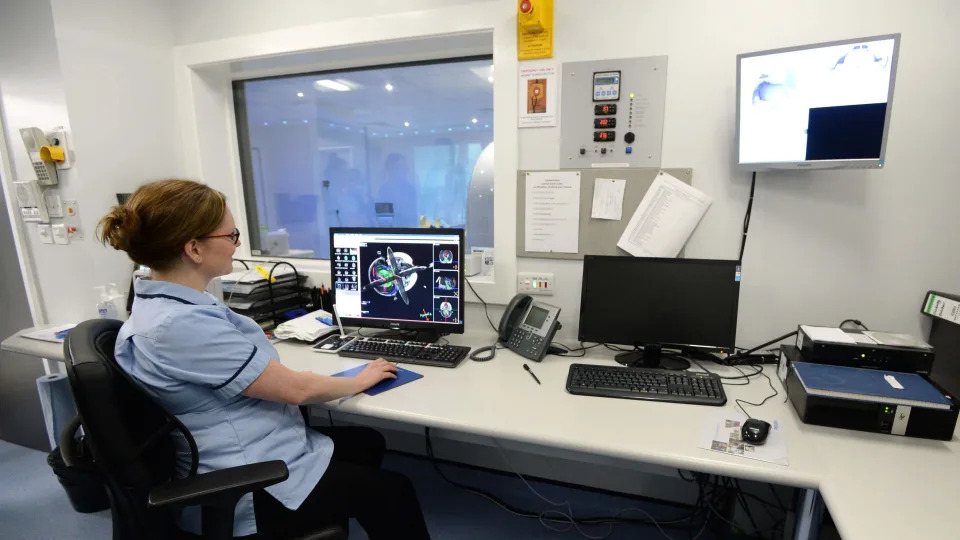


Radiographers at 37 NHS trusts in England are going on strike as the pay row with the Government continues.

Members of the Society of Radiographers (SoR) have voted to reject the Government’s 5% pay award and called for talks to reopen after other public sector workers, including junior doctors, were offered more.

The union said worrying numbers of staff are leaving the profession and not enough is being done to recruit more workers.


The 48-hour strike will run from 8am on Tuesday and will involve the 35 NHS trusts where members have a mandate to strike.

These include the Royal Marsden cancer hospital in London, University College London Hospitals, Liverpool University Hospitals, Nottingham University Hospitals, University Hospitals Bristol and Weston and Sheffield Teaching Hospitals.

The SoR said nine out of 10 NHS patients are supported by radiographers, who carry out X-rays, MRI and CT scans, ultrasounds and breast screening, as well as radiotherapy for cancer patients.

A million people are waiting for radiography.

Union representatives from each trust have agreed staff will provide “life and limb” emergency cover for patients, which usually means the same staffing levels as Christmas Day and Boxing Day.

Dean Rogers, executive director of industrial strategy and member relations for the SoR, said: “Voting for strike action was a difficult decision for our members, who care above all about the safety and wellbeing of their patients.

“We need to draw attention to the fact that many radiography professionals are feeling burnt out by low pay and increased hours. They’re leaving the NHS, and they are not being replaced in adequate numbers.

“If the Government wants to reduce NHS waiting lists and ensure that patients receive the treatment they need, when they need it, then it must urgently prioritise the recruitment and retention of radiography professionals – and that means talking to us about pay and conditions.

“But they are refusing to talk to us, even though our door is open.

“Our members deserve better. Our patients deserve better.”


Health and Social Care Secretary Steve Barclay said: “I want to see an end to disruptive strikes so the NHS can focus relentlessly on cutting waiting lists and delivering for patients.

“The majority of unions on the NHS Staff Council voted to accept the Government’s fair and reasonable offer of a 5% pay rise for 2023-24, alongside two significant one-off payments totalling at least £1,655, putting more money in their pockets now.

“Over a million NHS staff, including radiographers, are already benefitting from that pay rise.

“The NHS also recently published the first ever NHS Long Term Workforce Plan to recruit and retain hundreds of thousands more staff.

“This pay award is final and so I urge the Society of Radiographers to call off strikes.”

Meanwhile, NHS England announced on Monday that industrial action by consultants over a 48-hour period last week resulted in 65,557 appointments and procedures having to be rescheduled.

It said the latest figures mean the total number of appointments and procedures rescheduled over the past eight months as a result of industrial action across the NHS is 765,000.

Dr Vin Diwakar, the NHS medical director for secondary care, said: “These figures show the impact industrial action is having on patients and families, and the scale of disruption is likely to be even greater, with many services avoiding scheduling appointments for strike days.

“We have now seen 765,000 appointments needing to be rescheduled in the last eight months due to strikes, and we are continuing to see a significant cumulative impact on NHS services as well as our hard-working staff as they do all they can to maintain safe patient services while tackling a record backlog.”
UK
Lewisham doctors 'moving to Australia, Canada, and New Zealand due to poor pay'

Robert Firth
Lewisham News Shopper
Mon, 24 July 2023 

Striking consultants outside Lewisham Hospital on July 21 
(Image: Imran Sharieff)

Hospital consultants striking over pay fear the NHS faces a ticking time bomb as demoralised junior doctors flee to Australia, Canada and New Zealand seeking higher pay and a better work-life balance.

NHS consultants on the picket line outside Lewisham Hospital on Friday (July 21) over the government’s six per cent pay offer said hospital doctors at all levels felt underpaid and overworked.

Consultants’ real earnings have plummeted by 15 per cent since 2010 based on the Consumer Prices Index (CPI), which is used to measure the cost of living. Consultants across England started their first walkout for a decade on Thursday (July 20).


The 48-hour strike organised by doctors’ union the British Medical Association (BMA) will end at 7am on Saturday. Patients have been warned to expect cancellations and delays as consultants are the most senior doctors and as such procedures needing their supervision can’t be covered for by others.


Striking consultants outside Lewisham Hospital on July 21, including Sajeev Ranmuthu (far left) and Rumina Mirza (second right)

Striking consultants outside Lewisham Hospital on July 21, including Sajeev Ranmuthu (far left) and Rumina Mirza (second right) (Image: Robert Firth)

Sajeev Ranmuthu, 38, who has been a consultant at Lewisham Hospital for just over a year, said he had walked out for the future of the NHS. He said: “I’ve come to fight for the NHS to make sure the health of the general population is looked after for the future and so there’s enough doctors for future generations. In general we are all overworked and understaffed.

“Doctors are 100 per cent choosing to move abroad. It’s more junior doctors. They come here, do their bit and realise it’s not a place where your work-life balance is looked after. They will go to Australia and New Zealand and Canada because that’s where they are valued and that depletes the workforce.”

Dr Ranmuthu added that he comes into work an hour before his shift is due to start everyday in order to complete all his tasks and was seeing a third more patients each day than when he worked at another hospital previously.

Rumina Mirza, 38, who has worked as a consultant for two years, said debt and stress meant many junior doctors she knew were opting to move abroad. She said: “Covid has left a lot of people feeling quite demoralised. With my junior doctors, there’s a huge amount who go to Australia and New Zealand. A lot of the junior doctors are in thousands of pounds of debt and it’s hard on their mental health.

“Family and friends have said to me ‘Why don’t you move abroad?’ I think I’m NHS at heart and I feel strongly about equal healthcare. It’s about having some level of recognition and some financial compensation. I love my job and I love the patients in Lewisham. I think it’s more trying to see if the government will listen.”


News Shopper: Striking consultants on the picket line outside Lewisham Hospital on July 21. CREDIT: Supplied by Imran Sharieff

Imran Sharieff, 43, an anaesthetist and BMA rep at Lewisham and Greenwich NHS Trust, said the health service would struggle to recruit good consultants in the future unless the government upped its pay offer.

He said: “We don’t want to be striking. We know patients need their elective care [planned procedures like surgery]. Lewisham and Greenwich NHS Trust is not doing well with its backlog of electric care and the thing we want to do is go back in and provide care, but we don’t think we can do it with the offer that the government has given us.

“We aren’t going to get the quality of candidates [with the pay offer]. It’s very easy for the best and brightest and most talented to go into jobs that value them better than this. I’ve seen lots of people being dissuaded from coming into medicine and I have seen younger doctors who have been training leave.

“They will do their registration years and then go to Australia and New Zealand. It’s because they pay their consultant doctors much more than here. The lifestyle is better than here, there and it’s the terms and conditions also.”

MORE LEWISHAM NEWS

Flea-ridden Lewisham households billed thousands for 'shoddy' building works


Public gardens to be created around Lewisham estate under £70k plans

The UK health secretary Steve Barclay has refused to budge on the six per cent pay offer and said strikes won’t make any difference. Mr Barclay said: “I hugely value the work of NHS consultants which is why we have accepted the independent pay review body recommendations in full, giving them a 6 per cent pay rise this year, on top of last year’s 4.5 per cent increase. This government has also reformed pension tax rules for consultants, something the BMA campaigned for over many years.

“I am disappointed the BMA is going ahead with this week’s strike, given the average consultant’s NHS earnings are expected to increase to £134,000 a year. My door is always open to discuss non-pay issues, but this pay award is final so I urge the BMA to end their strikes immediately.”

Underwater mass spectrometer developed for deep sea exploration


Peer-Reviewed Publication

HEFEI INSTITUTES OF PHYSICAL SCIENCE, CHINESE ACADEMY OF SCIENCES

Underwater Mass Spectrometer Developed for Deep Sea Exploration 

IMAGE: THE DEEP-SEA MASS SPECTROMETER IN EXPERIMENT view more 

CREDIT: WANG HAN


A research team led by Prof. CHEN Chilai from Institute of Intelligent machines, Hefei Institutes of Physical Science (HFIPS) of Chinese Academy of Sciences (CAS), developed the deep-sea mass spectrometer. Recently, it successfully completed multiple sea trials in a specific area of deep sea.

The research results were published in Chinese Journal of Analytical Chemistry.

The extreme environments of the deep sea have shaped unique biological processes and harbor significant mineral resources, making their detection a frontier issue in international Earth science research. In-situ detection technology in the deep sea allows for the continuous acquisition of information regarding the components, concentrations, and variations of deep-sea samples in both temporal and spatial dimensions. Therefore, it is increasingly being applied in research on extreme deep-sea environments.

During the research, the deep-sea mass spectrometer operated continuously and reliably for over 8 hours under simulated water depths of -5800 meters. It achieved long-term (25.8 hours) in-situ detection of dissolved gases in the cold seep region of the deep sea and online detection of dissolved gases from the sea surface to the seabed (-1388m to 0m). This allowed the researchers to obtain key scientific data such as the temporal variation curve of small molecular dissolved gas concentration and the vertical concentration distribution profile in the deep-sea seabed.

This technology is not only applicable to deep-sea exploration but also to the acquisition of dissolved gas information in inland rivers, lakes, and near-shore waters. Relevant research in this area is also underway.

"We have been committed to the research of key technologies and applications of mass spectrometry," said Prof. CHEN. "the development of this deep-sea mass spectrometer paves the way for investigation into the origin and early evolution of life, and research on global climate change."

Underwater Mass Spectrometer Developed for Deep Sea Exploration 


Monkeypox: Characterization of post-infectious immune response


Peer-Reviewed Publication

INSTITUT PASTEUR

Human cells infected with MPXV 

IMAGE: HUMAN CELLS INFECTED WITH MPXV (IN GREEN) AMONG UNINFECTED CELLS (NUCLEI IN BLUE). IMAGE TAKEN WITH A CONFOCAL MICROSCOPE. view more 

CREDIT: © MATHIEU HUBERT AND OLIVIER SCHWARTZ, INSTITUT PASTEUR.


In 2022-2023, an outbreak of monkeypox, now known as mpox (caused by the monkeypox virus or MPXV) led to 87,000 human cases in 170 countries[1]. Most cases were reported outside the usual areas in which the virus circulates. Since the outbreak began, surveillance of the virus has been stepped up in Europe, with nearly 5,000 cases being reported in France[2]. Scientists and clinicians from the Institut Pasteur, the CNRS, Inserm, the VRI and the Paris Public Hospital Network (AP-HP) studied 470 sera from vaccinated or MPXV-infected individuals to elucidate the mechanisms involved and determine correlates of protection against infection or disease severity[3]. They determined the sensitivity of the virus to neutralizing antibodies and analyzed the immune response of these vaccinated or MPXV-infected individuals. The study revealed the role of complement4, a component of the innate immune system, in this response. The findings were published in the journal Cell Host & Microbe on May 4, 2023.

In 2022-2023, an unprecedented epidemic of 87,000 cases of mpox occurred in non-endemic areas, affecting people with no direct link to travel in Central or West Africa, where the virus has historically been present. MPXV is mainly transmitted to humans by rodents, with human-to-human transmission occurring via respiratory droplets or close contact. Symptoms are less severe than those of smallpox, and the case-fatality rate is lower. According to Santé publique France, approximately 5,000 cases of MPXV infection have been reported in France since May 2022.2 MPXV is still circulating at very low levels in non-endemic areas, which is why it is important to improve characterization and analyze the immune response of people infected with the virus or vaccinated with IMVANEX, the third-generation vaccine currently available, initially developed for smallpox.

The research teams worked in collaboration with clinicians, vaccinologists and virologists from three French hospitals (Henri Mondor Hospital in Créteil, La Pitié-Salpêtrière Hospital and Orléans Hospital) to carry out this multidisciplinary research. The large number of sera analyzed provided good statistical power, meaning that the analysis could be narrowed to subgroups of patients based on various criteria such as age.

In this study, published in Cell Host & Microbe, the leading journal on interactions between microbes and the immune system, the scientists studied the sensitivity of MPXV to neutralizing antibodies (NAbs) generated after infection with the virus and/or vaccination with IMVANEX. The IMVANEX vaccine has been used as pre- and post-exposure prophylaxis in high-risk populations, but its effectiveness is not yet well characterized. To analyze the sensitivity of the virus, the team of scientists developed two cellular tests to quantify neutralizing antibodies, using either the attenuated virus as a vaccine (MVA) or an MPXV strain isolated in a recently infected individual.

The study demonstrated the role of complement,[4] already known for other poxviruses, and the neutralizing activity of the antibodies generated by infection or vaccination. Robust levels of anti-MVA antibodies were detected after infection, vaccination with the historic smallpox vaccine, or administration of IMVANEX or another MVA-based vaccine candidate. MPXV was minimally sensitive to neutralization in the absence of complement. The addition of complement from sera enhanced detection of individuals with antibodies and increased their level of anti-MPXV antibodies. Four weeks after infection, anti-MVA and -MPXV NAbs were observed in 94% and 82% of individuals, respectively. Two doses of IMVANEX generated anti-MVA and -MPXV NAbs that were detectable in 92% and 56% of vaccinees, respectively.

The highest level of antibodies was found in individuals born before 1980 (who had therefore been vaccinated for smallpox), whether after infection or after administration of IMVANEX, highlighting the impact of historic smallpox vaccination on immune responses to infection or administration of IMVANEX. This suggests that a sort of hybrid immunity was generated in infected individuals who were vaccinated in childhood.

The number of MPXV infections has been constantly on the rise since mass vaccination for smallpox was discontinued in the 1980s. "The neutralization assays developed in connection with this research may help define correlates of protection against infection or disease severity. The assays can also be used to conduct epidemiological surveys, assess the duration of protection conferred by previous infection or by authorized and candidate vaccines, and analyze the use of immunotherapeutic intervention. The assays represent useful tools to understand the mechanisms of multiplication of MPXV and its effects on public health, and to optimize patient treatment," commented Olivier Schwartz, Head of the Institut Pasteur's Virus and Immunity Unit and last author of the study.

To find out more about mpox, see the fact sheet at pasteur.fr


Summary of the main points of the study 

[1] WHO figures.

[2] Santé publique France. Mpox (MPXV): the latest situation in France at April 27, 2023.

[3] This study was supported by ANRS | Emerging Infectious Diseases, which provided samples for research.

[4] Complement is a system of proteins in serum that contributes to the body's defense. It is involved in mechanisms to eliminate pathogens. Institut Pasteur scientist Jules Bordet was awarded the Nobel Prize in Physiology or Medicine in 1919 for his research on the role of the complement system and antibodies.


800-year-old mathematical trick could help with lunar navigation


The navigation systems that can be used on the surface of the Moon to plan future journeys


Peer-Reviewed Publication

EÖTVÖS LORÁND UNIVERSITY


Kamilla Cziráki, a geophysics student at the Faculty of Science of Eötvös Loránd University (ELTE), has taken a new approach to researching the navigation systems that can be used on the surface of the Moon to plan future journeys. Together with Professor Gábor Timár, head of the Department of Geophysics and Space Sciences, they calculated the parameters used in the Earth's GPS system for the Moon using the method of mathematician Fibonacci, who lived 800 years ago. Their findings have been published in the journal Acta Geodaetica et Geophysica. Acta Geodaetica et Geophysica.

Now, as humanity prepares to return to the Moon after half a century, the focus is on possible methods of lunar navigation. It seems likely that the modern successors to the lunar vehicles of the Apollo missions will now be assisted by some form of satellite navigation, similar to the GPS system on Earth. In the case of the Earth, these systems do not take into account the actual shape of our planet, the geoid, not even the surface defined by sea level, but a rotation ellipsoid that best fits the geoid. Its intersection is an ellipse that is furthest from the Earth's centre of mass at the equator and closest to it at the poles. The radius of the Earth is just under 6400 kilometres, and the poles are about 21.5 kilometres closer to the centre than the equator.

Why is the shape of the ellipsoid that best fits the Moon interesting, and what parameters can be used to describe it? Why is it interesting that, compared to the Moon's mean radius of 1737 kilometres, its poles are about half a kilometre closer to its centre of mass than its equator? If we want to apply the software solutions tried and tested in the GPS system to the Moon, we need to specify two numbers, the semi-major and the semi-minor axis of this ellipsoid, so that the programmes can be easily transferred from the Earth to the Moon.

The Moon rotates more slowly, with a rotation period equal to its orbital period around the Earth. This makes the Moon more spherical. It is almost a sphere, but not quite. Nevertheless, for the mapping of the Moon that has been done so far, it has been sufficient to approximate the shape of a sphere, and those who have been more interested in the shape of our celestial companion have used more complex models.

Interestingly, the approximation of the Moon's shape with a rotating ellipsoid has never been done before.

The last time such calculations were made was in the 1960s by Soviet space scientists, using data from the side of the Moon visible from Earth.

Kamilla Cziráki, a second-year geosciences student specialising in geophysics, worked with her supervisor, Gábor Timár, head of the Department of Geophysics and Space Sciences, to calculate the parameters of the rotating ellipsoid that best fit the theoretical shape of the Moon. To do this, they used a database of an existing potential surface, called the lunar selenoid, from which they took a height sample at evenly spaced points on the surface and searched for the semi-major and semi-major axes that best fit a rotation ellipsoid. By gradually increasing the number of sampling points from 100 to 100,000, the values of the two parameters stabilised at 10000 points.

One of the main steps of the work was to investigate how to arrange N points uniformly on a spherical surface, with several possible solutions; Kamilla Cziráki and Gábor Timár chose the simplest one, the so-called Fibonacci sphere. The Fibonacci spiral can be implemented with very short and intuitive code, and the foundations of this method were laid by the 800-year-old mathematician Leonardo Fibonacci. The method has also been applied to the Earth as a verification, reconstructing a good approximation of the WGS84 ellipsoid used by GPS.

FIAT LUX 

Lights could be the future of the internet and data transmission


Peer-Reviewed Publication

UNIVERSITY OF SURREY


Fast data transmissions could be delivered in homes and offices through light-emitting diodes (LED) bulbs, complementing existing communication technologies and networks.

The future’s new internet technologies are being rapidly refined by academics and LED-based communication links are expected to be extensively used in numerous emerging services and scenarios, including Light-fidelity (Li-Fi), underwater communications, moderate- to high-speed photonic interconnects and various ‘Internet of Things’ (IoT) devices.

A new study led by the University of Surrey and University of Cambridge has investigated how to release high-speed photonic sources using metal-halide perovskites. These are semiconductors being researched with LEDs for their excellent optoelectronic properties and low-cost processing methods.

Dr Wei Zhang, lead corresponding author of the study and associate professor at University of Surrey’s Advanced Technology Institute, said:

“Billions of IoT connected devices have the potential to add significant value to industry and the global economy. In this market costs and compatibility are often prioritised over data transmission speed and scientists are looking for alternative ways to reduce energy consumption per bit and improve compactness while simultaneously working on improving the speed of data connection.

“In our study we have made a huge leap forward and shown how metal-halide perovskites could provide a cost-efficient and powerful solution to make LEDs which have enormous potential to increase their bandwidths into the gigahertz levels. The insights gained from this research will undoubtedly shape the future of data communication.

“Moreover, our investigations will accelerate the development of high-speed perovskite photodetectors and continuous wave pumped perovskite lasers, thus opening up new avenues for advancements in optoelectronic technologies.”

Hao Wang, co-first author and Ph.D. student at the University of Cambridge, said:

“We provided the first study to elucidate the mechanisms behind achieving high-speed perovskite LEDs, which represents a significant step toward the realisation of perovskite light sources for next-generation data communications. The ability to achieve solution-processed perovskite emitters on silicon substrates also paves the way for their integration with micro-electronics platforms, presenting new opportunities for seamless integration and advancement in the field of data communications.”

The research published in the journal Nature Photonics was a collaborative project with the support over 10 laboratories and research institutes from Oxford, Cambridge, Bath, Warwick, UCL, EMPA and UESTC.

###

Notes to Editors:

  • Dr Wei Zhang is available for interview upon request
  • Contact the University press office via mediarelations@surrey.ac.uk


UK and Europe join forces for construction of largest ever European Solar Telescope


Grant and Award Announcement

UNIVERSITY OF SHEFFIELD


**Images available**

  • Nine European countries, including the UK, have today (25 July 2023) joined forces to commit to the construction of the European Solar Telescope (EST)
  • The EST will be the biggest solar telescope ever constructed in Europe and aims to provide unparalleled new insights into the phenomena of space weather
  • The University of Sheffield will lead a consortium of UK universities that will help to develop designs for the construction of the large-aperture solar telescope
  • The first light of the EST is planned for 2028-2029

Construction of the largest ever solar telescope built in Europe, designed to provide unparalleled insight into the phenomena of space weather, will be supported by the University of Sheffield, it has been announced today (25 July 2023).

Launched in 2008, the European Solar Telescope (EST) project aims to provide valuable insights into the mechanisms underlying solar flares and coronal mass ejections. These events determine so-called ‘space weather’, which can lead to geomagnetic storms on earth - seen as the northern lights - and have a strong influence on our technological society.

Leading the United Kingdom Universities Consortium (UKUC), the University of Sheffield today signed the deed of the EST’s Canary Foundation in Santa Cruz, Tenerife. The agreement sees six UK universities, including Aberystwyth, Belfast, Durham, Exeter and Glasgow, along with a further six European countries, commit to the construction of the telescope at the world-renowned El Roque de los Muchachos Observatory, at La Palma in Spain.

Professor Robertus von Fay-Siebenburgen, from the University of Sheffield’s School of Mathematics and Statistics, will be a principal investigator for the UKUC project. He said: “The EST will be the biggest ground-based solar telescope constructed in Europe and will keep its European partners at the forefront of solar physics research, so it's fantastic that so many UK partners have been able to come together to join the EST Canary Foundation today.

“This kind of unrivalled research infrastructure will provide European astronomers and plasma-astrophysicists with an extraordinary tool for observing the Sun and its space weather, one that will pave the way for scientific advancements in some of the world’s biggest and most important challenges, such as the development of green fusion energy.

“By being able to study the physical processes happening in the solar chronosphere in such detail for the first time, we will gain new insight into how the heating mechanisms occur that underpin the plasma heating processes. Learning from how nature does it will help us explore how to replicate the process for the benefit of humankind.”

One of the EST’s primary objectives is to improve understanding of the Sun by observing its magnetic fields in unprecedented detail. Once operational, it will be able to uncover signals currently hidden in the noise and reveal the existence of unknown, tiny magnetic structures.

The optical configuration and instrumentation of EST have been meticulously designed to study the magnetic and dynamic coupling of the solar atmosphere, and capture the interactions between the different atmospheric layers of the Sun.

Additionally, a comprehensive set of instruments will be installed to enable simultaneous observations across multiple wavelengths. This unique capability will give the EST a higher efficiency compared to existing or future telescopes, whether ground-based or space-borne.

The University of Sheffield will be developing designs for the capability of the project to process the vast amounts of data produced by the telescope. It is estimated to produce a petabyte of data per day, roughly equivalent to the amount of data used to store more than 220,000 DVD films. Sheffield will be responsible for how the project can handle and analyse some of this data, which, at the moment, few scientific projects around the world come close to doing. This means that entirely new capabilities are needed to conduct research on such a scale.

The preliminary design phase of the telescope, which was funded by the European Commission’s Horizon 2020 programme, has recently been completed. After a construction period of six years, the EST’s first light - or becoming operational - is planned for 2028-2029.

The establishment of the EST Foundation today marks a crucial milestone in advancing the project towards the construction phase. One of the primary objectives of the Foundation is to create a European Research Infrastructure Consortium (ERIC), which will bring together the national ministries of the partner countries. The EST ERIC will be the legal entity responsible for overseeing all aspects of the construction and operation of this large research infrastructure.

Professor Lyndsay Fletcher, of the University of Glasgow’s School of Physics and Astronomy, was part of the team responsible for defining the telescope requirements. She said: “The University of Glasgow has a long history of world-leading research in solar physics, and I very much welcome our investment towards bringing this exciting new facility into being. 

“Our research into solar flares and prominences stands to benefit enormously, since the innovative design of the telescope means that it is optimised for measuring the Sun’s magnetic field, which governs these energetic phenomena. Novel instrumentation, recording the Sun’s structure and dynamics with four times the spatial detail of any existing solar telescope in Europe will lead to a step-change in understanding of energetic events on our nearest star.”

For more information about the project, please visit: www.est-east.eu

ENDS

Media contact: Rebecca Ferguson, Media & PR Officer, 0114 222 3670, r.l.ferguson@sheffield.ac.uk

Notes to editors:

  • Members of the EST Foundation
    Astronomický Ústav AV ČR, V. V. I. (Czech Republic)
    Leibniz-Institut für Sonnenphysik KIS (Germany)
    Max-Planck-Gesellschaft zur Foerderung der Wissenschaften (Germany)
    Astronomical Institute of the Slovak Academy of Sciences (Slovakia)
    Agencia Estatal Consejo Superior de Investigaciones Científicas (Spain)
    Instituto de Astrofísica de Canarias (Spain)
    Università della Svizzera Italiana (Switzerland)
    Stockholms Universitet (Sweden)
    University of Sheffield (UK), representing the United Kingdom Universities Consortium (Aberystwyth, Durham, Exeter, Glasgow, Sheffield and Queen's University Belfast)

Invasive species prosper in favorable habitats and from a lack of local predators

Peer-Reviewed Publication

BEN-GURION UNIVERSITY OF THE NEGEV


SDE BOKER, Israel, July 25, 2023 -- Lower parasitism and predation in urban habitats may contribute to the invasion success of brown widow spiders. Dr. Monica Mowery and colleagues at Ben-Gurion University of the Negev compared egg sac parasitism in the urban invasive brown widow spider, Latrodectus geometricus, to the desert white widow spider, L. pallidus. Denser white widow sites were more heavily parasitized, while extremely dense brown widow populations had very low rates of parasitism. In a transplant experiment, they found no parasitism of either species in the urban habitat, and lower predation of white widow spider egg sacs in the urban habitat, which indicates that an urban habitat protects the invasive spiders from predators and parasites.

“Our results suggest that habitat plays a key role in changing interactions with predators and parasites, and in particular that urban species may benefit from a lower abundance of predators in their habitat,” explains Dr. Mowery, a postdoctoral fellow at Ben-Gurion University of the Negev.

The study was published recently in the journal Oecologia.

The brown widow spider, Latrodectus geometricus, is an urban invasive species found in warm climates worldwide. To investigate variation in host and parasitoid density, the authors measured spider density and parasitism rates across the Negev over the course of a year. The authors found that brown widows thrive at extremely high densities, as close as 10 cm from one web to the next, yet they had very low rates of parasitism by a common natural enemy, a parasitoid wasp that attacks spider egg sacs. In contrast, white widow spiders living at high density in the Negev Desert were heavily parasitized.

To test the effects of habitat experimentally, the authors transplanted spider webs with egg sacs of both species between urban and natural desert habitats. In addition to higher egg sac parasitism in natural sites, they found more predation of white widow spider egg sacs in the desert habitat, likely by birds, spiders, or ants. No egg sacs of the invasive brown widow were preyed upon in the field transplant experiment, which suggests that the invasive species may not be recognized as prey by local predators.

Colonizing an urban, fragmented habitat provides benefits to invasive species, and may allow them to persist in new environments with a lower risk of mortality from predators.

Additional researchers included Valeria Arabesky, Tamir Rozenberg, Prof. Yael Lubin, and Dr. Michal Segoli from Ben-Gurion University of the Negev.

Funding was provided by a Zuckerman STEM Postdoctoral fellowship to Dr. Monica Mowery.


Glyphosate impairs learning in bumblebees


What impacts do agrochemicals have on the ongoing global insect decline? Biologists at the University of Konstanz have found out that aversive learning is impaired in bumblebees exposed to glyphosate.


Peer-Reviewed Publication

UNIVERSITY OF KONSTANZ


“With global insect decline going on at alarming rates, we have to examine the contribution of agrochemicals more closely, going beyond mere assessment of mortality rates,” says Morgane Nouvian, biologist and fellow at the Zukunftskolleg (Institute for Advanced Study for early career researchers) at the University of Konstanz. With Anja Weidenmüller and James J. Foster she investigated the impact of long-term exposure to glyphosate on locomotion, phototaxis – that is the movement in response to light – and learning abilities in bumblebees. For the researchers, non-lethal effects on fitness are equally important to insect conservation as lethal ones, as they can reduce an individual’s chances at reproduction and survival.

A year ago, Weidenmüller had discovered that the collective thermal behaviour of bumblebee colonies that have been chronically exposed to glyphosate is affected when resources become scarce. Studying their ability to regulate the temperature of their brood, she found that these bumblebees cannot keep their brood warm for as long. And she warned that if they cannot maintain the necessary brood temperature, their brood will develop more slowly, or not at all.

Absence of aversive learning
In their current study, the biologists tested over 400 bumblebee workers. The Konstanz scientists demonstrate that bumblebees chronically exposed to glyphosate cannot associate a possible threat (aversive stimulus) with a visual cue during a differential learning task. “As far as we can see, they don’t learn at all anymore,” Nouvian sums up. In contrast, a control group of bumblebees that had not been exposed to glyphosate showed good aversive learning abilities. “The ability to associate a noxious stimulus with particular cues is a fundamental pre-requisite for survival,” says Nouvian and explains: “Through this adaptive behaviour, animals have a better chance of avoiding encounters with poisons, predators and parasites. This is why the learning impairment that we have demonstrated, caused by exposure to glyphosate, could substantially increase the mortality rate of foragers. Such depletion of the workforce would have an obvious impact on colony success, although this remains to be confirmed experimentally.”

As for the experiments on locomotion and phototaxis, glyphosate exposure slightly reduced the bumblebees’ walking speed but only while they habituated to the training apparatus, and left the phototactic drive largely unaffected. However, it reduced attraction to ultraviolet light if compared to blue light. In their study, the biologists warn that even a slight shift in UV sensitivity could have broad implications for these pollinators, potentially affecting their navigation and their foraging efficiency.

Risk assessment put to test
Glyphosate is currently approved for use in the EU until 15 December 2023, when decision-making on the Glyphosate Renewal Group’s (GRG) application for renewal is to be finalised according to information from the European Community website. On 6 July 2023, the European Food Safety Authority (EFSA) published a press release concluding it “did not identify any critical areas of concern in its peer review of the risk assessment of the active substance glyphosate in relation to the risk it poses to humans and animals or the environment”. At the same time, EFSA reported “some data gaps […] as issues that could not be finalised or outstanding issues […]”.

Concluding their study, the scientists proposed their assay – the so-called yAPIS, a fully automated, high throughput apparatus – as a method to investigate the impact of agrochemicals on insects, especially pollinators, more systematically. In particular, this approach could complement the mortality rates assessments that are currently used to evaluate the toxicity of agrochemicals, by providing data about their potential non-lethal effects.


Key facts

  • M. Nouvian, J.J. Foster and A. Weidenmüller, Glyphosate impairs aversive learning in bumblebees, Science of the Total Environment (2023),
    https://doi.org/10.1016/j.scitotenv.2023.165527
  • Biologists Morgane Nouvian, James J. Foster and Anja Weidenmüller conducted their study at the Cluster of Excellence “Centre for the Advanced Study of Collective Behaviour” at the University of Konstanz
  • The study was funded by the Institute for Advanced Study for early career researchers (Zukunftskolleg) and the Cluster of Excellence "Centre for the Advanced Study of Collective Behaviour" at the University of Konstanz, and the German Research Foundation (DFG)


Note to editors:
You can download an image here:

LINK

Caption: Morgane Nouvian, biologist and fellow at the Institute for Advanced Study for early career researchers (Zukunftskolleg) at the University of Konstanz

Copyright: Nicolas Buenaventura