Wednesday, July 26, 2023

UK
Octopus Energy to invest £15.5bn in offshore wind projects by 2030


Rebecca Speare-Cole, 
PA sustainability reporter
Mon, 24 July 2023 


Octopus Energy has announced plans to invest £15.5 billion in offshore wind projects and farms by 2030.

The British energy group’s renewables generation arm said the money will go towards the generation of 12 gigawatts of renewable electricity per year, which is enough to power 10 million homes.

The investment will be targeted at existing wind farms, or those already under construction, as well as developers of new offshore wind across the world, with a focus on Europe.

The sustainable energy and technology group, which already manages £6 billion of green energy projects globally, revealed that it already has “several deals” in the pipeline.

It said the investment would deliver more clean energy worldwide as well as create “numerous” jobs.

Zoisa North-Bond, CEO of Octopus Energy Generation, said: “Offshore wind has already rapidly transformed the UK’s energy system – and we’re incredibly excited about the potential for this technology globally.

“We’ve got big plans to invest in even more of these big fans to help wean ourselves off polluting gas.

“Offshore wind will undoubtedly continue to play a pivotal role in meeting net zero, boosting energy security and driving down bills.”

The group already has stakes in the Lincolnshire and Hornsea One offshore wind farms off the east coast of England, and acquired the Borssele V wind farm in the Netherlands.

It has also invested in Simply Blue, a developer of innovative floating offshore wind projects, a type of offshore wind technology that taps into strong winds deeper out at sea.

Work stopped on one of the UK’s largest offshore wind farms after its developer, Swedish energy giant Vattenfall, said that the cost of the project had soared by so much it no longer made financial sense to push forward.

Vattenfall said market conditions had deteriorated since it signed a contract that fixes the price of the electricity it sells for 15 years, and it plans to review two other projects in the area, known as Vanguard East and Vanguard West.
UK
Manchester plans world’s largest battery to tackle intermittent wind energy

Howard Mustoe
THE TELEGRAPH
Mon, 24 July 2023 

Scotland's first ever commercial windfarm

Blueprints for the world’s largest battery on the site of an old coal-fired power station in Manchester, storing enough energy for 36,000 homes for a week, have won approval from planning officials.

Carlton Power, an independent energy company, will need to raise £750m for the plant and is “advanced talks” to raise the funds, it said. It will then need to pick a supplier.

Battery plants are seen as a way to smooth out power demand as more electricity comes from intermittent sources like wind and solar.


Batteries can charge on windy or sunny days cheaply, or even for free, and then deploy that power when needed. The plant is expected to offer the equivalent of 2,080 megawatts – a decent sized power station – for an hour.

Planning permission was granted by Trafford Council. Carlton has also won approval for a green hydrogen project in the area.

Councillor Tom Ross, the leader of Trafford Council, said: “The Trafford battery energy storage scheme, alongside the Trafford Green Hydrogen scheme, places Trafford and Greater Manchester at the forefront of the UK’s energy transition. The two schemes will help address our climate crisis – one of Trafford Council’s corporate priorities - and will support our region’s plan to reach a target of net zero carbon emissions by 2038.”

It will be built at the Trafford Low Carbon Energy Park in Greater Manchester, which will also host the world’s first commercial liquid air storage system, being built by Highview Power, another energy storage firm, using its cryobattery technology.

The pioneering technology works by compressing air into a liquid and then cooling it to almost minus 200°C. The liquid air is stored in an insulated tank at low pressure, which functions as the energy store. When power is needed, liquid air is drawn from the tank and pumped to high pressure.

Stored heat from the air liquefier is applied to the liquid air via heat exchangers and an intermediate heat transfer fluid. This produces a high pressure gas, which is then used to drive a turbine and generate electricity.

The technology competes with pumped-storage hydroelectricity, which uses excess power to pump water uphill, releasing it through turbines to generate electricity.

It takes a few minutes for a liquid air station to start generating power, which is where batteries can fill the gap.

Chris McKerro of Carlton Power said: “Our battery energy storage scheme will make a significant contribution to the resilience of the North West’s energy system and, combined with our green hydrogen scheme and the cryobattery project, underlines Trafford Park’s importance to the energy transition in the region and the journey towards Net Zero.”
UK
Ban on new petrol and diesel cars from 2030 will remain in place, says minister
WILL IT OR WON'T IT? ASK THE PM!


Ben Hatton, PA Political Staff
Mon, 24 July 2023

The ban on selling new petrol and diesel cars from 2030 “will remain in place”, a minister has said despite reports it could be scrapped.

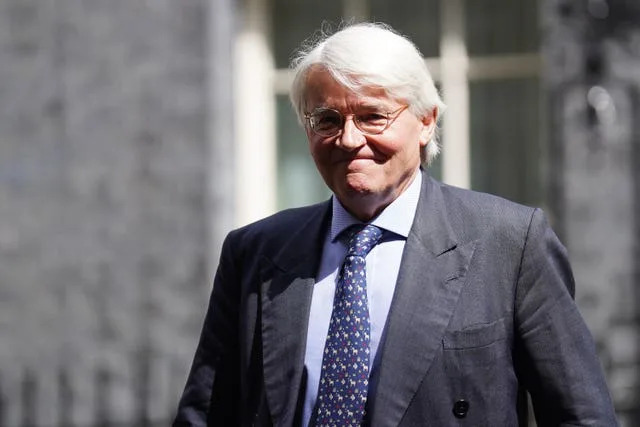
Speaking during a round of interviews with broadcasters, Foreign Office minister Andrew Mitchell initially stopped short of committing to maintaining the ban, saying people should “wait for any announcement” and that he could not “prophesise for the future”.

But after a series of questions on the issue, he said the 2030 ban remains in place “and will remain in place”.

Some Tory MPs have called for a “rethink” over the speed at which net-zero goals are pursued, citing tensions with addressing the cost of living.

But Mr Mitchell said “you can do both”, and also described the wildfires on the Greek island of Rhodes as “undoubtedly a wake-up call” on climate change.

Andrew Mitchell said the ban will continue to remain in place (PA)

Rishi Sunak is said to be considering delaying or ditching climate change-tackling measures that could impose costs on consumers.

One of the options on the table is an exemption for smaller car manufacturers — dubbed an “Aston Martin exemption” — on the 2030 ban on new petrol and diesel cars, according to The Times.

Asked on BBC Radio 4’s Today programme if the ban on the sale of new petrol cars from 2030 is still in place, Mr Mitchell said: “It absolutely is.”

Asked if it will remain that way, he said “well, all I can tell you is it is in place”, but when challenged again said: “Well, I’m afraid I can’t prophesise for the future.”

He denied the suggestion that he is unsure whether it will stay for the rest of the term of this Government, saying: “That is not what I am saying. I am saying that it is in place and it remains in place.”

Asked again if it will remain in place, he said: “And will remain in place.”

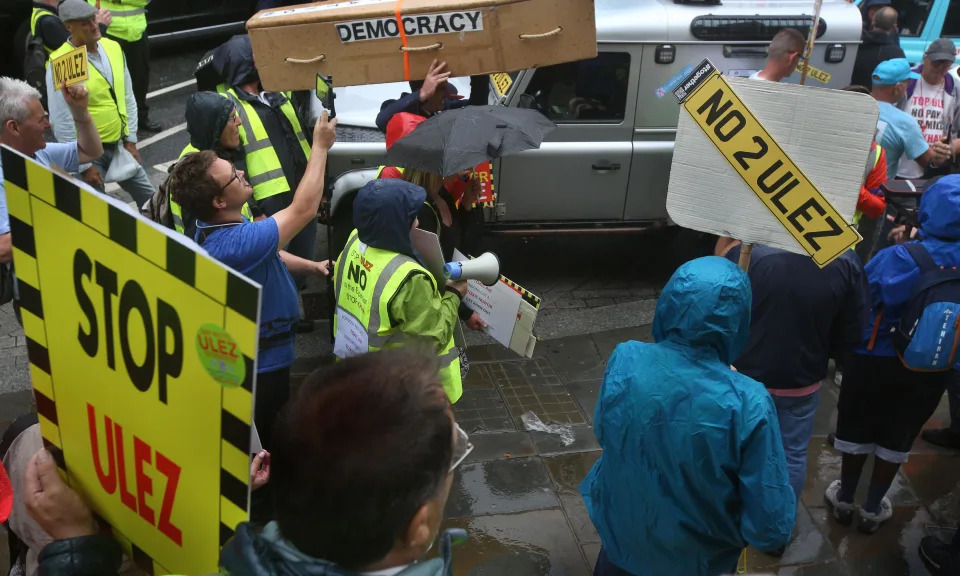
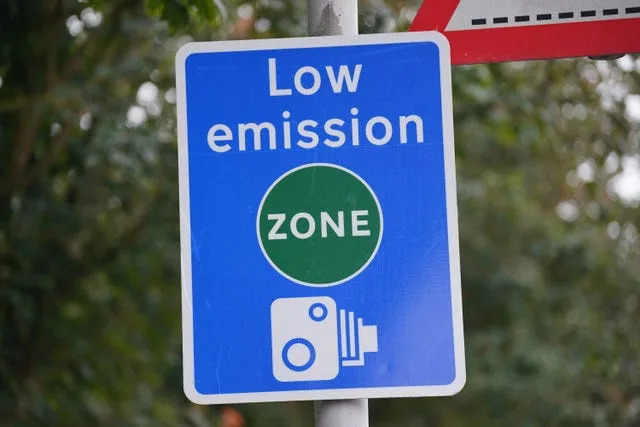
A campaign against the Ultra Low Emission Zone around London was credited to the Conservatives holding on to Uxbridge and South Ruislip in the recent by-election (PA)

Facing similar questioning around the petrol and diesel ban earlier on Times Radio, Mr Mitchell said: “I think the important thing is to wait for any announcement from the Government.”

He said the Government has taken “affordable” measures on reducing emissions, and that the UK is “leading” in the area internationally, adding: “But equally the Government has made it absolutely clear under this Prime Minister that we will defend people from rising costs whenever we can.

“Certainly we should pursue net zero”, he told GB News, adding “but equally we have to defend households and individuals from rising costs.”

The Times also reported that the Government is considering a ban on new low-traffic neighbourhoods (LTNs), with ministers reportedly weighing up preventing councils from using the national number plate database to stop the zones being enforced.

It comes as concerns around the planned expansion of London’s ultra low emission zone (Ulez) helped the Tories hang on to Boris Johnson’s old Uxbridge and South Ruislip constituency during last week’s by-election.

Former business secretary Sir Jacob Rees-Mogg and Danny Kruger, the co-leader of the New Conservatives, a group of Tory MPs elected since the Brexit referendum, both called for green deadlines to be reconsidered on Sunday.
UK
Why Rishi Sunak is backing away from the 2030 petrol car ban

Matt Oliver
THE TELEGRAO]PH
Mon, 24 July 2023 

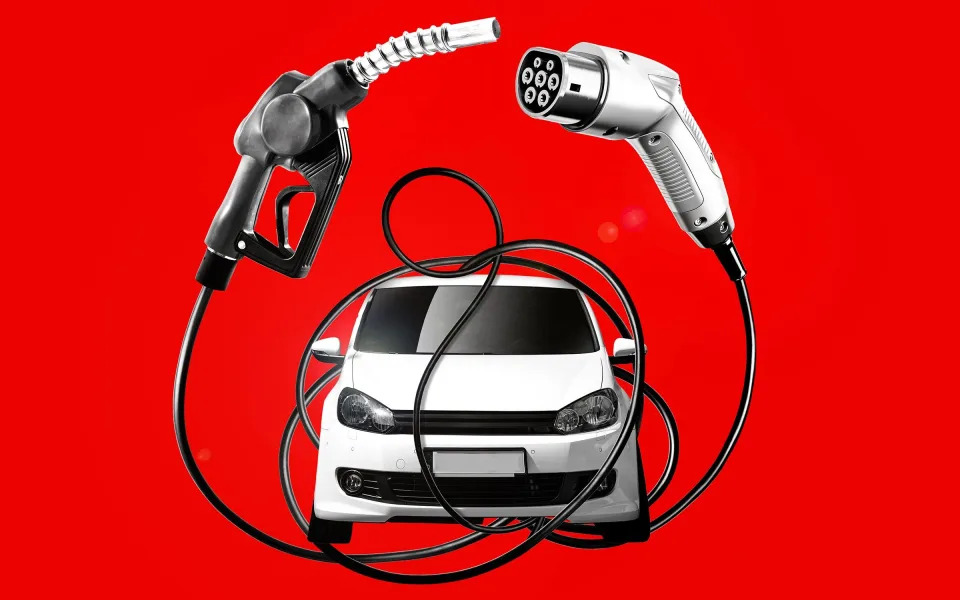
Net Zero Electric Car

With Tory backbenchers demanding a rethink on Britain’s net zero policies, Rishi Sunak gave a less than convincing answer when challenged over one of the Government’s signature pledges.

A ban on the sale of new petrol and diesel cars is due to come into effect from 2030, having been announced with much fanfare by the Prime Minister’s predecessor Boris Johnson.

But when asked whether he would stand by the plan on Monday, Mr Sunak equivocated.

“Of course net zero is important to me,” he said. “So yes we’re going to keep making progress towards our net zero ambitions and we’re also going to strengthen our energy security.

“I think the events over the last year or two have demonstrated the importance of investing more in home-grown energy, whether that’s more nuclear or offshore wind. I think that’s what people want to see and that’s what I’m going to deliver.”

The comments have set the set the stage for a major U-turn, although Downing Street has insisted the 2030 ban remains official policy.

It is the latest twist in a saga going back to Mr Johnson’s premiership.

With a year to go before Britain hosted the Cop26 climate conference, Boris Johnson was preparing to make an eye-catching announcement.

The then-prime minister was poised to set out his 10-point plan to spark a green industrial revolution – and the centrepiece was a vow to ban the sale of new petrol and diesel cars by 2030.

A highly ambitious target, this was five years sooner than the deadline he had set just nine months earlier, which car industry bosses dismissed as “a date without a plan”.

It was also a decade before the target outlined by his predecessor, Theresa May, only two years beforehand.

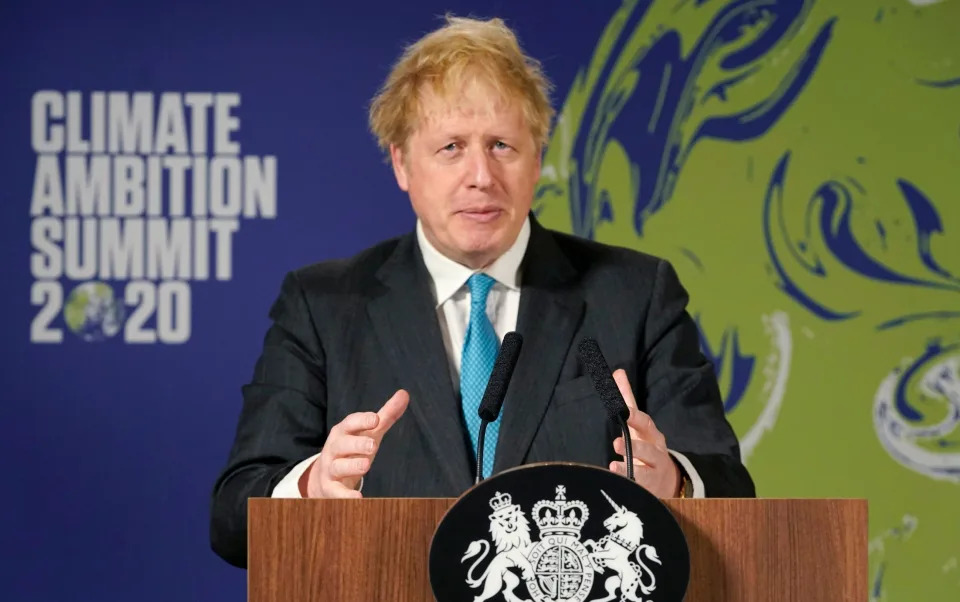
“Our green industrial revolution will be powered by the wind turbines of Scotland and the northeast, propelled by the electric vehicles made in the Midlands and advanced by the latest technologies developed in Wales, so we can look ahead to a more prosperous, greener future,” Mr Johnson said in November 2020.

Boris Johnson and other ministers hoped his 10-point green plan would cement demand for electric vehicles - Freddie Mitchell/No10 Downing Street

His speech, the Government said, would put the UK on course to be the fastest G7 nation to decarbonise road transport.

Yet the new sales ban – described by the Society for Motor Manufacturers and Traders as “immensely challenging” – represented a huge gamble, with the potential to either turbocharge or tank Britain’s domestic car industry.

And astonishingly, for such a consequential policy, no detailed proposals to achieve it had actually been drawn up.

Instead, Johnson and other ministers hoped the stretching target would cement demand for electric vehicles, galvanising businesses to manufacture supplies and build the legions of chargers that would be required.

“It’s like the classic example of putting a man on the moon,” one former minister involved in the policy says.

“When Kennedy said ‘We’re going to put a man on the moon’, he did not know how they were going to get there. He just said this is the target – and they got there.”

Fast forward to today, however, and the scale of the undertaking has become clear.

Electric cars still remain unaffordable for most households, while a huge upgrade of the power grid will be needed in order to boost the number of vehicle chargers in Britain from 42,000 at present to the more than 300,000 being sought by ministers.

Meanwhile, to serve demand for vehicles domestically, around five battery “gigafactories” are needed in the UK – with hundreds of thousands of industry jobs at risk if they are not secured.

Experts say we are now at a crossroads. A report published this week by the Climate Change Committee, the statutory net zero watchdog, said that rising electric car sales were promising but work to build chargers “now needs to scale up more quickly”.

Separately, industry leaders say time is running out for Britain to secure the gigafactories that will be the bedrock of its future car manufacturing base. A failure to do so, while sticking with the 2030 ban on new petrol car sales, threatens a jobs bloodbath.

As the clock ticks down, alarm is growing that Britain will simply not be ready for 2030 – and a delay is increasingly likely.

Carbon cost

The UK’s commitment to reach “net zero” carbon emissions by 2050 will require emissions from vehicles to be almost eradicated.

Surface transport, including cars, accounts for the biggest chunk of Britain’s annual carbon emissions, representing 23pc last year.

This was about 105 million tonnes of carbon dioxide equivalent, the Climate Change Committee’s latest report says, which was 3pc up from 2021 but 8pc below pre-pandemic levels.

The reduction was mostly down to increased working from home, rising fuel prices and so-called low-traffic neighbourhoods, with a small contribution from rising electric vehicle sales.

But a crunch point is fast approaching at which sales of electric cars – which have much lower lifetime emissions than petrol ones – will need to do more of the heavy lifting.

Petrol cars tend to have lifespans of around 14 years, says Mike Hawes, chief executive of the Society of Motor Manufacturers and Traders (SMMT).

“So immediately that says, well, you’ve got to stop selling internal combustion engine (ICE) cars by 2035, to be able to have most off the road by 2050 and deliver net zero,” he adds.

This 2035 target was effectively adopted earlier this year by the European Union, while Denmark has joined the UK in proposing a more ambitious target of 2030. Norway, where eight in 10 cars bought are already electric, is aiming for a 2025 phaseout.

The UK’s own target had initially been 2040 but this was then changed twice by Boris Johnson, who had a longstanding passion for green issues and was encouraged by his now-wife Carrie Symonds.

Johnson thought Britain could steal a march on the rest of the world by pushing car companies to go electric sooner, by 2030, according to his former allies in government.

“Boris was a great directional leader. He was really good at painting a vision and saying ‘Let’s get there, I don’t care how we get there but let’s get there,’” says one minister who was involved in discussions.

“It would force you to think of how to do it.”

In at least that respect, the policy had immediate effects. Industry groups quickly warned a “Herculean effort” would be required, with the SMMT claiming success would “depend on reassuring consumers that they can afford these new technologies, that they will deliver their mobility needs and, critically, that they can recharge as easily as they refuel”.

Crucially, however, car companies secured an important concession. The sale of hybrid cars – which are part petrol, part battery-powered – would still be allowed until 2035.

This went against the Climate Change Committee’s recommendation that all carbon-emitting cars be phased out by 2032 at the latest. But it gave a stay of execution to several car plants, most of which were soon to produce only hybrids anyway.

Honda and Ford had both warned that job losses could result from an earlier hybrid ban, the Guardian reported. Honda closed its Swindon plant in 2021.

Since then, the Department for Transport has set out proposals for the so-called zero-emission vehicle (ZEV) mandate, which sets quotas for how many electric cars manufacturers must sell.

This would start at 22pc next year and gradually rise annually to reach 52pc by 2028 and 80pc by 2030.

“We’re up for the challenge, but we need to ensure we’re using every lever to move that market and encourage people to make the shift,” says Hawes.
Prohibitive pricing

By far the biggest thing that puts many drivers off buying an electric car is cost.

The top-selling EVs in Britain last year were Tesla’s Model Y and Model 3, which cost about £45,000 and £43,000 respectively, registration statistics show.

Next was Kia’s Niro and Volkswagen’s ID.3, both starting at about £37,000, and market stalwart the Nissan Leaf, which starts at £29,000.

The cheapest four-seater available is the MG4 EV, a Chinese model, at £27,000.

Yet all these remain far more expensive than the lowest-priced petrol cars, with the Dacia Sandero costing about £12,600, the MG3 £13,300 and Kia Picanto £13,400.

“We badly need the cost of electric cars to come down,” says Simon Williams of the RAC.

Like heat pumps, an electrically powered heating solution that the Government has backed to replace gas-fired boilers, proponents often argue that the running costs of EVs are actually cheaper than petrol cars.

Yet the upfront costs remain prohibitive for most families, similarly because the technology is not as mature as the fossil fuel-powered alternatives.

In the case of EVs, the biggest reason for this is the cost of batteries – the most expensive components that go into them.

The Climate Change Committee has said lower battery prices are essential to wider EV uptake, but has flagged this as an issue that is now “slightly off track”.

After a steady decline previously, prices increased in 2022 as global markets were convulsed by supply chain disruptions caused by the aftermath of the pandemic and the war in Ukraine, pushing up the costs of essential metals and other materials.

Meanwhile, although it remains cheaper to run an electric car than a petrol one if you charge it at home, rising electricity prices have made battery power less competitive for those who rely on public chargers.

This disparity is worsened by unequal rates of VAT, as well. Those who charge at home pay a rate of just 5pc, while those who charge using public infrastructure pay 20pc.

Another cost will come in 2025, when electric vehicles lose their exemption from vehicle excise duty under changes announced by the Chancellor Jeremy Hunt in his Autumn Statement last November.

One way of making electric cars more affordable is a salary sacrifice scheme, which allows workers at some companies to lease vehicles and pay out of their gross salary – ensuring it is tax-efficient.

Fiona Howarth, chief executive of Octopus Energy’s electric vehicles business, which leases company cars, says her company works with more than 3,000 businesses and has already leased 10,000 cars since setting up two years ago.

It has secured £650m in funding from investors, with around £400m committed so far.

“Salary sacrifice and other company car schemes are a very popular route for EVs,” she says, “because salary sacrifice actually makes it cheaper on a monthly basis to go for an electric car, versus the petrol or diesel equivalent – and that’s before any fuel saving.”

Those who charge at home can save another £1,000 a year in fuel, Howarth adds. “So that makes it very attractive to make the switch.”

One of the problems for buyers in recent years has been availability, as demand outpaced supplies. Some market players have successfully scaled up output, such as Tesla, which went from producing 100,000 cars in 2017 to 1.4m in 2022.

By comparison, German behemoth Volkswagen said it delivered 572,000 EVs that year but was nursing another 310,000 backorders in western Europe alone as supply chain problems crimped output.

“There is just soaring demand for EVs, and the manufacturers are now kind of scrambling to catch up,” Howarth adds.

Customers who order some upmarket brands can expect to wait as long as two and a half years, while last year it was common to wait nine to 12 months for other models.

This is one drawback of the more affordable Chinese makes, which must be shipped to Europe and are generally being directed first towards bigger, left-hand drive markets rather than right-hand ones such as Britain.

“The Chinese brands are the most affordable EVs on the market at the moment with very good range, and they’re very popular cars,” Howarth says.

“And they have had challenges keeping up with some of that demand.”

Overall, EVs represented 17pc of new car sales in 2022, ahead of what the Climate Change Committee says is necessary at this stage to hit net zero.

One catch, however, is that the new car market remains 30pc smaller than in 2019.

Most experts agree that almost equally as important to the wider rollout of EVs is the more affordable second hand market, which remains tiny. Only 1pc of these sales were EVs in 2022, with Autotrader listing only 20,000 electric cars on Friday compared to more than 425,000 petrol, diesel and hybrid cars.

Meanwhile, amid rising cost of living pressures, there are fears that customer appetite is suffering.

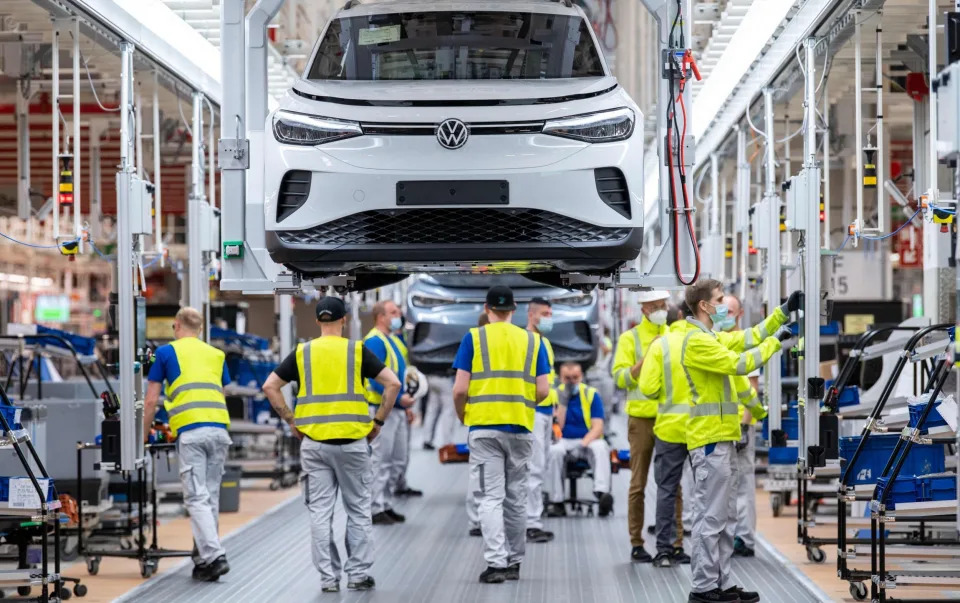
VW this week scaled back EV production at one of its German plants, with the car maker’s works council blaming “strong customer reluctance”. Contributing factors included falling subsidies, surging inflation and long delivery times.


Volkswagen is cutting electric car production at one of its biggest factories after ‘strong customer reluctance’ led to lower sales than expected - David Hecker/AFP

Olaf Lies, a politician who sits on the council, said the decision represented a “warning signal for the industry”.

“The registration figures for electric cars remain high, but what we are concerned about is the current dip in demand – and not just at Volkswagen, but at all manufacturers,” he said.

Patchy progress

Another major concern many drivers have about electric cars is “range anxiety” – the fear their vehicle could run out of battery with no chargers nearby.

Grant Shapps, who was transport secretary when the 2030 policy was announced and is now Energy Secretary, is an electric car driver himself and recognised the need to tackle range anxiety straight away, a colleague says.

In response, the Government has pledged £1.6bn towards expanding the UK’s charge point network as part of plans to reach at least 300,000 chargers by 2030, or roughly 430 chargers per 100,000 people. By that point, it is expected there will be as many as 10 million EVs on the road.

“No matter where you live, we’re powering up the switch to electric and ensuring no one gets left behind in the process,” Shapps said in March 2022.

However, progress so far has been patchy. There are currently about 40,000 chargers in the UK, including almost 8,000 “rapid” ones capable of charging a car from 20pc to 80pc battery in about half an hour, according to official data.

These are unevenly distributed, however, with the bottom fifth of local authorities providing just 20 chargers per 100,000 people compared to 55 across England and 134 in the top fifth of authorities.

Roughly one in 20 chargers was also out of service last year and consumers must navigate as many as 20 different providers. The Government is also behind on its target to have six rapid chargers at every motorway service area in England by the end of this year, with less than a quarter of 119 sites reviewed by the RAC meeting this requirement.

This is vitally important, argues the RAC’s Williams. “Day to day driving in an electric vehicle is actually easy, because most people don’t drive that many miles every day,” he says.

“It’s only really when you start to make journeys beyond the range of your vehicle that you’re going to need to recharge on a journey. And you’ll want to do that as quickly as possible.

“While early adopters have been willing to plan their journeys to take a little bit longer, everyday drivers won’t want to do that.”

A large number of new chargers are in the pipeline, with charging companies having committed £6bn towards building them by 2030. But the Climate Change Committee has still raised questions over whether the pace of change is fast enough.

Ian Johnston, the chief executive of charge point company Osprey and chairman of industry body ChargeUK, claims provision is generally good and that bad patches these days are the exception rather than the rule.

“If you look at what the private sector is doing and what private landlords are doing, we’re seeing a phenomenal deployment of charging,” he says, pointing to a growing number of supermarkets, workplaces and residential streets where they can now be found.

According to ChargeUK, March and April were the best ever months for installations, with more than 2,000 chargers installed in both, a 75pc increase on a year ago.

However, the industry needs to build about double that amount every month on average to hit the Government’s target.

And this growth is chafing against physical constraints, says Johnston. For example, getting one of the regional power grid operators to connect charge points to the electricity grid is often delayed due to a lack of engineers, while the process of obtaining planning consent in many areas often drags on.

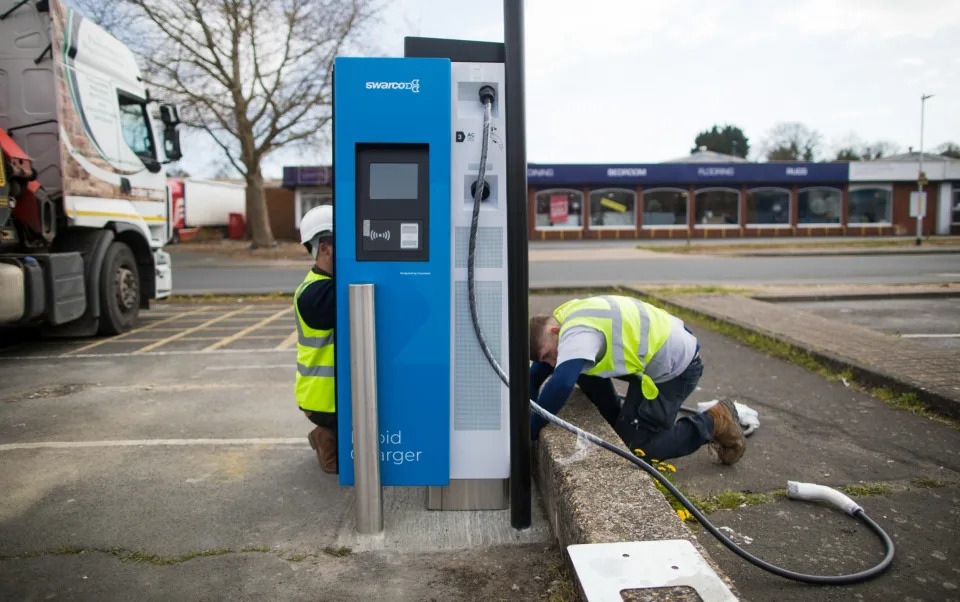
The Government has pledged ambitious plans to reach at least 300,000 chargers by 2030 - Chris Ratcliffe/Bloomberg

Charging prices are also still on the rise. Since September 2021, the cost of using an “ultra rapid” public charger has more than doubled from 34.2 pence per kilowatt hour to 74.2 pence, according to the RAC.

The average cost per mile currently is 10 pence if using a home charger and about 20 pence if using public chargers, compared to about 16 pence per mile for a petrol car that does 40 miles to the gallon, the RAC’s Williams says.

The RAC, the SMMT and electric car advocates want Jeremy Hunt to lower the rate of VAT on public charging to 5pc, so that drivers who do not have off-street parking at home are not unfairly penalised.

“That way, you have a level playing field for all EV drivers,” adds Williams.

In future, with experts predicting that a proliferation of wind and solar power will cause electricity prices to tumble, the environment may also become far more competitive – and tougher – for the many charging providers as the amount they can charge plunges.

“There’s absolutely going to be consolidation,” says Osprey’s Johnston. “Every month you’ve got hundreds of millions going into new charging providers, so there are going to be winners and losers.”

Looming behind all of this is also the question of whether the National Grid can upgrade the country’s electricity system, to make it ready for millions of EVs all charging overnight.

The Grid estimates that by 2030, peak demand for electricity – including EVs – will reach up to 68.5 gigawatts, up from 58.8 gigawatts in 2021.

In terms of throughput, the network will need to carry 38.3 terawatt hours of electricity related to electric cars per year by then, compared to just 2 terawatt hours last year.

Lawrence Slade, chief executive of Energy Networks Association, which represents the UK’s energy network operators, says this will be a “huge undertaking”.

“We’re helping to connect hundreds of thousands of electric vehicle charging points to the networks,” he says, “but there is a significant challenge.”

About 164 gigawatts of connection requests were received in the year to October 2022 – more than twice the entire grid’s worth of capacity.
Factories of the future

With more than 40m vehicles registered to UK owners today, a figure that includes about 35m cars and five million vans and trucks, perhaps the biggest challenge still facing Britain is a manufacturing one.

Only about one million EVs are registered.

At the moment, the car industry employs around 814,000 people, including 169,000 who work in manufacturing according to the SMMT.


Tesla's gigafactory in Berlin opened in 2022 and can deliver 4,000 Model Y cars in a week - REUTERS/Hannibal Hanschke/File Photo

Since the 2030 target was announced, one of the biggest worries has been whether this totemic industry can survive in an electrified world.

According to the Faraday Institution, Britain needs roughly five battery gigafactories to meet domestic demand for electric cars. These factories are seen as crucial, because all other parts of the EV supply chain will orbit them.

So far, the UK has only secured one for certain, at the Nissan factory in Sunderland. Another was due to be built at Blythe, by Britishvolt, but is now in doubt after the company’s collapse and subsequent rescue.

Jaguar Land Rover owner Tata Motors is said to be poised to announce a gigafactory in Somerset following promises of support from the Government, but that has yet to be officially confirmed and Spain has made a counterbid.

Car industry leaders have repeatedly warned that time is running out to secure these factories. Without them, the Faraday Institution has said that the domestic car industry will slowly wither away, as hybrid plants close.

Meanwhile, the 2030 ban has turned up the heat further on UK car makers who are already struggling with “rules of origin” rules – agreed with the EU as part of the Brexit deal – which mean they must also ensure most of their battery components are sourced here or on the Continent.

With Joe Biden’s Inflation Reduction Act luring many firms to the US and President Macron and Germany’s Olaf Scholz offering companies attractive subsidies, is Britain running out of time to sort this issue?

“It’s not too late yet,” says Hawes, of the SMMT. “But as I’ve said before, the window is closing.”

So how likely is success?

“I wouldn’t put a percentage on it, but I’m optimistic,” Hawes insists.
Deadline looms into view

With six and half years still to go, the ban on selling new petrol and diesel cars might still seem a world away.

But in reality, many decisions that could tilt the balance in or out of Britain’s favour need to be made today.

So far the system is keeping up, but a question remains over whether EV manufacturers and charging providers can navigate rising prices and supply chain delays while keeping momentum behind the transition.

Some MPs, including the former business secretary Sir Jacob Rees-Mogg, fear that the 2030 ban on new petrol cars will see Britain lose manufacturing to foreign countries, and have called on Rishi Sunak to push back the target.

One former minister says: “A lot of these targets are aspirational… There’s an element of just trying to get the thing going, and then working out the problems afterwards.

“I do think 2030 is ambitious, but it is not impossible.”

Boris Johnson’s desire for Britain’s EV revolution to be world-beating was always ambitious.

Now, as efforts to expand the charging network flounder, prices stay high and manufacturers struggle to develop a supply chain, it is looking ever harder to pull off.


SEE 

https://plawiuk.blogspot.com/2023/07/uk-rishi-sunak-casts-doubt-on-2030.html


https://plawiuk.blogspot.com/2023/07/rishi-sunaks-net-zero-plans-in-doubt-as.html


https://plawiuk.blogspot.com/2023/07/uk-green-pledges-become-election.html


Marine Scientists Release Over 350 Endangered Seahorses into Sydney Harbour


Mon, 24 July 2023

Marine scientists released over 350 endangered seahorses as part of a conservation effort at Chowder Bay, Sydney, on July 18.

The release is part of The Sydney Seahorse Project which aims to conserve the population of the endangered White’s seahorse, a medium-sized seahorse endemic to the Eastern coast of Australia.

The decline in population of the species in Eastern Australia can largely be attributed to the loss of natural habitat such as sponges and soft coral in the area, according to reports by the Department of Primary Industries.

The released seahorses have been tagged, which enables researchers to monitor their survival and reproductive activities in the wild, the Sydney Institute of Marine Science said.

The project is a collaboration between the Sydney Institute of Marine Science, the University of Technology Sydney, and the New South Wales Department of Primary Industries. Credit: Sydney Institute of Marine Science via Storyful

‘Responsible way to act’: Europe’s space agency attempts an assisted re-entry for retiring satellite

UK
Ulez is more than a political football – it’s a matter of life and death for people like me

https://tfl.gov.uk/modes/driving/ultra-low-emission-zone

To help clear up London's air, the Ultra Low Emission Zone (ULEZ) operates 24 hours a day, 7 days a week, every day of the year, except Christmas Day (25 ...


The Guardian
Mon, 24 July 2023 

I am a previously fit and healthy woman in her early 60s, a never-smoker who was diagnosed with lung cancer three weeks ago.

Lung cancer in never-smokers (LCNS) doubled in the UK between 2008 and 2014. It now accounts for 15% of lung cancers diagnosed and is responsible for around 6,000 deaths a year. Recent research at UCL and the Francis Crick Institute has found that exposure to fine particulate pollution, specifically PM 2.5, is linked to LCNS as well as the growth of other cancers.

The ill-advised tax breaks on particulate emitting diesel vehicles earlier this century could well account for the UK’s huge increase in LCNS, not to mention unknowable consequences for the future health of children exposed to toxic air.


I was appalled to hear Chris Philp MP, on Any Questions on BBC Radio 4 last week, dismiss the positive impact of London’s ultra-low emission zone (Ulez) when published data from Imperial College London shows that harmful emissions have reduced by 26% within the expanded Ulez area, and that the Ulez has reduced PM 2.5 levels by 41% since 2017.

I am now facing an uncertain future and considering treatment options. Meanwhile, measures to reduce pollution in London are being politicised, and serious risks to the health of the capital’s population pitted against election prospects (Starmer urges Khan to ‘reflect’ on Ulez rules after Uxbridge defeat, 22 July).

Name and address supplied

• Rishi Sunak explains the narrow Tory byelection victory in Uxbridge and South Ruislip as the consequence of fighting on “a matter of substance” (Tory election victory hopes hit by shattering byelection defeats, 22 July).

This “matter of substance” involved measures to reduce air pollution, which causes the premature deaths of thousands of Londoners every year and worsens the lives of up to 500,000 asthma sufferers in the capital. The Tory candidate admits he focused on the concerns of local residents on how the Ulez may affect their ability to use their cars without paying the cost of the pollution they generate. In fact, 90% of the cars being driven in outer London would not be subject to Ulez payments.

Dr Martin Price
Poole, Dorset


• After the Conservative victory, tiny as it was, in Uxbridge, there is talk of political parties losing their nerve over green policies. Keir Starmer is saying that we must listen to voters. But the real problem is that no party, with the exception of the Greens, is being honest with the electorate about the consequences of climate change and biodiversity loss. Instead, they say the economy must come first. But this is a fundamental misunderstanding of the relationship between the economy and the environment.

Party leaders often speak as if the environment is somehow a subset of the economy. But of course the economy is really a subset of the environment – there can be no economy without a healthy environment. This is what politicians need to be honest about. It’s the environment, stupid.

Prof Hugh Dunkerley
Brighton


• With debates raging over Ulez, and over retention and pay within the NHS, I wonder whether a simple way to aid both these causes might be to review the age requirement to receive a Freedom Pass, which allows free travel, while offering the lower-paid in the NHS free travel within inner and outer London.

Living close to hospitals is often not an option within London for lower-paid staff, and transport is a considerable cost. Some staff struggle to keep a car, which they have to pay to park and which now also has to be Ulez compliant. Could London’s mayor offer Freedom Passes to this group of workers, thus targeting help at the lower paid, contributing towards staff retention and helping to keep cars off the road?

Sally Giles
London


• Have an opinion on anything you’ve read in the Guardian today? Please email us your letter and it will be considered for publication in our letters section.


OPINION - The Standard View: Sadiq Khan must hold fast over Ulez expansion

Evening Standard Comment
Mon, 24 July 2023 
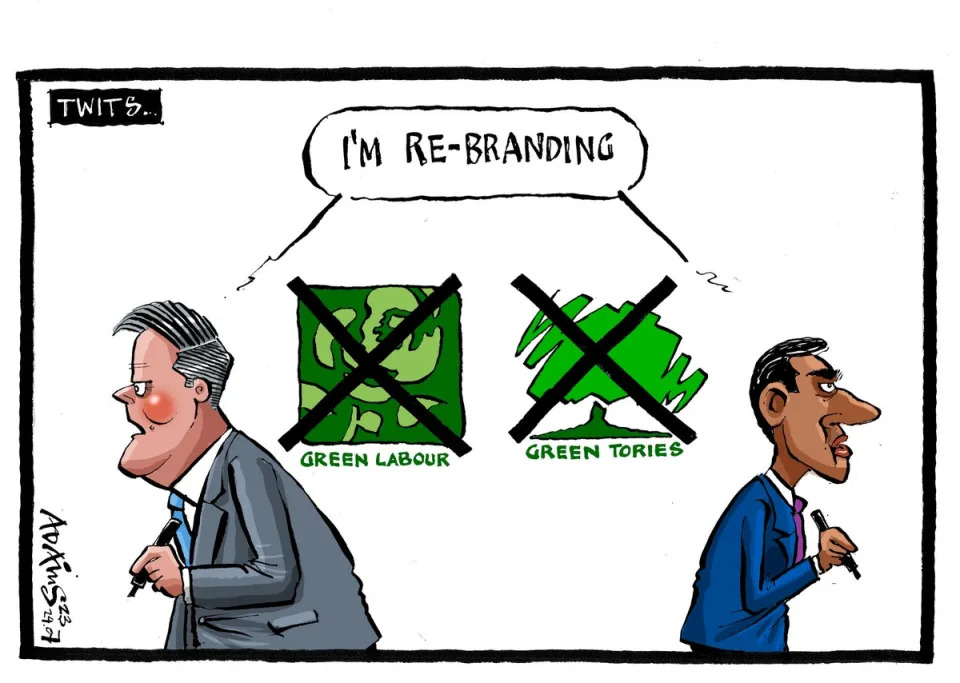
(Christian Adams)

It is a simple political principle that good policy makes for good politics — the thinking being that voters reward leaders who improve their lives. But the connection, insofar as it exists, is not absolute. Something Labour learned the hard way in Uxbridge and South Ruislip.

The extension to the ultra low emission zone is vital to rid the capital of its toxic air and save lives. It is not just the tragic case of nine-year-old south Londoner Ella Adoo-Kissi-Debrah, who became the first person in the UK to have air pollution listed as a cause of death. Research from Imperial College London found that in 2019, toxic air contributed to the premature deaths of around 4,000 Londoners.

Clearly, the imposition of what is effectively a new tax — even on a small minority of non-compliant car owners — would represent a presentational challenge at the best of times, let alone amid a cost-of-living crisis. The close result in one by-election is reason to double down on inducements, not least the more generous car scrappage scheme this newspaper has consistently called for. What it does not justify is a delay to or a dilution of the Ulez extension itself.

The Mayor should ignore pressure from his party leader and hold his nerve.


Sadiq Khan to press ahead with Ulez expansion amid Labour pressure

Aubrey Allegretti Chief political correspondent
THE GUARDIAN
Sun, 23 July 2023

Sadiq Khan is open to new ideas for mitigating the impact of the anti-pollution levy in London being expanded next month, but refusing to back down on the planned timing of its implementation.

Despite pressure from some in Labour for city hall to rethink the policy they believe lost the party the Uxbridge and South Ruislip byelection on Thursday, the mayor is determined for it to come into force.

A call between Khan and the Labour leader, Keir Starmer, on Friday was, aides said, “constructive”. It was agreed there would be follow-up discussions between staff, suggesting there is a live conversation about how the expansion of the ultra-low emissions zone (Ulez) will work in practice.

Khan has sought to signal he is in listening mode and it is understood from those close to city hall that he is happy to look at any new ideas for ways to mitigate the impact on Londoners.

However, the London mayor will not compromise on any moves that could reduce the effectiveness of the policy, which is designed to tackle air pollution and climate change.

Khan last month widened the pool of people who can get financial support to replace polluting vehicles, ahead of Ulez being expanded from its current boundaries of the north and south circular to the whole of Greater London.

City hall sources did not rule out further such moves, given the Tories managed to successfully turn this week’s byelection in west London into a referendum on the Ulez extension.

However, they were keen to stress that nine out of 10 cars in outer London are unaffected and will not have to pay the extra £12.50 a day surcharge.

Starmer nodded to Ulez having been an issue at the byelection on Thursday. The result meant the Conservatives escaped a triple trouncing as Labour won in Selby and Ainsty and the Liberal Democrats took Somerton and Frome.

Starmer told delegates at Labour’s policy forum: “That result in Uxbridge demonstrates there is never any reason to be complacent and never a reason to rest on our laurels.”

Quoting the party’s candidate in Uxbridge, Danny Beales, he added: “It is a reminder, as Danny said, that in an election, policy matters.

“And we are doing something very wrong if policies put forward by the Labour party end up on each and every Tory leaflet. We’ve got to face up to that and learn the lessons.”

The future of the Ulez expansion faces greater uncertainty given it is subject to a judicial review, the outcome of which is expected to be known before the end of July.

Related: Ulez: what is it, how much does it cost and why is it so controversial?

Meanwhile, Michael Gove warned against treating environmental issues like a “religious crusade”. The communities secretary told the Sunday Telegraph that “evangelical” campaign groups pushing for an inflexible application of measures to reduce pollution would lead to a backlash.

Lee Rowley, a minister in Gove’s department, insisted in a later interview on Sunday that “we still have the objective of treading more lightly on the Earth”.

He told Times Radio: “I think everybody agrees with that; I think it is a very sensible thing to do. We have set a series of targets, very ambitious targets to get to 2050.

“But what I think Uxbridge shows is that we have to do this in a careful manner, a manner over the course of several decades – and we have to take people with us.

“And that is something that the Labour party failed to do in making their case in Uxbridge, and what the government wants to be very careful about doing is making sure that people come with us on this journey.”


UK
Tory chaos under Johnson and Truss ‘delayed plans to tackle Islamophobia within party’


Boris Johnson
Prime Minister of the United Kingdom from 2019 to 2022


Liz Truss
Prime Minister of the United Kingdom from September to October 2022


Chaos at the top of the Tory government delayed plans to tackle Islamophobia and other forms of discrimination in its ranks, an independent reviewer has said.

Professor Swaran Singh said the repeated Conservative leadership changes affected the party’s ability to undertake the reforms he called for in his original inquiry into the issue.

The former equality and human rights commissioner’s review, published on Monday, found the implementation of some of his recommendations has been “slow”.

His original inquiry was established by the party following a series of allegations about Islamophobic behaviour among Conservatives.

It found Mr Johnson describing women wearing burkas as looking like “letterboxes” and “bank robbers” gave the impression the Tories were “insensitive to Muslim communities”.

The latest review found training at a local level is “mixed”, and the large amount of documentation in response to the investigation has not necessarily improved “awareness or action on the ground”.

No formal process has been put in place to handle complaints of discriminatory behaviour involving the party’s most senior members, the review found.

Individuals coming forward with allegations were also said to need better care.

“Politics is a rough business, but there is no reason why the complaints process should be indifferent or abrasive to the experience of individuals involved,” the report said.

The churn at the top of the Tories was said to have had an “unavoidable impact on the day-to-day running” of the party.

Professor Singh said: “It just took forever for them to focus on this.”

Since he completed the original report in May 2021, Boris Johnson was forced out as prime minister, as was his immediate successor Liz Truss, ushering in Rishi Sunak as prime minister.


‘The two years since the publication of the report have seen considerable political upheaval in the UK,’ Professor Singh said (Getty)

In the report, Professor Singh wrote: “The two years since the publication of the report have seen considerable political upheaval in the UK.

“In that time, the Conservative Party has had three leaders and seven chairs.

“This turmoil has impacted on the party’s efforts to implement our recommendations.

“Change took longer than expected, and challenges resulting from the interdependencies between recommendations contributed to delays in implementation.”

Professor Singh said it has “taken much longer than we expected” to implement reforms.

He cited the “biggest problem” as being tackling issues at the local party level but welcomed fresh action from Tory HQ as he undertook his review.

In one case detailed in the review, a complainant was further distressed by no sanction being completed nearly a year after the judgement - and the offending continued “undeterred”.

“No apology has been offered to the complainant, or demanded of the respondents, despite the panel imposing other sanctions,” the review said.

But the team welcomed the “wholehearted acceptance” by the party that it must implement the recommendations.

Professor Singh’s update showed there had been 212 complaints relating to 137 incidents in the three months up to June 2022.

Five complaints were categorised as bullying or intimidation, three cited sexual assault, two referred to criminal activity and one was about a member writing on an “alt-right” website.

Professor Singh issued a range of fresh recommendations, including reviewing whether complaints against the most senior members should be handled independently.


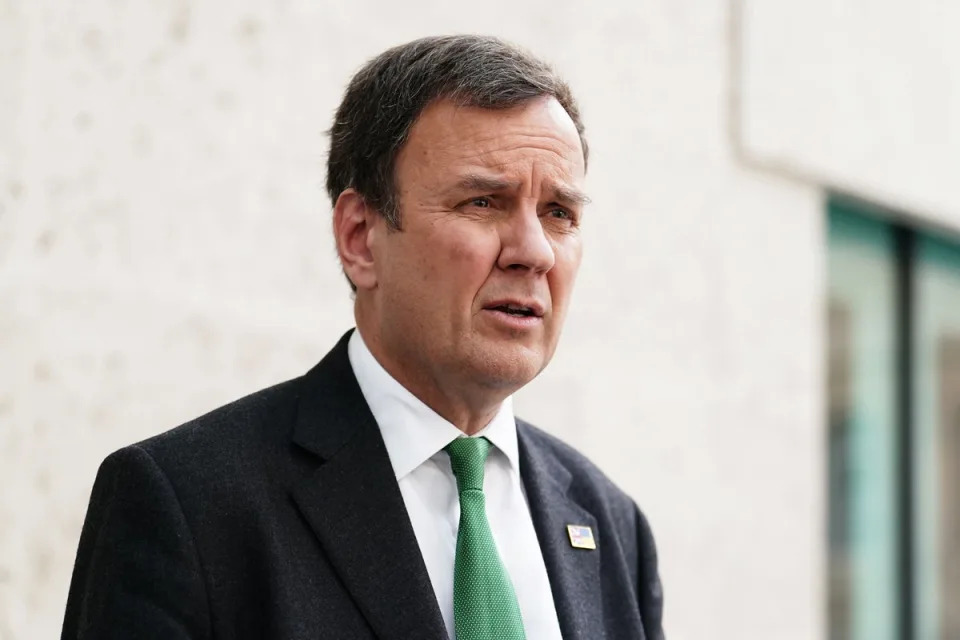
Tory Party chairman Greg Hands said there is ‘work to be done’ on tackling Islamophobia (PA Wire)

Conservative chairman Greg Hands MP said: “The party has made significant progress on Professor Singh’s recommendations with 25 complete and just six ongoing.

“There is however still work to be done and this is a process of continual improvement.”

Tory chaos delayed reforms tackling Islamophobia in party, reviewer finds


Sam Blewett, PA Deputy Political Editor
Mon, 24 July 2023 

The chaos at the top of the Conservatives caused delays in fulfilling plans to tackle Islamophobia and other forms of discrimination in the party, an independent reviewer has said.

Professor Swaran Singh said the “turmoil” has affected the Tories’ ability to undertake the reforms he called for in his original inquiry into the issue.

The former equality and human rights commissioner’s review, published on Monday, found the implementation of some of his recommendations has been “slow”.


Training at the local level is “mixed”, and the large amount of documentation in response to the investigation has not necessarily improved “awareness or action on the ground”.

No formal process has been put in place to handle complaints of discriminatory behaviour involving the party’s most senior members, the review found.

Individuals coming forward with allegations were also said to need better care.

“Politics is a rough business, but there is no reason why the complaints process should be indifferent or abrasive to the experience of individuals involved,” the report said.

The churn at the top of the Tories was said to have had an “unavoidable impact on the day-to-day running” of the party.

Prof Singh told the PA news agency: “It just took forever for them to focus on this.”

Since he completed his report in May 2021, Boris Johnson was forced out as prime minister, as was his immediate successor Liz Truss in a period of tumult.

Liz Truss was in the top job for less than two months (PA)

In the report, Prof Singh wrote: “The two years since the publication of the report have seen considerable political upheaval in the UK.

“In that time, the Conservative Party has had three leaders and seven chairs.

“This turmoil has impacted on the party’s efforts to implement our recommendations.

“Change took longer than expected, and challenges resulting from the interdependencies between recommendations contributed to delays in implementation.”

Prof Singh told PA that it has “taken much longer than we expected” to implement reforms.

He cited the “biggest problem” as being tackling issues at the local party level but welcomed fresh action from Tory headquarters as he undertook his review.

In one case detailed in the review, a complainant was further distressed by no sanction being completed after nearly a year from the judgment – and the offending continued “undeterred”.

“No apology has been offered to the complainant, or demanded of the respondents, despite the panel imposing other sanctions,” the review said.

But the team welcomed the “wholehearted acceptance” by the party that it must implement the recommendations.

Prof Singh’s update showed there had been 212 complaints relating to 137 incidents in the three months up to June 2022.

Five complaints were categorised as bullying or intimidation, three cited sexual assault, two referred to criminal activity and one was about a member writing on an “alt-right” website.

Prof Singh issued a range of fresh recommendations, including reviewing whether complaints against the most senior members should be handled independently.

Conservative chairman Greg Hands MP said: “The party has made significant progress on Professor Singh’s recommendations with 25 complete and just six ongoing.

“There is however still work to be done and this is a process of continual improvement.”

The original inquiry was established by the party following a series of allegations about Islamophobic behaviour among Conservatives.

It found Mr Johnson describing women wearing burkas as looking like “letterboxes” and “bank robbers” gave the impression the Tories were “insensitive to Muslim communities”.

UK
Braverman acted unlawfully by withholding £3 a week from asylum seekers, court rules

Andy Gregory
Mon, 24 July 2023

Suella Braverman breached her duty as home secretary by failing to provide asylum-seekers – including pregnant women and young children – with sufficient support while waiting for their claims to be determined, the High Court has ruled.

The Royal Courts of Justice heard on Friday that Ms Braveman acted unlawfully in withholding £3-a-week payments for healthy food for pregnant women and children between the ages of one and three while in the care of the British state.

The legal challenge was brought by five asylum-seekers, three of whom complained delays in providing financial support risked breaching their human right to be free from degrading and inhuman treatment.

The other two individuals challenged Home Office failures to make the payments while they were living in hotel accommodation.

The ruling by Lord Justice Swift means the Home Office “must now start making these payments to the thousands of pregnant women and people with children under three years old in hotels without delay”, legal firm Deighton Pierce Glynn, which represented some of the claimants, said.

Asylum-seekers are barred from paid work during their first year in the UK, and cannot receive benefits, instead receiving accommodation and a general rate of £47.39 a week in support.

The Home Office, therefore, has a legal duty to provide them and any dependants with appropriate support, including £3 each week for pregnant women.

On Friday, Lord Justice Swift ruled that delays in the system meant that the home secretary’s decision to provide this support only in the form of full-board hotel accommodation, rather than in cash, was unlawful.

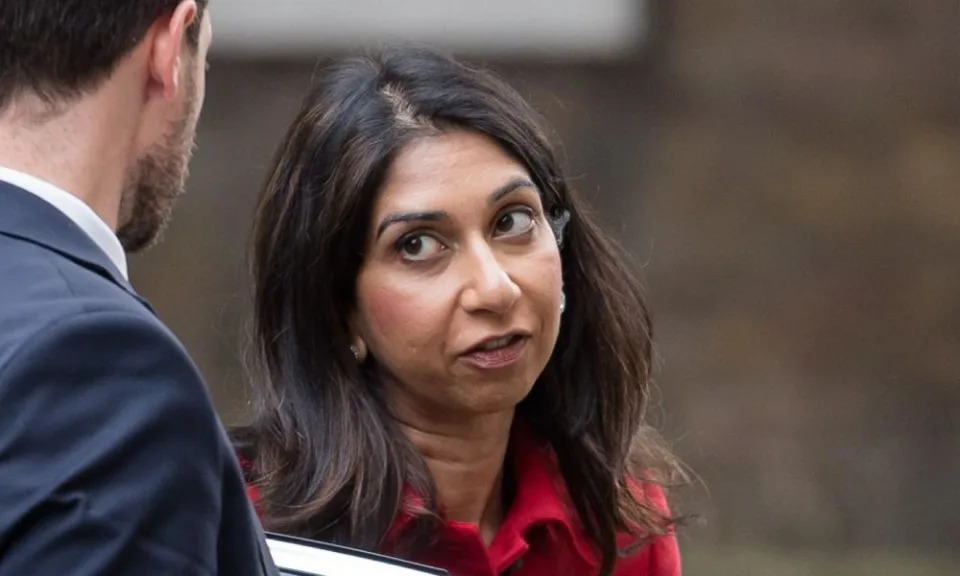
Suella Braverman was found to have breached her duty of care to asylum-seekers (AP)

The court also found that the Home Office’s failure to provide emergency interim financial support to those waiting for a decision on their application for such support was unlawful.

John Crowley, an associate solicitor at legal firm Leigh Day, said: “It cannot be right that people legitimately seeking asylum are made to suffer such degrading treatment. It is time for the Home Office to abide by its legal duties and rectify this wide-reaching problem.”

The first asylum-seeker represented by the firm, known as K, is a single mother from India with a five-year-old child, who left her husband as a result of domestic violence. She and her daughter lived with her friend but had no money to meet their basic needs, so applied for “subsistence only” support in January 2022.

While the Court has now given guidance that decisions should ordinarily be made within 10 days, the Home Office did not grant her application until August 2022, and only after the issue of a judicial review claim challenging the delays.

She tried to get emergency financial support so that she could buy food but was told she would have to move into a hotel, which she feared would unsettle her daughter, and was an unnecessary expense.


A view of the Bibby Stockholm accommodation barge, which will house up to 500 asylum seekers in Dorset (Andrew Matthews/Pool Photo via AP)

The second asylum seeker, known as NY, is a single father of two children, aged 14 and nine, who suffers from serious medical conditions. After a delay of 11 weeks, the Home Office accepted he was destitute and granted him accommodation and financial support in May 2021.

However, it then failed to provide accommodation for seven months and financial support for a year. The third claim was by an 82-year-old disabled female asylum-seeker from Pakistan known as AM, who applied for accommodation and financial support in November 2021. Despite calling numerous times, and pointing out that she was about to be made homeless, she was told that her documents had not been received.

She was forced to re-apply multiple times and eventually launched legal action last October. After denying that it had ever received her documents, it transpired on the day before the final hearing in February 2023, that the Home Office had received AM’s documents in June 2022, Leigh Day said.

A Home Office spokesperson said: “We are considering the court’s findings and will respond in due course.”

Suella Braverman broke law by denying asylum seekers £3 a week, judge rules

Diane Taylor
Mon, 24 July 2023


The home secretary acted unlawfully in failing to provide basic support to asylum seekers, including young children and pregnant women, a judge has ruled.

Suella Braverman must introduce changes that will benefit thousands of asylum seekers after five successfully challenged the home secretary in the high court.

Three of the claimants brought proceedings over delays in providing financial support while two challenged over failures to provide cash payments to pregnant women and to children under three years old.

In his ruling, Mr Justice Swift found that the home secretary broke the law in withholding payments of £3 a week to provide healthy food for children aged one to three and to pregnant women.

She must start making these payments to the thousands of pregnant women and people with children under three in hotels.

The judge also found that the system the home secretary has been operating for dealing with asylum support payments was unlawful due to long delays in processing requests for these payments.

Asylum seekers are not allowed to work for the first year that their claim is being considered and after that only those on the government’s shortage occupation list are allowed to work. Many asylum seekers are entirely dependent on the Home Office for their survival in the form of payments of £45 a week if they are in shared housing or £9.10 a week if they are living in a hotel.

The court heard evidence that the hotel food was pasta, rice, chips, mashed potato and dry sandwiches so it was not possible for the two people who brought the challenge over the lack of healthy food payments for pregnant women and small children to eat suitable food when relying solely on what the hotel provided.

Among the cases in which the asylum seekers struggled to provide basics for their children owing to delays in support payments, the judge said one faced an existence “which was in many ways wretched, particularly for a young child who went without on many occasions” and in another suffered “very saddening circumstances” where the parent was “reduced to asking in shops for leftover food” and the children became “lethargic” and “visibly thinner”.

In a third case involving an 82-year-old disabled woman who was unable to access accommodation and support in a timely way, the home secretary has been ordered to pay her compensation after accepting she had unlawfully failed in her legal duty to provide the woman with accommodation and support.

Lawyers who represented the five asylum seekers welcomed the ruling. The associate solicitor at Leigh Day, John Crowley, who represented the three who challenged delays in support, said: “The court has found in no uncertain terms that the Home Office’s current system for supporting asylum seekers is unlawful.

“It is unacceptable that my clients, and so many others like them, had to go months and months without any form of support, forcing them into desperate and horrifying situations. It cannot be right that people legitimately seeking asylum are made to suffer such degrading treatment.”

Solicitors Sasha Rozansky and Ugo Hayter, from Deighton Pierce Glynn, representing the asylum seekers challenging the lack of financial support for pregnant asylum seekers and those with small children, said: “This is a victory for basic dignity and fundamental rights for people in hotels, which means that pregnant women and small children will get the additional payments which were unlawfully withheld from them.”

The Home Office has been approached for comment.
UK
Railways set for fresh disruption as Aslef union announces new overtime ban for train drivers

Matt Watts and Josh Salisbury
Mon, 24 July 2023 

Londoners are facing further rail disruption after union Aslef announced another overtime ban from August 7 to 12 in their long-running dispute over pay.

The action, if it goes ahead, will mean disruption to rail schedules at the height of the summer holidays.

Under the industrial action, members of Aslef at 15 train companies in England will refuse to work overtime.

The union said the ban will seriously disrupt services as it believes none of the train companies employs enough drivers.

The move will affect Avanti West Coast; Chiltern Railways; Cross Country; East Midlands Railway; Greater Anglia; Great Western Railway; GTR Great Northern Thameslink; Island Line; LNER; Northern Trains; Southeastern; Southern/Gatwick Express; South Western Railway main line; TransPennine Express and West Midlands Trains.

It will be the fifth week-long ban on working overtime since May. The latest ban ended on Saturday, with another one due from July 31 to August 5.

Mick Whelan, Aslef’s general secretary, said: “We don’t want to take this action - because we don’t want people to be inconvenienced - but the train companies, and the government which stands behind them, have forced us into this place because they refuse to sit down and talk to us and have not made a fair and sensible pay offer to train drivers who have not had one for four years - since 2019 - while prices have soared in that time by more than 12%.”

Members of the Rail, Maritime and Transport union staged two strikes last week and will walk out again on Saturday in a bitter row over pay, jobs and conditions.

However, a proposed Tube strike this week which threatened to bring the capital to a halt have been called off after talks.

Those strikes, which would have stopped the Tube for four days this week, were called off after “significant progress” was made in talks between unions and TfL.

The Rail Delivery Group, which is representing train operating companies in the talks, said Aslef was continuing “to disrupt customers’ travel plans.”

“They rejected a fair and affordable offer without putting it to their members, which would take average driver base salaries for a 4 day week without overtime from £60,000 to nearly £65,000 by the end of 2023 pay awards,” said a spokesman.

“Train companies will work hard to minimise the impact of the overtime ban overtime ban at 13 train operating companies between 7 and 12 August that will affect the level of cancellations and the punctuality of some services.”

Train companies are advising passengers to plan their journey in advance and check the latest travel information before they travel.

Train drivers’ union announces fresh overtime ban in pay dispute

Alan Jones, PA Industrial Correspondent
Mon, 24 July 2023 at 3:45 am GMT-6·2-min read

Train drivers are to stage another week-long overtime ban in a long-running dispute over pay, threatening fresh disruption to services at the height of the summer holidays.

Members of Aslef at 15 train companies in England will refuse to work overtime from Monday August 7 to Saturday August 12.

The union said the ban will seriously disrupt services, claiming that none of the train companies employs enough drivers.


The move will affect Avanti West Coast; Chiltern Railways; Cross Country; East Midlands Railway; Greater Anglia; Great Western Railway; GTR Great Northern Thameslink; Island Line; LNER; Northern Trains; Southeastern; Southern/Gatwick Express; South Western Railway main line; TransPennine Express and West Midlands Trains.

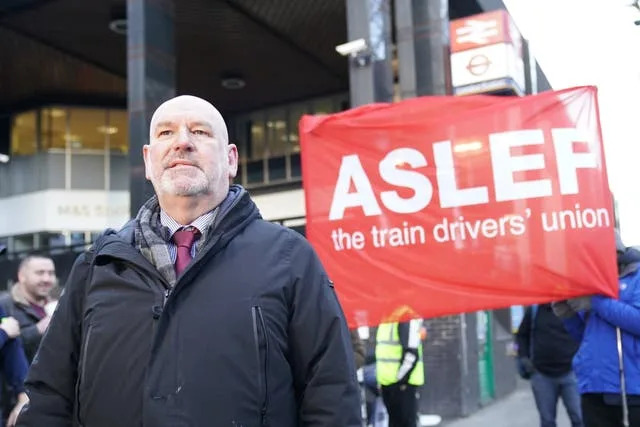
Aslef general secretary Mick Whelan (Kirsty O’Connor/PA)

It will be the fifth week-long ban on working overtime since May.

The latest ban ended on Saturday, with another one due from July 31 to August 5.

Mick Whelan, Aslef’s general secretary, said: “We don’t want to take this action – because we don’t want people to be inconvenienced – but the train companies, and the government which stands behind them, have forced us into this place because they refuse to sit down and talk to us and have not made a fair and sensible pay offer to train drivers who have not had one for four years – since 2019 – while prices have soared in that time by more than 12%.”

Members of the Rail, Maritime and Transport union staged two strikes last week and will walk out again on Saturday in a bitter row over pay, jobs and conditions.

A spokesperson for the Rail Delivery Group, said: “Aslef’s leadership continues to disrupt customers’ travel plans. They rejected a fair and affordable offer without putting it to their members, which would take average driver base salaries for a four day week without overtime from £60,000 to nearly £65,000 by the end of 2023 pay awards.

“Train companies will work hard to minimise the impact of the overtime ban that will affect the level of cancellations and the punctuality of some services. Customers are advised to plan their journey in advance and check the latest travel information before they travel.

“We ask Aslef to recognise the very real financial challenge the industry is facing and work with us to deliver a better, more reliable railway with a strong long-term future.”