Friday, July 28, 2023

Podcast: The prospects for nuclear energy in Africa


The main interview is with Lassina Zerbo, who discusses the current situation, and the emerging future plans, for nuclear energy in Africa. There are also reports on China's molten salt reactor and the USA's HALEU fuel supply initiatives.


Lassina Zerbo is the former head of the Comprehensive Nuclear Test Ban Treaty Organization and current chairman of the Rwanda Atomic Energy Board - he joins us to discuss the current situation and look ahead to the future.

He talks about the history and considers why there is only one country in the continent with an operating nuclear power plant, and how changes in public opinion and nuclear technology are helping to drive a wide range of planned developments. Director of World Nuclear Association's Harmony programme, King Lee, also outlines some of the many initiatives taking place which could transform the nuclear energy picture in Africa in the years to come.

June has been another busy month for World Nuclear News and Warwick Pipe reports on developments with China's molten salt reactor, while Claire Maden sets out the USA's efforts to tackle the issue of HALEU fuel supplies for the next generation of nuclear reactors.

Listen and subscribe on all major podcast platforms

World Nuclear News podcast homepage
Spotify
Apple
Amazon Music
Google
Stitcher
Castbox

Researched and written by World Nuclear News

Zimbabwe and Ethiopia sign nuclear energy cooperation agreements with Russia

28 July 2023


Two more countries - Zimbabwe and Ethiopia - have signed agreements with Russia to cooperate on the peaceful use of nuclear technology on the sidelines of the Russia-Africa Economic and Humanitarian Forum, which has been taking place in St Petersburg.

(Image: Rosatom)

The intergovernmental agreement between Russia and Zimbabwe - which follows a memorandum of understanding concluded in September 2021 - was signed by Rosatom Director General Alexei Likhachev and Zimbabwe's Energy Minister Soda Zhemu.

Rosatom said: "It establishes a legal framework for cooperation between Russia and Zimbabwe in the peaceful use of atomic energy in a wide range of areas, such as assistance in the creation and improvement of Zimbabwe's nuclear infrastructure in accordance with international guidelines; regulation in the field of nuclear and radiation safety, production of radioisotopes and their use in industry, medicine and agriculture; cooperation in areas of application of radiation technologies and nuclear medicine, education, training and retraining of specialists for the nuclear industry."

Also on the sidelines of the forum, Russia and Ethiopia signed a roadmap for bilateral cooperation in the use of atomic energy for peaceful purposes. According to Rosatom: "The roadmap defines specific steps that the parties will take in 2023-2025 to explore the possibilities of building a nuclear power plant of large or small capacity, as well as a Nuclear Science and Technology Center in Ethiopia. The parties plan to work together to develop Ethiopia's national nuclear infrastructure, organise technical tours and seminars, and meetings of specialised working groups."

On Thursday it was announced that Russia and Burundi had signed a memorandum on cooperation on peaceful use of nuclear technology, including training of personnel and applications such as medicine and agriculture in addition to production of energy.

Apart from South Africa, which has had an operating nuclear energy plant for nearly four decades, the next country in Africa set to get a nuclear power plant is Egypt, where Russia's Rosatom is currently building the four VVER-1200 unit El Dabaa plant.

Burundi and Russia agreement on nuclear cooperation

27 July 2023


The Republic of Burundi and Russia have signed a memorandum of cooperation (MoC) on peaceful uses of nuclear technology. It was signed as the Russia-Africa Economic and Humanitarian Forum takes place in St Petersburg.
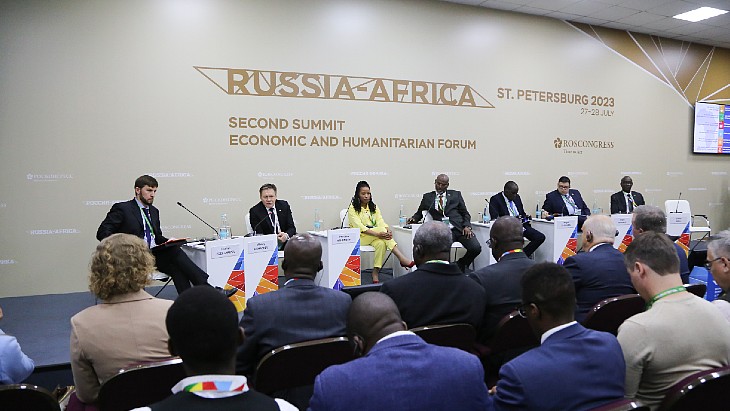
Likhachev, second left, and Uwizeye, centre, took part in a panel session on nuclear at the forum (Image: Roscongress)

Russia is currently hosting the forum and the MoC was signed on its sidelines by Burundi's Minister of Foreign Affairs and Development Cooperation Albert Shingiro and Rosatom Director General Alexei Likhachev.

Rosatom said the agreement allows projects including "assisting in the establishment and improvement of Burundi's nuclear infrastructure; legal regulation in nuclear and radiation safety; conducting fundamental and applied research in the area of peaceful atomic energy; radioisotopes production and its application in the industry, medicine, and agriculture; cooperation on radiation technologies and nuclear medicine; personnel training and specialists education for the nuclear industry".

There will also be the creation of a joint coordination committee with exchanges of experts and of "scientific and technical information and supply of equipment, materials and components".

Earlier, a delegation from Burundi, headed by President Evariste Ndayishimiye, visited the Leningrad nuclear power plant, with its VVER-1200 reactors. Burundi's Minister of Water Resources, Energy and Mining, Ibrahim Uwizeye, said the visit had been very useful in the context of the Burundi-2040 project which has among its aims to "lead our country to energy security and independence with the consumption of different types of energy within the country".

Burundi signed its first Country Programme Framework with the International Atomic Energy Agency in 2016 and in 2019 the Ministry of Foreign Affairs presented a bill in parliament for the peaceful use and the safety and security of nuclear energy and ionizing radiation.

There are other African countries discussing nuclear energy - and other peaceful uses of nuclear technology - with Russia at the forum. President Vladimir Putin was reported by Tass to have said during talks with Ethiopian Prime Minister Abiy Ahmed that "we have prepared a whole package of documents for your visit ... among them ... a roadmap on cooperation in the area of nuclear energy use". This would follow the two countries signing an intergovernmental agreement on cooperation in the peaceful uses of nuclear energy at a previous Russia-Africa Forum in 2019.

Tass also reported that Russia and Zimbabwe "may sign an agreement on cooperation in the peaceful use of nuclear energy" and earlier this week Russia's ambassador in Tanzania was reported to have said a pilot project to extract uranium in the country could be launched "in the coming months" which "may eventually evolve into a full-scale uranium mining and production facility".

Apart from South Africa, which has had an operating nuclear energy plant for nearly four decades, the next country in Africa set to get a nuclear power plant is Egypt, where Russia's Rosatom is currently building the four VVER-1200 unit El Dabaa plant. President Putin, speaking at a meeting with Egypt's President Abdul Fattah al-Sisi ahead of the forum in St Petersburg, said that the giant energy project was going according to plan.

Researched and written by World Nuclear News


Eleventh Japanese reactor resumes operation

28 July 2023


Unit 1 of the Takahama nuclear power plant in Japan's Fukui Prefecture has been restarted after being taken offline more than 12 years ago. Kansai Electric Power Company plans to return the 780 MWe (net) pressurised water reactor (PWR) to commercial operation at the end of August.

The four-unit Takahama plant (Image: NRA)

Takahama 1 entered a regular inspection outage in January 2011, two months before the accident at the Fukushima Daiichi plant that resulted in all of Japan's operable reactors being taken offline. Unit 2 of the plant was taken offline in November 2011.

Kansai applied to the Nuclear Regulation Authority (NRA) to restart the two reactors in March 2015.

In April 2016, the NRA confirmed the units met new safety regulations. In December of that year, the NRA gave its approval for the reactors - which began operating in 1974 and 1975, respectively - to operate for up to 60 years, becoming the first Japanese units to be granted a licence extension beyond 40 years under the revised regulations.

Takahama 1 was originally scheduled to restart around early June, but the plan was postponed due to the need for additional work on fire protection infrastructure.

Kansai announced that Takahama 1 was restarted at 3.00pm on 28 July and expects the reactor to reach criticality on 29 July. Following various tests, the final stage of the periodic inspection will be carried out on 2 August. On 28 August, a comprehensive load performance test will be conducted and full-scale operation will be resumed. The next scheduled inspection of the reactor is in April 2024.

Takahama 2 is scheduled to resume operations on 15 September.

Takahama 3 and 4 - two 1180 MWe PWRs - were returned to commercial operation in February 2016 and June 2017, respectively. In April this year, Kansai asked the NRA for permission to extend the lifespan of Takahama units 3 and 4 - which both began commercial operation in 1985 - by 20 years.

The reviews of 17 reactors had been successfully completed and 11 of them have now returned to operation. The remaining 14 operable reactors are at various stages of the NRA review process, and several may be forced to shut down temporarily for not meeting NRA deadlines to construct back-up control centres or other facilities required by the new regulations.

In December last year, the Japanese government adopted a plan to extend the operation of existing nuclear power reactors and replace aging facilities with new advanced ones. The move is part of a policy that addresses global fuel shortages following Russia's invasion of Ukraine and seeks to achieve carbon neutrality by 2050.

Researched and written by World Nuclear News

Alaska simplifies microreactor regulations

28 July 2023


The US state of Alaska has adopted regulations to streamline the regulatory process for the siting of microreactors. The new regulations, which waive some requirements imposed on larger nuclear facilities, come into effect in August.

he MMR Energy System (Image: USNC)

Constructing any nuclear facility in Alaska requires both federal and state permits. The Nuclear Regulatory Commission (NRC) is the authority over civilian nuclear safety. All aspects pertaining to safety for each application for a nuclear reactor are addressed in the NRC permitting process. The state's authority over nuclear power generation is limited to siting.

Previously, the Alaska Department of Environmental Conservation could not issue a permit for siting a nuclear facility unless the land for the facility was both designated by legislature and the local municipal government approved the permit.

The new regulations stem from Senate Bill (SB) 177 which Governor Mike Dunleavy signed into law in 2022, updating Alaska Statute (AS) 18.45. The 2022 updates to AS 18.45 remove the requirement for the legislature to designate land for a nuclear microreactor, which is defined as an advanced nuclear reactor capable of producing no more than 50 MW. In "unorganised" boroughs which have no municipal government, the legislature must approve the siting permit. The regulations establish requirements for the applicant to engage the public early in the permitting process.

According to the Alaska Beacon, among the restrictions are that a reactor cannot be built within 2700 feet (823 metres) of a residence, 300 feet (92 metres) of a national park or game reserve, in a coastal area vulnerable to storm surge, within 100 feet (30 metres) of a public road or trail, or in an area protected because it's used for drinking water. The rules also state that if part of a facility is located in a 100-year flood plain, operators have to demonstrate that a flood would not damage the facility.

"These changes give communities more control over how they meet local energy demands and lay the groundwork for developers to utilise dependable and carbon-free nuclear energy to power work in remote locations," the State of Alaska said.

"For rural Alaska villages that are now dependent on diesel power generation, power from nuclear microreactors can be a gamechanger that reduce both the cost for electricity and carbon emissions," Dunleavy said. "I want all Alaskans to have access to 10 cent power by 2030. These regulations lay the groundwork to help accomplish that goal."

"It's incredibly important to engage with stakeholders early and often. Giving local governments the ability, or rather the requirement to participate in the siting of these facilities will be vital to the success of microreactors in Alaska," added DEC Commissioner Jason Brune. "Microreactors also have the potential to bring rural resource development projects to fruition, bringing economic opportunity to rural Alaska while also protecting human health and the environment."

Two significant projects are already being planned in Alaska at Eielson Air Force Base and in Valdez with the support of the Copper Valley Electric Association (CVEA).

The US Department of Air Force's preferred location to pilot its first microreactor is at the Eielson Airforce Base near Fairbanks. In September 2022, the department, in partnership with the Defense Logistics Agency Energy, issued a request for proposal for a microreactor to be built at the base. The reactor will be owned and operated by the contractor, and the US government will purchase its energy output via a long-term contract under a firm-fixed price. The system must be able to produce electricity and steam and to meet a baseload electricity demand of 5 MWe. The target is for the microreactor to be operational in 2027.

Meanwhile, Alaskan cooperative utility CVEA and Ultra Safe Nuclear Corporation have agreed to determine the feasibility of building the first commercial installation of a Micro Modular Reactor (MMR) Energy System in the state. CVEA provides electrical and heat services to more than 3800 business and residential customers stretching north 160 miles from Valdez to Glennallen and spanning 100 miles east to west from the Tok Cutoff highway into the northern reaches of the Matanuska Valley.

Researched and written by World Nuclear News


Aging process slows when older mice share circulatory system of young


The longer the animals shared circulatory systems, the more durable the benefits were to the older mouse

Peer-Reviewed Publication

DUKE UNIVERSITY MEDICAL CENTER


DURHAM, N.C. – A process of surgically joining the circulatory systems of a young and old mouse slows the aging process at the cellular level and lengthens the lifespan of the older animal by up to 10%.


Appearing online July 27 in the journal Nature Aging, a team led by Duke Health researchers found that the longer the animals shared circulation, the longer the anti-aging benefits lasted once the two were no longer connected.


The findings suggest that the young benefit from a cocktail of components and chemicals in their blood that contributes to vitality, and these factors could potentially be isolated as therapies to speed healing, rejuvenate the body and add years to an older individual’s life.


“This is the first evidence that the process, called heterochronic parabiosis, can slow the pace of aging, which is coupled with the extension in lifespan and health,” said senior author James White, Ph.D., assistant professor in the departments of Medicine and Cell Biology at Duke University School of Medicine and the Duke Aging Center.


White and colleagues set out to determine whether the benefits of heterochronic parabiosis – surgically fusing two animals of different ages to enable a shared circulatory system – were fleeting, or more long-lasting.


Earlier studies at Duke and elsewhere documented anti-aging benefits in tissues and cells of the older mice after three weeks of parabiosis. These studies found that the older mice became more active and animated, and their tissue showed evidence of rejuvenation.


“Our thought was, if we see these anti-aging effects in three weeks of parabiosis, what happens if you bring that out to 12 weeks,” White said. “That’s about 10% of a mouse’s lifespan of three years.”


White said the ages of the mice were also important, with the young mouse aged four months, and the older mouse aged two years.


With follow-up during a two-month detachment period, the older animals exhibited improved physiological abilities and lived 10% longer than animals that had not undergone the procedure.


At the cellular level, parabiosis drastically reduced the epigenetic age of blood and liver tissue, and showed gene expression changes opposite to aging, but akin to several lifespan-extending interventions such as calorie restriction.


The rejuvenation effect persisted even after two months of detachment.


In human terms, the parabiosis exposure would be the equivalent of pairing a 50 year-old with an 18-year-old for about eight years, with the effects adding eight years to the person’s lifespan.


White said the experiment was designed to study if long-term exposure of young blood will cause lasting effects in the old mouse. Pairing humans for heterochronic parabiosis is obviously not practical or even ethical, he said. He also noted that other anti-aging strategies, such as calorie restriction, work better to extend longevity in mice.


“Our work points to a need to explore what factors in the circulation of youthful blood cause this anti-aging phenomenon” White said. “We have demonstrated that this shared circulation extends life and health for the older mouse, and the longer the exposure, the more permanent the changes.


“The elements that are driving this are what’s important, and they are not yet known,” White said. “Are they proteins or metabolites? Is it new cells that the young mouse is providing, or does the young mouse simply buffer the old, pro-aging blood? This is what we hope to learn next.”


In addition to White, study authors include Bohan Zhang, David E. Lee, Alexandre Trapp, Alexander Tyshkovskiy, Ake T. Lu, Akshay Bareja, Csaba Kerepesi, Lauren K. McKay, Anastasia V. Shindyapina, Sergey E. Dmitriev, Gurpreet S. Baht, Steve Horvath, and Vadim N. Gladyshev.


The study received funding support from the National Institutes of Health (K01AG056664, R21AG065943, R01AG067782, P01AG047200, R01AG065403, T32HL007057).


What these scientists learned from offering genetic screening to 13,000 Oregonians for free


Peer-Reviewed Publication

CELL PRESS

Robots perform more tedious laboratory tasks at the Healthy Oregon Project CREDIT Gregory Goh 

VIDEO: ROBOTS PERFORM MORE TEDIOUS LABORATORY TASKS AT THE HEALTHY OREGON PROJECT CREDIT GREGORY GOH view more 

CREDIT: GREGORY GOH


Early genetic testing can improve cancer outcomes, but individuals often don’t undergo this screening if they lack a family history or can’t afford a test.  A clinical laboratory team at Oregon Health & Science University is hoping to change that for residents of their state by providing free genetic screening for inherited cancer and familial hypercholesteremia to all adults with an Oregon address. After screening over 13,000 Oregonians since 2018, the team presents their methods, findings, and lessons learned on July 27 in The American Journal of Human Genetics.

“We’re hoping that this can really be used as a model for other states that want to do low-cost population screening,” says first author Timothy O’Brien, a staff scientist at Knight Diagnostic Laboratories. “We’ve provided a kind of roadmap where up-and-coming screening programs can look at us and see both what worked and what could be improved upon.”

The team recruited participants through social media ads and tabling at events like farmers markets. They even set up vending machines where individuals could retrieve and return testing kits that collected a mouthwash saliva sample. After the onset of the COVID-19 pandemic, individuals could request a testing kit through the mail. Once participants gave their consent through a HIPAA-compliant app, samples were processed at a clinical laboratory to screen for disease-causing variants in 31 genes related to inherited cancer and 1 gene related to familial hypercholesteremia.

“We wanted to report on any disease-causing variant that was deemed to be actionable, which means there’s something you can do about it,” says senior author Sue Richards, a Professor Emeritus of Molecular & Medical Genetics at Oregon Health & Science University. “It could be something like changing your screening habits, taking a prophylactic surgery or medication, or consulting with your clinician.”

 710 out of over 13,000 participants screened positive for a disease-causing variant. All participants with confirmed positive results received a call from a genetic counselor to explain their results, how the results impact their disease risk, and recommendations for medical management. “Genetic counseling is critical to this program,” says Richards. “It’s not easy for the public to understand these genetic testing reports because they’re fairly technical, and it’s important to understand that just because they carry a disease-causing variant may not mean that they will develop that type of cancer. The counselor also talks to them not only about their own health and family history but also how they pass that information along to other family members, since they are at risk of having the variant as well.”

When the laboratory team first started this project, they had to scale up the lab’s genetic testing workflow to about ten times its original capacity by focusing on a select group of disease-causing variants and employing the help of robots, which performed more tedious tasks. This allowed the group to process up to 1,000 samples per month with one lab technologist at the estimated cost of $50 per participant. To reduce the possibility of a laboratory mix-up resulting in a false positive, all participants with positive results were asked to undergo secondary screening using a different genetic sequencing method. Even so, the researchers report zero clinically relevant sample mix-ups out of the 20,000 specimens that they sequenced.

From their sequencing results, the researchers have also assembled a large repository of data that can be used to analyze the genetic risk factors of Oregon’s population and conduct additional research studies. Approximately 5% of participants screened positive for a disease-causing inherited cancer variant, which was higher than several prior population-screening studies have reported and may be because people with a personal or family history of cancer were more likely to seek testing.

This higher-than-expected prevalence could also be because prior studies screened for a different set of genes. The American College of Medical Genetics and Genomics (ACMG) details a minimum set of genes not related to the individual’s condition but recommended to analyze in those undergoing clinical testing. However, if the researchers had only examined genes from this list, they would have missed 59% of disease-causing variants in their study population. In addition, the most common disease-causing variants detected in the study were not on ACMG’s list. This highlights how expanding the range of genes being tested can have a significant impact on how many people receive positive results in large screening studies.  

The team plans on continuing their screening program in the future and increasing efforts to reach a more diverse population of participants. Currently, 76% of study participants are female, so the study is looking at how to recruit more male participants. In addition, by translating their consent app into Spanish, the researchers plan on reaching more of Oregon’s Spanish-speaking population.

“The overall goal of this project was really to help Oregonians and empower them with this health information,” says O’Brien. “We feel like we’ve been able to accomplish that and hope that this continues to be a strong proponent of health for Oregonians in the future.”

###

This work was supported by the Cancer Early Detection Advanced Research Center, Knight Cancer Institute, and National Institutes of Health. Information about conflicts of interest can be found in the text of the paper.

The American Journal of Human Genetics, O’Brien et al. “Population screening shows risk of inherited cancer and familial hypercholesteremia in Oregon” https://www.cell.com/ajhg/fulltext/S0002-9297(23)00239-2 


The American Journal of Human Genetics (@AJHGNews), published by Cell Press for the American Society of Human Genetics, is a monthly journal that provides a record of research and review relating to heredity in humans and to the application of genetic principles in medicine and public policy, as well as in related areas of molecular and cell biology. Visit: http://www.cell.com/ajhgTo receive Cell Press media alerts, contact press@cell.com.

Fiber-infused ink enables 3D-printed heart muscle to beat


The ink helps heart muscle cells align so that they can contract in coordination

Peer-Reviewed Publication

HARVARD JOHN A. PAULSON SCHOOL OF ENGINEERING AND APPLIED SCIENCES


Over the last decade, advances in 3D printing have unlocked new possibilities for bioengineers to build heart tissues and structures. Their goals include creating better in vitro platforms for discovering new therapeutics for heart disease, the leading cause of death in the United States, responsible for about one in every five deaths nationally, and using 3D-printed cardiac tissues to evaluate which treatments might work best in individual patients. A more distant aim is to fabricate implantable tissues that can heal or replace faulty or diseased structures inside a patient’s heart.

In a paper published in Nature Materials, researchers from the Harvard John A. Paulson School of Engineering and Applied Sciences (SEAS) report the development of a new hydrogel ink infused with gelatin fibers that enables 3D printing of a functional heart ventricle that mimics beating like a human heart. They discovered the fiber-infused gel (FIG) ink allows heart muscle cells printed in the shape of a ventricle to align and beat in coordination like a human heart chamber.

“People have been trying to replicate organ structures and functions to test drug safety and efficacy as a way of predicting what might happen in the clinical setting,” says Suji Choi,  research associate at SEAS and first author on the paper. But until now, 3D printing techniques alone have not been able to achieve physiologically-relevant alignment of cardiomyocytes, the cells responsible for transmitting electrical signals in a coordinated fashion to contract heart muscle.

"We started this project to address some of the inadequacies in 3D printing of biological tissues,” says Kevin “Kit” Parker,  Tarr Family Professor of Bioengineering and Applied Physics and head of the Disease Biophysics Group at SEAS, and senior author.

The innovation lies in the addition of fibers within a printable ink. “FIG ink is capable of flowing through the printing nozzle but, once the structure is printed, it maintains its 3D shape,” says Choi. “Because of those properties, I found it’s possible to print a ventricle-like structure and other complex 3D shapes without using extra support materials or scaffolds.”

To create the FIG ink, Choi leveraged a rotary jet spinning technique developed by Parker’s lab that fabricates microfiber materials using an approach similar to the way cotton candy is spun. Postdoctoral researcher Luke MacQueen, a co-author on the paper, proposed the idea that fibers created by the rotary jet spinning technique could be added to an ink and 3D printed.

“When Luke developed this concept, the vision was to broaden the range of spatial scales that could be printed with 3D printers by dropping the bottom out of the lower limits, taking it down to the nanometer scale,” Parker says. “The advantage of producing the fibers with rotary jet spinning rather than electrospinning” – a more conventional method for generating ultrathin fibers – “is that we can use proteins that would otherwise be degraded by the electrical fields in electrospinning.”

Using the rotary jet to spin gelatin fibers, Choi produced a sheet of material with a similar appearance to cotton. Next, she used sonification – sound waves – to break that sheet into fibers about 80 to 100 micrometers long and about 5 to 10 micrometers in diameter. Then, she dispersed those fibers into a hydrogel ink.

“This concept is broadly applicable – we can use our fiber-spinning technique to reliably produce fibers in the lengths and shapes we want,” Choi says. The most difficult aspect was troubleshooting the desired ratio between fibers and hydrogel in the ink to maintain fiber alignment and the overall integrity of the 3D-printed structure.

As Choi printed 2D and 3D structures using FIG ink, the cardiomyocytes lined up in tandem with the direction of the fibers inside the ink. By controlling the printing direction, Choi could therefore control how the heart muscle cells would align.

When she applied electrical stimulation to 3D-printed structures made with FIG ink, she found it triggered a coordinated wave of contractions in alignment with the direction of those fibers. In a ventricle-shaped structure, “it was very exciting to see the chamber actually pumping in a similar way to how real heart ventricles pump,” Choi says.

As she experimented with more printing directions and ink formulas, she found she could generate even stronger contractions within ventricle-like shapes.

“Compared to the real heart, our ventricle model is simplified and miniaturized,” she says. The team is now working toward building more life-like heart tissues with thicker muscle walls that can pump fluid more strongly. Despite not being as strong as real heart tissue, the 3D-printed ventricle could pump 5-20 times more fluid volume than previous 3D-printed heart chambers.

The team says the technique can also be used to build heart valves, dual-chambered miniature hearts, and more.

"FIGs are but one tool we have developed for additive manufacturing,” Parker says. “We have other methods in development as we continue our quest to build human tissues for regenerative therapeutics. The goal is not to be tool driven – we are tool agnostic in our search for a better way to build biology."

Additional authors include Keel Yong Lee, Sean L. Kim, Huibin Chang, John F. Zimmerman, Qianru Jin, Michael M. Peters, Herdeline Ann M. Ardoña, Xujie Liu, Ann-Caroline Heiler, Rudy Gabardi, Collin Richardson, William T. Pu, and Andreas Bausch.

This work was sponsored by SEAS; the National Science Foundation through the Harvard University Materials Research Science and Engineering Center (DMR-1420570, DMR-2011754); the National Institutes of Health and National Center for Advancing Translational Sciences (UH3HL141798, 225 UG3TR003279); the Harvard University Center for Nanoscale Systems (CNS), a member of the National Nanotechnology Coordinated Infrastructure Network (NNCI) which is supported by the National Science Foundation (ECCS-2025158, S10OD023519); and the American Chemical Society’s Irving S. Sigal Postdoctoral Fellowships.