Friday, July 28, 2023


Four Companies in Shipping and Logistics Emerge as Bidders for HMM
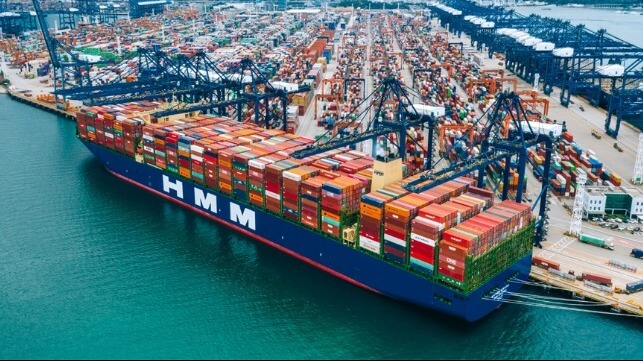
HMM containership
South Korea's government banks look to privatize HMM seven years after they bailed out the company (file photo)

PUBLISHED JUL 26, 2023 3:55 PM BY THE MARITIME EXECUTIVE


Four bidders have emerged as potential buyers from HMM as the first round of the process begins in South Korea. Media reports are suggesting that the government favors one of the largest conglomerates to take control of the shipping company. They appear to be seeking to encourage more companies to enter the process.

The media reports said that Samsung Securities, which is conducting the bidding process, has received initial registrations from two shipping companies, SM Group and Harim, the largest investor in Pan Ocean, another Korean shipping line. In addition, two conglomerates with operations in the logistics business, LX Holdings and Dongwon Group, are also reported to have registered in the bidding. 

The government-controlled banks, Korean Development Bank and Korea Ocean Business Corporation, announced last week that their advisors had said it was possible to proceed with the sale this year despite the downturn in global shipping markets. Collectively the two banks hold approximately 40 percent of the shares of the company, but with their convertible perpetual bonds, the ownership stake could rise to approximately 75 percent of HMM, if everything was converted into shares.

The current value of the 40 percent equity shares is set at $3.9 billion, although the banks have indicated in their announcement that the plan would be to sell approximately 58 percent by converting a portion of the bonds. They said they would consult with the winning bidder to determine a plan to sell the remaining bonds in a means not to disrupt the market. If all the bonders were converted, at current market prices the stake in HMM would be valued at nearly $8 billion.

The chairman of KDB previously told reporters that several candidates had shown interest in acquiring HMM, without naming any potential bidders. They are looking for a large Korean company to take control of HMM seven years after the government bailout of the former Hyundai Merchant Marine.

SM Group told reporters in an interview that it was prepared to invest up to approximately $3 billion in a plan to merge HMM with its much smaller SM Line. Combined the goal is to create Asia’s largest carrier. HMM is currently the world’s eighth-largest container carrier with approximately 800,000 TEU of capacity, significantly behind COSCO, Evergreen, and ONE. HMM also operates a small fleet of dry bulk carriers and tankers plus has said it would be interested in reacquiring its form LNG business, Hyundai LNG Shipping. 

Harim, which calls itself global food and agribusiness with its primary operations in poultry farming, is reported to have also registered to enter the bidding. Seven years ago, with backing from the JKL Consortium, Harim acquired Pan Ocean, a Korean shipping company established in 1966 operating dry bulk and later oil tankers. Dry bulk remains the largest portion of the operation accounting for nearly 70 percent of the business. The company is reported to have more than 80 bulkers as well as small operations in containerships, tankers, LNG, and heavy lift. The reports are that Harim is again partnering with the private equity firm JKL to make a bid for HMM.

The other two companies that have registered so far for the bidding are both involved in logistics operations. LX has a global logistics company as well as chemical, semiconductors, natural resources, and low e-glass. Dongwon had operations in logistics and also runs a container terminal in Pusan. The company also has operations in food, construction, and packaging materials manufacturing.

As part of the process, potential bidders register with Samsung Securities receiving the information packet. Preliminary bids for HMM are due by August 21. The banks plan to select a winner and negotiate a final agreement with the company. They hope to complete the sale of HMM before the end of 2023.

UK Launches Loan Guarantee Program for Shipbuilding

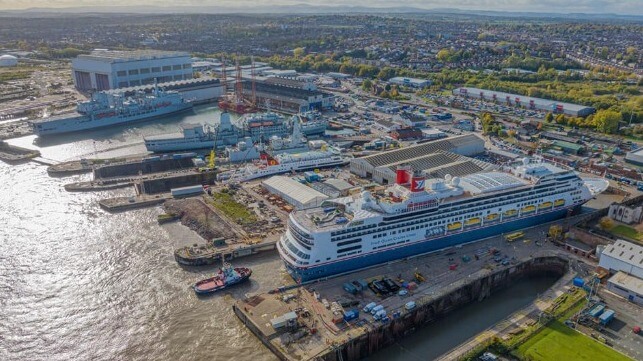
UK shipbuilding loan program
UK shipbuilders welcomed the government's new loan guarantee program (Camell Laird)

PUBLISHED JUL 26, 2023 2:01 PM BY THE MARITIME EXECUTIVE


The UK Government announced a new loan guarantee program designed to support the country’s shipbuilding industry. It is the latest part of the National Shipbuilding Strategy refreshed by the prior government in 2022 in an effort to bolster the sagging industry.

Called the Shipbuilding Credit Guarantee Scheme, it is designed to help buyers purchase UK-built ships or to use UK shipyards for modification and maintenance of existing ships. Media reports are saying the government will devote approximately $645 million to the program which will help ship buyers access financing to buy UK-built vessels or pay for upgrade work. The program will guarantee a percent of the value of loans used to purchase, refit, retrofit, or repair vessels, sharing the risk with lenders to encourage offers of finance to UK owners and operators according to the UK Department for Business and Trade.

“Shipbuilding is an integral part of the UK’s industrial identity and through this scheme, we are backing our great maritime businesses to get ahead of the competition,” said Minister for Industry and Economic Security Nusrat Ghani. “The SCGS is expected to create hundreds of new jobs and contribute hundreds of millions of pounds to the economy.”

The UK’s shipbuilding industry, like that of many Western countries, is a shadow of its former self, having long been in decline as China and South Korea emerged as low-cost industry leaders in new construction. The UK government outlined its National Shipbuilding Strategy in 2017, initially focusing on transforming naval procurement, while also securing export and design contracts for British naval ships. Former Prime Minister Boris Johnson launched the refresh of the program in 2022 outlining the government’s further ambitions to reinvigorate the whole British shipbuilding industry. The government has committed more than $5 billion to the revitalization of UK shipbuilding.

“We applaud the Government for delivering on the pledge it made to industry in the National Shipbuilding Strategy Refresh by launching the Shipbuilding Credit Guarantee Scheme,” said Maritime UK CEO Chris Shirling-Rooke in response to today’s announcement. “The SCGS is a massive vote of confidence from government, and it will empower the UK’s shipbuilding enterprise.”

According to government figures, shipbuilding in the UK supports over 42,600 jobs nationwide. It adds nearly $3 billion to the UK economy. The hope is that the new loan program will encourage continued investment in sustainable, low-carbon marine technologies.

Famed shipbuilder Harland & Wolff, which has been working to relaunch its business after being brought out of bankruptcy by new management, issued a statement welcoming the launch of the loan guaranty program. John Wood, Harland & Wolff CEO, said, “The scheme will help UK shipbuilders to compete, win orders, and create new high-quality jobs across the country. It’s a core deliverable from the National Shipbuilding Strategy, and we are committed to working with colleagues in government and across the industry to accelerate its delivery so we can realize the objective of a competitive, innovative, and sustainable shipbuilding enterprise.”

The United States has long had a similar loan guarantee program, the Federal Ship Financing Program, commonly referred to as "Title XI." As part of the Merchant Marine Act of 1936, it provides for a full faith and credit guarantee by the United States Government to promote the growth and modernization of the U.S. merchant marine and U.S. shipyards. Through long-term debt repayment guarantees, the program encourages U.S. shipowners to obtain new vessels from U. S. shipyards and it also assists U.S. shipyards with modernizing their facilities for building and repairing vessels. Last year, the program was expanded to include the emerging new categories of vessels being built for the offshore wind energy industry.


Opinion: Could UNCLOS Be Used to Sue Nations for Climate Damage?

UNCLOS
File image courtesy ITLOS

PUBLISHED JUL 24, 2023 9:08 PM BY ELLYCIA HARROULD-KOLIEB AND MARGARET A. YOUNG


Climate change will wreak havoc on small island developing states in the Pacific and elsewhere. Some will be swamped by rising seas. These communities also face more extreme weather, increasingly acidic oceans, coral bleaching and harm to fisheries. Food supplies, human health and livelihoods are at risk. And it’s clear other countries burning fossil fuels are largely to blame.

Yet island states are resourceful. They are not only adapting to change but also seeking legal advice. The international community has certain legal obligations under the law of the sea. These are rules and customs that divvy up the oceans into maritime zones, while recognizing certain freedoms and duties.

So island states are asking whether obligations to address climate change might be contained in the United Nations Convention on the Law of the Sea. This is particularly important as marine issues have not received the attention they deserve within international climate negotiations.

If states do have specific obligations to stop greenhouse gas pollution damaging the marine environment, then legal consequences for breaching these obligations could follow. It is possible small island states could one day be compensated for the damage done.

Why seek an advisory opinion?

The International Tribunal for the Law of the Sea is an independent judicial body established by the UN Convention on the Law of the Sea. The tribunal has jurisdiction over any dispute concerning the interpretation or application of the convention and certain legal questions requested of it. The answers to these questions are known as advisory opinions.

Advisory opinions are not legally binding, they are authoritative statements on legal matters. They provide guidance to states and international organizations about the implementation of international law.

The tribunal has delivered two advisory opinions in the past: on deep seabed mining and illegal, unreported and unregulated fishing activities. These proceedings attracted submissions from states, international organizations and non-governmental organizations such as the World Wide Fund for Nature (WWF).

Late last year, the newly established Commission of Small Island States on Climate Change and International Law submitted a request for advice to the tribunal. It concerns the obligations of states to address climate change, including impacts on the marine environment.

The tribunal received more than 50 written submissions from states and organizations offering opinions on how it should respond. These submissions, from Australia and New Zealand among others, were recently made public.

While the convention was not designed as a mechanism for regulating climate change, its mandate is broad enough to consider the connection between climate and the oceans. To establish this, the 40-year-old framework agreement must be interpreted in light of changing global circumstances and changing laws, including obligations to strengthen resilience in the high seas. One avenue to achieve this is through an advisory opinion from the tribunal.

The question before the tribunal

The question to the tribunal asks, what are the specific obligations of states:

(a) to prevent, reduce and control pollution of the marine environment in relation to the deleterious effects that result or are likely to result from climate change, including through ocean warming and sea level rise, and ocean acidification, which are caused by anthropogenic greenhouse gas emissions into the atmosphere?

(b) to protect and preserve the marine environment in relation to climate change impacts, including ocean warming and sea level rise, and ocean acidification?

This question invokes specific language from the convention. That provides clues as to which sections of the treaty the tribunal will refer to in its opinion.

The question refers explicitly to the part of the convention entitled “Protection and Preservation of the Marine Environment”. This part sets out the general obligation of states to protect and preserve the marine environment, as well as measures to “prevent, reduce and control pollution”. It also tells states they must not transfer damage or hazards, or transform one type of pollution into another.

Pollution of the marine environment is defined in the convention as:

the introduction by man, directly or indirectly, of substances or energy into the marine environment, including estuaries, which results or is likely to result in such deleterious effects as harm to living resources and marine life, hazards to human health, hindrance to marine activities, including fishing and other legitimate uses of the sea, impairment of quality for use of sea water and reduction of amenities.

What if states do not meet their obligations?

The tribunal will need to answer a key question for the law of the sea: can the convention be understood as referring to the drivers and effects of climate change? And if so, in what ways does the convention require that they be addressed by states?

What the commission’s question does not ask is, what happens when states do not meet their obligations? The answer is particularly important to small island states, who are dissatisfied with ongoing negotiations on addressing loss and damage associated with climate change impacts.

Obligations relating to climate change are contained within other treaties and rules, including the UN Framework Convention on Climate Change and the Paris Agreement. Small island states have sought advice from different courts to clarify these obligations.

The International Court of Justice will consider a wider set of legal issues on climate obligations next year.

The fact that the court has authorized the commission to participate in this separate advisory opinion request signals the UN’s main judicial body will take account of the tribunal’s opinion. It’s also worth noting the tribunal is likely to deliver its views on the law of the sea first, setting the stage for a broader interpretation of international law when it comes to taking responsibility for polluting the atmosphere.

Sustained pressure from small island states is advancing our understanding of the obligations of states to address climate change.

This article appears courtesy of The Conversation and may be found in its original form here

Ellycia Harrould-Kolieb is a Lecturer and Research Fellow in Ocean Governance, University of Melbourne and Postdoctoral Researcher, UEF Law School, University of Eastern Finland, The University of Melbourne

Margaret A. Young is a Professor at University of Melbourne. She researches and teaches in the fields of public international law, international trade law, climate change law and the law of the sea.

The Conversation

The opinions expressed herein are the author's and not necessarily those of The Maritime Executive.


Fincantieri Launches Nuclear-Propulsion Study With Newcleo

Newcleo
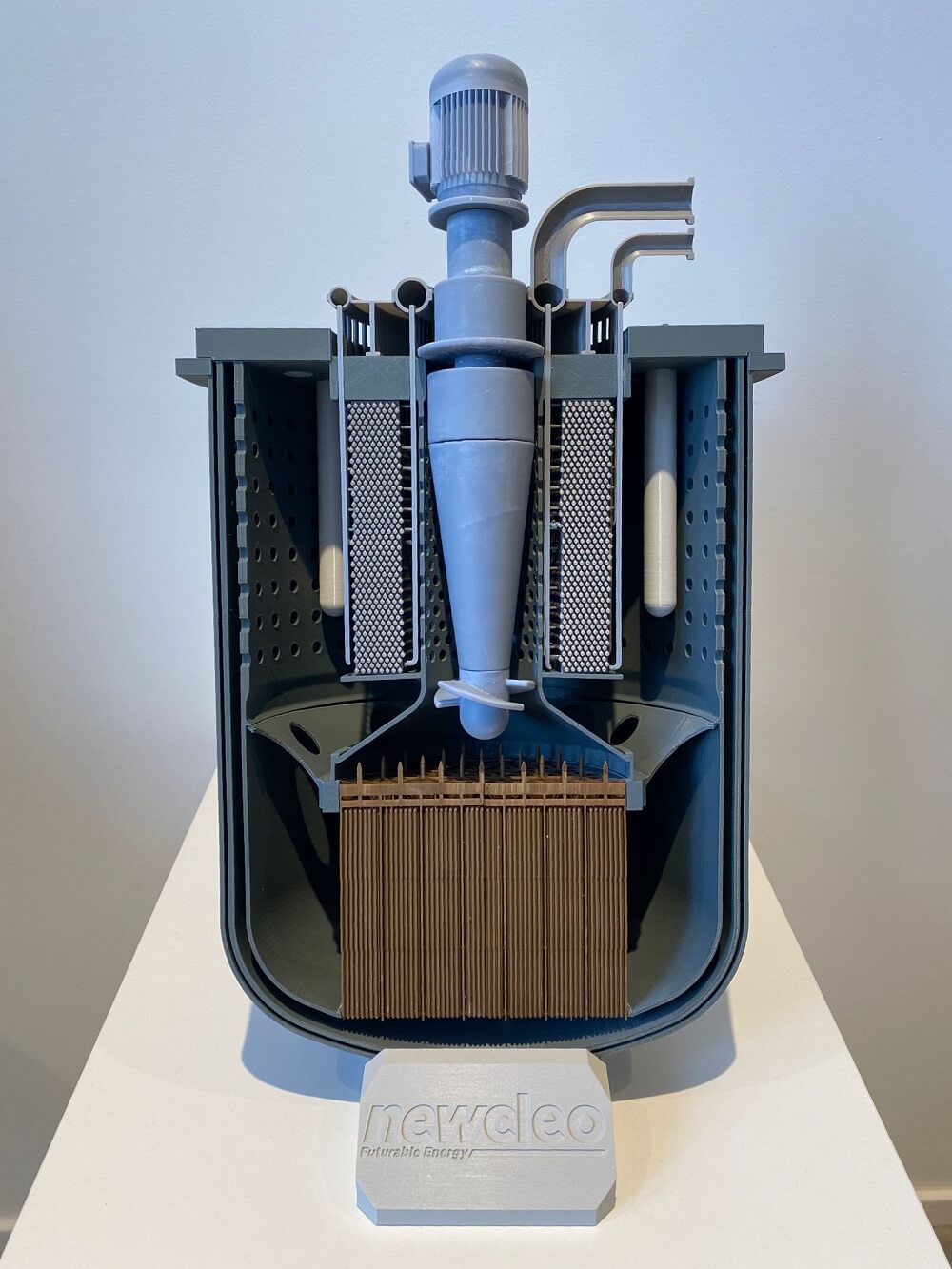
A scale model of Newcleo's modular reactor (Newcleo)

PUBLISHED JUL 25, 2023 4:45 PM BY THE MARITIME EXECUTIVE


Fincantieri and RINA have signed an agreement on nuclear propulsion research with Newcleo, a British/Italian startup focused on small lead-cooled fast reactors. 

The agreement covers a feasibility study on the integration of Newcleo's technology in a merchant ship application. The company's modular, closed reactors would provide 30 MW of output with reactor replacement every 10-15 years, with low maintenance between replacements and limited maintenance. 

According to the consortium, nuclear power could provide a viable option for resolving the thorny question of decarbonization. IMO's net-zero by midcentury target will be difficult and costly to meet with current technologies and fuel supply chains, but nuclear power might be able to help. 

"Nuclear power holds enormous potential and, as such, it needs the best expertise to be expressed, and we are proud to join with partners like Newcleo and Rina to help get this done," said Pierroberto Folgiero, CEO and General Manager of Fincantieri. 

Newcleo has raised more than $440 million so far to support its R&D, and it launched a $1.1 billion fundraising round in March. It is led by some of the most prominent nuclear physicists in the field, including Chief Scientific Officer Luciano Cinotti. Cinotti served as chairman of the Lead Fast Reactor Steering Committee of the Generation-IV International Forum on next-gen reactor technology, and he is the author of most of the world’s lead fast reactor-related patents. The company was founded by a nuclear physicist and entrepreneur, CERN veteran and Elysia Capital founder Stefano Buono. 

"I am delighted that we are launching a project for civil nuclear naval propulsion with this important feasibility study. Fincantieri and RINA are two global leaders in the shipping sector, and combining their expertise with our technology innovation can bring a real solution to the issue of carbon emissions in maritime transport," said Buono in a statement. 

Like all nuclear power systems, lead-cooled fast reactor technology's promise is accompanied by certain technical, supply chain and public-perception challenges. Newcleo's application uses mixed-oxide (MOX) fuel, which is made from plutonium recovered from waste nuclear powerplant fuel or from nuclear weapon stockpiles. MOX can be viewed as an environmental advantage, since it consumes a waste product, and for this reason it is considered a sustainable power source in the EU. MOX is in common use in shoreside nuclear plants in Europe and has a consistent safety record - but aside from its technical merits and qualifications, its plutonium content draws public scrutiny. A federal plan to manufacture MOX fuel in the United States was ultimately scuttled: the Trump administration canceled a contract for a $5 billion MOX plant in South Carolina in 2018, despite Republican opposition. At present MOX is only manufactured in Europe, though Newcleo has plans to expand its production. 

Fuel choice aside, lead-cooled fast reactors also have a unique technical feature: they require either operation or external heating to prevent the lead coolant from solidifying into a single mass. This is an inherent passive safety feature, as Newcleo highlights. With Newcleo’s design, the liquid lead would cool and solidify if it ever came in contact with cold water, enclosing the reactor core in a solid casing and containing all radioactive components inside. However, a cool-down can also render the expensive reactor module unrecoverable. In part for this reason, maritime experimentation with lead/bismuth-cooled reactor propulsion has so far been limited to a single class of Russian submarines; the first hull was scrapped after a leak caused its reactor to solidify, and the last was decommissioned in 1996. According to the Generation-IV Forum, a modern pool-type reactor design (like Newcleo's) can provide an "effective and definitive solution" to this issue. 


Dome hoisted into place on Xudapu 3

26 July 2023


The dome has been hoisted into place on the reactor building of Xudapu unit 3 in a single stage process, six months ahead of schedule, with China National Nuclear Corporation (CNNC) describing the project as "a model of global energy cooperation".

(Image: CNNC)

The Xudapu unit, in Liaoning province, is one of four VVER-1200 reactors being supplied by Russia to China under a 2018 agreement. CNNC said units 3 and 4 at Xudapu were "expected to become a global benchmark in the field of nuclear safety".

It added that the area had seen winter temperatures as low as minus 20°C and said "all parties involved in the construction braved the severe cold, wind and snow, and fought against the bad weather from the beginning" while, all the time, insisting on putting safety and quality first.

In June 2018, Russia and China signed four agreements, including for the construction of two VVER-1200 reactors at the new Xudapu (also known as Xudabao) site. Agreements signed in June 2019 included a general contract for the construction of Xudapu units 3 and 4, as well as a contract for the supply of nuclear fuel. Rosatom is designing the nuclear island, supplying key equipment, as well as providing field supervision, installation supervision, and commissioning services for the supplied equipment. Turbine generators and balance of plant will be supplied by China.

Construction of Xudapu unit 3 began in July 2021, with that of unit 4 starting in May 2022.

Rosatom said the lifting and installation of the dome on the reactor building had taken place in one stage, compared with the two stages used in installation in earlier construction of Russian nuclear power plants.

Alexei Bannik, Vice President for Projects in China and Advanced Projects of JSC Atomstroyexport, praised the "effective joint work of the Russian and Chinese specialists" and said that "a unique technological operation" allowed the fully assembled 740-tonne dome to be lifted by a crane and placed on the reactor building 188 days before its contracted date. CNNC noted that the process required great precision, with an allowable deviation of just plus or minus 3mm.

The next stage will be concrete work inside and outside the dome and the installation of large equipment. Commissioning of the units is scheduled for 2027 and 2028.

The Xudapu plant is owned by Liaoning Nuclear Power Company Limited, a joint venture between CNNC (70%), Datang International Power Generation Company (20%) and State Development and Investment Corporation (10%).

Researched and written by World Nuclear News


BWXT to begin work on cislunar nuclear rocket engine and fuel

26 July 2023


The USA's Defense Advanced Research Projects Agency (DARPA) has finalised an agreement with Lockheed Martin to begin work on the fabrication and design of an experimental nuclear thermal rocket and its engine. BWX Technologies, one of Lockheed Martin's partners in the effort, will develop the nuclear reactor and fabricate the HALEU fuel.

How the DRACO rocket could look (Image BWXT)

DARPA, in collaboration with the National Aeronautics and Space Administration (NASA), is advancing toward the goal of the world's first in-orbit demonstration of a nuclear thermal rocket engine via the Demonstration Rocket for Agile Cislunar Operations (DRACO). It is more than 50 years since the last nuclear thermal rocket engine tests were conducted by the USA.

The objective of the DRACO programme is to demonstrate a nuclear thermal propulsion (NTP) system in orbit. NTP uses a nuclear reactor to heat propellant to extreme temperatures before expelling it through a nozzle to produce thrust. Compared with conventional space propulsion technologies, nuclear thermal propulsion offers a high thrust-to-weight ratio around 10,000 times greater than electric propulsion and a two-to-five times greater specific impulse than chemical propulsion.

Working as part of a team led by Lockheed Martin, BWXT Advanced Technologies LLC will complete final design of the nuclear reactor, manufacture the reactor's hardware and high-assay low-enriched uranium (HALEU) fuel, assemble the components and deliver the fueled reactor as a complete subsystem for integration into the DRACO.

DRACO is targeted for a 2027 launch from Earth in 'cold' status (meaning that the reactor is turned off as a part of launch safety protocols) by a conventional rocket, and then the reactor will be powered on once the craft attains an appropriate location above low Earth orbit.

"The award of this contract further demonstrates BWXT's ability to design, manufacture and deploy nuclear reactors and fuel on a scale that is unmatched elsewhere in the world today," said BWXT Advanced Technologies LLC President Joe Miller. "This partnership with Lockheed Martin working for DARPA adds another important dimension to BWXT's already impressive line-up of nuclear reactor designs for commercial and defence applications."

"These more powerful and efficient nuclear thermal propulsion systems can provide faster transit times between destinations," added Kirk Shireman, vice president of Lunar Exploration Campaigns at Lockheed Martin Space. "Reducing transit time is vital for human missions to Mars to limit a crew's exposure to radiation. This is a prime technology that can be used to transport humans and materials to the Moon. A safe, reusable nuclear tug spacecraft would revolutionise cislunar operations."

In January, NASA and DARP announced they will partner on the DRACO programme, with the agreement aimed at speeding up development efforts.

Tabitha Dodson, DARPA's programme manager for the effort, said: "The DRACO programme aims to give the nation leap-ahead propulsion capability ... with a successful demonstration, we could significantly advance humanity's means for going faster and farther in space and pave the way for the future deployment for all fission-based nuclear space technologies."

Researched and written by World Nuclear News

CNL eyes dramatic increase in Ac-225 production

27 July 2023


Canadian Nuclear Laboratories (CNL) has announced an agreement with the Sylvia Fedoruk Centre for Nuclear Innovation - part of the University of Saskatchewan - that will enable it to increase by more than 30 times its current production of the rare actinium-225 (Ac-225) radioisotope.

The announcement was made at a conference in Saskatoon (Image: CNL)

Ac-225 has shown great promise for therapeutic use in targeted alpha therapy (TAT), where an alpha-emitter is combined with a protein or antibody that specifically targets and kills cancer cells while leaving the surrounding healthy tissue unharmed. However, research and clinical trials have been hampered by very limited supplies of the isotope.

The new agreement will see the Fedoruk Centre irradiate targets of radium-226 - extracted from legacy medical waste by CNL - at the Saskatchewan Cyclotron Facility. The irradiated targets will be returned to CNL's Chalk River campus in Ontario for separation and processing. CNL will then ship the materials to German radiopharmaceutical biotech company ITM, with which it signed a Memorandum of Understanding in 2021, for refinement and distribution.

Announcing the new agreement at the 11th International Conference on Isotopes in Saskatoon, Saskatchewan, CNL President and CEO Joe McBrearty said it has taken "many years" of work in radiochemistry, physics, engineering, waste management, remote tooling and instrumentation to reach this point, but the initiative will "dramatically" increase availability of the radioisotope to the radiopharmaceutical community. "Following a short ramp-up phase, CNL expects to produce more than 30 times the actinium-225 that it does today, enabling the necessary clinical research and testing to bring many promising new cancer treatments to life," he said.

CNL is working to position itself as a world leader and international hub for TAT and for Ac-225 production. It sees the agreement with the Fedoruk Centre as an interim step on that journey. "It is important to emphasise that this is a short-term solution that addresses an immediate need, while bringing us closer to our true goal, which is the establishment of new production capabilities so that we can fulfil the market's long-term needs together with our partner ITM," McBrearty said.

Researched and written by World Nuclear News


Westinghouse to expand fuel offerings from UK facility

27 July 2023


Westinghouse has been awarded three grants totalling GBP10.5 million (USD13.6 million) from the UK government's Nuclear Fuel Fund to upgrade and expand the Springfields fuel fabrication facility in Lancashire in northwest England.

An aerial view of the Springfields site (Image: Westinghouse)

The grants are aimed at "future-proofing" the UK nuclear fuel industry by developing more variants of light water reactor fuels, including for the AP1000 reactor and the AP300 small modular reactor (SMR). The funding also supports potential production of high-assay low-enriched uranium (HALEU) fuels for the country's new advanced reactors.

In addition, Westinghouse will partner with Terrestrial Energy and the National Nuclear Laboratory to pilot supply of enriched uranium tetrafluoride (UF4) and molten salt fuel for use in Terrestrial's Integral Molten Salt Reactor.

"This investment from the Nuclear Fuel Fund is a vote of confidence in the capabilities of our Springfields manufacturing site," said Tarik Choho, Westinghouse President of Nuclear Fuel. "We are excited for the future of nuclear energy in the UK and the role Westinghouse will continue to play in its success."

"Nuclear power is at the heart of our plan to deliver cleaner, more secure home-grown energy to the UK, boosting our energy security and will provide highly skilled jobs to grow our economy," said UK Minister for Nuclear Andrew Bowie. "The GBP10.5 million government funding to Westinghouse's Springfields plant will support their development of new fuel technologies, essential to the development of the next generation of nuclear reactors, as well as supporting highly skilled jobs in Preston and across the North West."

Following consultation with the industry, barriers to investment in the UK nuclear fuel sector were identified, including: the high upfront costs of establishing new facilities and product lines; uncertainties regarding the long-term makeup of future fuel demand, particularly with regard to the emergence of advanced reactor technologies; costs and timelines associated with siting and licensing of new nuclear fuel facilities and products and a shortage of nuclear and engineering skills.

In January, the UK government began accepting bids for up to GBP50 million (USD60 million) funding for projects it hopes will "stimulate a diverse and resilient nuclear fuel market" in the country. Bids were accepted up to 20 February. The Nuclear Fuel Fund is intended to provide greater options for UK nuclear operators to use UK-produced fuel, as the country seeks to diversify its uranium and nuclear fuel production capacity away from Russia.

The fund is also intended to "support projects establishing new domestic fuel capabilities, which could include fuel supply options for light water reactors, including future small modular reactors, that could support much of our current nuclear energy needs. It will also look to support projects producing new fuel types which will be needed to supply advanced modular reactors, likely to be in operation from the 2030s, such as high assay low enriched uranium".

So far, GBP22.3 million has been offered to eight projects.

In December 2022, GBP13 million of government funding was allocated to Westinghouse to help "prepare the necessary design and enabling work to begin new conversion capabilities for the world's utilities from 2028" at the Springfields site. The idea is that the facility would provide both reprocessed and naturally occurring uranium conversion services to utilities around the world.

Westinghouse was also awarded a grant by the UK government in October last year to complete a Pre-Front End Engineering Design study, in collaboration with Urenco, for the production of tristructural isotropic (TRISO) fuels at its Springfields facility.

Researched and written by World Nuclear News


SCI-FI-TEK

British-Japanese partnership for fusion development

27 July 2023


UK-based nuclear fusion company Tokamak Energy and Japan's Sumitomo Corporation have agreed to collaborate on the development, implementation and scaling-up of commercial fusion energy in Japan and worldwide.

Tokamak ST pilot plant (Image: Tokamak Energy)

The partnership will see Sumitomo contribute expertise and investment to a series of joint projects with Tokamak focused on the scaling-up and industrialisation of the global fusion supply chain.

The companies will jointly develop early market entry strategies for Tokamak Energy's fusion technology in Japan and other countries.

"The ultimate aim for both organisations is to jointly design, build and operate fusion power plants at scale," Tokamak said.

It noted the collaboration will enable Sumitomo to establish itself as a global market-leader for financing, construction and operation of fusion power plants and for Tokamak to accelerate the commercialisation and industrialisation of its spherical tokamak devices in the late 2030s.

The partners will also work together on the development of a supply chain for other emerging applications for fusion technologies.

"It is vital we phase out the world's reliance on fossil fuels and deliver fusion as a clean, sustainable, low cost and globally available energy source," said Tokamak Commercial Director Ross Morgan. "Sumitomo and Tokamak Energy recognise the importance of partnerships to accelerate the delivery of commercial fusion and with our shared knowledge we can deliver this."

"We are thrilled to announce our collaboration with Tokamak Energy, paving the way for fusion energy," added Yoshihiko Ichikawa, General Manager, Energy Innovation Initiative, Sumitomo Corporation. "Jointly, we'll tackle challenges and fuel innovation to accelerate the delivery of commercial fusion. Our combined efforts will step up the path towards a sustainable energy future for all."

Oxfordshire-based Tokamak's roadmap is for commercial fusion power plants deployed in the mid-2030s. To get there the plan is for completion of ST80-HTS in 2026 "to demonstrate the full potential of high temperature superconducting magnets" and to inform the design of its fusion pilot plant, ST-E1, which is slated to demonstrate the capability to deliver electricity - producing up to 200 MW of net electrical power - in the early 2030s.

In January, Tokamak said it had signed an agreement with Japan's Furukawa Electric to supply "several hundred kilometres" of specialist high temperature superconducting (HTS) tape for its ST80-HTS prototype fusion device. The HTS tape has been developed and is being supplied by Furukawa, with the production of the tape under way at the group's SuperPower Inc site in New York in the USA.

The following month, Tokamak announced it had built a world-first set of new generation HTS magnets to be assembled and tested in fusion power plant-relevant scenarios.

Researched and written by World Nuclear News

A guide: Uranium in Niger

28 July 2023


Current events in Niger mean world attention is turning to the West African uranium-producing country. Here is an overview of Niger's uranium sector.

(Image: Peter Hermes Furian - stock.adobe.com)

What has happened in Niger?


After reports on 26 July that presidential guards had seized Niger's president, Mohamed Bazoum, General Abdourahmane Tchiani - also known as Omar Tchiani - went on national TV on 28 July and declared himself the new leader of Niger. Bazoum became president following a runoff election in February 2021 in which he won 55.67% of the vote.

How much uranium does Niger produce?


Niger produced 2248 tU in 2021, around 5% of world uranium output. Current production is from the open-pit operations of SOMAÏR (Société des Mines de l’Aïr), near the town of Arlit. SOMAÏR is 63.4% owned by French company Orano and 36.66% owned by Sopamin (Société du Patrimoine des Mines du Niger). Sopamin manages Niger's state participation in mining ventures.

According to data from the World Bank, uranium is Niger's second largest export, in monetary terms, after gold.

What is Niger's uranium history?


Uranium was first discovered at Azelik in Niger in 1957, and commercial uranium production began at Arlit - 900 km northeast of the capital Niamey - in 1971.

COMINAK (Compagnie Minière d’Akouta) - also majority-owned by Orano - began production from an underground mine at Akouta in 1978, producing more than 75,000 tU before operations came to an end in 2021.

The Societe des Mines d'Azelik SA (SOMINA) joint venture was set up in 2007 to mine at Azelik/Teguidda, 160km southwest of Arlit, in the Agadez region. 62% of SOMINA's equity is held by Chinese interests, with 37.2% by CNNC International. The government of Niger owns 33%, and 5% is owned by Korean interests. Azelik came into production at the end of 2010 but market conditions led to its being put on care and maintenance in 2015. China National Uranium Corporation has recently been carrying out studies towards the restart of production at SOMINA, according to social media posts by Niger's Minister of Mines Ousseini Hadizatou Yacouba in June this year.

What other plans are in the pipeline?


The Imouraren project is about 80km south of Arlit and about 160km north of Agadez. Operating company Imouraren SA - owned 66.65% by Orano Expansion (itself owned by Orano Mining with Korean companies holding 4.7%) and 33.35% by Sopamin and the State of Niger - was awarded an operating permit to mine the deposit in 2009 and excavations began in 2012, but development of the project was suspended in 2015 pending more favourable market conditions. The joint venture is now looking into the possibility of using in-situ leach methods to bring it into production.

Dasa is a high-grade uranium deposit 105km south of the established uranium mining town of Arlit. First discovered in 2010, the project is 90%-owned by Toronto-listed Global Atomic Corporation and will operate under the company's Niger mining subsidiary SOMIDA (Société Minière de Dasa SA) which is 20%-owned by the government of Niger. Mine excavation began in 2022, with first deliveries to utilities expected to begin in 2025.

Canada-based GoviEx Uranium holds mining permits for the Madaouela project, in the Agadez region. The company earlier this year had begun the project financing process to develop the project. GoviEx holds an 80% interest in the operating company COMIMA, with the remaining 20% held by the Republic of Niger.

Who buys Niger's uranium?


Niger supplies around 5% of the world's uranium, but is a leading supplier of uranium to the European Union. According to the Euratom Supply Agency, EU utilities purchased 2905 tU of Niger-produced uranium in 2021. This represented just over 24% of EU uranium imports, putting Niger slightly ahead of Kazakhstan as the EU's leading source of uranium.

What they are saying:


"An attempt to overthrow the Nigerien government was announced in the press on July 26, 2023 and the situation remains unstable as at the reporting date of the financial statements. The group has set up a crisis unit to prioritise the safety of its employees. At the reporting date of the financial statements, Orano does not consider this event to have any immediate impact on its activities in Niger or on the value of its assets." Orano half-year results statement, 28 July

"Following the recent resignation of the President in Niger, the Company's Dasa Project remains unaffected other than the borders and airport have been temporarily closed which will interrupt our supply lines in the short term … With an infrastructure that has supported uranium mining for over 50 years, an experienced mining work force and the highest-grade uranium deposit in Africa, Global Atomic remains committed to the development of the Dasa Project and the ensuing benefits to our shareholders and the people of Niger." Global Atomic, 27 July

"GoviEx's operations in Niger remain unaffected by the current situation. We are committed to ensuring that our activities continue as normal, both at our Project site and our office in Niamey. GoviEx has always worked for the benefit of all stakeholders, including the people of Niger. We believe in the potential of the country and its people, and we remain dedicated to contributing positively to its socio-economic development. Niger has been a pro-mining country and despite changes in regime, has never experienced an interruption in its uranium mining activities over the last 50 years. This long-standing stability in the mining sector is a testament to the country's resilience and its commitment to development." GoviEx, 27 July

"Informed of an attempt by certain members of the military to undermine the stability of democratic and republican institutions in Niger, which is tantamount to an attempted coup d'état, the Chairperson of the African Union Commission, HE Moussa Faki Mahamat, strongly condemns such actions by members of the military acting in total betrayal of their republican duty. He urges them to immediately cease these unacceptable actions." African Union, 26 July

Researched and written by World Nuclear News