Friday, July 28, 2023


What Do IMO's New Climate Targets Mean for Shipping?
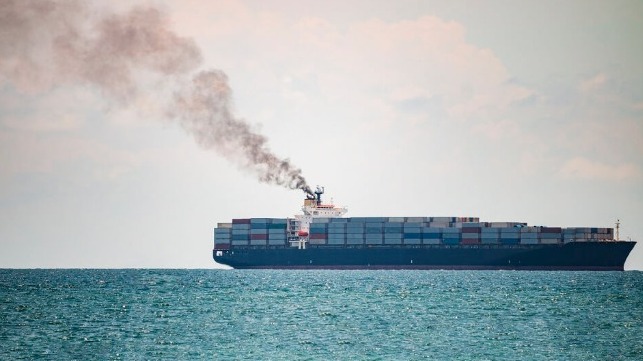
Ship exhaust
iStock

PUBLISHED JUL 27, 2023 4:10 PM BY THE CONVERSATION


[By Don Maier]

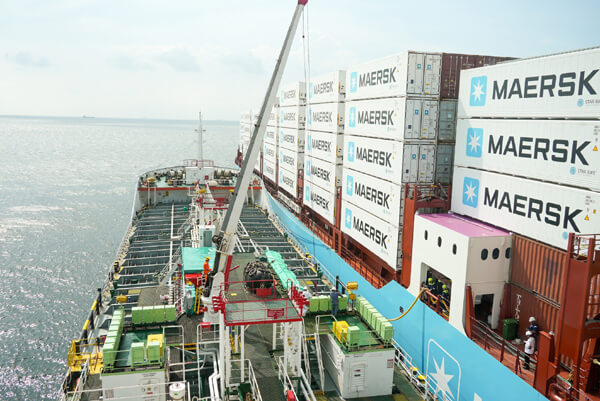
The world’s largest shipping companies are starting to update their fleets for a greener future. Maersk received the world’s first dual-fuel methanol container ship in July 2023, and dozens more container ships that can run on alternative fuels are currently on order.

The industry – responsible for about 3% of global greenhouse gas emissions, more than Canada and Ireland combined – has reasons to act and to have some confidence in its multimillion-dollar investments.

On July 7, the 175 member countries of the International Maritime Organization, a United Nations agency that regulates global shipping, agreed to a new climate strategy that includes reaching net-zero greenhouse gas emissions “by or around, i.e., close to, 2050.”

The strategy’s language is vague, obscure and almost noncommittal. But it points the industry toward a cleaner future. New European Union rules will also soon go into effect that will significantly raise costs for ships burning highly polluting sulfur fuel oil.

I spent several years working in the shipping industry and follow it as a researcher and analyst. Here’s what I see changing.

Setting their own direction

The new IMO strategy does not explicitly set a new fuel standard, but it seems to indicate that less reliance on cheap, environmentally harmful, heavy-sulfur fuel oil is the best direction, and possibly less use of low-sulfur fuel oil.

What the strategy does is set goals to reduce international shippings’ greenhouse gas emissions by at least 20% by 2030, compared with 2008 levels; by at least 70% by 2040; and to reach net-zero emissions around 2050. The IMO also commits to implement a greenhouse gas emissions-pricing mechanism – a carbon levy or tax – by 2027, and to develop a goal-based marine fuel standard. At this time, that’s the only direction the IMO has provided regarding the emissions-pricing mechanism.

While the new strategy may not have been as clear or restrictive as many people hoped, the IMO may be providing the maritime industry an opportunity to set the direction itself.

A number of large ship owners and operators have already built and placed orders for container ships with some sort of alternative fuel use, primarily methanol or liquefied natural gas, and there is some interest in hydrogen. LNG is still a fossil fuel, though it’s less polluting than traditional sulfur fuel oil. Methanol, however, can be made from either natural gas or renewable sources.

Maersk’s new dual-fuel vessel – to be powered in part by green methanol – is small and plans to operate in the Baltic Sea, but Maersk may be using this vessel as a prototype for larger alternative-fuel containerships expected to be delivered next year. Evergreen, also among the world’s larger shipping companies, has ordered 24 dual-fueled methanol ships.

Purchases like Maersk’s and Evergreen’s are an indication that the maritime industry will be moving in the direction of greener fuels. They also indicate that the industry is willing to follow the IMO’s focus on well-to-wake emissions, meaning not just emissions from ship operations but also from fuel production.

Building a supply chain

The other significant challenge faced by the maritime industry is having a sufficient supply chain available to support dual-fueled vessels, which can operate on alternative fuels.

There are currently a limited number of ports worldwide with the necessary infrastructure to provide alternative fuels. But, here again, simple economics suggests that if there is enough demand, supply should follow.

With Maersk, Evergreen and others preparing to operate more dual-fuel containerships, the industry is demonstrating demand so the green-methanol supply chain can develop, and hopefully soon. Japan recently launched its first dual-fueled LNG bunkering ship – essentially a floating gas station – to develop the supply of LNG fuel.

Not mandatory, but many countries will try

The new IMO strategy has some big caveats: The goals are nonbinding, and the strategy explicitly encourages compliance when “national circumstances allow.” In other words, no nation-state will be under any legal obligation to comply.

The statement seems to have been included as a means to appear focused on achieving goals while placating some countries that may not be able or willing to meet the goals by 2030 or beyond.

It’s also unclear whether the “national circumstance” pertains to a physical nation-state, to flag registry – meaning where the ship is registered – or both. Many ships are registered in countries with weaker regulations. Adding such language appears to say that the IMO is serious about emissions and understands that some countries may have significant challenges to meet the standards. It also gets around opposition to a carbon levy, or tax on emissions, which some delegates – China for example – adamantly opposed.

Many countries, such as the U.S., United Kingdom, Australia and those in the European Union, will work to meet the strategy, I believe. The EU is already launching its own carbon levy on shipping beginning in 2024.

Who pays for the higher costs?

One factor that the IMO, most analysts and environmentalists rarely discuss is the additional cost of using an alternative fuel.

By some estimates, green methanol costs three times as much as low-sulfur fuel oil. And low-sulfur fuel oil is more expensive than high-sulfur fuel oil. The maritime research company Drewry estimated that switching to methanol on a well-to-wake basis would increase fuel costs by 350%, or equal to approximately an additional $1,000 for each 40-foot-long shipping container aboard.

Shipping lines will soon also face higher costs from the European Union if they don’t clean up their emissions. Starting in 2024, the EU Emissions Trading System will cover all cargo and passenger ship voyages in EU waters and ports involving over 5,000 gross tons, regardless of where the ship is registered. The costs to those with high emissions are expected to significantly increase the operating costs for the global shipping fleet.

Hecla Emissions Management, a consulting arm set up by Wilhelmsen Ship Management and Affinity Shipping, analyzed the three-year phase-in period for just the EU change and expects it to cost the shipping industry nearly $19 billion.

Whether we like it or not, these additional costs will be born by the cargo owners, who will pass the costs along to their customers – and, ultimately, the consumer, meaning you and me.

Don Maier is an associate professor of practice in supply chain management at University of Tennessee. His professional career included roles in the logistics and supply chain management teams at FedEx, Office Depot, Penske Logistics, Monsanto and Merisant (a division of Monsanto). He has also served as dean for the Maine Maritime and Cal Maritime Academies. 

This article appears courtesy of The Conversation and may be found in its original form here

The Conversation


To Get to Zero by 2050, Regulatory Details May Matter More Than Targets
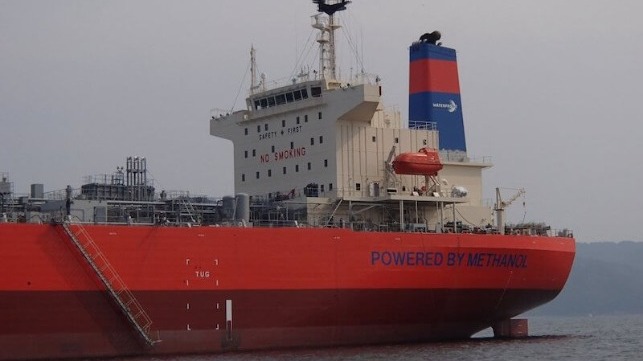
Methanol-powered product tanker (Courtesy Methanex)`

PUBLISHED JUL 24, 2023 11:16 PM BY CLEAR SEAS


Action at the International Maritime Organization (IMO) to regulate emissions from fuel production, and to consider all types of greenhouse gases (GHGs) — not just CO2 — is moving slowly and not receiving much attention. But these regulatory details are probably more important than the headline-grabbing move to target net-zero GHG emissions by 2050. Here’s why.

A growing proportion of global GHG emissions — at 3% and climbing — come from the global shipping industry. The majority of those pollutants come from large ocean-going container ships, tankers and bulk carriers that move finished goods, raw materials, minerals, and food all over the globe. Measures to curb this rise in emissions are already being enacted but the details of how they come into effect are vitally important. In this article we investigate these details and why they matter.

Methanol and methane are currently winning the alternative fuels race – what are the consequences?

The lion’s share of new ships on order are now fueled by alternative fuels rather than traditional oil-based heavy fuel oil according to data obtained by DNV Alternative Fuels Insights. Methane (in the form of liquefied natural gas [LNG]) and methanol are the most popular choices. While this may sound like good news, zero-emission versions of these fuels are still a long way off – as Clear Seas explored in an earlier article.

Methanol and methane seem like attractive alternative fuels at first glance because they contain less carbon – the source of CO2 emissions – than conventional oil-based fuels and are relatively inexpensive. But this picture changes when all GHGs (not just CO2) are considered over the total lifecycle of fuel production and consumption.

When methanol is produced from fossil natural gas – the most common production method – vast quantities of CO2 are emitted. When these upstream CO2 emissions from the methanol manufacturing are added to the exhaust emissions from the ship’s engine, methanol turns out to be worse for the environment than conventional oil-based fuel – by approximately 20%.1 If regulations come into force that take into account the lifecycle emissions from production as well as consumption, ship operators who use methanol-powered ships will need to look for options outside of the widely available fossil-based methanol if they want to achieve GHG reductions — and these are currently limited.
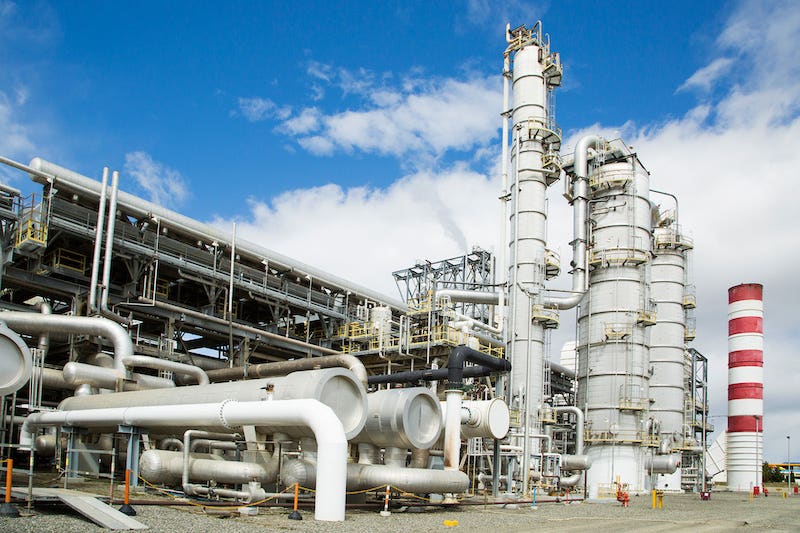
A methanol production facility (Methanex)

Methane, in addition to being a clean-burning fuel, is itself a powerful GHG, and so when it leaks out during production or as unburnt fuel in the engine exhaust gas of ships, it counteracts the benefit of the reduction in carbon content of the fuel described above. Researchers at the University of British Columbia supported by Clear Seas found that although measures to control methane emissions are available both in the fuel production and delivery supply chain as well as on ships, there is currently little incentive to implement them.2

Methane emissions are not given high enough priority by ship owners and operators

The most common fuel choice for new cargo ships being ordered today is methane – in the form of LNG. Most ship operators are hoping to reduce emissions through a transition to bio-LNG and ultimately to zero-emissions by using e-methane3 in the same ships. However, decisions are being made now about which natural gas engines to install on the LNG-fueled ships being ordered and these ships will be in operation for decades. As the Clear Seas supported research has discovered, there is currently little incentive for them to install the more expensive high-pressure dual-fuel engines that cut methane emissions. Action now while ships are still on the drawing board is needed or else the technology will be locked-in at the shipyard with limited opportunity to retrofit.
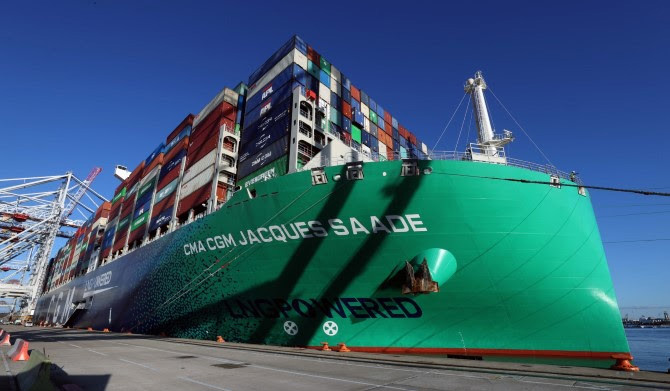
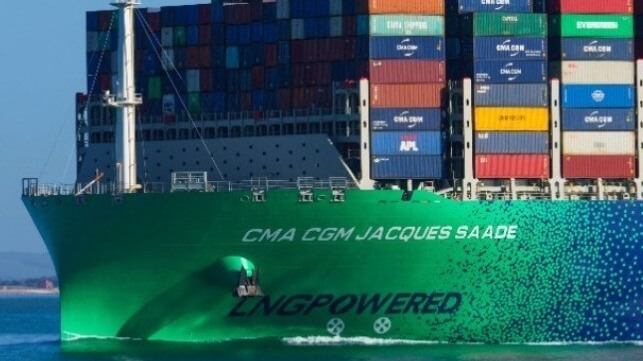
A methane-fuelled container ship (CMA CGM)

These methane-fueled ships need to be refueled, so ship fuel suppliers are also investing in liquefaction plants and refueling equipment needed to deliver methane fuel in the form of LNG. LNG plants with low-emission, electric-drive compressors and refueling barges with re-liquefaction equipment to capture leaking methane are available, but they are more expensive.4 Suppliers need to have at least the prospect of being able to charge a premium for their products or of claiming low-carbon fuel standard carbon tax credits to justify the increased investment. The alternative is leaky high-emitting infrastructure – again, in place for decades.

Emissions from the production of methanol need to be factored into international shipping emissions regulations

Ship owners may be choosing methanol-fueled ships on the assumption they will be rewarded under the currently incomplete energy efficiency index emissions reduction measures that recently came into force. At the moment, these measures only take into account CO2 from the combustion of the fuel on the ship. Once more comprehensive regulations arrive that take account of upstream emissions from the production of methanol, shippers may have no choice but to return to burning carbon-intensive oil-based fuels.5

Fixing the problem with fossil methanol is costly. One option is to mix it with enough sustainably sourced bio-methanol to reduce the reliance on high-emissions fossil methanol. Another alternative is to capture and sequester some of the CO2 emitted during production. But these projects will take time to scale up and will require investment justified only if greener methanol can command a price premium in the market – a premium that will only be there if upstream emissions from methanol production are properly accounted for in regulations.

What is being done to properly regulate GHG emissions from ships?

In July 2023, the IMO adopted a revised GHG reduction strategy. IMO member states have discussed several proposals for the levels of ambition for 2030, 2040, and 2050 targets to phase out lifecycle GHG emissions, and the measures that will move the industry towards these targets. The majority of member states support the need for the international shipping sector to reach zero lifecycle GHG emissions by 2050, be aligned with the 1.5°C warming limit, and avoid any out-of-sector offsets while doing so. Measures to support the shipping industry in meeting these targets that have received support include a technical element such as a GHG fuel standard that starts low and increases over time and considers lifecycle GHG emissions along with an economic element such as GHG pricing.

However, targets and measures towards mitigating the climate impacts of shipping can only be successful if they are supported by appropriate metrics that capture the full range of GHGs and the full lifecycle of alternative fuels. The energy efficiency existing ship index (EEXI) and carbon intensity indicator (CII) indexes are energy efficiency measures that are currently only based on a CO2 intensity (CO2 emissions per transport work) metric to further contribute to the intensity targets of the initial IMO GHG Strategy. Although there have been discussions at the IMO on amending the indexes to a lifecycle metric taking into account all GHGs, not just CO2, no formal proposals on this issue were made in recent IMO sessions.

Amendment of the existing indexes to include lifecycle GHGs, especially CO2, methane (CH4) and nitrous oxide (N2O), is critical for the international shipping sector to meet its climate targets, align with the 1.5°C temperature limit goal, incentivize the “right” alternative fuel(s) and technology, and avoid the risks of stranded assets. Although these topics are actively being negotiated at the IMO, there is not yet a consensus.

This article appears here courtesy of Clear Seas. It was written in collaboration with the UBC research team working on decarbonizing marine shipping.

Authors:

Imranul Laskar is a PhD Researcher in Resource, Environment and Sustainability at UBC.

Amanda Giang is an Assistant Professor in the Institute for Resources, Environment and Sustainability at UBC.

Paul Blomerus is Executive Director and marine fuels decarbonization expert at Clear Seas.

References: 

1 Ongoing Clear Seas research on Marine Fuels for Reducing Greenhouse Gas Emissions from Shipping

2 Laskar, I.I., Giang, A., 2023. Policy approaches to mitigate in-use methane emissions from natural gas use as a marine fuel. Environmental Research: Infrastructure and Sustainability 3, 025005.

3 e-methane is methane synthesized from hydrogen produced through electrolysis of water using renewable electricity.

4 Temporary infrastructure like truck-to-ship refueling or portable containerized solutions are sometimes promoted to prevent so-called fossil fuel lock-in of LNG. This is counterproductive. Short-term methane emissions resulting from venting of methane before, during and after refueling operations is a major hazard of the operation of this lower-cost mobile equipment. LNG refueling from properly equipped jetties and bunker vessels has a better likelihood of reducing or eliminating methane emissions.

5 Methanol-fueled ships are dual-fuel capable so can still use conventional heavy fuel oil or diesel fuel as an alternative to methanol when it is not available.

The opinions expressed herein are the author's and not necessarily those of The Maritime Executive.

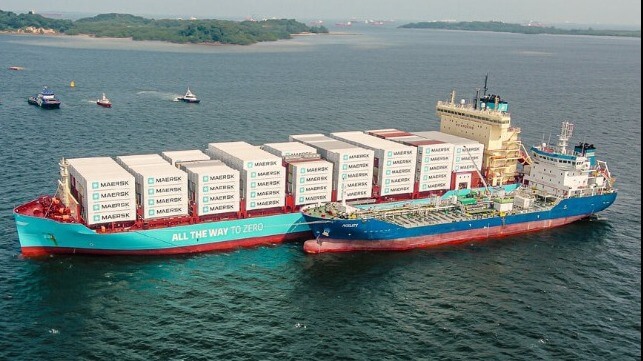
Maersk's Methanol Efforts Proceed with Bunkering in Singapore and US Plant

methanol bunkering
Maersk's new containership completed Singapore's first STS methanol bunkering operation (MPA)

PUBLISHED JUL 27, 2023 9:23 PM BY THE MARITIME EXECUTIVE


Maersk continues to forge ahead with efforts to develop methanol as an alternative fuel to support the maritime industry’s transition. The shipping company is supporting the development of a large green methanol production facility in Central Louisiana while in Singapore they completed the port’s first-ever ship-to-ship methanol bunkering operation. With its maiden voyage underway, the first containership fueled by methanol is now a little over a month away from reaching Maersk’s headquarters in Copenhagen.

Singapore’s Maritime and Port Authority (MPA) is highlighting the unique bunkering operation and the preparation it undertook. Before the operation, extensive safety preparations were made, including tabletop exercises, workshops, and a ground deployment exercise involving various stakeholders and government agencies. The MPA highlights that it conducted a thorough risk and environmental impact assessment, reviewed global methanol-related incidents, and incorporated the use of drones, weather and tide forecasting, plume modeling, and monitoring to support the operation.

The 32,300 dwt containership built in South Korea which will be officially named Laura Maersk when it reaches Copenhagen, arrived in Singapore on July 26 from Shanghai. Working with Hong Lam Marine which received the green methanol from Vopak Terminals, the vessel was refueled with approximately 300 metric tonnes of bio-methanol from the bunker vessel MT Agility. The containership will depart Singapore for the more than 5,300 nautical mile voyage to the Suez Canal.


Singapore undertook extensive preparations to ensure the safety of the bunkering operation (MPA)


As the voyage continues, Maersk also continues to build out its global supply network for the future fuel that will be required for its fleet of ocean-going methanol dual-fuel ships now on order as well as the other major carriers that have followed with orders for ships. 

SunGas Renewables, a Louisiana-based company spun out of GTI Energy to focus on renewable syngas products announced plans to proceed with the construction of a large green methanol production facility that is expected to supply methanol to Maersk’s fleet. The company plans to invest approximately $2 billion to construct the project at the former International Paper facility in Rapides Parish, Louisiana. Construction is expected to begin in late 2024 with commercial operations commencing in 2027.

“Using biomass from sustainably managed forestry along with carbon capture allows our project to generate green marine shipping fuel while simultaneously removing carbon from the atmosphere,” explains Robert Rigdon, CEO of SunGas Renewables.

The project which will be called Beaver Lake Renewable Energy is expected to produce nearly 400,000 metric tons of green methanol per year for marine fuel. It will utilize wood fiber from local, sustainably-managed forests in the production of the fuel with a carbon sequestration process of nearly a million tons per year of CO2.

In late 2022, SunGas Renewables announced a strategic green methanol partnership with Maersk to produce green methanol from multiple facilities around the United States. The BLRE project is SunGas Renewable’s first facility to produce green methanol for Maersk.


SEA-LNG Highlights Growth of Bio-LNG Bunkering

LNG fueled containership
SEA-LNG highlights the growth of bio-LNG to meet shipping's demands and emerging regulations (CMA CGM file photo)

PUBLISHED JUL 27, 2023 8:26 PM BY THE MARITIME EXECUTIVE


SEA-LNG, the industry coalition established to demonstrate the commercial advantages of LNG as a marine fuel, is reporting strong growth in the availability of bio-LNG including in major bunkering ports. Growth of the alternative fuel is increasingly important both to support the expansion of the LNG-fueled fleet and to meet emerging regulations designed to reduce methane emissions as well as support the development of renewable fuels that do not compete with the production of food.

The European Council’s moves this week to complete the adoption of FuelEU Maritime due to become effective in 2025 highlight the critical need for bio-alternative fuels that meet the EU’s Renewable Energy Directive and requirements that fuels do not compete with food production. SEA-LNG reports that the current fleet of 355 LNG-fueled vessels, excluding LNG carriers, are all capable of using bio-LNG as a drop-in fuel without modification. DNV on its Alternative Fuels Insight platform estimates that the LNG-fueled global fleet with grown by 2.5 times in the next five years to nearly 1,000 ships.

SEA-LNG in its market analysis reports that annual production of biomethane, from which bio-LNG is produced, is currently around 30 million tonnes or around 10 percent of shipping’s total annual energy demand. Further, they report that bio-LNG is currently available in almost 70 ports worldwide, including in Singapore, Rotterdam, and the US East Coast. They highlight that bio-LNG can also be transported, stored, and bunkered in ports using the existing LNG infrastructure, which provides a route to further expansion of its availability in coming years.

“The fact that bio-LNG is commercially available now and being used as a drop-in marine fuel by operators in Europe, North America, and Asia, demonstrates the sustained contribution that the LNG pathway can make to decarbonizing our industry, starting today,” said Adi Aggarwal, General Manager of SEA-LNG. “Climate change is a stock and flow problem, the longer our industry waits to start using low-carbon fuels, the tougher the decarbonization challenge will be.”

Bio-LNG used in the maritime industry is produced from sustainable biomass feedstocks such as human or agricultural waste, which means it does not compete with the production of food, fiber, or fodder, as defined by regulations such as the EU’s RED II and the Renewable Fuel Standards in America. SEA-LNG highlights that in general, the use of bio-LNG as a marine fuel can reduce GHG emissions by up to 80 percent compared to marine diesel on a full well-to-wake basis. They further contend that depending on the method of production, bio-LNG can have net-zero or even net-negative GHG emissions on a lifecycle basis.

Environmentalists have been critical of the growth of the LNG fleet pointing to methane slip, the condition where unburnt methane which is especially harmful to the environment is contained in a ship’s exhaust. Global regulations, including an initiative from the UN Climate Summit, specifically are targeting methane slip at all sources from production to the use of LNG as a fuel source. SEA-LNG argues that newer marine engines and technologies are reducing methane slip while additional research is also underway to eliminate methane emissions from ship’s exhausts.

SEA-LNG also addresses the challenge of scaling up bio-methane production to meet demand. The industry coalition cites research from the Nanyang Technological University’s Maritime Energy and Sustainable Development Centre of Excellence (MESD) released in October 2022, showing the global potential for the expansion of biomethane production of up to 20 times current production levels by 2050. Accounting for demand for other sectors, MESD forecasts that bio-LNG as a marine fuel could be available in sufficient quantity to decarbonize approximately 13 percent of the global shipping fleet in 2050. 


HHI Gets Approval for Ammonia-Based Shipboard HVAC Plant

Ammonia

PUBLISHED JUL 27, 2023 10:57 PM BY THE MARITIME EXECUTIVE


ABS has issued an approval in principle to HD Hyundai Heavy Industries (HHI) for its new ammonia-based ship HVAC refrigeration system. 

Ammonia is the most common industrial refrigerant worldwide because of its excellent efficiency and affordable price. In addition, it has zero greenhouse-gas impact, unlike some modern refrigerants, and has no effect on the ozone layer. It is a common refrigerant aboard reefer ships and large fishing vessels, with decades of proven service. 

Ammonia's drawbacks are also well-known, and much discussed in the maritime industry. It is toxic and flammable, and these safety challenges have to be managed in a shipboard environment. Its long history in fishing and in shoreside applications have established its risk/benefit profile, and two research studies recently concluded that it can be used safely as a marine fuel - with the right precautions. Extending its use to merchant shipboard HVAC is a small step towards far larger ammonia-fuel systems. 

HHI developed its new ammonia refrigeration system in response to shipowners’ requests for a more eco-friendly refrigerant for HVAC, the company said in a statement. Ammonia's attractiveness for the owner is in its zero global warming potential, as well as its inherent safety for the ozone layer. Hwan-Sik Lee, head of the ship design office at HD Hyundai Heavy Industries, emphasized that HHI wants to help reduce the GHG footprint of the whole ship, not just the propulsion system. 

“This is an exciting development from HHI for the maritime industry’s decarbonization quest to find sustainable solutions. ABS has always been a safety pioneer, so we are well placed to tackle the challenges on board and ashore presented by ammonia’s toxicity and flammability. ABS is committed to leading the industry in supporting ammonia’s safe adoption at sea,” said Panos Koutsourakis, ABS Vice President, Global Sustainability.


Senate NDAA Bans Allied Manufacturing Base From U.S. Navy Shipbuilding

CAPTAS-4
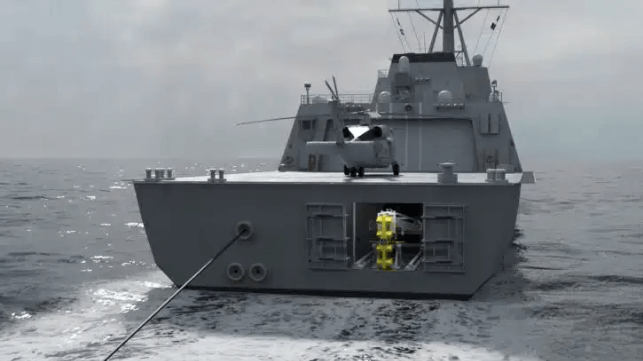
Foreign-manufactured equipment, like this French-made towed sonar system (above), could require a waiver request from the Pentagon (Thales file image)

PUBLISHED JUL 27, 2023 10:28 PM BY THE MARITIME EXECUTIVE


The U.S. Senate has added an amendment to a must-pass defense appropriations bill which would ban foreign-made components from U.S. Navy shipbuilding by 2033 - even if the foreign manufacturers are in allied nations with longstanding defense technology ties. 

Made-in-America requirements are common for defense contracting, and foreign defense manufacturers often license their technology to American partners or set up their own American factories to localize production. However, the amendment to the NDAA goes further. The text would:

- Gradually increase domestic source content for shipbuilding programs to 100 percent within the next ten years;

- Require all Navy shipbuilding R&D contracts to account for a 100 percent domestic content requirement in order to be considered compliant with “Made in America” policies;

- Require annual reports on country of origin tracking for Navy shipbuilding programs;

- Allow the Navy to request waivers from the Made in America Office for specific exceptions, like absence of a domestic product. 

“Wisconsin has a proud tradition of shipbuilding, producing world-class products made by American workers that defend our freedom at home and abroad,” said Senator Baldwin. “By strengthening Buy America requirements for our shipbuilding industry, we can ensure that taxpayer dollars are not only going toward keeping us safe, but also supporting American jobs, growing our economy, and maintaining a defense industrial base that is critical to our national security.”

The provision would appear to prohibit content from allied-nation suppliers with a long history of sales to the U.S. Navy. Some of this content is high-profile, like the Norwegian-built Naval Strike Missile or the French-made CAPTAS-4 towed sonar array. Since the amendment would be subject to interpretation, and there is a procedure for obtaining a waiver, the impact on any specific program is unknown. 

Planned tri-lateral acquisition for the U.S.-UK-Australia submarine program (AUKUS) could be impacted as well. The amendment would appear to prohibit some Australian- or British-manufactured items from new U.S. Navy sub hulls, despite plans for supply-chain integration and technology sharing. 

In addition, skeptics warn that America's allies could retaliate and impose restrictions on U.S. defense exports, cutting into military cooperation and integration. 

However, Sen. Baldwin's amendment has a broad exception: it allows naval shipbuilders to incorporate any foreign-made item made "wholly or predominantly" of steel, iron, or steel and iron. Subject to interpretation, "predominantly" steel and iron items could include foreign deck machinery or diesel engines. "Wholly" steel and iron items could include foreign shaftlines, preformed steel plate, precut scantlings or castings. 

For new American-made merchant ships to pass muster for Jones Act trade, these rules are reversed: foreign-worked iron and steel hull components are nearly banned, while all foreign equipment is allowed

The FY2024 Senate NDAA passed Thursday, including the amendment. The House version passed on July 14. The two versions still have to be reconciled in conference and then signed into law by the president. 


US Citizen Shipowner Sentenced to Jail for Violating Iranian Sanctions

Iran sanctions
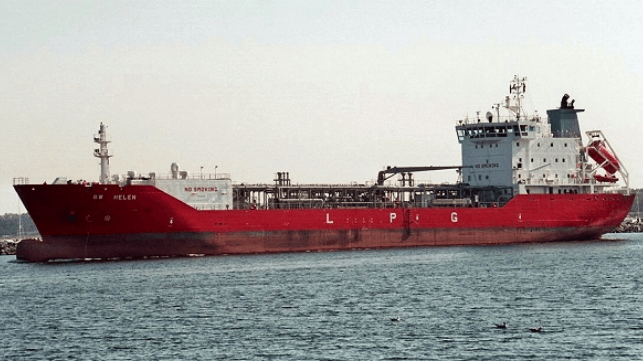
Businessman acquired two LPG tankers used to avoid U.S. sanctions on Iran (file photo)

PUBLISHED JUL 27, 2023 3:38 PM BY THE MARITIME EXECUTIVE


An Iranian-American businessman who operated LPG tankers and a shipping company as a front company for illicit business with Iran was sentenced by a U.S. District Court to 41 months in jail along with forfeiture of millions of dollars in cash and property for violating U.S. sanctions. U.S. prosecutors are highlighting that the shipowner and importer knowingly conducted the business with Iran without the required licenses or permission from the U.S. Treasury Department’s Office of Foreign Assets Control.

Behrouz Mokhtari, age 72 of McLean Virginia, is an Iranian and naturalized American citizen who held management positions and/or maintained ownership control of numerous businesses in Iran and the United Arab Emirates. Prosecutors charged that he and his co-conspirators illegally provided services to Iranian entities between 2013 and 2020, including refining and transporting petrochemical products to and from Iran and conducting financial transactions through bank accounts in the UAE. 

As part of the scheme, they established a front company in Panama called East & West Shipping, which acquired two LPG tankers for approximately $38 million. Between at least February 2013 and June 2017, they conducted shipments of the petrochemical products including using the U.S. financial systems to facilitate the shipments in violation of the sanctions. Another shipping company, Greenline Shipholding, was later created to further conceal the activity. 

One of the LPG carriers in approximately 2017 was transferred to yet a third company, Russel Shipping and later sold for scrap at a value of more than $3.1 million. Mokhtari received more than $2.8 million from the proceeds of the sale and used more than $1.5 million to acquire a home in California. After the sale of the tanker, from 2018 to 2020 he continued to do additional business deals on behalf of Iran.

“This defendant knew that he was prohibited from engaging in business with Iran, but did so anyway and attempted to conceal his actions through his control of businesses and financial entities in Iran and the United Arab Emirates,” said United States Attorney Erek Barron.  “Now, he will not only serve time in federal prison, he will forfeit cash and property purchased with his ill-gotten proceeds.”

U.S. District Judge Lydia Griggsby sentenced Mokhtari on July 25 to spend 41 months in federal prison, followed by three years of supervised release. In addition, he was ordered to forfeit over $2.8 million in proceeds derived from the activities as well as the home purchased in California. He had been facing a maximum of 10 years in jail.

Mokhtari pleaded guilty in January 2023 to two counts of conspiracy to violate the International Emergency Economics Power Act. At the time, he admitted that he knew that, as a U.S. citizen, engaging in business with Iranian entities without first obtaining a license or permission from OFAC is prohibited. He further knew that it was illegal to engage in transactions intended to evade Iranian sanctions, or to engage in transactions related to goods and services of Iranian origin or export.

ECOCIDE

Grimaldi Con/Ro Runs Aground on Coral Reef Off Yucatan

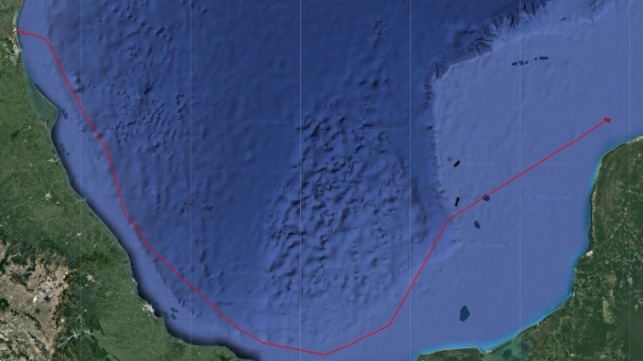
Grande Senegal's voyage around the Bay of Campeche to Arrecife Madagascar, top right (Pole Star)

PUBLISHED JUL 26, 2023 10:11 PM BY THE MARITIME EXECUTIVE


The Grimaldi Lines con/ro Grande Senegal has gone aground on a reef off the Yucatan Peninsula, according to local media and AIS data.

On the evening of July 20, Grande Senegal got under way from the port of Altamira, north of Tampico. She was headed for Brunswick, Georgia, according to operator Grimaldi - but instead of setting a northeasterly course on the shortest route, she headed south instead and hugged the coastline of the Bay of Campeche. 

In the early hours of July 22, as she rounded the northern end of the Yucatan Peninsula, she went from a speed of 18 knots to a full halt at Arrecife Madagascar, a reef about 20 nm off the small port of Sisal. She has not moved since, according to data provided by Pole Star

Photos of the site published by local outlet Yucatan Ahora show the top of the vessel's propeller above the water. In other images, the majority of the bulbous bow is clearly visible. 

The water depth at the site of the grounding is in the range of 15-20 feet, according to local outlet Milenio. The ship's current reported draft via AIS is 27 feet.

The reef is known to fishermen and divers as a breeding ground for fish and a destination for tourists. The extent of any damage along the ship's entry track into the reef is not yet fully known, and local stakeholders are concerned that the process of refloating the ship may cause additional damage. 

Miguel Ek Pech, port commissioner for the community of Sisal, told Milenio that his office will file a complaint with the Secretary of Environment and Natural Resources (Semarnat) for the ecological damage. "When they are going to remove the ship that is stranded practically on all coral, there is going to be a massive destruction," warned Ek Pech.

Dive assessments are reportedly under way for the preparation of a salvage plan, and the anchor handler Atlantic Osprey is attending the ship. No oil pollution or injuries have been reported, according to Grimaldi, and the responders are currently working on a salvage plan. 

Arrecife Madagascar is part of the Campeche Bank Reef complex. In addition to corals and marine life, it is home to much older shipwrecks from the 1700s-1800s, a period when Sisal was a busy seaport. In that era, the reef was considered enough of a hazard to navigation that a lighthouse was installed to warn shipping (it has long since subsided under the sea).

Reflecting its long-known status, Arrecife Madagascar is charted, and it is described in detail in the NGA sailing directions. According to NGA, Arrecife Madagascar is the same color as the surrounding water, and seas do not break on it, rendering missing two of the typical warning signs of a shoal ahead.

NGA cautions mariners transiting this region that Campeche Bank Reef is poorly surveyed overall, and that "it is reasonable to assume that many more dangers exist than are shown on the charts." 

The 2010-built Grande Senegal is the second Grimaldi Lines con/ro involved in a major marine casualty in less than a month. On July 5, a fire broke out aboard Grande Costa d’Avorio at the port of Newark, New Jersey. Two firefighters were killed in the early phase of the response, and the blaze burned for five days. 

Three Grimaldi vessels caught fire in 2019, including the con/ro Grande America, which ultimately went down off the coast of France. 


Taiwan Detains Officers of Sunken Containership as Cleanup Proceeds

containers floating in the ocean off Taiwan
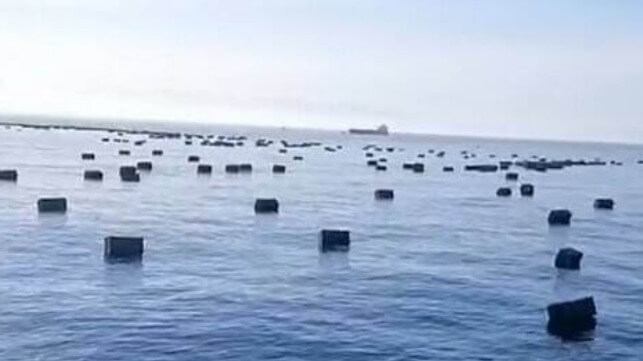
Taiwan believes over 400 boxes were left floating in the ocean and now oil is leaking from the ship (TIPC)

PUBLISHED JUL 27, 2023 2:29 PM BY THE MARITIME EXECUTIVE


Taiwan has orders that three of the officers from the containership Angel that went down last week off the port of Kaohsiung should be barred from leaving the country while the investigation and environmental cleanup is underway. Officials are citing the cost of retrieving the hundreds of containers scattered in the ocean as well as the oil leaking from the vessel.

The Angel, a 21-year-old containership registered in Palau, had been anchored off the port for most of July with media reports saying the vessel had not indicated any troubles but had inquired about docking the day before the incident was reported. The 20,000 dwt vessel, which was 564 feet in length, was loaded with what has now been determined to be 1,349 empty containers. 

The master of the vessel told the port authority on July 20 that the vessel was taking on water and that the 19 crewmembers were abandoning ship. The vessel’s list continued to grow and despite efforts to stabilize the ship, it heeled over overnight and sank approximately 2.8 nautical miles outside Kaohsiung harbor. In addition to the containers, the port authority reports there were nearly 500 tons of low-sulfur fuel and light diesel aboard.

Taiwan’s Ocean Affairs Council Minister Kuan Bi-ling reported that an order has now been issued by the Immigration Department to retain on Taiwan the master of the Angel, along with the first mate and chief engineer. Their departure is being restricted under the island’s Marine Pollution Law.

The minister pointed out that the law requires ships to avoid and prevent damage to the marine environment and the ship’s owners to pay for removal, remediation, and damage. She reports that Taiwan is incurring large expenses for the retrieval of the containers left floating along the coastline and that the oil leaking from the Angel is unstoppable. The available equipment can only remove 120 cubic meters per hour and further with Typhoon Doksuri impacting the area, they fear the oil spill will be washed across a broader area. In addition, fisherman the minister said will also need to be compensated for the damage caused to the industry.

The Kaohsiung Port Authority estimates that 766 of the containers sunk with the ship and a further 160 sunk during the drifting process. A further 233 have been towed away in the salvage operation that is retrieving boxes in and around the harbor’s entrance channels. An additional 60 containers have been identified washed up on the shoreline in the area between Nansing and Fengpitou.  

A further 130 containers are believed to be missing and likely floating in the ocean creating navigational hazards. Minister of Transport Wang Guocai expressed concern that some of the boxes currently trapped on the concrete constructions along the shore could also be washed out to sea as Typhoon Doksuri churns up the coastal waters. The container retrieval operation has been suspended due to the typhoon.

Taiwan has been calling for the owner of the ship to take prompt action. The Equasis database lists the owner as Navramar Shipping and a management company based in Azerbaijan. The vessel’s class society and insurance status are unclear with the Equasis database not listing a Port State inspection since 2018.

Fremantle Highway Fire Lessens as Vessel Continues to Drift off Dutch Coast

Fremantle Highway car carrier fire
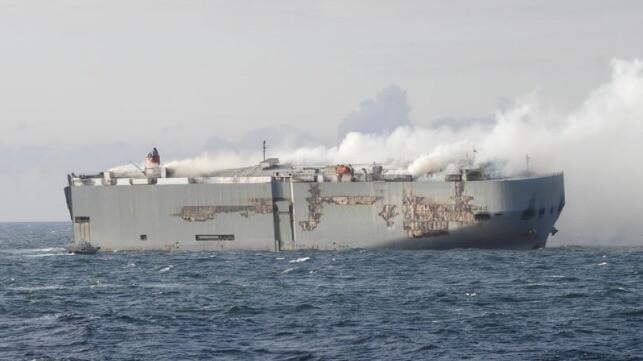
A tow line is being used to hold the burning vessel about 10 miles offshore and out of the shipping lanes (Dutch Coast Guard)

PUBLISHED JUL 27, 2023 7:01 PM BY THE MARITIME EXECUTIVE


Dutch authorities report that the situation is stable as the car carrier Fremantle Highway continues to burn. As of late on Thursday, they are reporting that it appears that the fire might be lessening in intensity but they can only wait until the fire dies down and it becomes safe to board the ship to start a salvage operation. The fire, which began around midnight on July 25, is expected to burn for days.

The vessel continues to drift along the Dutch coast with a line attached in an effort to keep it from interfering with the busy sea lanes in the North Sea. The ship drifted westward during the day but back toward the east later with the Dutch Coast Guard saying they were monitoring the current and wind direction to determine the most favorable drift direction. Later in the day, a stronger tow line was strung from the tugboat Fairplay 30 to the Fremantle Highway.

While the fire is still raging on the vessel, the Coast Guard also reports that the decision was made to suspend cooling efforts are the intensity of the fire diminished. The vessel is already showing a list and concerns are growing over the stability of the vessel. 


“We are working with all our might to prevent the ship from sinking,” Rijkswaterstaat, the Dutch water authority, said in its update. “We also are doing our utmost to limit the damage to people and the environment, as much as possible.”

The water authority’s oil recovery vessel Arca continues to stand by near the wreck in case of a fuel release. Dutch and German coastal authorities are also preparing for different scenarios including a release of contamination or the possibility that the vessel will sink. Environmental groups are highlighting the dangers to sensitive areas as well as popular tourist destinations along the North Sea coast. The current position is approximately 10 miles north of Terschelling in The Netherlands.


A salvage team continues to stand by the vessel and is analyzing the exterior and pictures as they work to formulate potential plans. The images released by the Dutch Coast Guard show blistering and peeling paint at multiple places along the sides of the vessel with smoking continuing to pour out of the vessel. They however are no longer show flames and the Coast Guard points out that no cracks or holes have been observed so far in the vessel.

Analysts are already beginning to calculate the potential financial impact. The Mercedes-Benz Group confirmed that it has approximately 350 vehicles aboard the ship. London-based data and analytics company Russell Group estimated that the car company could incur an economic loss of at least $13 million from the fire.

“If the cause of the fire turns out to have been started by an electric vehicle, this will be a similar scenario to the Felicity Ace incident. The incident again raises questions surrounding the perils of shipping electric vehicles (EVs), and the flammable nature of EVs that contain lithium-ion batteries,” said Suki Basi, Managing Director of the Russell Group.

The Dutch Coast Guard however is continuing to caution about speculation and various local media reports. The number of vehicles aboard the vessel has come into question with the original manifest showing 2,857 but some media reports are citing numbers as much as 1,000 vehicles higher. The Dutch Coast Guard also asked that while well-intentioned that people stop calling their emergency line with questions and suggestions, saying that it was hampering its operations.