It’s possible that I shall make an ass of myself. But in that case one can always get out of it with a little dialectic. I have, of course, so worded my proposition as to be right either way (K.Marx, Letter to F.Engels on the Indian Mutiny)
Friday, July 28, 2023
EU Ombudsman Investigating EU Border Agency’s Handling of Migrant Crisis
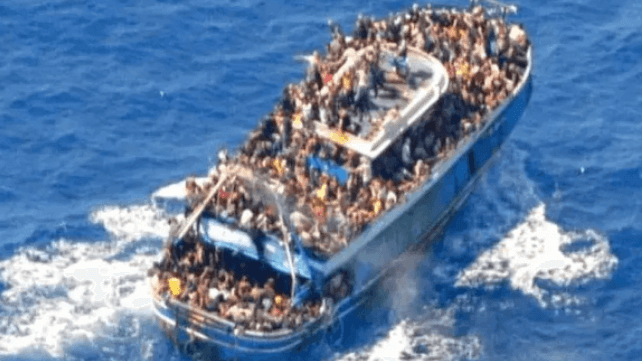
Loss of the migrant boat in June is speaking a deeper investigation into the border agency's role in the Mediterranean migrant crisis (Hellenic Coast Guard photo)
The European Ombudsman announced that it will be conducting an investigation into the migrant boat tragedy off Greece in late June that claimed the lives of at least 500 people, sparking widespread criticism of how the ongoing migrant crisis in the Mediterranean is being handled. The Ombudsman, which is an independent and impartial body that holds the EU’s institutions and agencies to account and seeks to promote good administration, is specifically focusing on the role of the European Border and Coast Guard Agency (Frontex) and its maritime coordination efforts as they relate to the migrant boats.
Emily O’Reilly, the EU Ombudsman, reports she will be looking at a wind range of documents concerning Frontex’s responsibility to rescue those in distress at sea. She plans to look both at the formal report about how events unfolded with the specific migrant boat off Greece as well as reports of the other recent incidents involving considerable loss of life in the Mediterranean.
“A tragedy of this magnitude requires all those involved to reflect on their responsibilities and to be clear to the public who is accountable for these deaths,” said O’Reilly. “My office will focus on the role of Frontex as we try to piece together the events that led to the capsizing of the boat and the deaths of at least 500 people.”
The Ombudsman’s joined other investigations already underway. She notes that her office will be coordinating with the Greek Ombudsman Andreas Pottakis who has the power to look into how the Greek authorities’ response to the migrant boat. In addition, there have been broad calls within the European Union for an independent investigation into the loss of the overloaded fishing boat. This comes as advocates for the families and survivors call for more to be done and the NGO community continues to call for the European Union to enact a broader program to address the migrant crisis.
The fishing boat was reported to be loaded with as many as 750 people attempting to make the passage from Libya to Italy. Greek authorities confirmed that they had been tracking the vessel after it was reported to be in the area but insisted, they were monitoring. They said they offered assistance but denied the accusations of survivors that the Hellenic Coast Guard was attempting to tow the vessel when it capsized. Just over 100 people survived with critics saying more could have been done to render assistance.
“While the Greek authorities' role is being investigated at the national level, Frontex’s role in search and rescue operation also needs to be clarified,” said O’Reilly. “It has been reported that in this instance Frontex alerted the Greek authorities to the ship’s presence and offered assistance, but it is not clear what else it could or should have done.”
In her letter to the executive director of Frontex, O’Reilly says she has been closely monitoring the detailed reports saying she believes greater clarity is required in relation to Frontex’s role and its broader efforts at providing technical and operational assistance. She asks questions such as how Frontex ensures its duty to rescue those in distress at sea as well as the agency’s role in coordination. She is also asking about specific operational issues such as the use of cameras on boats in the operation.
Looking at the broader handling of migrants at sea in the Mediterranean, the Ombudsman asks Frontex about the reports concerning individuals’ delayed response or refused disembarkation at EU ports during SAR operations. She is also seeking information about Frontex’s protocol on its communications with NGOs that operate in support of SAR operations and reports situations where captains of NGO vessels are required to hand over rescued individuals to the coast guards of non-EU countries.
As part of the investigation, they will also explore the recent EU deal with Tunisia on border management. The focus will be on how the human rights impact. She plans to look at how Frontex ensures compliance with fundamental rights and what it does when it becomes aware of breaches by member state authorities.
Video: Philippine Ferry Boat Capsizes in High Winds, 26 Drowned
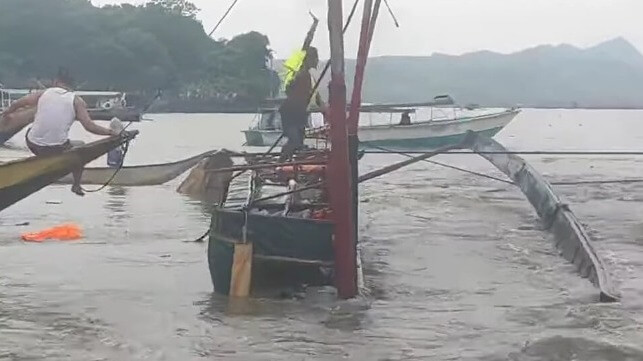
Local fishermen and residents respond to the sinking (PCG)
On Thursday, the Philippine Coast Guard launched a rescue operation after a ferry boat sank off Binangonan, Luzon, with at least 26 fatalities.
At about 1910 hours on Thursday, the wooden ferry Princess Aya capsized and went down in Laguna de Bay, a large lake southeast of Manila. Stormy weather and heavy rain from Typhoon Doksuri has been battering Luzon since the beginning of the week, and may have played a role in the casualty. A no-sail order on the lake had just been lifted before the vessel left the dock for a short trip to a nearby island.
The Princess Aya encountered severe winds just after leaving the wharf at Bingangonan, and the passengers rushed to one side in panic, officials told local media. The outrigger broke and the boat quickly capsized just 50 yards off the shore.
The early indications suggest that it was overloaded, a common practice in Southeast Asia. On inspection of the boat's records, the Philippine Coast Guard found that only 22 passengers were declared, and the maximum capacity of the boat was listed as just 42 people. 40 survived the sinking and 26 deceased passengers have been recovered.
The search for survivors and remains of the deceased was suspended overnight, but resumed at 0600 local time on Friday. The number of confirmed fatalities could rise as the search effort continues.
The Philippine Coast Guard and the Philippine National Police are investigating the cause of the sinking. The vessel's captain has been taken into custody, and he asserts that he was not aware that the boat was overloaded, according to GMA News.
The Philippines' Maritime Industry Authority (MARINA) announced Friday that it has suspended the operating permit of the vessel operator.
The Rescue of the Submarine USS Squalus
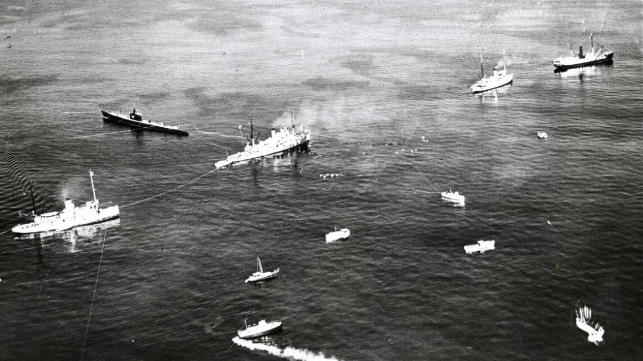
L to R: fleet tug USS Wandank, submarine USS Sculpin, submarine rescue ship USS Falcon, naval shipyard tug Penacook, and Lighthouse Service tender Hibiscus, in addition to Coast Guard boats (National Archives)
Most of the rescue missions carried out by the United States Coast Guard and its predecessor agencies (i.e., the U.S. Life-Saving Service, U.S. Revenue Cutter Service, and U.S. Lighthouse Service) were typically associated with marine accidents involving ships or boats. In contrast, the Coast Guard response to the 1939 accidental sinking of the Navy submarine USS Squalus (SS-192) is unique.
Accidental Sinking of the USS Squalus
On the morning of May 23, 1939, the American Sargo-class submarine Squalus was underway for trial maneuvers and dives off the coast of New Hampshire near Isle of Shoals. Earlier test dives had been conducted successfully, and there were no indications of any mechanical or equipment problems.
With a crew of 56 officers and sailors plus three civilian technicians, Squalus commenced a routine dive at 7:40 a.m. Within minutes, the sub experienced catastrophic flooding of the engine rooms, crew’s berthing compartment, and the after torpedo room due to a faulty main induction valve (which allows outside air to enter for diesel engine operation) that did not close properly prior to the dive.
Despite determined efforts to return to the surface, the submarine sank stern-first to 240 feet and sat on the seafloor about nearly four nautical miles south of Isle of Shoals. Immediately releasing a marker buoy with telephone line to the surface, the survivors attempted to signal any nearby ships by means of flares and smoke bombs floated to the surface. Trapped and tragically drowned in the flooded after compartments were 24 officers and sailors plus two civilian technicians. This left 32 officers and sailors and one civilian technician alive in the unflooded forward compartments.
Fortunately, Squalus’s sister submarine, USS Sculpin, was in the vicinity. After being alerted by the naval shipyard that the Squalus was overdue and missing, Sculpin commenced searching and found the marker buoy in the afternoon. After establishing telephone contact with the crew of the Squalus, communications were lost when the marker buoy cable was accidentally severed. Squalus was relocated a few hours later using Sculpin’s sonar gear and a drag hook deployed from the Naval Shipyard tugboat Penacook. From the dragline, a new marker buoy was placed over the Squalus.
Responding Units of the Coast Guard
The Coast Guard’s District One in Boston ordered all available units to proceed immediately to the scene. The first to arrive that evening was Station Isle of Shoals’ picket boat CG-991, which was a powerful ex-rumrunner capable of greater speed than the other available Coast Guard vessels. The boat brought out the first Navy deep-sea divers available in the area from the naval shipyard (two divers, two dive tenders, two mechanics, and their diving equipment). Shortly thereafter, patrol boat CG-158 arrived from its homeport of Gloucester, Massachusetts. Motor lifeboats from Stations Isle of Shoals (CG-4409/CG36382), Portsmouth Harbor (CG-5170/CG36436) and Merrimac River (CG-5139/CG36424) also arrived, along with motorboats CG-5549 and CG43010 from Isle of Shoals. By late evening, patrol boat CG-409 arrived, carrying key personnel and equipment from the Navy’s Experimental Diving Unit, who had flown to Portsmouth from their base in Washington, D.C. And, shortly after midnight on May 24th, cutter CGC Harriet Lane arrived, along with the Lighthouse Service tender Hibiscus.
The Coast Guard vessels and boats were tasked with maintaining a safety cordon around the site. These craft searched for Squalus survivors that might have individually ascended to the surface, while keeping smallboats carrying photographers, reporters, and spectators at a safe distance. The larger Coast Guard picket boats and cutters ferried key personnel and equipment from the naval shipyard to the wreck site. Along with the Hibiscus, they were also used to assist the Falcon and Wandank to set out four-point mooring anchors, lines, and buoys. These were used to position the Falcon directly over the Squalus to carry out dive and rescue operations.
Rescue of Squalus Survivors
The only hope for rescuing the Squalus survivors lay with the recently developed, but never used, McCann Submarine Rescue Chamber (SRC). The only SRC available on the East Coast was aboard the submarine rescue ship Falcon, which fortunately was in port at New London, Connecticut, and quickly arrived on scene. This would be the first use of an SRC for a rescue mission.
With two operators, the SRC descended to the stricken submarine’s escape hatch located in the submarine’s forward torpedo room. Once seated over the hatch with a watertight rubber seal, the SRC’s hatch could be opened. After the submarine’s escape hatch was opened up the eight survivors could be brought into the SRC. After closing the hatches, the watertight seal could be broken and the SRC’s ballast blown, the SRC could float to the surface.
One of the challenges facing the Squalus rescue was the 240-foot depth. At that depth, deep-sea divers using surface-supplied air could only remain on the bottom 20 minutes before risking nitrogen narcosis. However, the Navy’s Experimental Dive Unit had developed deep-sea diving techniques using a helium-oxygen mixed gas and specialized equipment for this technique.
Time was critical for rescuing the survivors before the submarine’s remaining oxygen was exhausted. Once securely anchored over the Squalus, the Falcon commenced dive operations and use of the SRC. Over a period of 14 hours, four trips down were made by the SRC, rescuing 33 survivors. A fifth trip was made to the Squalus’s after torpedo room hatch to verify that no men had survived in the flooded portion of the submarine.
Once brought to the surface, the survivors were transferred to Coast Guard Cutter Harriet Lane for return to the Portsmouth Naval Shipyard. This allowed the Navy vessels to remain on scene for the more difficult, challenging, and time-consuming raising and salvage of the Squalus.
Post-Rescue Raising/Salvage Operations
The raising and salvage of the Squalus was one of the most challenging diving and salvage operations ever conducted by the Navy. Today, the final report of this operation is included in the Navy’s salvage handbook.
To raise the Squalus, several floodable salvage pontoons with chain bridles were placed under the bow and stern of the submarine. Once in place, the pontoons were filled with air from the surface with air pressurization hoses. The inflated pontoons provided the buoyancy necessary to lift the submarine off the seafloor and up to the surface. Rigging these pontoons required extensive diving operations, most of which were carried out using the new mixed helium-oxygen gas methods.
Much of this effort was initially trial and error, with the first raising attempt resulting in a spectacular failure consisting of the Squalus rising uncontrolled to the surface, slipping out of the chain bridles, and falling back to the bottom. It took four months (from late May to mid-September 1939) and five attempts to complete the raising and towing of the Squalus from its wreck site back to the Portsmouth Naval Shipyard. During these attempts, once again, the CGC Hibiscus — along with picket boat CG-991 and other Coast Guard small craft — aided with salvage moorings, towing and safety cordon patrolling. Ultimately, the Squalus was repaired and recommissioned as the USS Sailfish, which had a successful World War II career.
The Coast Guard has, on many occasions, successfully assisted in very different and unique types of rescue missions over its history, including those involving Navy vessels and units. Although the Navy served in the primary role of rescuer and salvager, the Coast Guard provided important assistance that has never been fully related. Although not equipped and trained to carry out underwater rescue operations, the Coast Guard can provide critical assistance in these types of operations, and certainly shared in the success of those efforts for the Squalus rescue.
This article appears courtesy of The Long Blue Line and may be found in its original form here.
The opinions expressed herein are the author's and not necessarily those of The Maritime Executive.
Investigators Raise the Bow Ramp of the Long-Lost Ferry Estonia
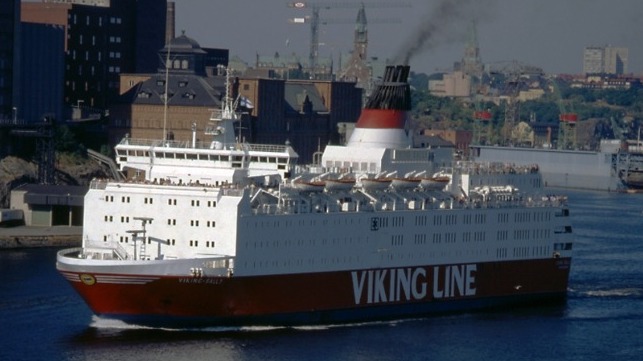
The ferry Estonia, seen here in her original livery as the Viking Sally
A joint Estonian, Swedish and Finnish salvage team has raised the bow loading ramp of the ill-fated ro/pax ferry Estonia, which went down nearly 30 years ago in a storm in the Baltic Sea. The tragedy was one of the most deadly maritime casualties in decades, claiming the lives of 852 people, and investigators hope to lay to rest a longstanding debate over the cause of her loss.
Working from the deck of the Eidesvik research vessel Viking Reach, the salvage team used ROVs to explore the wreck site in detail and obtain video footage from multiple angles. After several days of survey work, they used the robotic vehicles to dredge out sediment from around the damaged bow ramp and rig the piece for hoisting. The 12-tonne ramp was brought to the surface and swung onto deck on Tuesday morning.
The ramp is a key piece of evidence for the investigation. The sinking was initially blamed on the failure of the ship's bow shield, the hinged visor that protected the ramp and gave access to the wide ro/ro decks on the interior. The ship's designer had used the load calculations for typical non-opening bows for its construction, and called for mild steel construction throughout - even for the attachment mechanisms, which were subject to high loads. During the initial site dives in the 1990s, the bow visor was found torn off the ship at a distance from the rest of the wreck; it was recovered and photographed shortly after the accident, but it was scrapped and is no longer available to investigators.
In the years after the sinking, the accident was shrouded in official secrecy: authorities forbade any dive visits to the wreck site and even made plans to cover it in concrete. Victims' families and independent researchers have long maintained that something else might have been to blame, like an explosion or a collision with a submarine.
In a past independent report by news outlet Fokus Estonia, demolition experts suggested that photographs of the (now-scrapped) bow visor showed complex tearing and folding patterns that would only be consistent with explosion damage. Private ROV explorations in 2020 also revealed that the wreck had large openings in its hull, perhaps indicative of damage sustained before the sinking.
A joint Estonian, Finnish and Swedish report released earlier this year pushed back on these controversial claims and endorsed the original conclusion - bow visor failure. The recovery of the ramp will contribute to this debate, as it figures prominently in the official sequence of events: government investigators believe that the flailing bow visor crushed a compartment down onto the top of the ramp, causing the ramp's failure and the subsequent flooding.
The recovered ramp will be brought back to shore, and the authorities intend to undertake a thorough investigation including metal analysis, laser scanning, and chemical analysis. Their hope is that the results will affirm the finding that the disaster was the result of design and construction flaws, not a collision or explosion.
"Naturally, this is a very difficult moment emotionally, because it was certainly a major disaster and a very difficult moment for many people, but I hope that our investigation will provide answers and finally obtain some closure on this matter," chief of the Estonian Safety Investigation Bureau Märt Ots told outlet ERR.
Investigators have also obtained sediment samples from the seabed in the area near the tear in Estonia's hull, which may help confirm their belief that this element of the damage occurred when the wrecked vessel struck the bottom.
Indian Coast Guard Rescues Scientists When Research Ship Breaks Down
Research vessel Sindhu Sadhna was towed to port after breaking down off the Indian coast (ICG)
The Indian Coast Guard ports it rescued the country’s only ocean-going research vessel after the vessel broke down on July 27 while sailing in the Arabian Sea near the state of Goa on the West Coast of India.
The RV Sindhu Sadhna (4,154 gross tons) is operated by the Council of Scientific and Industrial Research of the National Institute of Oceanography (CSIR-NIO). It was placed in service a decade ago and used for scientific exploration and oceanographic research activities primarily in the Arabian Sea, Bay of Bengal, and the Indian Ocean.
The research vessel is 262 feet long and designed to remain at sea for up to 45 days. It has a normal speed of 13.4 knots. It is outfitted with a broad array of sensors and equipment for oceanographic research. Among the research it is capable of conducting is deep water and sea bed sediment samplings that help deep-water explorations to locate new minerals, hydrocarbon resources, flora and fauna.
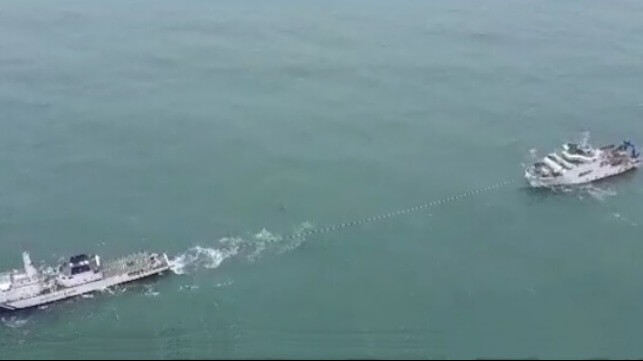
The vessel’s AIS signal appears to show the vessel went to sea on July 24 from its base in the Indian city of Mormugao in Goa. The Coast Guard reports it received a call for assistance on July 27 while the vessel was approximately 20 nautical miles offshore. According to the report, the was adrift moving at speeds of up to 3 knots raising the danger of it grounding near the ecologically sensitive Karwar coastline. Eight scientists and a total crew of 36 were aboard.
The Coast Guard sent one of its vessels to assist. Despite challenging weather conditions, they decided to tow the vessel back to Goa. They were able to safely return to port protecting the valuable vessel with its scientific equipment and research data.
Tanker Rescues Woman Suffering From Heat Stroke off Louisiana
As the heat dome over the American South continues into its fourth week, heat-related illness is a serious concern in the region - on the water as well as on land. On Friday, a good samaritan merchant ship helped rescue a boater who had developed symptoms of heat stroke off the coast of Louisiana.
At about 1500 hours on Friday afternoon, Coast Guard Sector Houston-Galveston received a VHF distress call from a man aboard a small pleasure boat. His wife was displaying symptoms of heat stroke and he was concerned for her welfare.
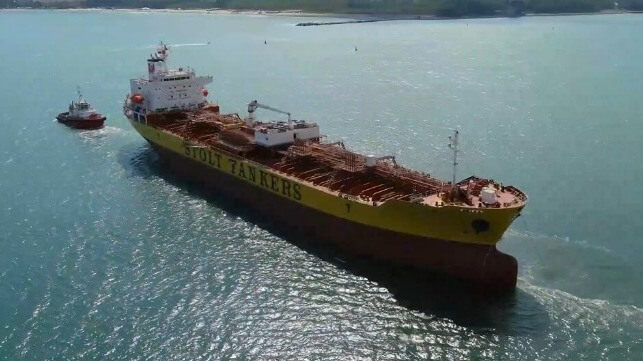
Houston-Galveston issued an urgent marine information broadcast to request help from nearby marine traffic. A product tanker, Stolt Perseverance, received the request and came alongside the pleasure craft to rescue the passenger. The crew brought the victim aboard and gave her medical attention while awaiting a Coast Guard medevac.
Shortly after, a U.S. Coast Guard helicopter aircrew out of Air Station Houston flew out to the tanker and hoisted the victim from the ship. The aircrew flew her back to shore and transferred her to a local EMS team, which delivered her to a nearby hospital. She was reported to be in stable condition.
Stolt Perseverance has resumed her commercial voyage, headed southeast out of the Gulf of Mexico.
Rescue at sea is one of the oldest maritime traditions, and Stolt's tankers have provided this service many times over the years. In 2022, Stolt Sea rescued passengers from a sinking boat in the Florida Straits, and in 2012, Stolt Invention rescued two sailors in the Atlantic after their vessel was damaged by a whale.
Hulk of OS 35 Departs Gibraltar for Recycling
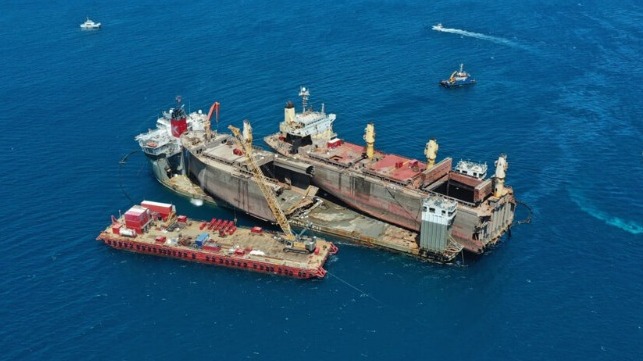
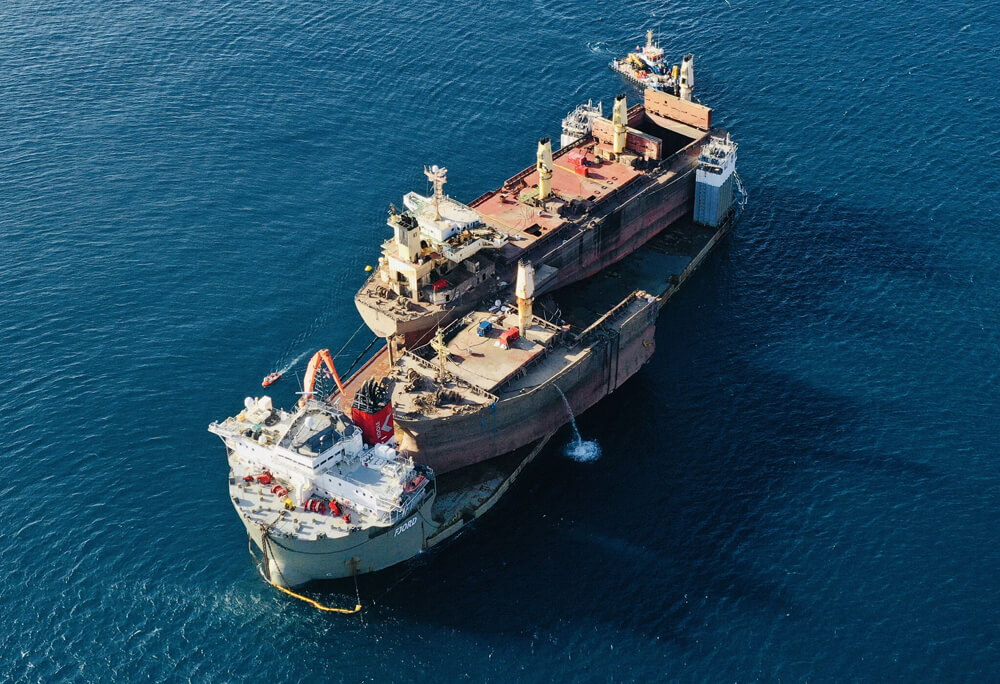
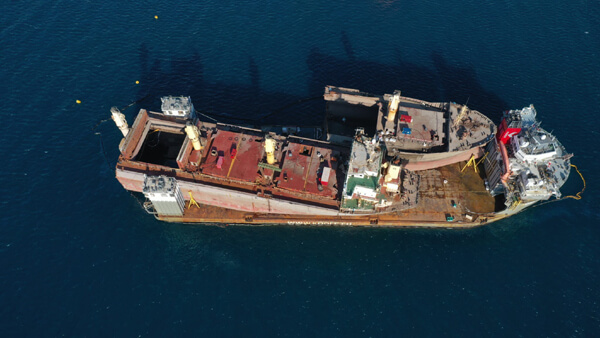
Hulk of the OS 35 loaded aboard heavy lift ship Fjord (photos courtesy of Koole Contractors)
Eleven months after striking a vessel at anchor, the hulk of the bulker OS 35 departed the Port of Gibraltar this morning, July 28, bound for Amsterdam. It brings to a close a difficult salvage operation that had drawn broad attention as the wreck lay close to the shore and a popular beach in Gibraltar.
“I’m delighted to confirm that the long and challenging operation to remove the wreck of the OS 35 from Gibraltar has been brought to a safe conclusion,” said John Ghio, the Captain of the Port of Gibraltar in a statement thanking everyone for their hard work. He confirmed that the vessel Fjord, carrying the wreck of the OS 35, departed British Gibraltar Territorial Waters in the early hours of this morning
The AIS signal for the heavy lift vessels shows it arriving in The Netherlands on August 7. The two sections of the vessel will be handed over for a recycling operation.
Koole Contracts which undertook the project highlighted that it went as planned and engineering. The 584-foot bulker first had to be offloaded of its cargo of steel rods. During the operation weather caused the vessel to break into two sections despite the decision early in the salvage effort to sink the stern to rest on the seabed.
In the last phase of the salvage operation, they were able to restore buoyancy to the stern and refloat it. It was anchored nearby with a crew working to maintain its buoyancy while the team focused on the more challenging part of lifting the bow section of the bulker. The lift began in late June and was completed in early July.
Koole has reactivated its semi-submersible barge the Fjord which had been idle and required more than two months of outfitting and classification certification before joining the project. The “sternless” design of the lift vessel meant she could accommodate an overhang on the stern so that both sections of the OS 35 could be positioned aboard using the 6,000 square meters of deck area on the Fjord. She has a deadweight capacity of 24,500 tons.
“I’d like to commend and congratulate the Captain of the Port on this final milestone in what has been a long and often challenging, but overall safe and successful salvage of the OS 35 wreck,” said Vijay Daryanani, Gibraltar’s Minister for the Port.
Officials said after the salvage operation was completed, they would continue to review the entire incident looking for lessons to be learned. The Port Captain has questioned some of the decisions and the communication between the OS 35 and the authorities after it struck an anchored gas carrier as the bulker was departing the port on August 30, 2022. The vessel as it was outbound was not required to have a pilot aboard. An analysis showed it hit the anchor chain of the Adam LNG tanker pulling her into the forward portion of the bulker.
Taking on water the bulker was ultimately directed to the position where she settled at the bow to the sea bed. The captain of the OS 35 recently pleaded guilty to charges related to the handling of the vessel and was given a suspended sentence in Gibraltar.
NTSB: Excessive Speed and Handling Issues Led to MSC Boxship-Tug Collision
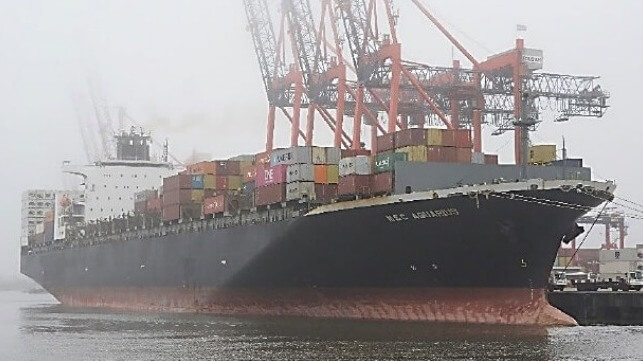
MSC Aquarius was traveling beyond the recommended speed for the tug's maneuvering capabilities (Osvaldo Traversaro/NTSB)
Excessive speed during a containership maneuvering in the Houston Ship Channel as it proceeded toward its dock along with hydrodynamic forces and handling of the tugboat led to a collision that resulted in nearly $1 million of damages. A newly released report from the National Transportation Safety Board highlights these issues during the preparation to dock the MSC Aquarius (6,500 TEU) in Houston on April 14, 2022, using the information to highlight the importance of communication and following guidelines for speed during maneuvering.
The 983-foot containership registered in Cyprus arrived in Galveston Bay and shortly after midnight on April 14 boarded a pilot from the Houston Pilots to proceed to the Barbour’s Cut Container Terminal at the north end of Upper Galveston Bay. The containership was traveling at a speed of 11 to 12 knots as it was inbound.
Two tugboats were assigned to assist the containership in docking. The maneuver called for the vessel to be turned in the main channel before backing into Barbour’s Cut. The pilot determined that two tugs would be sufficient for the operation with one at a forward position and the other aft.
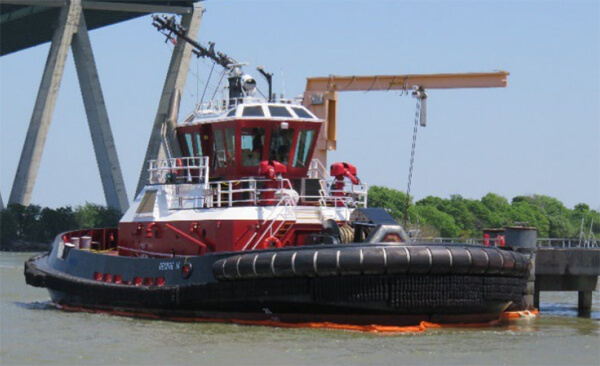
The George M, owned by Bay-Houston Towing Co. and operated by G & H Towing Company, was assigned the forward position for the maneuver. The tug, built in 2021, was reported to have a top speed of 13 knots and 11 to 12 knots astern. At the time of this maneuver, the George M was under the command of its mate, an individual with 15 years of experience but working his first rotation on the vessel. He had been aboard for 24 hours and on the prior day the vessel assisted three vessels’ movements before being assigned to the MSC Aquarius. The captain of the tug was not on watch and was asleep when the assignment came for the containership.
The George M and the other tug met the MSC Aquarius at 0330 south of Morgan’s Point and were traveling at just under 10 knots as they made their way to the vessel’s berth. Assigned the forward position in the docking maneuver, the George M was required to come into a position bow-to-bow with the cargo ship to secure the hawser.
During this operation, the NTSB reports the tug began to move off centerline from the containership’s bow. The mate at the controls of the tug increased engine speed but found the tug was “a little slower” to get propulsion engine power than what he expected so he added more engine power attempting to regain position. When the power kicked in the tug veered across the bow of the containership and its starboard bow struck the starboard bow of the containership. The mate attempted to work the tug back toward the centerline and reported that the tug’s speed slowed despite being put to full power.
The George M collided a second time with the containership damaging the tug’s port propulsion unit. It then slid alongside the port side of the MSC Aquarius becoming lodged in the flair of the containership’s bow. The master of the George M had come to the bridge and was able to dislodge the tug. The tug sustained a collapsed mast, damaged railings, and an indention of the deck above the wheelhouse. There was a small breach in the area of the bulbous bow of the containership. Repairs to the tug cost approximately $750,000 while the containership sustained more than $180,000 in damages.
George M after the collision (USCG photo)
The NTSB in its analysis of the collision finds that there was a blind sector from the bridge of the containership preventing the pilot and bridge crew from seeing what was going on with the tug. The pilot said their first indication of a problem was when they got a frantic radio call from the containership’s bow crew. The pilot then began to slow the containership and when they did not get a response from the George M ultimately slowed and ordered the stern tug to pull.
The NTSB concludes the collision was due to speed and operating beyond the safety parameters and reserve power recommendations. The speed of the containership was 2.7 knots above the towing-company-directed limit and 3.7 to 6 knots above the limit preferred by pilots, tugboat captains, and ship masters surveyed by an international tug masters association. The mate commanding the tug did not communicate with the pilot on the containership and did not request that they slow the vessel before beginning the maneuver.
Hydrodynamic forces created during the maneuver also impacted the ability of the tug to maneuver. The NTSB highlights that even a few knots of speed would have a significant effect on the forces acting on the tugboat in the center lead position.
After the incident, the tug company developed new performance assessment records and recommendations. The NTSB also recommended that tugboat operators in general should determine and communicate pre-determined speed limits to ship masters or pilots commanding vessels they are assisting before engaging in maneuvers.
How to Establish U.S.-Australian Trade in Strategic Minerals
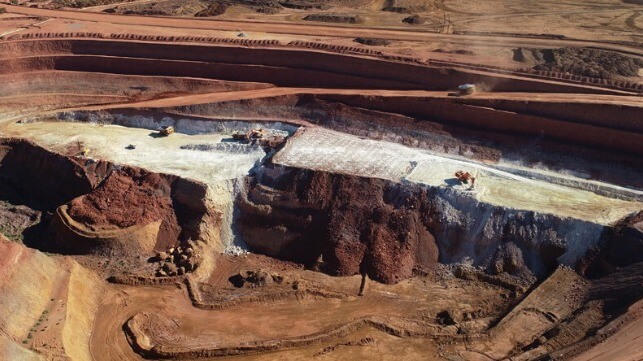
Most of the world's suppliers of critical minerals ship their production to China, but U.S. investment could change this pattern
In May, the United States and Australia signed a climate, critical minerals and clean energy transformation compact that establishes a framework for collaboration on climate issues, clean-energy technology and critical-mineral supply chains. It mainly discusses critical minerals in the context of their necessity in manufacturing clean-energy technologies.
The intent of the framework is to ‘coordinate policies and investments to support the expansion and diversification of responsible clean energy and critical minerals supply chains’. In this case, diversification basically equates to reducing dependence on China, in which various links in the critical-mineral supply chain are heavily concentrated. While the compact establishes a new ministerial dialogue, the Forum on Clean Energy Industrial Transformation, and an Australia–US taskforce on critical minerals, the most vital component of strengthening critical-mineral supply chains is investment in critical-mineral projects.
The critical minerals industry often cites a lack of capital as a barrier to stronger and more diverse supply chains. Mines are capital-intensive projects that can cost tens of billions of dollars. Therefore, any compact that seeks ‘an unprecedented expansion’ in critical mineral supplies must provide capital for mines. The need for government capital is further heightened given the lack of private-sector funding for mining.
The compact commits to using ‘domestic financial instruments and incentives to foster greater integration of responsible clean energy supply chains’, which includes critical-mineral supply chains. It also says the US and Australia will seek industry input on financial incentives, and it lists the US Export–Import Bank as a possible financing agency. Notably, in a joint statement with Australian Prime Minister Anthony Albanese, US President Joe Biden said that he would ask Congress to add Australia as a ‘domestic source’ under Title III of the Defense Production Act, enabling Australian projects to access significant US government funds.
Beyond those measures, the compact doesn’t offer funding specifics—but that was always going to come next, with industry input. To ensure the compact’s success, the US should consider a range of policies for funding mines in Australia.
First, the US should fund Australian mines under the compact, not refineries, which it should invest in domestically to diversify the critical-mineral supply chain. Mining is geographically constrained by the location of mineral deposits, but refining is largely determined by capital and regulations. For example, China has only 3% of global cobalt reserves and produces just 1% of global cobalt ore, yet it controls 77% of global cobalt refining capacity. Similarly, the US could fund enough refining capacity to satisfy domestic demand even without comparably large mineral reserves—especially with Australia on board. By funding Australian mines and the minimum level of crude refining required to economically ship critical minerals to the US to be refined, the US could effectively diversify the critical-mineral supply chain.
That said, the US should only fund Australian mines that produce minerals that are lacking in the United States and Canada. US critical-mineral supply chains are most secure when they are in or near the US and under friendly control. US taxpayer dollars should not be expended on distant mines when nearby mines are available and can meet demand. Importantly, this provision could make the proposal for funding Australian mines more palatable to Congress.
Second, the US should allow companies to partner in a US-funded mine only if they are not owned in any way by foreign entities of concern, including all Chinese entities. The US should not fund Australian mines where Chinese entities can benefit financially or influence the project at the expense of US taxpayers. To protect US national security, if an Australian company is seeking to participate in a US-funded mine in Australia, it should have to first divest any shares held by entities of concern.
American companies should have a controlling interest in US-funded mines, so that the US government can enforce compliance with US regulations, such as blocking Chinese companies’ involvement or investment in the mine. Partnering with experienced Australian partners will also enable less experienced US companies to build valuable mining skills, effectuating two of the compact’s goals: ‘to encourage stronger industrial collaboration’ and ‘to support workforce development in critical minerals’.
Lastly, the US should require that mined materials from Australia be refined by American companies in the US because diversifying the critical mineral supply chain is the primary reason for funding mines in Australia. That requirement will grow the country’s refining capacity and downstream processing for applications like the production of alloys for permanent magnets and cathode material for electric vehicle batteries. The US should also require that the mined material have an end use in a strategic US sector like aerospace or transportation, not consumer electronics like televisions and mobile phones.
The US should also require all companies participating in the mine to stop operating in China and selling their products to Chinese entities. Nor should the US allow companies to use earnings from a US-funded mine to support their operations in China or sales to Chinese entities. The US should not effectively subsidise companies that operate in China or sell products to Chinese mineral companies, which are beholden to the Chinese government.
The compact is a satisfactory starting framework for strengthening critical-mineral supply chains between the US and Australia. How the two countries deploy capital to mineral projects will determine the compact’s success, and US funding for mines in Australia could help achieve the compact’s goals. The stipulations attached to such an arrangement would help to ensure that US–Australia supply chains are diversified, protected from Chinese influence, and forged by a workforce in both countries.
In exchange for its minerals, Australia would get investment and a diversified supply chain, and in exchange for its capital, the US would get access to those minerals and its own diversified supply chain. Such an arrangement would serve the needs of both countries and help achieve the compact’s goal of promoting a ‘responsible, sustainable, and stable supply of critical minerals.’
Shubham Dwivedi is a faculty fellow with Georgetown University’s program in science, technology, and international affairs. Gregory D. Wischer is a critical minerals analyst researching US–China supply-chain competition.
This article appears courtesy of The Strategist and may be found in its original form here.
The opinions expressed herein are the author's and not necessarily those of The Maritime Executive.