Thursday, August 24, 2023

We Fact-Checked Republicans’ “Biden Corruption” Timeline. And It’s Bad.

Tori Otten
Thu, August 24, 2023


Republicans are moving to impeach Joe Biden, after months of accusing the president and his son Hunter Biden of corruption. But they have yet to produce any actual evidence of their claims, and the latest attempt to make their case is no better. Instead, it simply shows their desperation to discredit the president.

The House Oversight Committee has spearheaded the probe into the Bidens. Last month, the committee published a timeline going back as far as 2013 that supposedly shows the extent of the Bidens’ influence peddling overseas. But if you look closely, the timeline is riddled with errors. An analysis by The New Republic found at least 19 mistakes or misleading details—from mixed-up dates to messages and meetings that never happened. And nowhere does the timeline show actual wrongdoing by the president.

When the Oversight Committee released the timeline, it said it contained “important dates as to when Joe Biden knew and lied to the American people about his family’s business schemes.” It has updated the timeline as the investigation continues.

Out of the 106 dates listed in the timeline, only four are instances when Biden met someone related to Hunter’s business dealings. The timeline says that on December 4, 2013, Biden traveled to China with his son and met with Jonathan Li, the CEO of Chinese company Bohai Harvest, or BHR. Hunter later joined the BHR board.

While the timeline makes it sound like Biden went to China specifically to meet his son’s potential colleague, in reality, the then vice president went to Beijing on an official trip on behalf of the White House. He brought his son and one of his grandchildren along, as well as several reporters who noted it was common for Biden to bring family members in tow. While Hunter had business meetings with Li, Biden only met Li once. Hunter arranged for them to shake hands, but the two men did not interact further on the trip.

The timeline also says that Biden met Vadym Pozharskyi, an executive at the Ukrainian gas company Burisma, at a dinner Hunter hosted in Washington, D.C., on March 20, 2015. The dinner actually took place nearly a month later, on April 16, 2015. Pozharskyi emailed Hunter after the meal to thank him for “giving an opportunity to meet your father and spent some time together.”

But Biden only spoke to one person, a recently retired leader of the Greek Orthodox Church, the whole evening. One dinner attendee, then-president of the World Food Program USA Rich Leach, told The Washington Post that Biden “didn’t even sit down,” but only spoke to Father Alex Karloutsos. Karloutsos confirmed Leach’s account.

Republicans also allege Biden attended a meeting for Chinese energy company CEFC in Washington on May 1, 2017. This information comes from Republicans’ star whistleblower, Gal Luft, who has been charged with acting as a foreign agent for China and of arms trafficking. It is unclear if Biden attended the meeting—texts from Hunter never confirm whether his father put in an appearance, and Biden himself has denied being there—that actually took place on May 3, 2017, in Los Angeles.

Finally, the timeline states that on July 30, 2017, Hunter sent a WhatsApp message to an unspecified Chinese company that he was “sitting here with my father.” Hunter’s lawyer Abbe Lowell, however, has slammed the message and others as “complete fakes.”

Biden’s utter lack of involvement matches testimony from multiple supposed whistleblowers. Republicans have heard testimony from IRS agents, Hunter’s former business partner Devon Archer, and former Rudy Giuliani associate Lev Parnas. None of them was able to provide concrete evidence that Biden was involved in his son’s business. In fact, both Archer and Parnas said nothing could be further from the truth.

Beyond the tenuous evidence connecting Biden to his son’s work, the rest of the timeline contains sloppy mistakes, including on details mentioned in previous Republican reports about the Bidens’ wrongdoing.

In one instance, the timeline says BHR joined with a Chinese Communist Party–affiliated company on September 1, 2015, to buy the U.S.-based automotive producer Henniges Automotive. The deal actually took place on September 15, 2015, according to a 2019 report by the Senate Finance Committee.

The timeline says Hunter met with the U.S. ambassador to Romania in that country on November 13, 2015. Hunter actually met the ambassador in Washington, D.C. He didn’t travel to Romania until the following year.

Republicans have repeatedly accused Hunter of receiving illicit payments. According to the timeline, he received a payment from his associate Rob Walker on November 11, 2015. It says that Robinson Walker, a company associated with Walker, also made payments to Hunter’s company Owasco P.C. on February 12, 2016, and May 23, 2016.

The reasons for the payments are unspecified, and all three dates are wrong. As the House Oversight Committee already stated in a report from May this year, the payments actually took place on November 9, 2015, February 24, 2016, and August 15, 2016.

Hunter Biden is currently under investigation for tax evasion, and he will likely go to trial. But proof of his guilt or innocence will not be found in the Oversight Committee’s timeline.

The timeline is sloppy work done by a party on a political vendetta. Republicans have already admitted multiple times that they have no proof of wrongdoing by the president. They have said they don’t know whether the information on which their accusations are based is even legitimate. They have also admitted they don’t really care.

Republican Debaters Agreed on One Thing: They Hate Vivek Ramaswamy

Matt Lewis
The Daily Beast
Wed, August 23, 2023 

Photo Illustration by Elizabeth Brockway/The Daily Beast/Reuters


Everyone hates Vivek. That was the biggest takeaway from the Fox News debate on Wednesday night. And who can blame them?

“I’m the only person on the stage who isn’t bought and paid for,” Vivek Ramaswamy boldly declared after calling climate change a “hoax.” This broadside was arguably the moment that Ramaswamy became the most hated person on the debate stage, at least by his Republican adversaries.

Ramaswamy, a slick, young, rich man in a hurry (who has been gaining in the polls), came into this debate with the idea that he should pander to the base with impunity and simultaneously be involved in every skirmish. This is often a smart move, akin to controlling the clock in a football game.

GOP Candidates Make Trump Look Like a Genius for Skipping Mudslinging Debate

But he forgot that he was facing some talented (and vastly more experienced) competitors, and that picking a fight with seven adversaries might amount to biting off more than he could chew, especially for a “rookie,” as Mike Pence called him.

Out of the gate, he looked pompous and oleaginous, with what can only be described as a smarmy, shit-eating grin that belied his sharp elbows. Regarding the slickness, Christie observed that he sounded “like ChatGPT.” And regarding the elbows, at one point, even Sen. Tim Scott—you know, the optimistic guy who has a reputation for being too nice—even accused him of “being childish.”

Ramaswamy’s first line—“I want to just address the question that is on everyone’s mind at home tonight. Who the heck is this skinny guy with a funny last name?”—essentially plagiarized Barack Obama. Christie, who was on the ball, called him on it. (Ramaswamy responded by reminding us of the time Christie hugged the former president following Hurricane Sandy’s devastation of large parts of New Jersey.)

During a later exchange, Ramaswamy took issue with Pence’s anti-Putin stance, saying “The USSR doesn’t exist anymore.” It was reminiscent of Obama’s 2012 debate line to Mitt Romney: “The 1980s are now calling to ask for their foreign policy back.” Channeling Obama was, shall we say, an unusual move for a guy ostensibly seeking the Republican nomination.

The Right Needs to Ask: ‘Why Do These Racists Keep Getting Hired by Us?’

Anyone who dared disagree with Ramaswamy wasn’t just wrong, they had their motives questioned. Chris Christie, he said, was campaigning to get a paid MSNBC contributor gig. Christie’s trip to Ukraine was to pay homage to his “pope,” Volodymyr Zelensky. Of Nikki Haley’s support of Ukraine, he averred, “I wish you well in your future career on the boards of Lockheed and Raytheon.”

“You have no foreign policy experience, and it shows,” Haley told him. Speaking of Vladimir Putin, she said, “This guy is a murderer, and you are choosing a murderer” over a pro-American country [Ukraine].

No doubt the nationalists, populists, conspiracy theorists, isolationists, and “blame America firsters” who now dominate the MAGA right-wing media will side with Ramaswamy on most of the issues. But for this night, at least, the traditional Reagan Republicans like Pence, Christie, and Haley more than held their own against Ramaswamy, who most prominently represented the MAGA wing of the party on stage.

It was a reminder that, despite Donald Trump’s many faults, he carries this banner in a somewhat entertaining manner that is occasionally even charming and disarming, while also being dominant. Ramaswamy seems to have assumed that the MAGA policies that have come into fashion of late have won the day in the GOP. Of course, it could simply be that people like Trump, and retroactively embrace the issues he favors.

Speaking of Trump, the other big surprise was that he did not loom large over this debate, and wasn’t referenced by name during the first hour.

It’s impossible to say whether Trump made the right decision by skipping this debate, but it was conceivable he could have his cake and eat it, too. He skipped the debate, counter-programmed the debate, but he didn’t dominate the debate in absentia, as he might have. Save for a question about his indictment in Georgia, Trump was mostly an afterthought—which is a stunning thing to write in August 2023.

Why Is a Hindu GOP Candidate Pushing Christian Nationalism?

Florida Gov. Ron DeSantis, who came into this debate in second place nationally, wasn’t quite an afterthought. He acquitted himself fine. But he was also mostly overshadowed by others, particularly the skirmishes that Pence, Christie, and Haley all had with Ramaswamy. If DeSantis were perceived as important, he would have become the target for others vying to supplant him as the candidate in second place. Instead, that honor went to Ramaswamy, who (admittedly) invited it.

At this point, I should probably say that it’s entirely possible that my interpretation of this night will be wildly out of step with what has become a very surreal and weird Republican Party.

As the political writer Michael A. Cohen tweeted, “Vivek Ramaswamy is one of the more unappealing politicians I’ve seen in quite some time...which means that he will likely rocket up the GOP polls.”

If Ramaswamy surges after this performance, as he very well might, it will be a sign that the GOP is in even worse shape than I had previously imagined. And that would be saying a lot.

Joe Biden Drops 3 Sharp Words On GOP

In A Swift Flip Of Nikki Haley's Debate Jab

President Joe Biden welcomed former South Carolina Gov. Nikki Haley’s words with open arms after she went after fellow Republicans’ voting records at the first GOP presidential debate on Wednesday.

Haley, one of the eight candidates to participate in the debate in Milwaukee, jumped on some of her GOP rivals ― Florida Gov. Ron DeSantis, Sen. Tim Scott (R-S.C.) and former Vice President Mike Pence ― for voting “to raise the debt” while also taking a shot at former President Donald Trump, who named her U.S. ambassador to the United Nations during his term in office. Trump had skipped the debate.

“And Donald Trump added $8 trillion to our debt, and our kids are never going to forgive us for this,” declared Haley in an apparent nod to the national debt increasing by about $7.8 trillion during the Trump administration.

“What she said,” wrote Biden, in a caption alongside a clip of her remarks.

Biden also made other not-so-subtle references to the debate on Wednesday, taking aim at biotech entrepreneur Vivek Ramaswamy, who said the “climate change agenda is a hoax,” which was met by a sea of boos from the audience.

“Climate change is real, by the way,” Biden later wrote on X (formerly Twitter).

Haley, amid the candidates’ discussion of climate change, declared that climate change is “real,” as well.

“We do care about clean air, clean water ― we want to see that taken care of, but there is a right way to do it,” she stated on the debate stage.

“The right way is first of all, yes, is climate change real? Yes, it is. But if you want to go and really change the environment, we need to start telling China and India that they have to lower their emissions.”

Fox News Actually Asked GOP Candidates About Climate Change — And It Didn’t Go Well


Florida Gov. Ron DeSantis immediately punted, and the other seven candidates followed suit.


By Alexander C. Kaufman
HUFFPOST
Aug 23, 2023

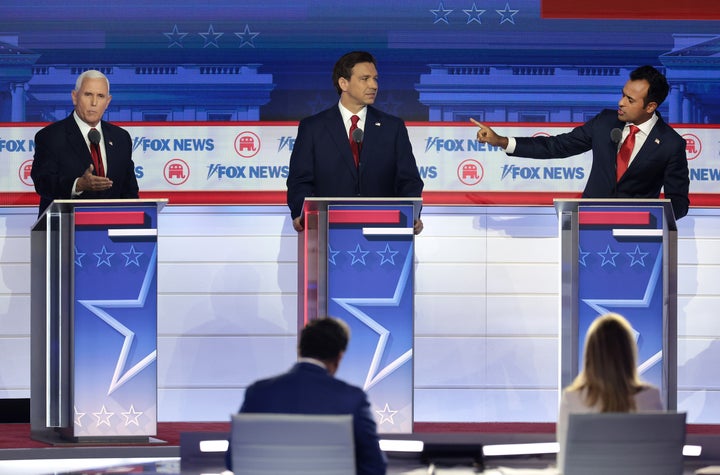
Former Arkansas Gov. Asa Hutchinson, former New Jersey Gov. Chris Christie, former Vice President Mike Pence, Florida Gov. Ron DeSantis, Vivek Ramaswamy, former U.N. Ambassador Nikki Haley, Sen. Tim Scott (R-S.C.) and North Dakota Gov. Doug Burgum participate in the first debate of the GOP primary season on Aug. 23, 2023 in Milwaukee.
WIN MCNAMEE VIA GETTY IMAGES


When Republican candidates began sparring in their first faceoff of the 2024 GOP presidential primary Wednesday night, Fox News struck a different tone than its norm on climate change.


Back in 2019, when Democratic presidential candidates debated onstage for the first time in the 2020 election cycle, it took NBC News’ moderators an hour and 22 minutes to ask about climate change. That same year, a watchdog group’s study found that Fox News devoted 86% of its coverage of global warming to claims that denied the reality that heat-trapping emissions are radically changing the planet.

But in the first half hour of Wednesday night’s debate, the right-wing network aired a recorded question from a teenage GOP activist lamenting how Republicans’ outright denial of climate change has alienated young voters.

Then, the moderators listed recent disasters — Hawaii’s wildfires, California’s rare hurricane, Florida’s 101-degree seas, and the Southwest’s record heat — and asked the eight Republicans onstage to raise their hands if they believed “human behavior is causing climate change.”

Before the candidates could move, Florida Gov. Ron DeSantis balked at the question.

“We’re not schoolchildren. Let’s have the debate,” he said, launching into a diatribe accusing U.S. journalists of giving President Joe Biden a pass on his disaster response due to a bias toward Democrats.


Gov. Ron DeSantis, center, immediately derailed Fox News' line of questioning on climate change.
WIN MCNAMEE VIA GETTY IMAGES

After DeSantis’ derailing, the moderators didn’t follow up. Fox News never got its show of hands.

But the chaotic back-and-forth that followed showed a slightly more diverse range of views on climate change than in past Republican debates.

In his opening remarks, Vivek Ramaswamy, the 38-year-old biotechnology entrepreneur and political neophyte who made a name for himself opposing corporations’ efforts to cut emissions, had made the first mention of energy issues, pitching a platform focused on producing more oil, gas and coal and embracing nuclear power.

In response to the question, however, Ramaswamy sought to cast himself as the heir to former President Donald Trump’s political legacy, whom he later called the “best president of the 21st century.”

“The climate change agenda is a hoax,” Ramaswamy said over boos. “It is a hoax … The reality is, the anti-carbon agenda is a wet blanket on our economy. More people are dying of bad climate change policies than they are of actual climate change.”

Former South Carolina Gov. Nikki Haley deployed familiar GOP rhetoric meant to deflect attention from the U.S. — which is the No. 2 annual emitter and the No. 1 source of cumulative carbon dioxide in the atmosphere — to the Earth’s two most populous countries.

“We do care about clean air, clean water,” she said. “But there’s a right way to do it. Is climate change real? Yes, it is. But if you really want to go change the environment, we need to start telling China and India that they have to lower their emissions.”

She insisted the billions in subsidies made available in Biden’s landmark Inflation Reduction Act were “not working,” even as money flows into red states for battery manufacturing plants and electric vehicle factories.

South Carolina Sen. Tim Scott suggested that shift isn’t happening.

“If we want the environment to be better — and we all do — the best thing to do is to bring our jobs home from China,” Scott said. “Let’s bring our jobs home.”


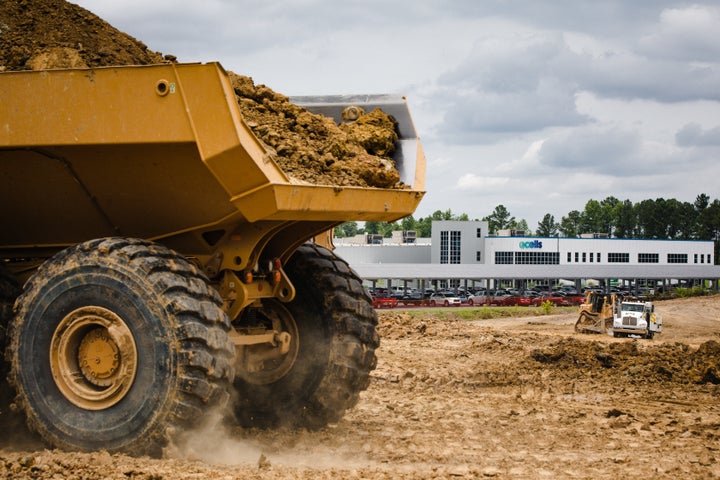
Land is cleared for the expansion of the Qcells facility, where solar panels are manufactured in Dalton, Georgia. The largest solar manufacturing investment in U.S. history followed the passage of President Joe Biden's Inflation Reduction Act.

THE WASHINGTON POST VIA GETTY IMAGES

Before the question, North Dakota Gov. Doug Burgum gave his own assessment of the war in Ukraine and the Inflation Reduction Act, offering a complex and somewhat meandering analysis of how U.S. sanctions on Russian oil and gas were diverting cheap fuels to China. Papering over major announcements of new battery and solar manufacturing plants in the U.S., he insisted that China’s dominance over clean-energy supply chains made buying panels or batteries pointless.

“If you buy a battery in this country, if you buy a solar panel, it’s being produced in a plant in China powered by coal,” he said. Repeating his claim that Beijing benefited from discounted Russian fuels, he said: “It’s being powered by oil and gas at 20% off.”

He returned to the theme later in the debate when asked about how to deter China from invading Taiwan, the self-governing democratic island Beijing claims as its territory but that the Chinese Communist Party has never ruled.

Despite White House climate diplomat John Kerry leading outreach to Beijing, Burgum said that Biden administration officials who visited China recently “don’t even bring up energy because they’re too busy trying to kill U.S. energy here.”

Meanwhile, Biden’s team answered Fox News’ simplistic question more succinctly than any of the Republicans onstage:


Looking for a US 'climate haven' away from heat and disaster risks? Good luck finding one

Earl Lewis, Director and Founder, Center for Social Solutions, Professor of History, Afroamerican and African Studies, and public policy, University of Michigan,

 Julie Arbit, Researcher at the Center for Social Solutions, University of Michigan, 

Brad Bottoms, Data Scientist at the Center for Social Solutions, University of Michigan

Wed, August 23, 2023
THE CONVERSATION

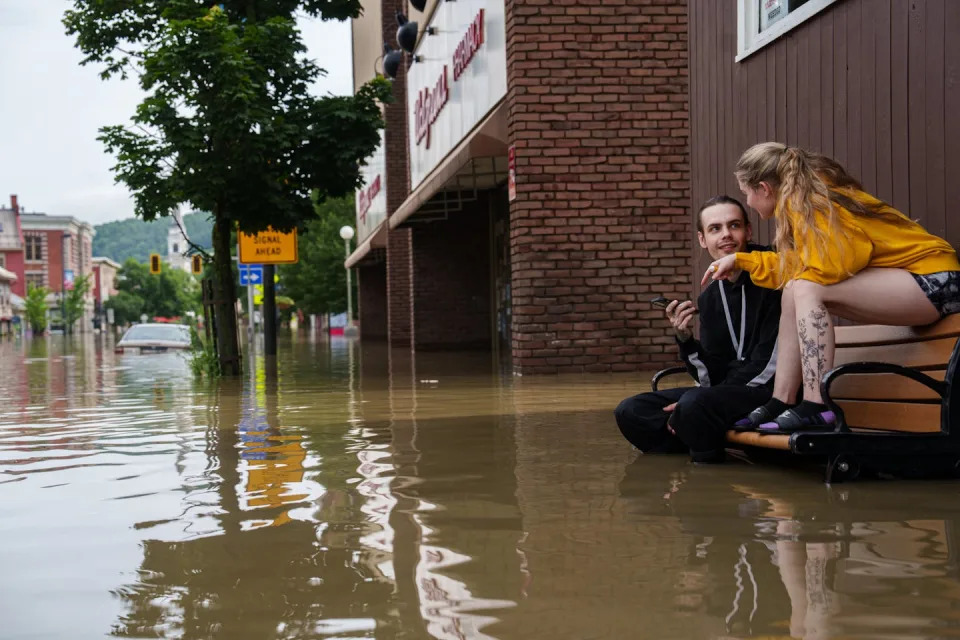
Burlington, Vt., is often named as a 'climate haven,' but surrounding areas flooded during extreme storms in July 2023. Education Images/Universal Images Group via Getty Images


Southeast Michigan seemed like the perfect “climate haven.”

“My family has owned my home since the ‘60s. … Even when my dad was a kid and lived there, no floods, no floods, no floods, no floods. Until [2021],” one southeast Michigan resident told us. That June, a storm dumped more than 6 inches of rain on the region, overloading stormwater systems and flooding homes.

That sense of living through unexpected and unprecedented disasters resonates with more Americans each year, we have found in our research into the past, present and future of risk and resilience.

An analysis of federal disaster declarations for weather-related events puts more data behind the fears – the average number of disaster declarations has skyrocketed since 2000 to nearly twice that of the preceding 20-year period.


A powerful storm system in 2023 flooded communities across Vermont and left large parts of the capital, Montpelier, underwater. 
John Tully for The Washington Post via Getty Images

As people question how livable the world will be in a warming future, a narrative around climate migration and “climate havens” has emerged.

These “climate havens” are areas touted by researchers, public officials and city planners as natural refuges from extreme climate conditions. Some climate havens are already welcoming people escaping the effects of climate change elsewhere. Many have affordable housing and legacy infrastructure from their larger populations before the mid-20th century, when people began to leave as industries disappeared.

But they aren’t disaster-proof – or necessarily ready for the changing climate.
Six climate havens

Some of the most cited “havens” in research by national organizations and in news media are older cities in the Great Lakes region, upper Midwest and Northeast. They include Ann Arbor, Michigan; Duluth, Minnesota; Minneapolis; Buffalo, New York; Burlington, Vermont; and Madison, Wisconsin.

Yet each of these cities will likely have to contend with some of the greatest temperature increases in the country in the coming years. Warmer air also has a higher capacity to hold water vapor, causing more frequent, intense and longer duration storms.


These cities are already feeling the impacts of climate change. In 2023 alone, “haven” regions in Wisconsin, Vermont and Michigan suffered significant damage from powerful storms and flooding.

The previous winter was also catastrophic: Lake-effect snow fueled by moisture from the still-open water of Lake Erie dumped over 4 feet of snow on Buffalo, leaving nearly 50 people dead and thousands of households without power or heat. Duluth reached near-record snowfall and faced significant flooding as unseasonably high temperatures caused rapid snowmelt in April.

A lake-effect snowstorm in November 2014 buried Buffalo, N.Y., under more than 5 feet of snow and caused hundreds of roofs to collapse. A similar storm hit in December 2022. Patrick McPartland/Anadolu Agency/Getty Images

Heavy rainfall and extreme winter storms can cause widespread damage to the energy grid and significant flooding, and heighten the risk of waterborne disease outbreaks. These effects are particularly notable in legacy Great Lakes cities with aging energy and water infrastructure.
Older infrastructure wasn’t built for this

Older cities tend to have older infrastructure that likely wasn’t built to withstand more extreme weather events. They are now scrambling to shore up their systems.

Many cities are investing in infrastructure upgrades, but these upgrades tend to be fragmented, are not permanent fixes and often lack long-term funding. Typically, they also are not broad enough to protect entire cities from the effects of climate change and can exacerbate existing vulnerabilities.

Crews in Minneapolis work on a new stormwater tunnel underneath downtown. It’s designed to help protect part of the city, but not all of it.
Alex Kormann/Star Tribune via Getty Images

Electricity grids are extremely vulnerable to the mounting effects of severe thunderstorms and winter storms on power lines. Vermont and Michigan are ranked 45th and 46th among the states, respectively, in electricity reliability, which incorporates the frequency of outages and the time it takes utilities to restore power.


Stormwater systems in the Great Lakes region also regularly fail to keep pace with the heavy rainfall and rapid snowmelt caused by climate change. Stormwater systems are routinely designed in accordance with precipitation analyses from the National Oceanic and Atmospheric Administration called Atlas 14, which don’t account for climate change. A new version won’t be available until 2026 at the earliest.

At the confluence of these infrastructure challenges is more frequent and extensive urban flooding in and around haven cities. An analysis by the First Street Foundation, which incorporates future climate projections into precipitation modeling, reveals that five of these six haven cities face moderate or major flood risk.

Disaster declaration data shows that the counties housing these six cities have experienced an average of six declarations for severe storms and flooding since 2000, about one every 3.9 years, and these are on the rise.


Madison, Wis., has seen warmer summers and more precipitation in the past decade. 
Jeff Miller/UW-Madison, CC BY

Intensified precipitation can further stress stormwater infrastructure, resulting in basement flooding, contamination of drinking water sources in cities with legacy sewage systems, and hazardous road and highway flooding. Transportation systems are also contending with hotter temperatures and pavement not designed for extreme heat.

As these trends ramp up, cities everywhere will also have to pay attention to systemic inequalities in vulnerability that often fall along lines of race, wealth and mobility. Urban heat island effects, energy insecurity and heightened flood risk are just a few of the issues intensified by climate change that tend to hit poor residents harder.
What can cities do to prepare?

So, what is a haven city to do in the face of pressing climate changes and population influx?

Decision-makers can hope for the best, but must plan for the worst. That means working to reduce greenhouse gas emissions that are driving climate change, but also assessing the community’s physical infrastructure and social safety nets for vulnerabilities that become more likely in a warming climate.

Collaborating across sectors is also essential. For example, a community may rely on the same water resources for energy, drinking water and recreation. Climate change can affect all three. Working across sectors and including community input in planning for climate change can help highlight concerns early.

There are a number of innovative ways that cities can fund infrastructure projects, such as public-private partnerships and green banks that help support sustainability projects. DC Green Bank in Washington, D.C., for example, works with private companies to mobilize funding for natural stormwater management projects and energy efficiency.

Cities will have to remain vigilant about reducing emissions that contribute to climate change, and at the same time prepare for the climate risks creeping toward even the “climate havens” of the globe.

This article is republished from The Conversation, an independent nonprofit news site dedicated to sharing ideas from academic experts. 

It was written by: Julie Arbit, University of Michigan; Brad Bottoms, University of Michigan, and Earl Lewis, University of Michigan.

Read more:

How climate change intensifies the water cycle, fueling extreme rainfall and flooding – the Northeast deluge was just the latest


What causes lake-effect snow like Buffalo’s extreme storms?

Earl Lewis is affiliated with 2U Board of Directors; ETS Board of Trustees; American Funds/Capital Group Board of Directors; American Academy of Arts and Sciences Board of Trustees
Gas-electric hybrid vehicles get a boost in the US from Ford, others

Paul Lienert and Ben Klayman
Wed, August 23, 2023


 New York International Auto Show, in Manhattan, New York City


By Paul Lienert and Ben Klayman

DETROIT (Reuters) - Hybrid gasoline-electric vehicles may not be dying as fast as some predicted in the auto sector’s rush to develop all-electric models.

Ford Motor is the latest of several top automakers, including Toyota and Stellantis, planning to build and sell hundreds of thousands of hybrid vehicles in the U.S. over the next five years, industry forecasters told Reuters.

The companies are pitching hybrids as an alternative for retail and commercial customers who are seeking more sustainable transportation, but may not be ready to make the leap to a full electric vehicle.

"Hybrids really serve a lot of America," said Tim Ghriskey, senior portfolio strategist at New York-based investment manager Ingalls & Snyder. "Hybrid is a great alternative to a pure electric vehicle (and) it's an easier sell to a lot of customers."

Interest in hybrids is rebounding as consumer demand for pure electrics has not accelerated as quickly as expected. Surveys cite a variety of reasons for tepid EV demand, from high initial cost and concerns about range to lengthy charging times and a shortage of public charging stations.

“With the tightening of emissions requirements, hybrids provide a cleaner fleet without requiring buyers to take the leap into pure electrics,” said Sam Fiorani, vice president at AutoForecast Solutions.

S&P Global Mobility estimates hybrids will more than triple over the next five years, accounting for 24% of U.S. new vehicle sales in 2028. Sales of pure electrics will claim about 37%, leaving combustion vehicles — including so-called “mild” hybrids — with a nearly 40% share.

S&P estimates hybrids will account for just 7% of U.S. sales this year, and pure electrics 9%, with internal combustion engine (ICE) vehicles taking more than 80%.

Historically, hybrids have accounted for less than 10% of total U.S. sales, with Toyota’s long-running Prius among the most popular models. The Japanese automaker has consistently said hybrids will play a key role in the company's long-range electrification plans as it slowly ramps up investment in pure EVs.

Ford is the latest to roll out more aggressive hybrid plans. On its second-quarter earnings call in late July, Chief Executive Jim Farley surprised analysts, saying Ford expects to quadruple its hybrid sales over the next five years after earlier promising an aggressive push into all-electric vehicles.

“This transition to EVs will be dynamic,” Farley told analysts. “We expect the EV market to remain volatile until the winners and losers shake out.”

Among Ford’s competitors, General Motors appears to have little interest in hybrids in the U.S., while Stellantis will follow Toyota and Ford’s hedge by offering U.S. buyers a choice of different powertrains, including hybrids, until sales of pure electric vehicles start to take off after mid-decade, according to forecaster GlobalData.

In a statement, GM said it "continues to be committed to its all-electric future ... While we will have hybrid vehicles in our global fleet, our focus remains on transitioning our portfolio to electric by 2030.”

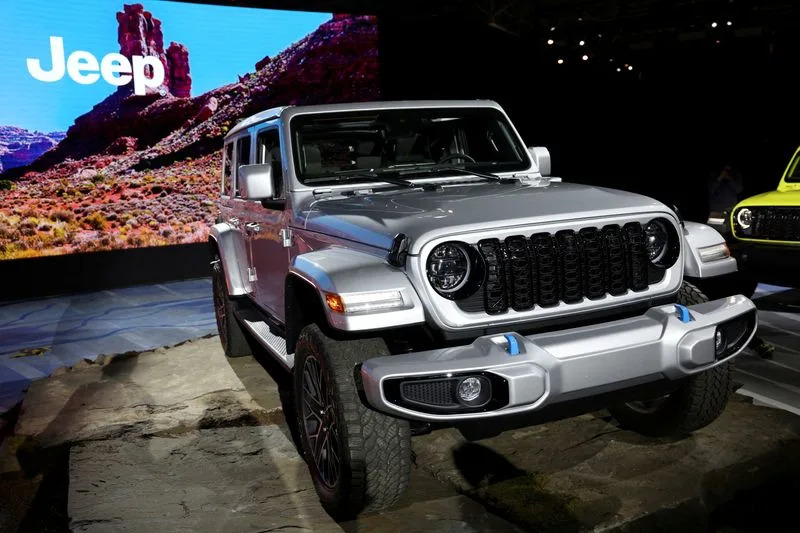
Stellantis said hybrids now account for 36% of Jeep Wrangler sales and 19% of Chrysler Pacifica sales. In addition to new pure electric models coming soon, "we are very bullish on hybrids going forward," a spokesperson said.

This year, manufacturers are marketing more than 60 hybrids in the U.S. Toyota and its premium Lexus brand are selling at least 18 different hybrid models, enabling the Japanese automaker to maintain its stranglehold on the sector.

Hyundai and sister brand Kia offer seven hybrid models, with Ford and Lincoln six. Stellantis offers just three, and GM’s sole entry, due out later this year, is a hybrid version of the Chevrolet Corvette sports car.

But hybrids remain in short supply at many U.S. dealerships.

Andrew DiFeo, dealer principal at Hyundai of St. Augustine, south of Jacksonville, FL, doesn't see EV adoption hitting the levels the Biden administration wants until EV charging stations are as ubiquitous as gas stations.

"Hybrids are a great bridge to whatever the future holds,” said DiFeo, adding, “I've got zero in stock (and) I've got customers that want all of them."

(Reporting by Paul Lienert and Ben Klayman in Detroit; Editing by Nick Zieminski)


US wildland firefighter pay threatened by Republican feud in Congress

David Morgan
Wed, August 23, 2023
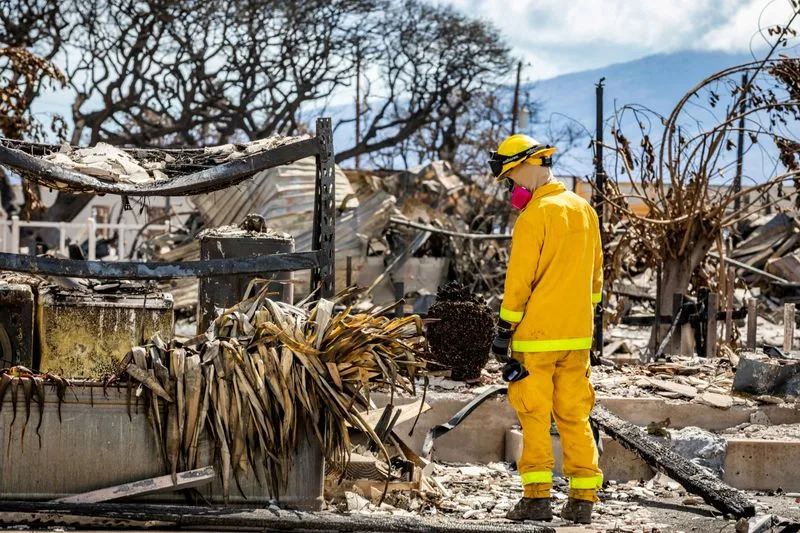
Search, rescue and recovery personnel conduct search operations of areas damaged by Maui wildfires


By David Morgan

WASHINGTON (Reuters) - U.S. federal wildland firefighters are facing a huge potential pay cut this autumn that lawmakers in Washington warn could cause thousands to walk off the job, due to a feud among Republicans in Congress over federal spending.

That could mean dire consequences for 16 U.S. states, mostly in the West and Southwest, where about 16,600 firefighters were battling more than 90 large fires across nearly 630,000 acres as of Tuesday, National Interagency Fire Center data show.

The standoff between lawmakers continues as the Hawaiian island of Maui struggles to recover from a massive blaze that killed at least 115 people and Canada's British Columbia province is also being ravaged by fire.

"We're going to have these people out fighting wildfires for us in this country. And their pay could be cut by 50%," said Representative Mike Simpson, an Idaho Republican who chairs the House Appropriations Subcommittee on Interior, Environment and Related Agencies.

"You're going to have ... wildfire fighters out here that - hell, I don't know - they might walk off the job with somebody who's going to cut their pay 50%," he told Reuters.

The federal government employs an estimated 18,700 wildland firefighters. Republicans and Democrats in Congress agree that failure to protect their pay could lead to a mass exodus at a time when climate change is fueling more severe wildfires over longer seasons.

At issue is a $60 million supplemental funding request from Democratic President Joe Biden, which would protect federal wildland firefighter pay through December, if Congress can avoid a government shutdown when current funding expires on Sept 30.

'HOSTAGE TO CONGRESSIONAL INFIGHTING'

Biden raised wildland firefighter pay to a minimum of $15 per hour in 2021 and later signed into law a $1 trillion bipartisan infrastructure bill, which provided annual pay raises of $20,000 or 50% of a firefighter's base pay, whichever was smaller.

The pay hikes from the infrastructure bill are expected to run out around Sept. 30, according to the White House.

"Firefighters cannot be held hostage to congressional infighting," said Lucas Mayfield, president of the advocacy group Grassroots Wildland Firefighters. He warned that a pay cut could not only lead firefighters to walk off the job this year but make an already challenging recruitment environment more difficult in 2024.

"People are going to be looking for outside opportunities to have a livable and plannable income," Mayfield said.

The Democratic-led Senate appears poised to begin moving forward on bipartisan funding.

But it is unclear whether the Republican-controlled House of Representatives can overcome infighting between hardline and centrist Republicans to enact spending legislation on time.

Wildfires have burned just under 1.8 million acres in the United States this year, according to data from the National Interagency Fire Center. The cost and danger of U.S. wildfires has been growing in recent decades.

More than 10 million acres were affected in 2015 and 2017. Last year, the cost of suppressing wildfires across 7.6 million acres surpassed $3.5 billion, according to the center.

"Failure isn't an option," said Representative Joe Neguse, a Colorado Democrat who is working to address the pay gap with a bipartisan coalition of House and Senate lawmakers.

"Now is not the time ... to be engaging in this kind of the political gamesmanship around something as important as the livelihood of our wildland firefighters," he told Reuters.

Neguse and Senator Kyrsten Sinema, an independent from Arizona, have introduced legislation in their respective chambers that would avoid the pay cliff and authorize future pay increases for wildland firefighters.

Salary authorization would need to be included along with funding for firefighter pay in a short-term stopgap measure, special supplemental legislation or annual appropriations, depending on what Congress can pass by Sept 30.

(Reporting by David Morgan; Editing by Scott Malone and Alistair Bell)

Climate change may force more farmers and ranchers to consider irrigation -- at a steep cost

MELINA WALLING
Wed, August 23, 2023 at 7:37 AM MDT·5 min rea

 
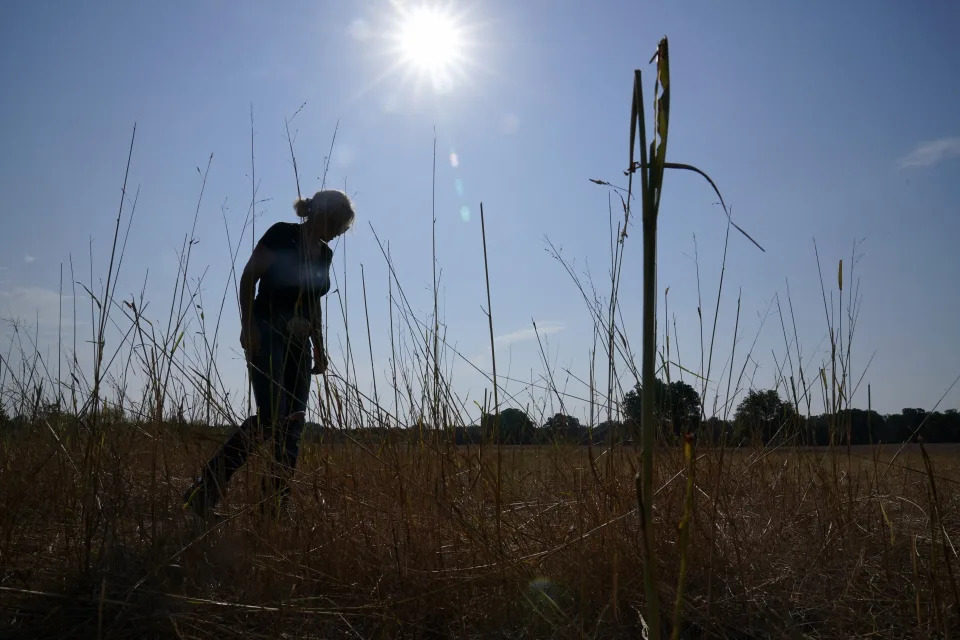
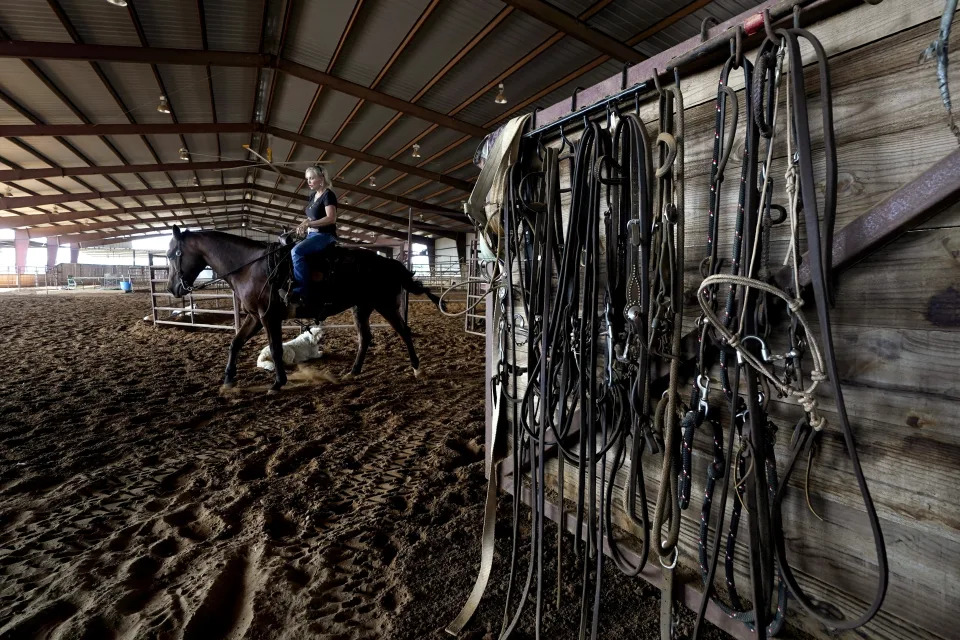
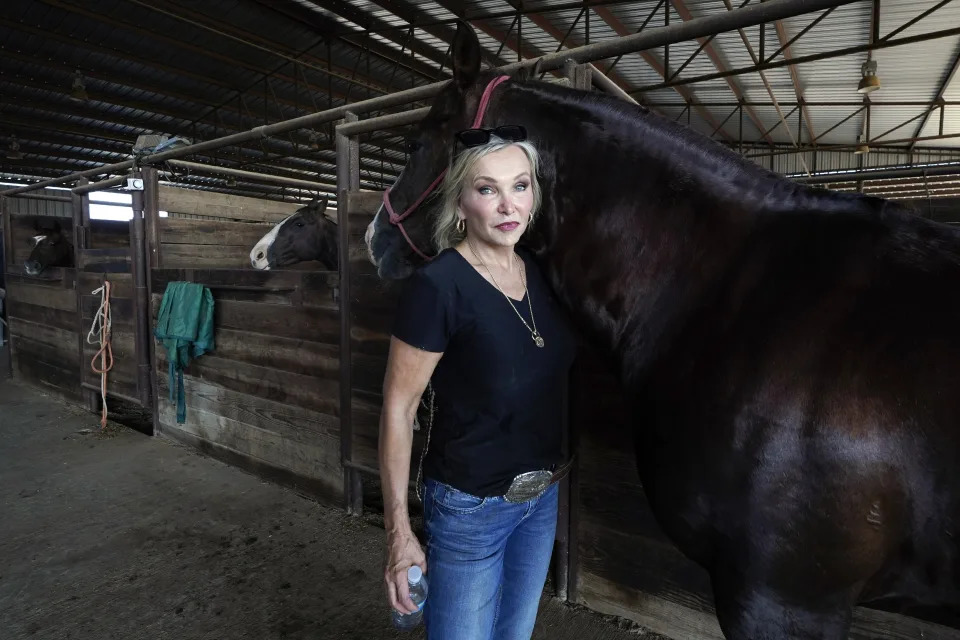
Gilda Jackson walks on a pasture on her property that she grows hay on in Paradise, Texas, Monday, Aug. 21, 2022. Jackson, who trains and sells horses, has been plagued by grasshoppers this year, a problem that only gets worse when the hatch quickens in times of heat and drought. Jackson watched this summer as the insects chewed through a 35-acre pasture she badly needs for hay and what they didn't destroy, the sun burned up. (AP Photo/Tony Gutierrez)

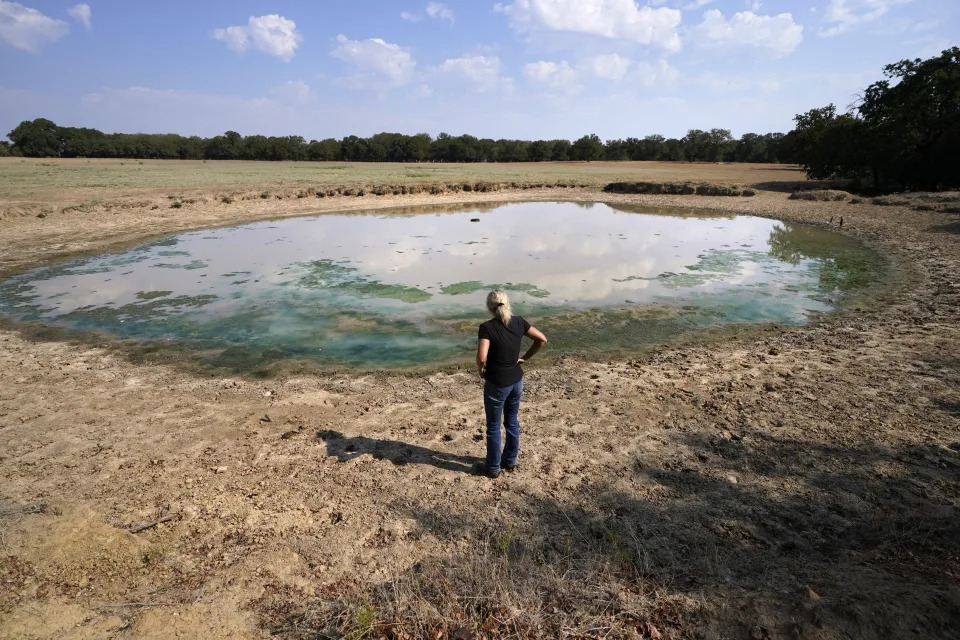
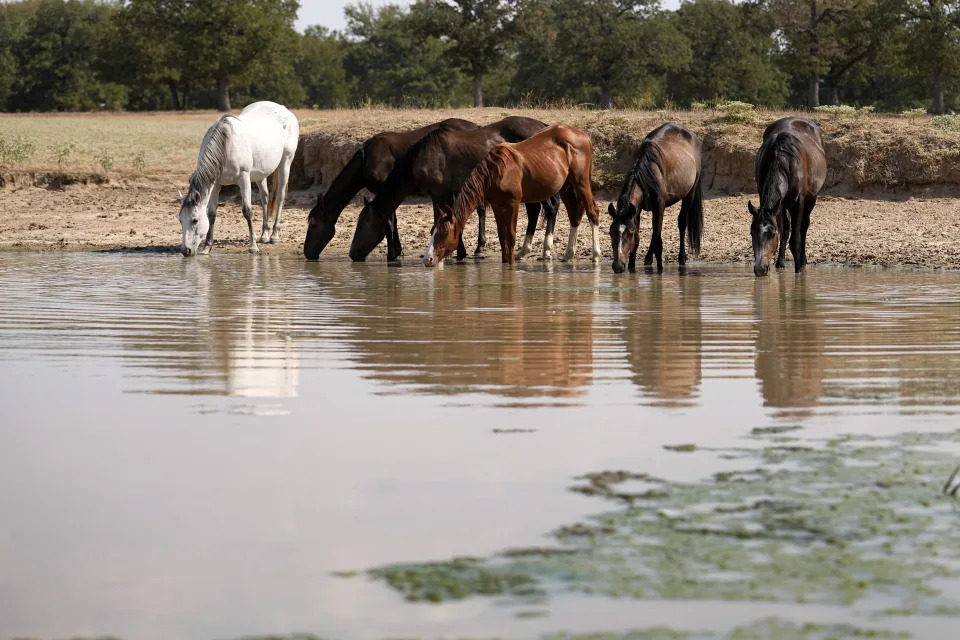
The Texas ranch where Gilda Jackson trains and sells horses has been plagued by grasshoppers this year, a problem that only gets worse when the hatch quickens in times of heat and drought. Jackson watched this summer as the insects chewed through a 35-acre pasture she badly needs for hay; what they didn't destroy, the sun burned up.

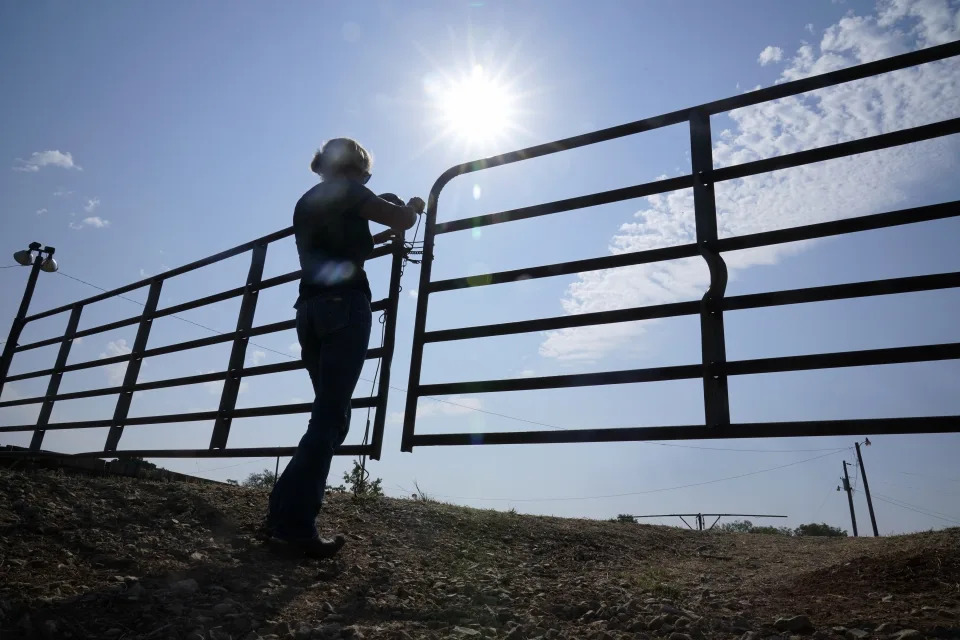
Irrigation might have saved Jackson's hay, but she and her husband rejected the idea about 10 years ago over the cost: as much as $75,000 for a new well and all the equipment. But now — with an extended drought and another U.S. heat wave this week that will broil her land about an hour northwest of Dallas for days in 100-degree-plus temperatures — Jackson said she is “kind of rethinking.”

Many other farmers and ranchers in the U.S. might be forced to do the same in coming decades, according to recent research into the expected effects of the rising heat and more frequent weather extremes associated with climate change.

That's if they even can. Some places in the U.S. are already struggling with groundwater depletion, such as California, Arizona, Nebraska and other parts of the central Plains.

“There’s no surprise that in the future when it gets hotter and there’s more demand for water, people are going to be using more water,” said Jonathan Winter, an associate professor of geography at Dartmouth College and an author on a new study on future U.S. irrigation costs and benefits in Communications Earth & Environment.

Winter and his team used a computer model to look at how heat and drought might affect crop production by the middle and end of this century, given multiple scenarios for the emissions of warming greenhouse gases. In places like California and Texas where “everyone is dropping their straw into the glass” of groundwater, as Winter put it, current levels of irrigation won't be viable in the long term because there isn’t enough water.

But use of irrigation may grow where groundwater supply isn’t presently an issue.

In much of the Midwest, including the corn- and soybean-rich states of Iowa, Illinois, Indiana and the Dakotas, farmers might see a benefit in the next 50 years from installing irrigation infrastructure. That’s an expensive investment, and whether it will pay off may depend on humans' ability to stem the worst effects of climate change. A worst-case scenario would involve one generation investing in costly irrigation equipment, only for the next to see them fail to keep crops alive through extreme heat and weather.

There are many irrigation methods for row crops, but the most common is pivot irrigation — the long strands of pipes mounted on wheels that are pulled in a circle around a water source to sprinkle water onto a field. The equipment can easily cost hundreds of thousands of dollars, plus the cost of drilling a new well if needed, along with the electricity to pull up the water.

But if the system boosts yields and provides a return of $50 an acre or more, it can pay off well for a farmer, said Brady Brewer, an associate professor of agricultural economics at Purdue University.

While scientists are confident in the warming effects of greenhouse gas emissions, precipitation is harder to nail down, especially in the Midwest, said Dave Gochis, a senior scientist with the National Center for Atmospheric Research who was not involved with Winter’s study.

Climate change produces more weather extremes, meaning both an increased risk of flash droughts — quick, intense periods of short-term heat and dry weather — and more heavy rain and flooding events as precipitation increases with more water in the atmosphere.

“That means we need to be more nimble and agile in how we manage water resources,” Gochis said.

Brewer hasn't seen much increased interest in irrigation from Midwest farmers yet. So far, a surplus of water has been the bigger issue in many places, but if yields start showing losses in the coming years due to worsening heat and flash droughts, “that's when farmers will invest,” he said.

Farmers who don't choose irrigation, for now, might cope by planning ahead.

They could choose different crops with different water needs from season to season or be compensated for fallowing fields in times of water stress. Or they might use tools like the one developed by North Carolina State researchers Sankar Arumugam, a professor, and Hemant Kumar, a Ph.D. candidate.

They recently helped create a computer modeling tool, outlined in the journal Water Resources Research, which they hope will help farmers and water managers use a combination of seasonal forecasts and other data to find a sweet spot for balancing crop revenue and water use.

In the Southeast, where they focused their work and where water resources are plentiful, “it’s more of a proactive strategy” for people who already have irrigation equipment, Arumugam said, “so that we don’t overexploit the resources that are in place.”

Irrigation, used responsibly, can be part of adapting to climate change, but “it’s a moving target,” Winter said.

He called for supporting farmers who have to make hard decisions as they adapt to climate change — for instance, training them to grow less water-intensive crops or giving them low-cost loans to improve irrigation efficiency.

But he also urged action to limit climate change’s worst effects. Farmers need resources to make adjustments, but especially in the West, “there’s only so much water,” he said.

Upmanu Lall, director of the Columbia Water Center, said climate change isn't the only thing driving farmers' decisions. Lall, who wasn't involved in Winter's work, said crop insurance and government subsidies can push farming methods in one direction or another.

Brewer, the Purdue professor, agreed.

“What we’re seeing is because we have crop insurance that reduces the farmers’ risk, that’s probably what’s driving some of these farmers to plant soybeans or corn” rather than more drought-tolerant crops such as wheat or sorghum in places like the western Plains, Brewer said.

He added that research shows if farmers have crop insurance and feel more secure in planting crops that use more water, that "may lead to higher irrigation uptake as well.”


___

Follow Melina Walling on Twitter @MelinaWalling.