Thursday, September 07, 2023

SpaceX's giant Starship is 'ready to launch' again, Elon Musk says, after the first attempt left a crater in the launchpad


Marianne Guenot, Morgan McFall-Johnsen
Wed, September 6, 2023 

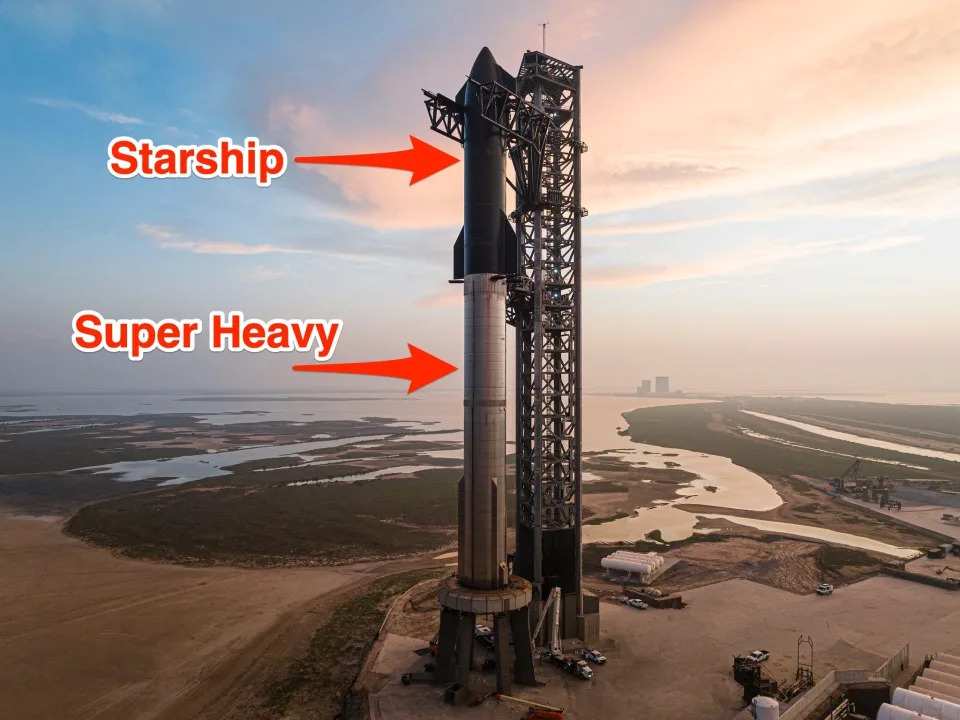
Starship fully stacked on its launchpad. Elon Musk said Wednesday the rocket is 'ready to launch' on its second flight, pending regulatory approval. SpaceX

  • SpaceX is 'ready to launch' its Starship mega-rocket again, pending FAA approval, Elon Musk said on X.

  • The rocket blew up on its first test flight bound for orbit in April while blasting through its launchpad.

  • The launch was so powerful it kicked up soil and sand that sprayed a town over 5 miles away.

SpaceX's Starship rocket is fully stacked and ready to launch again, CEO Elon Musk said Wednesday. He's just waiting for the Federal Aviation Administration (FAA) to approve the company's launch license.

Starship is SpaceX's next flagship rocket, standing taller and more powerful than any previous launch system. The Starship vehicle, stacked atop its Super Heavy booster, stands nearly 400 feet tall
.

Starship is stacked atop its Super Heavy booster. The pair have only flown together once, and they exploded.SpaceX

Musk aims to use this launch system as a workhorse to send humans and cargo to Mars, realizing his dream of building the first settlement there.

The Starship spacecraft and its Super Heavy booster were launched together for the first time in April. But nearly three minutes after launch, miles above Earth, Starship failed to separate from the booster — a critical step to reaching orbital heights


Elon Musk wants Starship to take humans to Mars.Chesnot/Getty Images

Weighed down with its booster, Starship began to tumble back to Earth. Video footage shows the rocket self-destructed mid-flight, for safety reasons, and never reached space.

It was later determined that Starship had also blasted a crater into its launchpad, spraying dirt, chunks of concrete, and other debris onto neighboring areas.

Some of the debris reportedly reached Port Isabel, a town five miles away from SpaceX's launchpad in Boca Chica, Texas.

The FAA required SpaceX to investigate Starship's mid-flight error

After the April launch attempt blew up, the FAA required SpaceX to file a mishap investigation report, a common procedure after a flight has gone awry


Starship launches toward orbit for the first time.SpaceX

SpaceX submitted the final report on August 15, per Payload, but the FAA says the investigation is still open.

"The FAA will not authorize another Starship launch until SpaceX implements the corrective actions identified during the mishap investigation," the FAA told Insider over email, adding that SpaceX will also have to comply with all other regulatory requirements for modifying its launch license.

Since the last launch, SpaceX has made more than 1,000 modifications to improve its rocket design ahead of its next test flight, Musk told journalist Ashlee Vance in a discussion on X on June 24, per Space.com.

One of these changes can be seen in the newly released picture of the rocket: a vent and heat shield have been placed between the rocket and the booster

The new interstage — a vent and heat shield — is visible between Starship and Super Heavy.SpaceX

Following the rocket's inability to separate from its booster in April, SpaceX has moved to a process called "hot staging," whereby the engines of the Starship rocket are ignited to push the ship away from its Super Heavy booster before the booster's shutdown, per Space.com.

"We're adding an extension to the booster that is almost all vents, essentially," Musk told Vance, according to Space.com. "So that allows the upper-stage engine plume to go through the sort of vented extension of the booster and not just blow itself up."

The vent and shield aim to protect the booster, since SpaceX wants to reuse both the Starship and its booster after each flight. That's the key to the revolutionary potential of Starship: a fully reusable, Mars-grade, human-ready rocket.

It's also added a water deluge system to the launchpad, which essentially floods the area with water to keep it from heating up too much, Musk told Vance per Space.com.

That system uses a steel plate that's "basically like a gigantic upside-down shower head," Musk said.

According to Space.com, SpaceX has also been repairing the launchpad and reinforcing it so that the concrete can withstand Starship's power next time.


Beyond SpaceX: The Rising Stars of the U.S. Rocket Industry

George Dvorsky
Wed, September 6, 2023 

Illustration: Vicky Leta

While traditional giants like Northrop Grumman and United Launch Alliance continue to contribute to space exploration with decades of experience, a new wave of ambitious and pioneering companies is rising.

Over the past two decades, space exploration has shifted from being a government-dominated endeavor to one that increasingly includes significant private-sector participation and innovation. For better or worse, Elon Musk’s SpaceX currently has a near-monopoly in the industry, with its reusable and freakishly reliable Falcon 9 rocket performing flights on a regular basis.


Conceptual image showing Neutron delivering its payload to space. Image: Rocket Lab

Known for its Electron light-lift vehicle, which now routinely dispatches small satellites to low Earth orbit, Rocket Lab is working to reuse the rocket’s boosters, doing so for the first time on August 23. The initial plan was to recover returning boosters with helicopters, but Rocket Lab has since shifted to post-splashdown recoveries, as it is simpler, safer, and viable. The company is also breaking new ground with its in-house 3D-printing technology and dual-launch site operations, with facilities in New Zealand and the Mid-Atlantic Regional Spaceport in Wallops Island, Virginia.

The current focal point of Rocket Lab’s advancement is the development of the Neutron rocket, a medium-lift launch vehicle with a 13-metric-ton payload capacity (to low Earth orbit) that’s poised to compete with SpaceX’s Falcon 9. Billed by Beck as a “purpose-built megaconstellation building machine,” Neutron’s anticipated launch in 2024 would directly challenge SpaceX’s industry dominance. Rocket Lab’s plan is to charge $50 million per launch—a competitive pricing strategy considering SpaceX’s $67 million tag for Falcon 9, according to CNBC. The ambitious plan includes a projected refly capability of the Neutron booster between 10 and 20 times.

The company offers—or eventually hopes to offer—other space-related services, including spacecraft design, manufacturing, components, on-orbit management solutions, and satellite constellation management services. The publicly traded Rocket Lab is currently valued at around $1.8 billion.

Though it remains to be seen if Rocket Lab can effectively contest SpaceX’s current hegemony, it’s evident that the space launch landscape is set for an intensified level of competition. That said, the race for space is not a solitary sprint but a marathon—one that requires as much technical innovation as it does patience.

Firefly Aerospace: A rising contender

Founded by Max Polyakov and Tom Markusic in 2017, private U.S. company Firefly Aerospace is also emerging as a key player in the new space race. The company is seeking to make a name for itself in providing launch, lunar, and in-space services, and it’s hoping to attract both commercial and government clients.


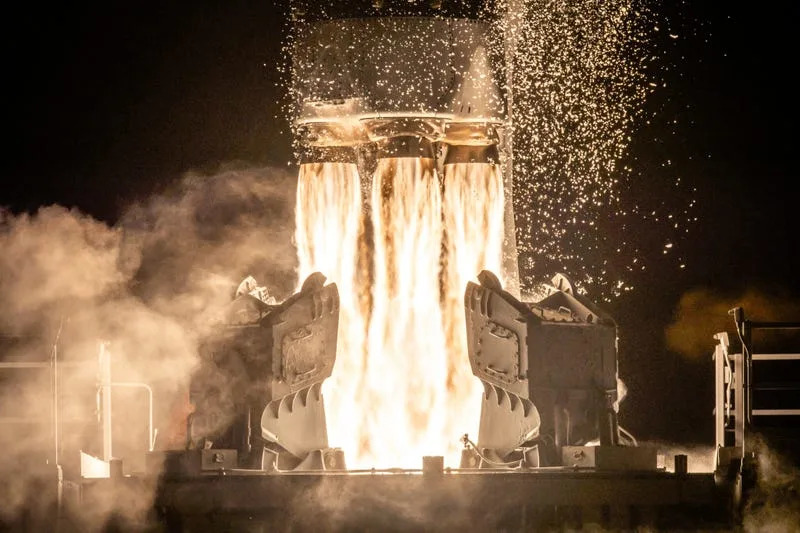
Launch of a Firefly rocket.Image: Firefly Aerospace

The company’s operational light-lift launch vehicle, the Firefly Alpha, is a two-stage, fully expendable rocket. However, calling it “operational” might be a bit of a stretch as it has, thus far, struggled to achieve flawless execution, with its first two launches in September 2021 and October 2022 falling short of expectations due to various technical hurdles. With Alpha, the company aims to reach a launch pace of one per month by 2024, according to Ars Technica.

Currently, the company is also in the process of developing a medium launch vehicle, known as MLV, which is expected to be ready by 2025. Firefly claims that the MLV will enable direct payload deliveries to customers’ preferred orbits, offering a comparable cost per kilogram to existing reusable rockets.

MLV will be powered by seven Firefly Miranda engines, which are also under development. Firefly says MLV will “evolve” into a reusable vehicle over time. Slated to launch from Virginia’s Mid-Atlantic Regional Spaceport on Wallops Island, the MLV is designed for compatibility with other launch ranges, including Cape Canaveral Space Force Station (CCSFS) in Florida, and Vandenberg Space Force Base (VSFB) in California. Once operational, the MLV could prove to be a worthy competitor to Rocket Lab’s Neutron and SpaceX’s Falcon 9.

In addition to its MLV project, Firefly is also actively involved in lunar missions and rapid-response satellite launches. Its Blue Ghost lunar lander is slated to deliver 13 commercial and government payloads to the lunar surface in 2024, featuring 10 NASA-sponsored payloads as part of the Commercial Lunar Payload Services (CLPS) initiative. Simultaneously, the company is working on the Victus Nox project with the Pentagon, aiming to launch a satellite within 24 hours of its delivery. In August, Firefly announced its upcoming orbital utility vehicle, dubbed Elytra.

With a total of $302 million in funding raised over 9 rounds, the latest of which was a Series C round on Feb 16, 2023, Firefly Aerospace’s ambitious endeavors are not just far-reaching, but also reasonably well-backed.

Blue Origin: Bezos’s big, lumbering gamble

Blue Origin, founded by Amazon billionaire Jeff Bezos in 2000, stands as another potential rival to SpaceX. Despite being in the spaceflight business for over two decades, however, the company has yet to place a rocket into orbit, a shortcoming not lost on Musk, who has taken the opportunity to lambast his rocket rival. But whereas Musk is willing to “move fast and break things,” Bezos is taking a decidedly more cautious approach.

That said, Blue Origin is using its New Shepard suborbital rocket for space tourism purposes, which launches paying customers on 10-minute flights to altitudes beyond the Kármán Line—the internationally recognized boundary of space. The first crewed flight of New Shepard, which included Bezos himself, took place on July 20, 2022.


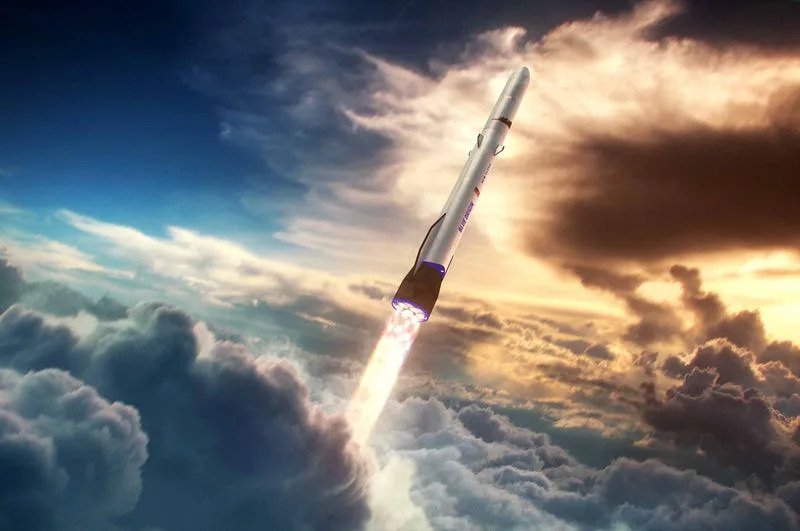
Conceptual image of New Glenn.


While Blue Origin has dipped its toes into space tourism, its long-term vision is far grander. Its development of New Glenn, a $2.5 billion heavy-lift rocket, would transform the company into a serious contender in the global spaceflight industry. Despite facing multiple delays since the project’s inception in 2014, New Glenn is tentatively set to launch next year, but we’ll believe it when we see it.

The 313-foot-tall (95-meter) rocket, powered by seven methane-burning BE-4 engines, features a reusable first stage capable of generating 3.85 million pounds of thrust at liftoff, according to Blue Origin. The rocket is designed to carry 45 metric tons to low Earth orbit and 13 metric tons to geostationary transfer orbit. Blue Origin anticipates around 25 flights from each booster before they’re retired. NASA is already betting on the unflown New Glenn for a Mars mission next year, adding to the pressure on Blue Origin to get its rocket up and flying.

Additionally, Blue Origin is contributing to NASA’s Artemis program with the development of a lunar lander named Blue Moon. A lucrative $3.4 billion contract tasks the Blue Origin-led team, known as the National Team, to design, develop, and test the crewed lander. The team, which includes Lockheed Martin, Boeing, Draper, Astrobotic, and Honeybee Robotics, is aiming for a fully reusable four-person lander for Artemis 5, scheduled for 2029.

Excitingly, Blue Moon will stay in lunar orbit once it gets there, periodically refueled by a space tug built by Lockheed Martin. As Blue Origin pushes the boundaries of space exploration, its contributions continue to shape the trajectory of the new space race.
Relativity Space: Pioneering with 3D Printing

Relativity Space, a rocket company founded in 2015 and headquartered in Long Beach, California, is likewise on track to reshape the commercial space launch industry. The company’s tagline makes its ambitions clear, as the private firm “is on a mission to become the next great commercial launch company.”


Time lapse photo of Terran R launch, March 23, 2023.


Core to its mission is the company’s focus on proprietary cutting-edge 3D-printing technologies. Relativity Space is seeking to develop the world’s first 3D-printed rocket, a move that could revolutionize the aerospace industry by significantly reducing production costs and accelerating manufacturing timelines. Its ultimate objective is to construct rockets that are at least 95% 3D printed. The company claims that its Stargate metal 3D printer can construct a rocket in just 60 days and also result in a process that requires fewer parts to a significant degree.

Its first foray into this pioneering technique was the Terran 1 rocket, a 110-foot tall vehicle built primarily of 3D-printed parts (85% to be exact) and fueled by a liquid methane-oxygen propellant known as methalox. The Terran 1 made its debut on the “Good Luck, Have Fun” mission launched in March 2023, and though it failed to reach orbit during its inaugural launch, it survived the Max-Q phase—when a rocket undergoes maximal aerodynamic stress—a promising outcome that points to the viability of 3D-printed rockets.

Having successfully demonstrated the potential of 3D printing, Relativity Space has retired Terran 1 and is now setting its sights on the development of Terran R. According to Tim Ellis, Relativity Space co-founder and CEO: “Our first chapter as a company was to prove to the world 3D printed rockets were viable. We just did that with Terran 1. Our second chapter is to build the next great launch company with Terran R.”

The Terran-R, unlike its light-lift predecessor, is designed to be a medium-to-heavy lift orbital launch vehicle capable of carrying 33.5 metric tons to low Earth orbit. The rocket’s first stage will be equipped with 13 3D-printed Aeon engines, with a single methane-fueled engine powering its second stage. In a bid to maximize efficiency, the first stage will be designed for reusability, using printed aluminum to facilitate up to 20 re-flights. Much like SpaceX’s Falcon 9, the plan is to land the rockets on drone ships stationed in the Atlantic Ocean.

Relativity Space is set to start launching Terran-R in 2026 from Space Launch Complex 16, its launch site at Cape Canaveral, Florida. Once operational, Terran-R will begin servicing the company’s customer backlog of $1.65 billion in launch service agreements.

Relativity Space, as of April 2023, has amassed a total of $1.6 billion in investor funding and is valued at around $4.1 billion, according to Contrary Research. The company’s pre-launch agreements include contracts with Telesat, mu Space, OneWeb, and Lockheed Martin, among others. With these contracts in place and the pending operational status of Terran R, Relativity Space is poised to make a significant impact in the industry. Indeed, the company’s journey to becoming the next great commercial launch company is well underway.

Astra: Swift ascent, faltering in flight

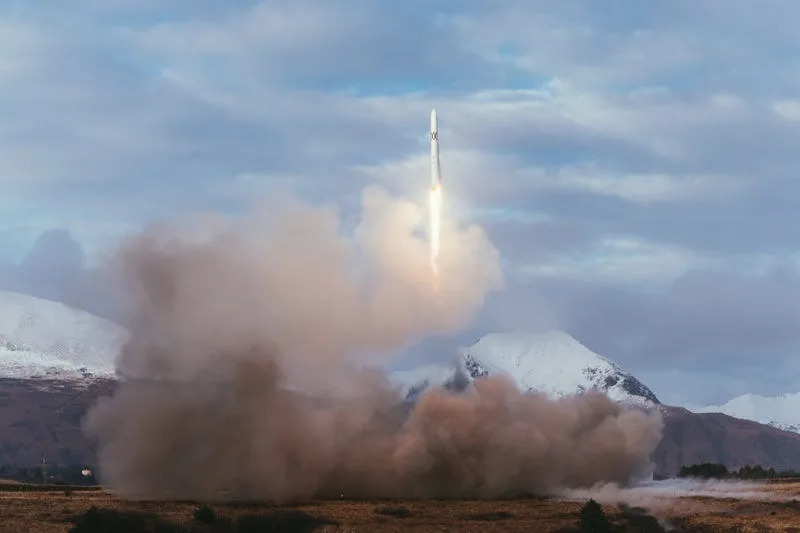
Astra, an Alameda, California-based commercial launch provider, has experienced a few highs and challenging lows since its inception. The company, founded in 2016 by aerospace engineer Adam London and former NASA CTO Chris Kemp, is the fastest company in history to launch a rocket to low Earth orbit, achieving this milestone only five years after its founding; on November 20, 2021, Astra launched its Rocket 3.3 vehicle from the Pacific Spaceport Complex in Alaska, carrying the STP-27AD2 demonstration payload for the U.S. Space Force.

Astra is not just a provider of launch services, but also a developer of space products. In addition to its small rockets, the company offers an electric propulsion system tailored to satellite constellations.


Astra’s Rocket 3.3 rocket prior to launch on 20 November 2021.

Astra achieved another first in July 2021, becoming the first space launch company to be publicly traded on Nasdaq. It did so via a SPAC deal, debuting with an impressive valuation of nearly $2 billion. However, a series of launch failures and developmental setbacks caused the company’s stock to plummet faster than its rockets, resulting in a drastic decrease in its valuation to less than $200 million, according to the New Space Economy.

The company, which trades under the ticker ASTR, has been struggling with financial difficulties. With its stock value sinking under $1.00, Astra now faces the risk of being delisted from Nasdaq. The company has been trying to address its financial woes by seeking to raise up to $65 million through an “at the market” offering of common stock, according to CNBC. In early August, Astra laid off 25% of its staff.

Astra has attempted seven launches in its short lifespan, with only two culminating in success. The company’s most recent endeavor in June 2022 resulted in failure. The Astra Rocket 3.3 failed to reach orbit and deliver a pair of shoe-box-sized satellites due to a fuel injector blockage that led to combustion chamber burn-through; during tests of the rocket’s upper stage, streaks of molten metal could be seen pouring out from the nozzle, in an obvious sign of a severe cooing issue.

Following the failed TROPICS-1 mission in June, Astra made the decision to halt production of its Rocket 3 line and shift focus to its upcoming Rocket 4.0 system. However, the failure had further repercussions as NASA, instead of waiting for Astra to recover, chose Rocket Lab to launch its TROPICS cubesats.

As Astra navigates its financial and technical challenges, its status as a major player in the new space economy remains in limbo. Only time will tell if the company can truly stake a claim in the industry.
ABL Space: Focused and agile

Founded in 2017 by SpaceX and Morgan Stanley veterans Dan Piemont and Harry O’Hanley, who currently serve as CFO and CEO respectively, ABL Space Systems is a rising aerospace player based in El Segundo, California. Despite recent setbacks, the company is hoping to establish itself within the industry through the rapid deployments of its two-stage RS1 launch system.

ABL RS1 Flight 1, January 18, 2023.

ck when its inaugural rocket launch ended in failure. Shortly after lift-off, all nine of the RS1 rocket’s engines failed, causing the rocket to crash into its facility at the Pacific Spaceport Complex in Alaska. Alongside the rocket, two smallsats that were loaded for the inaugural flight were also destroyed. The crash resulted in a spill of 5,200 gallons of fuel onto Kodiak Island, necessitating a clean-up operation.

ABL is now striving to get back on track. The company has a clear vision to carve a niche for itself in the competitive aerospace industry with the unique selling point of its easily deployable RS1 launch system. In the words of the company itself, “minimal infrastructure and streamlined operations allow us to execute a launch in hours, not months.”

An integral part of this rapid launch strategy is the company’s portable ground system, GS0, which it packs into standard shipping containers for easy deployment to new launch locations. As the company states, “Deploying GS0 to a new location enables access to challenging orbits, new sovereign capabilities, and a global distribution of launch capability.” ABL has identified potential launch sites in California, Alaska, Virginia, Georgia, Florida, and even the United Kingdom.

ABL Space Systems’ potential has not gone unnoticed. In 2020, the U.S. Air Force awarded it two contracts worth $44.5 million. The 88-foot-tall (26.8-meter-tall) RS1 rocket, designed to launch 1.35 metric tons to low Earth orbit, offers an affordable solution at a very reasonable price of $12 million per launch, according to CNBC.

Despite a tough start, the company is laying the groundwork for what could be a lucrative niche, working to quickly and flexibly launch small satellites to low Earth orbit.
SpinLaunch: Who needs rockets?

SpinLaunch, founded in 2014, is pioneering a groundbreaking method of launching small satellites into orbit using centrifugal force, an approach that could drastically reduce launch costs and environmental harm (the company was a winner in the 2023 Gizmodo Science Fair). The system remains in a limited testing stage, but should SpinLaunch succeed in its goal, the startup could make a major dent in the small satellite launch market.


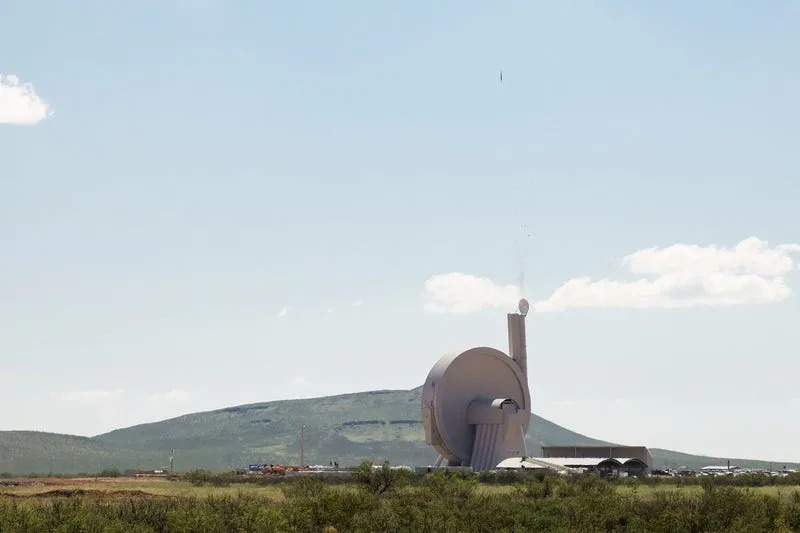
The SpinLaunch mass accelerator in action.

SpinLaunch is currently working with a suborbital 108-foot accelerator at Spaceport America in New Mexico. Called A-33, it uses kinetic energy as a first-stage engine, spinning a launch vehicle to supersonic speeds in a vacuum-sealed chamber before propelling it into the sky. The launch vehicle’s rocket engine eventually kicks in, allowing it to complete the journey to low Earth orbit.

SpinLaunch has used its one-third scale version to successfully conduct 10 tests since October 2021, flinging 10-foot-long projectiles to altitudes of around 25,000 feet. A full-scale version should be able to launch 440-pound (200-kilogram) satellites to low Earth orbit, with ambitions to achieve a 10-fold reduction in launch costs and a 70% reduction in fuel use.

The SpinLaunch concept is truly impressive from a technological standpoint. It features a large-diameter vacuum chamber built at low cost, and the ability to achieve hypersonic velocities and release a launch vehicle off a rotating tether. The company’s vision includes an orbital launch facility with an arm spinning at 5,000 miles per hour (8,000 kilometers per hour), targeting altitudes between 31 and 44 miles (50 and 70 kilometers), and a finalized system that could perform up to five launches per day.

The team, led by CEO Jonathan Yaney and consisting of around 200 employees, is also focused on creating SpinLaunch-compatible spacecraft components to coincide with its launch capability. The SpinLaunch model represents a wild new way to gain access to space, and only time will tell if it’ll actually work as intended. And also lead to profits. The company will never supplant SpaceX or some of the other competitors listed here, but its mass accelerator could steal business from rideshare missions, which are becoming increasingly popular.

Stoke Space: Poised as a future contender

Stoke Space, founded in 2019 by aerospace engineers Andy Lapsa and Tom Feldman, is seeking to redefine the way we explore space with its focus on developing fully reusable space launch vehicles. The company’s headquarters is situated in a 21,000-square-foot engineering and manufacturing facility outside of Seattle, Washington, and it also operates a rocket test facility in Moses Lake, also in Washington.

Andy Lapsa, Stoke Space’s CEO, brings expertise from his prior work at Blue Origin, where he contributed to the BE-4 engine’s development. Tom Feldman, the company’s CTO, also comes with experience from Blue Origin and SpaceX. Stoke’s mission emphasizes low-cost, on-demand access to any orbital location. Sustainability and environmental protection are integral to the company’s operations.


Stoke is setting itself apart through the development of a fully reusable second stage—a challenging feat that has yet to be achieved in the industry. The upper stage is being designed to deploy its payload, descend back towards Earth, and survive atmospheric reentry. An innovative heat shield is under development to make this possible. Stoke’s reusable rocket design aims for 100% reusability and a high flight cadence. This capability promises satellite customers on-demand access to diverse orbits, including low Earth orbit, geostationary transfer orbit, and trans-lunar injection.

By the end of 2020, Stoke Space closed a $9 million seed funding round, enabling growth in 2021. The following year saw a substantial boost with a $65 million Series A funding round, led by Breakthrough Energy Ventures, Bill Gates’s multibillion-dollar clean-tech initiative.

In September 2022, the company initiated test-firing its upper-stage engines at the Moses Lake facility. Further, Stoke was granted the use of Launch Complex 14 at Cape Canaveral Space Force Station in Florida by Space Launch Delta 45 in March 2023. This historic pad previously launched John Glenn into space in 1962.

Stoke is years away from challenging any of the companies listed here, but ignoring it would be a mistake. The company’s focus on reusable technology positions it as a potential contender, while its focus on doing so in an environmentally friendly way is certainly commendable.
Secret Memo Raises More Questions About UFO Shootdowns Over Alaska, Canada

Howard Altman
Wed, September 6, 2023 

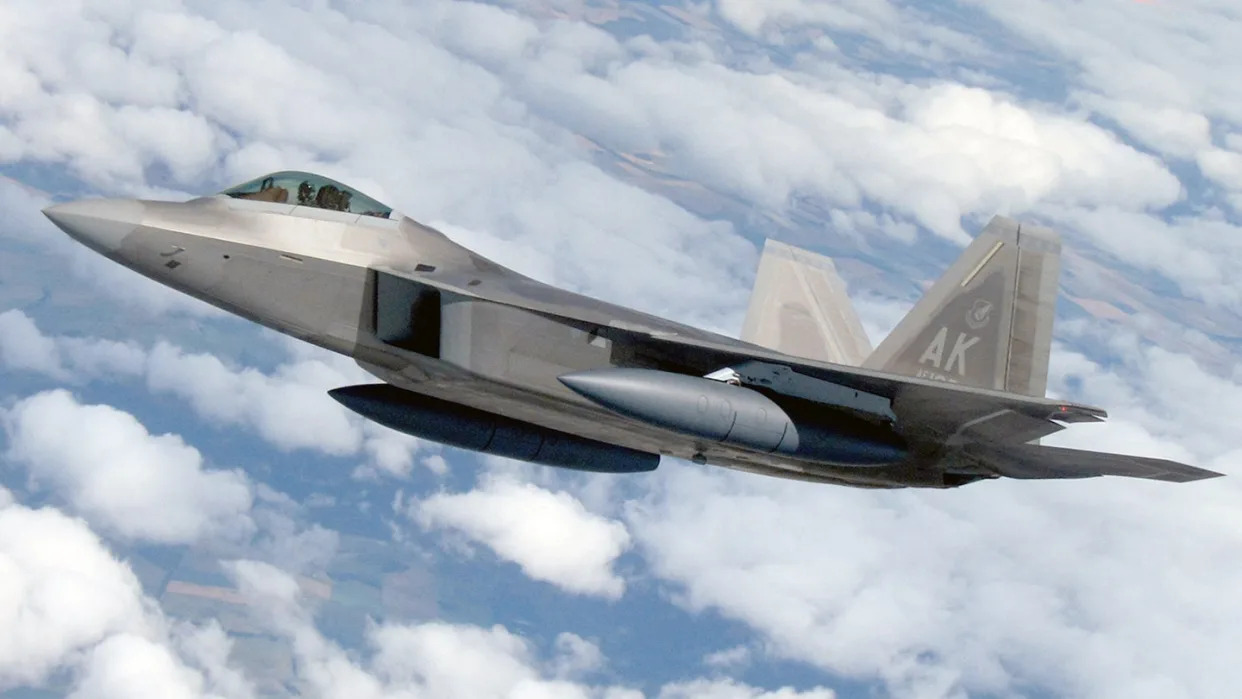
A new released memo to Canadian Prime Minister Justin Trudeau addressed two shoot downs by F-22 Raptors of unknown objects in February.

Following the shootdown of three unidentified objects in three days over Alaskathe Yukon and Lake Huron in February and the downing of a Chinese spy balloon off the coast of South Carolina a week earlier, Canadian Prime Minister Justin Trudeau received a secret memo laying out how the Canadian government was responding to the Feb. 11 Yukon incident. In addition, it stated the "full exploitation" of whatever the U.S. Air Force shot down over the waters of Alaska on Feb. 10 had "not yet been completed." Reports a few days later stated that the U.S. had called off the search for wreckage of the downed object. Exactly what kind of intelligence exploitation this is referring to is unclear.

The "Memorandum for the Prime Minister," transmitted Feb. 14, was obtained by the Canadian CTV News outlet from a source who filed a Freedom of Information Act (FOIA) request that the news organization said it verified with its own information request. According to the memo, the North American Aerospace Defense Command (NORAD) numbered unknown objects sequentially "to track every detected object that is not immediately identified: upon cross-examination most objects are found to be innocuous and do not meet the higher threshold for higher reporting or engagement." However, the object the memo identified as "UAP #23" - meaning it was the 23rd unidentified radar track by NORAD over North America at that point in the year that was classified as UAP - did rise to a higher level of concern, given that it was shot down.

https://twitter.com/dsotis/status/1699137491482083512

The memo stated that “the function, method of propulsion, or affiliation to any nation-state” of the unidentified object shot down by a U.S. Air Force F-22 Raptor on Feb. 11 “remains unverified. It is unknown whether it poses an armed threat or has intelligence collection capabilities.”

The memo also pointed out that the Canadian Air Force (CAF) was leading an aviation search effort to find the downed object, there was scant hope that it would be found.

“...the mountainous terrain, existing snow cover and expected new snowfall make prospect of recovery unlikely.”

The memo expressed concern that the indigenous hunters might accidentally find the object during their caribou hunt. It also explained that while CAF CF-18s Hornets had been scrambled to intercept the object, “F-22s were better located based on time, space and fading light.”

https://twitter.com/nytimes/status/1624176440609480704?ref_src=twsrc%5Etfw%7Ctwcamp%5Etweetembed%7Ctwterm%5E1624176440609480704%7Ctwgr%5Ea13489dd9e4df2ef0071a1f0cfd79b30fb3dcc91%7Ctwcon%5Es1_\u0026ref_url=https%3A%2F%2Fwww.thedrive.com%2Fthe-war-zone%2Ff-22-downs-another-unidentified-object-over-canada

The memo was sent to Trudeau and his national security advisor, Jody Thomas, by a Canadian official named Janice Charette, who then served as “the powerful clerk of the Privy Council,” CTV News explained. The council “is a centralized hub that directs the country's public service and is responsible for providing non-partisan support to the prime minister and cabinet as they make policy decisions,” the news outlet said.

Charette raised questions about whether the object was an armed threat or was capable of collecting intelligence three days after descriptions of it were released by Canadian authorities and media reporting.

During the Feb. 11 press conference as we noted at the time, Canadian Defense Minister Anita Anand said the unknown object was a "small, cylindrical object" smaller than the Chinese spy balloon shot down off South Carolina on Feb. 4. The object was reportedly flying at 40,000 feet when it was shot down.

https://www.youtube.com/watch?v=5slOlN4YcNA

Also that day, The Wall Street Journal, citing an official brief on the matter, reported that the object was a small metallic balloon with a tethered payload. That seemed to correlate with Canadian Chief of Defense Staff Gen. Wayne Eyre's statement at the aforementioned press conference when discussing cooperation between U.S. F-22s and Canadian CF-18s.

"The instructions that were given to the team was whoever had the first, best shot to take out the balloon had the go-ahead," Eyre said at the time.

Charette’s memo also briefly addressed the Feb. 10 UAP shootdown by an F-22 over the water in the northeastern corner of Alaska near the border with Canada described as “UAP #20.”

https://twitter.com/LucasFoxNews/status/1624129796635602949?ref_src=twsrc%5Etfw%7Ctwcamp%5Etweetembed%7Ctwterm%5E1624129796635602949%7Ctwgr%5Eab3c606970996a5971ec2f043abfe937a18fd928%7Ctwcon%5Es1_\u0026ref_url=https%3A%2F%2Fwww.thedrive.com%2Fthe-war-zone%2Ff-22-shoots-down-new-object-flying-high-over-alaskan-waters

“The full exploitation of UAP #20, which was engaged by the U.S. on February 10, 2023, has not yet been completed,” Charette wrote.

On Feb. 11, The New York Times reported that the fallen object “broke into pieces” on hitting the frozen sea ice off Prudhoe Bay.

Three days after Charette delivered her memo, The New York Times reported that “the U.S. called off the search” for both the objects mentioned in Charette’s memo, “raising the possibility that the devices will never be collected and analyzed, according to a U.S. military official.”

It is also unclear what the memo meant about the “full exploitation” of the UAP shot down over Alaska on Feb. 10. However, there are a number of lines of effort to which she could have been referring.

The intelligence services, along with the U.S. military, conduct what’s called Foreign Material Exploitation (FME) of targeted crash sites of aircraft and missiles to learn more about how they are build, operate, and their actual capabilities. This is a long-established, shadowy practice that has been critical to major adversary intelligence revelations over the decades. You can read all about crash retrievals and their 'cloak and dagger history' in our story here.

There was an active and intensive search over this remote part of Alaska to find the wreckage. So a crash retrieval was certainly the aim, but if nothing was found, as claimed by the U.S. government, the memo could be referring to data culled from sensors collected by a slew of assets that tracked the object. Aviation platforms, in particular, would have gotten the closest to it and recorded visual information of it as it made its trek across the Alaskan frontier.

As we noted in our report from the time, Air Force Brig. Gen. Pat Ryder, the Pentagon’s top spokesman, told reporters that a two-ship flight of F-35s conducted the initial intercept and identification of the object.

The F-35s would have full video of the object, day or night, using its Electro-Optical Targeting System (EOTS) as well as any infrared data collected by its Distributed Aperture System (DAS). This is in addition to its myriad of radio-frequency-based sensor systems.

The Feb. 10 incident over Alaska remains shrouded in mystery and from the information available stands in stark contrast to the other objects shot down in several ways.

Shortly after the shootdown, the White House National Security Council spokesman John Kirby significant said debris was reportedly sitting atop of sea ice and efforts were being made to recover if for analysis. He also said the object did not appear to be readily maneuverable or have a substantial payload.

Ryder said the object, traveling at about 40,000 feet, was "about the size of a small car." It was shot down because at that altitude, it was perceived as a threat to aviation.

ABC News reported that the "object" shot down off the coast of Alaska was "cylindrical and silver-ish gray," according to an unnamed U.S. official. "All I say is that it wasn't 'flying' with any sort of propulsion, so if that is 'balloon-like' well – we just don't have enough at this point."

Those details differed greatly from we'd learned so far about the Chinese spy balloon, which was ultimately shot down off the coast of South Carolina on Feb. 4. That balloon, which had a payload U.S. officials described as being the size of a smaller airliner and as weighing thousands of pounds, was said to have the ability to maneuver and had been soaring at an altitude of between 60,000 and 70,000 feet.

In this vacuum of information, exotic and unconfirmed claims have been made about the Alaskan object, ranging from different accounts by pilots who observed it to reports that it seemingly interfered with some aircraft sensors.

Beyond reporting about the objects that were shot down, the Charette memo does not specifically address UAPs #21 and #22, which could have been found to be innocuous objects that happened to be picked up by radar. However, on Feb. 12, a U.S. Air Force F-16 shot down a UAP over Lake Huron as we noted earlier in this story. It is unclear though whether that was one of either UAP #21 or #22, since officials at the time said the object was first identified on Feb. 12.

The object shot down over Lake Huron seemed to have been a relatively small balloon based on intercepted radio communications.

We reached out to several agencies for more information about the details provided in the Charette memo. We also reached out to Charette herself on her LinkedIn page and several government emails to find out and whether she received any answers and if so, what they were. We will update this story if she provides a pertinent response.

A NORAD spokesperson told The War Zone on Wednesday that it would not be able to “address the memo specifically.”

“I would caution that one internal document from Feb. 15 may not present the most accurate information about events or processes during that period,” Air Force Col. Elizabeth Mathias said in an email to The War Zone Wednesday. “But we’ll be happy to provide more information about our operations and procedures. More to follow, and thanks.”

We also reached out to the Canadian Defense Ministry, U.S. National Security Council and the All-Domain Anomaly Resolution Office (AARO) - the Pentagon unit that tracks UAPs - for additional responses. We will update this story with any pertinent information they provide.

Despite numerous requests from Congress and media outlets including The War Zone, the Pentagon has yet to release any imagery from the three shootdowns over North America, raising questions about what, if anything, it is trying to hide. Especially since there was a wealth of data and imagery collected during observation and destruction of the objects.

https://twitter.com/Aviation_Intel/status/1636356952191279105?s=20

The discovery and later shootdown of the Chinese spy balloon on Feb. 4 raised huge alarms about the ability of the U.S. to protect its airspace against such objects. This is something The War Zone had pointed out repeatedly years in advance of these events. In the aftermath of this string of bizarre incidents, major moves began to be made to change how unidentified objects are dealt with, as well as making it easier for them to be spotted in the first place. Major upgrades to NORAD's sensor ecosystem are also in the works as are demands from Congress for the multi-national military organization to better understand its own vulnerabilities.

The fact is that the lack of information surrounding these unprecedented series of events over North America continues to puzzle many and the optics surrounding them clearly irk the Pentagon. What exactly was known about these objects and how they differed from each other, and when that information was known, remains a mystery to the public.

Contact the author: howard@thewarzone.com

WAR CRIME
A look at the uranium-based ammo the US is sending to Ukraine

TARA COPP
Updated Wed, September 6, 2023

Russia Ukraine War Uranium Explainer
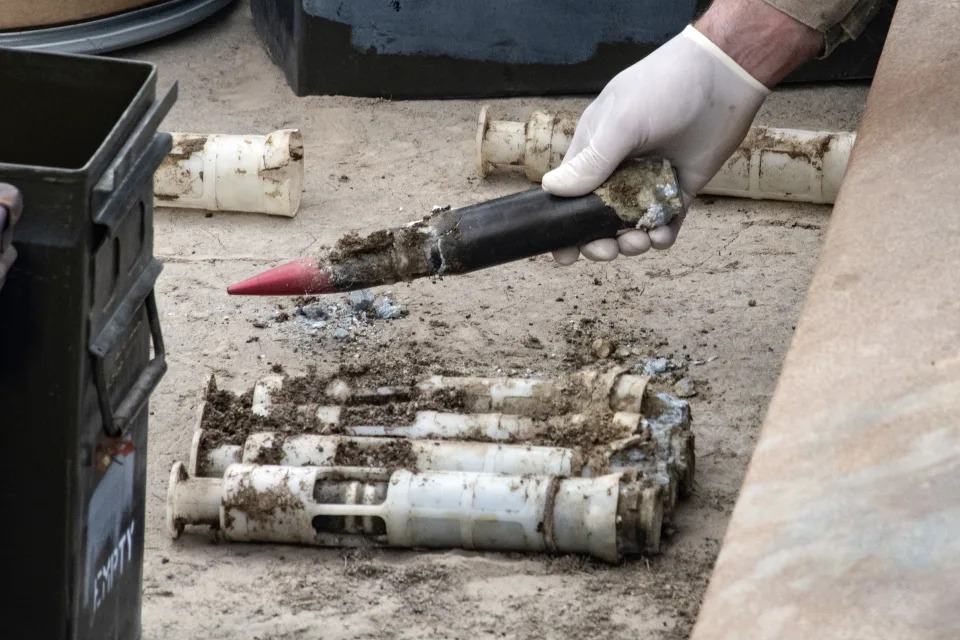
In this image provided by the U.S. Air National Guard, U.S. Air Force National Guard Explosive Ordnance Disposal Techinicians prepare several contaminated and compromised depleted uranium rounds on June 23, 2022 at Tooele Army Depot, Utah. (Staff Sgt. Nicholas Perez/U.S. Air National Guard via AP)


WASHINGTON (AP) — The U.S. on Wednesday announced it was sending depleted uranium anti-tank rounds to Ukraine, following Britain's lead in sending the controversial munitions to help Kyiv push through Russian lines in its grueling counteroffensive.

The 120 mm rounds will be used to arm the 31 M1A1 Abrams tanks the U.S. plans to deliver to Ukraine in the fall.

Such armor-piercing rounds were developed by the U.S. during the Cold War to destroy Soviet tanks, including the same T-72 tanks that Ukraine now faces in its counteroffensive.

Depleted uranium is a byproduct of the uranium enrichment process needed to create nuclear weapons. The rounds retain some radioactive properties, but they can’t generate a nuclear reaction like a nuclear weapon would, RAND nuclear expert and policy researcher Edward Geist said.

When Britain announced in March it was sending Ukraine the depleted uranium rounds, Russia falsely claimed they have nuclear components and warned that their use would open the door to further escalation. In the past, Russian President Vladimir Putin has suggested the war could escalate to nuclear weapons use.

A look at depleted uranium ammunition:

WHAT IS DEPLETED URANIUM?

Depleted uranium is a byproduct of the process to create the rarer, enriched uranium used in nuclear fuel and weapons. Although far less powerful than enriched uranium and incapable of generating a nuclear reaction, depleted uranium is extremely dense — more dense than lead — a quality that makes it highly attractive as a projectile.

“It’s so dense and it’s got so much momentum that it just keeps going through the armor — and it heats it up so much that it catches on fire,” Geist said.

When fired, a depleted uranium munition becomes “essentially an exotic metal dart fired at an extraordinarily high speed,” RAND senior defense analyst Scott Boston said.

In the 1970s, the U.S. Army began making armor-piercing rounds with depleted uranium and has since added it to composite tank armor to strengthen it. It also has added depleted uranium to the munitions fired by the Air Force’s A-10 close air support attack plane, known as the tank killer. The U.S. military is still developing depleted uranium munitions, notably the M829A4 armor-piercing round for the M1A2 Abrams main battle tank, Boston said.

WHAT HAS RUSSIA SAID?

In March, Putin warned that Moscow would "respond accordingly, given that the collective West is starting to use weapons with a ‘nuclear component.’" And Foreign Minister Sergey Lavrov said the munitions were “a step toward accelerating escalation.”

Putin followed up several days later by saying Russia would respond to Britain's move by stationing tactical nuclear weapons in neighboring Belarus. Putin and the Belarusian president said in July that Russia had already shipped some of the weapons.

There was no immediate reaction from the Kremlin to the U.S. announcement, which came late Wednesday during a visit to Kyiv by Secretary of State Antony Blinken.

The Pentagon has defended the use of the munitions. The U.S. military “has procured, stored, and used depleted uranium rounds for several decades, since these are a longstanding element of some conventional munitions,” Pentagon spokesman Marine Corps Lt. Col. Garron Garn said in a statement in March in response to a query from The Associated Press.

The rounds have “saved the lives of many service members in combat,” Garn said, adding that “other countries have long possessed depleted uranium rounds as well, including Russia.”

Garn would not discuss whether the M1A1 tanks being readied for Ukraine would contain depleted uranium armor modifications, citing operational security.

NOT A BOMB, BUT STILL A RISK

While depleted uranium munitions are not considered nuclear weapons, their emission of low levels of radiation has led the U.N. nuclear watchdog to urge caution when handling and warn of the possible dangers of exposure.

The handling of such ammunition “should be kept to a minimum and protective apparel (gloves) should be worn,” the International Atomic Energy Agency cautions, adding that “a public information campaign may, therefore, be required to ensure that people avoid handling the projectiles.

"This should form part of any risk assessment and such precautions should depend on the scope and number of ammunitions used in an area.”

The IAEA notes that depleted uranium is mainly a toxic chemical, as opposed to a radiation hazard. Particles in aerosols can be inhaled or ingested, and while most would be excreted again, some can enter the blood stream and cause kidney damage.

“High concentrations in the kidney can cause damage and, in extreme cases, renal failure,” the IAEA says.

The low-level radioactivity of a depleted uranium round “is a bug, not a feature” of the munition, Geist said, and if the U.S. military could find another material with the same density but without the radioactivity it would likely use that instead.

Depleted uranium munitions, as well as depleted uranium-enhanced armor, were used by U.S. tanks in the 1991 Gulf War against Iraq’s T-72 tanks and again in the invasion of Iraq in 2003, as well as in Serbia and in Kosovo.

U.S. troops have questioned whether some of the ailments they now face were caused by inhaling or being exposed to fragments after a munition was fired or their tanks were struck, damaging uranium-enhanced armor.

In a social media post on Telegram, Russian Foreign Ministry spokeswoman Maria Zakharova slammed the U.S. decision to give Ukraine the munitions, writing, “What is this: a lie or stupidity?” She said an increase in cancer has been noted in places where ammunition with depleted uranium was used.

___

Associated Press writers Lolita C. Baldor and Aamer Madhani in Washington, Frank Jordans in Berlin and Menelaos Hadjicostis in Nicosia, Cyprus, contributed to this report.

___

Follow the AP's coverage of Russia's war in Ukraine at https://apnews.com/hub/russia-ukraine.

Russia says US supply of depleted uranium weapons to Ukraine is 'criminal'


Reuters
Thu, September 7, 2023 

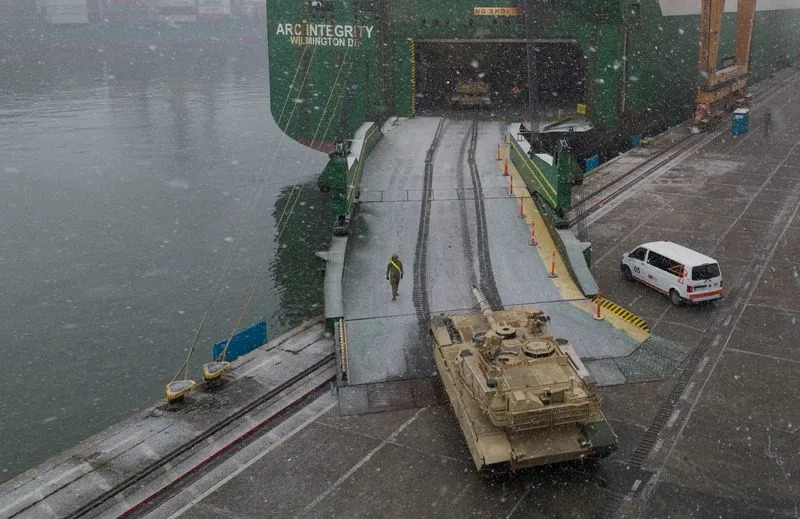
NATO's Operation Atlantic Resolve in Gdynia

(Reuters) - Russian Deputy Foreign Minister Sergei Ryabkov said on Thursday that the US supply of depleted uranium weapons to Ukraine was "a criminal act", state media reported.

The Pentagon on Wednesday announced a new security assistance package worth up to $175 million for Ukraine, including depleted uranium ammunition for U.S. Abrams tanks.

A by-product of uranium enrichment, depleted uranium is used for ammunition because its extreme density gives rounds the ability to easily penetrate armor plating. Critics say there are dangerous health risks from ingesting or inhaling depleted uranium dust, including cancers and birth defects.

"This is not just an escalatory step, but it is a reflection of Washington’s outrageous disregard for the environmental consequences of using this kind of ammunition in a combat zone. This is, in fact, a criminal act, I cannot give any other assessment," TASS quoted Ryabkov as saying.

In a speech at a security seminar, he also reiterated previous warnings by Russia about the risk of a nuclear war, because of what he called Western "pressure" on Moscow.

"Now this pressure is dangerously balancing on the brink of direct armed conflict between nuclear powers," he said.

Russia has long accused the West of using Ukraine to wage a proxy war aimed at inflicting a "strategic defeat" on Moscow. The United States and its allies say they are arming Ukraine to defend itself against Russia's invasion and recover territory seized by Moscow in the course of the 18-month war.

Russia's deployment of tactical nuclear weapons in Belarus was proceeding on schedule, Ryabkov said.

"Several stages have now been completed in terms of creating the appropriate infrastructure and re-equipping the corresponding carriers. This work continues."

Moscow announced the deployment earlier this year, calling it a deterrent to the West.

(Reporting by Reuters; Editing by Michael Perry)