Thursday, September 07, 2023

Enbridge, Divert break ground on renewable fuel facility in Washington

Story by The Canadian Press •


CALGARY — Canadian pipeline giant Enbridge Inc. and U.S.-based food waste management company Divert Inc. have broken ground on their first joint project to be built under the terms of a US$1 billion infrastructure agreement announced earlier this year.

The two companies are investing approximately US$100 million in the first of what is expected to be several projects across the U.S. that will convert food waste into non-fossil fuel, renewable energy.

The first facility, for which a groundbreaking ceremony was held Thursday afternoon, will be built in Longview, Washington and will be the first of its kind in the state. It will accept wasted food from retail food customers, agricultural food producers, industrial food manufacturers, restaurants and others and convert it into renewable natural gas, or RNG.

"When we started looking at who we wanted to partner with in this space, Divert really stood out because they have kind of mastered ... diverting wasted food," said Caitlin Tessin, vice-president of strategy and market innovation for Enbridge.

"The fact that it doesn't just go into a landfill really attracted us to the Divert partnership because it's not just about decarbonized gas — there's a really strong social and community benefit to what they're doing," Tessin added.

Enbridge, which bought a 10 per cent stake in Divert earlier this year for US$80 million, is one of a number of traditional fossil fuel companies that have been investing in RNG as concerns about climate change intensify.

According to the World Biogas Association, organic waste from food production, food waste, farming, landfill and wastewater treatment are responsible for about 25 per cent of human-caused global emissions of methane, a harmful greenhouse gas.

But it's possible to harness the methane from organic waste to create an environmentally friendly alternative to traditional natural gas that can be used for home heating, cooking, and even fuelling vehicles.

Divert — which uses a patented "depackaging" process and anaerobic digestion technology in its facilities — already operates 10 sites across the U.S., working with nearly 5,400 retail stores to process more than 2.3 billion pounds of wasted food annually.

Enbridge will help to finance the Longview facility, and will transport the fuel produced there to customers in the Washington area via Enbridge's already existing natural gas pipeline network.

"RNG is a drop-in fuel replacement for traditional gas," Tessin said, adding replacing traditional gas with RNG helps to lower Enbridge's overall carbon footprint.

"It (allows us) to utilize the billions of dollars of infrastructure we already have."

The Longview facility is expected to be fully operational in 2024. Enbridge says it will be able to offset up to 23,000 metric tonnes of CO2 a year, the equivalent to removing 5,000 gas-powered cars from the road annually.

This report by The Canadian Press was first published Sept. 7, 2023.

Companies in this story: (TSX:ENB)

Amanda Stephenson, The Canadian Press

What are biofuels and why is it so confusing whether they are a source of clean energy or not?


BENGALURU, India (AP) — India, the current president of the Group of 20 industrialized and developing nations, has proposed a global biofuel alliance that seeks to accelerate the development of sustainable biofuels to support the global energy transition.

The alliance is likely to get an official announcement at the G-20 summit that opens this week in New Delhi, and it's expected that more than 15 countries will sign up to be part of the alliance.

The United States, Canada and Brazil are among a few of the countries expected to join India in such an alliance.

WHAT ARE BIOFUELS?


Any fuel produced from agricultural produce or organic waste is a biofuel.

Humans have used biofuels since time immemorial — for example, burning wood and manure for cooking, heating and light.

They've gained popularity in recent decades for their potential to deliver cleaner energy than some other sources.

Biofuels are categorized based on their source, with each category known as a “generation.” First-generation biofuels are derived from food crops like corn and sugar cane, second generation from inedible vegetation and agricultural waste and third-generation from algae.

Popular types of biofuels such as ethanol, biodiesel and biogas can be produced from any of these sources and are classified based on the source from which they are produced. For example, ethanol produced from farm-grown corn is classified as first-generation ethanol.

ARE BIOFUELS ALWAYS A SOURCE OF CLEAN ENERGY?


Not always. It depends on how it's produced. A biofuel made from waste or inedible vegetation, with renewable energy to power the production, would have little or no greenhouse gas emissions, making it a clean fuel. But when crops are grown explicitly to produce biofuels — such as making ethanol from corn, soybeans, sugar cane or palm — all the fertilizers and fossil fuels needed to grow, cultivate and process the fuel give it a much larger carbon footprint.

“If you look at the full life cycle of producing biofuels, it’s many times not clean,” said Lydia Powell, an energy policy analyst at the New Delhi-based Observer Research Foundation, who has followed developments related to biofuels for over two decades.

Biofuels can also mean land that could have produced food is instead being used for energy. And they can add to deforestation when land is cleared for their production.

Powell noted Europe's imports of palm oil from Indonesia and other East Asian countries to make biodiesel for cars and trucks. Those imports dropped sharply after European Union regulations banned the sale of palm oil and other commodities when they could be linked to deforestation.

"They were destroying natural forests to plant palm trees so you produce oil to export to Europe. When you destroy forests, you destroy large chunks of carbon sinks,” Powell said.

Those issues have clouded the picture of exactly how sustainable biofuels are, and led to skepticism of them as a clean energy option.

WHAT ARE BIOFUELS USED FOR?


Transportation, including passenger vehicles, but also transport — trucking, shipping and aviation.

Once they're made, experts say, biofuels have advantages over pure fossil fuels by contributing little to no emissions at the tailpipe. The same can't be said of the gasoline and diesel they are blended with.

But there's a hope that the biofuels might completely replace fossil fuels in the future in aviation and in certain kinds of ships. And if the biofuels were derived from organic waste and inedible crops grown on wasteland — not on land reserved for food production, or on deforested land — it would be cleaner.

“They are one option among a larger set of solutions,” said Jane O’Malley of International Council on Clean Transportation, a Washington-based independent nonprofit.

O’Malley, whose research includes fuel life cycles and exhaust emissions, said the key is to use the right kind of biofuel for the right purpose. O'Malley said it's essential for countries using biofuels for transportation to move as quickly as possible to producing them with little or no emissions.

Experts say biofuels can also contribute to employment and energy security, especially if the crops used to produce them are locally grown.

____

Associated Press climate and environmental coverage receives support from several private foundations. See more about AP’s climate initiative here. The AP is solely responsible for all content.

Sibi Arasu, The Associated Press


Hurricane Lee forecast to rapidly become strongest storm of the year so far

Story by Digital Writers •

VIDEO
The Weather Network
Hurricane of the year? Lee's quick intensification Thursday is turning heads 
Duration 1:05   View on Watch


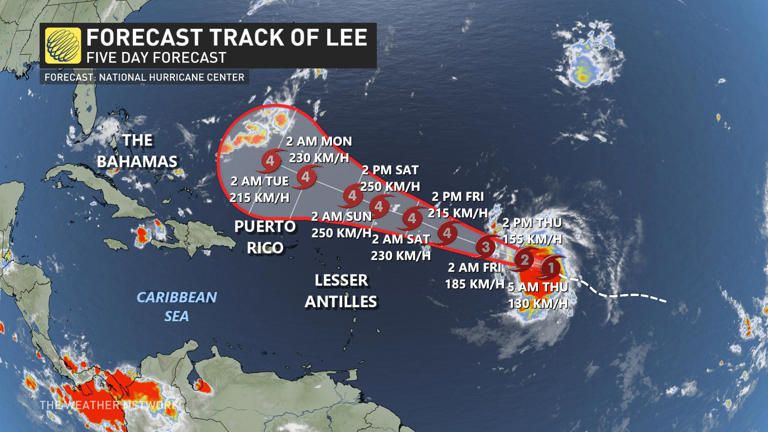
Lee quickly moved up the ranks, becoming the 14th named storm of the season, then strengthening into a hurricane in the Atlantic Ocean on Wednesday. According to the U.S. National Hurricane Center (NHC), this will be an "extremely dangerous" hurricane to watch.

Although there is little to no impact to land in the short term, Lee's development is interesting. Rapid intensification has been a topic with hurricanes over the past couple of years and this one is doing just that.

Visit The Weather Network's hurricane hub to keep up with the latest on tropical developments in Canada and around the world


Hurricane Lee forecast to rapidly become strongest storm of the year so far© Provided by The Weather Network

Early Tuesday, Lee was a tropical depression with a projection to become a Category 4 hurricane within five days –– the first time since five-day forecasts started in 2000 that a storm will intensify that quickly from a tropical depression. That is just a forecast statistic, so we will see how quickly Lee develops with time.

Lee is forecast to reach major storm status by Friday.

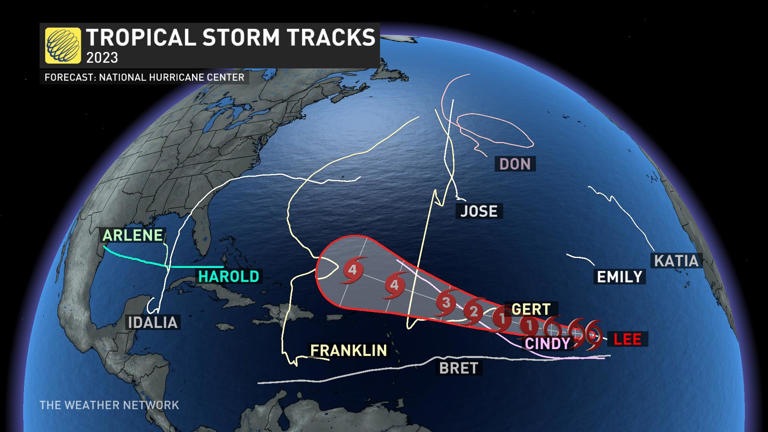
It will become a long-lasting storm as it tracks north of the British Virgin Islands towards the western Atlantic. Swells generated by Lee are likely to cause life-threatening surf and rip current conditions.

Lee will be a storm to watch as it has the potential to bring impact to land into late next week. It is still too early to predict how and if this hurricane will impact parts of the Atlantic coast of the United States and Canada, but The Weather Network is closely monitoring its development.


Rapidly developing Lee expected to fast-track into a major hurricane© Provided by The Weather Network

Stay tuned to The Weather Network for the latest forecast updates on Tropical Storm Lee.
CRIMINAL CAPITALI$M
Canada Bread banned from federal contracts over price-fixing scheme

Story by Jake Edmiston •

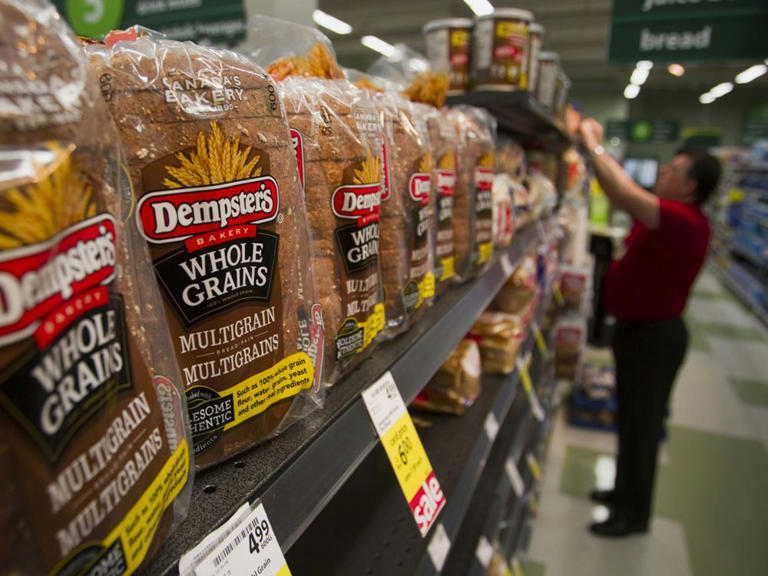
Loaves of Canada Bread Co. Ltd. Dempster's multigrain bread are displayed for sale as an employee stocks shelves at a grocery store in Vancouver.© Provided by Financial Post

Canada Bread Co. Ltd. has been added to the federal government’s list of banned suppliers for its role in one of most notorious price-fixing conspiracies in Canadian retail history.

Canada Bread — one of the country’s biggest commercial bakeries, behind brands such as Dempster’s and Villaggio, among others — in June pleaded guilty to four counts of price fixing and received a $50-million fine — the first major development in the case since news of the scheme first emerged in 2017. On Aug. 22, two months after the guilty plea, the federal government banned Canada Bread from bidding on government contracts for 10 years.

The move means Canada Bread can no longer supply bread and rolls to the Department of National Defence, though the reputational harm could be the tougher blow. Even before that decision, credit rating agency DBRS Morningstar said Canada Bread’s situation was a cautionary tale of how unethical business conduct can “erode consumer confidence” and hurt a company’s overall credit risk profile.

Canada Bread is now one of just five companies on the federal government’s list of “ineligible and suspended suppliers ” — a program that started in 2015 as a way of keeping unethical players away from the public purse.

“It’s not surprising,” said Robin Shaban, co-founder of the Canadian Anti-Monopoly Project, an Ottawa think-tank that focuses on competition policy reform. “If I was working in federal government procurement, I would totally blackball them.”

Public Services and Procurement Canada (PSPC), the department that maintains the list, said the government will not do business with any companies that are convicted of certain offences , including bid rigging, bribery and price fixing.

PSPC spokesperson Jeremy Link said the government is committed to taking action “against improper, unethical and illegal business practices and holding companies accountable for such misconduct.”

In a statement, Canada Bread said it respects the government’s policy on ineligible suppliers and is “working within such policy.” The company has been controlled by Mexican baking giant Grupo Bimbo S.A.B. de C.V. since 2014. In court documents earlier this summer, the company said it only learned about the price-fixing activity in 2017 when the Competition Bureau, a federal law enforcement agency, executed a search warrant against Canada Bread.

The court documents said the bureau found that a senior officer at Canada Bread co-ordinated two wholesale price increases between 2007 and 2011 with executives at the company’s main competitor, Weston Foods — a major commercial bakery controlled at the time by George Weston Ltd., which also controls Canada’s largest retailer, Loblaw Cos. Ltd.

In 2017, the bureau granted immunity to Loblaw and Weston in exchange for their co-operation with the investigation. The immunity appears to have kept those companies off the government’s banned supplier list, since neither company was charged with one of the crimes that makes a supplier ineligible.

Grupo Bimbo said it fully co-operated with the investigation, handing over documents that were not seized during the bureau’s raid. The company has publicly said the offences happened before Grupo Bimbo took over the bakery, when Canada Bread was majority owned and controlled by Maple Leaf Foods Inc.

“Grupo Bimbo is considering all legal options against those responsible for the conduct at issue,” the company said in a statement in June.

Maple Leaf Foods has said it was not aware of “any wrongdoing by Canada Bread or its senior leadership during the time that we were a shareholder.”

In exchange for Canada Bread’s co-operation, the bureau recommended leniency in sentencing. Ontario Superior Court Judge Maureen Forestell said Canada Bread’s fine of $50 million was below the maximum since the company’s co-operation and guilty plea saved “considerable time and costs.”

The judge said she took the bureau’s approach to leniency into consideration, since “much of the conduct would go undetected” without participants coming forward to confess in exchange for an easier sentence. Still, the $50-million fine was the highest on record, the bureau said.

“Effectively, this was a fraud on the public,” Forestall said in her reasons for sentencing. “These offences affected millions of consumers.”

Bureau spokesperson Sarah Brown said the agency isn’t involved in decisions about the government’s list of banned suppliers. But the bureau has previously advocated that anyone who gets immunity or leniency from the bureau shouldn’t be barred by the government.

In recommendations published late last year, the bureau said the threat of landing on the list could make it harder for a potential whistleblower to take a leniency or immunity deal.

As of now, only companies with immunity can avoid the list, according to John Pecman, the former head of the Competition Bureau who established the immunity and leniency program.

“We worked closely with Procurement Canada to ensure the immunity applicants would be excluded,” he said.

But parties who receive leniency — a lower tier in the bureau’s program — end up on the list because they’ve been convicted of one of the crimes that the government considers to be a red flag for suppliers.

“That’s one of the consequences,” Pecman said. “It’s part of your penalty.”

Inside the damning allegations of Canada’s bread price fixing scandal

Government records show that Canada Bread has supplied products to the defence department and Fisheries and Oceans Canada since 2008. The most recent supply contract was valued at $10,925 for Canada Bread Atlantic Ltd. to supply “miscellaneous food, food materials and food preparations” in July 2018.

In another contract, valued at $25,000, Canada Bread Co. Ltd. is listed as supplying fruits and vegetables to defence department between late 2016 and early 2017, according to a government database of contracts worth more than $10,000. In the fall of 2016, Canada Bread also had a deal to provide bread and rolls to the defence department. The database categorizes that contract as a “standing offer.”

— With files from Christopher Nardi and Barbara Shecter
UCP WAR ON  RENEWABLES
New questions for wind, solar in Alberta create more confusion for industry: advocate

Story by The Canadian Press •


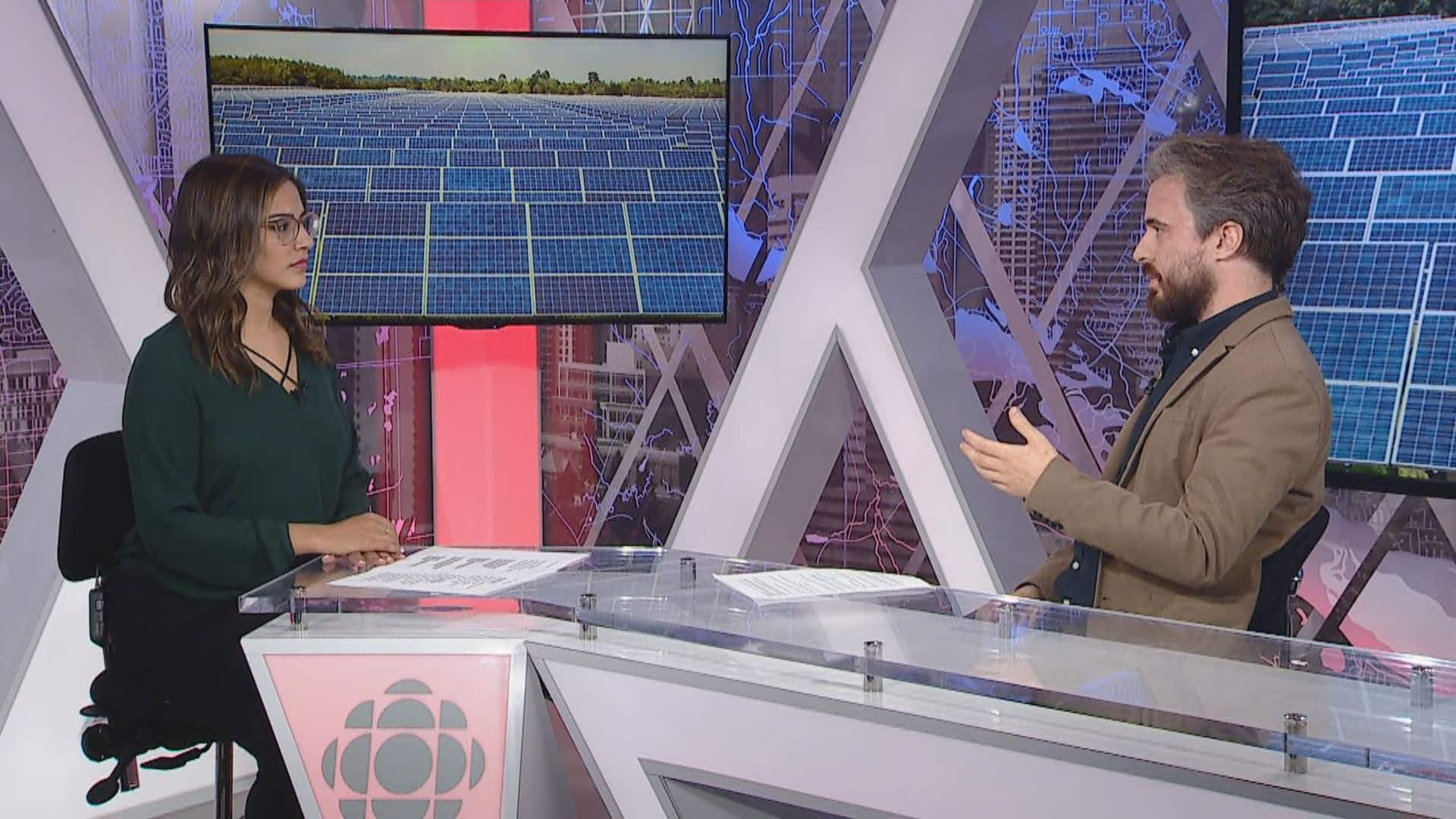
EDMONTON — New information requirements for Alberta power generators including wind and solar projects will create further problems for a booming renewables industry that government policy has already slowed, said an industry advocate.

"They introduced more questions than answers," said Jorden Dye of the Business Renewables Centre, a group that links generators and purchasers of renewable power.

On Wednesday, the Alberta Utilities Commission released a series of interim information requests that those proposing new projects will be required to answer. The requests apply to all proposals, including renewable projects already under a six-month approval moratorium imposed by the United Conservative Party government.

The pause is supported by some landowners as well as municipal districts and counties but has also been criticized by municipalities, energy economists and business leaders.

During the six months, the commission is to hold an inquiry into how to regulate Alberta's renewables industry — the largest in the country and responsible for billions of dollars in investment, millions of dollars in taxes and thousands of jobs. While the inquiry is underway, power proposals must answer the commission's interim requirements.

The commission did not immediately respond to a request for an interview.

Dye said the commission's questions around land use, agricultural impacts and reclamation are reasonable. Some are already part of the approval process; others the industry is willing to answer.

Others seem arbitrary, he said.

Proponents must "list and describe pristine viewscapes … on which the project will be imposed," the commission says. "Describe mitigation measures available to minimize impacts from the project on these viewscapes."

That's not very clear, said Dye.

"It's too vague to be actionable. How can you submit information on your impact on pristine viewscapes if pristine viewscapes are not defined in any way?"

Other questions infringe on decisions by individual landowners, Dye said.


cbc.ca Why some in rural Alberta support a move that puts a pause on renewable power projects
4:40


cbc.ca Federal government unveils electric grid decarbonize plan
2:02


Global News 'Unconstitutional, irresponsible, unrealistic': Prairies reject feds' net-zero energy plan
1:46


"These are deals between private landowners. That farmer knows the best use of that land — they're aware of the effects (of power generation)."

Dye said other industrial and energy developments are not subject to similar requirements.

"I do feel the renewables industry has been singled out."

Commission spokesman Richard Goldberger said in an email that many of the new requests simply restate questions that applicants would have had to answer anyway.

"The interim information requirements bring this information-gathering exercise to the front-end of the proceeding," he wrote.

Goldberger wrote formalizing the information requests will ensure all applicants are treated the same.

"Gathering uniform information from active applications will help proceeding panels understand the potential impacts of individual applications and will also inform consideration of these issues in the inquiry."

Opposition New Democrat energy critic Kathleen Ganley said the interim information requests have muddied already murky waters.

"Interim rules don't create certainty," she said.

She pointed to letters received by the commission from renewable energy companies warning Alberta's investment reputation is at risk.

One company, Renewable Energy Systems, said “the moratorium will result in severe uncertainty among investors, jeopardizing billions of dollars of investment in Alberta.”

Aira, a subsidiary of a large multinational infrastructure company, said the pause endangers its plan for a billion-dollar solar farm.

“The regulatory delay places undue burden on the project economics, placing investment and jobs in jeopardy … further delay and uncertainty related to the pause could jeopardize the project and all of the benefits it will bring to Alberta.”

Ganley said the pause, which was announced without consultation with industry, affects Alberta's overall reputation as a place to do business.

"(The United Conservatives) have changed the rules suddenly and without warning, putting at risk a whole bunch of people's investments and capital. That's going to have long-term effects."

This report by The Canadian Press was first published Sept. 7, 2023.

Bob Weber, The Canadian Press
Inside the Burning Man ‘mudpocalypse,’ where Silicon Valley CEOs, investors, and billionaires faced off against the powers of nature’s wrath

Alexandra Sternlicht
Wed, September 6, 2023 


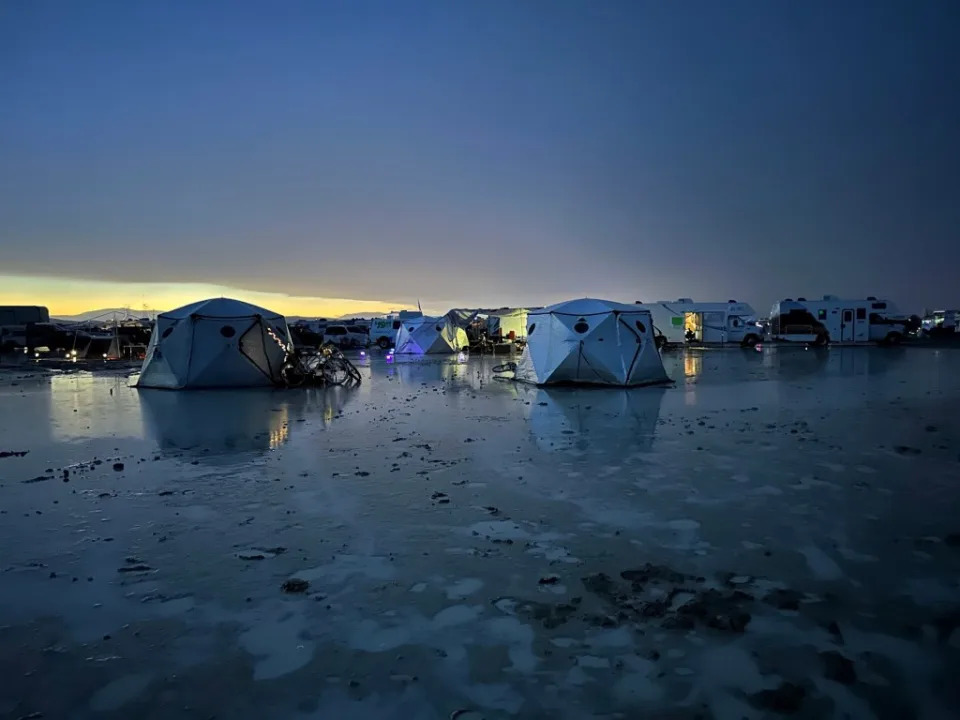
As rain pelted the Burning Man "playa" on Friday night, turning the desert plateau into a giant mud pit, the festival's official radio station told attendees to cancel their party plans and hunker down.

"Don’t party" was the message, with the implication of avoiding drugs and alcohol, recalls one attendee describing the surreal experience as one of the world’s most celebrated bacchanals, frequented by DJs, artists, and tech billionaires, suddenly turned into a potential natural disaster zone.

By Tuesday, many of the 70,000 Burning Man attendees were back home, or on their way, after washed-out roads were reopened and a multiday travel ban in and out of the area was lifted. Many of the attendees Fortune spoke with rejected news reports that described them as having been stranded victims or in danger. (One person died at the event, though the cause is under investigation.)

But if nothing else, the deluge provided a high-profile display of the collision between nature and some of the world's most well-heeled revelers, including Google cofounder Sergey Brin, actor Chris Rock, and Kimball Musk, the brother of Tesla CEO Elon Musk—who was apparently not present this year, but who tweeted his praise for Burning Man on Sunday: "hard to describe how incredible it is for those who have never been."

Twitch cofounder Justin Kan posted on Instagram about having survived, and thrived, during the “hardest Burning Man I’ve been to in 10 years.” Crypto entrepreneur and former child actor Brock Pierce, health tech platform founder Adrian Aoun, and ex-Twitter manager Esther Crawford were reportedly among the many other Silicon Valley notables at this year's event.

Snorting drugs in soggy yurts

For many, the festival organizers’ calls for sobriety and restraint were interpreted loosely.

Inside a soggy yurt somewhere on the playa on Friday night, Richard, his wife, and friends sat on a tarp snorting lines of ketamine and cocaine, and popping MDMA pills, until their Bluetooth speaker died.

A longtime Burning Man attendee who asked to use a pseudonym, Richard normally plots his drug experiences at the festival very carefully. This year he had planned to do MDMA only on Friday night following a Shabbat dinner and concert by his favorite artist Paavo Siljamäki, concluding in a sunrise wedding.

But with the wild weather, all of that was canceled. The muddy conditions made it impossible for Richard and other attendees to navigate the Playa by foot or by bike. Instead, they went on a bender.

“Friday was definitely like, fuck it, let’s do whatever we want to do. If anything, let’s do more to overcompensate for the fact that we’re not out on the playa seeing things,” says Richard.

Other attendees shared similar tales of making do, without the usual extravaganza of music, art, and invitations into other camps.

“There wasn’t much else to do,” said another attendee in response to Fortune’s inquiry about drug and alcohol consumption at the muddy festival. “People were at their camps doing what people do when they get bored."

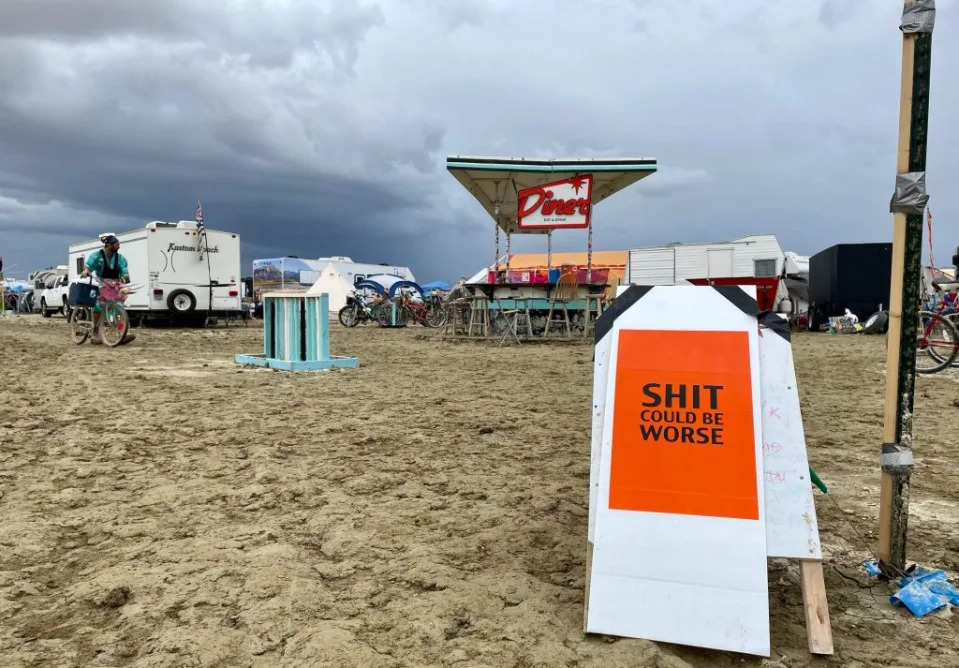
A sign reading "Shit Could Be Worse" as campers sit in a muddy desert plain on September 3, 2023, after heavy rains turned the annual Burning Man festival site in Nevada's Black Rock desert into a mud pit. Tens of thousands of festivalgoers were stranded September 3, in deep mud in the Nevada desert after rain turned the annual Burning Man gathering into a quagmire, with police investigating one death. Video footage showed costume-wearing "burners" struggling across the wet gray-brown site, some using trash bags as makeshift boots, while many vehicles were stuck in the sludge.

 (Photo by Julie JAMMOT / AFP) 

Attendees typically use bikes to navigate the four-square-mile expanse of desert that constitutes the Playa, an ancient lake bed in Black Rock Desert, Nevada, located about a three-hour drive from Reno. With flooded grounds and ankle-deep mud, it was impossible to cycle, and even walking was an ordeal that required putting plastic bags over shoes.

Relegated to mud-drenched tents, yurts and RVs, many people wanted to leave but were unable to do so without getting stuck. One attendee who managed to make it credited his Range Rover for his salvation.

“Just managed to escape Burning Man mudpocalypse,” wrote one attendee on Instagram, posting a picture of his SUV. “Thankful for my Range Rover.”

Even celebrity attendees like Diplo and Chris Rock were forced to slog for miles in the mud before being able to hitch rides out of the desert. “No one was making it out of burning man they didn’t believe we would walk 6 miles in the mud,” wrote Diplo in an Instagram Story, appearing to post from a private plane with mud on his face.

All of this has swept the internet into a Fyre Festival–esque episode of schadenfreude. “What fascinates me about Burning man is how many rich people have never let go of their dream of being cool, but rather than being willing to change in any way they pay for certain products and events and try to project coolness despite being unhappy and unsatisfied,” tweeted one user

A wet camp at Burning Man

Still, a number of attendees with whom Fortune spoke characterized this year’s festival as the best one yet (though many of these revelers departed ahead of schedule).

“Everyone was in it together,” says venture capitalist Sheel Monhat, who left the festival on Sunday. “It is pretty egalitarian; like, no one really has special treatment.”

Of course, the communal spirit was sometimes tinged with the hard-nosed practicality of the tech industry. Longtime venture capitalist Bill Tai told the Wall Street Journal that he decided to break camp and leave on Friday, just as the skies began to threaten the festival.

"As an investor," Tai told the paper, "I ALWAYS plan out a decision tree for how things may unfold."

This story was originally featured on Fortune.com

Turkey rescuers preparing complex effort to retrieve ill American from Morca Cave


Phil Helsel and Liam Woods
Thu, September 7, 2023 

Rescuers in Turkey are preparing a complex effort to reach an American who has fallen ill and has been trapped in the Morca Cave since Saturday, officials said.

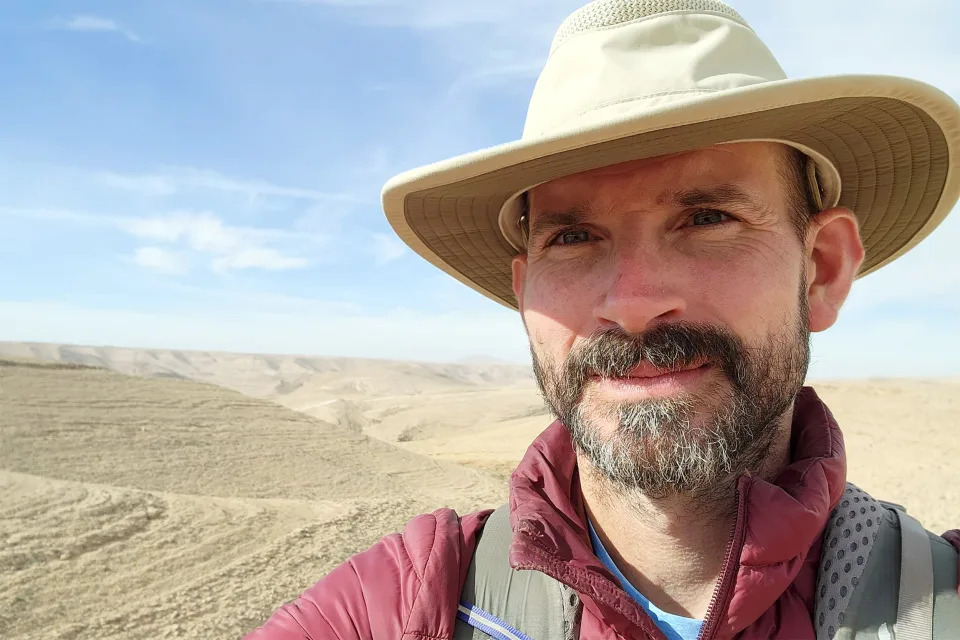
As of Tuesday, caver Mark Dickey, 40, was at a campsite around 3,400 feet from the entrance, according to the Turkish Caving Federation, which is assisting in the rescue.

The Hungarian Cave Rescue Service said it received a call Saturday saying a caver inside the around 4,100-foot deep cave was suffering gastrointestinal bleeding and needed help.

Dickey’s condition is stabilizing, the bleeding has stopped, and he is able to walk with assistance, the federation said in a statement Wednesday, but he needs a stretcher to be removed from the cave complex.

Mark Dickey. (via Facebook)

“The operation is logistically and technically one of the largest cave rescues in the world, involving 150 rescuers,” said the caving federation, which is working with Turkey’s government.

Turkey’s Disaster and Emergency Management Authority, part of the Interior Ministry, said it had teams on standby and was working in coordination with the Turkish Caving Federation.

Rescuers were setting up rope lines Wednesday as part of the rescue effort.

Dickey is an instructor with the National Cave Rescue Commission, and he has been for 10 years, said Gretchen Baker, the group's national coordinator. He was co-leading an expedition to find and map a new passage in the cave, she said.

He fell ill at a depth of around 3,674 feet, the Turkish Caving Federation has said, before being moved to the group's base camp at around 3,412 feet.


Dickey is being cared for by doctors and is with his fiancée, Jessica, who is also a caver, his parents, Andrew and Deborah Ann Dickey, said in a statement. They declined to be interviewed.

“Mark is strong, but he needed his fellow cavers, including, of course, the doctors, to allow a devastatingly scary situation to turn positive,” they said.

"Our prayers are being answered and we cannot express how much that means, and will always mean, to us," they added.

Units of blood were delivered to Dickey this week, according to the Turkish Caving Federation. It said the operation to remove him and the stretcher was expected to be complex and lengthy. Morca Cave is the third-deepest cave in Turkey, it said.

While Dickey's condition has improved, it could be days before he can reach the entrance.

"It’s still expected to take quite a few days to get him all the way out of the cave, as it’s such a difficult and technical cave and he is so far deep in it right now," Baker said in an email Wednesday evening.

It takes around 15 hours for an experienced caver to reach the surface in ideal conditions, the Turkish Caving Federation has said.

The Morca Cave is in southern Turkey in the Taurus Mountains.

The National Cave Rescue Commission said on Facebook early Thursday ET that multiple rescue teams are working.

"More cave rescue teams are arriving, and they are dividing the cave up into sections. Different teams are helping to rig those sections," the group said.


Syria's US-backed Kurdish forces hope to end weeklong clashes with militia in the 'next 24 hours'

HOGIR AL ABDO
Tue, September 5, 2023

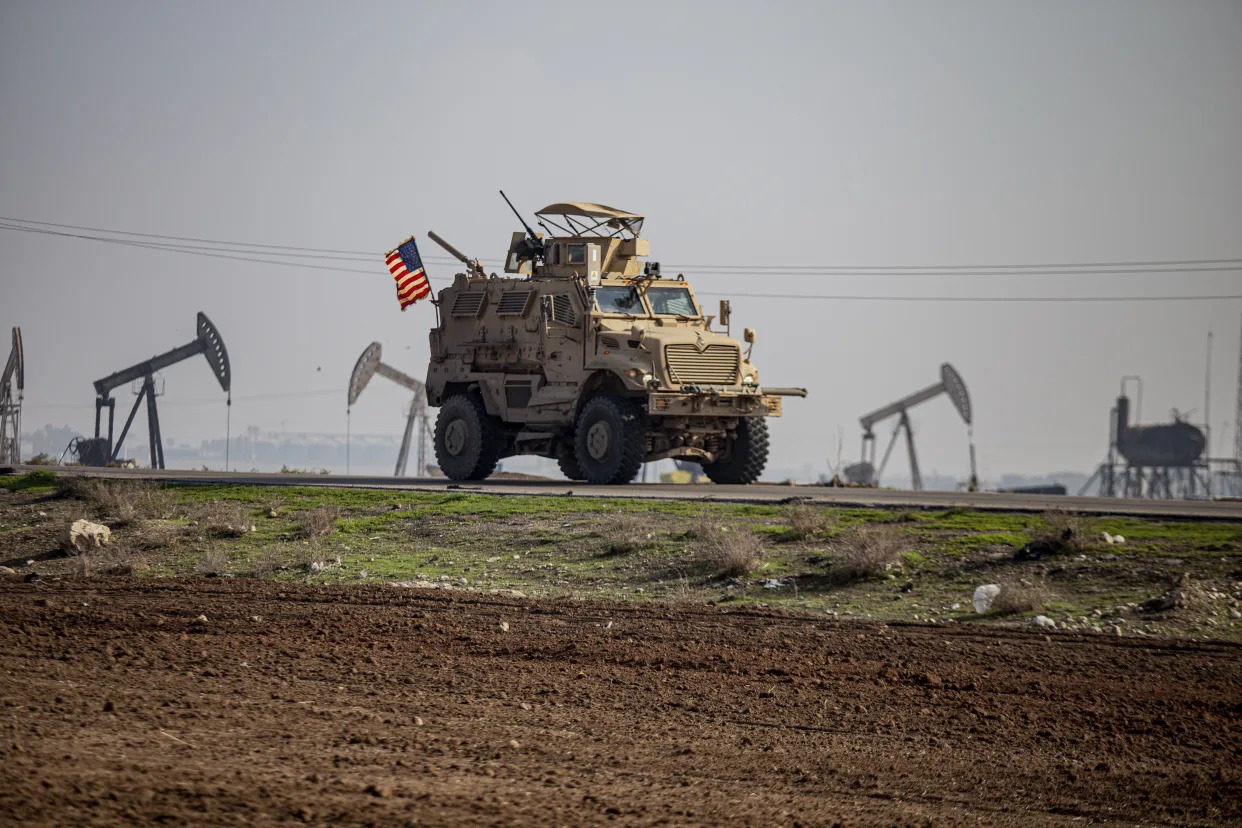
FILE - A US military vehicle on a patrol in the countryside near the town of Qamishli, Syria, on Dec. 4, 2022. Syria's U.S.-backed and Kurdish-led forces on Tuesday, Sept. 5, 2023 pushed deeper into the last stronghold of Arab tribesmen who have taken up arms against them in eastern Syria as a spokesperson said they hoped to end the dayslong clashes there in the “next 24 hours.” 
(AP Photo/Baderkhan Ahmad, File) 


DEIR EL-ZOUR, Syria (AP) — Syria's U.S.-backed and Kurdish-led forces on Tuesday pushed deeper into the last stronghold of Arab tribesmen who have taken up arms against them in eastern Syria. A spokesperson said they hoped to end the dayslong clashes there in the “next 24 hours.”

The fighting, which broke out eight days ago in the oil-rich province of Deir el-Zour along the Euphrates River, has so far killed at least 50 people, including several civilians, and wounded dozens. Hundreds of U.S. troops have been based in eastern Syria since 2015 to help battle the Islamic State group.

The violence has pitted the Syrian Democratic Forces against the tribesmen and former allies of the the Arab-led militia known as the Deir el-Zour Military Council. It was sparked by the arrest last month of the militia's leader, Ahmad Khbeil, better known as Abu Khawla, accused by SDF of “multiple crimes and violations,” including drug trafficking.

SDF spokesperson Farhad Shami told The Associated Press that the Kurdish-led forces have cleared three towns in the province previously seized by the militia. “What's left is (the town of) Ziban," he said. "We are hoping to end tensions there in the next 24 hours."

Shami said some 100 armed men are estimated to be in Ziban, along with suspected cells of the Islamic State group. Now rivals, the SDF and the militia were allies in the war against IS.

A Britain-based opposition war monitor, the Syrian Observatory for Human Rights, said that the leader of a pro-Iran Arab tribe fighting against the SDF had called on his tribesmen and others to “free Deir el-Zour from the despicable Kurds”.

The Syrian government in Damascus has criticized the Kurdish-led SDF for its close alliance with the United States in the war against Islamic State militants and for forming what authorities describe as an autonomous enclave in eastern Syria. Meanwhile, Turkey and Turkish-backed oppositions groups in Syria's northwest routinely clash with the SDF.

Ankara claims the SDF is allied with Turkey’s outlawed Kurdistan Workers’ Party, or PKK, which has led an insurgency within Turkey since 1984 that has killed tens of thousands of people. Ankara has declared the PKK a terrorist group.

___

Associated Press writer Kareem Chehayeb in Beirut contributed to this report.

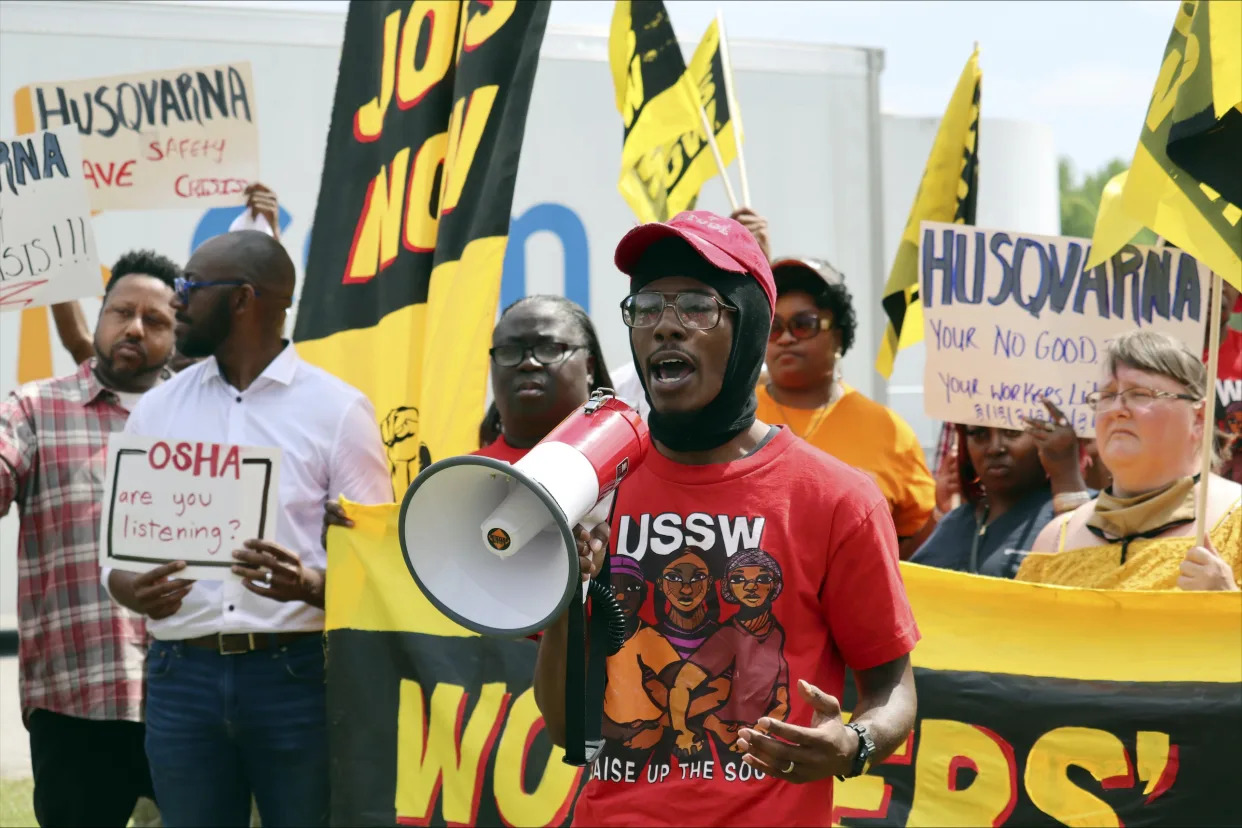
Unions seek gains in hostile territory: ‘If you change the South, you change America’

Olivia Olander
Wed, September 6, 2023 


James Pollard/AP Photo


Unions and their allies are ramping up efforts to convert an extraordinarily challenging demographic: low-wage workers in the anti-union South.

They’re trying unorthodox approaches that they hope can reverse decades of organizing failures. That includes organizing employees across different workplaces, wooing workers to join labor groups without traditional shop-by-shop elections and in some cases, taking direct strike action on employers.

The Union of Southern Service Workers, an SEIU-backed group, is organizing low-wage workers from across the service industry. The National Domestic Workers Alliance, a non-union membership organization, is mapping blue-leaning Southern jurisdictions, such as Miami-Dade County, that could be open to enacting a floor of labor standards for homecare. That effort has already led to the passage of “Bill of Rights” legislation in 10 states and four cities. And the Southern Workers Assembly, an advocacy group for both union and non-union workers, is trying to educate and organize workplaces across the region.

“The innovation that the Southern service workers are showing all of us is a really important way to create a future where the unions are growing,” SEIU President Mary Kay Henry said in an interview.

Even in arguably the most union-friendly climate nationwide in decades, however, these efforts face daunting odds.

The South has what a dozen organizers and experts characterized as a regional culture that has long proven resistant to collective bargaining. Workers lack deep union ties and corporations often relocate South to avoid organizing campaigns. Many political leaders are openly hostile to unions. The region is a stronghold for so-called right-to-work laws, which make it harder for unions to take root since employees can’t be required to pay dues, as well as laws making it more difficult or illegal for public sector workers to bargain.

Southern Workers Assembly and its allies oppose all state laws making it harder to organize workers. But so far Michigan has been the only state to repeal a right-to-work law in decades.

That hostility has caused some unions to focus their efforts on direct engagement with workers rather than seeking legislative changes that would make it easier to unionize workers.

“We don’t have the density, nor do we have the leverage” in the South as in cities up north, said Edgar Fields, president of the Resale, Wholesale and Department Store Union Southeast Council, which represents workers in Florida, Georgia, North Carolina and South Carolina.

The union is behind the organizing campaign at an Amazon facility in Bessemer, Ala., and Fields said it’s seeing increased interest from Southern workers in expanding campaigns such as those targeting REI — which recently found success at a handful of stores up north — to the region.

So far there’s little evidence that these fledgling efforts are reversing decades of high-profile setbacks in the region, including two recent failed unionization votes at that Alabama Amazon facility and United Auto Workers’ defeats at Volkswagen and Nissan plants in Tennessee.

Union skeptics like Patrick Semmens, vice president of the National Right to Work Foundation, say organized labor should look inward to explain low unionization rates rather than blaming legislative or regional factors.

“If union membership is as worthwhile a product — and union officials claim it is — then they shouldn't have so much difficulty convincing workers to choose that,” Semmens said.

But with state labor law victories few and far between, union organizers and their allies point to some other indications that low-wage Southern workers are more receptive to their pitches in the current climate. The Southern Workers Assembly, for example, has grown from seven active local assemblies to 12 since April.

Unions in recent years have won high profile organizing victories at national retailers long hostile to organizing campaigns like Starbucks and Trader Joe's. In addition, this summer saw a marked increase in strikes: More than 200,000 workers at large companies participated in work stoppages in July, compared to 126,500 in all of 2022, according to Bureau of Labor Statistics data.

Yet it comes after decades of decline. Union membership rates plummeted in the second half of the 20th century and have been hovering under 11 percent since 2016, according to the BLS. Of the 11 states with union membership rates under 5 percent last year, seven were in the South; no Southern state was among the 20 that had rates above 10 percent.

Organizing service workers brings particular challenges. U.S. labor law is generally structured around a model in which workers must unionize facility by facility; that’s why Starbucks workers need to hold votes at individual stores that at times involve fewer than a dozen employees.

Service jobs, which are often low-wage, also see high rates of turnover that can far outpace the time it takes the National Labor Relations Board to facilitate union contracts and address unfair labor practices.

“Time is not on the side of workers,” said D. Taylor, president of the hospitality union UNITE HERE, which successfully organized 12,000 service workers in the South in the mid-2010s and is continuing those efforts. “They have to pay rent.”

That’s why labor groups are trying out new tactics to convince workers about the benefits of collective bargaining. Workers can remain members of the Union of Southern Service Workers, for example, even if they switch jobs.

“What I'm incredibly excited about is the vision,” SEIU’s Henry said of USSW. In bringing together fast food workers, homecare workers and retail workers, the new union challenges “the legacy of racism and the corporate power” that have been the “dominant theme in those states for far too long,” she said.

Naomi Harris, one of the cofounders of USSW and a Waffle House employee in Columbia, S.C., went on strike with her coworkers in July seeking better working conditions. The Waffle House workers didn’t file for a union election with the NLRB, but instead simply demanded changes like better equipment and stopping a policy that automatically deducted meal charges from wages.

“The spotlight is on that corporation, and now you have the public’s eyes,” Harris said of the campaign. “So you have no choice but to do what they need to do: meet our demands.”

But whether Waffle House will ultimately acquiesce to the workers’ requests remains to be seen. The company has agreed to at least one demand — fixing the location’s air conditioning system — and the negotiations are ongoing, a USSW spokesperson said.

In a statement, Waffle House spokesperson Njeri Boss said the company is proud to address worker concerns.

“Our senior management team has met with our associates at the Columbia, SC Unit, some who took place in the short strike and some who did not,” Boss said. “We’ve already carried out work on most of the issues that were discussed, and we are working on others.” (USSW disputed that Waffle House had moved on any demand other than AC.)

The challenges in organizing retail workers are compounded in the South by the legacies of slavery and Jim Crow laws, said Jennifer Sherer, a senior state policy coordinator at the left-leaning Economic Policy Institute. Southern industry interests’ successful push to exclude agricultural and domestic workers from federal labor relations law had an outsized impact on Black people in the South, Sherer said.

That meant those workers were excluded from minimum wage and overtime protections. While domestic workers now must be paid at least minimum wage, live-in home workers still don’t have overtime protections.

“Domestic workers were intentionally cut because at that time they were primarily Black women,” said Hillary Holley, senior director for civic engagement at the National Domestic Workers Alliance.

Among the recruitment tactics employed by NDWA: talking with nannies at parks and courting home care workers from bus stops. The organization is advocating for a domestic workers’ “Bill of Rights” guaranteeing a floor of protections, including benefits afforded to employees under federal labor law.

Washington, D.C., recently became the latest city to enact such protections, while national legislation will be reintroduced this month, NDWA spokesperson Daniela Perez said.

The pandemic also brought a collective reckoning to service workers as business closures gave them time to reflect on their conditions, organizer Jen Hampton said. A three-decade veteran of food service, Hampton is now the leader of Asheville Food and Beverage United and the Western North Carolina Workers Assembly.

Hampton said she encountered local food service workers who thought it was literally illegal for them to organize in North Carolina. She attributes that erroneous belief to widespread anti-union sentiment among people in her community and a state law restricting bargaining among public employees.

“We just stopped saying the U-word for a while,” Hampton said of the early organizing efforts. But now after more than two years of organizing, her efforts have grown from a local Facebook group to a trade union affiliated with Restaurant Workers United, she said.

Union organizers expressed optimism that bringing in workers from the places least friendly to unions could have impacts on workers nationwide. A Treasury Department report released late last month said boosting union power benefits the middle class and the economy overall.

National labor legislation — most notably, the Democratic-backed Protecting the Right to Organize (PRO) Act, which would make it easier for more workers to organize and allow the NLRB to levy fines against employers — has stalled in Congress. UNITE HERE’s Taylor said that means it’s time for unions to take bigger risks on larger groups of workers and new sectors in the South.

“If you change the South, you change America,” Taylor said.

Red Tape Holding Up $18 Trillion Needed for 2030 Climate Goals

Priscila Azevedo Rocha
Tue, September 5, 2023


(Bloomberg) -- Grid constraints, the still high cost of green technology and planning delays are holding up $18 trillion worth of investments needed to reach global 2030 climate goals, making any rapid energy transition increasingly unlikely.

The incorporation of renewable and other low-carbon sources of energy must happen three times faster than previous fuel transitions to limit global warming to 1.5C (34.7F) above preindustrial levels, according to a report from management consulting firm Boston Consulting Group.

“There’s still some blue sky from getting from policy tailwinds to viable business cases,” Maurice Berns, chair of the group’s Center for Energy Impact and one of the report’s co-authors, said in an interview. “We need to get past the top level and into more implementation, the regulations, the disbursements, the actions needed at state level and member state level to get us there.”

Fossil fuel emissions are warming the planet, triggering extreme weather, from flooding in India and the US to wildfires in Greece and Canada. July was the world’s hottest month on record.

Read more: London and Paris Face Heat Waves as Greece Braces for Floods

Current policies and the speed of the energy transition in sectors such as industrial manufacturing and buildings would permit warming to 2.7C by 2100, which is “woefully insufficient.”

The main shortfall in funding was in the electricity and end-user categories, where the gap was primarily of investments in renewable power, the report said.

“For renewables, the higher cost of finance negatively impacts the cost of renewable energy produced, increasing the competitiveness of fossil investments,” it added.

Several studies have assessed the investment requirements and gaps in the world’s energy transition targets. According to BloombergNEF, global annual investment needs to triple throughout this decade in order to achieve a net zero emissions world by 2050. Current levels of capital spending are not aligned with that goal, the BNEF report shows.

However, the world already has the tools and capital needed to effect the changes, the BCG report said. Out of the $37 trillion needed by 2030, roughly $19 trillion has already been committed, the consulting firm calculated by using a bottom up build methodology across 270 energy companies.


Governments and the private sector need to need work together on finding a way to bring down the cost of deploying low carbon technologies and make the business cases viable to bridge the $18 trillion gap. That’s where policies like the US Inflation Reduction Act can help, according to the report.

In the UK alone, it’s estimated that there’s about 220 gigawatts capacity — about two-thirds in wind and the rest in solar — in the connection queue, while in Spain there’s about 180 gigawatts in the queue, which is also similar across systems and countries around the world, Berns said.

“It’s not a technical challenge because we know what technologies we need to put into place and they exist,” he added. “It’s a matter of getting a bit of acceleration into the system, to see things progress.”
Everyone's talking about the Global South. But what is it?

DAVID RISING
Wed, September 6, 2023 

 From left, Brazil's President Luiz Inacio Lula da Silva, China's President Xi Jinping, South Africa's President Cyril Ramaphosa, India's Prime Minister Narendra Modi and Russia's Foreign Minister Sergei Lavrov pose for a BRICS group photo during the 2023 BRICS Summit in Johannesburg, South Africa, Aug. 23, 2023. Modi says his country is “becoming the voice of the Global South,” and that at the upcoming Group of 20 meetings being held in New Delhi that voice will be heard. At the recent summit of the BRICS nations _ current chair South Africa declared that the grouping's goal was to "seek is to advance the agenda of the Global South.”
Alet Pretorius/Pool Photo via AP, File


NEW DELHI (AP) — Indian Prime Minister Narendra Modi says his country is “becoming the voice of the Global South,” and that at the upcoming Group of 20 meetings being held in New Delhi, that voice will be heard.

At the August summit of the BRICS nations — Brazil, Russia, India, China and South Africa — current chair South Africa declared its goal was to "advance the agenda of the Global South.” And ahead of this May's summit of the Group of Seven wealthy democracies in Hiroshima, Japanese Prime Minister Fumio Kishida stressed that the guest nations he had invited reflected the importance of the Global South.

The United Nations, the World Bank, U.S. President Joe Biden — everyone seems to be talking about the Global South these days. But what, exactly, is it?

What constitutes the Global South?

Despite how it sounds, it's not really a geographical term. Many countries included in the Global South are in the northern hemisphere, such as India, China and all of those in the northern half of Africa. Australia and New Zealand, both in the southern hemisphere, are not in the Global South.

Most cite the so-called Brandt Line as the border; a squiggle across the globe running from the north of Mexico, across the top of Africa and the Middle East, looping around India and China before dropping down to encompass most of East Asia while avoiding Japan, Australia and New Zealand. The line was proposed by former German Chancellor Willy Brandt in the 1980s as a visual depiction of the north-south divide based upon per-capita GDP.

“The Global South is a geographical, geopolitical, historical and developmental concept, all at the same time — with exceptions,” says Happymon Jacob, founder of the New Delhi-based Council for Strategic and Defense Research.

Which countries make up the Global South?

It's complicated, and often depends upon who is using the phrase.

Most commonly the term refers to the countries belonging to the Group of 77 at the United Nations, which, confusingly, is today actually a coalition of 134 countries. They're primarily considered developing countries, but also include China — about which there is some debate — and several wealthy Gulf states.

Though the G77 is a group at the U.N., the U.N. itself does not use that as its own definition, according to Rolf Traeger, who is with the U.N.’s trade and development office.

For the U.N., Global South is something of a shortcut to refer to developing countries in general, Traeger said. The U.N. currently lists 181 jurisdictions as developing countries or territories, and 67 jurisdictions as developed, he said.

In January, India's Modi hosted a virtual “Voice of the Global South Summit.” It only included 125 countries, however, with India's regional rivals China and Pakistan among the notable absentees.

Some use different criteria, such as whether a country was previously colonized or whether a nation's per-capita GDP is above $15,000.

There is also a Global North, though the term is not regularly used. That is defined basically as not the Global South.

Should we use the term Global South?

The term Global South first appeared in the 1960s, but took time to gain traction.

Following the end of the Cold War, the terms First World, Second World and Third World started to fall out of favor, partly because with the fall of the Soviet Union the Second World ceased to exist, and also because the use of Third World came to be seen as derogatory.

No matter how you define it, the Global South accounts for such a vast majority of the world's population and broad swath of territory that some argue it's impossible and misleading to use the label.

How can countries like China and India, each with about 1.4 billion people and GDPs of about $18 trillion and $3.4 trillion respectively, be lumped together with the Pacific island nation of Vanuatu, with a population a little over 300,000 and a GDP of $984 million, or the southern African nation of Zambia with 19 million people and a GDP of $30 billion?

Some also fret that China, which is assertively seeking to expand its global influence, could misuse the grouping to push its own agenda while giving the impression that it speaks for the majority of the world.

It has been speculated that that was behind the decision in May of the G7 nations — all Global North countries — to refrain from using “Global South” in their final summit communique, even though Kishida himself favors it.

“There is every danger that the Global South will end up becoming a weapon in the hands of revisionist states, like China, who would want to use the voice of the Global South to promote their great power interests,” says Happymon Jacob.

For his part, Modi has stressed the commonality of many issues facing the Global South, such as emerging from the COVID-19 pandemic, rising debt, and food and energy security.

Ian Lesser, vice president of the German Marshall Fund and director of its Brussels office, notes that most discomfort with the term comes from Global North countries, and that “Global South” is widely used by the countries that make it up.

Even though the Global South is not a group with a monolithic view or widespread uniformity, he says what's important is that it reflects how the group sees itself.

“There is embedded in it a notion that not all strategies need to be made in the West,” Lesser said.

"For some this is simply a way to assert a degree of historic independence and distance on key issues … and it is affecting the way Europe and the United States think about foreign policy, and the idea that we need to live in a world where not everyone will be on the same page with us on every issue."

___

Krutika Pathi in New Delhi and Jamey Keaten in Geneva contributed to this story.