Monday, October 02, 2023

Africa at a crossroads as more democracies fall to military coups, experts say

MORGAN WINSOR
Sun, October 1, 2023 


PHOTO: Supporters of Niger's National Council of Safeguard of the Homeland (CNSP) holds a placard as people protest ouside the Niger and French airbase to demand the departure of the French army from Niger, in Niamey on Sept. 16, 2023.


In the wee hours of the morning, a group of men dressed in military uniform appear on state television and claim to have seized power from a president whose family has controlled the country for decades.

It's a scene that played out most recently in Gabon in August but has become all too familiar in this part of Africa, a vast region known as the "coup belt" with a continuous chain of military rulers stretching from coast to coast.

There have been at least a dozen coup d'états in West and Central Africa since 2020, with eight proving successful while the others either failed or spiraled into conflict. The driving factors are complex and varied, but experts seemed to agree that Africa is at a crossroads of sorts. Will more democracies on the world's second-largest continent fall victim to military takeovers, or will they heed the deafening calls for better governance?

MORE: Gabon's coup leaders say ousted president is 'freed' and can travel on a medical trip


PHOTO: General Brice Clotaire Oligui Nguema greets the people of Gabon who came to cheer him after his inauguration as President of the Transition in Gabon, on Aug. 4, 2023 at the Presidential Palace in Libreville.
 (Desirey Minkoh/Afrikimages Agency/Universal Images Group via Getty Images)

The coup in Gabon happened just hours after President Ali Bongo Ondimba won reelection for a third term in a vote that was criticized by international observers. The coup leaders immediately placed Bongo under house arrest for a week. He had become president of the oil-rich Central African nation in 2009 following the death of his father, who had ruled since 1967.

About a month earlier, a military junta in Niger ousted the West African country's democratically elected government. Before that, there were two successful coups in Burkina Faso, one in Guinea, one in Chad and two in Mali -- and those are just within the last three years. Gabon's marks the 100th successful coup in post-colonial Africa, according to Issaka K. Souaré, the author of a book on coups in West Africa and a lecturer at General Lansana Conté University at Sonfonia in Conakry, Guinea.

"This surely renders vulnerable most other governments to military coups, including military regimes born out of coups, as seen in Burkina Faso," Souaré told ABC News. "It could also lead some to improve their governance practices and where they thought of manipulating constitutions to stay in power, perhaps renounce such plans."

Just this week, Burkina Faso's military junta announced it had thwarted "a proven coup attempt."

MORE: Burkina Faso's junta says it thwarted military coup attempt


PHOTO: Supporters of Niger's National Council of Safeguard of the Homeland hold the placard 'Youth united for a prosperous Niger' as they protest outside the Niger and French airbase in Niamey on Sept. 16, 2023 to demand the departure of the French army. 
(AFP via Getty Images)


\
In 2021 after a military takeover in Sudan, which has since erupted into an ongoing power struggle between the two main factions of the military regime, United Nations Secretary-General António Guterres assailed what he called "an epidemic of coup d'états." There is now growing concern of a "domino effect" as coups spread across West and Central Africa, according to Bamidele Olajide, a lecturer in political science at the University of Lagos in Lagos, Nigeria.

"Coups are generally contagious as a successful coup in a country emboldens would-be coup plotters in neighboring countries, especially where the social, economic and political situations are similar," Olajide told ABC News. "This has proven to be the case over history on the continent and the new spate of coups are not in any way different."

Military juntas often cite a number of reasons for intervening and overthrowing a regime, including political corruption and economic hardship. But the most relevant factor behind coups in sub-Saharan Africa historically is poor institutional performance, while the failure of elected governments to tackle jihadist violence in the Sahel region has been a key trigger for the takeovers in West and Central Africa since 2020, according to Carlos Garcia-Rivero, an associate professor in politics at the University of Valencia in Valencia, Spain, and a research fellow at Stellenbosch University's Centre for International and Comparative Politics in Stellenbosch, South Africa.

"When governments do not run countries as expected, citizens will welcome the military to intervene," Garcia-Rivero told ABC News. "The citizenry's response was to go on the street and welcome the military coup, which has spread the idea that it is legitimate to overcome a government when they do not perform as expected."

MORE: US orders partial departure of US embassy in Niger as political unrest escalates


PHOTO: A joyful Gabonese embracing a Republican Guard soldier in front of the presidency in Port-Gentil (economic capital), on Aug. 30, 2023 after the announcement of the Coup d'Etat perpetrated by the Gabonese Defense and Security Forces. 
(Desirey Minkoh/Afrikimages Agency/Universal Images Group via Getty Images)

That was seen most recently in Gabon and Niger, where throngs of people took to the streets of the respective capital cities to celebrate the coups. Pro-junta demonstrators also gathered outside the French embassies in Libreville and Niamey. Both Niger and Gabon have close ties to France, their former colonizer, as do Burkina Faso and Mali. Niger has also been a key ally to the United States and other Western nations in the fight against Islamist militants in the Sahel.

"Some developed nations have aided inept and corrupt leaders to stay in power, which is why recent coups have enjoyed the popular support," Olajide said. "For the United States and its allies, the stance of Africans against neocolonial tendencies and pressures is palpable."

"Future coups are likely to dwell more on anti-imperialist rhetoric and stance," he added. "The U.S. and its allies need to change their exploitative mode of engagement with Africa, because the renegade military personnel are using it to upend the democratic process on the continent."

In recent years, military juntas in West and Central Africa have "latched onto resentment against France ... as a tool for the justification of their coups and legitimation in power," according to Olajide.

"The people now see the military as a messiah," he said, "and only time will tell if they are indeed."

MORE: US expresses 'growing concern' for safety of Niger's president amid apparent coup

However, as Souaré noted, a report released this year by the United Nations Development Programme found that the apparent popular support for recent coups in Africa has been "transient" and does not mean a rejection of democracy, but rather a call for better democratic governance.

"People have taken to the streets to cheer for change in a context of deeply felt, expanding and yet frustrated democratic yearning," the UNDP report stated.

The African Union, ECOWAS and other regional blocs currently lack a "clear legal instrument" to deal with leaders on the continent who seek to change the constitution in order to stay in power for longer. This, in turn, has led these organizations to lose credibility and trust in the eyes of the public, according to Souaré.

"As a consequence, where their threats helped to deter would-be coup-makers in the 2000s, which saw dwindling trends of coups until 2020, this is no longer the case," he said.

Nevertheless, Garcia-Rivero warned that "Gabon will not be the last" African country to fall into the hands of a military junta.

"I would keep an eye on Togo or Chad," he said. "And If I were [Zimbabwe's President Emmerson] Dambudzo Mnangagwa, I would keep an eye on my back."

Africa at a crossroads as more democracies fall to military coups, experts say originally appeared on abcnews.go.com
Nigeria's leader increases wages to avert a strike that could shut down the government

Sun, October 1, 2023 


ABUJA, Nigeria (AP) — Nigeria’s leader increased the wages of some government workers in last-minute efforts to appease labor unions whose planned strike this week could shut down government offices in all sectors of Africa’s largest economy.

Low-grade workers will in the next six months be paid an additional 25,000 naira ($32) a month, President Bola Tinubu said Sunday in a nationwide broadcast to mark Nigeria’s 63rd independence anniversary.

The increase expected to take effect this month takes the minimum wage to 55,000 naira ($71), still far below the 200,000 naira ($258) the unions had requested. The labor unions did not immediately comment on Tinubu’s announcement.

The unions representing Nigeria’s government workers announced they will go on an indefinite strike starting Tuesday to protest the government's austerity measures.

In office since May 29, Tinubu's policies aimed at fixing Nigeria’s ailing economy have more than doubled the cost of living for more than 210 million people who already were grappling with a surging inflation. It hit an 18-year high of 25.8% in August.

After he ended the yearslong expensive subsidies for gas on his first day in office, the price of petrol more than doubled, resulting in a similar hike in the price of other commodities. The government’s devaluation of the currency further increased prices, including food.

Talks with the labor unions have stalled and a slow start to several intervention efforts resulted in last week's announcement of the indefinite strike. On Sunday, Tinubu said the new wage increase will enhance the workers’ pay “without causing undue inflation.”

He again appealed to Nigerians to bear with his government during the economic hardship, saying that the burdens they face today “should have been shed years ago.”

“I wish today’s difficulties did not exist. But we must endure if we are to reach the good side of our future,” he said.

To boost employment and incomes, Tinubu said his administration is providing investment funding for enterprises and will start giving cash handouts to additional 15 million “vulnerable households” as part of a social welfare program.

Chinedu Asadu, The Associated Press

Quebec public-sector unions continue to see strong support for strike mandates


MONTREAL — Members of several Quebec public-sector unions are continuing to vote in favour of strike mandates by large margins.

The four unions, which represent around 420,000 education, health care and social service workers, say more than 90 per cent of members who have participated in votes have supported a strike mandate.

The unions, which are working together, have been asking their members to back a strike mandate since mid-September, with votes scheduled to continue until Oct. 13.

An unlimited strike would be proceeded by several strike days.

The workers are seeking wage increases of at least $100 a week this year, with further increases over the next two years.

The unions collective agreements expired last March.

This report by The Canadian Press was first published Oct. 1, 2023.


Opinion
Detroit Free Press

Sun, October 1, 2023 


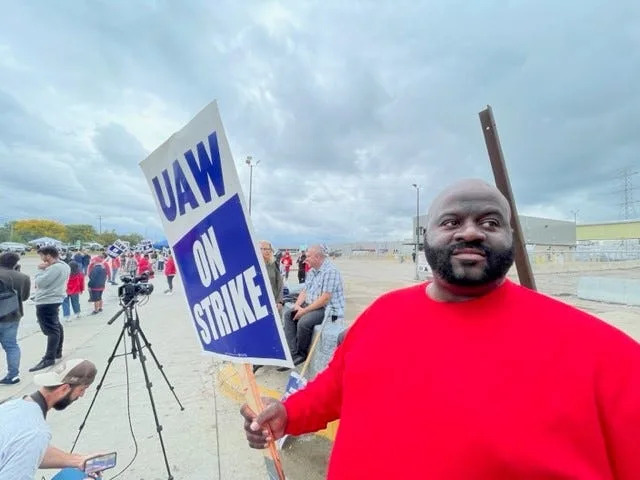
A UAW strike math lesson for Detroit 3 executives

The UAW strike is heating up, and people are taking sides. Some feel like the union is asking for too much. After all, the Detroit Three are countering the union’s “unreasonable” request of a 36% pay hike with a more than ample 20% increase. Aside from executives, who gets a 20% raise, right?

The average auto worker, when adjusting for inflation, has seen their wages fall 19% since 2008. The offer of a 20% pay increase doesn’t seem so generous, when that is taken into account. Had the workers not taken pay cuts and just got modest cost of living increases, they would be making more than the 36% that they are asking for currently. If they were treated fairly for the last 20 years, they would not have been forced to strike. However, we cannot go back in time, which is why the UAW is making such bold demands now, to atone for years of low pay.

The UAW is using its power to fight for all unions, and in turn all middle-class workers. Wages for the average American worker have been stagnant for decades, despite strong economies and record profits for companies. If teachers, UPS workers, teamsters, or auto workers get a modest increase in compensation they are told they should be happy. Don’t worry about the lifetime of zero raises, just be happy that you got one now. What workers want and deserve is restitution.

We all realize that it’s unlikely for the auto workers to make up for a generation of being underpaid in one contract, but we should all be in support of their quest to make up as much as they can. In the end, it will benefit us all, as a rising tide lifts all boats.

David Cash

Detroit


I lead the Michigan AFL-CIO. Trump has never shown up for union workers.

Health care worker to UAW: Unionize us next!

I note some degree of amazement and envy the current UAW strike. My question is: Will you expand your services to health care professionals? While insurance costs skyrocket, our "raises" have been almost non-existent.

I am a private practice therapist working with troubled families and especially troubled teens. My reimbursement rates, from huge insurance companies to the VA, have averaged about a total of 10% increase over the last 10 years. Then, when calculating the wage difference between their top executive wages and ours, my head nearly exploded.

We do not need wimpy 32 hours weeks, but rather a wage that represents the difficulty and importance of our work. So, when you're done whoopin' up on The Big Three, would you lend us a hand on the Sinister Six? We'll even agree to name ourselves the United Therapists International, putting a positive spin on those three letters. Thanks in advance for your help; we need it.

John Summer

Brownwood, Tex.

How is UAW strike impacting you? Submit at letter to the editor at freep.com/letters.

Officials urge Moldova to seize opportunity for EU membership

Moldovan President Maia Sandu attends a news conference during a meeting with European Commission President Ursula von der Leyen in Chisinau, Moldova, 
May 31, 2023.

REUTERS
October 01, 2023

A 1,500-strong contingent of Russian peacemakers remains in the region, but for 30 years there has been virtually no violence, and business and other links thrive across the border

CHISINAU: Moldova launched a nationwide discussion on securing European Union membership, with senior officials and academics urging their compatriots to seize every opportunity to join the bloc or run the risk of being left behind or sinking into chaos.

Ex-Soviet Moldova, led by pro-European President Maia Sandu and one of the continent’s poorest countries, won formal recognition from the EU in June as a candidate for the arduous process of joining the 27-nation bloc.

Buffeted by Moscow’s 19-month-old invasion of adjacent Ukraine, which has been regularly denounced by Sandu, Moldova is further beset by the presence on its eastern border of the pro-Russian separatist enclave of Transdniestria.

Foreign Minister Nicu Popescu launched the discussion on EU membership on Friday, saying that public participation “has a critical meaning in building a more prosperous future within the framework of the community of Europe.”

Academics quickly lent their support.

“If Moldova loses this European vector, it will turn into a chaotic country,” Vlad Culminschi, director of the Institute of Strategic Initiatives, told the news site point.md on Saturday.
Culminschi, a former deputy prime minister, said there was no time to lose as Sandu’s allies control parliament for now.

“Striving for European integration is not the work of one person. It transcends personal ambitions,” he said.

The Moscow-sympathetic opposition, thrown out of power by Sandu’s landslide 2020 election victory, is skeptical about EU membership.

Moldovans, their country wedged between Ukraine and EU member Romania, have proved enthusiastic. Tens of thousands attended an open-air rally in May to applaud Sandu’s drive, which will involve long negotiations on bringing legislation in line with EU standards and overhauling the justice system.

Sandu and other officials have suggested that Moldova should forge ahead with its EU membership bid and ignore separatist Transdniestria, much like Cyprus was allowed to join despite the Turkish occupation of its northern regions since the 1970s.

Transdniestria broke away from Moldova as the Soviet Union was collapsing, and its separatist forces fought a brief war with the newly independent country’s army in 1992.

A 1,500-strong contingent of Russian peacemakers remains in the region, but for 30 years there has been virtually no violence, and business and other links thrive across the border.

“This would not mean abandoning Transdniestria. It could occur in several steps,” Sandu said in televised comments this week. “We cannot remain in this situation for another 30 years, with no consolidated democracy and no high standard of living.”
BELT AND ROAD INFRASTRUCTURE
Indonesia launches China-backed 'Whoosh' high-speed railway

Reuters
Sun, October 1, 2023 

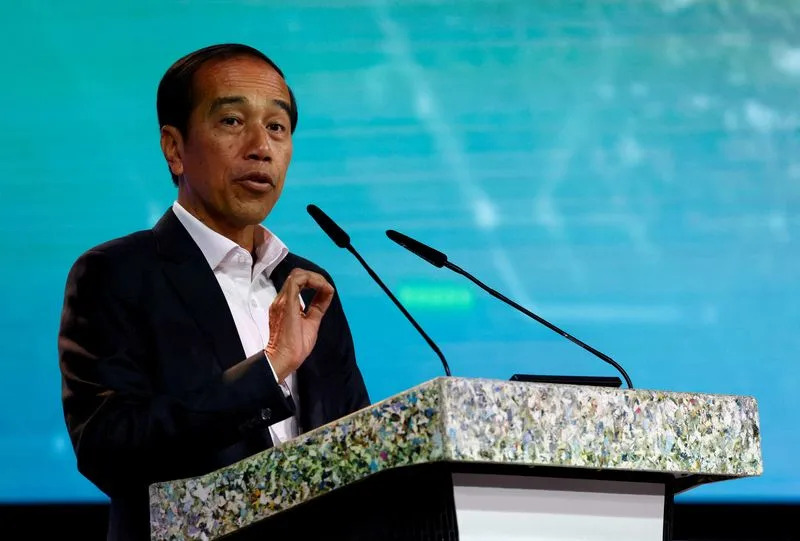
 Indonesia's President Joko Widodo speaks about the planned new capital Nusantara, at Ecosperity Week in Singapore


JAKARTA (Reuters) - Indonesian President Joko Widodo on Monday inaugurated a $7.3 billion high-speed railway connecting the country's capital with the city of Bandung, a China-backed project that has been marred with problems.

The 142-kilometre (88.23-mile) railway, one of the president's flagship infrastructure projects and part of China's Belt and Road Initiative, has faced problems ranging from land procurement issues, pandemic-related delays and ballooning costs.

Monday's launch for the bullet train named "Whoosh" is far behind an original target of operations in 2019.

"The name is inspired by the sound of a rushing high speed train," Jokowi, as the president is popularly called, said during the launch.

The maximum operating speed of the train could reach 350 kilometres per hour (217 mph), Jokowi said, calling this "the modernisation of our mass transportation that is environmentally friendly".

Luhut Pandjaitan, a senior minister overseeing the project, said at the launch that free trial rides on the bullet train, which have been under way since the second week of September, will be extended and ticket prices will be implemented in mid-October.

A consortium of Indonesian and Chinese companies built the railway.

(Reporting by Yuddy Cahya Budiman; Writing by Ananda Teresia; Editing by Gayatri Suroyo and Gerry Doyle)

Indonesian president launches Southeast Asia's first high-speed railway, funded by China

ACHMAD IBRAHIM and NINIEK KARMINI
Sun, October 1, 2023


Indonesia High Speed Railway
High-speed train is seen during the opening ceremony for launching Southeast Asia's first high-speed railway at Padalarang station in Bandung, West Java, Indonesia, Monday, Oct. 2, 2023. Indonesian President Joko Widodo launched Southeast Asia's first high-speed railway that will start its commercial operations on Monday, a key project under China's Belt and Road infrastructure initiative that will cut travel time between two cities from the current three hours to about 40 minutes. 
(AP Photo/Achmad Ibrahim)

JAKARTA, Indonesia (AP) — Indonesian President Joko Widodo inaugurated Southeast Asia’s first high-speed railway on Monday as it was set to begin commercial operations, a key project under China’s Belt and Road infrastructure initiative that will drastically reduce the travel time between two key cities.

The project has been beset with delays and increasing costs, and some observers doubt its commercial benefits. But Widodo has championed the 142-kilometer (88-mile) railway, which was issued its official operating license from the Transportation Ministry on Sunday.

The $7.3 billion project, largely funded by China, was constructed by PT Kereta Cepat Indonesia-China, known as PT KCIC, a joint venture between an Indonesian consortium of four state-owned companies and China Railway International Co. Ltd.

The railway connects Jakarta with Bandung, the heavily populated capital of West Java province, and will cut travel time between the cities from the current three hours to about 40 minutes.

Its use of electrical energy is expected to reduce carbon emissions.

Widodo in his opening remarks officially named Indonesia's first high-speed railway — the fastest in Southeast Asia, with speeds of up to 350 kph (217 mph) — as “Whoosh,” from “Waktu Hemat, Operasi Optimal, Sistem Handal,” which means “timesaving, optimal operation, reliable system” in Indonesian language.

“The Jakarta-Bandung high-speed train marks the modernization of our mass transportation, which is efficient and environmentally friendly,” Widodo said.

“Our courage to try new things gives us confidence and the opportunity to learn and will be very useful for the future, making our human resources more advanced and our nation more independent,” he added.

Widodo, along with other high-ranking officials, rode Whoosh from its first station, Halim in eastern Jakarta, to Bandung’s Padalarang station, one of the line’s four stations, located about 30 kilometers (18 miles) from the central area of Bandung.

He took a 25-minute test ride on the train on Sept. 13 and told reporters that he felt comfortable sitting or walking inside the bullet train even at its top speeds.

Chinese Premier Li Qiang took a test ride early last month while visiting Jakarta for three days of talks with leaders of the Association of Southeast Asia Nations and other countries.

Luhut Binsar Pandjaitan, the coordinating minister for maritime and investment, said China Railway has agreed to transfer its technology to Indonesia so that in the future the country’s high-speed trains can be made domestically.

For two weeks leading up to the inauguration, PT KCIC has been running a free-of-charge public trial.

Indonesia broke ground on the project in 2016. The line was originally expected to begin operations in 2019, but was delayed by disputes over land acquisition, environmental issues and the COVID-19 pandemic. It was planned to cost 66.7 trillion rupiah ($4.3 billion), but the amount ballooned to 113 trillion rupiah ($7.3 billion).

The trains have been modified for Indonesia’s tropical climate and are equipped with a safety system that can respond to earthquakes, floods and other emergency conditions. The 209-meter (685-foot) train has a capacity of 601 passengers.

Ticket prices had not been finalized as of Monday, but PT KCIC estimated one-way prices per passenger would range from 250,000 rupiah ($16) for second class to 350,000 rupiah ($22.60) for VIP seats.

Passengers going to downtown Bandung need to take a feeder train from the Padalarang station that will add a further 20 minutes, with an estimated cost about 50,000 rupiah ($3.20).

The rail deal was signed in October 2015 after Indonesia selected China over Japan in fierce bidding. It was financed with a loan from the China Development Bank for 75% of the cost. The remaining 25% came from the consortium’s own funds.

The project is part of a planned 750-kilometer (466-mile) high-speed train line that would cut across four provinces on Indonesia’s main island of Java and end in the country’s second-largest city, Surabaya.

As a global economic giant, China is one of the largest sources of foreign direct investment in Southeast Asia, a region home to more than 675 million people. Amid crackdowns by the United States and its allies, China is expanding trade with ASEAN countries and infrastructure projects are playing key roles.

A semi-high-speed railway — with speeds up to 160 kph (99 mph) — linking China with Laos was inaugurated in December 2021. The $6 billion infrastructure was financed mostly by China under the Belt and Road policy. The 1,035-kilometer (643-mile) route runs through Laos' mountain ranges to connect the southeastern Chinese city of Kunming with Vientiane, the capital of Laos. There are plans for a high-speed train down through Thailand and Malaysia to Singapore.

___

Associated Press writer Edna Tarigan in Jakarta, Indonesia, contributed to this report.
View comments (4)

With China’s help, Indonesia launches Southeast Asia’s first bullet train

Heather Chen, CNN
Sun, October 1, 2023 

Indonesia has launched Southeast Asia’s first-ever bullet train, a high-speed rail line that will connect two of its largest cities.

The $7.3 billion project, part of China’s Belt and Road infrastructure initiative and largely funded by Chinese state-owned firms, opened to the public on Monday following a series of delays and setbacks.

Originally scheduled for launch on October 1, a grand inauguration ceremony was held at the Halim railway station in the capital Jakarta on Monday, attended by President Joko Widodo and First Lady Iriana as well as several cabinet ministers.

“The Jakarta-Bandung high-speed train is the first high-speed train in Indonesia, and the first in Southeast Asia, with a speed of 350 kilometers per hour,” Widodo said to applause from the crowd, before sounding a red alarm to signal the beginning of official service.

“This is not without good teamwork from all parties, including the central government, local government, state-owned enterprises, private sectors and public as well as the Chinese government and its related companies – all working together to finish this project,” added Luhut Binsar Pandjaitan, Indonesia’s coordinating maritime and investment minister.

Videos taken on board and shared on social media showed off spacious air-conditioned cabin interiors and clear window views of the Indonesian countryside as the train sped off.

The new bullet train will travel between the Halim railway station in East Jakarta and West Bandung’s Padalarang railway station in West Java, Indonesia’s second-largest city and a major arts and culture hub.

The 86-mile (138-kilometer) high-speed rail line, officially named WHOOSH – which stands for “time saving, optimal operation, reliable system” in Indonesian – runs on electricity with no direct carbon emissions and travels at a speed of roughly 217 miles per hour – cutting travel time between Jakarta and Bandung from three hours to under less than an hour, officials say.

Overseen by the joint state venture PT Kereta Cepat Indonesia China (PT KCIC), the railway is well connected to local public transport systems. The trains, modified for Indonesia’s tropical climate, are equipped with a safety system that can respond to earthquakes, floods and other emergency conditions, officials added.

There are talks to extend the high-speed line to Surabaya – a major port and capital of East Java Province, PT KCIC director Dwiyana Slamet Riyadi told Chinese state media outlets at a ceremony earlier in September.

Stops at other major cities like Semarang and Yogyakarta, the gateway to Borobudur – the largest Buddhist temple in the world – are also being planned, Dwiyana said.

According to information released by PT KCIC, the railway features eight cars – all equipped with Wi-Fi and USB charging points – and seats 601 passengers.

There will be three classes of seats – first, second and VIP.


Passengers sit at the Halim station in Jakarta. - Yasuyoshi Chiba/AFP/Getty Images

Indonesia, the world’s fourth-largest country and Southeast Asia’s largest economy, has been actively and openly courting investment from China, its largest trade and investment partner.

A high-profile meeting in July between Indonesian and Chinese leaders Joko Widodo and Xi Jinping unveiled a series of projects, including plans to build a multi-billion dollar Chinese glass factory on the island of Rempang in Indonesia’s Riau Islands Archipelago as part of a new ‘Eco-City,’ sparking weeks of fierce protests from indigenous islanders opposed to their villages being torn down.

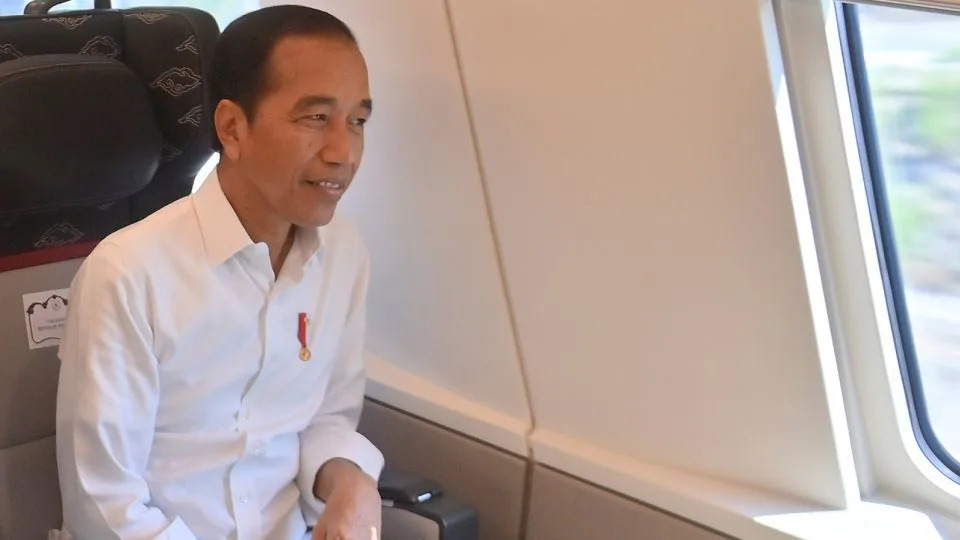
Indonesia's outgoing President Joko Widodo rides the high-speed railway during a test ride in Jakarta. - Akbar Nugroho Gumay/AP

Widodo and Chinese Premier Li Qiang were photographed taking test rides on the new high-speed railway throughout September.

The train deal was first signed in 2015 as part of China’s Belt and Road Initiative and construction began later that year.

It was initially expected to be completed in 2019 but has faced multiple operational delays as a result of the Covid-19 pandemic as well as land procurement and ballooning costs.

PT KCIC’s director Dwiyana hailed the Jakarta-Bandung high-speed railway as an “outstanding example of bilateral cooperation between Indonesia and China.” It will not only improve Indonesian infrastructure but “promote the development of Indonesia’s railroad and manufacturing industries,” he said.


15 / 15

CHINA
Shanghai faces first mortgage boycott as stalled housing project angers homebuyers

South China Morning Post
Sun, October 1, 2023
People who had agreed to buy homes at a residential complex under construction in downtown Shanghai have expressed dismay at the pace of the development, which resumed a month ago, raising the prospect of a boycott on mortgage payments that threatens to worsen sentiment in China's embattled property sector.

Since August 31, only a handful of workers have been conducting building work at The One-Rivera Shanghai, a project led by Shanghai Dongying Real Estate and located on Puyi Road in Pudong, according to two buyers who signed home purchase contracts and declined to be identified.

One buyer said the cash-strapped developer did not appear close to completing the project, and the recent resumption of development work looked "half-hearted" - likely a temporary measure to soothe outside concerns.

Do you have questions about the biggest topics and trends from around the world? Get the answers with SCMP Knowledge, our new platform of curated content with explainers, FAQs, analyses and infographics brought to you by our award-winning team.

No heavy equipment or workers were seen at the construction site when this reporter visited on Sunday during China's week-long National Day holiday.

Dongying could not be reached for comment.


Outside the construction site of The One-Rivera Shanghai. Photo: SCMP/Daniel Ren alt=Outside the construction site of The One-Rivera Shanghai. Photo: SCMP/Daniel Ren>

Construction had stalled at The One-Rivera Shanghai, which consists of about 300 flats in two buildings, after a liquidity crunch hit Dongying in early 2022. Homeowners in the first building were supposed to get their keys by March 12, 2022, while the second lot was set to delivered on December 10, 2022, according to the buying contracts.

Dongying missed both delivery deadlines.

By early August this year, dozens of homebuyers warned the developer and the local government that they would stop repaying mortgage loans from September if construction failed to resume by the end of that month.

Located within Shanghai's Inner Ring Road, an elevated expressway loop, The One-Rivera offered flats at about 110,000 yuan (US$15,080) per square metre, with prices ranging from 15 million yuan to more than 30 million yuan.

Homebuyers interviewed by the Post in late September declined to say if or when they would stop repaying mortgage loans.

"A mortgage boycott is likely because delivery of the expensive homes has been delayed for more than 500 days, which has already infuriated buyers," said Yin Ran, an angel and property investor in Shanghai. "Given that the developer is stuck in a liquidity crisis, it is difficult to see a happy ending to the drama any time soon."

A mortgage boycott at The One-Rivera Shanghai would be the first of its kind in the Chinese financial and commercial hub, as the nation has become embroiled in a property crisis that has seen dozens of developers mired in capital crunches.

The troubled Shanghai project has invoked memories of a nationwide boycott about a year ago, which spread to more than a hundred cities as builders fell behind schedule due to tight funding and strict Covid-19 curbs.

Developers from China Evergrande Group to Kaisa Group Holdings were swept up in a wave of bond and loan defaults triggered by austerity measures that Beijing put in place in 2020 to reduce developers' leverage ratios.

Over the past two years, about 50 mainland developers have defaulted on some US$100 billion worth of offshore bonds, according to a JPMorgan report in December, with 39 seeking restructuring plans with creditors for US$117 billion in stressed debt.

On Thursday, China Evergrande Group said its chairman and founder Hui Ka-yan had been placed under "mandatory measures" due to "suspicion of illegal crimes", hours after the distressed property developer suspended trading of its shares and those of its two major subsidiaries.

This article originally appeared in the South China Morning Post (SCMP), the most authoritative voice reporting on China and Asia for more than a century. For more SCMP stories, please explore the SCMP app or visit the SCMP's Facebook and Twitter pages. Copyright © 2023 South China Morning Post Publishers Ltd. All rights reserved.

Copyright (c) 2023. South China Morning Post Publishers Ltd. All rights reserved.

How China-West tensions will shape global markets

U.S. and Chinese flags are seen in this illustration taken, January 30, 2023. REUTERS/Dado Ruvic/Illustration/File Photo Acquire Licensing Rights


Tensions between the West and China are rising, from tit-for-tat trade tariffs to tech rivalry and spying allegations.

The ramifications for global markets are significant, with Washington and Beijing's determination to loosen dependence on each other fraying long-established supply chains.

That could help keep inflation and interest rates elevated. Still, there are gains for emerging nations and tech giants on the right side of the power battle.

Here's how Western-China tensions are shaping markets.

1. HELLO INFLATION

US President Joe Biden is determined to bring manufacturing in strategic sectors such as electric vehicles and semiconductors back home.

TSMC (.2330), the world's largest chipmaker, is moving some production to Germany to satisfy multinationals' need to diversify supply chains from China.

Goldman Sachs research found that bringing production home may have inflationary repercussions, particularly if Western manufacturing does not ramp up quickly enough to offset declining imports.

"We built a globalised world for a reason, it was efficient and cheap," said Wouter Sturkenboom, chief investment strategist for EMEA and APAC at Northern Trust.

"If we unwind some of that, it will add cost."

Prolonged US inflation also means rates staying higher for longer, boosting the dollar.

A stronger dollar can export inflation to resource-importing nations in Europe by forcing them to pay more for commodities priced in dollars.

Many central banks target 2 percent inflation; market gauges of traders' long-term US and European inflation expectations are running higher.

2. FRIENDSHORING

Washington is pushing "friendshoring" - the idea of replacing China's role in supply chains with friendly nations.

Research led by Harvard Business School's Laura Alfaro identifies Vietnam and Mexico as the major beneficiaries of the US supply chain shift so far.

Mongolia is seeking US investment in mining rare earths, materials used in high-tech products such as smartphones. The Philippines is courting US infrastructure investment.

Anna Rosenberg, head of geopolitics at the Amundi Investment Institute, said Sino-US tensions, provide a "new lens" through which to analyse emerging markets' growth prospects.

3. INDIA RUSH

India is viewed as the most able to compete with China in low-cost, large-scale manufacturing. Its large, young population and a burgeoning middle class also creates opportunities for multinationals seeing less business in China.

Indian stocks have rallied 8 percent this year (.BSESN) and the prospect of investor flows into the bond market just got a boost from JPMorgan's plan to include India in a key government bond index next year.

"India is a very large opportunity," said Christopher Rossbach, chief investment officer at asset manager J. Stern. "The global companies we are invested in are working on it."

India's central bank forecasts that the economy will expand 6.5 percent this fiscal year, while China is expected to grow around 5 percent this year.

Barclays reckons that if India raises its annual economic growth closer to 8 percent over the next five years, it would be in a position to become the biggest contributor to global growth.

4. CHIPS TO COUTURE

A China-West clash creates winners and losers on both sides.

The EU is investigating whether to impose punitive tariffs against Chinese electric vehicle imports it says benefit from excessive state subsidies.

US subsidies for domestic semiconductor manufacturing have boosted Intel's shares (INTC.O). But the performance of big US tech stocks and global share indices are vulnerable to signs of Chinese retaliation.

Apple (AAPL.O) stock slid by more than 6 percent over two days in early September on reports that Beijing would ban government workers from using iPhones.

With China the world's dominant buyer of luxury goods, Western fashion houses are also ensnared in politics. China's top anti-corruption watchdog has vowed to eliminate what it calls the hedonism of Western elites. Chinese banks have told staff not to wear European luxury items at work.

"Higher levels of government scrutiny have started to weigh on the spending of more affluent (Chinese) consumers," Barclays analysts Carole Madjo and Wendy Liu said in a note.

Luxury sector shares surged as China loosened COVID-19 restrictions in early 2023. Since then, with China's economy in the doldrums and tensions with the West ratcheting up, they have slumped. European luxury stocks slid 16 percent in Q3 (.STXLUXL).

5. SELL CHINA?

A faltering economy and property market turmoil mean the bearish China investment case extends beyond politics.

But the prospect of continued tariffs and the hassle of navigating US restrictions on investing in Chinese technology does not help.

With China underperforming global stocks, investors are split on how to approach this market.

A JPMorgan survey of credit investors found that 40 percent were bearish on China, but almost the same proportion wanted to increase allocations.

"I'm actually warming to China because everyone hates (this market) so much," said RW Baird vice chair of equities Patrick Spencer. "Market expectations are really severe and the reality is slightly better."

WW3.0
Two elves and a scroll: Chinese military releases animated film about Taiwan


The Chinese military released an animated short film on National Day that shows parts of a scroll painting torn in two more than 300 years ago being reassembled, demonstrating the mainland’s determination to integrate self-ruled Taiwan into the community.

The pieces of “The Dwelling in the Fuchun Mountains,” one of China’s best-known ancient paintings, are kept separately in museums in China and Taiwan, the democratically ruled island that Beijing claims as one of its provinces and reserves the right to take over by force.

On National Day Sunday, the People’s Liberation Army’s Eastern Theater Command, known for warlike videos of exercises around Taiwan, released an animated short film called “Dreams Come True on Fuchun River” that appeals to the shared cultural roots of the people on both sides Taiwan Strait.

The film showed two elves representing the two parts of the painting by Yuan Dynasty master Huang Gongwang, which was torn apart by one of its owners in the 17th century.

At the end of the film, the two characters came together and magically made the painting whole again. 

The shorter piece of the scroll, known as “The Remaining Mountain,” is about 51 cm long and is located at the Zhejiang Provincial Museum in Hangzhou City. Taiwan’s National Palace Museum has kept the 640cm-long “Master Wuyong Scroll” since the 1950s.
A quick reunion

The two pieces were reunited in 2011 when China loaned its fragment to the Taiwanese museum for two months, at a time of warmer relations as Taiwan pursued a policy of economic rapprochement with China.

But in recent years, as relations have cooled, China has stepped up its military activities around Taiwan, including exercises last month that Beijing said were aimed at combating separatist forces.

At the same time, China is drawing up ambitious plans to “integrate” the economies of its Fujian province and Taiwan on both sides of the Taiwan Strait and offering Taiwanese companies the opportunity to participate in a joint development plan, something Taiwan’s government has rejected.

While China is keen to woo Taiwan with the promise of economic gains, the threat of a violent takeover of Taiwan remains.

During the two elves’ journey in the film, the Eastern Theater Command included footage of aircraft carrier formations and J-20 fighter jets to remind viewers of its battlefield prowess.


China says US is an ‘empire of lies’ as it hits back at report into information manipulation

US State Department report said Beijing was spending billions of dollars each year to manipulate the global media

Foreign ministry in Beijing hits back, saying the American agencies that complied the report are a ‘source of false information’


Reuters
30 Sep, 2023

The United States is the true “empire of lies”, the Chinese foreign ministry said on Saturday, lashing out at a report that accused Beijing of ploughing billions of dollars annually into information manipulation efforts.

China is manipulating global media through censorship, data harvesting and covert purchases of foreign news outlets, the US State Department said in the report on Thursday.

Despite the unprecedented resources devoted to the campaign, Beijing had hit “major setbacks” when targeting democratic countries, due to local media and civil society resistance, according to the report, which was produced under a congressional mandate to detail state information manipulation.

The report has disregarded facts, and is itself false information, the Chinese foreign ministry said in a statement.

The agencies of the US State Department that produced the report “were the source of false information and the command post of ‘cognitive warfare’,” Beijing said.

“Facts have repeatedly proven that the United States is the true ‘empire of lies’,” it added.
29 Sep 2023

The US report comes amid controversy over China’s attempts in recent years to increase the global footprint of its government-controlled media.

Beijing is seeking to combat the negative images of China it feels are propagated by global media.