Sunday, December 10, 2023


Death of last surviving Alaskan taken by Japan during WWII rekindles memories of forgotten battle


ANCHORAGE, Alaska (AP) — Gregory Golodoff spent most of his years on a quiet Alaska island, living an ordinary life, managing a co-op store, fishing for crab and serving as the village council president. But Golodoff’s recent death at the age of 84 has reopened a chapter of American history and stirred up memories of a long-forgotten Japanese invasion that prompted the only World War II battle on North American soil.

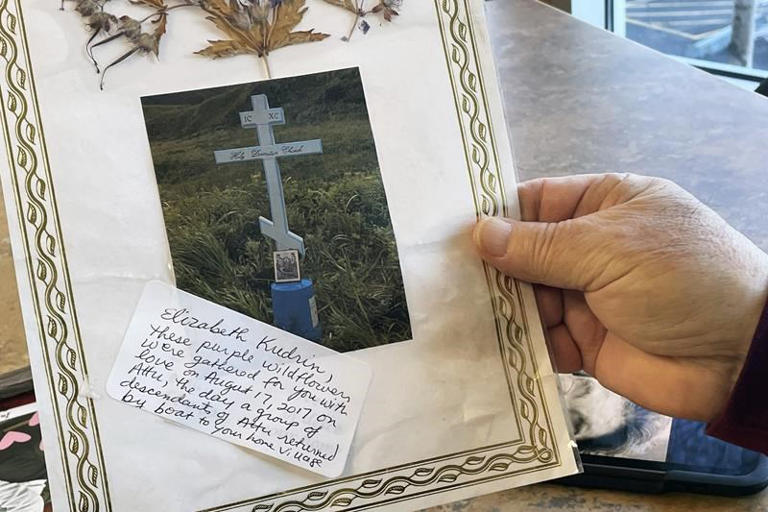
Golodoff was the last survivor among 41 residents imprisoned in Japan after Japanese troops captured remote Attu Island during World War II. He was 3 when the island was taken. He died Nov. 17 in Anchorage, his family said. His sister, Elizabeth “Liz” Golodoff Kudrin, the second-to-last surviving Attuan, died in February at 82. Three of their siblings died in captivity.

“The eldest generation has passed away to the other side,” said Helena Schmitz, the great-granddaughter of the last Attu chief, who died in Japan along with his son.

Attu is a desolate, mountainous slab of tundra, about 20 miles (32 kilometers) wide by 35 miles (56 kilometers) long, and sits between the North Pacific Ocean and Bering Sea on the volcanic Ring of Fire. It’s the most westerly island in the Aleutian chain — closer to Russia than mainland Alaska — and was one of just a few U.S. territories, along with Guam, the Philippines and the nearby island of Kiska, taken by enemy forces during the war.

The American effort to reclaim Attu in 1943 amid frigid rain, dense fog and hurricane-force winds became known as World War II’s “forgotten battle.” About 2,500 Japanese soldiers perished, many in hand-to-hand combat or by suicide; 28 survived. Roughly 550 U.S. soldiers died. Initially trained and equipped to fight in the North African desert, many suffered from frostbite and exposure due to inadequate gear.

Even after the surviving captives were freed at the close of the war, they were not allowed to return to Attu because the U.S. military decided it would be too expensive to rebuild the community. Most were sent to the island of Atka, about 200 miles (322 kilometers) away.

With the loss of their homeland, the Attuans’ language, Sakinam Tunuu, is now all but gone, spoken only by members of Schmitz’s immediate family. The distinctive basket-weaving style of the island is practiced by just three or four weavers, and not all are of Attuan descent. Schmitz runs a nonprofit named Atux Forever to revive the cultural heritage.

Much of what is known about the Alaska Natives’ time in Japan is chronicled in the book “ Attu Boy,” written by Golodoff’s older brother, Nick, with assistance from his editor, Rachel Mason, a cultural anthropologist with the National Park Service in Anchorage.

Mason knew the three siblings. Gregory and Liz had little memory of Attu or Japan, and neither liked to talk about it, she said.

Nick Golodoff, who was 6 when he was captured, had a childlike innocence about his time as a prisoner, Mason noted. The cover of his book featured a photograph of him riding on the back of a Japanese soldier, both smiling.

That experience was far from typical. Of the Attu residents interned in Japan, 22 died from malnutrition, starvation or tuberculosis. Schmitz’s great-grandfather, Mike Hodikoff, died with his son of food poisoning from eating rotten garbage while in Japanese captivity, the book noted.

Japanese soldiers landed on Attu Island on June 7, 1942, when residents were attending services at the Russian Orthodox church. Some ran for their rifles, but Hodikoff told them, “Do not shoot, maybe the Americans can save us yet,” according to the book.

Instead, the village radio operator, Charles Foster Jones, was shot and killed before he could alert authorities, becoming the only U.S. civilian killed by the invading forces in North America, according to a tribute to Jones by the National Oceanic and Atmospheric Administration.

The other residents — all Alaska Natives except for Jones’ wife, a white teacher from New Jersey named Etta Jones — were kept captive in their homes for three months before being told to pack up and bring what food they could for the journey to Japan.

They first went to Kiska, another Alaska island; one Attu resident died on the way. Stuffed in the cargo hold of a ship, the others embarked on a two-week voyage to Sapporo, the largest city on Japan’s Hokkaido Island, where they were kept in four rooms in an abandoned dormitory. Only Etta Jones was separated from them and taken in a different boat to an internment facility in Yokohama, south of Tokyo.

One Japanese guard complained the Attuans ate better than the Japanese, but conditions worsened when the Alaskans ran out of the food they brought.

The Golodoffs’ mother, Olean, and others were forced to work long hours in a clay mine. As their numbers dwindled, she also became the cook for the surviving POWs, though there was little to make. She was reduced to gathering orange peels off the street and cooking them on top of a heater, said George Kudrin, who married Olean’s daughter Liz in Atka after he returned from the Vietnam War.

“I fed them to my children, and only then would they stop crying for a while,” Olean once told an interviewer.

Her husband, Lawrence, and three of their seven children died in Japan. Nick Golodoff lived until 2013. Another son who survived captivity, John, died in 2009.

Kudrin said Olean didn’t speak of her experiences in Japan, and his wife, Liz, was too young to remember anything.

“She always knew that she was part of the history of World War II and she always said, ‘I am a survivor with my mama,’” he said.

American forces reclaimed Attu on May 30, 1943, after a brutal 19-day campaign. Much of the fighting was waged in dense fog amid winds of up to 120 mph (193 kph). Attu Island today is part of the Alaska Maritime National Wildlife Refuge and known more for being one of the top destinations in North America for groups dedicated to viewing birds, especially those from Asia.

Greg Golodoff’s wife of 50 years, Pauline, said he never spoke with her about his experience in Japan or about being the last living resident of Attu.

“I tried to ask him, but he didn’t want to talk about it,” she said.

Mark Thiessen, The Associated Press
Agriculture gets its day at COP28, but experts see big barriers to cutting emissions


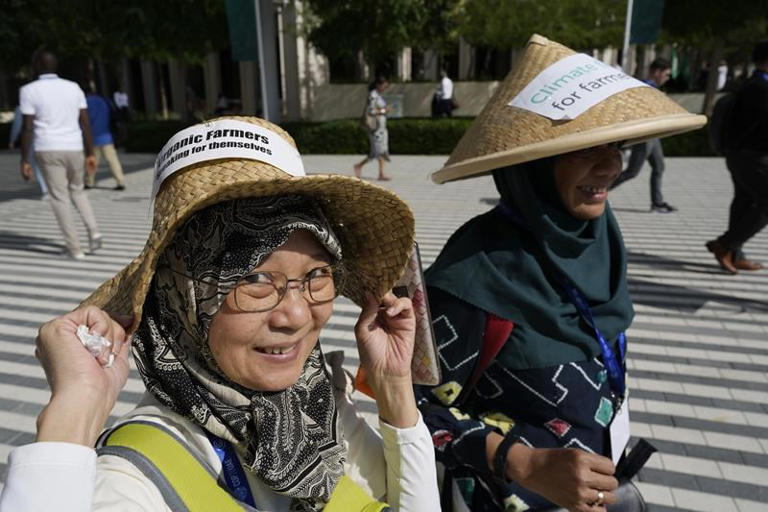
More than 100 world leaders at this year's United Nations climate summit agreed to make their farm and food systems a key part of their plans to fight climate change, seeking improvements in a sector that accounts for about a third of planet-warming emissions.

With livestock accounting for over half of those emissions, meat and dairy are at the forefront of many agriculture conversations at COP28 in Dubai. The U.N. Food and Agriculture Organization added to those conversations with an updated report that included ways to cut those livestock emissions.

“You don’t meet the climate goals without doing something in the system, and in this case on livestock,” said Francesco Tubiello, a senior statistician with the FAO who worked on the report. It briefly mentions eating less meat, but mostly highlights ways the meat industry can improve productivity and efficiency.

Change won't be easy. Like fossil fuel producers, the meat industry turned out in force to protect its interests at the talks, including casting their practices as “sustainable nutrition,” according to one report. A potential competitor, alternative meat, has hit a rough patch after initial enthusiasm and investment.

And then there are consumers themselves, who have shown little interest in changing their eating habits, even as meat's contribution to emissions has gotten more attention.

“The reality is Americans eat just as much meat now as they did 50 years ago,” said Maureen Ogle, a historian and author of In Meat We Trust, a history of the meat industry in America.

Ogle said American producers have pushed back vigorously over the years against anything that threatened their market — from a proposal to include “Meatless Mondays” in national dietary guidelines to research reports that highlighted the health dangers of eating too much red meat.

The Guardian and DeSmog reported last month that the meat industry planned a large presence at COP28, to tout a message that meat is good for the environment. The news outlets cited documents produced by the Global Meat Alliance, an industry-funded group, that they said included such messages as grazing livestock can help maintain healthy soils and meat can help in food-insecure nations.

The alliance told The Guardian that its work “includes visibility on intergovernmental events which are often dominated by an anti-meat narrative.” In an emailed statement to AP, the group said it applauds the focus on food and agriculture on global agendas like COP28.


“We welcome clear rules or standards for reducing agricultural emissions at these moments, and industry is prepared to support these efforts while retaining a place in the value chain,” the statement said.

Many governments around the world have promoted meat for a long time, transforming cultural meat eating habits, said Wilson Warren, a professor of history at Western Michigan University. That has turned meat into an industry fueled by multinational corporations worth billions of dollars. In the United States, subsidies pay farmers to overproduce so meat can be sold more cheaply to an urban population, Ogle said.

Both in America and in the European Union, animal farming receives far more public financial support and lobbying attention than meat alternatives do, a study from Stanford University found this summer. That’s an issue because better consumer options are needed, said one of the coauthors, Simona Vallone, a researcher now with Sustainable San Mateo County.

"We are at this delicate moment in which we need to make decisions at the government level and also global level," Vallone said. If curbing emissions quickly is the goal, she added, “we don’t have a lot of time to change our system."

Food systems were the focus of some demonstrators. Lei Chu, a vegan activist, said it's important for people to consider how what they eat matters to the world.

"If this action is killing our earth we have to change it,” she said.

Jason Weller, global chief sustainability officer at Brazil-based JBS, one of the world's biggest meat producers, said “the myopic focus on reducing meat consumption does not reflect reality or the science.” Citing the FAO report, he said productivity improvements have the greatest influence in reducing emissions.

When asked whether people in countries like the U.S. need to reduce their meat consumption in order to stay within agreed warming boundaries, U.S. Agriculture Secretary Tom Vilsack pivoted to discuss nutrition security, product labeling and consumer education, which he said would help consumers “make market decisions which will accelerate and drive change.”

Experts said it's more realistic for people in wealthier countries to eat red meat a little less rather than having everyone give up meat altogether. “It's pretty dramatic, the emissions intensity in the U.S. of beef versus the non-ruminants, pork and poultry,” said Tom Hertel, distinguished professor of agricultural economics at Purdue University.

At a sideline event at COP28, Lawrence Haddad, from the Global Alliance for Improved Nutrition, agreed. He said “people in the global north cannot be lecturing people in the global south about eating less meat.”

Meanwhile, organizations like the FAO and private companies say that making the existing system even more efficient can be part of the solution. The FAO's report includes sections on improving animals with selective breeding and tailoring animal nutrition to reduce their methane emissions. Ruminants like cows emit methane because of how their digestive system works, but changing their diets can help somewhat.

The agriculture declaration signed by world leaders at the beginning of COP28 is a loose pledge, not a binding agreement. Leaders "need to champion change inside the formal climate negotiations," said Ruth Davis, a former adviser to the British government's COP26 team on food and nature.

Policymakers should focus on improving enforcement of potentially misleading sustainability claims, and also on better incentivizing farmers to implement truly green practices, said Scott Faber, senior vice president for government affairs at the Environmental Working Group.

He said: “Wouldn't it be better if big producers of meat worked with groups like EWG to make sure that those scarce USDA conservation dollars are actually going to the practices that change how we feed animals, how we manage their waste, how we manage their movements, how we fertilize their feed?”

But as much as companies and governments play a role, Hertel, of Purdue, agreed with Ogle that consumers are at the heart of the system.

“For a lot of people it probably does come down to cost,” Hertel said of choosing traditional meat at the grocery store. If meat alternatives were a lot cheaper and tasted about the same, “I think you’d see more movement in that direction,” he said.

___

Associated Press journalist Joshua Bickel contributed to this report from Dubai.

___

Read more of AP’s climate coverage at http://www.apnews.com/climate-and-environment

___

Follow Melina Walling on X: @MelinaWalling.

___

Associated Press climate and environmental coverage receives support from several private foundations. See more about AP’s climate initiative here. The AP is solely responsible for all content.

Melina Walling, The Associated Press
Observers see OPEC 'panicking' as COP28 climate talks focus on possible fossil fuel phase-out


DUBAI, United Arab Emirates (AP) — Veteran negotiators at the United Nations climate talks Saturday said that the push to wean the world from dirty fossil fuels had gained so much momentum that they had poked a powerful enemy: the oil industry.

Late Friday, multiple news sources reported that the leader of OPEC, the powerful oil cartel, wrote to member countries earlier this week urging them to block any language that would phase out or phase down fossil fuels. The news had the effect of a thunderclap, shining a light on host and petrostate United Arab Emirates, which clearly has oil interests but also wants to show the world that it can lead the conference toward a substantive result.

Environmental activists, still smarting after decades of soft power from oil interests keeping such discussions from seeing the light of day, smirked at signs that the mighty cartel was circling the wagons.

“I think they’re panicking,” said Alden Meyer, an analyst with climate think tank E3G “Maybe the Saudis can’t do on their own what they’ve been doing for 30 years and block the process.”

Former Ireland President Mary Robinson said, “They’re scared. I think they’re worried.”

Robinson, co-chair of the retired leaders group The Elders, is now a prominent climate campaigner. She said that OPEC is concerned “gives me hope.” Last month she clashed publicly with the president of the COP28 negotiations, Sultan al-Jaber, who is also CEO of the Emirates’ national oil company.

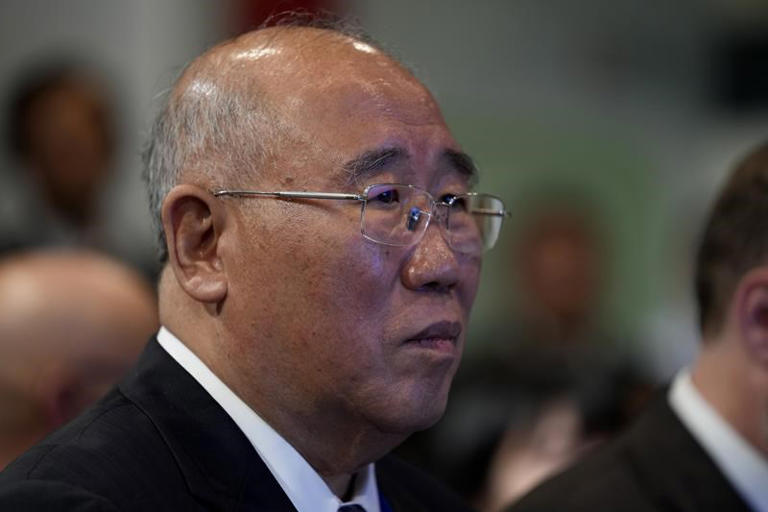
China's climate envoy Xie Zhenhua called this year's climate conference the “most difficult” of his long career. He said the contentious phase-out issue could be solved in one or two days.


The Weather Channel Earth Nearing Key Tipping Points On Climate Change, Report Says
1:12


Dailymotion London protesters urge leaders to do more to tackle climate crisis on global day of action
1:40


Climate 'Tipping Point': World is at a pivotal point, govt should act now to save planet
2:26


Germany's climate envoy, Jennifer Morgan, suggested any call for blocking a deal would be felt most by small countries vulnerable of sea level rise caused by global warming.

“Right now, countries here are fighting for their lives. The small islands, and most countries here, are engaging very actively on this discussion in a real way,” she said in an interview. “And I think it is obviously not responsible to have a position that could mean — would mean — the life and death of many million people.”

But not all developing countries felt the same way.

“The development of our countries depends, in fact, on the use of fossil fuels," said Niger's Issifi Boureima, who's executive secretary of the Sahel Region Climate Commission. “It’s not easy for countries like ours to accept a text that agrees to end fossils fuels today. It’s not easy, because what do we do after that?”

"I think that in the dynamic of multilateral diplomacy, we need to avoid egoism, egoism of the north towards the south.”

COP28 Director General Majid al-Suwaidi downplayed the OPEC letter, saying the UAE team running the climate conference has been meeting with negotiators to get an ambitious deal. The oil cartel has no formal link to the climate negotiations.

“I feel confident that we’re going to get a good result you’re going to be surprised about,” Suwaidi told The Associated Press.

OPEC didn’t immediately respond to messages seeking comment. Protestors Saturday in a flash mob briefly blocked the OPEC exhibit at climate talks, calling for an immediate phase-out of fossil fuels.

As discussions were happening about the letter and how to transition from fossil fuels, the world inched closer to deciding where next year’s climate conference will be held, a third state petrostate. Azerbaijan announced it would host COP29 in Baku, where one of history’s first oil fields sprung up. But U.N. officials said it wasn’t quite a done deal because the proper paperwork hasn’t been submitted.


The conference presidency has been crowing about deal after deal, many of them involving hundreds of millions or even billions of dollars of pledges, but they’ve more nibbled the edges of the key issue of cutting emissions. When it comes to reducing the gases that cause climate change, a key group of scientists who analyze pledges, actions and potential temperature increases said in a report on Saturday that all the action hadn't amounted to much.

“The COP28 Presidency has made a very big deal about a whole lot of voluntary initiatives, while adopting an ambiguous and weak position on the central issue of a fossil fuel phaseout,” Climate Analytics CEO Bill Hare, co-author of the report, said.

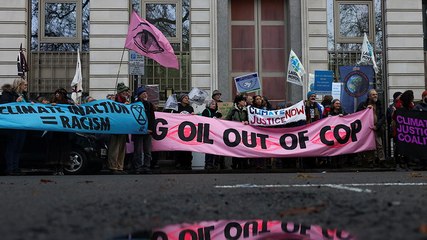
Saturday's firestorm of controversy came as protests at the conference center in Dubai ramped up, with a “Global Day of Action” urging nations to move decisively to stop climate change and officials from various countries talked increasingly urgently at the official meetings. The OPEC letter has added fuel to their fury.


“With current policies, the planet is on track to a 2.9 (degree Celsius, 5.2 degree Fahrenheit above pre-industrial temperature) future. We cannot adapt to temperature rise that high; the loss and damage will be incalculable. It will be our death sentence,” Marshall Islands natural resources minister John Silk said.

“We will not go silently to our graves,” he said.

___

Associated Press journalist Olivia Zhang contributed.


Brazil's Lula takes heat on oil plans at UN climate talks, a turnaround after hero status last year


DUBAI, United Arab Emirates (AP) — Fresh off election victory, a year ago Brazilian President-elect Inacio Lula da Silva was the star of the annual U.N. climate talks.

Lula promised to crack down on deforestation and turn Brazil into an environmental leader, a complete turnaround after President Jair Bolsonaro rolled back regulations and encouraged land-grabbing in the Amazon.

“Lula! Lula! Lula!” many onlookers screamed during Lula’s many events at COP27 in Egypt.

What a difference a year makes.

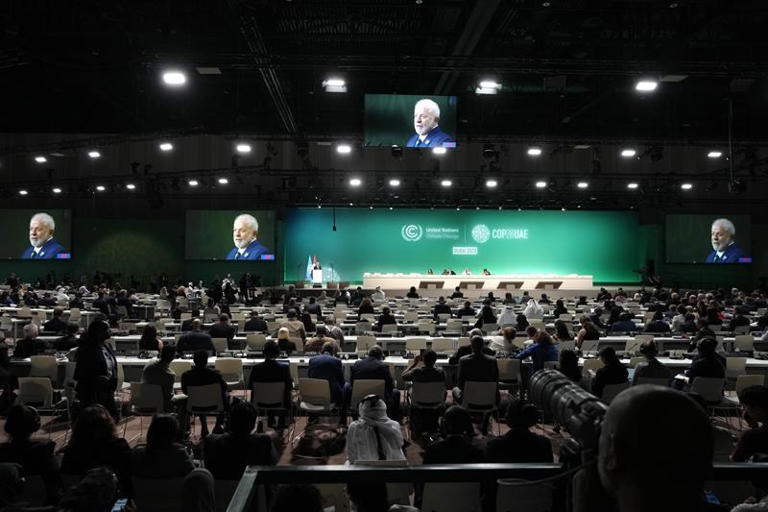
Just as Lula addressed world leaders at COP28 in Dubai, it was announced that Brazil would join OPEC+, a group of big oil-exporting countries, including Russia. At one event during the conference, Lula tried to explain the decision by saying that, once on the inside, the South American nation would push other oil-producing countries to transition to green energy—a curious explanation given that state-run oil company Petrobras is focused on further oil exploration. Lula later clarified that Brazil would be an OPEC observer, not a full member.

In his speech to world leaders, Lula implored delegates to go beyond “eloquent but empty words.” In a subsequent session with Environment Minister Marina Silva, Lula teared up when he talked about the need to protect forests.

Instead of chants of adulation, Brazil received a Fossil of the Day award from Climate Action Network International, a non-award given to countries whose actions support fossil fuels, the main cause of climate change.

Natalie Unterstell, president of Talanoa, a Brazilian think tank focused on climate, said Lula's approach to the environment was focused on curbing deforestation, Brazil's largest source of carbon emissions, which his administration has managed to slow by half since taking office in January. That approach served him well during his first terms, between 2003 and 2010, but that is no longer enough, she said.

“Lula can’t be a climate leader without a real energy transition policy,” she said. “It's time for him to update his programming software.”

Lula has had a long and complicated relationship with oil. When huge reserves were discovered off Brazilian shores in 2006, Lula said: “This discovery ... proves that God is Brazilian.” Indeed, as the Brazil became a major oil-producer over the next decade, the money helped Lula, and then successor President Dilma Rousseff, fund major social programs that lifted tens of millions of people from poverty.


Today, Brazil is the world's ninth largest producer, with 3% of global output, according to the U.S. Energy Information Administration. Oil has become so important that it's now Brazil's second export product after soy, producing 3.67 million barrels a day. By far, China is the country's largest buyer.

At a climate conference focused on reducing planet-warming greenhouse gas emissions, which oil and gas products let off when burned, environmentalists have been quick to note the contradiction.

Meanwhile, Petrobras is doubling down on oil. On Dec. 13, a day after the climate conference is scheduled to end, the country is going to allow companies to bid on 33 areas with blocks for oil exploration, according to Brazil's National Agency of Oil, Natural Gas and Biofuels, including some in the Amazon rainforest. It's part of a push to offer more than 900 blocks in December.


In a written response to the AP, the National Agency of Oil, Natural Gas and Biofuels declined to comment on demands for energy transition, arguing that, as a regulatory agency, it “does not create public policies but rather implements the policies formulated by the government."

The increased exploration, which eventually leads to more production, threatens to cancel out or even surpass gains from Brazil's efforts to stop net deforestation by 2030, according to the Greenhouse Gas Emission Estimation System, an initiative by the Climate Observatory, a network of environmental nonprofit groups.

“The damage (of the exploration) goes against any positioning of Brazil as a climate leader," said David Tsai, projects coordinator at the Institute for Energy and the Environment, which is part of Climate Observatory.

While Lula fumbled during the few days he spent at COP28, his Colombian counterpart, leftist Gustavo Petro, seemed to be taking the mantle of environmental leadership in Latin America. In contrast to Brazil’s alignment with OPEC, Petro joined an alliance of nations supporting a fossil fuel non-proliferation treaty. “This is not economic suicide,” he said in Dubai. “It’s about preventing humanity’s self-destruction.”

The leaders' differing visions were on display in August during the Amazonian summit in Belem. Lula and other leaders vetoed Petro’s proposal to ban oil production in the world’s largest rainforest. Similar to the ongoing climate talks, oil was the most contentious topic during the meeting held in Belem. At the time, Lula faced protests by Indigenous groups and environmentalists against Petrobras’ plans to explore for oil near the mouth of the Amazon River.

Petrobras did not respond to AP's written request for comment on its plans for the mouth of Amazon and on energy transition. Lula's office also did not respond to a request for comment.

Environmentalists say they hope Lula can be convinced to change policies by 2025, when Brazil is expected to host COP30 in Belem. Whatever the next years bring, at the moment the administration is marching ahead.

“We will not be ashamed of Petrobras,” Brazil’s minister of mines and energy, Alexandre Silveira told daily newspaper O Estado de S. Paulo in an interview this week. “We will not be ashamed of also having the potential of fossil fuels in Brazil. They need to be explored because Brazil is a country in which social injustices and prevalent.”

_
Protests at UN climate talks, from cease-fire calls to detainees, see 'shocking level of censorship'


DUBAI, United Arab Emirates (AP) — Activists designated Saturday a day of protest at the COP28 summit in Dubai. But the rules of the game in the tightly controlled United Arab Emirates at the site supervised by the United Nations meant sharp restrictions on what demonstrators could say, where they could walk and what their signs could portray.

At times, the controls bordered on the absurd.

A small group of demonstrators protesting the detention of activists — one from Egypt and two from the UAE — was not allowed to hold up signs bearing their names. A late afternoon demonstration of around 500 people, the largest seen at the climate conference, couldn't go beyond the U.N.-governed Blue Zone in this autocratic nation. And their calls for a cease-fire in the Israel-Hamas war in the Gaza Strip couldn't name the parties involved.

“It is a shocking level of censorship in a space that had been guaranteed to have basic freedoms protected like freedom of expression, assembly and association,” Joey Shea, a researcher at Human Rights Watch focused on the Emirates, told The Associated Press after their restricted demonstration.

Pro-Palestinian protesters who were calling for a cease-fire and climate justice were told they could not say “from the river to the sea,” a slogan prohibited by the U.N. over the days of COP28

In the aftermath of a brutal Hamas attack on Israel in October and the subsequent Israeli bombing and ground offensive in the Gaza Strip, that phrase has been used at pro-Palestinian rallies to call for single state on the land between the Jordan River and the Mediterranean. Some Jews hear a clear demand for Israel’s destruction in the call.

Protesters got around rules banning national flags by instead wearing keffiyeh scarves and holding signs depicting watermelons to show their support for the Palestinians.

Protestor Dylan Hamilton of Scotland said it remained important for demonstrators to cry out their grievances, even if they sounded like a cacophony of concerns ranging from climate change, the war or Indigenous rights.

“It's essential to remind negotiators what they are negotiating about,” Hamilton said. “It's trying to remind people to care about people you'll never meet.”

Despite the restrictions, activists protesting for a cease-fire in Gaza called the action historic due to its size.

“I don’t want to look back one day where a Palestinian can’t remember what their history and their culture used to look like, because that’s exactly what happened to us in Mexico," climate activist Isavela Lopez said. “I’m here to say to end with the colonial powers and with the white supremacy.”

Many climate activists point to the same causes for today's climate crisis.

Typically, COP summits see mass demonstrations of tens of thousands of people outside of the Blue Zone. But given the UAE's rules, the only place where activists can protest is inside that U.N.-controlled space, which has its own tight restrictions on speech.

Just before the demonstration about the detained activists, organized by Amnesty International and Human Rights Watch, protesters had to fold over signs bearing the names of the detainees — even after they already had crossed out messages about them. The order came roughly 10 minutes before the protest was due to start from the U.N., which said it could not guarantee the security of the demonstration, Shea said.


While speaking during the protest, Shea also had to avoid naming the Emirates and Egypt as part of the U.N.'s rules.

“The absurdity of what happened at this action today speaks volumes,” she said.

The Emirati government, in response to questions from the AP about the detainees protest, said it "does not comment on individual cases following judicial sentences.”

“In the spirit of inclusivity, peaceful assemblies in designated areas have been and continue to be welcomed,” the statement said. “We remain dedicated to fostering dialogue and understanding as we work together at COP28 to deliver impactful solutions for accelerating climate action.”

Demonstrators carried signs bearing the image of Emirati activist Ahmed Mansoor and Egyptian pro-democracy activist Alaa Abdel-Fattah.

Mansoor, the recipient of the Martin Ennals Award for Human Rights Defenders in 2015, repeatedly drew the ire of authorities in the United Arab Emirates by calling for a free press and democratic freedoms in the autocratic federation of seven sheikhdoms. He was targeted with Israeli spyware on his iPhone in 2016 likely deployed by the Emirati government ahead of his 2017 arrest and sentencing to 10 years in prison over his activism.

Abdel-Fattah, who rose to prominence during the 2011 pro-democracy Arab Spring uprisings, became a central focus of demonstrators during last year's COP27 in Sharm el-Sheikh, Egypt, as he had stopped eating and drinking water to protest his detention. He has spent most of the past decade in prison because of his criticism of Egypt’s rulers.

Since 2013, Egyptian President Abdel-Fattah el-Sissi’s government has cracked down on dissidents and critics, jailing thousands, virtually banning protests and monitoring social media. El-Sissi has not released Abdel-Fattah despite him receiving British citizenship while imprisoned and interventions on his behalf from world leaders, including U.S. President Joe Biden.

Demonstrators also held up the image of Mohamed al-Siddiq, another Emirati detained as part of the crackdown.

The detainees protest had been scheduled to take place days earlier, but negotiations with U.N. officials dragged on — likely due to the sensitivity of even mentioning the detainees' names in the country.

Meanwhile, protesters briefly staged a sit-in at OPEC's stand over a leaked letter reportedly calling on cartel member states to reject any attempt to include a phase-down of fossil fuels in any text at the summit.

“It’s like having, you know, a convention on fighting the tobacco industry and having the tobacco industry present in a negotiation. That is not okay,” campaigner Nicholas Haeringer said. “It’s like having a fox in the henhouse. And to be honest with you guys, I think at some point we will run out of analogies before these guys run out of oil.”

___

Associated Press journalists Peter Dejong, Lujain Jo and Malak Harb contributed to this report.

___

Associated Press climate and environmental coverage receives support from several private foundations. See more about AP’s climate initiative here. The AP is solely responsible for all content.

Jon Gambrell, The Associated Press

Shortening ice road seasons threat to safety for northern Manitoba First Nation: NDP MP Niki Ashton


Story by The Canadian Press • 20h

The federal Liberals are leaving a Manitoba First Nation in danger and suffering, as shorter ice road seasons lead to isolation and “inhumane” conditions, a northern Manitoba MP says.

“It's time for the feds to act for Wasagamack,” Churchill-Keewatinook Aski MP Niki Ashton said at a media conference in Ottawa where she was joined by the chief and council of the Wasagamack First Nation on Thursday.

“Prime Minister Trudeau got elected on a promise of reconciliation, and we are not seeing that in action.”

Ashton said she and members of the Wasagamack band council believe climate change is to blame for increasingly erratic weather patterns and for warmer than average temperatures this fall in Manitoba, and the federal government must step in to help the community get an airport, something she said they have been requesting for “decades.”

“As a result of the impacts of climate change we must act now,” Ashton said. “This is having devastating impacts to people’s health for those needing urgent medical care.

“Indigenous Services Canada, you need to step up and work with Wasagamack and with all partners to build an airport, and create all-weather access.”

Wasagamack, a community about 500 kilometres north of Winnipeg, continues to be one of the most isolated communities in Manitoba and in Canada, as it has no airport and no all-season road, and is only accessible via seasonal ice road.

As temperatures across the province continue to sit well above average for this time of year, Wasagamack First Nation Chief Walter Harper told reporters Thursday those temperatures have kept the ice road into his community shuttered.

That closure will have both short and long-term negative effects on the community, he said, as they struggle to acquire basic goods and to get residents who need medical or emergency care out.

“Normally we would have been driving already, but right now we can’t do anything,” Harper said. “We only have a certain window for transporting goods, and because there has been no snow and no cold, we are looking at a very short window of delivering goods this year.

Ashton added the road closure is “devastating” for those seeking medical care, including the elderly.

“As a result of the lack of an airport, people have to rely on inhumane conditions to get to medical care. People rely on boats, and helicopters that can't always fly to get to an airport,” Ashton said.


“When you’re in that situation, those costly minutes and in some cases hours can mean life or death.”

Having no airport also makes it dangerous to live in the community when natural or man-made disasters strike, because of how difficult it can be to pull off an evacuation, Ashton said.

In August of 2017, Wasagamack was evacuated by boat due to wildfire. Once they reached the airport in St. Theresa Point they were flown to Winnipeg, Brandon or Thompson.

Ashton said the conditions of that evacuation were “inhumane.”

“We’ve heard what it was like to be evacuated in the middle of the night by boat because of wildfires closing in,” she said. “This is the lived experience of the people of Wasagamack, and we know with climate change it’s only going to get worse.”

Chief Harper said he also has a personal reason to build an airport as his mother, Bernadette Harper, died on April 23, 1998 when a helicopter taking people to a funeral crashed shortly after takeoff, killing his mother and one other.


“With the fact that this precarious situation led to the death of Chief Harper’s mother, this is heartbreaking,” Ashton said.

The Winnipeg Sun reached out to Indigenous Services Canada (ISC) for comment.

— Dave Baxter is a Local Journalism Initiative reporter who works out of the Winnipeg Sun. The Local Journalism Initiative is funded by the Government of Canada.

Dave Baxter, Local Journalism Initiative Reporter, Winnipeg Sun


LA REVUE GAUCHE - Left Comment: Search results for AIRSHIP 

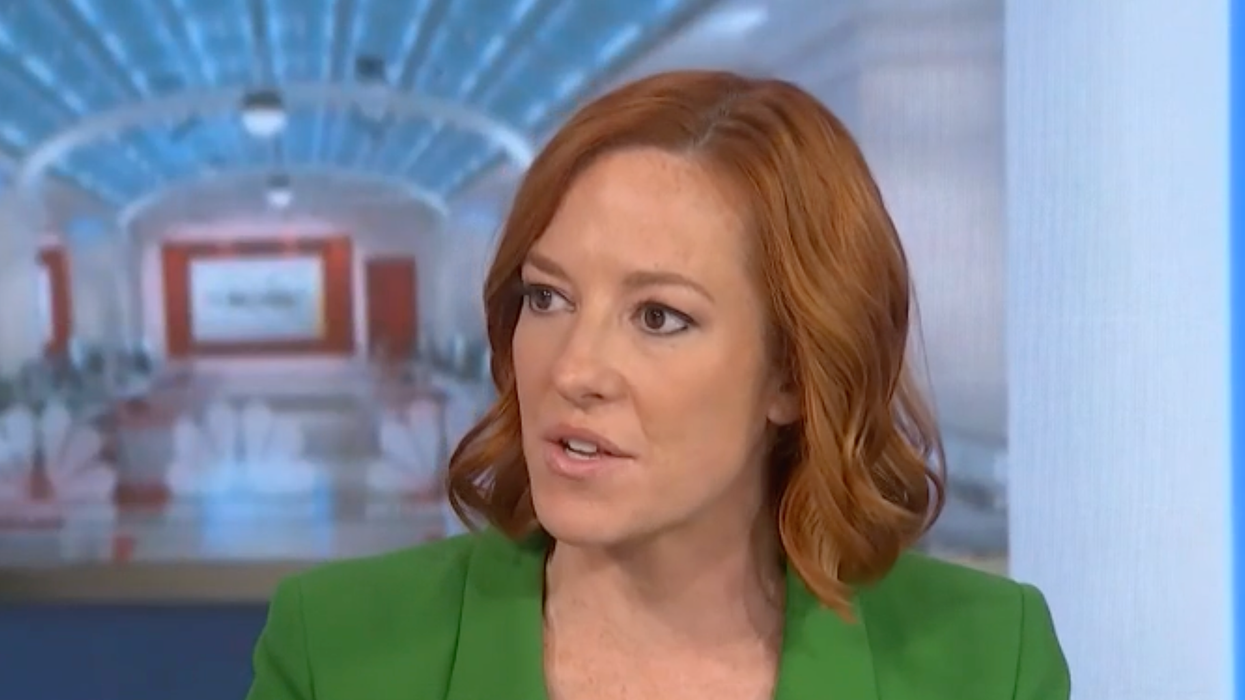
Jen Psaki: Conspiracy touted by 'avowed white supremacists' has become 'mainstream' in the GOP
December 09, 2023
In a new column, MSNBC host Jen Psaki is warning that a conspiracy theory popular with the most far-right fringes of society has now become standard conservative orthodoxy.

On Saturday, Psaki remarked on a comment uttered by businessman Vivek Ramaswamy that went relatively unnoticed during the fourth Republican presidential debate on Wednesday night, in which he baselessly suggested that the so-called "Great Replacement Theory" is "a basic statement of the Democratic Party's platform (it isn't)." That theory posits that Democrats seek to have immigrants and refugees "replace" the white population, with the overall goal of having them become registered voters to sway elections.

"The great replacement theory is definitely not a part of the Democratic Party platform. It is a conspiracy theory — one touted by neo-Nazis and avowed white supremacists," Psaki wrote. "The scary part is that it has become mainstream in Republican politics. There’s Donald Trump’s comments that immigration from the southern border was 'poisoning the blood of our country.' In the same vein, House Speaker Mike Johnson said in May that Democrats are 'intentionally' encouraging undocumented immigration to 'turn all these illegals into voters for their side.'

"It's all a part of a movement on the right wing to foment outrage and seize power by playing up the fear of the 'other,'" she added. "And it's not a strategy that is going away."

The "Great Replacement" conspiracy theory has also been popularized by former Fox News host Tucker Carlson, who frequently alluded to it on his primetime Fox News program to millions of nightly viewers. By the Guardian's count, Carlson mentioned it in approximately 400 episodes. Rep. Elise Stefanik (R-New York) and Sen. JD Vance (R-Ohio) have also been criticized for promoting the "replacement" conspiracy theory.

The growing prevalence of that conspiracy theory has led to violent and tragic outcomes. In 2022, the perpetrator of the mass shooting at a Buffalo, New York grocery store mentioned it in the manifesto he wrote prior to massacring 10 people and injuring three others at a grocery store in a predominantly Black neighborhood. While he didn't specifically name Fox News, he did admit to being radicalized on the forum 4Chan.

Neo-nazi Andrew Anglin, founder of the white supremacist website The Daily Stormer, called Tucker Carlson "literally our greatest ally" and lauded him for "dropping the ultimate truth bomb on his audience" in reference to the "great replacement" theory.
Woody Guthrie's anthem mocking right-wing Republicanism

Jim Hightower
December 09, 2023

According to an old saying, "You can't squeeze blood from a turnip." True. But that raises this question: Who would even try squeezing blood from a turnip?

Well, metaphorically speaking, if "blood" means profit, and "turnips" are customers, airlines are eager to apply the squeeze. As are banks, credit card outfits, cable TV and internet hucksters, car rental companies, concert promoters... and can anyone decipher their insurance policies?

I'm not talking about fair profit, but junk fees, hidden charges, undisclosed add-ons and other "gotchas" that brand-name giants sneak into the fine print of their price tags. It's pure corporate larceny, adding up to a stunning level of unearned profit for the perpetrators: Airlines picked our pockets for nearly $7 billion last year in baggage fees alone; credit card dealers plucked $14 billion from us in punitive late fees; and the overall corporate haul from this secretive squeeze on consumers now tops $64 billion a year!

Shouldn't companies have to tell you -- in plain language -- what they're actually charging you... and for what? "Yes!" says President Joe Biden, who's pressuring the gougers to come clean. "Hooray!" exult consumers, who're tired of being played for suckers.

Of course, as another saying notes, "Where there's a will, there's a thousand won'ts." So, a flock of corporate lobbyists are now swarming the Capitol, crying: "Save junk fees!" Their arguments are hilariously absurd: They assert that price disclosure will "confuse consumers"; that government should not "interfere" in the free market; that it's "technically infeasible" to tell consumers the real price -- and a group who actually quibbled, "What exactly is a fee?"

To help raise common sense and plain fairness to high places, check out the work Public Interest Research Group at www.pirg.org.

WOODY GUTHRIE'S ANTHEM MOCKING RIGHT-WING REPUBLICANISM

What it is about today's vituperative, foam-at-the-mouth Republican party?

No longer disguising their desire to repress women, workers, immigrants, the poor and all others who differ with (or are different from) their own partisan clan, the party has turned to a politics of hatred and division, openly seeking to punish opponents they now brand as "enemies" and "vermin." What's motivating this plunge into such undiluted political sourness?

My simple observation is that they've succumbed to a base impulse expressed in one straightforward word: MEANNESS. After all, their current agenda amounts to hurting people they don't like, trying to keep America's diverse majority from getting such basic human needs and rights as health care, the vote, fair wages, reproductive liberty and public education free of church dictates.

That's not "conservative," it's just mean.


This malicious strain of selfish Republicanism has flared up periodically in our history, with the few striving to repress the many. Woody Guthrie even wrote an anthem in the 1940s mocking those crusading for such a morally depraved politics:

"I'm the meanest man that ever had a brain
...
I hate everybody don't think like me...
And I'm readin' all the books I can
To learn how to hurt...
Keep you without no vote,
Keep you without no union.
...
Well, if I can get the fat to hatin' the lean,
That'd tickle me more than anything I've seen,
Then get the colors fightin' one another,
And friend against friend, and brother and sister against brother..
...
I love to hate and I hate to love!
I'm mean, I'm just mean."

This song is dedicated to Florida Gov. Ron DeSantis, Rep. Marjorie Taylor Green, Rep. Jim Jordan, House Speaker Mike Johnson, Texas Gov. Greg Abbott, and... well, you know who you are.
Alberta's methane reduction claims a 'red herring': researcher

Story by The Canadian Press • 56m


As world leaders were arriving in Dubai for COP28 last week, Alberta announced it had hit methane reduction targets for its oil and gas industry three years ahead of schedule. The province has committed to a goal of reducing methane emissions by 45 per cent from 2014 levels by 2025, which the latest report from Alberta Energy Regulator indicates was achieved last year.

But because the emissions targets are based on inexact estimates rather than actual emissions measurements, it is difficult to say how much has really been accomplished, said Mathew Johnson, engineering professor and scientific director of Carleton University's Energy & Emissions Research Laboratory.


“Kudos if they've reduced by 45 per cent, but we'll never know. That is not based on measurements,” Johnson said. “I can't say if they've reduced or not. I don't know. Because nobody as measured the baseline, it's kind of an arbitrary baseline of which we might have reduced – and hopefully have reduced.”

The Alberta Energy Regulator currently estimates total methane emissions from upstream oil and gas in 2022 were 17.3 megatonnes of carbon-dioxide equivalent (Mt CO2e), down from 31.6 Mt CO2e in 2014, a spokesperson for the Ministry of Environment and Protected Areas said in an e-mail. In a report released earlier this year on methane emissions management from the upstream oil and gas sector, the AER put the baseline 2014 emissions total at 27 Mt CO2e. That 2014 baseline, used to assess emissions reduction targets, was estimated to be 25 Mt CO2e in January 2022.

"Alberta has continually expanded its monitoring and reporting as new technology becomes available. As part of that, we continue to update all annual estimates to ensure accuracy," Ryan Fournier, press secretary to the Minister of Environment and Protected Areas, said in an e-mail.

Johnson and the Carleton team used ground-level and aerial surveys along with satellite data to produce a measurement-based inventory of methane emissions in Alberta’s oil and gas sector in 2021. Methane emissions were found to be 1.5 times greater than government and industry estimates, according to their research now published in the peer-reviewed journal Nature Communications Earth and Environment.

These measurements indicate emissions in 2021 were higher than the province's highest estimates for 2014.

Alberta isn't alone in its undercounting of emissions. Wherever methane emissions have been measured, they have been significantly higher than previously thought. The team from Carleton previously found Saskatchewan's methane emissions to be almost four times more than reported, and the government of Canada's own scientists found methane emissions were twice as high as past national estimates.

The government of British Columbia has been working closely with the Carleton team to improve emissions monitoring, using the researchers' year-over-year measured inventories to inform policy and decision making, Johnson said.

"They deserve credit for leading this, really in the world. We're in the midst of a multi-year effort in B.C., we have co-funding from the B.C. government and United Nations together, because this is an important template for how you might do this elsewhere in the world."

Though other jurisdictions may soon implement similar measurement-based emissions reduction template, it is unlikely Alberta will be an early adopter.

"There is no universally accepted standard on how methane is measured and jurisdictions around the world are debating different approaches. Alberta will continue on this trajectory to significantly reduce methane emissions while leveraging the best available data to support the current and back-casted methane emission inventory," Fournier said.

We'll never really know what Alberta's oil and gas methane emissions levels were in 2014, because they weren't measured, Johnson said. "And in that sense, it's really hard to know with any certainty how much emissions have come down.”

However, whether or not Alberta has reduced methane emissions by 45 per cent “sort of doesn’t matter,” Johnson said.

“The real point is that is not the target we need. What really matters is what is the methane intensity of what is being produced now. And unfortunately, that is something we do have accurate measurements of and they're quite a bit above the international targets set currently.”

Methane intensity is a measure of how much methane escapes into the atmosphere for each unit of energy delivered. Both the European Union and the United States are considering setting a 0.2 per cent methane intensity targets, which could also be applied to gas imports. Research puts the average methane intensity for Alberta’s oil and gas producers at 1.7 per cent, which is on par with many U.S. basins but roughly four times greater than in B.C.

“We should just all agree that we need to reduce methane per-unit energy to at least below 0.2 per cent. That's the only thing that currently matters. And that 45 per cent is really just a red herring,” Johnson said.

Methane is a greenhouse gas with a warming potential at least 25 times that of carbon dioxide, and scientists estimate it is responsible for about one-third of observed global warming to date. Cutting methane emissions from oil and gas is increasingly being pursued by governments as a fast and achievable way to combat climate change. Ahead of the COP28 climate summit, 12 major oil and gas companies committed to lowering methane emissions to near-zero by 2030.

Establishing low-intensity gas requirements now would be pragmatic, even from a purely industry point of view, Johnson said. If Canada fails to keep pace with international standards, Canadian gas producers could be punished by import fees and price differentials on methane intensity in foreign markets.

“The survival of Canada's energy sector largely depends on people getting behind this methane intensity standard before it's too late,” Johnson said.

Brett McKay, Local Journalism Initiative Reporter, St. Albert Gazette


'We're not cattle here': Radio callers berate Alberta premier over health care access

Story by Lisa Johnson • 
Edmonton Journal

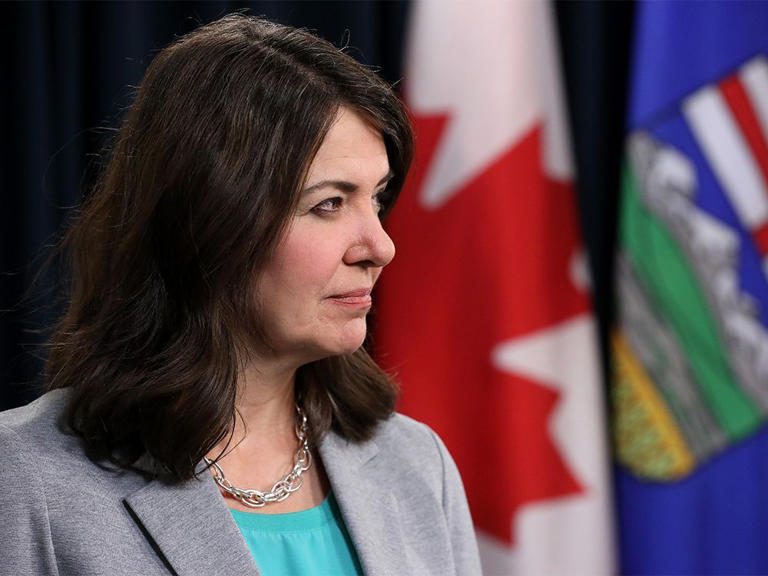
Alberta Premier Danielle Smith.

Alberta Premier Danielle Smith got an earful on health care during her regular public relations broadcast Saturday.

Speaking on her CHED 630 call-in show from Dubai, where Smith has been attending the COP28 climate conference, the premier agreed with callers criticizing long emergency room wait times , the fact that some residents are unable to access obstetrics in rural areas , and a lack of front-line workers.

She vowed to continue working to fix the issues, but had few new details or benchmarks about how her plan to re-haul the system to create more governing agencies would do so. Smith only renewed threats to eliminate other health management jobs.

“What are you guys going to do to fix the 10- to 12-hour waiting times in emergency rooms in Alberta? It’s been going on for decades now, and it’s out of control. We’re not cattle here,” said one caller.

“You’re so right, and I put that as a priority when I first got elected a year ago,” Smith responded, pointing to progress under Dr. John Cowell, the sole administrator appointed shortly after Smith’s election, replacing the entire Alberta Health Services (AHS) board.


Related video: Manning panel gives 90 recommendations on Alberta's COVID-19 pandemic response (Global News)  Duration 1:53   View on Watch

The governance situation at the provincial health authority has been a revolving door since Smith was elected leader of the UCP and premier in late 2022, after she ran on a party leadership campaign blaming AHS for perceived failures during the COVID-19 pandemic.

“I was a bit disappointed that we saw some regression over the course of the election and we had to make a more significant change,” Smith said, referring to the subsequent firing of six top executives in November.

Smith said he had made progress, but now she has confidence new AHS president and CEO Athana Mentzelopoulos, appointed this week, will be able to fix paramedic wait times

“I just ask for you to to give us a little bit of time, and I hope that we’ll be able to report back to you within six months or shorter, that we’re making major progress. But I agree that what we’ve had right now is is unacceptable,” said Smith, promising she is working on improving surgery times, emergency room wait times, and EMS response times.
‘We don’t need you to burn down the house. We need you to build it up’

Another caller’s criticisms about AHS prompted Smith to claim the elimination of executive positions “sent a message” to those in management that they need to do more to support the front lines.

Smith issued a local threat: “Managers need to be engaged, they need to be doing frontline service, otherwise they’re not going to be there very long.”

A nurse texting into the program criticized the massive drop in beds available for an increasing population.

“We don’t need you to burn down the house. We need you to build it up,” they said.

Smith agreed, but argued the proper resources haven’t been dedicated to the front lines, and have instead been given to growth in management.

During the radio show, Smith also defended naturopaths for their focus on nutrition, saying they “play a role” in the health-care system, echoing a recent controversial statement from Health Minister Adriana LaGrange that drew criticism the government was supporting non-scientific treatment .

lijohnson@postmedia.com
ONTARIO
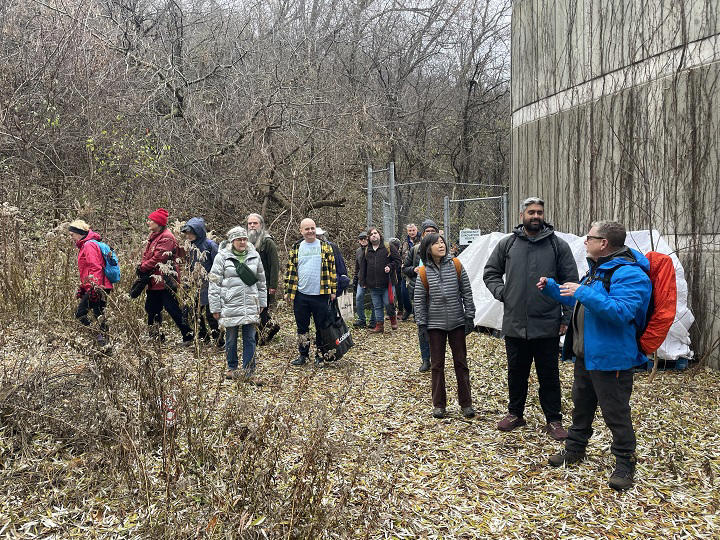
Nature walk held in Don Mills opposes Ford’s Science Centre plans

Story by Tessa Bennett • 21h

People opposing Ontario Premier Doug Ford's plan to move the Ontario Science Centre gathered in Don Mills Saturday for an opposition walk.© Frazer Snowdon / Global News

Agroup called Save Ontario's Science Centre hosted a nature walk Saturday afternoon in support of keeping the Ontario Science Centre (OSC) where it is.

The walk was led by arborist Todd Irvine of City Forest along with ravine advocate Floyd Ruskin of Lost Rivers Toronto.

Ontario’s Minister of Tourism, Culture and Sport, Neil Lumsden confirmed the plan to move the facility at a press conference at Ontario Place earlier this year.

Organizers and attendees alike attended Saturday's event in hopes that it would bring attention to what they are referring to as a "disappointment."

Ruskin said the community of Science Centre supporters worry the Ford government will use their legislative power to enact laws that negatively impact Toronto communities.

"Our fear is that the Ford government will use legislative power like they did with Ontario Place and enact laws that say, 'we don't care what the public says; we don't care what the auditor general says; we don't care how it affects the communities of Fleming or Thorncliffe or Don Mills,'" Ruskin said.

He also said the reasoning behind Ford wanting to relocate the facility is "unnecessary."

"One of the challenges and one part of the government's business case is that the building is in need of repair," he said. "That's all on the on the government. They've consistently underfunded and deferred scheduled maintenance."

Global News
Evaluating the proposed Ontario Science Centre move

In November, the province released its business case for moving the OSC.

In the report, the current site is described as having an “operational crisis” with a need to close it indefinitely for repairs.

Ruskin noted concerns about the building being moved.

"If (Ford) has his way, the facility will be half the size," he said. "And I want us to recognize that while the government business case says only 53 employees will lose their jobs, it's more than likely that quite a few more will lose their jobs as well – 53 jobs is a few hundred. You know, that's a lot of family members."

The Science Centre was built in Don Mills more than 50 years ago and was designed by Raymond Moriyama, the architect who helped design the Canadian War Museum as well as Ottawa's City Hall.

"It's unnecessary," Ruskin said of the move. "The auditor general said it was unnecessary. Every media outlet said it was unnecessary. We say it's unnecessary. The taxpayers of Ontario say it's unnecessary. But Mr. Ford says it is necessary."

-- with files from Isaac Callan and Colin D'Mello