Sunday, September 22, 2024

 artificial intelligence brain cyber

Artificial General Intelligence: A Definitive Exploration Of AI’s Next Frontier – Analysis

By 

Artificial General Intelligence (AGI) is a field within artificial intelligence (AI) where researchers are working to develop a computer system that can surpass human intelligence in various tasks.


These systems might understand themselves and control their actions, including changing their own code. They could learn to solve problems on their own, just like humans, without needing to be taught.

The term “Artificial General Intelligence (AGI) ” was first used in a 2007 book, which is a collection of essays edited by computer scientist Ben Goertzel and AI researcher Cassio Pennachin.

However, the idea of Artificial General Intelligence has been around for many years in the history of AI and is often seen in popular science fiction books and movies.

The AI systems we use today, like simple machine learning algorithms on Facebook or advanced models like ChatGPT, are known as “narrow” AI. This means they are designed to handle specific tasks rather than having general intelligence like humans.

This means these AI systems can do at least one job, like recognizing images, better than humans. However, they are only able to do that specific task or similar actions based on the data they were trained with.


AGI, or Artificial General Intelligence, would go beyond just using the data it was trained on. It would have human-like abilities to reason and understand in many areas of life and knowledge. This means it could think and make decisions in the same way a person does, applying logic and context to different situations, not just following pre-programmed patterns.

Since AGI has never been created, scientists don’t fully agree on what it could mean for humanity. There is uncertainty about the potential risks, which ones are more likely, and what kind of impact it could have on society.

Some people have previously thought that AGI might never be possible, but now many scientists and tech experts believe it could be achieved in the next few years. Notable figures, including computer scientist Ray Kurzweil and Silicon Valley leaders like Mark Zuckerberg, Sam Altman, and Elon Musk, are among those who share this view.

What are the advantages and potential dangers of AGI?

AI has already shown many benefits across different areas, helping with scientific research and saving people time in everyday tasks.Newer tools, like content creation systems, can produce artwork for marketing or write emails based on how a user typically communicates.However, these tools can only complete the tasks they were specifically trained for, using the data that developers provided to them.

AGI, on the other hand, could bring a whole new range of benefits for humanity, especially in situations that need advanced problem-solving skills.

In a blog post from February 2023, three months after ChatGPT launched, OpenAI’s CEO Sam Altman suggested that AGI could, in theory, boost resource availability, accelerate the global economy, and lead to groundbreaking scientific discoveries that expand what we believe is possible.

Altman also mentioned that AGI could give people amazing new abilities, allowing everyone to get help with almost any mental task. This would greatly enhance human creativity and problem-solving skills.

However, AGI also comes with significant risks. According to Musk in 2023, these risks include “misalignment,” where the system’s goals might not align with those of the people controlling it, and the possibility, though small, that a future AGI system could pose a threat to humanity’s survival.

A review published in August 2021 in the Journal of Experimental and Theoretical Artificial Intelligence highlighted several potential risks of future AGI systems, even though they could bring “huge benefits for humanity.”

The review pointed out several risks related to AGI, such as AGI breaking away from human control, being given or developing dangerous goals, creating unsafe AGI, AGI systems lacking proper ethics, morals, and values, poor management of AGI, and the possibility of existential threats, according to the study’s authors.

The authors also suggested that future AGI technology could potentially improve itself by developing smarter versions and even changing its original programmed goals.

The researchers also warned that some groups might create AGI for harmful purposes, and even well-intentioned AGI could lead to “disastrous unintended consequences,” according to a report by LiveScience.

When is AGI expected to arrive?

There are differing opinions on whether humans can truly create a system as advanced as AGI, and when that might happen. Surveys of AI experts suggest that many believe AGI could be developed by the end of this century, though opinions have shifted over time.

In the 2010s, most experts believed that AGI was about 50 years away. However, more recently, this estimate has been shortened to anywhere between 5 and 20 years.

Recently, several experts have predicted that an AGI system could emerge within this decade.

In his book The Singularity is Nearer (2024, Penguin), Kurzweil predicted that reaching AGI would signal the start of the technological singularity (a point where AI surpasses human intelligence), as reported by LiveScience.

This moment will mark a point where there is no turning back, leading to rapid technological growth that becomes uncontrollable and permanent.

Kurzweil predicts that after reaching AGI, superintelligence will emerge by the 2030s. By 2045, he believes people will be able to connect their brains directly to AI, enhancing human intelligence and consciousness.

Some scientists believe that AGI could be developed very soon.

For example, Goertzel has predicted that we could reach the singularity by 2027, while Shane Legg, co-founder of DeepMind, believes AGI could arrive by 2028.

Musk has also predicted that AI will surpass human intelligence by the end of 2025.


Girish Linganna

Girish Linganna is a Defence, Aerospace & Political Analyst based in Bengaluru. He is also Director of ADD Engineering Components, India, Pvt. Ltd, a subsidiary of ADD Engineering GmbH, Germany. You can reach him at: girishlinganna@gmail.com

 dictatorship democracy extremist politics

The Rule Of Law, Democracy, And Economic Growth: Navigating Complex Interdependencies – Analysis


By 

The relationship between the rule of law, democracy, and economic growth constitutes a subject of extensive debate within political and economic discourse. Each of these three concepts plays an essential role in shaping the developmental trajectories of nations.


The rule of law ensures that legal frameworks are respected and enforced, fostering stability and fairness. Democracy empowers citizens by providing them with a voice in political decision-making, while economic growth focuses on increasing a nation’s wealth and enhancing the living standards of its populace. This essay contends that, although the interplay among the rule of law, democracy, and economic growth is complex and context-dependent, a robust legal system combined with democratic governance is generally indispensable for fostering sustainable economic development. 

The rule of law is foundational to economic growth as it creates an environment of predictability and security crucial for both domestic and international investments. By ensuring that laws are applied equally to all citizens and businesses, the rule of law promotes fairness and reduces corruption. When property rights are safeguarded and contracts are enforceable, businesses are more likely to invest in long-term projects, which consequently leads to job creation, innovation, and wealth generation. In nations where the rule of law is weak, economic uncertainty prevails, as businesses cannot trust that their investments will be protected.

This scenario is particularly pronounced in countries with corrupt legal systems, where political elites may manipulate the law for personal benefit, thereby stifling economic competition and innovation. A functioning legal system not only establishes the conditions for economic stability but also facilitates the growth of democracy. In democratic frameworks, the rule of law serves as a check on power, ensuring that government officials are held accountable to the same legal standards as ordinary citizens. This is crucial for the protection of civil liberties, the enforcement of contracts, and the development of a free and open marketplace.

Democracies characterised by a strong rule of law typically demonstrate greater transparency, thereby reducing opportunities for corruption and abuse of power. Furthermore, citizens in democratic nations are more likely to engage in economic activities when they feel assured that their rights will be upheld and that the government remains accountable to them. Democracy has been extensively analysed regarding its impact on economic growth. Proponents of democratic governance contend that it fosters political stability, inclusivity, and the development of policies that benefit a broad segment of the population. Democracies typically invest more in human capital—such as education and healthcare—thereby promoting innovation and facilitating long-term economic growth.

Additionally, democratic systems afford opportunities for dissent and public discourse, which can contribute to superior policy outcomes. Conversely, critics of democracy argue that democratic governance may exhibit inefficiencies stemming from short-term electoral cycles and the influence of special interest groups. Governments operating within democratic frameworks might prioritise populist policies that jeopardise economic stability, favouring immediate gains over sustainable long-term development.


Empirical evidence regarding the correlation between democracy and economic growth presents a mixed picture. Certain democracies, such as the United States and Germany, have achieved sustained economic growth, while others have experienced stagnation or volatility. For instance, India, recognised as the world’s largest democracy, has grappled with pervasive poverty and inequality despite many years of democratic governance. In contrast, some authoritarian regimes, notably China, have experienced rapid economic growth without the presence of democratic institutions. China’s centralised decision-making framework has facilitated the swift implementation of economic reforms, often circumventing the slow and contentious legislative processes typical in democracies.

Nonetheless, a debate persists regarding the long-term sustainability of such growth in the absence of democratic reforms, as citizens in authoritarian regimes may eventually demand greater political freedoms and increased accountability. The interrelationship between the rule of law, democracy, and economic growth becomes more evident when scrutinising specific case studies. South Korea epitomises a country that has successfully transitioned from authoritarianism to democracy while maintaining robust economic growth.

Following decades of military governance, South Korea democratized in the late 1980s, during which its economy continued to thrive, driven by strong legal institutions, significant investments in education, and technological innovation. In contrast, countries characterised by weak rule of law and unstable democratic institutions, particularly in certain regions of Sub-Saharan Africa, often encounter substantial obstacles in achieving sustained economic growth. In these areas, political instability, corruption, and ineffective governance hinder both democratic advancement and economic development. While the rule of law and democracy are often regarded as prerequisites for economic growth, there exist notable exceptions to this assertion. Some scholars contend that authoritarian regimes can, in certain instances, surpass democracies in terms of economic growth, particularly in the short term.

Singapore is frequently cited as a prominent example of a non-democratic state characterised by a strong rule of law and a thriving economy. Its highly centralised government, combined with a robust legal framework, has facilitated its development into one of the world’s most prosperous nations. However, such models are not without their critics, as the absence of political freedoms may lead to social discontent and potentially undermine long-term stability.

In conclusion, the relationship between the rule of law, democracy, and economic growth is complex, and its effectiveness is contingent upon the specific context in which these elements are applied. A strong rule of law establishes the necessary conditions for both democracy and economic growth by promoting fairness, transparency, and accountability. While democracy possesses the potential to foster inclusive and sustainable economic growth, it can also encounter challenges related to political instability and inefficiency.

In certain instances, authoritarian regimes may achieve rapid economic development; however, their long-term prospects remain uncertain in the absence of the democratisation of political institutions. For nations striving to stimulate growth, investing in the rule of law and democratic governance offers a more stable and sustainable trajectory toward development. Nevertheless, policymakers must be acutely aware of the complexities and nuances involved in balancing political freedoms, legal accountability, and economic progress.

The opinions expressed in this article are the author’s own.

References

  • Acemoglu, Daron, and James A. Robinson. Why Nations Fail: The Origins of Power, Prosperity, and Poverty. Crown Business, 2012.
  • Barro, Robert J. “Democracy and Growth.” Journal of Economic Growth, vol. 1, no. 1, 1996, pp. 1-27.
  • North, Douglass C. Institutions, Institutional Change and Economic Performance. Cambridge University Press, 1990.
  • Sen, Amartya. Development as Freedom. Oxford University Press, 1999.
  • Zakaria, Fareed. The Future of Freedom: Illiberal Democracy at Home and Abroad. W.W. Norton, 2003.

Simon Hutagalung

Simon Hutagalung is a retired diplomat from the Indonesian Foreign Ministry and received his master's degree in political science and comparative politics from the City University of New York. The opinions expressed in his articles are his own.

 Slums India Girl Poor Lovely Street Hindu Poverty Hunger

More Effective Aid By Design: Integrating Food, Climate And Peace – Analysis


By 

By Dr Simone Bunse and Liliana Almeida


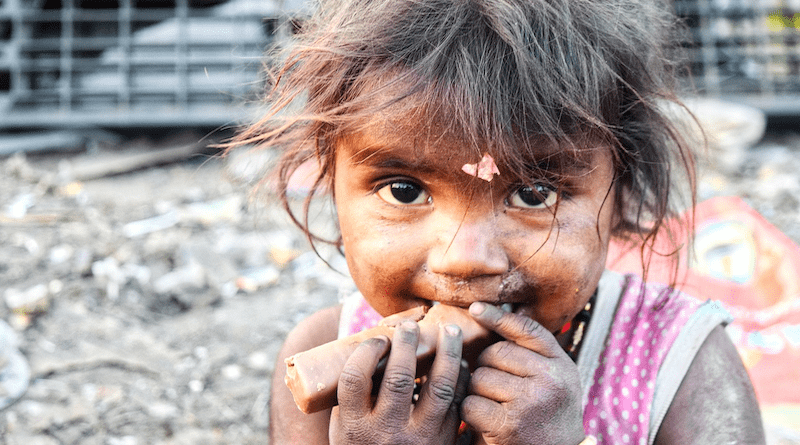
The number of people suffering acute food insecurity keeps rising. In 2023, nearly 282 million people in 59 countries experienced high levels of acute food insecurity, one more country and 24 million more people than in 2022. The main drivers of this rising food insecurity are conflict, climate pressures and economic crises. With armed conflicts proving intractable, climate impacts intensifying and humanitarian funding falling further and further behind ever-growing humanitarian need, aid urgently needs to become more effective.

A key way to boost the effectiveness of aid is to ensure that it does not just address the symptoms of humanitarian crises but also the drivers. In fragile and conflict-affected contexts—which still account for the vast majority of humanitarian need—the logic of integrating food security, climate resilience and peacebuilding interventions has long been recognized.

However, such integrated approaches have been slow to emerge. This blog first explores why this is the case and then spotlights the Sahel Resilience Partnership, a promising collaboration between food, climate and peace sectors in one of Africa’s most fragile and climate change-affected regions. It concludes by looking at how to accelerate progress on integrated approaches.

Barriers to integrated food, climate and peace programming

There are many areas of potential synergy between humanitarian food programmes; development work focused on strengthening communities’ climate resilience, for example through infrastructure or agricultural projects; and peacebuilding interventions. Integrated approaches seek to exploit these synergies in order to tackle complex, interlinked policy challenges for better and broader impacts in all three areas.

Depending on the context and the actors involved, this might be achieved by different types of integration. For example, climate resilience and peacebuilding activities could be systematically added to food security projects. Alternatively, separate food security, climate resilience and peacebuilding interventions implemented in the same geographical area by the same organization could be aligned and coordinated. Or separate humanitarian, development and peacebuilding organizations could form partnerships to work in the same area towards a set of agreed common goals. Integrated approaches do not replace the core work of different actors, but they can make it more impactful.


However, integrating food, climate and peacebuilding programming in this way—whether within or between organizations—has proved challenging. Among the main barriers that have been identified are incompatibility of mandates, the complexity of peacebuilding, and various structural factors.

When it comes to the first issue, humanitarian, development and peacebuilding actors’ mandates tend to focus on distinct conflict or post-conflict phases. These organizations’ may also be concerned that integrated approaches would make it harder to do their core work. For example, humanitarian actors may worry that working with conflict parties on peacebuilding may compromise the humanitarian principles of neutrality and independence and thus limit their access to some communities or areas in need.

Furthermore, mistrust can also make organizations reluctant to cooperate. Partnerships can exacerbate power imbalances and smaller organizations may fear that a higher-profile partner may eclipse and take credit for their contribution.

The complexity and uncertainties surrounding peacebuilding work can also be a barrier to more integrated programming. Both humanitarian and climate actors may be reluctant to take on peacebuilding tasks because of the high risks of failure and the generally slow and subtle nature of outcomes, making it harder to measure and showcase progress.

Finally, integrated approaches face a number of structural hurdles. Differences in methods, responsibilities and crisis-response models, project and funding cycles, and organizational cultures can discourage organizations from seeking closer integration.

However, failing to define common objectives and align interventions creates a higher risk of different actors duplicating each other’s work or even working at cross-purposes during implementation. 

Integrated approaches also involve agreeing new governance structures and new internal practices. Finally, organizations in the food, climate and peacebuilding spheres are sometimes competing for the same limited funding, while concerns over sovereignty and risk may influence different donors’ willingness to work together in fragile contexts.

Connecting food, climate and peacebuilding in the Sahel 

Despite these obstacles, some promising programmes have emerged. One examples is the Sahel Resilience Partnership established by Deutsche Gesellschaft für Internationale Zusammenarbeit GmbH (GIZ), the World Food Programme (WFP) and the UN Children’s Fund (UNICEF) in 2024.

In Burkina Faso, Chad, Mali, Mauritania and Niger millions of people are grappling with severe food insecurity, violent conflict and adverse climate impacts. The Sahel Resilience Partnership therefore focuses on four main areas: enhancing food and nutrition security; increasing capacity to adapt to climate pressures; improving community relations and peaceful conflict resolution; and strengthening social protection systems. It builds on, scales up and strengthens UNICEF and the WFP’s earlier resilience work in the region, which was particularly successful in Niger: despite a particularly poor agropastoral season in 2022, 80 per cent of villages covered by the UNICEF and WFP work did not require humanitarian assistance.

The partnership has several design strengths. First, it aligns multiple sectors and leverages synergies between food, climate adaptation and peacebuilding interventions in the same communities and locations. It addresses immediate humanitarian needs through food assistance and cash transfers; invests in development through climate-proofing community infrastructure, water conservation, training in sustainable farming practices, and providing access to high-quality seeds and fertilizers; and promotes social cohesion through strengthening local conflict-resolution structures, improving relations between different groups, and addressing harmful gender norms.

A second strength is that to cope with recurring shocks, the interventions look not only at individual and community needs but at food systems more broadly. Finally, it builds on collaboration with over 90 implementing partners, including national governments, non-governmental organizations and international financial institutions. This extensive network has contributed to the partnership securing long-term funding and accessing a pool of diverse expertise.

However, it remains to be seen what structures will be created to govern and implement the initiative and how it will generate a common understanding of conflict dynamics, address the root conflict causes, measure contributions to peace, and with what outcomes.

Advancing integrated approaches in fragile contexts

Given the links between food insecurity, climate pressures and conflict, integrated, multisectoral programming in the same geographical area would seem to hold more promise to enhance aid effectiveness than traditional siloed approaches. 

There are undeniably challenges. Integrated approaches demand new forms of collaboration within and between organizations; new funding models that incentivize such programming; and a broader systems approach that engages individuals, local communities and governments for enhanced resilience to food insecurity, climate stress and conflict. However, the Sahel Resilience Partnership suggests that it can be done.

Future research should focus on how these challenges can be overcome and on the conditions for success in integrated food, climate and peace programming.

This article is inspired and informed by the workshop titled ‘Enhancing Aid Effectiveness in Fragile Contexts by Exploring Food Security, Climate Adaptation and Peace Interventions’ co-hosted by GIZ and SIPRI at the 2024 Stockholm Forum on Peace and Development. The authors would like to thank the speakers and participants in this session for their invaluable insights.

About the authors

  • Dr Simone Bunse is a Senior Researcher in the SIPRI Food, Peace and Security Programme.
  • Liliana Almeida Liliana was an intern in the Food, Peace and Security Research Team, providing assistance in data analysis for ongoing research on food insecurity and humanitarian interventions.

Source: This article was published by SIPRIFacebook


SIPRI

SIPRI is an independent international institute dedicated to research into conflict, armaments, arms control and disarmament. Established in 1966, SIPRI provides data, analysis and recommendations, based on open sources, to policymakers, researchers, media and the interested public. Based in Stockholm, SIPRI also has a presence in Beijing, and is regularly ranked among the most respected think tanks worldwide.
As UN meets, Haitians express hopelessness at finding international solution to gang crisis

September 22, 2024 
By Associated Press
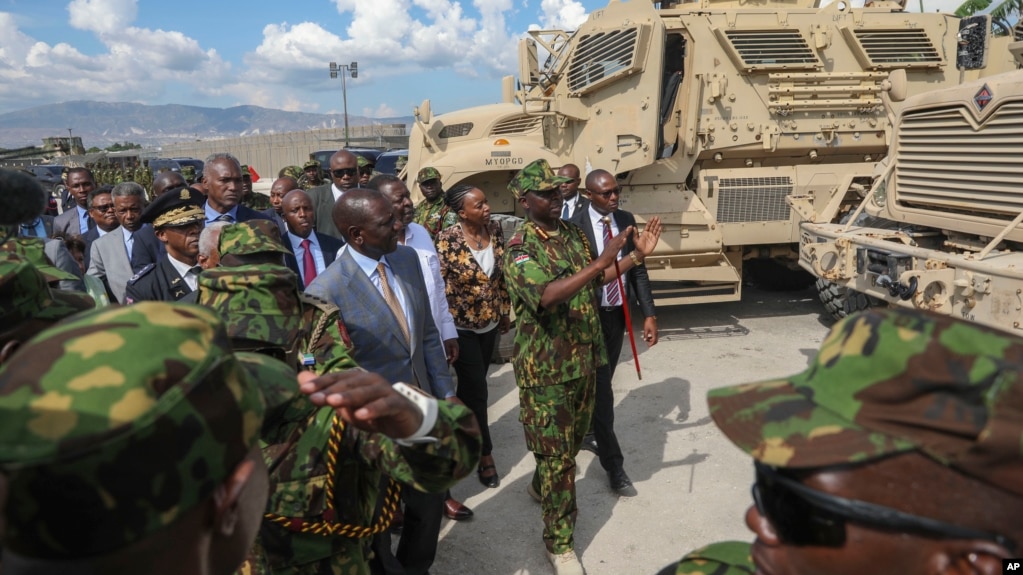
Kenya's President William Ruto, center-left, visits Kenyan police, part of a U.N.-backed multinational force deployed in Haiti to help curb gang violence in the country, at their base in Port-au-Prince, Haiti, Sept. 21, 2024.

PORT-AU-PRINCE, Haiti —

As world leaders meeting in the United Nations this week discuss the future of efforts to rein in the gangs strangling Haiti, Haitians are expressing hopelessness that an international response can turn the tide of violence.

Thus far, a U.N.-backed force of 400 police from Kenya and about two dozen Jamaican officers have done little to quell the country's gangs, which have terrorized the country since the 2021 assassination of President Jovenel Moïse. World leaders have been discussing the next steps in a convoluted effort to restore order to the Caribbean nation.

The United States has floated the idea of a U.N. peacekeeping force, but the idea was considered too controversial given the introduction of cholera and sexual abuse cases that occurred the last time U.N. troops were in Haiti.

The deployment of Kenyan forces was, in part, to avoid tensions that may be sparked by sending another U.N. peacekeeping mission.

But in a visit to Haiti by Kenya's President William Ruto over the weekend – on his way to the United Nations General Assembly session, which began on Sunday – Ruto said he would be open to expanding Kenya's operations into a larger U.N. peacekeeping mission.

"On the suggestion to transit this into a fully U.N. Peacekeeping mission, we have absolutely no problem with it, if that is the direction the U.N. security council wants to take," Ruto said.

While Ruto hailed the successes of the Kenyan forces on Sunday, a recent report by a UN human rights expert said gang violence is spreading across Haiti and that Haitian police still lack the "logistical and technical capacity" to fight gangs.

The ongoing violence has left Haitians like 39-year-old Mario Canteve disillusioned with further international efforts to quell the gangs, saying he no longer believes promises by world leaders that they'll be able to change anything in the crisis-stricken nation.

"No one is coming to save Haiti. Nothing is changing," he said. "A new mission cannot save Haiti."

Canteve sells cellphone chips and repairs electronics in the capital of Port-au-Prince, 80% of which is estimated to be controlled by gangs. Facing brutal gang violence, some Haitians have organized vigilante groups to battle the gangs themselves.

Such groups speak to the lack of hope many Haitians have that an international solution can mark a shift in Haiti.

Moise Jean-Pierre, a 50-year-old schoolteacher, recalled past U.N. missions in Haiti and said such efforts were a "waste of time."

"It would not be the first time we've had U.N. missions in Haiti," he said. "What difference will it make?"

Sentiments on the ground speak to the bind world leaders are in as they've spent years looking for a larger solution to Haiti's woes.

The current security mission is expected to reach a total of 2,500 personnel, with the Bahamas, Bangladesh, Barbados, Benin and Chad also pledging to send police and soldiers, although it wasn't clear when that would happen.

Few at the U.N. have an appetite for a larger peacekeeping mission in part due to the abuses in past missions, but also because many Haitians have an aversion to foreign interventions. Experts say three previous interventions by U.S. and the U.N. have not improved crises in Haiti.

Some harbor hope that elections planned next year will pave the path to a Haitian-born solution.

The country has not held general elections since 2016 as the crisis has dragged on.

Last week, Haiti took its first steps in creating a provisional election council to prepare the nation for elections. Haiti still has many hurdles ahead of it to get there. Chief among them is violence.

While Canteve, the cellphone chip salesman, called for unity and said "a new mission cannot save Haiti, the children of Haiti need to save themselves," he also expressed doubts the country was safe enough to facilitate elections.

"How can you hold an election when everything is so violent. Everyone is so violent. When police cannot even go into certain areas, what kind of election are going to get?” he asked.