Wednesday, September 25, 2024

NEW BRUNSWICK

MUN students, faculty launch new campaign urging Furey to stop funding cuts to university

CBC
Tue, September 24, 2024

MUNSU director of external affairs Nicolas Keough says students are fed up with plummeting student debts and rising costs of living. (Darryl Murphy/CBC - image credit)

Memorial University student union representative Nicolas Keough says students are fed up with spiking student debts and the rising cost of living. He was part of a group of students, faculty and union leaders demanding that the province halt funding cuts. (Darryl Murphy/CBC)

Students, faculty members and labour unions demanded an end to budget cuts Tuesday amidst soaring student debt and crumbling infrastructure at Memorial University's St. John's campus.

Student and faculty leaders gave speeches at a podium on campus pleading with the Newfoundland and Labrador government to halt cuts and restore funding to Memorial University. Their demands come three years after the province moved to significantly hike tuition costs for incoming students.

The group launched the campaign, called FundMUN, alongside CUPE and NAPE members who represent MUN's staff.

At a press conference, speakers from MUN's student union, MUN's faculty association and CUPE 1615 outlined the effects of budget reductions on students, staff and the institution itself.

"Simply put, all of us [have] had enough," said Nicolas Keough, Memorial University Students' Union director of external affairs.

"Our campuses are crumbling around us," he said. "Tuition fees are increasing at alarming rates to try to make up the funding."

The coalition also launched a website where students, staff, and members of the public can directly email elected officials, including their MHA, to inform how funding cuts have impacted them.

A call to action

Lisa Moores, vice-president external for the Memorial University of Newfoundland Faculty Association and an associate professor of counselling, highlighted the role Memorial University plays academically, socially and economically in the province.

"Our university was raised as a memorial to the fallen in the Great Wars," she said.

She said MUN's legacy is to provide students wirth opportunities that would have otherwise been out of reach.

MUNFA vice-president external, Lisa Moores says she constantly hears from her colleagues about the stress of working in an institution that's been whittled away for a decade.

Lisa Moores of MUN's faculty association says she constantly hears from her colleagues about the stress of working in an institution that's been whittled away for a decade. (Darryl Murphy/CBC)

Moores says that a decade of funding cuts has reduced the university's ability to function adequately.

"With the exception of our medical school, funding to MUN has been cut by a staggering 46 per cent since 2013," Moores said, adding that continued cuts would do a disservice to both the students and everyone in the province.

Keough says tuition fees have increased 135 per cent for domestic students and 74 per cent for international students since 2021, and the enrolment number is dropping as well.

"Students are barely holding on, with skyrocketing rent and rising costs of living adding to the burden," Keough said.

Moores echoed these concerns, saying Newfoundland and Labrador only has one university, and it deserves a university that serves the public good.

"This cannot happen if funding cuts continue," said Moores.

'You must do the right thing'

Bill Kavanaugh, president of CUPE Local 1615, which represents over 700 administrative, technical, and support staff at MUN, also spoke at the event. Kavanaugh painted a grim picture of the crumbling infrastructure and the impact of cuts on staffing levels.

Memorial's facilities have been suffering from a backlog of deferred maintenance needs, estimated at $481 million, says Kavanaugh, noting that funding for the university's deferred maintenance program was cut in 2018.
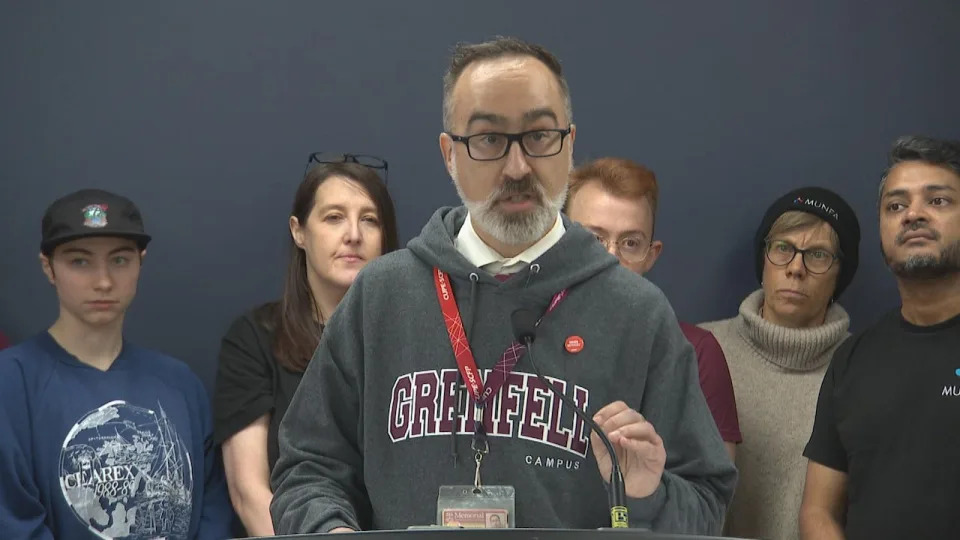
Bill Kavanaugh is the president of CUPE local 1615. He says the Premier should reflect on his university experience as a MUN alumni when he makes decisions at the next provincial budget.

Bill Kavanaugh is the president of CUPE local 1615. He says the premier should reflect on his university experience as a MUN alumnus when he makes decisions at the next provincial budget. (Darryl Murphy)

Kavanaugh says the degradation of Memorial's campus affects staffing levels and labour conditions as well.

"This is where we work, study, and socialize," said Kavanaugh.

The Facilities Condition Index, or FCI, is a standard tool, ranging from 0-10 per cent, the latter being poor. This is used to measure the conditions of campus buildings at MUN.

Kavanaugh says the university fails to reach its goal of FCI 12 per cent.

"It's not hyperbolic when we say that our campuses are crumbling around us," said Kavanaugh. "They are."

"We're calling on you, Premier Furey, to do the right thing," he added.

"Sit down with us, the students, and the workers, and develop a concrete plan to restore funding to our university.... Anything short of that is a disservice to our university's legacy, to our province, and to our people."

Funding displaced, not cut: Furey

Premier Furey told reporters Tuesday that after discussions with MUN's former president, his government decided to give money to students instead of providing MUN with a "general pocket" of cash that can be spent on different projects.

"The money wasn't cut, it was displaced," said Furey.

He also said the university has a structural governance issue which should be dealt with from a fiscal point of view.

Memorial University itself alluded to its diminished funding, however.

"Our priority is ensuring that Memorial can continue to fulfil its teaching, research and public engagement mandate within the context of a constrained provincial budget and multi-year reductions in the university's operating grant," said Chad Pelley, a spokesperson for Memorial University, in an emailed statement to CBC News.

"The challenges associated with this are a part of our ongoing conversations with the provincial government."
Bruises, threats and burnout: Study finds Sask. teachers at breaking point with violence

CBC
Wed, September 25, 2024 

Participants in the University of Ottawa said much of the violence in Saskatchewan schools is coming from students who are struggling with unmet needs both inside and outside the classroom, according to the study. (Kevin Mulcahy/Shutterstock - image credit)

Educators being punched in the face, choked with lanyards, kicked, and threatened with scissors and pins — many teachers, educational assistants and other school staff in Saskatchewan say incidents like these are becoming their reality.

A study by the University of Ottawa, based on responses from education workers, points to escalating levels of violence and harassment in the province's education sector in the 2022-23 school year.

It comes just weeks after an incident at Saskatoon's Evan Hardy Collegiate that left one student recovering from severe burns, and another charged with attempted murder after allegedly lighting her classmate on fire.


The report, prepared by U of Ottawa professors in criminology and psychology, along with two doctoral students studying in those fields, is part of a broader look at national trends that teachers, educational assistants and other school staff are facing, driving many to the brink of burnout, the researchers say.

The study included 848 participants, which would be approximately four per cent of the education workforce in Saskatchewan, who completed a survey between Oct. 16 and Dec. 30, 2023. The participants were asked about their experiences with, and the reactions to, violence and harassment in the workplace in the 2022-23 school year.

The Saskatchewan Teachers' Federation and CUPE Saskatchewan sent out invitations to their members to participate.

Participants said much of the violence is coming from students who are struggling with unmet needs both inside and outside the classroom, according to the study.

Chris Bruckert, a criminology professor and one of the study's researchers, says those unmet demands combine with dwindling resources to create a perfect storm.

Those students need "early diagnosis, if it's appropriate, and EA support when it's necessary — and that's not happening," Bruckert said. "What you end up with is kids who run out of words, and the only language they have left is to strike out."

Chris Bruckert is a University of Ottawa professor whose team carried out dozens of interviews with pimps — including some in Ottawa — for a new book that explores those workers' roles in the country's sex industry.

Chris Bruckert is a University of Ottawa criminology professor and one of the researchers on a study released in September 2024 looking at violence against workers in Saskatchewan's schools. She says students’ unmet demands combine with dwindling resources to create a perfect storm. (Submitted by Chris Bruckert)

CBC reached out to Saskatchewan's minister of education for an interview, but the province provided a statement saying all students and staff should be safe at school.

"That is why workplaces in Saskatchewan are required to develop a violence prevention plan to eliminate workplace violence," the statement said, adding the government "will continue working with school divisions to ensure policies and supports are in place to keep students and staff safe."

Saskatchewan NDP MLA Meara Conway echoed the concerns raised by the study, highlighting the growing student population and dwindling staff.

She said if the Opposition party forms government after this fall's election, it would "allow for more supports in the classroom, more teachers, more EAs, more subspecialties that we've seen cut over 17 years of Sask. Party rule."

Threats from parents

However, the report shows that students aren't the only ones initiating the violence. One in five workers reported threats of physical force from a parent. One participant recounted an incident where a mother physically assaulted them, leaving bruises and abrasions.

The study says 91 per cent of women reported at least one act of harassment or violence, compared to 81 per cent of men.

One teacher in the study said, "as a short female, others often try to intimidate me by getting into my space and making threats. There is a lot of verbal confrontation, waving hands and fists in my face."

Eighty-seven percent of workers in the survey said they experienced harassment at least once during the school year.

"I was continually called a stupid b--ch, often told to shut the f--k up and given the middle finger," a participant in the study said.

Darby Mallory, a doctoral student in criminology and another researcher on the study, said that workers feel deeply saddened by their inability to meet students' needs due to a lack of funding and resources.

Despite facing violence from some students, there is no sense in the data that educators are blaming the children, she said. Instead, they view the situation as a structural issue, recognizing that the students themselves are often victims of an underfunded system.

She quoted one of the participants, who said: "We are told to see the good in them. We do. We love our students, but we can't fix everything and we certainly can't do it alone."

You can hear more about the issue of school violence on CBC Radio's Blue Sky at 12 noon CST on Wednesday, Sept. 25.
EMR opens multi-million-pound UK EV battery plant

EMR has opened its first UK-based EV battery recycling centre at its Birmingham facility.


Earlier in the year, the company opened a similar facility at a site in Hamburg, Germany, in partnership with Northvolt – said to be one of Europe’s largest battery manufacturers.

The UK facility was officially opened on 18 September with a ceremony attended by some recognisable brands within the automotive sector, such as Bentley, Jaguar Land Rover and BMW.

EMR said the site will have the capacity to test for reuse or repair, or process batteries ready for shredding, handling more than 2,000 tonnes of batteries per year.

Batteries that arrive on the site have been initially sourced via product recalls, warranty failures and end-of-life e-bikes and e-scooters. They are then assessed to determine whether the battery pack can be reused in a new vehicle, remanufactured for use in the energy storage sector, or recycled

The multi-million-pound plant is a natural step born from EMR’s involvement in the RECOVAS consortium, a collaborative research and development project launched in 2020 with grant funding from the Department for Business and Trade via the Advanced Propulsion Centre UK (APC).

The project’s aim is to develop the UK’s first commercial-scale recycling facility for automotive battery packs.

Chris Sheppard, chief executive of EMR, said: “The Birmingham facility is the latest in our efforts to ensure that we stay ahead of the curve in sustainability, innovation and technology.

“By creating a circular supply chain for EV batteries, we are not only supporting the UK’s transition to net zero, but we are also setting a benchmark for others to follow in this rapidly evolving industry.”
‘Securing a sustainable future’

Julian Hetherington, automotive transformation director at the APC, added: “At the APC, we are proud to support such initiatives, which will play a crucial role in decarbonising the automotive industry. By recycling and remanufacturing batteries, EMR is addressing one of the key challenges in the EV supply chain and helping to secure a sustainable future for electric mobility.”

Helen Waters, head of electric battery recycling at EMR, concluded: “While the transition to EVs is now speeding up, it will be 10 to 15 years before they arrive at EMR facilities in anything like the same quantities that petrol-powered vehicles do today. The opening of this new facility at EMR Birmingham is further proof that EMR is solving tomorrow’s challenges today.”


University of Sussex to host UK's biggest festival of LGBTQ+ literature

By: Imogen Harris
Last updated: Wednesday, 25 September 2024

British Museum unveils vast network of the Silk Roads


A new exhibition at the British Museum explores the interconnectedness of the Silk Roads and their influence on the cultures of East Asia, Africa and North-West Europe. -
 
Copyright © africanewscleared
By Rédaction Africanews

The Silk Road is often thought of a single trade route that linked Europe and Asia, from the second Century BC until the 15th Century AD.

The popular imagination perhaps conjures images of camels plodding across vast steppes laden with silk and spices.

And although camels, silk and spices all played a role in the Silk Road - it is just a tip of the iceberg.


A major new exhibition at the British Museum wants to dispel myths and shed light on the stories behind this major trade network.

To illustrate how interconnected cultures were in the medieval period, the first exhibition greeting visitors is a Viking Buddha.

This tiny bronze statue was discovered on the Swedish island of Helgo, west of Stockholm, and was likely produced in the Swat Valley, now in modern day Pakistan.

It must have travelled 5,000 km in the late 500s AD and perhaps found a home with a powerful Viking chief.

The exhibition Silk Roads deliberately pluralises the title to show it was not one single route but a much wider network that spanned Asia, Africa and Europe, from Japan to Ireland, from the Arctic to Madagascar.

Sue Brunning, a curator of European Early Medieval Collections at The British Museum explains: "People might be used to an idea of the Silk Road as a single trade route between east and west. But in this exhibition we're presenting a rather different vision of that. And that we're calling it Silk Roads, plural. And the plural is important because we're presenting it rather as a network of overlapping routes that linked communities across Asia, Africa and Europe in all directions, not just by land, but also by river and sea."

The exhibition focuses on a timeframe of just 500 years, between 500AD and 1000AD.

Perhaps surprisingly, this omits Marco Polo who - at least in the West - is a name associated with travels along the Silk Road in the 13th century.

The exhibition cuts off at 1000 AD because at this point Viking explorers landed on the North American continent and a whole new trade network stretching across the Atlantic was began.

The timeframe encompasses the Tang dynasty in China, the Islamic Rashidun Caliphate, the Byzantine Empire in modern day Turkey and beyond, and the Carolingian Empire in France.

The museum tells the story with objects from its own collection as well as those borrowed from 29 international lenders, many of which have never been shown in the UK before.

One of the most striking is this enormous mural that once hung in the Hall of Ambassadors in Afrasiab, in what is present day Samarkand in Uzbekistan.

It was a prized artwork of the Sogdians - a culture not familiar to most people today, but they were once among the greatest traders of the Silk Road.

The mural shows characters from India, Korea and China at a funeral procession for the powerful Sogdian King, Varkhuman.

"One of the most spectacular loans that we have on display in the exhibition is this fantastic wall painting, which is on loan to the UK for the very first time from our partners in Uzbekistan. And this is a wall painting that is associated with a group known as the Sogdians, who were great traders along the Silk Road at this time, moving very vast distances. We have traces of them, for example, from China into India and the Middle East. And this wall painting shows a procession which includes the camels, which you might expect to see in a Silk Road show, but also elephants and people from across different parts of the world who are all processing to an ancestral tomb in the Sogdian's heartland of Sogdiana and the capital at Samarkand is where this spectacular object came from. So we're very pleased to have it on display, and I think it will be extremely popular with visitors and hopefully bring this group of people to a wider audience," says Brunning.

One of the most fascinating aspects of the Silk Roads is how so many major world religions met for the first time, including Buddhism, Islam, Christianity and Judaism.

Religious differences must have been common, but a shared interest in trade bonded the interactions and there is evidence in Silk Roads how the cultures shared their knowledge and learned new technologies and skills from one another.

The Anglo Saxon burial at Sutton Hoo in Eastern England is a good example of this interconnectivity.

New analysis on a piece of jewellery from the museum's permanent collection has revealed where the precious stones inlaid in the piece originated.

Brunning says: ""Another one of our key displays in the exhibition is golden garnet metalwork from the Sutton Hoo ship burial, which is, of course, a key part of the museum's permanent collection. But we're able to show it here in context with so many other things from the wider world. Now, this metalwork is really interesting because the technique of inlay and garnets into gold metal work has itself travelled. So we think that the technique itself probably originated in the West Asian Caucasus or Black Sea region, and it spread west throughout Europe, reaching Britain, we think, by around the 500s AD and reaching its absolute zenith in quality at Sutton Hoo in Eastern England in about the early 600s. Now, what's really exciting about the metal work is we've been able to undertake new scientific analysis specifically for this show in order to try to understand where the garnets came from. And that analysis revealed that the garnets in the metalwork came from Czechia, so relatively close by, but also much further afield in Sri Lanka and India, particularly at a site in Rajasthan which was a purveyor of these really beautiful sort of plum purple coloured stones."

One thing is certainly true - you can't have a Silk Road without silk.

This precious commodity was highly-valued in the Middle Ages and its secrets were only known to a select few in China.

It had been produced in China over 5,000 years ago and was used as currency in the Tang dynasty's financial system.

One of the exhibits in Silk Roads depicts a story of early industrial espionage, as the secrets of this enigmatic technology were stolen by a young princess.

Luk Yu-Ping, a curator of Chinese Paintings, Prints and Central Asian Collections at The British Museum chose this votive wood panel as one of her favourite objects in the exhibition.

She says: "So the story goes, according to the historical records, that there was this princess from an eastern kingdom who hid silkworm eggs and also mulberry tree seeds in her headdress in order to smuggle that out of her homeland to the Kingdom of Khotan. When she was about to marry the king of Khotan, because the kingdom of Khotan didn't have the technology of how to farm, silkworms and to create real silk from cocoons. So she wanted to bring that to her new home."

Eventually the secrets of silk would arrive in Europe, no doubt hastened by trade along the Silk Road.

Yu-Ping enjoys the story and the role a young woman played in the spread of silk.

"And it's a really important story, I think, because obviously with the Silk Road silk is a key material. And also it reminds us that a woman could also play a part in the story of the Silk Roads too. For example, elite women who were part of marriage alliances also travel long distances and help to have some role to play in the transmission of knowledge and technology. And also probably she was followed by attendants, female attendants, who probably helped her with that transmission as well. So it's a really great story that we wanted to include in the exhibition," she says.

The exhibition shines a light on human stories, and indeed tragedies, along the road.

This fascinating legal document, co-signed by a Buddhist monk and nun, details the sale of an enslaved woman for five bolts of silk.

The extraordinary detail in the contract records the woman's name as Xiansheng and her age at 28 years-old.

Her fate is lost to history, but this document remains today.

Silk Roads runs from 26 September 2024 until 23 February 2025 at the British Museum in London.
Erdogan-Assad Meeting ‘Possible’ Despite Hurdles, Key Syrian Opposition Leader Says

Hadi Al Bahra, president of the National Coalition of Syrian Revolution and Opposition Forces, poses after an interview with Reuters in his office in Istanbul, Türkiye, September 19, 2024. (Reuters)

25 September 2024
 AD Ù€ 22 Rabi’ Al-Awwal 1446 AH

Turkish President Recep Tayyip Erdogan's calls for talks with Syrian counterpart Bashar al-Assad are a long shot but meant to send a message of reconciliation in a region increasingly distracted by war, the head of Syria's main opposition abroad said.

Ankara, which long backed opposition groups seeking to oust Assad, has stepped up its push for direct talks as it tries to secure its border with Syria and seeks the return of more than three million Syrian refugees currently living in Türkiye.

Hadi Al Bahra, president of the National Coalition of Syrian Revolution and Opposition Forces, said an Erdogan-Assad meeting was "possible" even though Ankara fully understands that Damascus cannot currently deliver on its demands.

"Türkiye is very eager about this," he told Reuters. "They see clearly what they need to achieve... but know very well the limitations of (Assad's) regime."

"They know it's difficult and it will take time, but they are building a case... and sending clear messages to the world and to the regime, including to Arab countries," Bahra said late last week at the coalition's Istanbul office.

Bahra heads the internationally-recognized Syrian opposition, which holds regular talks with the United Nations and represents anti-Assad groups including the Türkiye-backed Syrian National Army or Free Syrian Army.

His note of caution comes as Erdogan made his latest appeal to Assad on Saturday, saying Türkiye was "waiting for a response" from its southern neighbor, which has been riven by 13 years of war that drew in the United States, Russia, Iran and Türkiye.

Since 2016, Turkish troops have been stationed across growing swathes of northern Syria, in large part to check a Kurdish armed group that Ankara deems a terrorist group.

Israel's war with Hamas in Gaza and with Hezbollah in Lebanon has pushed Syria's poverty, hunger, extremism and lingering violence further off the world's radar, Bahra said, seriously risking a "full collapse".

For global and regional powers, Syria is not even a "top 10" priority, he said. They consider it "a manageable humanitarian crisis - which is a faulty impression," Bahra added.

After meetings with US, Turkish and other delegations last week, he said a UN-led political process remains "frozen".

REFUGEES

Russia, Iran and Iraq have urged Erdogan and Assad to meet.

However, Assad said last month that this effort had yielded no "results worth mentioning", adding that while he wants Turkish troops to withdraw from Syria, it was not a precondition for talks. Damascus wants a timeline for withdrawal, while Ankara wants its concerns over the PKK group addressed.

In his comments on Saturday, Erdogan said he believed a meeting with Assad would usher in a new era in ties, adding: "Millions of people outside Syria are waiting to return to their homeland."

More than 3 million Syrians fled the war for Türkiye, among the world's largest homes for refugees. Yet they face some prejudice and sporadic violence, and they emerged as a divisive issue in last year's election in which Türkiye’s main parties pledged repatriation.

Bahra said many Syrians now in Türkiye had fought against Assad's rule and were from regions well beyond the Turkish-controlled north, complicating matters.

Turks "know for a fact they can force maybe 100,000, 200,000 or 500,000 refugees to go back to Syria, but they cannot force 3 million or three and a half million", he said.

"They see clearly that to get this... you need to achieve political resolution of the crisis."


Hands Off Lebanon – Stop the Genocide in Gaza


“David Lammy’s response to the escalation against Lebanon has been to place the issue outside of Israel’s war on Palestine… Yet the link is evident & the escalation an inevitable product of the continuing war.”

Steve Bell writes on why Labour’s policy on Palestine must now change

On Monday 23rd September, the Israeli air force struck 1,300 targets in Lebanon. According to Lebanon’s health ministry, 495 people were killed and 1,645 were injured. Up to 100,000 have fled their homes. This was the largest military assault upon Lebanon since the Israeli invasion of 2006.

This is a direct result of the refusal of the US government to insist upon an end to Israels war on Gaza.  Netanyahu’s government has dismissed every “concern” from the US government in the past year, safe in the knowledge that arms deliveries and diplomatic support can be taken for granted. 

Predictably, the escalation has been endorsed by Biden’s government.  Additional US troops are joining the 40,000 already in the region.  US Secretary of State for Defence, LLoyd Austin, said that the US is positioned to deter regional actors from expanding the conflict into all-out war.  Israel’s recent military actions against Gaza, West Bank, Syria, Iraq, Iran, Yemen, and Lebanon are not considered an expansion.

Israeli aims in Lebanon are unclear.  But the Minister for Diaspora and Combatting Anti-Semitism, Amichai Chikli, said that it was necessary to rout a “hostile Shi’ite population” by establishing a “buffer zone free of enemy population”.  Such an aim would surely require a ground invasion and extended occupation.

The failure of US policy  

From the start of the Gaza war there was a formal policy difference between the Israeli government and the US government.  The Israeli government made it clear it envisaged victory as the complete defeat of Hamas, the displacement of part or all of the Palestinian population, and a reoccupation or recolonisation of Gaza.  The US government supported the defeat of Hamas, but wanted a settlement acceptable to pro-US Arab regimes, allowing for the “normalisation” of state relations with Israel. Such a policy would exclude permanent occupation of Gaza, and require some form of Palestinian governance.

However, the US government has, at no point, applied any substantial restraint or sanction against the Israeli government.  Consequently Netanyahu’s government has crossed every red-line Biden drew.  This included the need to end the war by the new year/spring; the need to ensure adequate humanitarian aid was delivered; the need to provide safe areas for civilians; the need to avoid any major military action in Rafah, etc.  As for Palestinian governance, the Knesset voted against any form of Palestinian statehood, after Netanyahu had explained his career was based on avoiding such an outcome.  For the Biden administration, the priority remained an Israeli victory over an impoverished and almost defenceless people.  That proxy expression of US power overrode all the humanitarian feints that passed as US diplomacy.

This week the Wall Street Journal reported that it understood there will be no ceasefire in Gaza before Biden’s term ends in January 2025.  At least the pretence has been dropped.

The failure of Labour’s policy

Having shadowed US government policy, Labour shares in the failure of a policy it endorsed in opposition, and now in government.  The central plank has been Israel’s right to defend itself.  This is a right not extended to the Palestinians, who are subject to an illegal occupation by the most powerful armed forces in West Asia and North Africa.  For the Labour leadership support for Israel’s war has dominated all other concerns. Witness the horrendous interview where Keir Starmer defended the cutting off of water and fuel to Gaza.  Witness the refusal of the leadership to support the ceasefire resolution before Parliament on November 15th 2023, by which time 11,000 Palestinians had already been killed.

The Labour leadership had not anticipated how vacuous US policy was.  When Biden shifted to supporting a ceasefire, as did the Tory government and so followed Labour.  But Biden never pressed Israel.  The war has continued because the US, and Labour, supported  its continuation – the rest has been rhetoric.

The failure of Labour government policy

In government there have been some timid steps away from simply continuing Tory policy.  Funding has been restored to UNRWA – with Britain being the last country to do so before the US did.

After much heart searching, Labour has withdrawn the previous government’s opposition to the International Criminal Court (ICC) investigation into Israeli war crimes.  But here there remains a fearful concern that Labour may have to act against Israeli ministers.  There has been no positive move, such as joining the South African case at  the International Court of Justice (ICJ) proceedings on investigating the “plausible case” of genocide in Gaza.

Similarly, there have been some sanctions imposed on some leaders of the settlers movement, again following the US action.  This limits their international travel and freezes some assets.  Yet in fact these settler activists are being armed by Israeli government ministers, and operating under the protection of Israeli armed forces.  The dispossession of Palestinians in the West Bank continues unhindered.

And, notably, a suspension of 10% of licences for arms exports has been imposed.  This was done becase of fears about potential breaches of international humanitarian law.  This motivation should surely cover the entirity of arms transfers.  The Israeli government has not been discreet in the use of weapons against the Palestinians – over 17,000 children killed confirms that.

All these policy shifts have achieved is irritating the Israeli government.  None of these actions hinder its war.  They are a substitute for actions which would have a substantial impact upon the functioning of the Israeli government.  Banning all arms trade would be effective in military terms.  Recognising the Palestinian state would also have an impact – certainly in the sphere of diplomacy.  Instead, the reality of political continuity was displayed on September 18th when Britain abstained while the UN General Assembly voted to demand an end to the Israeli occupation.

Abandoning diplomacy?

Indeed the Labour government appears to have accepted Israel’s rejection of diplomacy, at least by omission.  The assassination of Ismail Haniyeh was an attack on the political and diplomatic leadership of the Palestinians.  He was the key negotiator in the ceasefire talks.  His murder was an expression of absolute disinterest in the political process.  The silence of the Labour government and refusal to condemn the action amounts to acceptance if not endorsement.

Further, the recent attacks in Lebanon through rigged pagers led to 39 deaths and 3000 wounded.  The significance of this action was made clear by UN High Commissioner for Human Rights, Volker Turk.  He stated, “If the attacker is unable to assess the compliance of the attack with binding rules of international law, notably the likely impact on civilians then the attack should not be carried out.  International humanitarian law prohibits the use of booby trap devices in the form of apparently harmless portable objects which are specifically designed and constructed to contain explosive material.  It is a war crime to commit violence intended to spread terror among civilians.” 

Such clarity ought to be expected from a government led by a lawyer with experience of human rights law.  Instead, Labour’s silent tolerance is a further retreat from diplomacy to support the Israeli government’s war.

Links in a chain

Labour’s refusal to act to end the war also defines their ineffective response to the situation in Yemen and Lebanon.  The actions of Ansarallah (“The Houthis”) and Hezbollah are their attempts to end the genocide in Gaza.  They have both made it clear that their actions will end once the war on Gaza ends.  Both abated their actions during the short ceasefire that took place between 24 – 30th November 2023. 

Instead of grasping the linked nature of these actions, Labour is pursuing a policy that isolates events in the Red Sea and Lebanon from Gaza.  Hence it is ineffective.

In the Red Sea, the Labour government is continuing the policy of Biden and the Tories in bombing Yemen.  This is supposed to be “defending the freedom of navigation” and “degrading Ansarallah’s arsenal”.  In reality it is doing neither.

On 11th September, the IMF’s Portwatch reported that, on a seven day moving average, transit through the Red Sea averaged just under 1 million metric tons.  This compared to 4.7 million in the same period September 2023.  Today, just 21% of last years traffic is moving through the Red Sea.  The shipping companies are not persuaded by politicians bluster, or the bluntness of bombing Yemen.  They have voted with their rudders, diverting their ships around the Cape.

Nor is there any sensible evidence that Ansarallah has lost the ability to replenish its arsenal.  The recent deployment of a hypersonic missile that reached Tel Aviv demonstrates the opposite.

Unfortunately no lessons are being drawn from this failure.   David Lammy’s response to the escalation against Lebanon has been to place the issue outside of Israel’s war on Palestine.  He suggested an “immediate ceasefire” by Israel and Hezbollah, without demanding an immediate and permanent end to Israel’s action in Gaza.  Yet the link is evident and the escalation an inevitable product of the continuing war.

Ansarallah and Hezbollah will not retreat from their support for Gaza.  None of the military strikes, threats, or even the incentives being floated will change their actions.  Instead of talking vapidly about seperate ceasefires Labour must go to the source in the continuing war on Gaza.

A real political solution

The prospect of a “political solution” is held out by Labour leaders as the end result of supporting Israel’s war.  The assumption is offered that when peace comes the real negotiations begin.  But past experience is that the Israeli government will bank the support and continue dispossessing Palestinians.

The Oslo process has not brought peace or justice to the Palestinians.  “Final stage negotiation” on issues such as a Palestinian state, the right of return for refugees, etc., were supposed to be completed by 1998.  Instead the Israeli government’s refusal to adhere to this has been completely without consequence.

It has maintained the apparatus of Oslo – especially the PA’s commitment to Israel’s security – whilst refusing to take any action which could actually lead to the creation of a Palestinian state.  Post 1998 there has been a peace process with all process and no peace.  These recent years there hasn’t even been a semblance of process.  This state of affairs is very favourable to the successive Israeli governments’ extension of the colonisation of occupied Palestinian territory. 

Labour should demonstrate a change in policy.  It must recognise that the current Israeli policy is an obstacle to a just peace.  It must finish with the interminable defence of indefencible actions by the occupying power.  At the center must be a determination to aid the dispersed, dispossessed and stateless Palestinians.  That means ending diplomatic blank checks.  It means an end to arming an illegal occupation.  It means recognising a Palestinian state, without further deferment.


  • Steve Bell is Treasurer of the Stop the War Coalition. You can follow Stop the War on Facebook, Instagram and Twitter/X.
  • Join the emergency protest this Thursday 26 September at 6pm at Downing Street – to demand an End to Genocide in Gaza – Hands Off Lebanon and Yemen. Info here.


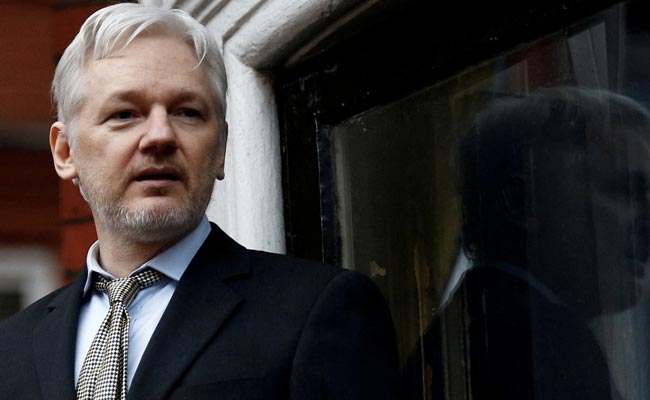
WikiLeaks’ Assange to make first public appearance since release in Strasbourg

WikiLeaks’ founder Julian Assange is set to make his first public appearance since being freed from a British jail when he gives evidence to the Council of Europe next month, his organisation said on Wednesday.

Assange, 53, returned to Australia in June after a deal was struck for his release which saw him plead guilty to violating U.S. espionage law, ending a 14-year British legal odyssey.

His wife Stella, who he married while in a top security London jail, said he would need some time to regain his health and sanity after his long incarceration, as well as to be with their two children who he had never seen outside of a prison.

He will now speak in public for the first time when he gives evidence to the Committee on Legal Affairs and Human Rights of the Parliamentary Assembly of the Council of Europe (PACE) in Strasbourg on Oct 1.

It comes after a PACE report into his case which concluded he was a political prisoner and called for Britain to hold an inquiry into whether he had been exposed to inhuman treatment.

“It will be an exceptional break from his recovery as (the Council of Europe) invited Julian to provide testimony for the … Committee’s report into his case and its wider implications,” Stella Assange said on X.

(Reuters)

Julian Assange to Address Council of Europe After Release from Prison

World | September 25, 2024, Wednesday 
Bulgaria: Julian Assange to Address Council of Europe After Release from Prison


WikiLeaks founder Julian Assange is set to speak before the Council of Europe in Strasbourg next week, marking his first public appearance since his release from prison in June, according to a statement from WikiLeaks. Assange, 53, will address the Committee on Legal Affairs and Human Rights of the Parliamentary Assembly of the Council of Europe (PACE) on Tuesday. His testimony comes after a PACE investigative report on his five-year detention at London’s Belmarsh prison. Prior to his imprisonment, Assange spent seven years in the Ecuadorian embassy in London after seeking asylum.

The report, cited by WikiLeaks, classifies Assange as a political prisoner and urges the UK to conduct an independent investigation into possible inhuman or degrading treatment during his detention. It also highlights concerns over governments using legal and extra-legal measures to suppress dissent, posing a threat to press freedom and human rights. Assange’s team indicated that he is "recovering" after returning to Australia and that he will speak publicly at his own discretion. His wife, Stella, has emphasized that he needed time to "rediscover freedom" after years of confinement.

Assange’s upcoming appearance in France follows an exceptional invitation and reflects the support he has received from PACE members. His release in June occurred after he appeared before a judge in Saipan, a US territory in the Pacific, where he pleaded guilty to one charge, leading to the US dropping 17 other espionage-related charges. Due to the time served at Belmarsh, much of it in solitary confinement, he was allowed to leave. From the UK, he traveled to Saipan after a plea deal that ended the international legal proceedings brought by the US government.

WikiLeaks, which gained global attention for publishing classified US military documents, has made Assange a prominent figure for free speech advocates. These supporters argue that his actions exposed wrongdoing by the US military. Assange's planned extradition to the US, approved by UK Home Secretary Priti Patel in 2022, was overturned by the UK High Court after his return to Australia. US authorities have consistently argued that Assange’s activities endangered national security. WikiLeaks' revelations included reports on civilian casualties in Afghanistan and Iraq, and one instance detailed a US airstrike in Baghdad that killed two Reuters journalists, among other civilians.


Labour in Power: What Next for Feminism?

Submitted by webadmin on 18 September, 2024 - 
Author: Editorial
WORKERS LIBERTY


Labour’s election victory in the summer of 2024 was not built off mass enthusiasm. Only 33.7% of the voting public backed the party, and on a low turnout. Labour got half a million fewer votes than it did when it was defeated in 2019 and three million fewer than in 2017. Nonetheless, a Commons majority of 174 – Labour’s biggest since 1997 – means that Keir Starmer will have almost unchecked power to pass legislation.

If ‘girl bosses’ really did solve our problems, this would be the most feminist government ever. For the first time, women and men are roughly equally represented in the Cabinet. 46% of Labour MPs are women. And in Rachel Reeves, Britain has its first woman Chancellor.

Sadly, the new government is already proving an unreliable ally of progressives – let alone socialists or socialist feminists. Keir Starmer has ruthlessly attacked the left, and gone to great lengths to cut himself off from accountability to party members and the wider labour movement. On migration, trans rights, austerity and many other touchstone issues, Starmer shows little sign of breaking with the policy of the outgoing Tory administration.

But the election of a Labour government presents opportunities that we cannot afford to miss. We now have a government which claims to represent the workers’ movement. Most major unions are affiliated to the governing party, and can – if they are moved to by their members – have an impact on its policies.

So what should we demand, and how can we win?

AUSTERITY
The Labour manifesto promised that there would be “no return to austerity”. This ought to be good news for working class people, and especially for women. Cuts have had a disproportionate impact on the pay and jobs of women, who make up the majority of public sector workers. The collapse of social security and bonfire of carers’ allowances and disability benefits also hit women harder. And when the state withdraws from providing for citizens, it is women who pick up the burden. The overwhelming lopsided effects of these policies led Oxfam – hardly a bastion of radicalism – to designate austerity as a form of "gender-based violence."

The recent strike waves made Starmer and Reeves keen to play the role of industrial peacemaker, and one of Labour’s first acts in government was to approve a set of public sector pay awards. These were the first in many years that exceeded inflation, though they did not come close to reversing the pay cuts endured by teachers, doctors and others since 2010. Outside of these pay awards, the story so far has been one of deepening austerity. The two-child cap on benefits is still in place, and Labour suspended seven MPs who rebelled by voting to scrap the measure. In September, the government voted through plans to cut winter fuel allowance for millions of pensioners, with a few dozen Labour MPs abstaining.

It is an obvious farce to suggest that any of this is necessary. Britain is the fifth biggest economy in the world, boasting a record number of billionaires. The question is whether Labour – the party founded to represent the interests of the working class – is willing to confront the interests of big business. We demand that it does, and that it starts by reversing austerity, radically redistributing wealth, and bringing utilities, public transport, health and other key sectors into common ownership as democratically-controlled public services. Rent controls and mass building of social housing are needed to address 45 years in which landlords have extracted untold wealth. We need to rebuild the public services on which women depend for jobs, pay, childcare and support. If we cannot get these basics right, the rest of a feminist programme will be worth little for working class women.

TRANS RIGHTS
The crucial backdrop to Labour’s policy on gender and sexuality, as well as on borders, race and anti-protest measures, is the wider culture war. Britain’s rightward shift on these issues has deep roots, but since the Brexit moment of 2016 it has accelerated rapidly. Until 2016, we had open borders with Europe and the Conservative Party was run by free marketeers who viewed themselves as a modernising, liberal force. Since then, the Tory Right has set the agenda. Labour inherits a country with the most restrictive border controls in Europe; far right riots; and a manufactured moral panic against trans people.

So perhaps we were supposed to breathe a sigh of relief when Lisa Nandy used her first speech as Culture Secretary to declare that “the era of culture wars is over”. Speaking to an audience of civil servants the days following the election, she criticised the Tories for sowing “polarisation, division and isolation”. Nandy clearly wanted to signal a new approach for her department, away from lambasting the BBC for being 'woke' and towards “championing the diversity and rich inheritance of our communities”.

Just one week later, Health Secretary Wes Streeting announced his intention to make the Tories’ interim ban on puberty blockers permanent. This policy will deprive young trans people of potentially life-saving treatment, forcing them to go through a puberty they do not want, with no delay and no way out. The shift of Starmer’s Labour on – or rather against – trans rights has been striking. It reflects and reinforces an erosion in public support for trans rights in recent years, with a large majority of British people now saying they oppose making it easier for people to legally change gender.

Streeting claims he is following the advice of the Cass Review, published in April 2024. The review has been criticised by the British Medical Association – the trade union for doctors – for its “exclusion of trans-affirming evidence” and questionable methodological framework. In any case, the Cass Review does not even call for a blanket ban on puberty blockers, though it does recommend restricting the number of people receiving them. The report’s overarching recommendations were to increase the provision of trans healthcare and cut waiting lists by addressing long-term staffing issues, increasing regional access, and other measures. There has been no progress on this front.

In late August, the youth action group Trans Kids Deserve Better occupied the Department for Education in London. They cast a banner down the front of the building: “we are not pawns for your politics”. One can’t help but agree that so far the new Labour government has been unprincipled and reactionary in its handling of this issue. We demand that it reverses course, backing trans people and their rights, and investing in the healthcare they need.

WORK
In the workplace, there is at least some cause for optimism. The 'New Deal for Working People', which came about as the result of pushing by Labour’s affiliated trade unions, is set to be implemented this autumn as the Employment Rights Bill. This Bill promises to repeal many of the most recent anti-union laws, abolishing the de-facto strike ban in large parts of the public sector and the 50% threshold needed for strike ballots to take effect. It also includes a set of promises around day-one rights to sick leave and parental leave, banning zero hour contracts, and a number of other measures. The wording is, at the time of writing, hazy – and it is very possible that the legislation will be written in such a way as to give employers loopholes. Unions must fight to ensure that the party delivers on its commitments.

We need to go much further than what Labour has already promised, however. A Labour government could take measures to reduce the working week, giving more space and time for socially reproductive labour – care, education, and so on – that women overwhelmingly take on (or, indeed, more time for whatever it is we decide our time is worth spending on). Repealing Tory anti-strike laws will still leave us with the most restrictive anti-union laws in Europe; all existing anti-union laws must be scrapped. We want sex work to be decriminalised, ensuring workers in the industry have the freedom to organise. We need an expansion in parental leave, giving parents the time to care for children without gendered division, and without fear of being left unable to make ends meet. On all kinds of issues, from challenging sexual harassment at work to tackling the gender pay gap, Labour can and should be radical.

MIGRANTS’ RIGHTS
Under Starmer, Labour has shifted even further to the right on immigration. In his 2020 leadership election, Keir Starmer promised to “make the case for the benefits of migration, for the benefits of free movement”. He U-turned on free movement in 2022, ruling it out alongside a return to the European single market. Labour echoes the Tories’ racist obsession with small boats and “smashing the criminal gangs”. Safe and legal routes for refugees – a basic hallmark of the post-Second World War asylum arrangements – are not on Labour’s agenda. Instead, one of Yvette Cooper’s first acts as Home Secretary was to reopen two detention centres: Campsfield in Oxfordshire and Haslar in Hampshire.

Migrants’ rights are a fundamental feminist issue. The state’s policy of withholding basic support from undocumented migrants – No Recourse to Public Funds – affects carers and parents more than anyone else, and prevents people from seeking refuge from violent partners. Detention centres like Yarlswood have proven to be a cesspit of sexual violence. Women also face sexual exploitation, trafficking and harassment as they migrate. There is only one solution to the “problem” of migration: to open the borders and give all people equal rights. This is why we fought so hard for free movement within Europe to be defended and expanded, and continue to champion open borders. We now face a battle to make Labour do the absolute basics: introduce safe and legal routes for migrants, shut down detention centres, abolish No Recourse to Public Funds, end the ban on asylum seekers working, and scrap the Tories’ recent immigration legislation.

REPRODUCTIVE FREEDOM
In June 2023, Carla Foster, a 45-year-old woman, was sent to prison for more than two years after she admitted to illegally procuring her own abortion medication when she was between 32 and 34 weeks pregnant. Her sentence was reduced on appeal to 14 months suspended (i.e. non-custodial) but the case nonetheless revealed Britain’s quite literally Victorian abortion laws. Foster was prosecuted under the Offences Against the Person Act (OAPA). When this law was passed in 1861, Napoleon III sat on the throne of France, the American Civil War was just beginning, and Tschaikovsky had yet to compose Swan Lake. More to the point, married women would not be legally entitled to own property for another 20 years, and it would be 70 years before all women could vote.

The legal framework for abortion in the UK is clear: the state does not approach it as a healthcare provider but as a moralist. The legal limit on abortion in Great Britain (and not Northern Ireland) is 23 weeks and six days, as outlined by the Abortion Act of 1967. The penalty for having an abortion after this, under the 1861 law, is capped at life imprisonment. A number of high profile MPs on Labour’s right wing have made calls to relax the law. Diana Johnson is now the Minister responsible for policing. Prior to the election, she was Chair of the Home Affairs Select Committee, and tabled an amendment to the Criminal Justice Bill which would have prevented women from being criminally prosecuted for accessing abortion, including after the legal-term limit.

We demand that abortion be entirely decriminalised up to birth, and that the criminal law has no place in regulating our reproductive freedom. Given the breadth of support for reform on the issue, we are pushing at an open door. Labour’s National Policy Forum (a largely toothless body which recommends policy to the leadership) said last October that Labour would “provide parliamentary time for free votes on modernising abortion law to ensure women do not go to jail for getting an abortion at a vulnerable time”. However, abortion law reform was left out of the Labour Party manifesto, and the Starmer government is yet to make a move on it. This is an area on which we can expect the new government to be amenable to pressure – from members, unions and MPs. We will seek to mobilise and build alliances around it.

SEXUAL VIOLENCE
Since the #MeToo moment in 2017, the issue of sexual violence been gaining prominence in mainstream politics. This is welcome, and it is also welcome that Starmer’s Labour goes some way to recognising the scale of the problem. Around 3% of women are raped or sexually assaulted every single year in the UK, and the Office for National Statistics estimated in 2021 that around a quarter of women have been sexually assaulted in their lifetimes. In the same year, YouGov found that four-fifths of women had experienced sexual harassment at some point in their lives. 96% of YouGov’s respondents did not report their experience to the police, and there is little reason to believe that doing so would have resulted in anything. Less than 1% of rapes reported to the police end in a conviction.

Labour has pledged to introduce specialists in 999 control rooms to take calls from women who have been victims of sexual assaults, as well as specialist rape courts to address the backlog. While it is good that survivors of rape and sexual assault will be more able to hold their perpetrators to account, these measures are minimal. Where is the money for specialist sexual violence services, for example?

The solutions proposed by the incoming government are largely about using the coercive power of the state and the criminal justice system. This issue opens up a much wider debate on socialists’ attitudes to the carceral system: simply putting more men into an abusive prison system is not going to tackle the root of gendered violence. Our emphasis is on education, fighting misogyny, and giving women power and security over our own lives. Promising someone better support in reporting their rape is worth very little if they are scared to leave their abusive partner because the welfare state has been cut to ribbons, and doing so would leave them and their children homeless.

WHY LABOUR
Workers’ Liberty does not advocate being involved in the Labour Party because it is less bad than the Tories, or because we think that this or that left-wing MP is a great leader, or because we think it is the party that will deliver socialism. We believe in change from below, and we think that the workers’ movement is our best tool for achieving this. Labour is the party of the trade union movement; it is the party around which politically conscious working-class people overwhelmingly gravitate.

We maintain this perspective despite the fact that many of us have been expelled from Labour and despite the fact that Workers’ Liberty was proscribed by the National Executive Committee in 2022. We understand that the union-Labour link has been degraded over the years; that trade union members often have little or no input into their union’s interventions into Labour; and that Labour members themselves have almost no democratic voice outside of proposing conference motions which are, in any case, largely ignored. Keir Starmer is a right wing, authoritarian Prime Minister, driven by personal ambition and advised by sectarian hacks.

But because of its organic link to the workers’ movement, the Labour Party is a crucial terrain of struggle. By agitating and organising within it, and within the wider labour movement, we can change the course of history. Labour’s programme of workers’ rights and (modest, inadequate) public sector pay rises are a result of pressure from the unions and the left. With enough external pressure, we may be able to push Labour to changing abortion law, reversing austerity and improving women’s lives. In the end, however, we do not aim for incremental change, or even radical social democratic reform – as was the party’s policy under Corbyn. We aim for a split in the Labour Party along class lines, and the transformation of the trade union movement into a fighting, militant force committed to achieving socialism.
UK


University delays pay rise in 'challenging time'


Lucy Ashton
BBC News
BBC
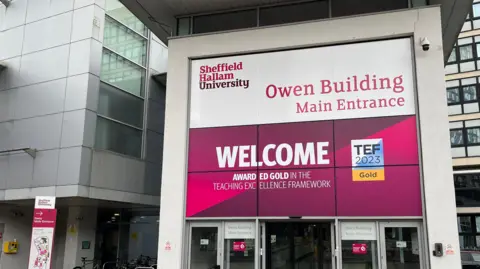
Sheffield Hallam University staff will not receive a pay rise


Sheffield Hallam University will not give staff a pay rise this year as it continues to grapple with finances.

In an email to staff seen by the BBC, Vice-Chancellor Prof Liz Mossop warned the university faced “really difficult decisions during a very challenging time”.

She said it had a recovery plan focused on reducing costs and increasing income to “weather the challenges”, and she was confident it would put the university in a stronger position for the future.

Sheffield Hallam said every 1% increase to staff salaries cost around £2m, and the overall cost to the university of implementing the pay award was approximately £6m.

It comes after the Universities and Colleges Employers Association, which represents universities as part of collective pay bargaining with trade unions, concluded its discussions on the 2024/25 pay award.

The letter said: “In previous years the university has implemented the pay award uplift from August, but this year we have taken the difficult decision to delay the payment of the award to staff until July 2025.

“This is the latest point in the 2024/25 academic year that universities can implement the award according to the terms of the collective bargaining agreement.

“When the pay award is implemented in July 2025, it will not be backdated.

"University Executive Board members will not receive the pay award at all for 2024/25.”

Financial challenges


Prof Mossop said it had “not been an easy decision” and she appreciated colleagues would be “very disappointed”, but the university had to look at ways to reduce overall costs.

The letter added: “By delaying its implementation to July 2025 we can further reduce costs significantly and protect more jobs.

"We will keep the decision under review, but it has already been factored into our budget for this year.”

Earlier this year, the university said up to 400 jobs could be lost as external pressures, such as the government's plans to reduce the number of international students in the UK, had led to "tough decisions".

Sheffield Hallam employs around 4,500 staff and said it would do "everything possible" to avoid compulsory redundancies.

The Hallam branch of the University and College Union paused strike action pending discussions with the university.

A Sheffield Hallam University spokesperson said implementing the pay award later than in previous years would help the university reduce costs significantly and protect more jobs.

They said: “Like all universities, we are having to make a number of tough decisions due to the financial challenges being faced across the higher education sector.

“This is not a decision we’ve taken lightly for staff who are working hard to welcome new and returning students at the start of the academic year.

“The decision to delay the pay award is part of a clear plan to reduce costs and grow income to help us towards a more sustainable financial future, where we can continue to be one of the UK’s most popular universities.”