Wednesday, October 16, 2024

First Italian ship carrying intercepted migrants arrives in Albania


An Italian navy ship carrying 16 men rescued at sea after departing from Libya arrived in the Albanian port town of Shengjin on Wednesday. Up to 3,000 adult migrant men picked up by the Italian coast guard in international waters will be sheltered in two Albanian processing centres each month under a new deal between Rome and Tirana.


Issued on: 16/10/2024 - 
A navy boat carrying migrants intercepted in Italian waters arrives at Shengjin port in Albania on October 16, 2024. © Adnan Beci, AFP


An Italian navy ship on Wednesday docked at the Albanian port of Shengjin to bring the first group of 16 migrants intercepted in international waters.

The naval ship Libra left the port of Lampedusa on Monday with 16 men – 10 from Bangladesh and six from Egypt – who were rescued at sea after departing from Libya, a ministry spokesman said.

Last week Italy formally opened two centres in Albania where it plans to process thousands of asylum-seekers outside its borders.

The centers will only house adult men, while vulnerable people such as women, children, the elderly and those who are ill or victims of torture will be accommodated in Italy. Families will not be separated.


Italian Ambassador to Albania Fabrizio Bucci said Friday the two centres were ready to process migrants after the opening was delayed for months to consolidate the crumbling soil at one centre, in Gjader where they will be accommodated.

Though the centre in Gjader has capacity for 3,000 migrants, it will start with 400 and increase to 880 in a few weeks.

Read moreEuropean Mediterranean states to meet in Cyprus over Middle East and migration

The number of people reaching Italy along the central Mediterranean migration route from North Africa has fallen by 61% in 2024 from 2023. According to the Italian Interior Ministry, as of October 15, 54,129 migrants have arrived in Italy by sea this year, compared to 138,947 by the same date last year.

Under a five-year deal signed last November by Italian Premier Giorgia Meloni and her Albanian counterpart, Edi Rama, up to 3,000 migrants picked up by the Italian coast guard in international waters each month will be sheltered in Albania. They will be screened initially on board the ships that rescue them before being sent to Albania for further screening.

The two centres will cost Italy 670 million euros ($730 million) over five years. The facilities are run by Italy and are under Italian jurisdiction, while Albanian guards provide external security.

The first centre, an area in Shengjin, 66 kilometres (40 miles) northwest of the capital, Tirana, is used for screening newcomers. While the other centre, about 22 kilometres (14 miles) to its east near the former military airport in Gjader, accommodates migrants during the processing of their asylum requests.

Italian officials expect the Gjader centre will never be at full occupancy but that depends on the flow of migrants brought to Albania.

Read moreMigrant women face ‘second trauma’ when reporting sexual abuse in France

In Albania, the migrants retain their right under international and European Union law to apply for asylum in Italy and have their claims processed there, a move expected to take a maximum of 28 days, including any appeal case, to process.

Italy has agreed to welcome those who are granted asylum. Those whose applications are rejected face deportation directly from Albania.

The controversial agreement to outsource the housing of asylum-seekers to a non-EU member country has been hailed by some countries that, like Italy, are suffering a heavy burden of refugees.

The agreement was endorsed by European Commission President Ursula von der Leyen as an example of “out-of-box thinking” in tackling the issue of migration into the European Union.

But it has been slammed by human rights groups as setting a dangerous precedent.

Rama has made it clear that no other country will be able to have such centres in Albania. He said Albania felt an expression of gratitude for the tens of thousands of Albanians who were welcomed by Italy when communism fell in 1991, or support extended by Rome during the economic turmoil in 1997 and in the aftermath of the 2019 earthquake.

Meloni and her right-wing allies have long demanded that European countries share more of the migration burden. She has held up the Albania agreement as an innovative solution to a problem that has vexed the EU for years.

(AP)

Activists protest as first group of 16 migrants on Italian ship arrive in Albania

Copyright AP Photo/Vlasov SulaJerry Fisayo-Bambi
Published on 16/10/2024 -

Opponents of the Italy-Albania migrant deal argue it is undemocratic because the people of both countries have not been consulted.

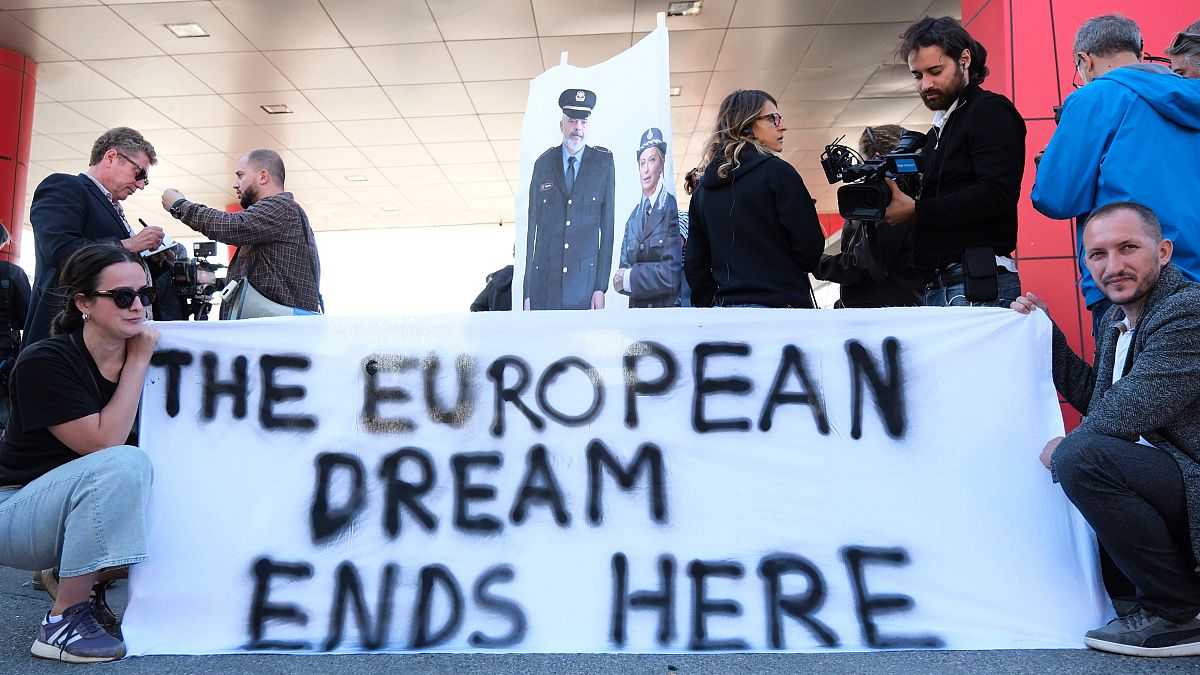
A group of activists protested on Wednesday as the first Italian ship carrying migrants intercepted in international waters arrived in the Balkan country.

The demonstrators gathered at the entrance of the port of Shengjin, one of the two centres Italy opened in Albania last week, and displayed a banner that read, “The European dream ends here."

"It is not the first time we have protested against such a deal. We have opposed it the moment we knew about it," said one of the protesters, Edison Lika.

"This deal is against human rights; more concretely, it's about the migrants’ rights. Such a deal has not been democratic because the peoples of both countries have not been asked," he added.

Earlier on Wednesday, an Italian navy ship docked at the Albanian port of Shengjin to bring the first group of 16 male migrants — 10 from Bangladesh and six from Egypt — who were rescued at sea after departing from Libya, a ministry spokesman said.

Last week, Italy formally opened two return hub centres in Albania under Rome's jurisdiction, where it plans to process thousands of asylum-seekers outside its borders.

Only adult men would be housed in the centres, while vulnerable people such as women, children, the elderly, and those who are ill or victims of torture will be accommodated in Italy, according to Rome. Families will not be separated.

The first centre, an area in Shengjin, 66 kilometres northwest of the capital, Tirana, is used for screening newcomers, while the other centre, about 22 kilometres to its east near the former military airport in Gjader, accommodates migrants during the processing of their asylum requests.

Up to 3,000 migrants picked up by the Italian coast guard in international waters each month will be sheltered in Albania under a five-year deal signed last November by Italian Prime Minister Giorgia Meloni and her Albanian counterpart, Edi Rama.

Italy has agreed to welcome those who are granted asylum. Those whose applications are rejected face deportation directly from Albania.

The controversial agreement to outsource the housing of asylum seekers to a non-EU member country has been hailed by some countries that, like Italy, are suffering a heavy burden of refugees, but it has also been slammed by human rights groups as setting a dangerous precedent.

Meloni and her right-wing allies have long demanded that European countries share more of the migration burden.

The Italian PM has held up the Albania agreement as an innovative solution to a problem that has vexed the EU for years, despite the decline in the number of people reaching Europe along the central Mediterranean migration route from North Africa.

This year, the number of migrant arrivals to Italy has fallen by 61% in 2024 from 2023.

As of 15 October, about 54,129 migrants have arrived in Italy by sea this year, compared to 138,947 by the same date last year, according to the Italian Interior Ministry.






Abortion Is A Fundamental Human Rights Issue

2024/10/16•
NurPhoto via Getty Images


TNL Feature

The News Lens features submitted by freelance reporters and writers.

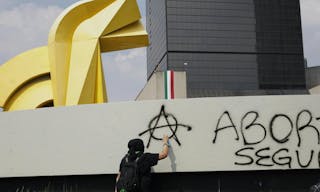
The right to abortion is a fundamental human right and a critical issue in the upcoming election.


By Alon Ben-Meir

The right to abortion is a human rights issue that no government agency, courts, local and state legislators, or anyone else has the right to violate or impede in any shape or form. It is a fundamental right that every woman must be free to exercise with impunity, in consultation with her doctor only, who acts based on his/her professional ethics and responsibility. The right to abortion, or, as Vice President Harris put it in her debate with Donald Trump, “a woman’s right to make decisions about her own body,” is an unquestionable human right and may be the most critical issue discussed in the 2024 election campaign. It is a significant issue of bodily autonomy, which extends not only to abortion but to the right of people with disabilities to control what happens to their bodies, the choice to participate in organ donation, and the right to keep medical decisions private.


Moreover, it is a significant issue in healthcare; pregnancy complications such as placental abruption can be life-threatening, and abortion is the only way to save the life of the pregnant woman. Pre-existing health conditions can be severely worsened during pregnancy, even causing death. It is a women’s rights issue—among the right to vote, the right to free movement, and the right to live free of violence. And yet, during his presidency, Trump hand-selected three Supreme Court justices who would overturn Roe v. Wade and supported states enacting abortion bans with no restrictions, including incest and rape.

The Republicans’ Moral Bankruptcy on Women’s Rights
The Republican Party’s obsession with abortion and, as a consequence, forced pregnancy knows no bounds. Each year, approximately 700 minors in the state of Michigan, for example, must acquire a parent’s consent or a judge’s order to obtain an abortion. In 2022, Michiganders were guaranteed access to abortion under the state’s Constitution – but state law still requires parental consent for people under the age of 18 who seek abortions. As Bridge Michigan observes, this consent requirement – dating back to 1991 – “forces some young people to face abusive parents and others to go to court to obtain a ‘judicial bypass’ waiver instead.”

A March 36-page ACLU report, In Harm’s Way: How Michigan’s Forced Parental Consent for Abortion Law Hurts Young People, points out that “When a young person does not involve a parent, it is often rooted in concern for their safety and well-being. One healthcare provider said a young client told her, ‘I can’t tell my parents because they will literally beat me, kick me out, and I’ll be on the street.’”

Moreover, many young people do not have access to a parent or legal guardian, which compels them to go through the judicial bypass process, where they face an array of logistical hurdles, “including finding an attorney, scheduling and attending hearings, taking time off school, and securing transportation to and from the court.” In short, this reactionary and archaic law threatens the health and safety of young people, and it should be immediately repealed in every state where it is enforced to ensure young people’s safety and dignity.


The Horrific Implications of the Abortion Ban

There are many heart-wrenching stories about many young women who sought abortions but ended up dying because of inaccessibility to a normal abortion under the supervision of a doctor. In Georgia, the deaths of Amber Nicole Thurman and Candi Miller have been attributed to the state’s recently overturned abortion ban. Thurman died of sepsis; she had received an abortion out-of-state but had not fully expelled the fetal tissue, which required a dilation and curettage (D&C) that Georgia had criminalized with few exceptions. Miller similarly did not fully expel the fetal tissue after taking abortion pills and died from a lethal combination of painkillers after suffering in pain for days as her children watched.

According to her family, Miller declined to see a doctor “due to the current legislation on pregnancies and abortions.” The families of Thurman and Miller, as well as many pro-choice advocates, have blamed their deaths on the state’s restrictive bans. And while on September 30, Fulton County Superior Judge Robert C. I. McBurney overturned the state’s heavily restrictive six-week abortion ban, the Supreme Court could issue a stay on the ruling, putting the six-week ban back in place.

According to ProPublica, Georgia’s four Planned Parenthood clinics have since been flooded with calls to schedule appointments, including from women in neighboring states where restrictive bans are still in place. While Republican governor Brian Kemp railed against the ruling, stating “…the will of Georgians and their representatives has been overruled by the personal beliefs of one judge,” the flood of appointments clearly demonstrates that the restrictive law is not the will of the people most affected, but solely of the predominantly chauvinist male lawmakers who will never have to face the decision about their own bodily autonomy.

I firmly stand with the women of Georgia and strongly support the ruling of Judge McBurney, who firmly stated in his ruling, “The Court finds that, until the pregnancy is viable, a woman’s right to make decisions about her body and her health remains private and protected, i.e., remains her business and her business alone.”


Fueling Other Regressive Policies

What is even more troubling is that many politicians and anti-choice activists are using their anti-abortion stance to fuel other regressive policies, such as child marriage. Last year, in a debate in Wyoming over ending child marriage, the state’s Republican Party promoted ‘analysis’ from Capitol Watch for Wyoming Families, which stated, “Marriage is the only institution in Wyoming Statute designed to keep a child's father and mother living under the same roof and cooperating in the raising of any children that they, together, conceive... Since young men and women may be physically capable of begetting and bearing children before the age of 16, marriage MUST remain open to them for the sake of those children [emphasis added].”

Shameless GOP legislators are more concerned about the home lives of theoretical, future children rather than the living, breathing children who may be pregnant as victims of sexual abuse and whose parents fail them by forcing them into a marriage they are not emotionally ready for or may not even want.

As state Rep. Liz Storer (D) stated in 2023, “In Wyoming, you could be married younger than you can legally consent to sex. Think about what that means. A man rapes a child. Is the man charged with rape? Not if the child is forced to marry him.” And while Wyoming’s bill raising the minimum age to 18 (albeit allowing 16- and 17-year-olds to marry with judicial and parental consent) passed, this despicable and disingenuous argument continues to circulate around the country, which must be combatted at every turn.

It is hard to exaggerate the crucial importance of women’s rights to abortion in this election, not only because women must be free to decide for themselves about their biological needs but also about their freedom and autonomy to live their lives and have families as they see fit and desirable. Former President Trump and his conspirators in the Senate, House, and state and local legislative bodies are determined to rob women of their freedom. They are doing exactly that: a violation of human rights in every sense of the word, and it must be condemned in the strongest terms.

No woman should ever believe Trump, who is trumpeting his false statements that he will not pass a national abortion ban. Every woman should remember his bigotry and dishonesty in dealing with just about every issue during his first term as president. Should he be reelected, women, who make up 50 percent of the electorate, will be disfranchised and lose their freedom, which is the bedrock of the American constitution.

On the other hand, Kamala Harris was the first vice president in history to visit a Planned Parenthood clinic, has firmly supported reinstating the protections of Roe v. Wade, has talked with the women of this country about this crucial issue, and has been a strong advocate of what women rightfully demand: the freedom to make decisions about one's own body.

In this presidential election, there is only one option to uphold women’s right to abortion, which is a fundamental human rights issue that has made America proud for more than two centuries. In this pivotal election, only Kamala Harris will protect the sanctity of human rights, of which women’s right to abortion is inseparable.


TNL Editor: Kim Chan (@thenewslensintl)
A Jewish-Israeli activist vows return to Palestine when is free from Zionism

It ‘will be impossible to have peace and justice for everyone in Palestine, Israel unless we overcome Zionism,' says Anti-Zionist Israeli activist

Selen Valente
|16.10.2024 

'I see a future that Israel will collapse one day,' says Eitan Bronstein Aparicio


BRUSSELS

Eitan Bronstein Aparicio, an Israeli activist opposed to Zionism, believes Israel's apartheid regime will one day collapse and he will return to Israel when Palestine is free.

Aparicio emphasized that other countries should take Türkiye's commercial restrictions as an example.

Aparicio was born in Argentina in the 1960s, the child of a Jewish family that migrated to Israel when he was 5 years old.

After completing his mandatory military service in the Israeli army, Aparicio refused to serve as a reservist in Lebanon and the West Bank.

Five years ago, deciding that he no longer wanted to live under the control of the Zionist regime, he moved with his family to Brussels.

In Brussels, Aparicio operates under the umbrella of the "Anti-Zionist Jewish Alliance in Belgium."

Participating in a demonstration organized by EU personnel to protest the one-year mark of Israel's attacks against the Gaza Strip, Aparicio delivered a speech in front of the EU Commission building, when he said his country has transformed into a genocidal state.

"When I understood that the problem of the violence -- the core issue is Zionism, is the project of Israel, is a Jewish nation-state -- and that this will be impossible to have peace and justice for everyone in Palestine, Israel unless we overcome Zionism. Since then, I worked a lot in Israel on the Nakba, on the rights of return of Palestinian refugees," the author of "Nakba: The Struggle to Decolonise Israel," told Anadolu. "I see a future that Israel will collapse one day.”

He said Israel resembles other colonial or apartheid regimes as he drew a comparison to South Africa’s apartheid, which was established the same day as Israel and eventually fell under the weight of international pressure, boycotts and sanctions.

As the apartheid regime collapsed, most Israelis, having a colonial mindset, would not want to live equally with Palestinians, according to Aparicio.

"I really hope that there will be people there to live with the Palestinians. My wife and I promised ourselves that the day Palestine is free, we will return," he said.


International pressure

Stressing that "the key to reaching this end is international pressure," Aparicio emphasized the need for sanctions and a weapons embargo from all countries, UN bodies and EU countries.

Referring to Türkiye's export restrictions with Israel, Aparicio said, "I think what he did (Turkish President Erdogan) is very valuable -- completely boycotting, closing the commerce with Israel. He has, it's very strong sanction I know in Israel, and I talk to people, even people that work in commerce and that import from Türkiye that -- and I read about it -- it causes big problems for the Israeli market."

"Sanctions are important everywhere, at every level. Because only pressure can stop Israel," he added.

West's stance

Highlighting that Western countries have a historical responsibility due to the Jewish genocide, "They take the wrong side of this responsibility. Instead of saying, ‘Yes, we had here a racist regime who killed people only because some identities have been Jews.’ No, they and then the racist regime should be encountered. And the lesson is that should be that never again we have such a racist regime, murder regime like the Nazi regime," he said.

Pointing out that the EU is Israel's largest trading partner, Aparicio compared sanctions imposed on Russia following attacks on Ukraine to what Israel is doing in Gaza, noting that the scale of casualties and destruction in Gaza is incomparable.

He said, however, the EU remains silent against Israel. "I believe this is part of racism. Just as in Israel, in the EU, the lives of Palestinians are much less important than the lives of Israelis, Jews, and white Europeans."

Israel is conducting genocide

Regarding the Oct. 7 attack by Hamas, Aparicio said it represented a significant defeat for Israel.

He said that the events that followed the attacks stemmed from two main factors: Israel's defeat and the rise of far-right and fascist tendencies within its society.

"This combination that brought Israelis and the Israeli army and the Israeli government to simply take revenge against the Palestinians,” he said. “What Israel is doing is destroying all that is just for a matter of revenge. It's not about killing Hamas. Israelis knew since the beginning that Hamas would not - it's not possible to destroy it completely."

"A great revenge has turned into a great massacre, a genocide," he said.

Aparicio noted that the year-long genocide is not only being witnessed by Israel.

"Israelis only know the numbers. They know body_abstract information. They have never seen bombed people, babies dying trembling, bodies in plastic bags—these horrible images that we all see," said Aparicio.

Expressing disapproval of government policies, support for Palestinian rights, and the genocide experienced by anti-Zionist Jews, he said: "Seeing this horrific massacre done in our name is terrible. Every day we hear that this is being done for the Jewish people. It feels like the crime is being doubled."

"You are killing a nation and claiming that you are doing it for the good of your own people, the Jews in the world. Instead of saying, 'We are doing this for Israel,' they say, 'We are doing this for all Jews.' Thus, people around the world understand that this is being done in the name of the Jews. This is horrible, and we are very worried about it," he added.

US music tycoon and Gazan peace activist join hands

Ariana Grande's former manager donates $100,000 to Palestinian medical charity

Scooter Braun and Ahmed Fouad Alkhatib

Two men from vastly different backgrounds have joined together to help Palestinians in the Gaza Strip in the wake of the 7 October 2023 massacre of Israelis and the subsequent war between Israel and Hamas.

Ahmed Fouad Alkhatib, born in Gaza but now living in the US as a resident senior fellow of the Atlantic Council, is a prominent peace campaigner and outspoken critic of Hamas. He has lost many members of his immediate family after Israeli air strikes on the Strip.

He was introduced to the philanthropist and music industry executive Scooter Braun, who helped devise the Nova exhibition, which has been travelling around American cities since May this year.

In an emotional social media posting, Alkhatib described how he had been invited by Braun, the grandson of Holocaust survivors, to become “an ally” of the Nova exhibit project. He said: “I connected with survivors and their families who lost loved ones during Hamas’s murderous massacre that killed over 1,200 Israelis. Importantly, I shared my experiences with these families and described the horrors that my family has lived through in the Gaza Strip and how I have lost dozens of them in three separate airstrikes”.

He said that Braun had demonstrated “immense capacity for empathy and kindness, acknowledging the tragedy of what took place for my family in Gaza while supporting me in my pursuit of connection with and compassion for Israeli victims of Hamas’s terrorism. He understands, and we share the view that Hamas is our common enemy”.

Alkhatib, aware that Braun had previously supported humanitarian projects to help Palestinian civilians, asked him if he would do the same for a medical charity that saves lives in the coastal enclave.

He said: “Mr Braun generously agreed to provide a $100,000 donation, which he has just sent to the International Medical Corps, which runs a field hospital and does incredible work to help desperate Palestinian civilians and patients. I am grateful for his generosity, which is actually going to make a difference for the people in Gaza. This is what pragmatic engagement, dialogue, conversations, and empathy look like and can achieve”.

Armed police at Manchester Arena.

Scooter Braun was singer Ariana Grande’s manager in 2017 when 22 people were killed in a suicide bombing at the Manchester Arena. Speaking at the anniversary event in Los Angeles to mark a year since the 7 October massacre, Braun reflected on the global outpouring of support in the music industry after the Manchester attack, enabling a memorial concert to be held in the city two weeks later. But he did not understand why there had been no similar response after the murders at the Nova festival, which he described as the biggest single attack on a music event in the world.

After visiting Israel with members of his family in December 2023, Braun helped to create the Nova exhibit which he says will tour the world and repeat the stories of those who died and of the survivors. He was keen to emphasise that the exhibit was particularly aimed at non-Jews — “it is for humanity”.

Alkhateb added that he and Scooter Braun “share the hope that we can have empathy for all innocent people, including those stuck in a war in Gaza and those hostage families waiting for their loved ones to be released from Hamas’s captivity”.

5.9 Magnitude Earthquake Hits Turkey, Tremors Felt In Syria

A moderately strong earthquake struck eastern Turkiye on Wednesday, causing widespread panic, officials said. There were no immediate reports of any serious injury or damage.

Associated Press
Updated on: 16 October 2024


5.9 Magnitude Earthquake Hits Turkey, Tremors Felt In Syria Photo: | File Pic

A moderately strong earthquake struck eastern Turkiye on Wednesday, causing widespread panic, officials said. There were no immediate reports of any serious injury or damage.

The earthquake with a magnitude 5.9 struck the town of Kale in Malatya province at 10.46 am (07.46 GMT), according to the government-run Disaster and Emergency Management Presidency, or AFAD. It was felt in the nearby cities of Diyarbakir, Elazig, Erzincan and Tunceli, HaberTurk television reported.

“We have not received any reports of any problems so far,” Malatya Mayor Sami Er told the state-run Anadolu Agency, adding that officials were still assessing possible damage in more remote areas.

People rushed out of homes and offices in panic throughout the region, HaberTurk reported. Many were waiting in the streets and parks, reluctant to return indoors. Schools were ordered closed in Elazig.

Malatya was one 11 provinces that was devastated by a powerful earthquake that hit struck parts of Turkiye and northern Syria last year. More than 53,000 people were killed in Turkiye


China, Pakistan urge Taliban to take ‘visible steps’ against terrorism

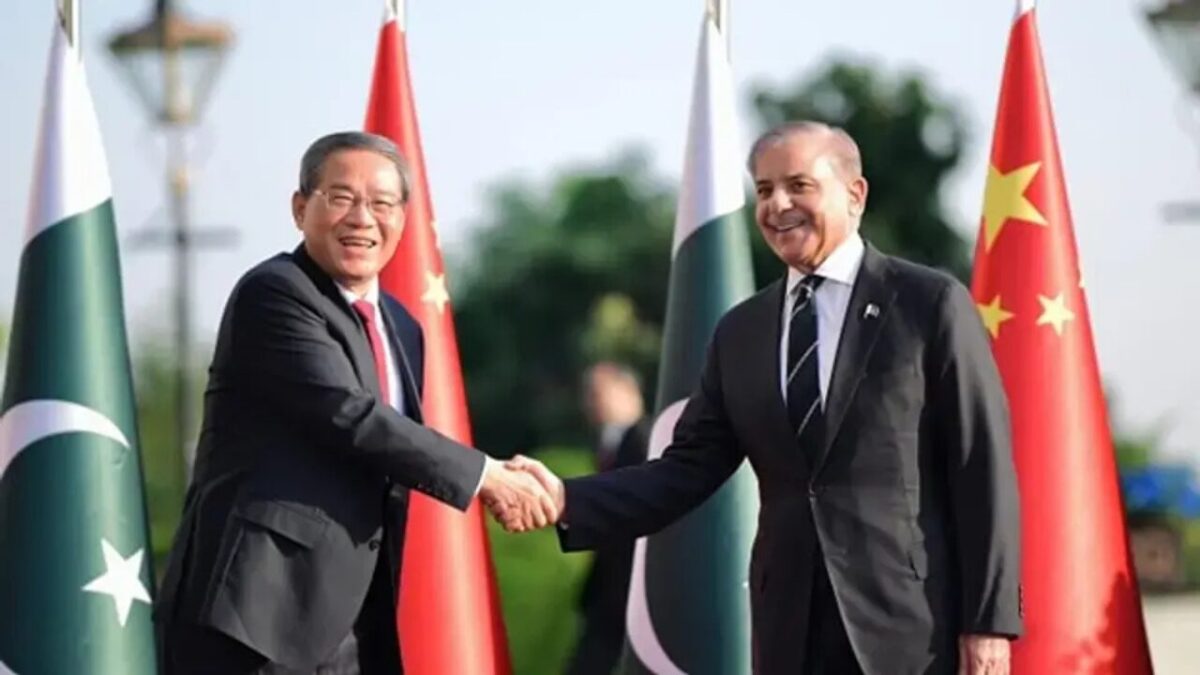
ISLAMABAD, Pakistan — Chinese Premier Li Qiang and Pakistani Prime Minister Shehbaz Sharif have called on the Taliban to take “visible and verifiable” actions against terrorist groups operating in Afghanistan, warning that these groups pose a significant threat to regional and global security.

In a joint statement, both leaders emphasized the importance of curbing terrorist activities and urged the Taliban to prevent Afghanistan’s soil from being used against neighboring countries and beyond.

The statement also called for international cooperation to encourage the Taliban to establish an inclusive government in Afghanistan.

The two premiers urged the Taliban to adopt moderate policies and pursue positive relations with Afghanistan’s neighboring countries.

The statement highlighted Pakistan and China’s commitment to strengthening coordination on issues related to Afghanistan and bolstering counterterrorism cooperation at both bilateral and multilateral levels.

Li arrived in Islamabad on Monday under tight security, where he was welcomed with an honor guard at the Pakistani Prime Minister’s residence.

On Tuesday, the leaders inaugurated Gwadar International Airport in Balochistan, a project funded under the China-Pakistan Economic Corridor (CPEC), aimed at enhancing bilateral ties and promoting shared infrastructure projects.

Premier Li’s visit includes extensive discussions to deepen bilateral relations, culminating in his participation in the Shanghai Cooperation Organisation summit in Islamabad on Wednesday.

Taiwan, Palestine, and the Fight for Self-Determination

2024/10/16•
AFP via Getty Images

Brandon Kemp

Taipei-based writer exploring queer desire in East Asian cinema, media, and culture, with a focus on the Sinophone world.

What you need to know

Taiwan's media coverage of Palestine often lacks depth and understanding, presenting a misleading both-sidesism that ignores the vast asymmetry between Israel and the Palestinian territories. Taiwan's domestic media sometimes demonizes Palestinian civilians and fails to acknowledge the well-documented discrimination they face within Israel.

To the extent that Palestine receives any coverage in Taiwan’s domestic media, it is often portrayed as a distant conflict with little relation to the lived experiences and aspirations of ordinary Taiwanese people. Despite this Taiwanese companies continue to profit from the war (link in Chinese) alongside Israel’s abetment of China’s authoritarian surveillance state.

At its best, Taiwan’s media landscape often presents a lamentable both-sidesism that misleadingly frames the ongoing violence as one between equal sides. This ignores the vast asymmetry between Israel, a country with a fearsome military and billions of dollars of backing from the United States, and the Palestinian territories, which lack anything like meaningful sovereignty (despite widespread international recognition), with illegal Israeli settlements slowly whittling away at even these areas. At its worst, Taiwan’s domestic media demonizes Palestinian civilians as extremists and dangerous threats to “the Middle East’s only democracy,” despite the well-documented discrimination they face within Israel’s borders and what the U.N. has labeled a likely genocide unfolding in Gaza.


According to Oxfam, the daily death rate in Gaza, at around 250 per day, is higher than any other twenty-first-century conflict. The overwhelming majority of these deaths are women and children—6,000 women and 11,000 children over the past year alone. The horrific events of October 7th, in which Hamas extremists killed over a thousand people and kidnapped hundreds of Israelis and other nationals, cannot serve as a pretext for the subsequent collective punishment of an entire people, which is illegal under international law, nor can it be used to erase the broader legitimate grievances of the Palestinian people over illegal land grabs and endless occupation. It is this very sense of hopelessness, combined with Israeli brutality, that breeds such deplorable groups and acts; one need not excuse them, nor whitewash Palestinian leaders’ past mistakes, to understand as much.

As Jewish psychoanalyst, feminist, and cultural critic Jacqueline Rose has put it, at present the far-right Israeli government operates under the childish logic of “You made me do it.” The wholesale leveling of mosques, churches, schools, hospitals, villages? “You made me do it.” We had to because the Palestinians use civilians as human shields. That, apparently, justifies shooting children and medical workers in the head with what observers have called surgical precision. Never mind, too, that the New York Times has recently reported that Israelis themselves use Palestinian hostages as human shields.

When otherwise progressive Taiwanese politicians like Miao Bo-ya say that downgrading Taiwan’s cooperation with Israel wouldn’t serve the country’s national interest, it boggles the mind. How exactly does embracing an international pariah, whose prime minister is wanted for arrest by the International Criminal Court, help Taiwan’s international image? To demand understanding and solidarity without giving these in return to those seeking safety and self-determination is ludicrously arrogant and self-defeating. Offering goodwill is the precondition for building and receiving it.

Some politicians and commentators argue that Taiwan can and should learn from Israel’s military might. That’s all well and good, as Taiwan has real defensive concerns that don’t entail the occupation and partial eradication of one of its historic ethnic groups, though it’s a stretch to say this justifies an island-nation that prides itself on its human rights progress looking the other way when rights are violated in so brutal a fashion. Others point to Israel’s record on LGBTQ rights as a reason to back it, as though this pinkwashing will spare queer Palestinians from the bombs being dropped on their heads.

Taiwan stands at a crossroads. In Hong Kong, where China has cracked down on human rights, activists have risked their safety in brave shows of solidarity with Palestinians. In Taiwan, groups like Amnesty International (link in Chinese) have called for an end to the supply of weapons components to Israel. Others, like For Peace Taiwan, have staged small-scale protests and die-ins to draw attention to the plight of Palestinians who, like so many at home, want only peace, security, and self-determination. The time for excuses is over. Stand up en masse against invasion and oppression everywhere, including in Gaza, or don’t be surprised when the world doesn’t stand up for Taiwan.

READ NEXT: One Year On: What’s Next for the Gaza Strip?

TNL Editor: Kim Chan (@thenewslensintl)
Poland’s Tusk says future of liberal democracy hinges on migration policy


The future of liberal democracy in the European Union depends on its response to migration, Polish Prime Minister Donald Tusk said in comments published on October 16 ahead of a summit in Brussels where Warsaw will join calls for a tougher approach. 


Reuters


The future of liberal democracy in the European Union depends on its response to migration, Polish Prime Minister Donald Tusk said in comments published on October 16 ahead of a summit in Brussels where Warsaw will join calls for a tougher approach.

“The future of Europe and Poland will be played out in this area,” Tusk told Gazeta Wyborcza daily, referring to border security.

“The only question is whether right-wing populists or liberal democracy will provide it,” he added.

Poland has been grappling with a migrant crisis on its border with Belarus since 2021.

Warsaw and the EU say Belarus and its ally Russia have orchestrated the situation by funnelling people from the Middle East and Africa to the border, something Minsk and Moscow deny.

Poland’s government approved a new migration strategy late on October 15 that allows the country to temporarily stop accepting asylum applications, a measure which has outraged human rights activists but which is popular with voters ahead of a 2025 presidential election.

In many European countries, centrists like Tusk have adopted more hardline migration policies in a bid to fend off nationalist and hard-right opponents.

In response to member states’ concerns over the issue, the EU has offered to tighten its migration stance.

Ursula von der Leyen, who runs the bloc’s executive arm, wrote to EU leaders who will gather to discuss migration on October 17 and 18 that the Commission intended to address 10 issues to help the bloc’s 27 countries deal with migration challenges.

Critics ranging from NGOs that help migrants to nationalist opposition lawmakers who themselves advocate strict rules said that the step would break the constitution and international law.

Polish business leaders and economists have also said migration helps the economy.

Tusk, however, told Gazeta Wyborcza the measure was necessary and stressed that it would be a temporary response to Russian and Belarusian attempts to destabilise Poland.

“In practice…respecting all the regulations in a situation where we know that the political asylum formula is being abused and exploited by our enemies, leaves the state completely helpless,” he said.

The migration strategy, which also aims to introduce a more targeted approach to granting visas to workers and students as well as to encourage Poles living abroad to return, was adopted despite dissenting opinions from four left-wing ministers, the government’s website said.


Christopher Columbus may have been a Spanish Jew, according to a new documentary

October 16, 2024
Miguel Macias

Christopher Columbus landing in America with the Piuzon Brothers bearing flags and crosses, 1492.Hulton Archive/Getty Images/Hulton Archive

SEVILLE, Spain — Conventional history states Christopher Columbus was from Genoa, Italy, but he may have been, in fact, a Sephardic Jew from the eastern Iberian Peninsula, according to a new documentary by Spain’s national broadcaster that also rekindles questions of religious persecution and the treatment of Indigenous communities.

Broadcast by Spanish national public network RTVE on Oct. 12, the day of Spain’s national holiday marking the arrival of Columbus’ expedition to the Americas, Colón ADN, su verdadero origen, or “Columbus’ DNA, his true origin,” follows forensic medical expert José Antonio Lorente as he studies multiple hypotheses regarding the origin of the famed explorer and contrasts the information with scientific and historical evidence.

The documentary concludes that the most plausible theory is one maintained by a Catalan architect who has dedicated many years trying to demonstrate that Cristóbal Colón — Columbus’ name in Spanish — was a Jewish man from the region of Valencia, on the Mediterranean coast of eastern Spain.

Some in the scientific community, however, have expressed skepticism about the methods and scientific rigor that Lorente employs, and highlight the fact that Lorente’s findings have not been presented for peer review yet.

Columbus’ origins come into question

Few things about Christopher Columbus can be stated as facts. Legend has it that at a party with noble Spaniards he demonstrated the possibility of the impossible by making an egg stand on its tip. There is a trick, of course: he flattened the edge of the egg without breaking it.

But there are some details that have not been questioned by most people through the years. Like the fact that Columbus came from Genoa, in Italy. That he persuaded Spain’s Catholic monarchs to sponsor an impossible voyage to the Indies traveling west instead of east from Spain.

Lorente, a forensic medical expert at the University of Granada, has researched Columbus’ origin for the past 22 years. In the documentary, he considers a number of theories about the origin of Columbus, examining them against DNA evidence and historical records.

Finally, Lorente arrives at the garden of Francesc Albardaner, a Catalan architect who authored the book La catalanitat de Colom. According to Albardaner, Columbus was a Sephardic Jew, part of the that Jewish diaspora associated with the Iberian Peninsula. Columbus would have followed Jewish traditions and customs, although in the public sphere he acted as Christian. He was born into a family of silk weavers from the Spanish city of Valencia, where there was a long tradition within the Jewish community of silk weavers.

But in order to determine Columbus’ ancestry, Lorente has to overcome a first hurdle, to shed light on the question of where the true remains of the sailor are.


People visit the tomb of Christopher Columbus at the Cathedral of Seville on October 11.Cristina Quicler/AFP via Getty Images

Columbus’ disputed resting place

The mausoleum of Christopher Columbus here in Seville features four bronze heralds representing the four Spanish kingdoms before they came under a single rule, in 1469. On the heralds’ shoulders, a massive tomb that the Catholic Church and local authorities assure contains the remains of Columbus.

But Columbus’ resting place has been in dispute for centuries. The Columbus Lighthouse is a huge mausoleum monument to the explorer located in Santo Domingo, capital of the Dominican Republic. The monument was inaugurated in 1992 and, according to Dominican authorities, Columbus’ remains are inside the mausoleum.

There seems to be agreement among historians about the fact that the remains of Columbus, who died in Spain in 1506, were at one point taken back to Hispaniola, the Caribbean island containing the Dominican Republic and Haiti. But that's where historical agreement ends. Some claim the remains of Columbus made their way back to Spain, while others say the wrong bones were taken from Santo Domingo, and therefore Columbus remains in the Dominican Republic.

In Columbus’ DNA, his true origin, Lorente uses DNA from Hernando Colón, son of Christopher Columbus, and distant cousin Diego Colón to verify that the few bones that were housed at the Cathedral of Seville are indeed the true remains of the sailor.

Lorente’s conclusion is unequivocal: Christopher Columbus was of Jewish descent. That led to a process of deduction based on historical evidence. The documentary states that during Columbus’ time there were only an estimated 10,000 to 15,000 Jewish people living on the Italian peninsula. By contrast, there were about 200,000 Jewish people living in what is now Spain, an estimate that may be low, since tens of thousands of Jewish people had converted to Catholicism over the previous century, victims of constant persecution.

Also in the documentary, Albardaner, the Catalan architect, says Genoa had expelled its Jewish population in the 12th century. There were virtually no Jewish people living in Genoa in the times of Columbus, who lived from 1451 to 1506, and Jewish people doing business were only allowed to enter the city for three days at a time.

If the DNA evidence studied by Lorente suggests Columbus was a Jewish man, then it becomes highly improbable that he was from Genoa, according to Albardaner.


Forensic medical expert José Antonio Lorente examines DNA evidence in an image from the documentary Colón ADN, su verdadero origen.Story Producciones


Why would Columbus lie about his heritage?

On Oct. 19, 1469, a young couple was married in Valladolid, Spain. Queen Isabella and King Ferdinand II, the Catholic monarchs, came to be known for a number of historical achievements, such as unifying the kingdoms that now comprise Spain, or the so-called reconquista (reconquering) of Al-Andalus, the vast region of southern Spain that had been under Muslim control for centuries. But during the Catholic monarchs’ rule the Spanish Inquisition also acquired unprecedented powers. A judicial institution linked to the Roman Catholic Church, the Inquisition sought to identify heretics and order Jews and Muslims to convert to Catholicism, using brutal methods.

But Muslims were not the only people living in the Iberian Peninsula that the Catholic monarchs seemed to want to get rid of. In 1492 the monarchs signed the Alhambra Decree, which ordered the expulsion of Jewish people, seeking to eliminate their influence on Spain's large population of converts, and to make sure its members did not revert to Judaism. The monarchs ordered the remaining Jews to convert or face expulsion from Spain.

Devin Naar, Sephardic studies program chair at the University of Washington, told the BBC's Newshour that escaping persecution in the times of the Catholic monarchs and the Spanish Inquisition was not as easy as simply converting to Catholicism:

“What the Spanish Inquisition did was that it targeted, not Jews as Jews and not Muslims as Muslims, but rather initially and specifically those who were of Jewish or Muslim origin, but who had converted to Catholicism. And there was the perception that they had continued to practice Judaism on one hand or Islam on the other hand in secret. The Inquisition used a variety of different means to try to coerce confessions. It used all of the different medieval tools that we might think about, including burning at the stake,” Naar said.

So Columbus may have been hiding his Sephardic origins to avoid stigmatization, persecution, or even death.

Naar adds that the claim that Columbus was of Spanish-Jewish origin or converso origin — conversos is what the Spanish called Jewish converts to Catholicism and their descendants — has been around for more than 100 years.
Disagreement from the scientific community

The release of the documentary on RTVE has sparked criticisms from the scientific community. Most notably, a recent article published by the Spanish newspaper El País has several experts questioning the process Lorente used to reach his conclusions.

"I don't understand how data that the scientific community has not yet endorsed is presented to society, which puts the data itself and the hypotheses proposed at risk," Antonio Alonso, a geneticist and former director of Spain’s National Institute of Toxicology and Forensic Sciences is quoted as saying.

Rodrigo Barquera, an expert in archaeogenetics at Germany’s Max Planck Institute for Evolutionary Anthropology, told El País he was surprised that Lorente’s findings had been shared without prior scrutiny from others in the scientific community.
Sponsor Message


Even the DNA angle is questioned by Antonio Salas, who directs the Population Genetics in Biomedicine group at the Health Research Institute of Santiago de Compostela, telling El País: “The documentary promised to focus on DNA analysis. However, the genetic information it offers is very limited.”

Lorente, in response, told El País that the documentary is a film, not a scientific publication, and he promises scientific findings will be presented in the near future.
The evolving role of Columbus in history

Columbus’ actions, once regarded as accomplishments, have become a symbol to many as a starting point for a history of abuse. To others, Columbus, 1492, and what came after, are still worth celebrating.

To this day, Spain marks Oct. 12 as a national holiday, also widely known as Hispanic Heritage Day, to commemorate the arrival of Columbus’ expedition in the Americas. And to this day, Spain’s popular culture has not been able to shake up the use of the controversial term “Descubrimiento de América” (the discovery of America) to refer to that moment in history.

In Latin America and to many U.S.-based Latinos and Native Americans, the so-called “discovery of the Americas” was only the beginning of a cruel history of extermination, subjugation and colonization of its native people and lands. This continues to play a role in international diplomacy. Just last month, the recently elected first woman president of Mexico did not invite the Spanish king to her inauguration as part of an ongoing spat between the two countries over the history of Spanish colonization. Spain’s current government, led by the progressive Socialist Party, said that Mexico’s decision was unacceptable.


Protesters topple a statue of Christopher Columbus during a demonstration against government in Barranquilla, Colombia on June 28, 2021.Mery Granados Herrera/AFP via Getty Images

The United States has recognized Columbus Day as a federal holiday since 1934, when President Roosevelt designated the standing. For many in the Italian American community, the presumed fact that Columbus was originally from Italy has been a reason for pride and celebration. In 2022, however, President Biden issued a proclamation on Indigenous Peoples Day, and both are observed on the second Monday of October, but most government websites continue to list “Columbus Day” as the federal holiday the nation celebrated this week.

Spain did take measures to remediate the harm done to Sephardic Jews. In 2015 the Spanish Parliament approved an act granting Spanish citizenship to Sephardic Jews with Spanish origins. Spain has not provided reparations to descendants of Spanish Muslims who once lived in the Iberian Peninsula.
NOTHING FUNNY ABOUT KSA

Saudi cartoonist gets 23-year prison sentence: rights group

October 16, 2024 
By Agence France-Presse
F
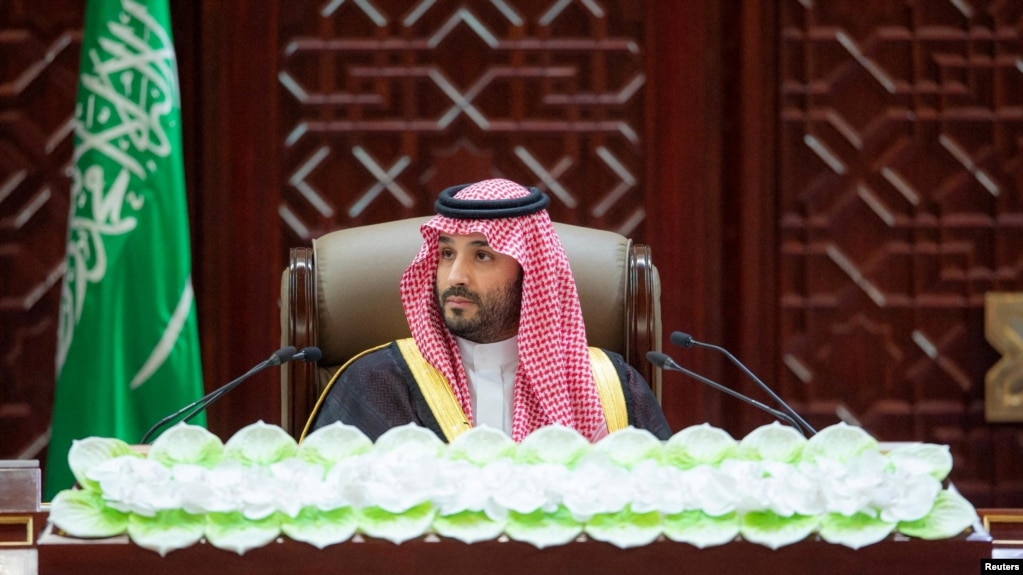
Saudi Crown Prince Mohammed Bin Salman delivers Annual Address at Shura Council in Riyadh, Saudi Arabia, September 18, 2024. (Saudi Press Agency/Handout via REUTERS)
Dubai, United Arab Emirates —

A Saudi artist has been sentenced to more than two decades in prison over political cartoons that allegedly insulted the Gulf kingdom's leadership, his sister and a rights group said this week.

The case against Mohammed al-Hazza, 48, adds to concerns about freedom of expression under Crown Prince Mohammed bin Salman, as Saudi Arabia -- the world's largest crude oil exporter -- seeks to open up to tourists and investors after years of isolation.

The father of five was arrested in February 2018 in Saudi Arabia during "a violent raid" in which security forces entered his home and ransacked his studio, the London-based Sanad Human Rights Organization said in a statement.

A court document seen by AFP says the charges against him concern "offensive cartoons" he produced for the Qatari newspaper Lusail as well as social media posts that were allegedly "hostile" to Saudi Arabia and supportive of Qatar.

Hazza's arrest came less than a year after Saudi Arabia and several allies cut ties with Qatar, claiming it supported extremists and was too close to Iran -- allegations that Doha denied.

The countries mended ties in January 2021.

Saudi Arabia's Specialized Criminal Court, set up in 2008 to deal with terrorism-related cases, initially sentenced Hazza to six years in prison.

But this year, as Hazza was preparing to be released, the case was re-opened and he was sentenced to 23 years, his sister Asrar al-Hazza told AFP by phone from the United States.

"He was almost there... He almost left the prison. But then out of nowhere it was opened again and it was 23 years," she said.

Saudi authorities did not immediately respond to a request for comment about the case on Wednesday. Sanad said in its statement that Hazza worked for Lusail mostly before the 2017 boycott "and only briefly afterward" and that most of his cartoons concerned domestic Qatari issues.

The group said prosecutors failed to provide evidence of cartoons that were offensive to Saudi Arabia or social media posts that backed Qatar during the boycott.

Under Prince Mohammed, Saudi Arabia has been criticized for what activists describe as a fierce crackdown on even vaguely critical online speech.

In the past two years the Saudi judiciary has "convicted and handed down lengthy prison terms on dozens of individuals for their expression on social media," human rights groups Amnesty International and ALQST said in April.

Saudi officials say the accused committed terrorism-related offences.

"The case of Mohammed al-Hazza is one example of the suppression of freedom of expression in Saudi Arabia, which has not spared anyone, including artists," Sanad operations manager Samer Alshumrani told AFP.

"This is supported by the politicized, non-independent judiciary in Saudi Arabia."