Tuesday, December 31, 2024

AU CONTRAIRE

Sen. Chris Coons and the Cult of Patent Monopolies

 December 31, 2024Facebook

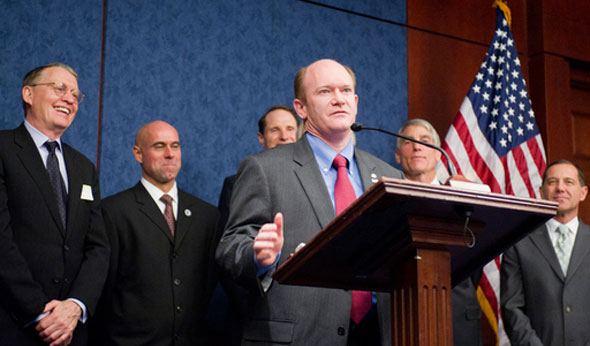
Senator Coons holding a press conference – Public Domain

Last week, Delaware Senator Chris Coons, the chair of the Senate Subcommittee on Intellectual Property, made an assertion about the nature of patents that is flat out wrong. Senator Coons said:

“OUR FOUNDING FATHERS MADE IT CLEAR THAT INVENTORS SHOULD HAVE EXCLUSIVE RIGHTS TO THEIR INVENTIONS. IN OTHER WORDS, THE CONSTITUTION IN ITS SCRIPT GUARANTEES TO INVENTORS THE ABILITY TO PREVENT OTHERS FROM USING OR SELLING THEIR INVENTIONS WITHOUT THEIR PERMISSION.”

This assertion is directly at odds with what the constitution explicitly says. The constitution absolutely does not provide any guarantees to inventors about exclusive use of their inventions. The wording that provides the basis for government-granted patent and copyright monopolies can be found in Article 1, Section 8, where the Constitution lays out the powers of Congress.

“The Congress shall have Power To lay and collect Taxes, Duties, Imposts and Excises, to pay the Debts and provide for the common Defence and general Welfare of the United States; but all Duties, Imposts and Excises shall be uniform throughout the United States; ….

“To promote the Progress of Science and useful Arts, by securing for limited Times to Authors and Inventors the exclusive Right to their respective Writings and Discoveries;”

The granting of patent and copyright monopolies is a power of Congress, like the power to tax and the power to declare war. Patent and copyright monopolies are not a right granted to individuals, like the right to free speech or the right to practice the religion of one’s choosing.

Rights Versus Policy

This is not just a gotcha where Senator Coon has inaccurately described the wording in the constitution, the mistake matters hugely for how we think about patents and copyrights. As Senator Coon has described the constitutional wording, Congress is obligated to provide patent and/or copyright monopoles to allow people the opportunity to profit from their inventions.

The actual wording in the Constitution says that Congress has the power to grant these monopolies as a way to promote innovation and creative work. It no more has obligation to grant patent and copyright monopolies than it has an obligation to impose taxes and declare wars. Furthermore, the Constitutional language says nothing about the length or strength of these monopolies. Presumably, Congress would look to structure them in a way that it deems most efficient for the purpose of promoting innovation and creative work.

If we recognize that patents and copyrights are simply one set of policies for promoting innovation and creative work, and not an individual right, then we can ask questions like whether they are the best policy. As I and others have argued, there is good reason to believe they are often not the best policy.

This especially the case with prescription drugs and medical devices. We will spend over $650 billion this year for pharmaceutical products that would likely cost us around $100 billion in a free market without patent monopolies. This difference between the patent protected price and the free market prices comes to more than $4,000 a year for an average family.

It also creates the absurd situation where people with serious health conditions may be looking at paying tens or even hundreds of thousands of dollars for drugs that would sell for a few hundred dollars in a free market. And the enormous profits created by patent monopolies gives drug companies a huge incentive to mislead doctors and the public about the safety and effectiveness of their products.

We very much need to have a serious discussion about the relative merits of patent and copyright monopolies as mechanisms for supporting innovation and creative work. (I discuss alternatives in chapter 5 of Rigged. [It’s free.]) But that discussion cannot take place as long as we have prominent senators like Chris Coon blatantly misrepresenting the Constitution’s wording on intellectual property.

Unfortunately, our public debate is so skewed by the people who benefit from these government policies, that Senator Coon’s misrepresentation will likely go unnoted by almost everyone. Needless to say, the Senator is not likely to feel any obligation to correct his mistake.

(Thanks to Jon Schwartz for calling my attention to this.)

This first appeared on Dean Baker’s Beat the Press blog.

Dean Baker is the senior economist at the Center for Economic and Policy Research in Washington, DC. 


Dylan’s Creative Leap


 December 31, 2024
Facebook

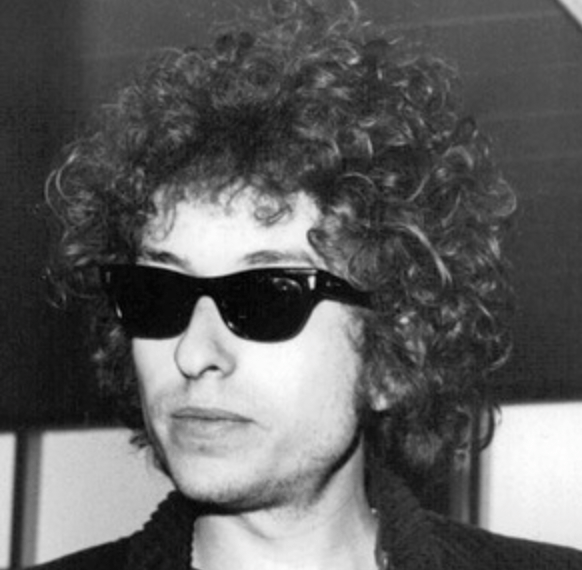
Dylan in Sweden, 1966. Photo: Wikimedia.

The Bob Dylan biopic “A Complete Unknown,” starring Timothée Chalamet, focuses on Dylan’s early 1960s transition from idiosyncratic singer of folk songs to internationally renowned singer-songwriter.

As a music historian, I’ve always respected one decision of Dylan’s in particular – one that kicked off the young artist’s most turbulent and significant period of creative activity.

Sixty years ago, on Halloween Night 1964, a 23-year-old Dylan took the stage at New York City’s Philharmonic Hall. He had become a star within the niche genre of revivalist folk music. But by 1964 Dylan was building a much larger fanbase through performing and recording his own songs.

Dylan presented a solo set, mixing material he had previously recorded with some new songs. Representatives from his label, Columbia Records, were on hand to record the concert, with the intent to release the live show as his fifth official album.

It would have been a logical successor to Dylan’s four other Columbia albums. With the exception of one track, “Corrina, Corrina,” those albums, taken together, featured exclusively solo acoustic performances.

But at the end of 1964, Columbia shelved the recording of the Philharmonic Hall concert. Dylan had decided that he wanted to make a different kind of music.

From Minnesota to Manhattan

Two-and-a-half years earlier, Dylan, then just 20 years old, started earning acclaim within New York City’s folk music community. At the time, the folk music revival was taking place in cities across the country, but Manhattan’s Greenwich Village was the movement’s beating heart.

Mingling with and drawing inspiration from other folk musicians, Dylan, who had recently moved to Manhattan from Minnesota, secured his first gig at Gerde’s Folk City on April 11, 1961. Dylan appeared in various other Greenwich Village music clubs, performing folk songs, ballads and blues. He aspired to become, like his hero Woody Guthrie, a self-contained artist who could employ vocals, guitar and harmonica to interpret the musical heritage of “the old, weird America,” an adage coined by critic Greil Marcus to describe Dylan’s early repertoire, which was composed of material learned from prewar songbooks, records and musicians.

While Dylan’s versions of older songs were undeniably captivating, he later acknowledged that some of his peers in the early 1960s folk music scene – specifically, Mike Seeger – were better at replicating traditional instrumental and vocal styles.

Dylan, however, realized he had an unrivaled facility for writing and performing new songs.

In October 1961, veteran talent scout John Hammond signed Dylan to record for Columbia. His eponymous debut, released in March 1962, featured interpretations of traditional ballads and blues, with just two original compositions. That album sold only 5,000 copies, leading some Columbia officials to refer to the Dylan contract as “Hammond’s Folly.”

Full steam ahead

Flipping the formula of its predecessor, Dylan’s 1963 follow-up album, “The Freewheelin’ Bob Dylan,” offered 11 originals by Dylan and just two traditional songs. The powerful collection combined songs about relationships with original protest songs, including his breakthrough “Blowin’ in the Wind.”

The Times They Are A-Changin’,” his third release, exclusively showcased Dylan’s own compositions.

Dylan’s creative output continued. As he testified in “Restless Farewell,” the closing track for “The Times They Are A-Changin’,” “My feet are now fast / and point away from the past.”

Released just six months after “The Times,” Dylan’s fourth Columbia album, “Another Side of Bob Dylan,” featured solo acoustic recordings of original songs that were lyrically adventurous and less focused on current events. As suggested in his song “My Back Pages,” he was now rejecting the notion that he could – or should – speak for his generation.

Bringing it all together

By the end of 1964, Dylan yearned to break away permanently from the constraints of the folk genre – and from the notion of “genre” altogether. He wanted to subvert the expectations of audiences and to rebel against music industry forces intent on pigeonholing him and his work.

The Philharmonic Hall concert went off without a hitch, but Dylan refused to let Columbia turn it into an album. The recording wouldn’t generate an official release for another four decades.

Instead, in January 1965, Dylan entered Columbia’s Studio A to record his fifth album, “Bringing It All Back Home.” But this time, he embraced the electric rock sound that had energized America in the wake of Beatlemania. That album introduced songs with stream-of-consciousness lyrics featuring surreal imagery, and on many of the songs Dylan performed with the accompaniment of a rock band.

Bringing It All Back Home,” released in March 1965, set the tone for Dylan’s next two albums: “Highway 61 Revisited,” in August 1965, and “Blonde on Blonde,” in June 1966. Critics and fans have long considered these latter three albums – pulsing with what the singer-songwriter himself called “that thin, that wild mercury sound” – as among the greatest albums of the rock era.

On July 25, 1965, at the Newport Folk Festival, Dylan invited members of the Paul Butterfield Blues Band on stage to accompany three songs. Since the genre expectations for folk music during that era involved acoustic instrumentation, the audience was unprepared for Dylan’s loud performances. Some critics deemed the set an act of heresy, an affront to folk music propriety. The next year, Dylan embarked on a tour of the U.K., and an audience member at the Manchester stop infamously heckled him for abandoning folk music, crying out, “Judas!”

Yet the creative risks undertaken by Dylan during this period inspired countless other musiciansrock acts such as the Beatles, the Animals and the Byrds; pop acts such as Stevie Wonder, Johnny Rivers and Sonny and Cher; and country singers such as Johnny Cash.

Acknowledging the bar that Dylan’s songwriting set, Cash, in his liner notes to Dylan’s 1969 album “Nashville Skyline,” wrote, “Here-in is a hell of a poet.”

Enlivened by Dylan’s example, many musicians went on to experiment with their own sound and style, while artists across a range of genres would pay homage to Dylan through performing and recording his songs.

In 2016, Dylan received the Nobel Prize in literature “for having created new poetic expressions within the great American song tradition.” His early exploration of this tradition can be heard on his first four Columbia albums – records that laid the groundwork for Dylan’s august career.

Back in 1964, Dylan was the talk of Greenwich Village.

But now, because he never rested on his laurels, he’s the toast of the world.

This article is republished from The Conversation under a Creative Commons license. Read the original article.

Ted Olson is Professor of Appalachian Studies and Bluegrass, Old-Time and Roots Music Studies at East Tennessee State University.