Sunday, March 09, 2025


Sex-for-fish’: Rural Zambian women forced into coercive deals as drought and aid cuts bite

Women in Zambia's informal fishing sector face increasing threats of violence
Copyright ActionAid
By Craig Saueurs
Published on 

Zambia reported more than 42,000 cases of gender-based violence in both 2023 and 2024.

In Zambia’s drought-stricken fishing camps, the price for using a boat isn’t always paid in money.

As more women turn to the fishing trade as a means for survival, many are being forced into exploitative “sex-for-fish” arrangements – a troubling trend exacerbated by the sudden withdrawal of foreign aid from the United States.

A new report from the NGO ActionAid highlights the growing vulnerability of women to gender-based violence. It underscores how prolonged droughts have forced many Zambian women to seek alternative livelihoods, leaving them increasingly exposed to coercion and abuse in an industry defined by power imbalances and limited options.

Climate change and economic desperation drive new risks

Zambia is on the frontlines of the climate crisis.  

Last year, severe droughts put more than six million Zambians from farming families at risk of acute food shortages and malnutrition. Half of the country’s farmlands faced total crop failure, leading the government to declare a national disaster and emergency.

As Zambia experiences increasingly severe droughts like these, rural communities are struggling to adapt. Water shortages and failed harvests have intensified food insecurity, pushing many women into informal fishing to survive.

One woman named Martha* detailed the dangers women like her face because of it.

Martha owns a net but not a boat so she cannot go out on the water herself. Instead, she relies on fishermen to get the day’s catch. But they don’t ask for money in return.

“They demand sex in exchange for cheaper fish,” she told ActionAid.

Another woman, Palekelo*, who turned to fishing when her farm dried up, also experienced similar demands. “The fisherman told me I could come with my money but if I didn’t pass by his house to spend the night, I was not going to get any fish,” she explained.

Funding gaps disrupt efforts to mitigate harm

Zambia has one of the highest rates of reported gender-based violence in the world. More than a third of women and girls in the country have experienced physical violence in their lives, according to the UN. 

Humanitarian groups have worked to address these and other issues for decades. ActionAid, for example, has had a presence in the country since 1996.

Since 2023, ActionAid’s USAID-supported initiative worked to mitigate gender-based violence through community-led women’s watch groups, safe houses and awareness campaigns that helped to report abuses and provide support services.

The United States’ decision to slash foreign aid – compounded by steep reductions in funding from the UK and European countries – has forced the programme to close at an inflection point.

The ongoing drought could cause 5.8 million people, or about a third of the population, to face high levels of food insecurity, according to independent data provider ACAPS.

Meanwhile, more than 42,000 cases of gender-based violence were reported across the country in each of the past two years. Many cases go unreported, ActionAid explains, meaning that the true number is likely much higher.

“No mother should have to trade her safety to keep her children from starving. But that is the reality women in Zambia now face. It is unacceptable that, in 2025, we are forcing women into a cycle of violence and abuse simply because governments have chosen to turn their backs,” says Faides TembaTemba, country director for ActionAid Zambia.

A growing challenge for climate-linked aid

The situation in Zambia highlights a larger debate over the role of international aid in addressing climate-induced social challenges

While wealthier nations have committed to providing additional funding for climate adaptation, cuts to existing aid programs raise concerns about how the most vulnerable populations will be supported.  

After US President Donald Trump took office in January, his administration made sweeping cuts to USAID, the country’s foreign aid programme. Thousands of employees were put on leave and contractors terminated as everything from malaria-fighting initiatives in Myanmar to translator services in Ukraine were halted. 

“The reckless decision to slash USAID funding is having an immediate and severe impact on the world’s most vulnerable. It has left women and girls in Zambia at risk of exploitation, stripping away critical support with no plan to replace it,” says Niranjali Amerasinghe, executive director of ActionAid USA.

“This is not about efficiency; it’s about a callous disregard for those in need.”

‘Utterly devastating’: Global health groups left reeling as European countries slash foreign aid

A dose of the dengue vaccine is prepared for youths at a health center in Brazil in February 2024.
Copyright Luis Nova/AP Photo
By Gabriela Galvin
Published on 

Several European countries have announced cuts to their foreign aid budgets, with global health programmes in the crosshairs.

Some of Europe’s biggest global health funders are slashing their aid budgets, which health groups fear could spell catastrophe for countries reliant on foreign cash to combat malaria, HIV, tuberculosis, andemerging threats.

Global health groups still don’t know exactly which programmes are on the chopping block. But they say the recent European cuts are painful given the US has taken an axe to its own foreign assistance in the six weeks since President Donald Trump took office.

In the United Kingdom, for example, Prime Minister Sir Keir Starmer said last week that he would shave the foreign aid budget from 0.5 percent of gross national income (GNI) to 0.3 percent in 2027 in order to prop up defence spending, prompting the international development minister to quit in protest.

Meanwhile the Dutch government laid out plans to cut aid by 2029 as it prioritises the “interests of the Netherlands”. 

Belgium has also trimmed development cooperation funding by 25 per cent. 

France slashed its aid budget by 35 per cent and will launch a review of its existing programmes. And Switzerland will shut down development initiatives in Albania, Bangladesh, and Zambia by late 2028.

The cuts mean global health programmes – which received around 10 per cent of all foreign aid in 2023 – are competing for a shrinking pot of money as Europeans turn their attention to defence and other domestic priorities.

“The door is just closing on aid everywhere we look,” Dr Michael Adekunle Charles, chief executive of RBM Partnership to End Malaria, a major anti-malaria initiative, told Euronews Health.

The US supplied about half of the group’s budget before those grants were terminated, Charles said.

A recent UK grant for £5 million (€6 million) to tackle the mosquito-borne disease in Cameroon, Nigeria, Tanzania, and Uganda does not appear to be at risk, he said, but he doesn’t expect additional funding from the UK – and other European countries are not stepping up to fill the gap.

That’s already forcing difficult decisions about whether to spend money on insecticide-treated bed nets, which help prevent mosquito bites and infections, or case management for malaria patients, who can die if they miss even a day of treatment.

“Many lives are at stake,” Charles said, describing the situation as “quite dire” in African countries where malaria is endemic.

‘Snowball effect’ of US and European cuts

In 2022, the US was the biggest global health donor (€15.1 billion), followed by Germany (€4.2 billion), Japan (€3.1 billion), the UK (€2 billion), and France (€1.9 billion), according to a tracker run by SEEK Development.

The recent European cuts are not exactly the same as those from the US, which were swift and brutal, eliminating tens of billions of dollars for HIV treatment, polio vaccination efforts, health worker employment, and more in lower-income countries.

European governments are giving more time to wind down their projects, and several have said they will not renege on existing contracts. Meanwhile cuts from countries like Germany and Sweden were already in motion.

Chart shows global health spending by country.

Even so, the new cuts are causing concern among global health experts in Belgium, the UK, and the Netherlands, who had hoped Europeans would step up amid the US retreat – and have been left disappointed.

“Something we've never seen, I think in the history of international cooperation, is such a massive cut, not from one donor, but from multiple,” Jean Van Wetter, head of the Belgian development agency Enabel, told Euronews Health.

“You have a kind of snowball effect, which is very negative”.

The Netherlands, for example, usually earmarks a large share of its development aid for sexual and reproductive health issues, and when Trump slashed these programmes in his first term, the country led a fundraising effort to fill some of that gap.

But while sexual and reproductive health remains a priority under the new development policy plan, health groups shouldn’t expect a repeat performance, according to Paul van den Berg, a political advisor at the Dutch non-profit Cordaid.

“It’s a bit lower on the priority list, but it's still there,” van den Berg told Euronews Health, though another fundraising campaign “will definitely not happen”.

What European health aid cuts could mean

The UK is trimming its aid budget by the same margin as it did in 2021, offering some clues on where the recent cuts could fall.

According to an analysis by the UK-based umbrella group Action for Global Health, money was eliminated to train health workers in countries like Nepal and Myanmar, ambulances transporting patients to hospitals in Sierra Leone ran out of fuel, and bilateral projects for clean water and sanitation lost 80 per cent of their funding.

“It was incredibly challenging for those programmes and those essential health services to continue when essentially, the plug was pulled on them,” Katie Husselby, the group’s director, told Euronews Health.

She described the latest round of cuts as “utterly devastating” and a “double whammy” given the US funding freezes.

The UK has already committed funding to multilateral groups like the Global Fund to Fight AIDS, Tuberculosis, and Malaria, as well as climate change-related initiatives.

These pledges leave little, if anything, left over for direct health partnerships between the UK and other countries, according to an analysis from the Center for Global Development.

Ultimately, the cuts from the US and Europe could reshape the global aid system, according to Jesper Sundewall, an associate professor of global health systems at Lund University in Sweden.

He said that while the abrupt US exit has been “irresponsible” and “immoral,” developing countries should take a bigger role in funding their health services directly, and that global health collaborations could be approached differently to appeal to shifting political priorities.

“The view on aid is getting outdated,” Sundewall told Euronews Health.

As development budgets shrink, he said, global health programmes could be spread across the government.

Van Wetter from Belgium, however, warned that the magnitude of the recent cuts could cripple global health initiatives in ways that will be challenging to recover from.

“When you work on a long-term health system strengthening programme, it takes time to build, to get results… so if you stop and then decide to reinvest later, it's difficult,” Van Wetter said.

In the meantime, he added, “we are worried that the system can collapse”.


Exclusive: EU countries seek use of defence funds for critical medicines

The Critical Medicine Act’s integration into broader EU defence spending plans could significantly alleviate health spending pressures across Europe.
Copyright AP Photo
By Gerardo Fortuna
Published on 

A group of 11 health ministers has proposed expanding the scope of new EU defence funds to include critical medicines in an op-ed published on Euronews.

Health ministers from Belgium, Czechia, Cyprus, Estonia, Germany, Greece, Latvia, Lithuania, Portugal, Slovenia and Spain have called for a Critical Medicines Act set to be proposed this week to be integrated within broader EU strategic autonomy and security efforts, putting the measure effectively under the umbrella of defence funding.

The proposal, outlined in an op-ed for Euronews, aims to turn the initiative into a full-scale strategic programme backed by EU defence funding.

“The Critical Medicines Act must serve as a robust instrument. Part of its funding should be embedded in broader EU defence spending plans, including financial mechanisms in the new defence package,” the ministers wrote.

“After all, without essential medicines, Europe’s defence capabilities are compromised,” the op-ed reads.

The move seeks to access the €800 billion the European Commission is expected to mobilise over the next four years through the Rearm Europe plan, the main principles of which were agreed by leaders at last week's extraordinary EU summit.

The plan envisages ramped defence and security spending by EU member states, facilitated by activating a national escape clause within the EU's fiscal rulebook - the Stability and Growth Pact - which allows for higher spending under exceptional circumstances.

An additional €150 billion would come from a new EU defence instrument, enabling the Commission to borrow from capital markets, issue bonds, and lend to member states.

A matter of European security

The ministers argue that their proposal aligns with the United States’ Defence Production Act, which designates pharmaceutical supply chains as a national security issue.

The US government uses this act to map critical pharmaceutical supply chains, identify vulnerabilities, and direct investments toward strengthening domestic production. It also allows the issuance of priority-rated contracts, requiring suppliers to prioritise government orders.

“Europe can no longer afford to treat medicine security as a secondary issue,” the ministers stressed. “Anything less would be a grave miscalculation—one that could turn our dependence on critical medicines into the Achilles’ heel of Europe’s security.”

The proposal for a Critical Medicines Act is a key health priority for the Commission and aims to address severe shortages of essential medicines, such as antibiotics, insulin, and painkillers, within the EU. It focuses on medicines that are difficult to source or rely on few manufacturers or countries for supply.

The Commission is expected to present the proposal on Tuesday, following a fast-tracked legislative process that has raised concerns about the lack of a proper impact assessment.

The op-ed highlights how Europe, once a leader in pharmaceutical production, now depends on Asia for 60–80% of its supply in the sector. This dependence creates significant vulnerabilities, particularly in the event of supply chain disruptions during a crisis or conflict.

“If the supply chain of antibiotics is interrupted in the midst of an escalating conflict, routine surgeries become high-risk procedures, and easily treatable infections could turn fatal,” the ministers warned. “Foreign actors could exploit this dependency, creating a major security risk for Europe.”

The COVID-19 pandemic exposed Europe's overreliance on global pharmaceutical supply, in particular from Asia.AP Photo

Implications for health budgets

The proposal could also have financial implications on health spending in Europe as the fate of a specific pot dedicated to health in the next EU budget remains uncertain.

The EU4Health programme, which was established in response to the COVID-19 pandemic, was initially given a funding injection of €5.3 billion, a notable investment given that health policy is primarily a national competence.

However, recent budget cuts, including the reallocation of €1 billion from EU4Health to partially fund Ukraine’s aid package, have raised concerns within the sector.

Early blueprints of the next seven-year EU budget suggest that its health portion could be merged with other funds or even eliminated altogether.

The proposed mechanism would allow for increased health spending at least at the national level by loosening EU budget rules, enabling higher expenditure without penalties.

In practice, this would mean that defence spending—potentially expanded to include critical medicines—of up to 1.5% of GDP would be exempt from EU spending limits for four years.

It remains to be seen whether the European Commission and MEPs will be open to taking up the ministers’ suggestion and incorporating this approach into the legislative talks on the upcoming Critical Medicines Act.

Suicide risk extremely high among UK and US musicians, new research says

women in the business are significantly more at risk
Jack Whitehall pays tribute to Liam Payne during the Brit Awards 2025 in London, Saturday, March.1, 2025
Copyright Invision

By Jonny Walfisz
Published on 

New research from the UK and US has found that the music industry is not a safe profession due to its high risk of suicide and that women in the business are significantly more at risk.

Poor mental health and music have a troubled shared history. From 27 Club examples like Kurt Cobain to recent pop stars like Liam Payne, suicide has a prevalent link to stardom. Now, research has confirmed that the career is directly linked to higher suicide risk levels.

Research from the UK and US has found that the music industry is not a safe profession due to its high risk of suicide. UK figures put musicians as the fourth most at-risk occupational group for suicide in the UK, behind construction workers, building finishing tradespeople and agricultural workers.

The fifth-highest suicide-risk group was actors and entertainers. It puts musicians at the highest risk group within the occupational group defined as culture, media and sport occupations. For UK musicians, the risk of suicide was 20% than the average for men and a shocking 69% higher than the average rate for women.

Data from the US also found similarly high risk levels. Women in the entertainment industry – including musicians – had the highest suicide rate of any occupational group across multiple years of data. For men, it’s the third-highest risk group.

“When you look at the mortality data in the US and UK, women are demonstrably at risk of suicide compared to women in the general public,” says Dr George Musgrave, Senior Lecturer in Cultural Sociology and Creative Industries at Goldmiths University, who co-authored the study with Dr Dorian Lamis, Associate Professor at Emory Univeristy.

Musgrave explains the high risk levels: “there are occupational stresses that musicians face – profound emotional precarity, vulnerability to exposure on social media, travelling and touring and the emotional strain that can place on them, and investing their lives and identity in a precarious dream.”

“Along with elevated instances of mental ill health – with levels of anxiety and depression – together with substance use and abuse, we can see why musicians are so at risk of suicide,” he continues.

In the paper, the authors quote many examples of the prevalent link between musicians and suicide. Recent famous examples such as One Direction’s Liam Payne and EDM DJ Avicii are given, as well as references to genres with longstanding links to suicide, from metalheads to jazz musicians.

It quotes Jimi Hendrix, who died aged 27: “The moment I feel that I do not have anything more to give musically, that’s when I will not be found on this planet, unless I have a wife and children, because if I do not have anything to communicate through my music, then there is nothing for me to live for. I’m not sure I will live to be twenty-eight years old”.

While media has sometimes made controversy about the suicidal ideation in the lyrics of certain genres like emo and, more recently, Soundcloud rap, the paper notes that “there is no scholarly evidence on increased suicide risk for either performers or listeners of this genre (or group of genres) as this has not yet been investigated.”

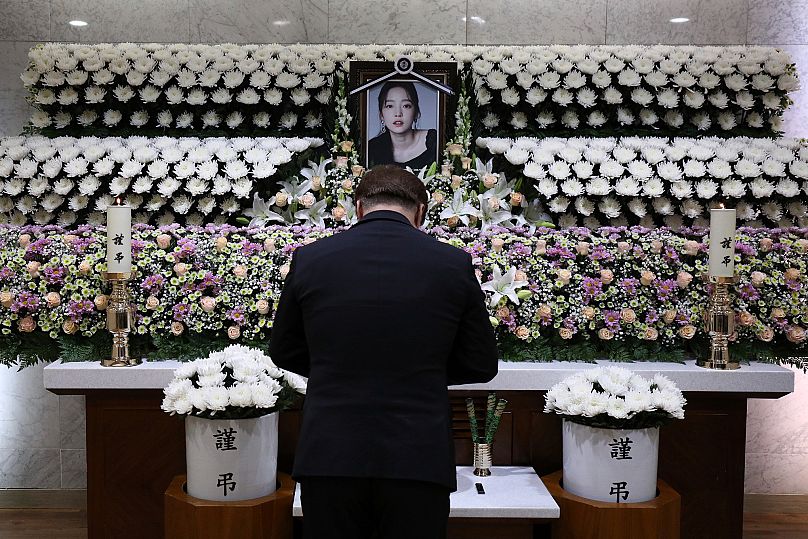
A South Korean man pays tribute to K-pop star Goo Hara at a memorial altar at the Seoul St. Mary's Hospital in Seoul, Monday, Nov. 25, 2019.
A South Korean man pays tribute to K-pop star Goo Hara at a memorial altar at the Seoul St. Mary's Hospital in Seoul, Monday, Nov. 25, 2019.AP Photo

Still, rates of suicide are shockingly high for the profession. It’s not just a problem in the UK and the US. Many K-pop stars have died by suicide in recent years, a trend the paper takes note of.

“Korea has one of the highest rates of suicide in the world,” Musgrave says. Although they don’t have the data as to whether musicians are more at risk, there are factors that could make them high risk such as the “socially prescribed perfectionism” of Korean culture.

No tolerance tactics

In response to their findings, Musgrave and Lamis are calling for a zero-suicide approach to policy to help reduce the risk to musicians’ lives. Zero suicide framework is a seven-element strategy for suicide prevention through holistic care through the workforce, care systems, and treatments.

“There is substantial evidence that the zero suicide approach is effective in reducing suicide among a variety of populations,” Lamis explains. “One example of this is the New York Office of Mental Health. Over 18 months of implementing this approach suicides decreased by 75%. By incorporating the zero suicide approach among musicians, and the music industry, suicides will decrease and mental health outcomes will be improved.”

Musgrave has also commented on dismantling the romanticisation that comes with linking suicide to the music industry: “What we have done for far too long is tolerate early mortality and suicide risk among musicians. We’ve done that as a society because musicians have been represented as being inherently tortured, as suffering for their art. This has got to stop.”