Sunday, March 23, 2025

US revokes legal status for 500,000 immigrants


By AFP
March 22, 2025


President Joe Biden had touted the protected status scheme as a way to ease pressure on the US-Mexico border - Copyright POOL/AFP Ng Han Guan

The United States said Friday it was terminating the legal status of hundreds of thousands of immigrants, giving them weeks to leave the country.

President Donald Trump has pledged to carry out the largest deportation campaign in US history and curb immigration, mainly from Latin American nations.

The order affects around 532,000 Cubans, Haitians, Nicaraguans and Venezuelans who came to the United States under a scheme launched in October 2022 by Trump’s predecessor Joe Biden and expanded in January the following year.

They will lose their legal protection 30 days after the Department of Homeland Security’s order is published in the Federal Register, which is scheduled Tuesday.

That means immigrants sponsored by the program “must depart the United States” by April 24 unless they have secured another immigration status allowing them to remain in the country, the order says.

Welcome.US, which supports people seeking refuge in the United States, urged those affected by the move to “immediately” seek advice from an immigration lawyer.

The Processes for Cubans, Haitians, Nicaraguans, and Venezuelans (CHNV) program, announced in January 2023, allowed entry to the United States for two years for up to 30,000 migrants per month from the four countries, which have grim human rights records.

Biden touted the plan as a “safe and humane” way to ease pressure on the crowded US-Mexico border.

But the Department of Homeland Security stressed Friday that the scheme was “temporary.”

“Parole is inherently temporary, and parole alone is not an underlying basis for obtaining any immigration status, nor does it constitute an admission to the United States,” it said in the order.

– ‘Chaos’ –

Nicolette Glazer, an immigration lawyer in California, said the order would affect the “vast majority” of the half a million immigrants who entered the United States under the CHNV scheme.

“Only 75,000 affirmative asylum applications were filed, so the vast majority of the CHNV parolees will find themselves without status, work permits, and subject to removal,” she posted on X.

“The chaos will be unreal”.

Karen Tumlin, director of immigrant rights group Justice Action Center, said the Trump administration was “breaking a commitment the federal government made to the hundreds of thousands” of immigrants and their sponsors in the United States.

“Suddenly revoking the lawful status of hundreds of thousands of CHNV humanitarian parole recipients is going to cause needless chaos and heartbreak for families and communities across the country,” she said in a statement.

Trump last weekend invoked rare wartime legislation to fly more than 200 alleged members of a Venezuelan gang to El Salvador, which has offered to imprison migrants and even US citizens at a discount.

More than seven million Venezuelans have fled their country over the last decade as the oil-rich country’s economy implodes under leftist leader Nicolas Maduro, a bugbear of Washington who has faced major sanctions.


Op-Ed |

We Need a New Wave of Airport Protests to Reject Trump’s Deportation Agenda

Airport protests stymied the 2017 Muslim ban. As Trump’s administration targets even more people, we need a repeat.
TruthoutPublished
March 21, 2025
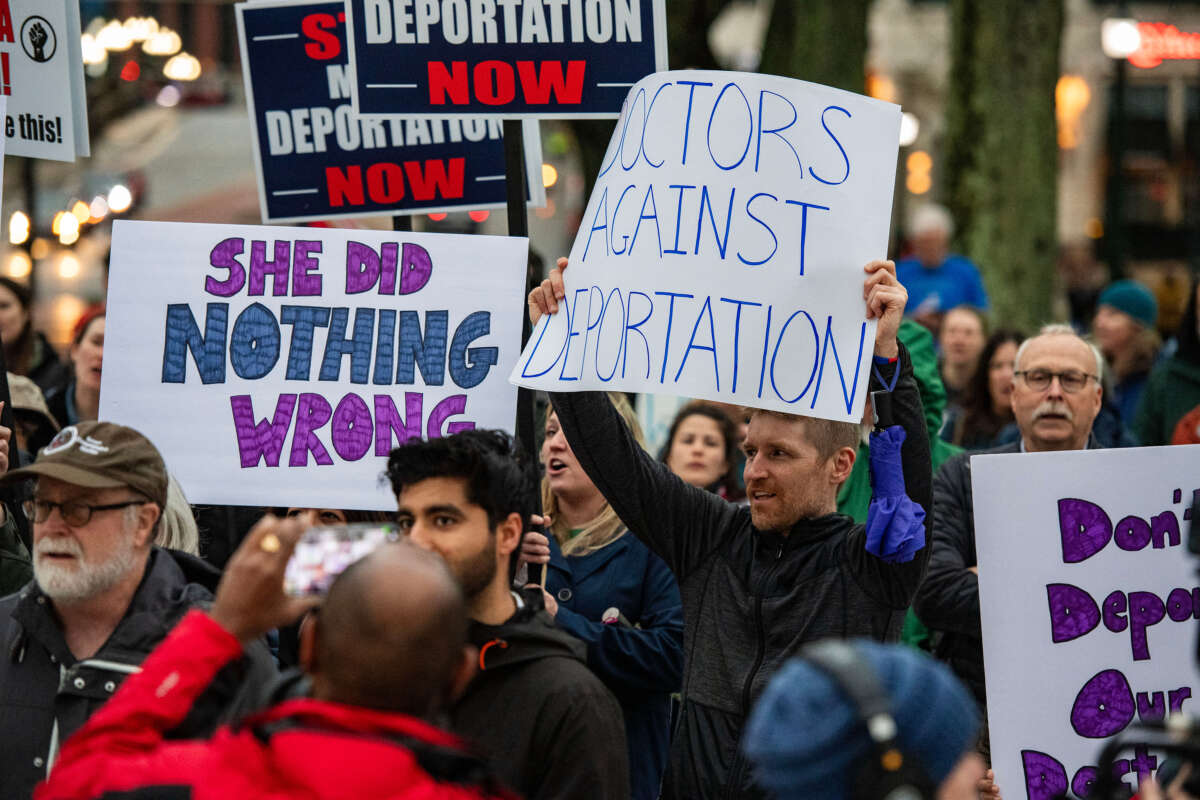
Demonstrators hold signs as they protest the deportation of Assistant Professor of Medicine Dr. Rasha Alawieh of Brown University at the State House in Providence, Rhode Island, on March 17, 2025.Joseph Prezioso / AFP via Getty Images

Over the past two weeks, the Trump administration’s detention, interrogation and deportation machine has shown a new level of cruelty. The detention and deportation of visa holders, followed by over 200 Venezuelan nationals without due process, has caused judicial controversy and a struggle in the courts. But activists and progressives cannot simply rely on the court system to rein in Donald Trump. Popular pressure is needed to push back on the impunity of the Trump administration and the cruelty of border control agents, especially in the face of a likely new Muslim ban. In 2017, a wave of mass protest at airports stood up against Trump’s first attempt at the racist ban. They offer a model for the kind of protest needed now to stop brutal detentions and deportations.

Border agents emboldened by Trump have shown particular cruelty at Boston Logan International Airport over the past few weeks. On March 13, Customs and Border Protection (CBP) stopped Rasha Alawieh, a kidney transplant specialist and professor at Brown University’s medical school with a valid H-1B visa, who was returning to the U.S. from a visit to Lebanon. Possibly targeting her for being from South Lebanon — which has been under Israeli bombardment and incursion since October 2023, and is often labeled a “Hezbollah stronghold” given its Shia majority population — border officials detained Alawieh for 36 hours and interrogated her before deporting her. This was despite a judge’s injunction to halt her deportation and Alawieh’s lawyers demanding that the plane not take off. Her lawyers have accused CBP agents of willfully disobeying the court order by sending her back to Lebanon.

Alawieh had been studying and working in the U.S. for the last six years, completing programs at Ohio State University, the University of Washington and Yale’s Internal Medicine program before working and teaching at Brown. After deporting her, the Department of Homeland Security claimed that the deportation was justified, alleging that, under interrogation, she admitted sympathy for Hezbollah’s former leader Hassan Nasrallah, and that she had attended his funeral — which was attended by an estimated 700,000 to 900,000 Lebanese people, over 10 percent of Lebanon’s population.

The week prior, on March 7, CBP officials at Logan airport detained German national and green card holder Fabian Schmidt and interrogated him until he collapsed. Schmidt told his family that he was violently interrogated, stripped naked and put in a cold shower. CBP claimed that he had “drug-related charges” — including a charge of possessing marijuana in 2015 that had later been dismissed. Over two weeks later, Schmidt is still in Immigration and Customs Enforcement (ICE) detention in Central Falls, Rhode Island. Additional cases of individuals detained, interrogated and deported upon arriving to the U.S. continue to come to light — including those denied entry for having criticized Trump’s policies.

On March 15, two days after Alawieh’s detention at Boston Logan, Trump forced through the deportation of over 200 Venezuelans to El Salvador, claiming — without providing evidence — that they were members of a Venezuelan gang. Despite the efforts of the ACLU and other legal advocacy groups, their insistence that several Venezuelans slated to be deported were falsely accused of gang membership, and a temporary order from D.C. District Court Judge James Boasberg, the Trump administration pushed through with their deportation, invoking the Alien Enemies Act to override their due process.

Related Story
DHS Abducts Georgetown Postdoctoral Researcher Over Pro-Palestine Views
Human rights advocates say the researcher, Badar Khan Suri, is being punished for criticizing US foreign policy. By Chris Walker , Truthout March 20, 2025


In defiance of the court order, two planes failed to turn around after having departed from Texas carrying the deportees to a mega-prison in El Salvador that has been called a “Guantánamo on steroids” for its horrific conditions, lack of legal recourse for detainees and the likelihood that detainees will “never be allowed out.” And a third deportation flight is believed to have departed Texas after the restraining order was issued.

These examples are only a few of the many unjust detentions and attempted deportations overseen by the Trump administration in recent weeks, and the attacks are likely to continue to mount. The case of Mahmoud Khalil, a Columbia graduate and leader of Columbia’s encampment movement detained by ICE, exemplifies the Trump administration’s punitive attempts to target and deport Palestine solidarity activists in particular. Khalil, a Palestinian refugee from Syria, is one of many green card holders associated with the Palestine solidarity movement that the Trump regime is attempting to deport. But the attacks and deportations are likely to become even broader still. The New York Times has reported that Trump aims to put in place an expanded Muslim ban, with as many as 43 countries reportedly under consideration for full or partial travel bans. This is likely to be implemented in the coming weeks if not days.

Following the deportation of Venezuelan migrants to El Salvador, and the back-and-forth race against Judge Boasberg’s restraining orders against the deportations, Trump attacked Boasberg and called for his impeachment. Chief Justice John Roberts issued a statement against the impeachment of judges for their disagreements.

In spite of the efforts of judges like Boasberg and Roberts, numerous right-wing judges fill our U.S. courtrooms, including in the Supreme Court, which upheld Trump’s Muslim ban in 2018. And even when lawyers and judges push back on harmful policies, it is most often due to the efforts of large-scale movement organizing. The airport protests of 2017 were one such case, providing the pressure that brought about a stay of airport detentions.


Activists and progressives cannot simply rely on the court system to rein in Donald Trump.

The day after Trump announced the first iteration of his Muslim ban on January 27, 2017 — banning travel from seven Muslim-majority countries and leaving at least 100 people in limbo or in detention at U.S. airports, including permanent residents and green card holders — thousands of protesters mobilized to airports across the U.S. Thousands amassed at New York City’s JFK airport and at Chicago’s O’Hare airport, over a thousand at San Francisco International Airport, around 1,000 at Boston’s Logan airport, and hundreds at other airports around the country to demand the entry of stranded and detained individuals, to insist that they be welcomed rather than turned away and to reject Trump’s racist policy. In San Francisco, protesters occupied the airport for over 36 hours and shut down the international terminal, disrupting business as usual, preventing any flights from departing the international gates, and ensuring that flights that arrived saw individuals released and connected with their families rather than detained. Airports became a front line against Trump’s travel ban.

The protests brought together longtime organizers with newly politicized and agitated individuals moved to act against the Islamophobic policy. Many protesters had ties to the seven countries included in Trump’s initial Muslim ban.

The airport protests also inspired other protest and strike activity: In New York City, the Taxi Workers Alliance, a 19,000-member union made up of largely Muslim taxi drivers, called an hour-long boycott of JFK airport pickups that day, and Yemeni-owned bodegas across the city’s five boroughs struck the next week. Also in the days that followed, over 3,000 tech workers — Comcast and Google employees — walked off the job in protest of the ban in several cities across the U.S.

Late that same night on January 28, a federal judge granted a stay on deportations for visa holders who had been detained upon entry, effectively freeing those who had been detained at airports. The protests had secured their first victory against the Muslim ban within hours and shattered the façade of the Trump administration’s invincibility.

While there have been thousands of protests since Trump took office in January, including powerful protests like the hundreds of Jewish activists who protested the detention of Mahmoud Khalil in a demonstration at Trump Tower, our movement must consider specific sites to protest the coming deportations, in particular airports and workplace strikes.

The detentions and deportations of Alawieh and Schmidt, and the likelihood of another iteration of the Muslim ban, demands a call for activists to organize at the airports once again. The airport protests offer tangible solidarity to those in detention, and push back against the impunity of both the Trump administration and CBP officials, like those detaining and torturing travelers coming through Boston. Airport protests can shut down terminals and prevent planes from departing — as done in San Francisco International Airport in 2017 — whether simply to disrupt business as usual and demand policy change, or to prevent the deportation of individuals set to be deported. And coupled with labor strikes — like a strike of Columbia University staff to demand Khalil’s return, or a strike of airport workers as Sara Nelson has previously threatened, with successful results after a mere threat — can apply the economic pressure and disruption needed to force a change in Trump’s draconian policies.

We’re not backing down in the face of Trump’s threats.

As Donald Trump is inaugurated a second time, independent media organizations are faced with urgent mandates: Tell the truth more loudly than ever before. Do that work even as our standard modes of distribution (such as social media platforms) are being manipulated and curtailed by forces of fascist repression and ruthless capitalism. Do that work even as journalism and journalists face targeted attacks, including from the government itself. And do that work in community, never forgetting that we’re not shouting into a faceless void – we’re reaching out to real people amid a life-threatening political climate.

Our task is formidable, and it requires us to ground ourselves in our principles, remind ourselves of our utility, dig in and commit.

As a dizzying number of corporate news organizations – either through need or greed – rush to implement new ways to further monetize their content, and others acquiesce to Trump’s wishes, now is a time for movement media-makers to double down on community-first models.

At Truthout, we are reaffirming our commitments on this front: We won’t run ads or have a paywall because we believe that everyone should have access to information, and that access should exist without barriers and free of distractions from craven corporate interests. We recognize the implications for democracy when information-seekers click a link only to find the article trapped behind a paywall or buried on a page with dozens of invasive ads. The laws of capitalism dictate an unending increase in monetization, and much of the media simply follows those laws. Truthout and many of our peers are dedicating ourselves to following other paths – a commitment which feels vital in a moment when corporations are evermore overtly embedded in government.

Over 80 percent of Truthout‘s funding comes from small individual donations from our community of readers, and the remaining 20 percent comes from a handful of social justice-oriented foundations. Over a third of our total budget is supported by recurring monthly donors, many of whom give because they want to help us keep Truthout barrier-free for everyone.

You can help by giving today during our fundraiser. We have 5 days to add 340 new monthly donors. Whether you can make a small monthly donation or a larger gift, Truthout only works with your support.

This article is licensed under Creative Commons (CC BY-NC-ND 4.0), and you are free to share and republish under the terms of the license.



Shireen Akram-Boshar
Shireen Akram-Boshar is a socialist writer, editor and Middle East/North Africa solidarity activist.





Here’s How the Right Is Packaging Its Conspiracies in Environmentalism


When public health problems aren’t met with structural solutions, conspiracies cloaked in green rhetoric can flourish.
March 22, 2025
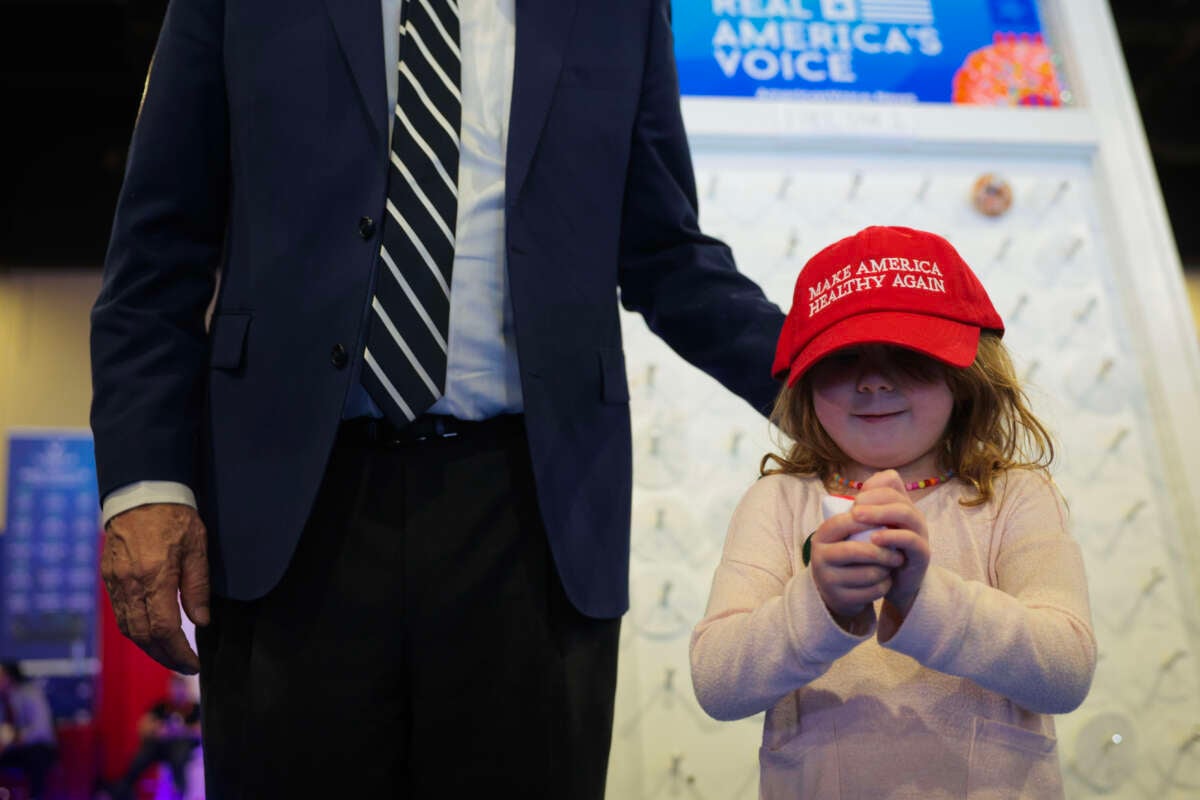
A child wears a "Make America Healthy Again" hat during the Conservative Political Action Conference (CPAC) at the Gaylord National Resort & Convention Center on February 21, 2025, in Oxon Hill, Maryland.Kayla Bartkowski / Getty Images

Growing up in the early 2000s, my mother instilled within me certain precepts: eat your vegetables, avoid processed foods, recycle. Buying organic was preferable, but often cost-prohibitive. Ideally, you’d want to be able to pronounce the words on a label. Red dye 40 and sugary breakfast cereals were no-nos — though sometimes she could be convinced otherwise.

All of these principles, she said, she’d picked up from her time living in California, where environmentalism and health consciousness were interwoven with the fabric of daily life. This, perhaps, reveals more about her particular social stratum than any overarching truth about Californians, but it’s true that my mom’s “crunchy” inclinations were an outlier in the southern city where we lived. To my friends’ parents, they were cultural markers of a type of West Coast liberalism, regardless of her actual political views.

In fact, none of these habits were inherently partisan; a certain strain of environmentalism has always permeated the political divide. After all, think of the few things that everyone wants: to breathe clean air, to drink clean water, to live a healthy life. But these desires too often translate into movements with solipsistic demands. At the local level, for instance, some Democrats and Republicans will unite to keep polluting industries out of their own neighborhoods, while readily offloading the burden to communities that lack resources to fight back. This NIMBY — “not in my backyard” — mindset fails to grasp how our collective futures are intertwined.

While eating organic may have once been loosely associated with the left, in recent years, we’ve seen a growing embrace of what I think is also a sort of NIMBYism — let’s call it the “not in my body” movement. Critical of pesticides and preservatives, these NIMBYs are focused on modifying their own consumption habits, usually at a higher price tag. Stoked by social media’s hyper-individualism, this line of thought is primarily concerned with health at the personal level: the fiction that one might buy their way into a longer life. And online, seeds of truth — i.e., that among rich countries, the U.S. spends the most on health care while maintaining some of the worst health outcomes — can quickly blossom into pernicious conspiracies. People who start off rightfully concerned about, say, lead in their tap water or microplastics in their brain tissue, might find themselves algorithmically led to influencers hawking raw milk while proclaiming the dangers of vaccines and seed oils.

These online communities really began taking off during the COVID-19 pandemic, when social isolation and flawed government messaging helped inspire a new wave of vaccine denialism and conspiratorial thought. Over the past five years, the gulf between reality and paranoia has seemingly widened, as Americans grow evermore mistrustful of institutions and profit-driven algorithms reward reactionary content. Perhaps it’s no surprise that the fringe has now bled so far into the mainstream it’s been awarded an institutional figurehead: Donald Trump’s pick for Secretary of Health and Human Services, Robert F. Kennedy Jr.


To some commentators, RFK Jr.’s Trump-endorsed “Make America Healthy Again” (MAHA) campaign marks a “weird political realignment.” One Vox headline from February bewilderedly asks, “The far right is going … green?” In a November 2024 Compact magazine article titled “The Rise of Green MAGA,” Holly Jean Buck writes, “Kennedy’s rightward trajectory and new position within the MAGA movement are the latest indication that ideas that were once a core part of environmentalism are veering in a strange direction.”

It’s true that that the pair is, at its face, incongruous: RFK Jr. spent years as an attorney for the Natural Resources Defense Council (NRDC), a leading nonprofit environmental advocacy organization, while Trump is openly hostile to climate science. Money from the fossil fuel industry, the primary instigator of climate change, overwhelmingly flows into Republican lawmakers’ coffers. Trump’s first administration rolled back more than 100 environmental regulations, and in his second, the president has tapped chemical industry lobbyists for senior Environmental Protection Agency positions — all while signing an executive order to “assess the threat” of certain chemicals and food additives and “Make America Healthy Again” by “eliminating undue industry influence.”

Of course, RFK Jr.’s beliefs are not just your run-of-the-mill environmentalism. His own former colleagues have disavowed him; one NRDC press statement called him a “one-man misinformation superspreader.” RFK Jr. has spent years promoting baseless conspiracy theories and opposing life-saving vaccines; that opposition helped fuel a measles outbreak in Samoa, where vaccine rates dropped after he visited. More than 80 people, mostly children, died in the outbreak. Now, as cases of measles surge in the U.S., he is falsely insinuating that contracting the disease is better than getting vaccinated and peddling misinformation about treatment. His newfound influence over U.S. public health is cause for serious alarm.

But it’s misguided to frame the far right as going in a green new direction. For one, it’s hardly new. As historian Kathleen Belew wrote in a 2022 piece for The Atlantic on the “crunchy to alt-right pipeline,” the white power movement has long used hippie-ish issues like organic farming or a macrobiotic diet “as part of a wider articulation of cultural identity,” focused on purity and back-to-the-land survivalism. “The idea that natural purity translates into racial or national purity — that was one that was very central to the Nazis’ environmental discourse of blood and soil,” Blair Taylor, a researcher at the Institute for Social Ecology, told NPR in 2022. (I can’t be the only one who remembers learning as a child that Adolf Hitler was a vegetarian.)

One of the clearest contemporary articulations of this mindset can be found in “tradwife” influencers, short for “traditional wife,” who promote the importance of rigid gender roles alongside manicured photos of their backyard chickens and grass-fed organic beef diets. Many of these women claim that their lifestyle connects them to their “ancestral roots,” a white power dog whistle that plays out in the tradwives’ odd embrace of both organic and extremely red meat-heavy diets. Just as New Age hippies preached spiritual and physical detoxification, the ideal tradwife “not only takes care of the children but protects them from anything that could corrupt their bodies, minds, and souls,” as Gaby del Valle wrote in The Baffler in 2023.

The overarching idea from these accounts is that we’re being poisoned — by Big Pharma, Big Food, Big Government — and we must take individual action to make ourselves healthy and happy again. This is also the logic of the anti-fluoridation movement, one of RFK Jr.’s cause célèbres that also has roots in both the far right and environmentalist communities. In the 1960s, a group of wealthy businessmen called the John Birch Society vehemently opposed the government’s addition of fluoride to drinking water, claiming that, rather than a public health intervention to prevent tooth decay, fluoridation was actually part of a communist plot to take over the country. In the latter part of the 20th century, Belew writes, “White-power activists worried that fluoride would make people docile, such that revolution against the state and race war would be harder to accomplish.” Meanwhile, some environmentalists, including the former executive director of the Sierra Club, argued that fluoride was a risk to ecosystems. But while anti-fluoridation conspiracies existed only on the fringes for decades — research, after all, has shown that water fluoridation is safe and effective for promoting dental health — these, too, have now gone mainstream. This month, Utah’s governor announced the state would become the first to ban fluoride in drinking water.

RFK Jr. and his acolytes are dangerous. It is abhorrent, for instance, that the growing anti-vax movement has led us to a moment where, in 2025, we are grappling with what should have been an easily preventable measles outbreak among schoolchildren in Texas. What’s especially pernicious about the MAHA movement is the kernels of truth it contains: Industry interests do have concerning influence over U.S. agricultural policy and chemical regulation. Growing research shows that PFAS, the industrial “forever chemicals” linked to a host of deleterious health impacts, are virtually everywhere. When Trump claimed in his MAHA executive order, that “6 in 10 Americans have at least one chronic disease,” he wasn’t lying.

In trying to establish themselves as the party of science, the Democrats have also unintentionally fueled anti-science conspiracies. If “science is real,” as the Democrats’ adage goes, and science overwhelmingly points to the urgency of more drastic measures to combat climate change — why haven’t they taken them? If “science is real,” and science points to a chemical’s carcinogenic potential — why wouldn’t it be banned? If “science is real,” but scientists helped fuel racist 20th-century eugenics programs — and faced little to no accountability for it — why would marginalized groups, harmed by that legacy, readily agree to “believe science,” no questions asked?

To be clear, science is real, and MAHA is not the answer. But ideological inconsistencies, and gaps between rhetoric and action, leave spaces that conspiracy theorists are all too happy to fill.

“If you’re the average American,” P.E. Moskowitz recently wrote in their newsletter Mental Hellth, “then you’ve been presented with two options: support the team who acknowledges how unhealthy we’ve all become […] or support the side that pretends these problems simply do not exist.”

As STAT News noted, if government mistrust was the starting point, the pandemic was the tipping point. It is both true that COVID-19 vaccines are safe, urgent and necessary for safeguarding public health, and that Pfizer received windfall profits from said vaccine. Acknowledging this is uncomfortable; pretending it’s not true is worse.

In the absence of systemic solutions like universal health care, it makes sense that people are seeking out their own flawed treatments on the internet. And when they do go looking, they’ll inevitably encounter snake oil salesmen and right-wing grifters, the false promise of self-improvement through consumption. The only way for the left to counter the swindle is by highlighting systemic faults and widely publicizing the alternatives — taking corporations to task, dismantling for-profit health care, subsidizing access to nutritious foods and shutting down repeat polluters, to start. Although some segments of the left have adopted these rallying cries, the Democratic establishment has largely tried to counter RFK-style misinformation with a piecemeal approach that fails to address root concerns.

It’s also important to recognize that the right-wing has succeeded in borrowing green-ish rhetoric because of the failures of NIMBY — body and backyard — environmentalism. New Age hippies were never particularly known for their racial diversity; the high cost of organics and “clean” products has long meant that access to a nontoxic lifestyle is circumscribed by class lines. Everyone deserves healthy food, unpolluted air, clean water. A “health for me but not for thee” approach just isn’t going to work.
'Scared to death': Fear as Christian right 'handed the keys to the kingdom' in red state


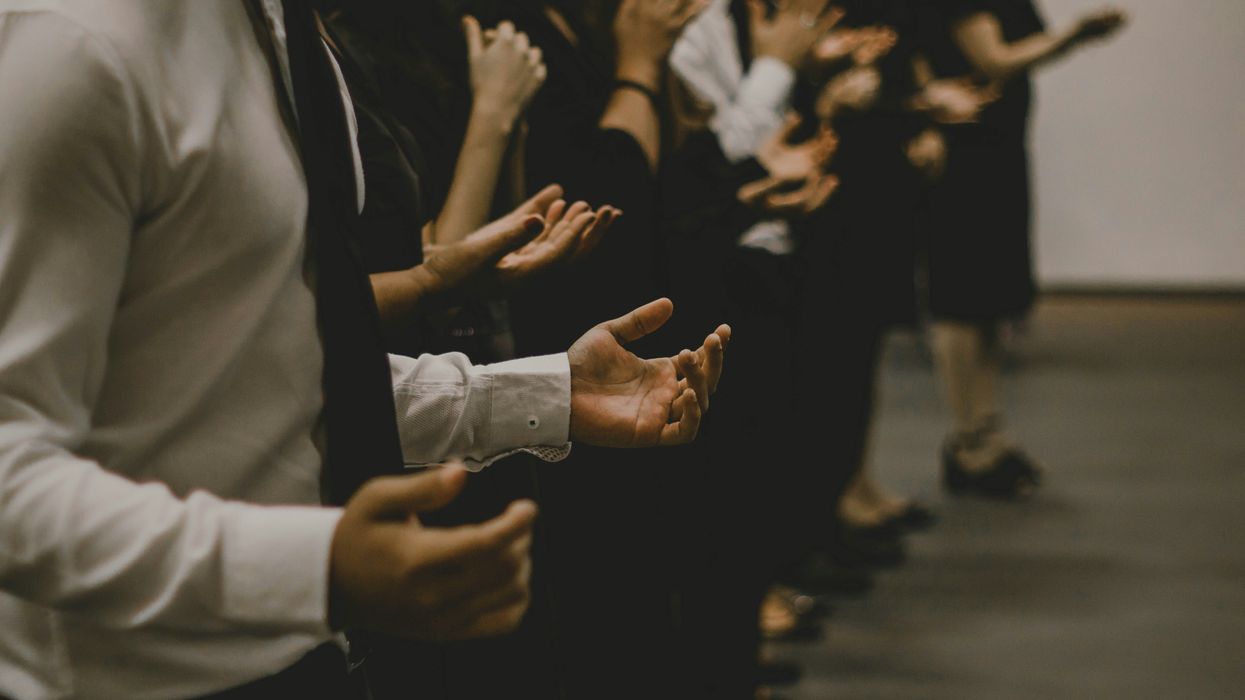
Photo by Pedro Lima on Unsplash

March 17, 2025
The Texas Tribune

Testifying this month against bills that would put more Christianity in Texas public schools, the Rev. Jody Harrison invoked the violent persecution of her Baptist forefathers by fellow Christians in colonial America.

Harrison hoped the history lesson would remind Texas senators of Baptists’ strong support for church-state separations, and that weakening those protections would hurt people of all faiths.

Instead, she was rebuked.

“The Baptist doctrine is Christ-centered,” Sen. Donna Campbell, R-New Braunfels, responded sharply. “Its purpose is not to go around trying to defend this or that. It is to be a disciple and a witness for Christ. That includes the Ten Commandments. That’s prayer in schools. It is not a fight for separation between church and state.”

Harrison was not allowed to reply, but in an interview said she was stunned that a lawmaker would question a core part of her faith. The exchange, she said, perfectly encapsulated why she has fought to preserve church-state separations — the same religious protections that Campbell said are a distraction from bills that might bring school kids to Christ.

“It was a wake up call,” she said. “I don’t think people — even many churches — realize that this is going on right now, and that is alarming.”


State Sen. Donna Campbell, R-New Braunfels, listens as Rafael Cruz, father of U.S. Sen. Ted Cruz, speaks to the Senate Committee on Education K-16 on March 11, 2025. Credit: Lorianne Willett/

Efforts by the Christian Right to put more of their religion in public schools are not new. But the tone of those debates in Texas has shifted this session, with bill supporters and some lawmakers openly arguing that such legislation is crucial to combating dropping church participation rates and what they say is a directly related decline in American morality.

Last month, a Texas Senate education committee advanced two bills that would require the Ten Commandments to be displayed in public classrooms and allow school districts to set aside optional prayer time during school hours. And last week, that committee also heard testimony on a bill to mandate that schools teach an anti-communist curriculum — which supporters said is crucial to reaffirming that America is a Christian nation.

Throughout those hearings, lawmakers and bill supporters frequently said that church-state separation is a myth meant to obscure America’s true, Christian roots. They argued that many of America’s ills are the natural consequence of removing Biblical morality from classrooms. And they framed their legislation as an antidote to decreasing church attendance, communism or eternal hellfire.

"To realize that only 25% of our kids in schools today have been in a church is absolutely horrific and something that we all need to work on to address,” said Sen. Tan Parker, R-Flower Mound, repeating a statistic offered by one bill supporter during testimony. “That should make everybody listening absolutely scared to death," he added.

Such statements have struck even longtime scholars and observers of the Religious Right as setting a new, more strident tone after years in which terms like “religious freedom” were the norm. Many in the movement had avoided explicitly centering Christianity in bills because doing so could prompt court challenges and discrimination complaints.

The shift, experts said, reflects a Religious Right emboldened by recent U.S. Supreme Court decisions, the second Trump administration and the broader normalization of Christian nationalism in the GOP.

“Christian nationalist leaders think they've been handed the keys to the kingdom,” said Mark Chancey, a religious studies professor at Southern Methodist University who focuses on movements to put the Bible in schools. “Now they're trying to unlock as 
many locks as they can.”


The growing influence

Recent polling from the Public Religion and Research Institute found that, of all Americans, about 10% adhere to Christian nationalism and 20% sympathize with aspects of it. Experts say that, despite accounting for a small segment of the broader country, Christian nationalists and their allies have been able to incrementally accumulate power through a long-term political strategy and a well of deep-pocketed donors.

In Texas, the Christian Right’s rising influence has coincided with the state GOP’s alignment with two West Texas oil billionaires, Tim Dunn and Farris Wilks, who have given tens of millions of dollars to push their far-right religious and social views. And groups like Project Blitz, a coalition of Christian groups with deep Texas ties, have used that long-term approach to steadily normalize their views and chip away at church-state separation without drawing widespread opposition.


From left: West Texas billionaires Farris Wilks and Tim Dunn. Credit: Courtesy Ronald W. Erdrich/Abilene Reporter-News|Brett Buchanan for The Texas Tribune

“Part of their legislative strategy is to be additive,” said Amanda Tyler, executive director of the Baptist Joint Committee For Religious Freedom, which advocates for a strong church-state wall. “The idea is that you start lawmakers out with what appear to be lower-stakes legislation, and then once they take votes on that, they will move to more and more extreme versions of the legislation.”

“What we're seeing now is that strategy really coming to bear in Texas,” she added.

In 2010, the State Board of Education approved a sweeping curriculum overhaul in order to weed out what it called “liberal bias.” With advice from prominent evangelicals such as David Barton, a Project Blitz leader and self-described “amateur historian” who has popularized the idea that church-state separation is a “false doctrine,” conservative board members framed the move as a way to reaffirm “that this was a nation founded under God.”


In 2022, the Texas Legislature approved a law that required classrooms to display “In God We Trust” signs that were donated by Patriot Mobile, a self-described Christian nationalist cellphone company that also funds school board candidates. The law quickly drew controversy — at one Dallas-area school district, the board declined to also display donated “In God We Trust” signs that were in Arabic, saying it already had enough for all its buildings.

In 2023, state lawmakers allowed school districts to replace mental health counselors with untrained religious chaplains, overriding a proposed amendment that would have barred them from evangelizing to students. Ahead of the vote, The Texas Tribune reported that a main backer of the bill had run an organization that, until a few months prior, was open about using classrooms as a way to recruit children to Christianity. Barton also testified in favor of the bill.

By 2024, the theories espoused by Barton and his allies were mainstream in the Texas GOP. Prominent figures — including Lt. Gov. Dan Patrick, Texas GOP Chair Abraham George and numerous state senators — have called church-state separation a “myth.” And at the state party’s convention that year, lawmakers framed themselves as engaged in an existential struggle with communists, socialists and others trying to indoctrinate children; delegates called for the state to require instruction on the Bible; and state education board Chair Aaaron Kinsey vowed in a speech to fight for “these three-letter words: G-O-D, G-O-P and U-S-A.”

A few weeks later, state education leaders proposed new curriculum that paired grade-school teachings with lessons on the Bible and other religious texts. The curriculum was approved late last year despite concerns by religious historians and other experts who said it whitewashed the role that many white Christians played in opposing Civil Rights, upholding slavery and persecuting religious minorities, including Baptists and other fellow believers, during the country’s founding period.

The 2025 legislative session began with some Republican lawmakers calling for “spiritual warfare” against political opponents, and leading worship inside the Capitol to ward off demonic spirits that they believe control the legislature. In addition to the Ten Commandments and school prayer bills, state senators have also approved sweeping legislation that would allow taxpayer money to be directed to religious and other private schools.

Tyler, the Baptist leader and church-state wall advocate, said the last 15 years in Texas show how successful Religious Right groups can be in steadily mainstreaming their political views and advancing their agenda.

“We have seen, over several years, a definite strategy to target public schools,” she said. “Now they have become bolder and have been emboldened, and are being more explicit about their aims.”


Amanda Tyler, executive director of the Baptist Joint Committee For Religious Freedom, speaks at The Texas Tribune Festival in Austin on Sept. 22, 2023. Credit: Julius Shieh/The Texas Tribune


The new rhetoric


For decades, David Brockman has closely monitored the rise of Christian nationalism in Texas for Rice University's Baker Institute for Public Policy, where he is a non-resident scholar. A few years ago, he said, he wanted to quantify how many adherents or sympathizers worked in the Texas Legislature by analyzing their comments and speeches for tell-tale signs of Christian nationalist rhetoric. Even then, he said, it was difficult to find many concrete examples of the ideology, or of bills that explicitly privileged Christianity.

But that’s changed.

“What they were doing instead was either carving out exceptions for ‘sincerely-held religious beliefs’ or protecting religion overall,” Brockman said. “Now, it’s a new landscape for them.”

Central to that shift has been a series of recent U.S. Supreme Court decisions, including 2022’s Kennedy v. Bremerton School District. In that case, the court ruled with a high school football coach whose employer, a public school, asked that he stop leading prayers at midfield after games. In a 6-2 decision, the court found that the coach’s prayers were within his First Amendment rights and that his actions did not amount to government support of religion. The ruling neutered the so-called Lemon Test, which for decades had been used by courts to determine if a law or practice amounted to an unconstitutional government act establishing or preferring a religion.

Conservative Christians have taken the 2022 ruling as a greenlight to put more Christianity into public schools, arguing that things such as the Ten Commandments are the basis for American law and governance, and therefore have educational value. This session, lawmakers and their supporters have also argued that such legislation is imperative to reverse what they say is a decadeslong moral decline.

“I think our kids are just crying out for moral clarity,” said Sen. Phil King, a Weatherford Republican who authored the Ten Commandments bill. “I think they are crying out for a shared heritage.”


RELIGON IN  THE CLASSROOM 


Other lawmakers have explicitly said that they have a duty to bring kids to Christ.

“There is eternal life,” said Campbell, the senator who rebuked Rev. Harrison earlier this month. “And if we don’t expose or introduce our children and others to that, when they die they’ll have one birth and two deaths. Because they will know nothing about the afterlife, the eternity with God. But exposing them or introducing them to Ten Commandments, prayer – it asks other questions and they then have a choice in their future: Two births and one death.”

Last week, a Texas Senate panel heard testimony on a bill that would require public schools to adopt anti-communist curriculum. On its face, the bill does not seek to put more Christianity in classrooms. But supporters argued that the bill is crucial to combating godless ideologies that they say have crept into American education and undermined the nation’s true, Christian heritage.

Such fears have been a driving force of Christian Right movements since the 1950s, when Christians, believing their faith a key bulwark against Red influence, successfully lobbied to add “under God” to the pledge of allegiance and to make “In God We Trust” the national motto.

Those fears are still pronounced today. Last week, lawmakers heard testimony from Rafael Cruz, a pastor who is the father of U.S. Sen. Ted Cruz’s and an adherent of Christian dominionism, which argues Christians must dominate society to usher in the End Times. Cruz repeatedly argued that America – and thus, Christianity — are under threat from communist and socialist forces who seek to indoctrinate children through Critical Race Theory, diversity initiatives and other things that Republicans have targeted in recent years.

“In many instances our classrooms are failing us, because they’re following an agenda,” Cruz said. “It is not our agenda. It is a communist agenda that has, like tentacles, immersed itself into our education system. So we need to retrieve our educational system from that evil agenda.”

Throughout his testimony, Cruz took aim at a litany of things that he said are quietly advancing communist influence in America, be it atheism, evolution, college professors or campus protesters who “don’t like it here” and should be deported. Fighting that menace, he said, required lawmakers to legislate Christianity into public schools across the nation.

“America is a Christian country,” said Cruz, who was invited by lawmakers to testify. “And we need to build upon that foundation, because if we build that foundation in our children, everything else will fall into place.”


Rafael Cruz, father of U.S. Sen. Ted Cruz, after testifying before the Senate Committee on Education K-16 on March 11, 2025. Credit: Lorianne Willett/The Texas Tribune

Texas has for years been an incubator for Christian Right policies that are exported to other states or codified into federal law by courts. Lawmakers and their supporters have said they are confident that the current slate of Christian-centric bills will pass and then survive expected court challenges — though some legal experts are less sure.

Rev. Harrison, meanwhile, said she has frequently ruminated on her recent exchange with Sen. Campbell, and what it portends for Americans who are not conservative Christians. To her, it’s so much more than a debate about schools or the church-state wall.

“I believe we preach the gospel of Jesus Christ most powerfully without words, and for me, that means to follow the example of the way of Jesus,” she said. “Often the most powerful example we can set for others in preaching the gospel as Christians is by our actions. We are called to love one another, and that means speaking up for those whose voices are not heard and or are silenced.”

Disclosure: Rice University's Baker Institute for Public Policy and Southern Methodist University have been financial supporters of The Texas Tribune, a nonprofit, nonpartisan news organization that is funded in part by donations from members, foundations and corporate sponsors. Financial supporters play no role in the Tribune's journalism. Find a complete list of them here.

This article originally appeared in The Texas Tribune at https://www.texastribune.org/2025/03/17/texas-christian-nationalists-legislature-school/.

The Texas Tribune is a member-supported, nonpartisan newsroom informing and engaging Texans on state politics and policy. Learn more at texastribune.org


'It can happen here': MAGA expert explains why Trump voters want to destroy Dept. of Education


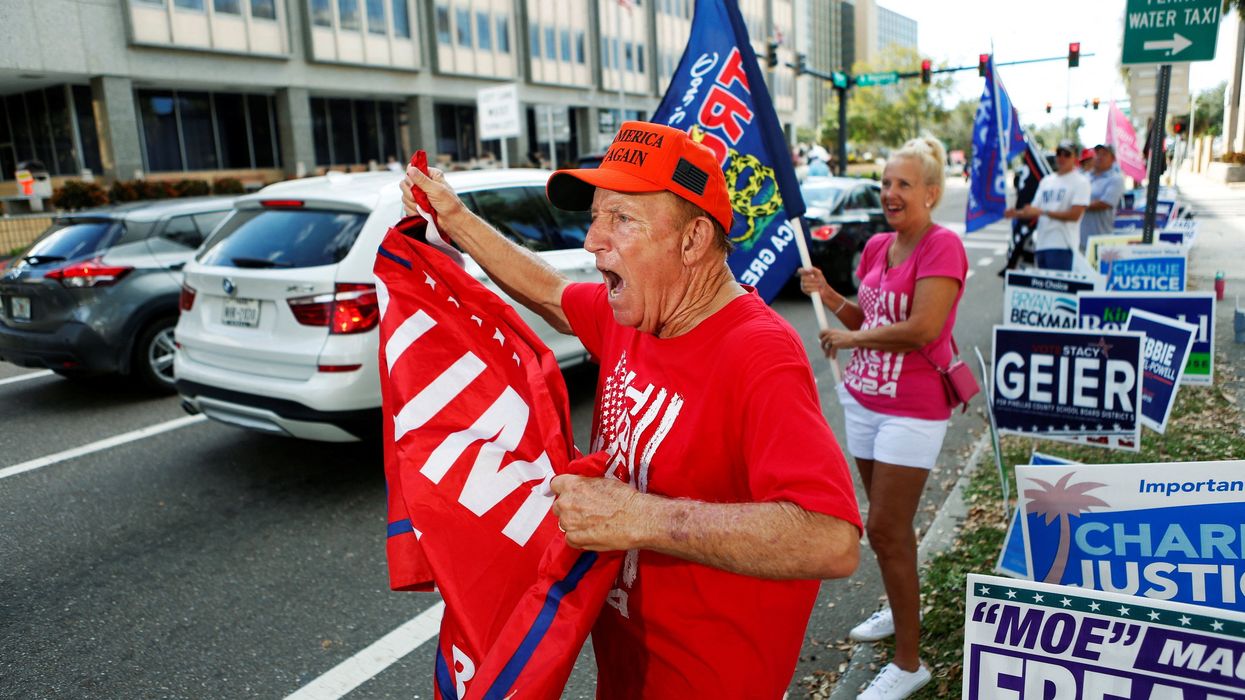
A supporter of Donald Trump rallies outside an early polling precinct as voters cast their ballots in local, state, and national elections, in Clearwater, Florida, U.S., November 3, 2024. REUTERS/Octavio Jones

March 21, 2025

“And one other thing I’ll be doing very early in the administration is closing up the Department of Education.”

Donald Trump made this promise in a Sept. 13, 2023, campaign statement and repeated it frequently on the campaign trail.

Trump tried to make this long-standing pledge a reality on March 20, 2025, by signing an executive order that he said will “begin eliminating the federal Department of Education once and for all.”

Trump said that he hopes Democrats would support his executive order. “I hope they’re going to be voting for it,” said Trump, speaking from the White House in front of a group of children seated at desks. “Because ultimately it may come before them.”

Project 2025, the conservative think tank Heritage Foundation’s blueprint for the Trump administration, provides detailed recommendations for closing the Education Department, which was created by an act of Congress in 1979.

The Department of Education already announced on March 9 that it laid off more than 1,300 of its 4,100 employees.

Trump’s new executive order calls for Secretary of Education Linda McMahon to “take all necessary steps to facilitate the closure (of) the Department of Education and return education authority to the States, while continuing to ensure the effective and uninterrupted delivery of services, programs, and benefits on which Americans rely,” according to a White House statement distributed to media.

I am an anthropologist and have been studying U.S. political culture for years. During Trump’s first presidency, I wrote a book about the extremist far right called “It Can Happen Here”. Since then, I have continued to study the Make America Great Again, or MAGA, movement, seeking to understand it, as the anthropological expression goes, “from the native’s point of view.”

Education policies in the U.S. are largely carried out at the state and local levels. The Education Department is a relatively small government agency, which as late as February 2025 had just over 4,000 employees and a US$268 billion annual budget. A large part of its work is overseeing $1.6 trillion in federal student loans as well as grants for K-12 schools.

And it ensures that public schools comply with federal laws that protect vulnerable students, like those with disabilities.

Why, then, does Trump want to eliminate the department?

A will to fight against so-called “wokeness” and a desire to shrink the government are among the four reasons I have found.


1. Education Department’s alleged ‘woke’ mentality

First and foremost, Trump and his supporters believe that liberals are ruining public education by instituting what they call a “radical woke agenda” that they say prioritizes identity politics and politically correct groupthink at the expense of the free speech of those, like many conservatives, who have different views.

Diversity, equity and inclusion, or DEI, initiatives promoting social justice – and critical race theory, or the idea that racism is entrenched in social and legal institutions – are a particular focus of MAGA ire.

So, too, is what Trump supporters call “radical gender ideology,” which they contend promotes policies like letting transgender students play on school sports teams or use bathrooms corresponding with their gender identity, not biological sex.

Trump supporters say that such policies – which the Education Department indirectly supported by expanding Title IX gender protections in 2024 to include discrimination based on gender identity – are at odds with parental school choice rights or, for some religious conservatives, the Bible.

Race and gender policies are highlighted in Project 2025 and in the 2024 GOP’s “Make America Great Again!” party platform.

Trump has repeatedly promised, as he did on Aug. 14, 2024, in North Carolina, to “keep critical race theory and transgender insanity the hell out of our schools.”
2. American Marxist indoctrination

For MAGA supporters, “radical left” wokeness is part of liberals’ long-standing attempt to “brainwash” others with their allegedly Marxist views that embrace communism.

One version of this “American Marxismconspiracy theory argues that the indoctrination dates to the origins of U.S. public education. MAGA stalwarts say this alleged leftist agenda is anti-democratic and anti-Christian.

Saying he wants to combat the educational influence of such radicals, zealots and Marxists, Trump issued executive orders on Jan. 29 that pledge to fight “campus anti-Semitism” and to end “Radical Indoctrination in K-12 Schools.”
3. School choice and parental rights

Trump supporters also argue that “woke” federal public education policy infringes on people’s basic freedoms and rights.

This idea extends to what Trump supporters call “restoring parental rights,” including the right to decide whether a child undergoes a gender transition or learns about nonbinary gender identity at public schools.

The first paragraph of Project 2025’s chapter on education argues, “Families and students should be free to choose from a diverse set of school options and learning environments.”

Diversity, according to this argument, should include faith-based institutions and homeschooling. Project 2025 proposes that the government could support parents who choose to homeschool or put their kids in a religious primary school by providing Educational Savings Accounts and school vouchers. Vouchers give public funding for students to attend private schools and have been expanding in use in recent years.

Critics of school vouchers, like the National Education Association and American Federation of Teachers unions, argue that vouchers would diminish public education for vulnerable students by taking away scarce funding.

Trump has already issued a Jan. 29 executive order called “Expanding Educational Freedom and Educational Opportunity for Families,” which opens the door to expanded use of vouchers. This directly echoes Project 2025 by directing the Education Department to prioritize educational choice to give families a range of options.
4. Red tape

For the MAGA faithful, the Education Department exemplifies government inefficiency and red tape.

Project 2025, for example, contends that from the time it was established by the Carter administration in 1979, the Education Department has ballooned in size, come under the sway of special interest groups and now serves as an inefficient “one-stop shop for the woke education cartel.”

To deal with the Education Department’s “bloat” and “suffocating bureaucratic red tape,” Project 2025 recommends shifting all of the department’s federal programs and money to other agencies and the states.

These recommendations dovetail with Trump’s broader attempt to eliminate what he and his MAGA supporters consider wasteful spending and deregulate the government.

Trump signed an executive order on Jan. 20 that establishes a “Department of Government Efficiency” headed by billionaire Elon Musk. Musk said on Feb. 4 that Trump “will succeed” in dismantling the Education Department.
Can Trump abolish the Education Department?

Trump’s executive order shuttering the Department of Education will almost certainly spark legal challenges in court.

Republican Senator Mike Rounds of South Dakota also introduced a bill in November 2024 to close the department.

Trump has dismantled other government agencies in his second term, chiefly the U.S. Agency for International Development, without the required congressional approval. A federal judge ruled on March 18 that the dismantling of USAID likely violated the Constitution and ordered the Trump administration to restore all USAID employees’ email and computer access.

Abolishing the Department of Education would legally require congressional approval and 60 votes to move forward in the Senate, which is unlikely since Republicans only have 53 seats.

Regardless of such legal challenges, Trump’s March 20 executive order will further weaken the Department of Education even as it remains in the crosshairs.


This story was updated on March 20, 2025, from an earlier version published originally on Feb. 7, 2025.

Alex Hinton, Distinguished Professor of Anthropology; Director, Center for the Study of Genocide and Human Rights, Rutgers University - Newark

This article is republished from The Conversation under a Creative Commons license. Read the original article.


Explosive report reveals right-wing tactic used to influence red state's schools


Photo by CDC on Unsplash
people sitting on chair inside room
March 20, 2025


In 2019, the Keller Independent School District in North Texas looked a lot like its counterpart just 30 miles to the east in the Dallas suburb of Richardson. Each served about 35,000 children and had experienced sharp increases in the racial diversity of students in recent decades. Each was run by a school board that was almost entirely white.

In the five years since, the districts have followed strikingly divergent paths as culture war battles over how to teach race and gender exploded across the state.

In Keller, candidates backed by groups seeking to limit the teaching of race and gender took control of the school board and immediately passed sweeping policies that gave outsized power to any individual who wanted to prevent the purchase of books they believed to be unsuitable for children.

Though more than half of Keller’s students are from racially diverse backgrounds, the district in 2023 nixed a plan to buy copies of a biography of Black poet Amanda Gorman after a teacher at a religious private school who had no children in the district complained about this passage: “Amanda realized that all the books she had read before were written by white men. Discovering a book written by people who look like her helped Amanda find her own voice.” The passage, the woman wrote, “makes it sound like it’s okay to judge a book by the authors skin color rather than the content of the book.”

Board members at the Richardson school district went in the opposite direction, even as they contended with similar pressure from groups aiming to rid the district of any materials that they claimed pushed critical race theory, an advanced academic concept that discusses systemic racism. The school board did not ban library books but instead allowed parents to limit their own children’s access to them, keeping them available for other students.


One major difference contributed to the districts’ divergence: the makeup of their school boards.

The way communities elect school board members plays a key, if often overlooked, role in whether racially diverse districts like Keller and Richardson experience takeovers by ideologically driven conservatives seeking to exert greater influence over what children learn in public schools, ProPublica and The Texas Tribune found. Since the pandemic, such groups have successfully leveraged the state’s long-standing and predominantly at-large method of electing candidates to flip school boards in their direction.

Most of Texas’ 1,000 school districts use an at-large method, where voters can cast ballots for all candidates. Supporters say that allows for broader representation for students, but voting rights advocates argue that such systems dilute the power of voters of color. If board members are elected districtwide, there tends to be less diversity, according to research, which also shows that if they are elected by smaller geographic zones, candidates of color often have more success.
by Taboola
Sponsored LinksYou May Like

Let the Sun ShineThe biggest double header in tennis has arrived. Starting with Indian wells from 5th March, the world's best players go toe-to-toe in the California desert before jetting to the Sunshine State to face off in the Miami Open.Tennis TV
Stream Now


“What you’re seeing happening in Texas is how at-large districts make it easy for somebody to come in, usually from the outside, and hijack the process and essentially buy a board,” said Michael Li, senior counsel for the Democracy Program at the Brennan Center for Justice, a nonprofit public policy institute that champions small-donor campaign financing. “Because of this conflux of factors — at-large elections and large amounts of outside money — it just sort of defeats the idea of representative democracy.”

ProPublica and the Tribune examined 14 rapidly diversifying suburban school districts where children from diverse backgrounds now make up more than half of the student population. In the six districts that used at-large voting systems, well-funded and culture-war-driven movements successfully helped elect school board members who have moved aggressively to ban or remove educational materials that teach children about diversity, even in districts where a majority of children are not white. Nearly 70% of board members in such districts live in areas that are whiter than their district’s population.

Eight nearby school systems with similar demographics employ single-member voting systems to elect school board candidates. Under the single-member system, voters within certain boundaries elect a board member who specifically represents their area. Candidates in those districts received less campaign support from ideologically driven political action committees, and none of the districts experienced school board takeovers fueled by culture war issues.


About 150 Texas school districts have transitioned to a single-member system since the Voting Rights Act of 1965, which is intended to prevent voter discrimination and has brought greater racial representation to local governments. Richardson joined that list in 2019 after a former Black board member sued the district.

Such legal challenges, however, could soon become more difficult. In one of his first acts in office, President Donald Trump froze civil rights litigation against school districts accused of discriminating against minority groups, and many legal experts believe that under his administration, federal prosecutors will refuse to bring challenges against at-large systems. DOJ officials did not respond to questions from the news organizations.

Trump, a staunch critic of diversity and inclusion programs, has threatened to cut federal funding to schools that he says are pushing “inappropriate racial, sexual or political content onto the shoulders of our children.”

Districts whose boards oppose sweeping efforts to restrict curriculum and books related to race and racism face even more headwinds in Texas. In January, Gov. Greg Abbott vowed to ban diversity, equity and inclusion initiatives in public schools, a move that would expand the state’s existing ban on college campuses. And Texas lawmakers continue to target the books students can access. One bill, authored by North Texas state Sen. Angela Paxton, the wife of Attorney General Ken Paxton, would require every district in the state to follow a version of Keller’s library book purchase policy.


The president of the Keller board, Charles Randklev, did not respond to multiple requests for comment, and the district did not answer written questions. District officials have previously said that the board represents all students, not just those in a specific neighborhood or area.

But Laney Hawes, the parent of four students in the district and an outspoken critic of the school board, said the policy on library purchases spawned a backdoor channel to banning materials about race. That, she said, has deprived her children of reading books about Americans like Gorman that provide points of view they might not find otherwise.

“They have created a system that allows anyone in the community to complain about any book for any reason, and now that book is not on library shelves,” said Hawes, who is white. She added that the book does not contain any sexually explicit material and was strictly targeted because it dealt with race.

“They just hate the racial undertones.”

“Up Against a Machine”

School districts across Texas have drawn considerable attention for removing books from their shelves, but board members in Keller went further when they passed a policy in August 2022 that, in practice, allowed community members to block proposed purchases.

Students spoke out against the district’s removal policies during a board meeting months later, pleading for access to books about race. One biracial student, who has since graduated, told the board that books about characters from different racial backgrounds helped her feel more accepted.

“All kids deserve to see themselves in literature,” the student said. “Racial minorities being written into a story does not instantly equate the book to being propaganda. Having books that mirror the experience of race is not pushing an agenda. It's simply documenting the hardships that consistently happen to most students of color that they’re able to relate to. Concealing ideas just because they tell an uncomfortable truth is not protecting your children.”


The students’ pleas didn’t sway the board, and by July 2023, challenges to such books began pouring in.

One person opposed the purchase of “Jim Crow: Segregation and the Legacy of Slavery.” The person, who did not provide their name, pointed to a photo of a young girl participating in a Black Lives Matter protest with the caption: “Just as in the past, people continue fighting for change.” They also took issue with this quote: “You can’t ‘get over’ something that is still happening. Which is why black Americans can’t ‘get over’ slavery or Jim Crow.”

The photo and the quotes, the book challenger said, were “potentially CRT,” showed the Black Lives Matter Movement in “a positive light” and claimed “oppression is still happening.”

Another person challenged the planned purchase of “Our Skin: A First Conversation About Race,” saying that the book started “beautifully,” but that “unfortunately tenets of CRT, social justice, and anti-white activism are portrayed.” The person, who used a pseudonym, did not offer specifics.

Administrators removed those books, the Gorman biography and 26 others from the purchase list after receiving the complaints, according to district officials. Librarians can reinstate books on future lists, but 75% of those flagged for further review never made it to the shelves, an online search of district libraries shows. That includes the three books about race.

Hawes, who heads two PTA groups at her children’s schools, said book challenges and complaints have come from allies of school board members. In 2022, Patriot Mobile Action, a North Texas Christian nationalist PAC funded by a cellphone company, spent more than $115,000 supporting three ideologically driven conservatives running for control of the school board.

Leigh Wambsganss, Patriot Mobile’s spokesperson and executive director of the PAC, declined to comment but said in a 2022 podcast that the PAC chose candidates based on their Christian conservative views and sought out those who “absolutely would stand against critical race theory.” Patriot Mobile supported eight candidates in three other North Texas districts that used at-large voting during the same election cycle. All of them won their races.

“We weren’t prepared for what was coming,” Hawes said. “We were literally up against a machine.”

Another PAC, KISD Family Alliance, spent $50,000 to help elect the same Keller school board candidates. Its donors included conservative activist Monty Bennett, who previously told the Tribune that he believes schools have been taken over by ideologues “pushing their outlandish agendas.” Neither Bennett nor the PAC’s treasurer responded to requests for comment.

The slate of Keller candidates, whose combined campaign war chests dwarfed that of their opponents’ by a more than 4 to 1 margin, focused their agendas squarely on culture war issues related to library books and curriculum.

“While I have many priorities I want to focus on, if concerns over child safety, and sexualization and politicization of children make me a one-issue candidate, so be it. I will be a one-issue candidate all day long,” Joni Shaw Smith wrote on her campaign website. Smith, who is now a board member, declined to comment.

Her election contributed to what would become a sweep of the seven seats on the board. Five of those seats are held by board members who live in the city of Keller, where three-quarters of residents are white and the median household income of more than $160,000 is among the highest in the state.

Most of the Keller district’s 42 schools, however, are located in the more diverse neighborhoods of Fort Worth.
A Different Approach

Thirty miles away, the makeup of Richardson’s school board changed dramatically after the district settled a lawsuit filed in 2018 by David Tyson Jr. He argued that the continued use of at-large voting to select candidates was a “relic of the district’s segregated past.”

Tyson became the district’s first Black board member when he was elected in 2004. After he retired in 2010, he watched with growing consternation as no candidates from diverse backgrounds followed in his footsteps, even though students of color accounted for nearly 70% of the district’s population.

Frustrated, Tyson sued Richardson, challenging its system for electing candidates under the Voting Rights Act of 1965. He and Richardson officials settled the lawsuit in 2019, and the district converted primarily to a system in which candidates needed to live within specific boundaries and receive a majority of votes from residents who also lived within those boundaries to be elected.

As ideologically driven candidates swept Keller school board elections, similar efforts played out differently in Richardson. In 2022, two candidates supported by groups seeking to limit instruction and library books that deal with race and gender ran against two candidates of color with differing views. A local PAC that accused the district of teaching “CRT nonsense” in a mailer hired the same Republican campaign consulting firm that was working in support of the Keller candidates.

Despite being outspent 2-to-1, the candidates of color won their elections. Their wins gave Richardson four board members of diverse backgrounds, a remarkable evolution from an all-white board just three years earlier. And, as nearby districts began mass removals of library books dealing with race and gender, the Richardson school board embraced an “opt-out” process to give concerned parents control over their children’s reading “without impacting the choices of other families who may have different values, wishes or expectations.” Opponents say opt-out systems do not go far enough in protecting students from materials they deem objectionable.

“Single-member districts benefited us in making sure our school board maintains the diversity, and diversity of thought, we have, and not just fall into those culture wars,” said Vanessa Pacheco, one of the board members who won.

Pacheco said not being consumed by such fights allowed the board to focus on “real stuff” like dual-language classes for elementary students, expanding pre-K opportunities and scheduling school events for parents in the evenings and on weekends to account for working families.

So striking was the district’s atmosphere following the 2022 election that a Dallas Morning News commentary dubbed Richardson a “no-drama district” in a sea of school boards consumed by fights over race and gender.

Tyson, whose lawsuit set the stage for the Richardson school board’s dramatic transformation, said that the shift in voting methods has accomplished what he had hoped for.

“The goal was to get representation,” he said. “We’re a majority-minority school district, and so we need to have a majority-minority representation on the school board.”
“Now or Never”

Hawes watched as voters down the road in Richardson rejected candidates seeking to limit what the district’s diverse student body could read and learn. She watched as the board itself grew increasingly diverse. And she watched with a touch of envy as the district embraced the idea that parents and community members who opposed certain books should not make decisions for every child in the district.

With Richardson as their north star, Hawes and a growing number of concerned parents began discussing ways to force the Keller school district to adopt what they believed was a more representative voting system. It wasn’t just a question of race for Hawes. It was also about geographic diversity. Board members who live in the city of Keller hold a majority, even though less than a third of students in the district attend schools there.

So last year, Hawes and other concerned parents met with law firms and the NAACP and began planning a petition drive that would require the board to hold an election to do away with at-large voting. Members planned to meet in January to finalize a strategy.

Then, in mid-January, the Keller school board shocked many in the community by proposing to split the district in two, separating the whiter, more affluent city of Keller to the east from the neighborhoods of northern Fort Worth, which are home to the majority of the district’s students, including many who are low income. Like many districts in the state, Keller faces a massive budget shortfall.

Randklev, the board president, defended the split as financially beneficial for both districts in a Facebook post last month. He also wrote that “neighboring school districts have been forced into single-member districts, and that’s a no-win situation regardless of where you live.” He did not explain his position but said the proposed split “could provide programming opportunities that best reflect local community goals and values and foster greater parent and community involvement.”

But many parents, including Dixie Davis, who previously ran unsuccessfully for the board, said the proposed change would leave the vast majority of the district’s low-income student population, and most of its students of color, with uncertain access to facilities like an advanced learning center and the district’s swimming complex.

On Friday, board members abandoned plans to divide the school district in two, citing the cost of restructuring the district’s debt. But their push to split the district has further energized efforts by some parents to do away with at-large voting. Brewer Storefront, the same law firm that fought to change the voting system in Richardson, has filed a similar legal challenge in federal court against Keller and concerned parents have launched a petition drive to force the district to vote on its at-large system. The district has not yet filed a response to the lawsuit and did not respond to multiple requests for comment.

“With the momentum and uproar around this proposed district split, it's now or never to get this done,” Davis said. “It'll be a huge uphill battle, but this is our best shot.”


Lexi Churchill, ProPublica and The Texas Tribune, and Jessica Priest, The Texas Tribune, contributed research.