Sunday, March 23, 2025


Former Newmont executive tapped to oversee mining on US energy council

Reuters | March 21, 2025 | 


Washington, D.C. at the White House. Stock image.


Former Newmont executive David Copley has been tapped to oversee the mining portfolio for the US National Energy Dominance Council, two sources familiar with the appointment said, making him the highest-ranking federal official shaping domestic minerals policy.


Created last month by President Donald Trump, the council’s mandate is to boost not only US oil and gas production, but also the extraction and processing of lithium, copper and other critical minerals used widely across the economy.

China’s near-total control of the critical minerals industry has long rankled Trump and his predecessors. Despite that, the US has not had a senior official overseeing federal mining policy since the Bureau of Mines was closed in 1996 amid a round of budget cuts.

US mining policy is currently administered through multiple agencies, including the Bureau of Land Management, the Fish and Wildlife Service, and the Mine Safety and Health Administration, and their priorities often conflict.

Copley will be the senior White House official on mining, advising Trump and other officials on permitting reform and helping to coordinate the executive branch’s oversight of the industry.

Reuters reported last week that Trump was considering naming a point person to coordinate US mining policy.


Trump separately on Thursday signed an executive order directing a review of which federal lands – including those controlled by the Pentagon – could be used for minerals processing, among other steps aimed at boosting domestic mining.

The White House referred questions on Copley’s appointment to the US Department of the Interior, which was not immediately available to comment. Copley was not immediately available to comment. Newmont declined to comment.

An economist by training, Copley is an intelligence officer with the US Navy Reserve and worked on Iraq-related issues for the State Department in Trump’s first term.

He previously held roles at US Silica, a minerals producer acquired last year by private equity firm Apollo Global Management, and Active Minerals International, a producer of kaolin clay for ceramics.

Copley consulted for Boston Consulting Group earlier in his career and served as an intelligence officer with the Defense Intelligence Agency, which is part of the US Department of Defense.

Copley until recently had worked in a strategic development role for Denver-based Newmont, the world’s largest gold miner by production with a market value of $54 billion and mines across 13 countries. The miner has been also expanding into copper production after it bought Australian rival Newcrest in 2022.

Abigail Hunter, executive director of SAFE’s Center for Critical Minerals Strategy, said she was glad to see “someone with practical mining expertise” be the administration’s point person for mining, a role that her think tank had lobbied officials to create.

“A diffuse approach makes it harder to align policy priorities,” said Hunter. “Having someone in this position on the council can help cement a unified federal strategy.”

(By Ernest Scheyder, Divya Rajagopal and Jarrett Renshaw; Editing by Veronica Brown, Chris Reese and Jamie Freed)


 

Harnessing Wind, Slower Speeds, Efficient Routing to Reduce Climate Impact

IMO should incorporate available, effective solutions as decarbonization deadlines approach

ship at sea

Published Mar 21, 2025 11:50 AM by Kay Brown


Discussions underway at the International Maritime Organization (IMO) on how to decarbonize shipping ignore effective near-term solutions including slow steaming, more efficient routing and wind-assist retrofits. 

The implementation of these advances could be achieved by strengthening the Carbon Intensity Indicator (CII), the IMO’s energy efficiency measure that has received little attention.  

The IMO’s Intersessional Working Group on Air Pollution and Energy Efficiency will meet to revise and improve the functioning of the CII in April. It will make recommendations to the Marine Environment Protection Committee before April 7. 

Most of the attention is focused on so-called mid-term measures: an economic element and a marine fuel standard, rather than on strengthening the CII. 

Incorporation of so-called short-term solutions will ensure better results for whatever mid-term measures are ultimately adopted. By incorporating wind-assist technologies, slow steaming, and more efficient routing, among others, ships will burn less dirty fuel and reduce emissions of greenhouse gases (GHGs), black carbon and other pollutants, resulting in healthier air and oceans. Slow steaming also will reduce underwater noise pollution and whale strikes. 

The CII is a mechanism that rates the energy efficiency of ship operations but provides minimal penalties for those that consistently rank below average. Instead, the measure should incentivize ship owners to improve operational efficiency, enabling shipping customers to recognize the carbon intensity of their shipping supply chain and select better rated ships. Unfortunately, weak enforcement undermines the effectiveness of this provision.   

Readily available wind technologies could reduce fuel costs as much as 30 percent, yet initial costs and operational concerns appear to be major reasons for industry resistance. 

Shipping companies that prioritize speed and flexibility may resist adoption of slow steaming and wind assist technologies. Although slow steaming can increase voyage times, fuel demands — which make up a large portion of total costs — decrease dramatically with slower speed. Faster speed will not achieve “just in time arrival” if a ship ends up sitting outside a port waiting for a berth.  

Wind-assist technologies, like rigid sails and rotors, require significant upfront investment for retrofitting existing vessels or integrating them into new ship designs. The effectiveness of wind-assist technologies depends on variable weather conditions, complicating planning and operations. However, wind propulsion would be a real game changer to avoid burning heavier residual fuels or expensive transition fuels. 

While there is growing interest and early industry adopters are experimenting with these technologies, broad implementation could be accelerated by resolving technical and regulatory barriers.

A 2023 white paper by the International Council on Clean Transportation (ICCT) concluded that wind-assisted propulsion — including rigid wing sails and rotor sails — offers significant annual fuel cost savings.  

ICCT concluded that: ‘Rotor sails are variable in performance based on route, heading, speed, and season, while wing sails consistently generate net positive energy.’ 

The initial investment to retrofit existing vessels with wind assist technologies can vary significantly depending on technology and vessel design, the ICCT study found. The cost of installing rotor sails can be more than a million dollars per unit, where the installation might be two or more units. Studies suggest that rotor sails can achieve fuel savings between 5 percent to 20 percent, depending on factors like wind conditions, routes and vessel speed. 

The initial investment to install rigid wing sails can range from a few hundred thousand to several million dollars, depending on the size and material of the sails. Fuel savings are estimated to be between 10 percent to 30 percent. 

However, the long-term fuel savings can be significant, potentially offsetting the initial investment over three to seven years — which can also fluctuate depending on fuel prices. For example, if a shipping company's fuel savings reach even the lower range of 10 percent to 20 percent, this can result in substantial cost reductions as fuel expenses typically are a major portion of operational costs. Combined with the environmental benefits, wind-assist is an increasingly attractive option for many shipping companies to meet decarbonization goals. 

The integration of these strategies — wind-assist, slow steaming, and routing efficiency — offers a multifaceted approach to improving maritime operations while adhering to emerging regulatory and market demands for sustainability. 

Shipping contributes significantly to global greenhouse gas emissions and climate change, primarily through the combustion of fossil fuels that power ships. The IMO, in its 2023 revised GHG Strategy, established new absolute emission reduction targets of 20 percent striving for 30 percent by 2030, 70 percent striving for 80 percent by 2040 and net zero by 2050.  

Achieving these goals requires more rapid incorporation of slow steaming, wind-assist technologies and routing efficiency throughout the shipping industry. Strengthening revisions to the CII should be adopted at upcoming IMO meetings to create more energy efficient ships, reduce demand for fuel, cut GHG emissions, and help meet near and long-term targets. A strong enforceable CII would be a powerful tool to minimize decarbonization costs, deliver benefits for ocean health, drive uptake of slower speeds, wind propulsion and operational efficiency approaches to ensure the GHG emissions from shipping peak and reduce immediately.  


About the Author:

Kay Brown is the Arctic Policy Director at Pacific Environment. Brown has broad experience in political, non-profit and public arenas, including 10 years of service as an Alaska State Representative. 
 

The opinions expressed herein are the author's and not necessarily those of The Maritime Executive.

ALT.FUELS

MARAD Issues the License for the Delfin LNG Deepwater Port Application

MARAD

Published Mar 21, 2025 9:54 PM by The Maritime Executive


Today, the Maritime Administration issued a license authorizing to Delfin LNG, LLC, to own, construct, operate, and eventually decommission a deepwater port, to export Liquefied Natural Gas (LNG) from the United States.

The Delfin LNG, LLC deepwater port facility will transport LNG to the global market from the United States (U.S.) Federal waters, approximately 37.4 to 40.8 nautical miles off the coast of Cameron Parish, Louisiana.

The Maritime Administration and the U.S. Coast Guard worked with approximately 15 cooperating federal agencies along with the States of Texas and Louisiana to review the Delfin LNG, LLC application. These agencies submitted recommendations for environmental and other license conditions.  

The Delfin LNG, LLC deepwater port license is being issued in accordance with President Trump’s Executive Order titled, “Unleashing American Energy,” signed January 20, 2025. This deepwater port project will be the first offshore LNG export project in the United States.

The products and services herein described in this press release are not endorsed by The Maritime Executive.


Alfa Laval Secures First Ammonia Fuel Supply System Contract

Alfa Laval secures first contract for ammonia fuel supply system

Published Mar 22, 2025 8:00 PM by The Maritime Executive


Alfa Laval has signed its first contract for the ammonia fuel supply system, FCM Ammonia, reinforcing its position as a frontrunner in developing solutions for decarbonizing the maritime industry. The FCM Ammonia will be installed onboard seven LPG/ammonia carriers for Tianjin Southwest Maritime.

Ammonia-powered shipping becoming a reality

As a front-runner in enabling the use of ammonia, Alfa Laval has achieved a significant milestone by securing the contract for the ammonia fuel supply system, highlighting its technological readiness to handle ammonia as fuel. The FCM Ammonia will be installed on a CSSC Huangpu Wenchong shipyard in China for ship owner Tianjin Southwest Maritime (TSM). The installation will commence with three 25,000 cubic metre vessels, followed by four 41,000 cubic metre vessels.

"Through research, product development, and strategic partnerships, we are building the solutions needed for a safe and efficient transition to low-carbon alternative fuels," says Peter Sahlen, Head of Marine Separation, Fuel Supply System & Heat Transfer, Alfa Laval. “Our deep experience with fuels like methanol and LPG has given us a head start with ammonia, and this first contract validates our commitment to driving decarbonization in shipping with reliable and innovative solutions.”

Collaborative development drives innovation

The FCM Ammonia contract follows extensive testing and development conducted in close collaboration with Swiss engine designer WinGD. In December 2024, comprehensive testing of the full fuel supply system, fuel valve train, and vent treatment system commenced at WinGD’s Engine & Research Innovation Center (ERIC) in Winterthur, Switzerland. These tests, utilizing test benches delivered by Alfa Laval Monza, will first validate key components for the vent treatment system, also called the ammonia release mitigation system, and then secure control logic and performance at varying engine loads.

"Collaborating with trusted partners such as Alfa Laval has been instrumental in bringing these new clean-fuel technologies to market, making ammonia-powered shipping a reality. This partnership, along with our joint R&D efforts, underscores our shared commitment to the clean energy transition to enable a sustainable future for shipping,” says Sebastian Hensel, Vice President, Research & Development, WinGD.

The research and development project with WinGD for testing FCM Ammonia has laid a strong foundation for its commercial adoption. This is further evidenced by K Shipbuilding receiving Approval in Principle (AIP) from ABS in December 2024 for the design of an ammonia dual-fuel MR1 tanker. The project, a collaboration between South Korea’s shipbuilder K Shipbuilding (KSB), Alfa Laval, WinGD, and the classification society American Bureau of Shipping (ABS), saw Alfa Laval contribute to the design of the entire fuel system, including the ammonia fuel supply system, fuel valves train, and vent treatment system, with Alfa Laval also adding an Aalborg ammonia dual-fuel boiler system to the project scope. This achievement marks the first instance of a combined vent treatment system incorporating both a water absorber and burning.

The success of the rigorous testing project is generating trust across the industry, and the recognition from class societies further confirms that ammonia can be a safe and viable marine fuel when backed by expert collaboration and robust system design.

The first FCM Ammonia unit for TSM is scheduled for delivery at the end of 2025. The contract with TSM, a current customer for FCM LPG, Alfa Laval fuel supply system for LPG, further underscores Alfa Laval’s key role in providing comprehensive fuel solutions to meet the evolving needs of the maritime industry.
 

The products and services herein described in this press release are not endorsed by The Maritime Executive.


Cummins Secures DNV Approval in Principle for Methanol-Ready Marine Engine

Cummins Inc.
Cummin's QSK60 engine

Published Mar 22, 2025 1:02 PM by The Maritime Executive


[By: Cummins Inc.]

Cummins Inc. (NYSE: CMI) has received Approval in Principle (AIP) from DNV for its methanol-ready QSK60 IMO II and IMO III engines, available in power ratings from 2000 to 2700 hp (1491 - 2013 kW). The approval, granted in June 2024, validates Cummins' retrofittable methanol dual-fuel solution for the global marine market, ensuring compliance with the highest standards of safety and performance.

Following extensive field testing, Cummins plans to launch the retrofit kits post-2028 to align with market demand and infrastructure readiness. Designed for diesel-electric systems, these kits can be integrated with battery technology to optimize efficiency and sustainability.

Dawn Wehr, Cummins Executive Director – Strategy, Product Planning & Digital, said: “Using a retrofittable solution dismisses the need for a major vessel overhaul and creates an immediate positive impact on carbon-emissions reduction. With our continual work on developing solutions for other alcohol fuels, including ethanol, we are committed to providing solutions that work for different operations and fuel infrastructure availabilities to ensure ease of adoption.”

The approval builds on Cummins' August 2023 announcement permitting the use of renewable diesel, such as hydrotreated vegetable oil (HVO), across its high-horsepower engine range. By leveraging renewable diesel in dual-fuel solutions, ship operators can make significant progress towards reducing carbon emissions.

“Cummins is committed to delivering innovative power solutions to the marine industry,” added Gbile Adewunmi, Vice President of Industrial Markets – Power Systems Business. “Through partnerships with our customers, we can drive solutions that meet application requirements, sustainability targets, as well as bridge the longer-term goal of zero emissions. This announcement is a strong example of the investment and technology advancements Cummins is making to further our Destination Zero strategy."

The products and services herein described in this press release are not endorsed by The Maritime Executive.


Pirates Abandon Yemeni Fishing Boat After Four Days

Yemeni fishing boat and EUNAVFOR
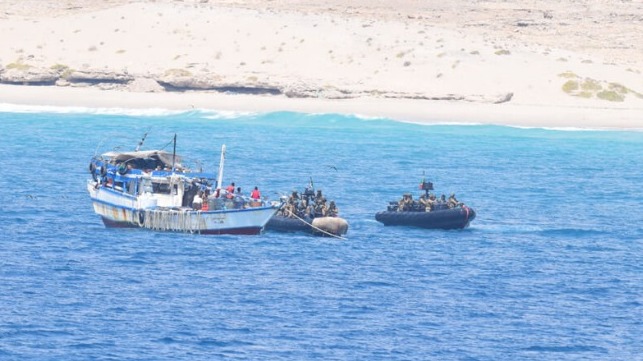
EUNAVFOR Atalanta's teams visited the fishing boat to confirm its release and rather evidence (EUNAVFOR Atalanta)

Published Mar 21, 2025 4:09 PM by The Maritime Executive


The EU’s operation monitoring security in the Horn of Africa region reports the pirates have abandoned the fishing vessel Al-Hidaya that they hijacked last weekend. EUNAVFOR Atalanta notes it is the third piracy-related case involving a Yemeni fishing vessel and is in addition to a Chinese fishing vessel that was hijacked late in 2024.

The hijackers are reported to have left the dhow in the vicinity of Dhinowda during the day on March 20. The boat was in a position to the south of where it was boarded. Seven individuals were reported to have taken control of the vessel on March 16 in a position off Durdura, in the vicinity of Eyl, on the Northern coast of Puntland which is a semi-autonomous region in Somalia. The area has been a hotbed of piracy activity. 

A naval vessel working with EUNAVFOR Atalanta conducted a “friendly approach,” to the fishing boat today, March 21. They report that they boarded the vessel to check on the welfare of the eight Yemeni crewmembers. The team also gathered evidence of the hijacking.

Operation Atalanta repeated that it strongly recommends merchant and other vulnerable vessels operating in the areas should register. It reports that the operation remains vigilant to any piracy-related events in its area of operations to ensure maritime security and cautions vessels to take extra precautions in the area.

The incidents with the Yemeni fishing boats have mostly been cases of armed robbery where the pirates board the vessels and leave within a few days. The Chinese vessel however was held for approximately a month before the Chinese embassy reported it had been freed without providing details.

The incidents of piracy in the region resumed after the Houthis also began to attack shipping in the area. Atalanta has cautioned that the danger remains high while working with the local authorities to increase security in the region. 


Work to Begin Expanding London Gateway Into UK’s Largest Container Port

London Gateway terminal
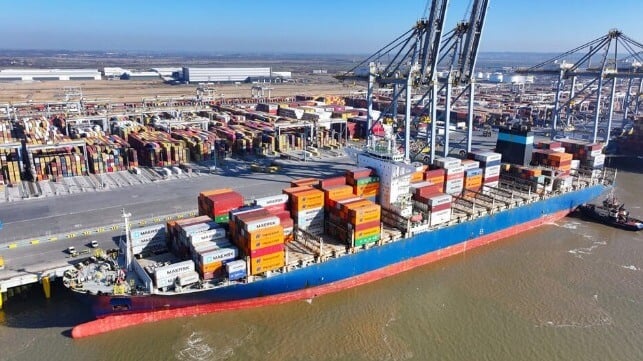
Maersk Stadelhorn docking at London Gateway on March 19 starting the terminal's involvement with the Gemini Cooperation (DP World)

Published Mar 21, 2025 8:15 PM by The Maritime Executive


DP World reports that it has gained the necessary permitting and is poised to begin work in just a matter of weeks on a planned expansion of its London Gateway. It represents a £1 billion (US$1.3 billion ) project which when completed will add 50 percent capacity to the UK’s logistics sector.

Work is due to start in May, the DP World reports it will take four years to complete the expansion. The project will add two further 400-meter (1,300-foot) all-electric berths and a second rail terminal. It follows recent investments in new cranes and logistics capabilities. The expanded container port, part of the Thames Freeport, will be able to accommodate six of the world’s largest container ships, which will be served by Europe’s tallest quay cranes.

DP World worked to gain regulatory approval for the investment, which was first announced in October 2024. Today, the chairman of DP World Sultan Ahmed bin Sulayem hosted the UK Minister of State for Investment, Baroness Poppy Gustafsson, at London Gateway to discuss the investment, growth plans, and 400 new permanent jobs that will be created at the logistics hub.

“This investment enhances London Gateway’s position at the heart of British trade, creating new capacity and new connections between the UK and the global economy,” said Sultan Ahmed bin Sulayem. “DP World has invested more than £5 billion in its UK operations, providing more than 5,500 jobs, and is proud to be supporting national economic growth by enabling businesses to thrive and increasing resilience in the supply chain.”

The start of construction follows the agreement between DP World and the Gemini Cooperation (Maersk and Hapag-Lloyd) for Gemini’s Asia-Europe and Middle East-Europe services to call at London Gateway. The first ship arrived at London Gateway this week following DP World Southampton welcoming its first ship under the Gemini Cooperation on February 3. The cooperation is focusing on the DP facilities moving these routes to Felixstowe as Genimi seeks faster port turns and 90 percent schedule reliability.

“DP World’s expansion in London Gateway will turbocharge the UK’s logistics sector and help?deliver the long-term, stable growth that supports skilled jobs and raises living standards across the UK,” said Baroness Poppy Gustafsson, Minister of State for Investment, said: “The UK is open for business and DP World’s major investment is the latest vote of confidence in our economy, delivering economic growth and showing our Plan for Change is working.”

The company reports the project will create over 1,000 construction jobs, plus 400 permanent new jobs at the port. The terminal opened its fourth berth in the fall of 2024, which DP World said was the first all-electric berth in the world. When this project is completed it will have reached the planned design with a total of six large berths for containerships.

Combined DP World’s Gate and Southampton terminals handled approximately 3.6 million TEUs each year. The Thames Estuary hub opened in 2013 and last year handled approximately 2 million TEU. The company reported it was one of the fastest growing in its global portfolio achieving double-digit growth over 2023.


Canadian Coast Guard Reports Progress on MSC Baltic III Salvage

stranded containership
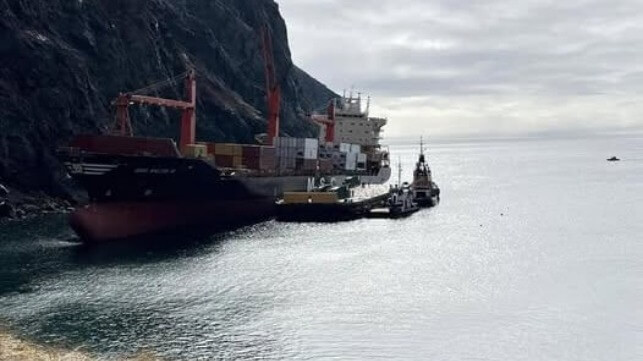
Salvage teams were able to position a barge alongside as the weather improved in the area (Jaxon Park/Facebook)

Published Mar 21, 2025 5:00 PM by The Maritime Executive


The weather conditions in the areas around Canada’s Newfoundland have given salvage teams their first opportunities to make progress on the efforts to reduce the pollution risk from the grounded containership MSC Baltic III. The Canadian Coast Guard highlights the dangers remain, but that no pollution has been observed so far from the stranded vessel.

“The tug and barge, contracted by MSC, were able to go alongside the MSC Baltic III to load some frac tanks and a containment boom onboard the vessel,” said the Canadian Coast Guard in its latest update. “The frac tanks will be used to store and offload the fuel.”

The containership blacked out and was driven ashore in a remote cove on Newfoundland’s western shore on February 15 not far from Corner Brook. The Coast Guard along with T&T Salvage have reported that the efforts however were complicated by the remote location and winter weather which has included high winds and ice in the cove. 

The priority is the fuel and other potential contaminants aboard the vessel. The salvage teams after inspecting the 680-foot (207-meter) vessel reported that it was resting on the seabed but that the hull had experienced significant damage. They said there is water in the cargo holds and the engine room and that the vessel cannot be safely refloated at this time. Tank soundings confirmed approximately 1.7 million liters of heavy fuel and marine gas oil are onboard the vessel.

The Coast Guard reports that several containers that were carrying polymeric beads (plastic nurdles) which are considered dangerous goods have been removed from the vessel. MSC Mediterranean Shipping had previously said those containers had been secured to reduce the danger of the contents being released. 

The fuel aboard the vessel will need to be heated before it can be pumped from the tanks. MSC and its salvage company have proposed several salvage options, including loading the fuel and containers onto barges or also using an access road onshore. However, the road requires upgrades to get the heavy equipment to the area where the ship came to rest.

Local news media reports that the efforts are ongoing and fishermen are hoping that it will make progress by the end of the month. The local fishing season opens on April 1 and the concern is for access to the areas as well as the continued danger from pollution.


Soo Locks Opens Early for Head Start on 2025 Upper Great Lakes Season

Great Lakes lock opening
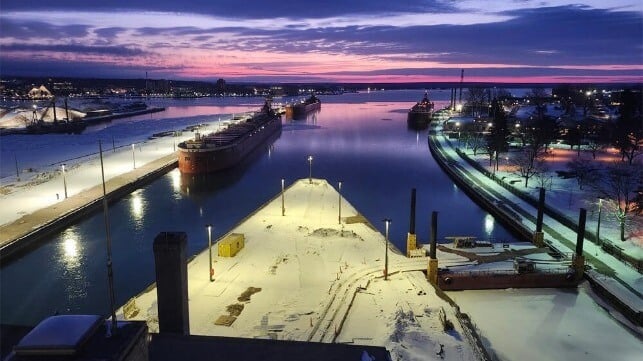
Three vessels waiting in the frigid temperatures and with snow still on the ground as Soo Locks opened early for 2025 (U.S. Army Corp of Engineers, Detroit District)

Published Mar 21, 2025 9:12 PM by The Maritime Executive


The U.S. Army Corp of Engineers celebrating the opening of the Soo Locks on Michigan’s Upper Peninsula this morning, March 21, providing an earlier-than-anticipated start to the 2025 shipping season on the Upper Great Lakes. The lock is reported to be one of the busiest maritime locking systems in the world handling more than 4,500 vessels and 80 million tons of cargo each year.

It was a balmy 19 degrees F (-7 degrees C) this morning but it did not stop the festivities and the race to see which vessel would be first through the locks. The U.S. Army Corps of Engineers, Detroit District, reports the first vessel, an articulated barge and tug combo, actually arrived before 2:00 p.m. on March 20 to secure the first in line position. This morning by the time the lock opened at 8:00 a.m., they said three freighters were waiting to make their way into Lake Superior.

The lock is located at Sault Ste. Marie, Michigan connecting Lake Superior and Lake Huron. The lock closes each winter for maintenance, this year running approximately 10 weeks. During that time, the Army Corps reports maintenance crews performed a variety of critical tasks on the Poe Lock, including fabricating and replacing anchorages on gate 3, commissioning the temporary dewatering system, filling in nonoperational ship arrestor recesses on the downstream end, flushing and cleaning the hydraulic systems for the rehabilitated ship arrestor systems, navigation button rehabilitation, removing underground storage tanks and repairing the winter work bridge recesses. The Poe Lock was not dewatered this year for the scheduled maintenance but contractors also used the time to complete upstream stop log recess repairs.


First vessel honors for the 2025 season went to the tug-barge combo as the lock reopened to vessel traffic (USACE)


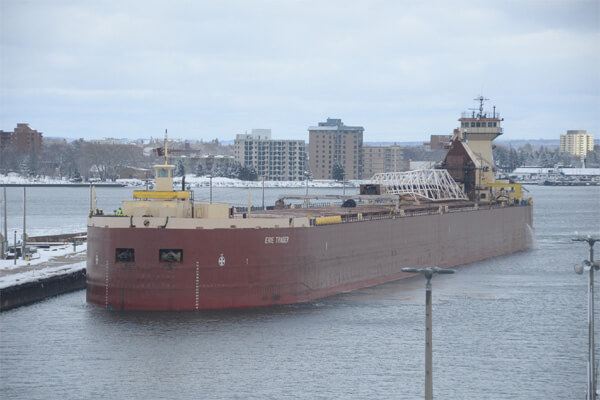
Honors for the last vessel through the lock on January 16 went to the American Mariner, a 730-foot freighter loaded with more than 20,000 tons of wheat. Through the Poe Lock this morning first was the tug Clyde S. which is 130 feet in length and was working with the Erie Trader a 740-foot barge. Both are owned by VanEnkevort Tug & Barge.

The Army Corps reports it opened the Poe Lock early in response to requests from the shipping community. It started the 2025 season giving shippers a head start before the St. Lawrence Seaway reopens on March 22. They expect an influx of Canadian vessels and international shipping when the full system is open for the season. The Army Corps was pleased to make it possible for the larger lock to begin operations early. However, the smaller MacArthur Lock will remain closed opening in April.

To ensure navigation would be possible, the U.S. Coast Guard cutter Mackinaw made its way through Soo Locks on March 19. It went to break ice in Whitefish Bay on the northern side of the lock where vessels enter Lake Superior.

Once completing the locking, the vessels are heading across Lake Superior to Duluth, Minnesota. 


Canada's SailGP Team Takes the Lead in San Francisco

SailGP

Published Mar 23, 2025 10:52 AM by The Maritime Executive


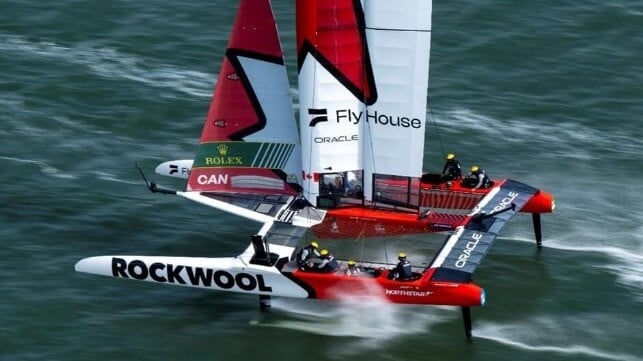
Canada’s SailGP F50 catamaran team helmed by Giles Scott with wing trimmer Paul Campbell-James had the overnight lead on Saturday March 22 in the SailGP Season 25 event, which is taking place under the Golden Gate Bridge in San Fransisco.

Boats representing 12 countries are competing in a racing series which, like Formula 1 car racing, travels the world, with events in the 2025 season taking place in Dubai, Aukland, Sydney, San Fransisco, Los Angeles, Rio de Janieiro, New York, Sassnitz, St Tropez, Geneva, Cadiz and Abu Dhabi.

The catamarans can reach speeds of up to 54 knots when up on hydrofoils, with race courses optimized for spectators viewing the racing on land.  Each team competes with an identical boat, meaning that results are based on the skill of the crews and tactics adopted.  The hydrofoils used on the boats are made of higher modulus carbon fiber and are designed to delay the onset of cavitation when air bubbles create friction and drag resistance. Crashes and capsizes are rare, but when they occur, they are high-impact events because of the speeds involved.

Halfway through the series, the British, Australian and New Zealand boats are in the top three places, with the American boat still struggling to find form.


Report: Ireland Again Tracked Cargo Ship That Anchored Near Undersea Cables

small cargo ship
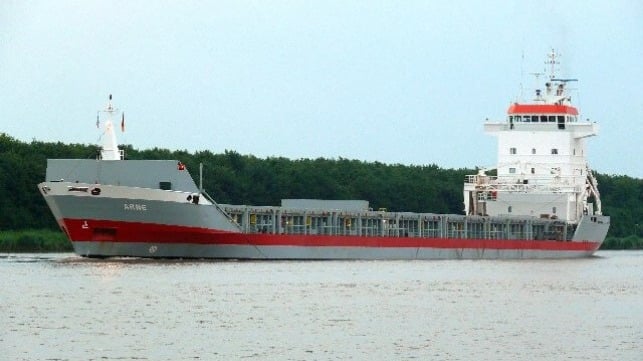
Irish authorities have reported tracked the small cargo ship twice off the coast due to suspicious activity (HHM file photo by Dietmar Hasenpusch)

Published Mar 21, 2025 6:21 PM by The Maritime Executive


According to reports in the Irish media, a small cargo ship that raised the suspicions of German authorities earlier this year has now been tracked twice by Ireland’s Defense Forces. The incidents came as many countries remain on alert and worry about potential damage to their undersea cables and other assets.

The Irish Examiner and The Journal.ie are each recounting that the Irish Naval Service and Air Corps were put on alert as a small cargo ship, Arne (9,150 dwt) was thought to possibly be acting suspiciously near undersea cables. According to the news accounts, the vessel was first questioned in February just days after it was stopped by German federal police for an investigation related to cable damage in Sweden. Again, yesterday, March 20, the Irish authorities were tracking the ship as it was sailing in its coastal waters.

The ship which is registered in Antigua and Barbuda and managed from Latvia is now docked in the Irish port of Aughinish on the southwest coast near Limerick. Its AIS signal indicates it was coming from Spain where it had departed on March 15. The Air Corps tracked the vessel yesterday according to the newspapers in part due to a previous incident off the northeast coast of Ireland earlier this year.

The ship was identified as suspicious after German authorities reported stopping it on February 24 in Kiel. At the time the reports said it was missing its port-side anchor. Fears were running high after Sweden reported cable damage near Gotland, but after a three-hour investigation, the German authorities permitted the vessel to continue its voyage.

The Journal.ie reports that Irish authorities then detected the same ship off the northeast coast and the Air Corps was sent to investigate. According to the unconfirmed reports, the surveillance airplane filmed the vessel dropping its anchor. The Irish Defense Force reportedly contacted the ship ordering it to stop its anchoring and back away from the sensitive area with the cables. Journal.ie says the vessel fled but notes it was unclear if it was international targeting or bad seamanship.

The Defense Force refused to comment on yesterday’s incident saying it normally monitors vessels in Irish territorial waters. 


Cyber Hackers Claim to Have Disabled Iranian Ship Communications

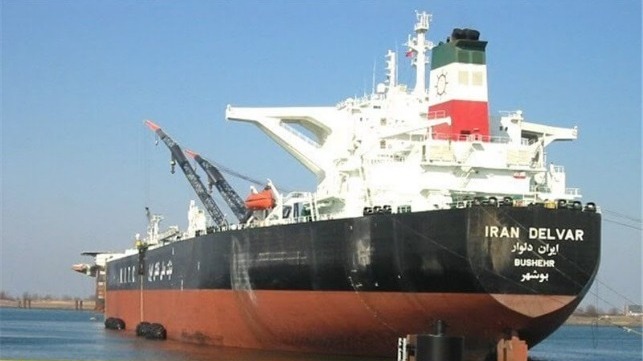
Iranian oil tanker
According to the report more than 100 Iranian ships lost their communications (CC BY 4.0

Published Mar 21, 2025 7:19 PM by The Maritime Executive


A shadowy group of cyber hackers is claiming that it launched a massive attack and has successfully disabled communications for much of Iran’s merchant fleet. While the report cannot be independently verified, the group which calls itself Lab Dookhtegan is known and according to experts is credible in its attacks.

The report is gaining wide media attention including in Iran. Neither government officials nor the shipping companies, the National Iranian Tanker Company or Islamic Republic of Iran Shipping Company, have publicly commented or denied the claims.

Lab Dookhteganposted messages on Telegram and X boasting of its accomplishments saying it was to celebrate the sixth anniversary of its operation. “In an unprecedented move, we successfully disrupted the communication network of two Iranian companies that, among various terrorist activities, are responsible for supplying munitions to Houthis,” the group wrote while also reposting links to reports from the Iranian media.

It claimed to have also timed the attack to coordinate with the U.S.’s current offensive against the Houthis and in parallel to the U.S. and European sanctions against Iranian shipping. It asserts that the communications for 50 ships belonging to the National Iranian Tanker Company and 66 ships operated by the Iran Shipping Lines have been disabled. Lab Dookhtegan reports it will take weeks to fully restore communications. 


“Ship personnel can no longer communicate with one another, and their connection to the ports and outside world has been severed,” the group said in its online statements.

Speculation is that the communications would also impact the vessels' coordination with the Iranian military and other authorities. The Iranian media speculates the vessels use encrypted networks to speak with the military but likely depend on satellite communications systems such as VSAT (Very Small Aperture Terminal) technology. They said it would be impacting the ability to coordinate operations, transmit data, and navigate. 

The speculation is that the vessels might be limited to traditional radio systems with VHF and HF frequencies used for short-range communications, such as ship-to-ship and ship-to-shore.

Cyber security analysts at Cydome published an analysis of Lab Dookhtegan noting while there was no evidence of this attack or its results it was based on the previous credibility of the group. They said while the group does not disclose its exact tactics, they believe the group uses a search engine device that could locate ship satellite terminals. They speculate the group could have remotely compromised the terminals using factory-set passwords, giving it the ability to alter system settings or even upload malicious firmware.

Furthermore, they believe there would have been a high degree of automation and coordination required to deliver malware or malicious commands to 116 vessels simultaneously.  They speculate it may have involved prior reconnaissance and required advanced capabilities.

Based on this attack, Cydome is recommending that all shipping companies perform a comprehensive risk assessment. They cite the need to install a dedicated maritime cybersecurity solution that is independent of the communications devices.

If this attack is proven legitimate, it would not be the first time Iranian shipping has reportedly fallen vulnerable to cyberattacks. In 2024, unconfirmed reports from NBC News said the American forces carried out a cyberattack targeting an Iranian spy ship. The vessel was thought to be playing a role in the targeting of merchant ships for the Houthi militants in Yemen.
 

Top photo from Iran's Tasnim News Agency -- CC BY 4.0


Cargo of Rocket Fuel Now Just Three Days From Iranian Port

WILL ISRAEL/U$A  LET IT GET THERE
WATCH THIS SPACE

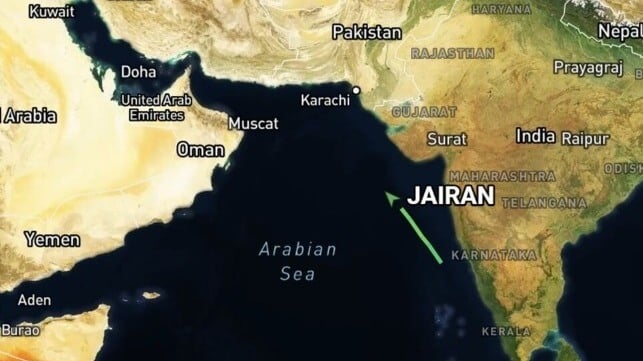
Jairan's position midday Sunday (Courtesy MarineTraffic)

Published Mar 23, 2025 1:17 PM by The Maritime Executive


MV Jairan, loaded with sodium perchlorate in China, is an estimated three days’ sailing from its home port destination in Bandar Abbas, Iran. As of Sunday, the vessel is cruising at 12-13 knots west of Mumbai and has about 850 nautical miles to go.

MV Jairan was the second of two sanctioned Islamic Republic of Iran Shipping Lines (IRISL) ships that berthed in Shanghai during January to load the chemical, which is the main precursor for ammonium perchlorate, used by most Iranian medium range solid-fuel ballistic missiles. The same material has been intercepted en route from Iran to Houthi forces in Yemen, where it is used to fuel the Palestine-2 missiles which have in recent days been fired at Israel. The Palestine-2 is a derivative of the Iranian Fateh-110 missile.

Recent satellite imagery of the Bandar Abbas Naval Harbor shows a large number of vessels present, as might be expected over Ramadan, including three Moudge/Alvand Class frigates, the intelligence collection vessel IRINS Zagros (Pennant 313) and the one Kilo Class submarine that is believed to be operational.  Also present on its usual pier in the outer harbor was the long-range logistic vessel IRINS Makran (K441).

Providing picket coverage of the Iranian coast in the Northern Indian Ocean, according to open source intelligence expert Intelshizo, are three IRGC Navy intelligence collection vessels, the MVs SavizArtenos and Sheba.  These should be able to provide maritime threat information coverage for the MV Jairan shortly.


Iran Puts Diego Garcia on its Target Deck

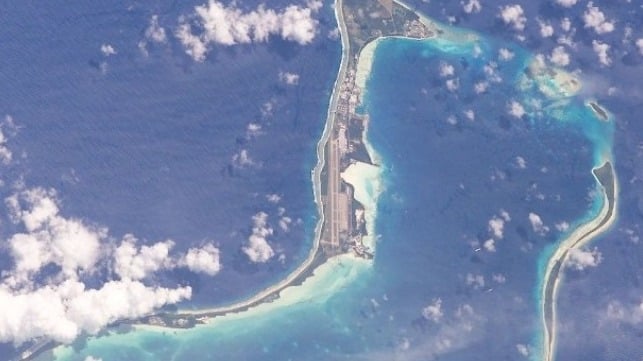
Diego Garcia's naval base and air station (NASA file image)

Published Mar 23, 2025 12:58 PM by The Maritime Executive


Iran’s Press TV, which normally identifies with hardline factions within the Iranian political system, has included the joint UK-US base on Diego Garcia amongst a list of US bases in the Middle East region which would be ‘within Iran’s cross-hairs’ for retaliatory strikes should either the United States or Israel launch attacks on Iran.

The article acknowledges a negotiation of sorts is underway between Iran and the United States, with Iran currently framing its response to a letter from President Trump passed to the Iranians through intermediaries.

The list of US bases on the target list also includes Al Udeid Air Base (Qatar), Al Dhafra Air Base (UAE), Naval Support Activity Bahrain, Dimona Radar Facility  (Israel), Muwaffaq Salti Air Base (Jordan), Camp Arifjan (Kuwait) and Ain al-Assad Airbase (Iraq). The article includes satellite imagery of each facility.

The article suggests that deep-water piers, anchorages and port facilities of Camp Thunder, plus deployments of B-1 Lancer, B-2 Spirit and B-52 Stratofortress bombers on Diego Garcia’s airfield would be targets.  It suggests that Diego Garcia is within the 4000km range of Iranian Khorramshahr missiles and Shahed-136B kamikaze drones, but also of missiles and drones launched from Iranian naval vessels such as the drone carriers Shahid Mahdavi (C110-3) and Shahid Bagheri (C110-4).

Negotiations over the future of Diego Garcia have stalled for the time being, while the United Kingdom awaits a formal response from the United States on the provisional agreement reached with the new Mauritian government.  While President Trump signaled approval of the deal, he made it clear that it had not been studied in detail, with a range of potential difficulties which could yet be identified. 

In the United Kingdom, political opposition has been mounting to the overall structure of the deal, which entails the United Kingdom paying large additional sums of money to Mauritius, probably sourced from the defense budget, without receiving any quid pro quo from the United States, whilst passing sovereignty over the Chagosian population without consultation or their consent to Mauritius.

Leaks from the United States, the United Kingdom and most prolifically from Mauritius give contradictory accounts of the current status of negotiations. But it seems likely that all parties want to pause the talks for the present, while the United States is apparently considering whether it should make a direct bid for sovereignty for the 60 km2 tropical paradise itself, given both its defense utility and potential as a resort destination.