Wednesday, April 23, 2025


National History By Executive Order


 April 23, 2025
Facebook

Photograph Source: Sean Spicer – Public Domain

On 27 March 2025, President Donald Trump did one of his favorite things: he issued an Executive Order (EO). He is drawn to issue these proclamations because doing so reinforces his sense of “self-importance, control and perceived superiority, which, in turn, are features of [his] narcissistic personality.”

Past Trump EOs have resulted in real time destruction such as depriving millions of people of their livelihood, damage to the environment, destruction of parts of the national health grid, etc. All of those proclamations ate away at the American quality of life, while allegedly preparing the nation for revival of past greatness. How such national masochism is supposed to make the USA “great again” is a mystery only Donald Trump seems capable of unraveling. Nonetheless, while these past EOs constituted an official blitzkrieg on the present, they lacked that special Orwellian commitment to bending future generations to the will of our present empowered narcissist.

However, now we have the 27 March EO. Why is it different?

Entitled, “Restoring Truth and sanity to American History” this EO seeks to assure control of future American perceptions by putting a stop to any reexamination of the nation’s aging batch of “justification myths”.* Hence, quoting this most recent EO: “Section 1. Purpose and Policy.  Over the past decade, Americans have witnessed a concerted and widespread effort to rewrite our Nation’s history, replacing objective facts with a distorted narrative driven by ideology rather than truth.” My italics.

It is fascinating to witness Donald Trump’s ability to project onto his opponents pretty much what he himself is doing or intends to do. For instance, he is asserting that revision (based on historical evidence) of an idealized, self-glorifying U.S. history is creating a “distorted  narrative.” When, in his opinion, someone else is allegedly “replacing objective facts with a distorted narrative” it is a monstrous fault, maybe even a crime. When Trump himself does this same thing, it is heroically redemptive.

What is going on here?

First of all, we should realize that it is quite possible to propagandize a population into believing that a foundation myth or justifications myths are historically factual. It is done by taking as nearly total control of a national narrative as is possible. The Chinese have done this, the Russians did it for nearly a hundred years, believing Christian, Muslims, Hindus have done this relative to their religions. Jews of the Zionist persuasion have done it when it comes to Israel. Finally, a large subset of Americans has bought into their nation’s idealized myths as fact. Yet, now we find that, in the case of the USA, there has been substantial slippage. Where did that come from?

It has been much more than a decade that a large number of historians of U.S. history have been examining America’s various justification myths. This effort has been largely motivated by taking seriously the experience of America’s non-white minorities and colonized people. As a result, such claims as the USA represents to the world an “unparalleled legacy of advancing liberty, individual rights, and human happiness” has been called into question. We are thus presented with the choice: (1) To take seriously the work of hundreds of historians over decades exploring such subjects of American history as slavery; a persistent post-Civil War practice of deep-seeded racial bigotry resulting in segregation and persecution; the destruction of the American Indians; the imperial adventures of the 19th and 20th centuries, and so on. (2) Or, accept Trump’s claim, made in his March EO, of America’s “unparalleled legacy of advancing liberty …” as a statement of “objective fact.” Both positions cannot be simultaneously true.

It is option (1) representing an effort to introduce the stories of those long excluded from American history that Trump finds “sexist, oppressive, or otherwise irredeemably flawed.” Putting the cart before the horse, he charges that the result of “the widespread effort to rewrite history also deepens societal divides and fosters a sense of national shame. It seems to me that this is the equivalent of accusing the little fellow who proclaimed “the emperor has no clothes” of pornography.

There is no doubt about it, Donald Trump and those pushing this message have taken a stand that belief in a simplistic, ethically skewed idealization of national history is the only acceptable foundation of patriotism. No doubt millions of patriots in hundreds of other countries take the same stand. But Trump seems to want to go further suggesting that to challenge the myth is itself undermining truth. That might sound like a contradiction based on denial and confusion—but it is obviously a confusion President Trump has taken to heart.

Looking beyond the Tapestry

Why would Trump and his supporters, including some very well educated people: (1) insist that myth is really “objective truth.” (2) That a second look at the historical record will only distort the truth. Specifically, (3) why characterize that second look as “inherently racist, sexist, oppressive, or an otherwise irredeemably flawed”? This is what is being said in recent attacks on the Smithsonian Institution, The National Museum of African American History and Culture, and American Women’s History Museum. Again, quoting from the 27 March  EO:

“Once widely respected as a symbol of American excellence and a global icon of cultural achievement, the Smithsonian Institution has, in recent years, come under the influence of a divisive, race-centered ideology.  This shift has promoted narratives that portray American and Western values as inherently harmful and oppressive. For example, an exhibit representing that “societies including the United States have used race to establish and maintain systems of power, privilege, and disenfranchisement” …. The National Museum of African American History and Culture has proclaimed that “hard work,” “individualism,” and “the nuclear family” are aspects of “White culture.”  The forthcoming Smithsonian American Women’s History Museum plans on celebrating the exploits of male athletes participating in women’s sports.”

The Trump administration attack on the Smithsonian and other federal institutions is a good example of Confirmation Bias—the habit of selecting what evidence supports your point of view and ignoring or dismissing all the rest. In our case this use of confirmation bias facilitates turning the Smithsonian and other institutions into shrines—like so many Revolutionary and Civil War battlefields.

Such an effort implies real fear of a balanced view. More specifically, what these attacks suggest is that Trump and his backers are seriously afraid of the “inherently racist, sexist, oppressive” facts that happen to be truthful parts of American history. They refuse to countenance any program of revision based on evidence. Why? Perhaps because these facts represent aspects of history that are incompatible with the claim that we can “MAGA” our way to recovering alleged past glory. As such, historical revision is seen not just as an attack on the national image, but what Trump imagines to be the collective ego of the white America. Denial is the only alternative.

The Fact of Prevailing Ignorance 

It is hard to believe that any broadly educated American would believe Trump’s doublespeak—and, indeed, maybe most such people would not. But one must realize just how few folks are broadly educated, and how the majority of even college graduates are narrowly educated because their schooling has been compartmentalized into occupational specialties. That means that unless they have taken it upon themselves to supplement their education with broad reading, your typical engineer, accountant, businessperson, as well as carpenter, plumber, electrician, etc. will know no more about the historical background of current events than he or she reads in the newspaper. And, newspapers are not well known for presenting objective truth or, for that matter, even paying for fact-checkers.

You can carry this theme of compartmentalization further. A society like the U.S. has always been and remains racially segregated. That means the subset of the white population that voted for and continues to support Trump has no sociological context for understanding why charges of  “institutional racism” or the notions of “woke culture” would make sense to socially aware African Americans. Nor can they historically understand the essential role of immigrants in the history and economy of the U.S.  Existing in what essentially has long been a self-imposed ethnic ghetto, these white Americans have been easily manipulated. This, in turn, has allowed the present government to summarily shut down every federally funded Diversity, Equity and Inclusion (DEI) program in the country.

The Tale’s Present Consequences

First, the broad attack on DEI, followed up by the near erasure of public recognition of historical events such as the Underground Railroad during the Civil War, the deletion of photographic records of the contributions of American Indians during World War II, and others constitutes no less than a denial that non-white Americans have any role in the nation’s history except as well-treated supplicants.

Second, once you publicly assert such a mythologized version of your own history as the unassailable, you will be forced to continuously lie to support it. In other words, once you set foot down that path you will be forced to increasingly rely on official censorship and propaganda to maintain the unreal image. Simultaneously, you must claim that any attempt at revision using evidence based research is itself an attempt at distortion. This is a complicated maneuver, even for someone as devious as Trump, and can only be maintained through denial and sustained ignorance.

Third, there is no nation on the planet whose actual history is beyond sin and guilt. The only way you can create that image is by turning history into a fairy tale. Strangely, as far as one can tell, President Trump constantly seeks to present his own history/biography in just this fashion. Now he seeks to do the same with the United States—perhaps as part of a narcissistic process to make the country conform to the notion that,  history is just what President Trump says it is. And, if you contest that claim, you must be some sort of traitor. 

* Justification myths are like foundation myths which, usually growing up around a few actual events, set in place a self-glorifying narrative to explain the nation’s founding, and then, periodically, enhance the narrative with compatible myths justifying subsequent national actions.

Lawrence Davidson is a retired professor of history at West Chester University in West Chester, PA.

Crazy Horse and Anti-Colonial Resistance


 April 23, 2025
Facebook

It is believed that Crazy Horse placed this signature on a bluff near Ash Creek just before the Battle of Greasy Grass in 1876. The image depicts a snake, representing the enemy or the United States, pursuing a horse with a lightning bolt on its flank, the signature of Crazy Horse.

This is the first of several posts about Tasunka Witko, reflecting on Joseph Marshall III’s book, The Journey of Crazy Horse: A Lakota History. It is the most exemplary biography of Tasunka Witko. The narrative is presented from the perspective of the Lakota people and is derived from the oral histories of Lakota elders.

In recent months, I have focused on reexamining Lakota texts and influential figures who have significantly impacted my perspective. A recent podcast interview with Palestinian author Susan Abulhawa prompted me to revisit one of the most mythologized and often misunderstood leaders of Lakota resistance, Tasunka Witko—commonly referred to as “His Horse Is Crazy” or simply “Crazy Horse.”

The killing of Palestinian resistance leader Yahya Sinwar, as noted by Susan, bore similarities to historical figures like the Lakota war leader Tasunka Witko, known as Crazy Horse to his enemies. She reflected on how Sinwar endured days without food, continuously engaging in combat until his demise, which occurred after he launched grenades at enemy soldiers. In an act of ultimate defiance, he also threw a stick at a surveillance drone that recorded his final moments before a tank shell blew up the building, taking him with it.

Sinwar’s last days were marked by hardship; he did not seek refuge in a tunnel or remain surrounded by captives, as suggested by his adversaries. Instead, he faced his enemies directly, sometimes yards away. This sharply contrasts with the leaders of the opposing forces, who sought to eliminate him, as they have entrenched themselves in underground bunkers, shielded by the protective reach of the United States.

Susan mentioned that Crazy Horse also fasted, receiving spiritual guidance and a vision that contributed to the success of his battlefield exploits. He led his men not from the safety of the rear but by engaging the enemy, favoring his war club in close combat. However, their deaths differ: Sinwar was killed by an unknown enemy, while Crazy Horse fell to a fellow Lakota after he had previously surrendered.

What Sinwar and Crazy Horse hold most in common is their spirit of resistance as anti-colonial fighters, equally villainized and mystified by the forces that sought their annihilation. Their stature as myths reveals more about their colonizer than about their humanity. The culture of genocide makes a double move. While it demonizes the people it seeks to destroy as primitive savages, it also attributes superhuman powers to them.

The portrayals of brutality and depictions of merciless violence obscure the motives for resistance, thereby attempting to frame genocide as self-defense and a rational response to an irrational opponent. Anti-colonial resistance gets framed as led by “fundamentalists,” “hostiles,” “extremists,” or “terrorists” — that is, in other words, people who react and respond to their conditions in irrational or extreme ways beyond the bounds of what is considered “civilized.” This purposefully obscures the material and objective conditions of resistance. At the same time, the colonizer projects invulnerability and superiority. Starving Lakotas and Palestinians, without the weaponry and material wealth of their opponents, still represent an existential threat. Why? Because they continue to draw breath. Their heartbeats are constant reminders of the precarity of the settler project.

This analogy may resonate more with some in the context of Palestine. However, if Lakota people are not still viewed as a threat, why do we see such high levels of repression within our communities? There is evident political repression against Water Protectors. A slew of anti-protest and critical infrastructure laws have progressed through state legislatures, criminalizing Indigenous dissent in the aftermath of the 2016 Standing Rock movement against the Dakota Access Pipeline. Natali Sergovia, the executive director of the Water Protector Legal Collective, referred to the recent lawsuit against Greenpeace as a “proxy war” against Indigenous sovereignty. The less evident is the continued criminalization and punishment of ostensibly “non-political” acts.

It’s not just the high rates of incarceration among and police violence against Lakotas — and American Indian people, in general — but also the extremely low life expectancy. For example, 58 is the median life expectancy of American Indians from my home state, South Dakota, more than two decades shorter than that of white people. Such a severe disparity in other parts of the world might justify calls for “regime change” or “humanitarian intervention.” In our system, the overseers of such immiseration, like former South Dakota Governor Kristi Noem, are promoted to the highest levels of government, as head of the Department of Homeland Security. We can link these deaths to the conditions colonialism still imposes despite having moved away from industrial extermination and slaughter yet profoundly connected to the current regime of repression against pro-Palestinian students and university faculty and the intensified war against migrants.

This structural elimination of Lakota people today is directly linked to the same war waged against Crazy Horse during his day. This war has expanded with the U.S. empire and its homicidal alliance with zionism.

Crazy Horse may not have pursued the warrior’s path had the United States not invaded his homelands. He might have followed his father’s path as a spiritual leader and healer. Yet, there is something material and profound about the supposed supernatural powers received from his vision that guided his path as a resistance leader. In that dream, enemy bullets and arrows rained down Crazy Horse but were unable to harm him while he charged mounted on a horse. But the hands of his own people rose from behind him, grabbing and pulling him down.

The dream apparently granted him immunity from the weapons of his enemies but not from those of his own people. In today’s parlance, we might see Crazy Horse’s dream as envisioning the counterinsurgency campaign against the Lakotas. U.S. military leaders and Indian agents fomented and exploited divisions within Lakota society after imposing conditions of starvation, scarcity, and deprivation. Colonization wasn’t just an external enterprise that had to be forced upon recalcitrant Lakotas; it was internalized, turning relatives against each other.

Yahya Sinwar sitting in a chair atop the ruins of his home.

Yahya Sinwar sitting in a chair in the final moments before being killed.

Yahya Sinwar’s enemies used the images of his final moments to diminish his stature. It had the opposite effect. Equally iconic were the images of him smiling defiantly while sitting in an upholstered chair atop the rubble of his home, which had been bombed by Zionists, as well as his final moments spent in the chair, hurling a stick in a last act of resistance. A similar case could be made about the killing of Crazy Horse. He was one of the few Lakota leaders who never signed a treaty. (Tatatanka Iyotake, Sitting Bull, had also never signed a treaty and was also killed at the hands of his own people.)

Assassinations are meant to serve as lessons for those choosing the path of resistance. They are meant to make mortal ideas that are immortal and cannot be killed. The killing of Crazy Horse may not have inspired armed resistance right away. His life, nonetheless, has served as a model of total resistance and embodying the virtues of Lakol Wicoun, the Lakota way of life, that inspired generations of Lakotas and allies since. It is no coincidence that “In the Spirit of Crazy Horse” became the rallying cry of the American Indian Movement when it took up arms in defense of Lakota homelands and declared independence from the United States in 1973.

Crazy Horse’s body was destroyed, but his spirit lives on.

This piece first appeared on Nick Estes’s Substack, Red Scare, you can subscribe here.

Nick Estes is a citizen of the Lower Brule Sioux Tribe. He is a journalist, historian and co-host of the Red Nation Podcast. He is the author of Our History Is the Future: Standing Rock Versus the Dakota Access Pipeline, and the Long Tradition of Indigenous Resistance (Verso, 2019).


USA

Bring back Kilmar Armando Abrego García


Wednesday 23 April 2025, by Dan La Botz


A growing movement of civil rights organizations, Latino community groups, labor unions, and legislators is demanding the return of Kilmar Armando Abrego García, who President Donald Trump had deported to a prison in El Salvador in violation of the U.S. Constitution, and they have pushed this case through the federal courts to the U.S. Supreme Court. Abrego García’s case has at the same time become the center of the struggle between Trump and the courts, a contest that has now become a constitutional crisis, raising the question of whether the United States will remain a liberal democracy or become an authoritarian dictatorship.


On March 15, Abrego García, a Salvadoran immigrant who is married to a U.S. citizen and has three children who are U.S. citizens, was living legally in the United States when he was deported to the notorious terrorism confinement center prison (CECOT) in El Salvador. He was one of two plane loads of such migrants being deported to El Salvador without due process. He had “withholding of removal status” allowing him to live and work in the United States because he faced gang violence if he was returned to El Salvador.

The U.S. government accused him of being a member of the MS-13 gang, which it has designated as a terrorist organization. Yet Abrego García had never been convicted of a crime in either country. And he never had an opportunity to defend himself from deportation in court, violating the Constitution’s “due process” provision. The Trump administration called his deportation an “administrative error” but argued that once he was in El Salvador, it was powerless to bring him back.

The U.S. Supreme Court ruled unanimously on April 10 that Abrego García’s deportation was illegal and that the government had to “facilitate” his release. Yet the Trump administration has not done so. Liberal Justice Ana María Sotomayor noted that this argument implied the government "could deport and incarcerate any person, including U.S. citizens…” So Abrego García has won broad support not only because of the obvious injustice in his case, but also because his deportation has come to be seen as a threat to all of us.

Abrego García’s union’s president, Michael Coleman of the International Association of Sheet Metal and Rail Transportation Workers, has spoken out strongly demanding his release and return to his family and his job. Similarly, CASA, the Latino immigrant organization based in Abrego García’s home state of Maryland, also expressed its “outrage” and demanded his return to his community. U.S. Senator from Maryland Chris Van Hollen flew to El Salvador to demand Abrego García’s release, and met with him, but Nayib Bukele, El Salvador’s dictatorial president, said his government would keep him in prison there. Directing himself to Trump, Van Hollen said, “If you want to make claims about Mr. Abrego Garcia and MS-13, you should present them in the court, not over social media, not at press conferences.”

Meanwhile, thousands have protested to demand Abrego García’s release and return in Washington, D.C. and in state capitals. And in the second mass national protest against Trump involving hundreds of thousands throughout the country on April 19, many demanded justice for immigrants, including Abrego García.

This case and others like it are having an impact on the Supreme Court which at one in the morning on Saturday issued an order to stop Trump from deporting another couple of hundred immigrants from Texas to El Salvador. The Supreme Court had ruled earlier that immigrants must have advance notice of deportation and must have their day in court. And that is the real issue, will we have our rights or will we have a dictator?

The issue remains undecided in the Supreme Court, in the Congress, and among the people, many of whom are now in the streets. So, the fight goes on and the chants continue, “Bring home Kilmar!”

Attached documentsbring-back-kilmar-armando-abrego-garcia_a8954-2.pdf (PDF - 905.2 KiB)
Extraction PDF [->article8954]


Dan La Botz was a founding member of Teamsters for a Democratic Union (TDU). He is the author of Rank-and-File Rebellion: Teamsters for a Democratic Union (1991). He is also a co-editor of New Politics and editor of Mexican Labor News and Analysis.


International Viewpoint is published under the responsibility of the Bureau of the Fourth International. Signed articles do not necessarily reflect editorial policy. Articles can be reprinted with acknowledgement, and a live link if possible.


CPI(ML) Liberation: The Call of April 22, 2025

[Editor’s noteCommunist Party of India (Marxist-Leninist) Liberation activist N Sai Balaji will be speaking at Ecosocialism 2025, September 5-7, Naarm/Melbourne, Australia. For more information on the conference visit ecosocialism.org.au.]

First published at CPI(ML) Liberation.

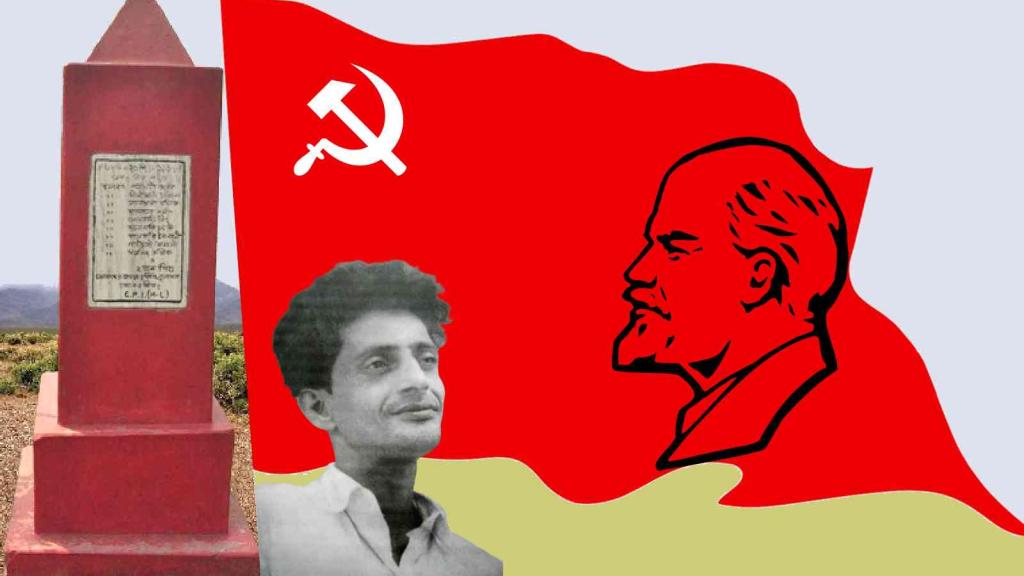
This April 22 we are observing the 56th anniversary of the foundation of our great and beloved party and also the 155th birth anniversary of Comrade Lenin. Today we once again pay our homage to all our great martyrs and departed leaders and renew our pledge to fulfil Comrade Lenin's clarion call to defeat imperialism and build socialism.

Despite losing its independent majority and having to depend on allies including parties like JDU and TDP that have at times moved away from the BJP, the Modi government in its third term has further intensified its fascist offensive. It has rushed through legislations like the Waqf Amendment Act and Uniform Civil Code that directly target the Muslim community and has launched a brutal war on Adivasis and alleged Maoists in Chhattisgarh in the name of making India Naxal-free by March 2026.

The repealed pro-corporate farm laws are being attempted to be brought back through the backdoor as a new policy framework for agricultural marketing. All existing labour laws are set to be replaced by a set of four labour codes that will vastly erode many of the hard won rights of India's working class. The Right to Information Act is being amended in a manner that will take away the rights of citizens to demand transparency and accountability and allow the state to get away with arbitrary and corrupt practices and brazen abuse of power.

There are renewed attacks on campus democracy and academic freedom, to kill dissent and debates and promote bigotry, hate and superstition, so as to refashion India's universities and other institutions of higher education and research as laboratories of cultural regimentation and ideological indoctrination. And incited by hate-filled films and other means of propaganda, Hindutva mobs are ruling the streets with daily doses of anti-Muslim, patriarchal and casteist violence.

While we in India have to deal with the fascist assault of Modi 3.0, the US and the whole world are now faced with the reign of disaster unleashed by Trump 2.0. In an open alliance with Elon Musk, the world's richest person, Trump is waging a massive war on democracy within America, linking it up with a global tariff and trade war and a virulent anti-immigrant campaign including deportation, revocation of visa and various forms of persecution directed against undocumented immigrants and pro-Palestine activists. Like Modi's 'Achhe Din' rhetoric in India, Trump calls it MAGA or Making America Great Again.

In spite of Modi's claims of special friendship with Trump, and complicity with the Trump-Netanyahu combine in the continuing genocide of Palestinians in Gaza, the Trump Administration seems to have singled out India for the most humiliating kind of treatment with the Modi government meekly capitulating to the American acts of arrogant arm-twisting. No previous government in independent India has hurt India's national pride and strategic interests as much as the Modi regime. Meanwhile, Amit Shah makes derogatory remarks about Ambedkar on the floor of Parliament and Mohan Bhagwat negates the legacy of India's freedom movement by describing the Ram Mandir in Ayodhya as the symbol of India's 'real independence'.

Against this backdrop we will be facing the crucial Bihar elections later this year. The entire party must help Bihar comrades to score bigger victories in this all important battle. Our success in Bihar in the 2020 Assembly elections and in 2024 Lok Sabha elections has greatly enhanced the party's political profile and the Left ranks and the entire progressive camp are now looking to Bihar and especially our party to come up with a stronger performance to stop the Modi-Shah-Yogi juggernaut and save this bastion of people's movement from falling into the BJP's hands. From this April 22 onward, let us resolve to work on war footing to give our very best to the election campaign.

With the fascist offensive intensifying by the day, the battle for democracy calls for greater unity, strength and determination. As revolutionary communists, we must play a vanguard role in this battle. We need to develop greater mass strength by forging closer ties with the people and taking up every issue related to their lives, livelihoods and liberties. We need a bigger and more vibrant and dynamic party organisation with greater ideological strength and courage.

2025 is the centenary of the organised communist movement in India. It is also the centenary of the foundation of the RSS. All through India's freedom movement and the subsequent decades of parliamentary democracy in independent India, the communist ideology has fought relentlessly against the fascist design of the RSS. For large parts of these hundred years, the RSS remained quite isolated, but today as it operates from the vantage position of state power, it is doing everything possible to tighten its ideological and cultural grip on the whole country. We must save India from the ravages of this growing fascist disaster.

During the freedom movement, the Indian bourgeoisie had succeeded in establishing its leadership in the national awakening, but today when the dominant sections of Indian bourgeoisie are rallying around the fascist project, it is for the working people to come forward with the banner of people's democracy and national advance to break free from the fascist and imperialist stranglehold. As inheritors of India's radical legacy of anti-colonial anti-feudal struggles, revolutionary communists must today emerge as the leading force in the anti-fascist surge of democracy and social justice.

All for a bigger, stronger and more vibrant CPI(ML)!

Down with fascism and imperialism, victory to democracy and socialism!