Thursday, May 01, 2025

NO!PASARAN!

The Brutality of Fascism: A Personal and Political Witness


 May 1, 2025
Facebook

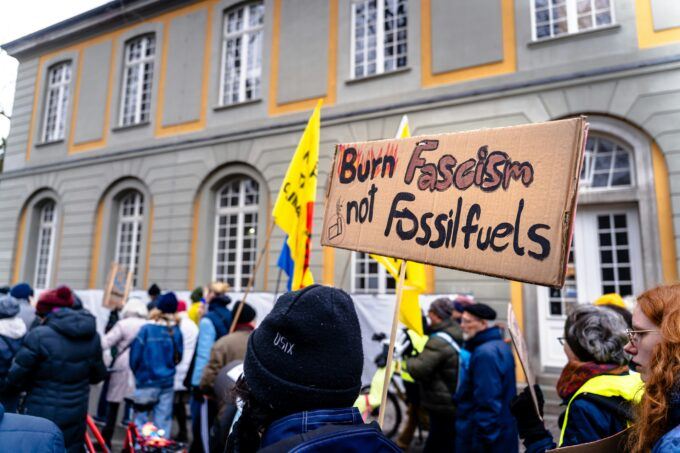
Image by Mika Baumeister.

Spanish antifascist Mercedes Núñez Targa’s memoir Bearing Witness: Prison Stories from a Woman’s Fight Against Fascism is a powerful and passionate read. Although essentially bereft of beauty because of the topic of its content, the book was recently released in English by Pluto Press. It was first published in fascist Spain by Ebro, the publishing house of the Spanish communist party in 1967. Targa died in 1986 and remained a lifelong fighter against fascism. The text includes stories from her time spent in Franco’s prisons after the fascist victory in Spain followed by what is essentially a journal from her years in the Nazi concentration camp system after her arrest by the Gestapo for her membership in the French resistance. Naturally, her testimony tells of the daily horrors of both penal systems: the beatings and torture by the Spanish fascists in Madrid’s Venta prison and the torture, death, brutality and fear in the presence of the gas chambers and crematoria at the Buchenwald death camp run by the Nazi regime.

Bearing Witness includes stories about exceptionally brutal guards, turncoat detainees, and heroic deeds of the resistance inside the prisons. One particular guard at Buchenwald carries an especially hated place in Targas’ memories. His family name was Bach and he delighted in torture and exceptional cleanliness. Targa tells of him appearing in front of the detainees, dandified and without a hair out of place. She notes the contrast between his fresh appearance and the disheveled even dirty conditions of the inmates. The usual reason for his appearance was to choose women to interrogate; such interrogations almost always meant torture and occasionally resulted in the death of the prisoner being interrogated. Her remembering the righteous delight she felt when testifying against him during a war crimes trial after the Nazi defeat is the closest revenge comes to justice.

Another scene she describes includes priests reading aloud the names of those whose execution by the fascists is canceled. With Franco in charge, the priests’ allegiance to the Catholic Church was synonymous with their fealty to the fascist regime Franco leads. Targa’s description of one such episode describes the priest and his assistants taking a certain delight in the psychological torture the drama they are conducting produces. Unlike some of the other detainees who considered themselves religious, Targa is an atheist and has no use for the priests or their charade.

After the Gestapo and its Vichy allies transfer her and hundreds of other women to the German camp in Ravensbruck, they see for themselves the end game the Nazis have planned. In short, it is clear that the women will be worked to death. This becomes even clearer upon her removal to Buchenwald, where those considered too weak to work are led almost immediately to their deaths after arrival in the camp. While detained at Buchenwald, Targa is sent to work at an armaments factory where many if not most of the workers are prisoners. Only certain supervisors are Germans whose work is paid and their home is not a detention camp. It is during this period that her experiences with a couple of those Germans bring her to realize that not all Germans are Nazis. Indeed, she shares a story about one supervisor who, after watching her sabotage a machine she was operating, convinced the manager that her sabotage was an accident. Later, the German supervisor calls her “comrade” and in the brief conversation that follows, discloses that he was a member of the Rote Front, one of many underground communist organizations during the Weimar Republic.

A prison, however, is a prison. There is no such thing as a good one and the ones Mercedes Núñez Targa ended up in were among the worst in history. This book reminds the reader of this in its descriptions of the conditions, the guards, and the food. Likewise, Bearing Witness reminds us of where fascist movements and the governments they take over can all too easily end up in their pursuit of total power and control. Prisons, detention centers, camps—however one decides to label these places of human cruelty—are the ultimate symbol of the control such regimes desire. They are also all too often the sinister reality of those regimes. Targa’s collection of memories is a poetic and personal testimony to this truth.

Ron Jacobs is the author of several books, including Daydream Sunset: Sixties Counterculture in the Seventies published by CounterPunch Books. His latest book, titled Nowhere Land: Journeys Through a Broken Nation, is now available. He lives in Vermont. He can be reached at: ronj1955@gmail.com

To Stop Coups in South Korea, Expand Democracy


 May 1, 2025
Facebook

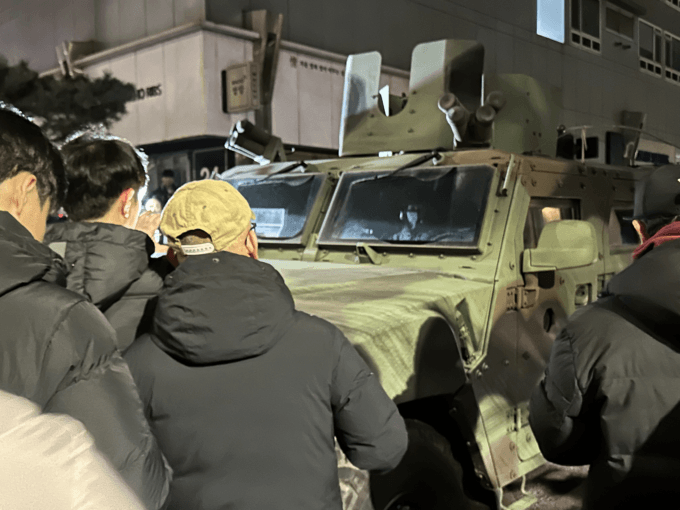
Photograph Source: 기여자 – CC0

On 4 April, 122 days after martial law was declared in South Korea, the constitutional court upheld the National Assembly’s impeachment motion and dismissed the former president Yoon Suk Yeol. Now, the country is readying for the 3 June snap presidential election.

While toppling a president involved Herculean efforts, the greater challenge will be changing social conditions to prevent the rise of another Yoon. After all, eight years ago, then-President Park Geun-hye was also impeached. The failure of President Moon Jae-in and the Democratic Party to fulfil the mandate for social change and reform demanded by the candlelight uprising led to widespread disappointment and discontent, ultimately paving the path for Yoon’s election.

With the clear frontrunner Lee Jae-myung of the Democratic Party declaring himself a ‘centre conservative’, the election has become a contest between conservatives. And while a Lee victory might be necessary to root out those that directly supported and defended Yoon’s self-coup (when he tried to overcome his political impasse with the National Assembly by declaring martial law), it also requires laying the foundations to break the vice grip on power held by the liberal and conservative parties that brought Korean society to this point. To do so, the people need the power to recall elected officials and directly propose their own laws.

Déjà Vu

Eight years ago, riding high on the exuberance of the candlelight uprising, the Democratic Party’s Moon Jae-in was given a mandate for reform. With two years left in his term, his party was even handed a supermajority (180 out of 300 seats) in the following National Assembly. Yet, despite his campaign promises, Moon failed to make Korean society more equal (i.e., substantially increase the minimum wage, control housing prices), safer (i.e., a full investigation of the Sewol Ferry Tragedy to prevent its recurrence, criminal accountability for industrial accidents), and free from discrimination (i.e., the comprehensive anti-discrimination bill).

Now, with the Democratic Party’s Lee Jae-myung the clear frontrunner in opinion polls, the Democratic Party is likely to win the presidency again. If the conservative People Power Party proudly carries the legacy of dictatorship, the liberal Democratic Party, whose ranks swelled with democratisation activists from the 1980s, has long been captured by the economic elite. If Lee wins, he would be in a strong position to implement reforms: the Democratic Party will maintain their supermajority in the National Assembly (achieved in 2020 and 2024) for at least the first three years of the next presidency.

Yet, looking at Lee’s track record as the Democratic Party leader since 2022 and his campaign rhetoric, it’s unclear whether his administration would offer policy solutions to ordinary people’s most pressing problems: inflation, growing inequality, housing prices, and discrimination. After all, during Lee’s leadership, the Democratic Party used their supermajority mostly to play the blame game with the Yoon administration. And, rather than addressing inequality by redistributing wealth through taxation, they abolished the financial investment tax and are now talking about increasing the portion of inheritances exempt from taxation.

Unsurprisingly, before Yoon’s self-coup, the Democratic Party was nearly as unpopular as the People Power Party. Even now, a vote for Lee has simply become a vote for the lesser evil. And while choosing the lesser evil is necessary to root out the elements of Yoon’s self-coup, breaking out of this impeachment-elections-impeachment cycle requires structural changes.

Break the Cycle

Today, all parties agree on amending the 1987 constitution, which established the current formal democracy. Even the disgraced conservative People Power Party is calling for constitutional amendments to shorten the next presidential term, given their likely defeat. The Democratic Party is proposing to amend the constitution to redistribute power from the executive to the legislative branch. Yet, neither is addressing the limitations of the 1987 constitution: a formal democracy that limits democratic participation to voting during elections.

Impeaching President Yoon created an extraordinary opening for ordinary people (among them, young women and members of the LGBTQ+ community) to rise up as democratic actors. Without expanding participation, formal democracy’s response to their efforts, growth, and exuberance amounts to: ‘Thank you for defending democracy. Please make sure to vote’. Korea’s democracy must accommodate the democratic space for these actors to shape their lives and future beyond choosing between two parties.

That’s why a progressive current is forming around the need to expand participatory democracy. More specifically, the People Power Direct Action(established to organise ordinary people to impeach Yoon and expand direct democracy) is proposing to root out the self-coup elements. It wants to do this by empowering people with the right to recall elected officials and proposetheir own laws. With such expanded powers, voters could remove leaders who have lost their democratic mandate.

Before declaring martial law, Yoon’s actions and policies had already turned him into a lame duck president with 20% approval ratings. Yet, without the recall referendum, voters could do nothing but wait for him to complete the second half of his term. Furthermore, even after Yoon carried out martial law and was impeached by the National Assembly, the public had to anxiously wait for the Constitutional Court to uphold the impeachment.

Secondly, the power to propose laws would break the vice grip held by elite interests. If the conservative party proudly carries the legacy of dictatorship, the liberal party, whose ranks swelled with democratisation activists from the 1980s, has long been captured by the elite. After all, in one of the issues most important to young people – housing – (conservative and liberal) National Assembly members are aligned with the elite.

The average real estate assets for National Assembly members stand at KRW 1.9 billion (about $1.3 million), nearly five times the national average. Among the top ten wealthiest, four are from the Democratic Party; the other six, from the People Power Party. In fact, the largest real estate assets – KRW 41 billion (roughly $30 million) – are held by a Democratic Party assembly member. Most importantly, 54.7% of the members of the three permanent committees connected to real estate have significant land holdings themselves. If the National Assembly fails to propose bills that control housing prices, it’s because it hurts their interests.

The same argument applies to controlling financial speculation and stock ownership. And if this is neither shocking nor unique to South Korea, then democracy requires that common people be given the power to propose laws that represent their interests.

Lessons across time and place have shown us that the way to the greatest evils is the accumulated disappointments and anger from settling for the lesser evil. To break free, people need to be able to rise as democratic actors. If Yoon’s impeachment opened extraordinary spaces of participation, now they must become integrated into the ordinary workings of democracy. The ability to recall elected officials and propose laws would be a start.

This article was produced by Globetrotter

Dae-Han Song is in charge of the networking team at the International Strategy Center and is a part of the No Cold War collective.