Friday, May 02, 2025


ISA Chief Warns That Unlicensed Deep Sea Mining Ores May Be Hard to Sell

Deep-sea mining equipment leased by The Metals Company (Courtesy Allseas)

Published Apr 30, 2025 9:10 PM by The Maritime Executive


The head of the UN's International Seabed Authority has panned the Trump administration's unilateral licensing program for subsea mining outside of the boundaries of the U.S. exclusive economic zone, and warned that there could be problems in selling the products or securing rights to the resource.

Last week, President Donald Trump directed the Commerce Department to set up an all-American permitting process for mining under the Deep Seabed Hard Mineral Resources Act, an obscure statute from the 1980s. The Cold War-era law provides a pathway to unilateral resource recovery on the high seas, bypassing the UN's International Seabed Authority (ISA), which has jurisdiction under the UN Convention on the Law of the Seas (UNCLOS). 

The White House's license plan was designed in consultation with The Metals Company, the sole private firm with access to a fully-tested deep sea mining system. Canada-based TMC has already filed its first permit application, which asks for U.S. permission to mine an area of the Pacific located far outside of the U.S. exclusive economic zone. 

"The recent permit request is for mining in the deep sea outside of the jurisdiction of the United States," said Leticia Reis de Carvalho, Secretary-General of the International Seabed Authority, in a statement Wednesday. "The advantages for the United States in engaging through the international legal system are substantial and far outweigh the potential risks and challenges associated with unilateral action across the chain, from intergovernmental relations to investment security."

The U.S. is one of the few nations that have not ratified UNCLOS, which governs ocean resources that are so far from shore that they are considered "the common heritage of mankind"; while not a UNCLOS signatory or an ISA member state, the U.S. has sent observers to past ISA negotiations, and has not previously objected to international regulation of the high seas.

America's new course of action presents risks, Reis de Carvalho said. First and foremost, UNCLOS requires all member states to not recognize an unlicensed deep sea mining claim's legitimacy. That means that UNCLOS signatories are technically not allowed to recognize any ownership claim to the mining operation's products, making the ore harder to sell. 

TMC has already lined up a commercial buyer, Switzerland-based commodities firm Glencore. The Trump administration is also exploring options to set up a critical-minerals stockpile, which would create a government buyer for the product.

Reis de Carvalho pushed back on certain mining firms' complaints about the pace of ISA regulatory negotiations, and she encouraged the U.S. to join the international process. "ISA Member States are working as effectively and responsibly as possible to develop regulations for the consideration of extraction activities," she said. "Our collective work to finalize the [UNCLOS] Mining Code is not a bureaucratic exercise; it is the foundation for ensuring that any activities in the Area [beyond national jurisdiction] benefit all humanity, for present and future generations, while protecting the marine environment."

ECOCIDE

Coast Guard Takes Over Response as Oil Well Continues to Spray

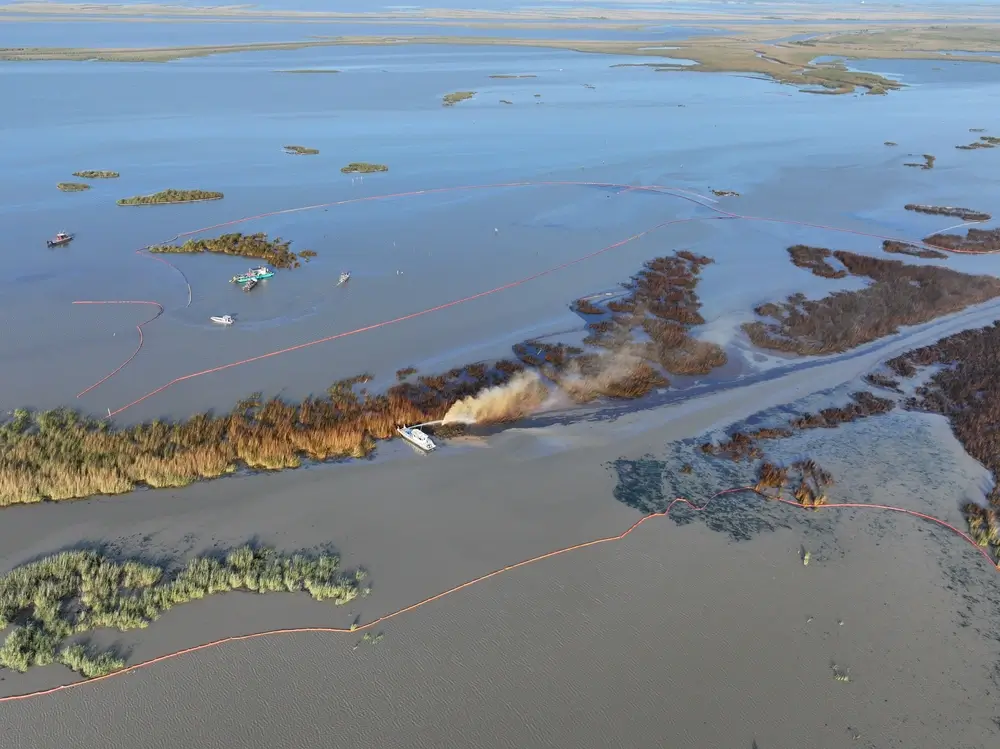
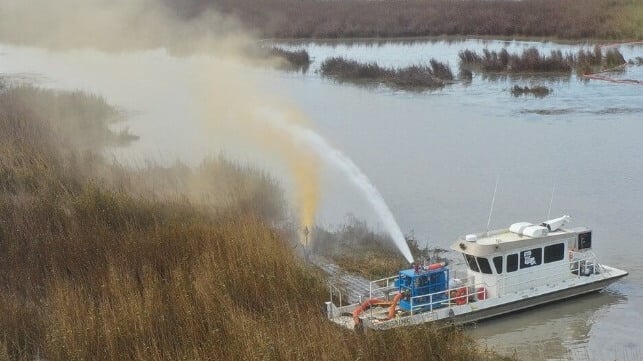
A leaking well sprays an oil and gas mixture into the air near Pass a Loutre, Louisiana (USCG)

Published May 1, 2025 8:09 PM by The Maritime Executive


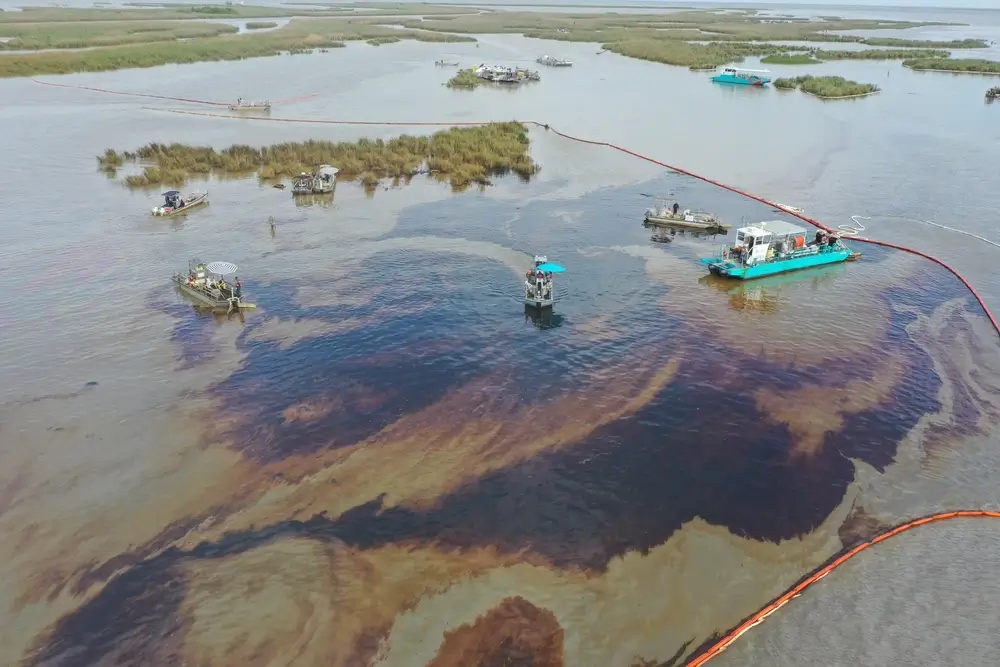
Six days after a spill began at a marshland well site in the Pass a Loutre area of the Mississippi Delta, the Coast Guard has decided to federalize the response effort and tap the Oil Pollution Liability Trust Fund. As of Thursday, the well was still not under control and was continuing to spray an unknown amount of orange-brown oil mist into the surrounding water. 

The mixed oil and gas release began last weekend at a well near the Garden Island Bay Production Facility, an oil collection point near Pass a Loutre. Operator Spectrum OpCo LLC, the Coast Guard and the Louisiana Oil Spill Coordinator's Office (LOSCO) set up a response team and brought in multiple contractors to begin a cleanup effort. 

A well control contractor arrived on scene early in the response, and their source intervention and well control operations continue. More equipment for that work - including cutting tools, a capping stack, piping, a crane and storage barges - are now en route and are being staged for an operation to shut off the flow.

Image courtesy USCG

So far, the spill response contractors have collected about 33,000 gallons of oily water mixture, and the cleanup effort continues with support from 180 personnel, 12 skimming vessels and various collection equipment. About 12,000 feet of standard containment boom have been deployed, with more on standby as needed. 

No injuries or wildlife impacts are reported, and the spill is far enough from the main shipping lanes that it has not affected deep-draft marine traffic. A one-mile safety zone remains in effect around the epicenter of the spill. 

The well was previously decommissioned and has been out of use for 10 years, according to local WWLTV. The cause of the sudden failure is not yet known. 


Barge Hits Historic Lighthouse on the Hudson River

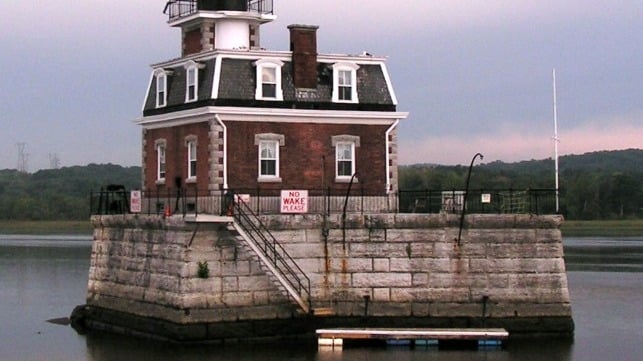
The Hudson-Athens Lighthouse, including access dock and stairway (Kadin2048 / CC-BY-SA-2.5)

Published May 1, 2025 4:31 PM by The Maritime Executive


On Wednesday, a barge hit a 150-year-old lighthouse in the middle of the Hudson River, damaging the structure's dock and a stairway. The lighthouse and the barge survived the encounter, and the operating company has agreed to participate in a long-term restoration project for the historic structure. 

The Hudson-Athens Lighthouse is located just off Athens, New York in the Hudson River. It is a formal, elegant structure with a granite-block caisson and a red brick tower, and is one of just two remaining "middle-of-the-river" lighthouses on the Hudson. It has been operated by a nonprofit historical preservation association - the Hudson-Athens Lighthouse Preservation Society (HALPS) - for more than 40 years. HALPS is committed to a long-term program of repairs to restore the site to its 1930s-era condition. 

Because of long-term damage to its foundation, the Hudson-Athens Lighthouse is in danger of collapse. It is on the National Trust for Historic Preservation's list of 11 most endangered historic places. According to the National Trust for Historic Preservation, its wooden piling foundation has been eroded by the wakes of large commercial ship traffic, along with the inevitable effects of decades of ice flows, tides and currents. An estimated $7.5 million in work is required to restore it to serviceable condition. 

The impact of the tug and barge did not cause any of these issues, but the contact did add several new ones. The access dock and the stairs from the dock up the caisson were damaged. Luckily, no injuries were reported, and the structure of the lighthouse itself is intact. 

“This incident reinforces what we’ve known for some time—the Hudson-Athens Lighthouse is in urgent need of structural restoration,” said Van Calhoun, Chair of the HALPS Restoration Committee. “The impact may have drawn attention to the damage, but it’s the long-term wear from river conditions and vessel traffic that truly threaten its foundation. We appreciate Carver Companies not only for stepping up to repair what happened, but also for recognizing the broader need to preserve this historic landmark for the future.”

Repairs to the stairway have already started. The master of the tug has been suspended and an internal investigation is under way, said Brian Moore, general manager of Carver Marine Towing. 

Top image: Hudson-Athens Lighthouse circa 2006 (Kadin 2048 / CC BY SA 2.5)


TASS: Three Russian Seafarers Injured in U.S. Airstrike on Ras Isa

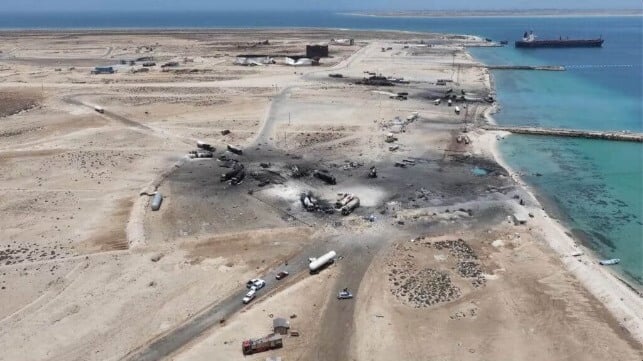
An unknown product tanker (lower right) at Ras Isa during the U.S. strike, April 18 (Houthi social media)

Published Apr 29, 2025 10:13 PM by The Maritime Executive


The U.S. airstrike on the Houthi-controlled port of Ras Isa on April 18 was intended to hit energy infrastructure, but the massive blasts also killed 70-80 people and injured about 170 more, according to Houthi-controlled media. Three of the injured people appear to have been Russian seafarers who were working aboard a foreign-flagged product tanker; the vessel reportedly called at Ras Isa despite the U.S. State Department's warning that all ships should cease trading at Houthi-controlled ports. 

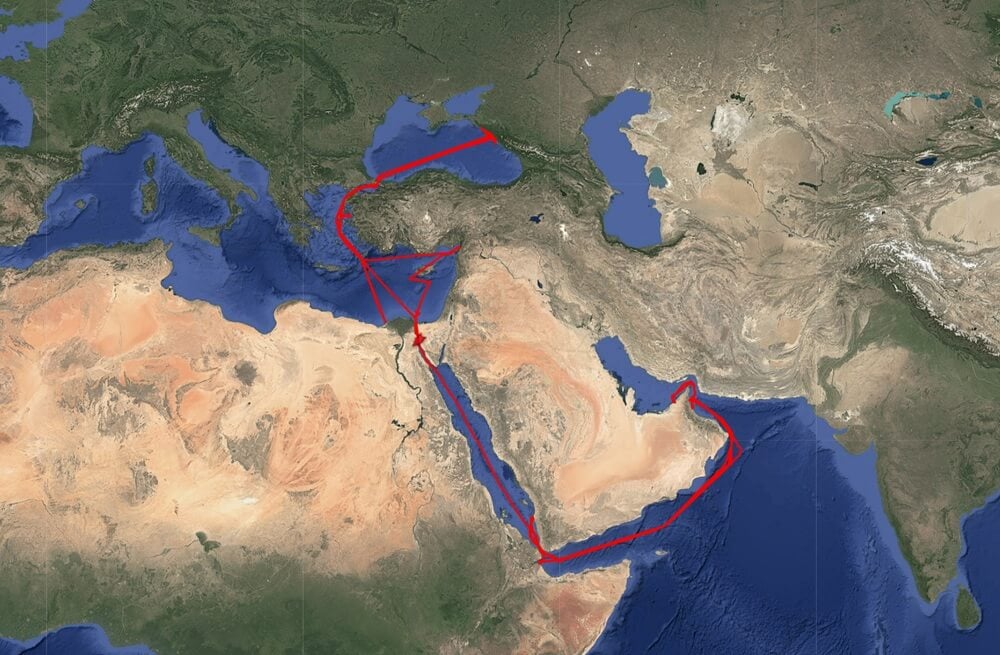
The vessel in question was the 54,000 dwt product tanker Seven Pearls. Flagged in St. Kitts and owned anonymously in Liberia, the aging Seven Pearls has a history of port calls in Houthi territory. Over the past year, she has regularly traded between the UAE, Djibouti, and Houthi areas of Yemen, interrupted by a three-month detour to the Mediterranean and the Black Sea.

Seven Pearls' AIS history, April 2024-March 2025 (Pole Star)

Seven Pearls' AIS signature has not been detected by commercial AIS services in more than a month, and her last transmission put her in the vicinity of the Suez Canal. However, she was present at Ras Isa during the American airstrike, Russian charge d'affaires in Yemen Yevgeny Kudrov told TASS. 

According to Kudrov, three Seafarers from Seven Pearls were injured in the attack. As of April 29, one of them remains hospitalized and may require surgery for a serious eye injury, Kudrov said. "According to our data, their lives are not in danger," he said. The ship and the remaining 19 crewmembers are moored "at a safe distance" from Yemen's coast, according to Kudrov.

Houthi representatives have named the Russian victims as Roman Kashpor, Igor Kazachenko and Artyom Vanin. 

Seven Pearls' location could not be immediately confirmed because of the lack of AIS data; however, bystander videos show that at least one vessel was alongside at the port's piers during the strike, and satellite photos confirm that merchant tankers were present before and after. (The hijacked car carrier Galaxy Leader is also visible in the footage.)

The Trump administration had previously warned that it would penalize any vessels that continued to serve Houthi trading interests. "The United States will not tolerate any country or commercial entity providing support to foreign terrorist organizations, such as the Houthis, including offloading ships and provisioning oil at Houthi-controlled ports," a State Department spokesperson said on April 9.

As of April 28, multiple foreign vessels remained at Ras Isa, according to the House Foreign Affairs Committee (below).


Report: Houthis are Detaining and Threatening Vessels in Ras Isa Port

damaged port
One vessel visable with AIS signals showing morethan a dozen tankers in Ras Isa ( Al-Masirah TV, Yemen)

Published May 1, 2025 2:09 PM by The Maritime Executive


Multiple reports are coming from Yemen that the Houthis have been denying permission for vessels to depart the Ras Isa port complex in the two weeks since U.S. forces attacked the oil terminal facilities. The UK Maritime Trade Operations which monitor the region said today that it has been able to validate the reports.

An unspecified number of vessels are in the anchorage at Ras Isa with AIS signals appearing to show at least a dozen tankers and several bulkers. Both Russian and Turkish diplomatic sources acknowledged that they had vessels near the port when the U.S. forces struck on the night of April 17-18. The U.S. Treasury Department as part of its sanctions' announcement this week named three vessels that had violated the expiration of permits and had unloaded petroleum products in the Houthi-controlled port.

UKMTO has validated reports that vessels in the anchorage have been denied permission to leave despite having UNVIM (UN Verification and Inspection Mechanism for Yemen) clearance. The UN verifies that vessels are not carrying armaments or other weaponry to aid the Houthis.

According to the reports local authorities have demanded that some vessels move from the anchorage into the port and berth. There are reports of threats of violence and in at least one instance UKMTO is saying warning shots were fired. Other vessels are reported to have been boarded by armed personnel.

“These reported incidents reinforce the threat to vessels visiting Houthi-controlled ports,” writes UKMTO. It warns that the ships are “likely to be held or restricted from safely departing.”

Martin Kelly, Head of Advisory at EOS Risk Group, explains, "There are several motivations to the Houthis not allowing ships to depart including using commercial shipping as a deterrent against US, UK and Israeli airstrikes. Moreover, ships seen to be fleeing ports demonstrates the Houthi inability to defend its port infrastructure which is could be seen as undermining Houthi ability." 

The April strikes on the oil terminal the Houthis contend killed 74 people and injured at least 171 others, according to the Ministry of Health. 

Yesterday, April 30, the Russian Embassy in Yemen issued a statement confirming that a product tanker named Seven Pearls (53,714 dwt) was in the Ras Isa anchorage. The vessel which is registered in St. Kitts and Nevis reportedly suffered minor damage during the U.S. bombing. The Embassy said one crewmember is in a hospital and requires complex eye surgery while two other Russian citizens were slightly injured but in stable condition.

It said that 19 Russian crewmembers remain aboard the ship. The Embassy said the ship’s owner was working to evacuate the injured seafarers and remove the ship from Yemen.

Turkey’s Foreign Ministry also reported that a Turkish-managed LPG Carrier, St. Oslo (29,121 dwt) is being detained in the port awaiting permission to depart from the Yemini port authorities. The ship which is registered in Panama is reported to have 17 Turkish sailors onboard.

Another unconfirmed Turkish media report said an unnamed fuel tanker operated by a Turkish company sustained minor damage while it was in the port unloading. It is said to have four Turks including the captain and 22 Indian crewmembers aboard. The media report said the ship attempted to leave the port but was denied permission by the group controlling the terminal. They said no vessels at the terminal were being allowed to leave following the air strike. Ships they said were directed to wait in a designated area.


Three Workers Killed in Scaffold Collapse at Port Arthur LNG Terminal

The future Port Arthur LNG (illustration courtesy Sempra)

Published Apr 30, 2025 6:04 PM by The Maritime Executive


On Tuesday, a scaffold collapsed on a tank under construction at an LNG export terminal in Texas, killing three men.

The accident happened on the work site for Sempra's Port Arthur LNG plant, about 90 miles to the east of Houston. At about 0200 hours local time on Tuesday, a scaffold around the top of a new concrete LNG containment tank gave way. Three workers fell several stories and suffered fatal injuries. Two more were injured and were left stranded on the scaffold; the injured men have been treated and released from the hospital. 

The deceased included Felipe Mendez, 25; Felix Lopez, 42; and Dontrell Magee, 41, according to local 12 News. Magee was found alive at the scene but died later at the hospital, Jefferson County authorities told local media.  

Contractor Bechtel has temporarily halted work on Port Arthur LNG for an internal review, and has sent on-site tradesmen home to their families. In a statement, Bechtel said that a "tank jump form system incident" had occurred, and said that it would be cooperating with authorities in an investigation. 

Imagery from the scene showed a single section of the circular scaffold hanging down from the structure, still attached on one side. 

Port Arthur LNG is a vast project, and construction on the first phase began in 2023. It is on track for completion in 2027-8, and thousands of people are employed on the project. 

The first phase alone will have two liquefaction trains and an export capacity of 13 million tonnes per annum (mtpa). It is located on the Sabine-Neches Ship Channel, next to Golden Pass LNG and Sabine Pass LNG. Its production capacity is fully subscribed on long-term contracts with ConocoPhillips, RWE, PKN Orlen, INEOS and Engie.


Three Crew Injured as Engine Room Incident Disables Maersk Containership

Maersk containership
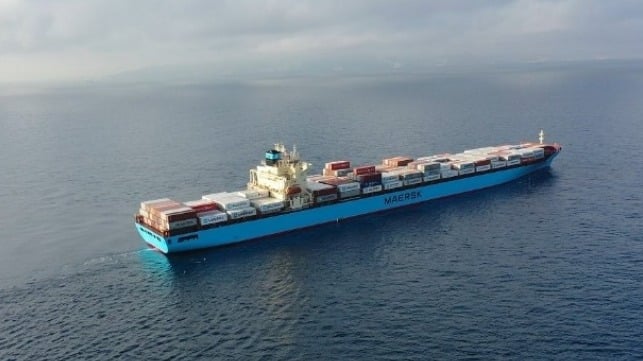
Three crewmembers were injured aboard a Maersk ship in the Atlantic (Maersk file photo)

Published May 1, 2025 12:49 PM by The Maritime Executive


Maersk is confirming there was an incident aboard one of its containerships in the Atlantic on Monday, April 28, that injured three crewmembers and has left the ship drifting while teams work to identify “operational contingencies.” A spokesperson for Maersk said one crewmember is in critical but stable condition in a hospital in Bermuda while two others were treated for their injuries.

The Maersk Sana (102,861 dwt) departed Newark, New Jersey on April 26 bound for Singapore. Built in 2004, the vessel which has a capacity of 8,450 TEU is registered in Singapore and after operating for Maersk previously returned to the company in 2020. 

The company spokesperson confirmed that the vessel experienced “machinery related issues in the main engine room,” while claims consultants WK Webster and W.E. Cox are both citing unconfirmed reports that the vessel experienced an engine explosion. The ship was approximately 354 nautical miles east of Bermuda.

Maersk reports another one of its vessels, Maersk Nomazwe (62,994 dwt) which had departed Algeciras on April 22 diverted to assist the stricken ship. One crewmember from the Maersk Sana received First Aid onboard the ship while the others were first moved to Maersk Nomazwe and on April 30 evacuated to Bermuda. One was them was treated and discharged while the other crewmember remained in the hospital.

They are confirming the vessel is currently drifting in the Atlantic off the coast of Bermuda. The AIS signal indicates the Maersk Nomazwe has resumed its voyage to Newark where it is due to arrive on May 3.


Gard: Limits on Phone Usage are Needed for Seafarers' Safety

Bridge team
iStock

Published May 1, 2025 11:47 PM by The Maritime Executive


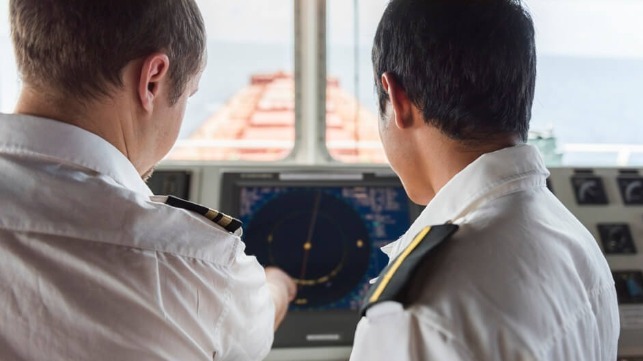
Marine insurer Gard has warned shipowners once again about the hazards of on-duty phone use, which is becoming easier and more tempting as shipboard connectivity improves. Notifications are a particular behavioral challenge, since an incoming text message can grab a seafarers' attention even when they aren't actively using their phone. But as tempting as it is to try it, multitasking with a phone exposes personnel to danger in a hazardous industrial environment - and owners/operators might consider restricting phone use during seafarers' working hours, Gard warned. 

Like almost all members of modern society, seafarers can develop a habit of constant connection to their personal devices. While it may be tempting to think that it is possible to multitask with phone in hand, years of accident data suggest that texting and seafaring isn't much different from texting and driving - it's distracting, and therefore dangerous.  

Every mariner knows of casualties that happened because someone was on the phone, from collisions to groundings to accidents on deck. Some examples are infamous, like the Ever Forward grounding in 2021, which was caused by a highly-trained marine pilot who was distracted by his phone while on duty. Others are tragic, like the death of the third mate of the ro/ro Seatruck Progress, who was struck and killed by a semi-trailer in 2019. 

"Although it may seem like we are being productive by handling emails, social media, and various apps on one hand, whilst maintaining a navigation watch on the other, our brains are not processing these activities in parallel. Instead, we rapidly shift our focus between them, a phenomenon called task switching," cautioned Gard. "This division of attention, rather than genuinely multitasking, distracts from the primary task and ultimately reduces our ability to engage fully and effectively with either activity."

Switching back and forth between tasks takes mental energy, reducing concentration and decisionmaking ability. This slows down reaction times and reduces situational awareness, Gard warned. 

Seafarers on night watch face an additional risk because they need their night vision. Human eyes can take five minutes or more to properly readjust to nighttime vision after exposure to a bright phone screen, research shows - and a watchstander needs to be able to see at all times. 

Gard advised operators to consider putting restrictions on where and when their crewmembers can use phones and other devices. Options include limiting personal device use during working hours, or in certain locations, like the bridge and engine room; restricting device use when in pilotage waters; putting work computers in places where they won't be tempting to use on watch; or setting up the ships' communications systems in ways that limit distractions. 

"While establishing procedures and processes, and raising awareness among the crew is important, it is crucial to emphasize that this alone may not be enough. Companies must also prioritize raising crew awareness regarding the distracting potential of these devices and verify that the established procedures are being followed," Gard advised. 


The secret to happiness lies within you, or society -- or both


University of California - Davis


What is the secret to happiness? Does happiness come from within, or is it shaped by external influences such as our jobs, health, relationships and material circumstances? A new study published in Nature Human Behaviour shows that happiness can come from either within or from external influences, from both, or neither – and which is true differs across people.

People have long contemplated the sources of happiness. In recent years, efforts such as the World Happiness Report seek to improve wellbeing across the world.

“We have to understand the sources of happiness to build effective interventions,” said Emorie Beck, assistant professor of psychology at the University of California, Davis and first author on the paper.

There are two major models of happiness. The “bottom-up” perspective holds that overall happiness comes from our satisfaction with domains of our life, such as wealth, enjoyable work and satisfying relationships. Surveys such as the World Happiness Report tend to follow this model, suggesting that we improve happiness at a societal level, for example through policies that improve people’s income or environmental quality, rather than by targeting factors intrinsic to an individual.

“But we all know people in our lives who experience traumatic events yet seem to be happy,” Beck said. Surveys have shown that across populations, only part of the happiness gap between groups of people can be assigned to factors such as wealth and life expectancy. This suggests a “top-down” perspective, where happiness comes not from external circumstances, but from personal attitudes and qualities, implying that we can improve happiness by improving our mental states through practices such as mindfulness meditation or therapy, rather than by targeting external factors.

A third model is bidirectional: The bottom-up and top-down influences interact with each other to generate overall happiness. From this perspective, targeting either intrinsic or external factors should improve well-being.

Surveys of life satisfaction

Beck and coauthors Joshua Jackson of Washington University in St. Louis; Felix Cheung of the University of Toronto; and Stuti Thapa of the University of Tulsa, Oklahoma looked at what determines individual happiness for a group of over 40,000 people. These were nationally representative panels of respondents who had taken part in separate surveys of life satisfaction in Germany, Britain, Switzerland, The Netherlands and Australia repeatedly for up to 30 years. The surveys captured both global life satisfaction over time and satisfaction in five domains: health, income, housing, work and relationships.

“What comes out is that we see roughly equal groups that demonstrate each pattern,” Beck said. “Some are bottom up; some are top down, the domains don’t affect their happiness; some are bidirectional and some are unclear.”

In the latter group, the researchers could not find any clear connection between the five subdomains and global wellbeing. While these individuals may feel satisfied with their lives as a whole as well as with certain domains, they don’t appear to influence each other over time. One possibility is that other things in their lives, from broader structural issues to specific events, may override these influences, Beck said.

The findings imply that measuring subjective wellbeing at the population level does not really reflect the experience of individuals. If the goal is to improve happiness across society, policies need to address both external factors such as health, income, housing and jobs and also individual qualities such as personal resilience and purpose in life.

Importantly, the most effective policies will be tailored to the individual themselves, Beck said. Targeting external factors for individuals whose happiness is not determined by them would likely be ineffective.

“These things are treated separately, but they aren’t really. They feed into each other at a personal level,” Beck said.

The work was supported in part by grants from the National Institute on Aging.


Children’s reading and writing develop better when they are trained in handwriting


According to a study by the University of the Basque Country (UPV/EHU), children’s reading and writing skills are poorer when they use typing to learn


\

University of the Basque Country


Nowadays, it is common for children’s classrooms to have digital resources to be used as tools for certain learning processes. For example, there are computer programs geared towards children who are learning to read and write. Since the exercises that they propose are to be done on computer, the students press keys and buttons, and do away with pencil and paper. To measure the impact of these typing-based methods, a UPV/EHU study made a comparison to analyse the effects of manual and keyboard training on children’s skills. “As children write less and less by hand, we wanted to explore the impact of this on alphabetic and orthographic skills. In other words, we wanted to see whether the ability to learn letters and to assimilate and remember word structure develops differently through manual training or the use of keyboards. We concluded that the children who used their hands obtained the best results,” explained researcher Joana Acha.

To reach this conclusion, an experiment was conducted with 5 to 6-year-olds. This age was chosen because it is the most favourable moment in their development. This is in fact when they begin to acquire the ability to read and write. So 50 children with basic reading comprehension were taught 9 letters of the Georgian and Armenian alphabets, as well as 16 pseudowords invented by the researchers by combining the letters.

“The aim was to use letters and words that were completely new to the children to make sure they were learning from scratch. In fact, the studies carried out so far used the alphabets in the children’s culture, so it is not so easy to find out the extent to which they did not know the symbols presented,” said Acha.

So all the students were taught new letters and words, but not all in the same way: half of them were asked to copy them by hand and the other half with keyboards. That way the UPV/EHU study was able to focus on the importance of the graphomotor function. In other words, what kind of effect does moving the hand have on the reading and writing process. In fact, when we write on keyboards we do not trace the shape of the letter and so the graphomotor function exerts less influence when it comes to assimilating letter and word structure. By contrast, writing by hand exerts a greater influence.

“Once we had taught each group of children the new letters and words and trained them using one method, we submitted them to three tests to assess the knowledge acquired. We measured their ability to identify, write and pronounce both the letters and the pseudowords, and the results clearly indicated that those who had practised manually developed greater skill. In particular, the difference was clear with the pseudowords; almost everyone who had learnt on computer did not complete the exercises on letter sequences correctly. So our work confirms that the graphomotor function is essential in memorizing letters and word structures,” explained Acha.

Variability also exerts an influence

But they did not look at the impact of the degree of hand movement alone. The groups who were working by hand and with keyboards were divided into two subgroups from the start. During the teaching of the letters and the words, among those who were working with pencils, some were asked to follow the guides marked with small dots (technique of low variability). The others, by contrast, practised without any reference at all: copying freely on to the blank page (great variability). They did the same with those who were working on computer: some always used the same font for training (e.g. Tahoma), and others, more than one. That way, the researchers were able to analyse the influence of the shape variability factor in addition to the grapho-motor function.

What they saw was that all those who had been trained by hand were more competent than all those who had worked with keyboards, but even among those who had practised with pencil and paper, there were differences. Those who had been trained freely obtained the best results. “So we concluded that while it helps children to have to trace in order to practice at first, once they’re able to make more or less small, precise movements, it’s advisable to move on to free writing. However, what is most clear is the need to prioritize manual practice in the learning processes. They learn best from hand movements and so technological devices should only be used in a complementary way,” said Acha.

Additional information

Joana Acha is a researcher and lecturer in Psychological Processes and Development at the Faculty of Psychology. She lectures in the degree course in Psychology, in the Master’s courses in Early Intervention and the  Cognitive Neuroscience of Language. Her main research topics are the development of reading comprehension and the methods used to promote it. She is a member of the HAEZI research group and also cooperates with various organizations. For example, she produced this paper together with the University of Valencia.