Saturday, December 27, 2025

China Is Now Building a Nuclear-Powered Aircraft Carrier

December 27, 2025
By: Brandon J. Weichert
Blog Brand: The Buzz

The new Chinese carrier—the fourth in its inventory—is expected to enter service in the 2030s, well after China’s projected attack on Taiwan in 2027.

China has initiated construction of its first nuclear-powered aircraft carrier at the iconic Dalian shipyards in northeastern China. The National Institute for Basic Policy Research (NIPPR), a think tank, believes that recent satellite imagery of work begun at the Dalian shipyard is consistent with the kind of work that would occur when beginning construction on a technically complex, large, nuclear-powered vessel.


What’s more, the facility where this potential nuclear-powered aircraft carrier is being constructed is run by Dalian Shipbuilding Industry Co, Ltd. This is the same group and facility that produced other, earlier domestically made aircraft carriers for the People’s Liberation Army Navy (PLAN).

What (Little) We Know About China’s New Carrier Project

One analysis notes how, in February of this year, large wooden supports used during large ship construction—keel blocks—running more than 886 feet (270 meters) were visible. This indicated that a massive new ship was being built at this facility.

Later, on November 10 of this year, there appeared a 492 foot (150 meter) by 141 foot (43 meter) was in the dock. Defence Blog, an online defense publication, reported that “inside the structure, two rectangular frames, each measuring approximately [52 feet by 45 feet] could be seen.”

The NIPPR report explains that similar structures were not present when the Shandong, the last Chinese aircraft carrier to be built at the facility, was constructed by Dalian Shipbuilding Industry Co, Ltd.

The current rotation of China’s conventionally powered aircraft carriers indicates a clear strategy by the PLAN to use the carriers within the First Island Chain (the region running from the Kamchatka Peninsula through Japan and Taiwan down to the Philippines). Under the protection of China’s massive anti-access/area-denial (A2/AD) shield that stretches across most of the First Island Chain, the PLAN could both stunt any US Navy power projection with their A2/AD capabilities while their carriers deployed off the coast of, say, Taiwan to launch massive numbers of warplanes at the island.

Japan’s Ministry of Defense reports that their intelligence indicates a massive expansion occurring at the PLAN base in Qingdao. This base is the current homeport of the Liaoning, China’s first aircraft carrier.

Japan’s Defense Ministry assesses that piers are being expanded, demagnetization facilities are being installed (to reduce a ship’s magnetic signature), and a new naval airfield is being built for carrier landing training facilities and hangars for fighter planes.

Nuclear-Powered Carriers Would Mark a True Strategic Shift for China

The nuclear-powered carrier that China is likely building will not be ready until the 2030s. However, the Pentagon and most experts believe that China will try to attack Taiwan by 2027. In other words, this carrier is likely designed for China’s overarching strategy after they believe Taiwan is successfully absorbed into their new Asian co-prosperity sphere.

A nuclear-powered carrier will project power beyond the island chains. Of course, it will be vulnerable to the same A2/AD systems that American carriers are exposed to. Yet, in terms of showing the flag, a nuclear-powered carrier is still quite a statement.

Unlike the United States, which struggles to build even one ship in less than six years, China’s shipyards are the most robust and efficient in the world. And China’s ability to cheaply, reliably mass produce nuclear-powered aircraft carriers should not be underestimated. What this means is that even Chinese nuclear-powered carriers would be expendable and replaceable.

Of course, there is no guarantee that China can take Taiwan. But there’s also a decreasing chance that the US and their allies will be able to stop China from doing so—especially if the political winds on the besieged islands shift away from the pro-Independence element on the island and toward the pro-China Kuomintang.

What this indicates is that China is not going away. It is not declining. Their leaders, whatever economic or political headwinds they may face, are planning to expand Chinese reach well into the blue waters of the Pacific with nuclear-powered aircraft carriers. And, unlike America, China possesses the means and will to mass-produce the systems they need to achieve such a vision.

About the Author: Brandon J. Weichert

Brandon J. Weichert is a senior national security editor at The National Interest. Recently, Weichert became the host of The National Security Hour on America Outloud News and iHeartRadio, where he discusses national security policy every Wednesday at 8pm Eastern. Weichert hosts a companion book talk series on Rumble entitled “National Security Talk.” He is also a contributor at Popular Mechanics and has consulted regularly with various government institutions and private organizations on geopolitical issues. Weichert’s writings have appeared in multiple publications, including The Washington Times, National Review, The American Spectator, MSN, and the Asia Times. His books include Winning Space: How America Remains a Superpower, Biohacked: China’s Race to Control Life, and The Shadow War: Iran’s Quest for Supremacy. His newest book, A Disaster of Our Own Making: How the West Lost Ukraine is available for purchase wherever books are sold. He can be followed via Twitter @WeTheBrandon.

China's maglev train shatters records, hits 700 kmph in just 2 seconds

The landmark test was conducted on a 400-meter experimental track and demonstrated not only ultra-rapid acceleration but also precise and safe braking.


Footage aired by China’s state broadcaster CCTV showed the test vehicle—appearing as a streamlined chassis—racing along the track at high speed, briefly visible as a blur and leaving smoke in its wake. (Screengrab/X@ChinaDaily))

India Today News Desk
New Delhi
,Dec 28, 2025 
Written By: Vivek Kumar

China has achieved a major milestone in high-speed transportation research by setting a new world record in superconducting magnetic levitation (maglev) technology. Scientists at the National University of Defense Technology (NUDT) successfully accelerated a 1.1-ton experimental maglev vehicle to a speed of 700 km/h in just two seconds, marking the fastest acceleration and peak speed ever recorded for a superconducting maglev system.
advertisement

The landmark test was conducted on a 400-meter experimental track and demonstrated not only ultra-rapid acceleration but also precise and safe braking.

According to NUDT researchers, the vehicle was smoothly brought to a stop after reaching its maximum speed, underscoring the system’s control and reliability at extreme performance levels.

Footage aired by China’s state broadcaster CCTV showed the test vehicle—appearing as a streamlined chassis—racing along the track at high speed, briefly visible as a blur and leaving smoke in its wake.

Researchers confirmed that the trial broke previous global records in both acceleration and speed for maglev platforms.The breakthrough reflects progress across several critical engineering areas.
The test validated ultra-high-speed electromagnetic propulsion
Stable electric suspension and guidance systems
High-power energy storage solutions
The use of high-field superconducting magnets

Together, these technologies allow the vehicle to levitate several centimeters above the track, eliminating wheel-rail friction and enabling extreme speeds with reduced noise and vibration.

Professor Li Jie of NUDT said the success represents a major step forward for China’s ultra-high-speed ground transportation ambitions.

He noted that superconducting maglev systems are not limited to passenger trains but could support next-generation transport concepts and aerospace applications.

HOW MAGLEV TRAINS ARE DIFFERENT

Maglev trains differ fundamentally from conventional rail systems.Maglev systems do not use wheels; movement is achieved through magnetic forces
Powerful electromagnets are installed both on the vehicle and along the track
Like magnetic poles repel each other, causing the vehicle to levitate above the guideway
The train floats a few centimeters above the track, eliminating physical contact
Alternating magnetic fields along the guideway propel the vehicle forward
The absence of wheel–rail contact greatly reduces mechanical wear and tear
Lower wear results in reduced maintenance requirements over time
Electric propulsion improves overall energy efficiency and supports cleaner operation

Beyond rail transport, experts see broader implications. Superconducting maglev technology could underpin hyperloop-style systems operating in low-pressure or vacuum tubes, where speeds approaching or exceeding 1,000 km/h are theoretically possible.

The same technology may also be used to provide initial acceleration for rockets or aircraft, potentially saving fuel and reducing emissions.

NUDT has been involved in maglev research for more than 30 years, having built China’s first manned maglev test system decades ago.
advertisement

The team previously reached 648 km/h earlier in 2025, while Shanghai’s maglev line remains the world’s only commercial maglev service, operating at speeds of up to 430 km/h.

NUMBER GAMETop speed achieved: 700 km/h
Acceleration time: 2 seconds
Vehicle weight: 1.1 tons
Test track length: 400 meters
Previous record: 648 km/h (July 2025)
Commercial maglev speed (Shanghai): 430 km/h

With this new record, China has reinforced its position as a global leader in advanced maglev research, with further large-scale tests expected in the coming years.

- Ends


World’s Fastest Nuclear Force Ramp-Up: Strengthening for China’s 2027 Goal Despite Disciplinary Removals

Andrew S. Erickson, “World’s Fastest Nuclear Force Ramp-Up: Strengthening for China’s 2027 Goal Despite Disciplinary Removals,” China Analysis from Original Sources 以第一手资料研究中国, 27 December 2025.

Amid the most dramatic military buildup since World War II, as part of the world’s most rapid and extensive nuclear weapons buildup, China continues to develop its nuclear triad. The Pentagon’s 23 December 2025 China Military Power Report assesses that Beijing has grown its operational nuclear warhead stockpile from the “low 200s” circa 2020 to the “low 600s through 2024,” and remains on track to surpass 1,000 warheads by 2030.[1] Among China’s three nuclear-capable services, the People’s Liberation Army Rocket Force (PLARF) and its supporting defense-industrial base have experienced particularly extensive removals under Commander-in-Chief Xi Jinping’s intensified anti-corruption campaigns since 2023. Yet the report repeatedly underscores a double-edged theme: these purges may impose short-term churn and readiness costs, but could well yield a more capable force in the medium-to-long run. Meanwhile, the report emphasizes that the PLA continues to advance toward realizing Xi’s 2027 Centennial Military Building Goal (建军一百年奋斗目标),[2] in which strengthened nuclear deterrence and coercive capacity play a central role. Throughout, the report offers specifics and documentation available publicly nowhere else.

Key Takeaways

  • China under Xi is executing a historically rapid nuclear buildup, moving from several hundred operational warheads to the current 600+ to potentially over a thousand within this decade, while simultaneously diversifying its triad.
  • Beijing is pursuing capabilities—a maturing triad, low-yield theater systems, and an early warning counterstrike (EWCS) posture—that offer more flexible options at manifold rungs of the escalation ladder.
  • Massive anti-corruption purges in the PLARF and defense industry supporting it, while destabilizing in the near term, are explicitly framed by Pentagon’s 2025 report as enabling a more effective nuclear force if underlying problems are properly remedied.

Goals and Priorities 

This year’s edition for the Pentagon’s report provides its clearest public articulation yet of Xi’s 2027 goal. It notes that Beijing first publicly unveiled this objective in October 2020 at the 19th Central Committee’s 5th Plenum, but that the target was internally established at an expanded Central Military Commission (CMC) meeting in late 2019. PRC media and commentary link this goal to building capabilities to confront U.S. forces in the Indo-Pacific and to “coerce Taiwan’s leadership to the negotiation table on Beijing’s terms.”

The PLA ties achieving the 2027 goal to developing “three major strategic capabilities” that the report interprets as follows (excerpted verbatim from p. 16):

  • “Strategic decisive victory” (战略决胜): This likely requires the PLA to be credibly able to prevail in a conflict at acceptable cost. The PLA probably tracks this requirement to a Taiwan conflict with U.S. involvement, which is the most stressing contingency the PLA plans against.
  • “Strategic counterbalance” (战略制衡): This likely requires the PLA to build up its means of strategic deterrence—including nuclear deterrence—to sufficiently deter or restrain U.S. military involvement. The PLA, viewing itself as militarily weaker than the United States, contextualizes counterbalance as a means by which the weak offsets the advantages of the strong. Accordingly, it views modernizing its nuclear capabilities in line with strategic counterbalance to address a disadvantage vis-à-vis the United States.
  • “Strategic deterrence and control” (战略慑控): This likely requires the PLA to have the force capacity to limit horizontal escalation or dissuade other states from taking opportunistic actions.

Within this framework, Xi has clearly elevated nuclear weapons as core to realizing PRC great-power status, constraining American options, and coercively enveloping Taiwan. The central importance of nuclear weapons capabilities to these top-priority aims readily explains unprecedented nuclear emphasis and development throughout the thirteen years-and-counting of his rule. China’s strategic rocket force was known as the Second Artillery Corps from its establishment in 1966 until its redesignation under Xi as the PLARF at the end of 2015 following its elevation from a military branch to a full-fledged service. In early December 2012, just nineteen days after taking power as General Secretary of the Chinese Communist Party and Chairman of the CMC on 15 November, Xi convened the generals overseeing the Second Artillery (pre-PLARF), which he termed a “pillar of our status as a great power.” He charged them with advancing “strategic plans for responding under the most complicated and difficult conditions to military intervention by a powerful enemy”—standard PRC wording to describe the United States. Just over thirteen years later, we are witnessing ongoing results of Xi’s effort.[3]

Historical Foundations: From Mao’s Priorities to an Emerging Triad

All great waves originate some distance out at sea. China’s current nuclear force surge rests on decades of sustained investment in warheads and missiles. Developing nuclear weapons and the ballistic missiles to credibly deliver them was a top priority for Mao beginning in the 1950s as he sought to deter superpower attack while ensuring China’s own great power status. Beijing’s nuclear weapons and strategic missile programs benefitted from consistent top-level resource allocation, as well as the greatest insulation of any military programs from the explosive political disruption that derailed China’s aviation industry and many other sectors. Even as Mao sought to limit overall military expenditures, he lavished tremendous funding on China’s nuclear weapons complex. In their canonical study, China Builds the Bomb, John Wilson Lewis and Xue Litai estimate that by 1964 Beijing had spent more on nuclear weapons development than on the entire defense budgets for 1957 and 1958 combined—extraordinary resource dedication for a then-impoverished, autarkically isolated state.[4]

Mao similarly prioritized nuclear-powered ballistic-missile submarine (SSBN) and submarine-launched ballistic missile (SLBM) programs after the mutual collapse of a Soviet joint development proposal in 1959, famously vowing: “We will have to build nuclear submarines even if it takes us 10,000 years!”[5] China’s first intercontinental ballistic missile (ICBM), the DF-5/5A, reached initial operational capability around 1981, giving Beijing a rudimentary but genuine ICBM capability. PRC nuclear warheads and associated delivery systems have subsequently become much more numerous, diverse, deployable, and hard to counter. Over roughly three-quarters of a century, China has moved from having no nuclear weapons to possessing the world’s third-largest nuclear arsenal, trailing only the United States and Russia and increasingly closing key capability gaps.

Current Forces and Activities: A Rapidly Expanding Triad

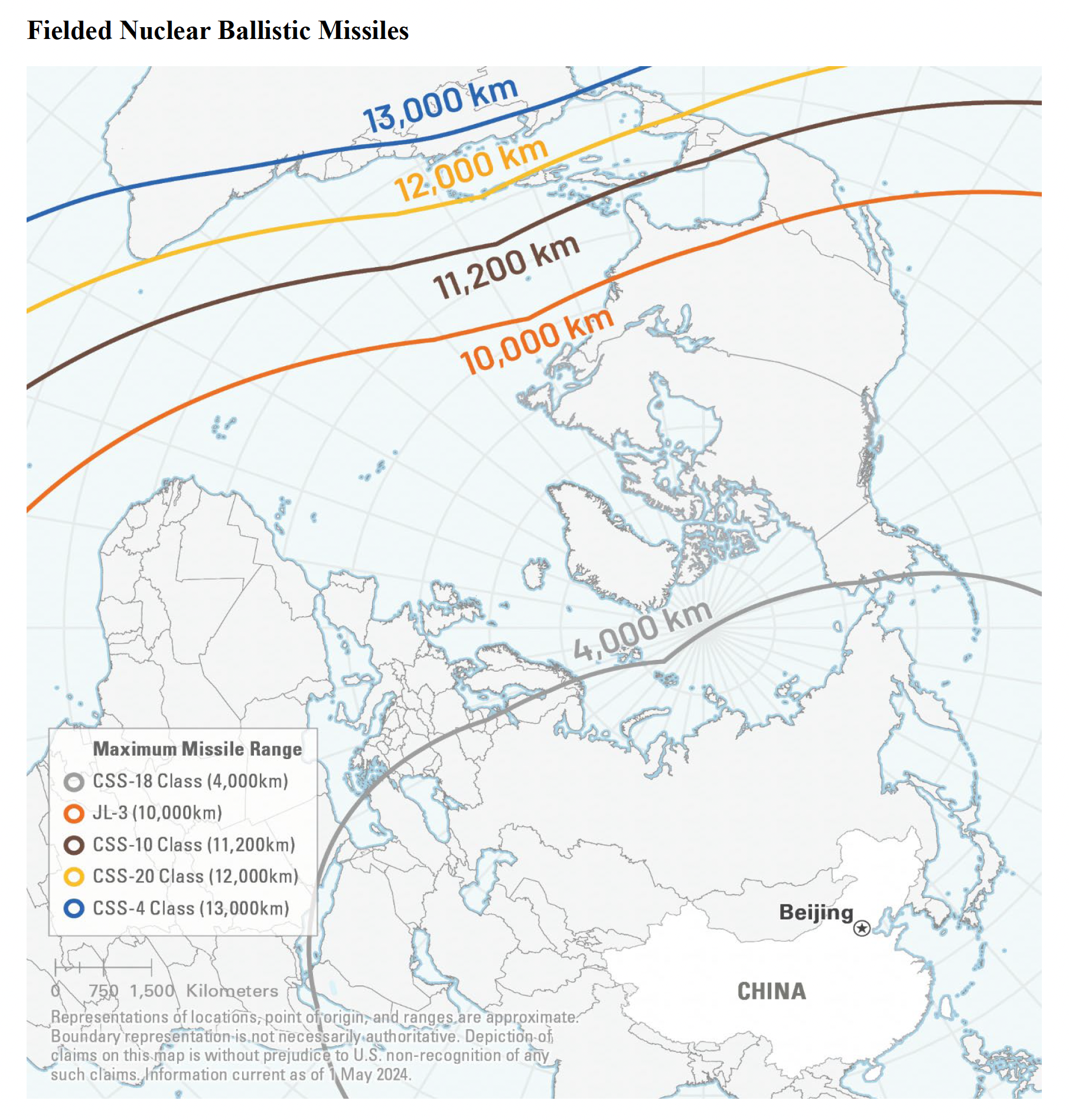
Since just after coming to power, Xi has directed a major nuclear weapons ramp-up, with important additions and improvements as depicted in the Pentagon’s 2025 report’s “Fielded Nuclear Ballistic Missiles” figure (p. 86, reproduced below). The report puts operational PRC nuclear warheads in the “low 600s through 2024”: “While [an earlier edition of] this report assessed in 2020 that China’s nuclear warhead[s] would double from a stockpile of the low 200s over the next decade, the PLA remains on track to have over 1,000 warheads by 2030.”
It is important to underscore that with regard to PRC nuclear warhead numbers—as with much other data in the Pentagon’s 2025 report—China has had another year of development not captured by the report because of information cutoff and internal review timelines. This lag effect is an unavoidable reality in a U.S. government document prepared systematically for public release, but it is likely accentuated by the fact that this latest Pentagon report—with its 23 December 2025 publication—has appeared the latest in the calendar year of all twenty-five such reports issued to date since the first appeared in 2000. (Thus far, every annual report issued has been published within the same calendar year as that which it is required to report to Congress; none have spilled over into the next calendar year.) At the rate PRC military development is progressing, the 2025 report’s unprecedented latency could well mean that actual statistics and other data currently achieved by China have advanced significantly from those documented in the report. 

In any case, the Pentagon’s 2025 report demonstrates clearly that the PLARF is working hard to strengthen its already-extensive land-based capabilities. The report documents several striking recent developments. A central focus is China’s effort to achieve an EWCS capability, conceptually similar to launch-on-warning (LOW), whereby “warning of a missile strike enables a counterstrike launch before an enemy first strike can detonate.” Accordingly, in 2024 and early 2025 China launched two additional Tongxun Jishu Shiyan (TJS, a.k.a. Huoyan-1) geosynchronous early warning satellites. “China’s early warning infrared satellites can reportedly detect an incoming ICBM within 90 seconds of launch,” the report assesses in exquisite, uniquely authoritative detail, “with an early warning alert sent to a command center within three to four minutes.”

China’s multiple ground-based, large phased-array radars (LPARs) likely support EWCS by detecting incoming ballistic missiles high in the atmosphere thousands of kilometers away; confirming, refining, and fusing data; and thereby facilitating a pre-detonation counterstrike. These radars “probably can corroborate incoming missile alerts first detected by the TJS/Huoyan-1 and provide additional data, with the flow of early warning information probably enabling a command authority to launch a counterstrike before inbound detonation.”

Relatedly, in December 2024, “the PLA launched several ICBMs in quick succession from a training center into Western China, indicating the ability to rapidly launch multiple silo-based ICBMs, as required for an EWCS operation. The PLA has likely loaded more than 100 solid-propellant ICBM missile silos at its three silo fields with DF-31 class ICBMs, which are very likely intended to support EWCS.”
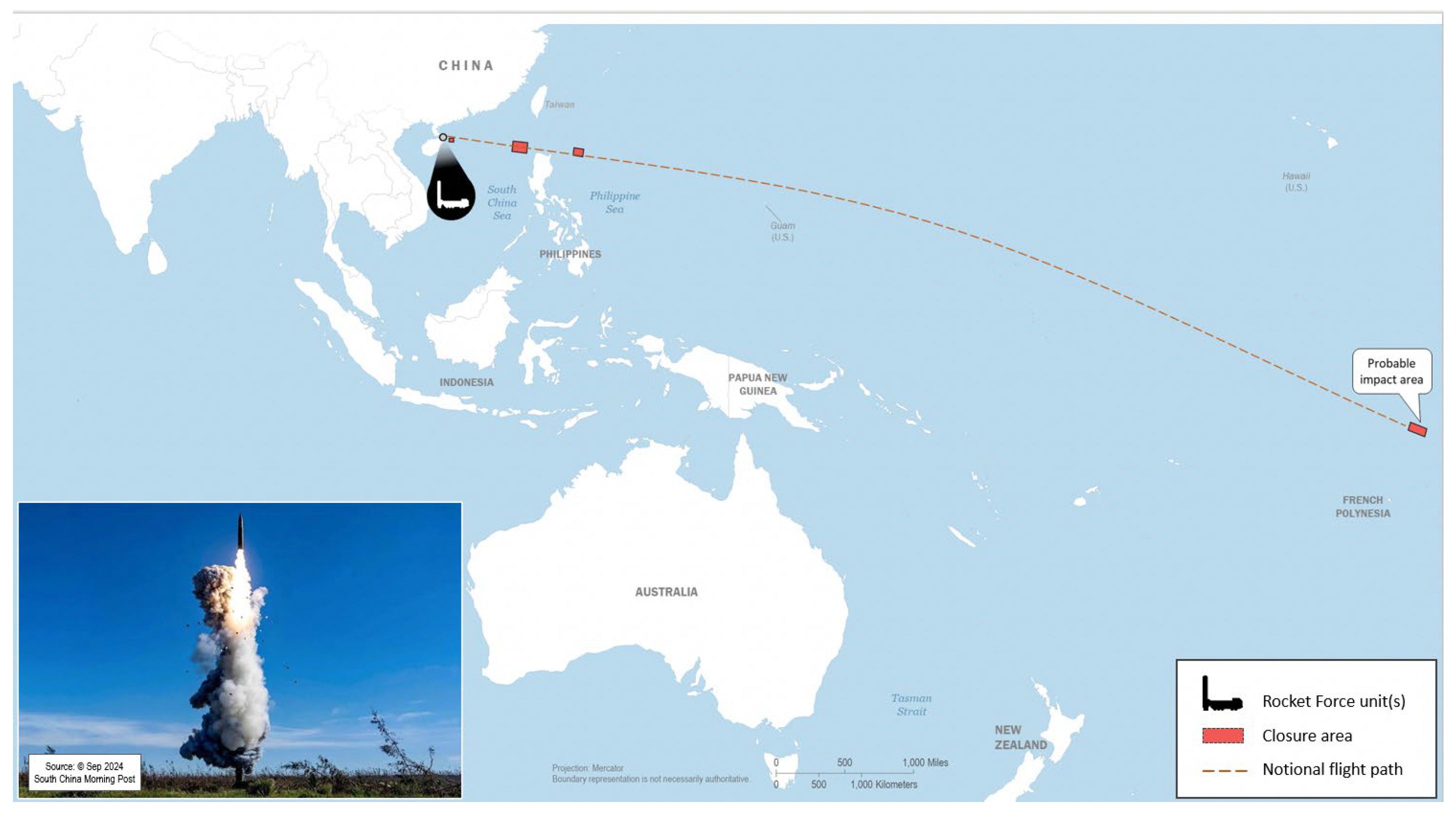
Meanwhile, in the first such open-ocean test since 1980, on 25 September 2024[6] the PLARF launched a DF-31B ICBM from northern Hainan island, which flew roughly 11,000 km before impacting the Pacific near French Polynesia (as seen in figure on p. 29, reproduced above). “The PLA views ICBM launches, including into broad ocean areas during crisis or conflict, as an option for medium-to-high intensity nuclear deterrence operations,” the report judges. “The September 2024 launch probably enabled the PLA to train on the procedures and tactics for this type of operation during peacetime.” It posits that “future launches may occur with some regularity.” Beijing explicitly portrayed the launch as part of routine training but provided pre-notification only to select states.

As part of its nuclear triad’s sea leg, China has now fielded the Julang-3 (JL-3/Great Wave-3) (CSS-N-20) SLBM on its Jin-class (Type 094) SSBNs. The Pentagon’s 2025 report assesses the JL-3 at roughly 10,000 km range, enabling strikes on large portions of the Continental United States (CONUS) from suitable patrol areas. The report’s aforementioned “Fielded Nuclear Ballistic Missiles” figure depicts the JL-3’s 10,000 km range covering Washington, DC and most of the continental United States (CONUS), with the exception of Florida and a swath of the southeast.

JL-3 coverage by the Pentagon report in 2025 and over the past decade traces how the sea-based leg has been maturing into a genuinely intercontinental component of China’s deterrent. The 2024 report depicts the JL-3’s 10,000 km range on a similar “Fielded Nuclear Ballistic Missiles” figure (p. 106) to the one in the 2025 report. The 2024 report states that, in “the PRC’s first credible sea-based nuclear deterrent,” the PLAN’s 6 Jin-class SSBNs, each with 12 vertical launch cells, may be equipped with the 5,400 nm JL-3 or the 3,900 nm JL-2 (CSS-N-14). “The PRC probably fielded the extended-range CSS-N-20 (JL-3) SLBM on the PRC’s JIN class SSBN, giving the PRC the ability to target CONUS from littoral waters and enabling the PLAN to consider bastion operations to enhance the survivability of its sea-based deterrent. The SCS [South China Sea] and Bohai Gulf probably are the PRC’s preferred options for employing this concept,” the 2024 report elaborates. “PRC sources claim the JL-3 has a range of over 5,400 nm, which would allow a JIN armed with this missile to target portions of CONUS from PRC littoral waters. The PLAN’s next generation SSBN, the Type 096, is expected to enter service the late 2020s or early 2030s. Considering the 30-plus-year service life of the PRC’s first-generation SSNs, the PRC will operate the Type 094 and Type 096 SSBNs concurrently.”

The Pentagon’s 2023 report has a similar figure and similar wording. The 2022 report does not depict the JL-3 in its “Nuclear Ballistic Missiles” figure. It states that “The PRC probably fielded the extended-range CSS-N-20 (JL-3) SLBM on the PRC’s JIN class SSBN,” followed by the aforementioned bastion-related wording. In its sole mention of the JL-3, the 2021 report explains that “The current range limitations of the JL-2 will require the JIN to operate in areas north and east of Hawaii if the PRC seeks to target the east coast of the United States. As the PRC fields newer, more capable, and longer ranged SLBMs such as the JL-3, the PLAN will gain the ability to target the continental United States from littoral waters,” followed by the aforementioned bastion-related wording. The 2020 report contains a shorter version of this single mention. The 2019, 2018, 2017, and 2016 reports posit that the JL-3 will be deployed on the Type 096 SSBN. Pentagon reports from 2015 and earlier do not mention the JL-3 at all.

As the third leg of its nuclear triad, China is also building a nascent air-delivery capability. The PLA Air Force (PLAAF) is modernizing its bomber fleet and developing nuclear-capable air-launched ballistic missiles (ALBMs) for the H-6N. Moving forward, the report suggests Beijing is pursuing sub-10-kiloton-yield warheads to fulfill doctrinal aspirations of limited nuclear counterstrikes against military targets while controlling escalation. Among fielded systems, the report identifies the DF-26 intermediate-range ballistic missile (IRBM) and the H-6N bomber’s ALBM as “highly precise theater weapons…well suited for delivering a low-yield nuclear weapon.” On 29–30 November 2024, Beijing deployed nuclear weapons-capable bombers for the first time as part of the PRC and Russian Air Forces’ combined strategic aerial patrol over the Sea of Japan, East China Sea, and Miyako Strait. In this ninth such patrol, PLAAF H-6N bombers joined two Russian Tu-95 bombers.

Corruption, Purges, and Potential Long-Term Strengthening

From mid-2023 onward, the PLARF has been at the center of the most dramatic leadership shakeup in any PLA service in decades. With regard to the personnel leading and supporting China’s nuclear weapons-related operations and the industry supplying them, the report emphasizes both short-term challenges and the potential for medium-to-longer term improvements.

PLARF removals have been widespread and significant: two Commanders and several deputy commanders and Chief of Staff members of the force; related state-owned defense industry seniors; and a top PLARF engineer—all involved in nuclear weapons. As part of replacing the removed, in 2023 China unprecedentedly transferred flag and general officers from the PLAN and PLAAF into the PLARF’s top two leadership positions. Such simultaneous replacement of an existing PLA service’s two top positions—with both posts swapped out on the same day—is likewise unprecedented.

CMSI research documents further that on 31 July 2023, in the PLA’s most dramatic instance to date of a cross-service transfer, Vice Admiral Wang Houbin was appointed PLARF Commander and promoted to full General (3-star).[7]General Xu Xisheng, previously a career PLAAF officer, became PLARF Political Commissar. Notably, CMC second Vice Chairman General He Weidong presided over the promotion ceremony and General Li Shangfu and Admiral Miao Hua both attended; all three CMC Members were later removed—together with General Wang Houbin himself, now deemed a failed replacement.

As further detailed in CMSI research, following reportedly extensive procurement-related corruption during a rapid, massive PLARF buildout, the service was purged severely and continuously from July 2023 to August 2024. At least eight generals were removed, including former Commanders Generals Wei Fenghe and Zhou Yaning, and then-Commander Li Yuchao—the last of whom Wang replaced (for a time); former Deputy Commanders Lieutenant Generals Zhang Zhenzhong and Li Chuanguang; former Chief of Staff Sun Jinming; former Equipment Department Director Lü Hong; and Major General Li Tongjian. On a likely related note, General Li Shangfu was removed in October 2023; before becoming PRC Minister of National Defense, Li had led the CMC’s Equipment Development Department (EDD) (2017–22), where he approved PLA weapons acquisitions.[8]

Disciplinary measures in China’s nuclear industry have been no less extensive, the product of expanded investigations across the defense industrial base. At least five defense-industry leaders—including the head of China’s largest missile manufacturer—were detained by the Central Commission for Discipline Inspection for graft associated with weapons procurement; nine related officials were removed from the National People’s Congress (NPC).

“Looking at the China National Nuclear Corporation (CNNC), for example,” the Pentagon’s 2025 report relates, “between December 2023 and December 2024, the Central Commission for Discipline Investigation announced investigations of at least two former division chiefs, one former deputy division chief, and former heads of two CNNC subsidiaries. Yu Jianfeng, the head of CNNC, has missed public activities since at least January 2025, including the March 2025 NPC meeting, indicating that he may also be under investigation. Other personnel moves within CNNC may indicate additional investigations are ongoing.”

The Pentagon’s 2024 report relayed that “At least five PRC defense industry leaders, including the head of the PRC’s largest missile manufacturer, have been detained for investigation by the Central Commission for Discipline Inspection [CCDI], the CCP’s top corruption watchdog, likely for engaging in bribery and graft with PLA officers during the acquisition process. In December, nine officials—primarily PLARF and CMC EDD leaders as well as defense industry leaders—were removed from the NPC, the PRC’s national legislature, presumably because of their connections to corruption. In late July 2023, the PLA made a rare announcement, launching a wide-ranging investigation into weapon procurement programs dating back to 2017, signaling significant concerns with the PLA’s modernization efforts more broadly.”[9]

A striking counterpoint to the recent PLARF-linked leadership removals has been the rise of one of the service’s most politically seasoned senior officers: General Zhang Shengmin (张升民).[10] The Pentagon’s 2025 report did not profile his steady, successful career through the service to the pinnacle of PLA power, so it is worth reviewing here. Zhang spent the bulk of his career within the People’s Liberation Army Rocket Force and its predecessor, the Second Artillery Corps, developing expertise in political work and disciplinary oversight. In January 2017, he was appointed Secretary of the CMC’s Discipline Inspection Commission (DIC), making him the top military anti-corruption official and a Deputy Secretary of the CCP Central Commission for Discipline Inspection. In October 2017, among other positions, Zhang became one of the four CMC members and one of the eight CCDI deputy secretaries, charged with investigating Party members’ corruption. On 2 November 2017, Zhang was promoted to full General (3-star).

In October 2025, General Zhang was elevated to one of the two vice chairmanships of the CMC. On 28 October 2025, Zhang became the second-ranked CMC Vice Chairman, succeeding General He Weidong following He’s removal amid corruption investigations. On 23 October 2025 General Zhang was added as second-ranked CMC Vice Chairman in a CCP plenary announcement,[11] and subsequent state confirmation on 28 October 2025 finalized his appointment as the second-ranked vice chairman of the CMC.[12] Zhang’s extensive background in internal PLA discipline and oversight positions him as a central figure in Xi Jinping’s ongoing military anti-corruption campaign and may help shape internal reform as the PLARF and broader PLA navigate continuing modernization and accountability pressures. General Zhang’s knowledge of PLARF personnel and investigations must be truly extraordinary, with details that even the Pentagon itself would struggle to deliver. His extensive PLARF and anti-corruption background likely gives him unparalleled insight into internal rocket force dynamics and its associated military-industrial complex—exactly the profile Xi appears to be privileging to steer the force through its current turbulence.

Eyes on the Prize: Xi’s Personal Involvement and Pursuit of 2027 Goal

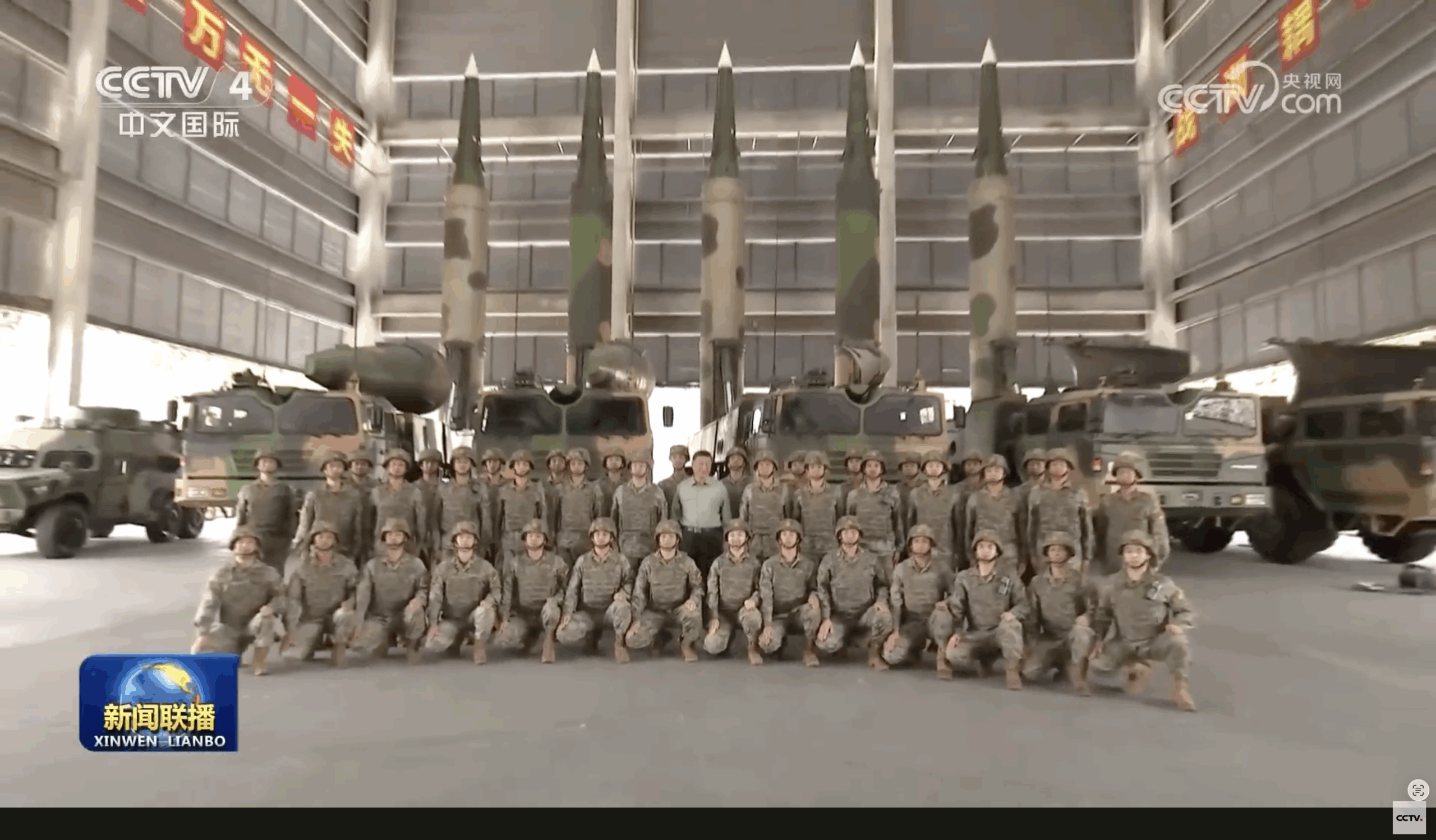
The report underscores that Xi is personally engaged in managing these risks while pushing to achieve his 2027 goals. In addition to inherent churn, the Pentagon’s 2025 report suggests, the extensive PLARF removals and underlying reasons for them “may be raising questions among leadership about force readiness.” The issue clearly has Xi’s personal attention and prioritization: in October 2024, in his first visit to the PLARF since the recent fusillade of corruption allegations surfaced, Xi inspected the service’s 611th Brigade (in Chizhou, Anhui Province). He addressed Brigade leaders regarding the importance of “military policy, commitment to deterrence, and showing strength and preparedness.” Photos of Xi’s October 2024 visit, not included in the 2025 Pentagon report, follow below.[13]
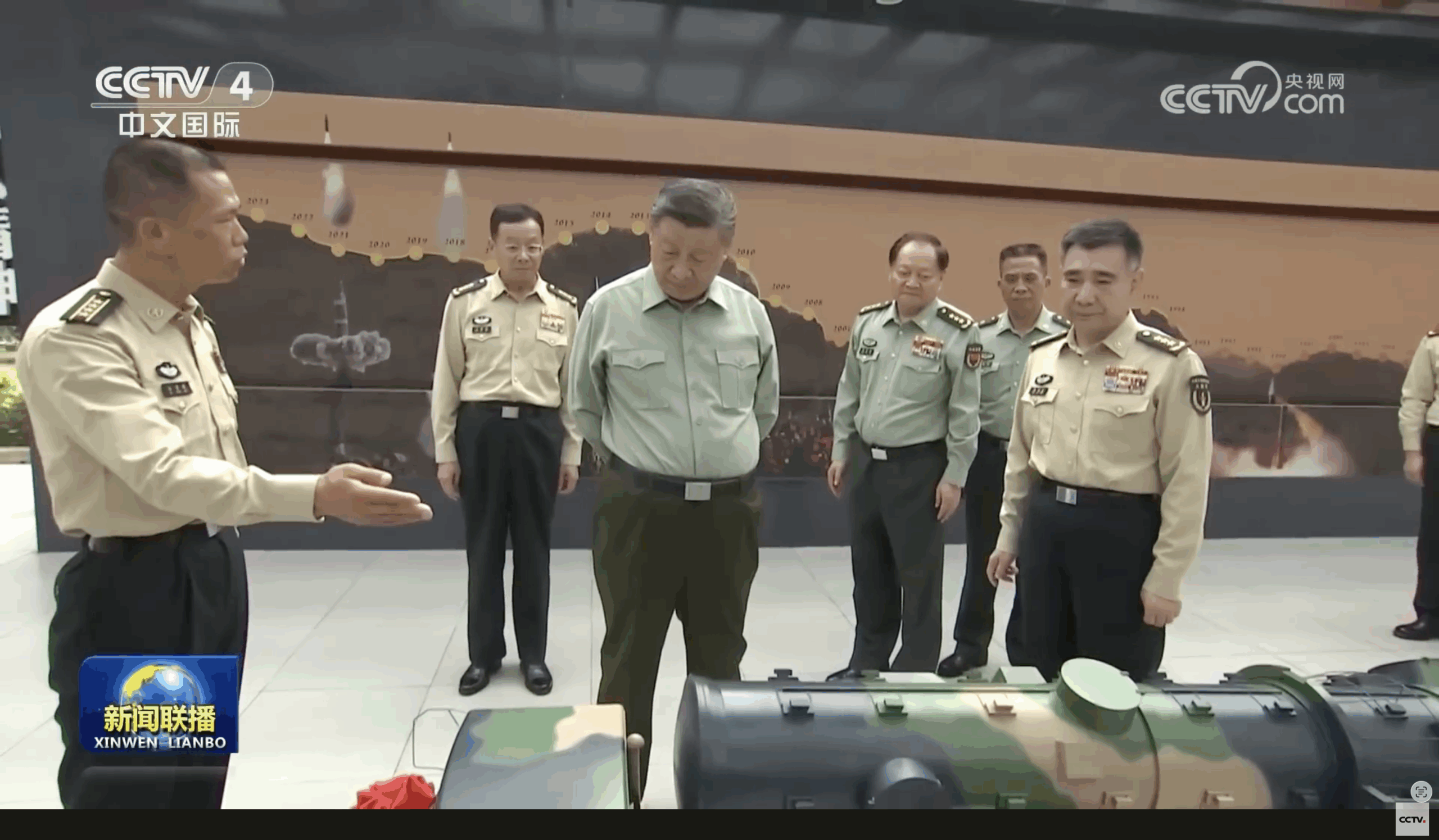
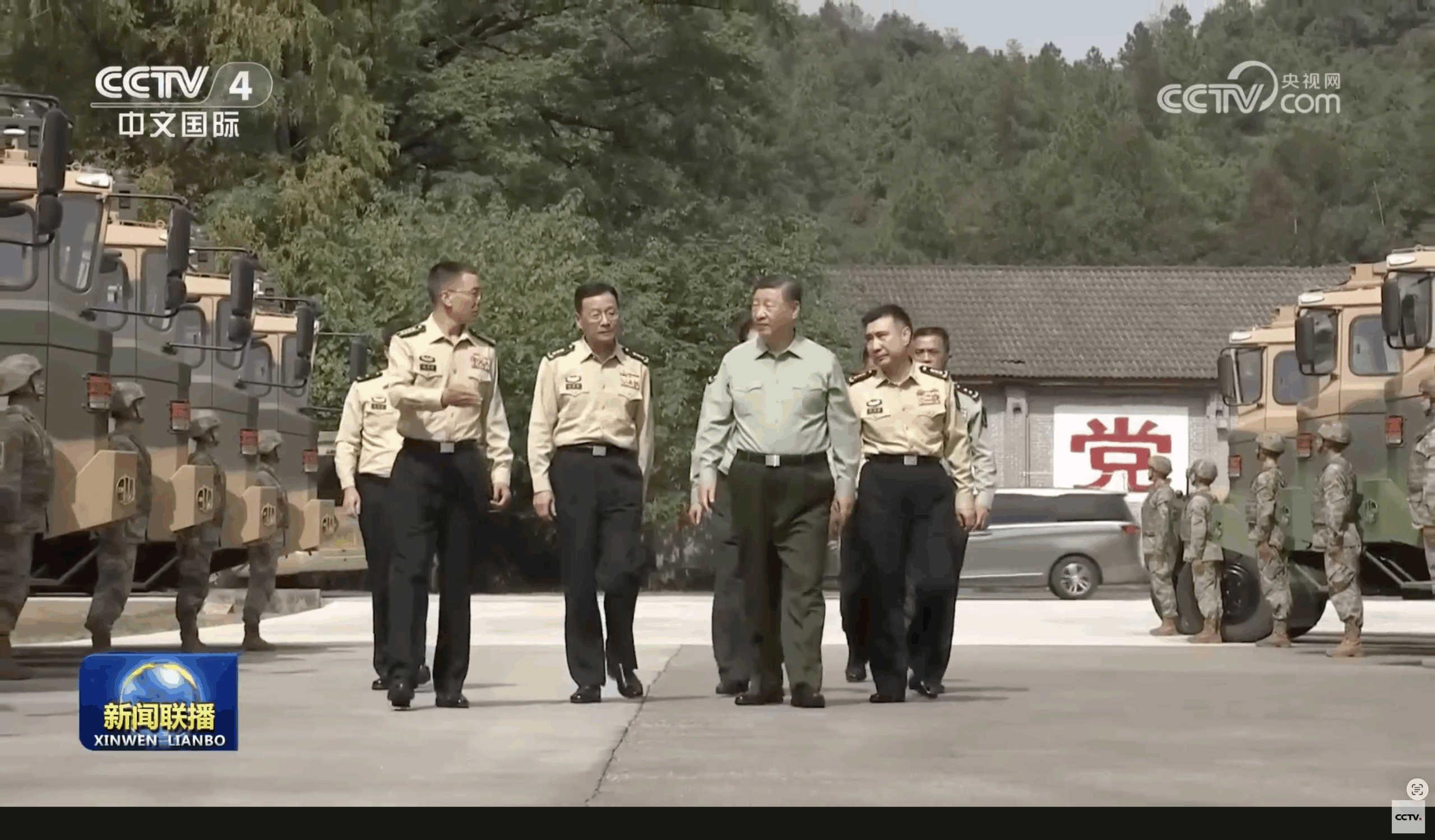
In sum, the Pentagon’s 2025 report suggests, Xi’s “ongoing anticorruption campaign could have short-term effects on readiness while potentially setting the stage for long-term PLA improvements overall.” Despite the breadth and depth of removals, China under Xi “remains committed” to its 2027 modernization objectives. The 2025 report invokes this bifurcated theme repeatedly when juxtaposing removals in other PLA services with progress toward Xi’s 2027 goal. Relatedly, the Pentagon’s 2024 report seems to further suggest that the PLARF has had serious problems; but, through drastic efforts, has already been strengthened with their being addressed. On the one hand, the 2024 report recapitulates, “The wholesale dismissal of senior PLARF leadership may be connected to fraud cases involving the construction of underground silos for ballistic missiles during a period of rapid expansion for the PLARF and the PRC’s missile industry. The impact on PRC leaders’ confidence in the PLA after discovering corruption on this scale is probably elevated by the PLARF’s uniquely important nuclear mission.” On the other hand, the 2024 report concludes, “This investigation likely resulted in the PLARF repairing the silos, which would have increased the overall operational readiness of its silo-based force.”

As with other aspects of PLA development, multiple things are true at once: short-term readiness risks coexist with the possibility of future advancement if China proves successful in fixing what have clearly been identified as systemic problems. Discoveries of disciplinary violations within the PLARF and its supporting industry have clearly shaken PRC leadership confidence and generated organizational churn. Yet the Pentagon’s 2025 report explicitly warns against assuming long-term weakness: it states that while these purges “very likely” create short-term disruptions to operational effectiveness, China’s nuclear forces could very well emerge more reliable and capable than ever before.

Endnotes

[1] Office of the Secretary of War, Military and Security Developments Involving the People’s Republic of China 2025 (Washington, DC: Department of Defense/War, 23 December 2025), 28, https://media.defense.gov/2025/Dec/23/2003849070/-1/-1/1/ANNUAL-REPORT-TO-CONGRESS-MILITARY-AND-SECURITY-DEVELOPMENTS-INVOLVING-THE-PEOPLES-REPUBLIC-OF-CHINA-2025.PDF.

[2] Andrew S. Erickson, “PRC Pursuit of 2027 ‘Centennial Military Building Goal’ (建军一百年奋斗目标): Sources & Analysis,” China Analysis from Original Sources 以第一手资料研究中国, 19 December 2021, updated 18 April 2023, https://www.andrewerickson.com/2021/12/prc-pursuit-of-2027-centennial-military-building-goal-sources-analysis/.

[3] Chris Buckley, “China Expands Nuclear Arsenal Under Xi, Bracing for Growing Rivalry With U.S.: Fear and Ambition Propel Xi’s Nuclear Acceleration,” New York Times, 4 February 2024, https://www.nytimes.com/2024/02/04/world/asia/china-nuclear-missiles.html.

[4] John Wilson and Lewis and Xue Litai, China Builds the Bomb (Stanford, CA: Stanford University Press, 1988), 107–08.

[5] John Wilson and Lewis and Xue Litai, China’s Strategic Seapower: The Politics of Force Modernization in the Nuclear Age (Stanford, CA: Stanford University Press, 1995), 18.

[6] Greg Torode, “Beyond the Politics, China’s Missile Test Reflects Military Need,” Reuters, 9 October 2024, https://www.reuters.com/world/china/beyond-politics-chinas-missile-test-reflects-military-need-2024-10-09/.

[7] See Andrew S. Erickson and Christopher H. Sharman, “Replacement Removed: VADM/General Wang Houbin—Naval Star Turned Rocket Force Commander’s Terminal Trajectory,” CMSI Note 17 (Newport, RI: Naval War College China Maritime Studies Institute, 20 October 2025; officially published 13 November 2025), https://digital-commons.usnwc.edu/cmsi-notes/17/.

[8] Ibid.

[9] Office of the Secretary of Defense, Military and Security Developments Involving the People’s Republic of China 2024 (Washington, DC: Department of Defense, 18 December 2024), 159, https://media.defense.gov/2024/Dec/18/2003615520/-1/-1/0/MILITARY-AND-SECURITY-DEVELOPMENTS-INVOLVING-THE-PEOPLES-REPUBLIC-OF-CHINA-2024.PDF.

[10] Yuanyue Dang, Alcott Wei, and William Zheng, “PLA Anti-Graft Chief Zhang Shengmin Promoted to Vice-Chair of Central Military Commission,” South China Morning Post, 23 October 2025, https://www.scmp.com/news/china/military/article/3330061/china-makes-anti-graft-chief-zhang-shengmin-vice-chair-central-military-commission.

[11] “张升民升任中共中央军委副主席” [Zhang Shengmin Has Been Promoted to Vice Chairman of the Central Military Commission of the Chinese Communist Party], 联合早报 [Lianhe Zaobao], 23 October 2025, https://www.zaobao.com.sg/realtime/china/story20251023-7706798.

[12] 林韵诗 [Lin Yunshi], “⼈事观察|上将张升⺠获任中华⼈⺠共和国中央军委副主席” [Personnel Watch | General Zhang Shengmin Appointed Vice Chairman of the Central Military Commission of the People’s Republic of China], 财新 [Caixin], 28 October 2025, https://china.caixin.com/2025-10-28/102376607.html.

[13] For details that the Pentagon’s report lacked the space to provide, see “习近平在视察火箭军某旅时强调 坚持政治引领 强化使命担当埋头苦干实干 提升战略导弹部队威慑和实战能力” [During His Inspection of a Brigade of the Rocket Force, Xi Jinping Emphasized the Importance of Adhering to Political Guidance, Strengthening Mission Responsibility, And Working Diligently to Enhance the Deterrence and Combat Capabilities of the Strategic Missile Force], 新闻联播」[News Broadcast], CCTV, 19 October 2024, https://www.youtube.com/watch?v=LLdvaIqYzDU.

UN Security Council to hold emergency meeting over Israel’s Somaliland recognition

Session set for Monday as Israel says it will not 'shy away' from political debate, pledges responsible engagement

Fatma Zehra Solmaz |28.12.2025 - TRT/AA


ISTANBUL

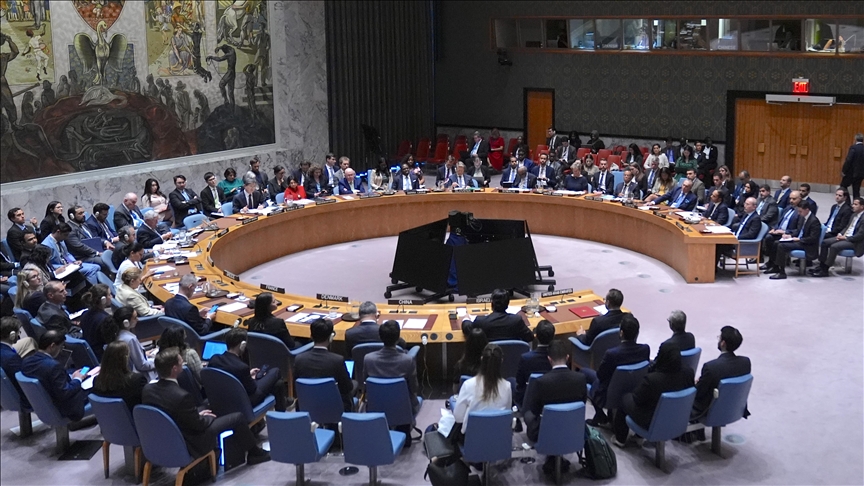
The UN Security Council is set to convene an emergency session to discuss Israel’s recognition of Somaliland amid expectations that several members will criticize the move.

"The UN Security Council will convene on Monday for an urgent session following Israel's recognition of the Republic of Somaliland," Israel's Ambassador to the UN Danny Danon said on US social media company X Saturday.

"We will not shy away from political discussions," he added.

He said Israel would "continue to act responsibly and with discretion, in order to strengthen cooperation with partners who contribute to regional stability."

The move has drawn widespread criticism from countries in Africa, Middle East, as well as Türkiye, Pakistan. The Organization of Islamic Cooperation and African Union have also censured the move as a violation of Somalia's sovereignty.

Somalia, African nations denounce Israeli recognition of Somaliland

Mogadishu (AFP) – Somalia and the African Union reacted angrily Friday after Israel became the first country to formally recognise the northern region of Somaliland as an independent state.


 27/12/2025 - RFI

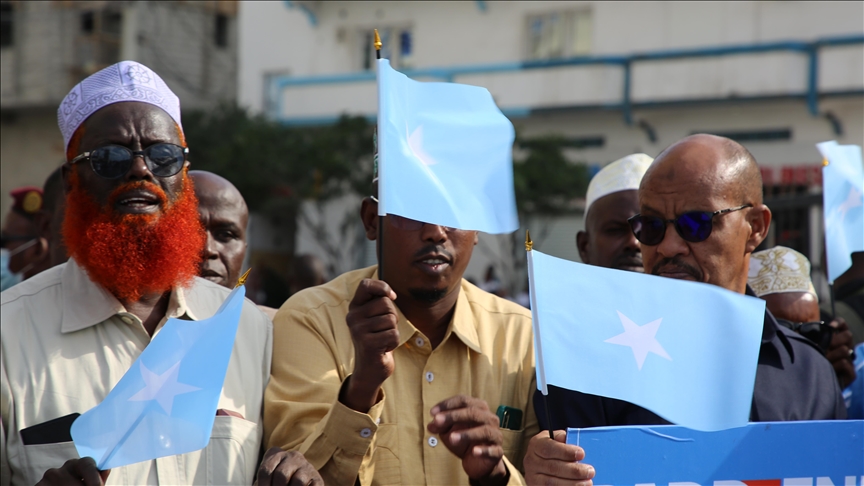
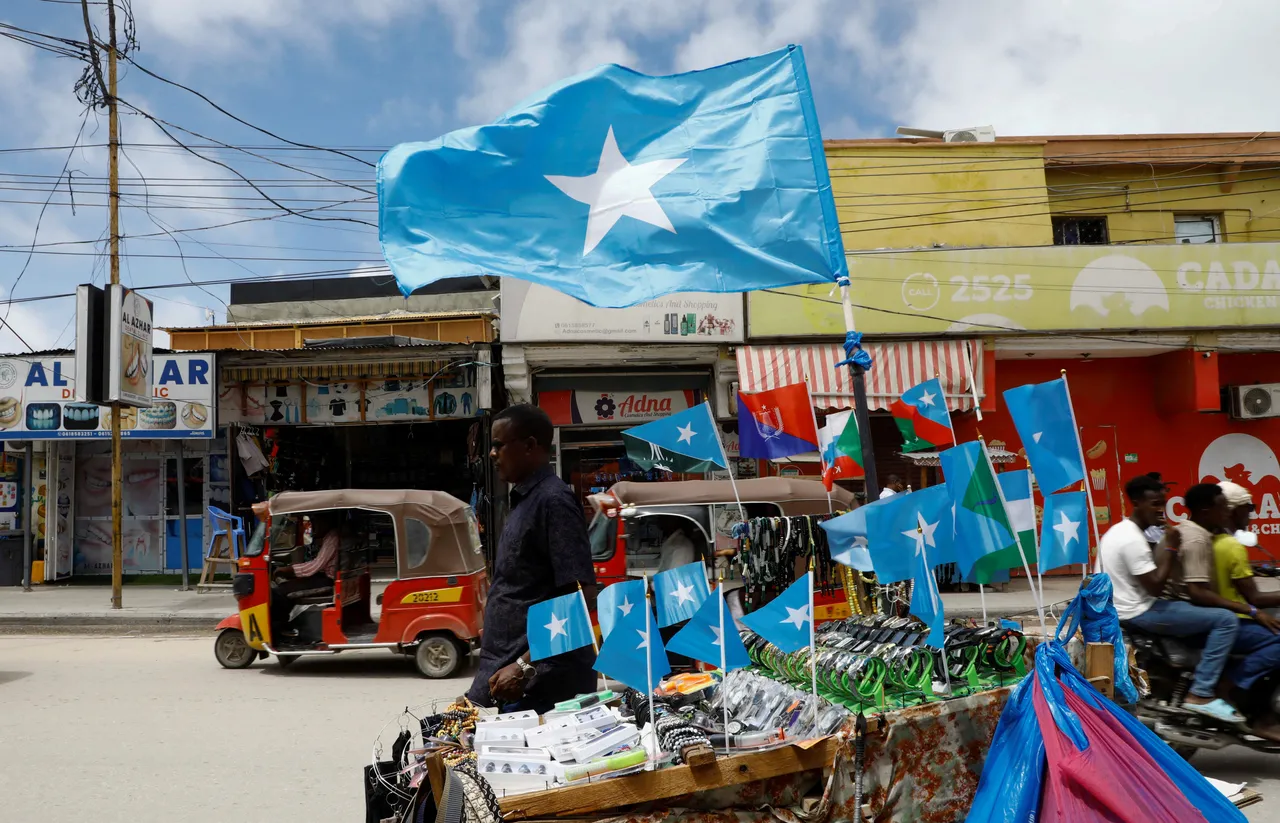
In Hargeisa, crowds took to the streets to celebrate, many carrying the flag of the breakaway state © LUIS TATO / AFP

Somaliland declared independence from Somalia in 1991 and has pushed for international recognition for decades, with president Abdirahman Mohamed Abdullahi making it a top priority since taking office last year.

Israel announced Friday that it viewed Somaliland as an "independent and sovereign state", prompting Somalia to call the decision a "deliberate attack" on its sovereignty that would undermine regional peace.

Several other countries condemned Israel's decision. The African Union (AU) rejected the move and warned that it risked "setting a dangerous precedent with far-reaching implications for peace and stability across the continent".

Somaliland "remains an integral part" of Somalia, an AU member, said the pan-African body's head Mahamoud Ali Youssouf.

Israeli Prime Minister Benjamin Netanyahu's office said the decision was "in the spirit of the Abraham Accords", referring to a series of agreements brokered by US President Donald Trump in his first term that normalised ties between Israel and several Arab nations.

Netanyahu had invited Abdullahi to visit, the Israeli leader's office said.

Asked by the New York Post newspaper whether the United States planned to also recognise Somaliland, Trump said "no".

"Does anyone know what Somaliland is, really?" he added.

With a new president, Somaliland seeks international recognition

Hailing Israel's decision as a "historic moment", Abdullahi said in a post on X that it marked the beginning of a "strategic partnership".

The Palestinian Authority rejected Israel's recognition of Somaliland.

It said on X that Israel had previously named Somaliland "as a destination for the forced displacement of our Palestinian people, particularly from the Gaza Strip", and warned against "complicity" with such a move.

In Hargeisa, the capital of Somaliland, crowds of people took to the streets to celebrate, many carrying the flag of the breakaway state, said sources.
'Overt interference'

Turkey, a close ally of Somalia, also condemned the move.

"This initiative by Israel, which aligns with its expansionist policy... constitutes overt interference in Somalia's domestic affairs", a foreign ministry statement said.

A video showed Netanyahu speaking to Abdullahi by telephone to confirm the recognition © Ariel Schalit / POOL/AFP


Egypt said its top diplomat had spoken with counterparts from Turkey, Somalia and Djibouti, who together condemned the move and emphasised "full support for the unity, sovereignty and territorial integrity of Somalia".

In a video showing Netanyahu speaking to Abdullahi by telephone, the Israeli leader said that he believed the new relationship would offer economic opportunities.

"I am very, very happy and I am very proud of this day and I want to wish you and the people of Somaliland the very, very best," Netanyahu said.

A self-proclaimed republic, Somaliland enjoys a strategic position on the Gulf of Aden and has its own money, passports and army.

But it has been diplomatically isolated since unilaterally declaring independence.
Strategic move

Israel's regional security interests may lie behind the move.

"Israel requires allies in the Red Sea region for many strategic reasons, among them the possibility of a future campaign against the Houthis," said the Institute for National Security Studies in a paper last month, referring to Yemen's Iran-backed rebels.

Israel repeatedly hit targets in Yemen after the Gaza war broke out in October 2023, in response to Houthi attacks on Israel that the rebels said were in solidarity with Palestinians in the Gaza Strip.

The Houthis have halted their attacks since a fragile truce began in Gaza in October.

Somaliland's lack of international recognition has hampered access to foreign loans, aid and investment, and the territory remains deeply impoverished.

A deal between landlocked Ethiopia and Somaliland last year to lease a stretch of coastline for a port and military base enraged Somalia.

Israel has been trying to bolster relations with countries in the Middle East and Africa.

Historic agreements struck late in Trump's first term in 2020 saw several countries including the Muslim-majority United Arab Emirates and Morocco normalise relations with Israel.

But wars that have stoked Arab anger, particularly in Gaza, have hampered recent efforts to expand ties further.

(AFP)


Arab and Islamic states reject Israel’s recognition of Somaliland


Israeli Prime Minister Benjamin Netanyahu’s office said earlier that the country formally recognized Somaliland, which declared independence from Somalia in 1991, as an “independent and sovereign state.” (AFP)

Arab News
December 28, 2025

Israel formally recognized Somaliland as an “independent and sovereign state” on Friday
Saudi Arabia on Friday expressed full support for the sovereignty, unity, and territorial integrity of Somalia

A group of foreign ministers from Arab and Islamic countries, alongside the Organisation of Islamic Cooperation (OIC), have firmly rejected Israel’s announcement of its recognition of the Somaliland region within Somalia.

In a joint statement issued on Saturday, the ministers condemned Israel’s decision, announced on December 26, warning that the move carries “serious repercussions for peace and security in the Horn of Africa and the Red Sea region” and undermines international peace and security, the Jordan News Agency reported.

The statement described the recognition as an unprecedented and flagrant violation of international law and the charter of the United Nations, which uphold the principles of state sovereignty, unity and territorial integrity, JNA added.

Israel formally recognized Somaliland as an “independent and sovereign state” and signed an agreement to establish diplomatic ties, as the region’s leader hailed its first-ever official recognition.

The ministers reaffirmed their full support for the sovereignty of Somalia, rejecting any measures that would undermine its unity or territorial integrity.

They warned that recognizing the independence of parts of states sets a dangerous precedent and poses a direct threat to international peace and security.

The statement also reiterated categorical opposition to any attempt to link the move with plans to displace the Palestinian people outside their land, stressing that such proposals are rejected “in form and substance.”

Alongside the Jordanian foreign ministry, the joint statement was issued by the foreign ministers of Egypt, Algeria, Comoros, Djibouti, The Gambia, Iran, Iraq, Kuwait, Libya, Maldives, Nigeria, Oman, Pakistan, Palestine, Qatar, Somalia, Sudan, Turkiye and Yemen, as well as the OIC.

Saudi Arabia on Friday expressed full support for the sovereignty, unity, and territorial integrity of Somalia, and expressed its rejection of the declaration of mutual recognition between Israel and Somaliland.


Israel’s recognition of Somaliland slammed across world capitals

Regional blocs join nations in condemning Israel’s move to formally recognise breakaway Somali region as independent.

A man holds a flag of Somaliland in front of the Hargeisa War Memorial monument in Hargeisa in November 2024 [File: AFP]


By Al Jazeera and News Agencies
Published On 27 Dec 2025

The Arab League, the Gulf Cooperation Council (GCC), the African Union (AU), and the Organization of Islamic Cooperation (OIC) have joined numerous countries and foreign ministers in decrying Israel’s formal recognition of the Somali breakaway region of Somaliland as an independent state.

Somaliland, a region in the Horn of Africa, declared independence from Somalia in 1991 and has pushed for international recognition for decades, with President Abdirahman Mohamed Abdullahi making it a top priority since taking office last year.

Israel announced on Friday that it viewed Somaliland as an “independent and sovereign state”, becoming the first country to make such a declaration.

The announcement prompted Somalia to call the decision a “deliberate attack” on its sovereignty that would undermine regional peace.

In a statement on Friday, the AU continental bloc rejected Israel’s move and warned that it risked “setting a dangerous precedent with far-reaching implications for peace and stability across the continent”.

The AU Commission chair, Mahmoud Ali Youssouf, said the institution “firmly rejects any initiative or action aimed at recognising Somaliland as an independent entity, recalling that Somaliland remains an integral part of the Federal Republic of Somalia”.
‘Dangerous precedent’

Arab League Secretary-General Ahmed Aboul Gheit called Israel’s action “a clear violation of international law and a flagrant infringement of the principle of the unity and sovereignty of states”.

“Any attempt to impose unilateral recognitions constitutes an unacceptable interference in Somalia’s internal affairs and sets a dangerous precedent that threatens regional and international security and stability,” he warned.

The GCC called the development “a grave violation of the principles of international law and a blatant infringement” of Somalia’s sovereignty.

“This recognition represents a dangerous precedent that will undermine the foundations of stability in the Horn of Africa region and open the door to further tensions and conflicts, contradicting regional and international efforts aimed at strengthening international peace and security in the region,” GCC Secretary-General Jasem Albudaiwi said in a statement.

The European Union said it respected Somalia’s territorial integrity and sovereignty, calling for dialogue between the Somali national government and Somaliland.

The OIC issued a joint statement together with the foreign ministers of several countries including Algeria, Comoros, Djibouti, Egypt, Gambia, Iran, Iraq, Jordan, Kuwait, Libya, Maldives, Nigeria, Oman, Pakistan, Palestine, Qatar, Saudi Arabia, Somalia, Sudan, Turkiye, and Yemen.

The group issued its “unequivocal rejection of Israel’s recognition of the ‘Somaliland’ region … given the serious repercussions of such unprecedented measure on peace and security in the Horn of Africa, the Red Sea, and its serious effects on international peace and security as a whole”.

They criticised “Israel’s full and blatant disregard to international law” and expressed full support for the sovereignty of Somalia.

The group also rejected “any potential link between such measure [Somaliland recognition] and any attempts to forcibly expel the Palestinian people out of their land”.

Earlier this year, reports emerged linking potential recognition of Somaliland to plans for ethnically cleansing Palestinians in Gaza and forcibly moving them to the African region.
Somalia demands reversal of recognition

Qatar, Iran, Saudi Arabia, Pakistan, China and Nigeria were among the other countries that condemned Israel’s move in separate statements.

The Palestinian Authority and Hamas also rejected Israel’s recognition of Somaliland.

On Friday, Somalia demanded Israel reverse its recognition of Somaliland as independent, condemning the move as an act of “aggression that will never be tolerated”.

However, Somaliland leader Abdullahi hailed Israel’s decision as a “historic moment” and said in a post on X that it marked the beginning of a “strategic partnership”.

As world leaders weighed in, Somalia’s al-Qaeda-linked armed group al-Shabab pledged on Saturday to fight any attempt by Israel “to claim or use parts of Somaliland”.

“We will not accept it, and we will fight against it,” the group that has waged a decades-long armed rebellion in the region said in a statement.
Advertisement

United States President Donald Trump also commented on the issue.

Asked by the New York Post newspaper whether Washington planned to also recognise Somaliland, Trump said “no”.

“Does anyone know what Somaliland is, really?” he added on Friday.


Iran slams Israel’s recognition of Somaliland as ‘flagrant violation’ of Somalia’s sovereignty

Tehran says move part of Israel’s broader policy to exacerbate insecurity in Red Sea and Horn of Africa

TRT/AA
Syed Zafar Mehdi 
 |27.12.2025 


TEHRAN, Iran

Iran strongly condemned on Saturday Israel’s recognition of the breakaway region of Somaliland as a “flagrant violation of Somalia’s sovereignty and territorial integrity.”

Criticizing the Israeli move as “malicious,” Foreign Ministry spokesperson Esmail Baghaei emphasized the importance of “preserving the national sovereignty, unity, and territorial integrity” of Somalia.

Baghaei asserted that the recognition aligns with Israel’s broader policy “to destabilize countries in the region and exacerbate insecurity in the Red Sea and the Horn of Africa.”

Expressing support for the firm condemnation by the Organization of Islamic Cooperation (OIC) and the African Union (AU), Baghaei called on the international community to take “decisive action” to “neutralize this expansionist and threat-creating move by the occupying regime.”

On Friday, Israel became the first country to officially recognize Somaliland, with Prime Minister Benjamin Netanyahu announcing that the two sides had signed a joint declaration establishing full diplomatic relations “in the spirit of the Abraham Accords.”

In response, Somalia’s government denounced the move as an “attack” on its sovereignty and an “unlawful action,” reaffirming Somaliland as an “inseparable” part of its territory.

The Israeli move has been widely condemned by several countries, including Türkiye, Saudi Arabia, Egypt, and Qatar.

Notably, Somalia was among the countries that severed diplomatic ties with Iran in January 2016 following a mob attack on the Saudi embassy in Tehran.

In March 2024, a year after Iran and Saudi Arabia restored diplomatic relations through a China-brokered deal, Somalia announced its readiness to mend ties with Iran.

In August of the same year, the top diplomats of Somalia and Iran met on the sidelines of the OIC summit in Jeddah and agreed to revive and deepen diplomatic relations.


Palestine reaffirms support for Somalia's unity and rejects recognition between Israel and Somaliland


27/December/2025

RAMALLAH, December 27, 2025 (WAFA) — The State of Palestine affirmed its full support for the unity, sovereignty, and territorial integrity of Somalia, and rejected any mutual recognition between Israel and the Somaliland region.

President Mahmoud Abbas expressed his firm rejection of any steps that would undermine Somali sovereignty or destabilize the country, stressing Palestine's support for Somalia's legitimate state institutions and its rejection of any attempts to impose parallel entities that contradict the unity of the Somali state.

President Abbas also praised the Arab and fraternal positions rejecting this move, which he said aims at desperate attempts to displace Palestinians to Somalia.

Trump says not ready to follow Israel recognizing Somaliland: Report


December 27, 2025 
Middle East Monitor

US President Donald Trump said Friday he did not intend to immediately follow Israel in recognizing Somalia’s breakaway region of Somaliland as an independent country, Anadolu reports.

“Everything is under study … We’ll study it. I study a lot of things and always make great decisions and they turn out to be correct,” Trump told the New York Post in a phone interview.

“Does anyone know what Somaliland is, really?” he asked.

On Somaliland’s proposal to provide the US with access to a port on the strategically significant Gulf of Aden, Trump responded dismissively, saying: “Big deal.”

Israel on Friday became the first country to formally recognize Somaliland’s separation from Somalia, and Prime Minister Benjamin Netanyahu said he would convey the development to Trump during a planned meeting scheduled for Monday.

Speaking during a video call with Somaliland President Abdirahman Mohamed Abdullahi to mark the diplomatic move, Netanyahu said he would inform Trump of Somaliland’s interest in joining the Abraham Accords.

Trump underlined that he was not swayed by the proposal and that the upcoming talks with Netanyahu would prioritize issues related to the Gaza Strip, particularly the ceasefire he brokered in October and ongoing reconstruction efforts under a UN-approved framework

Somalia’s Al-Shabab vows to fight any Israeli use of Somaliland


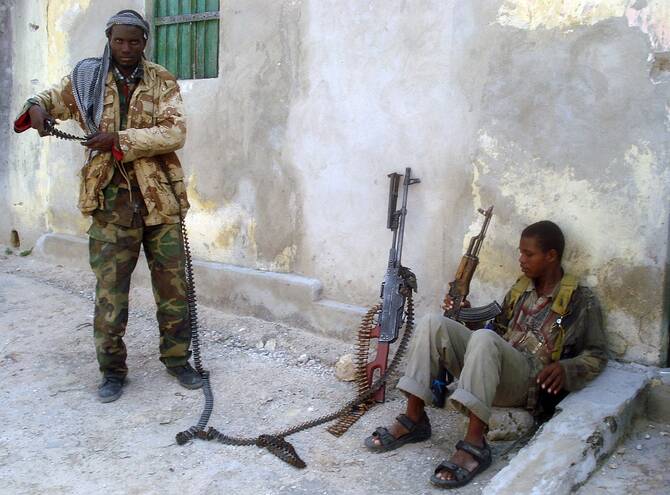
A photo dated 2010 shows an Al-Qaeda linked Shabab militant straps ammunition around his waist in Mogadishu, Somalia. (AFP)

AFP
December 27, 2025

MOGADISHU: Somalia’s Al-Qaeda-linked militant group Al-Shabab vowed Saturday to fight any attempt by Israel “to claim or use parts of Somaliland” following its recognition of the breakaway territory.

“We will not accept it, and we will fight against it,” Al-Shabab said in a statement.

It said Israel’s recognition of Somaliland as a sovereign state showed it “has decided to expand into parts of the Somali territories” to support “the apostate administration in the northwest regions.”

Pakistan slams Israel’s recognition of Somaliland as 'illegal and provocative'

"Such illegal and provocative actions constitute a flagrant violation of international law and not only threaten the peace and stability of the brotherly country of Somalia, but also that of the entire region," says Foreign Ministry.

Islamabad also expressed its "complete support for the sovereignty, unity, and territorial integrity" of Somalia. / Reuters

Pakistan condemned Israel’s recognition of the breakaway Somaliland region, calling the move "provocative and illegal."

Islamabad "strongly condemns any attempts to undermine the sovereignty, unity, and territorial integrity of Somalia" and rejects Israel recognising the independence of "the so-called Somaliland region of the Federal Republic of Somalia," said a statement from the Foreign Ministry on Saturday.

"Such illegal and provocative actions constitute a flagrant violation of international law and not only threaten the peace and stability of the brotherly country of Somalia, but also that of the entire region," the ministry added.

The ministry urged the international community to step in to reject any such actions and "prevent and deter Israel from undermining the ongoing efforts for peace and stability in the broader region."


RelatedTRT World - Türkiye denounces Israel's Somaliland recognition as unlawful, destabilising


Islamabad also expressed its "complete support for the sovereignty, unity, and territorial integrity" of Somalia.

The remarks follow an announcement on Thursday, in which Israel became the first UN member state to formally recognise Somaliland as an independent state.

Israeli Prime Minister Benjamin Netanyahu said the move was in the “spirit of the Abraham Accords,” citing cooperation in agriculture, technology, and regional security.

Somaliland declared independence from Somalia in 1991 and has operated as a de facto state for more than three decades but had not previously received formal recognition from any UN member state.