It’s possible that I shall make an ass of myself. But in that case one can always get out of it with a little dialectic. I have, of course, so worded my proposition as to be right either way (K.Marx, Letter to F.Engels on the Indian Mutiny)
Friday, May 02, 2025
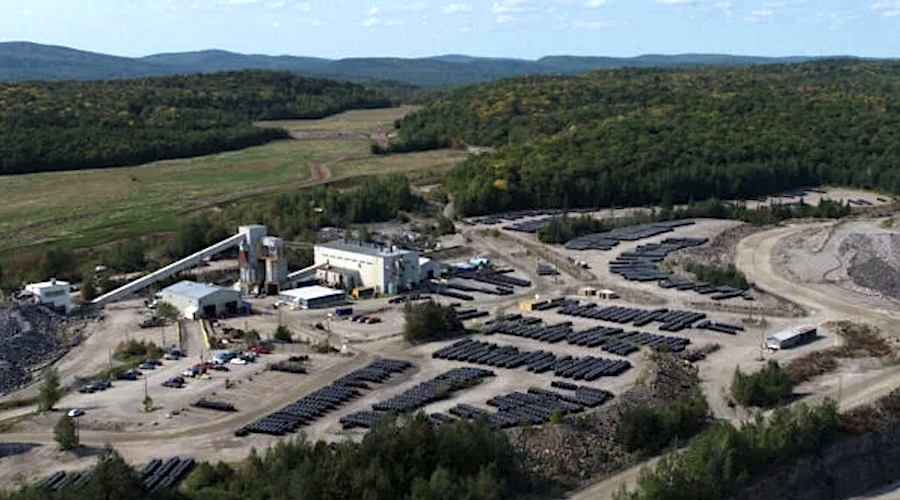
Northern Graphite’s Quebec mine faces shutdown without funds
Chief executive Hugues Jacquemin said on Thursday the company imposed strict cost controls last year to preserve cash while pushing forward with exploration at Lac des Iles and launching a battery materials division in Frankfurt. The new unit supports Northern’s broader mine-to-battery strategy as part of its bid to vertically integrate operations.
“Despite geopolitical uncertainty, we sold near-record volumes and expanded our market reach,” Jacquemin said in the company’s 2024 results. A 50% crash in graphite prices over the past year, driven by sluggish electric vehicle sales and price undercutting by China, weighed heavily on performance. Northern Graphite, while not supplying battery makers directly, has felt the impact of the broader battery metals downturn.
Beijing, which controls more than 70% of the graphite market, continued to exert pricing power, tightening export controls on graphite to the United States late last year. The move added pressure on Western producers already contending with low prices and a lack of investment.
“We’re putting a lot of pressure on all stakeholders, including the government, to help us finance,” Jacquemin told Reuters. “We don’t want the only producing graphite mine in North America to be shut down. It’s like killing the golden goose,” he added.
The Lac des Iles mine, in operation for 35 years, primarily serves US industrial clients. In October, the company announced plans to double output from 10,000 to 15,000 tonnes annually starting in 2025. It began the permitting process in Q1, with continued mining contingent on new funding. Last year, the mine produced 12,000 tonnes of graphite.
Jacquemin warned that if the plant is shuttered, the company may not reopen it, instead shifting focus to its African operations. He said geopolitical risk and over-reliance on Chinese supply have made investors wary.
“Whether it’s investors, government, or banks, we need some help,” he told the news agency.
Northern Graphite reported a C$7.5 million ($5.4m) operating loss for 2024, including C$5.4 million ($3.9m) in non-cash charges related to depreciation and share-based compensation.
Strong demand
Despite market headwinds, industrial demand for graphite — particularly in the refractory sector — remained strong in 2024 and is expected to stay firm through 2025, especially in North America, which accounts for 85% of the company’s sales.
Large and jumbo flake graphite, essential for industrial use, has grown scarcer as China scaled back mining amid a glut of anode material. Global supply is further constrained due to disruptions at a major mine in Mozambique and issues at new international projects.
Adding to supply tension, the US has imposed tariffs on both natural and synthetic graphite from China. These could rise dramatically, as American producers have requested anti-dumping tariffs as high as 920%, alleging unfair trade practices.
A decision from the US Department of Commerce and International Trade Commission is expected in the coming months.
Pentagon’s AI metals program goes private in bid to boost Western supply deals
The Pentagon, headquarters of the US Department of Defense. Credit: Wikipedia under public domain licence
A US government-created artificial intelligence program that aims to predict the supply and price of critical minerals has been transferred to the control of a non-profit organization that is helping miners and manufacturers strike supply deals. Launched in late 2023 by the US Department of Defense, the Open Price Exploration for National Security AI metals program is an attempt to counter China’s sweeping control of the critical minerals sector, as Reuters reported last year.
Now, more than 30 mining companies, manufacturers and investors – including auto giant Volkswagen – have joined the Critical Minerals Forum non-profit and will be its first users, according to Rob Strayer, a former US diplomat and the organization’s president.
“Everyone in the critical minerals sector is looking for more price transparency,” said Seth Goldstein, a lithium industry analyst with Morningstar. “Any tool like the CMF that could help would be welcome.” Other members include copper miner South32, rare earths producer MP Materials and defense contractor RTX. The CMF held its first meeting with members in November. The privatization and CMF’s membership have not previously been reported.
Armed with the AI model, the CMF aims to help manufacturers curb their reliance on China by signing more metal supply deals with Western mines, according to more than two dozen industry consultants, purchasing agents, analysts, regulators and investors who told Reuters the program reflects one of the boldest efforts to date to transform the ways certain metals are bought and sold.
The goal is for the AI model to calculate what a metal should cost when labor, processing and other costs are factored in – and Chinese market manipulation is factored out – and thus give buyer and seller confidence in a deal’s economics.
Some deals with the CMF are beginning to take shape. Nevada officials this week said they would work with the CMF and its AI model to help attract copper smelting to the state. The US has only two copper smelters and as such imports nearly half of its demand for the red metal.
The program has already faced skepticism over whether it can achieve the goal of transforming the long-established ways metals are bought and sold.
Yet it is aimed less at heavily traded metals – such as aluminum – and toward lightly traded metals or metals that see heavy overproduction from some in an attempt to sway market pricing.
For example, the CMF model could help manufacturers forecast available nickel supplies in 2028 if the US were to impose a 100% tariff on that metal from Indonesia, the top global producer.
That data that could help a manufacturer determine whether to invest in a US nickel mine or agree to buy its future production, a step that would help obtain financing for a mine’s construction.
In such a scenario, the nickel buyer would use the AI model’s data to negotiate a long-term deal for guaranteed supply, regardless of whether Chinese miners boost production and drive down market prices, as they have done in recent years.
The CMF’s aim with the AI model does assume that a buyer would be comfortable paying more than the market price for a metal if supply were guaranteed. China squeeze
The CMF’s entrance into the complex metals markets comes as Beijing restricts critical minerals exports, the very kind of market interference that the CMF officials said underscores the need to build more US mines and processing facilities to power the energy transition.
Prices on the London Metal Exchange and other futures exchanges for nickel, cobalt and some other battery metals have been dominated in recent years by overproduction from Chinese miners operating at a loss in Indonesia and Congo to boost market share.
Many niche-but-essential battery minerals on which Beijing has imposed export controls are not traded or lightly traded, including rare earths – a group of 17 metals used to make magnets that turn power into motion – as well as germanium and gallium.
In response to a request for comment about the CMF, the Chinese embassy in Washington, DC, said that China manages its exports of rare earths in accordance with rules from the World Trade Organization.
“China will continue to work with other countries to jointly undertake the responsibility of global rare earths supply,” said embassy spokesperson Liu Pengyu.
Volkswagen and some other CMF members said they see the CMF as helping boost visibility into what can be an opaque critical minerals supply chain. MP Materials and RTX did not respond to requests for comment.
US President Donald Trump has already ordered his administration to work with private developers to boost US crucial minerals production, a step that could be aided by the data CMF aims to provide markets, program officials said. The president has also launched a study into potential tariffs on all US minerals imports.
Drawing on its government connections, the CMF aims to connect mining projects with potential investors and manufacturers needing more-secure metals supply, said Strayer.
Massachusetts-based rare earths processing startup Phoenix Tailings hopes the CMF can help create US-based prices for minerals tied to actual production costs, said CEO Nick Myers.
Phoenix aims to use data from the CMF as negotiating leverage with potential customers, including manufacturers that are themselves CMF members, Myers said. “In a sector that is opaque, it is one of the tools to get more information,” Myers said.
Not all market observers are convinced that the CMF’s AI model is revolutionary.
“I’ve tried to politely say I think this is worthless,” said Ian Lange, who teaches mining economics at the Colorado School of Mines. Lange contrasted the goals of the Pentagon’s AI model with the much-larger and more-complex global oil market.
“Can we predict the price of oil better now than five years ago? The answer is no. Machine learning doesn’t help,” Lange said. ‘Encourage more visibility’
The Pentagon’s AI model is being trained using more than 70 mining-related data sets and aims to guide investment decisions out for at least 15 years based on how unexpected market shocks – export restrictions, for example – could affect the production or price of a metal.
FactSet, Benchmark Mineral Intelligence and other pricing providers are supplying data, as is the US Commerce Department, officials said.
It is access to analysis of that data – some of which is not public – that the CMF says it believes sets the Pentagon’s AI program apart from ChatGPT or other AI programs.
And that data is the CMF’s biggest cost, part of the reason why the Pentagon’s Defense Advanced Research Projects Agency (DARPA) will fund it for the next few years while the CMF determines whether to charge all members or create a tiered structure with basic members getting free access and others paying for more granular data, officials said.
S&P Global, AI developer Charles River Analytics, and software firm Exiger with price reporting agency partner Metal Miner have developed the model, according to the Pentagon.
S&P Global declined to comment. Charles River Analytics did not respond to a request for comment. Exiger said it believes its data can help forecast a material’s cost and availability and boost supply chain visibility.
The CMF has been organized as a nonprofit trade association with a board of directors comprised of its members. Its staffing is small – fewer than 10 employees – and its annual budget is not disclosed.
DARPA does not have a representative on the CMF board, but is funding the program through at least 2029 and plans to transfer the AI model’s intellectual property to the CMF by the beginning of 2027, officials said.
There are no plans to make the CMF a for-profit entity, although there may be charges in the future for access to more detailed data sets, officials said.
The CMF is launching a campaign to attract more members – especially from the semiconductor, aviation and defense industries – and offering free membership for the next 14 months while the Pentagon funds data collection, Strayer said.
Foreign governments are also studying whether to join the CMF and use its data, including copper-rich Zambia and cobalt-rich Democratic Republic of Congo, CMF officials said, adding they aim to make the program international in scope to boost metals market transparency.
The Zambian and DRC embassies in Washington, DC, did not respond to requests for comment.
As Western miners begin to demand green premiums for their metals, those new agreements increasingly require the very market intelligence the CMF model aims to provide.
“Any mechanism that can give you better modeling of markets is obviously enormously valuable,” said Brian Menell, CEO of TechMet, a mining investor and CMF member.
The AI model introduces another variable for the LME to contend with, especially as the exchange is struggling as rivals in Chicago and Shanghai try to take market share for some niche battery metals.
The LME declined to comment.
(By Ernest Scheyder; Editing by Veronica Brown and Claudia Parsons)
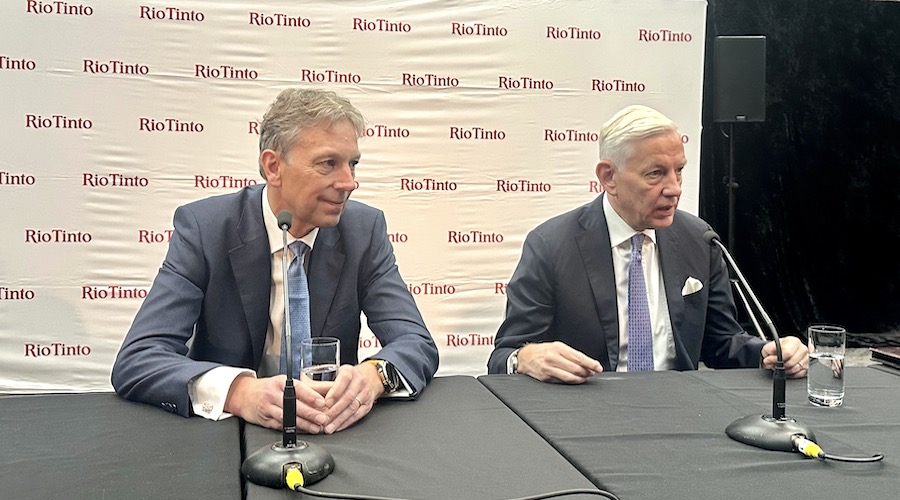
CEO Jakob Stausholm and Chairman Dominic Barton at Rio Tinto’s 2025 AGM. (Photo by Kristie Batten.)
Rio Tinto (ASX: RIO) is weighing a move into rare earths and other critical minerals as it responds to shifting global market dynamics and trade tensions.
Following the company’s annual general meeting in Perth on Thursday, chief executive Jakob Stausholm said the board had discussed rare earths this week and would take a “serious look” at their potential role in Rio Tinto’s portfolio.
Stausholm said that as the company continues to optimize its iron ore operations in the Pilbara and advances developments like the Simandou iron ore project in Guinea, it’s also reshaping its aluminum, copper, and lithium businesses to support the energy transition.
“So you could say, the next thing is to look a little bit deeper on critical minerals, and you have to think about that, not necessarily as separate mines,” Stausholm told reporters. He noted critical minerals are often present in Rio’s existing operations as a by-product, so “it’s a question of whether we should process them more deliberately.”
Chairman Dominic Barton echoed the cautious approach, pointing to the limited scale of the sector. “That’s why you don’t typically see the top five [largest miners] in this space,” he said. But with global supply chain diversification becoming a priority, Barton said they are asking themselves whether they should revisit what they already have and assess the economics.
Barton also said critical minerals could help strengthen Rio’s social licence to operate. “It’s interesting how often those with fewer resources are the most vocal,” he added.
Tariffs, Canada and the aluminum market
On tariffs, Barton said Rio could compete under the current global framework, though the company isn’t enthusiastic about trade barriers. “We’re not excited about tariffs, but we’ve got to live with what governments are doing,” he said, adding that if they’re applied uniformly, the company “would manage” because of its position on the cost curve.
Barton welcomed the recent Canadian election results, suggesting they provided a mandate for continued negotiations. He praised the country’s recognition of aluminum’s economic importance, especially given Rio’s workforce in Canada
As a former Canadian ambassador to China, Barton said China’s economy could absorb short-term tariff impacts.
“Urbanisation, GDP consumption rates, and green infrastructure investment all support long-term steel demand,” he said. “We expect a new equilibrium despite near-term discomfort.”
Working in the US
Stausholm highlighted Rio’s significant presence in the US, including the Kennecott copper mine and smelter in Utah, a boron mine in California, and the Resolution copper project in Arizona.
“The US government is very, very keen on seeing us getting the most out of those assets, so it provides opportunities to serve the US government,” Stausholm said.
He added that tariff policies wouldn’t necessarily affect Rio’s long-term investment decisions. Last month, the US government fast-tracked permitting for the Resolution project, and Stausholm said the joint venture with BHP (ASX: BHP) is moving forward.
“Unlike Australia, the US has seen limited mining development in recent decades—this represents a shift”, he said.
Activist campaign fails
A proposal from UK-based hedge fund Palliser Capital to force a review of Rio’s dual-listed company (DLC) structure failed to gain traction. The company rejected the motion, with Barton stating the board had already reviewed the structure in detail last year with advice from five external consultants.
“All of this work showed that a unification of the DLC would be value destructive for the group and its shareholders,” Barton said.
Only 19.35% of shareholders supported the motion. Under UK law, a 75% majority is required to mandate a review, while 20% support would have have required the company to engage further with shareholders.
SECNAV Visits Korean Shipyards During Indo-Pacific Tour
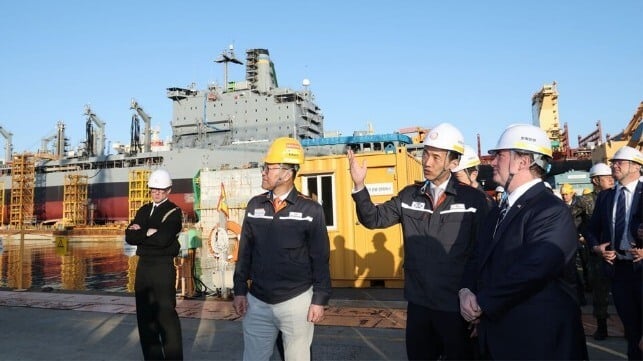
SECNAV Phelan at Hanwha Ocean with USNS Yukon undergoing maintenance (Hanwha Ocean)
Just over a month after becoming the new Secretary of the Navy, John Phelan visited two of South Korea’s large shipbuilders as part of his tour through the Indo-Pacific region. The shipyards are anxious to build their ties with the U.S. Navy which Phelan was quick to point out would be part of the efforts on countering the Chinese and restoring America’s maritime dominance.
“Working with leading shipyards like Hanwha Ocean Shipbuilding and HD Hyundai Heavy Industries is essential to ensuring deployed U.S. ships and systems remain fully operational in the Indo-Pacific,” said Secretary Phelan. “Leveraging the expertise of these highly capable shipyards enables timely maintenance and repairs for our vessels to operate at peak performance. This level of large-scale repair and maintenance capability strengthens our combat readiness, sustains forward deployed operational presence, and reinforces regional stability.”
The official statements focused on the Korean yard’s expertise in vessel maintenance, repair, and overhaul which it said is crucial to enhancing naval operational capabilities. The yards however also highlighted their shipbuilding capabilities anxious to expand their naval work.
Hanwha Ocean was the first Korean yard to win maintenance contracts servicing two USN support vessels. It has completed an extended job for the dry cargo ship USNS Wally Schirra and is currently working on the replenishment oiler USNS Yukon. During his tour of the yard, Phelan was shown the progress and visited the Yukon.
The company also emphasized its experience in shipbuilding and its recent acquisition of the Philly Shipyard saying it stands ready to support America’s shipbuilding efforts. Hanwha Group Vice Chairman Dong Kwan Kim is reported to have discussed the goal of deeper cooperation in naval shipbuilding between Korea and the U.S.
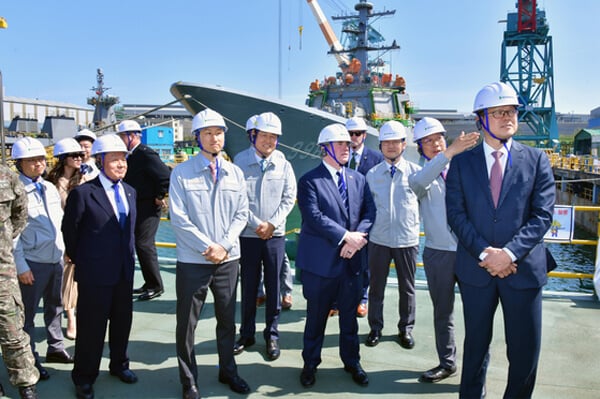
At HD Hyundai, the yard highlighted its construction of Aegis class destroyers (HD Hyundai)
Earlier at HD Hyundai Heavy Industries Phelan was shown the ROKS Jeongjo, an Aegis class destroyer built by Hyundai and delivered to the Korean Navy in 2024. The vessel is currently undergoing a routine inspection which gave the yard the chance to highlight its experience saying it is the only Korean yard ready to build advanced destroyers.
“Based on HD Hyundai’s technological edge and shipbuilding capacity, we are committed to contributing to the revival of America’s shipbuilding industry,” said HD Hyundai Executive Vice Chairman Chung Ku-sun. He joined Phelan in signing the yard’s guest book and wrote, “Let’s work together to rebuild America’s shipbuilding base.”
HD Hyundai was certified in 2024 for the USN vessel maintenance program and is reported to be planning to bid for contracts this year. It was also highlighted that the company recently completed an agreement with Hunting Ingalls Industries in the U.S. to explore collaboration opportunities both for defense and commercial shipbuilding.
During the visit, Phelan also met with South Korean government officials where he stressed the long relationship between the two countries. He said the relationship fosters innovation, enhances national defense, and drives economic prosperity.
South Korea’s shipbuilders continue to be encouraged by Donald Trump’s comments about the need to rebuild the U.S. fleet and the opportunities to work together. Korean media reports Samsung Heavy Industries and K Shipbuilding are also looking to register for the USN maintenance programs. A year ago, then Secretary of the Navy Carlos Del Toro in February 2024 visited South Korea's shipyards calling for efforts to work together.
Phelan arrived in South Korea after a similar visit to Japan where he also toured major shipyards and met with officials. Reports said he suggested building commercial ships with Japanese support that would also be suitable for military use in an emergency. He was reported to be planning to discuss dual-use shipbuilding with Japan’s Defense Minister Gen Nakatani.
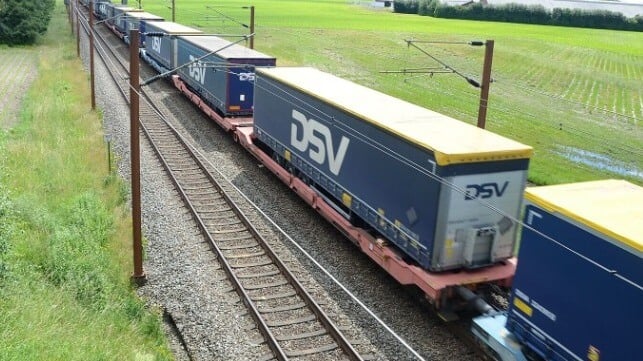
Effective Wednesday, logistics giants DSV and Schenker have merged into one company under the DSV banner. The megamerger reinforces DSV's position as a leader in global logistics, with 160,000 employees and about $46 billion in annual revenue.
"With this acquisition, we have become a world-leading player in global transport and logistics, at a time when global supply chains are in focus more than ever before," said DSV CEO Jens H. Lund. "By combining the two companies, we will create a unique flexible platform for long-term financial growth."
DSV bought German competitior Schenker from Deutsche Bahn in September 2024 for $16 billion, the largest transaction in DSV's history. The acquisition gives DSV an even greater presence in the German freight market, including maritime, road, rail and air cargo. At the time of the purchase announcement last year, DSV said that it planned to grow its German business so much that the combined entity would have more employees within Germany than both firms did separately.
The combined firm is emphasizing business continuity, and it seeks to retain as many existing customers from Schenker as possible.
"DSV is committed to a smooth transition and will approach the integration with due respect and careful consideration for customers, employees and stakeholders," the firm said. "During the integration process, it is a key priority to avoid disruptions and retain a high service level for our customers."
For DSV, the acquisition comes with an immediate upside. It has updated its earnings outlook to expect an additional $600 million in EBIT this year (on top of its previously-predicted earnings range) from Schenker's operations. However, given the exceptional uncertainties in the global trade landscape, the company cautioned that unforeseen changes could affect its full-year results for 2025.
DSV added that expects no material contribution to its finances from Saudi Arabia's troubled NEOM project in 2025. The logistics company is a leading partner in NEOM, a futuristic greenfield city which has been quietly scaled back over the past year.
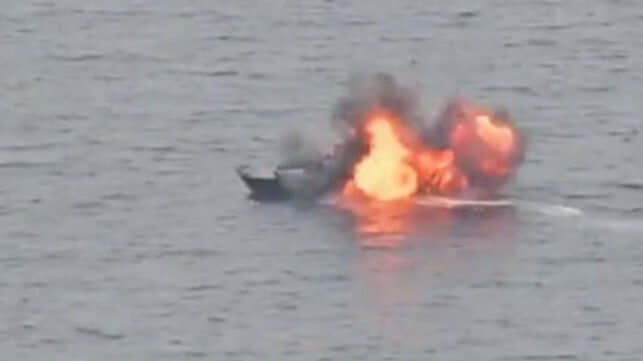
The French Navy as part of an ongoing effort to develop new systems and defenses conducted a drone test using a modified jet ski carrying an offensive charge. The goal was to test the explosive force as well as the potential weaponization of drones.
Analysts point out that the Ukrainians have reported a high degree of success in their use of drones attacking Russian warships and other vessels in the Black Sea and ports. Other countries have also tested a broad range of drones while videos from the Houthi rebels in Yemen showed the devastating results from their unnamed drone boats launched against tankers and bulkers in the Red Sea.
The French test took place on April 26 off Toulon using a one-way attack unmanned surface vehicle based on a jet ski. The target was a decommissioned barge that was used to transport cargo. They placed metal reinforcement and tires against the hull of the vessel to increase the effectiveness of the test while attempting to prevent the vessel from sinking.
The video shows the drone boat traveling at high speed as it hones in on its target vessel. Multiple camera angles and sensors capture the moment of impact. The drone was launched from a French Navy offshore patrol vessel.
Since 2021, the French Navy has been conducting tests under its Polaris approach designed to improve training and stimulate new innovations. The approach seeks to conduct its tests in conditions as close as possible to actual operations.
Other tests in the program have included in December 2024 using a French nuclear submarine to fire a heavy torpedo at a retired navel vessel, which was sunk. They conducted shock tests on a frigate using a naval mine last February and in March tested offensive and defensive drones and drone systems in a full-scale amphibious operation.
Chinese Firm Launches High Speed, Submersible, Autonomous Research Boat
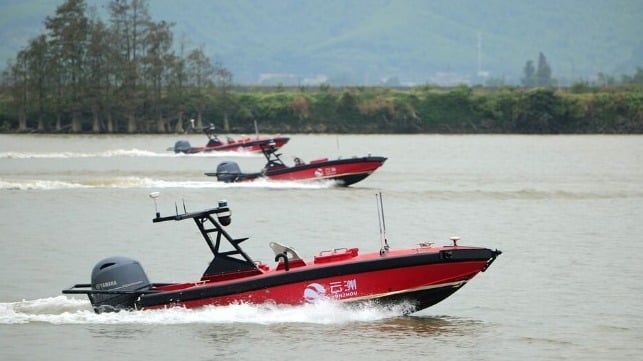
Manufacturer Yunzhou also makes swarming law-enforcement patrol boats, above (Yunzhou file image)
A Chinese autonomous tech company has launched what may be the world's fastest research vessel - the Blue Whale, a high speed unmanned craft with a unique set of features. Designed for typhoon research, this civilian vessel can loiter underwater for 30 days, launch "research rockets," and hit top speeds of about 36 knots - the speed needed to keep pace with most U.S. Navy warships.
The prototype Blue Whale was launched Monday at a pier in Zhuhai. It was funded by the National Natural Science Foundation of China in 2022 and built by a team from tech firm Yunzhou, a leading maker of unmanned vessels for Chinese security forces. Many of the company's other models are marketed for police and military applications and are capable of swarming behavior, interception and high-speed ramming.
The new research vessel is about 36 feet long, and weighs in at about 12 tonnes. Not only is it faster than perhaps any other research platform, but it is submersible, too: it can loiter up to 200 feet below the surface to escape a passing typhoon, and can stay down for 30 days - much longer than needed to wait out a storm. It can transit at up to four knots underwater, maintaining silence with magnetic fluid drives and special hydroacoustic coatings, according to SCMP.
"Through autonomous route planning and mission scheduling, it can position itself near typhoon paths to deploy rocket-powered meteorological sensors to gather critical oceanic and atmospheric data," Yunzhou head engineer Wu Guosong told the outlet.
It carries a multibeam sonar for bottom mapping, and Yunzhou says that Blue Whale has a modular payload architecture, so it could be readily adapted for new purposes.
"It not only provides us with an unprecedented tool for exploring the frontiers of science, but also provides a smart and efficient tool for serving national strategies," said Prof. Chen Dake, an American-educated scientist who heads the project for China's Second Institute of Oceanography.
After sea trials, the R&D team hopes to put the Blue Whale into operation next year.
Mediterranean ECA Limits on Shipping’s Sulfur Emissions Are Now in Effect
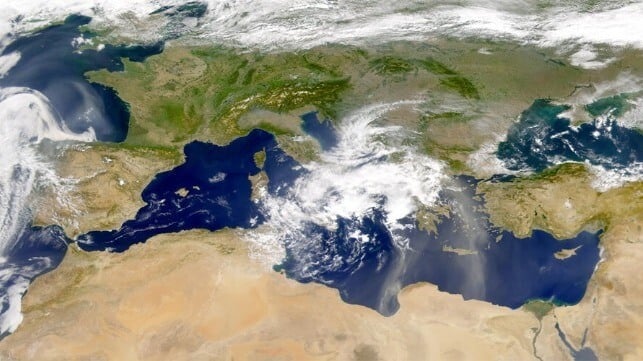
The Mediterranean Emission Control Area officially launched today, May 1, under the MARPOL Annex of the International Maritime Organizations. Officials are hopeful that it will help to clean the Mediterranean region and contribute to the overall improvements already seen in air quality since the launch of the first ECA in the Baltic and the addition of three subsequent areas. The IMO has three additional areas slated to enter the program.
The effort to create an emission control area in the Mediterranean had been a priority for activists and was discussed over the past several years before it was adopted in 2021 at the UN’s Barcelona Convention and received an IMO designation in 2022. The IMO highlights the importance of the region in shipping noting that the Mediterranean is home to some of the busiest maritime routes in the world. The IMO says the Mediterranean supports 20 percent of seaborne trade. It estimates more than 17 percent of cruises and 24 percent of the worldwide fleet navigate in the Mediterranean.
Under the new requirements, ships must reduce the sulfur content in marine fuel to 0.1 percent from the global standard of 0.5 percent. The measures became mandatory as of May 1.
EU officials highlight data that shows sulfur oxide emissions in the EU decreased by approximately 70 percent since 2024. They credit it to the establishment of the ECA in Northern Europe. They however note that nitrogen oxide (NOx) emissions in the EU have increased by 10 percent between 2015 and 2023. The data however shows that NOx emissions specifically in the Mediterranean are up eight percent. The European Commission and Mediterranean states are reported to be currently discussing the next phase steps for the most effective means to reduce NOx emissions.
The first ECA was adopted in 1997 and entered into force in 2005 for the Baltic. Since then, the program has been expanded to include the North Sea, North America, and the Caribbean region around the U.S. territories of Puerto Rico and the Virgin Islands. The IMP says since the sulfur content limit was introduced in 2020, an overall 70 percent reduction in total sulfur oxide emissions from shipping has been achieved due to the 0.5 percent global standard for maritime fuels.
In 2024, the IMO designated two further ECAs for the Canadian Arctic and the Norwegian Sea. In April, during the MEPC meeting, the IMO also approved the Northeast Atlantic ECA. Its adoption is due to be finalized this year and to go into effect in 2027. It covers the areas near Greenland, the Faroe Islands, Iceland, and the U.K.
As the International Maritime Organization (IMO) releases more detail on its forthcoming Net-Zero Framework—set to take effect in 2027 assuming it is adopted in 2025—it’s becoming increasingly clear that complexity will be one of its defining features. Though at first glance the framework may resemble the EU’s FuelEU Maritime regulation, which focuses on well-to-wake greenhouse gas (GHG) intensity, the IMO’s approach appears to go significantly further.
What distinguishes the IMO’s framework is its introduction of a two-tier compliance system, alongside differential pricing for so-called “remedial units” designed to ensure vessels remain within agreed emissions limits. This layering brings both challenges and opportunities, especially because shipowners and charterers will need to collaborate closely to navigate its implications. From the legal allocation of costs and risks to operational decision-making, the framework will demand a new level of commercial and regulatory coordination in the industry.
Unsurprisingly, the announcement of the IMO’s framework has prompted a wave of questions from across the sector. In just the past week, three separate clients have asked whether this new regime will override the existing landscape of regulations which they have only recently begun to apply and integrate into their business models —namely, the application of the EU Emissions Trading System (EU ETS) to shipping, the FuelEU Maritime regulation, and the IMO’s very own Carbon Intensity Indicator (CII). The short answer is: not yet.
For now at least, the Net-Zero Framework will supplement these regulations - not replace them. As an IMO instrument, it has no immediate impact on EU law, nor does it negate the industry’s present obligations under ETS or FuelEU Maritime. However, as with many multi-jurisdictional regimes, a key question will be whether the EU eventually adapts its rules to align with the IMO’s framework, particularly to avoid duplication or undesirable regulatory conflict.
It’s also worth noting that the CII - an earlier IMO initiative aimed at reducing emissions intensity - is itself under review and could see significant changes in 2026. Any future revision may aim to better integrate CII into the IMO’s broader net-zero ambition and align with the market-based measures that the new framework seems poised to introduce.
The framework is also sparking broader strategic conversations - especially when it comes to fuel pathways and the role of transitional technologies like LNG. Although the United States withdrew from the final negotiations, the framework is noteworthy for its inclusive stance on alternative fuels. Rather than narrowing the path, it leaves room for multiple decarbonisation options, at least for the time being.
For the LNG sector, this is a welcome signal. With LNG dual-fuel vessels currently comprising around two-thirds of the global alternative fuel-capable fleet, continued recognition of LNG as a viable transitional fuel helps ensure that these assets retain commercial value. In a sector where capital commitments are long-term and strategic, that clarity is critical.
Still, significant uncertainty remains. The industry must prepare not only for the operational and contractual consequences of the IMO’s evolving climate rules, but also for their interaction with existing regulatory structures and future market dynamics. What is clear, however, is that the IMO’s Net-Zero Framework marks a major step in the sector’s decarbonisation journey - one that will demand adaptability, legal foresight, and above all, collaboration.
Nick Austin is a lawyer in Reed Smith’s Transportation Industry Group.
The opinions expressed herein are the author's and not necessarily those of The Maritime Executive.
CMA CGM Commits to Modernize Syria’s Latakia Port with New 30-Year Deal
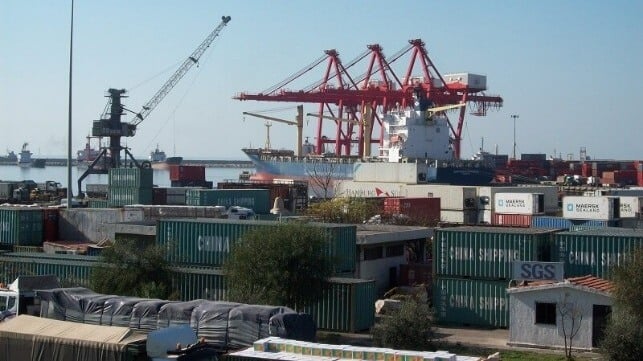
CMA CGM has run the port for nearly a decade and now has a 30-year concession (Public domain)
The new government of Syria and CMA CGM made official today their new agreement to operate the Latakia port, the country’s main seaport which is located on the northern Mediterranean coast. CMA CGM has operated the port for more than a decade under the regime of Bashar al-Assad.
The new government announced in February that it had reached terms with the French group for a new, much longer, management agreement, but under revised terms. During the signing ceremony today, May 1, officials emphasized that the operations would be under state supervision and that the new contract was provided without “granting any exceptional operational privileges.”
CMA CGM received a new 30-year agreement for port operations. The Syrian port authority said the new agreement “addressed a settlement of all outstanding obligation,” and provides for new terms. News reports said the Syrian state will receive 60 percent of the port’s revenues and CMA CGM will retain 40 percent. The percentage will be adjusted as the number of containers entering the country grows.
It said the company has agreed to new long-term investments in the port and its operations, Mazen Alloush, Director of Public relations for Syria’s General Authority for Land and Sea ports, told the SANA news agency that CMA CGM during the first year would invest approximately $32 million to maintain and modernize the port’s equipment. Over the next four years, CMA CGM will invest a further $230 million as part of the expansion of the port.
Among the steps planned is a new pier able to handle larger vessels. The basin will also be deepened CMA CGM’s regional director told the press.
Reports said the new deal was in recognition that CMA CGM had stood with Syria despite international sanctions in recent years. It was also pointed out that the Saadé family which owns CMA CGM has historical ties to Syria although it is now identified as being French-Lebanese.
The port has a bit of a notorious reputation under the prior regime while there are reports of sectarian violence continuing in the region. The Port of Latakia has been cited as a hotspot for the smuggling and the regional trade in illegal drugs. The port has also allegedly received shipments of Ukrainian grain stolen from Russian-occupied Crimea.
Port Canaveral Plans $500 Million Investment to Upgrade Operations
Port Canaveral plans investments to continue the growth in cruise and cargo operations (Canaveral Port Authority)
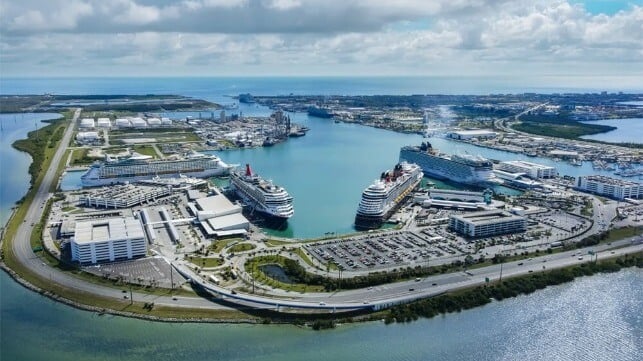
Port Canaveral located in central Florida is continuing to experience strong growth as not only the second-busiest cruise homeport, but also in its cargo operations and support of the space programs. The port mapped out a comprehensive five-year plan to expand capacity and capabilities across all aspects of its business operations which include investing upwards of $500 million in landside and waterside improvements.
Capt. John Murray, Port Canaveral CEO highlights that the “Port Canaveral Advantage” plan is a port-wide continuous improvement program that identifies near- to long-term needs for enhancements and upgrades to port assets and operations. Within a five-year planning window, the program includes large-scale, high-value critical infrastructure projects associated with new cruise ship arrivals, modernizing and expanding cargo berths and bulkheads, upgrading facilities maintenance, deploying new technologies across a spectrum of operations and renovations to the port’s recreational facilities including Jetty Park.
“These port-wide investments are designed to leverage the Port’s success to benefit communities from the Space Coast to Central Florida, and throughout the state,” said stated Capt. Murray. “Our goal and commitment are to always be the best port possible for our valued partners, guests, and visitors.”
Several cruise-related projects are about to get underway at Port Canaveral, with one of the most ambitious being the expansion of Cruise Terminal 5. The design project, awarded to BEA Architects of Miami, will increase the terminal’s size by 65 percent to accommodate larger vessels. During an estimated 16-month construction period, the cruise terminal would continue to operate without interrupting scheduled ship turns.
In addition to expanding CT-5, the port plans to enhance Cruise Terminal 10 to expand its capacity beginning with a feasibility study that is expected to be completed by June 2025. The project’s goals include expanding the terminal’s capacity to accommodate the world’s largest cruise ships up to 5,600 passengers and berthing up to 1,200 feet in length.
Exterior upgrades at Cruise Terminal 1 will begin in May 2025 and include new canopies and walkways, updated landscaping, and new lighting. These upgrades are in addition to refurbishments to the adjacent cruise parking garage with new paint, landscaping, and perimeter fencing plus gangway upgrades.
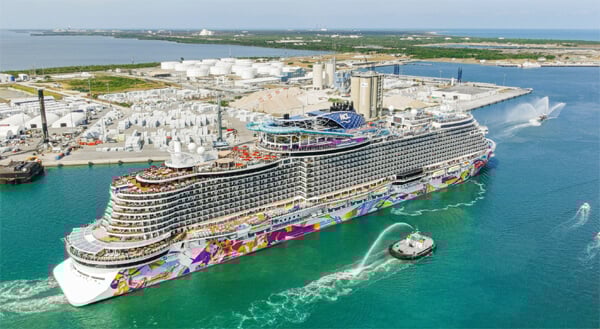
New cruise ships including the Norwegian Aqua arriving at the port in April for the first time are propelling the growth (Port Canaveral Authority)
The investment in the cruise operations comes as the port recorded its busiest month ever in March handling 925,994 passengers coming and going from the cruise ships, a 16 percent increase over last year. It was the second record month following 837,900 passengers in December 2024. For the first six months in FY 2025, the port has already handled 4.42 million passengers, and they are projecting the port will reach 8.4 million passengers for the full year up from 7.6 million last year.
One of the challenges for the port is balancing the fast growth in cruise with its commercial operations. As part of the investments, the port plans to renovate existing pier structures on the south side of the port to create additional multipurpose, multiuser berth space and improve vessel turn times. Renovations for the two north side cargo berths – North Cargo Berths 3 and 4 – are nearing completion adding 1,800 linear feet of multipurpose bulkhead space while ongoing improvements include harbor deepening and berth box dredging to accommodate larger vessels, seawall and uplands facility upgrades, and the addition of a third mobile harbor crane set to arrive later this year. Roadway improvements are also underway to improve access to and from cargo terminals, ease roadway congestion, and reduce truck wait times.
Port Canaveral also has a long-standing role in supporting America’s space program. Today, two commercial space companies, SpaceX and Blue Origin, have maritime operations at the port utilizing multiple cargo berths for their vessels' dockage and for offloading and transporting recovered launch vehicle components.
The port plans to self-fund its improvements operating without taxpayer contributions. Port Canaveral Chief Financial Officer Jeff Long reported at the recent board meeting that the port was having a “very healthy financial year so far,” in FY 2025. Approximately 84 percent of the port's operating revenue for the first six months of the FY came from cruise operations. Between October 2024 and March 2025, total operating revenues reached nearly $112 million with reports indicating passenger counts were ahead of plan and the outlook remains strong in all areas of the port’s business.
Coast Guard Greenlights Full Production of First Polar Security Cutter
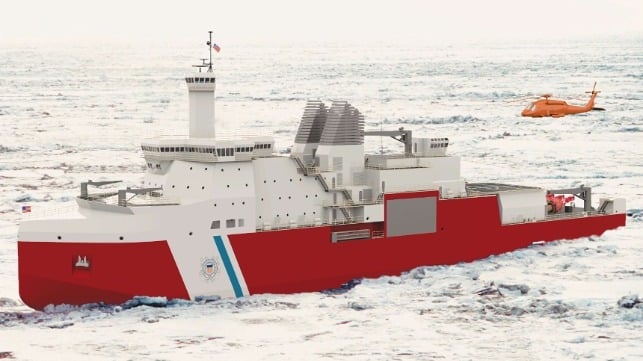
The U.S. Coast Guard has signed off on the transition to full production of the first hull in the Polar Security Cutter series (PSC). The long-delayed project is a mission-critical replacement for the Polar Star, the United States' sole remaining heavy icebreaker.
The service said that the transition to production status allows the Coast Guard (and the Navy program office that supports it) to build momentum on the project. It also gives shipbuilder Bollinger the ability to ramp up hiring, which will allow it to deliver the ship as quickly as possible.
The Polar Security Cutter is the first heavy icebreaker built in the United States in nearly 50 years, and all of the stakeholders involved in the project have had to relearn the skills required for constructing this uniquely demanding vessel class. The PSC's ultra-thick hull is built of special cold-resistant steel to withstand polar temperatures, and the vessel is densely and heavily compartmentalized for strength. This adds considerable technical complexity and cost when compared to a typical Coast Guard cutter. A Congressional Budget Office report on the project found that it had also suffered from significant design issues, which the shipbuilder and the USCG have worked to address.
The program started with a contract award to VT Halter, owned at the time by Singapore's ST Engineering. Bollinger took over when it bought VT Halter in 2022. In March, the Coast Guard awarded Bollinger a $950 million contract modification to underwrite the extra expenses. According to Bollinger, the timeline for delivery is now in 2030, six years behind schedule.
"Hard work and dedication have successfully put the PSC program on a strong path forward after a rocky start under the previous, foreign-owned builder," said Ben Bordelon, President and CEO of Bollinger Shipyards in a statement in March.
After years of congressional pressure, the Coast Guard recently purchased a commercial icebreaker - Edison Chouest's Aiviq - as an interim vessel. Shortly after taking delivery of Aiviq, the service began seeking options for another midsize icebreaker on the international market.
Coast Guard Finds Undeclared Hazmat and Stolen Cars at Port of NY & NJ
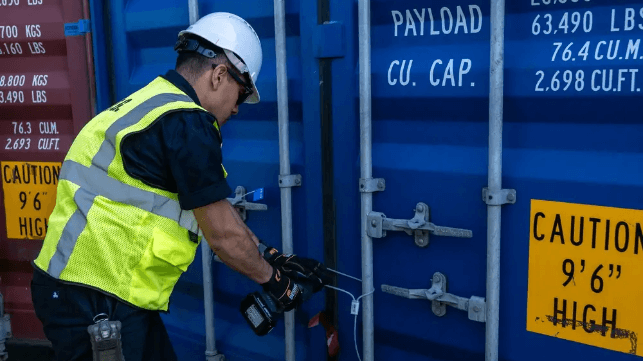
A Coast Guard marine science technician opens a container for inspection (USCG)
The Coast Guard and U.S. Customs and Border Protection are increasing their scrutiny of containers at the Port of New York and New Jersey, and have begun to focus on undeclared hazardous materials in the cargo - including export cargo.
In February, CBP and U.S. Coast Guard Sector New York targeted outbound hazardous cargo at multiple terminals in Port Newark, New Jersey and Brooklyn. The five-day effort uncovered eight undeclared hazardous materials containers and 33 stolen cars, valued at more than $2.4 million. The vehicles were about to be shipped to West African countries, beyond the reach of U.S. law enforcement.
The practical objective was to prevent shipboard or pierside fires or explosions from improperly stowed hazardous materials. The dangerous goods included cars with connected batteries - a potential ignition source in the event of any electrical system shorts - and full gasoline tanks.
This month, CBP and the USCG teamed up again to conduct warehouse spot checks around the Port of New York and New Jersey, including a site in Red Hook. Guided by CBP container screening data, they uncovered a 60 percent deficiency rate in hazmat compliance. The two agencies are collaborating more closely at PONYNJ now, and CBP is providing the Coast Guard with regular tip-offs about any potential violations it discovers during cargo screening.
"Through partnerships and vigilance, we enhance port security, disrupt illegal activities and ensure the safe movement of legitimate commerce," said Lt. Cmdr. Paul Civita, Coast Guard Sector New York’s deputy Safety and Security Operations chief. "CBP’s refined targeting capabilities are helping us act faster and more precisely."