Monday, December 22, 2025

‘Stuck and Confused’ Waymo Robotaxis Snarl San Francisco Traffic During Massive Blackout

“During a disaster... Waymos would be blocking evacuation routes. Hard to believe no one asked these questions, until you realize that good governance is suspended when billionaires knock on the door,” said one observer.


A long line of Waymo autonomous taxis compounds San Francisco traffic gridlock caused by a Pacific Gas & Electric blackout on December 20, 2025.
(Photo by @AnnTrades/X)

Brett Wilkins
Dec 21, 2025
COMMON DREAMS


A citywide Pacific Gas & Electric power outage Saturday in San Francisco paralyzed Waymo autonomous taxis, exacerbating traffic chaos and prompting a fleet-wide shutdown—and calls for more robust robotaxi regulation.

Around 130,000 San Francisco homes and businesses went dark due to an afternoon fire at a PG&E substation in the city’s South of Market neighborhood. While most PG&E customers had their electricity restored by around 9:00 pm, more than 20,000 rate-payers remained without power on Sunday morning, according to the San Francisco Standard.
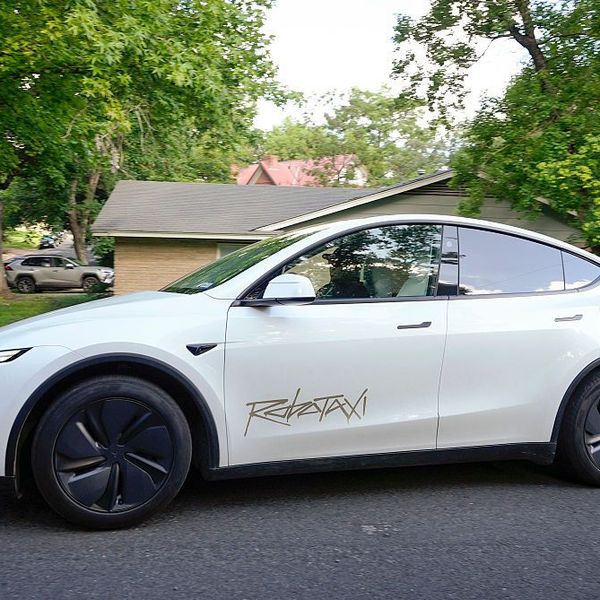

Tesla Robotaxis Are Crashing More Than 12 Times as Frequently as Human Drivers: Report


The blackout left traffic lights inoperable, rendering much of Waymo’s fleet of around 300 robotaxis “stuck and confused,” as one local resident put it, as cascading failures left groups of as many as half a dozen of the robotaxis immobile. In some cases, the stopped vehicles nearly caused collisions.

On a walk across San Francisco on Saturday night prior to the fleet grounding at around 7:00 pm, this reporter saw numerous Waymos stuck on streets or in intersections, while others seemed to surrender, pulling or even backing out of intersections and parking themselves where they could.


“There are a lot of unique road scenarios on the roads I can see being hard to anticipate and you just hope your software can manage it. ‘What if we lose contact with all our cars due to a power outage’ is something you should have a meeting and a plan about ahead of time,” Fast Company digital editor Morgan Clendaniel—a self-described “big Waymo guy”—said Sunday on Bluesky.

Clendaniel called the blackout “a predictable scenario [Waymo] should have planned for, when clearly they had no plan, because ‘they all just stop’ is not a plan and is not viable for city roads in an emergency.”

Waymo—which is owned by Alphabet, the parent company of Google—said it is “focused on keeping our riders safe and ensuring emergency personnel have the clear access they need to do their work.”

Oakland Observer founder and publisher Jaime Omar Yassin said on X, “as others have noted, during a disaster with a consequent power outage, Waymos would be blocking evacuation routes. Hard to believe no one asked these questions, until you realize that good governance is suspended when billionaires knock on the door.”

“Waymo’s problems are known to anyone paying attention,” he added. “At a recent anti-[Department of Homeland Security] protest that occurred coincidentally not far from a Waymo depot, vehicles simply left [the] depot and jammed [the] street behind a police van far from [the] protest that wasn’t blocking traffic.”

Waymo came to dominate the San Francisco robotaxi market after the California Public Utilities Commission suspended the permit of leading competitor Cruise to operate driverless taxis over public safety concerns following an October 2023 incident in which a pedestrian was critically injured when a Cruise car dragged her 20 feet after she was struck by a human-driven vehicle. The CPUC accused Cruise of covering up the details of the accident.

Some California officials have called for more robust regulation of robotaxis like Waymo. But last year, a bill introduced by state Sen. Dave Cortese (D-15) that would have empowered county and municipal governments “to protect the public through local governance of autonomous vehicles” failed to pass after it was watered down amid pressure from industry lobbyists.

In San Francisco, progressive District 9 Supervisor Jackie Fielder said during a press conference last month after a Waymo ran over and killed a beloved Mission District bodega cat named KitKat that while Waymo “may treat our communities as laboratories and human beings and our animals as data points, we in the Mission do not.”

Waymo claimed that KitKat “darted” under its car, but security camera video footage corroborated witness claims to Mission Local that the cat had been sitting in front of the vehicle for as long as eight seconds before it was crushed.

Fielder lamented that “the fate of autonomous vehicles has been decided behind closed doors in Sacramento, largely by politicians in the pocket of big tech and tech billionaires.”

The first-term supervisor—San Francisco’s title for city council members—is circulating a petition “calling on the California State Legislature and [Gov. Gavin Newsom] to give counties the right to vote on whether autonomous vehicles can operate in their areas.”

“This would let local communities make decisions that reflect their needs and safety concerns, while also addressing state worries about intercity consistency,” Fielder wrote.

Other local progressives pointed to the citywide blackout as more proof that PG&E—whose reputation has been battered by incidents like the 2018 Camp Fire, which killed 85 people in Butte County and led to the company pleading guilty to 84 counts of involuntary manslaughter—should be publicly run, as progressive advocacy groups have urged for years.


“Sacramento and Palo Alto don’t have PG&E, they have public power,” progressive Democratic congressional candidate Saikat Chakrabarti said Sunday on X. “They pay about half as much as us in utility bills and do not have weekend-long power outages. We could have that in San Francisco.”
Opinion: Sometimes it feels like humans were never quite meant to fit into this wild, spinning world


By Paul Wallis
EDITOR AT LARGE
DIGITAL JOURNAL
December 19, 2025


Russia has more forest than any other country on Earth - Copyright AFP Yuri KADOBNOV

It’s obvious, really. Imagine 8 billion totally maladjusted idiots in a world they can barely survive. Who’d a thunk it? Zurich and Loughborough Universities, that’s who.

A study by Colin Shaw and co-author Daniel P. Longman has come up with the environmental mismatch hypothesis. Euphemistic as this may sound, this idea comes with some solid facts.

For example, a species evolved in a nature-rich environment can have trouble adjusting to an almost totally unnatural environment. People who grew up physiologically in low-stimulus environs have to adjust to high-stimulus.

They cite a lot of prevalent health conditions like inflammation, low fertility, and environmental toxins as additional physical stresses. Quite a bit of physical research into blood pressure, cortisol, and other physical indicators were mapped out.

In natural environments, many of these indicators reduced. According to the researchers, it’s a matter of “evolutionary fitness,” aka what you’re evolved to be.

That’s a pretty strong argument. They also point out that humans evolved to manage high-stress issues like predators and natural phenomena. No, not stresses like electricity bills, the news, or a mindless culture.

However, humans react to stress as if these things were predators. The combination of adrenaline and cortisol creates the normal response, which is out of whack with the actual issues.

Psychiatry may have to adapt to these ideas. Stress evasion is the absolute unchallenged big deal in human mental health at the moment. “Escapism” isn’t so much a mental issue as a multi-billion-dollar industry.

I’ve often wondered what was so wrong about people trying to escape environments they loathe. Seems pretty normal to me.

Stress crashes the hormonal balance, affects the immune system, and surprise, surprise, you get a lot of sick, overstressed people.

Sound familiar? Cities are a major part of the problem. 4.5 billion people live in these highly stressful environments. Add noise, pollution, constant stress in human interactions, packed close together, it’s a mess.

The solution is to redesign human environments.

It’d be a lot cheaper and safer to demolish these hellholes.

Modern architecture can easily create far more space in smaller footprints.

Most of these unhygienic toxic waste dumps need bulldozing anyway.

The positive effects of natural environments aren’t exactly unknown. It’s recreating those environments and preserving them that’s the issue.

OK, natural environment good, hellhole bad. Now lets make the human environment bearable.

________________________________________________________________________

Disclaimer
The opinions expressed in this Op-Ed are those of the author. They do not purport to reflect the opinions or views of the Digital Journal or its members.
REST IN POWER

Pulitzer-winning combat reporter Peter Arnett dies at 91


By AFP
December 18, 2025


Peter Arnett posing when he was a reporter for Associated Press in Vietnam - Copyright AFP Handout

Peter Arnett, the Pulitzer Prize-winning reporter who became one of the world’s foremost combat correspondents, died Wednesday at 91, according to US media reports.

He had been suffering from prostate cancer.

Arnett, who won the 1966 Pulitzer Prize for international reporting for his coverage of the Vietnam War for The Associated Press, rose to international fame in his decades-long career covering conflicts from Vietnam to El Salvador to the Gulf.

He broke onto the international scene as a wire-service correspondent in Vietnam from 1962 until the war’s end in 1975, dodging bullets as he accompanied troops on missions.

He was among the last reporters in Saigon as it fell to the communist-backed North Vietnamese.

Arnett stayed with the AP until 1981, when he joined CNN and would soon rise to broadcast stardom.

In 1991, Arnett landed in Baghdad for the outbreak of the first Gulf War, where he interviewed then-president Saddam Hussein.

His live front-line broadcasts — in some cases relayed by cell phone — would make him a household name.

He resigned from CNN in 1999 after the network retracted a report Arnett narrated claiming deadly Sarin nerve gas had been used on deserting American soldiers in Laos in 1970.

He went on to cover the second Gulf War for NBC and National Geographic.

Arnett left NBC in 2003 after giving an interview to Iraqi state television in which he was critical of the US military’s strategy.

Arnett was born on November 13, 1934 in Riverton, New Zealand.

Arnett, who later became a naturalized American citizen, began his career as a reporter working for a local newspaper, the Southland Times, before going on to work for an English-language paper in Thailand.

In 1995, he published his memoir, “Live From the Battlefield: From Vietnam to Baghdad, 35 Years in the World’s War Zones.”

Arnett, who lived in Southern California since 2014, is survived by his wife, Nina Nguyen, and their children, Elsa and Andrew, US media said.
Europe’s pre-owned car market shifts up a gear

By Dr. Tim Sandle
SCIENCE EDITOR
DIGITAL JOURNAL
December 18, 2025


US consumers will be hard in the wallet with importers having to pay a 25 percent tariff for cars produced outside the US - Copyright AFP LUIS ROBAYO

According to a December 2025 report on pre-owned car markets, Germany is the best country in Europe to buy a used vehicle. The study by the B2B car company eCarsTrade examined European countries based on resale pricing and vehicle selection.

The report reveals that Germany has the best market for buying a used car, with reasonable prices around €20K and the largest selection of nearly 1.7M vehicles.

The research analysed three factors across 20 European markets: average used car prices, the number of vehicles available on major platforms, and lookups from potential buyers. Each country received a score from 0 to 100, where higher numbers indicate favorable conditions for purchasing a used vehicle.

The top 10 countries for buying a used car

CountryCar Price Average in €Number of Used Cars Available  (one platform)Google Search VolumeBest Market for Buyers(Score)
Germany€19.95K1.69M41.23K88
Italy€17.60K981.41K25.50K81
France€19.09K1.15M28.65K77
Spain€18.00K617.34K30.62K68
Poland€18.50K505.26K19.47K62
Czech Republic€17.43K151.69K13.23K58
Belgium€17.65K187.38K17.36K58
Slovakia€21.86K58.35K10.29K52
Netherlands€20.51K533.39K44.11K51
Portugal€18.81K132.81K18.90K49

From the table it is apparent that Germany is Europe’s best market for buying a used car. The country has the largest selection on the continent, with close to 1.7M vehicles available, giving customers far more options than anywhere else. Prices here are also affordable, with typical cars selling for under €20K. This is €5K cheaper than what buyers would have to pay in other European countries.

Italy comes second, offering the cheapest used cars in Europe. The average vehicle costs just €17.6K here, around €2K less than in Germany. Italy is also one of the biggest pre-owned car markets, with nearly 1 million vehicles currently listed for sale. And demand for them is strong too, with about 25,000 buyers checking local auto platforms each month.

Next on the list is France, where used cars sell for €19K, right between German and Italian price levels. With 1 million+ vehicles up for sale, France is the second-largest automotive resale market in Europe. It’s also among the most popular choices for purchasing a pre-owned car, attracting around 30,000 potential buyers every month.

Spain takes fourth place as one of Europe’s most active used car markets, with 30K monthly lookups from customers. With an average price of €18K, cars here cost less than in France or Germany. The country also has over 617K pre-owned vehicles on offer, which is about half of Germany’s inventory, but still a good selection.

Poland rounds out the top five with a smaller but growing used car market. Pre-owned automobiles in Poland sell for around €18.50K on average, making it a more interesting choice for customers with lower budgets. The local inventory isn’t small either, with sellers currently offering more than half a million used models.
Environmentally sustainable buildings are losing their appeal


By Dr. Tim Sandle
SCIENCE EDITOR
DIGITAL JOURNAL
December 19, 2025


Eco-building, Hampstead, UK. Image by Tim Sandle.

A new sustainability report from the Royal Institution of Chartered Surveyors (RICS) reveals that the green buildings market is losing momentum.

The demand for sustainable real estate appears to be cooling in most regions, many projects are stalling over high upfront costs and uncertain payback, and almost half of construction professionals still do not measure carbon on their projects – a share that has actually grown over the past year.

Energy-efficiency experts from Exergio, a company developing AI tools for energy efficiency in real estate, say the sector is stuck not for lack of ambition but because three systemic failures remain unresolved:

Stalled demand,

Unclear financial value,

Weak operational follow-through.

Donatas Karčiauskas, CEO of Exergio, explains to Digital Journal that without scalable, AI-driven optimisation of day-to-day operations, even certified or renovated buildings will keep missing climate and performance targets.

Karčiauskas explains that the global demand for sustainable buildings has been sliding for several years now, with the latest RICS report showing another drop from 41% to 30%. Investors and developers mostly blame unclear returns: 35-46% cite uncertain ROI, payback periods or operational savings as their main barrier to investing.

“Investors aren’t against building sustainably – they just need proof it pays back. If a project requires expensive materials, equipment and certifications but the real-world performance doesn’t translate into measurable savings, why would anyone scale it? Until buildings can demonstrate clear, verifiable returns, demand will keep sliding,” Karčiauskas explains.

Drawing on his own company’s approach, Karčiauskas says that by using AI to optimise existing systems, Exergio typically cuts energy use in large commercial buildings by up to 30% and that translates to more than €1 million in annual savings – the kind of proof investors are looking for. But money isn’t the only problem, the report shows.

RICS data reveals a growing split between what occupiers value and what investors prioritise. Occupiers favour performance – 94% cite indoor environmental quality and 88% name energy efficiency as top priorities – while investors still focus on certification (86%) and resilience features (78%).

The market talks about sustainability as if it were one thing, but in practice, different players are chasing different goals, according to Karčiauskas.

“Occupiers care about how a building works; investors care about how it’s labelled. Until performance and certification point in the same direction, we’ll keep building assets that look sustainable on paper but don’t deliver it in practice. The real solution is to measure what happens inside the building, every day – that’s when both groups finally get what they’re paying for,” Karčiauskas clarifies.

The RICS report shows that this kind of measurement is still the exception, not the rule. Across regions, roughly half of respondents don’t measure embodied carbon at all, and only about 16% say their assessments change design choices. Just 17% believe the industry has enough sustainability knowledge, and only 10% are very familiar with whole-life carbon methods.

Karčiauskas believes this is because the respondents do not know how to measure the emissions:

“You can’t improve what you don’t measure, and you can’t measure what you don’t have the skills to assess. Right now, most carbon decisions are built on assumptions instead of real evidence.”

In his opinion, the combination of missing carbon data, limited expertise, and inconsistent measurement is precisely where AI can accelerate progress. AI systems can gather performance data automatically, interpret it without specialised training, and adjust building systems continuously – something human teams cannot do at scale.

“AI closes the gap the industry can’t close on its own. It proves ROI with real performance data, aligns what occupiers want with what investors pay for, and automates optimisation that today requires scarce expertise. If we want sustainability targets to become real outcomes, this is the only lever big enough to work at scale,” concludes Karčiauskas.
Global nuclear arms control under pressure in 2026

NEEDED NOW MORE THAN EVER


By AFP
December 21, 2025


The Review Conference of the Parties to the Treaty on the Non-Proliferation of Nuclear Weapons takes place every four or five years - Copyright AFP ANGELA WEISS


Fabien Zamora


The fragile global legal framework for nuclear weapons control faces further setbacks in 2026, eroding guardrails to avoid a nuclear crisis.

The first half of the year will see two key events: the US-Russia bilateral treaty, New START, expires on February 5, and in April, New York hosts the Review Conference (RevCon) of the Treaty on the Non-Proliferation of Nuclear Weapons (NPT) — the cornerstone of global nuclear security frameworks.

The RevCon, held every four to five years, is meant to keep the NPT alive. But during the last two sessions, the 191 signatory states failed to agree on a final document, and experts expect the same outcome in April.

“I think this is going to be a difficult RevCon,” said Alexandra Bell, head of US-based global security nonprofit the Bulletin of the Atomic Scientists, at a UN-hosted online conference in early December.

“In terms of the current state and near future prospects of nuclear arms control architecture, things are bleak,” she added.

Anton Khlopkov, director of Russian think-tank the Center for Energy and Security Studies (CENESS), took an even starker point of view, saying at the same event that “we are at the point of almost complete dismantlement of arms control architecture”.

“We should be realistic in the current circumstances. At best, I think we should try to preserve what we have,” he said.


– ‘Crumbling’ safeguards –


From US strikes on Iranian nuclear sites to Russia’s test of the new Burevestnik nuclear-powered cruise missile and US President Donald Trump’s remarks about possibly resuming nuclear tests — the international nuclear landscape darkened in 2025.

At the same time, “the arms control architecture is crumbling”, Emmanuelle Maitre of France’s Foundation for Strategic Research (FRS) told AFP.

A key challenge hinges on a shift in global relations.

Nuclear control had been built over decades around a Moscow-Washington axis, but China’s growing power and rapid technological advances have shifted the international playing field, which is simultaneously increasingly strained.

“The growing interlinkage between nuclear and conventional forces and the emergence of disruptive technologies (such as the US Golden Dome defence system and new hypersonic weapons) have transformed traditional nuclear deterrence into a multi-domain concept, especially in a multipolar world,” said Peking University’s Hua Han.

“This trilateral configuration introduces complexities far beyond the Cold War-era bilateral model. Increasing China-Russia cooperation further complicates deterrence calculations, particularly in the two main theatres of concern: Europe and the Asia-Pacific,” she added, according to the minutes of an April event held by Pakistan’s Center for International Strategic Studies.

A likely result of the changing landscape is the lapse of New START, which sets weapon limits and includes inspection systems.

“The entire inspection component is no longer functioning, the notifications when a missile is moved, etc, all of that has vanished. What remains is only the voluntary commitment to stay within the limits,” said Maitre.


– ‘Collective solutions’ –


But allowing New START to lapse is “in American interest”, according to Robert Peters of the influential Heritage Foundation, reflecting the stance of much of the US strategic community to avoid tying Washington’s hands to Moscow alone.

Beijing, which currently has fewer weapons, has so far refused to engage in trilateral disarmament talks.

“China is the fastest growing nuclear power on the planet. It’s building 100 new warheads a year and now has more ICBM (intercontinental ballistic missile) silos than the US has active Minuteman III silos,” Peters said at a recent online International Institute for Strategic Studies event.

“New START does nothing to address” that issue, he added.

However, Maitre said, a New START lapse doesn’t mean the world should expect serious consequences as early as February 6.

In both Washington and Moscow, “there is a small margin to bring some weapons back into service, but the numbers cannot be very significant. There are bottlenecks” that will slow any buildup, she said.

Nor will the lack of a final document from the RevCon cause “immediate or damaging consequences” to the NPT, she said.

But, she warned, fewer safeguards risks leaving the world without diplomatic tools to resolve tensions.

“The less functional the NPT becomes, the harder it is to forge collective solutions in the event of a crisis.”
Banned film exposes Hong Kong’s censorship trend, director says


By AFP
December 21, 2025


Hong Kong director Kiwi Chow says the local film industry has stepped up self-censorship after Beijing imposed a strict national security law - Copyright AFP Holmes CHAN
Holmes Chan

After four months of restless waiting, filmmaker Kiwi Chow received a dreaded, but not altogether unexpected, message: Hong Kong censors had banned his new movie from reaching the big screen.

The 46-year-old’s career, which took off in 2015 with an award-winning dystopian tale, encapsulates how a film industry once known for its audacious spirit and sardonic humour has dimmed to leave artists describing a creative straitjacket.

His latest thriller “Deadline” tells the story of an elite school rattled by warnings of an impending suicide, Chow told AFP in an interview on Wednesday, describing the work as an allegory for hyper-competition under capitalism.

The movie was filmed in Taiwan but set in what Chow called an “imaginary world”.

“(Censors) determined that it was ‘contrary to the interests of national security’… But how? Nobody gave an explanation,” the director said, calling the decision “absurd”.

Beijing imposed a strict national security law on Hong Kong in 2020 after huge and sometimes violent pro-democracy protests in the finance hub. Film censorship rules were tightened a year later.

After that, Chow said, the film industry stepped up self-censorship.

“If it involves Hong Kong’s real political situation, absolutely no one will make a movie about it,” he said.

Asked about “Deadline”, the Office for Film, Newspaper and Article Administration said it would not comment on individual applications.

Censors banned 13 films, citing national security reasons, between 2021 and July this year, while 50 films were “required to be modified”, the office told AFP.

Hong Kong banned no films between 2016 and 2020, but that figure jumped to 10 in 2023.

Chow said he believes his film was rejected not because of its content, but because his years flouting Beijing’s taboos have put him on an informal blacklist.

“I want to collaborate with actors, seek out locations and investors, but it is very difficult,” he said.

“I felt so lonely,” he said of making “Deadline”.


– Decade in hindsight –


On December 17, 2015, “Ten Years” premiered in Hong Kong and showcased five dystopian vignettes — including one directed by Chow — at a time when many residents feared Beijing’s growing political influence in the semi-autonomous city.

Speaking to AFP exactly 10 years later, Chow recalled how crowds flocked to community screenings after some mainstream cinemas refused to show the film.

“Many people felt that ‘Ten Years’ depicted Hong Kong’s predicament… and how freedoms could be lost. (They felt) this was prophesied in the film and it came true,” Chow said.

Chow’s segment of the film, titled “Self-immolator”, ends with a fictional elderly woman dousing herself in petrol and flicking a lighter.

“The self-immolator was a symbol of sacrifice. I wanted to ask Hong Kongers: ‘How much are you willing to sacrifice for values like freedom and justice?'” he said, adding that his ideas on sacrifice are shaped by his Christian faith.

He said he got his answer during the 2019 pro-democracy protests, which were unprecedented in scale and ferocity and led to more than 10,200 arrests and more than 2,000 people sanctioned by law.

In 2019, Chow was near the end of the production cycle of a romantic drama film, but he also shot extensive footage of the protests that would become the documentary “Revolution of Our Times”.

The documentary premiered at the Cannes Film Festival in July 2021, but Chow never tried to screen it in Hong Kong and kept the entire production team anonymous.

“After making ‘Revolution of Our Times’, I expected not to be able to make movies for quite a long time, and was mentally prepared to go to jail,” he said.


– ‘Risk’ –


While the documentary did not land Chow in prison, the filmmaker said he paid a steep price as investors and collaborators deserted him, almost dooming “Deadline”.

Chow said he could not secure a single Hong Kong school as a filming location, prompting him to move the production to Taiwan, where the film was released last month.

The long-awaited Hong Kong censorship decision came as a blow, particularly for the film’s commercial prospects.

“The government took an official stance that this film was contrary to the interest of national security, which could be a first (for me), and adds some level of risk and anxiety,” Chow said.

Some of Chow’s supporters in Hong Kong travelled to Taiwan for special screenings of “Deadline”, though one organiser said he was searched by customs upon his return.

Hong Kong customs declined to comment on individual cases.

Chow did not want to “abandon” his city despite feeling that political censorship was creating headwinds for his work.

“Maybe I will lower my budget or change the script,” he said.

“As long as (the film) can be made in Hong Kong, then I haven’t given up.”
Southeast Asia bloc meets to press Thailand, Cambodia on truce

ANOTHER TRUMP PEACE DEAL


By AFP
December 21, 2025


A bridge in Cambodia damaged it Thai air strikes, part of reignited clashes that have displaced hundreds of thousands of people - Copyright AFP STR


Martin Abbugao

Southeast Asian foreign ministers are set to meet Monday in Malaysia for crisis talks aimed at halting deadly border clashes between Thailand and Cambodia, which pressed on despite regional and international diplomacy.

Renewed fighting between the two neighbours this month has killed at least 22 people in Thailand and 19 in Cambodia, and displaced more than 900,000 on both sides, officials said.

Malaysia, which holds the chair of the Association of Southeast Asian Nations (ASEAN), expressed hope that the talks in Kuala Lumpur would help achieve a lasting ceasefire between the two countries, both members of the regional bloc.

“Our duty is to present the facts, but more importantly, to press upon them that it is imperative for them to secure peace,” Malaysian Prime Minister Anwar Ibrahim said last week, adding that he was “cautiously optimistic”.

The reignited violence shattered a fragile truce reached after five days of clashes in July, with US, Chinese and Malaysian mediation.

In October, US President Donald Trump backed a follow-on joint declaration, touting new trade deals after they agreed in Kuala Lumpur to prolong their truce.

Each side has blamed the other for instigating the clashes, claiming self-defence and trading accusations of attacks on civilians.

On Sunday, both Cambodia and Thailand said Monday’s gathering could help de-escalate tensions. Both governments have confirmed they would send their top diplomats to the meeting.

Thai foreign ministry spokeswoman Maratee Nalita Andamo called it “an important opportunity for both sides”.

Cambodia’s foreign ministry said the talks aimed to restore “peace, stability and good neighbourly relations”.


– ‘Dialogue’ –


“Cambodia will reaffirm its firm position of resolving differences and disputes through all peaceful means, dialogue and diplomacy,” Phnom Penh added.

Maratee reiterated Bangkok’s earlier conditions for negotiations, including a demand that Cambodia be first to announce a truce, and cooperate in de-mining efforts at the border.

Those conditions, the spokeswoman told reporters, “will guide our interaction in the discussions tomorrow in Kuala Lumpur”.

The Thai government gave no guarantee that the meeting would produce a truce, saying in a statement that a “ceasefire can only be achieved when it is based primarily on the Thai military’s assessment of the situation on the ground”.

US Secretary of State Marco Rubio said last week Washington hoped for a new ceasefire by Tuesday.

Trump, who helped broker an earlier truce, claimed this month that Thailand and Cambodia had agreed to halt the fighting.

But Bangkok denied any such truce existed, with clashes continuing for two weeks and spreading to nearly all border provinces on both sides of the frontier.

The conflict stems from a territorial dispute over the colonial-era demarcation of their 800-kilometre (500-mile) border and a smattering of ancient temple ruins situated on the frontier.

burs-mba/sco/jhe/ami/abs


CO2 soon to be buried under North Sea oil platform


By AFP
December 22, 2025


CCS technology is a key tool for reducing the CO2 footprint of cement and steel industries - Copyright AFP Jonathan NACKSTRAND
Camille BAS-WOHLERT, with Pierre-Henry DESHAYES

In the North Sea where Denmark once drilled for oil, imported European carbon dioxide will soon be buried under the seabed in a carbon capture and storage (CCS) project nearing completion.

CCS technology is one of the tools approved by the UN’s Intergovernmental Panel on Climate Change (IPCC) and the International Energy Agency (IEA) to curb global warming, especially for reducing the CO2 footprint of industries like cement and steel that are difficult to decarbonise.

But the technology is complex and costly.

Led by British chemicals giant Ineos, the Greensand project 170 kilometres (105 miles) off the Danish coast consists of a deep, empty reservoir beneath a small, wind-swept oil platform in the North Sea.

In its first phase due to begin in the next few months, Greensand is slated to store 400,000 tonnes of CO2 per year.

It’s “a very good opportunity to reverse the process: instead of extracting oil, we can now inject CO2 into the ground,” Mads Gade, Ineos’s head of European operations, told AFP.

Liquefied CO2 sourced mainly from biomass power plants will be shipped from Europe via the Esbjerg terminal in southwestern Denmark to the Nini platform above an empty oil reservoir, into which it will be injected.

“The reason why the North Sea is seen as a vault for CO2 storage is because of the enormous amounts of data that we have collected through over 50 years of petroleum production,” said CCS coordinator Ann Helen Hansen at the Norwegian Offshore Directorate (Sodir).

This area of the North Sea is teeming with depleted oil and gas fields like Nini, as well as deep rock basins.

According to Sodir, the Norwegian part of the North Sea alone theoretically has a geological storage capacity of around 70 billion tonnes (70 Gt) of CO2. On the British side, the figure is 78 Gt, according to the British government.

In Denmark, the geological institute has no overall data, but the Bifrost project, led by TotalEnergies, estimates it could store 335 million tonnes of CO2.

By comparison, the European Union’s greenhouse gas emissions amounted to about 3.2 Gt last year.

– Costly solution –

Under the Net-Zero Industry Act (NZIA), the EU has set a legally binding target to have a storage capacity of at least 50 million tonnes per year by 2030.

Installations are gradually being put in place.

Greensand plans to increase its carbon dioxide injection capacity to up to eight million tonnes per year by 2030.

In neighbouring Norway, the world’s first commercial CO2 transport and storage service, dubbed Northern Lights, carried out its first CO2 injection in August into an aquifer 110 kilometers off Bergen on the western coast.

Its owners — energy giants Equinor, Shell and TotalEnergies — have agreed to increase annual capacity from 1.5 to five million tonnes of CO2 by the end of the decade.

And in Britain, authorities have just launched a second tender, after already awarding 21 storage permits in 2023. A first injection of CO2 is expected in the coming years.

But customers are still nowhere to be found.

For industrial actors, the cost of capturing, transporting and storing their emissions remains far higher than the price of purchasing carbon allowances on the market.

And even more so when it involves burying them at sea.

“Offshore is probably more expensive than onshore but with offshore there’s often more public acceptance,” said Ann Helen Hansen.

To date, the Northern Lights consortium has signed only three commercial contracts with European companies to store their CO2.

The consortium would probably never have seen the light of day without generous financial support from the Norwegian state.

While it supports the use of CCS for sectors that are hard to decarbonise, the Norwegian branch of Friends of the Earth says CCS has been used as an excuse to avoid having to exit the oil era.

“The idea that the region responsible for the problem could now become part of the solution is a very seductive narrative,” said the head of this environmental NGO, Truls Gulowsen.

“But that’s not really what we’re seeing. Fossil fuels and climate emissions from the North Sea are far larger than anything we could ever put back there with CCS.”
Court lifts injunction on trans law after Alberta uses notwithstanding clause

This is a cruel and dangerous move by a government that will harm vulnerable young people,


Protestors take part in a Gay Straight Alliance rally at the Alberta Legislature in Edmonton 
THE CANADIAN PRESS/Jason Franson

The Canadian Press

EDMONTON — A judge has granted an Alberta government appeal and lifted an injunction on a law preventing youth from accessing gender-affirming care.

Two advocacy groups, Egale and Skipping Stone, launched earlier this year a challenge over the law, which prohibits doctors from prescribing puberty blockers and hormone therapy to those under 16.

A judge later granted the injunction, saying the law raised serious Charter issues that needed to be hashed out, and the province filed the appeal.

Earlier this month, Premier Danielle Smith's government invoked the notwithstanding clause to shield the law and two others affecting transgender people from court challenge.

Heather Jenkins, press secretary for Justice Minister Mickey Amery, says the United Conservative Party government is pleased the injunction has been removed.

The government has said the gender health-care law is necessary to protect youth from making potentially life-altering medical decisions they may later regret.

The advocacy groups said they plan to apply for another injunction based on criminal law, since doctors who don't comply could face fines or imprisonment.

"This is a cruel and dangerous move by a government that will harm vulnerable young people," the groups said in a statement Thursday.

The groups added the law is "not a total ban" on gender-affirming care, as some youth will still be eligible to receive puberty blockers and hormones.

The groups said they plan to continue their challenge against Alberta's law requiring parental consent for children under 16 to change their names or pronouns at school.

They said they're also committed to challenging a law banning transgender Albertans 12 and older from participating in amateur female sports.

This report by The Canadian Press was first published Dec. 18, 2025.