Monday, December 22, 2025

Trump Destroys Government


 December 22, 2025

Photo by Ruslan Khadyev

I have always supported the idea of government.

In a well-functioning democracy, voters elect their representatives to enact policies that reflect the priorities of the population. Ideally, such governments attend to the necessary functions of the state, like funding public education and maintaining the social safety net. Governments also uphold the constitutional order, ensuring that public institutions observe clearly delineated checks and balances, that the rules are fair, and that laws are updated to reflect changes in technology and belief systems.

In the best-case scenario, government helps those who can’t help themselves and, at the same time, creates public goods like free broadband Internet that benefit everyone. In the worst-case scenario, well, I’ll get to that in a moment.

I have maintained my support for the idea of government even when specific governments are doing horrible things. So, for instance, I have opposed many U.S. government actions overseas – engaging in unjust wars, embracing authoritarian leaders, supporting a global economy that favors corporations and rich individuals. But the greater such government policies stray from the ideal, the more I have worked to elect representatives who can enact different policies.

I still believe in government. But that belief is now being severely tested.

And I’m not alone.

This week, Pew Research came out with its latest survey of public opinion about the U.S. government. In 1964, about 75 percent of Americans believed in government—that is, they trusted that the government would do “what’s right” all or most of the time. In the latest numbers, which reflect the first year of Donald Trump’s second term, that number had dropped to 17 percent. Even Republicans, whose party leader is in the White House, are dismissive of government, with only 26 percent trusting that it will do what’s right.

Republicans weren’t always so skeptical. Government favorability ratings among Republicans were in the 50 percent range during George W. Bush’s tenure, numbers that were on average higher than how Democrats felt about government even during the Obama administration.

Anti-government sentiment—not against particular policies but against the government as an institution—has reached record heights under Donald Trump. That’s no accident.

Trump has run for office but against government. He has always wanted to slash government regulations, shrink government activities, and turn the government into a vehicle for his own personal and financial ambitions.

He is now almost a year into a second term. This time he has no conventional advisors who are tempering his worst impulses. This time his advisors are abetting his efforts to destroy government.

In this first year, he has all but eliminated government institutions such as the U.S. Agency for International Development. He is currently dismantling the Department of Education. Although hurricanes and floods do not distinguish between Republicans and Democrats, he has even gutted the Federal Emergency Management Agency.

Trump’s view of government is largely instrumental. Like corrupt leaders around the world, Trump sees government as an opportunity to accumulate personal wealth (more than $3 billion and counting since he took office this year). It is an instrument for his own self-glorification – such as putting his name on the U.S. Institute for Peace or brazenly trying to lobby for a Nobel Peace Prize. It is a way to reward friends with pardons (like everyone involved in the January 6 insurrection) and punish enemies (everyone involved in investigating his many crimes and misdemeanors).

But there is also an ideological aspect to Trump’s approach to government. He believes in concentrating power in his own hands through the expansion of executive-level agencies such as the Pentagon and Homeland Security. His personal beefs are thus transformed into wars against individuals (Nicolas Maduro in Venezuela), groups (non-white immigrants), and institutions (the European Union).

The recently released National Security Strategy is a useful distillation of his ideological views about the uses of government. The NSS, for the first time, elevates the president at the expense of coherent policy, with lines like Trump’s “right leadership making the right choices” and the promotion of a “Trump corollary” to the Monroe Doctrine about securing U.S. borders. The document attacks European governments for their “creating strife, censorship of free speech and suppression of political opposition,” which is especially appalling given Trump’s support of Middle Eastern autocrats and generally servile attitude toward Russia’s Vladimir Putin. Moreover, Trump’s reading of European affairs reflects a white nationalist viewpoint about the deterioration of “civilization” at the hands of immigrants.

This, then, is the two-pronged approach of the Trump administration. It is destroying all the aspects of government that can make a positive difference in people’s lives, at home and abroad. And it is pumping up those aspects of government that concentrate wealth, promote injustice, and spread hate, at home and abroad.

It’s one thing to cut government services and regulations. Those can be restored by subsequent administrations. It’s another thing to destroy the very idea of government.

When you look at the U.S. government today and see the level of corruption, incompetence, racism, and overall abuse of power, you can’t help but be disgusted. Having criticized Washington as a swamp, Trump has turned the nation’s capital into a virtual no-go zone where he controls culture at the Kennedy Center like a modern-day Stalinist, dispatches immigration enforcement agents and National Guard to militarize the streets like a tin pot dictator, and presides over a personality cult that sows fear into even Republicans who are reluctant to criticize him.

Some people will simply be disgusted with Trump. Most, as the Pew poll suggests, will be disgusted with government more generally.

Libertarians have long tried to shrink government so small that it could be “drowned in a bathtub.” Trump is doing that with one hand. With his other, he is transforming government into a police state that kills with impunity and deports without legal justification. By the end of his term, it will be hard to find anyone who supports government, except in a nostalgic sense.

All is not lost. Thankfully, Trump’s federal government faces opposition from state and local governments where the rule of law and social services remain sacrosanct. There, at the subnational level, the ideal of government can survive, just as classical learning managed to survive in monasteries during the Dark Ages.

My faith in government—in democracy, economic justice, and rule of law—is being severely tested by the Trump administration. But recovery always follows tragedy. Let’s hope that after the forest fire of Trumpism, the trees and wildlife will recover, stronger than ever.

Originally published in Hankyoreh.

John Feffer is the director of Foreign Policy In Focus, where this article originally appeared.


When past and present collide: Indonesia 1965-2025


Monday 22 December 2025, by Adam Novak, Pierre Rousset


At the time of the US escalation in Vietnam, Indonesia was the scene of one of the worst bloodbaths in modern history, committed under the auspices of Washington and London. [1] Sixty years later, the archipelago is at the heart of youth revolts against the privileges of the oligarchy and corruption, in defence of a democracy dearly won back since 1998. [2] A democracy that the current president Prabowo Subianto openly repudiates by making General Suharto, the perpetrator of the aforementioned massacres, a national hero. [3]


General Suharto seized power in October 1965 with a mandate to transform the vast archipelago into a bastion of Asian counter-revolution, within the framework of the "containment" policy implemented in the region by the United States. [4] A policy simultaneously applied in Thailand, Malaysia, Singapore and the Philippines. In Indonesia, the PKI [5], which held power, was closely associated with Sukarno, namely the first president of Indonesia. They enjoyed significant international legitimacy following the Second World War. The country had been occupied by Japan and independence had been proclaimed in 1945, taking advantage of the "favourable moment" represented by Tokyo’s defeat. The Dutch nevertheless attempted, for four years, to reconquer their former colony. Ten years later, Sukarno was one of the main figures at the Bandung Conference (1955), embodying anti-imperialist Third Worldism. [6]
The social trauma of white terror

Indonesia was then a country that counted on the international stage, with a strong progressive aura. All the more reason to break the regime. Sukarno was sidelined during the coup d’état of October 1965 (he would be forced to resign in March 1966, formally giving way to General Suharto), then the army committed what must be called a political, anti-communist genocide (complemented by an anti-Chinese dimension). [7] The PKI was then the largest communist party in the capitalist world; its social base numbered in millions. It had close, historic ties within the armed forces, but these proved powerless at the decisive moment. The massacres claimed between 500,000 and one million victims (possibly more). [8] Unable to defend themselves, the party and its mass organisations were methodically decimated. Their members, their relatives, anyone suspected of sympathy towards them, were hunted down, murdered, imprisoned in camps, with survivors sinking into complete oblivion. No trials, nor often even charges.

The generals had long-standing close ties with the United States. They knew that Washington would be grateful to them for "resolving" the communist question in the best possible way. "Kill them all" became a reference model that Latin American dictatorships drew inspiration from. [9] Furthermore, at the time of the coup, the army had already become a sprawling politico-social body, ensuring its presence down to the village level. It had penetrated the administration and could exert pressure from within on all levers of the state, whilst also benefiting from a parallel governing capacity through its territorial commands. The senior officer corps had enriched itself, becoming a component of the bourgeois oligarchy. To carry out the repression, it too could count on militias, notably Islamic ones. [10]

An intellectual blanket of silence weighed on the country until the regime’s fall in 1998. During his 32 years of rule, Suharto undertook to eradicate even the memory of the country’s progressive past by ensuring tight control of communications and the rewriting of its cultural history. An entire generation was cut off from this pluralist past in favour of a monolithic vision of the past, demonising the left, progressive ideas, Marxism, communism, but also critiques of patriarchy, feminist struggle, defence of minority rights, self-organisation, basic literacy, and so on. [11] The denunciation of "communism" serves as a catch-all; it actually covers a generalised attack on the freedoms of those "from below".

The place of women in society occupied a central position in this reactionary assault. Gerwani [12], a feminist movement of three million members linked to the PKI, was decimated on the basis of entirely fabricated propaganda: its members had allegedly tortured and castrated the generals—autopsies proved the contrary. [13] Rapes and executions of activists followed. The New Order then imposed the ideology of kodrat wanita ("feminine nature"): submissive wife, devoted mother, guardian of the home. State organisations like Dharma Wanita aimed to re-subordinate women, not to emancipate them. Even today, calling an activist "new Gerwani" aims to discredit her.

Present struggles show the extent to which part of so-called civil society, the political left and social movements have reconnected the past to the present. The response of those in power, on the other hand, illustrates the army’s determination to put a stop to the democratisation of the archipelago. History remains a major field of confrontation: in early 2025, the #IndonesiaGelap ("Dark Indonesia") student demonstrations [14] explicitly denounced the return of authoritarianism "in the style of the New Order", targeting the increased role of the army in civilian governance and the rehabilitation of Suharto’s legacy by Prabowo.

In East Timor and West Papua

The Indonesian regime committed particularly serious crimes in East Timor (or Timor-Leste), a former Portuguese colony located in the eastern half of the island of Timor, the western part, a former Dutch colony, being integrated into Indonesia. After the Carnation Revolution in Portugal, on 22 November 1975, its independence was internationally recognised. On 7 December, the Indonesian army invaded the country and annexed it in 1976—an annexation that was never recognised by the UN—considering it the 77th province of the state.

Armed resistance to this new colonisation was essentially led by Fretilin [15], the Revolutionary Front for the Independence of East Timor, which had already fought for the territory’s self-determination during the Portuguese dictatorship. Paramilitary forces, with the support of the Indonesian army, waged a particularly bloody war against East Timorese, pursuing a policy of mass terror aimed at provoking a massive exodus of population towards provinces under Indonesian jurisdiction, notably the western part of the island. To achieve this, anything was acceptable: massacres, rapes, torture, sacking of urban centres... In total, according to historians’ estimates, at least 200,000 people were killed in two years, more than a quarter of the population.

In 1998, the International Monetary Fund opened a regime crisis in Indonesia by maintaining its debt repayment demands whilst the region was suffering from a major financial crisis, inadvertently provoking Suharto’s fall. This helped change the situation in Indonesia itself.

Faced with international pressure, Jakarta organised a referendum in 1999, in which the East Timorese population voted 78.5% for independence. A remarkable result under occupation! The ballot was followed by a new wave of massacres. Nevertheless, it created a political situation that led to the recognition of independence on 20 May 2002. This resounding victory for the independence movement was unforeseen by the UN. In fact, it committed the Security Council well beyond what it would have wished. The international emotion aroused by the massacres also gave a boost to solidarity, reinforcing its effectiveness, particularly in Portugal and Australia.

In West Papua, annexed in 1969 following a sham referendum (1,026 hand-picked delegates, voting under military coercion), the same violence continues. [16] In 2024, extrajudicial executions reached a peak of 18 documented cases, cases of torture numbered 53, and some 70,000 Papuans were displaced. Anti-Papuan racism structures this internal colonial oppression. [17] Yet it is precisely in Papua that Prabowo Subianto cut his teeth: in 1996, he led military operations there marked by massacres of civilians—which resulted in his being expelled from the army and banned from entering the United States. [18]

17 December 2025

First published: ESSF.

P.S.


If you like this article or have found it useful, please consider donating towards the work of International Viewpoint. Simply follow this link: Donate then enter an amount of your choice. One-off donations are very welcome. But regular donations by standing order are also vital to our continuing functioning. See the last paragraph of this article for our bank account details and take out a standing order. Thanks.

Attached documentswhen-past-and-present-collide-indonesia-1965-2025_a9322.pdf (PDF - 935.7 KiB)
Extraction PDF [->article9322]

Footnotes


[1] On the direct role of British intelligence in inciting the massacres, see Nicholas Gilby, Paul Lashmar and James Oliver, "Revealed: how UK spies incited mass murder of Indonesia’s communists", Europe Solidaire Sans Frontières, October 2021. Available at: https://europe-solidaire.org/spip.php?article59675


[2] The reformasi movement that brought down Suharto emerged from mass student protests in 1998 amid the Asian financial crisis. See Kontras, "Indonesia: End the romanticism of reformasi, it’s time to fight", Europe Solidaire Sans Frontières, May 2025. Available at: https://europe-solidaire.org/spip.php?article74869


[3] On these attempts to rehabilitate Suharto’s legacy, see "Indonesia’s new official history whitewashes the crimes of Suharto", Europe Solidaire Sans Frontières, September 2025. Available at: https://europe-solidaire.org/spip.php?article76085


[4] The US policy of "containment" sought to prevent the spread of communism in Southeast Asia. Indonesia’s strategic importance—as the world’s largest archipelago nation and fourth most populous country—made it a priority target. The CIA poured millions of dollars into supporting anti-communist army officers and right-wing groups. See "Book Review: October 1965 and Washington’s Anticommunist Crusade – the ’Jakarta Method’", Europe Solidaire Sans Frontières, June 2020. Available at: https://europe-solidaire.org/spip.php?article58434


[5] The Partai Komunis Indonesia (PKI), founded in 1920, was the oldest communist party in Asia outside Soviet Russia. By 1965 it claimed three million members and influenced mass organisations with a combined base of some 20 million supporters.


[6] The Bandung Conference brought together 29 newly independent African and Asian nations, laying the foundations for the Non-Aligned Movement. It represented the first major international gathering of post-colonial states asserting their independence from both Western and Soviet blocs.


[7] On the scale and systematic nature of these crimes, see "Final Report of the International People’s Tribunal 1965 – On crimes against humanity committed in Indonesia in and after 1965", Europe Solidaire Sans Frontières, July 2016. Available at: https://europe-solidaire.org/spip.php?article38727


[8] See "1965 to 1966: Indonesia’s Red Slaughter", Europe Solidaire Sans Frontières, October 2018. Available at: https://europe-solidaire.org/spip.php?article44703


[9] This became known as the "Jakarta Method"—a blueprint for anti-communist mass killings that was subsequently applied in Brazil, Chile, Argentina and elsewhere. The US State Department provided lists of PKI members to the Indonesian army to facilitate the killings.


[10] The Nahdlatul Ulama, Indonesia’s largest Islamic organisation, and its youth wing Ansor played a significant role in the killings, particularly in East and Central Java.


[11] On efforts to preserve this erased heritage, see "Preserving Revolutionary Heritage: How Indonesia’s Socialist History Institute Challenges Decades of Political Erasure", Europe Solidaire Sans Frontières, February 2025. Available at: https://europe-solidaire.org/spip.php?article75619


[12] Gerakan Wanita Indonesia (Indonesian Women’s Movement), a feminist mass organisation linked to the PKI.


[13] On the destruction of Gerwani and the fabrication of anti-communist propaganda targeting women, see "The rise and fall of Indonesia’s women’s movement", Europe Solidaire Sans Frontières, January 2010. Available at: https://europe-solidaire.org/spip.php?article17226


[14] The IndonesiaGelap protests erupted in August 2025 against parliamentary corruption, excessive allowances for politicians, and police brutality, drawing tens of thousands into the streets across the country. The response was brutal repression that killed at least eleven people.


[15] Frente Revolucionária de Timor-Leste Independente (Revolutionary Front for an Independent East Timor), founded in 1974, combined anti-colonial nationalism with socialist politics.


[16] On the continuing situation in West Papua, see "Indonesia Can’t Quell West Papua’s Growing Independence Movement", Europe Solidaire Sans Frontières, October 2021. Available at: https://europe-solidaire.org/spip.php?article59928


[17] Papuans, predominantly Melanesian and Christian, face systematic discrimination and violence from the Indonesian security forces. The United Liberation Movement for West Papua (ULMWP) has campaigned for an independence referendum, gaining support from several Pacific Island states.


[18] Despite this record, Prabowo was elected president in 2024. On the contradictions of former activists now serving in his government, see "What are Indonesia’s PRD leftists doing in the Prabowo government?", Europe Solidaire Sans Frontières, December 2024. Available at: https://europe-solidaire.org/spip.php?article72390

Indonesia
Indonesia hit by climate disaster and authoritarian power
Women cannot win decent work and freedom from violence under the anti-democratic regime in Indonesia:
“We Are The Working Class”?: Indonesia’s Labour Party and the Limits of Reformist 


Pierre Rousset is a member of the leadership of the Fourth International particularly involved in solidarity with Asia. He is a member of the NPA in France.

Adam Novak is a collaborator of ESSF, and former Coordinator of the European Network for Solidarity with Ukraine.


The Republican Policy of Making More People Homeless

More people than ever are being forced into homelessness or are spending more than half their income on rent.


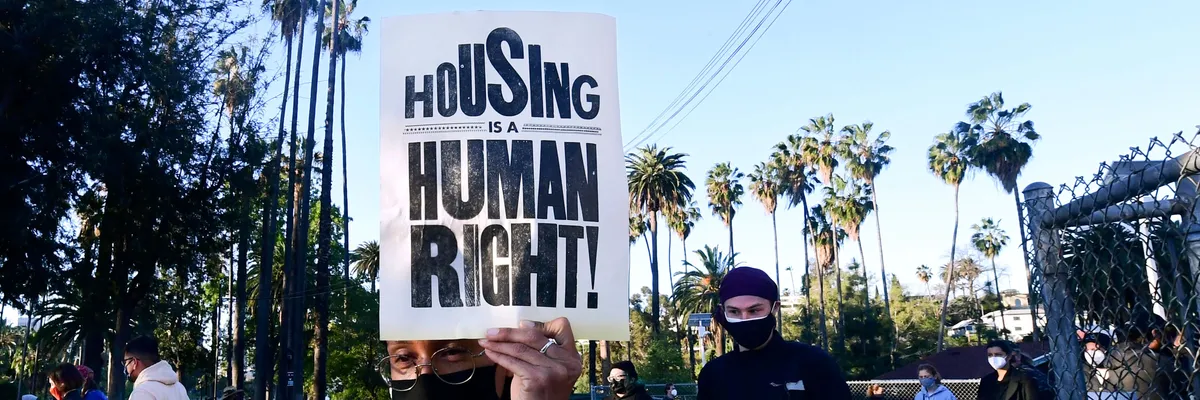
Social activists, including a coalition of homeless-serving organizations, homeless residents and supporters rally at the start of a 24-hour vigil to block a planned shutdown of a homeless encampment at Echo Lake Park in Los Angeles, California, on March 24, 2021, ahead of a half million-dollar cleanup and repair effort by the city due to begin early on March 25.
(Photo by Frederic J. Brown / AFP via Getty Images)

Sonya Acosta
Dec 21, 2025
CBPP Blog


As Congress continues to negotiate the next set of funding bills before the upcoming deadline at the end of January, policymakers must ensure sufficient and timely funding for critical housing and homelessness programs. These programs help millions of people afford housing, a basic need. But proposed cuts could leave more than 600,000 people struggling to pay the rent — a sizable share of whom would then be at high risk of eviction and homelessness (see table here for details by state). Congress should instead use a final 2026 funding bill to keep people in their homes and support communities’ efforts to make housing more affordable for everyone.

The Administration and congressional Republicans already made deep cuts to health coverage and food assistance in their megabill enacted earlier this year. They could impose similarly harmful cuts to housing and homelessness assistance through the appropriations bill now under negotiation. It’s critical that no families lose assistance and communities have the resources to at least maintain current levels of assistance.

To make that happen, a final funding bill for the Department of Housing and Urban Development (HUD) should:Help more than 170,000 formerly homeless people stay in their homes with access to services. HUD issued a funding notice for the Continuum of Care (CoC) program, the main homelessness solutions program, that would cap the percentage of funding that can be used to pair rental assistance with supportive services at 30 percent — compared to about 87 percent under current policy. That change alone would take housing assistance away from more than 170,000 formerly homeless people, HUD estimates.While HUD temporarily rescinded the notice, the department stated it will make “technical corrections” and reissue it. The funding notice includes other policy changes for the funding competition that are so drastically different from previous years that some communities could be left without any CoC funding in 2026 to connect unhoused people with housing.But the timing of the notice alone will cause chaos. Some communities are facing delays in their 2026 funding because HUD issued the new funding notice months later than the usual grantmaking timeline. CoC-funded projects are on a variety of funding timelines, so projects that are expecting money in January will receive nothing. The longer HUD takes to reissue a notice and complete the grantmaking process, the longer and more extensive the gaps in funding for housing and services for formerly and currently homeless people. Many communities do not have resources to fund these services in the interim, forcing them to scale back or end housing assistance and services, which will leave many people experiencing homelessness once again.Congress needs to ensure that communities have the funding they need. Congress can — and should — direct HUD in the final funding bill to renew existing grants for 2026 (which would complete the two-year grants that first provided funding in 2025). This would keep people stably housed, and prevent funding disruptions for communities across the country, all without any increase in funding.
Maintain assistance for the more than 50,000 households that use the successful Emergency Housing Voucher (EHV) program to pay the rent each month. The EHV program has provided life-saving assistance to households at risk of or experiencing homelessness or fleeing domestic violence and trafficking, but its funding is expected to run out in 2026. While both the House and Senate include some helpful language in their HUD funding bills, neither proposal would fully address the funding cliff. A final bill should provide additional funding to ensure these households don’t lose assistance and the stability they’ve achieved.
Sufficiently fund the Housing Choice Voucher program, the country’s largest federal rental assistance program. Neither the House or Senate annual funding bills for HUD include enough funding to keep pace with inflation and maintain existing levels of assistance in the voucher program. Without adequate funding, many agencies would have to stop issuing vouchers to new families as a way to control costs, leading to fewer people getting the help they need. This has already happened to many agencies this year, so HUD and housing agencies have nearly depleted existing emergency resources.We estimate that, under the House bill, about 411,000 fewer people could receive assistance, and about 243,000 fewer people would receive assistance under the Senate bill. Housing Choice Vouchers are a critical tool for helping people with low incomes afford housing, including people experiencing homelessness. It’s particularly important to ensure the voucher program has robust funding given the other threats to assistance discussed above.

Taken together, these cuts would further limit who receives housing assistance, leaving up to 600,000 more people without an affordable, stable home in the coming year. Rental assistance is a critical, evidence-based solution to reducing and preventing homelessness, but already eligible households can’t access it due to chronic underfunding. More people than ever are being forced into homelessness or are spending more than half their income on rent. Taking the steps outlined above could keep these problems from getting worse.

Cuts to rental assistance, on the other hand, will leave more people waiting for help, especially because the deep cuts to Medicaid and SNAP in the Republican megabill passed in July will make housing even less affordable for millions of families. Both of these programs support housing stability by covering other basic expenses, allowing families more room in their budgets for rent. Moreover, access to health supports is a critical component of the highly effective strategies that pair rental assistance with personalized health and social services to help unhoused or formerly unhoused people — the very supports the Administration is also attempting to drastically scale back.

More people than ever are being forced into homelessness or are spending more than half their income on rent.

A final funding bill for 2026 must also protect against further partisan use of rescission authority and illegal withholding of funds by including language that ensures appropriated funding reaches the communities Congress intends, and that agencies have sufficient staff to manage these programs. Such guardrails along with the provisions described above would immediately benefit people across the country and are a necessary step for making housing and other basic needs more affordable.

Looking forward, Congress should do more to address housing affordability and homelessness. Housing costs are typically the single biggest part of a household’s budget, especially for people with low and moderate incomes. With record numbers of people being forced into homelessness and more than 24 million renters spending more than half of their incomes on rent, expanding rental assistance, in addition to increasing supportive services and the supply of affordable housing, are needed to make progress.


© 2023 Center on Budget and Policy Priorities


Sonya Acosta
Sonya Acosta is a Policy Analyst with the Housing Policy team. Prior to coming to the Center, she worked on disaster recovery, Native housing, appropriations, and benefits cuts at the National Low Income Housing Coalition. She also worked at several fair housing organizations in the Chicago area and completed two terms of AmeriCorps service.
Full Bio >

No, We Can’t Deport Our Way Out of Gun Violence

Rather than embrace human complexity, we choose to create enemies. But this is exactly the mindset that motivates mass shooters.


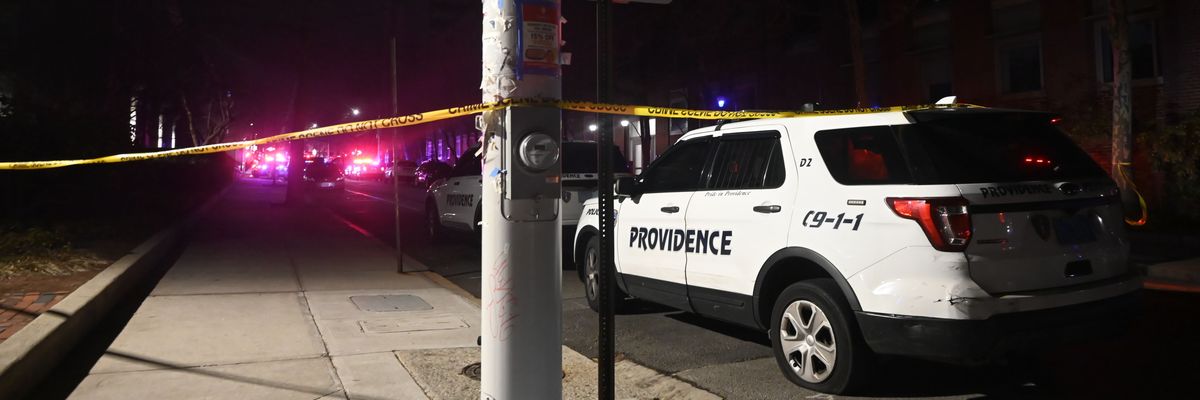
Emergency personnel work the scene, block off several buildings, and establish a crime scene security cordon at Brown University in Providence, Rhode Island, Saturday, December 13, 2025, after a mass shooting that killed two people and wounded eight others.
(Photo by Kyle Mazza/Anadolu via Getty Images)


Robert C. Koehler
Dec 21, 2025
Common Dreams

I stare blankly at the news. Little men with guns once again stir the country—the world—into a state of shock and grief and chaos. Attention: Every last one of us is vulnerable to being eliminated... randomly,

On Saturday, December 13, there’s a classroom shooting at Brown University, in Providence. Rhode Island. Two students are killed, nine others wounded. A day later, in Sydney, Australia—in the midst of a Hanukkah celebration at Bondi Beach—two gunmen fire into the crowd of celebrants. Fifteen people are killed. The shock is global. The grief and anger flow like blood.

So do the questions: Why? How can we stop this? How can we guarantee that life is safe?

Usually, the calls for change after mass shootings focus on political action: specifically, more serious gun control. Ironically, Australia does have serious gun control. And, unlike the US, mass shootings there are extremely rare, but they still happen, which indicates that legal efforts can play a significant, but not total, role in reducing violence.

Good guy vs. bad guy—good violence vs. bad violence—is the essence of linear thinking.

But that ain’t gonna happen in the USA—not until God knows when, which seriously expands and intensifies the nature of the questions we must start asking. Yeah, there are an incredible number of guns in the United States. Some 400 million of them. And embedded into American culture along with the presence of guns is the belief that they are necessary for our safety, even as they also jeopardize it. Only a good guy with a gun can stop a bad guy with a gun. What a paradox.

And here’s where the process of change must begin. Good guy vs. bad guy—good violence vs. bad violence—is the essence of linear thinking. One person wins, one person loses. And if I draw my gun first, yeehaw, I’m the winner. This simplistic mindset is, and has long been, part of who we are—ultimately resulting, good God, in stockpiles of nuclear weapons, giving humanity the opportunity to commit mass suicide.

And while nukes may be declared to be simply deterrents for our enemies—threatening mutually assured destruction (oh, the MADness)—the global, and especially the US, non-nuclear military budget is itself almost beyond comprehension: larger by far than what we spend on healthcare, education, diplomacy, or environmental salvation, aka, human survival.

As Ivana Nikolić Hughes writes at Common Dreams: “But I think that the problem is far deeper than lack of gun control. The problem lies in having a state, a society, a world, in which violence is not only excused and sanctioned on a regular basis, but celebrated both as a matter of history, but also the present and the future.”

And this thinking isn’t sheerly political. It permeates our social and cultural infrastructure. And it gets personal. “We live in a culture of violence, where weapons are a symbol of power,” Ana Nogales writes in Psychology Today. And having power—over others—also means having the ability, and perhaps the motive, to dehumanize them. And this is the source of human violence—both the kind we hate (mass killings) and the kind we worship (war).

All of which leads me to a quote I heard the other day, in regard to the Bondi Beach shootings, which left me groping for sanity. The speaker was Indiana Republican Sen. Jim Banks, speaking on Fox News. “In America,” he said, “we have to do more to deport terrorists out of the United States to make sure this doesn’t happen in the homeland, and root out antisemitism around the world as well.”

Flush ‘em out! All of them—you know, the ones that are different from us. Skin color, whatever. This is the essence of dehumanization, and it’s how we govern. Rather than embrace human complexity, we choose to create enemies and declare them... deportable, and if necessary, killable. This mindset is infectious. Just ask the students at Brown University or the Hanukkah celebrants at Bondi Beach.


Our work is licensed under Creative Commons (CC BY-NC-ND 3.0). Feel free to republish and share widely.


Robert C. Koehler
Robert Koehler is an award-winning, Chicago-based journalist and nationally syndicated writer. Koehler has been the recipient of multiple awards for writing and journalism from organizations including the National Newspaper Association, Suburban Newspapers of America, and the Chicago Headline Club. He's a regular contributor to such high-profile websites as Common Dreams and the Huffington Post. Eschewing political labels, Koehler considers himself a "peace journalist. He has been an editor at Tribune Media Services and a reporter, columnist and copy desk chief at Lerner Newspapers, a chain of neighborhood and suburban newspapers in the Chicago area. Koehler launched his column in 1999. Born in Detroit and raised in suburban Dearborn, Koehler has lived in Chicago since 1976. He earned a master's degree in creative writing from Columbia College and has taught writing at both the college and high school levels. Koehler is a widower and single parent. He explores both conditions at great depth in his writing. His book, "Courage Grows Strong at the Wound" (2016). Contact him or visit his website at commonwonders.com.
Full Bio >


Opinion - Trump wrongly inflicts collective punishment for shootings on millions


A. Scott Bolden, 
opinion contributor
Sun, December 21, 2025 


Collective punishment is a hateful and unjust practice that has been used by bigots throughout history to harm entire groups of people for the actions or alleged actions of a few individuals. President Trump is now cruelly imposing collective punishment on millions of people around the world in response to deadly shootings in Washington, at Brown University and near MIT.

Following the attack on two National Guard members near the White House in November, Trump imposed new restrictions to keep people from 39 countries out of the U.S.

An Afghan immigrant, Rahmanullah Lakanwal, faces murder and other charges in the attack that killed National Guard member Sarah Beckstrom and gravely wounded guardsman Andrew Wolfe. Lakanwal has pleaded not guilty to all charges.

After a December shooting attack at Brown University left two students dead and nine wounded, followed by the fatal shooting of MIT professor Nuno Loureiro, Trump suspended a diversity lottery program that awarded up to 50,000 green cards annually to enable people from countries (primarily in Africa) with few citizens in the U.S. to immigrate to America.

Portuguese immigrant Claudio Neves Valente, whom authorities said was responsible for shooting the Brown students and the MIT professor, was found dead by self-inflicted gunshot wound Dec. 18.

No one other than Lakanwal and Valente is believed by authorities to have been involved in the shootings.

Trump’s collective punishment of millions people for the alleged actions of two immigrants makes no sense

Lee Harvey Oswald, who assassinated President John F. Kennedy in 1963, was born in Louisiana. Timothy McVeigh, who murdered 168 people in the bombing of the Oklahoma City federal building in 1995, was born in upstate New York. By Trump’s faulty logic, the millions of people living in Louisiana and New York should have been collectively punished following those heinous crimes.

Numerous studies dating back to 1870 have found that immigrants — both legal and unauthorized — are far less likely to commit crimes than people born in the U.S. A Cato Institute study published in September found that among people born in 1990, “native-born Americans were 267 percent more likely to be incarcerated than immigrants by age 33.”

The overwhelming majority of immigrants coming to the U.S. are grateful for the opportunity and want to work hard, play by the rules and achieve the American Dream. About 52 million immigrants live in the U.S., including about 14 million who are unauthorized, and together they make up 19 percent of the nation’s workforce, the Pew Research Center reported in August.

Trump — whose mother, paternal grandparents and two of his wives all came to the U.S. from Europe — has spent years demonizing other immigrants, especially those from non-European nations. The shootings of National Guard members, Brown students and the MIT professor gave Trump just the excuse he needed to justify intensifying his anti-immigrant campaign.

The president has attacked nonwhite immigrants from Somalia and other countries with particular fury. He recently compared allowing Somali immigrants into the U.S. to taking “garbage into our country” and denounced Rep. Ilhan Omar (D-Minn.), a U.S. citizen who is a legal Somali immigrant. “Ilhan Omar is garbage,” Trump said. “Her friends are garbage.” He later falsely stated that she’s “here illegally” and said “we ought to get her the hell out.”

Trump’s bigoted characterization of human beings as subhuman garbage is dangerous and reminiscent of the way Adolf Hitler dehumanized Jews by referring to them as rats, lice, cockroaches, vultures and other animals. In the same way, enslavers of Africans in the United States considered them subhuman animals who could be owned like cattle or horses.

Categorizing people as subhuman means it is fine to deprive them of human rights and inflict unlimited collective punishment on them — up to and including murder.

Leaders around the world have scapegoated racial, religious, ethnic and other minorities since ancient times — collectively punishing vast numbers of people. Black Americans have been frequent targets.

For example, in 1921, a Black man in Tulsa, Okla., was falsely accused of attempting to rape a white female elevator operator. Whites then rioted in a Black neighborhood and in a horrific case of collective punishment killed up to 300 Black residents and destroyed more than 1,000 homes and businesses, looting and burning them in what is known as the Tulsa Race Massacre.

I’m well aware that xenophobia, antisemitism, Islamophobia, racism and other forms of prejudice remain an ugly reality in America and around the world, used by the haters among us to justify all sorts of collective punishment. But until Trump came onto the political scene, I never imagined that a president of the United States would publicly embrace evil and immoral hatreds in the 21st century. Sadly, Trump has proven me wrong.

A. Scott Bolden is an attorney, NewsNation contributor, former chair of the Washington, D.C. Democratic Party and a former New York state prosecutor.
‘Stuck and Confused’ Waymo Robotaxis Snarl San Francisco Traffic During Massive Blackout

“During a disaster... Waymos would be blocking evacuation routes. Hard to believe no one asked these questions, until you realize that good governance is suspended when billionaires knock on the door,” said one observer.


A long line of Waymo autonomous taxis compounds San Francisco traffic gridlock caused by a Pacific Gas & Electric blackout on December 20, 2025.
(Photo by @AnnTrades/X)

Brett Wilkins
Dec 21, 2025
COMMON DREAMS


A citywide Pacific Gas & Electric power outage Saturday in San Francisco paralyzed Waymo autonomous taxis, exacerbating traffic chaos and prompting a fleet-wide shutdown—and calls for more robust robotaxi regulation.

Around 130,000 San Francisco homes and businesses went dark due to an afternoon fire at a PG&E substation in the city’s South of Market neighborhood. While most PG&E customers had their electricity restored by around 9:00 pm, more than 20,000 rate-payers remained without power on Sunday morning, according to the San Francisco Standard.


Tesla Robotaxis Are Crashing More Than 12 Times as Frequently as Human Drivers: Report


The blackout left traffic lights inoperable, rendering much of Waymo’s fleet of around 300 robotaxis “stuck and confused,” as one local resident put it, as cascading failures left groups of as many as half a dozen of the robotaxis immobile. In some cases, the stopped vehicles nearly caused collisions.

On a walk across San Francisco on Saturday night prior to the fleet grounding at around 7:00 pm, this reporter saw numerous Waymos stuck on streets or in intersections, while others seemed to surrender, pulling or even backing out of intersections and parking themselves where they could.


“There are a lot of unique road scenarios on the roads I can see being hard to anticipate and you just hope your software can manage it. ‘What if we lose contact with all our cars due to a power outage’ is something you should have a meeting and a plan about ahead of time,” Fast Company digital editor Morgan Clendaniel—a self-described “big Waymo guy”—said Sunday on Bluesky.

Clendaniel called the blackout “a predictable scenario [Waymo] should have planned for, when clearly they had no plan, because ‘they all just stop’ is not a plan and is not viable for city roads in an emergency.”

Waymo—which is owned by Alphabet, the parent company of Google—said it is “focused on keeping our riders safe and ensuring emergency personnel have the clear access they need to do their work.”

Oakland Observer founder and publisher Jaime Omar Yassin said on X, “as others have noted, during a disaster with a consequent power outage, Waymos would be blocking evacuation routes. Hard to believe no one asked these questions, until you realize that good governance is suspended when billionaires knock on the door.”

“Waymo’s problems are known to anyone paying attention,” he added. “At a recent anti-[Department of Homeland Security] protest that occurred coincidentally not far from a Waymo depot, vehicles simply left [the] depot and jammed [the] street behind a police van far from [the] protest that wasn’t blocking traffic.”

Waymo came to dominate the San Francisco robotaxi market after the California Public Utilities Commission suspended the permit of leading competitor Cruise to operate driverless taxis over public safety concerns following an October 2023 incident in which a pedestrian was critically injured when a Cruise car dragged her 20 feet after she was struck by a human-driven vehicle. The CPUC accused Cruise of covering up the details of the accident.

Some California officials have called for more robust regulation of robotaxis like Waymo. But last year, a bill introduced by state Sen. Dave Cortese (D-15) that would have empowered county and municipal governments “to protect the public through local governance of autonomous vehicles” failed to pass after it was watered down amid pressure from industry lobbyists.

In San Francisco, progressive District 9 Supervisor Jackie Fielder said during a press conference last month after a Waymo ran over and killed a beloved Mission District bodega cat named KitKat that while Waymo “may treat our communities as laboratories and human beings and our animals as data points, we in the Mission do not.”

Waymo claimed that KitKat “darted” under its car, but security camera video footage corroborated witness claims to Mission Local that the cat had been sitting in front of the vehicle for as long as eight seconds before it was crushed.

Fielder lamented that “the fate of autonomous vehicles has been decided behind closed doors in Sacramento, largely by politicians in the pocket of big tech and tech billionaires.”

The first-term supervisor—San Francisco’s title for city council members—is circulating a petition “calling on the California State Legislature and [Gov. Gavin Newsom] to give counties the right to vote on whether autonomous vehicles can operate in their areas.”

“This would let local communities make decisions that reflect their needs and safety concerns, while also addressing state worries about intercity consistency,” Fielder wrote.

Other local progressives pointed to the citywide blackout as more proof that PG&E—whose reputation has been battered by incidents like the 2018 Camp Fire, which killed 85 people in Butte County and led to the company pleading guilty to 84 counts of involuntary manslaughter—should be publicly run, as progressive advocacy groups have urged for years.


“Sacramento and Palo Alto don’t have PG&E, they have public power,” progressive Democratic congressional candidate Saikat Chakrabarti said Sunday on X. “They pay about half as much as us in utility bills and do not have weekend-long power outages. We could have that in San Francisco.”
Opinion: Sometimes it feels like humans were never quite meant to fit into this wild, spinning world


By Paul Wallis
EDITOR AT LARGE
DIGITAL JOURNAL
December 19, 2025


Russia has more forest than any other country on Earth - Copyright AFP Yuri KADOBNOV

It’s obvious, really. Imagine 8 billion totally maladjusted idiots in a world they can barely survive. Who’d a thunk it? Zurich and Loughborough Universities, that’s who.

A study by Colin Shaw and co-author Daniel P. Longman has come up with the environmental mismatch hypothesis. Euphemistic as this may sound, this idea comes with some solid facts.

For example, a species evolved in a nature-rich environment can have trouble adjusting to an almost totally unnatural environment. People who grew up physiologically in low-stimulus environs have to adjust to high-stimulus.

They cite a lot of prevalent health conditions like inflammation, low fertility, and environmental toxins as additional physical stresses. Quite a bit of physical research into blood pressure, cortisol, and other physical indicators were mapped out.

In natural environments, many of these indicators reduced. According to the researchers, it’s a matter of “evolutionary fitness,” aka what you’re evolved to be.

That’s a pretty strong argument. They also point out that humans evolved to manage high-stress issues like predators and natural phenomena. No, not stresses like electricity bills, the news, or a mindless culture.

However, humans react to stress as if these things were predators. The combination of adrenaline and cortisol creates the normal response, which is out of whack with the actual issues.

Psychiatry may have to adapt to these ideas. Stress evasion is the absolute unchallenged big deal in human mental health at the moment. “Escapism” isn’t so much a mental issue as a multi-billion-dollar industry.

I’ve often wondered what was so wrong about people trying to escape environments they loathe. Seems pretty normal to me.

Stress crashes the hormonal balance, affects the immune system, and surprise, surprise, you get a lot of sick, overstressed people.

Sound familiar? Cities are a major part of the problem. 4.5 billion people live in these highly stressful environments. Add noise, pollution, constant stress in human interactions, packed close together, it’s a mess.

The solution is to redesign human environments.

It’d be a lot cheaper and safer to demolish these hellholes.

Modern architecture can easily create far more space in smaller footprints.

Most of these unhygienic toxic waste dumps need bulldozing anyway.

The positive effects of natural environments aren’t exactly unknown. It’s recreating those environments and preserving them that’s the issue.

OK, natural environment good, hellhole bad. Now lets make the human environment bearable.

________________________________________________________________________

Disclaimer
The opinions expressed in this Op-Ed are those of the author. They do not purport to reflect the opinions or views of the Digital Journal or its members.