Tuesday, December 23, 2025

Even Trump's backers don't believe him | Opinion


by Terry H. Schwadron
ALTERNET
Dec. 22, 2025


U.S. President Donald Trump and lady Melania Trump depart for travel to Texas to tour areas affected by deadly flash flooding, from the South Lawn of the White House in Washington, D.C., U.S., July 11, 2025. REUTERS/Jonathan Ernst© provided by AlterNet

It turns out that few believe Donald Trump’s insistence that the economy is doing well for most people – any more than those same voters turned on Joe Biden and Kamala Harris a year ago.

Trump’s shouted, rat-a-tat presentation of defense economy storytelling in a presidential address this week fell flat, despite his exhortation of favored, cherry-picked economic numbers that he insisted tell a better record than what you and I experience in the supermarket, looking for jobs or housing, or clearly face in rising utility and health costs.

But then so are his claims about why Venezuela deserves to be punished, or whether millions will lost Obamacare coverage, or that everyone being picked up randomly by border agents is a criminal in hiding.

The biggest potential growth industry right now may be fact-checking.

Our legacy-come-to-fruition is that too many people don’t want to believe anything beyond their personal experience – whether in economics, vaccine safety, perceived dangers from transgender care and distaste for undocumented immigration or “weaponization” of justice against preferred candidates. Even more want news coverage that matches their pre-conceived notions about their ideological side, particularly on prices, jobs and consumer confidence.

At end of year, Trump seems to be flailing to persuade voters that he even understands the complaints, never mind coming up with useful solutions. So he turns ugly about culture issues that are easier to digest and one-off schemes to send out checks to troops from the taxes we already paid.

It’s useful to note that even when there are “facts,” – inflation and jobless numbers emerged this week – the government’s manipulation of how to count, when to count, and delayed or hidden information makes any assertion these days hard to accept at face value.

The long-promised release of the Jeffrey Epstein files seems to have backfired on the Trump administration, which sought to hold them until a congressional revolt forced their hand, and now are responding with a broad blackout pen that makes even the illegally delayed releases less than useful. Though we know Trump is mentioned repeatedly, we almost nothing of his presence in the released documents.

On prices, polling and public reaction are showing that Trump has lost trust and credibility.

Trump’s decision to offer rapid-fire presentation of his favored facts have trouble lining with lived experience. Gas prices dropped precipitously over a year ago though no one can find under $2 a gallon gas at any gas station and heating oil is up 9 percent, egg prices declined after passage of a bird flu and government infusion of a billion dollars in eggs imports, and “housing” costs will decline shortly because borrowing costs may be forced downward without reference to availability or the cost of rent and home ownership while jobs are falling.


Politics, Sure, But Worse

The result is being described mostly in partisan political terms. Trump’s chosen blindness to “affordability” is seen as a fatal political blow that will result in a change in congressional majority next November, for example, or eating away now at his influence to dictate strategies foreign and domestic.

Fox News presented the Trump speech as if it were indisputable, though there were televised critics; Breitbart praised checks to military troops as a wonderful idea despite its predictable inflationary result and misuse of funds meant for military housing. Most mainstream outlets pointed out the gaps between what Trump says and what the various official and unofficial market surveys and voter polls say about the economy.

What we need, of course, is not more political cheerleading and more political spin. What we need are consistent measures of various economic trends that arrive on time and are useful for comparisons of the same measures over time. The Trump administration’s consistent strategy in economics and tariffs, immigration and crime, justice prosecutions and Homeland Security operations is to undercut, cancel and hide facts to make it more difficult to make useful comparisons – whether month to month or against previous presidential terms.

So, Trump simply asserts as true whatever he wants, whether it is about miracle cures for asthma and communicable disease, airline traffic, guns or environment. The same government that cannot count how many deportees actually had criminal records is now telling us what to believe about inflation and high prices that is not observable.

If he is only handed briefings pre-screened for spin, perhaps it’s no wonder he airs what comports with his autocratic choices.

That Trump lacks the wherewithal to question what he is handed and only has voice to insist is a bad quality for a leader.




END BOOK BANS

The Supreme Court declined to hear a challenge to a Texas county’s decision to remove 17 books from its public libraries


.

 BY: Knewz (CA)

Dec. 22, 2025

The Supreme Court declined to hear a challenge to a Texas county’s decision to remove 17 books from its public libraries, allowing a lower court ruling to stand and clearing the way for the books to remain off shelves.

Knewz.com  has learned that by leaving the Fifth Circuit Court of Appeals’ decision intact, the justices ensured that the policy now applies across Texas, Louisiana and Mississippi.
The dispute regarding banned books at a glance


The dispute began in Llano County, northwest of Austin, Texas, in 2021, when residents asked a county library commissioner to remove 17 books they found objectionable. BY: Unsplash© Knewz (CA)

The dispute began in Llano County, northwest of Austin, Texas, in 2021 when residents asked a county library commissioner to remove 17 books they found objectionable.

The commissioner agreed and instructed librarians to pull the titles, prompting a lawsuit from other residents who argued the removals violated their First Amendment right to receive information.

A federal district judge initially sided with the challengers.

However, in May, the Fifth Circuit reversed that ruling, finding that the Constitution does not guarantee access to specific books in a public library.

The appeals court concluded that decisions about which books to include are a form of government speech, not censorship.

Recently, it was reported that the Supreme Court declined to review that decision, leaving it in place

.
What the Fifth Circuit Court’s ruling says


The Fifth Circuit’s ruling holds that library curation is a discretionary act by local governments. BY: MEGA© Knewz (CA)

The Fifth Circuit’s ruling stated that library curation is a discretionary act by local governments.

“All Llano County has done here is what libraries have been doing for two centuries: decide which books they want in their collections,” Judge Stuart Kyle Duncan wrote.

The court also rejected the argument that removing books violates patrons’ rights, noting that readers can still obtain the materials elsewhere.

“If a disappointed patron can’t find a book in the library, he can order it online, buy it from a bookstore or borrow it from a friend,” Judge Duncan wrote.

Since the Supreme Court declined the review, the ruling now governs federal courts across three states, potentially shaping how similar challenges are resolved throughout the region.


The books that were banned


A full list of the 17 books has not been publicly released because complete court filings remain unavailable. BY: Unsplash© Knewz (CA)

While a full list of the 17 books has not been publicly released because complete court filings remain unavailable, reports have identified several categories. They include juvenile humor titles such as I Broke My B **! and Larry the Farting Leprechaun, young adult novels addressing coming-of-age issues like Gabi, a Girl in Pieces, books centered on gender identity like Being Jazz: My Life as a (Transgender) Teen and Freakboy, works examining racism including Caste: The Origins of Our Discontents and They Called Themselves the K.K.K., the picture book In the Night Kitchen, and the s * education guide It’s Perfectly Normal

.
Advocates for free expression raise concerns


Advocates for free expression warned the decision could accelerate book bans nationwide. BY: Unsplash© Knewz (CA)

Advocates for free expression warned that the Supreme Court’s decision could accelerate book bans nationwide.

“Leaving the Fifth Circuit’s ruling in place erodes the most elemental principles of free speech and allows state and local governments to exert ideological control over the people with impunity,” Elly Brinkley of PEN America said.

Supporters of the ruling argued that it affirms local control. On the other hand, critics countered that it narrows access to ideas — particularly those addressing race, coming-of-age issues and gender identity — at a time when book removals are spreading rapidly across the country.
Snowy owls return to Prairies for winter with new status as threatened species

Story by CBC/Radio-Canada
Dec. 20, 2025.

Every year, snowy owls spread their wings and migrate down to the Prairies, where they enjoy access to plenty of rodent prey in vast open spaces.

But this year's migration is the first of its kind, marked by the recent classification of snowy owls as a threatened species.

That designation was announced in May by the Committee on the Status of Endangered Wildlife in Canada (COSEWIC), which assesses the at-risk status of native species and provides recommendations to the federal government.

Louise Blight, an adjunct associate professor at the University of Victoria's School of Environmental Studies and co-chair of the COSEWIC birds specialist sub-committee, said the decision to designate snowy owls as a threatened species was not made lightly. But, she said, their population has declined about 40 per cent in the past 24 years.

Snowy owls face many challenges, including habitat loss in their Arctic nesting grounds due to climate change, Blight said. Warming temperatures are melting sea ice, reducing platforms for the owls to sit on when hunting.

Snowy owls are also impacted by avian influenza — both contracting it and losing winter prey to the virus, said Blight. There have been 15 cases of avian influenza found in snowy owls in Canada since 2021, according to data compiled by the Canadian Food Inspection Agency.

Snowy owls face even more challenges when they embark on their lengthy migrations south. In their wintering grounds, they can be hit by vehicles, electrocuted by power lines, tangled in human structures, and become poisoned after eating prey that has been exposed to rodenticide.

Colin Weir, managing director of the Alberta Birds of Prey Foundation wildlife rehabilitation centre in Coaldale, has dealt with raptors affected by all of those.

"A lot of times when snowy owls come down from the Arctic ... they're coming into new areas with lots of man-made hazards around," Weir said.


Alberta Birds of Prey Foundation managing director Colin Weir holds a flightless snowy owl, which is one of two that became permanent residents of the facility after being hit by cars. (Amir Said/CBC)

The centre cares for injured birds from across Canada, and is currently home to two snowy owls that ended up unable to be released after being hit by cars.

"The thing to remember about roadways is they have ditches, which collect a lot of moisture and attract a lot of ground rodents," Weir said. "So, that's why birds get hit by cars. The roadside ditches are basically like buffet restaurants to them."

Weir said the busiest time for bird collisions in Alberta is May to September, as most migratory birds of prey are back from overwintering farther south at that time, but that's not the case for snowy owls.

"Just watching for wildlife in general is probably the number one thing," Weir said. "Not only for the safety of the creatures themselves, but just for people's own personal safety as well."

Snowy owls can be found in every Canadian province following their winter migration. NatureCounts, a biodiversity data platform operated by Birds Canada, estimates there are 15,000 snowy owls in the country — more than half of the estimated global population of 29,000.

The International Union for the Conservation of Nature classifies the worldwide population of snowy owls as vulnerable.
Tracking snowy owl numbers is tricky, scientist says

Snowy owls are particularly difficult to survey because of their nomadic nature, said Lisa Takats Priestley.

"They don't have sort of direct corridors," said Priestley, a wildlife biologist who has been studying owl populations and movement patterns for more than 20 years. "They're very hard to work with as far as trapping and banding."


Researchers Lisa Takats Priestley, left, and Hardy Pletz pictured banding snowy owls in Fort Saskatchewan, Alta. Owl banding involves capturing the birds and putting bands on them to track populations and movement patterns for scientific purposes. One snowy owl banded by Pletz was first captured in 1994 and then recaptured in 2013, making it one of the oldest known wild snowy owls. (Submitted by Lisa Takats Priestley)

She said attaching transmitters to snowy owls has offered more insight into their movement patterns, but that does little to confirm population changes.

Much of the data on snowy owl numbers comes from Christmas Bird Counts, an annual citizen science initiative in which thousands of volunteers across Canada count all the birds they see in a specific area.

Because snowy owl movement patterns tend to be unpredictable, trying to track population trends based on visual counts may not be enough, Priestley said.


A snowy owl in southern Alberta, where the birds can be found looking for prey in open fields following their annual migration. Snowy owls travel from the Arctic to locations throughout Canada and the U.S. every year. (Amir Said/CBC)

Because of their recent designation as a threatened species in Canada, there might be an increased interest — and effort — from researchers to better understand snowy owl numbers.

"Now that snowy owl is listed, there will be a push to use more of the data collected from a variety of sources to help us understand where there may be more concerns in certain parts of the owl's range," Priestley said.
BC construction firm owner fined in 'landmark case' for safety violations


An official from WorkSafeBC photographs the scene after a female stunt driver working on the movie "Deadpool 2" died after a crash on set, in Vancouver, B.C., on Monday August 14, 2017. THE CANADIAN PRESS/Darryl Dyck© The Canadian Press

RICHMOND, B.C. — WorkSafeBC says the owner of a homebuilding company has been fined more than $80,000 for workplace safety violations in a "landmark case."

The worker safety agency says the fine stems from an investigation for violations of workplace safety laws involving Phoenix Homes Ltd. and its owner Nirmal Singh Takhar.

It says an investigation in 2023 found Takhar had directed workers to pour concrete at a site in Abbotsford without an engineer's approval, and later disregarded a stop-work order after a portion of a ramp collapsed by ordering workers to clean up the hazardous area.

The agency says the workers were exposed to risk of "serious injury or death" and the investigation found "numerous violations" of occupational safety regulations, leading to charges against Takhar in January under the Workers Compensation Act.

WorkSafeBC says Takhar pleaded guilty in March, and a provincial court judge fined him $80,500 this month, gave him two-years' probation, ordered him to retain a safety consultant and prohibited him from acting as a safety officer at any construction site.

Todd McDonald, WorkSafeBC's head of prevention services, says Takhar's sentence is a "clear message" to employers that workplace safety is a legal obligation.

This report by The Canadian Press was first published Dec. 22, 2025.

The Canadian Press
Canada Post, union finalize tentative deals on new contracts

Story by Sean Boynton
GLOBAL NEWS
Dec. 22, 2025


A Canada Post mailbox is pictured in Richmond B.C. on Friday, Sept. 26, 2025. THE CANADIAN PRESS/Ethan Cairns© EC

Canada Post and the union representing its postal workers said Monday they have finalized tentative agreements on new contracts, potentially bringing an end to the long-running labour dispute.

The Canadian Union of Postal Workers (CUPW) said in a statement that ratification votes on the deals for its urban and rural units will take place early in the new year.

Union leadership is urging members to approve the agreements, national president Jan Simpson said.

“The tentative agreements deliver wages increases, with protections against inflation, improved benefits, and job security,” Simpson said in a statement.

“These five-year agreements provide much needed stability to postal workers and the communities across the country that we are proud to serve.”

The tentative agreements come more than two years after negotiations began, a period that saw two national strikes and growing financial instability for the Crown corporation.

The two sides reached "agreements in principle" a month ago that they said would form the basis of new tentative agreements. Negotiations since then had been focused on hammering out the contractual language.


In a statement, Canada Post said the new five-year contracts will raise employees' wages by 6.5 per cent in the first year and another three per cent in the second year.

The remaining three years will see annual wage increases that match the annual inflation rate as measured by the consumer price index.

The company said all workers will also get an "enhanced health benefits plan," while rural and suburban employees will get enhanced job security provisions. Urban employees will see their existing job security measures maintained under their new contract.

Canada Post said the deals also create a "new operating model to support weekend parcel delivery," resolving one of the major disputes between the two sides in negotiations. No further details on that operating model were provided Monday.

As well, the deals will adjust the number of corporate post offices protected from closure to 393, Canada Post said.

CUPW said it "successfully blocked major concessions demanded by Canada Post," including by preserving the existing pension plan for current and future employees and stopping "major changes to work schedules and processes that would negatively impact workers and their families."

The union noted negotiations have been "difficult" since they began in November 2023.

Canada Post had long argued it could not meet the union's demands as it struggled financially due to declining letter mail and the rise of private parcel delivery competitors.

The Crown corporation says it lost over a billion dollars last year and is on track to lose even more this year.


Business Matters: Canada Post losses top $1B in 2025  View on Watch


A weeks-long strike that coincided with last year's winter holiday shopping season cost both Canada Post and small businesses that rely on the national mail carrier hundreds of millions of dollars.

Postal workers went on strike again this fall after the federal government announced new measures to save the company, including reducing letter delivery standards and shifting entirely to community mailboxes.


Canada Post will also be allowed to close some post offices in areas once considered rural but have since grown to become suburban or urban, the government says. Both Ottawa and Canada Post have vowed that mail service will be maintained in rural, remote and Indigenous communities despite the closures.

The company's action plan on how to implement the changes is currently being reviewed by the federal government.
Canadian among fired workers from Grand Theft Auto studio says they just want their jobs back

Story by CBC/Radio-Canada •
Dec. 22, 2025


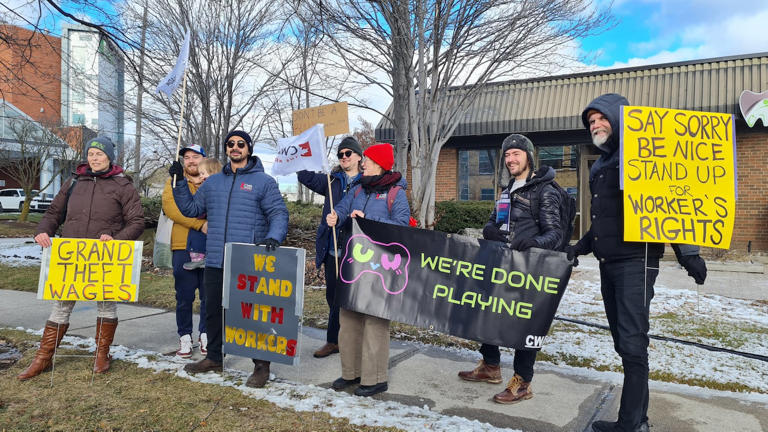
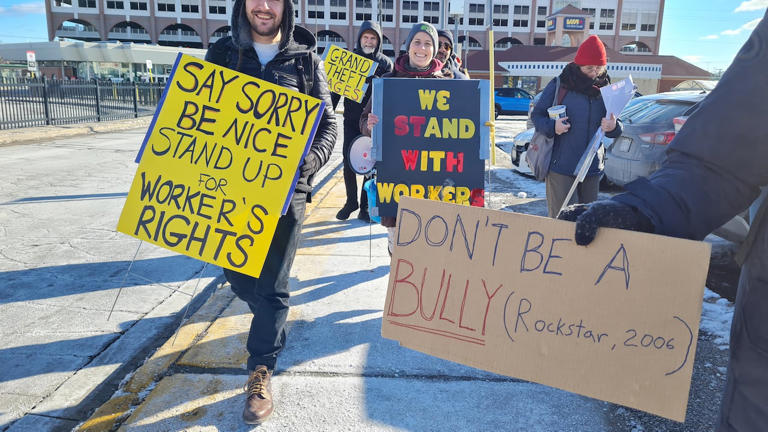
Protesters and union members hold a picket outside the offices of video game studio Rockstar Toronto in Oakville, Ont., on Dec. 12. (Jonathan Ore/CBC)


The firing of several employees at the makers of the Grand Theft Auto video games came as a complete surprise, according to one of the Canadian workers who was let go this past fall.

"I had no idea what was going on. I was shell-shocked," said one of three game developers fired from Rockstar Toronto (actually in Oakville, Ont.). CBC News is not naming the developer out of fear of retaliation, including being blacklisted from future employment in the games industry.

Thirty-one Rockstar employees working in the U.K. were fired the same day. Rockstar Games, which has multiple studios, primarily in the U.S., and U.K., alleges they were fired for "gross misconduct," and leaking company secrets.

Alex Marshall, president of the Independent Workers' Union of Great Britain (IWGB), called the firings "one of the most blatant and ruthless acts of union busting in the history of the games industry."

It's the latest lightning rod for discussion about unionization in a hugely profitable, international industry that has historically been very resistant to it — even amidst reports of employees being burned out by unpaid overtime, and thousands of layoffs in recent years.

The employee told CBC News that on Oct. 30, three workers at Rockstar Toronto were each "brought into a room with an HR person" and told they were being terminated for breaking a non-disclosure agreement, which every employee must sign before working there.

"They ended up just giving us our essentials and ... we were immediately escorted out of the building by security."

CBC News reached out to Take-Two Interactive, Rockstar's parent company, for comment on the fired Canadian developers but received no response.
Firings have 'a chilling effect' on the industry: union rep

Nasr Ahmed, staff organizer at Communications Workers of America (CWA) Canada, was part of a small solidarity march outside Rockstar Toronto's offices earlier in December. He called Rockstar's claims of the fired workers leaking confidential information "patently false."

"They have not provided any proof for those claims, either for the Canadian workers or the U.K. workers," he said.

He corroborated an account from the IWGB that all 34 workers were part of an online discussion group on the app Discord, where industry workers interested in unionizing or learning about unions in the U.K. could talk about working conditions.

The fired employee told CBC News that the workers were from different departments and had different seniorities across the company, both in Canada and the U.K., and that "the only common link among us" was they were all part of the Discord group. CBC News has not viewed chat messages from the Discord group and could not verify their contents.

"At the end of the day ... discussing your working conditions is not against the law, as far as I know, in either Canada or the U.K., which is what exactly these workers were doing," Ahmed said.

Ahmed characterized Rockstar management's actions as "shameful." He says it creates "a chilling effect" that will discourage employees in the wider games industry from discussing working conditions and joining or forming a union.


Union talk taboo in video games

The games industry has been historically resistant to unionization, and Aurelia Augusta of the CWA's United Videogame Workers union says it's "incredibly scary" to even talk about it, as it might effectively blacklist them from future employment, or lead to their removal from the credits of games they're already working on.

"People are scared, especially in Canada where ... a handful of major studios have control of a huge amount of the game development jobs pipeline," Augusta said.

Ahmed said that when video game workers organize, their intention isn't "to burn the studio down," but rather "to make the studio better."


Grand Theft Auto VI follows the previous instalment released in 2013 and a long-running online version of the game, which has made parent company Take-Two Interactive billions of dollars in revenue. (Rockstar Games/Take-Two Interactive)

In a statement to CBC News, Ontario's Minister of Labour David Piccini said: "I want all workers in Ontario to know they have the right to raise concerns about their workplace, and Ontario's labour laws exist to ensure those concerns are addressed through fair and established processes."

Earlier this month, U.K. Prime Minister Keir Starmer called the Rockstar firings "deeply concerning" and said he would look into the situation.

This past month, other studios have seen significant steps toward organizing.

U.S.-based Id Software, makers of the Doom games, and Ubisoft Halifax voted for wall-to-wall unionization with the CWA in the U.S. and Canada, respectively.

The former Rockstar employee told CBC News they were hopeful that more video game studios — including Rockstar — could be unionized in the future. "The company has shown a willingness to do right by their employees in the past when push comes to shove," they said.

Culture of overtime 'crunch' in video games

Rockstar came under scrutiny ahead of the release of Red Dead Redemption in 2018. According to some reports, many employees worked extra-long hours in what is known in the industry as "crunch."

Co-founder Dan Houser said in one interview that he and a small group of writers clocked 100-hour work weeks close to launch. Houser left the company in 2020; his brother Sam Houser is currently its president.

Jim Munroe, a writer and artist who also works in the independent games space, attended the protest outside Rockstar Toronto. He says he doesn't know anyone who currently works there, but does know some developers who formerly worked there and burned out.


Union members and protesters join a solidarity picket nearby the video game studio Rockstar Toronto's offices in Oakville. (Jonathan Ore/CBC)

"I'm a big fan of Rockstar and just want them to treat their workers better," he said.

"In some ways I feel like the GTA games are the modern world's equivalent of the pyramids: incredible feats of art and technical engineering, but built at an enormous human cost."

Earlier this year, Bloomberg reported that Rockstar's crunch culture had mostly been eliminated. But it was also reported that employees were disappointed after being asked to return to work full time in the office, pulling back from pandemic-era work-from-home policies.

The former Rockstar Toronto employee said that, ultimately, the fired workers both in Canada and the U.K. just want their jobs back.

"We poured our heart and soul into our work. Everyone who was there is a talented individual in some way. We wouldn't have been hired by Rockstar or worked there for as long as we have if we weren't," the developer said.

"All we wanted to do is make the best game possible. We're all passionate folk."
What if Canada stopped selling its natural resources to the US.?

Story by Diana Tablan
Dec. 22, 2025

Canada and the United States share one of the world’s most interconnected economic relationships, built on decades of trade agreements and cross-border partnerships. At the heart of this bond lies Canada’s vast supply of natural resources that flow south to fuel American homes, businesses, and industries every single day.

The scenario of Canada suddenly cutting off these exports might seem unlikely, but it raises important questions worth exploring. What would happen to gas prices, electricity grids, and factory operations if this supply line disappeared? The consequences would be severe and far-reaching, affecting everything from winter heating bills to grocery store prices.

Gas prices would skyrocket across America


Image Credit: Ali Mkumbwa/Unsplash

Roughly 4 million barrels of Canadian crude oil cross the border into the United States every single day. American refineries would scramble to find replacement sources from overseas markets where prices are typically higher, and shipping costs add even more expenses. The price at the pump would shoot up almost immediately, hitting drivers in the Midwest and Northeast especially hard.

Trucking companies would face crushing costs that would get passed directly to consumers through higher prices on everything from groceries to online deliveries. Families already struggling with tight budgets would face tough choices about cutting back on driving. The transportation sector would feel the pressure first, but every industry would eventually see its costs rise.
Winter heating bills would become unaffordable

Almost one-tenth of the natural gas consumed in the U.S. comes from Canadian pipelines, and that percentage climbs even higher during the winter months. Northern states where winters are brutal would feel the impact first as supplies tightened and prices increased. The U.S. would need to quickly ramp up domestic production, or import liquefied natural gas from distant countries at significantly higher costs.

Families in Michigan, Minnesota, and New York would see their heating bills double or even triple during the coldest months. Elderly residents on fixed incomes would face impossible decisions between staying warm and paying for food or medicine. America’s energy grid would also face increased strain during extreme cold snaps when demand peaks and supply struggles to keep up.
Manufacturing plants would face critical shutdowns

Industries ranging from steel production to chemical manufacturing depend on steady supplies of Canadian minerals, metals, and petroleum products. Production lines would slow down or stop completely without these essential raw materials. Communities that depend on manufacturing employment would see temporary layoffs turn into permanent job losses.

The automotive industry would take a hard hit since Canadian aluminum, steel, and parts are integrated into American car production. Assembly plants in Detroit and other manufacturing hubs would struggle to maintain their schedules. Supporting businesses like suppliers, restaurants, and service providers near these plants would lose revenue and might need to cut staff as the economic damage spreads outward.
Construction costs would climb dramatically

Roughly one-third of all wood used in U.S. construction comes from Canadian forests north of the border. Builders rely on this steady, affordable supply to keep housing projects on schedule and within budget. Lumber prices would immediately surge if Canada stopped exports, as American sawmills couldn’t possibly ramp up production fast enough to fill the gap.

New home construction would slow to a crawl as builders faced wood shortages and inflated material costs. First-time buyers would find homeownership slipping further out of reach as housing prices climbed even higher. The construction industry would shed jobs as renovation projects became luxury expenses and new developments got canceled or postponed indefinitely.


Electricity grids would struggle to meet demand


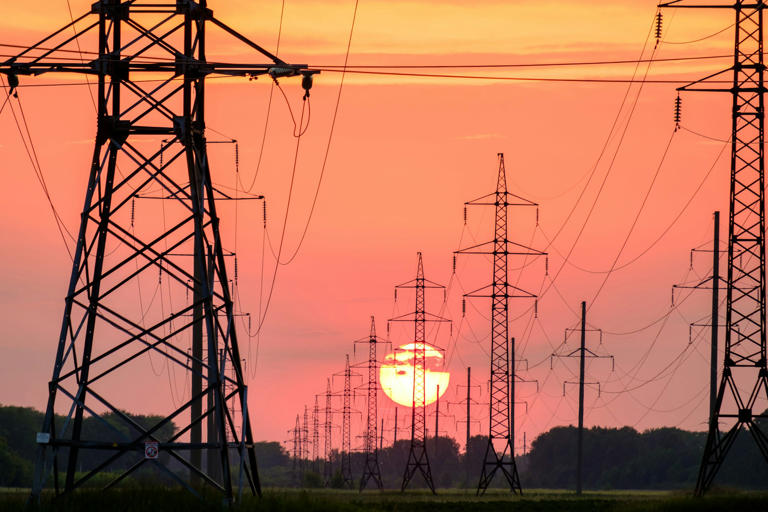
Image Credit: Andrey Metelev/Unsplash

Quebec’s massive hydroelectric dams supply significant portions of electricity to northeastern states like New York and Vermont. These states have built their energy infrastructure around the assumption that Canadian power will always be available at competitive prices. Utilities would be forced to fire up older, dirtier power plants or purchase expensive electricity from other regions to fill the gap.

Rolling blackouts would become a real possibility during hot summers when air conditioning demand peaks. Hospitals, data centers, and other critical facilities would need to rely more heavily on backup generators, driving up their operating costs. States would also face environmental setbacks as they turned to coal and natural gas plants, undoing years of progress toward cleaner energy sources.
The aerospace industry would face supply chain chaos

Materials like nickel, cobalt, and rare earth elements flow from Canadian mines into U.S. factories where they become essential components of aircraft and satellites. American aerospace companies would need to source these materials from countries with less stable political situations or lower environmental standards. High-tech manufacturing operations would face serious disruptions as they try to secure alternative suppliers.

Defense contractors would find themselves in a particularly difficult position since weapons systems and military aircraft require specific grades of Canadian materials. Production delays could affect national security readiness and cost the government billions in contract overruns. Commercial aircraft manufacturers like Boeing would struggle to meet delivery schedules, potentially losing orders to European competitors.
Fertilizer shortages would threaten food production

Saskatchewan and other Canadian provinces supply substantial amounts of potash and other fertilizers that American farmers need to maximize crop yields. Domestic production simply can’t meet the full demand that U.S. agriculture requires. American farmers would face difficult choices about which fields to treat and which crops to prioritize without access to Canadian agricultural inputs.

Corn, wheat, and soybean farmers would be hit especially hard as reduced fertilizer use led to smaller harvests. Food prices would climb as those higher costs eventually appeared in grocery stores, making everything from bread to meat more expensive. Rural farming communities would struggle economically as lower yields and higher input costs potentially forced some family farms out of business entirely.


Paper and packaging industries would collapse


Image Credit: vuk burgic/Unsplash

The shift toward online shopping has made Canadian pulp and paper products more important than ever for American commerce. These materials supply a huge portion of everything from newspapers to the cardboard boxes that deliver packages to doorsteps. The entire logistics chain that Americans depend on for convenient delivery would break down if these supplies vanished.

Amazon, Walmart, and countless other retailers would need to raise prices or slow delivery times as they competed for limited domestic packaging supplies. Packaging costs would explode as companies scrambled to find alternatives. While the quality of books would suffer as well.

Aluminum production would grind to a halt

Canada’s abundant hydroelectric power makes aluminum smelting economically viable, and American manufacturers depend heavily on this supply for everything from beverage cans to aircraft parts. U.S. aluminum production costs significantly more because electricity prices are higher domestically. Canadian imports have become the practical choice for most manufacturers who need to keep their costs competitive.

Beer and soda companies would face higher costs for cans, while automakers would struggle to source lightweight materials for fuel-efficient vehicles. Some manufacturers might even relocate operations overseas to access cheaper aluminum sources, taking American jobs with them and further hollowing out domestic industrial capacity.
Rail transportation systems would face fuel crises

The rail industry has optimized its supply chains around reliable deliveries of Canadian diesel fuel, particularly for routes through northern states. Freight trains transport everything from agricultural products to manufactured goods across the country using this fuel. The entire transportation network would face disruptions and increased costs if railroads suddenly needed to source all their diesel somewhere else.

Products would sit in warehouses waiting for transportation as trains struggled with fuel shortages and higher operating costs. Store shelves would empty out in certain regions as shipping delays rippled through the economy. The trucking industry would face even more pressure to handle freight that trains couldn’t move, which would further drive up transportation costs across all sectors.'


Steel mills would shut down production lines


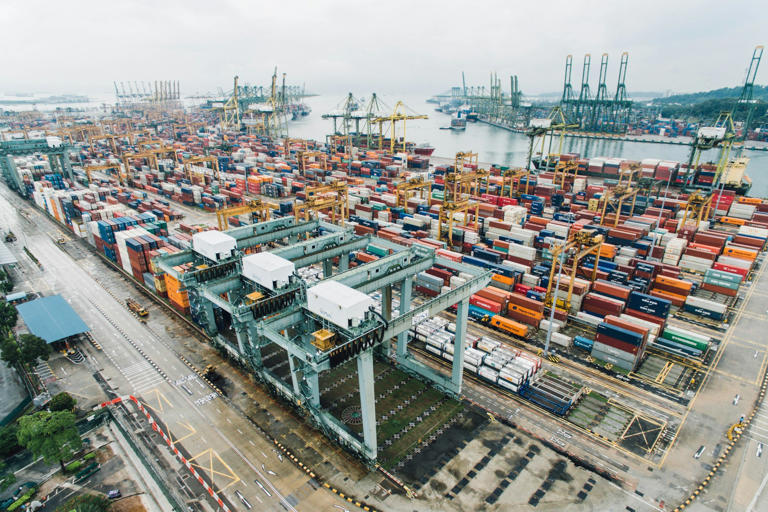
Image Credit: yasin hemmati/Unsplash

Canadian iron ore and other steelmaking materials arrive by ship across the Great Lakes or by rail, following supply routes that have existed for generations. U.S. steel producers have built their operations around the assumption of steady Canadian supplies at predictable prices. American steel mills produce the metal framework for buildings, bridges, and infrastructure projects using these essential raw materials.

Bridge repairs, highway construction, and building projects would get delayed or canceled as steel supplies dried up and prices climbed. Infrastructure projects would stall as costs exceeded what government budgets could handle. Construction workers would lose jobs, and some companies might face bankruptcy if they couldn’t source materials at the prices they had originally bid in their contracts.
The uranium supply for nuclear plants would dry up

Nuclear power plants generate about 20% of all electricity used in the United States, and Canada produces a significant portion of the uranium that fuels these facilities. Nuclear facilities require consistent supplies of properly processed uranium to maintain safe operations and meet their generation schedules. Finding alternative sources would take time and require extensive testing to meet strict nuclear safety regulations.

Some older nuclear facilities might even face early closure if they couldn’t secure affordable fuel supplies in the short term. Power companies would need to pay premium prices for uranium from other countries, costs they would pass directly to consumers. States that depend heavily on nuclear energy would face difficult choices about building expensive new natural gas plants or accepting higher electricity rates from their existing facilities.

Economic recession would spread across both countries

Thousands of Canadian workers would lose their jobs in mining, forestry, and energy sectors that depend almost entirely on American demand. Resource exports make up a massive portion of Canada’s GDP, so the sudden end of these sales would devastate the Canadian economy. It would spread quickly through Canadian communities that were built around resource extraction and have few alternative employment options.

Unemployment would spike on the American side as businesses closed or cut staff to cope with impossible operating costs. The combination of energy shortages, manufacturing disruptions, and soaring prices would likely trigger a severe recession lasting years. Meaning, it would affect both countries’ economies over time.


Image Credit: CHUTTERSNAP/Unsplash© Image Credit: CHUTTERSNAP/Unsplash

This article appeared first on Mastermind Quotes.
Feds to reveal future of EV mandate in 2026, as Liberals urged to relent on 100% target


Story by Stephanie Taylor
National Post


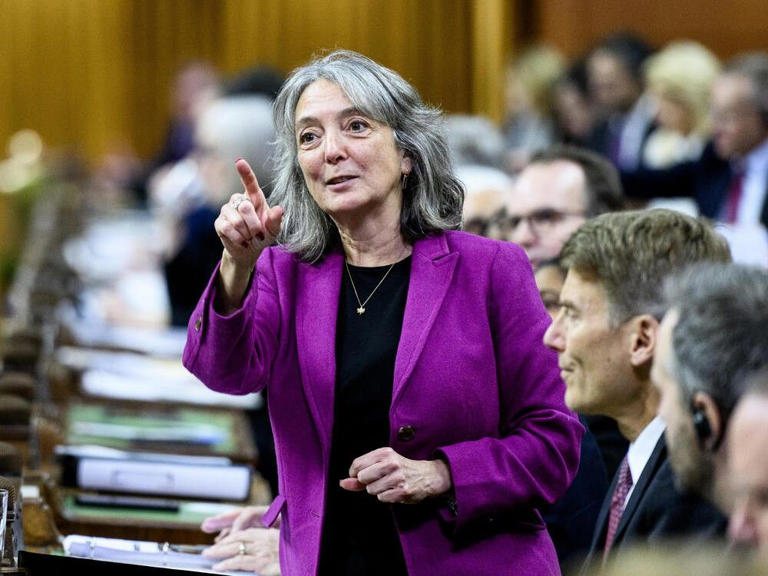
Minister of Environment and Climate Change Julie Dabrusin rises in the House of Commons during Question Period on Parliament Hill in Ottawa, on Thursday, Dec. 11, 2025.

OTTAWA — As Prime Minister Mark Carney ushers in a new era of climate policy for the Liberals, a key decision is hanging over the governing party’s approach to electric vehicles.

Namely, will the 2035 sales mandate be kept or outright repealed?

The regulation currently requires manufacturers to hit certain sales targets for zero-emission vehicles, with those targets progressively rising until all new vehicle sales are zero emissions by 2035.

Keean Nembhard, a spokesman for Environment Minister Julie Dabrusin, said in a statement that “we will have more to share in the new year,” regarding the results of the 60-day review and the future of its zero-emission vehicle policy.

That timeline is beyond what some in the industry had expected, as automakers seek clarity on the regulation they spent this year urging Carney to repeal, citing the plummeting sales of electric vehicles and the ongoing Canada-U.S. trade war, where the auto industry has found itself on the frontlines.

“We’re very disappointed that there has not been a decision communicated to the auto industry, and we’ve been urging the federal government and the prime minister to move quickly on this and make a decision,” said Brian Kingston, president and CEO of the Canadian Vehicle Manufacturers’ Association, which represents Ford, General Motors, and Stellantis.


The Liberals’ Nov. 4 budget stated that the government would “announce next steps on electric vehicles in the coming weeks.”

The government now expects that to happen early next year, as it works through changes to the policy.

Carney launched a 60-day review of the policy back in September, pausing the requirement for 2026, which would have mandated that 20 per cent of new vehicle sales be zero-emission.

The review was launched amid concerns that hitting that target was unrealistic. Kingston, who, along with auto CEOs, met with Carney over the summer, warns that to comply, manufacturers would have to spend “billions” on purchasing credits from other electric-vehicle makers, such as Tesla, or restrict the sales of gas-powered and hybrid vehicles.

“Companies are making decisions about production and inventory for the 2027 model year. And the longer that this goes on and this uncertainty hangs out there, the more damage and cost is put on the industry,” he said.

Manufacturers can also comply by spending money to build out charging infrastructure.

While automakers say the Liberals ought to scrap the policy, other stakeholders have urged the government to maintain the rule, but with changes, such as dropping the target that all new vehicle sales must be zero-emission by 2035.

Electric Mobility Canada, a national association representing the electric transportation industry, wrote in its submission as part of the government’s review that it should “eliminate” the 100 per cent target, “to remove a political flashpoint that is not necessary to maintain momentum in the transition.”

Clean Energy Canada, a think-tank based out of Simon Fraser University, recommended the same, instead suggesting the government lower the 2035 target to between 90 to 95 per cent.

“Reducing the (100 per cent) target could enhance public support by removing the perceived ‘ban’ on gas-powered vehicles and offer options for ‘hard-to-electrify’ jurisdictions, while still achieving significant emission reductions and improving (electric vehicle) affordability and availability,” it wrote in its submission.

Both British Columbia and Quebec, two provinces with their own sales mandates, revised their own policies to remove the 100 per cent target by 2035, with Quebec lowering it to 90 per cent, and B.C. stating it wanted to align its provincial policy with whatever the federal government releases.

Quebec also relaxed requirements for what counted as a zero-emission vehicle, including on its list non-plug-in hybrid vehicles, which have smaller batteries. The federal definition only includes plug-in battery hybrids and fully electric vehicles or ones powered by hydrogen fuel cells.

Opposition Conservative Leader Pierre Poilievre has been one of the most vocal critics of the federal policy, arguing that it amounts to a “ban on gas vehicles” and an affront to rural living, where driving remains essential.

Nembhard said the government received “considerable input from stakeholders, provinces and territories and Indigenous organizations” during the course of its 60-day review, which he said was launched to address “changes in tariffs and trade, economic uncertainty and shifts in the automotive industry.”

“Its aim was to ensure (Electric Vehicle Availability Standard) continues to reflect market realities, remains effective for Canadians, and does not place undue burden on automakers.”

Rachel Doran, executive director of Clean Energy Canada, said she believes the most important thing is that Canada makes policy choices that guarantee “affordable (electric vehicles) are available to Canadians.”

“And I will say right now, that is not the case.”

Doran points to moves like the federal government’s decision to suspend the purchase rebates for electric vehicles earlier this year, as well as the levying of a 100 per cent tariff on Chinese-made electric vehicles, which are cheaper to purchase.

The latter remains a must to maintain, say leaders in Canada’s auto industry, who say it is not only essential that Canada stay aligned with the U.S., which first took the step under former U.S. president Joe Biden, given how integrated the two auto markets are, but also to protect the domestic industry against unfair advantages of competing against these vehicles, which Beijing has heavily subsidized and produced using less rigorous labour practices.

Doran nevertheless points to examples like the European Union, where more affordable models of electric vehicles remain available, including from Japanese and South Korean automakers.

“So we really do have kind of a problem here that needs to be solved.”

Despite campaigning on plans to reintroduce a purchase incentive, Carney’s government has yet to do so.

An internal briefing note, signed by officials within Transport Canada last December as the government prepared to announce a pause on the rebate program, which was released to National Post under federal access-to-information legislation, warned that ending the program was expected to be met with “strong criticism from industry, environmental organizations, consumers and other levels of government.”

Officials stated that around $2.9 billion had been spent on the incentive program since it was launched back in 2019 and that, as of November 2024, it had helped Canadians buy or lease more than 519,000 zero-emission vehicles and grow its market share.

Automakers and environmental advocates alike have blamed the ending of the program, which the federal government announced back in January, because it had run out of its allotted money, for the dramatic drop in sales.

Rick Smith, executive director of the Canadian Climate Institute, another think-tank, said scrapping the mandate altogether would “grind to a halt decarbonization in the transportation sector.”

Next to the oil and gas sector, the transportation sector remains the second-highest source of greenhouse gas emissions.

Smith said the regulation, which the institute supports, is only part of the overall policy picture he believes the federal government must fulfil to make it easier for Canadians to make the switch to electric vehicles.

“Our hope is, in the new year, that the federal government make good on its commitments to bringing back purchase subsidies,” Smith said, adding it also needs to boost the building of public charging infrastructure.

With files from The Canadian Press

National Post


V0TE NO!
'Independent state?' Proposed referendum question approved on Alberta separation


Story by Jack Farrell


EDMONTON — Alberta's election agency announced Monday it has approved a proposed referendum question on the province separating from Canada.

The question seeks a yes or no answer to: "Do you agree that the province of Alberta should cease to be a part of Canada to become an independent state?"

Elections Alberta said the proponents — the Alberta Prosperity Project and its chief executive officer, Mitch Sylvestre — have until early January to appoint a financial officer for its petition campaign, after which signature collection can begin.


TINY GROUP OF SEPERATISTS WHO LOVE USA MORE THAN CANADA


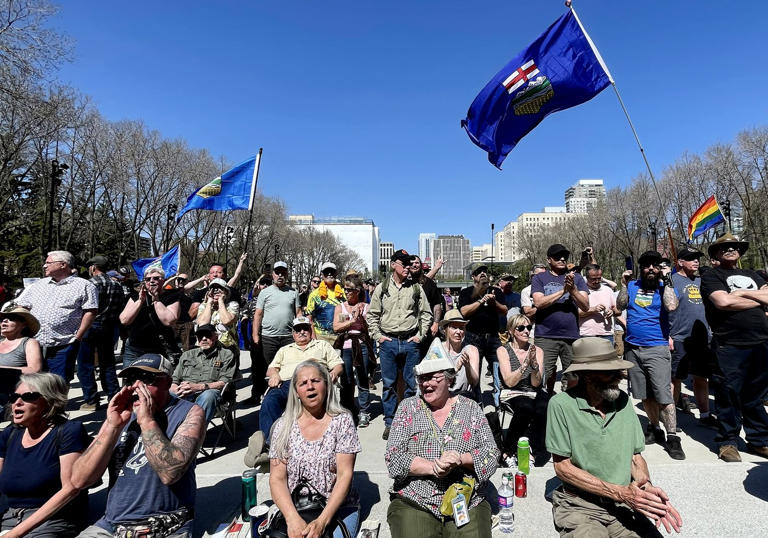
People gather in support of Alberta becoming a 51st state during a rally at the legislature in Edmonton, on Saturday, May 3, 2025. THE CANADIAN PRESS/Jason Franson© The Canadian Press  JUST MOVE SOUTH


Sylvestre, a constituency association president for Premier Danielle Smith's United Conservative Party, has four months to collect just under 178,000 signatures. If he does so, the question would be put to Albertans in a referendum.

The Alberta Prosperity Project said on social media Monday that the approval is a "huge victory" for the province.

"This is the breakthrough we've been fighting for," it said.

Sylvestre, in an interview, said he thought Alberta needs to go it alone because of Ottawa's restrictions on oil production and dim prospects for federal electoral change.

"This last election when the Liberals won after 10 years of absolute brutal government, as far as I was concerned, I believe that there's absolutely no way that we'll ever win another election in Alberta," he said.

"It's up to us to decide what to do about that."

Sylvestre said the group already has 2,000 people signed up internally to collect signatures, and more than 240,000 people who have previously pledged their willingness to sign.

"This is very non-partisan as far as I'm concerned," he said.

"Every Albertan will benefit from this, and it'll give Alberta children and my grandchildren and my kids a much brighter future as far as I'm concerned, or I wouldn't be doing it.

The group's approved question is similar to one it had previously submitted: “Do you agree that the province of Alberta shall become a sovereign country and cease to be a province in Canada?”

That question was held up in court for a review of its constitutionality.


The delay prompted Smith's government to change the rules for citizen-initiated referendums earlier this month.

The changes rendered the court review moot, as it allowed Sylvestre to reapply at no charge while also preventing Alberta's chief electoral officer from rejecting referendum proposals should they be unconstitutional or not factually accurate.

Justice Colin Feasby, who issued his decision on the original question despite the government vetoing the result, deemed the proposal to be unconstitutional, but only under the previous rules.

Feasby, in his decision, wrote that Alberta separating from Canada would violate certain Charter and treaty rights, as there are no guarantees Albertans would keep their right to vote federally or maintain mobility rights if the province were to become its own nation.

He also noted that those rights would need to be accounted for in any negotiation undertaken to amend the Constitution, something that would be required should Alberta actually look to quit confederation.

"Alberta chose not to give citizens the power to propose to take away Charter and Treaty rights through the citizen initiative process," Feasby wrote.

But he added: "Alberta seems to regret this decision now."


Justice Minister Mickey Amery's press secretary, Heather Jenkins, said in an email that it's a democratic right for people to participate in citizen initiated referendums and bring forward questions they deem important.

"If those seeking independence believe that they have the support for it, this is their chance to prove it," she said.

Sylvestre said he was excited at the prospect that Albertans could soon decide their own fate.

"In spite of the fact that this has been a roller-coaster up and down ride, I think it's going to be well worth it no matter what happens," he said.


"The people are going to be able to decide based on the information that they get what they want to do with their future, and I think this is what democracy should be all about."

This report by The Canadian Press was first published Dec. 22, 2025.

— With files from Dayne Patterson in Calgary.

Jack Farrell, The Canadian Press


Alberta Next Panel recommends ditching RCMP, referendum to quit CPP

Story by Lisa Johnson


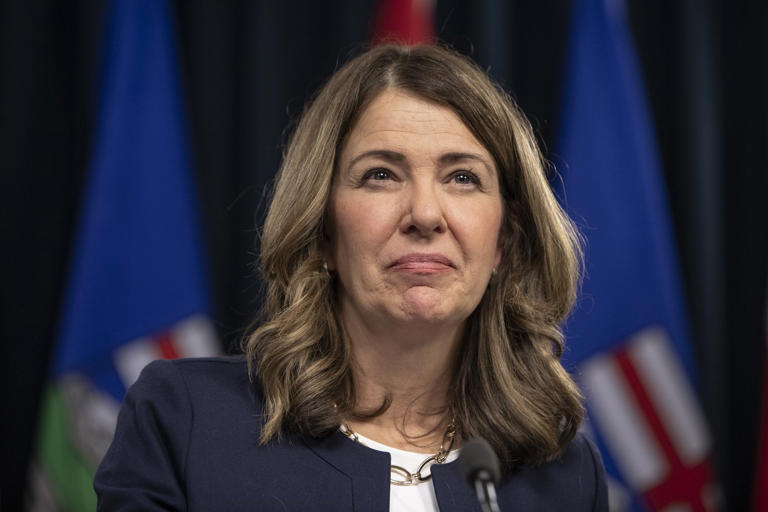
Premier Danielle Smith speaks to the media at the Legislature in Edmonton, on Wednesday, Dec. 10, 2025. THE CANADIAN PRESS/Amber Bracken© The Canadian Press

EDMONTON — Alberta Premier Danielle Smith’s hand-picked panel re-examining the province's relationship with Ottawa says it’s time to ditch the RCMP and hold a provincewide referendum on quitting the Canada Pension Plan.

The Alberta Next panel, in a report with findings and recommendations, says creating a provincial pension plan was the most hotly debated topic among citizens and one that needs to proceed to a vote.

“Replacing the CPP with an (Alberta plan) is the most financially meaningful initiative Albertans have the right to pursue on our own to enhance our sovereignty and financial independence within a united Canada,” says the report from the panel, which was headed up by Smith.

But the panel stresses such a vote should only be held after residents receive more information on the pros and cons of the province going it alone.

And it says a vote would be contingent on an Alberta pension plan matching or improving the payouts and premiums of the federal system.

The report was issued Friday afternoon without a news conference, and Smith was not made available for an interview.

Her office, asked if she would support a CPP referendum, pointed to Smith's earlier comments that it would be tight to get the issue on any ballot for next fall.

The next general election is set for October 2027.


Related video: RCMP official says police force's future in Alberta uncertain (CBC)


The report comes after months of public town halls across the province and survey feedback.

It also recommends continuing work to create an Alberta police force to replace the RCMP when the latest contract with the national force ends in 2032.

Smith’s government has long questioned whether the province is getting value for money on the Mountie contract, while saying a provincial force can bolster accountability.

The panel acknowledged a provincial force was also a polarizing topic in debates but said it heard concerns about police staffing levels, particularly in smaller communities, with hundreds of contracted policing positions going unfilled.

“Some, like Cypress County, have been paying the RCMP with zero officers provided,” says the report.

The panel also called for referendums on more provincial control over immigration and on specific constitutional questions, such as abolishing the "unelected Senate."

It suggested doing a cost-benefit analysis of Alberta running its own tax system.

And it urged Alberta to push harder for equalization reform, saying that on balance Albertans are OK with subsidizing smaller provinces but “the vast majority strongly oppose their federal tax dollars subsidizing provinces with the fiscal and economic strength to deliver such services on their own.”

Opposition NDP Leader Naheed Nenshi labelled the Alberta Next project a stage-managed distraction from government failures on health care and education.

He said Smith didn't campaign on any of the issues prioritized in the report, which he noted was released on the Friday before Christmas.

"The government has spent millions of taxpayer dollars on a sham consultation, where they actively silenced anyone who dared to disagree with them,” Nenshi said in an interview.

“(They) are now pretending that that was the voice of Albertans to justify spending millions of dollars more on referenda on things that Albertans don't want.

Nenshi said the CPP issue is a stalking horse to create a government controlled piggy bank.

“They want to create a large asset fund that is under the control of the government to invest in things the government wants to invest in," he said.

Debate in Alberta over whether to quit the more than $777-billion CPP has been ebbing and flowing for more than two years under Smith. The premier has linked a standalone plan to long-standing concerns that Albertans are paying more into Confederation than they deservedly get back.


In 2023, her government issued a report estimating Alberta is entitled to more than half the money in the national nest egg should it go its own way.

That number was hotly contested. Absent a clear exit figure, Smith put formal consultations on hold and the issue faded into the background.

As late as this spring, Smith said no firm bottom line number coupled with a lack of public “appetite” for leaving the CPP precluded any referendum for the time being.

However, the panel said a straw vote of people at its town halls supported the idea, as did a slim majority of those in its poll. But it noted a “clear majority” of those who sent online feedback opposed leaving the CPP.

The panel said it heard concerns about what would happen if a provincial fund was mismanaged or if Alberta’s strong economic advantage didn't continue, not to mention questions about portability.

The panel said all those details – contribution rates, management structure, benefits and more — need to spelled out for Albertans ahead of any referendum.

This report by The Canadian Press was first published Dec. 19, 2025.

Lisa Johnson, The Canadian Press


Alberta increases referendum petition fees to $25,000 — a 5,000 per cent hike

Story by Lisa Johnson


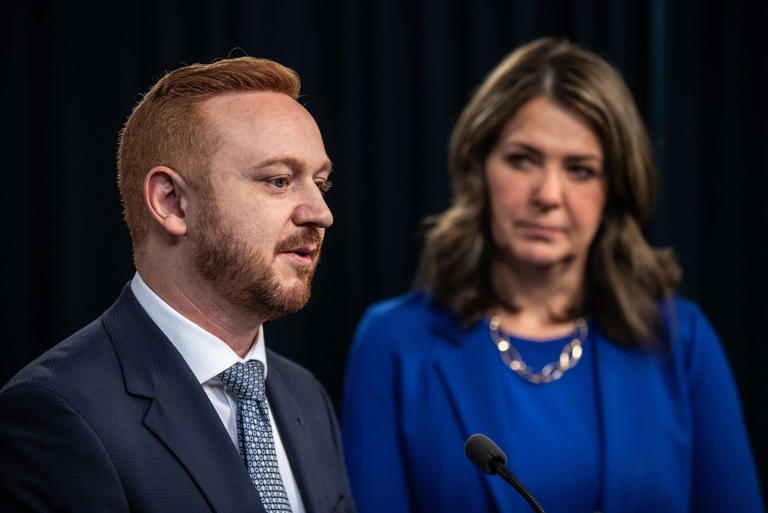
Alberta Premier Danielle Smith and Minister of Justice Mickey Amery announce proposed changes to several pieces of democratic process legislation, in Edmonton on Tuesday April 29, 2025. THE CANADIAN PRESS/Jason Franson© The Canadian Press

EDMONTON — Alberta Premier Danielle Smith's government is hiking the cost to apply for a citizen-initiated referendum by 5,000 per cent, saying it's about making sure applicants are serious.

It’s the latest in a series of rule changes that one petitioner – country singer Corb Lund – characterizes as exhausting.

A cabinet order released late Wednesday afternoon upped the fee to $25,000 from $500.

Heather Jenkins, press secretary to Justice Minister Mickey Amery, says the cost will be refundable if the applicant meets the required threshold of signatures and completes reporting requirements.

"Citizen initiative petitions are costly,” Jenkins said Thursday in a statement.

“That is why a higher application fee was chosen, to discourage frivolous applications and protect Alberta taxpayers.”

The move comes despite previous efforts by Smith's United Conservative Party government to make it easier for citizens to apply for a policy initiative or a constitutional referendum, including efforts to put Alberta separation on the ballot.

Lund may not have to pay the higher fee.

Elections Alberta confirmed Thursday his prior application to launch a referendum to stop new coal mining in Alberta's Rockies will have a grace period


The new fee would be waived if Lund files his paperwork by Jan. 11.

Lund, in an interview, said it’s disturbing to see Smith’s government make sudden rule changes for what he views as "random, self-serving reasons.”

"The chaos and confusion and exhaustion is very similar to the same confusion, chaos and exhaustion that we've seen from the government on how they've been handling the coal situation for the last six years," Lund said.

"It just keeps changing."

He said no matter what else might shift, he won't be deterred from completing a process that's already been cancelled by recent election law changes, forcing him to start again.

"We'll fill out as many forms as they make us fill out if it means we can keep the coal mines out of the headwaters of the rivers that provide our drinking water."

Premier Smith has long championed the merits of direct democracy.

In late November, when asked about Lund's petition, she said, "I support citizen-initiated referenda. I think it's really important that people have their say. The rules are out there, and I will watch with great interest.”

Earlier this year, Smith's government significantly lowered the thresholds for citizens to apply for a referendum, including the number of signatures required.

Earlier this month, her government passed a new law to clear further legal hurdles faced by those aiming to hold a separation referendum.

A pro-Confederation petition organized by former Alberta deputy premier Thomas Lukaszuk is not affected. Elections Alberta has already certified that petition as having the required signatures. Lukaszuk seeks to spike separatist sentiment by forcing a decision to reaffirm Alberta staying in Canada.

Another application has already received the green light to proceed. It seeks to gather signatures to ask whether Alberta should end spending public money on independent schools.

Alberta NDP justice critic Irfan Sabir says the fee increase shows the UCP government doesn't have any respect for the democratic process.

"This change is clearly meant to stifle democratic action,” Sabir said in a statement.

Chief electoral officer Gordon McClure told a legislative committee earlier this month it cost $340,000 to verify Lukaszuk’s petition and that the cost to prepare for a subsequent provincewide referendum would be more than $3 million.

This report by The Canadian Press was first published Dec. 18, 2025.

Lisa Johnson, The Canadian Press

How Tamil Nadu Challenges BJP's Narrative of Cultural Hegemony

As Hindutva ideology reshapes political narratives across much of India, Tamil Nadu is emerging as a key battleground

N.K. Bhoopesh
Updated on: 3 December 2025
OUTLOOK, INDIA


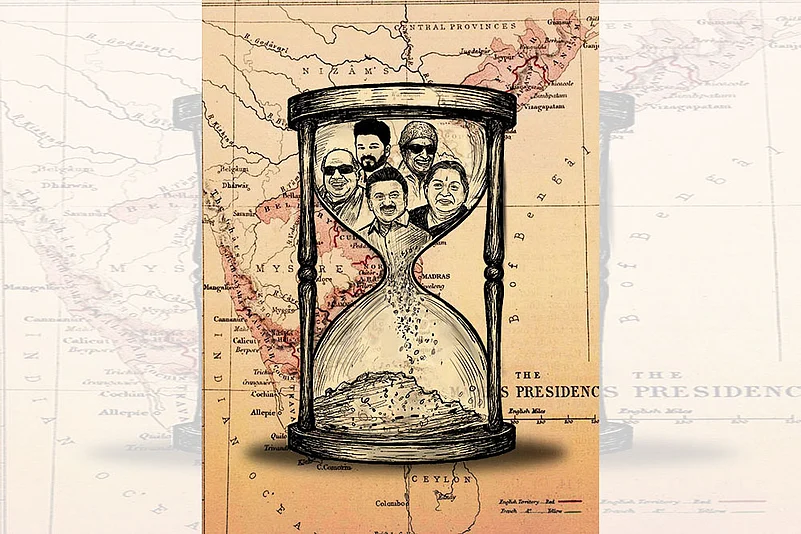
The Dravidian movement emerged with a clear purpose: to challenge what it saw as the Union government’s growing drive to centralise power. Photo: Illustration: Saahil


“I claim, Sir, to come from a country, a part in India now, but which I think is of a different stock, not necessarily antagonistic. I belong to the Dravidian stock. I am proud to call myself a Dravidian. That does not mean I am against a Bengali, a Maharashtrian or a Gujarati. I say that I belong to the Dravidian stock and that is only because I consider that the Dravidians have got something concrete, something distinct, something different to offer to the nation at large. Therefore, it is that we want self-determination.”

When C.N. Annadurai, the founder of the Dravida Munnetra Kazhagam (DMK), delivered these words in his maiden Rajya Sabha address in 1962, he left members on both sides of the aisle spellbound. It was a speech steeped in sub-national consciousness, boldly challenging the mainstream narrative of Indian nationalism from the floor of the sovereign Indian Parliament. For many, it announced that a new political force that was rooted in Dravidian identity and Tamil pride had arrived with clarity and confidence.

Though the DMK later moved away from its early secessionist position, it has remained the country’s most vocal political force in demanding strict observance of federal principles. This continuity is evident in Chief Minister and DMK leader M.K. Stalin’s recent criticism of the Supreme Court’s opinion on prescribing timelines for Governors to act on bills submitted for assent. After the court declined to fix such a timeline, Stalin said he would not rest until a constitutional amendment made timely action mandatory. The stance reflects the DMK’s long-standing ideological line, consistent from its founding to the present.

The Dravidian movement emerged with a clear purpose: to challenge what it saw as the Union government’s growing drive to centralise power. For leaders like Annadurai, this was not merely a political disagreement but a question that touched the heart of Tamil identity, language and dignity. As the conflict between regional aspiration and federal centralisation intensified, the movement found deep resonance in Tamil Nadu.

Related Content


Forging A Horizontal Dravidian-Tamil Solidarity | Excerpt From The Dravidian Pathway


Inside Tamil Nadu’s Ideological War: Dravidian Politics vs BJP’s Hindutva Push


Dravidian Model Of Governance Vs Hindutva: The Battle For Tamil Nadu’s Soul


Stage, Speech, Cinema, Clothing: How Dravidian Politics Won The Tamil Public


By the time Annadurai stepped onto the political stage as a mass leader, this sentiment had become an electoral force. His articulation of regional pride, coupled with sharp critiques of the Centre’s policies, captured the public imagination in a way the Congress, long dominated by its stalwart leader K. Kamaraj, could no longer match.


The result was a dramatic realignment.


The Dravidian movement surged to power, riding a wave of popular enthusiasm, while Kamaraj’s once formidable Congress slipped to a distant second. In the years that followed, Congress gradually faded from the centre of Tamil Nadu’s political arena, leaving Dravidian parties to define and dominate the state’s narrative for decades

Over the years, and more sharply under the present Prime Minister Narendra Modi-headed government, the Union government’s centralising impulse has grown significantly. Policies and instruments such as the National Eligibility cum Entrance Test (NEET), the New Education Policy and new mechanisms of central funding, as well as the threat of delimitation, have repeatedly been interpreted in Tamil Nadu as attempts to erode state autonomy. For the DMK government, this has meant occupying a position of near-constant resistance, confronting New Delhi on one front after another.

These confrontations have played out in different ways. At times, the fight has spilled onto the streets, as seen more recently during public outcry against the New Education Policy, when students, activists and political cadres turned the debate into a mass movement. At other moments, the conflict has shifted to the courts, with the state alleging that the Governor’s delays and interventions were carried out at the behest of the Union government. To the DMK, this reflects an increasingly centralised federal structure.

Meanwhile, Tamil Nadu’s political landscape has been undergoing its own churn. With the All India Anna Dravida Munnetra Kazhagam (AIADMK) weakened by a prolonged leadership vacuum, the BJP has attempted to step into the role of principal opposition. The ideological contest is no longer merely administrative. It is a clash between the Dravidian political tradition, rooted in rationalism, social justice and regional pride, and the assertive Hindutva project the BJP seeks to advance.

The DMK is acutely aware of the shifting political terrain. Speaking to Outlook, Industries Minister and senior DMK leader Dr T.R.B. Raja admitted that the challenges before the party are real and evolving.

“There are forces attempting to change the very character of Tamil Nadu,” he says. “A divisive idea is being pushed consistently. But Tamil Nadu will resist it. By staying firmly anchored in constitutional values and pluralism, we can counter these attempts. We are also in constant communication with the people about the issues they face daily, despite the divisive tactics employed by certain forces. This approach resonates with people across demographic lines,” Raja added.

The BJP’s engagement with Tamil Nadu’s political spectrum has been long and strategic. Since the late 1990s, it has aligned with both major Dravidian parties, the DMK and the AIADMK, at different moments. Its cordial relationship with the DMK during the Vajpayee era, however, was short-lived and limited to a single electoral cycle.

The more consequential developments came after Jayalalithaa’s passing, when internal fissures began pulling the AIADMK in multiple directions. Sensing an opportunity, the BJP increased its involvement in the party’s internal affairs. According to veteran politician Panruti Ramachandran, an associate of the late MG Ramachandran and a minister in the latter’s, this shift may fundamentally reshape Tamil Nadu politics in the long run. “This is going to help the BJP,” he argues. “By aligning with the saffron party, the AIADMK has committed a cardinal mistake. It risks losing its core anti DMK voter base.”

In Tamil Nadu, 89 per cent of the population is Hindu, and within this, backward classes make up 45.5 per cent. Yet, Hindutva politics has struggled to gain a foothold here.

Ramachandran points out that neither MGR nor the AIADMK ever adhered to Dravidian ideology, or to any ideology in a strict sense. “MGR was immensely popular and felt he could lead a party of his own, so he formed the AIADMK. What concerns me now is the AIADMK’s proximity to the BJP at a time when the latter has grown into a formidable national force. Aligning with the BJP, especially when it has become such a behemoth, will only weaken the AIADMK further, inadvertently helping the BJP,” he warns.

The importance the BJP assigns to Tamil Nadu is evident in the many methods it has adopted to break its long-standing electoral jinx in the state. From organising the Tamil Kashi Sangamam to project a civilisational bond between Tamil traditions and the broader Hindu cultural landscape to presenting poet saint Thiruvalluvar in saffron, the BJP has repeatedly attempted to reframe Tamil icons within its ideological universe.

The most striking gesture was the installation of the sengol, a ceremonial sceptre from the Thiruvaduthurai Adheenam, inside the new Parliament building. Presented as a symbol of righteous governance rooted in ancient Hindu tradition, the sengol’s placement was widely interpreted as an attempt to weave Tamil religious heritage into the Hindutva narrative.

Political observers see these symbolic acts as efforts to co-opt elements of Dravidian cultural identity and fold them into the BJP’s national project. “It is a fact that the counter-culture narrative the DMK has been pushing for so many years has not been resonating with the younger generation as it used to do earlier. Though the DMK has identified this problem, it has to develop innovative methods. This, along with the weakening of the AIADMK, in the long run might help the BJP,” says Dr Arun Kumar, Professor, Political Science, Vellore Institute of Technology, Chennai.

While these cultural overtures unfolded subtly, Prime Minister Modi himself led the political push of Hindutva forces into Dravidian territory. A news report noted that since 2021, Modi has visited Tamil Nadu 18 times, most of them for political purposes. In the 2024 Lok Sabha election, although the BJP failed to win a single seat in the state, it increased its vote share significantly despite contesting without the support of either of the Dravidian majors. In 2019, the party contested only five seats. In 2014, it was in the fray in 19 constituencies. Its vote share rose from 3.59 per cent to 11.24 per cent.

A closer look at constituency-level data shows that the BJP’s rise has come predominantly at the AIADMK’s expense. In strongholds such as Coimbatore, Kanyakumari, Sivaganga, Thoothukudi and Ramanathapuram, the party has kept its vote share intact irrespective of alliances. In Coimbatore, where former BJP state president K. Annamalai contested and lost to the DMK’s candidate, the party retained the vote share it secured in 2019 when it was aligned with the AIADMK.

“The writing on the wall is clear,” Annamalai insists. “Eighty lakh people voted for the BJP in the last election. This is bound to double in the immediate future.” According to him, the party is gaining ground by offering representation to the underprivileged. Targeting the DMK, he says, “What the DMK passionately preached was never practised. That is why they could never win elections without alliances. The people of Tamil Nadu have started questioning the credibility of the DMK.”

Ahead of the 2024 Lok Sabha polls, Modi also invoked the 1998 Coimbatore bomb blasts that killed 58 people, paying homage to the victims. Investigators concluded that the February 14, 1998 explosions were part of a larger conspiracy, allegedly executed by Al Umma, an Islamist outfit formed after the demolition of the Babri Masjid, to assassinate senior BJP leader L.K. Advani. In the aftermath, Hindu communal groups attacked Muslim neighbourhoods and properties, sparking a major law and order crisis. Eighteen Muslims, some of them burnt alive, and two Hindus were killed in the retaliatory violence.

Although Coimbatore has not witnessed large-scale communal riots since then, fundamentalist organisations have kept tensions simmering. “The BJP is trying to divide people on communal lines and gain mileage out of it,” says Ganapathy Raju, the Coimbatore MP and former city mayor. “But our relentless campaign, especially among the youth and their commitment to pluralism, is standing as a bulwark against such penetration.” The DMK continues to foreground Dravidian values and warn against the dangers of what it says is the BJP’s strategy of communal polarisation. According to a district-level leader, CM M.K. Stalin has instructed his party to recapture the seats the BJP won in the 2021 Assembly election. That year, the BJP, contesting in alliance with the AIADMK, won four of the 20 seats it contested. A party functionary from Tirunelveli says Stalin urged them to focus on the seat held by state BJP president Nainar Nagendran.


“We are already the third largest party in the state,” says the BJP’s chief spokesperson, Narayan Thirupathi. “Under the guise of promoting Dravidian ideology, the DMK has been spreading a divisive ideology. People are realising this. There is no Aryan-Dravidian binary. Everything is Bharatiya. The DMK’s ideology is against this,” he says.


In Tamil Nadu, 89 per cent of the population is Hindu, and within this, backward classes make up 45.5 per cent. Yet, Hindutva politics has struggled to gain a foothold here. The reason lies in the deep-rooted cultural and political bulwark of Dravidianism. But as Hindutva ideology reshapes political narratives across much of the country, and as the state’s internal political dynamics shift, Tamil Nadu is emerging as a key battleground—one where culture does not merely influence politics but actively defines and contests it.


The Big Blind Spot: How Caste Still Shapes Tamil Nadu's Society


Dignity of Self-Respect: How Periyar Reimagined Society Beyond Caste, Religion, Patriarchy


N.K. Bhoopesh is an assistant editor, reporting on South India with a focus on politics, developmental challenges, and stories rooted in social justice