Tuesday, February 18, 2020

The US Foreign Policy Debacle In The Philippines – Analysis


Philippine President Rodrigo Duterte.

Photo courtesy of the Presidential Communications Office

February 18, 2020 By Mark J. Valencia


The decision by Philippines President Rodrigo Duterte to terminate its Visiting Forces Agreement (VFA) with its U.S. ally has elicited a cacophony of wailing and gnashing of teeth in the US foreign policy community. This initial reaction may soon be followed by recriminations regarding “who lost the Philippines’. But Duterte’s move to officially distance the Philippines from the US militarily was long in coming and should have been foreseen. Indeed, this particular US foreign policy failure is the inevitable result of blinkered diplomatic ignorance and arrogance.

The context is important. The US military has had a presence in the Philippines at least since the transfer of colonial rule from Spain in 1898. The Philippines was an American colony from 1898 to its independence in 1946. Since 1951 the Philippines and the U.S. have had a Mutual Defense Treaty (MDT) which under certain conditions provides that each would support the other if one were attacked by a third party. Under this arrangement the U.S. had large bases in the Philippines of strategic importance to its continued regional dominance– Subic naval base and Clark air force base. But many Filipinos considered them evidence of US imperialism and wanted them closed. https://quizlet.com/64789103/wh-chapter-342-the-colonies-become-new-nations-section-2-southeast-asian-nations-gain-independence-flash-cards/

In 1992, the Philippines evicted the troops. In 1999 the VFA was negotiated to provide the framework for deployment of US forces in the country. https://en.wikipedia.org/wiki/Visiting_Forces_Agreement_(Philippines_%E2%80%93_United_States) In 2016, a supplement to the VFA was negotiated –the Enhanced Defense Cooperation Agreement–to allow the U.S. to rotate troops into the Philippines and to build and operate facilities on Philippine bases. It has been slow in its implementation and anyway the abrogation of the VFA may make it moot.

The reactions of US Asia policy wonks to this current development ranges from panicky predictions of a serious blow to the U.S. hub and spoke alliance system in Asia- as well as its war against terror https://www.trtworld.com/magazine/shunning-the-us-who-will-the-philippines-turn-to-next-33725 – to ‘don’t worry, this – and the Duterte administration – will pass. https://www.heritage.org/asia/commentary/lets-keep-our-nerve-us-philippines-relations

Brad Glosserman writing in the Japan Times asserts that the 1999 VFA is essential to the implementation of the MDT. https://www.japantimes.co.jp/opinion/2020/02/12/commentary/japan-commentary/duterte-poised-shake-regional-security-order/#.XkdQtShKiAQ This was corroborated by Philippines Foreign Secretary Teodoro Locsin Jr. who indicated that ‘without the VFA, the MDT would be “hollow” and the EDCA “practically useless”. https://globalnation.inquirer.net/185263/us-wrong-move-to-end-vfa-amid-china-buildup

Derek Grossman of Rand thinks the collapse of the alliance would send the “message to Washington’s remaining allies and partners that you simply shouldn’t trust that the US will defend or assist you against China. https://www.scmp.com/week-asia/politics/article/3050833/ending-philippines-us-military-pact-will-affect-south-china-sea


James Holmes of the Naval War College thinks terminating the VFA “could ripple throughout Southeast Asia to the detriment of _ _ US maritime strategy toward China”. https://nationalinterest.org/blog/buzz/us-philippines-alliance-dying-123841 But he also thinks both sides are bluffing and that they need each other enough that a deal will be struck.

When the possibility of a downturn in US-Philippines military relations first arose, Satu Limaye, the director of the East-West Center in Washington did not think the alliance was in danger of unraveling. He dismissed the possibility saying “US-Philippines relations have weathered far worse than the current tempest.” https://www.philstar.com/other-sections/news-feature/2019/03/01/1897753/commentary-renegotiated-mutual-defense-treaty-neither-simple-nor-panacea-bilateral-ties#jFfgBvXZhzk6vrsV.99

Nevertheless some in the US government are worried. According to Mark Esper the Secretary of Defense “I do think it would be a move in the wrong direction as we both_ _are trying to say to the Chinese: ‘You must obey the international rules of order.”
https://globalnation.inquirer.net/185263/us-wrong-move-to-end-vfa-amid-china-buildup#ixzz6DzoSL9wZ

Indo-Pacific Commander Admiral Phil Davidson fears that ending the defence relationship would undermine the counter terrorism campaign in the Philippines south. https://www.scmp.com/news/asia/australasia/article/3050435/china-threatens-pacific-stability-us-commander-warns-citing The US embassy in Manila said that the withdrawal is “a serious step with significant implications.” https://www.latimes.com/world-nation/story/2020-02-11/philippines-notifies-us-of-intent-to-end-major-security-pact

On the other hand, US President Donald Trump’s response was to welcome it. He said nonchalantly “I don’t really mind if they would like to do that, it will save a lot of money.” https://www.nytimes.com/reuters/2020/02/12/world/asia/12reuters-philippines-usa-defense-trump.html But Amy Searight, former deputy assistant secretary of defence for South and Southeast Asia said “Trumps’ willingness to let it end certainly hurts US credibility”.

Supposedly, the proximate cause of Duterte making good on his standing threat to disengage militarily from the U.S. was the US denial of a visa for his ex police chief because he had been in charge of Duterte’s war against drugs. But if so, this was just the straw that broke the camel’s back. This foreign policy disaster was long in the making and involved generations of US foreign policy makers and ‘experts’. Not only did they just not ‘get it’–that is, the underlying cause and depth of Duterte’s personal angst– but they failed to recognize that the roots of the problem were — American cultural hubris and diplomatic heavy handedness. They all blindly –and some even enthusiastically– supported and implemented the US policy of advancing US interests as if they all were the same as those of the Filipino people. They are not and never were.

As a recent example of this misconception, in response to some of Duterte’s early anti-US rhetoric, then US Assistant Secretary of State for East Asia and the Pacific Denial Russel said “there’s lots of noise, a lot of stray voltage coming from Manila. We’ve been through a lot worse in our 70-year history”. https://www.japantimes.co.jp/opinion/2016/10/30/commentary/world-commentary/behind-manilas-pivot-china/#.XkdTRyhKiAQ

He added that “the benefits the Philippines gets from U.S. assistance and protection under the1951 Mutual Defense Treaty and the strong public support in that country for America “make it improbable any Philippine leader would distance himself from the United States.”

People and cultures have long memories especially when they have been badly treated by another nation. American colonialism in the Philippines tried to Americanize Filipino culture. To America, Filipinos were “our little brown brothers”. https://en.wikipedia.org/wiki/Little_brown_brother The legacy of American colonialism is still very apparent in the Philippines. Its Constitution’s recognizes English as an official language and its education system is modeled on and oriented toward the U.S. Particularly galling is the continuing condescending treatment of Filipinos and especially Filipinas by the US military and American ‘tourists’ as well as by the U.S. diplomatic approach. There is a dormant volcano of resentment that has built up over decades of Americans taking advantage of Filipino warmth and tolerance. It last erupted against the VFA in 2009 when—against a Philippines court’s orders– the US Embassy harbored a US Marine convicted of rape until his conviction was controversially overturned. https://en.wikipedia.org/wiki/Subic_rape_case

Duterte’s attitude towards America may be based in part on personal experience. As a college student he was supposedly denied a visa to visit the U.S. In May 2002 when he was mayor of Davao, the U.S. embarrassed him by facilitating the surreptitious departure of an American charged with causing an explosion in a hotel there. Duterte did not forget what he considered this arrogance and deceit. In 2013, he refused an American request to base drones at Davao’s old airport.

When Duterte was elected, the U.S. began to reap what it had sowed. His then Foreign Minister Perfecto Yasay Jr. explained the view of the current leadership thus “The United States held on to invisible chains that reined us in towards dependence and submission as little brown brothers not capable of true independence and freedom.” https://www.nytimes.com/2016/10/10/world/asia/philippines-rodrigo-duterte-obama.html

As Duterte has put it, he is the democratically elected “President of a sovereign state and we have long-ceased to be a colony.” https://www.nytimes.com/2016/09/06/world/asia/philippines-duterte-obama.html The current approach of the U.S. towards the Philippines has rekindled this anti-American angst.

Duterte remains hugely popular with his people—he has an 87% approval rating. scmp.com/week-asia/opinion/article/3050972/has-rodrigo-duterte-squandered-his-one-chance-transform. Whatever happens now, he has stood up to the U.S. and it will be very difficult if not impossible to put the genie of nationalism back in the bottle. He believes he is freeing his country and people from the ideological and political shackles of America’s neocolonialism.

But there are also solid contemporary reasons why Duterte is doing what he is doing. He thinks American power in the region is waning and that China’s is rising. He is unsure if America will back up the Philippines in a conflict with China. He also believes that the Philippines will have to live with and get along with China for the long term. Becoming more neutral militarily is more compatible with this view.

What Duterte is doing is risky. He may only be switching one hegemon for another. Or he may wind up losing both as friends and supporters.

Worse there is the possibility of a US-supported military coup. Any such US involvement in regime change would only compound this foreign policy disaster. It would just restart the cycle of resistance and rebellion against the U.S. and its supporters and ultimately splinter the country to the advantage of global Muslim jihadist movements—and to China because it will neutralize an American asset.

The political context in the region and the Philippines has changed dramatically and the U.S. must adjust to it. The only way to rebuild the integrity and robustness of the US-Philippines alliance is for the U.S. to shed its neocolonial approach and focus on truly common interests – as defined by—not for– the Philippines.

A much shorter version of this piece appeared in the South China Morning Post https://www.scmp.com/comment/opinion/article/3050861/us-policy-failure-philippines-has-deep-roots-decades-american


Mark J. Valencia,
is an internationally known maritime policy analyst, political commentator and consultant focused on Asia. He is the author or editor of some 15 books and more than 100 peer-reviewed journal articles and Adjunct Senior Scholar, National Institute for South China Sea Studies, Haikou, China


Ending Philippines-US military pact will affect South China Sea disputes: analysts

Philippine President Rodrigo Duterte wants to end the agreement governing US forces in the Philippines and US leader Donald Trump doesn’t mind

Experts say it will have an impact on calculations by Southeast Asian countries in the South China Sea dispute and be a ‘huge win for China’

Meaghan Tobin Published16 Feb, 2020
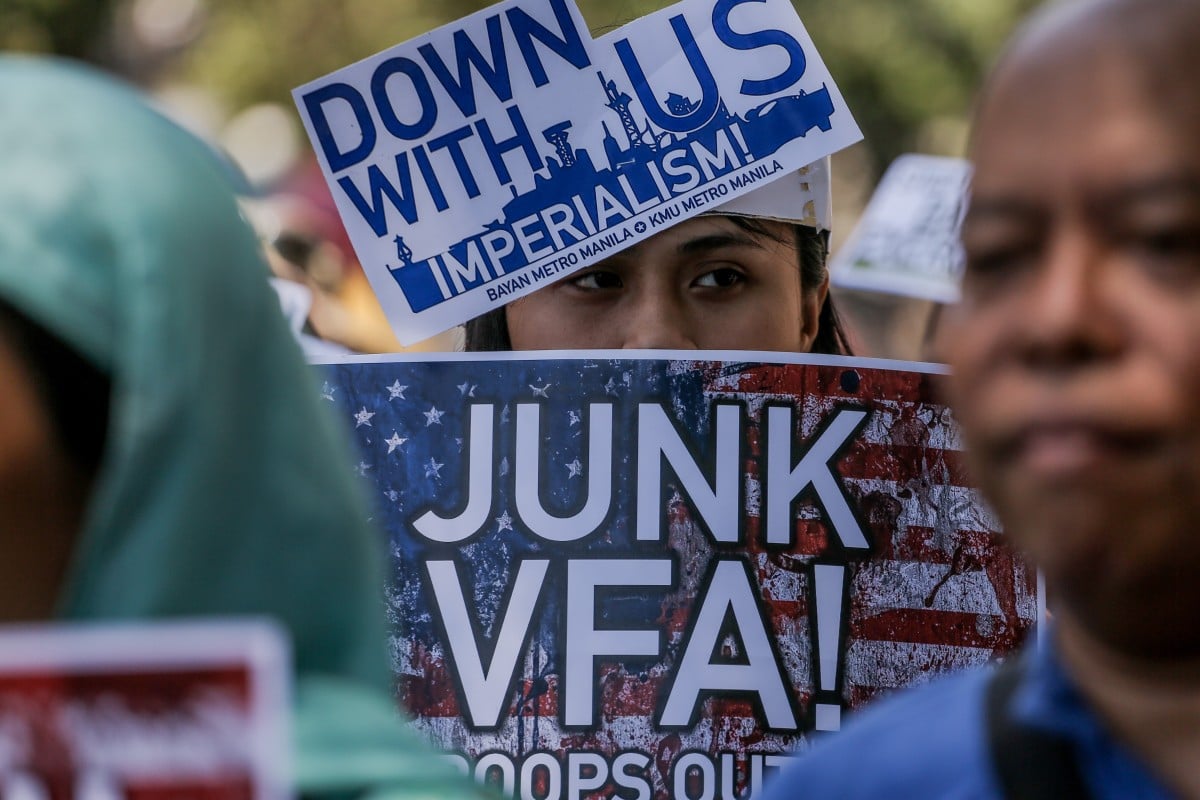

The Visiting Forces Agreement is a key part of one of 
Southeast Asia’s major security partnerships. Photo: DPA

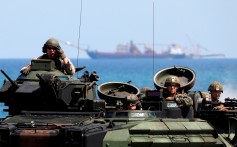
After years of threatening to abandon the Philippines’ military alliance with the United States, President Rodrigo Duterte  last week confirmed plans to terminate the agreement governing the presence of American troops, a key part of one of Southeast Asia’s major security partnerships.

The announcement was widely interpreted as an attempt by Duterte to extract concessions from Washington, which regards military cooperation with Manila as crucial to
countering Beijing’s activities in the South China Sea. US President Donald Trump, however,  told reporters he had no concerns about the treaty being scrapped.

“I really don’t mind, if they would like to do that,” Trump said on Wednesday. “We’ll save a lot of money.”

P
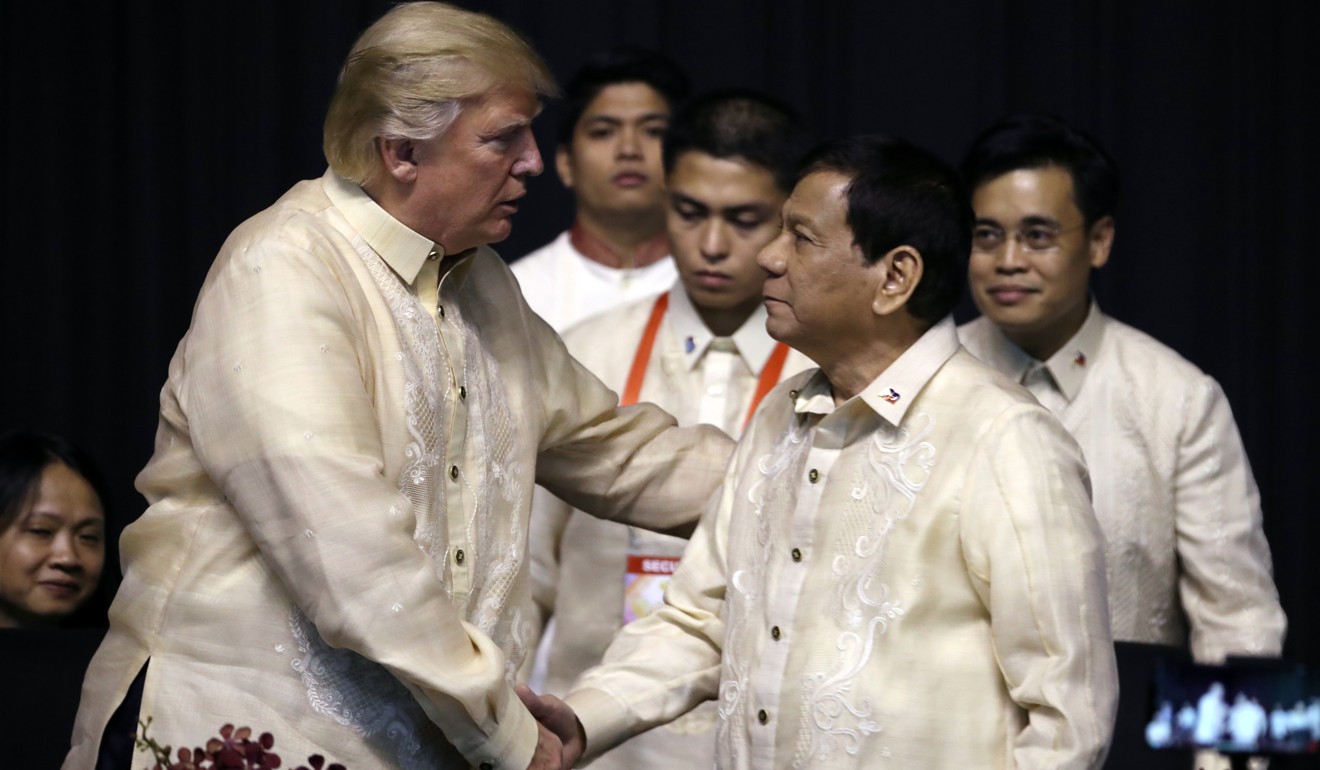
US resident Donald Trump with Philippines President Rodrigo Duterte
 at an Asean Summit in 2017. Photo: AP

Between 2016 and 2019, the US spent US$550 million on
military assistance to the Philippines, which is also a top recipient of US aid – second only to Indonesia in Asia – receiving nearly US$280 million in 2018, according to the US aid agency.


TO BUY WEAPONS FROM THE USA AND RENT FOR THE SUBIC BASE


The Visiting Forces Agreement (VFA) is one of three pacts governing the US-Philippines defence relationship. Experts warn that without it, the other two – a mutual defence agreement and the 2014 enhanced defence cooperation agreement, known as EDCA – will be substantially less effective. The agreements provide for training and assistance to the Philippines’ military modernisation effort as well as annual joint military exercises

US Defence Secretary Mark Esper last week described the termination of the VFA as “unfortunate” and “a move in the wrong direction”.

“We have to digest it. We have to work through the policy angles, the military angles,” Esper told reporters.

Trump has also pressured US allies Korea and Japan to pay more for their defence partnerships, and experts warn the deterioration of the partnership with Manila,
although initiated by Duterte, could undermine Washington’s status as a security guarantor in the region.

“Trump’s willingness to let the agreement end certainly hurts US credibility,” said Amy Searight, former deputy assistant secretary of defence for South and Southeast Asia who is now senior adviser at the Centre for Strategic and International Studies in Washington. “Being so dismissive of alliance relationships hurts our image in Southeast Asia.”

After Philippines scraps US defence pact, Rodrigo Duterte eyes Russian arms
13 Feb 2020

The Philippines was a US territory before independence in 1946, and the US has remained its primary defence partner. However, Duterte has regularly complained about Manila’s relationship with Washington and sought to realign his foreign policy towards Beijing and Moscow since he took office in 2016. Last month, he repeated his threat to end the pact after the US denied a visa to one of his allies,
Ronald Dela Rosa, who oversaw the controversial war on drugs while he was police chief.

Those complaints notwithstanding, Washington was a key ally in Manila’s fight against Isis-linked insurgents in 2017 after they laid siege to Marawi on Duterte’s home island of Mindanao.

Has the US already lost the battle for the South China Sea?
17 Feb 2020
The US has also been a critical ally to the Philippines in countering China’s claims in the disputed South China Sea. Before Duterte confirmed he wanted to terminate the agreement, the Philippines Foreign Secretary Tedoro Locsin Jnr told a televised Senate hearing that: “While the Philippines has the prerogative to terminate the VFA anytime, the continuance of the agreement is deemed to be more beneficial to the Philippines compared to any predicates were it to be terminated.”

Maritime expert Jay Batongbacal told the Philippines media that without the VFA, Beijing could continue building military bases in contested waters.

For Washington, the treaty’s collapse could leave it without a key outpost for force projection in the South China Sea.

Although the US has outposts in Darwin, Guam and Okinawa, its presence in the Philippines is described by the defence establishment as an “immediate footprint”in the South China Sea and a critical part of Washington’s strategy to pursue a free and open Indo-Pacific.


Trump’s comments could also call into question the mutual defence agreement with the Philippines, according to Derek Grossman, senior defence analyst at the Rand Corporation, a Washington think tank.


Trump’s willingness to let the agreement end certainly hurts US credibility Amy Searight, defence analyst

“If the mutual defence treaty collapses, it would be a huge win for China,” Grossman said. “This would send exactly the wrong message to Washington’s remaining allies and partners – that is, you simply shouldn’t trust that the US will defend or assist you against China, and it is therefore right to question the value of the American presence in the Indo-Pacific in the years to come.”

In a commentary for the Chinese state-run tabloid Global Times, Li Kaisheng, the deputy director at the Shanghai Academy of Social Sciences’ Institute of International Relations said he did not believe the scrapping of the pact would see Manila “gravitate towards Beijing” as China was only one of several countries it was pursuing closer ties with.
Instead, there would be an impact on the South China Sea, he added.

"Washington has repeatedly meddled in regional affairs through various means, such as sending its warships to conduct so-called freedom of navigation operations, and joint military exercises with other claimants, including Vietnam. Without the VFA, US interference with the South China Sea will be constrained,” Li wrote.

The US continuously deploys between 500 and 600 troops in the Philippines, according to Rand. The US presence was dramatically reduced in the early 1990s when lawmakers in Manila moved to shut down two bases in the 1990s which were at the time the largest US military outposts in the western Pacific.

Philippines Defence Secretary Delfin Lorenzana on Thursday said the
annual joint military exercises – called Balikatan, meaning “shoulder to shoulder” in Tagalog – planned for May would take place during the agreement’s remaining 180 days.

“Once the termination is final, we will cease to have exercises with them,” Lorenzana said.

Are Indonesia, Vietnam and Malaysia about to get tough on Beijing’s South China Sea claims? 17 Feb 2020

More distant relations between Washington and Manila could also lead to a
recalculation by other countries in Southeast Asia, especially those whose South China Sea claims overlap with Beijing’s.

Collin Koh, research fellow at Singapore’s S Rajaratnam School of International Studies, said Indonesia and Vietnam could seek closer military cooperation with the US.
Singapore has also been a key defence partner of the US and could expand military cooperation, Koh said.
“On the cusp of the closure of the US military bases in the Philippines in the 1990s, Singapore offered the US access to Changi naval base,” he said. “Singapore has been an ardent supporter of the US military presence in the region.”

Australia also maintains a visiting forces agreement with the Philippines and has in the past, along with Japan, taken part in the annual joint military exercises with the US and the Philippines. Armed Forces of the Philippines Chief of Staff General Felimon Santos Junior said the nation will increase military engagements with these neighbours after the agreement with the US ends, local media reported.

On the other hand, some experts regard the back-and-forth between Trump and Duterte as typical of two leaders known for conducting foreign affairs via dramatic statements on social media, which is ultimately unlikely to result in the dissolution of one of Asia’s longest-standing military partnerships.

China’s ‘great friendship’ with Micronesia grows warmer, leaving US with strategic headache in Pacific 23 Dec 2019
Koh suggested domestic stakeholders in
Manila’s security establishment would not support Duterte scrapping the
Philippines’ military relationship with the US altogether, and that the relationship would endure.

“This defence relationship is a long-standing, proven and deeply entrenched one that has over the decades survived the ups and downs of different administrations,” Koh said. “It’s difficult to imagine the loss of the visiting forces agreement will unravel such close bilateral military ties.”

This article appeared in the South China Morning Post print edition as: Warning over move to end pact on Defence


Meaghan Tobin has nearly a decade of experience spanning journalism and public policy in Washington, Taipei and Beijing. For the Post, she covers geopolitics, diplomacy and policy trends in Southeast Asia and the Pacific.

Pakistan government secretly passes strict social media regulations


 Men using computers are seen in Islamabad, Pakistan, on October 20, 2017. The country secretly passed regulations that restrict social media activity. (Reuters/Caren Firouz)

Pakistan government secretly passes strict social media regulations


CPJ

Washington, D.C., February 13, 2020 -- The Pakistan government should immediately roll back a set of social media regulatory measures that were passed in secret, the Committee to Protect Journalists said today.

On January 28, the federal cabinet approved the “Citizens Protection (Against Online Harm) Rules, 2020,” a set of regulations on social media content, without public consultation; the measures were enacted in secret and were reported yesterday by The News International, an English-language daily.

A copy of the regulations, which was leaked online, shows that the rules empower the government to fine or ban social media platforms over their users’ content. The regulations provide for a National Coordinator to be appointed within the Ministry of Information and Telecommunications responsible for enforcing the rules.

In the text of the regulations, the government claims the rules were approved under the authority of the 2016 Pakistan Electronic Communications Act.

“These stringent but vague rules approved by Pakistan’s federal cabinet threaten the ability of journalists to report the news and communicate with their sources,” said Steven Butler, CPJ’s Asia program coordinator. “The cabinet should immediately reverse course and seek broad consultations with legislators and civil society, including the media, on how to proceed with any such regulations.”

The regulations require social media companies including Facebook (which owns WhatsApp), Twitter, and Google (which owns YouTube), to establish representative offices in Pakistan to answer complaints filed by the National Coordinator.

The companies are also required to remove content deemed objectionable by the National Coordinator within 24 hours, and to provide to the regulator decrypted content and “any other information” about users on demand.

The companies are also made responsible for preventing the live streaming of any content “related to terrorism, extremism, hate speech, defamation, fake news, incitement to violence and national security.” If a service is does not comply, the National Coordinator is granted the power to block services and levy fines of up to 500 million rupees ($3.24 million).

The regulations do not specify how encrypted services such as WhatsApp would be able to comply with the rules.

Firdous Ashsiq Awan, special assistant to the prime minister on information and broadcasting, said in a press conference today that the regulations were aimed at protecting citizens’ interests and national integrity, and said the government would not take any steps against users’ interests, according to news reports.

Senator Mustafa Nawaz Khokhar, a member of the opposition Pakistan People’s Party and chair of the senate Human Rights Committee, told CPJ via messaging app that the rules were seen “as an attempt to further restrict space of free discourse in Pakistan,” citing censorship imposed on the media under the current government.

He said the Pakistan People’s Party would oppose the rules in the parliament and the courts.

Media Matters for Democracy, a local organization that promotes press freedom, said in a statement that the rules were an attempt to silence political opposition and critics, and expressed doubt that social media companies would comply.

A separate statement by the Digital Rights Foundation, which promotes internet safety, described the rules as a “blatant violent” of free speech provisions in Pakistan’s constitution and expressed concern that the rules would lead to self-censorship.

On February 11, Pakistan’s Senate Committee On Human Rights rejected legislation that would have empowered the country’s broadcast regulator to regulate internet and digital content, according to reports and Senator Khokhar.


Shooting the messenger


Editorial DAWN


Updated February 18, 2020

TO shoot the messenger is the go-to tactic for authoritarian leaders; facts are anathema if inconsistent with the airbrushed version of reality they choose to project. When the government demonises the media as the ‘enemy’, it creates a buffer against the public being informed of inconvenient truths and against poor governance or corruption being exposed.

Unfortunately, Prime Minister Imran Khan’s diatribes against the press have become increasingly frequent and hostile. On Saturday, during a chat with journalists, he claimed he had endured “media attacks” over the past two years, singling out the Dawn and Jang media houses as having, in his words, published “false stories” against him and his government.

In the same breath, he rightly described the media as “an important pillar of democracy” — which makes his discrediting of the press all the more ironic. Presumably, in the prime minister’s eyes, only a media uncritical of his government’s performance is a pillar of democracy; only a media that fawns over him, as it did during his long dharna in 2014, is tolerable. Now in the ‘hot seat’ himself as the country’s chief executive, Mr Khan — his well-documented aversion to criticism on full display — has even advised the people to refrain from watching TV talk shows and reading newspapers.

Democratic dispensations do not have the luxury of a victim narrative; they must defend their performance before the public on the basis of facts. However, Mr Khan demonstrates a woeful lack of understanding of the media’s function as a conduit of information — whether favourable or otherwise to the government of the day — and, if it acquits itself well, as a watchdog for the public interest.

Certainly, it is possible that inaccuracies may have crept into some coverage, and a few newspaper columns may not have been to the government’s liking. But to accuse the media of having some ‘agenda’ against it is ridiculous and smacks of rising frustration in PTI ranks. The government should not hide behind wild accusations, such as those by Mr Khan’s media aide that 20 “baseless news” had appeared in Dawn and Jang in the recent past.

Which stories were these? The publications concerned have a right to know and defend themselves.

The state’s desire to bring the media to heel is most clearly manifested in its arbitrary, unacceptable and illegal strategy since last December of denying government ads — as have done some previous administrations — to certain outlets that refuse to be dictated to. While the approach is being tacitly applied at the federal level, and KP and Punjab too have resorted to unannounced bans, there is no doubt the orders have come from the very top. The prime minister must rethink his short-sighted approach, immediately lift the ban and engage with media leaders. Power is ephemeral, and Mr Khan should consider that one day he may once again need a free press.

Published in Dawn, February 18th, 2020


Pakistan's draconian rules on social media take activists by surprise
“The Rules are a blatant violation of Article 19 of the Constitution.’’
Posted 17 February 2020 


On January 28, the Pakistan federal cabinet approved the “Citizens Protection (Against Online Harm) Rules, 2020,” without consulting other stakeholders or informing the public as The News International, an English-language daily, reported on February 12, 2020. The rules and regulations have been inserted in the Prevention of Electronic Crimes Act, 2016.

These set of rules will regulate all social media activities online and the social media companies would be obliged to disclose any information or data to investigation agencies when requested by the authorities. They would also be required to remove content deemed unlawful by the authorities. If platforms fail to comply with the rules, they risk being blocked and fined. It is not clear when the new rules will go into effect.

This took Pakistani activists by surprise:


#Pakistan Approves Broad New Restrictions Over #SocialMedia would dramatically change the way companies such as ⁦@Facebook⁩ and ⁦@Twitter⁩ operate in the country #censorship https://t.co/NWvhu9efB5

— Farahnaz Ispahani (@fispahani) February 13, 2020
What's in the rules?

According to Secretary Ministry of Information Technology Shoaib Siddiqui, the new rules require “social media companies and platforms like Facebook, YouTube, TikTok, Dailymotion, Twitter and others to open offices in Pakistan and register in the country within three months.” These platforms will have to remove any “unlawful content’’ pointed out to them in writing or in an electronically signed email within 24 hours, and in emergency cases within six hours.

According to the rules, social media means “any social media application or service or communication channel dedicated to community-based input, interaction, content, sub-content sharing and collaboration’’ and a social media company refers to “an entity that owns or runs or manages those online Systems.’’ According to the rules, such companies “shall take due cognizance of the religious, cultural, ethnic and national security sensitivities of Pakistan.’’

A National Coordinator will be appointed by the Minister of Information Technology and Telecommunication “who will be assisted by a committee comprising of stakeholders (the rules did not specify these stakeholders) as notified by the aforesaid Minister.’’ According to the rules, the Coordinator's functions will also include writing instruction in relation to the regulation of social media:


advis[ing] the Federal or Provincial Governments, and issu[ing] instructions to departments, authorities and agencies, in accordance with requirements of National Security in relation to management or regulation or functioning of social media companies. The departments, authorities or agencies shall act in compliance with the said instructions. Such instructions may include actions related to blocking of unlawful online content, acquisition of data or information from social media companies, and other such matters;

According to rule 6, “social media companies shall provide to the Investigation Agency designated or established under section 29 of the Act subscriber information about the subscriber, traffic data, content data and any other information or data.’’

Rule 7 mentions that “in case a social media company fails to abide by the provision of these Rules, the National Coordinator may issue instructions for shutting down the respective service or blocking of the entire Online System and levy a fine up to 500 million Pakistan Rupees (3.24 million US dollars).’’
“Draconian’’ rules

All major digital rights activists and many social media users in Pakistan have rejected this step and condemned it saying that this is a new attack on freedom of expression, privacy, and digital rights of Pakistanis. The rules were passed secretly in the cabinet and parliamentarians will not be debating it.

Local human rights organization Bytes for All (B4A) expressed its concerns:


Bytes for All has serious reservations over the Citizens Protection Against Online Harm rules. We believe they aim at granting access to State to personal data of citizens and curb their speech. Moreover, it will have serious implications on internet based businesses in country

— Bytes for All, PK (@bytesforall) February 14, 2020

Digital Rights activist Nighat Dad mentioned that the brand new regulations will give the government dangerous powers to control social media. According to her the definition of extremism, faith or tradition mentioned in the rules can be misinterpreted to name any on-line content material unlawful or extremist or anti-state. Section 2(d) of the rule states:


“Extremism” means the violent, vocal or active opposition to fundamental values of the state of Pakistan including the security, integrity or defence of Pakistan, public order, decency or morality, the rule of law, individual liberty and the mutual respect and tolerance of different faiths and beliefs.

Media Matters for Democracy stated:


The scope and scale of action defined in the rules appear to go way beyond the mandate given under the Pakistan Telecommunication (Re-organization) Act, 1996 (XVII of 1996) and the Prevention of Electronic Crimes Act, 2016 (XL of 2016). We remind the government that anybody creating Rules under a law has to treat them as subordinate legislation and thus, the prescribed Rules cannot exceed the power of the parent Acts, i.e. the Pakistan Telecommunication (Re-organization) Act, 1996 (XVII of 1996) and the Prevention of Electronic Crimes Act, 2016 (XL of 2016).

While Digital Rights Foundation said:


The Rules are a blatant violation of Article 19 (freedom of speech and information) of the Constitution.

The Human Rights Commission of Pakistan (HRCP) is concerned that the rules will enable the designated authorities to control freedom of expression and opinion in the guise of protecting “religious, cultural, ethnic and national security sensitivities.’’

Senator Ayesha Raza Farooq of opposition Pakistan Muslim League (Nawaz) tweeted saying:


Parliamentary oversight allows both NA & @SenatePakistan to review rules & regulations; an important component of delegated legislation.

Also, any draconian/repressive rule that stifles freedom of speech, Article 19, falls under the purview of Human Rights committee https://t.co/sHJPyBFOWN

— Senator Ayesha Raza Farooq (@AyeshaRaza13) February 13, 2020

Journalist Talat Hussain made angry comments:


#Pakistan is being thrown behind the iron curtain of one of the most draconian #socialmedia #censorships of modern times. A new authority & legal framework put in place will choke & shut down posts on fb, youtube, twitter reducing the country to a Burma or #3rdReich. Heil! Heil! pic.twitter.com/iMvMXvzH45

— Syed Talat Hussain (@TalatHussain12) February 12, 2020

The Asia Internet Coalition, an industry association comprising leading internet and technology companies including, Apple, Facebook, Amazon and Google, also expressed its concerns:


The Asia Internet Coalition submitted its initial response to Pakistan’s Citizens Protection Rules (Against Online Harm). In the submission, AIC expressed sincere concern tht unless revoked, these rules will severely cripple growth of Pak’s digital economy https://t.co/lAJn5vxxjS

— Taha Siddiqui (@TahaSSiddiqui) February 16, 2020


Google, Facebook, Apple & others:

“As no other country has announced such a sweeping set of rules, Pakistan risks becoming a global outlier needlessly isolating and depriving Pakistani users and businesses of the growth potential of the internet economy”https://t.co/e7seEXjzzr

— Fahad Desmukh (@desmukh) February 16, 2020

Despite the outcry, the Minister for Science and Technology Fawad Chaudhry defended the government’s decision mentioning that it was enacted to regulate social media to tackle harmful content and fake accounts.

This is not the first time that social media and its users in Pakistan have been under fire by the government. Recently Pakistan Electronic Media Regulatory Authority (PEMRA) drafted a policy proposing to license and regulate Over the Top (OTT) Services and Web TV and asked for public feedback, sparking a public outcry.

Written byR Umaima Ahmed 


Pakistan government's new social media rules draw criticism

Digital-rights activists say the new rules will give the authorities unflinching powers to stifle social media.

14 Feb 2020


When required, the companies will be required to provide subscriber information, traffic data, content data and any other information or data that is sought, the regulations stipulate [Johanna Geron/Reuters]


Pakistan's government has approved new rules for regulating cyberspace which opponents say could be used to stifle dissent and free speech.

Under regulations that were approved by the cabinet late last month but were not immediately made public, social media companies will be obliged to help law enforcement agencies access data and to remove online content deemed unlawful.


Companies that do not comply with the rules risk being blocked online, according to a copy of the regulations seen by Reuters news agency.

The approval of the new rules follows accusations by opposition parties that Prime Minister Imran Khan’s government has sought to intimidate and silence its opponents and allegations of media censorship. Pakistan's military has also faced accusations of cracking down on media and free speech.

INSIDE STORY I Should social media be regulated? (25:00)

But Shoaib Ahmad Siddiqui, the top official at the Ministry of Information Technology that wrote the regulations, said the new rules would help "identify and weed out unwanted and slanderous online content."

"We needed to do it to uphold the integrity, decency and respect of individuals and sanctity of institutions," he said.

The new rules on social media are described by the authors as intended to prevent live streaming of online content relating to "terrorism, extremism, hate speech, defamation, fake news, incitement to violence and national security."

Social media companies will be obliged within 24 hours to respond to a request to remove "unlawful" material or six hours in emergency cases. They will have three months to register with authorities in Pakistan and must have a physical presence in Pakistan.

When demanded, the companies will be required to provide subscriber information, traffic data, content data and any other information or data that is sought, the regulations stipulate.

The rules also state that interpretations of the regulations by the authorities in Pakistan "shall take precedence over any community standards or rules or community guidelines or policies or any other instruments devised by a social media company."
'Overreach'

Nighat Dad, who runs the not-for-profit Digital Rights Foundation in Pakistan says the new rules will give the authorities unflinching powers to stifle social media.

"The worrying part for me is that the definition around extremism, religion or culture is so wide and ambiguous and that means they have these unfettered power to call any online content illegal or extremist or anti-state," she told Reuters.

Dad told Al Jazeera that the social media policy proposed by the government would likely mean that women, ethnic and religious minorities were going to be the most vulnerable under the new rules.

Farieha Aziz, the founder of Bolo Bhi a digital rights advocacy group, also voiced concern.

"This is the kind of overreach we were worried about," she said. "They're trying to go beyond the ambit of the law, trying to go above and beyond what the law allows them to do."

Pakistani lawyer and an advocate of the Supreme Court Anees Jillani told Al Jazeera the policy was an "infringiment on freedom of speech".

SOURCE: AL JAZEERA AND NEWS AGENCIES


Pakistan Puts Press Freedom At The Core Of Struggle For New World Order – Analysis
February 18, 2020  By James M. Dorsey

Sweeping new regulations restricting social media in Pakistan put freedom of expression and the media at the heart of the struggle to counter both civilizationalist and authoritarian aspects of an emerging new world order.

The regulations, adopted without public debate, position US social media companies like Facebook and Twitter at the forefront of the struggle and raise the spectre of China’s walled off Internet with its own state-controlled social media platforms becoming the model for a host of illiberals, authoritarians and autocrats.

The regulations, that take effect immediately, embrace aspects of a civilizational state that defines its legal reach, if not its borders, in terms of a civilization rather than a nation state with clearly outlined, internationally recognized borders that determine the reach of its law and that is defined by its population and language.

The regulations could force social media companies to globally suppress criticism of the more onerous aspects of Pakistani law, including constitutionally enshrined discrimination of some minorities like Ahmadis, a sect widely viewed as heretic by mainstream Islam, and imposition of a mandatory death sentence for blasphemy.

The new rules force social media companies to “remove, suspend or disable access” to content posted in Pakistan or by Pakistani nationals abroad that the government deems as failing to “take due cognizance of the religious, cultural, ethnic and national security sensitivities of Pakistan.” The government can also demand removal of encryption.

Social media companies are required to establish offices in Pakistan in the next three months and install data servers by February 2021.

The government justified the rules with the need to combat hate speech, blasphemy, alleged fake news and online harassment of women.

The Asia Internet Coalition, a technology and internet industry association that includes Facebook and Twitter, warned that the regulations “jeopardize the personal safety and privacy of citizens and undermine free expression” and would be “detrimental to Pakistan’s ambitions for a digital economy.”

The introduction of the regulations reflects frustration in government as well as Pakistan’s powerful military with social media companies’ frequent refusal to honour requests to take down content. Pakistan ranked among the top countries requesting Facebook and Twitter to remove postings.

On the assumption that Facebook, Twitter and others, which are already banned in China, will risk being debarred in Pakistan by refusing to comply with the new regulations, Pakistan could become a prime country that adopts not only aspects of China’s 21st century, Orwellian surveillance state but also its tightly controlled media.

The basis for potential Pakistani adoption of the Chinese system was created in 2017 in plans for the China Pakistan Economic Corridor (CPEC), a US$60 billion plus crown jewel of the Belt and Road, an infrastructure, telecommunications and energy-driven initiative to tie Eurasia to China.

The 2017 plan identifies as risks to CPEC “Pakistani politics, such as competing parties, religion, tribes, terrorists, and Western intervention” as well as security. The plan appears to question the vibrancy of a system in which competition between parties and interest groups is the name of the game.

It envisions a full system of monitoring and surveillance to ensure law and order in Pakistani cities. The system would involve deployment of explosive detectors and scanners to “cover major roads, case-prone areas and crowded places…in urban areas to conduct real-time monitoring and 24-hour video recording.”

A national fibre optic backbone would be built for internet traffic as well as the terrestrial distribution of broadcast media that would cooperate with their Chinese counterparts in the “dissemination of Chinese culture.” The plan described the backbone as a “cultural transmission carrier” that would serve to “further enhance mutual understanding between the two peoples and the traditional friendship between the two countries.”

Critics in China and elsewhere assert that repression of freedom of expression contributed to China’s delayed response to the Coronavirus. China rejects the criticism with President Xi Jingping calling for even greater control.

Pakistan’s newly promulgated regulations echo Mr. Xi’s assertion during the Communist party’s January 7 Politburo Standing Committee meeting that “we must strengthen public opinion tracking and judgment, take the initiative to voice, provide positive guidance, strengthen integration, communication and interaction, so that positive energy will always fill the Internet space… We must control the overall public opinion and strive to create a good public opinion environment. It is necessary to strengthen the management and control of online media.”.


James M. Dorsey is a senior fellow at Nanyang Technological University's S. Rajaratnam School of International Studies in Singapore and the author of the blog, The Turbulent World of Middle East Soccer.
'Teach them a lesson': Indian women accuse Delhi police of abuse

Female students say they have faced police violence and police indifference when attacked by others.

by Neha Dixit
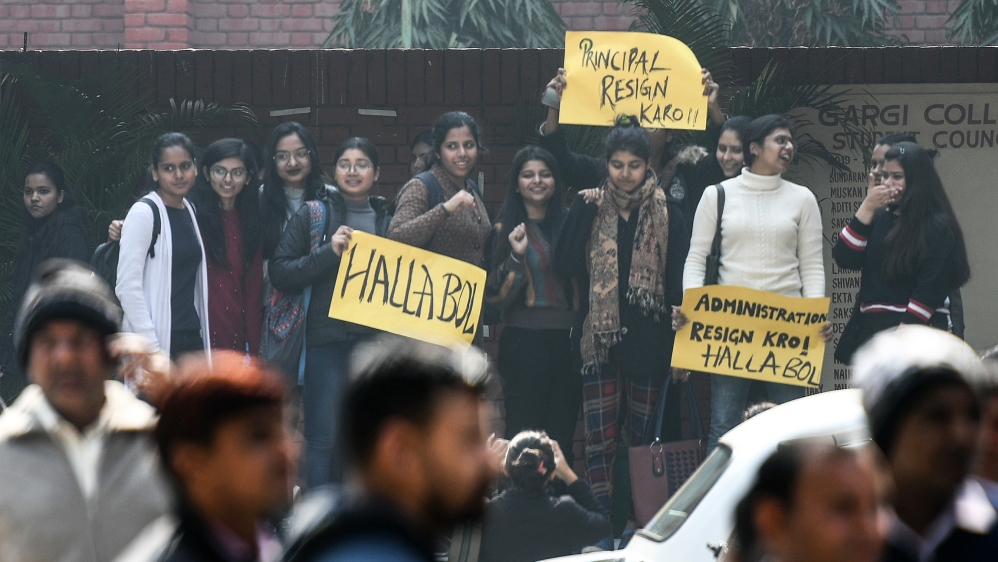
Students accuse the police and security guards of doing little as uninvited men went on a molestation spree at a women's college in New Delhi [Biplov Bhuyan/Hindustan Times/Getty Images]


New Delhi, India - Swati Singh describes how excited she was to attend her first college festival in the Indian capital, New Delhi.

On February 6, the last day of the three-day festival, as students were preparing for a concert, hundreds of men barged into the college campus and sexually harassed and abused female students.
More:

In Search of India's Soul: From Mughals to Modi

Another US city passes resolution against India's citizenship law

Meet the artists resisting India's new citizenship law

Singh says she cannot forget the horror she went through at Gargi college, an all women's college affiliated to Delhi University.

"I was looking forward to the fest. It means a lot to women like me who come from smaller cities and have never seen such big concert," says 18-year-old Singh, who hails from the central Indian city of Indore.

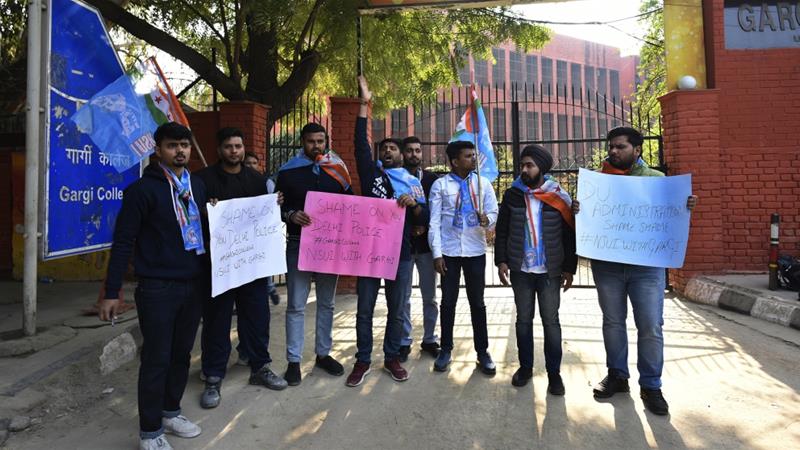
Students accuse the police and security guards of doing little as the men molested women at the college, which is located in the affluent south Delhi area of Siri Fort

"They were drunk men who groped us, pinched us in the crowd. One of them even threw money on my friend in a demeaning way. We couldn't even move," recalls Samra Ahmed, another student.

Police stood and watched

Students could not make calls for help as phone jammers were installed at the nearby Siri Fort auditorium.

"I saw some drunk men masturbating while looking at me," Tanushree, a second-year student, tells Al Jazeera.

Singh says when she approached a police constable outside the college gate, he said, "Don't you come to the fest to meet boys?"

"Police think women attend a music concert for this?" she wonders.

Several videos of the festival have surfaced that appear to show the police standing by and watching men scaling the walls to enter the college campus.

Samvedna, another student, says a stalker followed her to the metro station on her way home after the festival. When she complained to the police, she says she was told: "Look at the clothes you are wearing. Is this how Indian girls should dress? Should I call up your parents?"

Singh says she was disappointed with the reaction of Promila Kumar, the college head. "She told us that if you feel unsafe in a college fest, don't attend. Even a woman's college is not safe for us?"

The students staged a three-day strike demanding Kumar's resignation and an investigation into the incident.

Al Jazeera reached out to Kumar but she declined to comment on the issue.

Singh says her parents, who had only reluctantly agreed to allow her to move to Delhi to pursue her higher education, are now insisting she returns to Indore immediately. "They say I can join a college in Indore. It's a punishment for police not doing their job?"

The police arrested 10 people in connection with the incident but they were all released on bail on the same day.

Police have instead found fault with college authorities. "The college was at fault for not making appropriate arrangements," Atul Thakur, deputy commissioner of police for South Delhi, told Al Jazeera.

When asked why the police did not press charges against the accused, Thakur said: "We are investigating. We still don't have evidence for assault or molestation."
Turning a blind eye

Its handling of the Gargi college incident has not been the only criticism of Delhi police recently.

On Sunday, video footage - said to have been taken on December 15 last year - was released that appeared to show police beating students inside the library of Jamia Millia Islamia (JMI) University, also located in New Delhi.

In early January, police were accused of turning a blind eye to attacks on students protesting against a fee hike by masked men linked to the governing party inside Jawaharlal Nehru University (JNU) in New Delhi. More than a month after the incident, no arrests have been made.

Gargi College students protest against mass molestation that took place during their annual festival, on February 10 [Biplov Bhuyan/ Hindustan Times via Getty Images]

Four days after the Gargi College incident, police personnel baton-charged hundreds of students from JMI who were trying to march from the university campus to Parliament in protest against a new citizenship law.

Critics say the Citizenship Amendment Act (CAA) - passed last December - and a planned National Register of Citizens (NRC) is part of the Hindu-first agenda of Prime Minister Narendra Modi's government.

In the last two months, videos of young women braving police assault to save male protesters have become synonymous with the anti-CAA protests.

Many female students at JMI have accused the police of using excessive force against them during the February 10 march.

Raziya, a JMI student, says she was beaten on her private parts with a flash rod. "They said, 'These women shield terrorists with their burqa. Take them in a corner and teach them a lesson'," said Raziya, who is undergoing treatment for a rib fracture.

"Why did they target our hijab. What is wrong with it?" she told Al Jazeera.

Iqra, an 18-year-old student at JMI, says she was also beaten by a male constable with a stick on her private parts and her legs. "It was a preplanned attack specifically targeting young women who have been proactive in these protests," she said.

Chanda Yadav, another Jamia student, said she was taunted by the police: "You protect men because you think we will not hit you?" She says a male policeman hit her with a flash rod on her thigh.

But the police have denied the allegations, saying "no force was used by the police."

"All allegations against us are untrue.The entire protest has been video graphed by us," RP Meena, south east deputy commissioner of police, told Al Jazeera.

"In fact, some of our men were manhandled and they received injuries during the scuffle."

The recent incidents have raised questions about the safety of women in public spaces, particularly in Delhi which has seen a high number of sexual assaults against women.

"The idea of safety is anyway restrictive," said Shilpa Phadke, a sociologist and co-author of Why Loiter, a book on attitudes towards women in public spaces.

"Here, safety for women is also conditional on women being 'respectable' and ticking the right boxes. Attending a protest or a college fest, both do not fit into any box," she told Al Jazeera.

Activists and feminists have long highlighted the lack of gender sensitisation among India's police as patriarchal values still dominate Indian society.

Rebecca John, a lawyer at the Supreme Court of India, says the police's behaviour at Gargi college is a repetition of how they usually behave with victims of sexual violence.

"They don't see anything wrong with assault and groping. They dismiss such victims, call them liars. They try to look away. It is the same narrative here," John told Al Jazeera.

Rehana Adib, a women's rights activist, said the government is afraid of young women taking the lead.

"Young women are representing all intersections of the society - Dalit, Muslims, tribals, everyone. This has shaken the government. That is why the police has been instructed to break their determination, weaken them and send them home, show their place in a patriarchal world."
READ MORE
In Delhi, Kejriwal's pro-poor policies strike a chord with voters
Brash and bigoted: How Arnab Goswami changed India's TV debate
India's top court orders equal roles for women in army
The city where nonsmokers are dying of lung cancer


SOURCE: AL JAZEERA NEWS

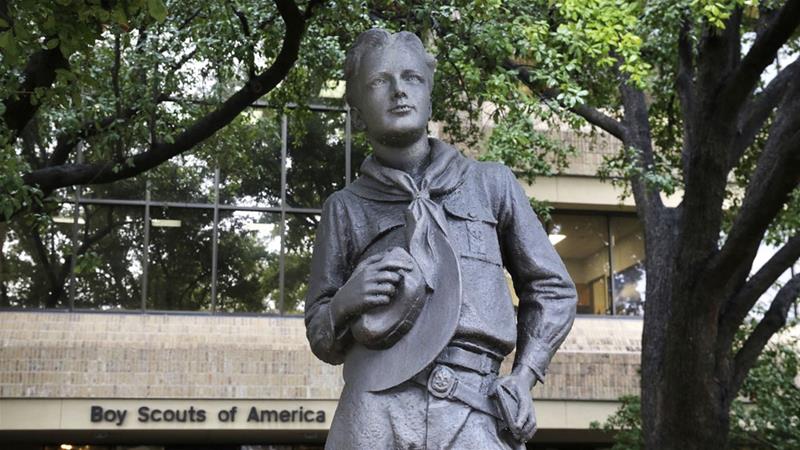
Boy Scouts of America files bankruptcy in wake of abuse lawsuits

Tom Hals


WILMINGTON, Del. (Reuters) - The Boy Scouts of America said on Tuesday it had filed for Chapter 11 bankruptcy amid a flood of lawsuits over allegations of child sexual abuse stretching back decades.


The bankruptcy is not expected to affect the organization’s programs, which promote self-reliance through outdoor activities such as hiking and camping. The group was already struggling with declining membership and controversy over admitting gay and female members.

The Boy Scouts, based in Irving, Texas, has said that it sincerely apologizes to anyone harmed, that it believes the accusers and that it encourages victims to come forward.

Founded in 1910, the organization has been overwhelmed by hundreds of claims after several states, including New York, removed legal hurdles that had barred people from suing over old allegations of child sex abuse.

The changes to the law coincided with the #MeToo movement and a shift in public opinion that has been more supportive of accusers. The result has been a wave of lawsuits against church leaders, doctors and schools, as well as scouting.

The Boy Scouts has said in a statement that “we can live up to our social and moral responsibility to fairly compensate victims” while “also ensuring that we carry out our mission to serve youth, families and local communities through our programs.”

Paul Mones, who represents hundreds of men who claim they were abused as scouts, told Reuters: “The bankruptcy is being filed as a result of decades of concealing abuse by the Boy Scouts and their adult leaders.”

The bankruptcy, filed in Delaware, will allow the Boy Scouts to bring all of the lawsuits into one court and try to negotiate a settlement, rather than using the organization’s funds to fight each case in court, which might leave some victims with nothing.

A similar bankruptcy strategy to resolve sex abuse lawsuits has been used by more than 20 Catholic dioceses and USA Gymnastics.

It could, however, be challenging to determine the value of the Boy Scouts’ assets. The national organization said in its most recent annual report from 2018 that it had $1.5 billion. But hundreds of local councils have their own assets, and victims may try to make those available for settling claims.

Membership in the organization’s Cub Scouts and Boy Scouts fell 13% at the end of 2018 from the end of 2012, according to its annual report.

The Boy Scouts lost a major source of support when the Mormon church said it would no longer sponsor scouting troops, beginning in 2020. The move by the Utah-based Church of Jesus Christ of Latter-day Saints came shortly after the Boy Scouts said it would drop “boy” from its program for older youths and after saying it would admit transgender scouts.

The church said its decision was not influenced by the Boy Scouts’ changes, but by a desire to focus on its own youth programs.


Boy Scouts files for bankruptcy to put sex-abuse lawsuits on hold

Century-old American organisation seeks protection in hopes of working out a victim compensation plan.


The number of boys taking part in the Boy Scouts of America has dropped below two million [LM Otero/AP]

The Boy Scouts of America filed for bankruptcy protection on Tuesday following hundreds of sex-abuse lawsuits in hopes of working out a victim compensation plan that will allow the 110-year-old organisation to carry on.

Scores of lawyers in the United States are seeking settlements on behalf of several thousand men who say they were molested as scouts by scoutmasters or other leaders decades ago, but are only now eligible to sue because of recent changes in their states' statute-of-limitations laws.
More:

US Boy Scouts scandal: Over 12,000 children sexually abused

By going to bankruptcy court, the Scouts can put those lawsuits on hold for now.

But ultimately they could be forced to sell off some of their vast property holdings, including campgrounds and hiking trails, to raise money for a compensation fund that could surpass $1bn.

"There are a lot of very angry, resentful men out there who will not allow the Boy Scouts to get away without saying what all their assets are," said lawyer Paul Mones, who represents numerous clients suing the group. "They want no stone unturned."

James Kretschmer of Houston, among the many men suing for alleged abuse, said he was molested by a Scout leader over several months in the mid-1970s in the Spokane, Washington, area.

Regarding the bankruptcy, he said: "It is a shame because at its core and what it was supposed to be, the Boy Scouts is a beautiful organisation.

"But you know, anything can be corrupted and if they're not going to protect the people that they've entrusted with the children, then shut it down and move on."

Evan Roberts, a spokesman for the Scouts, said operations will move forward as normal despite the bankruptcy announcement.

"Scouting programmes will continue throughout this process and for many years to come," he said.
Declining membership

The Boy Scouts' finances have been strained in recent years by declining membership and sex-abuse settlements.

The number of youths taking part in scouting has dropped below two million, down from more than four million in the peak years of the 1970s.

Founded in 1910, the Boy Scouts have kept confidential files since the 1920s listing staff and volunteers implicated in sexual abuse, for the avowed purpose of keeping predators away from youth.

According to a court deposition, the files as of January listed 7,819 suspected abusers and 12,254 victims.

Last year the organisation insisted it never knowingly allowed a sexual predator to work with young boys.

But in May, The Associated Press reported attorneys for abuse victims identified multiple cases in which known sex abusers were allowed to return to leadership posts.

The next day, Boy Scouts chief executive Mike Surbaugh wrote to a congressional committee, acknowledging the group's previous claim was untrue.


SOURCE: NEWS AGENCIES

Shades of Detroit? Germany's auto heartlands in peril as 'golden age' fades


Michael Nienaber
BAMBERG, Germany (Reuters) - When Kristin and Thomas Schmitt took out a mortgage and bought a house last summer, the German couple’s dream looked as if it was coming true. Two months later, they learned that the tire factory where both work would be shut down early next year.


Employees Kristin and Thomas Schmitt walk towards the main gate of the Bamberg branch of French tyre manufacturer Michelin, in Bamberg, Germany, February 13, 2020. REUTERS/Andreas Gebert

A malaise in Germany’s mighty automobile industry, caused by weaker demand from abroad, stricter emission rules and electrification, is starting to leave a wider mark on Europe’s largest economy by pushing up unemployment, eroding job security and hitting pay.

“It’s a nightmare. This is pulling the rug out from under our feet,” said Kristin Schmitt, 40, of the plant closure in the Bavarian region of Bamberg, one of Germany’s auto supplier hubs.

The couple, who have three children, still hopes managers at their Michelin tire factory change their mind, but the risk of unemployment looms large - and not only for the Schmitts.

The German auto sector is expected to cut nearly a tenth of its 830,000 jobs in the next decade, according to the VDA industry association.

Some think-tanks and government officials fear that the toll will be higher as electric cars provide less assembly work than combustion engine vehicles, simple work steps are replaced by automation and companies relocate production.

This is not yet 1970s Detroit, a U.S. car center that was plagued by urban decay as factory relocations, cheaper imports and higher fuel prices destroyed jobs.

But the danger is growing, automotive companies, workers, as well as regional and labor leaders, told Reuters.

Different firms are taking different steps. At the Schmitts’ plant in Hallstadt, workers are trying to avoid forced layoffs; at a Bosch factory in nearby Bamberg, pay cuts and reduced hours have been agreed, as has investment in new fuel cell technology.


With pockets of rising joblessness in the affluent, auto-producing heartlands of Bavaria and Baden-Wuerttemberg in southern Germany, there are serious implications for a country which relies on the car industry for roughly 5% of its economic output and, and an important part of its national identity.

“Germany is entering uncharted waters. The transition could well mark the end of the golden age for cars as a mass employer,” said Stefan Bratzel, head of the Center of Automotive Management, a German research institute.

“For politics, it’s a ticking time bomb.”

The outbreak of the coronavirus is adding to the crisis by disrupting global supply chains and dampening passenger car sales in China, an important market for German manufacturers.

Threats of mass lay-offs will be a defining feature of upcoming wage negotiations in the metalworking industry where unions are focusing more on job security than pay hikes.

“It could well be that we have passed the peak of automotive production,” Volkmar Denner, CEO of Germany’s largest car supplier Robert Bosch, said in January when he announced massive job cuts and a business review to cope with plunging profits.

(GRAPHIC: Less work in Germany - here)


POST-WAR ‘MIRACLE’


The Schmitts live north of the city of Bamberg, whose medieval and baroque architecture has been lovingly restored since the 1950s. It is typical of the well-heeled cities that prospered during the “economic miracle” of Germany’s post-war reconstruction.

Yet this region, which heavily depends on combustion engine technology, is facing a challenge that will have repercussions for Germany as a whole.

“We’re talking here about some 25,000 jobs in the region; that’s roughly 15% of the overall workforce,” Bamberg mayor Andreas Starke told Reuters. “This shows how dependent the region is on combustion engines.”

For the Schmitts - Thomas works on the assembly line and Kristin in the stockroom - and their more than 850 colleagues at the Michelin tire factory, the chances of keeping their jobs are looking grim.

Works council head Josef Morgenroth is trying to convince the management that the company can’t pull out of an earlier agreement which ruled out forced lay-offs until the end of 2022.

The local Michelin management declined to comment, saying it was still in talks with the works council.

‘AUTOMOBILE CRISIS’

To help workers affected by the car industry disruption, politicians, companies and labor unions have called on the government to support the shift to alternative technologies such as electric cars or hydrogen-powered fuel cells.

In a rare joint statement, automakers and unions said in January that Berlin must expand state-backed employment schemes, known as Kurzarbeit, to cover a longer pay subsidy period of up to 24 months as well as retraining in new skills such as building electric vehicle parts.

The German cabinet is expected to approve the more flexible Kurzarbeit rules next month. Under the scheme, companies can apply for state aid to avoid lay-offs and keep skilled workers for a limited time of currently up to 12 months.


Slideshow (14 Images)

Depending on agreements between company and works council, employees work reduced hours or even stay at home, with the government paying two-thirds of the lost net income.

For the economy as a whole, this means consumers have less money to spend, eroding Germany’s most important pillar of economic support in recent years as exports falter. That in turn could become an issue for the European Central Bank as it seeks to stimulate the wider euro zone economy with a limited arsenal.

Research institute GfK expects German household spending to grow by 1% in 2020, down from roughly 1.5% last year.

Even without the planned changes, the number of employees already forced to work in Kurzarbeit schemes jumped to 96,000 in November, up from about 20,000 two years before, and surpassing levels last seen during the euro zone debt crisis in 2012/13, according to the Federal Labour Office.

Projections suggest that the number will rise to 117,000 this month, with the increase mainly due to the problems in the car industry, said Detlef Scheele, head of the state agency.
PAY CUT VS JOB CUT

Some auto suppliers have cut pay without applying for state aid under the short-time schemes.

At the Bosch factory, management and the works council sealed a deal to avoid forced lay-offs until 2026 under the condition that all 7,000 employees reduce working hours and accept a pay cut of nearly 10% from April 2020.

“Of course, this is causing mixed feelings,” said Sven Bachmann, production manager at the plant, which is 100% focused on combustion engine parts. “For me personally, the relief prevails that my job is safe for the next six years.”

In addition, the company pledged to invest in fuel cells, which could become an important alternative energy source for trucks and buildings over the next 10 years.


“This pledge is really important because it shows Bosch is not only thinking about cutting costs, but also about securing future growth and jobs,” works council head Mario Gutmann told Reuters.

The city of Bamberg is complementing the efforts by building a new district on an old U.S. military base where stationary fuel cells, powered with hydrogen, will provide electricity, heating and warm water for up to 1,000 apartments.

Mayor Starke is hoping that Bamberg’s efforts to diversify its local economy can help cushion the negative effects of the car crisis on the regional labor market.

There’s a lot at stake for people like the Schmitts.

“We canceled our holidays, we also told the children that we have to scale back special treats,” Kristin said. “Now, we all pray that we can keep the house.”


Reporting by Michael Nienaber; Additional reporting by Mark John, Edward Taylor, Ilona Wissenbach and Jan Schwartz; Editing by Pravin Char
Our Standards:The Thomson Reuters Trust Principles.
GM shuts Australia, NZ operations; sells Thai plant to Great Wall

Hilary Russ, Yilei Sun

NEW YORK/BEIJING (Reuters) - General Motors Co (GM.N) said it would wind down its Australian and New Zealand operations and sell a Thai plant in the latest restructuring of its global business, costing the U.S. auto maker $1.1 billion.

The moves will accelerate GM’s retreat from unprofitable markets, making it more dependent on the United States, China, Latin America and South Korea, and give up an opening to expand in Southeast Asia.


They come after the company told analysts this month that restructuring GM’s international operations outside of China to produce profit margins in the mid-single digits would represent “a $2 billion improvement” on two years ago.

RELATED COVERAGE

Timeline: General Motors streamlines its international operations


GM has forecast a flat profit for 2020 after a difficult 2019, and is facing ballooning interest in electric car rival Tesla Inc (TSLA.O).

GM is “focusing on markets where we have the right strategies to drive robust returns, and prioritizing global investments that will drive growth in the future of mobility,” especially in electric and autonomous vehicles, GM Chair and CEO Mary Barra said in a statement late on Sunday.

The latest changes - a continuation of GM’s retreat from Asia that began in 2015 when it announced it would stop making GM-branded cars in Indonesia - will lead to cash and non-cash charges of $1.1 billion. Some 600 jobs will be lost in Australia and New Zealand, while GM said about 1,500 jobs would be affected by the sale in Thailand.

Barra has prioritized profit margins over sales volume and global presence since taking over in 2014.

In 2017, she sold GM’s European Opel and Vauxhall businesses to Peugeot SA (PEUP.PA) and exited South Africa and other African markets. Since then, Barra has decided to pull GM out of Vietnam, Indonesia and India.

“THE END OF AN ERA”

Like Britain, Australia and New Zealand are right-hand drive markets. With sales of GM’s Australian Holden brand plummeting, the company could not justify the investment to continue building right-hand drive vehicles, GM President Mark Reuss said.


The move stoked anger in Australia, where GM Holden long ranked among the country’s best selling car companies after the first locally made mass-production car rolled off the assembly line with a Holden badge in 1948.

Amid continuous decline in new car sales, GM said it was ending Australian factory production in 2017 and last year called time on former best-seller the Commodore as part of a shift towards more compact SUVs and utility vehicles.

Australian Prime Minister Scott Morrison said on Monday he was disappointed and angry at the decision, although not surprised.

“Australian taxpayers put billions into this multinational company. They let the brand just wither away on their watch,” he told reporters in Melbourne.

GREAT WALL GOING ABROAD

Great Wall, one of China’s biggest sport-utility vehicle makers, said it will sell cars from the Thai manufacturing base, which also has an engine plant, in Southeast Asia and Australia as it seeks global sales amid a slowing domestic market.

“There is no choice, if we don’t go global, we will not survive,” Wei Jianjun, chairman of the Baoding-based automaker, said last year when Great Wall opened a plant in Russia.


It also signed an agreement in January to buy GM’s car plant in India. The Thai transaction is expected to be completed by the end of 2020.


“Such an acquisition could give Great Wall quick access to the ASEAN market, and Thailand is a good choice for its production base amid the country’s established supply chain in the automotive industry,” said Shi Ji, analyst at Haitong International.

Great Wall is likely to face fierce competition from Japanese automakers which dominate Thailand’s domestic car sales. Thailand produces around 2 million vehicles each year, with just over half exported.

Great Wall may consider also building pickup trucks and SUVs in Thailand, a source familiar with the matter told Reuters .

The firm, which is building a car plant with BMW (BMWG.DE) in China, sold 1.06 million cars last year, including 65,175 units for export.

Reporting by Hilary Russ, Joe White, Yilei Sun, Chayut Setboonsarng, Byron Kaye and Kevin Buckland; Editing by Christopher Cushing and Richard Pullin
Our Standards:The Thomson Reuters Trust Principles.
Pakistan confirms escape of Taliban leader who justified Malala shooting

Asif Shahzad

ISLAMABAD (Reuters) - A high-profile local Taliban figure who announced and justified the 2012 attack on teenage Nobel laureate Malala Yousafzai has escaped detention, Pakistan’s interior minister confirmed a few days after the militant announced his breakout on social media.

Former Pakistani Taliban spokesman Ehsanullah Ehsan, who claimed responsibility on behalf of his group for scores of Taliban attacks, proclaimed his escape on Twitter and then in an audio message sent to Pakistani media earlier this month.

The Pakistani military, which had kept Ehsan in detention for three years, has declined to comment but, asked by reporters about the report, Interior Minister Ijaz Shah, said: “That is correct, that is correct.”

Shah, a retired brigadier general, added that “you will hear good news” in response to questions about whether there had been progress in hunting down Ehsan.

Ehsan later told a Reuters reporter by telephone that he had already left Pakistan and arrived in Turkey together with his wife and children. He said he had surrendered to the army under a deal, and escaped only after the agreement was not honored.


He said he escaped on Jan. 11 but did not clarify how he had broken out of a maximum-security military prison and made his way to another country.

Pakistani analysts and experts on militant Islam have voiced doubt about Ehsan’s claim to have escaped. They have speculated that he may have been converted into an asset by the state and that reports he was on the run could be a ruse to plant him back in the Islamist militant scene for use as an informant.

After Ehsan’s surrender in 2017, local Geo News TV aired an interview he gave in custody in which he asserted that the intelligence services of Pakistan’s arch-rival, India, had been funding and arming Pakistani Taliban fighters.

The Pakistan army pledged to put Ehsan on trial but has not done so.

Taliban attacks in Pakistan have declined in recent months since the army carried out several operations against sanctuaries used by the Islamist militant groups in lawless districts along the border with Afghanistan.

Additional reporting by Jibran Ahmad in Peshawar, Pakistan; Writing by Asif Shahzad; Editing by Mark Heinrich
Canada’s legal pot market mirrors U.S. states in the worst ways: analyst

Jeff Lagerquist Yahoo Finance Canada February 12, 2020


TORONTO, ON - APRIL 1: Cannaibis educator Jonathan Hirsh
 smokes a joint he purchased outside the Hunny Pot Cannabis Co. 
store at 202 Queen St. W. 
(Andrew Francis Wallace/Toronto Star via Getty Images)

Canada was lauded as a trailblazer when it became the first G7 nation to legalize pot for both recreational and medical use. However, the market today mirrors the patchwork of U.S. states where the drug is legal in the worst possible ways, according to one analyst.

“A close look at the U.S. recreational and medical markets makes us think the Canadian cannabis market has adopted the worst of each recreational state, and little of the good,” Cantor Fitzgerald’s Pablo Zuanic wrote in a research note on Wednesday.

The state of Canada’s legal cannabis market has been in sharp focus as of late following layoffs Aurora (ACB.TO)(ACB), Tilray (TLRY), and most recently The Supreme Cannabis Company (FIRE.TO).

Producers have blamed a litany of regulatory headwinds for lacklustre performance, ranging from retail store shortages, to restrictions on branding and packaging, to the delayed roll-out of vape products in certain provinces amid health concerns. Those factors have been compounded by a persistently robust black market with far cheaper prices.

Such complaints are likely to resurface later this week as two of largest players, Aurora and Canopy Growth (WEED.TO)(CGC), report financial results for challenging quarters.

When it comes to the slow pace of pot shop openings, a persistent problem in Canada’s most populous province of Ontario, Zuanic draws comparisons to Michigan and Massachusetts.

While store openings are accelerating today, Zuanic said Massachusetts’ 33 stores amount to only 4.8 locations for every million residents 37 months after recreational legalization. To compare, he notes Ontario has 1.7 stores per million residents, and Quebec has 2.7 stores per million residents.

Thriving illicit cannabis sources have been a major headwind for Canada's fledgling legal market. Zuanic sees Canada akin to California when it comes to the balance of black market supply versus legal product. He estimates 60 per cent of pot purchases in the Golden State comes from illegal sources. According to Statistics Canada’s most recent projections, 61.8 per cent of spending in the fourth quarter of 2019 was made in the illegal market.

While the early days of recreational legalization in Canada were plagued by shortages, the situation has now swung to one of oversupply, with a number of producers rolling out discount brands to offload excess inventory.

Zuanic traces this downward pressure on prices to a high number of cultivator licences, a situation he also sees weighing on prices in Oregon.

“In Canada, most of the 194 licensed producers for medical marijuana were allowed to produce recreational cannabis, and the initial flood of capital (now a trickle) helped most to expand aggressively. The result is an oversupply situation,” he wrote.

Jeff Lagerquist is a senior reporter at Yahoo Finance Canada. Follow him on Twitter @jefflagerquist.