Tuesday, February 18, 2020

The Whiting of Euro-Americans: A Divide and Conquer Strategy

By Thandeka / msuweb.montclair.edu  Sep 16, 2015
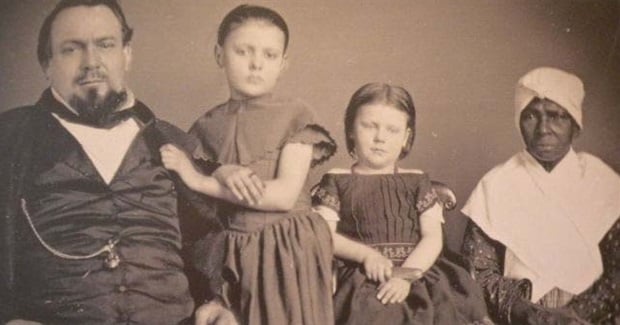
In 1670, the Virginia assembly, comprising some of the colony’s most successful and powerful men, forbade free Negroes and Indians to own Christian (that is to say, white) servants. In 1676, the assembly made it legal to enslave Indians. From 1680 on, white Christians were free to give "any negroe or other slave" who dare to lift his hand in opposition to a Christian 30 lashes on the bare back. In 1705, masters were forbidden to ‘whip a Christian white servant naked." Nakedness was for brutes, the uncivil, the non-Christian. That same year, all property – "horses, cattle, and hogs" – was confiscated from slaves and sold by church wardens for the benefit of poor whites. By means of such acts, the tobacco planters and ruling elite of Virginia raised the legal status of lower-class whites relative to that of Negroes and Indians, whether free, servant, or slave.
The legislators also raised the status of white servants, workers, and the white poor in relations to their masters and other white superiors. Until then the European indentured servants had lived and worked under the same conditions as the African slaves, the chief difference in their status being that the Europeans’ servitude was contracted for a specified period whereas the slaves, and their progeny, served for life. In 1705, the assembly required masters to provide white servants at the end of their indentureship with corn, money, a gun, clothing, and 50 acres of land. The poll tax was also reduced. As a result of these legally sanctioned changes in poor whites’ economic position, they gained legal, political, emotional, social, and financial status that depended directly on the concomitant degradation of Indians and Negroes.
By means of the race laws, Virginia’s ruling class systematically gave their blessing to lower-class whites, whom they nevertheless considered "the scruff and scum of England" and who, free no in the colonies after indentured servitude, were thought of as the rabble of Virginia. Social historian Edmund Morgan reminds us how radical the race laws were when he notes that the
Stereotypes of the poor expressed so often in England during the late seventeenth and eighteenth centuries were often identical with the descriptions of blacks expressed in colonies dependent upon slave labor, even to the extent of intimating the subhumanity of both: the [white] poor were ‘the vile and brutish part of mankind’; [blacks] ‘a brutish sort of people.’ In the eyes of unpoor Englishmen, the poor bore many of the marks of an alien race.
These descriptions were consistent with a contemporary usage of race denoting something like what we mean by class today. As cultural scholar Ann Laura Stoler notes in her book Race and the Education of Desire, the "race" of the rising English industrial class pertained not to their color or physiognomy but to their bourgeois class status, mores, and manners. Accordingly, racial superiority, and thus the right to rule, came to be equated with middle-class respectability. The poor, by definition, could never belong to this new bourgeois race.
Morgan writes that some of the ‘alien," bedraggled and penniless Englishmen and women were shipped to Virginia, and
When their masters began to place people of another color in the fields beside them, the unfamiliar appearance of the newcomers may well have struck them as only skin deep. There are hints that the two despised groups initially saw each other as sharing the same predicament. It was common, for example, for servants and slaves to run away together, steal hogs together, get drunk together. It was not uncommon for them to make love together.
African-born slaves and European-born indentured servants collaborated throughout the Anglo-American colonies. In the British West Indies, for example, legislation was passed in 1701 that forbade the importation of Irish Catholics, and subsequently of any Europeans, to the island of Nevis because European servants had combined there with African slaves to rebel against the ruling elite. The Virginia race laws by which plantation masters elevated the racial status of their white servants, workers, and other "rabble" were enacted for the exact same reasons as the Nevis race laws.
To understand this fully requires attention to the new role slavery began to play in Virginia as the 17th century wore on. By 1660, it had become more profitable for the labor barons to buy slaves rather than the labor of indentured servants. A host of reasons explain this shift, including a dwindling pool of prospects for indentured servitude and a decline in mortality from diseases in the colony, which made slaves, although twice the price of indentured servants, a better long-term investment. Because slaves and their progeny served for life, the time and work extracted from them would more than repay the added cost. To increase slaves’ productivity, masters had only to increase the severity of beatings and maimings, meanwhile enacting laws to protect themselves from prosecution for the inadvertent killings that might result.
This new setup, however, required a new strategy for social control, for the natural class affinities between indentured servants and enslaved ones presented a danger to the masters. Until 1660, indentured servants outnumbered slaves on the Virginia tobacco plantations. They were kept in separate servant quarters, supervised by overseers, and whipped as a means of "correction." Like their 18th century slave counterparts, they were also underfed and underclothed. In response, they sometimes ran away but rarely, if ever, rebelled as a class.
As freedmen, however, they did rebel. Led by a well-born Englishman named Nathaniel Bacon, a government official who ironically held wealthy Virginians in contempt because of their "vile" (lower-class) beginnings, the freedmen first slaughtered Indians and then turned their guns on the ruling elite. The rebels were rankled by unfair taxes, legislators’ greed, and land use regulations that relegated most of them to the status of landless workers for hire. This 1676 "Bacon Rebellion" did not end before Jamestown was burned to the ground, Bacon died, and the English intervened militarily. Last to surrender was a group of 80 Negroes and 20 English servants.
With a swelling slave population, the masters faced the prospect of white freedmen with disappointed hopes joining forces with slaves of desperate hope to mount ever more virulent rebellions. The elites’ race strategy decreased the probability of such class rebellions. The problem of how to redirect the "rabble" so that they would not bond with slaves was resolved through the sinister design of racialization. Writes Morgan, "The answer to the problem, obvious if unspoken and only gradually recognized, was racism, to separate dangerous free whites from dangerous slave blacks by a screen of racial contempt."
Racial contempt would function as a wall between poor whites and blacks, protecting masters and their slave-produced wealthy from both lower-class whites and slaves. At the same time, the new laws led the poor whites to identify with the ruling elite, an identification with an objective basis in fact – otherwise this divide and conquer class strategy would not have worked. Laws like the ones that gave white freedmen the right to whip a Negro slave but prevented white servants from being whipped while naked engendered a psychological allegiance to the elite through abuse: the right to abuse those below them and a constraint on the abuse meted out by those above them. Of course, this allegiance, and the laws that engendered it, did not protect the white servant from being beaten. The laws simply limited the abuse and thus, in the guise of a humane reform, actually maintained the legal sanction of violence against both the black and white servant and worker.
In addition to their marginal privileges vis-à-vis punishment, poor whites acquired new political and social advantage by means of these new laws, along with the legislated right to feel superior to all nonwhites. A quota of "deficiency laws" was established to link white workers to black slaves, thus ensuring the stability of the race-based economic status quo. Historian Theodore Allen writes that these laws required plantation owners to "employ at least one ‘white’ for every so many ‘Negroes,’ the proportion varying from colony to colony and time to time, from one-to-twenty (Nevis, 1701) to one-to-four (Georgia, 1750)."Other laws urged slave owners to bar Negroes from trades in order to preserve those positions for "white" artisans. / 17 / The increasingly pervasive link between white work and the degraded condition of the black led white workers to accept the reality of – and necessity for – black slavery.
Not surprisingly, however, poor whites never became the economic equals of the elite. Though both groups’ economic status rose, the gap between the wealthy and poor widened as a result of slave productivity. Thus, poor whites’ belief that they now shared status and dignity with their social betters was largely illusory.
The new multi-class "white race" that emerged from the Virginia laws wasn’t biologically engineered but socially constructed, then. As Allen points out, the race laws and the racial contempt they generated not only severed ties of mutual interest and goodwill between European and African servants and workers, but they also provided the ruling elite with a "buffer" of poor whites between themselves and the slaves to keep blacks down and prevent both groups from challenging the rule of the elite. A. Leon Higgenbotham Jr., the former chief judge of the United States court of Appeals for the third Circuit, is right when he says the Virginia race laws, which were soon imitated throughout the colonies, were designed to "presume, protect, and defend the ideal of superiority of whites and the inferiority of blacks." But we must not forget that white racism was from the start a vehicle for classism; its primary goal was not to elevate a race but to denigrate a class. White racism was thus a means to an end, and the end was the defense of Virginia’s class structure and the further subjugation of the poor of all "racial" colors. 
Interestingly, there was early resistance to these race laws by the newly whited lower classes. When, for example, the Virginia Assembly in 1691 outlawed mixed marriages and thus mulatto offspring ("that abominable mixture and spurious issue"), residents petitioned the assembly in 1699 "for the Repeale of the Act of Assembly, Against English people’s Marrying with Negroes Indians or Mulattoes." The petition, after internal legislative maneuvers, was ignored. During this same period, an Englishwoman named Ann Wall was arraigned by a county court and charged with "keeping company with a negro under pretense of marriage." She was convicted, bound with her two mulatto children to indentured service in another county, and told that if she ever returned to her home in Elizabeth City, she would be banished to Barbados.
Gradually, however, the new legislation began to influence both the class and racial perceptions of the "white" Virginians, as the memories of communal life and work shared by indentured Euro-American and enslaved African American workers were lost with the death of the first generations of Virginians. Thus, by 1825, free white laborers either emigrated to the West or festered in extraordinary poverty because their race pride prevented them from working alongside free Negroes. For example, in 1825, a petition circulated among citizens of Henrico County in Virginia asserted that "white [the free negro] re- / 18 / mained here … no white laborer will seek employment near him. Hence it is that in some of the richest counties east of the Blue Ridge the white population is stationary and in many others it is retrograde." Noting the pattern of white emigration from Virginia, Governor Smith in his 1847 message to the legislature said, "I venture the opinion that a larger emigration of our white laborers is produced by our free negroes than by the institution of slavery." Poor whites’ racial antipathy toward free Negro Virginians not only staved off political collaboration but further enriched the white employers, who preferred Negro freedmen over whites because they worked cheaper. Also, because they had no legal protections, they were totally subject to their employers’ wishes. As Governor Smith complained in 1848, free Negroes "perform a thousand little menial services to the exclusion of the white man. [They are] preferred by their employers because of the authority and control which they can exercise and frequently because of the ease and facility with which they can remunerate such services." Classism augmented by racism thus succeeded in disempowering the white Virginia lower classes, but these whites’ own racism further disempowered them by distracting them from the class exploitation that they shared with Negroes. 
As W.E.B. Du Bois notes in his seminal work, Black Reconstruction in America: 1860-1880, the poor white man couldn’t conceive of himself as a laborer because of labor’s association with Negro toil. Rather, the poor white, if he aspired at all, aspired to become a planter and own "niggers." Accordingly, he transferred his hatred for the slave system to the Negro and by so doing stabilized the entire slave system as "overseer, slave driver and member of the patrol system. But above and beyond this role in maintaining the slave system, it fed his vanity because it associated [him] with the masters." The poor white’s association with the southern elite, however, was a one-way affair. As one observer noted, "For twenty years, I do not recollect ever to have seen or heard these non-slaveholding whites referred to by the Southern gentlemen as constituting any part of what they called the South."

The poor whites’ vanity was thus based on both fact and illusion. The fact pertained to the poor whites’ race. They did have the race privilege of not being slaves and legal rights as citizens because they were white. The illusion pertained to their class status. Their race made them think of themselves as planters and aristocrats, while their actual economic and social condition was dire. Only 25 percent of the poor whites were literate. Frederick L. Olmstead in his 1856 book A Journey to the Seaboard Slave States details their living conditions in the following description of a white backwoods settlement:
A wretched log hut or two are the only habitations in sight. Here reside, or rather take shelter, the miserable cultivators of the ground, or a still more destitute class who make a precarious living by peddling "lightwood" in the city…
These cabins … are dens of filth. The bed if there be a bed is a layer of something in the corner that defies scenting. If the bed is nasty, what of the floor? What of the whole enclosed space? What of the creatures themselves? Pough! Water in use as a purifier is unknown. Their faces are bedaubed with the muddy accumulation of weeks. They just give them a wipe when they see a stranger to take off the blackest dirt…. The poor wretches seem startled when you address them, and answer your questions cowering like culprits."
As for poor urban whites, he wrote:
I saw as much close packing, filth and squalor, in certain blocks inhabited by laboring whites in Charleston, as I have witnessed in any Northern town of its size; and greater evidences of brutality and ruffianly character, than I have ever happened to see, among an equal population of this class, before."
Clearly, then, the poor white masses, like the black slaves, were also racial victims of the upper class. The two exploited, racialized groups differed, however, in their degree of self-awareness. Virtually all slaves knew they were victims of white racism, while very few whites knew that they were, too. 
A good example of the racial violence meted out to the whited lower classes by the ruling elite involved the voting eligibility requirements in the South. Here we find the white-on-white class conflict that interracial conflict was designed to obscure. As Du Bois observes, "most Southern state governments required a property qualification for the Governor, and in South Carolina," the minimum value of his financial worth was stipulated: $10,000. He adds, "In North Carolina, a man must own 50 acres to vote for a Senator." Thus in 1828, out of 250 votes in Wilmington, North Carolina, only 48 men could vote in senatorial elections.
The white southern elite also established the "extraordinary rule" of allowing slave owners to exercise the vote of all or at least three-fifths of their black slaves. This concentration of political power not only degraded, in theory, the personhood of people with African ancestry by counting many such persons as only three-fifths human, but it effectively disenfranchised virtually all white southerners except for the biggest slaveholders. And at the beginning of the Civil War, seven percent of white southerners owned almost three quarters (three million) of the slaves in this country. Thus, although the South had two million slaveholders in 1860, an oligarchy of 8,000 actually ruled the region, controlling the five million whites too poor to own slaves. The lower classes responded with self-contempt and blindness to such of their own class interests as went beyond their perceived racial interests as whites.
The psychological self-destruction entailed in poor whites’ celebration of race to the detriment of their own class interests takes us into the realm of lower-class white shame. The 1941 classic The Mind of the South, by the southern essayist and social critic W.J. Cash, gives us an intimate and detailed description of the hidden injury done to the southern Euro-American’s personality structure by the racialization of class issues described above.
Cash tersely assesses the psychological price paid by the southern Euro-American man of any class who defines himself as white: "a fundamental split in his psyche [resulting] from a sort of social schizophrenia." Those at the top believed they were as grand and aristocratic as the Virginians after who they modeled themselves. Backwater cotton planters thus imitated the Virginians in manner, dress, and comportment, but they could never, Cash argues, "endow their subconscious with the aristocrat’s experience, which is the aristocratic manner’s essential warrant. In their inmost being they carried nearly always, I think, an uneasy sensation of inadequacy for their role."
The common man also wrapped himself in class illusions that separated him from the actual experiences of his life. He actively embraced the idea that he was an aristocrat, identifying with the planter class through a glowing sense of participation in the common brotherhood of white men. The "ego-warming and ego-expanding distinction between the white man and the black" elevated this common white man, Cash argues,
to a position comparable to that of, say, the Doric knight of ancient Sparta. Not only was he not exploited directly, he was himself made by extension a member of the dominant class – was lodged solidly on a tremendous superiority, which, however much the blacks in the "big house" might sneer at him, and however much their masters might privately agree with them, he could never publicly lose. Come what might, he would always be a white man. And before that vast and capacious distinction, all others were foreshortened, dwarfed, and all but obliterated.
The grand outcome was the almost complete disappearance of economic and social forces on the part of the masses. One simply did not have to get on in this world in order to achieve security, independence, or value in one’s estimation and in that of one’s fellows.
This delusional "vast and capacious distinction," by blinding the white poor to their own class interests, reduced the common white man’s economic worth to naught. Writes Cash, "let him be stripped of this proto-Dorian rank and he would be left naked, a man without status." In effect, the emotional security lent by the hand of a fine gentleman on the common man’s shoulder in a friendly greeting became a substitute for economic security. Having shifted focus form class issues to racial feelings, the common white man, in effect, had been robbed of almost everything by his own racial "brothers."


Reproduced from: World: The Journal of the Unitarian Universalist Association. Vol. XII No: 4 (July/August 1998), pp. 14 –20)

Rev. Dr. Thandeka is the author of Learning to be White.

"No reader of Thandeka's book will ever be able to think about race in quite the same way again." 
- John B. Cobb, Jr., The Claremont Graduate School

"No other study so fully demonstrates the origins of white identity in misery and defeat, as well as in power and privilege. Whiteness, Thandeka shows, is a shame which divides and afflicts whites as well as the nation." 
- David Roediger, author of The Wages of Whiteness
 

Bernie Sanders Faces a Media Rigged Against Him

By Jeff Cohen / truthdig.com / Feb 15, 2020

"Former" White House Deputy Chief of Staff Jim Messina. 
Jim currently works as a corporate consultant and is the 
CEO of The Messina Group.

CNN and CBS do it. NPR and PBS do it. They all do it.

It’s a “gentleman’s” agreement between elite media and their establishment guests—a courtesy major news outlets bestow upon former officials who get to pontificate and editorialize about today’s events with no worry they’ll be identified by their jobs today.

On Wednesday night, CNN’s Don Lemon hosted ubiquitous Bernie Sanders-basher Jim Messina—solo, without an opposing view—to slam Sanders and his Medicare-for-All proposal.

Messina was introduced and repeatedly identified only by his former positions: “Former Obama Campaign Manager” and “Former Deputy Chief of Staff, Obama Administration.”

As is typical, viewers weren’t told what Messina’s current job is—far more relevant information than his positions years ago.

Messina is now a corporate consultant. He is CEO of The Messina Group, whose website boasts corporate clients such as Amazon’s pharmaceutical subsidiary PillPack, Google, Uber, Delta, and that boasts the slogan: “Unlocking Industries So Businesses Can Win.”

If properly introduced, it would have been no surprise to CNN viewers that a corporate consultant would malign Sanders, the most popular anti-corporate politician in recent U.S. history.

Lemon also neglected to inform viewers that since leaving Team Obama, Messina has been paid handsomely to elect conservative politicians across the globe, from Tory Prime Ministers David Cameron and Theresa May in Britain to Prime Minster Mariano Rajoy in Spain. Messina’s company website features an image of Cameron next to a banner that reads: “Campaigning for candidates we believe in.”

In U.S. corporate media, such misidentification is a hoary tradition, and a dishonest one. More relevant to news consumers in judging the quality of information from a former government official would be the current employment and entanglements of that ex-official.

In the months after the Chinese government massacred students in Tiananmen Square in 1989, no voice in U.S. media was more prominent or ubiquitous in apologizing for China than Henry Kissinger, usually identified only as “former Secretary of State.” Consumers of news were almost never told that at the time, Kissinger was a consultant to corporations doing business in China, as well as the head of China Ventures, a company engaged in joint ventures with China’s state bank.

When health care reform was being hotly debated in 1993-94, NPR presented point-counterpoint face-offs between a former GOP congressman and a former Democratic congressman, both of whom were quick to deride the proposal in Congress for a single-payer system of government-provided health insurance. NPR didn’t tell its listeners that both of its “formers” were current lobbyists or consultants for private health care corporations.

A lot of the corruption in Washington—the kind Sanders and Elizabeth Warren criticize—stems from former officials, whether Democrat or Republican, leaving government to work as consultants or lobbyists for private interests. Mainstream news outlets work hard to look away from this corruption, and one way they do so is by dutifully identifying their “experts” only as formers.

Anita Dunn will always be the “former Obama White House Communications Director.” (In that job, she assisted first lady Michelle Obama’s anti-obesity campaign.) But after leaving the White House, Dunn became a consultant for food companies seeking to block restrictions on sugary food ads targeted toward children. She also consulted for TransCanada in its push for the controversial Keystone XL pipeline. Today, Dunn is a senior adviser on Joe Biden’s presidential campaign.

A warning to news consumers: When CNN or NPR or PBS introduces a guest only as a “former” official, you are being lied to more often than not.


Jeff Cohen is director of the Park Center for Independent Media at Ithaca College. He co-founded the online activism group RootsAction.org in 2011 and founded the media watch group FAIR in 1986.

PANGOLIN
How love for an endangered animal inspired a new wave of coronavirus racism
Image result for endangered pangolins


Dr. Jonathan Kolby NBC News•February 15, 2020

Last week, rumors began circulating that endangered pangolins — also known as scaly anteaters — might have been the intermediate host that allowed the deadly new coronavirus disease COVID-19 to spread from bats to humans, based on unpublished research findings announced in a Chinese university press release.

Although evidence was not provided, I witnessed a flood of social media posts celebrating the “revenge” of pangolins because Chinese traditional remedies can include pangolin body parts. As much as I love pangolins and don’t want to see them driven to extinction by the illegal wildlife trade, I am concerned to see environmentalism and conservationism building on racist narratives. It’s a culturally sensitive problem that extends further than this current coronavirus crisis, and it needs to stop.


None of this context excuses or condones China’s wildlife exploitation. But hopefully it puts the controversy in perspective. It’s easy to blame other people for damaging biodiversity when they’re doing things you don’t understand or accept. It’s much harder to take responsibility for the damage each one of us causes every day through the foods we choose to eat, the ways that we travel, and the level of creature comforts we each believe we deserve.

Image result for endangered pangolins

In China, over 40,000 people have tested positive for infection with COVID-19 and more than 1,000 people have already died. Only time will tell whether this outbreak evolves into a pandemic. But already, coronavirus-associated discrimination against people of Asian descent is rattling communities around the globe. We need to be more thoughtful in the ways anger and frustration are expressed during stressful times.

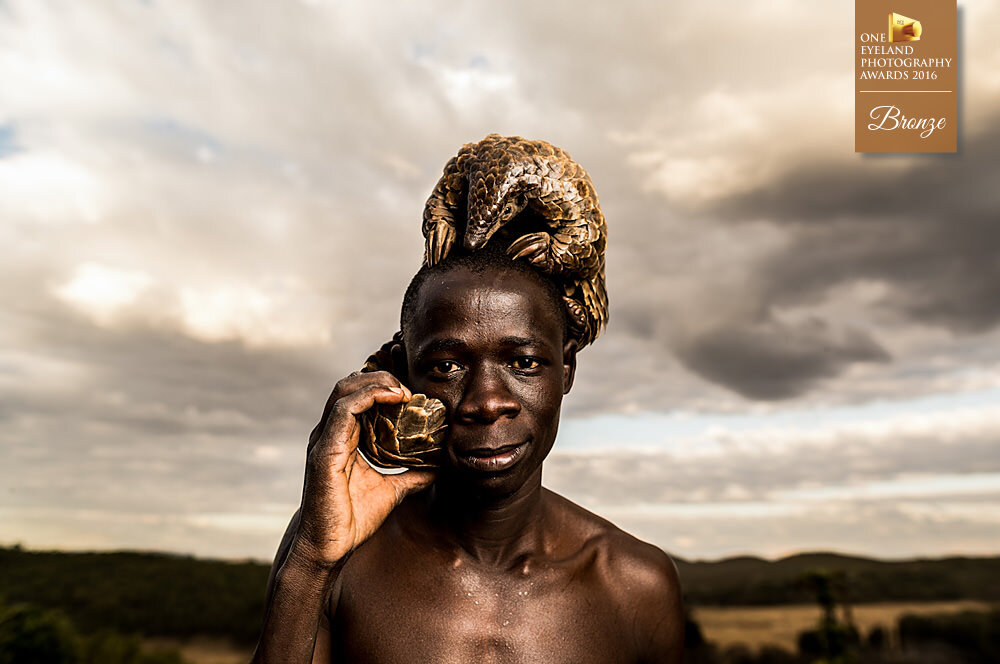
Native to Asia and Sub-Saharan Africa, pangolins are one of the most highly poached mammals in the world, and the illegal smuggling of their scales is threatening them with extinction. Eight species of pangolins exist today — four in Africa and four in Asia — and all are listed in Appendix I of CITES (the Convention on International Trade in Endangered Species of Wild Fauna and Flora), an international treaty designed to protect plants and animals from illegal and unsustainable trade. International trade for primarily commercial purposes is essentially prohibited for CITES Appendix–I listed species.

Pangolin scales are smuggled into China to circumvent this prohibition, dried and crushed into a powder, and then ingested. Similar to rhinoceros horns and human fingernails, pangolin scales are made of keratin. And while some claim they can treat everything from rheumatoid arthritis to inflammation, consuming pangolin scales has not been proven to offer any clinical medical benefit to humans.

As a former CITES policy specialist with the U.S. Fish and Wildlife Service with 10 years of experience combatting illegal wildlife trade, I sympathize with the overwhelming public and governmental frustration that pangolins continue to be poached despite the highest level of CITES protection. Organized crime is frequently involved, and just last week it was announced that 9,500 Kg (around 10.5 tons) of pangolin scales were seized from ocean shipping containers in Nigeria, likely destined for export to Asia. That many scales likely represents over 20,000 animals taken from the wild. Enormous illegal shipments like these are becoming more common, and if something doesn’t radically change soon, pangolins will become extinct in our lifetimes.

We absolutely must strengthen the enforcement of existing conservation laws, but we must also acknowledge our own hypocrisy. In addition to the aforementioned social media posts of “pangolin revenge,” there has also been a flurry of posts expressing disgust about Chinese cultural culinary traditions, such as the consumption of bats, snakes, cats and dogs.

Image result for endangered pangolins

Here in the U.S., most people seem to believe that it’s perfectly acceptable to slaughter and eat cows, but it’s considered taboo for people to eat horses, which are considered to be more noble and companionable. And yet, the U.S. has been exporting tens of thousands of live horses annually to slaughterhouses in Canada and Mexico for human and animal consumption overseas. Even though we’ve been supplying horses for people to eat elsewhere, we continue to publicly shame this culinary practice in the U.S. Adjusting our standards of morally acceptable behaviors based on economic profit is elitist hypocrisy.

Similarly, the consumption of dog and cat meat in China elicits outcry in the U.S. It’s not hard to understand why, of course — it’s difficult to think about eating animals that are often pets. But in parts of China where these animals are consumed, they are not viewed as companion animals, and residents consider their treatment to be humane and assert that the cultural practice is hardly different than the U.S. choosing to consume pork and beef. Factory farming in the U.S. is often accused of being inhumane, yet we seem to tolerate a higher threshold of animal neglect when it offers enough profit and accommodates our own food preferences.

In India, the slaughter of cows is banned in most states, as cows are considered to be supremely sacred. Penalties for disobeying the bans can be severe. And in many Jewish and Muslim communities around the world, people are strictly forbidden from eating pork, which is considered to be unclean. Regardless, the U.S. consumes beef and pork with abandon, and without considering the beliefs and opinions of other nations.

There are many, many reasons to decrease our meat consumption, both in the U.S. and around the world. Animal cruelty is certainly a compelling reason, as is the potential benefits to our individual health and the health of our planet. My point is merely that too many Western environmentalists have fallen into a lazy pattern when it comes to other cultures that both avoids internal introspection and can inadvertently enable xenophobia.

Increased contact with animals through land use change and wildlife trade is the most common way emerging infectious diseases make the jump to humans, and this latest coronavirus outbreak is no exception. It’s likely that bats or other traded species were involved in its spread to humans, and this has placed renewed international scrutiny on control of the thriving wildlife markets in China.
Image result for endangered pangolins


But like China, the U.S. is also a large importer of global wildlife — including wildlife with diseases. We just don’t hear about it when the consequences aren’t deemed important i.e. directly harmful to humans. For example, amphibian chytrid fungus (Batrachochytrium dendrobatidis), a deadly pathogen spread through the wildlife trade which has already harmed over 500 species globally, is causing more disease-driven extinctions than any other pathogen in recorded history. And yet the U.S. continues to import thousands of infected animals annually, without any disease screening or biosecurity measures to protect American frogs and salamanders from extinction.

Fortunately, many wildlife species capable of transmitting diseases to humans have long ago been banned by the Centers for Disease Control and Protection, and those that may threaten species of agricultural importance are strictly regulated by the U.S. Department of Agriculture. This regulatory framework is effective at protecting human health and food security in the U.S. from emerging infectious pathogens, but native species remain highly vulnerable to the novel diseases being imported through our wildlife trade.

Environmentalism and conservationism are noble and vital pursuits. But dialogues about coronavirus should not allow the topic of wildlife conservation to provide a smokescreen for prejudice. It’s OK to become angry that pangolins are going extinct; we should use this energy constructively to learn more about the issue and possibly support conservation efforts. With global teamwork we can prevail against both the emerging coronavirus pandemic and the illegal wildlife trade.

Throwing stones from glass houses will only make achieving this goal that much more difficult.
Image result for endangered pangolins


World Pangolin Day: What To Know About The Animal Possibly Linked To Coronavirus

Andrea Romano, Travel+Leisure•February 15, 2020


The unofficial holiday of World Pangolin Day falls on Saturday, Feb. 15 this year and comes at an interesting as the animal has been linked to the ongoing coronavirus.

Although it is not known where the virus — which has infected tens of thousands globally — originated from, researchers suggest that the animal has acted as an “intermediate host,” according to The New York Times.

So, what is a pangolin?

According to the World Wildlife Fund, it’s a scaly, ant-eating mammal that kind of looks like a cross between an armadillo, an anteater, and a badger.

It’s certainly not a commonly seen creature outside of Asia and Africa, but it is one of the most trafficked animals on the planet, according to The New York Times, which might have contributed to the virus’ worldwide spread.

Related: Everything You Need to Know If You're Traveling During the Coronavirus Outbreak (Video)

However, it’s not entirely clear how the animal could have spread this disease to humans.

According to Business Insider, the animals are often poached for their scales (which are made of keratin) that are marketed as medicine and the animal’s meat is considered a delicacy in China and Vietnam. So, the virus could have spread from a bat to a pangolin to humans through the consumption of the animal.

Researchers from South China Agricultural University found that coronavirus that presented in human patients was 99% identical to the virus taken from wild pangolins.

Pangolins, when they are in the wild, are not considered deadly animals. Most people never interact with them since they are mostly nocturnal and have no teeth. Eight species of pangolins are threatened with extinction and three are on the critically endangered list.

The real culprit lies in the animal trafficking trade. According to Phys.org, these animals are often captured and kept in poor conditions as they travel long distances where they are kept in close quarters with not only unhealthy or dead animals but human shoppers as well. This isn’t only an issue in China, because these animals are shipped all over the world.

Unfortunately, putting a stop to illegal animal trafficking in order to stop the spread of the virus is easier said than done.

Image result for endangered pangolins

“If the illegal animal trade was at the root of this outbreak, it is going to be really difficult to trace, and I suspect most of the evidence is gone already — destroyed or spread out across the black market," Benjamin Neuman, chairman of the biology department at Texas A&M University-Texarkana, told The Washington Post. "People aren't going to want to talk, because of the consequences."

The best way to combat the problem, if pangolins are found to be helping to spread the disease, would be clamping down on animal trafficking worldwide. According to Phys.org, a committee in the Chinese Community Party said they will “strengthen market supervision, resolutely ban and severely crackdown on illegal wildlife markets and trade, and control major public health risks from the source.”

Regulation and legislation are the keys to stopping illegal animal trading. For individuals, avoiding places that may give them exposure to the disease, especially markets where pangolin meat and scales are sold, may help. However, if you are concerned with the fate of this animal in response to the outbreak, you can donate to the World Wildlife Fund or join their “Stop Wildlife Crime” campaign.

Since December 2019, the Wuhan coronavirus outbreak has claimed the lives of over 1,300 people and infected nearly 50,000. The crisis has spurred several quarantines and travel bans to and from China as well.

Image result for endangered pangolinsImage result for endangered pangolins
Image result for endangered pangolins
History not forgotten: Colorado students, teacher rebuild WWII prison camp

Sarah Kuta, NBC News•February 16, 2020

Gary Ono has fleeting memories of his time in a Colorado prison camp — seeing snow, jumping into a ditch to avoid a dog, walking across a field with his uncle, watching someone wash photographic prints.

Ono, now 80, was just a toddler when his family was imprisoned at the Granada Relocation Center, one of 10 sites across the country that incarcerated more than 120,000 Japanese Americans during World War II.

As an adult, he's visited what remains of the camp, more commonly known as Amache, many times. During one visit, Ono and a grandson pitched a tent and spent the night at the site of barrack 6, block 10E, the cramped building that housed his and other families.

"If you went out there, like I have several times, it's just empty of everything, except maybe evidence of foundations and things like that," said Ono, who lives in Los Angeles. "You don't get a sense of the conditions people had to live under."

Today, however, structures are again starting to dot the landscape at Amache, which had been reduced to dirt, weeds and crumbling building foundations after the war. Amache is being pieced back together, bit by bit, by a high school teacher and his students who want to make sure this dark period of American history is not forgotten.

Students at Granada High School have spent hours interviewing former internees, gathering and cataloging artifacts, maintaining the grounds, giving presentations and curating a small museum, which this month is moving into a much larger building across the street.

Thanks in large part to their work, Amache is now being considered as a new national park, with federal staffers conducting a special resource study to evaluate the site. Congress will review the findings of that study, which could take up to three years, and make the final decision.

Amache opened in the fall of 1942 a mile outside Granada, Colorado, amid intense racism and anti-Japanese sentiment following the attack on Pearl Harbor.

Tens of thousands of Japanese Americans and people of Japanese ancestry were given just a few weeks — sometimes less — to pack their belongings into two suitcases, leaving behind their homes, pets, cars, businesses and family heirlooms. In addition to Amache, they reported to internment camps in California, Arizona, Idaho, Wyoming, Utah and Arkansas.

At its peak, Amache held more than 7,300 internees, who were confined within a single square mile by barbed wire and armed guards. Despite the abysmal conditions and cruel treatment, more than 950 Japanese Americans held at Amache joined the U.S. military and fought in World War II, including 31 men who died in the war.

At the end of the war, the federal War Assets Administration sold Amache's buildings until all that remained were foundations and a dusty street grid. These structures got a second life on farms and in towns across southeastern Colorado and nearby parts of Kansas and Oklahoma.

Without buildings or signs explaining the history of the site, Amache soon became a distant memory. To this day, many Coloradans have never heard of the internment camp.

"Not only did we wrongfully imprison people who were American citizens, but we also wiped it clean from history," said Tarin Kemp, a recent graduate of Granada High School who helps with Amache preservation efforts. "Even now, very few people learn about it in history classes. Most of the people I've talked to in Colorado don't know there was a Japanese internment camp here. It really was erased from history almost completely."

But high school teacher John Hopper wanted to change all that. Hopper, who grew up in nearby Las Animas, Colorado, came to Granada to teach social studies in 1989. He'd heard about Amache growing up and then again during college at Colorado State University, but did not know much.

After his first day of teaching, Hopper drove around looking for the site of the forced incarceration camp. He found a board nailed to a tree marking the long-forgotten site and drove home.

Several years later, however, the camp was still in the back of his mind. At the time, there were a handful of ambitious students in his U.S. history class and he wanted to give them a meaningful, challenging project to work on. Researching and, later, preserving, Amache seemed like the perfect fit.

"Once it was bulldozed over, it was out of sight, out of mind for a lot of people," Hopper said. "When we started studying it, these students didn't know anything about it and they lived half a mile away."

In the early days, Hopper tasked the students with finding and interviewing former internees to gain first-hand information and stories about Amache, since few records of the camp existed.

The project slowly took on a life of its own, snowballing into an all-out preservation initiative.

More and more people began to take notice of their work, including former internees and their descendants, who shared their memories and donated hundreds of historic artifacts to help create the Amache Museum. Archaeologists at the University of Denver began bringing students to Amache to conduct field research. Several groups and organizations were founded to help keep the memory of Amache alive and bring the camp back to life.

Today, students help with maintaining the site and the small museum, lead site tours and give detailed presentations about Amache all over the world, including in Japan.

But words can only convey so much. Efforts are now underway to reconstruct the original buildings at Amache, which became a National Historic Landmark in 2006, so that visitors can see and feel what life was like for internees.

In 2018, a building that had been a camp recreation center and later served as the Granada city utility building was returned to its original site. A team of historic preservation specialists is currently restoring the building.

Working together, Amache preservation groups also reassembled and returned the camp's water tower, found in pieces on a nearby ranch. Amache is also now home to historic recreations of a guard tower and a barracks.

In an ideal world, Hopper said he wants to someday rebuild an entire block of the camp, complete with a mess hall and latrines.

"It actually lets people step in and experience what it was like for themselves," said Hopper, who now also serves as Granada Public Schools dean of students. "When they step inside the barracks and think about the fact that there was no insulation — it gets up to 114 degrees here in the summer. It might cool down to about 85 at night, but inside those barracks it was still close to 90. Try to sleep in that."

With roughly 500 residents in Granada, the preservation efforts have become deeply ingrained in the town's identity, thanks in large part to Hopper, who has inspired hundreds of students and spent countless hours working to preserve Amache. In 2014, the Consul General of Japan gave him a special commendation for his work.

But to Hopper, it's simply about doing what is right.

"We have to record it so that we don't do it again," Hopper said. "It was wrong. You don't take American citizens' life, liberty and pursuit of happiness away just because they have Japanese ancestry."


Gary Ono during his time at the Granada Relocation Center.
At its peak, Amache held more than 7,300 internees, who were confined within a single square mile by barbed wire and armed guards
Students of Granada High School teacher John Hopper hold pieces of art in the old Amache museum, which is moving into a much larger building across the street.
Historic recreations of a guard tower and barracks at Amache.

Never Forget—The Lasting Shame of World War II Internment
Patrick Murfin, Heretic, Rebel, a Thing to Flout - 3 hours ago
Japanese-American families being hauled to internment camps in a U.S. Army truck.. News last week that the *Trump administration* will dispatch *heavily armed *“*Tactical Units*” a/k/a *paramilitary troops *of the *Immigration and Customs Enforcement* agency (*ICE*) to *Sanctuary Cities *who have proclaimed that they will *not cooperate*with raids on *immigrant communities. *It is a dramatic escalation of Trump’s war on his *domestic enemies*, including *Democratic strongholds* in America’s *major cities *emboldened by his sense of *invulnerability *since his *acquittal* on *impeac...


Why “good” corporations are bad for democracy

In 2004, a powerful documentary film, ‘The Corporation’, caught the political imagination when it was released at the peak of the alternative globalisation struggles that emerged following the protests at the World Trade Organization (WTO) in Seattle. Based on a book of the same name, and using a witty and stylish mix of news clips, music and perceptive analysis, the film boldly challenged capitalism’s single most important player, the corporation.

The documentary won 26 awards, with even conservative commentators such as The Economist calling it ‘[a] surprisingly rational and coherent attack on capitalism’s most important institution’. 


To launch our collection examining ‘The Corporation’, the Transnational Institute went back to the film and books’ writer, Joel Bakan, a law professor at the University of British Columbia, to find out how he views the corporation today.


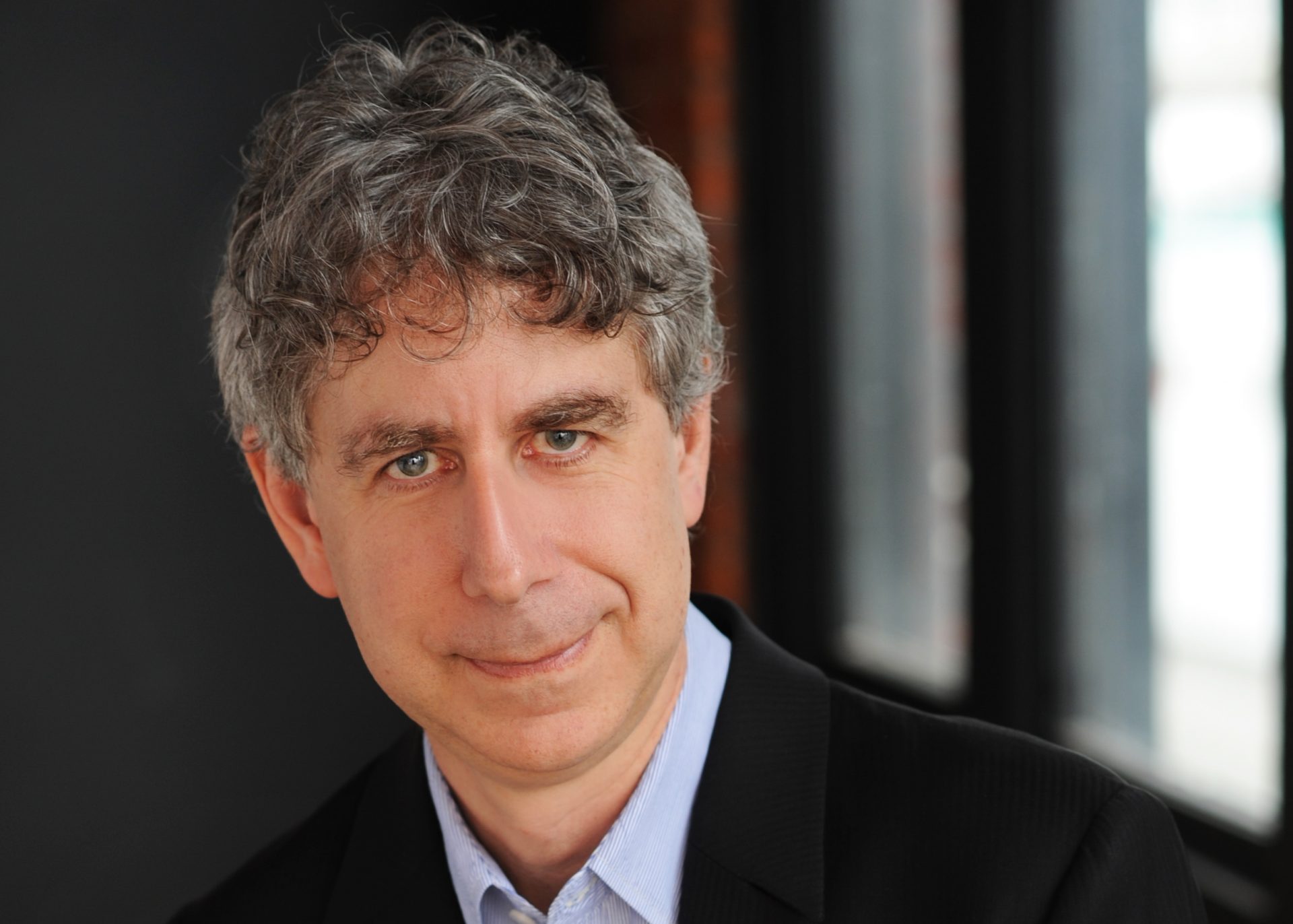
Joel Bakan speaks to TNI ahead of his new book and film ‘The New Corporation’ Credit: Simon Fraser University [CC BY (https://creativecommons.org/licenses/by/2.0)

Joel Bakan  is a professor of law at the University of British Columbia, and an internationally renowned legal scholar and commentator. A former Rhodes Scholar and law clerk to Chief Justice Brian Dickson of the Supreme Court of Canada, Bakan has law degrees from Oxford, Dalhousie, and Harvard. As well as his critically acclaimed international hit, The Corporation


What is the corporation?


The corporation is a legal construct, indeed a legal fiction. It is not something created by God or by Nature, but rather a legally created and enforced set of relations designed to raise capital for industrialism’s large projects. Its main function is to separate the owners of an enterprise from the enterprise itself.

The latter is alchemically transformed into a ‘person’ that can bear legal rights and obligations, and therefore operate in the economy. The owners – shareholders – thus disappear as legally relevant, with the corporate ‘person’ itself (and sometimes its managers and directors) holding legal rights, and being liable when things go wrong.

It follows that shareholders’ only risk is to lose money if their share value declines. They can’t be sued for anything the corporation does. Moreover, to further sweeten the pot for their investing, the law imposes obligations on managers and directors to act only in shareholders’ best – that is, financial – interests.

The genius of it all is that this highly pro-shareholder construction provided strong incentives for many people, particularly from the emerging middle class, to invest in capitalist enterprise.

That was the corporation’s main purpose – to generate the huge pools of capital needed to finance large enterprises, railways, factories, and so on, that industrialisation made possible. It was, in effect, a crowd-funding institution.


Watch the full feature award-winning documentary film, The Corporation


What has the corporation become?

The corporation’s central institutional function – concentrating thousands, even millions, of investors’ capital into one enterprise – also created the potential for enterprises to become very large and powerful.

There were initially limitations on their power – caps on growth, restrictions on multi-sector involvement, competition laws, and so on – but over twentieth century these were weakened and eliminated.

Now companies can merge, acquire, and get bigger and bigger, accumulating ever more power with little to constrain them. As a result, they become these vast concentrations of capital that dominate not only the economy, but also society and politics.

They are not democratic and are legally compelled to serve their shareholders’ interests in everything they do.

So, you have these huge and powerful institutions, compelled by their institutional characters to pursue self-interest regardless of the consequences, bent on avoiding or pushing out of the way anything that impedes their missions – such as regulations, taxes, and public provision – creating wealth for anonymous and unaccountable shareholders, and with no democratic accountability to the people (other than their shareholders) affected by their decisions and actions.
What has changed in the 15 years since you wrote The Corporation?

A few obvious things. Big tech didn’t exist (at least not in the dominant way it does now) at the time of the first project. Climate change was a problem, but not yet the existential and immediate crisis we know it is today. The populist right was still on the fringes, globalisation was in full swing, and corporations – smarting from anti-globalisation struggles around the world, and worried about growing popular distrust and concerns about their expanding power – strategically changed their image and their game.

In terms of the latter, corporations began, around the time my first book and film came out, to make sweeping commitments to sustainability and social responsibility – to use less energy, reduce emissions, help the world’s poor, save cities, and so on.

Creative capitalism, inclusive capitalism, conscious capitalism, connected capitalism, social capitalism, green capitalism – these were the new kinds of buzzwords that came to the fore, reflecting a sense that corporate capitalism was being modified into a more socially and environmentally aware version.

The key idea, whatever rhetoric it was wrapped in, was that corporations had changed fundamentally, that while corporate social responsibility (CSR) and sustainability had previously been located on the fringes of corporate concerns – a bit of philanthropy here, some environmental measures there – now they became entrenched at the core of companies’ ethos and operating principles.


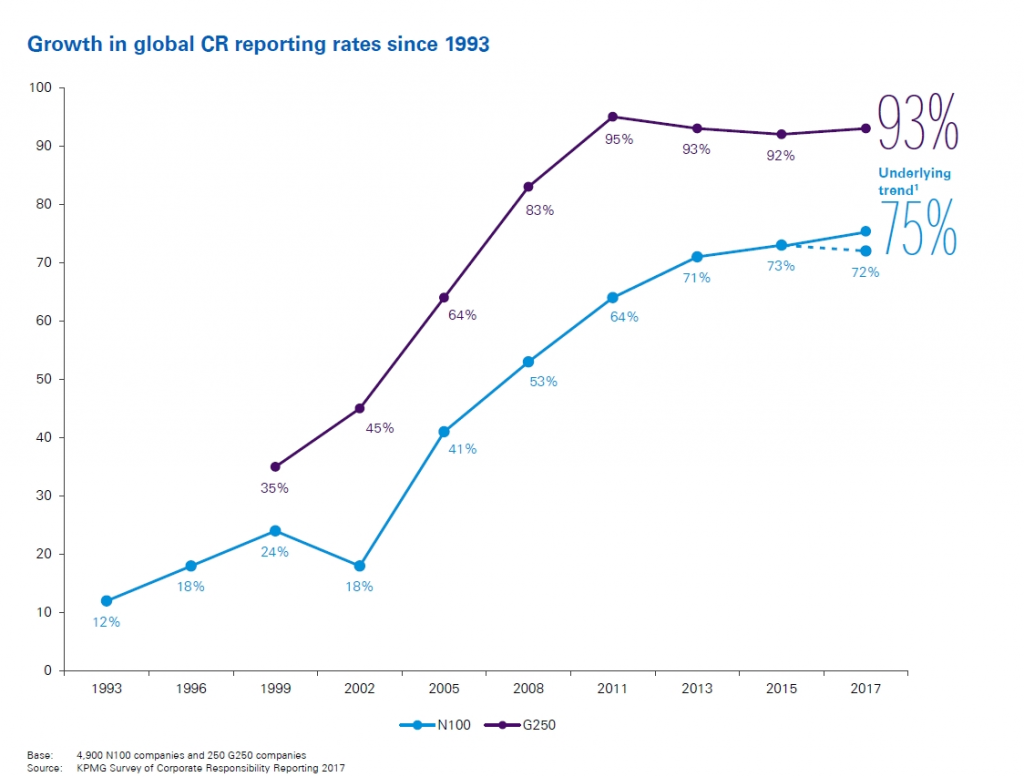
Growth in corporate reporting by the top 100 and 250 corporations
Well, has it made any difference?

Yes, but not necessarily a positive one. The subtitle of my new book is ‘Why “good” corporations are bad for democracy

Let me explain. To begin with, despite all the fine rhetoric, the new corporation is fundamentally the same as the old one. Corporate law hasn’t changed. The corporation’s institutional make-up hasn’t changed.

What has changed is the discourse, and some of the behaviour. The new ethos is captured by the idea of ‘doing well by doing good’, finding synergy between making money and doing social and environmental good rather than presuming there’s conflict.

So now corporations make a lot of noise about their aim being to do good, far less about the fact that they can only do as much good as will help them do well.

The fact is, despite all the celebratory talk, corporations will not – indeed, cannot – sacrifice their own and their shareholders’ interests to the cause of doing good. That presents a profound constraint in terms of what kinds and amounts of good they are likely to do – and effectively licenses them to do ‘bad’ when there’s no business case for doing good.

The further problem – and this is the part about democracy – is that corporations are leveraging their new putative ‘goodness’ to support claims they no longer need to be regulated by government, because they can now self-regulate; and that they can also do a better job than governments in running public services, such as water, schools, transport, prisons, and so on.

Climate is an area where corporations have been particularly crafty. No longer can they plausibly deny climate change, so they don’t. Instead, they say ‘yes, it’s happening, we acknowledge it, but we now care, we can take the lead and provide solutions, we don’t need government regulation’.

Now, if you talk to scientists, they all say we needed to have adopted renewables yesterday to prevent cataclysmic scenarios, and that this will require massive state-led changes.

If you talk to the fossil-fuel industry, they say something quite different, something consistent with their plans to profit as long as possible from carbon fuels. They say we have time, that we shouldn’t and can’t get to renewables any time soon, that natural gas and fracking are good alternatives, that it’s all right that they continue to develop mega-projects to tap fossil-fuel reserves (including coal, like the Adani mine in Australia), that that they will take the lead on renewables.

That we should trust them – not governments – to sort out climate.


Environmental lawyers from ClientEarth in 2019 filed a high-level complaint accusing BP of misleading consumers in its latest advertising campaign, noting that the company spends less than four pounds in every hundred on low-carbon investments and 96 pounds on fuelling the climate crisis.

This new strategy is probably even more dangerous than outright denial. By purporting to be the ‘good guys’ now, they more subtly obfuscate and obscure truths and intentions, wielding their influence with governments and at climate summits to ensure their carbon-fuel-based business models remain largely unimpeded.

In my first book, the Corporation, I argued that if corporations were really people, they would be by their behaviour and traits be considered psychopaths. Now, as they put on a false face, they have effectively become charming psychopaths.
What difference has the rise of the digital giants made to the nature of the corporation?


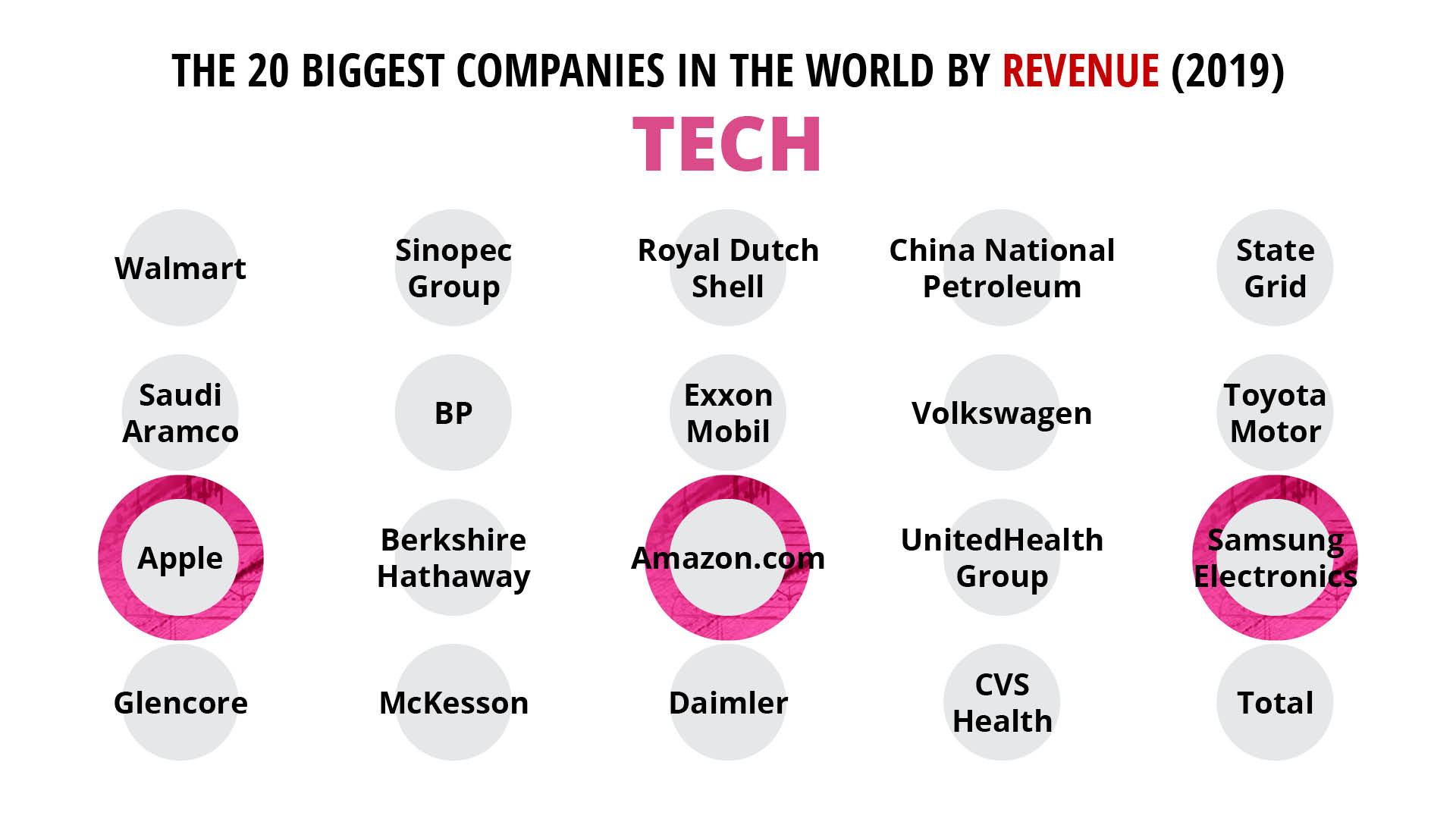
Ten years ago, technology companies were not in the list of top 20 world companies

When internet and artificial intelligence (AI) technologies are harnessed to the corporate compulsion to create profit, bad things can happen – and are happening. It’s true, as tech advocates say, that innovation and disruption are the result. But neither is necessarily a good thing. For example, the innovations of big tech are disrupting the policing of monopolies.

For many tech players, monopoly is built into their business models. Facebook, for example, has to be the place everyone goes for social connection. Amazon needs to be the platform for all shoppers and retailers. Google, the search engine everyone uses. The value of these companies is based on being the one place where everyone goes. That gives them a monopoly on the two things that have value in the tech space – attention and data.

It also incentivises them to go beyond their sectors, to invade and dominate other sectors – such as Amazon entering cloud-based computing and pharmaceuticals, Facebook becoming a major news hub and increasingly central to how election campaigns are run, Google pushing into urban planning (through Sidewalk Labs).

Current anti-monopoly laws and regulators are too weak (a result of deregulation) and politically unmotivated to keep up, which is what has allowed these companies to turn into behemoths that stifle competition and have undue influence on politics and society – in short, to disrupt democracy.

Another problem is that corporations are collecting ever more data, triangulating it, graphing our every move and emotion, especially as all the hardware in our lives becomes internet-connected (through the ‘Internet of Things’) and the software becomes more sophisticated at monitoring and predicting our behaviour.

The problem is often thought about in terms of privacy – that our privacy is being invaded by the collection of all this data. But the real problem is control: how the data is likely to be used to control how we act, think, and feel in ways that are ultimately profitable to corporations.

The possibilities for employers controlling workers’ every move are already evident in, for example, Amazon’s micro-monitoring of warehouse workers’ performance. Similarly, insurance companies are starting to monitor life insurance policy-holders’ fitness and physiological data through wearable devices and so on.
And how does that affect democracy?

As corporations gain greater direct control over individuals through new technologies, it becomes more difficult – if not impossible – for democratic governments to regulate the relationship between corporations and private citizens.

When an insurance company has direct control of individuals it insures – knowing their driving habits, or whether they are fit, and adjusting rates or denying pay-outs on these bases – it becomes difficult for democratic institutions – regulators and courts – to protect individuals’ consumer rights.

When a platform like Uber uses technology to effectively circumvent the employment relationship (a regulatory construct designed to protect workers from the much greater power of their employers) it becomes difficult to protect workers.

Democracy is also affected by the rise of misinformation, hate, and incendiary speech, which is magnified by the internet and social media. That too is connected to big-tech business models. A company like Facebook thrives by getting more people engaged more of the time. More is better – and questions about truth, or the public interest, or democracy are simply irrelevant.

More generally, the rise of right-wing authoritarianism, which is happening through democratic electoral processes, is in large part a reaction to 40 years of neoliberal policies that have destroyed jobs and social provision, and thus lives and communities. Those 40 years of policies were – and continue to be – spearheaded by large corporations, which used their resources to lobby, fund elections, move and threaten to move operations in response to regulation and proposed regulation, roll back and avoid taxes, and so on.

Leaders of the ‘new’ corporation movement – the very companies claiming to care, to be socially responsible and sustainable – have been at the forefront of these campaigns. None of them has said, ‘social and environmental values are important, so let’s have more regulation and taxes to protect them’. Quite the contrary.

Corporations are now leveraging their supposed new persona to push back democracy, by claiming, as noted above, that they can regulate themselves in lieu of legal measures, and that they should be put in charge of social provision in place of public authorities.

It’s quite the two-step. They campaign to eviscerate governments’ capacity to deal with social and environmental issues, and then step in to say that they can do the work government has been rendered, through their efforts, unable to do.

The result is less government and more corporations in our lives and societies – meaning less democracy overall.
How have civil society and social movements responded to the rise of the corporation?

The last 20 years have seen a remarkable rise of organised and effective movements to push back against corporate power and the threat it poses to democracy.

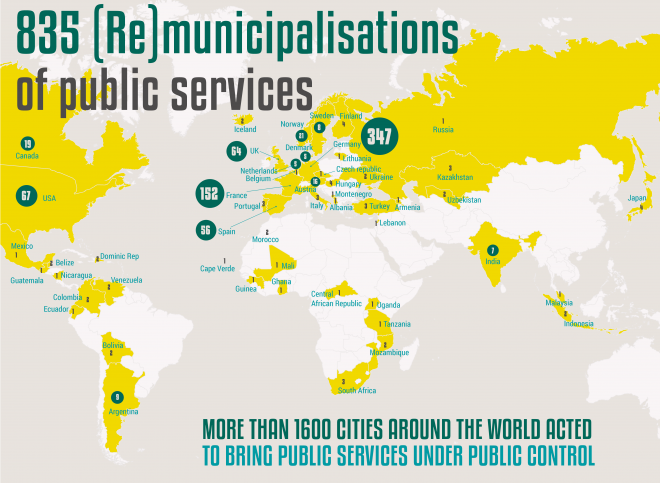
More than 200 cities around the world have rejected water privatisation by re-municipalising previously privatised systems; indigenous peoples have won battles against extractive industries and for recognition of land rights and self-determination; the ‘movement of the squares’ swept through cities around the world in 2011 and included the Occupy movement; progressive politicians have won victories in cities like Barcelona and Paris in Europe, New York, Jackson, Seattle and Tucson in the United States, and Vancouver in Canada – along with many others. 


Graphic from TNI’s report, Reclaiming Public Services: https://www.tni.org/en/publication/reclaiming-public-services

In the United States, there was Bernie Sanders, an open socialist, making (in 2016, and again in 2020) a play for the presidency, and the thousands of progressive election campaigns he helped inspire, many successful – like Alexandria Ocasio-Cortez (AOC) and other progressive representatives.

And then there’s the new energy and urgency of surging activism around the world, mass movements demanding action on climate change, extractive industry projects, indigenous rights, against racism.

It’s all very positive and inspiring.

We have to be wary, however, of corporations’ attempts to co-opt this wave of resistance. They are certainly trying, working hard to make us to believe that they are the true change-makers; that our best path to a better world is to buy their ‘green’ products, support their social and environmental initiatives, follow their advice on recycling, reducing, and so on.

Companies and their CEOs take stands on various issues, and they increasingly form partnerships with non-government organisations (NGOs) like the World Wildlife Fund (WWF) Save the Children (SCF), Conservation International and inter-governmental organisations such as the various entities of the United Nations.

No doubt some good may come from all this, but it’s important to recognise that the same companies allying with NGOs, and taking up a stance on racism, immigration, or discrimination against LGBQT (Lesbian, Gay, Bisexual, Queer and Transgender) people are also lobbying hard to reduce government oversight, push back taxation, expand markets, cut social provision, and so on.
Is there a place for the corporation in the future?

I think there is a place for a financing vehicle for large projects that require large pools of capital, which is essentially what the corporation is. But it has to be understood as a tool, as a means, not an end in itself.

The corporation was created by government for that purpose, as a financing tool. Its virtue in incentivising investment – its legal mandate to create wealth without constraint – is also its greatest danger.

Because of that, it must be regulated, and it shouldn’t be used to deliver inherently social goods, and certainly not to help govern society. It is completely ill-equipped to do those things, being fundamentally self-interested and lacking democratic accountability to anyone but its shareholders.

We should also be thinking about using other kinds of economic organisations to create goods and services, such as cooperatives, or public institutions with public-interest mandates.

There is no evidence to support, and much to contradict, that that the ideal institution is always, or even usually or sometimes, the large for-profit corporation. Rather, corporations are best thought of as we might think about, say, a lawn mower. It has its uses. It’s very good at cutting the lawn. But you don’t want to use it to cut your hair or vacuum your living-room rug.

All of which may be an argument for shifting away from capitalism to some other kind of system – such as those imagined by democratic socialism, or the commons movement or indigenous cosmologies – where social and ecological ends are prioritised rather than the accumulation of capital.

Though something like that may be on the horizon, in the meantime we have to figure out how to rein in the dangerous tendencies of the corporations and capitalism we currently have, and to ensure they do not – as they may – turn out to be doomsday machines.
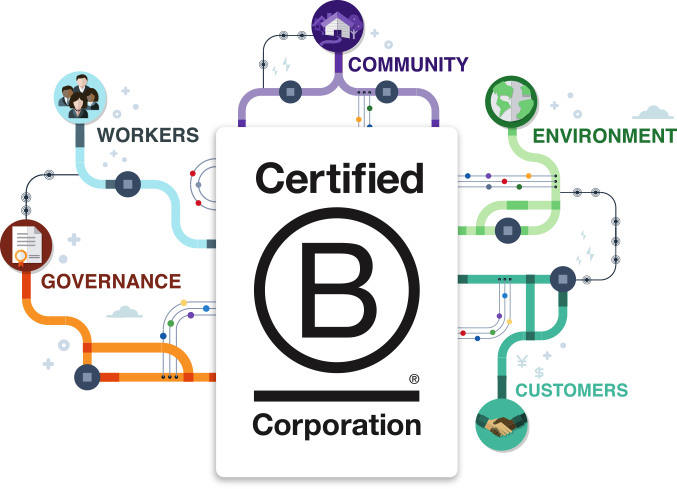
What about B-Corps or Benefit corporations? Are they a good step?


Promotion of Benefit Corporations on https://bcorporation.net/

No. B-corps are not a solution and I have opposed them, including in my home province of British Columbia where the government took measures to recognise them.

Typically, a B-corp is nothing more than a certification by a private company (such as B-Lab) that a corporation meets certain social and environmental standards.

It’s not needed for corporations that are not publicly traded, which already have leeway to subordinate financial to social and environmental goals if they so wish. And for publicly traded corporations, even if they become B-corps (which, so far, no major one has), they’re still legally bound to prioritise shareholder value. A private certification doesn’t change the law.

So what B-corps end up being are, in effect, a privatisation of regulation, a prop for the ideology that corporations, through market mechanisms and private oversight, can protect and promote public interests. It’s not about democratically promulgated rules to control corporations, nor about state-backed enforcement mechanisms for such rules. It’s yet another velvet glove hiding the iron fist of neoliberalism.

A different approach is to reformulate the legal constitution of the corporation to include social and environmental goals as well as financial ones. Again, I don’t favour this approach.

One problem is that it will never subordinate financial goals to social and environmental ones – the latter will always be pursued only in ways that are compatible with the former.

The second problem is that indeterminate judgements about whether social and environmental goals are met – which should be pursued, how and to what extent – are placed in the hands of managers rather than democratically accountable regulators.

Third, the presence of this new kind of corporation would inevitably be leveraged, probably successfully, to push for more deregulation – the argument being that regulation is redundant when standards are baked into the corporation itself.

The problem is that the corporation’s sole reason for existing within capitalism is to incentivise investment. That will always entail prioritising returns on investors’ capital, rather than competing values fixed into the corporation’s legal nature. The imperatives of corporations within capitalism will always be capitalist imperatives.

We need to deal with the dangers of that dynamic democratically, through policies, laws, and regulation, rather than by tweaking the corporate form and effectively delegating regulatory functions to corporate managers and directors.
How do we get there?

I don’t advocate revolution because I believe existing democratic structures, however corrupt, can be reclaimed and repurposed, reunited with grassroots movements and the genuine needs and voices of citizens.

In the meantime, we need to do a lot of myth-busting to reveal the truth that corporations and markets can’t deliver the social and environmental goods we need; that democracy and democratic institutions must be revived.

We need to work with and in our communities, schools, and unions, to educate and inspire each other. To work with, become part of, and help elect progressive political parties, join and form movements, promote solidarity while celebrating difference.


Tags: building resilient societies, capitalism, Corporations, neoliberal ideology

RELATED POSTS


XR: The Case for Deliberative Democracy

How a Native American Coming-of-Age Ritual is Making a Comeback

George Monbiot on the Unholy Trinity of Ideologies Trashing our Planet


Two Stories

Migrants Welcome – How International Hospitality in a Warming World Benefits Everyone

Six Ideas for System Change


Power, Friendship, and some Democratic “Rules”

Surveillance Capitalism at the Limits to Economic Growth: Part 2

Why We Need to Move Closer to Martin Luther King’s Understanding of Nonviolence

FEATURED SUPPORTER


SUPPORT US


Resilience is a program of Post Carbon Institute, a nonprofit organization dedicated to helping the world transition away from fossil fuels and build sustainable, resilient communities. Content on this site is subject to our reposting policy.

Bernie Sanders holds campaign rally with woman who co-wrote Medicare for All bill: 'Healthcare is a human right, not a privilege'

Vermont senator appears in Washington state as Nevada poll gives him 20 point lead


Andrew BuncombeTacoma, Washington @AndrewBuncombe


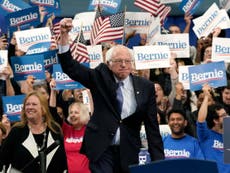
Democratic frontrunner Bernie Sanders has thunderously championed his universal healthcare plan - Medicare for All - with the personal support of the woman who helped him write “the damn bill”.

In front a large, raucous crowd south of Seattle, the senator said healthcare was a human right, not a privilege. For much of his speech, his words were drowned out by the cheers and roars of his supporters.

During debates with other Democrats seeking to become the nominee to take on Donald Trump in November, the Vermont senator has several times asserted his expertise on universal health care by declaring: “I wrote the damn bill.”

In truth he only wrote the Senate version of such a proposal. The legislation introduced in the House of Representatives was written by congresswoman Pramila Jayapal, who has endorsed Mr Sanders and appeared in Tacoma on Monday night.

“I’m proud to be the person, along with Bernie Sanders, who sponsored Medicare for All,” said Ms Jayapal, a Democrat who represents Washington’s 7th congressional district, located 40 miles to the north. “[And] tuition for all.


When he took the stage at the Tacoma Dome, where 17,000 people were said to have gathered to see him, Mr Sanders drew attention to many of the issues he has made central to his campaign - addressing inequality, combating climate change, working towards criminal justice reform.

He also dedicated considerable time on his vow to pass universal healthcare if he was elected president, an issue that could help propel him into the White House, or derail him if voters consider it too progressive.

No issue has acted more clearly as a marker for the different lanes of the Democratic Party. Elizabeth Warren initially supported Medicare for All, before tweaking her position to allow consumers to stay on a private plan during a three-year transition plan.

Bernie Sanders responds to New Hampshire victory


Pete Buttigieg supports Medicare for those who want it, while Joe Biden would like to see existing coverage - remnants of the Affordable Care Act he worked with Barack Obama to pass - expanded and improved.

“Healthcare is a human right, not a privilege,” said the 78-year-old democratic socialist. “It is insane we spend twice as much on healthcare per person as Canada and any other [country] on earth.”

He added: “Despite all of that we have 87 million people, some of them who are here tonight, who are uninsured or under-insured. We have 30,000 people who die every year because they don’t get to a doctor on time.”
Among those who had come to see Mr Sanders were Jessica Livingstone, 36, a nanny from Seattle, who said she had to pay $400 a month for her health insurance. She had supported Mr Sanders four years ago, when she claims the nomination was unfairly denied to him by the Democratic National Committee, elements of which had favoured Hillary Clinton.
Read more


BERNIE BROS. 2020

Far-right Proud Boys members 'infiltrate Bernie Sanders rally'
WHO DID YOU THINK WAS TRASHING BERNIE'S OPPONENTS


Would Bernie Sanders really wreck the US economy? NO

The California Republican willing to vote for Bernie Sanders

Cardi B and Mark Ruffalo among celebrities backing Bernie Sanders

“I’ve been a a big Bernie supporter since 2016,” she said. “I think billionaires have too much money.”

Another supporter, Andrea Gamble, 53, an accountant, said she supported many of the senator’s policies. Asked if he could win the nomination and defeat Mr Trump, she said: “I think people will put him over. People are more important than money.”

Mr Sanders' appearance in Washington state, his first in the 2020 campaign, comes on the back of a virtual tie in Iowa with Mr Buttigieg, and a narrow victory over the former South Bend mayor in New Hampshire.

In Nevada, the next state to vote and which holds its caucus on Saturday, Mr Sanders leads a poll published by Data for Change with 35 points, Ms Warren, 16, Mr Buttigieg on 15, and Mr Biden on 14.

“Donald Trump is a fraud. He sold out the working families of this country who he promised to defend,” said Mr Sanders. “He said that everyone would have healthcare, and yet he took 32m people off the healthcare they had.”


---30---