Thursday, March 12, 2020


Greta Thunberg calls for digital strikes amid coronavirus fears

Greta Thunberg urged fellow climate campaigners to avoid mass protests and listen to local authorities. This comes as the number of coronavirus cases around the world increases.
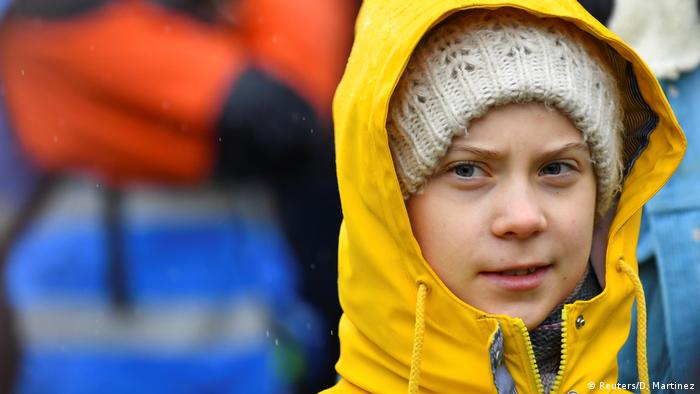


Teenage climate activist Greta Thunberg on Wednesday said that campaigners must avoid mass rallies amid the escalation of coronavirus cases around the world. Instead, "digital strikes" would be the way forward during the crisis, she said on Twitter.


"We young people are the least affected by this virus but it's essential that we act in solidarity with the most vulnerable and that we act in the best interest of our common society," Thunberg said on Twitter, where she has over four million follower
s.

Read more: Greta Thunberg scathing about politicians as thousands join Hamburg climate protest

In a series of tweets, the 17-year-old urged fellow climate campaigners to follow the advice of experts in an attempt to "flatten the curve." This means to lower the rate of infection by taking countermeasures in the early phase after an outbreak.

As she urged her followers to avoid large gathers and "listen to local authorities”, she also said that the "Fridays for Future” movement will start organizing online campaigns and strikes till the time the pandemic is not under control.
"So keep your numbers low but your spirits high and let's take one week at the time," Thunberg said, as she called on more people to join the "#DigitalStrike" by posting pictures of themselves with a sign on Fridays.

The world is struggling to contain the outbreak of SARS-CoV-2, with the number of people infected increasing by the day, especially in China, South Korea, Iran and Italy. The United States has restricted the entry of all foreign nationals who have traveled to Europe's Schengen countries.

see/rc (Reuters, AFP)

>> DW's editors send out a selection of the day's hard news and quality feature journalism. You can sign up to receive it directly here.

DW RECOMMENDS


What you need to know about the coronavirus

What are the symptoms of COVID-19 and how can you protect yourself? What's the latest status on infection rates and how is the international community responding? Here's an overview of the latest news and information. (27.02.2020)


Davos braces for Trump-Greta showdown as climate change tops agenda

It's the first time the two are attending the same event since the teenager famously stared down Trump at the UN last year. The annual jamboree is taking place against the backdrop of Australia's worst ever bushfires. (21.01.2020)


Greta Thunberg seeks to trademark her name and movement

The 17-year-old climate activist said the trademark was meant "to protect the movement" from being used for commercial purposes. Thunberg has also set up a foundation to be transparent about the movement's financing. (29.01.2020)


Climate activists march to World Economic Forum in Davos

Protesters angry at the lack of action over climate change have embarked on a three-day hike from Landquart en route to Davos to draw attention to global warming at the World Economic Forum that begins this week. (19.01.2020) 

AUDIOS AND VIDEOS ON THE TOPIC

Greta Thunberg attends World Economic Forum


Young activists at Davos are disappointed about US rhetoric


Date 12.03.2020
Related Subjects Climate Change, Greta Thunberg, Coronavirus
Keywords Greta Thunberg, coronavirus, COVID-19, climate change
Feedback: Send us your feedback.
Print Print this page
Permalink https://p.dw.com/p/3ZG8g
Coronavirus: The psychology behind panic-buying
People are bulk-buying toilet paper, pasta, soap, tinned foods and disinfectant. Those who have come away empty-handed are asking themselves why so many people panic-buy? DW asked INSEAD's Andrew Yap what's behind it.


DW: Why are people panic-buying?

Andrew Yap: The coronavirus is an invisible enemy. It's something that we cannot see. And, when you cannot see your enemy, what happens is that you lose this sense of control. And when you lose your sense of control, you try and do things to compensate and achieve control again. Buying certain things is one way for you to do that.

If I were to go to the supermarket right now and buy something, would it make me feel less fear about the coronavirus?

What we find in our research is that, if you lose the sense of perceived control, you start buying things to help you solve the problems that caused you to lose control in the first place.

So in other words, if you feel anxious, if you fear the virus, then you start buying things that could potentially prevent you from getting the virus, or find ways that could make your place cleaner.

What people end up doing is they buy masks, they buy hand sanitizers, they buy cleaning detergent to clean their houses and offices, and so on.

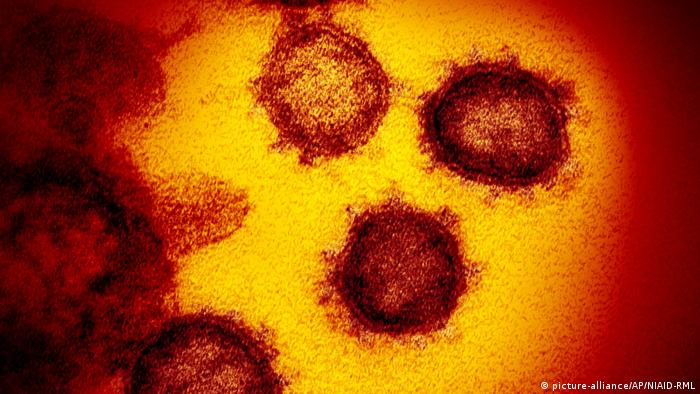
Coronavirus infection - how it works

So it doesn't matter whether these measures are effective. If I buy something, I just feel better, I feel safer.

There you go.

You mentioned research. What kind of scientific studies have been conducted on fear and panic and how people react?

So about three or four years ago we wanted to study what happens when people experience stress and anxiety. And we realized that a fundamental element that people hadn't examined is this state of control, or the sense that they lose control. And so we ran a number of experiments in the supermarket, lab experiments.

What we found is that when people lose control, they buy more functional products. Products that help them solve problems. Especially products that help them restore control again.


If control is so important for people, especially in this atmosphere of fear, how would you help our readers restore that control?

One is, you need to get information. You need to be educated and understand what's happening, what the virus is about, how the virus causes you to be infected, the ways you can be infected, how you treat this viral infection.

But I wouldn't ask to you to spend a lot of time on social media, because social media is an echo chamber. One of the reasons you see a lot of panic-buying is because people are watching and seeing photos and videos of people buying toilet paper, all sorts of things, things that are running out. And that led to a lot of cases of panic-buying across the world.

We didn't quite see the same behavior back when there was SARS, which was a similar viral infection, a similar pandemic. There was less panic-buying then, because people didn't have this echo chamber in their palms.

Andy Yap is an assistant professor of organizational behavior at INSEAD Business School in Singapore.


RESEARCHERS AND THEIR SELF-EXPERIMENTS

An oral vaccination against corona

Courage, curiosity or complete hubris? Probably it is a mixture of all these things that causes many scientists to test their own inventions on themselves first. According to the Global Times, a Chinese doctor not only developed an oral vaccine against the SARS-CoV-2 but also tried it out himself. So far without side effects.


DW RECOMMENDS

Coronavirus: Everything you need to know

How is it transmitted? What are the symptoms? And which precautionary measures are recommended to stop it spreading? (27.01.2020)


Corona-phobia: Like SARS, coronavirus fear feeds racism

As the numbers of coronavirus infections and deaths rise, so do the number of reports of racism or xenophobia against Chinese people in Europe and the US. It's not the first time it's happened either. (04.02.2020)


Coronavirus: Who is particularly at risk and why?

Men, women and children are infected with the new coronavirus with equal frequency. But the consequences are very different. Decisive factors are age, gender and possible previous illnesses. (11.03.2020)


Will warmer weather stop the spread of the coronavirus?

Does the coronavirus get weaker when temperatures rise? Virologist Thomas Pietschmann explains why spring really gives hope and why women have a clear advantage in the fight against the COVID-19 disease. (28.02.2020)


What you need to know about the coronavirus

What are the symptoms of COVID-19 and how can you protect yourself? What's the latest status on infection rates and how is the international community responding? Here's an overview of the latest news and information. (27.02.2020)


How to protect yourself against the coronavirus

People around the world are strapping on breathing masks to prevent a viral infection. Other measures are more effective, though. Here are some tips based on WHO guidelines. (23.01.2020)


Researchers and their self-experiments

What do a doctor who swallows his own vaccination against the coronavirus, a psychoanalyst on coke and the fastest man in the world have in common? Answer: They are scientists — and their own guinea pigs, too. (10.03.2020)


Date 11.03.2020
Author Conor Dillon
Related Subjects Coronavirus
Keywords Coronavirus, COVID-19, SARS-CoV-2, infection, virus, panic buying, psychology
Feedback: Send us your feedback.
Print Print this page
Permalink https://p.dw.com/p/3ZDKa

How has Taiwan kept its coronavirus infection rate so low?


Taiwan's number of COVID-19 infections is currently below 50, despite the island's proximity to the outbreak's epicenter on mainland China. 

Experts say early intervention has helped stop a public health crisis.

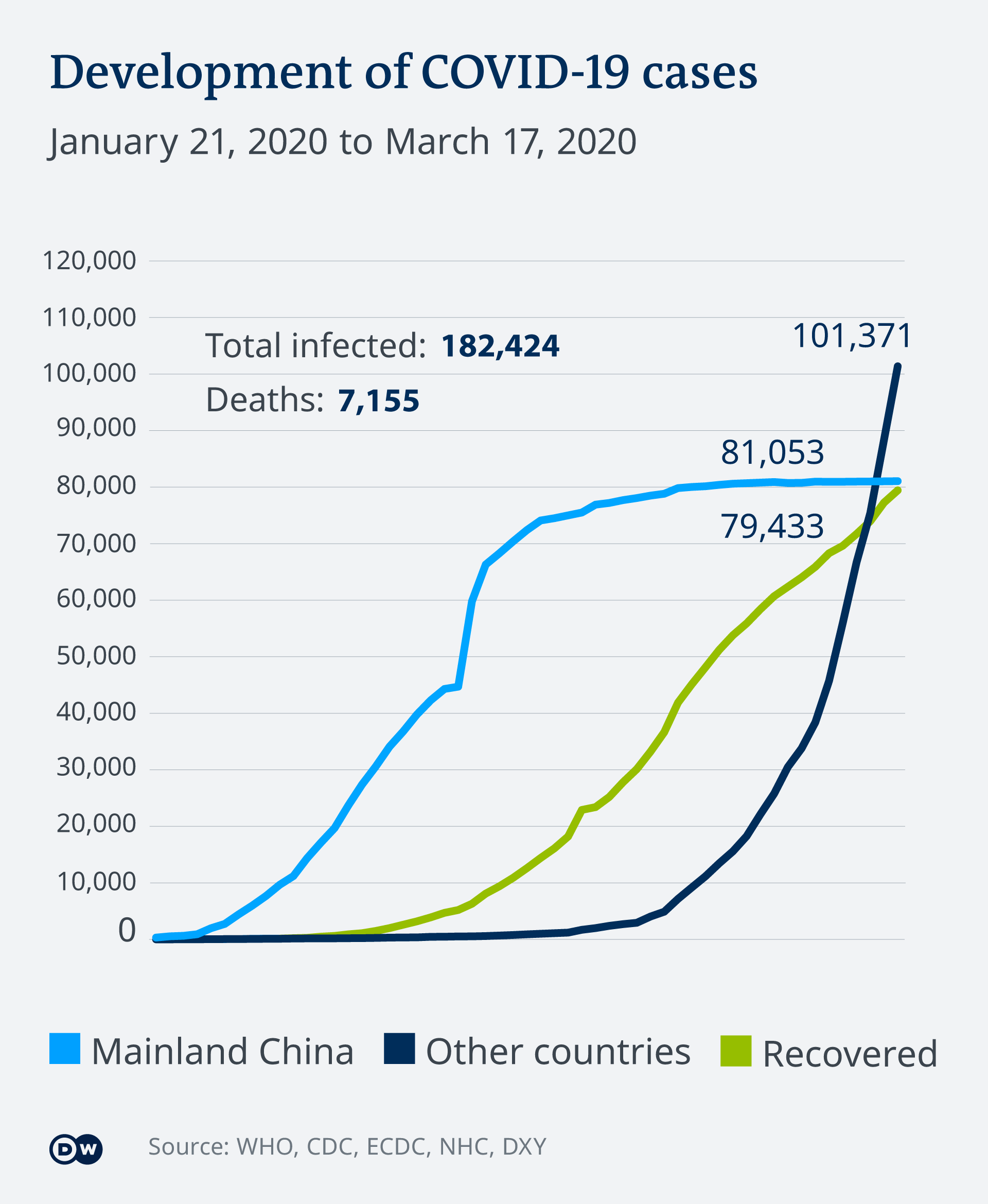
More than two months after a new virulent coronavirus emerged from the Chinese city of Wuhan, more than 100,000 people in dozens of countries around the world have been infected.

The COVID-19 infection, however, has largely spared Taiwan, despite the island's relative proximity to the virus's epicenter.

When the outbreak first started in January, some experts predicted that Taiwan would have the highest number of cases outside of mainland China.


However, while mainland China has had over 80,000 COVID-19 cases to date, Taiwan has kept its number of confirmed cases below 50. Some international health experts credit this to Taiwan's quick preparation and early intervention.

Dr. Jason Wang, a public health policy expert at Stanford University in the US, said that Taiwan recognized the potential scale of the crisis early, and was able to stay ahead of the outbreak.

"Taiwan established the National Health Command Center (NHCC) after the SARS epidemic in 2002 and 2003. That was in preparation for the next crisis," said Wang, adding that the NHCC integrates data and allows experts to work together.

Taiwan took early action

Taiwan's government introduced a travel ban on visitors from China, Hong Kong and Macau soon after the number of coronavirus cases began to rise in mainland China. Additionally, the government implemented a ban on exporting surgical masks, ensuring a stockpile in Taiwan.

Taiwan prisoners pay it forward in time of Wang said that the introduction of public health laws gave the Taiwanese government additional power to allocate resources.

"The Taiwanese government integrated data from national health insurance with immigration and customs data," Wang said. "This has allowed frontline medical personnel to identify suspected patients after examining their travel histories."

The Taiwanese government also developed a program that has allowed people to report travel histories and symptoms of illness by scanning a QR code when they arrive in Taiwan.

Travelers then receive a text message with their health status, allowing customs officers to skip low risk passengers and focus on passengers with a high COVID-19 infection risk.

"There are a lot of things that the Taiwanese government was able to do with new technology, and these practices allow them to triage people properly and follow up with appropriate care," Wang said.

The public's willingness to follow government regulations has also helped Taiwanese officials respond to the coronavirus outbreak.

"Most Taiwanese experienced hardship and interruption during the SARS epidemic, so the memory is still fresh. It helps to foster a sense of community," said Dr. Chunhuei Chi, a public health professor at the Oregon State University in the US.

"They know that they are in this together and that makes them willing to comply with the measures rolled out by the government."

Taiwan's medical research

Chi added that Taiwan has invested in its biomedical research capacity over the last few decades and research teams have been working to mass-produce a rapid diagnostic test for COIVD-19.

Last Sunday, a research team at Taiwan's Academia Sinica developed antibodies that can identify the protein that causes the coronavirus. They aim to produce a new rapid test for the coronavirus that can shorten the time frame for diagnosis to 20 minutes.

The lead researcher of the team, Dr. Yang An-Suei, said on March 8 that the next step for the team is to validate the product before rolling out a rapid test kit in Taiwan.

And although Beijing continues to block Taiwan from rejoining the World Health Organization (WHO), public health expert Wang said that Taiwan continues to share its experience in combating the coronavirus outbreak with other countries.

"Taiwan has been sharing their epidemic prevention strategies with other countries through tele-conferences, while helping countries that lack advanced medical capabilities to process samples from patients," Wang said.

"In other words, the Taiwanese government has been actively using the topic of public health to engage with other countries."

As for whether Taiwan can rejoin the WHO through its success in containing the spread of coronavirus, Wang thinks it is an issue that WHO rather than Taiwan should consider.

"The WHO should know that inclusiveness is the key to combating a global pandemic, and if it is ignoring certain pockets in the world, then that is not good," Wang said.


Date 11.03.2020
Author William Yang (Taipei)
Coronavirus and the plague: The disease of viral conspiracy theories

As countless coronavirus rumors circulate online, DW takes a look at some of history's biggest conspiracy theories during pandemics.


Countless unsubstantiated coronavirus claims have been circulating lately, ranging from the entertainingly absurd to the shockingly outlandish. YouTuber Dana Ashlie, for example, recently posted videos online to explain what she claimed was the real reason behind the virus outbreak. Ashlie, who has hundreds of thousands of YouTube and Facebook followers, claimed that COVID-19 emerged because 5G mobile technology was rolled out in the Chinese city of Wuhan, the center of the outbreak.


HOW IS CORONAVIRUS AFFECTING LIFE IN GERMANY?
Food donations drop

Panic-buying has left empty shelves in supermarkets — and food banks. With Germans snapping up canned goods and toilet paper to weather the outbreak, stores have fewer supplies left over to donate to the needy, said Jochen Brühl, head of Tafel Deutschland, which supports more than 1.5 million people with surplus groceries and other donations. Brühl encouraged those who had overreacted to donate.

With COVID-19, or SARS-CoV-2, dominating the headlines, it is hardly surprising that coronavirus misinformation is on the rise. That's why the World Health Organization (WHO) has launched a dedicated website to dispel unsubstantiated claims about coronavirus cures and how the pathogen spreads.

Long history of conspiracy theories

Historically, the outbreak of pandemics has always been accompanied by the dissemination of rumors and conspiracy theories.

But what, exactly, defines the latter? Professor Michael Butter, who teaches at the University of Tübingen, says conspiracy theories tend to claim that a group is clandestinely plotting to control and destroy an institution, a country or the entire world.

The Black Death

In the 14th century, when the plague ravaged Europe, nobody knew how the illness had originated. Soon after, unfounded rumors surfaced that Jews caused the outbreak by poisoning wells in a bid to control the world. Jewish people were accused of being behind the plague — and were subjected to deadly pogroms and forcefully displaced.

Read more: Opinion: We need to deal with our coronavirus panic


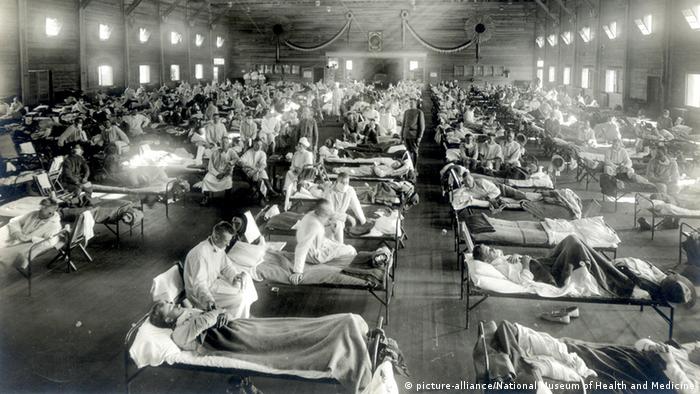
'Spanish flu': Patients in Fort Riley, Kansas (USA), in 1918

1918 influenza pandemic

Between 1918-1920, the so-called Spanish flu killed between 25 and 50 million people — making it more lethal than World War I, which ended the same year the influenza pandemic began. As the origins of the virus outbreak remained a mystery until the 1930s, some people believed the pathogen had been developed by the German army to use as a weapon.

East Germany's beetle infestation

When a Colorado potato beetle infestation in 1950 threatened to wipe out all of East Germany's potato crops, the country's socialist leadership was quick to blame the US. In an attempt to distract from its own failures, East Germany accused the US of having orchestrated the beetle infestation to sabotage its economy.

Operation Detrick

The onset of the AIDS epidemic in the US during the 1980s was accompanied by an elaborate Soviet disinformation campaign. In 1983, the Soviet secret service KGB spread the rumor that the US had developed AIDS at Fort Detrick as a biological weapon and tested it on prison inmates, ethnic minorities and gay people. It also claimed the US was deliberately deflecting blame by saying the disease had originated on the African continent.

In 1985, Russian-born German biology professor Jakob Segal even published a pseudo-scientific study to back up the conspiracy theory. And even though many biologists and medical experts dismissed the unfounded claims as nonsense, the conspiracy theory remains popular today.

Read more: Coronavirus scare: When will 'hamsterkauf' become an English word?


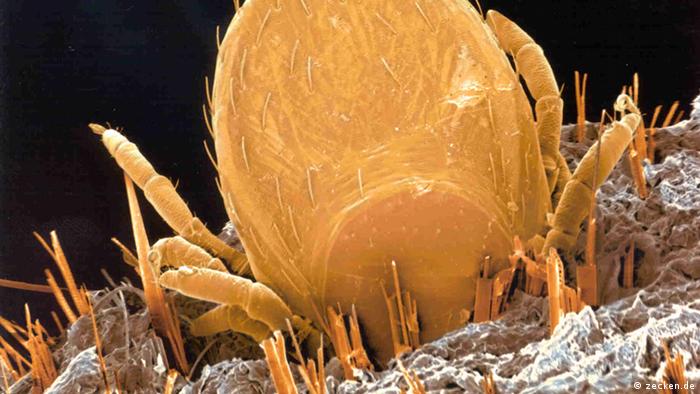
Ticks getting under the skin of conspiracy theorists?

Once again, the US is blamed

By the mid-1990s the Soviet Union had collapsed, and national health agencies had largely gotten the AIDS outbreak under control. At this time, however, Africa experienced a major Ebola outbreak. Many conspiracy theorists who had falsely claimed AIDS was created in US military labs, now claimed the Ebola virus was a bio-weapon developed by the US or Great Britain.

Another conspiracy theory in the US military and ticks. In 2019, Republican Congressman Chris Smith called on the Pentagon to release classified documents about a supposed weaponized ticks program. Smith referred to a recent book that claimed the program, which supposedly ran between 1950 and 1975, had allowed the tick-borne Lyme disease to get out of control.

Digital age amplifies misinformation

A whole host of diseases has been blamed on secret US biological weapons programs. Although some conspiracy theorists have suggested that COVID-19 is an artificially engineered Chinese bioweapon.

These, and other conspiracy theories, however, rely on arguments that are never weighted in evidence. The conspiracies tend to emerge in the early stages of a pandemic — when little is known about a pathogen's origin and spread.

The digital revolution, meanwhile, has amplified the dissemination of rumors and disinformation. Online posts are shared much quicker on social media and through messenger apps than any medical or health authority can refute them. The digital age has allowed conspiracy theories to go viral.

COVID-19 can only be contained by studying it scientifically, practicing good hygiene and ensuring those infected receive adequate medical treatment. Similarly, education and media literacy, as well as good mental health, should be promoted to be in line with how we consume information in the digital age.

Some online trolls have even suggested downing a Corona beer to combat irrational coronavirus-related fears. While this has not been proven to help, it may provide a soothing effect in the meantime.


CORONAVIRUS: THE CONSEQUENCES FOR TOURISM
Italy increasingly sealed off

In order to reduce the spread, the border into neighboring Austria can only be crossed from Italy with a medical certificate. Slovenia has closed its border, and Albania has banned Italy air and ferry traffic. Many airlines have cancelled flights to Italy until at least 3 April. Germany, Great Britain, and Ireland tightened travel recommendations and called on their citizens to leave.


The COVID-19 epidemic poses a threat to the everyday life of people worldwide. Travellers are particularly affected, as are people working in tourism. Here are the latest developments. (11.03.2020) 

Date 10.03.2020
Author Christopher Nehring


McDonald's hourly workers in U.S. demand paid sick leave as virus spreads

Reuters•March 10, 2020

McDonald’s workers demand paid sick leave

The demand from the group comes as other chain restaurants have begun to change their policies


(Reuters) - Hourly wage workers at McDonald's Corp on Tuesday sought paid sick leave for those working at its U.S. restaurants and an update to the safety protocols as coronavirus cases in the United States rise.

The burger chain has not trained or given any guidelines on the epidemic, McDonald's cooks and cashiers associated with labor group Fight for $15 and a Union said in a statement.

Maurilia Arellanes, a McDonald's worker in California, said on a media call organized by the labor group that she cannot afford to take a day off if she is sick.

"McDonald's needs to step up and do everything it can to make sure workers like me are safe and that if we do get sick, we can take time off to get better without falling behind on our bills," she said.

The labor group asked the company to pay workers for any missed shifts if its restaurant shuts down due to the spread of COVID-19. McDonald's hourly pay for workers varies from $7.25 to $15 based on the state.

"As we proactively monitor the impact of the coronavirus, we are continuously evaluating our policies to provide flexibility and reasonable accommodations," a company spokesperson said in a statement.

Restaurant workers have for long complained about poor pay and working conditions, drawing support from politicians and Fight for $15, which has regularly targeted McDonald's calling for higher pay and union rights for workers.

Their demands come close on the heels of Darden Restaurants, the owner of Olive Garden and Bahama Breeze chains, saying it would provide its hourly workers paid sick leaves starting Tuesday.

Separately, retailer Walmart Inc said an employee in Kentucky tested positive for the coronavirus, adding that employees would receive up to two weeks of pay in case of infection or if their store, club, office or distribution center were quarantined.

Over 600 cases and 26 deaths have been reported in the United States due to the coronavirus. However, McDonald's has not issued an update on the potential financial impact on its home.

When the outbreak was first reported in China late last year and the company said in January it does not see a big financial hit as it only collected royalty fees from China.

It last week decided to cancel its biennial in-person worldwide convention, attended by operators from around the world and set to take place in a few weeks. It will now hold a digital convention.

"The company canceled a meeting of executives and franchisees, but it's not making any plans for us frontline workers, who cannot afford to take a day off without pay if we get sick," said Fran Marion, a McDonald's worker in Kansas City, Missouri.
All-women crew brings Air Canada flight into Edmonton International Airport

I LOOK FORWARD TO WHEN THIS IS NOT NEWS


Thursday, March 5, 2020

All-female crew at EIA


An all-female crew brought an Air Canada flight into the Edmonton International Airport on Thursday. Dave Mitchell has the story.

EDMONTON -- Edmonton’s rich aviation history saw another first Thursday, with the arrival of a seemingly ordinary Air Canada flight from Toronto.

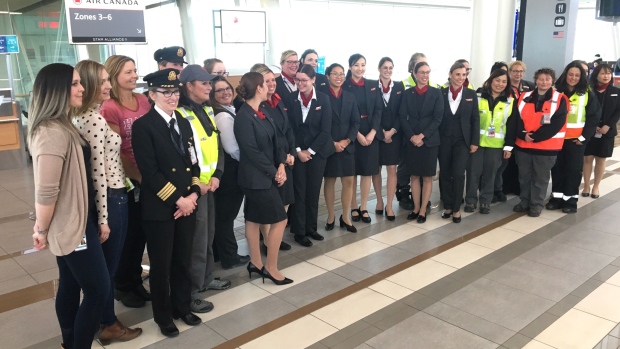
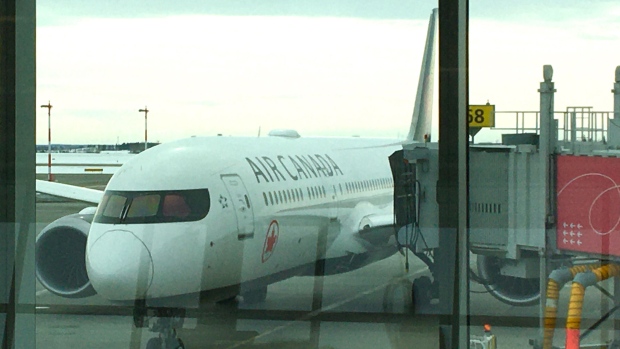
As the Boeing 787 Dreamliner eased its way to the ramp, keen observers may have noticed the ground crew tending to the aircraft were all women. When the air crew deplaned, every one of them were also female. The arrival of air traffic controllers visiting the passenger gate signalled something truly unusual, as three women from the control tower helped guide the historic flight safely to Edmonton International Airport. It was the first such journey crewed entirely by women.


They all gathered to celebrate in the arrival lounge as the event is a first in Canadian aviation history. While this flight was arranged in advance of International Women’s Day to celebrate many strides made in a field off limits to women of much earlier generations, the impact was not lost on those participating.

"It's nice to see that there’s obviously a lot more women involved in aviation, it's kind of a momentous thing," exclaimed air traffic controller Melanie Collins. "It's obviously a big deal because it doesn’t happen regularly, so it's just neat to be a part of and that it's recognized."

Collins has been working in control towers for 12 years, and while noticing more women following her career path, says she hopes its a growing trend.

"There’s definitely been an increase in females, but it's still underrepresented. It stands out a little bit when we have all females in the tower for a day."

Gathering for a photo after the landmark flight, the women in Edmonton were just part of the story. Counting the crew in Toronto that saw the aircraft into the sky, thirty three women contributed to the entire journey.


First Officer Stacie Kamin was beaming as she soaked in the event. Flying one of the most advanced passenger aircraft in the world is a dream job for her, one that she knows younger women can now aspire to as well.

"I often say its generational. This wasn’t a career that was available to my mom. My mom was an amazing nurse and she taught me that I could do anything that I wanted to do."

With over 200 female pilots now flying with Air Canada in various aircraft, Capt. Jean Nash appreciates the gains made since she began work on the flight deck 35 years ago. She’s encouraging anyone with skills and passion to take to the skies.


"I love being a part of this and giving the message to the young ladies out there, please try aviation, and men! It's a great career, you won’t regret it. You get to travel the world."

Wednesday, March 11, 2020

'Shame on you, people': Tattoo artist whose design was altered for Greta stickers speaks out   ITS STILL A SEXIST TAT

Artist threatening lawsuit over Greta decal

An Argentinian tattoo artist says his art was stolen and altered to make the Greta decal.

Tattoo artist says design was altered for 'Greta' decal.


Argentinian artist German Canalla says fans told him his art was being used to make the controversial decal.

EDMONTON -- An Argentinian tattoo artist says X-Site Energy Services altered his design to make the decal that appears to show Greta Thunberg in a sex act, and he wants to take legal action.

German Canalla told CTV News Edmonton he received a message on Instagram alerting him of his art being turned into disturbing stickers of the climate activist.

"I was like, 'What the f***," Canalla said. "I was really shocked and surprised."

Related Stories
'We will do better': X-Site Energy apologizes for 'Greta' decal
Greta Thunberg responds to graphic decal bearing Alta. oilfield company logo
'Greta' decal condemned in House of Commons
Disturbing 'Greta' decal bearing Alta. oilfield company logo drawing criticism

Canalla's drawing, of which he made four or five and sold around the world, shows a pair of hands holding the braids of a woman from behind. The altered imaged included "Greta" on the female's back and the X-Site Energy Services logo.


Canalla says his work is erotic and about consensual sex, but "never about rape and child abuse."

The Argentine said he's currently looking for a copyright lawyer to sue X-Site Energy Services.

"What the f*** are you thinking? It's horrible. This is a teenager, trying to do something good for the world … shame on you, people."

Volunteer Mountie has 'business relationship' with company featured on 'Greta' decal: RCMP


Alex Antoneshyn Digital Journalist
Kelsey Dyer CTV News Edmonton
March 11, 2020

Greta Thunberg is interviewed by The Associated Press in Plymouth, England Tuesday, Aug. 13, 2019. (AP Photo/Kirsty Wigglesworth)


EDMONTON -- A person connected to the Alberta oilfield company whose logo appeared on a heavily criticized 'Greta' decal volunteered with the RCMP detachment that investigated and found the sticker did not meet the threshold for child pornography, Alberta RCMP have confirmed.

RCMP Alberta addressed the situation on social media after being directly asked about the connection.

We can confirm this individual is a volunteer with the Auxiliary program. You can find more information about the program, here: https://t.co/a2XgBHxFPf— RCMP Alberta (@RCMPAlberta) March 6, 2020

Related Stories
'Shame on you, people': Tattoo artist whose design was altered for Greta stickers speaks out
'We will do better': X-Site Energy apologizes for 'Greta' decal
Greta Thunberg responds to graphic decal bearing Alta. oilfield company logo
'Greta' decal condemned in House of Commons
Disturbing 'Greta' decal bearing Alta. oilfield company logo drawing criticism

RCMP said the person has a "business relationship" with Red Deer-based X-Site Energy Services but did not specificy his role. The company's logo featured on the sticker, which was reportedly distributed at X-Site Energy worksites.

RCMP did not make it clear whether the person continues to volunteer as an auxiliary, but didn't say he wouldn't be allowed to in the future pending a review of the auxiliary program in Red Deer. The program, mentioned on Twitter, was suspended in the Alberta city in 2015 following the death of Const. David Wynn.

"Red Deer RCMP General Investigative Services only investigated whether the image depicted could be considered Child Pornography under the Criminal Code," K Division media relations manager Fraser Logan told CTV News Edmonton.

"Red Deer RCMP would not have pursued any further line of investigation past that determination, as the complaint made was only about the depiction on the decal."

He added auxiliaries are never involved in investigations, whether criminal or not.

"There was nothing ever to suggest, leading into this investigation, that an Auxiliary with the Detachment had this business relationship."

He also said there was "absolutely nothing to suggest he was involved" in the distribution of the 'Greta' sticker.

At other locations across Canada, the two-year-old auxiliary program helps with community policing and crime prevention. It has three tiers where members have varying levels of responsibility, supervision, and duties, ranging from public education to participation in patrol calls and check stops. There are national training standards for each tier. Auxiliary members are not paid.

DECAL 'DISRESPECTFUL' BUT NOT CRIMINAL: RCMP

On March 5, Mounties said Red Deer RCMP's general investigative section contacted the Alberta Law Enforcement Response Teams (ALERT) after finding there were "insufficient grounds to pursue charges."

ALERT confirmed a member reviewed the report from the Red Deer RCMP, but said it was not involved in the investigation.

Red Deer RCMP also consulted with members from the Internet Child Exploitation Unit (ICE), concluding no charges would be pursued related to what they called the "distasteful decal."

They said the image did not meet the criteria in the Criminal Code to be classified as child pornography.

"The Alberta RCMP take the exploitation of children very seriously, and we believe the image in circulation is extremely disrespectful.

"However, in this case and at this time there are insufficient grounds with which to pursue charges."

The decal allegedly depicts a sex act with a female figure who appears to be 17-year-old Swede Greta Thunberg. The image shows a pair of hands holding the braids of a female figure from behind. "Greta" is scrawled across her back. Directly below sits the logo of X-Site Energy Services.

The company issued an apology on its website on March 2 and committed to recovering and destroying the stickers.

ALERT was created in 2006 to combat organized crime. The system sees municipal and RCMP officers across the province work together on cases like drug trafficking, child exploitation and gang violence.
Orphan Wells Association to receive $100M loan bump help speed up reclamation

KENNEY CLAIMS ITS A JOBS PROGRAM

Solutions to oil patch unemployment and abandoned wells are one in the same, the Alberta government is saying.

POLLUTER PAY? NOT IN ALBERTA. ALBERTANS PAY FOR RECLAMATION

CLEAN UP

Alex Antoneshyn Digital Journalist Monday, March 2, 2020


Province loans $100M to clean up oil wells

Solutions to oil patch unemployment and abandoned wells are one in the same, the Alberta government is saying.

EDMONTON -- Solutions to oil patch unemployment and abandoned wells are one in the same, the Alberta government is saying.

Expanding on a promise made in Budget 2020, Alberta announced Monday morning plans to increase its loan to the Orphan Well Association by up to $100 million. 


READ MORE: Budget 2020: Here's what's in Alberta's new jobs plan

The reclamation work will create 500 jobs and address between 800 and 1,000 abandoned sites, Premier Jason Kenney estimated.

"There is a path forward for growth in our energy sector, but we know we need to give a lifeline to some people who are out of work right now," he said at the announcement at Total Energy Services in Leduc, Alta.

Alberta had previously lent, interest free, $235 million to the OWA, which it had begun repaying in 2019 with funds from the Orphan Fund Levy.

Energy Minister Sonya Savage added she would reveal in the coming weeks policy changes that would give the OWA more flexibility regarding ownership and control, as well as sale and management, of wells.

She said the government recognizes the "pressing need to turn the tide on growing oil and gas liabilities."

There are 6,500 abandoned wells throughout Alberta, the OWA estimates.

The loan extension got a nod of approval from Opposition and NDP Leader Rachel Notley.

"It's a continuation of what we were doing before. It was a good idea when we did it, and it continues to be a good idea."

However, she called the United Conservative government's "Blueprint for Jobs" plan, a part of which the orphan well announcement was made, "words and empty ideas that have not created any jobs at all."

The blueprint plan, the government says, consists of:
"Unleashing the private sector" through things like the Job Creation Tax Cut;
Reducing red tape;
Building infrastructure that supports the economy;
Renewed focus on skill development, such as the Skills For Jobs program; and
Promotion of Alberta as a place to invest in and visit.


AND ONE WEEK LATER KENNEY SAYS THIS

Alberta premier says layoffs loom as oilpatch warns of 'catastrophic' impact from low prices
CBC March 11, 2020

ONE YEAR OF KENNEY IN ALBERTA
WHAT DID HE PROMISE OH YEAH JOBS AND 
AN OIL BOOM

Apr 18, 2019 - For weeks, Jason Kenney framed Alberta's election around three key issues: ... Kenney regards Rachel Notley's efforts to win political and public support ... One big challenge for the new government is many oilpatch jobs that ...


Apr 17, 2019 - Alberta's oilpatch is celebrating the election of a pro-business ... victory in the Alberta election over Premier Rachel Notley's NDP government, ...
Mar 21, 2019 - United Conservatives say nearly 50000 full-time jobs have been lost in Alberta ... UCP Leader Jason Kenney shared a message on Twitter on March 9, ... READ MORE: Alberta's 2019 election underway as Premier Notley drops the writ ... READ MORE: Low oil prices to have negative effect on Canadian ...
Dec 30, 2019 - EDMONTON — In 2019, Alberta Premier Jason Kenney made good on his promise to take a blowtorch to core policies enacted by the former NDP government. ... Kenney promised rapid action to liberate an oil-and-gas-based ...