Thursday, March 12, 2020

Dow cuts losses by more than half after Fed announces new dramatic funding actions to combat crisis

PUBLISHED WED, MAR 12, 2020 
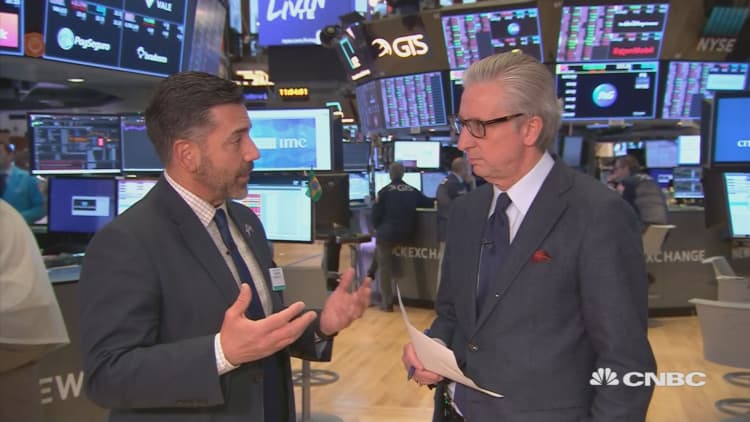

Steve Grasso: Markets looking for clarity

U.S. stocks recovered some of their steep losses on Thursday after the Federal Reserve announced extraordinary funding actions to ease strained capital markets in the wake of the coronavirus sell-off.

The Dow Jones Industrial Average traded 826 points lower, or 3.5% after plummeting more than 9% for its worst drop since the 1987 market crash. It was on pace for the sixth-worst decline for the Dow in history, according to FactSet. Even the worst one-day drop of 2008 financial crisis did not reach this magnitude.

The S&P 500 traded down 4.4%, joining the Dow in a bear market on Thursday. The main U.S. stock benchmark is now down 22% from its record set just last month. At one point, however, the S&P 500 was down more than 9%. The Nasdaq Composite recovered slightly, trading about 4.5% lower after plummeting more than 7%.

The Fed announced it will ramp up its overnight funding operations to more than $500 billion.

Stocks have been under pressure were initially under pressure since President Donald Trump failed to quell concerns over the possible economic slowdown stemming from the coronavirus.

It got so bad, that trading was halted briefly after the open for 15 minutes as markets hit the mandated “circuit-breaker” threshold used by U.S. exchanges. Not much was immune to the market plunge. Small-cap benchmark the Russell 2000 index cratered by 10%. Gold fell. Oil plunged. Credit market spreads widened significantly. Only U.S. Treasuries were higher. Even bitcoin dropped.

We are going into a global recession,” said Mohamed El-Erian, chief economic adviser at Allianz, on CNBC’s “Squawk Box.” “After what’s been happening the last few days, we are going to see a spread of economic sudden stops.”


“The trouble with economic sudden stops is it’s not easy to restart an economy,” El-Erian said. He believes the selling won’t stop until the bear market hits down 30%. 


In his address, Trump announced travel from Europe will be suspended for 30 days as part of the government’s response to the coronavirus outbreak. Trump also said the administration would provide financial relief for workers who are ill, caring for others due to the virus or are quarantined.

These moves were not specific enough for investors, however, who were looking for a more robust fiscal response to curb potentially slower economic growth stemming from the coronavirus.

“President Trump in an extraordinary Oval Office address didn’t offer up major new ideas on stimulus and only said he’d propose a vague payroll tax holiday to Congress without strongly standing up for any firm size/magnitude,” wrote Ernie Tedeschi, policy economist for Evercore ISI, in a note. “This effectively kicks the issue to Congress which is still planning to go on recess next week.”


Cruise line shares dropped sharply. Royal Caribbean traded 26.6% lower while Carnival and Norwegian Cruise Line slid 19% and 27.6%, respectively. Airline shares such as United, Delta and American all fell more than 12%.


The Cboe Volatility Index (VIX), widely considered the best fear gauge on Wall Street, jumped to more than 67 and hit its highest level since 2008.


On Wednesday, the Dow ended its historic 11-year bull market run by closing in bear-market territory. A bear market marks a 20% decline from all-time highs. Now the S&P 500 is in one.


Trading was halted for 15 minutes shorty as an initial 7% drop triggered “circuit breakers” at the New York Stock Exchange and Nasdaq. Before the open, futures contracts overnight tied to the major indexes fell to their so-called limit down thresholds, sliding 5%. These limit down levels act as a floor for selling until regular trading begins. They are used to ensure orderly markets.

Also causing concern about how pervasive the virus could already be in this country was the announcement Wednesday that the National Basketball Association is suspending its season after a Utah Jazz player tested positive for coronavirus. Movie actor Tom Hanks and his wife, Rita Wilson, also said they tested positive for the coronavirus.

“The crux of the angst investors are feeling as the coronavirus spreads surrounds what might happen to consumer spending,” wrote Scott Wren, senior global market strategist at Wells Fargo Investment Institute.


“Consumers sitting at home and not out spending money because they fear catching the coronavirus is the ultimate negative outcome,” he added. “It has been the U.S. consumer who has been driving the recovery bus during this long expansion.”

Thursday’s plunge came after yet another wild session on Wall Street and the demise of the Dow’s record-setting bull market run that began in March 2009. The blue-chip index tumbled 1,464.94 points, or 5.9%, to close at 23,553.22. The 30-stock average closed in a bear market, putting to end an expansion that started in 2009 amid the financial crisis.

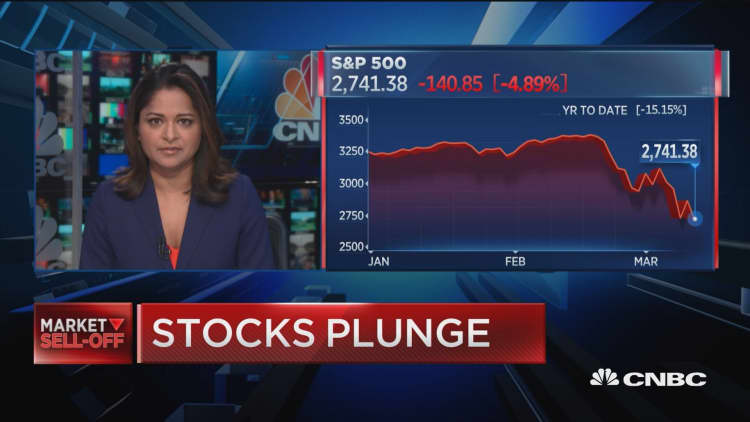
The S&P 500 and Nasdaq Composite fared slightly better on Wednesday, down 4.89% and 4.7% respectively. Those two indexes also remain just outside of bear market territory albeit down at least 19% from their respective record closes.


“These markets have been impossible to predict,” said David Lafferty, chief market strategist at Natixis Investment Managers. “I think of them as kind of wind-sock markets. They’re just changing with whatever way sentiment is. There’s no fundamentals under these markets right now.”

Investors continued to blame the spread and economic impact of the coronavirus for the last month’s steep losses. The virus, which has now infected more than 124,000 people worldwide and killed at least 4,589, threatens to disrupt countries like Italy that have taken aggressive action to slow its spread. Italian Premier Giuseppe Conte announced late Wednesday that all the country’s stores except pharmacies and groceries will be closed in a move deemed both necessary to safeguard human health and a threat to the country’s output.

Wall Street worries that such measures could tip the global economy into recession, especially if Washington decides the disease is rampant enough in the U.S. to warrant similar measures. The World Health Organization declared COVID-19 a pandemic earlier on Wednesday.


—CNBC’s Eustance Huang contributed to this report.

Fed to pump more than $1 trillion in dramatic ramping up of market intervention

CNBC PUBLISHED THU, MAR 12 2020


KEY POINTS

The Fed announced a bold new initiative Thursday in an effort to calm market tumult.
In all, the new moves pump in up to $1.5 trillion into the financial system in an effort to combat potential freezes brought on by the coronavirus.

This was the second day in a row and the third time this week the Fed has stepped in.
Stocks staged a sharp turnaround from earlier losses, though some of those gains were pared.

The Federal Reserve has stepped into financial markets for the second day in a row and the third time this week, this time dramatically ramping up asset purchases amid the turmoil created by the coronavirus.

“These changes are being made to address highly unusual disruptions in Treasury financing markets associated with the coronavirus outbreak,” the New York Fed said in a statement released early Thursday afternoon amid a washout on Wall Street that was heading toward the worst day since 1987.

Stocks were off their lows following the announcement though some of the gains were pared as the market digested the moves.

One part of the announcement saw the Fed widen the scale for its $60 billion worth of money Treasury purchases, which to now had been confined to short-term T-bills.

Under the new regime, the Fed will extend its purchases “across a range of maturities” to include bills, notes, Treasury Inflation-Protected Securities and other instruments. The central bank will begin purchasing coupon-bearing securities, something market participants have been clamoring for since late 2019.

The purchases start Thursday and will continue through April 13.

The second part of the new operations will see the New York Fed desk offer $500 billion in a three-month repo operation and a one-month operation. The offerings will happen on a weekly basis through the remainder of the program.
In addition, the Fed will continue to offer at least $175 billion in overnight repos and $45 billion in two-week operations. Repos are short-term operations in which financial institutions provide high-quality collateral in exchange for cash reserves they use to operate.

The extraordinary moves come amid extreme market turmoil created by uncertainty over the coronavirus spread. Government bond yields earlier this week cascaded to record lows amid reports of liquidity issues in the market and fears of a global recession.

Markets have been looking for action by the Fed, which instituted an inter-meeting interest rate cut last week that did nothing to quell concerns. The Fed on Monday increased the limits for its ongoing repo operations, then Wednesday expanded the limits an announced a $50 bill term offering that attracted heavy interest earlier in the day Thursday.
Brazilian official who posed for photo with Trump tests positive for coronavirus, reports say
CNBC PUBLISHED THU, MAR 12 2020
KEY POINTS

A Brazilian official who met and dined with President Donald Trump at Mar-a-Lago over the weekend has tested positive for the coronavirus, according to media reports.

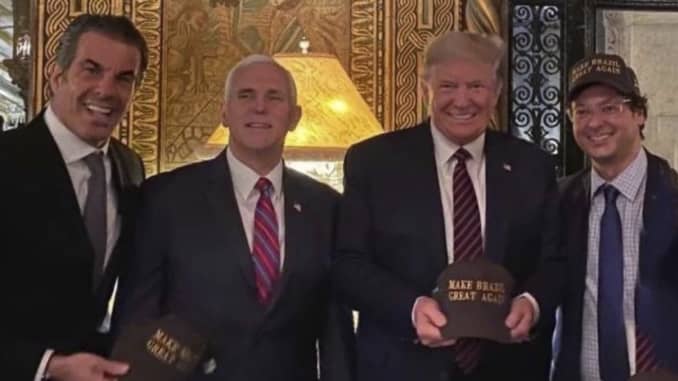
The official, Fabio Wajngarten, posted an Instagram image of himself posing with Trump and Vice President Mike Pence, who is leading the White House’s coronavirus task force. 

“Let’s put it this way, I’m not concerned,” Trump said Thursday.


A photo showing Brazil government official (r) posing for a photo next to President Donald Trump and Vice President Mike Pence at Mar-A-Lago has tested positive for the 2019 novel coronavirus.
A Brazilian official who met and dined with President Donald Trump at Mar-a-Lago over the weekend has tested positive for the coronavirus, according to media reports Thursday — but Trump said he’s “not concerned.”

The official, Fabio Wajngarten, posted an Instagram image of him posing with Trump and Vice President Mike Pence, who is leading the White House’s coronavirus task force. It was not clear when that photo was taken, or by whom; it was posted on Wajngarten’s account four days ago, according to Instagram.


“I did hear something about that,” Trump told reporters Thursday, when asked about the matter. “We had dinner together in Florida at Mar-a-Lago with the entire delegation. I don’t know, if the press [said he was there, then] he was there.”

Trump appeared to shift his focus to Brazil’s president, Jair Bolsonaro, as he continued his response.

“But we did nothing very unusual. We sat next to each other for a period of time, had a great conversation. He’s doing a terrific job in Brazil, and we’ll find out what happens. I guess they’re being tested right now?” Trump said. Bolsonaro was also present at Mar-a-Lago days earlier, according to the reports.

Pressed for comment on the reports, Trump added: “Let’s put it this way, I’m not concerned.”

Wajngarten is Bolsonaro’s press secretary.

It is unclear if Trump has previously been in direct contact with anyone who has tested positive for the coronavirus. But he has recently interacted with multiple U.S. officials who went into self-quarantine after learning that they had been in contact with an individual who was since diagnosed with the disease.

Re
. Doug Collins, R-Ga., shook hands with Trump last Friday when the president traveled to Atlanta to visit the Centers for Disease Control and Prevention, where officials there briefed him on their responpse to coronavirus.

Rep. Matt Gaetz, R-Fla., flew on Air Force One with Trump on Monday on a flight from Orlando, Fla., to Joint Base Andrews in Maryland. Gaetz reportedly learned on that flight that he had been in contact with a person who was diagnosed with coronavirus. He said he would self-quarantine about an hour after he got off the plane with Trump.
TRUMP HARMS NORWEGIAN AIR

Norwegian Air to cut 4,000 flights, lay off half its employees as coronavirus hamstrings travel

PUBLISHED THU, MAR 12 2020

KEY POINTS

Norwegian Air will scrap 4,000 flights and temporarily lay off around half its employees due to the ongoing coronavirus outbreak, the company said on Thursday.

Travel restrictions and falling demand due to the virus are increasingly hurting the airline industry’s ability to fly.

U.S. President Donald Trump has ordered sweeping restrictions on travel from the European mainland for the next 30 days in a bid to halt the spread of coronavirus.

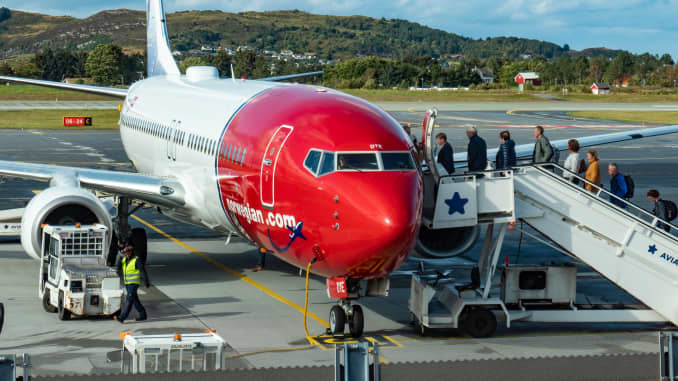
Norwegian Air Shuttle Boeing 737-800 aircraft with registration LN-DYE as seen with passengers boarding on the airplane for departure at Ålesund Airport, Vigra AES ENAL in Møre og Romsdal county, Norway. Nicolas Economou | NurPhoto via Getty Images


Norwegian Air will scrap 4,000 flights and temporarily lay off around half its employees due to the ongoing coronavirus outbreak, the company said on Thursday.

Travel restrictions and falling demand due to the virus are increasingly hurting the airline industry’s ability to fly.

U.S. President Donald Trump has ordered sweeping restrictions on travel from the European mainland for the next 30 days in a bid to halt the spread of coronavirus.

A pioneer in transatlantic budget travel since 2013, the ban is another severe blow to Norwegian, the largest foreign airline serving the New York region and several other U.S. cities.
---30---

Jeremy Siegel calls for federal support for companies: ‘We need bold measures’


ANOTHER CAPITALIST ECONOMIST CALLS FOR SOCIALISM 
FOR BUSINESS DURING THIS CORONAVIRUS CRISIS OF CAPITALISM

DEMANDS ACTION BY THE FEDERAL GOVERNMENT 

THE CENTRAL STATE MUST ACT TO SAVE CAPITALISM 

KEYNESIAN SOLUTIONS TO MARKET PROBLEMS


Jeremy Siegel calls for federal support for companies: ‘We need bold measures’


PUBLISHED THU, MAR 12 2020Jesse Pound@JESSERPOUND

KEY POINTS


Wharton professor Jeremy Siegel said that a federal relief program should include a fund that would allow banks to ensure that they could meet the liquidity needs of companies drawing on credit lines. 

“We’re talking about good businesses that are not going to get revenue for three months, four months, whatever time it is, because of the virus,” Siegel said.

The professor said the crisis was not at the same level as the financial crisis and that the economy could bounce back faster from a recession.


Wharton’s Jeremy Siegel: There’s light at the end of this dark tunnel


Wharton professor Jeremy Siegel said Thursday that the federal government should consider dramatic measures to support the economy during the coronavirus outbreak, including a $2,000 tax credit for individuals and a fund to backstop lines of credit for companies.

“I think we need bold measures ... I think some big move by the government would be most welcome,” Siegel said on CNBC’s “Squawk on the Street,” echoing comments made by CNBC’s Jim Cramer earlier.

Equity markets plunged again on Thursday, with all three major U.S. stock indexes trading more than 20% below their recent highs. President Donald Trump said Wednesday night that the government was restricting travel between the U.S. and Europe and that he would ask Congress for economic relief measures domestically.

Siegel said that a relief program should include a fund that would allow banks to ensure that they could meet the liquidity needs of companies drawing on credit lines.

“The idea we’re assuring the financial health to keep businesses going. Now, if we have 60 days, 90 days, 120 days of cessation, how many businesses would need to go on a line of credit? If that is assured, they will survive when confidence gets back and the economy gets back,” Siegel said.


The professor said that he didn’t think the help from the government should extend to supporting companies that are struggling for reasons other than the virus, such as the energy industry, where a global price war on oil has combined with weakening demand due to the virus to drive prices lower.

“I’m not for really bailing those out because I don’t think they’re systemic to the health of the economy. That’s a macroeconomic force on oil that needs to be corrected,” Siegel said. “We’re talking about good businesses that are not going to get revenue for three months, four months, whatever time it is, because of the virus ... Those are the ones that we have to make sure that it’s because of the virus alone that their existence and employment of tens of millions of people is note going to be threatened.”

The professor said the crisis was not at the same level as the financial crisis and that the economy could bounce back faster from a recession.

He also said that strong actions by the government to support the economy could allow policymakers to focus on the health care side of combating the virus.

“Once you take those off the table ... then we can all concentrate on the health measures that we all need to engage in now,” Siegel said.

Cramer slams government on coronavirus:


THIS MORNING ON SQUAWK ON THE STREET CNBC'S JIM CRAMER CALLS FOR SOCIALISM TO PROP UP BUSINESS SO THEY CAN PAY THEIR WORKERS, 
AND NOT HAVE TO WORRY ABOUT DEBT, CALLS FOR THE FED TO ANNOUNCE
DEBT FORGIVENESS FOR 90 DAYS 

TWITTER CALLS HIM A COMMUNIST

Cramer slams government on coronavirus: ‘They know nothing,’ evoking his epic 2007 Fed rant

PUBLISHED THU, MAR 12 2020 Kevin Stankiewicz@KEVIN_STANK


KEY POINTS


CNBC’s Jim Cramer blasted the U.S. government’s response to the coronavirus on Thursday, arguing “this is the time for radical action.” 

“They know nothing. We know more than they do, and that’s not acceptable either,” he said. 

Cramer said he is worried that multiple companies in the S&P 500 could go bankrupt within four weeks
.

CNBC’s Jim Cramer blasted the U.S. government’s response to the coronavirus on Thursday, arguing “this is the time for radical action.”

“They know nothing. They know nothing. We know more than they do, and that’s not acceptable either,” Cramer said, hearkening back to his famous 2007 rant about the Federal Reserve before the financial crisis.


“I want the federal government to know more than me. I knew more than they did in 2007, and I know more than they do now and it is disappointing,” he said on “Squawk on the Street.

L
ater Thursday, President Donald Trump said that markets will be “just fine.” Trump made the comment as he was meeting with Irish Prime Minister Leo Varadkar.

Cramer said he is worried that multiple companies in the S&P 500 could go bankrupt within four weeks due to the economic slowdown caused by the coronavirus.

“Are we going to sit here and let so many companies go bankrupt because of an illness? I think that is stupid,” Cramer said. “Once we settle that out and stop worrying about money, we can worry about health simultaneously. Right now we can’t do both.”

Cramer argued the government should temporarily suspend all manner of tax collection.


“Everyone owes the government at all time. Everyone in this country, individuals, corporations. That has to be suspended right now so they have more money,” Cramer said.

“Are these radical actions? You bet they are,” he added. “This is the time for radical action and the action can be done by the federal government.”


About 30 minutes later, Cramer took a phone call live on CNBC at 9:38 a.m. ET. After hanging up, he said he believes the government is debating some big options to tackle the economic and financial markets crisis due to the outbreak.

“You’re going to get clarity,” he said.

Cramer’s comments come after Trump’s prime-time address on Wednesday, in which the president announced travel restrictions that would curtail travel from most of Europe to the U.S. for 30 days in an attempt to slow the coronavirus pandemic.

Trump also said he will be asking Congress to provide payroll tax relief for Americans and instructing the Small Business Administration to “provide capital and liquidity” for small businesses.


Jim Cramer believes the White House is debating big plans to combat coronavirus and ease markets


PUBLISHED THU, MAR 12 2020
Matthew J. Belvedere@MATT_BELVEDERE


KEY POINTS

CNBC’s Jim Cramer said Thursday that he believes the government is debating some big options to tackle the economic and financial markets crisis arising from the coronavirus pandemic.

Cramer made these comments after the S&P 500′s first-level, 7% down circuit breakers kicked in and paused trading for 15 minutes and following a call he took live on CNBC.
“I think that’s about to change,” Cramer said about the uncertainty about what further actions the Trump administration may take to deal with the coronavirus fallout.


CNBC’s Jim Cramer said Thursday that he believes the government is debating some big options to tackle the economic and financial markets crisis arising from the coronavirus pandemic.

Cramer made these comments after the S&P 500′s first-level, 7% down circuit breakers kicked in and paused trading for 15 minutes and following a call he took live on television around 9:38 a.m. ET on CNBC’s “Squawk on the Street.”

“I think that’s about to change,” Cramer said about the uncertainty about what further actions the Trump administration may take to deal with the coronavirus fallout.

“I think that they will perhaps consider the idea that the federal government does not need to be paid during this period so therefore the people, the working people, get paid and are protected,” the “Mad Money” host said.

“I think they are debating the notion about whether they should have a trust fund ... also debating the notion right now about whether the Federal Reserve should be able to guarantee credit lines,” Cramer said. “The Treasury trust fund would indeed, perhaps, take advantage of the lower rates and make it so that people feel their credit lines would be backed up.”

“I believe that some of these plans that I mentioned are being debated right now and I feel better,” he said. “You’re going to get clarity.”

Later Thursday, President Donald Trump said that markets will be “just fine.” Trump made the comment as he was meeting with Irish Prime Minister Leo Varadkar.

About 30 minutes before he took the phone call, Cramer blasted the U.S. government’s response to the coronavirus, arguing “this is the time for radical action.”

“They know nothing. They know nothing. We know more than they do, and that’s not acceptable either,” Cramer said, hearkening back to his famous 2007 rant about the Federal Reserve before the financial crisis.


“I want the federal government to know more than me. I knew more than they did in 2007, and I know more than they do now and it is disappointing,” he said.

Cramer said he’s worried about companies going bankrupt from the economic damage cause by the coronavirus. “Are we going to sit here and let so many companies go bankrupt because of an illness? I think that is stupid.”


Trump’s address Wednesday night failed to ease concerns about the possible economic from downturn the coronavirus. Wall Street opened sharply lower Thursday, with the S&P 500 down about 6% midmorning after reopening from the circuit breaker trading pause.

In his prime-time address from the White House, Trump announced a ban on most travelers to the U.S. from much of Europe for the next 30 days. He also said he will be asking Congress to provide payroll tax relief for Americans and instructing the Small Business Administration to “provide capital and liquidity” for small businesses.
Goodbye Winter Grime, Hello Safe Spring Cleaning!

https://www.poison.org/articles/2015-mar/spring-cleaning


The Bottom Line

A clean home provides a healthy environment for your family, but household cleaning products can contain hazardous chemicals. Acid, alkali, bleach, polish, detergent? It’s important to be aware of the most common cleaner ingredients, what they are intended (and not intended) to do, and how to use them safely.


The Full Story


Spring cleaning can be more of a safety challenge than everyday cleaning. It could involve rearranging things in the home and leaving multiple cleaning products out longer than usual. It's wise to anticipate that it will be tiring and disruptive and to plan for safety in advance. Leaving cleaners containing strong chemicals within reach can lead to poisoned children who not only get these products on their skin, but swallow, inhale, or get them in their eyes, resulting in serious toxicity or injury.

Familiarize yourself with these major categories of household cleaners along with their dangers if handled by children or improperly used by adults:


Acids

Acids used in cleaners can be very mild to very strong. Acid-containing household cleaning products include toilet bowl cleaners, tub and tile cleaners, tarnish removers, and metal cleaners. Always read labels carefully when choosing acid-based products for cleaning!

Mild acid cleaners include those with acetic acid (such as in vinegar) or citric acid (found in lemons and other citrus fruits). Cleaners made with these mild ingredients are generally safe for use around children and pets. They are used to dissolve hard water spots on glassware and other surfaces, eliminate soap scum from sinks, bathtubs, and shower doors and to remove mild rust stains. Phosphoric acid is stronger than acetic or citric acid and is in many bathroom tub, tile, and toilet bowl cleaners. Some other mild acids found in household cleaners are gluconic acid, glycolic acid and levulinic acid. These mild acid cleaners are of low toxicity to humans aside from irritant effects to the skin and eyes.

Strongly acidic cleaners can be very dangerous. They are likely to be corrosive, meaning they can "gnaw" away at metal - or human tissue. These include toilet bowl cleaners, rust removers, concrete cleaners and others with hydrochloric acid, oxalic acid, sodium acid sulfate, or sulfuric acid. All of these are poisonous and can injure skin with direct contact, or eyes and lungs if in direct contact or by strong fumes.


Always follow label directions to avoid injury. Never mix household cleaning products! For example, mixing an acid toilet bowl cleaner with bleach will result in formation of very irritating chlorine fumes that might cause serious breathing problems. Make sure to ventilate the area in which you are working thoroughly by opening a door or window and using an exhaust fan.


Alkalis

Alkalis include sodium bicarbonate (baking soda), sodium carbonate (also called washing soda or soda ash), and trisodium phosphate (TSP). These are produced as drain cleaners, oven cleaners, scouring powders, and all-purpose cleaners.

Mild alkalis like sodium bicarbonate are not caustic and are generally safe to use around children and pets.

Moderate alkalis include ammonia and sodium borate (borax). Ammonia is added to many household cleaners for its grease-cutting ability. Ammonia should never be mixed with chlorine or bleach products! This can release a highly irritating gas, chloramine. In fact, never mix any cleaning chemicals since it might lead to a chemical reaction and release poisonous fumes.

Strong alkalis are in products such as oven cleaners, lye (caustic soda or sodium hydroxide), and drain cleaners. They are very caustic and can cause chemical burns on the skin and in the lungs if strong fumes are inhaled. Lye gives off toxic fumes and can cause skin burns and severe eye injuries including blindness if the liquid or fumes come in close contact with the eyes.Trisodium phosphate (TSP) isn’t commonly found in cleaners now since most phosphates have been phased out due to environmental impact concerns. However it can still be found in cleaning products sold primarily through home improvement stores.


Bleaches

Bleaching agents are used as disinfectants, stain removers, and for control of mold and mildew. To be labelled as a disinfectant, the U.S. Environmental Protection Agency standards require that the product must destroy 99.9% of disease-causing organisms within 5 to 10 minutes.

Some bleaching products might not list the word "bleach" on the label, so it’s important to recognize other names for chemical bleaching agents. These include sodium hypochlorite, calcium hypochlorite, hydrogen peroxide, and sodium carbonate peroxide.

Chlorine (as hypochlorite) bleach is a widely available, affordable, and effective disinfectant agent. Chlorine bleach can be irritating to the skin and eyes. The fumes are also irritating to the lungs if inhaled. Plain sodium hypochlorite household bleach is likely to cause limited vomiting if unintentionally swallowed in small amounts. However, some sodium hypochlorite bleach products now have added sodium hydroxide that can make swallowing, skin, or eye exposure more dangerous by causing chemical burns. Bleaches with sodium hydroxide often have the word "ultra" on the product label.

Polishes and Waxes


Furniture polishes and waxes often contain chemicals called hydrocarbons, such as mineral oil, as solvents. When swallowed, coughing and vomiting can follow, resulting in the oily substance getting into the lungs, which is called aspiration. Aspiration can lead to lung inflammation and severe breathing problems.

Many polishes and waxes are packaged in pressurized aerosol cans that must be protected from extreme heat to prevent explosion.

Dete
gents

Detergents brerak up and remove grease and dirt. The most significant ingredients in detergents are "surfactants," a short version of "surface active agents." Chemicals called "builders" are sometimes added to increase the efficiency of detergents. When a builder is added, the product is labelled as heavy-duty or all-purpose.

Liquid and granular regular laundry detergents can cause nausea, vomiting, and diarrhea if swallowed but generally don't cause serious poisoning. However, serious poisoning can occur in children after unintentionally swallowing concentrated liquid laundry detergent packaged as small, single-use units ("pods"). Severe vomiting, drowsiness, aspiration, and respiratory distress requiring breathing tubes can develop after swallowing or biting into these packets.

Liquid hand dishwashing detergents are safe to use around children and pets.

If your child swallows or drinks a cleaner or detergent, use the webPOISONCONTROL® online tool for guidance or call Poison Control at 1-800-222-1222 right away.
For More Information

Caution with Caustics (The Poison Post®)

Non-toxic or minimally toxic home cleaners you can make yourself. (Make sure to follow the same safe use guidelines as with any cleaner!) (University of Utah)

The U.S. Environmental Protection Agency ChemView (Use this database to get information on chemical health and safety data received by EPA and EPA's assessments and regulatory actions for specific chemicals under the Toxic Substances Control Act [TSCA])

References

American Association of Poison Control Centers. (2012). News Release: AAPCC and poison centers issue warning about concentrated packets of laundry detergent. Alexandria, VA.

New Mexico State University Department of Extension Family and Consumer Sciences. (2012). Selection and use of home cleaning products, Guide G-304. Las Cruces, NM: Koukel.

Stöppler MC, Shiel Jr., WC. (2014). 10 spring cleaning tips for a healthier home.

U.S. Consumer Product Safety Commission Office of Information and Public Affairs. (2011). Lock up poisons. (CPSC Publication No. 382). Bethesda, MD.

Valdez AL, Casavant MJ, Spiller HA, Chounthirath T, Xiang H, Smith GA. Pediatric exposure to laundry detergent pods. Pediatrics. 2014;134(6):1127-35.

US restricts travel from EU: What you need to know

US President Donald Trump has announced a 30-day travel ban on most foreign nationals who have been in 26 European countries in the last 14 days. The ban does not include US citizens.

YOU NEED TO KNOW THAT TRUMP IS BLAMING EUROPE FOR THE CORONAVIRUS

NO LONGER WILL THE GOP REFER TO IT AS THE WUTAN CORONAVIRUS BUT THE MILAN CORONAVIRUS

THE SUBTEXT IS THAT EUROPE BEING INVADED BY MIGRANT REFUGEES BRING DISEASE AND THEY SHIP IT TO PURE WASP AMERICA

AGAIN A STEPHEN MILLER PLOY TO UNDERMINE LEGAL IMMIGRATION!!!


Germany set to oust 'stigmatizing' terms around disability from penal code

Terms like "mentally perverted" and "mentally weak" are still used in the German criminal code to refer to disabled people. German lawmakers are now paving the way to replace them with more inclusive language.

The German Cabinet met on Wednesday to discuss the removal of terms like "mentally perverted" and "weak in the mind" from the criminal code, where they are used to refer to disabled people

The government's commissioner for people with disabilities, Jürgen Dusel, welcomed the possible change, saying such terms were "stigmatizing, discriminatory and dehumanizing."

"Terms like 'mental perversion' [seelische Abartigkeit] and 'mentally weak' [schwachsinnig] are simply crude," he told DW.

"People outside of legal and political circles often don't know that these terms exist in the criminal code," he added.

Since his appointment to the office in May 2018, he has petitioned to have the offensive terms changed, stressing the importance of this issue because "language shapes our thoughts and the way we think."

Read more: How Germany is failing disabled and special-needs students


Living with an extreme disability

Which terms will be changed?

Chancellor Angela Merkel and her Cabinet are expected to approve the changes. The decision would then go to the German parliament for a vote. An official change to the legal language is expected within a few months.

Recommendations made by Dusel's office (in German) include the replacement of "weakness" [Schwachsinn] with "intelligence deficiency" [Intelligenzminderung] and "serious mental perversion" [schwere seelische Abartigkeit"] with "schwere seelische Störung" [serious mental disorder].

Read more: Growing old with Down syndrome — how things have changed

The new terms should be more neutral and inclusive, the commissioner said.

"I have a motto: Democracy needs inclusion," he told DW. "The issue of disabled rights is really about democracy."

"I consulted with many disabled people in the discussions around these terms," the commissioner said.

Some 7.8 million people, or 9.4% of the German population, are severely disabled, the government estimated in 2018. The percentage rises to 25% in people aged 65 and above.


Watch video Germany: Equal rights for people with disabilities

AUDIOS AND VIDEOS ON THE TOPIC

Breaking the disability taboo in Japan


Living with a Disability


Date 11.03.2020
Author Elliot Douglas
Related Subjects Angela Merkel, CDU, Christian Democratic Union
Keywords disability, Angela Merkel
Feedback: Send us your feedback.
Print Print this page
Permalink https://p.dw.com/p/3ZDiv

RELATED CONTENT
 #ItsMyRight: 'Don't abort us!' 22.05.2019
#ItsMyRight: 'Don't abort us!' 22.05.2019
E
ven German Chancellor Angela Merkel listens to Natalie Dedreux. The 20-year-old is fighting for equal rights for the disabled, and invokes the German constitution, the Basic Law. She has launched a petition to ban free blood tests for the early detection of gene defects. "Down syndrome is cool," she says. 


Date 11.03.2020
Author Elliot Douglas
Related Subjects Angela Merkel, CDU, Christian Democratic Union
Keywords disability, Angela Merkel
Send us your feedback.
Print Print this page
Permalink https://p.dw.com/p/3ZDiv

US women protest soccer federation's gender discrimination by hiding logo

USWNT decided to wear practice jerseys inside-out, hiding the logo of the country’s soccer federation. Only four stars, standing for their World Cup victories, were visible.


Members of the American women's soccer team wore their warm-up jerseys inside-out, hiding the US Soccer Federation (USSF) logo, as they stepped out for their match against Japan on Wednesday night.

The message was clear. This was a sign of protest against the USSF, which filed a claim that the women's team was less skilled and had a less demanding job than the men's team.

Read more: US men's soccer team express solidarity with women

The United States Women's National Team (USWNT) has filed a gender discrimination lawsuit against the federation over a difference in compensation offered to the women's team and the men's team.

When worn inside-out, the jerseys hide the logo of the federation, showcasing only four stars. Notably, these stars stand for the number of times that the women's team has won the World Cup — something the men's team, which did not qualify for the 2018 World Cup — have never done.

US women's soccer team cheered by fans in New York

The president of the USSF, Carlos Cordeiro, apologized for the language used in the court filing, which said that the men had more responsibility as that job "requires a higher level of skill, based on speed and strength."

"I sincerely apologize for the offense and pain caused by language in this week's court filing, which did not reflect the values of our federation," he said in a statement amid rising criticism.

With a 3-1 victory over Japan, the USWNT lifted the SheBelieves Cup, a preparatory tournament ahead of the Olympics in Tokyo this year.

see/rc (AP, Reuters)

DW's editors send out a selection of the day's hard news and quality feature journalism. You can sign up to receive it directly here.

DW RECOMMENDS


US women's team's equal pay talks with federation end in deadlock

More than a month after the crowd chanted "equal pay" following their World Cup win, the US women's soccer team remain in conflict with their own federation. Talks have broken down and harsh words have been exchanged. (15.08.2019)


Women's World Cup: US rewrite the record books with 13-0 win over Thailand

Records tumbled as the US opened their World Cup defense with a 13-0 win vs. Thailand. Alex Morgan scored a record-equaling five goals for the Americans, who clocked up the biggest margin of victory in World Cup history. (11.06.2019)

AUDIOS AND VIDEOS ON THE TOPIC


How to close the gender pay gap in professional soccer


Date 12.03.2020
Related Subjects Olympic Games, Gender equality, FIFA World Cup 2018, Bundesliga Latest, Europa League
Keywords US Women's National Soccer Team, gender equality, soccer, World Cup, Olympics
Permalink https://p.dw.com/p/3ZG9B
Germany puts far-right AfD's 'Wing' group under surveillance

The populist Alternative for Germany party has been accused of fueling far-right attacks with "extremist" rhetoric. Its most nationalistic "Wing" will be put under surveillance by German domestic intelligence.


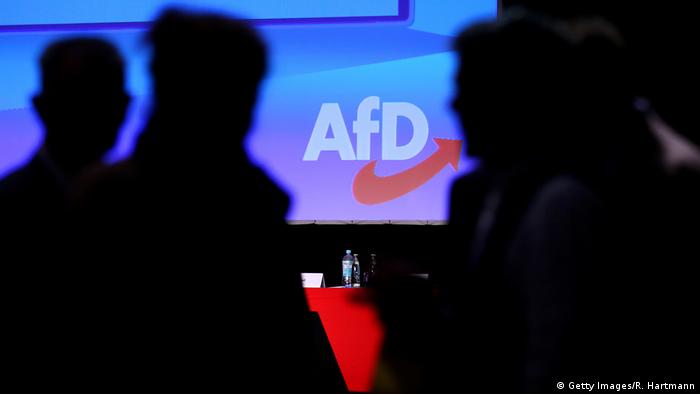
Germany's domestic security agency will run surveillance on the far-right Alternative for Germany's (AfD) most nationalistic group, the agency's president announced on Thursday.

The step designates the AfD group known as the "Wing ("Flügel") as a far-right extremist group warranting observation from security forces.

"The Wing evidently has extremist intentions," said Thomas Haldenwang, the president of the Office for the Protection of the Constitution — Germany's domestic security agency.

The group in the AfD was identified as "suspicious" by the agency in January 2019 and was already being monitored, along with the far-right party's youth branch.

After the far-right attack in Hanau in February, in which 11 people lost their lives, the German government saw increased calls from people across the political spectrum to put the AfD under observation. A manifesto written by the perpetrator of the attack contained anti-migrant rhetoric that echoed AfD sentiments.

Read more: Germany underestimated far-right terror for 'too long'

'We cannot repeat the past'

Halberwang identified the 12 people who died in right-wing extremist attacks in Germany in several attacks in the last 12 months.

"Behind these figures there are innocent victims — and there are also those who are responsible, and those who supported them," he told reporters.

"We cannot repeat the past," he said, explaining that a higher level of surveillance, especially in the digital world, could help unmask the supporters of extremism. He also referenced Germany's murky past with far-right hate crimes.

"The digital world leads to a disinhibition," he said. "If people can easily consume hate in the virtual world, they will begin to act with hate in the real world."

He identified several members of the AfD's Wing, including the state of Thuringia's regional party leader Björn Höcke, as "far-right extremists."

Read more: AfD's Björn Höcke: Firebrand of the German far right


Thuringia regional leader Björn Höcke

AfD slams new surveillance measures

Ahead of the official announcement, several AfD politicians condemned the move, calling it a deliberate tactic to silence the party.

"This is a politically motivated, anti-AfD convoluted act," said Jörg Meuthen, spokesman for the AfD. The party has repeatedly said its activities are not unconstitutional and do not warrant observation.

"The security agency has made a mistake with its allegations," the party said in a statement on Wednesday.

Höcke, who is one of the Wing's most prominent leaders, also spoke out against the decision ahead of the announcement. The Thuringian politician said his calls for the "de-Islamization of Germany and Europe" are "not directed against the freedom of religion anchored in the constitution."

He said his frequent use of anti-Islam rhetoric did not call for "the collective expulsion of Muslims living in Germany, and certainly not of German citizens."


AFD LEADERS AND THEIR MOST OFFENSIVE REMARKS
Alexander Gauland

Co-chairman Alexander Gauland said the German national soccer team's defender Jerome Boateng might be appreciated for his performance on the pitch - but people would not want "someone like Boateng as a neighbor." He also argued Germany should close its borders and said of an image showing a drowned refugee child: "We can't be blackmailed by children's eyes."

FOR PHOTOS CLIK HERE 1234567891011


Hans-Thomas Tillschneider, a Wing supporter and member of the state parliament in Saxony-Anhalt, expanded on his 2017 comments comparing Islam to a fungus.

Tillschneider said on Wednesday he would no longer draw this comparison, saying it prompts "false associations."

Thuringian AfD lawmaker denounced the new surveillance an "institutionalized attitude of snooping" after the announcement.

Read more: AfD: What you need to know about Germany's far-right party

How does the 'Wing' fit into the AfD?

The AfD, formed in 2014, received 12.6% of the vote at the last German federal election in 2017, and it has representatives in all 16 German state parliaments and in the European Parliament. Members of the party have been accused of spreading anti-Semitic, xenophobic, Islamophobic and racist rhetoric.

The Wing was set up in 2015 in the Thuringian city of Erfurt as a nationalistic splinter group of the party. It eschews clear party lines and hierarchies and as such estimates vary as to how many AfD members and voters support the Wing.

Reports in German media from 2019 suggest that up to 40% of AfD supporters in Germany's former eastern states were members of the Wing.

https://www.dw.com/en/germany-puts-far-right-afds-wing-group-under-surveillance/a-52734033

ed/sms (AFP/dpa)

DW RECOMMENDS

Opinion: Open-minded Germans must speak up to counter rightward drift

The attack on a synagogue and the murder of a politician by right-wing extremists in 2019 sent shock waves through Germany. But the vast majority of Germans favor an open, tolerant society, writes Jens Thurau. (23.12.2019)


Opinion: Thuringia's election atonement

Thuringia's CDU has made possible the re-election of Left party lawmaker Bodo Ramelow. But a lot can still happen until the state elections next year, writes Marcel Fürstenau. (05.03.2020)


Opinion: We all belong to Germany — but racism does not

Now that racism has become mainstream in Germany, it should come as no surprise that far-right actors 'took the bait' in Hanau and elsewhere, says Sheila Mysorekar. Actively combating racism is the only way forward. (21.02.2020)


AfD leaders and their most offensive remarks

Leading members of the right-wing populist Alternative for Germany (AfD) party have often made provocative, if not outright offensive, remarks - targeting refugees or evoking Nazi terminology. (04.06.2018)


Date 12.03.2020
Related Subjects Alternative for Germany party (AfD)
Keywords AfD, intelligence, security, far right, Björn Höcke, der Flügel
Feedback: Send us your feedback.
Print Print this page
Permalink https://p.dw.com/p/3ZGWv