Monday, April 06, 2020


Researchers hope to improve future epidemic predictions

network
Credit: CC0 Public Domain
As the world grapples with the COVID-19 pandemic, a new mathematical model could offer insights on how to improve future epidemic predictions based on how information mutates as it is transmitted from person to person and group to group.
The U.S. Army funded this , developed by researchers at Carnegie Mellon University and Princeton University, through the Army Research Laboratory's Army Research Office, both elements of the Combat Capabilities Development Command.
The model suggests that ideas and information spread and evolve between individuals with patterns similar to genes in that they self-replicate, mutate and respond to selective pressure as they interact with their host.
"These  have a huge impact," said CyLab faculty member Osman Yagan, an associate research professor in Electrical and Computer Engineering at Carnegie Mellon University and corresponding author of the study. "If you don't consider the potential changes over time, you will be wrong in predicting the number of people that will get sick or the number of people who are exposed to a piece of information."
In their study, published March 17 in the Proceedings of the National Academy of Sciences, the researchers developed a  that takes the evolutionary changes of both disease and information into consideration. The research tested the model against thousands of computer-simulated epidemics using data from two real-world networks: a contact network among students, teachers, and staff at a U.S. high school, and a contact network among staff and patients in a hospital in Lyon, France.
"We showed that our theory works over real-world networks," said the study's first author, Rashad Eletreby, who was a Carnegie Mellon doctoral candidate when he wrote the paper. "Traditional models that don't consider evolutionary adaptations fail at predicting the probability of the emergence of an epidemic."
The researchers said the epidemic model most widely used today is not designed to account for changes in the disease being tracked. This inability to account for changes in the disease can make it more difficult for leaders to counter a disease's spread or make effective public health decisions such as when to institute stay at home orders or dispatch additional resources to an area.
"The spread of a rumor or of information through a network is very similar to the spread of a virus through a population," said Dr. H. Vincent Poor, one of the researchers on this study and Princeton's interim dean of engineering. "Different pieces of information have different transmission rates. Our model allows us to consider changes to information as it spreads through the network and how those changes affect the spread."
While the study is not a silver bullet for predicting the spread of today's coronavirus or the spread of misinformation, the authors say it is a big step.
In the future, the team hopes that their research can be used to improve the tracking of epidemics and pandemics by accounting for mutations in diseases and ultimately considering interventions like quarantines and then predicting how those interventions would affect an epidemic's spread when the pathogen is mutating as it spreads.
"This work demonstrates the importance of basic research and the ability of scientists in various disciplines to inform each other's work," said Dr. Edward Palazzolo, program manager for the Social and Cognitive Networks Program at the Army Research Office. "Although in its early stages, these models show promise for understanding network diffusion in light of mutations."
In addition to the Army, the National Science Foundation and the Office of Naval Research also supported this research. Other researchers co-authored the paper include Yong Zhuang and Kathleen Carley from Carnegie Mellon University.
To predict an epidemic, evolution can't be ignored

More information: Rashad Eletreby et al, The effects of evolutionary adaptations on spreading processes in complex networks, Proceedings of the National Academy of Sciences (2020). DOI: 10.1073/pnas.1918529117

Researchers describe how biofuels can achieve cost parity with petroleum fuels

biofuel
Credit: CC0 Public Domain
Biofuels are an important part of the broader strategy to replace petroleum-based gasoline, diesel, and jet fuels that we use today. However, biofuels have so far not reached cost parity with conventional petroleum fuels.
One strategy to make biofuels more competitive is to make plants do some of the work themselves. Scientists can engineer plants to produce valuable chemical compounds, or bioproducts, as they grow. Then the bioproducts can be extracted from the plant and the remaining plant material can be converted into fuel. When produced in the plant itself, bioproducts can help reduce the cost of the resulting .
But one important part of this strategy has remained unclear—exactly how much of a particular bioproduct would plants need to make in order to make the process economically feasible?
Now researchers at the Department of Energy's Lawrence Berkeley National Laboratory (Berkeley Lab) and the Department of Energy's Joint BioEnergy Institute (JBEI), which is managed by Berkeley Lab, have provided the first definition of this amount. Their study, jointly led by Corinne Scown and Patrick Shih, was published recently in the Proceedings of the National Academy of Sciences.
The researchers first gathered information on a group of well-studied bioproducts that plants can already effectively produce—ranging from flavors and fragrances to biodegradable plastic. Making a valuable bioproduct would help offset the cost of making biofuels and make the whole process cheaper.
"It's a really elegant solution, to be able to engineer a plant to directly accumulate a valuable bioproduct," said Scown, a researcher in JBEI and Berkeley Lab's Energy Technologies Area.
They then designed and simulated what it would take to extract these bioproducts from plant material in the context of an ethanol biorefinery. In this setting, valuable bioproducts would be extracted from the plant, while the remaining plant material would be converted into ethanol.
This helped them answer two important questions: what amount of bioproduct the plant needs to produce in order to make the process of extracting it worthwhile, and what amount needs to be made in order to reach the target ethanol selling price of $2.50 per gallon.
To their surprise, their results showed that the amount plants need to make is actually quite feasible. For example, they calculated that when accumulated at 0.6% of the biomass dry weight, a compound such as limonene—used in flavor and fragrance—would offer net economic benefits to biorefineries. In other words, if they can harvest 10 dry metric tons of sorghum biomass from an acre of land, they need to recover only around 130 pounds of limonene from that biomass.
"The researchers in our Feedstocks Division were surprised by how modest the target levels were," Scown said. "The levels we need to accumulate in plants to offset the cost of bioproduct recovery and drive down the price of biofuels are well within reach."
Their results show that this strategy for reducing the cost of biofuels is feasible—but scientists shouldn't put all of their eggs in one basket, because the market for each high-value product is limited in size. Their analysis suggests that just five commercial-scale biorefineries could support the entire projected 2025 market demand for limonene. Scown said crops need to be engineered to produce a broad range of products to make sure the industry is diversified and the market is not flooded for any one product.
"With techno-economic models, this research provides new insights into the role of bioproducts in improving the economics of biorefineries," said Minliang Yang, a postdoctoral researcher at JBEI and lead author of the study.
Scown said the biggest impact of the paper is that it offers the first quantitative basis to actually implement this cost-saving strategy, providing a starting point for scientists who are attempting to engineer or breed  that create bioproducts on their own and offset the cost of making biofuels as a result.
"I think this research is just the first step to demonstrating the future potential of engineered bioenergy feedstock crops," said Shih, Director of Plant Biosystems Design at JBEI. "I would imagine that our findings will help motivate future efforts to make biofuels economically viable."Researchers demonstrate that jet fuels made from plants could be cost competitive with conventional fossil fuels

More information: Minliang Yang et al, Accumulation of high-value bioproducts in planta can improve the economics of advanced biofuels, Proceedings of the National Academy of Sciences (2020). DOI: 10.1073/pnas.2000053117

The ocean responds to a warming planet
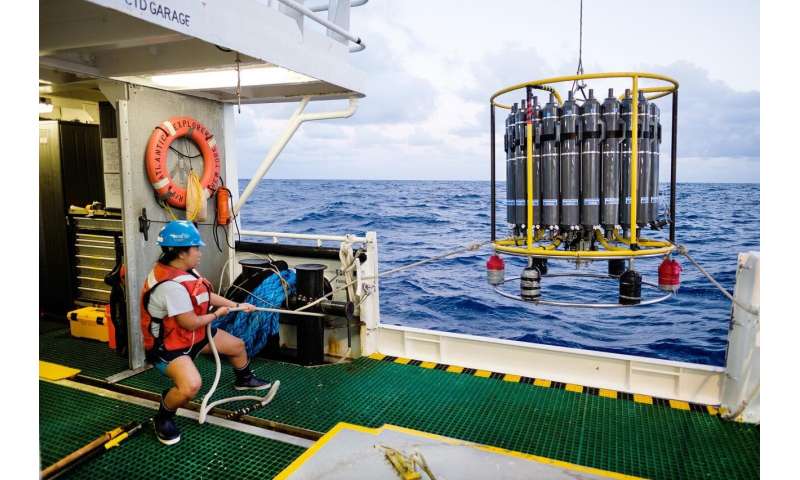
Maya Thompson, marine technician intern, hauls in the CTD (conductivity, temperature 
and depth) rosette aboard the R/V Atlantic Explorer on a recent research cruise in the 
Sargasso Sea. The CTD rosette collects water samples and physical oceanographic 
measurements from discrete depths. Credit: Bermuda Institute of Ocean Sciences
We're familiar with how climate change is impacting the ocean's biology, from bleaching events that cause coral die-offs to algae blooms that choke coastal marine ecosystems, but it's becoming clear that a warming planet is also impacting the physics of ocean circulation.
A team of scientists from the University of British Columbia, the Bermuda Institute of Ocean Sciences (BIOS), the French Institute for Ocean Science at the University of Brest, and the University of Southampton recently published the results of an analysis of North Atlantic Ocean water masses in the journal Nature Climate Change.
"The oceans play a vital role in buffering the Earth from climate change by absorbing  and heat at the surface and transporting it in the , where it is trapped for long periods," said Sam Stevens, doctoral candidate at the University of British Columbia and lead author on the study. "Studying changes in the structure of the world's oceans can provide us with vital insight into this process and how the  is responding to climate change."
One particular layer in the North Atlantic Ocean, a water mass called the North Atlantic Subtropical Mode Water (or STMW), is very efficient at drawing carbon dioxide out of the atmosphere. It represents around 20% of the entire carbon dioxide uptake in the mid-latitude North Atlantic and is an important reservoir of nutrients for phytoplankton—the base of the marine food chain—at the surface of the ocean.
The ocean responds to a warming planet
Scientists undertake work collecting water samples each month at the same site in the 
open ocean nearly 50 miles (80 kilometers) off Bermuda, as part of the Bermuda 
Atlantic Time-series Study (BATS) to analyzing hydrographic, chemical, and 
biological parameters throughout the water column. Scientific colleagues and
 students from around the world also join BATS cruises to undertake associated
 research, and many use BATS data to investigate a variety of topics, including ocean 
physics and biogeochemistry, the global carbon cycle, and the ocean's response to 
climate change. Credit: Tiffany Wardman, Bermuda Institute of Ocean Sciences
Using data from two of the world's longest-running open-ocean research programs—the Bermuda Atlantic Time-series Study (BATS) Program and Hydrostation 'S'—the team found that as much as 93% of STMW has been lost in the past decade. This loss is coupled with a significant warming of the STMW (0.5 to 0.71 degrees Celsius or 0.9 to 1.3 degrees Fahrenheit), culminating in the weakest, warmest STMW layer ever recorded.
"Although some STMW loss is expected due to the prevailing atmospheric conditions of the past decade, these conditions do not explain the magnitude of loss that we have recorded," said Professor Nick Bates, BIOS senior scientist and principal investigator of the BATS Program. "We find that the loss is correlated with different  indicators, such as increased surface ocean heat content, suggesting that ocean warming may have played a role in the reduced STMW formation of the past decade."
The ocean responds to a warming planet
The CTD (conductivity, temperature, and depth) instrument is the backbone of the 
Bermuda Atlantic Time-series Study (BATS) program, collecting a variety of physical, 
chemical, and biological oceanographic data from the North Atlantic Ocean on a 
monthly basis. Over time, these data points form a time-series, which allow scientists
 to examine trends in a variety of research areas, including the global carbon cycle 
and climate change. Credit: Annaliese Meyer, Bermuda Institute of Ocean Sciences
These findings outline a worrying relationship where ocean warming is restricting STMW formation and changing the anatomy of the North Atlantic, making it a less efficient sink for heat and carbon dioxide.
"This is a good example of how human activities are impacting natural cycles in the ocean," said Stevens, who was previously a BATS research technician from 2014 through 2017 before beginning his doctoral work, which leverages the work he did with BATS/BIOS.How stable is deep ocean circulation in warmer climate?

More information: Samuel W. Stevens et al, A recent decline in North Atlantic subtropical mode water formation, Nature Climate Change (2020). DOI: 10.1038/s41558-020-0722-3
Journal information: Nature Climate Change

Climate change to affect fish sizes and complex food webs

Climate change to affect fish sizes and complex food webs
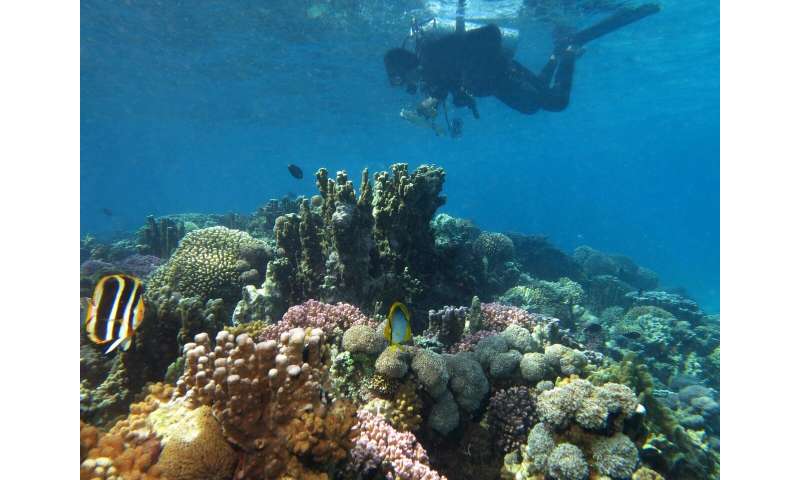
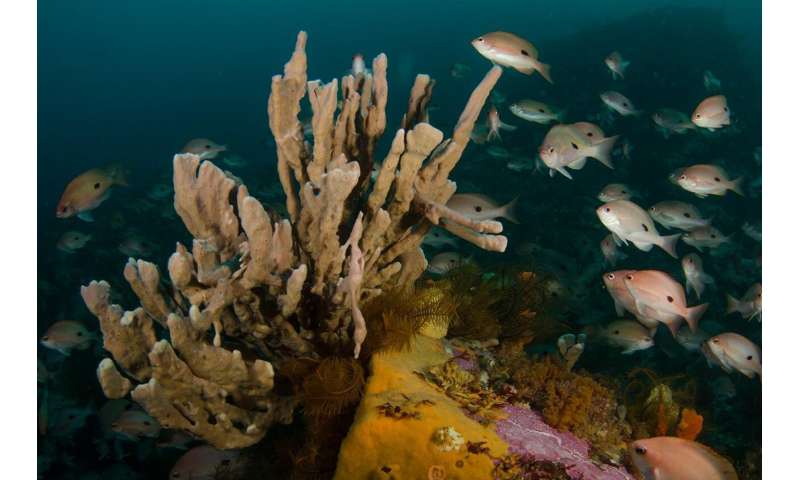
Reef life Survey diver at Lord Howe Island. Credit: Antonia Cooper
Global climate change will affect fish sizes in unpredictable ways and, consequently, impact complex food webs in our oceans, a new IMAS-led study has shown.
Led by IMAS and Centre for Marine Socioecology scientist Dr. Asta Audzijonyte and published in the journal Nature Ecology and Evolution, the study analysed three decades of data from 30 000 surveys of rocky and coral reefs around Australia.
Dr. Audzijonyte said the study confirmed that changes in  were responsible for driving changes in average sizes of  species across time and spatial scales.
"Cold blooded animals, especially fish, have long been noted to grow to a smaller size when raised in  in an aquarium," Dr. Audzijonyte said.
"If fish grow to smaller sizes in warmer aquaria, it is only natural to expect that  will also lead to shrinkage of adult fish size.
"However, average fish body size in  are affected by growth, mortality, recruitment as well as interactions with other organisms and their environment simultaneously and it is unclear how all of these factors are affected by temperature."
The researchers were surprised to find that while temperature has a significant impact, it caused different fish species to react differently.
In some the average fish body size got smaller as predicted (around 55% of species) but in others it increased (around 45%).
Climate change to affect fish sizes and complex food webs
Reef fish at Deep Glen Bay, Tasmania. Credit: Antonia Cooper
In general—but not universally—larger species tended to get even bigger in warmer waters, while smaller species tended to get smaller.
Tropical species were more likely to be smaller at the warm end of their distribution ranges.
Most importantly, the species that were smaller at the warmer edges of their habitat ranges were also more likely to get on average smaller with global .
"At Tasmanian survey locations, where some of the fastest rates of warming were observed, up to 66% of species showed clear changes in body size."
"As well as happening quite quickly, some of the size changes can also be surprisingly large.
"For example, the change in a median-length temperate fish corresponds to around 12% of its body mass for each 1oC of warming.
"At the current rate of warming, in 40 years this would result in around a 40% change in body length, either increasing or decreasing depending on the species," she said.
Dr. Audzijonyte said the varying responses of  to warming would have implications for  and ecosystems, including their stability and resilience to other external stressors, such as fishing, coastal pollution and a range of different climate change impacts.
The study was made possible through collaboration between University of Tasmania scientists and government managers across Australia, and by the efforts of over 100 volunteer Reef Life Survey divers, who have undertaken regular surveys at over 1000 sites around the continenAs the ocean warms, marine species relocate toward the poles: study

More information: Audzijonyte, A., Richards, S.A., Stuart-Smith, R.D. et al. Fish body sizes change with temperature but not all species shrink with warming. Nat Ecol Evol (2020). doi.org/10.1038/s41559-020-1171-0
Journal information: Nature Ecology & Evolution 

Coffee grounds show promise as wood substitute in producing cellulose nanofibers

by Yokohama National University

Coffee grounds show promise as wood substitute in producing cellulose nanofibers
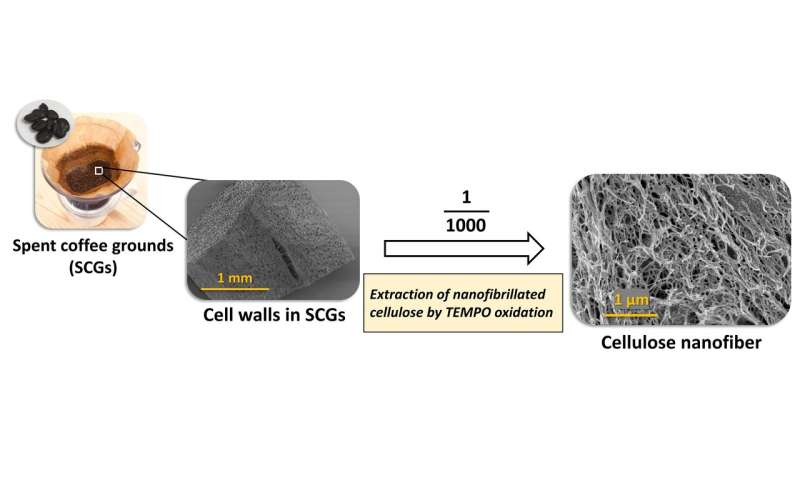
Cellulose nanofibers with up to 25 nm wide were produced from spent coffee grounds 
by TEMPO-mediated oxidation. Credit: Yokohama National University
The world generates over six million tons of coffee grounds, according to the International Coffee Organization. The journal Agriculture and Food Chemistry reported in 2012 that over half of spent coffee grounds end up in landfills. Cellulose nanofibers are the building blocks for plastic resins that can be made into biodegradable plastic products.
The YNU team, led by Izuru Kawamura, an associate professor at the Graduate School of Engineering Science, set out to build upon previous research into extracting  nanofibers from  grounds. They published their findings on April 1 in the journal Cellulose.
"Our ultimate goal is to establish a sustainable recycling system with our cellulose nanofibers in the coffee industry," Kawamura said. "Now, more and more restaurants and cafés have been banned from using single-use straws. Following that movement, we aim to make a transparent disposable coffee cup and straw with an additive comprising cellulose nanofibers from spent coffee grounds."
Demand for cellulose nanofibers is increasing worldwide, as industries realize their potential as a more environmentally sound and sustainable way to produce plastics.
"Cellulose nanofibers have mainly been produced from wood-based materials such as pulp so far," Kawamura said. "Cellulose nanofibers can be potentially supplied from all plants from nature. We would like to emphasize spent coffee grounds are a promising raw material."
The key to extracting cellulose nanofibers from spent coffee grounds lies in cellulose, the material that comprises the beans' cell walls and accounts for about half the weight and volume of the grounds.
The YNU team ran the experiment of isolating cellulose nanofibers from beans' cell walls by catalytic oxidation, a process that oxidize the cell walls using a catalyst. This is a method previously reported by Akira Isogai at the University of Tokyo.
The team examined the resulting cellulose nanofibers with imaging techniques including X-ray diffraction, , and thermogravimetric analysis—a method of observing the fundamental structural features of cellulose nanofibers and comparing that derived from wood. The coffee ground-based cellulose nanofibers displayed uniformity and integrated well into polyvinyl alcohol, the building block for a variety of industrial and consumer products. His team found that their average diameter was 25 nanometers. For reference, a human hair measures about 90,000 nanometers in diameter.
Such consistency and integration with polymer resins are milestones that demonstrate the potential for coffee ground-based cellulose nanofibers as a wood substitute, Kawamura said, but further research is needed to develop a commercially viable process.
Kawamura believes cellulose nanofibers may soon play a major role in the automobile industry, offering a lightweight alternative to steel and plastic for auto bodies. As emission standards continue to tighten, the market for lighter cars will grow, making cellulose nanofibers an increasingly valuable commodity.
"The total weight of plastic resin made by cellulose nanofibers is very light compared to steel," Kawamura said. "It will bring an efficient reduction of CO2 emission." Resins built on nanofibers also work well in 3-D printing, making them an environmentally friendly alternative to petroleum-based plastics for a host of potential products.
This new process may be a boon for the coffee industry, which has limited options for monetizing spent coffee grounds. Some cities have recycling programs, where spent coffee grounds are reused as nutrient-rich compost for greenhouses and mushroom farms. Other programs send spent coffee grounds to facilities that produce biogas. But overall, most  still end up in landfills.Cellulose nanofibers can help particles in ink and printed electronics disperse evenly

More information: Noriko Kanai et al, Structural characterization of cellulose nanofibers isolated from spent coffee grounds and their composite films with poly(vinyl alcohol): a new non-wood source, Cellulose (2020). DOI: 10.1007/s10570-020-03113-w

Actions that are stimulus-ready after the pandemic can achieve climate pathways

australia
Credit: CC0 Public Domain
The rapid progress and plummeting cost of green technology provide an unprecedented opportunity for Australia to move to a net zero emissions economy by 2050, according to a new report by ClimateWorks Australia released today.
But the Decarbonisation Futures: Solutions, actions and benchmarks for a net  Australia report also shows that Australia has entered the transformational decade for addressing climate change and that the transition needs to speed up, with "all-in" action by governments, businesses and ordinary Australians.
Decarbonisation Futures sets out detailed evidence of how major sectors of the Australian economy can move to net zero emissions, in line with global goals of keeping warming below 1.5 or 2 degrees, by accelerating investment in technological solutions already available and invented.
Critically, these actions can support efforts to rebuild from the shock of the COVID-19 pandemic.
"The stimulus to recover from the pandemic will need exactly the sort of actions that are needed to address the , too," says Anna Skarbek, CEO of ClimateWorks Australia.
"If we get this right, we can meet Australia's international climate change commitments, create jobs in sustainable industries, and set ourselves up for a smoother and speedier shift to a zero emissions economy."
Ms Skarbek said that both the COVID-19 and climate crises exposed the need for governments to ensure the safety of their citizens.
"The pandemic is causing extraordinary pain and disruption, but it also shows that businesses, individuals and all levels of government are willing to support each other and work together in response to a crisis.
"And the measures to address  that we identify in this report would not be anything like the economic shock we're experiencing at the moment.
"If there was ever a time that we could have confidence we can go all-in, all together, to bring forward investment in known zero-emissions solutions, that time is now."
ClimateWorks' new report builds on its 2014 report, Pathways to Deep Decarbonisation in 2050 developed with ANU and CSIRO, and finds that global innovation over the past five years has closed the technological gap, enabling Australia to widely deploy technologies to produce zero emissions in electricity, transport and buildings, among other sectors.
Beyond these ready-to-go solutions, Australia also has access to emerging technologies in harder-to-abate sectors such as heavy industry, agriculture and land.
"Some of these technologies had not been identified at the middle of last decade," said ClimateWorks' Head of National Programs, Amandine Denis-Ryan. "Now we can see a zero emissions world across all sectors of the economy."
In transport, for example, renewable-powered, electric cars, buses, trams and trucks are ready to be rolled out. In fields such as aviation and shipping, accelerated investment in R&D in biofuels, renewable hydrogen and ammonia, as well as electrification can close the gap to zero emissions by 2050.
The report finds that new electricity generation from renewables is now cheaper than new fossil fuel generation, even when accounting for hours of storage, while battery storage costs are 80 percent cheaper than in 2010. But it reveals the urgency of Australia's task, especially over the next decade.
"To achieve the Paris climate goals we have to halve our emissions by 2030 at the latest. We now know we have enough technological capacity in the Australian economy to get there. But we need to get these technologies out the door at every opportunity," Ms Denis-Ryan said.
The report shows how governments must go beyond business-as-usual approaches by setting targets, providing incentives to stimulate private investment and investing in infrastructure, among other actions.
Since the release of ClimateWorks' 2014 report, the global carbon budget to enable the world to stay below 1.5 or 2 degrees of extra warming has reduced.
"Even though we have lost time, technology has also progressed faster than expected, so we are now well placed to leapfrog to zero-emissions technologies in all sectors," Ms Denis-Ryan said.
"To date the paths to decarbonising each sector of the economy have not been widely understood. This report shows the ways it can be done," she said.
"Zero-emissions pathways now exist in all sectors of the economy. Australia can install the technologies at enough scale if there is strong action by government, businesses and individuals, starting from today."
Scientists list four key actions to halt global warming

More information: Full report: www.climateworksaustralia.org/ … zero-nation-by-2050/
Provided by ClimateWorks Australia
Pandemic underscores gross inequalities in South Africa, and the need to fix them

south africa children
Credit: CC0 Public Domain
Now more than ever, South Africans are painfully aware of the inequalities that continue to play out in the country. In people's pre-COVID-19 lives, the realities of living in a country that is among the most unequal in the world were easily overlooked. The pandemic shines a very bright light on this reality. It asks us to fundamentally address them—not just at this time of the pandemic, but as a social justice imperative.

As messaging about preventing the coronavirus ramped up, the consequences of inequalities in the provision of basic service provision in the country have become clear. These disparities between rich and poor are reflected across a range of interventions that have been put in place to manage the pandemic and its social and economic consequences. These include access to water, housing circumstances, as well as people's very high dependence on social grants and the informal sector for income.
Five areas where inequality is starkest
Living circumstances: The  have highlighted inequalities in living circumstances. Take the case of hand washing. The 1.1 to 1.4 million people who live in informal settlements in South Africa don't have access to water in their homes or in their yards. An estimated 19% of the nearly 19 million people living in rural areas lack access to reliable supply of clean water; 33% do not have basic sanitation. This makes regular hand washing difficult. And social distancing or quarantining is near impossible when water access and ablutions are communal, and where settlements are overcrowded.
Livelihoods: For many people at the upper end of the wage spectrum, working remotely has been relatively easy, with limited impact on their ability to earn a living. Such workers are in the formal labor market. They are protected by both a legal and social contract as well as a safety net of unemployment benefits.
Small business owners will be under significant pressure in the coming weeks and months. But they will be partially cushioned by the business support measures announced by the government.
In contrast, the most vulnerable workers will struggle without support at this time. Casual workers (like many domestic workers), those who are self-employed (such as Uber drivers), and those working in the informal economy are not protected by legal contracts.
In general these workers, who make up over 20% of South Africa's workforce, cannot access unemployment benefits. They will be under enormous pressure financially, potentially unable to feed themselves and their families.
President Cyril Ramaphosa has made it clear that the government is aware of these challenges and will move to ensure support. But it remains to be seen what that entails.
Education: Inequalities in education were also immediately evident when school were closed. While  and many suburban public schools were able to switch to technology-supported learning relatively easily, most public schools were not.
The directive by the Department of Basic Education was to ensure that learning continued by providing workbooks and worksheets online. But, many parents will be facing the very real struggle of supporting their families in a locked down economy. This, and other problems, including limited access to technology and data, means that many parents will struggle to supervise their children's learning.
Equally concerning is how this will affect education outcomes in the longer term. Analysis already shows how learning backlogs in the early years, forged in an unequal education system, are compounded over time. Further backlogs under the current situation are likely to have long-term effects.
Access to the internet: Manuel Castells, a sociologist concerned with the internet age and , notes in his book The Internet Galaxy: "The fundamental digital divide is not measured by the number of connections to the Internet, but by the consequences of both connection and lack of connection."
At universities and other higher education institutions, wealthier students have been able to switch to online learning quickly, while poorer students battle with high data costs.
Inequalities in access to data further entrench existing inequalities in education and livelihoods during the COVID-19 crisis.
Food security: The effects of panic buying on the  of people with limited income has received attention. But a less well-known impact of the measures is that over 9 million children will not receive a daily, nutritious meal while schools remain closed.
The National School Nutrition Programme potentially has positive effects on reducing stunting and obesity. In the face of prolonged school closures, these children face increased food insecurity, with potential long-term consequences for their health.
There have been heartwarming responses from the public to ensure that food packs are provided to children. But it is simply not possible to reach the over 9 million children who depend on this meal.
What can be done?
The measures announced by President Ramaphosa to mitigate the problem reflect an understanding of how existing inequalities will affect especially the most vulnerable people, and a willingness to address the problem.
Social protection measures that can quickly provide a safety net are crucial at this time. But, the current social protection system provides a safety net only to those outside of the labour market—children, older people, and people with disabilities. Unemployment benefits accrue to those in formal employment who contribute to the Unemployment Insurance Fund. This leaves the vast majority of working-age adults without a safety net at this time.
While there have been relatively quick changes to existing mechanisms to provide support to small, medium and micro enterprises there are, as yet, no measures to protect informal and casual workers and ensure cash injections into vulnerable households.
The country needs to devise a social contract to better address the vulnerabilities that low-wage, casual and informal workers face daily.
The country must also move towards having low-cost, reliable internet access that can open up opportunities for learning and work for its most vulnerable citizens. Basic services—such as clean water, electricity and sanitation—must also be of a quality that not only promotes people's right to dignity, but also help protect people from the effects of such a pandemic as COVID-19.
This pandemic highlights how crucial it is to fundamentally address the inequalities that exist in South African society. If a social justice imperative does not push us to do so, perhaps the realization of mutual connections, borne of a pandemic that knows no class or race lines, will.How the COVID-19 pandemic will affect informal workers. Insights from Kenya
Provided by The Conversation 
Great apes and COVID-19: Experts raise the alarm for endangered species

by Carol Clark, Emory University 6/4/2020
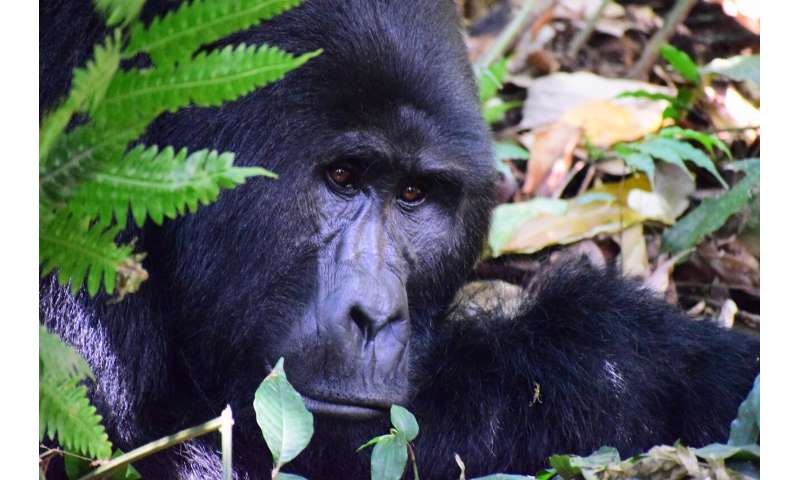
A mountain gorilla in the wild. Endangered great apes are susceptible to human respiratory diseases, warns Emory disease ecologist Thomas Gillespie. CC0 Public Domain

Primate experts warn that the global human health emergency of COVID-19 also threatens our closest living relatives—endangered great apes.

Nature published their commentary raising the alarm that non-human great apes are susceptible to human respiratory diseases. The 25 authors call for urgent discussions on the need to severely limit human interaction with great apes in the wild, and in sanctuaries and zoos, until the risk of COVID-19 subsides.

"The COVID-19 pandemic is a critical situation for humans, our health and our economies," says Thomas Gillespie, a disease ecologist at Emory University, and a lead author of the commentary. "It's also a potentially dire situation for great apes. There is a lot at stake for those in danger of extinction."

Some countries have already suspended great ape tourism, and others with ape tourism and field research need to seriously consider following suit, the authors write. They add that the same applies to sanctuaries and zoos where great apes and humans are in closer contact.

While great ape tourism will inevitably plummet due to the pandemic, all it takes is one infected visitor to spark catastrophe, the experts warn.

The non-human great apes include chimpanzees, bonobos and gorillas, which live in parts of Sub-Saharan Africa, and orangutans, which are native to the rainforests of Indonesia and Malaysia. The International Union for Conservation of Nature (IUCN) lists chimpanzees and bonobos as endangered species, while gorillas and orangutans are critically endangered.

Habitat loss, poaching and disease are the primary threats to the remaining great apes.

Even exposure to viruses that have mild effects in people, such as those causing the common cold, have been associated with mortality events in wild primates. Because the coronavirus that causes COVID-19 is fatal for some humans, experts fear it could potentially prove devastating to great apes. Evidence suggests COVID-19 may be transmitted by people who have only mild symptoms, and perhaps even those who are asymptomatic.

"People who are younger, who may be less at risk for severe illness from COVID-19, are the ones who are more apt to be hiking into the national parks of Africa and Asia to see great apes in the wild," Gillespie says. "It would be extremely difficult to monitor whether they were infected with COVID-19 since they may not have obvious symptoms."

Great ape tourism has contributed to conservation in many positive ways, providing an economic incentive for governments and individuals to support their protection. Donors are needed to help shore up marginal economies facing the loss of tourism dollars and to continue to protect the health of people and the great apes in the wild, Gillespie says.

Tourism has habituated wild great apes to not fear humans, he adds. Without staff to patrol and protect them, the animals would become even more vulnerable to poachers.

"Essential staff needs to remain in place," Gillespie says. "But we need to make sure that staff numbers are low and that they are engaged in proper processes to protect themselves, and the apes, from exposure to COVID-19."

Gillespie studies how germs jump between wild animals, domesticated animals and people. Through this "One Health" approach, he aims to protect humans, ecosystems and biodiversity. As a member of the IUCN, Gillespie helped develop the organization's "Best Practice Guidelines for Health Monitoring and Disease Control in Great Ape Populations." In 2017, Gillespie co-authored a landmark report detailing that 60 percent of the more than 500 primate species worldwide are threatened with extinction, while 75 percent have declining populations.

Fabian Leendertz, from the Robert Koch-Institute, Germany, is co-lead author of the Nature commentary. Additional authors include experts involved in primate research, conservation and policymaking from around the world.

"As professionals working with great apes," the authors conclude, "we bear a responsibility to protect them from our pathogens. We hope for the best but should prepare for the worst and critically consider the impact of our activities on these endangered species."


Explore further

Gabon bans tourists from seeing gorillas over coronavirus fears
More information: Thomas R. Gillespie et al. COVID-19: protect great apes during human pandemics, Nature (2020). DOI: 10.1038/d41586-020-00859-y
WAKE UP AMERICA
Study finds self-isolation would dramatically reduce ICU bed demand

by Brita Belli, Yale University  
APRIL 6, 2020
Credit: CC0 Public Domain

As soon as Alison Galvani learned of the COVID-19 virus in China and its devastating spread there, she foresaw what might happen to healthcare facilities in the United States. The Yale professor and colleagues at the Center for Infectious Disease Modeling and Analysis (CIDMA) quickly began analyzing various scenarios for COVID-19's spread in the U.S.—and how self-isolation rates by symptomatic individuals could affect demand for Intensive Care Unit (ICU) beds.

Their findings appear in the current edition of the Proceedings of the National Academy of Sciences, and the bottom line is clear: Without dramatic action, there won't be enough beds for the sickest patients.

If the United States is to avoid the catastrophic scenes in Italy, where patients fill hospital hallways and doctors face agonizing choices over who receives care and who is left to die, even "mildly symptomatic" people must self-isolate to minimize disease transmission, according to the researchers. And expansion of hospital equipment must accelerate.

"It is crucial in terms of minimizing the imbalance of supply and demand for ICU beds for people to stay home and stem transmission," said Galvani, the Burnett and Stender Families Professor of Epidemiology at the Yale School of Public Health and CIDMA's director. "In the absence of self-isolation, the health care system will be overwhelmed. We are already seeing that happen in New York City."

Galvani and team assessed a number of possible scenarios in which the primary variables were the number of people experiencing COVID-19-related symptoms of any degree, the likelihood of the virus spreading to others if symptomatic individuals self-isolate, and the subsequent impact on available ICU beds as the outbreak peaks.

In the worst scenario—in which no one with symptoms self-isolates—the study projected the country would need almost four times more ICU beds specifically for people who become critically ill with COVID-19—or about 130,000 in all—than would be available. Sixty-five percent of the nation's 98,000 ICU bed supply is routinely occupied by other patients. If 20% of mildly symptomatic people were to self-isolate within 24 hours of symptom onset, the need for ICU beds would fall by nearly half—though need would still exceed capacity.

"The U.S. is the only major country in the world that does not guarantee paid sick leave and paid family sick leave," said Galvani. "Our results underscore the importance of giving everyone the means to stay at home if they or their children feel unwell."

"Mildly symptomatic" refers to people experiencing a range of cold- and flu-like symptoms, said Galvani, from a slight cough to weakness requiring bed rest—in other words, all people with any signs of illness but who do not require hospitalization.

Preserving available ICU beds for the most severe COVID-19 patients, and limiting how many people get the virus, is essential, said Galvani.

"The majority of ICU beds are already occupied, and you can't discharge people with other serious illnesses who also need intensive care," she added. "A shortage of ICU beds affects the mortality from other diseases too."

Galvani stressed that ICU beds involve more equipment and staff than traditional hospital beds.

While people in the U.S. generally seem to be adhering to calls for social distancing, emphasizing the importance of the measure is necessary to avoid overwhelming hospitals and to ensure critically ill patients receive timely treatment, she said.

"Self-isolation reduces and delays the peaks, both of which are fundamental to minimizing the number of deaths from COVID-19," she said.

Delaying disease spread also allows more time for the production of additional ICU beds and ventilators, which must happen in parallel with self-isolation efforts, Galvani said.

"We need all hands on deck to ramp up production now," she said.

The study is titled "Projecting hospital utilization during the COVID-19 outbreaks in the United States."


Explore further

Thirty-six percent of available hospital beds unoccupied on typical day
More information: Seyed M. Moghadas et al. Projecting hospital utilization during the COVID-19 outbreaks in the United States, Proceedings of the National Academy of Sciences (2020). DOI: 10.1073/pnas.2004064117