Friday, April 16, 2021

Killed over a Car Air Freshener: Outrage Grows over Police Shooting of Daunte Wright in Minnesota

•Apr 13, 2021

Democracy Now!


Protests continue in the Minneapolis area after a white police officer shot and killed a 20-year-old Black man, Daunte Wright, during a traffic stop Sunday in the suburb of Brooklyn Center. The deadly shooting took place about 10 miles from where former Minneapolis police officer Derek Chauvin is on trial for killing George Floyd. Just before he was killed, Wright called his mother to say he was being pulled over — allegedly because an air freshener was obscuring his rearview mirror. The Brooklyn Center police chief claims Kimberly Potter, a 26-year police veteran who has served as the police union president for the department, accidentally pulled a gun instead of a Taser. 

The Star Tribune reports Daunte Wright is the sixth person killed by Brooklyn Center police since 2012. Five of the six have been men of color. "Unfortunately, there has not been a serious attempt to change the phenomenon of driving while Black, which is something that happens to Black people on a routine basis in the Twin Cities and across the state of Minnesota," says Minneapolis-based civil rights attorney and activist Nekima Levy Armstrong. We also speak with Jaylani Hussein, executive director of the Minnesota chapter of the Council on American-Islamic Relations, who says policing in the United States is as dangerous to Black and Brown people as ever. "They are deadly. They kill Black and Brown people," says Hussein.


TRIGGER WARNING: SAN FRANCISCO POLICE OFFICER WITH RECORD OF KILLING BLACK MEN CAUGHT ON CAMERA

by Christian Spencer
April 8, 2021 

Police line at a crime scene [istockphoto.com]

A motorist’s camera footage will be used as evidence against a San Francisco Bay Area police officer who shot and killed a homeless Black man.

On March 11, Tyrell Wilson was allegedly gunned down by officer Andrew Hall in Danville. According to ABC News, the Wilson family’s lawyer, John Burris, claims that the officer violated the man’s civil rights and he plans to file a federal civil rights suit against the officer.

Related Stories: POLICE KILLED AT LEAST 164 BLACK PEOPLE IN THE FIRST EIGHT MONTHS OF 2020

Wilson, a 37-year-old homeless man with schizophrenia, was reportedly throwing rocks from an overpass onto a highway. Hall arrived on the scene and noticed Wilson was armed with a folding knife in his right hand and a bag in his left hand.

Hall took swift action to subdue Wilson, but the video shows Wilson appearing to walk backward while Hall advances forward. Wilson was shot in a parking lot used for carpoolers—it was also his home.

Wilson died March 17 at a nearby hospital, ABC News reported.

Danville Police Officer Shoots Homeless Black Man Tyrell Wilson

Apr 6, 2021


“The video and witness accounts show this was a cold murder. Wilson never had a chance,” Burris said in a statement.

Pending an investigation, Hall is on paid administrative leave, and if he returns to the police department, he has requested a new assignment outside of Danville, his attorney Michael Rains told the San Francisco Chronicle.

“[The video] tells nothing about what occurred there,” Rains said, describing the video as unsteady and weirdly positioned.

There is a history of suspicion against Hall, who similarly shot and killed another Black man in 2018— Laudemar Arboleda, 33.


In that case, Hall testified that he was afraid for his life that Arboleda would run him over, but it was reported by the East Bay Times that Hall did not yell any commands.

Burris did not represent Arboleda, but at the time, he spoke at news conference and said that Hall was reckless and negligent when he shot into a moving car.

Prosecutors with the Contra Costa District Attorney’s Office are still investigating the 2018 shooting.

“They didn’t and now he has killed another innocent man. Enough is enough. This officer is a menace,” Burris said about Hall.
Iowa Troopers Arrest BLM Activist as Group Rallies Against Bills Increasing Protest-Related Penalties

US Lorenz Duchamps Apr 9, 2021
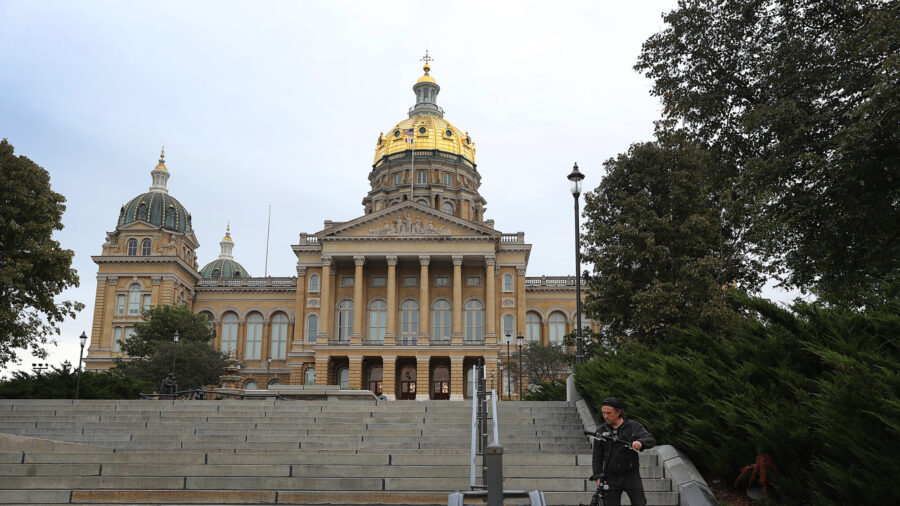
The Iowa State Capitol building is seen on Oct. 09, 2019 in Des Moines, Iowa. (Joe Raedle/Getty Images)

A Black Lives Matter activist was taken into custody inside the Iowa State Capitol on Thursday after protesters stormed the building to urge lawmakers to reject legislation they oppose.

Police arrested 18-year-old Josephine Mulvihill, a high school student of Des Moines, and charged her with assaulting a police officer, according to a tweet posted by journalist Andy Ngô.  
ANDY NGO IS A RIGHT WING TROLL NOT A JOURNALIST

In a criminal complaint obtained by the Des Moines Register, the officer who arrested Mulvihill, identified as Iowa State Patrol Trooper Dylan Hernandez, said she pushed his arm in order to get his attention after trying to obtain the names and badge numbers of him and a fellow trooper.

A flyer that was posted by Black Lives Matter in order to invite activists to the protest and reject at least four proposals was posted on Twitter, claiming the state is passing “racist and dangerous bills.”

Dozens of activists gathered at the government building to oppose the bills that include Senate File 476, which passed the state Senate in March and now sits in the House. The bill is intended to strengthen “qualified immunity” for law enforcement officers.

The second legislation the activists rallied against is Senate File 534, which seeks to raise penalties for protest-related crimes, as well as give immunity to the driver of a vehicle, “who is exercising due care,” and accidentally hits a protester or rioter blocking the traffic on a public street or is unlawfully assembling.

Other bills opposed by the activists are House File 802, which will limit diversity and inclusion lessons that teach “divisive concepts” such as that Iowa is “fundamentally or systematically racist or sexist,” as well as Senate File 479, which seeks to withhold state funds from cities that defund police budgets.

In the video posted on Twitter by Ngô, the protesters are heard shouting popular slogans by Marxist groups like “no police” before Trooper Hernandez forces Mulvihill to the ground and arrests her.   
NGO IS A RIGHT WING TROLL

Troopers are then seen clashing with the activists as Mulvihill is getting escorted out of the building before being put into the passenger seat of a police vehicle.

Angelina Ramirez, who co-organized the April 8 event named “Advocates for Social Justice,” claims state lawmakers passing these bills don’t care about Iowans of color.

She told Iowa Public Radio, “I’m telling you from firsthand exposure to the legislators that are passing these bills—they won’t care about their Black and brown constituents unless they’re forced to. Unless they’re pressured to.”

Majority of Americans Against ‘Defunding the Police’


According to a poll released in March, only 18 percent of Americans support slashing funding to the police.

Another 58 percent of respondents said they oppose the “defund the police” movement, which is often synonymous with the Black Lives Matter movement, according to the Ipsos/USA Today survey.

Just 28 percent of black respondents and 34 percent of respondents who identify as Democrats support the movement to cut police funding, in addition to 67 percent of white respondents and 84 percent of Republican ones.

“Don’t defund the police department. We need them here to keep law and order,” Kevin Hayworth, 66, of Garner, Iowa, told USA Today . “We need our police department just as they are.”

Zachary Stieber contributed to this report.

THIS IS EPOCH NEWS RIGHT WING MULTIMEDIA SITE

EPOCH NEWS IS THE ORGAN OF THE GALUN FONG CULT

House committee votes to approve Washington, D.C. statehood
PUERTO RICO NEXT

The Washington Monument is seen amid a field of flags representing all 50 states and U.S. territories, on the National Mall in Washington, D.C., on January 18. File Photo by Pat Benic/UPI | License Photo


April 15 (UPI) -- Following a contentious floor debate, the House oversight and reform committee approved legislation to grant Washington, D.C., statehood, paving the way 
for a full House vote.


The Democrat-backed bill H.R. 51 to make Washington, D.C., the 51st state passed 25-19 by the House committee on oversight and reform on Wednesday with no Republican support.


"Statehood for D.C. is about equality, fairness and ensuring that the dreams of our founders are realized despite over 200 years of delayed justice," Chairwoman Carolyn Maloney, D-N.Y., said in her closing remarks. "Our nation is founded upon the idea that all people should have a voice in their government. But without voting representation in Congress, the people of D.C. are denied that most basic right."

The bill was introduced by Eleanor Holmes Norton, Washington, D.C.'s non-voting delegate, amid reinvigorated national calls for racial equality. It has met staunch resistance from Republicans. A similar bill passed the Democratic-led House before the Republican-led Senate decided to pass on it.

On Wednesday, the debate became contentious at times as Republicans accused Democrats of attempting to re-engineer the political landscape in their favor with the bill, while Democrats accused Republicans of attempting to disenfranchise voters by voting against it.

Rep. Jody Hice, R-Ga., rejected the notion that the bill is about voting representation, and said it is part of a broader Democratic plan to "change the playing field of American politics to enact their radical, progressive agenda."

"That is what this is all about," he said. "And when we talk about the benefits ... what really is being referred to is more senators. That's the benefit. That's what enables this radical, progressive agenda to be crammed down the throats of the American people."

Rep. Gerry Connolly, D-Va., retorted that his colleagues across the aisle speak as if the Republican Party will be destroyed if D.C. is given statehood, a framework they push to obfuscate from their true intention, which is to disenfranchise voters, particularly voters of color.

"It is better to disenfranchise, deny than to compete for those votes," he said. "It's a subterfuge for a powerful dynamic -- sadly, tragically -- to make it harder for people of color to vote in this great democracy because they're afraid they'll lose elections when that happens."

He said the bill seeks to franchise the more than 700,000 residents of the district.

RELATED Senate confirms Gary Gensler as SEC chairman over GOP opposition

The American Civil Liberties Union, a longtime supporter of D.C. statehood, celebrated the passing on Wednesday.

"Onward to the House floor next week," the organization tweeted. "It's time to end this historical wrong and bring full and equal rights to the 712,000 residents of D.C.!"

The bill, which would rename the district the State of Washington, Douglass Commonwealth, after politician, writer and statesman Frederick Douglass, has the support of more than 120 civil rights, federal workers and other such groups, as well as D.C. Mayor Muriel Bowser and President Joe Biden.

"He believes they deserve representation," White House Press Secretary Jen Psaki told reporters last month. "That's why he supports D.C. statehood."

After the bill was passed Wednesday, Norton said the bill's 215 cosponsors "virtually" guarantees it'll pass the House.

"With Democrats controlling the House, the Senate and the White House, we have never been closer to statehood," she said in a statement.
House panel approves bill to pave way for slavery reparations


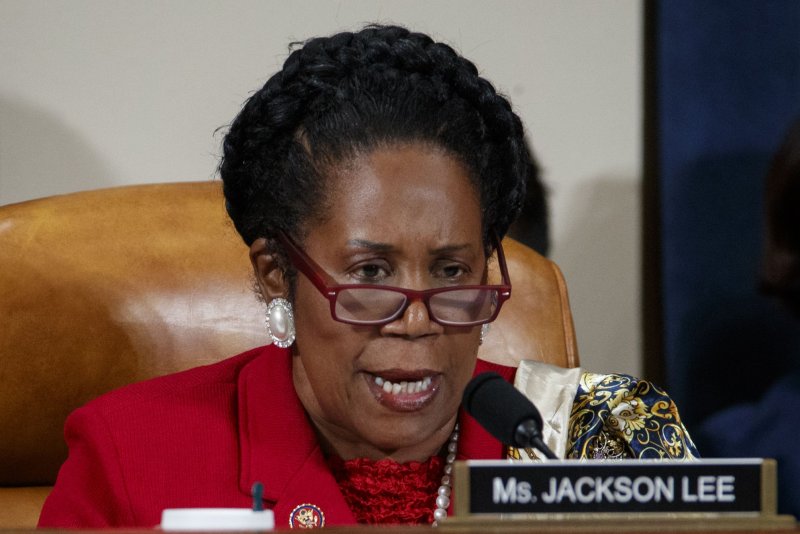
House judiciary committee member Sheila Jackson Lee urged Republicans on Wednesday to vote in favor of her bill to create a commission to study the lasting effects of slavery.  
File Photo by Shawn Thew/UPI | License Photo

April 15 (UPI) -- A House committee approved legislation late Wednesday to pave the way to pay reparations to ancestors of enslaved Black Americans, though the bill has an uphill battle to become law.

The House judiciary committee voted along party lines 25 to 17 in favor of bill H.R. 40 that would establish a 13-member commission to study the history and effects of slavery in the United States and its colonies from 1619 to 1865, as well as the ensuing discrimination, aiming to recommend remedies, including reparations.


The bill was first introduced nearly three decades ago by the late Rep. John Conyers, D-Mich., and was named after the 40-acre plots of land Gen. William T. Sherman promised in 1865 to redistribute to formerly enslaved people.


Committee Chairman Jerry Nadler, D-N.Y., described the bill before the vote Wednesday as "historic legislation" that does not mandate financial payments nor recommend how to properly atone for the legacy of slavery -- it intends to begin a conversation about the mistreatment of Black people in the United States.

RELATED Judge rules Harvard owns slave images, not descendants

"This moment of national reckoning comes at a time when our nation must find constructive ways to confront a rising tide of racial and ethnic division," he said. "Reparations in the context of H.R. 40 are ultimately about respect and reconciliation -- and the hope that one day all Americans can walk together toward a more just future."

Rep. Sheila Jackson Lee, D-Texas, who reintroduced the bill, told her colleagues across the aisle to not ignore the pain and history of Black people in the United States and the reasonableness of the commission.

"The goal of this historical commission and its investigation is to bring American society to the new reckoning of how our past affects the current conditions of African Americans and make America a better place to help and truly study the disadvantage," she said. "The reparations moment does not focus only on payments, but it focuses on remedies that can be created in many forms necessary to equitably address the many kinds of injuries sustained from the chattel slavery and its continuing vestiges."

RELATED Chicago suburb approves housing reparations for Black residents

To focus on financial reparation is an "empty gesture," she argued, stating they only want others to see the pain, violence and brutality Black Americans have experienced to create a pathway to reconciliation.

Rep. Chip Roy, R-Texas, said the bill would put the country on the wrong track.

"We have utterly destroyed Black families. We have utterly ripped fathers and people that children should be able to look up to in their families from the homes of Black families in the name of government paternalism," he said. "And that, I'm afraid, is where this kind of legislation takes us -- it takes us away from the important dream of judging people by the content of their character and not by the color of their skin."

RELATED New California law forms panel to examine reparations for slavery

The bill has not been advanced to a floor vote, but it has received support from President Joe Biden, whose press secretary, Jen Psaki, told reporters in February that he would be in favor of such a commission.

"He certainly would support a study of reparations," she said, stopping short of saying he'd sign it if it landed on his desk, adding they would wait to "see what happens through the legislative process."

The vote on the bill came less than a month after Evanston, Ill., a Chicago suburb, approved legislation to make available hundreds of thousands of dollars to right decades of wrongs committed by the city's discriminatory housing practices against its Black residents as part of a reparations program.
(0) Leave a comment

upi.com/7090451

Capitol Police IG says dept. needs reform, culture change after Jan. 6 attack

APRIL 15, 2021 


Rioters breach the security perimeter the U.S. Capitol to protest against the Electoral College vote count, in Washington, D.C., on January 6. File Photo by Ken Cedeno/UPI | License Photo


April 15 (UPI) -- Officers were not prepared to deal with the mob that attacked the U.S. Capitol on Jan. 6, despite warnings of potential violence, according to the Capitol Police inspector general in congressional testimony he's set to give Thursday.

Inspector General Michael Bolton will detail the January attack when he testifies before the House Administration Committee, according to his opening statement. The hearing is scheduled to begin at 1 p.m. EDT.

The Capitol attack directly killed five people and led to the second impeachment of President Donald Trump. Radical Trump supporters perpetrated the violence.

Bolton has produced two reports on the Capitol Police response, and a third will be issued later this month. One says top officers in the department overlooked intelligence information that indicated congressional lawmakers themselves could be targets.

In his opening statement, Bolton describes the attack as a "takeover" and says Capitol Police lacked necessary relevant policies for its civil disturbance and intelligence divisions.

"As our work continues, my office sees continuing areas in our findings that [Capitol Police] needs [to] address," he says in his opening remarks. "Those areas are intelligence, training, operational planning, and culture change."

"We see that the department needs to move away from the thought process as a traditional police department and move to the posture as a protective agency," he adds. "A police department is a reactive force. A crime is committed; police respond and make an arrest. Whereas, a protective agency is postured to being proactive to prevent events such as January 6."

RELATED Capitol riot: FBI arrests former Salt Lake City officer

Bolton says the department also had faulty equipment, including munitions that were kept beyond their expiration date. He also notes there was a lack of agreement about the reality of the Jan. 6 threat.

"Certain officials believed [Capitol Police] intelligence products indicated there may be threats, but did not identify anything specific, while other officials believed it would be inaccurate to state that there were no known specific threats," Bolton says in his statement.

In his second report on the attack, Bolton said Capitol Police received a warning from the Department of Homeland Security more than two weeks before the attack.

RELATED Slain Capitol Police officer to lie in honor in Capitol Rotunda

As the department's inspector general, Bolton has promised to file a new report each month detailing the latest findings of investigations into the attack. His next report is expected April 30.

RUSTEN SHESKEY, THE COP WHO PARALYZED JACOB BLAKE, IS BACK ON THE FORCE

by Christian SpencerApril 14, 2021

Credit: Twitter/ @Journaltimes

On Tuesday, the Kenosha Police Department in Wisconsin welcomed back officer Rusten Sheskey, the man responsible for paralyzing Jacob Blake.

According to a statement from Kenosha Police Chief Daniel Miskinis, Sheskey, who shot Blake seven times while his back was turned, has returned from administrative leave in late March after an independent review “found [he was] acting within policy and will not be subjected to discipline,” NBC News reported.

Blake cannot move from his waist down after the shooting on Aug. 23, 2020. Sheskey and two other Kenosha officers were trying to apprehend Blake, who was wanted for his pocket knife that allegedly fell out of his pants during a street fight.

“I know that some will not be pleased with this outcome; however, given the facts, the only lawful and appropriate decision was made,” the statement continues.


When Blake went to his SUV to dispose of the knife, Sheskey’s reaction almost fatally killed the then-29-year-old father of two. Blake’s sons were in the car when he was shot.

“Although this incident has been reviewed at multiple levels, I understand that some will not be pleased with the outcome; however, given the facts, it was the only lawful and appropriate decision to be made,” Miskinis said.

Kenosha County District Attorney Michael Graveley did not charge Sheskey, telling reporters in January at the time that Sheskey acted in self-defense.

“If you don’t believe you can prove a case beyond a reasonable doubt, you have an ethical obligation not to issue charges,” Graveley said at the time.

As Black Enterprise previously reported, Blake is suing the police officer who shot him in his back, mainly for endangering his and his children’s lives.

He is being represented by attorney Benjamin Crump.


“Sheskey should be fired. He should face criminal charges. Instead, he’ll return to active duty without punishment. Our justice system has failed the Blake family,” Crump tweeted, responding to Sheskey’s return.


BEN & JERRY’S IS SICK AND TIRED OF WHITE SUPREMACY, WANT TO DEFUND THE POLICE

by Christian SpencerApril 15, 2021

Credit: Ben and Jerry's Twitter


Ben & Jerry’s is standing up for Black lives, calling for the criminal justice system to be defunded and reformed.

Ice cream makers Ben Cohen and Jerry Greenfield believe white supremacy was the reason why 20-year-old Daunte Wright was shot and killed by a police officer in a Minneapolis suburb over the weekend, Fox News reported.

“The murder of Daunte Wright is rooted in white supremacy and results from the intentional criminalization of Black and Brown communities,” said Ben and Jerry’s official Twitter. “This system can’t be reformed.”

The decision to call out white supremacy was met with praise from activists, but there was pushback from those who disagree with its hardline position on police reform.

This is not the first time Ben and Jerry’s made its left-leaning politics public. The company is open about its stance on climate change, voting rights, and has collaborated with civil rights athlete Colin Kaepernick, known for “taking a knee” protests against racial injustice in America, to make a signature ice cream flavor, The Sun reported.

The officer who killed Wright is former police officer Kim Potter. On Wednesday, she was arrested and faces 10 years in prison and a $20,000 fine on a second-degree manslaughter charge.

As BLACK ENTERPRISE previously reported, the Brooklyn Center, Minnesota, police officer handed in her resignation in a short letter to Brooklyn Center Mayor Mike Elliot Tuesday. After Potter handed in her resignation, Brooklyn Center Police Chief Tim Gannon did the same.

“I have loved every minute of being a police officer and serving this community to the best of my ability, but I believe it is in the best interest of the community, the department, and my fellow officers if I resign immediately,” Potter wrote.

This is the third incident of a Black man being killed by an officer’s hand in the state in the last five years. Philando Castile, who was also fatally shot during a traffic stop in 2016, and George Floyd, who was killed last year. The police officer who killed Floyd is currently on trial, less than 10 miles from where Wright was shot

Thursday, April 15, 2021

Protesters take to Pittsburgh streets hours after Minnesota officer who shot Daunte Wright resigns

NATASHA LINDSTROM | Wednesday, April 14, 2021 


NATE SMALLWOOD | TRIBUNE-REVIEW
Gerlynn Williams, holds her grandson, Hudson Hyman, 4, of East Liberty, as they look on during a protest Tuesday night in Pittsburgh in solidarity with the protests in Minnesota after the killing of Daunte Wright at the hands of police.


A loosely organized group of protesters took to the streets of Pittsburgh in the name of police accountability on Tuesday night, hours after the white officer who fatally shot Daunte Wright during a traffic stop in a Minneapolis suburb submitted her resignation.

The demonstration, which remained peaceful, drew about 100 to 150 people to a two-and-a-half hour march with brief stops across the city’s East Liberty, Larimer and Shadyside neighborhoods.

It aimed to express solidarity with the protests in Minnesota following Wright’s death — though the event’s main speaker leading the march urged everyone to avoid turning to the likes of looting and vandalism.

“I’m seeing all of these other cities doing what they’re doing, breaking stuff …” the speaker, who did not identify themselves, said into a megaphone. “But it really isn’t worth it. And it solves nothing.”

There were no reports of incidents related to the event from police, which dispatched officers to monitor protesters as they moved and blocked off stretches of several streets surrounding them.

“It was a peaceful event with no arrests,” Pittsburgh Public Safety spokesman Maurice Matthews said by email shortly before 10:30 p.m.

The event against racism and injustice began at 7 p.m. with a circle formed outside the Target store at Penn and Centre avenues.

“Daunte Wright” was the newest of a slew of names of people whose deaths involved police violence posted to a chain link fence surrounding an empty lot across the street, with a backdrop of a “Say Their Names” mural painted across a wall. The site has been a meeting ground for protesters since George Floyd’s death last summer.

Holding up signs such as, “Abolish White Supremacy Systems” and “Asians for Black Lives,” protesters marched along Penn Avenue past Bakery Square and strips of corporate headquarters such as Google and shops such as West Elm and Trader Joe’s before entering Mellon Park.

Police on motorcycles kept a moving perimeter as the group marched.

Inside the park, while most of the group sat in the grass and shared stories about identifying white privilege and avoiding anarchistic means, a clash involving a small segment of protesters results in a dozen or so branching off on their own as they chanted, “Out of the park, into the streets!”

The two groups took off in a divergent directions at Fifth Avenue.

Many people in attendance said they didn’t want to be interviewed or have their photos taken.


After leading a chant against the Peduto administration’s leadership, the main group continued on with a stop outside Mayor Bill Peduto’s house, during which a speaker with a megaphone told people that a “diversity of tactics” should be used to achieve meaningful change, and that protesting and marching won’t be enough: “Being a tiny nuisance isn’t going to make any change,” the speaker said. “It’s listening to the black voices, not talking over them, and just understanding them.”

Earlier in the day, Peduto retweeted a statement about the need for major changes in the justice system to address inequities, and Peduto posted a tweet about building relationships between police and people in the community.

“Community Policing works best when community leaders engage with Officers and our Bureau of Police engages directly with neighborhood groups and leaders,” Peduto wrote.


After walking back toward the Target in East Liberty, protesters dispersed peacefully.


Natasha Lindstrom is a Tribune-Review staff writer. 
You can contact Natasha via Twitter .


Support Local Journalism and help us continue covering the stories that matter to you and your community.


AMAZON RELEASES EXTENSIVE ACTION PLAN AFTER RACIAL DISCRIMINATION CLAIMS
April 15, 2021


(Image: Amazon.com)

Amazon is a leading online retailer known for getting items to buyers in a heartbeat with the click of a mouse. However, for many, that convenience can’t forgive accusations of discriminatory practices. The retial giant’s response: focus more on inclusion.

Recode by Vox illuminates the backdrop of a mounting issue, sharing the story of a Black woman named Chanin Kelly-Rae, who started working at Amazon in 2019 as a global manager of diversity in its cloud computing division. Kelly-Rae was convinced that Amazon’s corporate workplace had deep, systemic issues. According to Recode by Vox, the company disadvantages Black employees and workers from other underrepresented backgrounds. Kelly-Rae said Amazon leadership was unwilling to listen to internal experts regarding how to identify and fix the described problems.

“Amazon was not doing things in a way that represents best practices that would advance diversity and inclusion in any way that is meaningful and thoughtful,” she told Recode by Vox. “Let me add: Amazon appeared to be taking steps backward instead of forward.”

In addition to Kelly-Rae, more than a dozen former and current Amazon corporate employees chimed in, including more Black respondents. Both current and former employees, other than Kelly-Rae, spoke on condition of anonymity, fearing retribution or being bound by employment terms. They felt the company did not create a corporate-wide environment where all Black employees felt welcomed and respected

.
Credit- Facebook

And in a recent Forbes.com article, “according to Amazon data, Black employees accounted for 3.8% of its senior positions in the U.S. (up from 1.5% in 2018), compared with a figure of 70.7% for whites (down from 74.3% in 2018).”

Forbes.com also reported that a Black woman from Washington, D.C., named Charlotte Newman filed a federal lawsuit against Amazon in early March. Allegations included intentional underpayment to her and other Black employees compared to their White counterparts. Newman also accused the company of placing newly hired Black employees in positions which were beneath their level of expertise and experience.

Beth Galetti, Amazon’s senior vice president of people eXperience and technology, posted a lengthy message regarding diversity, equity, and inclusion on Amazon’s website on April 14. Galetti mentioned that inequitable treatment of Black people is unacceptable, that rights of other groups must be protected, and how Amazon is committed to building an inclusive company.

“Building on last year’s work, we are setting our 2021 company-wide goals for diversity, equity, and inclusion. We are continuing goals to increase representation of Black employees in the U.S., as this is where we have the furthest to go. However, nearly all of the new goals affect all communities specifically by addressing situations in which employees from a diverse set of backgrounds have different experiences than peers in areas like development, retention, and talent assessment,” Galetti wrote.

Action plans included ensuring that all Amazon employees take company-wide required inclusion training; building scalable mechanisms that address new instances of non-inclusive terms in its code and document repositories or development tools; doubling the number of U.S. Black employees at L8-L10 (directors and vice presidents) year-over-year from 2020 numbers; increasing hiring of U.S. Black employees at L4-L7 by at least 30% year-over-year from 2020 hiring; and increasing the number of women at L8-L10 (senior principals, directors, vice presidents, and “distinguished engineers”) in tech and science roles by 30% year-over-year.