Thursday, May 27, 2021


Stress-Response Compound Widespread in Animals Is Found in Plants

TMAO appears to both stabilize other plant proteins and influence the expression of stress-response genes, researchers report.


Shawna Williams
May 22, 2021
ABOVE: Tomato plants watered with a high-salt solution. The water of the plant on the right was supplemented with TMAO, while that of the plant on the left was not.
RAFAEL CATALÁ

Amolecule made famous by its association with human heart disease and marine animals’ ability to survive high-pressure conditions turns out to be made by plants too, researchers report this week (May 19) in Science Advances. As it does in animals, trimethylamine N-oxide (TMAO) helps plants cope with stressful conditions, according to the study. The authors have already licensed the discovery to a company that is working to commercialize TMAO as a way to boost yields in agriculture.

“Nobody has published before that plants have TMAO in the tissues,” says study coauthor Rafael Catalá of the Centro de Investigaciones Biológicas (CIB) Margarita Salas in Madrid.

The new study grew out of earlier work in which Catalá and his colleagues looked for genes in the model plant Arabidopsis thaliana whose expression was changed by exposure to cold. One gene they found turned out to code for a type of enzyme called a flavin-containing monooxygenase (FMO) called FMOGS-OX5. In further analyses, reported in the current study, the team found that the expression of several other FMO genes is also dialed up in Arabidopsis in response to cold.

FMOs are known to make TMAO in animals in response a variety of stressors. Wondering what the connection was between the FMOs and the plant’s cold response, the team used nuclear magnetic resonance to look for TMAO in wildtype Arabidopsis. They found it, and confirmed its presence with liquid chromatography–tandem mass spectrometry. The team also verified that FMOGS-OX5 can generate TMAO from its precursor, TMA, in vitro.

In animals, TMAO functions as an osmolyte, a type of molecule cells use to maintain the properties of their fluid and prevent proteins from becoming misfolded when confronted with conditions such as high salt concentrations. To see whether it plays a similar role in plants, Catalá and his colleagues treated Arabidopsis roots with tunicamycin, a compound that makes proteins unfold, as can happen under abiotic stress conditions such as cold or lack of water. The tunicamycin made the roots grow more slowly, but this effect was mitigated if the roots were grown in medium supplemented with TMAO, the researchers report.

When the researchers engineered Arabidopsis to overexpress FMOGS-OX5, the plant also increased the expression of 184 other genes, many of which had been previously linked to responses to abiotic stressors, the authors report. Applying TMAO to wildtype plants had a similar effect on gene expression, although it did not change FMOGS-OX5’s expression level, suggesting that TMAO acts downstream of FMO to enhance the expression of stress-response genes.

To find out whether TMAO is widespread in plant species, the team also looked for it in tomato, maize, barley, and a relative of tobacco, and found it was present in all of them. Moreover, their TMAO content rose when the plants were subjected to conditions of low water, high salt, or low temperatures (except barley, in which TMAO did not increase in the high-salt test but did in the other conditions). Spraying or watering tomato plants with a TMAO-containing solution made them visibly healthier, with more leaves, when they were exposed to each of the three stress conditions.

Catalá says externally applied TMAO has the potential to be “a very powerful tool for agriculture.” He and the paper’s senior author, Julio Salinas, also of the CIB Margarita Salas, have filed patents on the agricultural use of TMAO, which is being commercialized by the company Plant Response. The company’s field tests have had good results, Catalá adds.

Paul Verslues, who studies plant drought response at the Academia Sinica in Taipei, Taiwan, questions whether TMAO will be useful agriculturally. “TMAO protection of protein folding may be relevant to plant survival of severe stress but it is unknown whether it is also beneficial to protecting plant growth under less severe drought or salinity stress,” he writes in an email to The Scientist. The stresses the researchers subjected the plants to were too harsh to be reflective of agricultural conditions, and more experiments would be needed to determine whether TMAO also helps plants cope with milder stress conditions.

Verslues also notes other reservations about the study’s findings, including that Arabidopsis made to overexpress FMOGS-OX5 had greater stress tolerance than did wildtype plants but did not accumulate more TMAO, which he says suggests that FMOs may “also produce some other compound that promotes stress tolerance” apart from TMAO. Additionally, the authors did not take the step of knocking out all of a plant’s FMO genes to test whether those genes are truly required for TMAO production in plants.

Catalá argues that the study’s main finding, that TMAO exists in plants and has “a key role in plant tolerance to abiotic stress,” stands without testing such mutants. And he says it’s likely that FMOs do indeed produce other compounds involved in the stress response, but that the paper shows they are involved in making TMAO and that TMAO enhances stress tolerance.

Aleksandra Skirycz, a plant biologist at the Boyce Thompson Institute who was not involved in the study, calls it “a very nicely designed story.” For her, the “really exciting aspect of this work is that you have a molecule that would work as an osmolyte for protection [and] at the same time would probably have other signaling functions,” a phenomenon she calls “moonlighting.” It’s not yet clear how TMAO influences gene expression, Catalá says, and that will be an avenue for the group to pursue in the future.

In the biomedical literature, TMAO tends to come up in a negative context rather than a positive one, as high levels of it in patients’ blood have been linked to an elevated risk for blood clots. Studies have suggested that gut microbes break down choline, a nutrient present in high levels in meat, to generate TMAO and related compounds, providing a mechanistic link between a meat-heavy diet and risk of heart attack and stroke. Catalá says it’s not at all clear what implications, if any, the finding of TMAO in plants could have for human diet and health.

Correction (May 24): The original version of this article mistakenly referred to TMAO as a protein and referred to the Boyce Thompson Institute by an outdated name. The Scientist regrets the errors.
Mammals Can Use Their Intestines to Breathe

Researchers show that both mice and pigs are capable of oxygenating their blood via the colon—a capacity that, if shared by humans, could be leveraged in the clinic to minimize the need for mechanical ventilation.


Abby Olena
May 14, 2021


Mammalian preclinical models, including pigs and mice, are capable of intestinal breathing, which may
offer an additional route of oxygen administration to patients who need respiratory support.
ASUKA KODAKA, YCU


Ventilators—machines that force air into the lungs—can be lifesaving for patients who can’t breathe on their own due to injury or illness. But they can also cause lung damage because of the strong pressure they exert. Plus, ventilator numbers are limited, which has infamously created critical shortages during the COVID-19 pandemic.

In a study published today (May 14) in Med, researchers present an alternative oxygenation route: through the anus. They introduced oxygen in either gas or liquid form to the intestines of both mice and pigs that had experienced asphyxia or low-oxygen conditions and showed that the animals survived much longer than did those without the treatment.

“I’ve never read about or thought about ventilation using the enteral system,” says Divya Patel, a pulmonary and critical care physician at the University of Florida College of Medicine who did not participate in the work. “Mechanical ventilators are a bridge. They buy us time for the body to heal, [but] the problem with them is that they also cause injury to the lungs themselves,” she explains. These authors are “really being open-minded and thinking outside of the box.”

I’ve never read about or thought about ventilation using the enteral system.
—Divya Patel, University of Florida College of Medicine


Takanori Takebe, who is affiliated with Cincinnati Children’s Hospital, Tokyo Medical and Dental University, and Yokohama City University, typically focuses on manipulating stem cells to grow functional human organs in a petri dish. But three years ago, his father, who has a chronic lung condition, developed acute respiratory distress syndrome (ARDS)—a pulmonary complication that can be lethal and is common in patients with severe COVID-19—and needed to be ventilated. His father survived, but the experience impressed upon Takebe how limited the treatments for respiratory failure are.

“The standard of care is really damaging to native lung function,” he says. His father now has compromised lung function, which is not uncommon in patients who’ve been ventilated, particularly for an extended period of time. “I realized we need different ways of respiration support without engaging the native lung,” he adds.

Takebe and his team did some reading and learned that many organisms—including fish such as loaches, and arthropods—use organs including the skin and the intestines to acquire oxygen. To determine whether mammals have such abilities, they started with mice. Mice given hypoxic air through their tracheas survived for an average of 18 minutes when the researchers introduced oxygen gas into their intestines via their anus, but only about 11 minutes without. When the researchers abraded the intestinal lining with a brush and then introduced oxygen gas, most of the animals survived for at least 50 minutes.

“When you apply lethal hypoxic conditions in the mouse and supply oxygen enterally, the survival was doubled in terms of time,” he explains. “That will give us a lot more time to manage the condition to actually bridge until treatment is available.”

Next, the researchers tried a more feasible method than abrading the lining of the gut and pumping in gas: introducing an oxygenated liquid known as perfluorocarbon through the anus. In previous clinical studies, perfluorocarbons carrying dissolved oxygen have been administered directly into human eyes and blood vessels, as well as to the airways of premature infants to help reduce lung injuries. The researchers infused either oxygen-loaded perfluorocarbon or saline through the rectums of mice in a low-oxygen chamber. The animals that received the oxygenated liquid showed improvements in the oxygen pressure in their blood, and were more active after their perfluorocarbon infusion than were the mice that received saline.

Then the team tested the oxygenated liquid strategy in anesthetized pigs, which share more physiology with humans than mice do. They used a ventilator only five or six times per minute to induce nonlethal respiratory failure and then rescued the pigs from hypoxia with an enema-like administration of oxygen-loaded perfluorocarbon and observed no obvious side effects. To further test safety, they did infusions of perfluorocarbon into the intestines of rats. The rats were not dehydrated, did not experience diarrhea, and the levels of organ toxicity markers were the same or less than observed in the saline control


The vascular network is labeled in purple in this image of a dissected mouse intestine. Takebe and colleagues hypothesize that the mammalian gut provides access to this network of blood vessels for potential gas exchange.
YOSUKE YONEYAMA AND AKIKO KINEBUCHI, TMDU


These findings are “an example of evolution tinkering with some system that likely evolved for another purpose—that is, to digest food and to move nutrients around in the body—and then co-opting that system to do something else that’s really useful for the organism,” says Art Woods, a biologist at the University of Montana. He was not involved in the new study, but in a 2017 paper that inspired it, he showed with colleagues that sea spiders use their guts to transport oxygen. “It’s pretty clever to do this in some kind of interventional way, as a medical technique,” he adds.

Based on prior approval of perfluorocarbons by the US Food and Drug Administration for other indications, “we are very optimistic about the safety [and] tolerability in human applications,” Takebe says. He and his colleagues are forming a startup company to conduct further preclinical safety analyses and also evaluate more animal disease models. He says they hope to start clinical trials next year, but cautions that it’s not yet clear whether improving oxygenation via this method would be helpful in coronavirus patients. “COVID-19 is not just about ARDS or a lung oxygenation problem, but there are a number of different pathologies involved,” he explains.

“Understanding the mechanism would help to encourage people to adopt and do further research on it,” says Patel. Other next steps include investigating the strategy’s effectiveness in an ARDS or pneumonia type of model, as well as looking more into safety for this application of perfluorocarbons in people, she adds. If the technique proves effective and safe, it “potentially could be a way to avoid the mechanical ventilator or be able to set it to very low settings, so that you’re not causing that ventilator-induced lung injury.”

R. Okabe et al., “Mammalian enteral ventilation ameliorates respiratory failure,” Med, doi:10.1016/j.medj.2021.04.004, 2021

100-Year-Old Lungs Yield Genetic Samples of 1918 Flu Viruses

Influenza RNA sequences from three sets of lungs preserved in formalin since 1918 provide new insights into the deadly pandemic.


Christie Wilcox
May 18, 2021
ABOVE: Masked Red Cross workers in Saint Louis, Missouri, during the fall wave of the 1918 influenza A pandemic.
LIBRARY OF CONGRESS

Three teenagers—two soldiers and a civilian—were among the 50 million or more estimated casualties of the 1918 influenza A pandemic. However, unlike most people who were killed by the virus, the lungs of the three were saved, preserved in formalin for more than one hundred years. Now, according to a preprint uploaded to bioRxiv on May 14, these organs are providing genetic clues as to why the virus took so many lives, Science reports.
See “Looking Back, Looking Ahead

The 1918 pandemic, a zoonotic disease thought to have jumped into people from birds, was one of the deadliest pandemics on record. Especially lethal were the second and third waves of cases, which occurred starting in the fall of that year. It’s likely that variants of the virus played a role in the differing damage caused by each wave. Unfortunately, obtaining viral RNA sequences from samples that old is technically fraught. In fact, until recently, extracting RNA from century-old specimens would have been considered “a fantasy,” Hendrik Poinar, an ancient DNA scientist at McMaster University who was not involved in the study, tells Science.

Even obtaining samples is hard, preprint coauthor Michael Worobey, an evolutionary biologist at the University of Arizona, tells Science. Still, the team was able to secure a total of 13 lung tissue samples from people who died between 1900 and 1931 from specimens that were being housed in the Berlin Museum of Medical History and the pathology collection of the Natural History Museum in Vienna; three of them, all from 1918, contained influenza RNA.

While the RNA was highly fragmented, the team was able to reconstruct between 60 and 90 percent of the genomes of the viruses that killed the two soldiers, and the entire genome of the virus that killed the civilian. The new sequences are all from the first wave of the pandemic, and when compared with the previously described strains from later on in the pandemic, they hint at how the virus may have become deadlier. For example, the two partial genomes from the soldiers contain sequences that are more “bird-like,” reports Science—a sign that early versions of the virus may have had more difficulty infecting people.

See “1918 Flu Spread Before Peak

Most telling, though, was the whole genome. From it, researchers were able to recreate the virus’s polymerase complex, and put it head-to-head against the polymerase complex resurrected from a previously published virus strain sequenced from person who died in Alaska in November 1918. In cell cultures, the complex from the first wave virus constructed RNA at roughly half the efficiency of the virus from a later wave.

“The fact that you can test, in vitro, the effects of an ‘extinct’ strain has huge implications in understanding evolution of virulence and possible countermeasures should we encounter another flu epidemic,” Poinar tells Science.

“It’s absolutely fantastic work,” he adds. “The researchers have made reviving RNA viruses from archival material an achievable goal.”


DEA Moves Toward Approving More Research Marijuana Growers

A regulatory change initiated during the Obama administration appears set to be put into practice, allowing more than one supplier of cannabis research products.

Shawna Williams
May 19, 2021
ABOVE: © ISTOCK.COM, NASTASIC

Some 36 states now permit marijuana to be used medically, and 17 allow recreational use. Yet researchers who wish to study the drug’s health effects have been limited since 1968 to a single legal supplier of the drug, the University of Mississippi. That looks set to change soon, as the US Drug Enforcement Administration (DEA) announced Friday (May 14) that it has sent memorandums of agreement (MOAs) to hopeful growers “outlining the means by which the applicant and DEA will work together to facilitate the production, storage, packaging, and distribution of marijuana under the new regulations.”

“We were euphoric. This is a victory for scientific freedom. It’s finally a chance to use real-world cannabis in our own studies and supply genetically diverse cannabis to scientists across the nation,” says Sue Sisley, the president and principal investigator at the Scottsdale Research Institute (SRI), tells Science.


According to Science, some researchers, such as Sisley, say marijuana from the University of Mississippi is low-quality, while others don’t see an issue with its quality but nonetheless welcome the prospect of additional suppliers. “Older people are not going to smoke. . . . They will take a brownie, a gummy. New manufacturers could give us those products,” Igor Grant, the director of the Center for Medicinal Cannabis Research at the University of California, San Diego, tells the publication. “What’s needed is more product and more diversity.”

The DEA’s action was a long time coming. In 2016, during the final year of President Barack Obama’s administration, the agency announced that it would begin accepting applications from aspiring new growers of marijuana for research. But according to The Wall Street Journal, during President Donald Trump’s tenure, officials such as then–Attorney General Jeff Sessions opposed the change on the grounds that it might violate a United Nations treaty against drug trafficking, and the application process stalled. In 2019, the DEA announced plans to develop new regulations that would govern growing for scientific and medical use, and late last year, the new rule was finalized.

See “DEA Again Promises to Improve Access to Marijuana for Research

The DEA’s latest announcement did not say how many MOAs had been sent out, but the Journal identifies three organizations that have received them, including SRI. “To the extent these MOAs are finalized, DEA anticipates issuing DEA registrations to these manufacturers. Each applicant will then be authorized to cultivate marijuana—up to its allotted quota—in support of the more than 575 DEA-licensed researchers across the nation,” the agency says in Friday’s announcement.

“This is a monumental step,” George Hodgin, whose firm Biopharmaceutical Research Company received an MOA, tells the Journal. “This type of long-term thinking from the government will allow companies like ours to pioneer a federally legal cannabis market for products that are tested and approved to help the public.”


Long-Delayed EPA Report Details Dire Nature of Climate Disaster

The Climate Change Indicators site was not updated during Donald Trump’s presidency.


Lisa Winter
May 13, 2021
ABOVE: © ISTOCK.COM, CERI BREEZE

The US Environmental Protection Agency’s Climate Change Indicators website, which explains different facets of our ever-warming planet, had laid dormant since the end of 2016, right before Donald Trump became president. Yesterday (May 12), Michael Regan, EPA administrator, announced the site has been relaunched. It includes data from a 2017 report that had been delayed and then downplayed by the Trump Administration.

“EPA’s Climate Indicators website is a crucial scientific resource that underscores the urgency for action on the climate crisis,” Regan says in the agency’s statement. “With this long overdue update, we now have additional data and a new set of indicators that show climate change has become even more evident, stronger, and extreme—as has the imperative that we take meaningful action.”

On the main page, the website lists human activity as one of the causes of climate change. According to the BBC, this is the first time that the agency has directly acknowledged the role that humans have and continue to play, though experts in the field have been in agreement for nearly a century.

The updated information does not bear good news when it comes to some of the most well-known indicators. 2016 was the warmest year on record, followed by 2020. Deaths due to heat have grown threefold over the last 80 years. Since 1960, the sea levels along the East and Gulf coasts have risen as much as eight inches in some areas, making devastating flooding more commonplace. The permafrost in Alaska continues to dwindle. And some marine species are being displaced due to rising temperatures while others are being gravely harmed by ocean acidification.

The data illustrate how climate change has and will affect all Americans, albeit in different ways, based on where they live. For instance, the warming climate has extended farmers’ growing season by two weeks, particularly in western states. On the other side of the country, some of the oldest coastal cities settled long before the industrial revolution, such as Boston, are grappling with increased costs of staving back the rising coastline, The Washington Post reports.

See “EPA Purges Trump Administration’s Science Advisors

“We want to reach people in every corner of this country because there is no small town, big city or rural community that’s unaffected by the climate crisis,” says Regan, according to the Post. “Americans are seeing and feeling the impacts up close with increasing regularity.”

In addition to updates to indicators from the previous iteration of the site, there are a dozen additions, including seasonal temperature, Great Lakes ice cover, freeze-thaw conditions, and more.

See “White House Assembles Task Force to Sever Politics from Science

The data on the website were compiled from 50 different sources both in government and academia. The statement from the EPA says that independent experts peer reviewed all of the indicators.

“This site does a great job of compiling a lot of indicators from a lot of different sources,” Kristina Dahl, a senior climate scientist at the Union of Concerned Scientists, tells the Post. “So it’s a really important clearinghouse of this kind of information.”

While Some Sharks Flee, Tiger Sharks Brave Stormy Seas

For the first time, scientists tracked large shark movements during hurricanes and found that tiger sharks may find the turmoil opportunistic for feeding.


Nikk Ogasa
May 12, 2021
ABOVE: A tiger shark
NEIL HAMMERSCHLAG

Sharks aren’t flying through tornados, but it appears some of them are weathering tropical hurricanes. Thanks to the surprise arrival of two tempests during two separate shark monitoring projects in 2016 and 2017, researchers were able to track four large shark species before, during, and after the storms. In a study that appeared online April 22 in Estuarine, Coastal and Shelf Science, researchers reported that while other species retreated from the hurricanes, tiger sharks held fast.

The team took advantage of an opportunity to monitor something that hadn’t been tracked before, says Marcus Drymon, a marine scientist from Mississippi State University who was not involved in the work, but has collaborated with two of the study’s authors in the past. “It’s a really interesting study.”

Hurricanes can devastate coastal communities, and their damage extends below the water’s surface too. Surging storms can destroy reefs, displace marine fauna, and upwell nutrients to spawn harmful algal blooms. To evade the turmoil, some animals will evacuate the shallows. For example, scientists detected fewer dolphins off the Maryland coast during and after intense storms. And when Tropical Storm Gabrielle hit the Florida Coast in 2001, researchers observed that juvenile blacktail sharks retreated into deeper waters.

But it wasn’t until 2016 and 2017, when Hurricane Irma swept past Miami and Hurricane Matthew slammed into the Bahamas, that scientists gleaned insights into the storm response of large sharks. Hammerschlag and his colleagues were conducting unrelated shark monitoring projects—on how urbanization influenced the movements of nurse sharks (Ginglymostoma cirratum), bull sharks (Carcharhinus leucas), and great hammerhead sharks (Sphyrna mokarran) in Miami, and how dive tourism is affecting tiger shark (Galeocerdo cuvier) movement in the Bahamas—when the storms arrived.

Having already tagged the sharks with acoustic signalers and deployed acoustic telemetry arrays—devices that pinged the team whenever a tagged shark was near—the researchers found themselves well prepared to track the large sharks during the hurricanes. “We looked at their space use and movement before, during, and after the storm,” says Neil Hammerschlag, a shark ecologist from the University of Miami and a coauthor on the study.

When Hurricane Irma arrived in Biscayne Bay just north of Key Largo, Hammerschlag and his colleagues were tracking nine nurse sharks, three bull sharks, and seven great hammerhead sharks. They found that during the hurricane, most of these sharks had left the study area. The sharks, they reasoned, must have fled for the refuge of deeper waters. “We found a similar pattern to what has been found for small sharks,” says Hammerschlag.

“But tiger sharks in the Bahamas didn’t behave that way at all,” he says. Even as the eye of the Category 5 hurricane barreled down on the study site there, the researchers continued to observe about one of the 12 tagged tiger sharks each day before and during the storm. And just after the hurricane passed, daily counts of tiger shark detections doubled and remained high for weeks.


A tiger shark
NEIL HAMMERSCHLAG

As for why tiger sharks exhibited this behavior when the others did not, Hammerschlag speculates there could be a couple of reasons. Tiger sharks can weigh more than 1,900 pounds and grow to 18 feet long, making them the biggest species the researchers tracked; the next largest, the great hammerhead, reaches a similar body length but its weight tops out around 1,000 pounds. Tiger sharks’ robustness might help them endure rougher conditions, says Hammerschlag. And tiger sharks have “an incredibly diverse diet,” he adds. “From sea birds to sea turtles to dolphins to fish to other sharks, [they eat] almost anything in the water. [They] were probably taking advantage of all the new scavenging opportunities from dead animals that were churned up in the storm.”

Shark biologist Kim Holland of the University of Hawai‘i at Mānoa says more work will be needed to explain the sharks’ behavior. “You would think that if running away from a storm would be appropriate for one species, it would be good for all species, but here that isn’t the case,” he says. And scientists aren’t sure how sharks sense incoming storms—they could be responding to changes in atmospheric pressure or perhaps surf noise, but that hasn’t been established yet, he adds. “There are as many questions generated as questions answered.”

Looking toward the future, Hammerschlag says he believes it will become increasingly important to understand how shark populations react to hurricanes. “The number of major storms like hurricanes are increasing in frequency and ferocity, and large sharks help keep checks and balances in ecosystems,” he says. “How these animals respond to global change could have ecological or economic consequences.

L.F.G. Gutowsky et al., “Large sharks exhibit varying behavioral responses,” Estuar Coast Shelf Sci, 256:107373, 2021.
IG report: Air Force could have avoided $100M KC-46 redesign
NO ACCOUNTABILITY

Airmen from the Iowa Air National Guard’s 185th Air Refueling Wing in Sioux City unload
bags from the back of a U.S. Air Force KC-46 Pegasus in Sioux City, Iowa in September. File Photo by Vincent De Groot/Iowa Air National Guard

May 27 (UPI) -- Air Force program officials' failure to effectively manage the KC-46 tanker program necessitated a costly redesign, according to a report the Pentagon's inspector general released Thursday.

The KC-46 is a multirole tanker aircraft, designed to refuel military aircraft compatible with international aerial refueling procedures. It's also equipped to carry passengers, cargo and patients.

In the years between 2011, when the Department of Defense awarded Boeing the first contract for the tanker, and 2018, Air Force program officials continuously reduced testing requirements for the aircraft, the report said.

Testing requirements didn't change even as evidence surfaced that the refueling boom might not work, nor after Boeing made changes during the early design review process.

In 2018, the Air Force tested the tankers for full functionality and found that they failed to refuel multiple military aircraft, including the B-52 and the F-35A.


The Pentagon has since issued two contract modifications -- one in August 2019 and one in March 2020 -- to redesign the plane's boom telescope.


The deals total $100 million, the IG report noted, arguing that the redesign could have been avoided with more careful oversight.

"Had KC-46 Program Office officials effectively managed the development and testing of the refueling boom for the KC-46A tanker, the Air Force would not have had to spend an additional $100 million for the redesign of the refueling boom to achieve its required performance," the report said.


The IG report further notes that the tankers that have been delivered will need to be retrofitted, which "will result in additional undetermined costs," as well as a five-year delivery of the first tankers with mission-capable refueling booms.

The IG's office recommended that the DoD require those overseeing major acquisitions to "conduct knowledge-building technology readiness assessments throughout the acquisition life cycle" and develop maturation plans for technologies that haven't been adequately tested.

The office also stressed that the DoD needs to use scientific test and analysis techniques to develop its test and evaluation plans, and include the most critical or stressing test conditions in those plans.

In addition to the failure of the refueling boom, inspectors have found foreign objects like tools and leftover parts in the planes, drawing criticism and calls for additional scrutiny from lawmakers.

According to the report, the defense official tasked with responding to the report partially agreed with its recommendations, but did not respond to all of them.

The Air Force cleared the KC-46 for limited, non-combat flights in February, with officials saying the planes wouldn't be ready for the battlefield for another two years.

The service has also continued to award big contracts to Boeing to build more of the tankers, including a $1.7 billion deal in mid-January and a $2.1 billion deal awarded later that month.t


upi.com/7100457


THAT'S GENEROUS OF THEM
Austin, Milley say $715B defense budget is ample for DoD's needs


Defense Secretary Lloyd Austin, left, and Chairman of the Joint Chiefs of Staff Mark Milley testified before the before the House Appropriations Committee's subcommittee on defense Thursday. Image via Department of Defense

May 27 (UPI) -- Top Pentagon leaders told lawmakers Thursday that they believe this year's proposed defense budget is ample to accomplish the department's goals for the coming year.

President Joe Biden's full budget request won't be public until Friday, but a press release issued by the Department of Defense Thursday said it's expected to contain $715 billion in funding for the department.


Both Defense Secretary Lloyd Austin and Chairman of the Joint Chiefs of Staff Gen. Mark A. Milley told lawmakers the funding was sufficient for the department's needs and suited its priorities.

"This budget provides us the ability to create the right mix of capabilities to defend this nation and to deter any aggressors," Austin said during testimony before the House Appropriations Committee's subcommittee on defense.

Austin said the budget includes investments in hypersonic weapons, artificial intelligence, microelectronics, 5G technology, cyber capabilities, shipbuilding and nuclear modernization -- as well as climate change mitigation and preparation for a future pandemic.

The budget also includes funding to resist Russian cyberattacks, counter threats from countries like North Korea and Iran and maintain troop presence in the Middle East and South Asia.

"It strikes an appropriate balance between preserving present readiness and future modernization," Milley said, adding that it is "biased towards [the] future operating environment."

RELATED
Senate confirms Christine Wormuth as Army secretary after brief reversal

According to Milley, it's particularly important for the United States fund modernization and advanced technologies like hypersonics and artificial intelligence.

He cautioned that China is "investing heavily" in high-tech defense capabilities, and the U.S. needs to do so as well.

Milley also told lawmakers the National Defense Strategy produced under former

President Donald Trump's administration "needs to be updated," though some major pieces of strategy are the same.

The $715 billion ask is slightly lower than the fiscal 2021 budget of $740 billion that passed in December despite a veto from Trump.


He objected in part because he'd asked lawmakers to include language repeal of Section 230 of the Communication Decency Act, which protects technology companies from being liable for content published on their platforms.

Also Thursday, Austin told lawmakers that the drawdown of troops from Afghanistan is "proceeding on pace, indeed slightly ahead of it."


SEE


THE SHOCK OF NIHILISM
Investigating the Stone Age origins of violent raids

Archaeology correspondent David Keys reports on a scientific investigation that unmasks a prehistoric nightmare


Humans have used bows and arrows for hunting for around 70,000 years – and the new research into the Jebel Sahaba skeletons proves that such weapons were being used in intercommunal warfare between hunter-gatherer groups probably from at least around 20,000 years ago. This image shows a prehistoric rock painting depicting a southern African San archer in Cederberg Mountains, South Africa.
(Getty)


New archaeological research has shed fresh light on the extremely violent nature of Stone Age warfare.

A detailed analysis of conflict wounds sustained by members of a small community living in the Nile Valley almost 20,000 years ago has revealed that prehistoric warriors attacked populations indiscriminately, injuring and killing women and children with the same high frequency that they slaughtered adult males.

The only difference was that they usually appear to have killed children with clubs at close quarters – rather than solely using arrows and spears.

The picture emerging from the study – carried out by the British Museum and the French National Centre for Scientific Research – demonstrates, for the first time, the indiscriminate brutality of at least some Stone Age warfare.

The analysis reveals that, as far as the population studied is concerned, large pitched battles did not tend to occur. Instead, there seem to have been very frequent small-scale events in which family groups were attacked, sometimes with extraordinary ferocity and levels of violence far in excess of that needed to merely kill people.

Several victims had between 10 and 20 unhealed arrow or spear injuries – and had each been subjected to at least one frenzied attack.


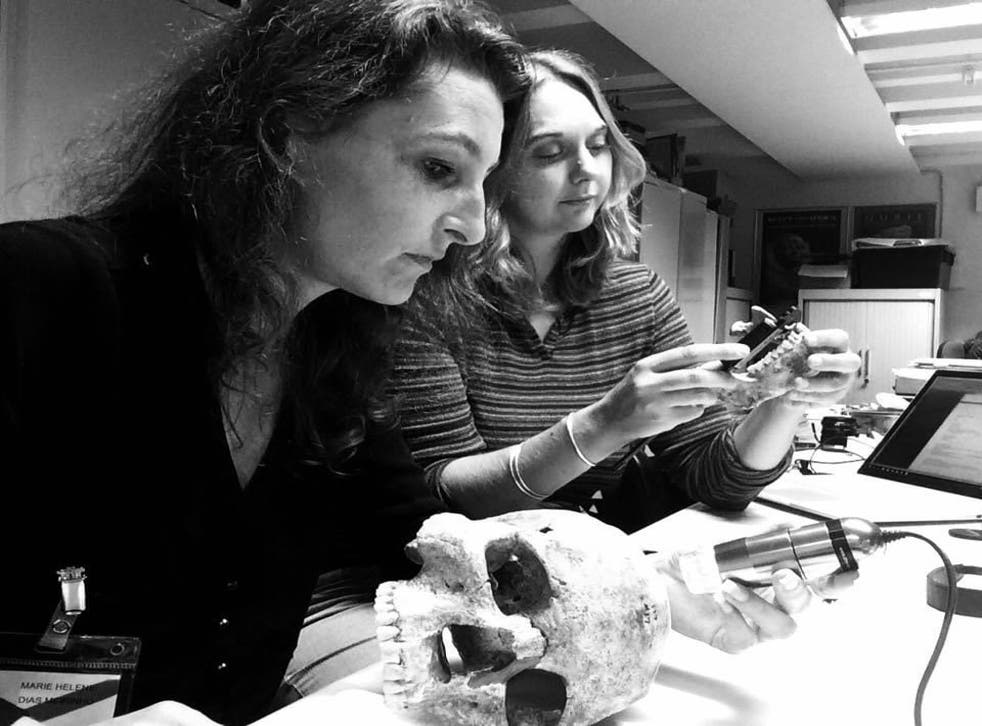
Dr Marie-Hélène Dias-Meirinho (left), Dr Isabelle Crevecoeur carry out microscopic analysis of bone lesions on the Jebel Sahaba victims at the Egypt and Sudan Department of the British Museum
(Isabelle Crevecoeur/Marie-Hélène Dias-Meirinho )

One woman had, for instance, 19 unhealed arrow or spear injuries to her hip, upper legs, upper arm, shoulder and head

Another individual – a male – had serious unhealed injuries to his lower jaw, upper legs, upper arm and forearm.

In eight cases, the scientists found fragments of flint arrowheads still embedded in victims’ bones – and in 28 cases, they found flint arrowhead or spearhead material inside victims, but not embedded in their bones (thus suggesting a high frequency of injuries to flesh and organs). In seven individuals, more than five examples of such flint projectile material were discovered inside each of their body cavities.

In an exhaustive study over the past eight years, the scientists used microscopes to examine, in great detail, 61 individuals, from a prehistoric cemetery site called Jebel Sahaba in northern Sudan, originally excavated in the 1960s.

Of those 61 people, 41 per cent had suffered arrow or spear injuries to their remaining bones. A further 21 per cent had been injured or killed with clubs or other blunt weapons

In most cases, almost half of their visible impact wounds had healed, suggesting that those individuals had been attacked on multiple occasions – on average, perhaps several times per year.

The arrow and spear impact marks almost certainly represent only a small fraction of the total number of attacks suffered by victims because about a third of each individual’s bones could not be examined – they had not survived – and because many combat injuries would have been to flesh and organs rather than to bones (and were therefore largely undetectable). Many totally healed impacts were also undetectable.

Violence was inflicted on families indiscriminately. At least half of the 15 children in the cemetery had visible evidence of having been attacked, often multiple times.

At least 19 out of the 43 adults in the Jebel Sahaba cemetery had also been attacked with spears or arrows – often on multiple occasions. And a further 11 had been injured or killed with hand-held blunt weapons. The only group comparatively absent from the cemetery were teenagers.

In terms of gender, men and women seem to have been attacked by the group’s enemies with equal frequency and ferocity.

Except in the case of children (who were often killed with blunt weapons – presumably stone hammers or bone or wooden clubs), most attacks were carried out from a distance – through the use of spears and bows and arrows.


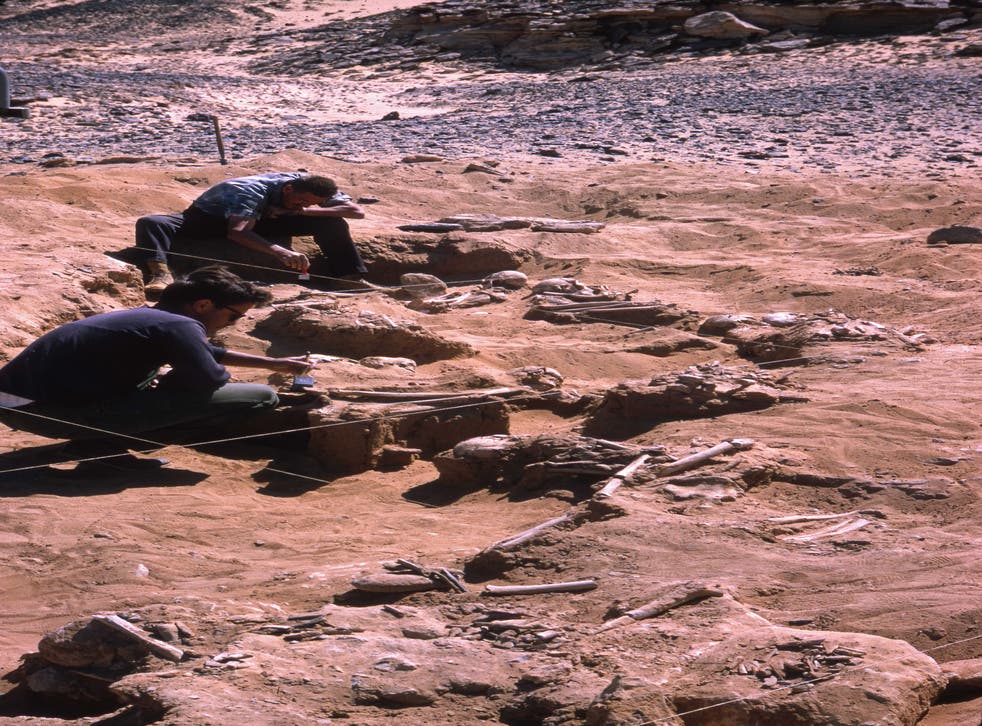
The skeletons examined over the past eight years come from an excavation carried out at Jebel Sahaba in northern Sudan in 1965
(Image courtesy of the Wendorf Archives of the British Museum)

It appears that arrows predominated because, where direct (rather than oblique) impacts on bone occurred, penetration was often substantial (sometimes several centimetres, suggesting very high velocity impacts).

Certainly, the bow and arrow had already been in use in Africa for about 50,000 years – and had also been employed in Asia for more than 20,000 years.

The arrows and spears used to carry out the Nile Valley attacks were very sophisticated – and designed to cause the maximum amount of blood loss.

It may be that the levels of violence at Jebel Sahaba were particularly high because climatic changes at the time would have led to substantially increased competition between different communities.

The Nile Valley hinterland was becoming much more arid, reducing wild game availability – and Nile water levels were becoming much more erratic, with occasional major floods destroying virtually all local vegetation.

Dr Daniel Antoine, acting keeper of the Department of Egypt and Sudan, and curator of Bioarchaeology at the British Museum, said: "Jebel Sahaba has now been shown to be the oldest cemetery in the Nile valley and one of the earliest sites displaying extensive interpersonal violence in the world. Competition for resources due to a shift in the climate was most probably responsible for these frequent conflicts."

Dr Isabelle Crevecoeur, of the French National Centre for Scientific Research and lead researcher on the project, said: "Healed and unhealed lesions, caused by arrows, spears and other weapons, were found on over two-thirds of the 61 individuals buried at the site, regardless of their age or sex, including young children."

Although the most detailed study of the victims has been carried out over the past few years (and is only being published today), none of the scientific work would have been possible without the original excavations of the site, commissioned by Unesco in advance of the construction of Egypt’s Aswan High Dam and the subsequent inundation of the site by Lake Nasser in the 1960s. Today, the site of the Stone Age cemetery is inaccessible – because it lies at the bottom of that vast lake.

The precise date of the Jebel Sahaba cemetery is not known, but tests show that the skeletons were buried there between 13,400 years ago and 20,000 years ago, and probably during the older part of that date range. However, the cemetery itself appears to have been in use for only two or three generations.

The new research is important because it reveals the unexpectedly very high levels of violence that could erupt, in at least some circumstances, in the Stone Age.

It suggests that there may have been no rules or traditions or taboos governing conflict between communities – and that in turn suggests that there may have been no ethical values in existence, at least as far as the treatment of members of other communities was concerned.

The amount of excess violence (that is, over and above that needed to kill somebody) also gives insights into the degree of animosity felt by communities against other people – and the brutal slaughter of children suggests that the attackers wanted to obliterate a community rather than merely defeating it.

The new research into the Jebel Sahaba skeletons is being published today in the science journal Nature – Scientific Reports.
Are mushrooms on Mars proof of alien life?

Discoveries of the fungus-like minerals, writes Gareth Dorrian, are no proof that we have extra terrestrial neighbours... yet.

1 day ago

Mushroom life on Mars may be too good to be true
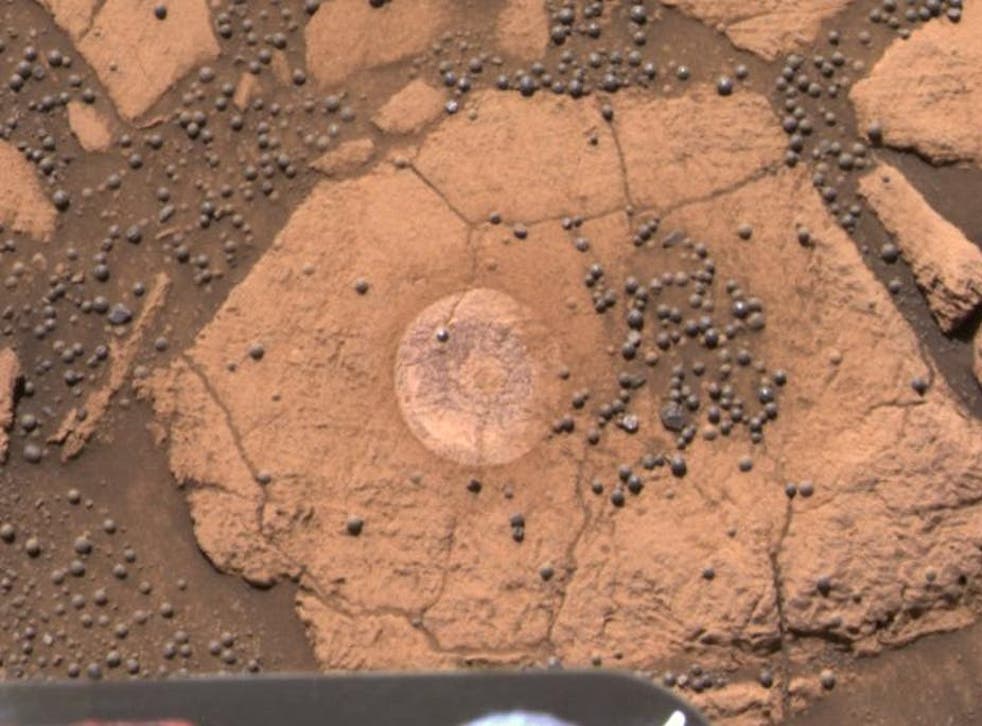
(Nasa
)

A recent study claims to have found evidence for mushroom-like life forms on the surface of Mars. As it happens, these particular features are well known and were discovered by cameras aboard Nasa’s Mars Exploration Rover Opportunity, shortly after it landed in 2004.

They are not, in fact, living organisms at all, but “haematite concretions” – small sphere-shaped pieces of the mineral haematite, and their exact origin is still debated by scientists. Haematite is a compound of iron and oxygen and is commercially important on Earth. The spherical rocks on Mars may have been created by the gradual accumulation of the material in slowly evaporating liquid water environments. They could also have been produced by volcanic activity.

Either way, mushrooms they are not. The area around Opportunity’s landing site is littered with them – they can be seen all over the surface and were also found buried beneath the soil and even embedded within rocks.

Fossilised worms

These space “mushrooms” were not the first claim of alien life. On August 7, 1996, the then US president Bill Clinton stood on the White House lawn and announced the possibility that scientists had discovered the ancient, fossilised remains of micro-organisms in a meteorite that had been recovered from Antarctica in 1984.

The meteorite, ALH 84001, is one of a handful of rocks we have from Mars. These were blasted off the surface of the planet by volcanic eruptions or meteorite impacts, drifted through space probably for millions of years, before ending up on Earth.

The tiny structures discovered within, using powerful microscopes, resemble microscopic worm-like organisms and are likely to be billions of years old. Debate over the true origins of these structures continues today – many scientists have pointed out that well known inorganic processes are quite capable of producing structures which resemble living organisms. In other words, simply because something might look a bit like life (mushrooms or otherwise), that does not mean it is.

Mystery gases


In the 1970s Nasa’s viking robotic landers carried a series of experiments designed to test the Martian soil for the presence of microorganisms.

The experiments chemically treated small samples of Martian soil in reaction chambers on board the landers. In one of them, nutrients containing radioactive carbon-14 were added to the soil samples. In theory, this should be absorbed by any growing and multiplying microbes. The carbon-14 would then increasingly be “breathed out” over time, showing a steady increase in concentration within the reaction chamber.

After the chemical analyses, each soil sample was steadily heated to hundreds of degrees to destroy any microbes, with the intention of seeing whether any such reactions in the soil ceased. Intriguingly, this particular experiment did show a steady increase in carbon-14 over time which was indeed terminated after heating to above the boiling point of water. Several inorganic chemical reactions have been proposed as an explanation. These results therefore remain inconclusive and are still debated today.

More recently, minute quantities of methane have been found in the Martian atmosphere. This is also intriguing as living organisms on Earth are known to release methane. Once again, however, it must be stressed that this not conclusive proof of life. Methane can also be produced by several inorganic processes, including by heated rocks.

Wow!


In 1977, the Big Ear radio telescope in the US detected an unusual radio signal while scanning the sky. The signal lasted for just a couple of minutes, was very high powered and was detected over a narrow range of frequencies. These factors make it quite difficult to envisage a natural cause, as most natural radio sources can be detected across a wide range of frequencies.

As exciting as they are, it is important to treat claims of alien life with a healthy dose of scepticism, and this is indeed what scientists do

The exact signal has not been detected again since, despite frequent radio surveys of the same part of the sky. The signal was so remarkable at the time that the astronomer on duty, Jerry Ehman, circled the print out of the signal with red pen and wrote “Wow!” next to it.

Various explanations have been proposed over the years including, recently, that the signal was generated by a passing comet, or transmissions from an Earth-orbiting satellite. The exact origin of the Wow! signal is still not fully agreed upon today, and remains an intriguing mystery.

Tabby’s Star

A key tool of planet hunting is the dimming method – observing light from a star to see if it periodically dips in a regular fashion as an orbiting planet passes in front of it. In 2015, professional astronomers working with citizen scientists from the Planet Hunters project announced the discovery of a nearby star displaying unusually strong and consistent dimming over time.

Tabby’s Star is named after astronomer Tabitha Boyajian who was lead author on the paper announcing the discovery. Data from the Kepler Space Telescope showed not just a regular dimming, as one might expect from a planetary orbit, but highly irregular dips in the light and, interestingly, a consistent decrease in light output over several years.

This highly unusual behaviour prompted numerous theories to explain the observations, including cometary dust or debris from a massive impact gradually spreading out to cover the face of the star. Some also speculated that these were signatures of an advanced alien species building a structure around the star. But further observations have found no corroborating evidence to support this possibility. For example, radio telescopes have failed to detect any unusual radio emissions from the star. Today, the scientists behind the discovery believe that the unusual dips in light are caused by clouds of cosmic dust passing across the face of the star.

As exciting as they are, it is important to treat claims of alien life with a healthy dose of scepticism, and this is indeed what scientists do. No conclusive evidence that extra terrestrial life exists has been found … yet.

Gareth Dorrian is a post doctoral research fellow in space science at the University of Birmingham. This article first appeared on The Conversation.