Monday, July 12, 2021


Hong Kong's urban farms sprout gardens in the sky
More than 60 urban farms have sprouted across space-starved Hong Kong since 2015—on decommissioned helipads, shopping mall rooft
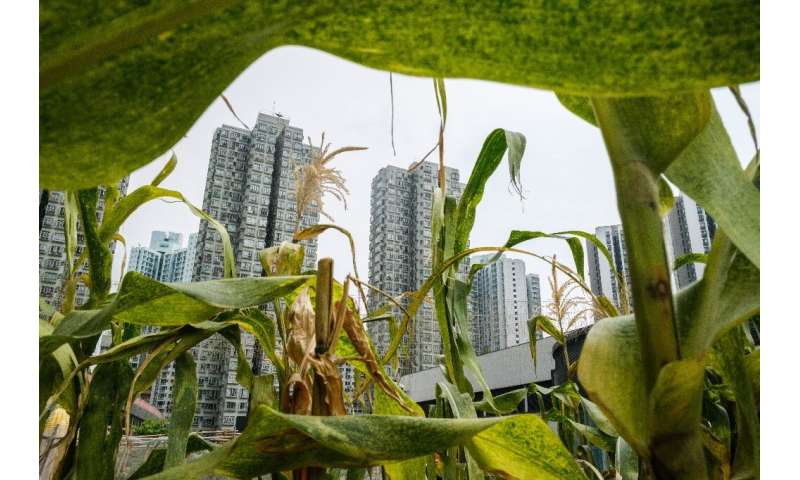
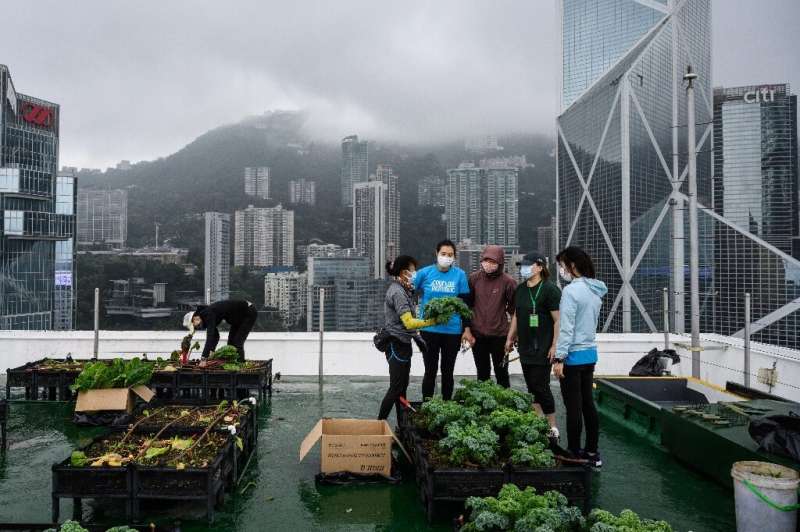
More than 60 urban farms have sprouted across space-starved Hong Kong since 2015—on decommissioned helipads, shopping mall rooftops and public terraces—thanks to initiatives like Rooftop Republic.

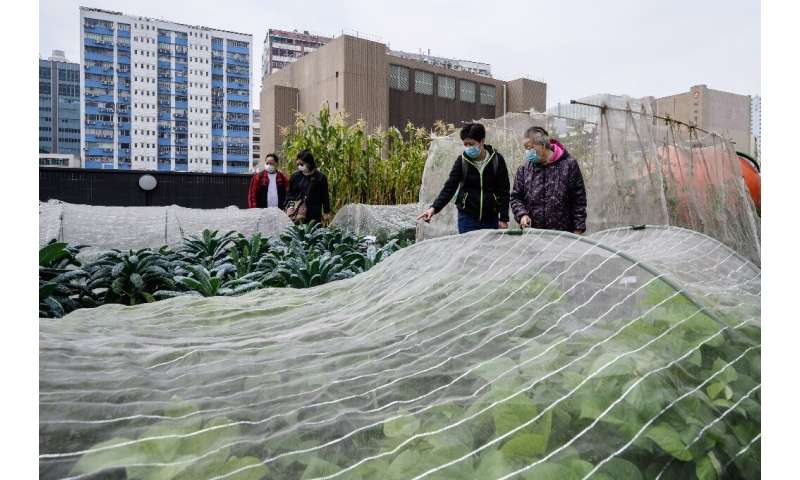
With their heads in the clouds and their hands in the soil, a group of office workers are busy harvesting the fruits of their labour on the roof of a Hong Kong skyscraper.

Invisible to those below, a sprawling garden of radishes, carrots and rhubarb is flourishing at the top of the 150-metre tall Bank of America tower, a stark and colourful contrast to the monotone shades of concrete, steel and glass of the city's financial district.

The farm is among more than 60 that have sprouted across the space-starved city since 2015—on decommissioned helipads, shopping mall rooftops and public terraces—thanks to initiatives like Rooftop Republic, a local social enterprise which promotes urban farming.

Cofounder Andrew Tsui sees the rooftop farms as a way for people to reconnect with how  can be produced in what he calls the current "instant-noodle city lifestyle" that sees so much waste.

"What we are looking at is really how to identify underutilised spaces among the city and mobilise the citizens, the people, to learn about ," the 43-year-old told AFP during a blustery site inspection of the skyscraper's garden.

Tsui believes Hong Kongers need to re-establish a relationship with what they eat that has been broken "since we started outsourcing our food and relying so much on industrialised production."
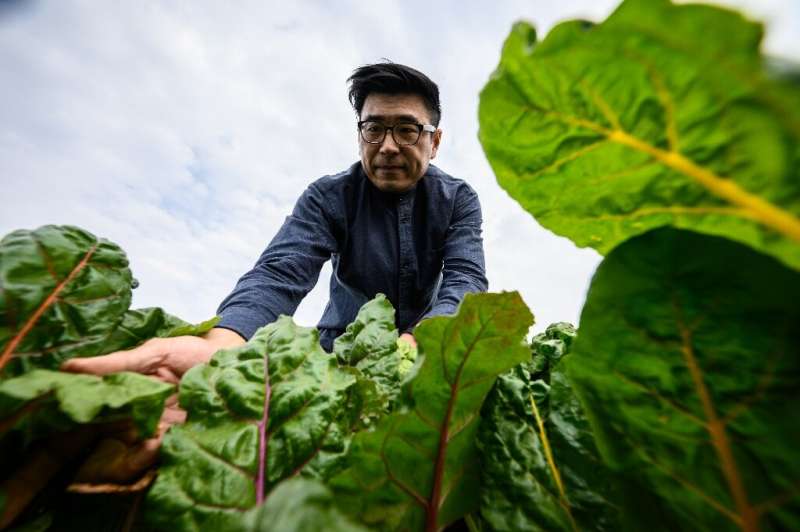
Andrew Tsui of Rooftop Republic sees the farms as a way for people to reconnect with how sustainable food can be produced in wha
Andrew Tsui of Rooftop Republic sees the farms as a way for people to reconnect with how sustainable food can be produced in what he calls the current "instant-noodle city lifestyle" that produces so much waste.

Piles of food waste

According to government statistics, Hong Kong throws out some 3,500 tonnes of food waste a day—the equivalent weight of 250 double-decker buses. Less than a quarter is recycled.

And around 90 percent of the food eaten by the city's 7.5 million inhabitants is imported, mostly from mainland China.

But while Hong Kong is one of the most densely packed places on earth, there is still considerable space to grow food locally.

Tsui said some seven million square metres of farmable area is currently cultivated. But more than six million square metres on the city's rooftops remain unused.

"So we could have the potential of doubling the supply of land for growing food," he said.

"The challenge for us is to design  as a lifestyle to integrate into our daily life," he added. "And the first step for that, of course, is to be accessible."
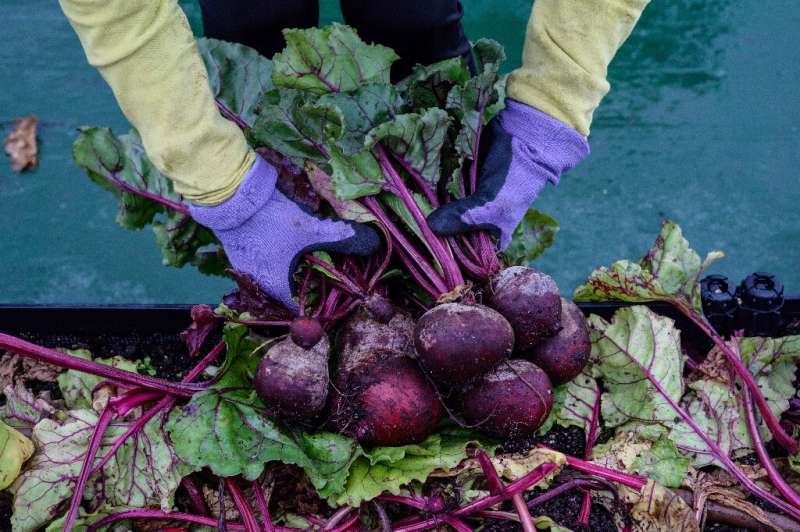
Tsui believes Hong Kongers need to re-establish a relationship with what they eat that has been broken "since we started ou
Tsui believes Hong Kongers need to re-establish a relationship with what they eat that has been broken "since we started outsourcing our food and relying so much on industrialised production"

To incorporate urban farms into the blueprints for office buildings, Rooftop Republic closely collaborates with architects, developers and property managers.

America garden, financed by property consultancy giant JLL, Singaporean banking giant DBS has partnered with Rooftop Republic to set up an academy that runs workshops for beginners as well as professional cou

"In Hong Kong, most of the people focus on the commercial value of the properties. But we want to promote the concept of sustainability," said Eric Lau, the group's senior director of property management.

New skills

Urban farmers say the projects also help build community spirit among those who cultivate the crops.

After retiring from the public service, Lai Yee-man said she turned to farming to connect with nature and her neighbours.

  • Urban farmers say their projects help build community spirit among those who cultivate the crops
    Urban farmers say their projects help build community spirit among those who cultivate the crops.
  • Around 90 percent of the food eaten by Hong Kong's 7.5 million inhabitants is imported, mostly from mainland China
    Around 90 percent of the food eaten by Hong Kong's 7.5 million inhabitants is imported, mostly from mainland China.
  • Hong Kong throws out some 3,500 tonnes of food waste a day—the equivalent weight of 250 double-decker buses
    Hong Kong throws out some 3,500 tonnes of food waste a day—the equivalent weight of 250 double-decker buses.
  • While Hong Kong is one of the most densely packed places on earth, there is still considerable space to grow food locally
    While Hong Kong is one of the most densely packed places on earth, there is still considerable space to grow food locally.
  • Urban farmers say their projects help build community spirit among those who cultivate the crops
    Urban farmers say their projects help build community spirit among those who cultivate the crops.
  • Around 90 percent of the food eaten by Hong Kong's 7.5 million inhabitants is imported, mostly from mainland China
    Around 90 percent of the food eaten by Hong Kong's 7.5 million inhabitants is imported, mostly from mainland China.

The 60-year-old initially learned techniques and tricks from professionals to develop her farming plot in the New Territories region of Hong Kong—a rural area close to the border with mainland China.

But now she is passing on her knowledge to fellow residents working the Sky Garden, a 1,200 square-metre facility on top of a mall.

There residents cultivate edible flowers and fruit trees and can attend lifestyle classes like mindful gardening.

"People attach greater importance to their health now, they will buy organic food," said Lai.

"Here, we teach them not to waste... and to cherish their food," she explained, adding that the majority of what the mall farm grows goes to local food banks.

Tsui recognises that few young Hong Kongers currently have an interest in learning how to grow food.

But younger people are often concerned about the environment and climate change, so the opportunity to generate enthusiasm is there for the taking.

"If coding is the skill set to learn for the 21st century, growing your own food is a necessary new skill that we all need to learn to ensure a regenerative and green planet," he said.


Explore further

Green shoots: Rooftop farming takes off in Singapore


'Smart collar' could prevent tapeworms in dogs

'Smart collar' could prevent tapeworms in dogs
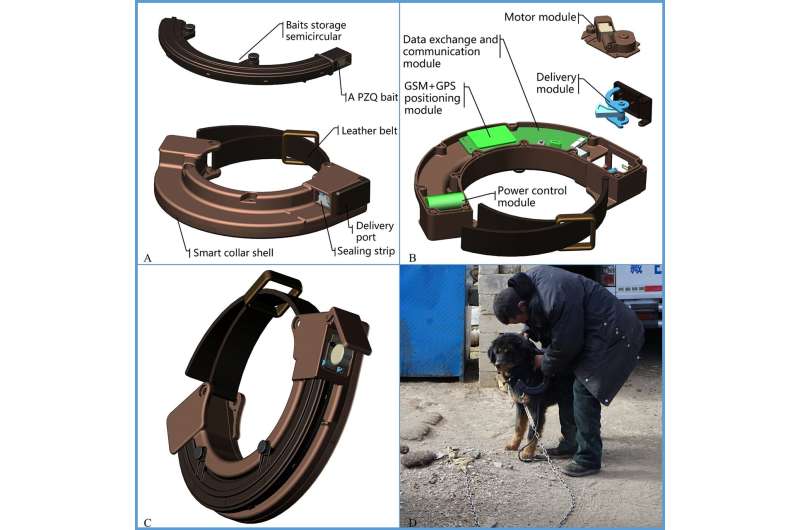
Development and field tests of smart deworming collar (A: 3D stacked graph of smart collar; B: Embedded modules for smart collar; C: Overall shape of Smart collar; D: Recovery of collars in July 2019 in Seni district after they had been attached for a year). Credit: Yang S-J et al., 2021, PLOS Neglected Tropical Diseases, CC-BY 4.0 (creativecommons.org/licenses/by/4.0/)

Dogs infected with echinococcosis play a major role in spreading tapeworms across human populations around the world. Now, researchers have developed a "smart collar" which gradually delivers a steady dose of a deworming drug to dogs. The collar successfully reduces the animals' risk of echinococcosis, the team reports in PLOS Neglected Tropical Diseases

Dogs can be infected with either Echinococcus granulosus sensu lato, which causes cystic echinococcosis (CE), or E. multilocularis, which causes alveolar echinococcosis (AE). In China, a national survey showed that CE is endemic in at least 368 counties in northwest China and is co-endemic with AE in 115 of those counties. The role of dogs in transmitting echinococcosis in these areas is significant, and efforts to dose dogs with monthly  treatments have been difficult to implement.

In the new work, Xiao-Nong Zhou of the Chinese Center for Disease Control and Prevention and colleagues developed a deworming collar which delivers praziquantel (PZQ), known to be the most effective deworming drug. They designed the collar to be waterproof, anti-collision, cold-proof, and to automatically deliver a regular, quantitative dose of PZQ. 18 smart deworming collars were used for  in Seni district of China, and 523 collars were tested in Henzuo city. Dogs for the trial were randomly selected from all registered dogs in each jurisdiction.

In pre-, the 551 collars were 100.0% anti-collision, 99.5% waterproof and 100.0% coldproof, and the automatic PZQ delivery occurred 87.8% of the time, even with the collars being attached to dogs for 12 months in the harsh climates of remote locations on the Tibetan Plateau. The compliance rate of dog owners to attach the collar to their dog was 94.7% in Seni district and 88.8% in Hezuo city. When compared to a control group, dogs in Seni district wearing the smart collar had a 0.182 times risk of a positive Echinococcus antigen test (95%CI 0.049-0.684, P=0.012) and dogs in Hezuo had a 0.336 times risk of a positive antigen test (95% CI 0.178-0.706, P=0.003).

"In order to prevent the transmission of echinococcosis from dogs to humans and livestock completely, we developed a smart Internet of Things (IoT)-based deworming collar which can deliver PZQ baits for  automatically and regularly," the researchers say. "Two pilot studies have showed that it is an excellent alternative to existing manual deworming methods, and the difficulties associated with performing deworming in remote areas with scarce resources can be overcome."


Explore further

Collars risk causing neck injuries in dogs, study shows

More information: Yang S-J, Xiao N, Li J-Z, Feng Y, Ma J-Y, Quzhen G-S, et al. (2021) Smart deworming collar: A novel tool for reducing Echinococcus infection in dogs. PLoS Negl Trop Dis 15(7): e0009443. doi.org/10.1371/journal.pntd.0009443
Journal information: PLoS Neglected Tropical Diseases 


Minority groups are underrepresented in polls of public opinion

BAME groups are underrepresented in polls of public opinion – here's why it matters
Credit: Graphic farm / shutterstock

The question of systemic racism in Britain has been impossible to avoid over the past year. But what about the more basic question of ensuring that ethnic minority voices are heard?

People from Black, Asian, and minority ethnic (BAME) backgrounds make up 14% of the UK. However, BAME participants are often hugely underrepresented in "nationally representative" polls, with BAME representation ranging below 10%, and sometimes even 5% or lower.

Even more common is the problem of non-reporting. Many UK polls that sample the  also appear to exclude any mention of ethnicity. This is the case whether the topic is health (recent polls on coping with lockdown, vaccination priorities, or NHS staff wellbeing), politics (government approval ratings, the budget and voting intentions), and even attitudes towards immigration or race (including whether it's acceptable to make jokes about race). In these cases, it is not clear whether ethnic representation was adequate because there is no indication that ethnicity was measured at all.

Such polls are often reported widely in the media, and so provide important social cues for how we understand public opinion. In one recent example among many, The GuardianThe Express, and The Independent all reported a large drop in public approval for Boris Johnson and the Conservative Party, as well as figures such as "43% of the public want to postpone the lifting of COVID-19 restrictions," based on a report that had no mention of ethnic representation.

An analysis including ethnicity might have revealed even higher support among some ethnic minorities for postponing lifting of restrictions, and differences in public approval. Or perhaps not—but the twin problems of underrepresentation and underreporting illustrates the way BAME perspectives and opinions can be marginalized, with far-reaching consequences for how we understand the "voice" of the nation.

Nationally unrepresentative?

A basic methodological requirement for an opinion poll is a "nationally representative" sample—that is, the people surveyed fairly reflect the national population.

Typically, this means a survey would be expected to match the population that participants are drawn from in terms of age, gender, socio-economic status, voting preferences and geographic spread. In other words, a survey wouldn't be considered robust if it had half as many women as men, excluded certain , counted only Conservative voters or canvassed only wealthy professionals. But many surveys of public opinion often do not even report ethnicity, and those that do often have far fewer ethnic minority respondents than they should.

To account for low numbers, data is sometimes weighted for ethnicity. This makes sense when used to adjust for minor discrepancies, but is an inadequate approach for boosting a sample that is simply too small. Correcting larger disparities through weighting (for instance, pretending the answers of two respondents represent those of 20 respondents) adds error, and risks producing inaccurate results.

There are a few reasons why ethnic minorities may be more difficult to reach for polling. BAME groups are on average younger, less likely to own their home, and therefore potentially more transient and difficult to reach by post or telephone than white British groups. In recent years, response rates for telephone polls have declined steeply to less than 10% in inner city areas, which often have more BAME people. Other factors such as language barriers and mistrust may also have a role.

However, these challenges are not insurmountable. Official census exercises have samples that reflect the ethnicity of the population, as do large longitudinal nationwide surveys such as the British Social Attitudes survey, some government research papers on public opinion, and dedicated surveys that focus explicitly on ethnic minorities.

Truly representative samples can be obtained when there is an imperative to do so, but this does not appear to be the default. The consequence is that BAME populations are underrepresented in polls which may then be used to inform decisions. The resulting mirror that we hold up to society is one that is distorted, and potentially blind to the opinions of key sections of British society.

Polling on climate change

Our backgrounds are in environmental psychology, and we have been involved in teams commissioning and analyzing surveys of public opinion on . Climate change is an issue that highlights the importance of BAME representation in surveys.

Climate change has a well-established racial justice dimension and people of color are hardest hit globally. Even in the UK, not everyone suffers equally. Although domestic data is difficult to find, there is clear evidence that many ethnic minority groups are more likely to experience social deprivation, leaving them less able to respond to climate change, are more likely to live in areas exposed to dangerous air pollution, have inadequate access to green spaces and increased risk of overheating.

For all of these reasons, BAME representation in  polls is not simply a question of whether people with different colored skin would answer survey questions differently. The experiences of minority ethnic groups potentially provides a profoundly different set of perspectives, which surveys of  on topics as critical as the climate crisis must aspire to capture.

The first step towards positive change is an acknowledgement that we have not been doing enough to ensure that survey samples are representative of British ethnicity. This is more than just a methodological oversight—it presents a moral challenge to the credibility of many social science surveys.


Explore further

Mental health of UK women, ethnic minorities especially affected during pandemic

Provided by The Conversation 

This article is republished from The Conversation under a Creative Commons license. Read the original article.The Conversation


Ecologists compare accuracy of lidar technologies for monitoring forest vegetation

Ecologists compare accuracy of lidar technologies for monitoring forest vegetation
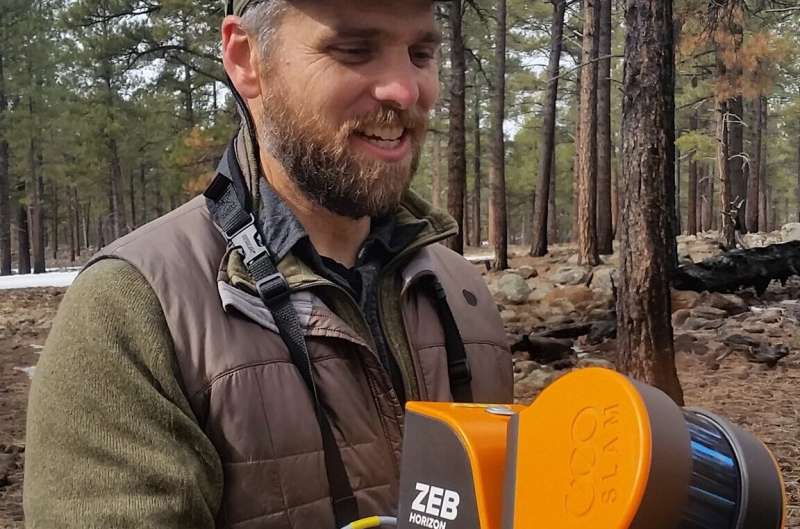
Researcher Jon Donager uses a handheld mobile lidar scanning (MLS) device. Credit: Northern Arizona University

As light detection and ranging (lidar) technology evolves, forest ecology and ecological restoration researchers have been using these tools in a wide range of applications.

"We needed an accounting of relative accuracy and errors among lidar platforms within a range of  types and structural configurations," said associate professor Andrew Sánchez Meador, executive director of NAU's Ecological Restoration Institute (ERI).

Sánchez Meador led a study recently published in Remote Sensing, "Adjudicating Perspectives on Forest Structure: How Do Airborne, Terrestrial, and Mobile Lidar-Derived Estimates Compare?." The study compared vegetation attributes at multiple scales derived from piloted airborne (ALS), fixed-location terrestrial (TLS) and mobile lidar scanning (MLS) to see how these tools might be used to provide detailed information on forest structure and composition. The researchers, including postdoctoral scholar Jonathon Donager and Ph.D. student Ryan Blackburn, both of ERI and NAU's School of Forestry, found MLS consistently provided accurate structural metrics and can produce accurate estimates of canopy cover and landscape metrics.

"Our findings suggest that MLS has great potential for monitoring a variety of forest attributes," Sánchez Meador said. "These types of scanners cost a fraction of that of other platforms, work equally well indoors and outdoors, are easily deployed and view the forest the same way humans do—from down among the trees—which makes communicating research findings easier."

"As the technology develops further and prices continue to come down," he said, "we expect to see more researchers and managers using these tools for all sorts of applications, from monitoring the effects disturbance events such as fire and flood, to quantifying vital wildlife habitat, to providing baseline data for virtual reality applications and simulation modeling."

As a result of this work, Sánchez Meador and David Huffman, ERI director of research and development, secured funding from the Phoenix-based Salt River Project (SRP) to examine the ability of MLS to rapidly assess forest structural conditions in mixed-conifer forests and the amount and distribution of coarse woody debris, an important component of forest ecosystems.

This research was made possible through funding from NAU's Research Equipment Acquisition Program (REAP), which enabled ERI to purchase a handheld MLS device. This project shows how investment in technology and equipment through the REAP program can be leveraged to support broader, multiple research goals and promote partnerships with companies like SRP.

As ERI's executive director, Sánchez Meador works to advance the institute's focus on restoring western forest landscapes using innovative technologies, service to Native American tribes, promoting novel solutions for the use of tree biomass and wood products and actively engaging with the people and communities that influence land management and depend on these forests.


Explore further

Mixed-conifer forests at risk for high-severity wildfire

More information: Jonathon J. Donager et al, Adjudicating Perspectives on Forest Structure: How Do Airborne, Terrestrial, and Mobile Lidar-Derived Estimates Compare?, Remote Sensing (2021). DOI: 10.3390/rs13122297


After street lights in an entire county were swapped to LEDs, light pollution got worse

After street lights in an entire county were swapped to LEDs, light pollution got worse
Credit: U.S. National Park Service Night Skies Program

"The best laid plans of mice and men often go awry"—this famous paraphrase of Scottish poet Robert Burns sometimes sums up human ingenuity. That is exactly what happened when a county in Washington State decided to replace all of its county-owned streetlights with LEDs, at least partially in an effort to combat light pollution. New research shows that they actually made the light pollution worse.

Dr. Li-Wei Hung and her colleagues at the National Park Service recently released a paper currently available on arXiv that details work that they did to monitor the night sky both before and after Chelan County replaced their streetlights with LEDs.

Chelan County is located in the north-central part of the state and serves as a gateway to several outdoor recreational areas nearby, including North Cascades National Park. Given this interest in the outdoors, less light pollution would seem like a benefit to stargazing hoping to catch a glimpse of the Milky Way.

So the county decided to replace all 3,693 of the county-owned streetlights (60% of the total outdoor streetlights in Chelan County) with "full cutoff" light-emitting diodes for bulbs. About 80% of these new LEDs were 3000 K, or warm white light, while the other 20% were slightly brighter 4000 K bulbs that were installed to meet lighting requirements set by the Washington State Department of Transportation.

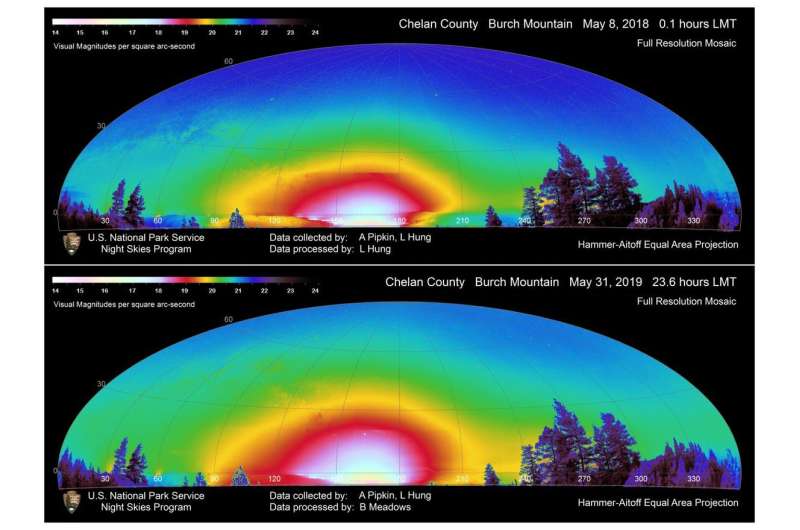
The retrofit process took place between 2018 and 2019, and Dr. Hung and her team took measurements both before the install and after all of the new lights were in place. What they found was surprising, to say the least. The sky actually got brighter in the county after the LEDs were installed.

After street lights in an entire county were swapped to LEDs, light pollution got worse
Map of Chelan County and where its street lights are located. Credit: Hung et al.

Such a result is only counterintuitive because LEDs are generally thought of as being much more energy-efficient and better for light pollution. An experiment in Flagstaff, Arizona attempted to leverage LEDs to create the world's first "International Dark Sky City" in 2018, though results are still out on its effectiveness.

If the results in Chelan County are anything to go by, that experiment might not be successful. Dr. Hung and her colleagues looked at three different metrics of calculating how dark the sky is—how bright the skyglow in the county was, how high it went, and upward radiance, which measures the light directed upward.

The researchers used several tools to comprehensively calculate the differences in light pollution. First, the National Park Service has a night sky camera system, which allowed the researchers to take simple before-and-after pictures of the  in the Chelan County area. More data was then collected by the Visible Infrared Imaging Radiometer Suite (VIIRS), which is located on the Suomi National Polar-orbiting Partnership Satellite.

Of the three metrics measured by these instrument, the brightness and height of the skyglow increased, while the upward radiance actually decreased. The explanation the authors put forward for why, exactly, the light  got worse is that there was an increase in light emissions shorter than 500 nm, closer to the blue end of the visible spectrum. As for why the amount of  directed upward decreased, it was most likely due to a combination of the directionality of the LEDs as well as better shielding on the lamppost themselves.

Despite actually making  slightly worse, the LED retrofit can still be considered a success for its other two goals—decreasing energy consumption and cost. The LEDs are undeniably more energy-efficient than the high-pressure sodium lamps they replaced, and will last much longer, decreasing their overall cost to the county. While the energy and cost savings are great, astronomy enthusiasts everywhere can hope that other municipal authorities that are considering similar upgrades can take into account how new LEDs might affect their night skies. Using all of the best aspects of LEDs could lead to happy humans and mice all around.


Explore further

Blue light creates negative physiological changes during sleep

More information: Changes in night sky brightness after a countywide LED retrofit. arxiv.org/abs/2107.02026 arXiv:2107.02026v1 [astro-ph.IM]

Li-Wei Hung et al, Changes in night sky brightness after a countywide LED retrofit, Journal of Environmental Management (2021). DOI: 10.1016/j.jenvman.2021.112776


NG video on Light Pollution. Credit: National Geographic YouTube Channel
Video discussing the some of the best places to stargaze in the US. Credit: Check Facts 360 YouTube Channel

Description of Suomi and it’s associated data. Credit: USGS


Why most economists continue to back lockdowns

Why most economists continue to back lockdowns
Credit: The Conversation, CC BY-ND

With the prospect of a lengthier lockdown looming over Sydney, the idea of "living with the virus" has resurfaced.

NSW's health minister, Brad Hazzard, raised the prospect of abandoning the lockdown and accepting that "the virus has a life which will continue in the community" at a press conference on Wednesday. NSW Premier Gladys Berejiklian and Prime Minister Scott Morrison have rejected that idea, but many voices in the media have been pushing it.

As with pandemic policy in general, much of the discussion of the Sydney outbreak has framed the problem as one pitting health against the economy. In this framing, epidemiologists and  are seen as the advocates of saving lives, while economists are seen as the advocates of saving money.

In reality, the great majority of Australian economists support policies of aggressive suppression or elimination—that is, keeping case numbers close to zero, and clamping down when an outbreak threatens.

Broad agreement

As with epidemiologists, that broad agreement encompasses a range of views about the appropriate response in any particular case.

Some economists, and some epidemiologists, supported the NSW government's decision to delay a lockdown, while others wanted earlier action. But only a minority in either group support the idea of ending restrictions and waiting for herd immunity to protect us.

Unfortunately, as we have already seen in the case of climate change, many media outlets thrive on conflict. It is more interesting to present a debate between a pro-lockdown public health expert and an anti-lockdown  than to present a nuanced discussion of the best way to suppress the virus, taking into account insights from a range of disciplines.

Understanding exponential growth

Why have economists endorsed the policy of suppression with more enthusiasm than, for example, political and business leaders?

First, because economists understand the concept of .

While economics' stress on growth is rightly contested, its centrality to economic concepts means related concepts from epidemiology, such as the reproduction number (R), are immediately comprehensible to us.

Once you understand how rapidly exponential processes can grow, the idea that lockdowns are "disproportionate responses to a handful of cases," as The Australian has editorialized, loses its superficial attraction.

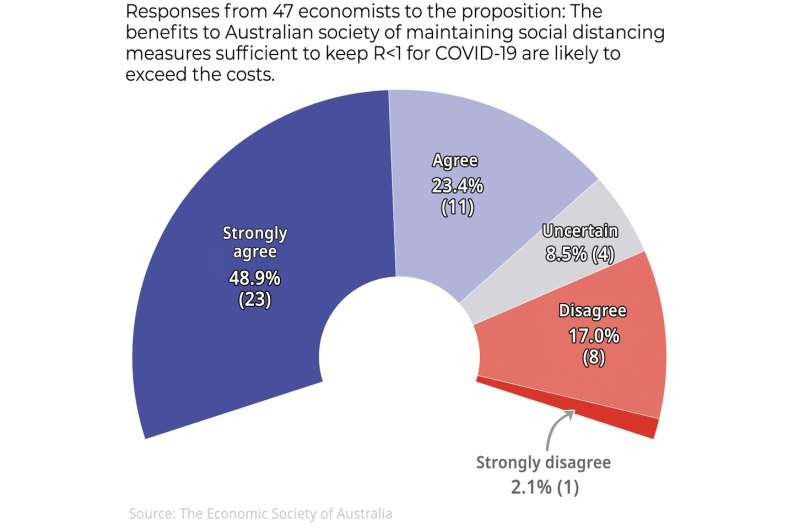
A clear majority of economists surveyed by The Conversation in May 2020 (after the end of the national lockdown) supported strong social distancing measures to keep R below 1. Most of those who disagreed felt alternative measures could hold R below 1 at lower costs. Only a handful supported a "let it rip" strategy.

Considering counterfactuals

Second, economists understand counterfactuals—that is, the need to specify what would have happened under an alternative policy.

It is easy to make the point that lockdowns are both economically costly and psychologically traumatic. But the counterfactual is not a situation where the economy is unaffected and everyone is happy. Living in fear of the virus, and watching family and friends suffer and die from it, is psychologically traumatic.

As regards the , the steps people take to reduce their exposure to risk are themselves costly, as is the need to allocate medical resources to treat the sick.

Weighing trade-offs

Third, and most importantly, economists understand about trade-offs.

There are always trade-offs within the space of policy choices. Should we lock down at the first sign of an outbreak and risk unnecessary costs, or wait until later and risk a longer and harsher ? Should we incur the costs of purpose-built quarantine facilities, or accept the greater risk of leakage from hotel quarantine?

Economists also understand that not all choices involve trade-offs. Sometimes one policy is unequivocally worse than another, on all relevant criteria. While there are always trade-offs somewhere in policy space, it's often the case that, of the live options, one dominates the other in all important dimensions.

On the central question of suppression versus herd immunity, there was no trade-off, as countries like Sweden found out.

The evidence points strongly to one conclusion. Allowing the virus to spread uncontrolled would have done more economic damage than temporary lockdowns, as well as causing thousands of avoidable deaths and tens of thousands to suffer severe, and possibly long-lasting, illness.

Risk and uncertainty

Finally, economists understand the complexities of risk and uncertainty.

One implication is the benefit of diversification by "backing every horse in the race," as opposed to "putting all your eggs in one basket," or even a few.

The federal government's vaccine  relied heavily on a limited range of options—primarily AstraZeneca, and the University of Queensland's vaccine venture—both of which ran into problems. If we had followed the logic of diversification, we would be much better placed than we are now.

Economics doesn't have all the answers. No one knows that better than economists. Dealing with the pandemic requires insights from a range of disciplines. But lazy stereotypes, pitting one profession against another, don't help.


Explore further

Yes, lockdowns are costly. But the alternatives are worse

Provided by The Conversation 

This article is republished from The Conversation under a Creative Commons license. Read the original article.The Conversation