Monday, July 12, 2021

The “Sci-Hub effect” can almost double the citations of research articles, study suggests
by Eric W. Dolan
July 10, 2021
in Social Psychology


Scientific articles that get downloaded from the scholarly piracy website Sci-Hub tend to receive more citations, according to a new study published in Scientometrics. The number of times an article was downloaded from Sci-Hub also turned out to be a robust predictor of future citations.

“Our main motivation for doing this paper was to reveal the importance of having access to scientific knowledge in general and understand the impact of Sci-Hub in terms of the number of citations a paper receives, in particular,” said study author Juan C. Correa, an interdisciplinary researcher who will soon be affiliated with the CESA School of Business in Bogotá, Colombia.

“As a researcher, I know that in general scholars in developed countries have no problem accessing a paper published in any scientific journal. Nonetheless, researchers in non-developed countries face great difficulties in accessing them. That’s why we quote the work of Irwin Louis Horowitz, who was probably the first scientist who talked about access to published scientific knowledge,” Correa explained.


For their study, the researchers examined 8,661 scientific articles published in three multidisciplinary journals (Nature, Science, and Proceedings of the National Academy of Sciences), three economic journals (The Quarterly Journal of Economics, Journal of Political Economy, and Econometrica), three consumer research journals (Journal of Consumer Research, Journal of Retailing and Consumer Services, and Journal of Consumer Psychology), and three neuroscience journals (Nature Reviews Neuroscience, Nature Neuroscience, and Neuron).

The articles were published between September 2015 and February 2016. About half of them had been downloaded from Sci-Hub, while the other half had never been downloaded from the website.

The researchers found that articles downloaded from Sci-Hub were cited more frequently compared to articles not downloaded from Sci-Hub. After controlling for variables such as the number of figures included in a paper, title length, the number of authors per article, the H-index of the first author, and the impact factor of the journal, Correa and his colleagues found that articles downloaded from Sci-Hub were cited 1.72 times more frequently on average.

“We showed that articles accessed through Sci-Hub systematically received more citations than papers not downloaded from Sci-Hub. Up to the best of our knowledge, this is the first endeavor that shows an empirical estimate of the relationship between Sci-Hub downloads and citations,” the researchers said.

“We coined the term ‘scholar consumption’ (i.e., using websites that provide subscription-based access to massive databases of scientific research), and we contrasted it with the use of pirate websites such as Library Genesis, Paperhub, or Sci-Hub as equivalent means to access scientific literature,” Correa added. “Our comparison was inspired by the paper titled ‘Who’s downloading pirated papers?‘ that John Bohannon published in Science back in 2016.”

The new findings have some implications for “the traditional business model that relies on subscriptions to journals,” Correa told PsyPost. “While some scholars think that this business model may become unsustainable in the future, we think that Sci-Hub, paradoxically, may help preserve the current publishing system.”

“The lack of access to publications, which preprints and open access journals are trying to solve, may no longer be felt so strongly to find required increasing support. In any case, the existence of pirate websites represents an important factor for journals to rethink their commercial policies in terms of granting access to scientific literature.”

But future research should examine a larger set of scientific journals, Correa said. “It is necessary to prove the consistency of our statistical results for more disciplines, journals, and regions,” he explained. “We provided our data, computational codes, and analyses in an open science repository (https://osf.io/8c632/) to facilitate further analyses to those interested in the scientific community and we look forward to hearing more about this topic in the near future.”

The study, “The Sci-Hub effect on papers’ citations“, was authored by Juan C. Correa, Henry Laverde-Rojas, Julian Tejada, and Fernando Marmolejo-Ramos.

Researchers explore employee perceptions of bullshit in the workplace with the “Organizational Bullshit Perception Scale”

by Beth Ellwood
July 9, 2021
in Business


According to a study published in Psychological Reports, a workplace’s tendency for bullshit does not go unnoticed by its employees. In fact, bullshit in the workplace can even be measured with a new scale called the Organizational Bullshit Perception Scale. The study’s authors say the scale could serve as a starting point for organizations hoping to identify and eradicate bullshit in the workplace.

There has been a growing interest among scholars in studying the role of bullshit in society. The term “bullshit” refers to information that is shared with little regard for the truth. One institution that tends to be ripe with this type of communication is the workplace.

Bullshit in the workplace — or organizational bullshit — has been speculated to have a negative impact on both employees and organizations. Yet, until recently, there was no existing scale for measuring bullshit at work, leaving this speculation untested. Faced with this predicament, a team of researchers designed their own.


“While the term bullshit, has moved from being seen as a swearword to a term used to describe an act of communication, it is one that remains relatively taboo in academic literature,” explained study author Caitlin Ferreira, a lecturer in marketing at the Luleå University of Technology.

“What’s interesting is that workplace bullshit (BS) is something that most people can relate to. If somebody says ‘that’s bullshit’ there is typically a shared understanding of exactly what that means, but the extent to which this phenomenon has been studied in academic research pales in comparison to other workplace phenomena.”

“It’s important to note that there are a number of potential negative effects of workplace BS, including lower job satisfaction, increased distrust in leadership and reduced performance (McCarthy et al., 2020) thereby warranting further research in this area.”

RelatedPosts


Exchange of information mediates the relationship between proactivity and creativity among employees

Narcissistic managers make employees feel unsafe to take risks and express themselves openly


The researchers created the Organizational Bullshit Perception Scale (OBPS) to measure the extent that employees perceive bullshit within their organization. Beginning with an overview of related research, Ferreira and her colleagues determined that the concept of organizational bullshit likely involves three factors. They then came up with a list of 15 items to measure these factors and tested the scale among two samples of employees from various industries.

In an initial study among 332 employees, two statistical tests called exploratory factor analysis and confirmatory factor analysis confirmed that there were three distinct factors involved in organizational bullshit. The first involved an organization’s tolerance for communication that disregards the truth. The next factor involved the boss’ use of bullshit at work. And finally, the third factor involved the use of bullshit language in the workplace, such as the overuse of acronyms or corporate jargon (e.g., “thinking outside the box”).

“Together with my co-authors, we identified three key underlying dimensions of workplace BS,” Ferreira explained. “The first, regard for truth, speaks to the extent to which the corporate culture places an importance on evidence and facts in decision-making. The second dimension, the boss, speaks to the perpetuation of workplace BS by hierarchical structures within an organization – suggesting that superiors may be key role-players in the dissemination of BS.”

“The final dimension, BS language, highlights some of the language typically used by those perpetuating workplace BS. This is typically exclusionary language, such as acronyms and jargon, that would often cause individuals to doubt their own understanding and otherwise prevent others from meaningfully contributing to a conversation or voicing their concerns.”

The researchers next checked the validity of the scale — the extent that the scale measured what it was intended to. The scale appeared valid, and two of the three factors were found to predict scores on a separate 4-point scale of perceived bullshit within an organization.

A second study among 343 employees additionally supported the subscales of the OBPS but could not confirm the three-factor model. Notably, the researchers uncovered flaws from this study’s data, which might explain why the results were inconsistent with the first study.

Overall, the authors maintain that their research offers evidence that bullshit in the workplace is recognized by employees. Workers seem attuned to the extent that their place of work either accepts or rejects bullshit practices, the extent that their bosses use bullshit, and the extent that bullshit is communicated at work through corporate jargon and acronyms.

“The scale that we’ve developed provides a tool for HR practitioners to assess the prevalence and source of workplace BS in the hopes of eliminating some of the harmful effects thereof,” Ferreira told PsyPost.

While it was not investigated in their study, Ferreira and her team speculated that these perceptions of bullshit likely create frustration among employees. A culture of bullshit at work might also lead organizations toward careless decisions that could threaten the livelihoods of their employees. The authors said they hope that future studies will attempt to further validate the OBPS, and potentially use it to examine the outcomes associated with bullshit in the workplace.

“In our article we developed a scale to measure workplace BS, however that scale still needs to be validated in many different samples and settings. We are in the process of working on further research to validate this scale, but there are still many questions left to be addressed,” Ferreira said.

“For example, we need to further look at the different impacts of positive BS and negative BS – both of which can exist in the same working environment. It would also be great to clearly delineate which dimensions of workplace BS would negatively affect other factors like job satisfaction or organizational performance the most. Further research that considers effective strategies to eliminate negative workplace BS is also a great avenue for further research.”

Beyond advancing psychologists’ understanding of bullshit, the scale has promising practical implications. The study authors propose that in the hands of human resource personnel, the scale might serve as a checklist to assess the extent that bullshit exists within an organization, as well as the extent that employees perceive it. Through identifying particular areas where bullshit is being picked up on by employees, these issues can be addressed and potentially eradicated.

“Workplace BS needs to be called out,” Ferreira concluded. “It’s very important that individuals feel empowered to ask questions in the workplace to ensure that decisions are made based on evidence and fact as opposed to a blatant disregard for information. So, the next time you find yourself thinking ‘well, that’s bullshit,’ speak up and call out decision-making that’s done without much regard for the truth.”

The study, “This Place Is Full of It: Towards an Organizational Bullshit Perception Scale”, was authored by Caitlin Ferreira, David Hannah, Ian McCarthy, Leyland Pitt, and Sarah Lord Ferguson.


Microfiber-based metafabric provides daytime radiative cooling

Microfiber-based metafabric provides daytime radiative cooling
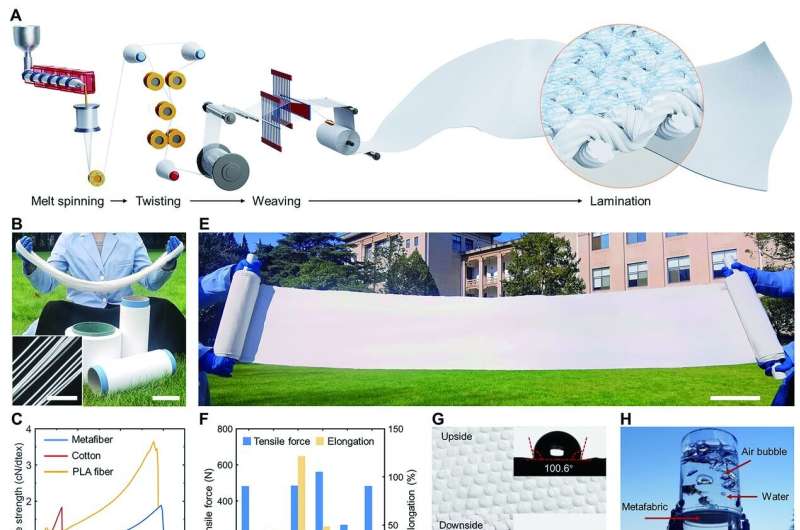
Manufacture and characterization of the metafabric. Credit: Science (2021). DOI: 10.1126/science.abi5484

A team of researchers affiliated with multiple institutions in China has developed a micro-fiber based metafabric that provides wearers with daytime radiative cooling. In their paper published in the journal Science, the group describes making their fabric and their test results.

Currently,  manufacture use breathable, light colored materials when they make clothes meant to help customers remain cool in warm temperatures. The light colors help to reflect sunlight while the breathable aspect allows air to circulate around the skin. In this new effort, the researchers sought to improve on reflective clothes by designing a material capable of allowing mid-infrared radiation (MIR) produced by the body to escape into space.

Prior research has shown that when some types of radiation are emitted from an object, that object becomes cooler. Thus, clothes that can emit radiation would become cooler, helping to cool the person wearing them. Near-infrared radiation is one such form of —it is emitted by the sun and warms the objects that absorb it. But it also cools the objects that emit it. Unfortunately, the  of near- is lost when it is emitted into the air around the —it heats up water and other particles in the air, warming the body that is surrounded by it. MIR, on the other hand, is not captured by the atmosphere; it makes its way out into space. It was for this reason that the researchers chose to focus their work on a fabric that would emit the MIR emitted by —though they also added reflective material to reflect sunlight.

The final design added titanium dioxide powder to polymer fibers to make them reflective, and adding  to allow the material to emit MIR. The researchers created a fabric using a weaving technique that allowed air to circulate.

The researchers tested their material by using it to create a vest. One side of the vest was made of cotton, the other with the material they had developed. A volunteer wore the vest outside in the sun for an hour. Measurements of his skin temperature showed it to be almost 5 degrees Celsius cooler on the new material side. The researchers also note that in addition to reducing heat, clothes made of their material would be biodegradable.


Explore further

Material scientists find new angle toward better heat transfer

More information: Shaoning Zeng et al, Hierarchical-morphology metafabric for scalable passive daytime radiative cooling, Science (2021). DOI: 10.1126/science.abi5484
Journal information: Science 

© 2021 Science X Network


Buddhist digital amulets mark Thai entry into crypto art craze

"CryptoAmulets" is the latest venture to chase the NFT art craze, with founder Ekkaphong Khemthong sensing opportunity
"CryptoAmulets" is the latest venture to chase the NFT art craze, with founder Ekkaphong Khemthong sensing opportunity in Thailand's widespread practice of collecting talismans blessed by revered monks.

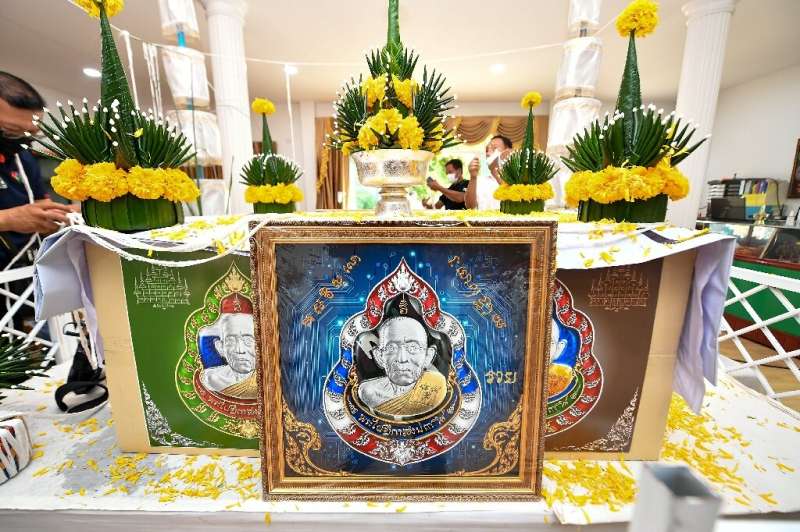
Karmic fortune has arrived to the digital art market, with a kaleidoscopic splash of colours and the face of a revered Thai monk offering portable Buddhist good luck charms to tech-savvy buyers.

Sales of non-fungible tokens (NFTs)—virtual images of anything from popular internet memes to original artwork—have swept the  in recent months, with some fetching millions of dollars at major auction houses.

"CryptoAmulets" is the latest venture to chase the craze, with founder Ekkaphong Khemthong sensing opportunity in Thailand's widespread practice of collecting talismans blessed by revered monks.

"I am an amulet collector and I was thinking about how I could introduce amulets to foreigners and to the world," he told AFP.

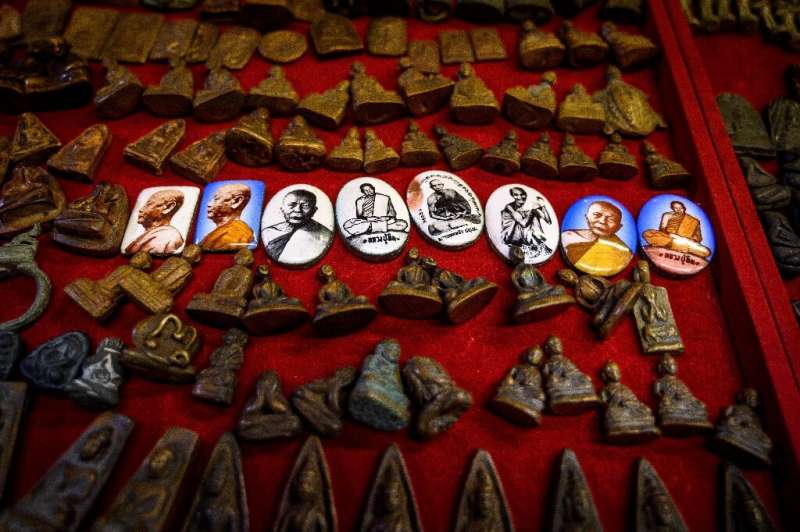
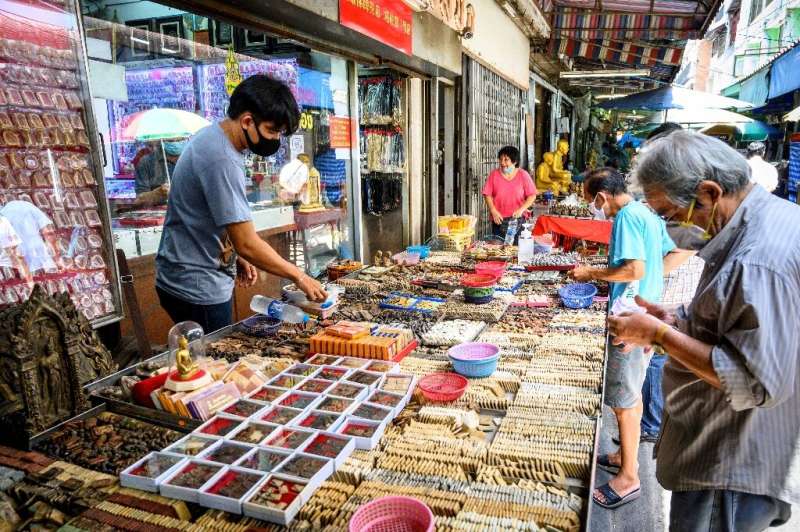
Collecting amulets and other small religious trinkets is a popular pastime in Buddhist-majority Thailand, where the capital Bangkok has a market solely dedicated to the traders of these lucky objects.

Their value can rise thousands of dollars if blessed by a well-respected monk.

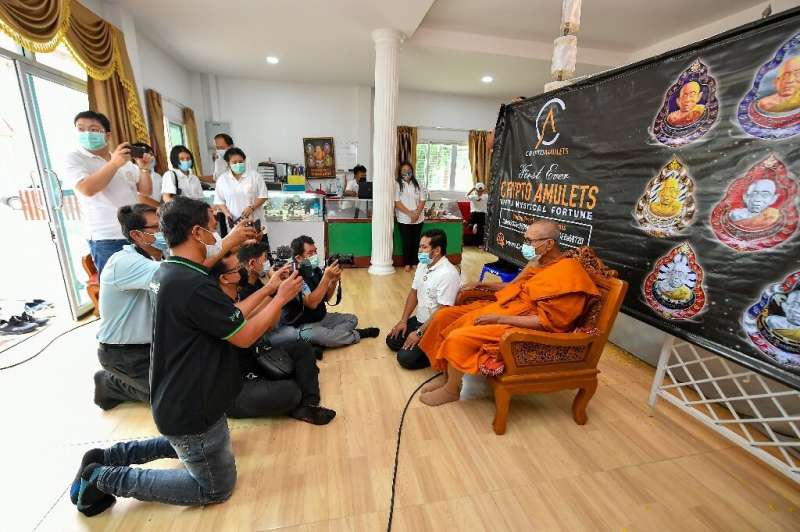
Despite being a , Ekkapong wanted CryptoAmulets to have the same traditional ceremony as a physical piece, which is why he approached Luang Pu Heng, a highly regarded abbot from Thailand's northeast.

"I respect this monk and I would love the world to know about him—he is a symbol of good fortune in business," he said.

Collecting amulets and other small religious trinkets is a popular pastime in Buddhist-majority Thailand, where the capital Bang
Collecting amulets and other small religious trinkets is a popular pastime in Buddhist-majority Thailand, where the capital Bangkok has a market solely dedicated to the traders of these lucky objects.

Authentic and blessed

Luang Pu Heng last month presided over a ceremony to bless physical replicas of the digital amulets, which show a serene image of his face.

He splashed holy water onto his own visage as his saffron-robed disciples chanted and scattered yellow petals on the altar where the portraits were mounted.

One challenge was trying to explain the concept of NFTs to the 95-year-old abbot, who assumed he would be blessing physical amulets.

"It's very hard so we just tried to simplify it," said Singaporean developer Daye Chan.

"We said to him that it's like blessing the photos."

Transforming amulets into crypto art also means the usual questions of authenticity plaguing a talisman sold in a market are eliminated, he added

"There are so many amulets being mass produced... All the records could be lost and these physical items can be easily counterfeited," Chan said.

The value of Buddhist amulets and other religious trinkets can rise thousands of dollars if blessed by a well-respected monk
The value of Buddhist amulets and other religious trinkets can rise thousands of dollars if blessed by a well-respected monk.

NFTs use blockchain technology—an unalterable digital ledger—to record all transactions from the the moment of their creation.

"For our amulet, even a hundred years later, they can still check back the record to see what the blockchain is," Chan said.

But founder Ekkaphong would not be drawn on the karmic effectiveness of digital amulets, compared to their real-life counterparts.

"They are different," he said.

'Lucky experiences'

On the CryptoAmulets website online gallery, different inscriptions are written in Thai—"rich", "lucky" or "fortunate", for instance—around each of the tokens.

They are priced on a tiered system in ethereum, the world's second-largest cryptocurrency after bitcoin, and are currently selling for between $46 and $1,840.

Sales have been slow ahead of Sunday's purchase deadline, with only 1,500 tokens sold out of the 8,000 available, and with Thais making up most of the buyers.

CryptoAmulets are priced on a tiered system in ethereum, the world's second-largest cryptocurrency after bitcoin, and are curren
CryptoAmulets are priced on a tiered system in ethereum, the world's second-largest cryptocurrency after bitcoin, and are currently selling for between $46 and $1,840.

Thai chef Theerapong Lertsongkram said he bought a CryptoAmulet because of his reverence for objects blessed by Luang Pu Heng, which he says have brought him good fortune.

"I have had several lucky experiences such as winning small lottery prizes... or being promoted on my job," said Theerapong, who works in a Stockholm restaurant.

"I did not know anything about NFTs before, but I made the decision to buy it as I respect Luang Pu Heng so much," he told AFP.

But fellow collector Wasan Sukjit—who adorns the interior of his taxi with rare amulets—has a harder time with the concept.

"Amulets need to be something physical, something people can hold," he scoffed.

"I prefer the ones I can hang on my neck."


Explore further

From tattoos to tokens at Tokyo's first crypto art show

© 2021 AFP


NASA grapples with Hubble Telescope's most serious problem in years


The Hubble Space Telescope is released into space in 1990 from the cargo bay of space shuttle Discovery. Photo courtesy of NASA | License Photo

ORLANDO, Fla., July 12 (UPI) -- NASA's Hubble Space Telescope is broken and the agency is struggling to understand the workhorse observatory's most serious problem in more than a decade.

Hubble stopped working suddenly June 13 while astronomers were using the 31-year-old telescope to examine pulsating stars 200 million miles away

NASA is trying to understand what went wrong on the orbiting telescope, without which hundreds of astronomy investigations had to be put on hold or canceled. At stake are efforts to understand galaxies, comets, stars, exoplanets and the entire universe.

Engineers have tried to restart the $1.5 billion telescope, which is about 43 feet long -- the length of a typical school bus -- and was named for astronomer Edwin Powell Hubble, who made a number of important discoveries before he died in 1953.

RELATEDScientists will peer at first galaxies with James Webb telescope

The team is preparing techniques to switch on secondary regulators that control data and power, NASA's astrophysics director Paul Hertz said in an interview. A failed piece of hardware on those regulators is the likely culprit, he said.

"Pretty much everything on Hubble, with some exceptions, is fully redundant, meaning there is a backup if something fails," Hertz said. "We can't say for sure exactly what is wrong, but we think it's a failure on a component that we're trying to isolate."

He said a solution is "likely," but he acknowledged there's a small possibility a fix from Earth isn't possible.

RELATEDNASA releases image of 'Cosmic Reef' to mark Hubble's 30th anniversary

A team of about a dozen people at NASA's Goddard Space Flight Center in Maryland will now test procedures to safely turn on backup components, which Hertz said is complicated due the remote nature of the work and Hubble's suite of delicate high-tech instruments.

NASA does not have a spacecraft designed to service Hubble, which was deployed by space shuttle Discovery in 1990, Hertz said. The telescope orbits the Earth about 340 miles high, or roughly 80 miles higher than the International Space Station.

NASA performed a similar fix to Hubble in 2008 by switching on backup components. Then, in 2009, astronauts installed new backup equipment on a final shuttle trip.

RELATEDHalo of warm gas explains massive size of the Magellanic Stream

Because the exact nature of the problem isn't known,, the agency cannot predict how long a fix will take. While some astronomy can be accomplished by other telescopes, Hubble is unique. It can make clear observations up to 15 billion light years away, farther than any other orbiting observatory.

NASA has hoped that Hubble would work in tandem with the James Webb Space Telescope, due to be launched from Florida's Kennedy Space Center in November.

The agency describes the new, more powerful telescope as a successor, not a replacement, for Hubble. That's because Hubble sees in optical light, while the James Webb telescope will see the universe in infrared light and be able to look a few hundred million light years farther than Hubble.

Hubble has enabled ground-breaking astronomy, astrophysicist Adam Reiss said.

"We were in the middle of observations of pulsating stars when it stopped working," Reiss said. He is a professor of space studies at Johns Hopkins University in Baltimore.

"It was obviously concerning but we are confident NASA will get it working again," he said. "Hubble's kind of a cat with nine lives, so to speak."

Hubble's accomplishments include observations of supernovae that allowed Reiss and Australian physicist Brian P. Schmidt to describe the expansion of the universe, work for which they were awarded a Nobel Prize.

"Hubble was absolutely critical in making some of those measurements," Reiss said. "It is sort of irreplaceable, and we're really hopeful that we'll get it back."

Canceled projects that may be rescheduled include observations of young stars, studies of galaxy centers that were to occur every other day for six months to determine variations in light and observations of the comet 288P to determine if it is a triple comet, NASA spokeswoman Alise Fischer said.

Drinking coffee reduces risk of contracting coronavirus: Study
WION Web Team
New Delhi, Delhi, India Published: Jul 11, 2021, 11:46 PM(IST)

This photo taken on December 10, 2019 shows coffee beans with marijuana in Banda Aceh, Aceh province Photograph:( AFP )


STORY HIGHLIGHTS

In addition to coffee, increasing intake of vegetables and decreasing consumption of processed meat can also help in reducing risk of coronavirus

If you are a coffee lover, scientists may have good news for you. A study has revealed that drinking a cup of coffee per day may reduce the chances of contracting coronavirus.

A study conducted by researchers from the Northwestern University has revealed that people who consume one or more cups of coffee per day have nearly 10 per cent less chance of getting infected by the deadly coronavirus, in comparison to those who are not consuming coffee at all.

"Coffee consumption favourably correlates with inflammatory biomarkers such as CRP, interleukin-6 (IL-6), and tumour necrosis factor I (TNF-I), which are also associated with Covid-19 severity and mortality," the study read.

It further added, "Coffee consumption has also been associated with lower risk of pneumonia in elderly. Taken together, an immunoprotective effect of coffee against Covid-19 is plausible and merits further investigation."

The result has been declared after analysing records of 40,000 British adults in the UK Biobank. The scientists studied the link between diet factors such as daily consumption of coffee, oily fish, processed meat, green vegetables, fresh fruit, red meat, etc and Covid.

It was also observed that consuming less processed meat and more vegetables could also cut down the chance of getting infected by COVID-19. Scientists revealed that consumption of at least 0.67 servings of vegetables (except potatoes) could help in reducing the risk of infection.

"Our results support the hypothesis that nutritional factors may influence distinct aspects of the immune system, hence susceptibility to COVID-19. Encouraging adherence to certain nutritional behaviours (eg, increasing vegetable intake and reducing processed meat intake) may be an additional tool to existing COVID-19 protection guidelines to limit the spread of this virus," said the researchers.

"Although these findings warrant independent confirmation, adherence to certain dietary behaviours may be an additional tool to existing COVID-19 protection guidelines to limit the spread of this virus," they added.
Confederate statues removed from Charlottesville parks


Workers haul away the statue of Confederate General Robert E. Lee from Market Street Park in Charlottesville, Virginia, on Saturday. Photo by Jim Lo Scalzo/EPA-EFE


July 10 (UPI) -- Confederate statues of Robert E. Lee and Thomas "Stonewall" Jackson at the center of 2017 protests turned deadly were removed Saturday from city parks in Charlottesville, Va.

The bronze statues at the center of a "Unite the Right" rally on Aug. 12, 2017, that left Heather Heyer, 32, dead after James Fields drove his car into a crowd of counter-protesters, were removed from public property as reporters watched and observers cheered.

Cheers rang out as the Lee statue was lifted from its pedestal in Market Street Park shortly after 8 a.m., secured onto a large flatbed and driven away from the park a half hour later.

Crews later repeated the removal process with the Jackson statue in Court Square Park, and crowd similarly cheered as it was removed from its pedestal shortly before 10 a.m.

RELATED House votes to remove Confederate statues from Capitol

"(Removing the statues) is one step closer to the goal of helping Charlottesville, Virginia, and America grapple with its sin of being willing to destroy Black people for economic gains," Charlottesville Mayor Nikuyah Walker said shortly before the Lee statue was removed, CNN reported.

The statues will be placed in storage and the stone base pedestals were left in place to be removed at a later date.

"During the past month, the city has solicited for expressions of interest from any museum, historical society, government or military battlefield interested in acquiring the statues, or either of them, for relocation and placement," the city said in a statement Friday.

The Charlottesville City Council voted on June 7 to remove the statues after a court battle that dragged out more than three years.

The white supremacist rally in which Heyer was killed and 19 others injured occurred after the council first voted to remove the statues in February 2017.

A circuit judge ruled shortly after the rally that state law barred the statutes' removal, according to court documents


Supreme Court of Virginia, however, overturned that decision in April 2021, ruling that the state law, which was enacted in 1997, "had no retroactive applicability."


Sea-level rise may worsen existing Bay Area inequities

STANFORD UNIVERSITY

Research News

IMAGE

IMAGE: AN AERIAL VIEW OF EAST PALO ALTO, WHICH BORDERS SAN FRANCISCO BAY. NEW RESEARCH SHOWS ABOUT HALF THE HOUSEHOLDS IN EAST PALO ALTO ARE AT RISK OF FINANCIAL INSTABILITY FROM... view more 

CREDIT: WIKIMEDIA COMMONS

Rather than waiting for certainty in sea-level rise projections, policymakers can plan now for future coastal flooding by addressing existing inequities among the most vulnerable communities in flood zones, according to Stanford research.

Using a methodology that incorporates socioeconomic data on neighborhood groups of about 1,500 people, scientists found that several coastal communities in San Mateo County, California - including half the households in East Palo Alto - are at risk of financial instability from existing social factors or anticipated flooding through 2060. Even with coverage from flood insurance, these residents would not be able to pay for damages from flooding, which could lead to homelessness or bankruptcy among people who are essential to the diversity and economic function of urban areas. The paper was published in the journal Earth's Future on July 12.

"These are workers that make a city run, they're the heart and soul of an urban operation. If you displace a significant majority too far outside the urban area, the functionality of that city crumbles," said senior co-author Jenny Suckale, an assistant professor of geophysics at Stanford's School of Earth, Energy & Environmental Sciences (Stanford Earth). "How can we make sure that we provide a future to these communities that does not entail their disintegration?"

Flood damage estimates are typically calculated by civil engineers in terms of monetary damage to physical structures. With their new model, called the Stanford Urban Risk Framework (SURF), the researchers bring a human-centered approach to risk assessment that focuses on the residents most likely to lose their livelihoods when water inundates their homes. While every household within the projected flood plain will be burdened by flood damages, the socioeconomic context determines how harmful the costs will be. In several coastal communities in San Mateo County, more than 50 percent of households will be facing financial instability.

"If you just look at the dollar amount, you're missing one major component of the problem," Suckale said. "What might be a nuisance in some communities is life-changing in other communities - it's really about the proximity to a tipping point."

The researchers determined which communities are near a fiscal tipping point by calculating their social risk, or financial instability, a metric intended to complement existing assessments of monetary risk from hazards. They overlaid coastal flood maps and building footprints with structural information, incorporated projected annual damages from sea-level rise and estimated household discretionary income based on labor and economic data in order to calculate losses based on census block groups - geographical units used by the U.S. Census Bureau to publish demographic estimates.

"It was surprising to see in the data how much more lower-income households were affected as a proportion of their income and just how unsustainable it is for those types of households to absorb these costs," said lead study author Avery Bick, a PhD student with the Norwegian Institute for Nature Research who worked on the project as a graduate student at Stanford.

Despite uncertainty over the magnitude of future climate change, researchers agree that sea-level rise will increase coastal flooding - a hazard that residents from Foster City to East Palo Alto have already experienced in the past several decades. Many of the neighborhoods with the highest social risk comprise single-parent households and are more racially diverse than the San Mateo County average, according to the research.

"Climate change isn't just about getting hotter or sea-level rise - it's literally going to change the entire fabric of society, especially if we continue to ignore it," Bick said. "This gave me a sense of how vulnerable the social fabric is to change and how we need to be proactive; otherwise it will change in favor of those that have more resources."

The researchers collaborated with local stakeholders to develop an equitable approach to sea-level rise adaptation planning. Through conversations with organizations like the San Mateo County Office of Sustainability and the U.S. Army Corps of Engineers, as well as community-based groups like Climate Resilient Communities, El Concilio and North Fair Oaks Community Alliance, they learned that what was missing from the climate discourse was a framing of dollar-amount damage relative to what people are able to pay. The team's approach involved a mind shift, from the amount of money you lose to the value of the goods and services you can no longer purchase because of the disaster, said study co-author Derek Ouyang, a geophysics lecturer at Stanford Earth.

"Any investment now can be directly linked to the resilience that prepares communities for future climate hazards, whatever they are," Ouyang said.

Because San Mateo County includes both very wealthy and low-income residents, averaging the costs of flooding in comparison to the income of its residents at the county scale "makes it look like you don't have much of a problem," Suckale said. By assessing impacts at a smaller scale, however, the researchers were able to highlight the areas of concern in a way that is more directly useful to policymakers.

The co-authors hope this new quantitative method for assessing social risk on a census block group scale can be used in other regions vulnerable to coastal flooding or for understanding different climate hazards through an equitable lens.

"I think it's useful to have a metric of social risk that is entirely agnostic of the actual hazard, because then we can just improve the ability of the household to absorb the disruption, no matter what it is," Suckale said.


CAPTION

Flooding of San Francisquito Creek in February 1998. (Image courtesy of Valley Water)

CREDIT

Image courtesy of Valley Water

Suckale is also a center fellow, by courtesy, of the Stanford Woods Institute for the Environment, an assistant professor, by courtesy, of civil and environmental engineering and a member of the Institute for Computational and Mathematical Engineering. Co-authors on the study include graduate students Alex Miltenberger and Max Evans; former graduate students Adrian Santiago Tate and Ifeoma Anyansi; former postdoctoral researcher Katherine Serafin, currently an assistant professor at the University of Florida; and Leonard Ortolano, the UPS Foundation Professor of Civil Engineering in Urban and Regional Planning, Emeritus.

The research was supported by Stanford University and the NSF Office of Polar Programs. The work is the product of the Stanford Future Bay Initiative, a research-education-practice partnership committed to co-production of actionable intelligence with San Francisco Bay Area communities to shape a more equitable, resilient and sustainable urban future.


Heat pumps on the rise after Minnesota passes new energy law

Minnesota
Credit: Pixabay/CC0 Public Domain

Air source heat pumps are on the rise in rural Minnesota and utility officials expect momentum to grow as a result of the state's new energy conservation law.

A year-and-a-half-old collaboration between the nonprofit Center for Energy and Environment and five outstate Minnesota utilities is aiming to make heat pumps mainstream by the end of the decade by offering training and other support to contractors, as well as rebate referrals and information to consumers.

The Minnesota Air Source Heat Pump Collaborative has identified rebates available to customers in nearly every utility territory ranging from $200 to $2,000. The number of rebates awarded by its members more than doubled to 3,107 in 2020 compared to 1,356 in 2019.

Utility officials expect those numbers to keep climbing, in part due to the state's recently signed Energy Conservation and Optimization (ECO) Act. The legislation frees up utilities to make comparisons between propane and other fuels when marketing heat pumps. In addition, it allows utilities to count  from fuel-switching toward their  targets.

"The single biggest idea here from a policy standpoint is this bill says if you're reducing total , you're doing energy efficiency even if that means electricity use goes up," said Darrick Moe, executive director of the Minnesota Rural Electric Association. "The law pushes past the fuel-switching prohibition."

Gas and electric utilities are now essentially allowed to poach each others' customers, though the economics suggest most conversions will flow toward electrification. Utilities are also capped on the amount of energy savings they can claim through fuel-switching, which can't exceed 0.55% of the requirement.

The fuel-switching change applies statewide, but there's more interest in Greater Minnesota, where many customers rely on relatively expensive propane heating and the switch to heat pumps can produce quick cost and energy savings.

"It's kind of a no-brainer in houses with propane furnaces," said Ben Schoenbauer, senior research engineer at the Center for Energy and Environment, which has conducted a wide range of research on heat pumps that shows they can save customers 30% to 55% when they replace propane or electric resistance heat.

The Air Source Heat Pump Collaborative emerged after a 2018 study by the Center for Energy and Environment showed the high potential of heat pumps to produce energy savings this decade, according to program development manager Emily McPherson. Members include Minnesota Power, Southern Minnesota Municipal Power, Great River Energy, Missouri River Energy Services, and Otter Tail Power.

The recent rise of heat pumps in those territories is a result of more generous rebates, as well as supply chain problems in the air conditioning sector and more people working at home doing improvement projects. McPherson said heat pumps continue to be popular in rural areas and she hopes the ECO Act "will help continue the momentum."

Christopher P. Schoenherr, government relations and chief external affairs officer for Southern Minnesota Municipal Power Agency, said the key to growing the market will be educating contractors. That's why the collaborative is offering free online training to help HVAC professionals learn the technology.

"We're already seeing the interest start to build," he said. "Outreach to contractors and other trade allies is going to be the key to really making this take off because they're the folks that are going to be talking directly to the customer."

Jeff Haase, manager of member services at Great River Energy, said the entry point for heat pumps comes for many homeowners when they are looking for a new air conditioner. Then they discover a heat pump can both cool and heat a home for most of the year. "You're looking at it through the lens of the furnace, but you're also looking at it through the lens of the air conditioner," he said.

In northern Minnesota, homeowners could see great value in using heat pumps for cooling on the few hot summer days in that part of the state, and also use it to heat their homes during the fall and spring, which coincides with when wind energy is widely available. Customers generally need just one propane tank to get through winter, and they can buy it off-season when prices are cheaper than January or February.

The heating-cooling combination led Mark Nelson to replace the propane heating and cooling system in his Pine City home with a heat pump and a new propane furnace. He used a rebate to reduce the cost of the technology and subscribed to a heat pump electricity rate offered by East Central, where he works as the manager of government and business relations.

The heat pump keeps his home warm until temperatures drop below 25 degrees Fahrenheit, when the propane furnace starts up. His fuel consumption dropped annually from 1,200 gallons to 500 gallons. The electricity rate and lower propane use save $300 to $400 yearly and the new system runs quieter, saves money and provides as much comfort, "if not more," he said, than the old system.

Newer, more expensive cold climate models can heat well below zero while mini-split air source heat pumps, popular for air conditioning, heat down to 25 or 30 degrees. While the cold climate air source heat pump technology manages subzero temperatures, the appliances generally cost several thousand dollars more than fossil fuel furnaces.

Moe, of the rural utilities association, said utilities that already have heat pump rebate programs may decide to increase those incentives now that they can count the savings toward their energy conservation targets. He sees a likely boost in air source heat pump sales rather than a giant leap, though.

"I'm not saying a year from now everybody's going to be using heat pumps, because the reality is it is kind of a transition that's already happening, and now the program's better equipped to be a tool for that," he said.

The replacement of propane and natural gas with  only delivers a 5% decline in carbon emissions. As the state's utilities transition to cleaner power, though, the carbon reduction will increase.

"Just looking over what the utilities plan to do in the next 10 to 25 years with (closing) coal plants it's going to be a big, a big win," Schoenbauer said. "Those changes will happen within the lifetime of a   installed today."


Explore further

Carbon heat pumps smart option for hotels in cold climates

© 2021 The Associated Press. All rights reserved. This material may not be published, broadcast, rewritten or redistributed without permission.

Creating smarter, healthier transportation systems

transport
Credit: CC0 Public Domain

NC State assistant civil engineering professor Eleni Bardaka grew up in Athens, Greece, watching her mom take public transportation to work every day and eventually finding her own personal independence using multiple options to get around the modern version of the ancient city.

Throughout her educational career—Bardaka earned a civil engineering degree from the National Technical University of Athens, a master's degree in economics from Purdue and a Ph.D. in  from Purdue—she has devoted her time to developing alternative  that don't necessarily rely on the modes of transportation that evolved in the United States following World War II.

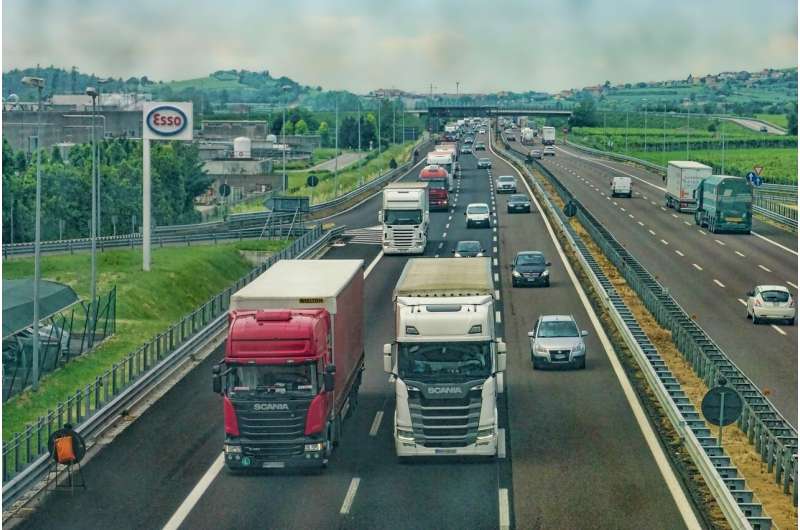
For three-quarters of a century, U.S. residents have been untethered on the road with their personal vehicles. How, though, do you unclog the traffic those vehicles create, sometimes like a cholesterol-filled artery? How do you get people around town and from place to place, not only to relieve traffic but also to get people moving on their own?

Bardaka came to NC State from Purdue in 2017 to tackle those issues, particularly in her undergraduate/graduate class Transportation Systems Analysis (Civil Engineering 401/501), where she includes alternatives to just widening a road or putting in an additional lane. Along with her undergraduate class, Introduction to Sustainable Infrastructure (CE 297), Bardaka is cognizant that transportation planning has a huge impact on a community's physical, mental and sustainable well-being.

In a country where even most large and midsize cities, like those in North Carolina, rely on personal vehicles, transportation systems are built more with suburban development in mind, not public transportation.

"It wastes a lot of resources and creates a lot of traffic," Bardaka says. "So we have to get smarter with how we build our systems."

The stigma of public transportation

One of the biggest ways to tackle the issue is to remove the stigma of public transportation, something that was not part of her Greek background. In the U.S., however, public mass transportation planning is often devoted to large interstate projects, loops and bypasses instead of light rail or other systems that move larger numbers of people at one time.

And those roadways can create division, even while they offer solutions.

"We talk a lot about how interconnected the transportation system and societal systems are," Bardaka says. "How do we make decisions about how we get somewhere? In terms of building something, investing in something, these decisions affect communities, sometimes in a positive way. But we also have a lot of examples where these decisions are also segregating, dividing and harming communities."

One of her recent students, Adam Schmidt, spent the better part of the spring working on a project that looked at how the gentrification of uptown Charlotte followed the city's installation of its Lynx light rail system, a 19-mile, 26-stop line that opened in 2007.

"What I liked from the beginning is that this is the only transportation class I had ever taken that wasn't specifically focused on cars," Schmidt says. "This class is about how people decide how they get to work or go shopping or things like that."

It was foreign territory to Schmidt, who grew up outside of Greenville, North Carolina, where public transportation was about as scarce as authentic baklava.

"It does start with the stigma that gets ingrained early," Schmidt says. "What makes people want to ride the bus and take public transportation? For me, the class provided a window into how people make those decisions."

New ways to travel

And there is a specific wellness aspect that comes with that, as people learn new ways to travel and commute. Bardaka concedes that hers is not at all a design course, but a vehicle for thought about new ways to move.

"I mostly educate the students about how to get a broader perspective on the impacts of everything we do in transportation," she says. "I think there are a lot of connections on the different perspectives of wellness, like physical wellness, social and community wellness. So there is a behavioral component in which we consider how to design infrastructure, how to design municipal and state policies and how we place infrastructure components.

"As we do those things, it will lead to healthier communities. Future engineers have the responsibility to consider the wellness of individuals and communities."


Explore further

CDC changes mask rules for fully vaccinated people using public transportation