Monday, July 12, 2021

POSTFORDISM = LATE CAPITALI$M
Vietnam's Vinfast to launch electric cars in US, Europe next year

Issued on: 12/07/2021 - 14:08Modified: 12/07/2021 - 14:06
Vinfast sold around 30,000 vehicles last year Manan VATSYAYANA AFP/File

Hanoi (AFP)

Vietnam's first homegrown car manufacturer Vinfast said Monday it will launch two new electric vehicle models early next year in North America and Europe, as it pushes to enter the lucrative but crowded market.

The carmaker is a subsidiary of Vietnam's largest private conglomerate, Vingroup, which is owned by the country's richest man, a press-shy billionaire who started his career selling dried noodles in Ukraine.

The company said Monday it had officially begun operations in the US, Canada, France, Germany and the Netherlands and had recruited staff and opened offices in these "key markets".

All the vehicles will be made in Vietnam.


It aims to launch its two new electric car models -- the VF e35 and VF e36 -- in March 2022, the company added.

But Vinfast will face stiff competition, especially when going up against big-name brands including Volkswagen and Elon Musk's Tesla.

To prepare for its entry into global markets, the company said it had recruited experts from firms including Tesla, BMW and Toyota.

Domestically, Vinfast has already sold vehicles that include sedan and SUV models, along with e-scooters and even electric buses.

It sold around 30,000 vehicles last year.

The firm introduced its domestic electric car model -- the VF e34, costing about $29,000 -- in January and has received around 25,000 pre-orders, the company says.


But Vinfast has made clear it has global ambitions.

In February it said it had received a permit to test autonomous vehicles on public streets in California, and it would begin selling two of its three models with autonomous features in the US, Canada and European markets from 2022.

The cradle-to-grave Vingroup empire includes housing, resorts, schools, hospitals and shopping malls.

Vingroup CEO Pham Nhat Vuong is worth an estimated $7 billion, according to Forbes.


© 2021 AFP


Director Haroun in race for Palme d'Or: 'Chad's feminist revolution will come'

Set in the outskirts of N'Djamena, Chad, the film "Lingui", by director Mahamat-Saleh Haroun, tells the story of an adolescent whose unwanted pregnancy puts her in conflict with her country's laws and traditions. Haroun lives in France, but most of his films were produced in Chad, his country of birth, which he left during the unrest of the 1980s. He spoke to FRANCE 24.


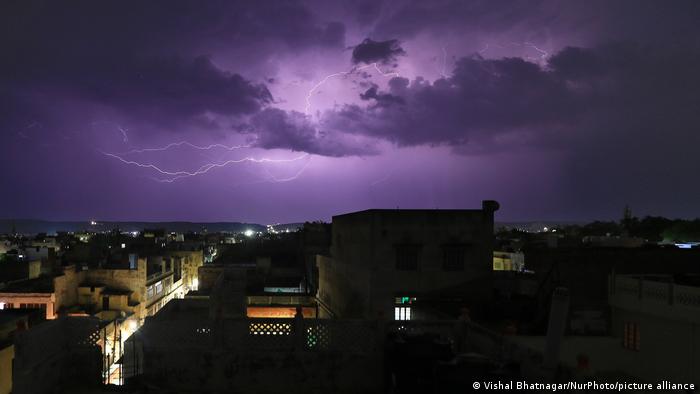
India: Lightning strikes kill at least 50 people

Lightning strikes have killed at least 50 people in the states of Rajasthan, Uttar Pradesh and Madhya Pradesh. In one incident, 11 people were killed while taking a selfie at a historical fort.


Over the past 24 hours, lightning strikes have killed dozens of people in states across India

Lightning strikes killed more than 50 people across several Indian states authorities said on Monday.

Thunderstorms are common in the country at the start of the monsoon season and kill hundreds each year. 

What happened?

In one case, a group of 11 people were killed due to lightning in the western state of Rajasthan, while they were taking selfies near watchtowers at the 12th-century Amer Fort. 

"It was already raining when the people were there. They huddled in the towers as the rainfall intensified. Some of the injured were left unconscious by the strikes. Others ran out in panic and extreme pain," Saurabh Tiwari, a senior police officer told AFP news agency. 

Indian media outlets reported at least 42 others were killed in the northern state of Uttar Pradesh, with some deaths also being reported in the central state of Madhya Pradesh. 

Prime Minister Narendra Modi announced that funds have been released to give to the injured and next of kin of the deceased. 

The state government of Uttar Pradesh also announced financial aid for those whose livestock had been affected by the storms.

More dangerous conditions expected

India's Meteorological Department warned that more lightning strikes may occur within the next two days.

According to data from 2019, about 2,900 people were killed due to lightning that year. 

The southwest monsoon winds, which bring rainfall to India from June to September, are yet to reach the northern parts of India, including capital Delhi. 

Covid triggered biggest increase in hunger in decades: UN

Issued on: 12/07/2021 - 

More people needed to turn to soup kitchens and food banks as pandemic restrictions forced them from their jobs NORBERTO DUARTE AFP/File


Paris (AFP)

The Covid pandemic caused an estimated 18 percent increase in the number of people facing hunger, a UN report released on Monday found, dealing a massive setback to efforts to ensure everyone has access to food.

The world was already off track to achieve its goal of eradicating hunger by 2030, but the report warned that Covid had now sent it back in the wrong direction.

The "economic downturns as a consequence of Covid-19 containment measures all over the world have contributed to one of the largest increases in world hunger in decades," said the annual food security and nutrition report compiled by several UN agencies.

Although the full impact of the pandemic cannot yet be determined, the report estimated around 118 million more people faced hunger in 2020 than in 2019, an increase of 18 percent.

The rise in moderate or severe food insecurity was equal to the previous five years combined.

"Nearly one in three people in the world (2.37 billion) did not have access to adequate food in 2020 -- an increase of almost 320 million people in just one year," the report said.

One in 10 people were undernourished.

The increase in hunger was widespread as the economic downturn affected almost all low- and middle-income countries.

But the biggest impact was in countries where there were also climate-related disasters or conflict, or both.

"The Covid-19 pandemic is just the tip of the iceberg," said the report.

"More alarmingly, the pandemic has exposed the vulnerabilities forming in our food systems over recent years as a result of major drivers such as conflict, climate variability and extremes, and economic slowdowns and downturns."

The UN agencies said there is a unique opportunity to reverse the dynamic this year however, thanks to two major food and nutrition summits plus the COP26 meeting on climate change.

The report was jointly published by the Food and Agriculture Organization of the United Nations (FAO), the International Fund for Agricultural Development (IFAD), the United Nations Children's Emergency Fund (UNICEF), the UN World Food Programme (WFP) and the World Health Organization (WHO).

© 2021 AFP

Solar energy heats up job market across the globe

Millions of workers stand to benefit from new jobs in the solar industry. But experts still see challenges that could overshadow this golden opportunity.

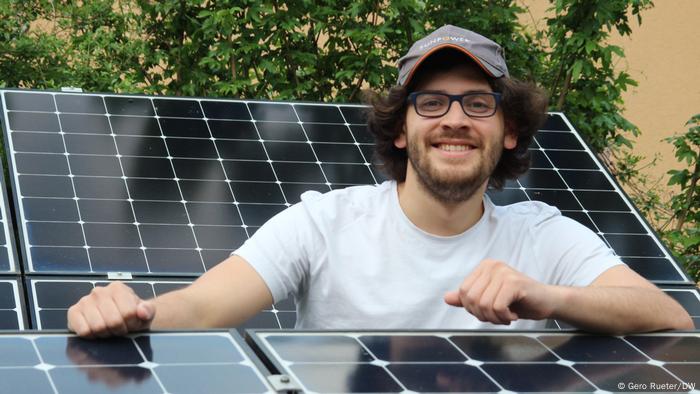
Fabian Rojas is part of a growing wave of workers jumping into a booming solar market

"I really like my job, I'm excited and I'm learning a lot," says Fabian Rojas.

The 26-year-old Argentinian has been working since last October for a small company near the western German city of Cologne that installs solar panels on roofs.

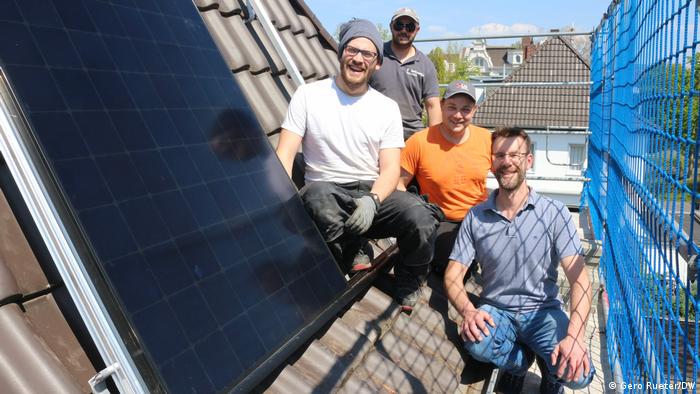
The company's CEO René Hegel, who's been selling photovoltaic systems since 2008, hired the Argentine engineer, who was visiting Germany at the time. In this way, the company is able to meet at least part of rapidly increasing demand in the region.

"We have many inquiries, I put together at least six offers a week and we already have orders for the next four to five months," Rojas told DW. "Customers want to generate their own electricity, charge their electric cars and reduce consumption from the grid. This also contributes to climate protection."

Rojas talks to customers, customizes photovoltaic systems and sometimes helps install them on rooftops. 

"Fabian is a fast learner," Hegel says. "In the next few months he will gain more practical experience, and then things will get even better."

German solar industry: help wanted 

Hegel is planning on expanding his four-person team to meet the increasing demand for solar energy, which is again picking up following a boom and bust of solar in the early 2000s.


Rojas (l) and Hegel (r), along with the rest of the team, take a quick break for a photo

In Germany, solar power systems with a total capacity of 5 gigawatts (GW) were installed in 2020, and that capacity is expected to grow. Studies indicate that expansion would have to be increased six-fold — to 30 GW per year — in order to keep warming to 1.5 degrees Celsius (2.7 degrees Fahrenheit) this century.

To achieve this, more manpower is needed in the solar industry, says Günther Haug, manager at BayWa r.e. The Munich-based company is building large solar and wind farms worldwide, and continues to grow. In 2017, BayWa r.e. had 1,100 employees; today, there are 2,700.

"We are looking for engineers, financial experts, skilled personnel for project development and for people with technical training for customer service," said Haug.

To find and retain personnel, Haug says the company is "willing to make a considerable financial investment and also train applicants ourselves, because there aren't enough skilled workers." 

"There are presently about 50,000 jobs in photovoltaics in Germany," says Volker Quaschning, a professor of renewable energy at the University of Applied Sciences in Berlin (HTW). He says that many people are now looking for new jobs because of the coronavirus crisis.

"We have to be smart about how we approach this, we need to start training programs to have enough skilled workers. Otherwise, the energy transition will fail due to a lack of personnel," Quaschning told DW.

Solar jobs to exceed 60 million worldwide  

As of 2019, around 11.5 million people worldwide were working in the renewable energy sector, according to a report by the International Renewable Energy Agency (IRENA). More than a third of them worked in photovoltaics.


Companies building solar parks, like this one in southern Spain dubbed 'Don Rodrigo 2,' are desperately searching for workers

IRENA holds the view that investments to revive the economy and job market as countries emerge from the COVID-19 crisis should prioritize the energy transition.

"We estimate that every dollar spent in this field creates three times more jobs than in the fossil energy sector," says IRENA Director General Francesco La Camera. "More and more policymakers are recognizing the job potential."

Solar power is now the cheapest means of generating electricity, which is why researchers expect it to make a global breakthrough as the primary source of energy in the future. Currently, there are photovoltaic systems with a total capacity of about 850 GW installed worldwide. They produce roughly as much electricity as 190 nuclear power plants.

Studies estimate that at least 60,000 GW of solar power will be needed to achieve a global, climate-neutral energy supply. To do this, the industry would need to hire more than 60 million workers in the next decade for module production and assembly, as well as system maintenance.


China is currently leading the way in solar production, with more than 2.2 people working in both production and installation of solar panels

Curiosity can lead to a new job in the energy sector

Fabian Rojas, the Cologne-based engineer, is fascinated by solar and wind power, and new energy-saving technologies. He regularly exchanges ideas about these topics via video call with a friend from Argentina who is setting up solar power systems in the United States.

"Solar power is needed worldwide, and that's why there's a global demand for workers in this field," Rojas said, adding that this was true for Europe as well as for Asia and South America. 

To anyone who wants to work in the industry, Rojas recommends being proactive.

"Educate yourself, do an internship. Luckily, there's a lot of information on the internet, too."

In the solar sector, he sees many opportunities to work in other places in the world and to share his knowledge: "I'm excited to see who will come knocking on our door next."

This article was adapted from German.


Euro 2020: Racism rears its ugly head — again

To add insult to England's injury of losing the final, a number of Black England players have been subjected to racial slurs. Condemnation has been swift, but will it lead anywhere?


Police inquiries are ongoing into the racial vandalism of this mural of England player Marcus Rashford

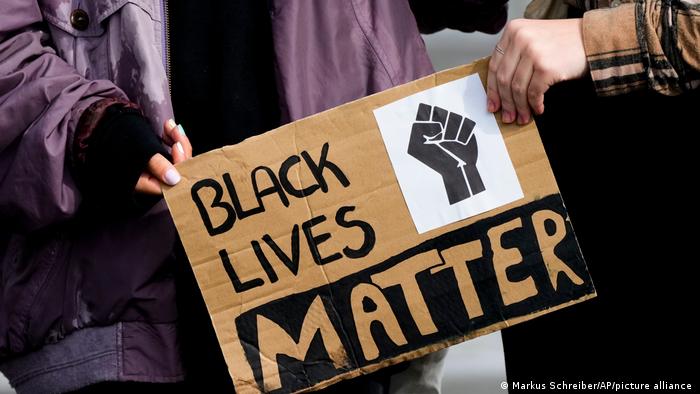
One of the lasting and most compelling images of the Euro 2020 was that of England players taking the knee before their games to highlight racial inequality and discrimination.

Those efforts were undone in the early hours of Monday morning.

As if losing the Euro 2020 final to Italy wasn't bad enough for most English fans, the country woke up to the news of online racist abuse leveled at the Black players Marcus Rashford, Jadon Sancho and Bukayo Saka, who missed their penalties.

Condemnation was swift and strong across the board. The Football Association (FA) issued a statement shortly after the game denouncing the incidents.

"The FA strongly condemns all forms of discrimination and is appalled by the online racism that has been aimed at some of our England players on social media," the statement said.

"We could not be clearer that anyone behind such disgusting behavior is not welcome in following the team. We will do all we can to support the players affected while urging the toughest punishments possible for anyone responsible."

Prime Minister Boris Johnson also tweeted his condemnation and urged police to take strong action and to implement "the toughest punishments possible."

A Metropolitan Police tweet said: "We are aware of a number of offensive and racist social media comments being directed towards footballers following the #Euro2020 final. This abuse is totally unacceptable, it will not be tolerated, and it will be investigated."

Police in Greater Manchester were called to investigate reports of a defaced mural of Rashford in the Manchester suburb of Withington.

A Twitter spokesman said on Monday that the platform had removed over 1,000 abusive posts and permanently suspended a number of accounts.

An ongoing problem

Racism in football is, unfortunately, a ubiquitous phenomenon, and Black players are targeted around the world, whether in amateur or professional leagues.

In one of England's Euro 2020 qualifiers, some of England's Black players were subjected to racist abuse by a section of Bulgaria fans.

The sounds of monkey chants and images of fans performing Nazi salutes were broadcast around the world. At the time, many observers hoped that the incident would be a pivotal wake-up call in football's ongoing fight against racism. However, the response by UEFA, Europe's governing football body, was seen as lackluster at best. It handed out a fine of €85,000 ($101,000) and banned fans from attending the next match. Given that Bulgaria was in the midst of another ban for a similar incident, many observers questioned UEFA's handling of the matter.

England is often referred to as the birthplace of football — a game that is supposed to have a unifying impact on all walks of society. So why is it such a problem in England?

"Despite the liberalizing of English (and British) society that started in the 1960s, there remains, arguably, an atmosphere of spiteful aggression within a significant sociocultural constituency. Pre-social media, the tabloids tended to pander to this, and now social media provides a perfect conduit for its expression. In the last 50 years at least, football fandom has been tainted by this mentality," Paul Davis, senior lecturer in the sociology of sport at the University of Sunderland, told DW via email.

Systemic racism

Although more and more footballers are speaking out against racism and describing the impact it has on their professional and personal lives, they are not always being heard. Chris Grant, a board member of Sport England, a non-departmental public body under the UK's Department for Culture, Media and Sport that tackles inequalities in sport, has noted that the "systemic" nature of racism across society and politics fuels racism in sport.

A study commissioned by the Professional Footballers' Association Charity last year found that 43% of Premier League players have experienced online racist abuse.

The FA has launched a myriad of campaigns to combat racism. Much of it, you could argue, has been too little, too late. Davis says there's only so much it can do. 

"I think the FA are doing a lot, and it is not clear what more they can do. In the end, it is about changing the hearts and minds of some people. If people, for whatever reasons, enjoy othering, abusing and spiting others, the FA have a hard job trying to change that," he said.

Some might argue that the negative reactions to a gesture like taking the knee — the argument being that it's a political statement that has no place in sports — inevitably nullify other attempts by politicians to crack down on racism. Davis says that's not the case.

"That effect is not inevitable. Taking the knee is a precise practice with a precise background. The naysayers have their reasons for rejection of the practice. There are different reasons, and it might be that some or all of them are questionable. However, the controversy around taking the knee does not entail that other anti-racism initiatives in sport and elsewhere are doomed," he said.


UN rights boss urges reparations for slavery, racism

Financial and other measures with the aim of addressing past racism, colonialism and slavery would "transform our future," according to Michelle Bachelet.


The death of George Floyd sparked the UN report on police violence and racism more generally

The UN human rights chief on Monday urged countries to take "a wide range of reparations measures" to address the legacies of slavery, colonial rule and racial discrimination.

Michelle Bachelet made the comment while presenting a report into racism worldwide and its impact on people of African descent.

The report was called for following the murder of Black man George Floyd by a white US police officer in 2020.

Key points raised by the UN rights chief

Research "could not find a single example of a state that has comprehensively reckoned with its past or accounted for its impacts on the lives of people of African descent today," Bachelet said.

This was despite some attempts by means of apologies, litigation and memorializing.

Bachelet recommended that countries "create, reinforce and fully fund comprehensive processes — with full participation of affected communities —  to share the truth about what was done, and the harms it continues to inflict."

Bachelet said the process would prove "crucial to healing our societies and providing justice for terrible crimes" and would "transform out future.

US official welcomes the report

The US deputy ambassador in Geneva, Benjamin Moeling, welcomed the "insightful and forthright report" in a video statement to the council.

"The United States is addressing these challenges, at home and abroad, honestly and transparently by tackling the underlying issues of racial discrimination and the use of excessive force in policing," he said.

Meanwhile, a debate continues to polarize the US about the idea of reparations for slavery and following societal and judicial discrimination.

kmm/msh (AFP, AP) 


OF MEAT AND MEN
Men are ‘killing the planet’ because ‘toxic masculinity’ means they won’t go veggie


Harry Pettit
Deputy Technology and Science Editor
11 Jul 2021

MANLY blokes are killing our planet by eating too much meat and shunning vegetarianism, according to a new study.

A survey of more than 800 people found that self-professed "masculine" men eat more beef and chicken than feminine chaps.


'Manly' blokes eat more beef than women and feminine men
Credit: Alamy

They're also less inclined to switch to a plant-based diet than their unmanly counterparts, researchers at UCLA showed.

Writing in the journal Appetite, they blamed the trend on the widespread perception that "real men eat meat".

"Meat is seen as a traditionally masculine food," study author Daniel Rosenfeld told The Sun.

"Men who eat vegetarian diets are in fact seen as less masculine."


Meat and dairy production accounts for 14.5 per cent of global greenhouse gas emissions
Credit: Getty

According to the research, this stereotype must change if humanity is to reduce its meat intake to save itself from catastrophic climate change.

Meat and dairy production contribute heavily to global warming, accounting for 14.5 per cent of greenhouse gas emissions worldwide.

"Reducing the amount of meat we eat cuts down on water usage, water pollution, and greenhouse gas emissions," Rosenfeld said.

"Of all meats, beef is especially threatening to our planet. Its production uses up the most water and releases the most greenhouse gases into the atmosphere.


"If we can overcome the stereotype that 'real men eat meat', then we can likely reduce how much beef men eat and ultimately improve both human and planetary health."

Previous research has shown that, compared to women, men eat more meat and are less open to becoming vegetarian.

For their study, the UCLA team set out to investigate how men's beliefs about their own masculinity could explain how much meat they eat.

They surveyed 813 adult lads to see whether their manliness impacted how much they ate four meats: Beef, pork, chicken and fish.

Participants were asked to respond on a scale from one (very feminine) to seven (very masculine) to statements such as "I consider myself as …", and "traditionally, my outer appearance would be considered as …".

Their self-identified "masculinity" was then matched up with their eating habits.

The researchers found that masculine men ate more beef and chicken – but roughly the same amount of fish and pork – as feminine blokes.

Manly men were also more likely to report that they had no intention of becoming vegetarian in future.


"Meat is stereotyped as a manly food, so that makes men want to eat more meat - it's a way for them to feel masculine," Rosenfeld said.

The results also showed that men in general ate more beef than women, of whom 893 were surveyed by the team.

In the U.S. and U.K., only about five to 10 per cent of the population is vegetarian.

The research is likely to reignite the debate surrounding our consumption of meat and its impact on the health of the planet.


The meat industry contributes to global warming because cows and other animals produce methane, a potent greenhouse gas.

And while groups like Greenpeace highlight our diet's effect on the climate as a reason to quite meat, it's important to give people a choice.

The meat industry is also not the biggest greenhouse gas emitter. Transportation is responsible for 29 per cent of emissions, while electricity generation accounts for 25 per cent.
S. Africa to deploy army to quell violence as former president Zuma faces court


Issued on: 12/07/2021 - 


South Africa Police Services (SAPS) officers stop looters in central Durban, on July 11, 2021. © AFP

Text by: NEWS WIRES

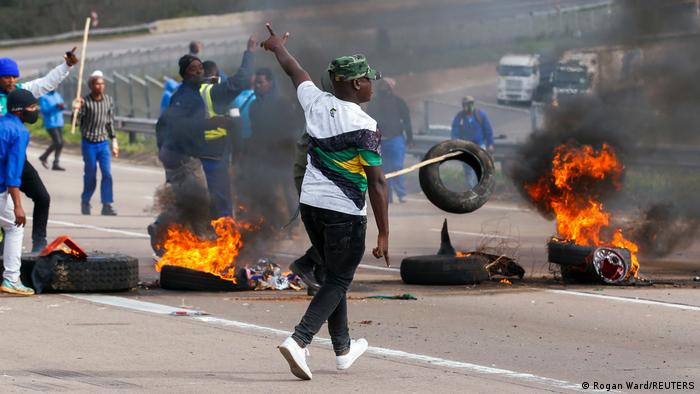
South Africa will deploy soldiers to quell violence that erupted in the wake of former president Jacob Zuma’s jailing, the military said on Monday, after days of riots and looting left at least six people dead.

Disturbances worsened as Zuma challenged his 15-month prison term in the country’s top court after weekend unrest by pro-Zuma protesters in his home province of KwaZulu-Natal (KZN) and Gauteng, where the country’s largest city Johannesburg is located.

Police said 219 arrests had been made, as opportunistic criminals appeared to take advantage of the anger some feel over Zuma’s incarceration to steal and cause destruction.

Any confrontation with soldiers risks fuelling claims by Zuma and his supporters that they are victims of a politically-motivated crackdown by his successor, President Cyril Ramaphosa.

The rand fell sharply after the military announced its deployment, extending losses to trade down 2% against the U.S. dollar by 12.30 p.m. local time (1030 GMT). Analysts said, however, that the slump was also partly driven by fears over the economic impact of the COVID-19 pandemic.

Zuma, 79, was sentenced late last month for defying a constitutional court order to give evidence at an inquiry investigating high-level corruption during his nine years in office until 2018.

The decision to jail him resulted from legal proceedings seen as a test of post-apartheid South Africa’s ability to enforce the rule of law, including against powerful politicians.
Six killed, scores arrested in South Africa protests after Zuma jailing, govt says


01:47

“The South African National Defence Force has commenced with pre-deployment processes...to assist law enforcement agencies deployed in Gauteng and KwaZulu-Natal provinces...to quell the unrest that has gripped both in the last few days,” the military said in a statement.

“The duration (of the deployment) and number of deploying soldiers will be determined based on the assessment of the situation on the ground,” it added.

In a virtual hearing, Zuma’s counsel asked the constitutional court on Monday to rescind his jail term, citing a rule that judgments can be reconsidered if made in the absence of the affected person or containing a patent error.

Legal experts say Zuma’s chances of success are slim.

Fires

Footage shot by local TV channels on Monday showed a mall in Pietermaritzburg in KZN on fire, with a nearby highway closed to prevent further violence. Another mall in Vosloorus, Gauteng, was set alight amid vandalism and rioting, according to the TimesLIVE website.

Government intelligence agency NatJOINTS said the bodies of four people had been found - at least two of them with gunshot wounds - in Gauteng. Two deaths had occurred in KZN, and all six were being investigated.

Zuma’s imprisonment marks a significant fall from stature for a leading figure in the liberation-movement-turned-ruling party, the African National Congress (ANC). He was once jailed by South Africa’s pre-1994 white-minority rulers for his efforts to make all citizens equal before the law.

Ramaphosa said on Sunday the violence was damaging efforts to rebuild the economy after the COVID-19 pandemic.

The corruption inquiry that Zuma has refused to cooperate with is examining allegations that he allowed three Indian-born businessmen, Atul, Ajay and Rajesh Gupta, to plunder state resources and peddle influence over government policy. He and the Gupta brothers, who fled the country after his ouster and are believed to be living in Dubai, deny wrongdoing.

Zuma also faces a corruption case relating to a $2 billion arms deal in 1999 when he was deputy president. He denies the charges in that case.

(REUTERS)

South Africa: Violent rioting grips cities in wake of Zuma jailing

Johannesburg has been rocked by protests against the imprisonment of former president Jacob Zuma, who was jailed for snubbing anti-corruption investigators. Zuma will seek to annul his prison sentence on Monday.


South African police have arrested dozens of people for looting and rioting in Johannesburg and KwaZulu-Natal province, where Zuma is being held

Violent rioting erupted across several South African cities on Sunday following the jailing of former President Jacob Zuma.

The violence was concentrated mainly in Zuma's home province of KwaZulu-Natal, where he began serving a 15-month sentence for contempt of court on Wednesday. But violence also spread to Gauteng province on Sunday, which includes Johannesburg, South Africa's largest city.

Shops were looted, and protesters blocked roads as they marched through the city.

The body of a 40-year-old man was recovered from a shop in Johannesburg that had been burned and police are investigating the circumstances, according to a statement by police Major General Mathapelo Peters.

At least three police officers were injured when trying to arrest looters and one was hospitalized, the statement added.

Police on Sunday said they had arrested 37 people in KwaZulu-Natal and 25 in Johannesburg over the previous two days.

Top court to review Zuma's jail term

Zuma has been jailed for defying a court order to testify before a state-backed inquiry probing allegations of high-level graft during his term as president from 2009 to 2018. The inquiry was set up in his final weeks in office.

Zuma's appeal to be released from the Estcourt Correctional Center was rejected by a regional court on Friday.

The former president, who denies there was widespread corruption under his leadership, will seek to have the ruling set aside on Monday with the Constitutional Court — South Africa's highest court — on the grounds that it was made in his absence.

Parliament's presiding officers on Sunday said that they were "sympathetic to the personal difficulties confronting former President Jacob Zuma. However, the rule of law andsupremacy of the constitution must prevail."

President Cyril Ramaphosa, meanwhile, said there was no justification for violence and that it was hampering South Africa's efforts to rebuild the economy amid the COVID-19 pandemic.

6 dead in South Africa riots over jailing of ex-leader Zuma
By ANDREW MELDRUM and MOGOMOTSI MAGOME


1 of 8

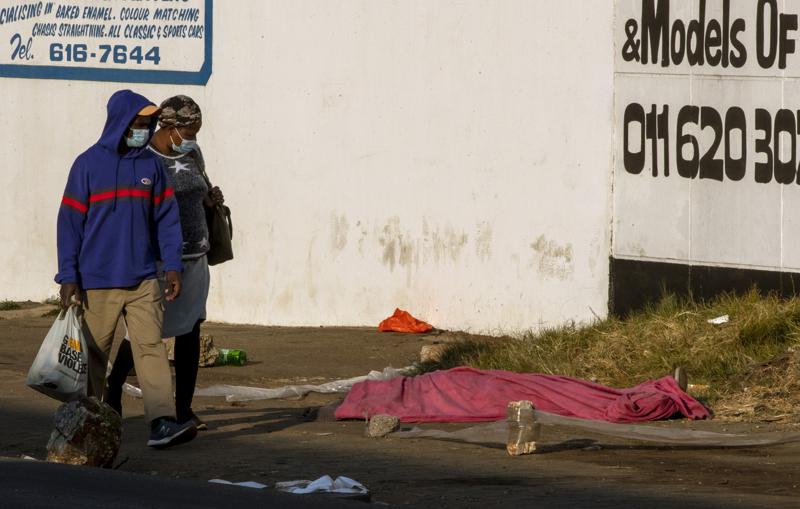
A couple walks past a body covered with a blanket after protests in the area, in Johannesburg, South Africa, Sunday, July 11, 2021. Protests have spread from the KwaZulu Natal province to Johannesburg against the imprisonment of former South African President Jacob Zuma who was imprisoned last week for contempt of court. (AP Photo/Themba Hadebe)


JOHANNESBURG (AP) — Rioting triggered by the imprisonment of former South African President Jacob Zuma escalated Monday as shopping malls in Johannesburg were looted, major roads were blocked by burning tires and the police and military struggled to contain the violence.

The unrest started last week in KwaZulu-Natal province after Zuma was imprisoned for contempt of court. What began as fairly small-scale blocking of roads in Zuma’s home area intensified and spread to Gauteng, South Africa’s most populous province, including Johannesburg, the country’s largest city.

At least six people have been killed and more than 200 arrested, according to a police statement issued Monday.

Soldiers have been deployed to help the police. President Cyril Ramaphosa was to address the nation later Monday. He appealed for calm Sunday night and vowed that police would crack down on those breaking the law, but the riots worsened Monday.

Looting of retail centers broke out in several areas of Johannesburg, including Benmore, Jeppestown, Vosloorus, and Soweto, where the Jabulani and Dobsonville malls were hit.

Retail stores in Alexandra, east of Johannesburg, were also affected, and journalists covering the riots for the public South African Broadcasting Corporation and news channel Newzroom Afrika were robbed of their equipment.

A major mall and car dealerships around the affluent Rosebank area closed as protesters were reported in the area. Other retail centers in the east of Johannesburg, including Kempton Park, also closed Monday.

In KwaZulu-Natal, people took appliances, including microwave ovens, television sets and clothing from stores in the Mariannhill and Umlazi areas.

The violence began last week when Zuma began serving a 15-month sentence for contempt of court. He defied a court order to testify before a state-backed inquiry probing allegations of corruption during his term as president from 2009 to 2018.

The Constitutional Court, the country’s highest court, was to begin hearing Zuma’s appeal on Monday.

Police were investigating the deaths — four in Gauteng and two in KwaZulu-Natal, said police Col. Brenda Muridili. The police and national security forces expanded their presence in both provinces to help quell the violence, authorities said.

Police have warned that anyone using social media to encourage rioting may be arrested and prosecuted.

South Africa deploys troops as unrest spirals after Zuma jailing

South Africa's army said Monday it was deploying troops to two provinces, including its economic hub of Johannesburg, to help crush mob violence and looting as unrest sparked by the jailing of ex-president Jacob Zuma entered its fourth day. FRANCE 24's Sam Bradpiece tells us more.


AND THEY WOULD BE CORRECT

Cuba blames unrest on US 'asphyxiation' as Biden backs protests

Cuban President Miguel Diaz-Canel on Monday blamed historic protests this weekend on US "economic asphyxiation" and social media campaigns by a minority of counter-revolutionaries while US President Joe Biden said he stood with the Cuban people. FRANCE 24's International Affairs Editor Armen Georgian tells us more.


Cuba blames unrest on US sanctions, social media campaigns


Cuban President Miguel Diaz-Canel on Monday blamed U.S. sanctions, tightened in recent years, for the medicine shortages, power outages and other economic shortcomings that fueled unusual protests this weekend. Appearing alongside his Cabinet in a televised address, he also blamed a social media campaign for weaponizing the shortages against what he called Communist-run Cuba's revolution. Assistant Professor in John Jay College John Gutierrez tells us more.


Biden says US stands with Cuban people 
and urges govt to 'hear' protesters

Issued on: 12/07/2021 - 18:13

Cubans protest against the government led President Miguel Diaz-Canel, in front of the Capitol building in Havana, July 11, 2021. © Yamil Lage, AFP

Text by: NEWS WIRES|

Video by: Nicholas RUSHWORTH

President Joe Biden on Monday urged Cuba's communist government to "hear" protesters demanding an end to "repression" and poverty.

"We stand with the Cuban people and their clarion call for freedom and relief from the tragic grip of the pandemic and from the decades of repression and economic suffering to which they have been subjected by Cuba's authoritarian regime," Biden said in a statement.

"The United States calls on the Cuban regime to hear their people and serve their needs at this vital moment rather than enriching themselves."

The strongly worded statement was sure to anger Cuba's leaders, who say Washington is stirring up the rare mass street protests in the authoritarian country.

Cuban President Miguel Diaz-Canel on Monday said US economic sanctions were the cause of the turmoil, calling it a "policy of economic suffocation to provoke social unrest in the country."

The Biden administration -- focused on domestic challenges including battling Covid-19 and passing infrastructure legislation, while also withdrawing from the 20-year war in Afghanistan -- has largely ignored Cuba until now.

But the island has significant weight on US politics, with Cuban Americans a formidable presence in the important electoral state of Florida.

On Sunday, US National Security Advisor Jake Sullivan warned Cuba against a crackdown on the protesters.

"The US supports freedom of expression and assembly across Cuba, and would strongly condemn any violence or targeting of peaceful protesters who are exercising their universal rights," he tweeted.

(AFP)

Biden voices solidarity as Cuba protests jolt go-slow approach

Issued on: 12/07/2021

A man is arrested during a demonstration against the government of Cuban President Miguel Diaz-Canel in Havana on July 11, 2021 YAMIL LAGE AFP

ANTI CUBA PROPAGANDA CLAIMS THE ABOVE ARREST IS VIOLENT/VIOLENCE MEANWHILE BACK IN THE USSA
THIS IS THE PORTLAND COP RIOTS OF LAST SUMMER
BREAKING UP PEACEFUL PROTESTS


Washington (AFP)

Historic mass protests in Cuba have thrust onto US President Joe Biden's priority list an issue on which he was content to go slow and, experts say, will likely doom near-term prospects of a fresh opening.

Biden issued a statement to voice solidarity with "the Cuban people and their clarion call for freedom," and the White House warned authorities not to use force after thousands poured onto the streets Sunday amid the worst economic crisis in decades.

Cuba has seen a whiplash in US policy with former president Barack Obama normalizing relations at the end of his term, declaring that a half-century of efforts to topple the regime had failed, and then his successor Donald Trump reimposing sweeping economic pressure.

Biden, who served as Obama's vice president, ordered a review upon taking office but his White House openly said it was in no rush, with Press Secretary Jen Psaki in March saying Cuba policy is "not currently among President Biden's top priorities."

Clouding over Cuba policy is domestic politics in the United States, with fervently anti-communist Cuban-Americans holding sway in the key electoral state of Florida, where Democrats were stunned last year by Trump's strong gains among Hispanic voters.

Ryan Berg, a senior fellow at the Center for Strategic and International Studies who studies Latin America, said that the Biden administration saw more urgency in addressing migration from Central America -- another heated issue at home.

"That pretty naturally took precedence over a country that has been frozen in time for 60-plus years. It's pretty tough to move the needle on Cuba and we've tried all sorts of things," Berg said.

- Forcing Biden's attention -

Biden as a candidate had floated restoring Obama moves by lifting restrictions on remittances and travel to the island 145 kilometers (90 miles) from Florida.

But he has not followed through and stayed silent on a last-minute decision by Trump's State Department to declare Cuba a state sponsor of terrorism, which carries stiff sanctions.

Berg expected Biden to expedite the policy review but said he would be hard-pressed to renew an opening if Cuba cracks down on protests.#photo1

"This might force the Biden administration to back off but at the very least it forces them to pay attention," he said.

Biden has similarly shown little interest in shaking up policy on Venezuela, where Trump unsuccessfully tried to depose leftist leader Nicolas Maduro.

Biden was forced to confront another regional issue on the backburner last week as Haiti's president was assassinated, although his administration declined a troop request from the troubled Caribbean nation.

Democrats control Congress only by the narrowest of margins and Senate Foreign Relations Committee Chairman Bob Menendez -- crucial for pushing through nominations -- is a Cuban-American who breaks with much of the party by favoring a hard line against the government founded by Fidel Castro.

- Political tussle -

Another legacy likely on Biden's mind -- Iran. At nearly the same point in his presidency, Obama stayed cautious in remarks on a violent crackdown on protests, mindful that the clerical regime -- like Cuban President Miguel Diaz-Canel on Monday -- was eager to link protesters to the United States.

Obama in his post-presidential memoir wrote that he was deeply uncomfortable with the "passive approach" recommended by aides -- which drew ferocious condemnation from the rival Republican Party.#photo2

Republicans have already pounced on the Biden administration's Cuba response, including an initial tweet by the career diplomat in charge of Latin America who tied the protests to rising Covid-19 cases.

Senator Marco Rubio, a Florida Republican and vociferous critic of Havana, called the comment "ridiculous" and warned that Cuban authorities would try to "blackmail" Biden by threatening an exodus of boat people if he does not restore Obama-era policies.

John Kavulich, president of the US-Cuba Trade and Economic Council, which advises US businesses about the island, said the protests would build pressure to complete the Cuba review -- but he doubted Biden would ever restore Obama measures such as allowing cruise ships.

"Each micron of United States policy impacting the Republic of Cuba is viewed by the Biden administration through one political microscope -- getting legislation and nominations and budgets and debt ceiling and infrastructure and other measures through in 2021 and then preparing for the 2022 elections and the 2024 elections," he said.

© 2021 AFP