Wednesday, July 28, 2021

BECAUSE OF COURSE SHE DID
Queen secretly lobbied Scottish ministers for climate law exemption

Monarch used secretive procedure to become only person in country not bound by a green energy rule
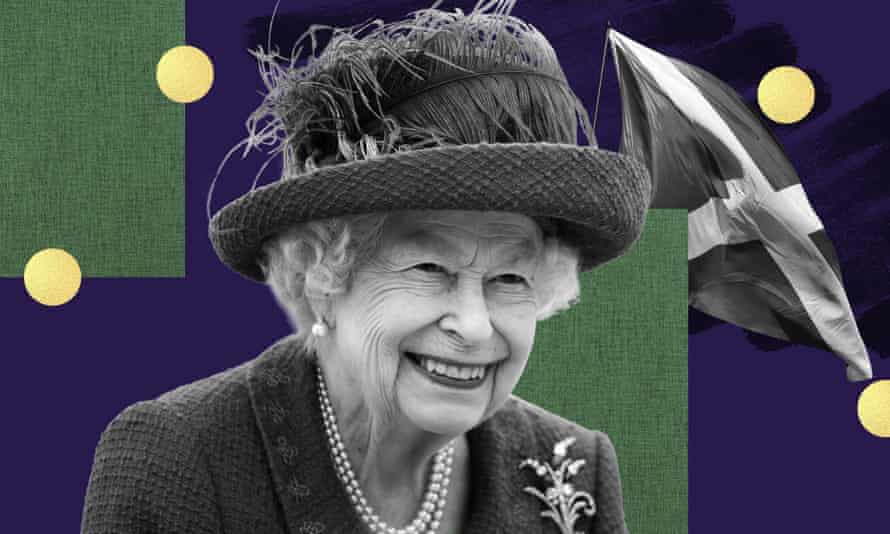
The documents disclose how the Queen used her special access to Scottish legislation to intervene in the parliamentary process as recently as February. 
Composite: Guardian/PA/Rex/ShutterstockRob Evans, Severin Carrell and David Pegg

Wed 28 Jul 2021

The Queen’s lawyers secretly lobbied Scottish ministers to change a draft law to exempt her private land from a major initiative to cut carbon emissions, documents reveal.

The exemption means the Queen, one of the largest landowners in Scotland, is the only person in the country not required to facilitate the construction of pipelines to heat buildings using renewable energy.

Her lawyers secured the dispensation from Scotland’s government five months ago by exploiting an obscure parliamentary procedure known as Queen’s consent, which gives the monarch advance sight of legislation.

Revealed: Queen vetted 67 laws before Scottish parliament could pass them


The arcane parliamentary mechanism has been borrowed from Westminster, where it has existed as a custom since the 1700s.

In a series of reports into Queen’s consent in recent months, the Guardian revealed how the Queen repeatedly used her privileged access to draft laws to lobby ministers to change UK legislation to benefit her private interests or reflect her opinions between the late 1960s and the 1980s.

The new documents, uncovered by Lily Humphreys, a researcher for the Scottish Liberal Democrats using freedom of information laws, disclose how the monarch used her special access to Scottish legislation to intervene in the parliamentary process as recently as February.

The documents also suggest Nicola Sturgeon’s government failed to disclose the monarch’s lobbying this year when a Scottish politician used a parliamentary debate to query why the Queen was securing an exemption from the green energy bill

The move appears at odds with the royal family’s public commitment to tackling the climate crisis, with Prince William recently joining his father, Charles, in campaigning to cut emissions and protect the planet

Sturgeon’s government heralded the bill as a key piece of legislation to combat the climate emergency. It said the law, known as the heat networks bill, would help cut emissions, reduce fuel poverty and create green jobs.

The legislation enabled the construction of pipelines to heat clusters of homes and businesses using renewable energy, rather than from separate fossil fuel boilers.

On 12 January, John Somers, Sturgeon’s principal private secretary, wrote to Sir Edward Young, the Queen’s most senior aide, asking for her consent to the heat networks bill. In his letter, Somers said it would allow companies and public authorities to compulsorily buy land from landowners.

On 3 February, officials working for Paul Wheelhouse, the then energy minister, recorded that the Queen’s lawyers raised concerns about the bill. They also recorded he had agreed to alter the bill, noting the “minister agreed to proposed amendment that would addressed [sic] concerns from Queen’s solicitors”. This had been done in relation to the Queen’s consent process.

On 17 February, a courtier told the Scottish government the Queen had given her consent to allow the bill to be passed
.
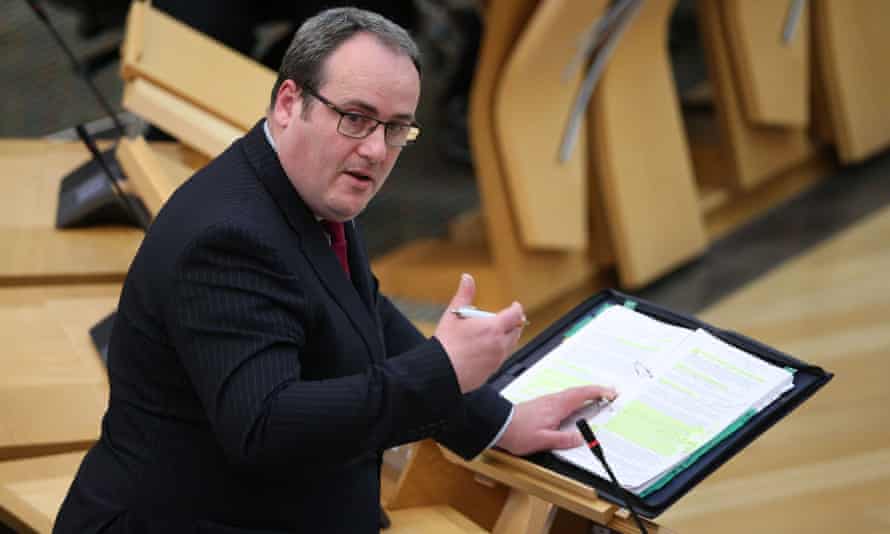
Scotland’s then energy minister, Paul Wheelhouse, put forward an amendment as part of the Queen’s consent process. Photograph: Andrew MacColl/Rex/Shutterstock


Five days later, when MSPs debated the bill, Wheelhouse put forward an amendment that applied only to land privately owned by the Queen. It specifically prevents companies and public authorities from compelling the Queen to sell pieces of her land to enable the green energy pipelines to be built.

Buckingham Palace says Queen’s consent, a process requiring ministers to notify lawyers when a proposed bill might affect her public powers or private interests, is a “purely formal” part of the parliamentary process.

However, there are increasing examples where the Queen has taken advantage of her consent privileges to require changes before she formally consents to the law proceeding through parliament. That appears to have occurred on this occasion in Scotland, where the procedure – known as crown consent – operates in the same way.

During the debate over the parliamentary bill, Andy Wightman, then an independent MSP, objected to the amendment, arguing it was wrong to single out the Queen for preferential treatment.

Wheelhouse responded that the amendment was “required to ensure the smooth passage of the bill”. However, he did not disclose that the Queen’s lawyers had lobbied for the change. The amendment was passed with Wightman and a handful of other MSPs opposing it.

After being informed about the new documents, Wightman said he was “shocked to discover that the amendment was put in place in order to secure Queen’s consent. That should have been stated in the debate.

“If changes are being requested in order to secure Queen’s consent, people should be told about that and it appears in this case we were not told.”

Unlike the better-known procedure of royal assent, a formality that brings a bill into law, Queen’s consent gives the monarch a mechanism to covertly meddle with proposed UK laws without the public knowing about her intervention.

Revelations earlier this year about how the Queen had vetted draft laws before they were approved by the UK’s elected representatives prompted more than 65,000 people to call for an inquiry into the “unfathomable” process.

Adam Tucker, a senior lecturer in constitutional law at the University of Liverpool, said disclosures made it plain the process was more than a mere formality and “should prompt grave concerns about the practice’s continued existence”.
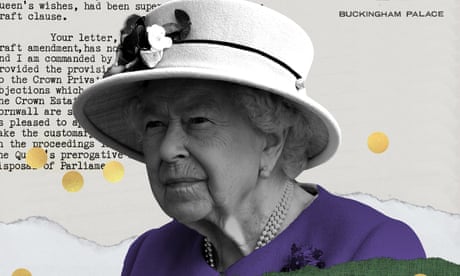

Revealed: Queen lobbied for change in law to hide her private wealth

Willie Rennie, who stood down recently as leader of the Scottish Liberal Democrats, said the documents raised concerns about “secret doors” made available to the monarch to change laws. “Others who lobby for changes have to declare it,” he said. “That should be true for everyone.”

Rennie added: “The Queen rightly does not express her views publicly and does so privately with the prime minister and first minister. However, this is different. It’s about the interests of the head of state’s assets and direct interests. Any of these communications should be notified publicly and openly so we can judge for ourselves.”

A Buckingham Palace spokesperson said: “The royal household can be consulted on bills in order to ensure the technical accuracy and consistency of the application of the bill to the crown, a complex legal principle governed by statute and common law. This process does not change the nature of any such bill.”

Wheelhouse, who lost his seat at the last election, said: “I led several bills in my time and these sort of exemptions for the Queen’s interests are sometimes required as a necessary step.”

The Scottish government did not answer questions about the number of bills that provided special exemptions for the Queen, or whether greater transparency was needed.

In a short statement, a spokesperson said: “Scottish government policy is that the crown should be subject to regulatory requirements on the same basis as everyone else, unless there is a legitimate reason for an exemption or variation. However, crown consent is required by law if a bill impacts the private property or interests of the sovereign – and that is what happened in this case.”
Myanmar could become Covid
‘super-spreader’ state, says UN expert


Special rapporteur urges security council to call for ceasefire amid fears Covid will spread across wider region

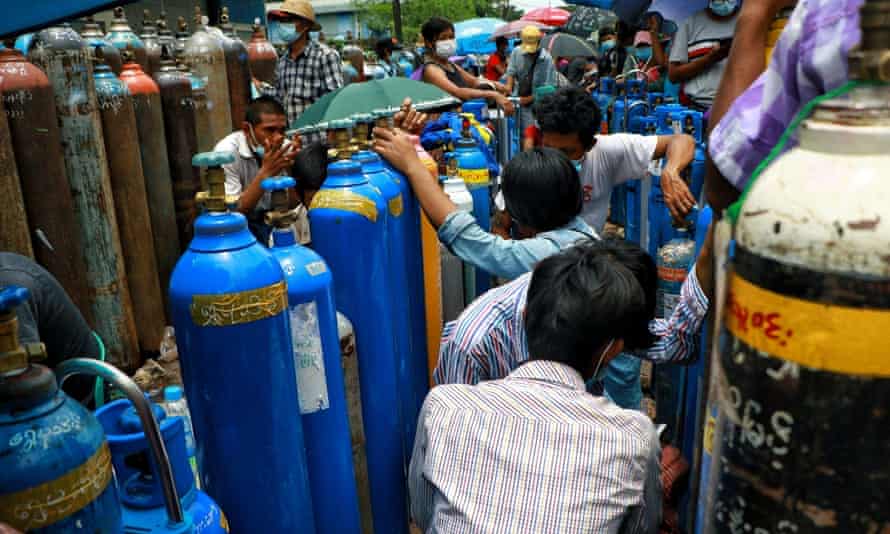
People wait in line next to oxygen tanks to be refilled outside the Naing oxygen 
factory at the South Dagon industrial zone in Yangon, Myanmar.
 Photograph: AP Rebecca Ratcliffe in Bangkok

Wed 28 Jul 2021

Myanmar is at risk of becoming a super-spreader Covid state that fuels outbreaks across the region, the UN special rapporteur for the country has warned as he urged the security council to call for a ceasefire.

The south-east Asian country is facing its most severe outbreak yet, on top of a deep political and economic crisis brought about by the military coup in February. Its vaccination programme has ground to a standstill, testing has collapsed, and government hospitals are barely functioning.

Doctors, who have been at the forefront of an anti-junta strike and are refusing to work in state hospitals, have been forced to treat patients in secret because they face the constant threat of military violence or arrest.

The exact number of cases and fatalities in Myanmar was unclear, said Tom Andrews, the UN special rapporteur on the situation of human rights in Myanmar, in an interview with the Guardian. The targeting of journalists and doctors has made it hard to obtain accurate information about the crisis.

“We know that this is a spike upward. It’s a very rapid, an alarmingly rapid rise,” said Andrews.

According to the military-controlled ministry of health and sports, 4,629 people have died of Covid since 1 June. The figures are thought to be an underestimate. Military-controlled media announced on Tuesday that 10 new crematoriums would be built at cemeteries in Yangon, Myanmar’s largest city, to cope with the fatalities, the Irrawaddy news site, an independent outlet, reported.

“In Yangon, it’s common to see three types of lines,” Andrews added. “One before ATMs, one for oxygen supplies – which is very dangerous because people are literally being shot at by the Myanmar forces for standing in line for oxygen – and the third being lines at crematoriums and morgues.”

There is a severe shortage of oxygen, medical equipment and medication in cities across the country. Outside homes, people have hung yellow and white flags to signal that they need food or medicine, while social media have been flooded with pleas for help and death notices.

The military has been accused of seizing oxygen supplies. It has ordered suppliers not to sell to the public, claiming that people are hoarding tanks.

Andrews said international governments, including Myanmar’s neighbours, needed to act swiftly, or they would see the consequences of an uncontrolled outbreak at their borders.

“Myanmar is becoming a super-spreader of Covid-19 with these very virulent variants – Delta and other forms of the disease, [which are] extremely dangerous, extremely lethal, extremely contagious … This is very, very dangerous for all kinds of reasons,” Andrews said.

“It’s just a fact that Covid does not respect nationalities or borders or ideologies or political parties. It’s an equal opportunities killer. This is a region that is susceptible to even greater suffering as a result of Myanmar becoming a super-spreader state.”

About a third of the world’s population lives in countries neighbouring Myanmar, he added. This includes China, which, along with Russia, has blocked previous attempts by the security council to pressure the Myanmar military.

In February, the security council passed a resolution demanding ceasefires in all states experiencing conflict so that health workers could safely provide Covid vaccinations. Andrews said the resolution should now be reaffirmed in relation to the Myanmar crisis. This could help pave the way for international agencies to provide greater assistance.

On Wednesday, the military-controlled Global New Light of Myanmar reported that junta chief, Min Aung Hlaing, had addressed a meeting “to beef up cooperation with the international community, including Asean [Association of South-east Asian Nations] and friendly countries in the prevention, control and treatment of the Covid-19”. The details of the cooperation are not clear.

Junta forces have engaged in at least 260 attacks against medical personnel and facilities, killing at least 18 people, according to the Office of the United Nations high commissioner for human rights. The military is holding at least 67 healthcare workers, and has issued arrest warrants for a further 600 medics.

Last week, military officials reportedly posed as Covid patients in need of treatment to entrap medical volunteers in Yangon. Three doctors who went to help were subsequently arrested, according to a report by the independent outlet Myanmar Now.

In total, at least 5,630 people are being held in detention facilities, including Insein prison in Yangon, where the virus has spread. U Nyan Win, who previously served as Aung San Suu Kyi’s lawyer, and who was a senior member in her National League for Democracy party, died of Covid after becoming infected in jail, it was confirmed last week.

At least 931 people – protesters, politicians and bystanders – have been killed by the military since February.

There is significant evidence that crimes against humanity are unfolding in Myanmar, Andrews said. “This is not an errant commander here or there doing horrible things, this is very systematic, very clear … The junta going on state television and telling people don’t go on the streets [to protest] or you’ll get shot in the head. And then suddenly all these people are shot in the head.”

Andrews said the need for international action was more urgent than ever. “The people of Myanmar are losing hope that the international community cares about what is happening in Myanmar,” he said.

THE GUARDIAN PHOTOS OF THE DAY JULY 28,2021

Biden meets with Belarusian opposition leader Tsikhanouskaya

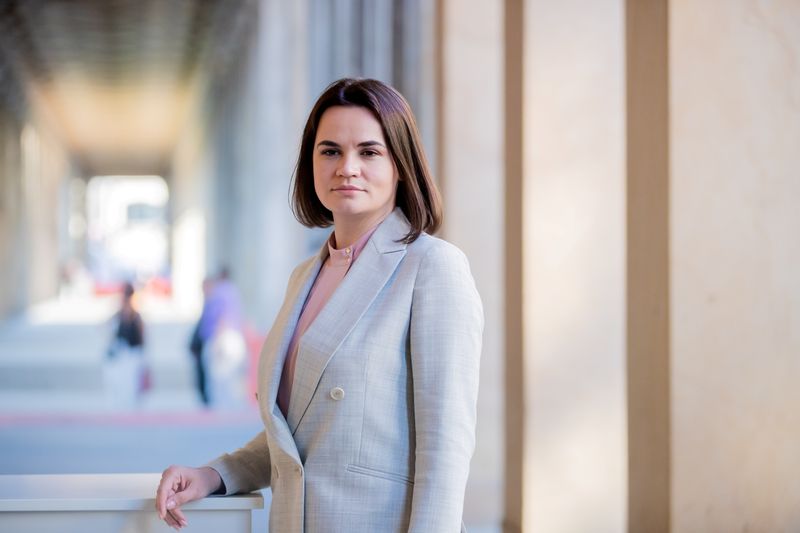
FILE PHOTO: Belarusian opposition leader Sviatlana Tsikhanouskaya attends a meeting during 'Berlinale Summer Special' film festival in Berli

WASHINGTON (Reuters) – U.S. President Joe Biden met with Belarus opposition leader Sviatlana Tsikhanouskaya on Wednesday morning and expressed support for democracy and human rights in the former Soviet republic.

“I was honored to meet with @Tsihanouskaya at the White House this morning. The United States stands with the people of Belarus in their quest for democracy and universal human rights,” Biden wrote in a Twitter post.

Tsikhanouskaya has pressed for stronger action from the United States against President Alexander Lukashenko’s government during a visit to the country. She met earlier with U.S. Secretary of State Antony Blinken, the top U.S. diplomat, and White House national security adviser Jake Sullivan.

Last week, she asked U.S. officials to impose sanctions on companies in her country’s potash, oil, wood and steel sectors.

“Thank you, @POTUS, for a powerful sign of solidarity with millions of fearless Belarusians who are peacefully fighting for their freedom. Today, Belarus is on the frontline of the battle between democracy and autocracy. The world stands with us. Belarus will be a success story,” Tsikhanouskaya wrote in her own Twitter post.

(Reporting by Doina Chiacu; editing by Jonathan Oatis and Sandra Maler)

AUDACITY, AUDACITY AND STLL MORE AUDACITY*

Woman convicted of swapping pebbles for gems in audacious London heis
t

By Danica Kirka
July 29, 2021 — 

London: A woman who secretly swapped seven pebbles for £4.2 million ($7.94 million) worth of diamonds has been sent to prison for her role in the audacious heist at a luxury jewellery store in London’s Mayfair district.

Lulu Lakatos, 60, was sentenced on Wednesday to 5½ years in prison after a jury at Southwark Crown Court in London found her guilty of conspiracy to steal.


Lulu Lakatos ditched her disguise after the heist and boarded a high-speed Eurostar train to France.CREDIT:METROPOLITAN POLICE VIA AP


Lakatos was part of an international gang that fled to France after stealing the diamonds from Boodles on New Bond Street on March 10, 2016. The gems haven’t been recovered.

“This was an audacious theft, carried out in plain view of experienced and professional staff at a renowned jewellers,” Detective Sergeant William Man of London’s Metropolitan Police Service said in a statement.

“The meticulous planning and execution of this theft reveals to me that those involved were highly skilled criminals.”

In the days leading up to the heist, the criminals held a series of meetings with Boodles staff on the pretense that they represented a wealthy Russian investor who was looking to purchase gems, police said.

Lakatos, who was born in Romania and lived in France, posed as a gem expert named “Anna” who then went to Boodles to value seven diamonds for the buyer.

After she inspected the gems, which included a 20-carat heart-shaped diamond valued at more than £2.2 million, they were individually wrapped and placed in a locked bag that was supposed to be held in the jeweller’s vault until payment was received. But when Boodles’ own expert became suspicious the next day, the bag was X-rayed and the store discovered nothing but seven ordinary pebbles.

Lakatos had used a distraction to swap the bag containing the diamonds for an identical one containing the pebbles before it was locked in the vault, according to security camera video released by police.


After leaving the store, Lakatos handed the bag containing the diamonds to one of her female accomplices, before ditching the long coat, hat and scarf she wore as a disguise and boarding a high-speed Eurostar train to France.

She was arrested on a European arrest warrant last September and returned to Britain to stand trial.

Two men who worked with Lakatos previously pleaded guilty to conspiracy to steal and were sentenced to 3 years and eight months in prison. Police are still investigating the involvement of two other women.

AP

*CHE GUEVERA
Left-wing political novice sworn in as Peru’s president

WED, 28 JUL, 2021 - 18:49

REGINA GARCIA CANO AND MAURICIO MUNOZ, ASSOCIATED PRESS

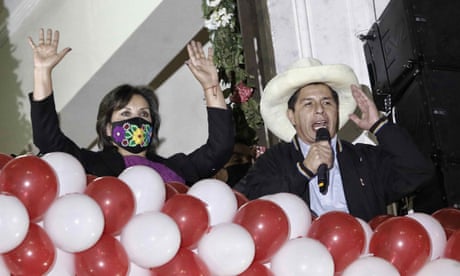
Pedro Castillo, a left-wing political novice who has promised to be a champion of his country’s poor, has been sworn in as Peru’s new president.

The rural teacher who has never held political office before was installed less than two weeks after he was declared the winner of the June 6 runoff election. He is Peru’s first president of peasant origin.

In a ceremony in the capital Lima, Mr Castillo made a commitment “for God, for my family, for my peasant sisters and brothers, teachers, patrolmen, children, youth and women, and for a new constitution”.


He then he sang the national anthem, taking off his signature hat and placing it over his heart.

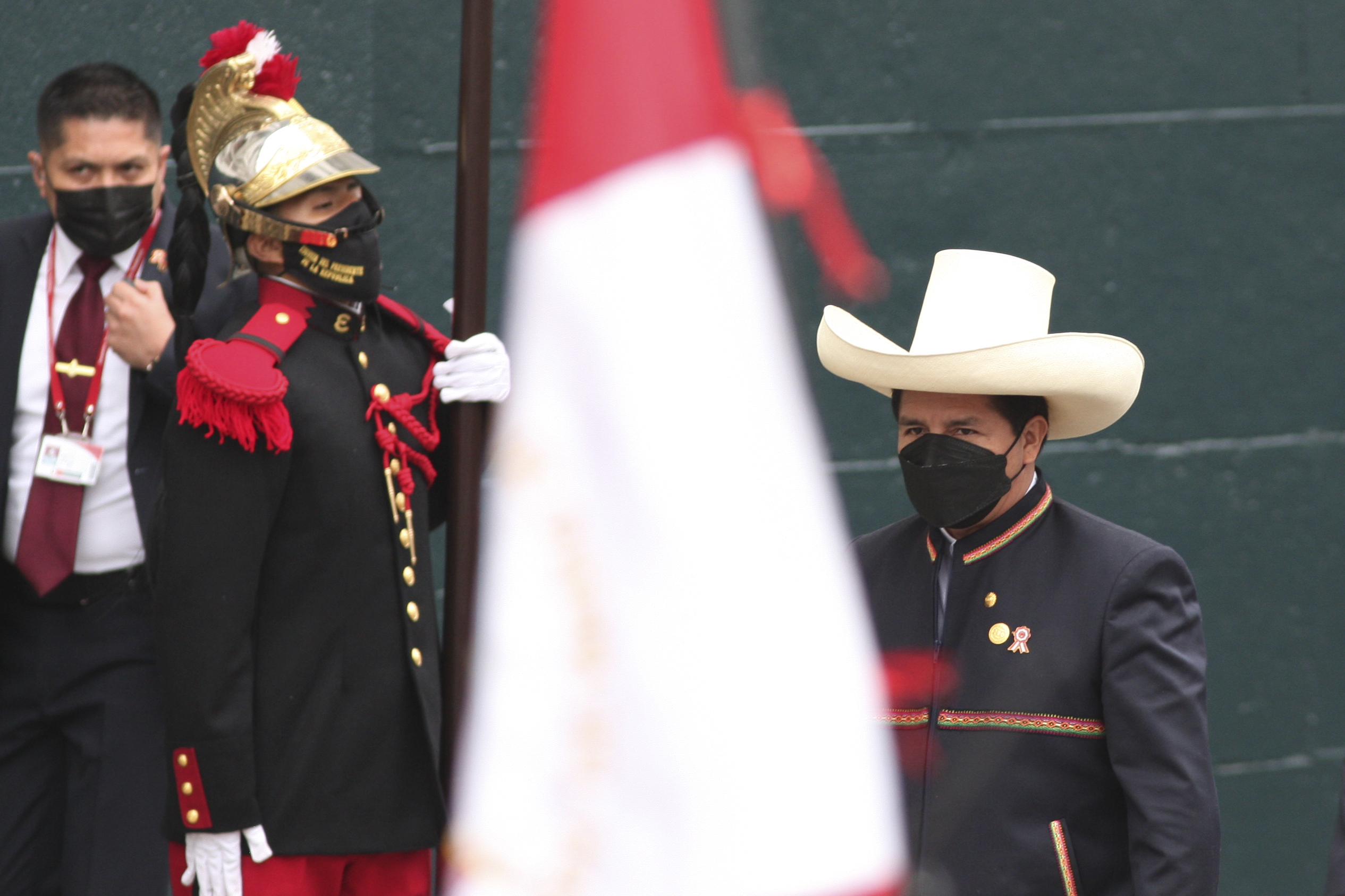
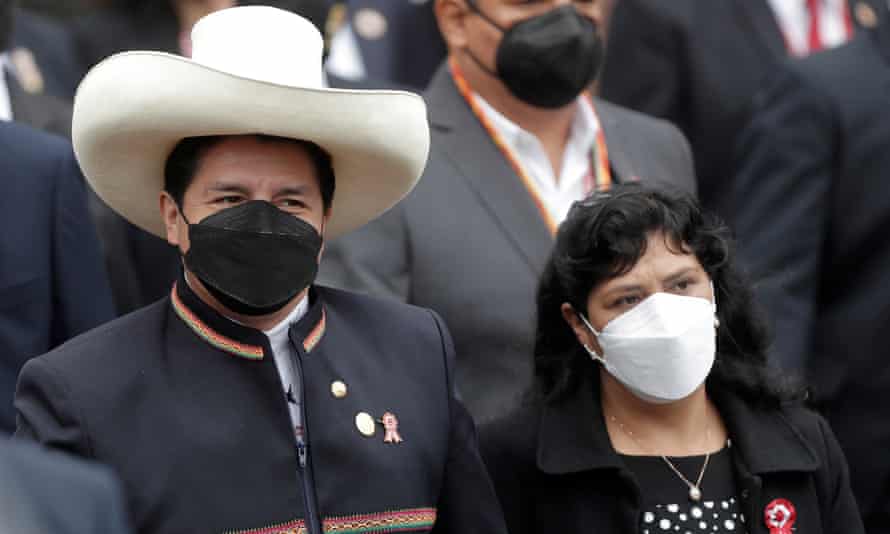
Pedro Castillo arrives at Congress (Francisco Rodriguez/AP)

He succeeds Francisco Sagasti, who had been appointed by Congress in November to lead the South American nation after weeks of political turmoil.

Mr Castillo, who up until days ago lived with his family in a home deep in the Andes, will face a deeply divided Congress that will make it extremely challenging for him to fulfil his ill-defined campaign promises to aid the poor, who are now estimated to make up about a third of the country’s population.

His political savvy will be immediately tested, and his ability to reach agreements could determine if Congress allows him to finish his term.

“The government of Pedro Castillo still maintains us with considerable uncertainty; we still do not have clear his main lines of policy,” said Claudia Navas, an analyst with the global firm Control Risks.

“However, we foresee that possibly, due to the characteristics of the Peruvian political system and the current general political and economic situation of the country, Castillo will maintain a more pragmatic position than he announced during the campaign.

“The key is to build those consensuses and add strength to the proposals on how he is going to achieve them.”


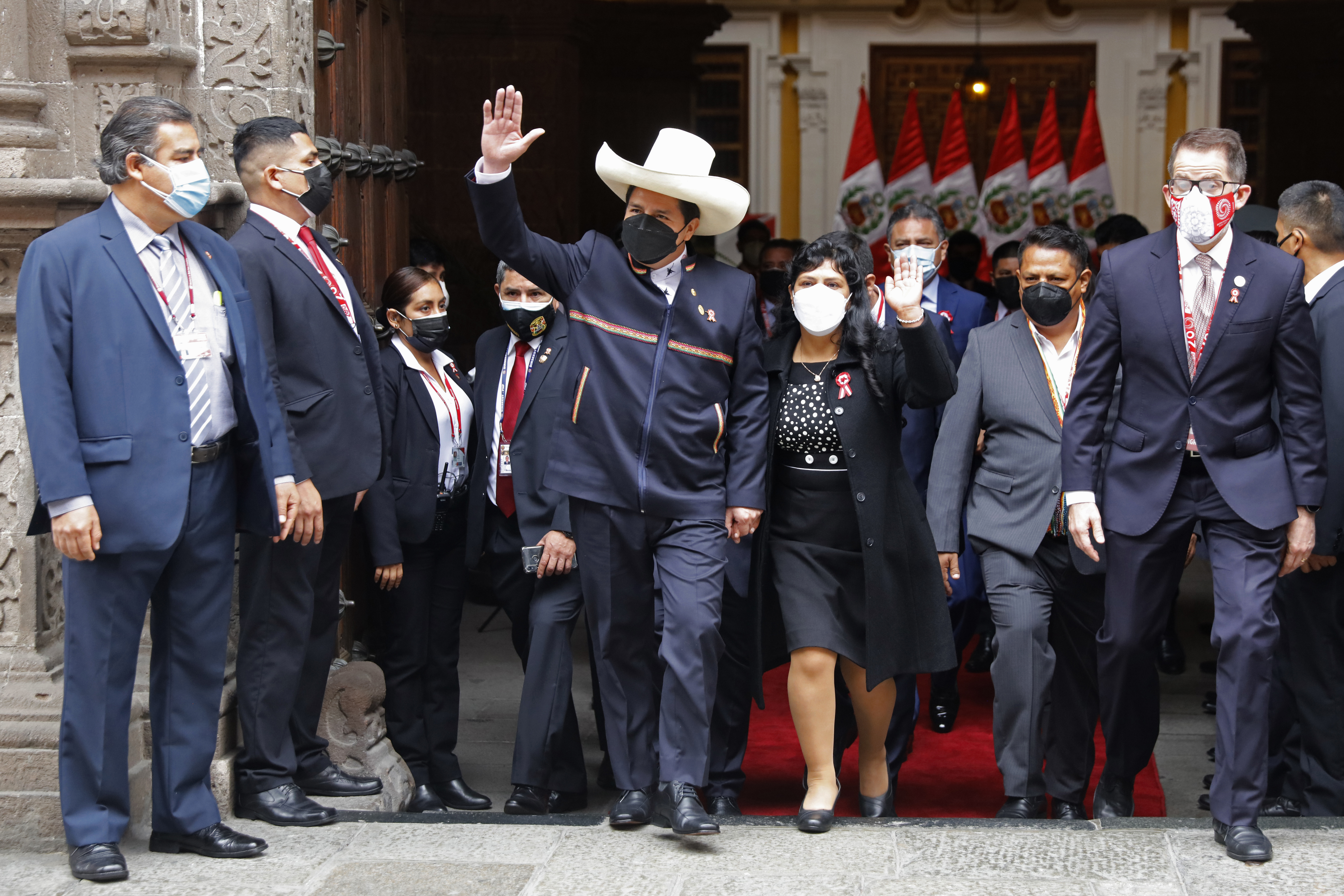
Pedro Castillo and his wife Lilia Paredes leave the Foreign Ministry (Guadalupe Pardo/AP)

Mr Castillo defeated his opponent, right-wing career politician Keiko Fujimori, by just 44,000 votes.

Peru’s poor and rural citizens supported Mr Castillo and his slogan “No more poor in a rich country”, while the elites favoured Ms Fujimori, the daughter of controversial former president Alberto Fujimori.

Mr Castillo stunned voters and observers by rising from a pool of 18 candidates and advancing to the runoff, in first place.

His initial proposal to nationalise the mining industry set off alarm bells among business leaders. While that stance has softened, he remains committed to rewriting the constitution that was approved under the regime of Ms Fujimori’s father.

Peru is the second largest copper exporter in the world and mining accounts for almost 10% of its GDP and 60% of its exports. Its economy has been crushed by the coronavirus pandemic, increasing the poverty level and eliminating the gains of a decade.

In November, Peru had three presidents in a single week after one was impeached by Congress over corruption allegations and protests forced his successor to resign. Legislators then appointed Mr Sagasti.

The pandemic has pushed Peru’s medical and cemetery infrastructure beyond capacity. It has also deepened people’s mistrust of government as it mismanaged the Covid-19 response and a secret vaccination drive for the well-connected erupted into a national scandal.

Mr Castillo has promised vaccines for all Peruvians.


Leftwing rural teacher Pedro Castillo sworn in as president of Peru

Castillo will face deeply divided Congress who will make it challenging for him to fulfil campaign promise to aid poor

The newly elected president of Peru, Pedro Castillo, with his wife, Lilia Paredes, in Lima. Photograph: Getty
Associated Press in Lima

Pedro Castillo, a leftwing political novice who has promised to be a champion of his country’s poor, has been sworn in as Peru’s president.

The rural teacher, who has never held political office before, was sworn in less than two weeks after he was declared the winner of the 6 June runoff election. He is Peru’s first president of peasant origin.

In a ceremony in the capital of Lima, Castillo made a commitment “for God, for my family, for my peasant sisters and brothers, teachers, patrolmen, children, youth and women, and for a new constitution”. He then sang the national anthem, taking off his signature hat and placing it over his heart.

Castillo’s presidency follows that of Francisco Sagasti, whom Congress appointed in November to lead the South American nation after weeks of political turmoil.

Castillo, who until days ago lived with his family in an adobe home deep in the Andes, will face a deeply divided Congress that will make it extremely challenging for him to fulfil campaign promises to aid the poor, who are estimated to make up about a third of Peru’s population. His political skills will be immediately tested and his ability to reach agreements could even determine if Congress allows him to finish his term.

Castillo defeated his opponent, the rightwing career politician Keiko Fujimori, by just 44,000 votes. Fujimori claimed fraud, challenged about 500,000 votes, asking for half to be annulled, and called on officials at Peru’s electoral board to re-examine ballots – despite the lack of evidence of wrongdoing.

Peru’s poor and rural citizens supported Castillo and his slogan “no more poor in a rich country”, while the elites favoured Fujimori, the daughter of the jailed 1990s autocrat Alberto Fujimori. He stunned voters and observers by rising from a pool of 18 candidates and advancing to the runoff to first place.

Castillo’s initial proposal to nationalise the nation’s mining industry set off alarm bells among business leaders. While that stance has softened, he remains committed to rewriting the constitution that was approved under the regime of Fujimori’s father.

Peru is the second largest copper exporter in the world and mining accounts for almost 10% of its GDP and 60% of its exports. Its economy has been crushed by the coronavirus pandemic, increasing the poverty level and eliminating the gains of a decade.

In November, Peru had three presidents in a single week after one was impeached by Congress over corruption allegations, and protests forced his successor to resign. Lawmakers then appointed Sagasti.

Thousands of small businesses have closed over the past 16 months and the political uncertainty after the election has led to the withdrawal of millions of dollars from local banks.

The pandemic has pushed Peru’s medical and cemetery infrastructure beyond capacity. It has also deepened people’s mistrust of government as it mismanaged the Covid-19 response and a secret vaccination drive for the well-connected erupted into a national scandal.

Castillo has promised Covid-19 vaccines for all Peruvians.

Castillo until recently was a rural schoolteacher in the country’s third-poorest district. The son of illiterate peasants led a teachers’ strike in 2017. He is married and has two children.

Several delegations from other countries travelled to witness Peru’s presidential transition.


Pragmatism: How Americans define truth

If something is "true," it needs to be shown to work in the real world.

Credit: Gene Gallin via Unsplash
  • Pragmatism is an American philosophical movement that originated as a rebuke to abstract European philosophy.
  • The pragmatic theory of truth argues that truth and reality only can be understood in their relation to how things work in the real world.
  • The trouble is that the theory devalues the term "truth," such that it only applies to one particular moment in time. But Charles Sanders Peirce offers a clever way out.

Think of wine. Now take away from this idea every possible property it has. Take away its redness or whiteness, its intoxicating effect, its taste, the slosh it makes, and so on. What are you left with? Nothing. An empty phoneme of the mind. An invisible color. A silent noise. Do this with any concept, and the result is the same.

This is exactly the kind of consideration that led the American Pragmatic movement. The likes of William James, John Dewey, and Charles Sanders Peirce argued that all of our concepts, and the truth of anything, are determined solely by the practical effects they have and how these extend into the real world. The idea of truth, and even of having intelligible thoughts at all, cannot be understood without reference to what that something does or how it behaves in the real world.

Pragmatic theory of truth: a very American idea

Peirce was the first to coin the term Pragmatism as a particular school of American philosophy, and it was a conscious response to the more untethered and arcane metaphysics coming out of Europe. Across the pond, and especially in Germany, philosophers since Immanuel Kant seemed to be locked in a competition to make philosophy as inaccessible and polysyllabic as possible (reaching its apogee in Georg Hegel). Pragmatists wanted to bring philosophy back and make it more relevant.

American Pragmatism gave out an exasperated and down-to-earth plea for philosophy to stop being quite so abstract.

According to Peirce, there was not any truth "out there" in the "real world" that we somehow, magically, could unearth. Instead, truth was defined by how it works in our everyday lives. So, my belief in gravity is true because of its practicality — that is, it works every day. It is true and meaningful precisely because it makes my pen drop, my coffee cup smash, and pole-vaulters come crashing down. Likewise, we know something is hard if it does not scratch easily, or if it helps you break a window, or if it hurts like heck when you hit it with your toe.

In short, we measure things by how they work and what they do. The same goes for truth.

Of course, an immediate objection comes to mind: surely the truth will change from person to person or from time to time. For instance, the Aristotelian model of gravity and the Ptolemaic model of planetary motion worked quite well for millennia. Does that mean these scientifically disproven models were actually true?! William James would argue yes, but Peirce would say no — and he offered a nuanced way out.

The coalescence of inquiry

For Peirce, "truth" could eventually coalesce or converge by the idealized agreement of intelligent inquirers. That is to say, scientists, scholars, and society will one day be so informed about the world that their answers to "what works" will be the only, final, and universal "truth" or "reality." As Peirce wrote, "The real, then, is that which, sooner or later, information and reasoning would finally result in, and which is therefore independent of the vagaries of me and you." And, elsewhere, he says reality is "what may finally come to be known to be in the ideal state of complete information."

For instance, Ptolemy's notion that the sun revolves around the Earth was never true but rather mistaken as true. What is true is defined by the end result of more advanced inquiry, such as that of Copernicus and Galileo. (Of course, we might still be mistaken today.) We cannot know if something is true until this perfected end point has been reached — the point when there are no alternative answers to the question, "What works best?"

Acceptance of error and self-correction

Most commentators today do not think Peirce meant there had to be an actual and future idealized end point where there would be no more debate and disagreement. Rather, Peirce's Pragmatism speaks to two broader and much more widely accepted epistemic virtues: an openness to accept error and the willingness to correct it.

Under Peirce's account, something is true or real insofar as it works within the world. This is not just for everyday experiences like gravity causing us to drop things. He meant that things must also work in the science laboratory as well.

Today, we practice science by presenting a hypothesis, which is then tested in experiments over and over again. Scientists are constantly calibrating the truth of hypotheses and theories based on how they work in the world. And, according to Peirce's Pragmatism, "although the conclusion [of an experiment] at any stage of the investigation may be more or less erroneous, the further application of the same method must correct the error."

So, we will get closer and closer to the truth as society becomes more and more informed. But this also means accepting that future societies will possibly, or even quite likely, correct what we today call truth.

The American way

Pragmatism has a certain intuitive appeal. Truth which is abstracted from how things operate in the real world often makes very little sense. The idea of a world "out there" beyond our minds — a world which is unseen, unknown, and unimaginable — is also unintelligible (as Kant pointed out) if it is not tied, in some way, both to how the world works and to what we humans can interact with.

People like Peirce should be praised for a very American Pragmatism that gave out an exasperated and down-to-earth plea for philosophy to stop being quite so abstract.

    Jonny Thomson teaches philosophy in Oxford. He runs a popular Instagram account called Mini Philosophy (@philosophyminis). His first book is Mini Philosophy: A Small Book of Big Ideas.


    How Apple and Nike have branded your brain


    A new episode of "Your Brain on Money" illuminates the strange world of consumer behavior and explores how brands can wreak havoc on our ability to make rational decisions.
    27 July, 2021
    BIG THINK

    Apple logo
    Vegefox.com via Adobe Stock


    Effective branding can not only change how you feel about a company, it can actually change how your brain is wired.
    Our new series "Your Brain on Money," created in partnership with Million Stories, recently explored the surprising ways brands can affect our behavior.
    Brands aren't going away. But you can make smarter decisions by slowing down and asking yourself why you're making a particular purchase.

    Brands can manipulate our brains in surprisingly profound ways. They can change how we conceptualize ourselves and how we broadcast our identities out to the social world. They can make us feel emotions that have nothing to do with the functions of their products. And they can even sort us into tribes.

    To grasp the power of brands, look to Apple. In the 1990s, the company was struggling to compete with Microsoft over the personal computer market. Despite flirting with bankruptcy in the mid-1990s, Apple turned itself around to eventually become the most valuable company in the world.

    That early-stage success wasn't due to superior products.

    "People talk about technology, but Apple was a marketing company," John Sculley, a former Apple marketing executive, told The Guardian in 1997. "It was the marketing company of the decade."

    So, how exactly does branding make people willing to wait hours in line to buy a $1,000 smartphone, or pay exorbitant prices for a pair of sneakers?
    Branding and the brain

    For more than a century, brands have capitalized on the fact that effective marketing is much more than simply touting the merits of a product. Some ads have nothing to do with the product at all. In 1871, for example, Pearl Tobacco started advertising their cigarettes through branded posters and trading cards that featured exposed women, a trend that continues to this day.

    It's crude, sure. But research shows that it's also remarkably effective, even on monkeys. Why? The answer seems to center on how our brains pay special attention to information from the social world.

    "In theory, ads that associate sex or status with specific brands or products activate the brain mechanisms that prioritize social information, and turning on this switch may bias us toward the product," wrote neuroscience professor Michael Platt for Scientific American.

    Brands can burrow themselves deep into our subconscious. Through ad campaigns, brands can form a web of associations and memories in our brains. When these connections are robust and positive, it can change our behavior, nudging us to make "no-brainer" purchases when we encounter the brand at the store.


    Nike storeThamKC

    It's a marketing principle that's related to the work of Daniel Kahneman, a psychologist and economist who won the 2002 Nobel Memorial Prize in Economic Sciences. In his book "Thinking Fast and Slow", Kahneman separates thinking into two broad categories, or systems:

    System 1 is fast and automatic, requiring little effort or voluntary control.
    System 2 is slow and requires subjective deliberation and logic.

    Brands that tap into "system 1" are likely to dominate the competition. After all, it's far easier for us as consumers to automatically reach for a familiar brand than it is to analyze all of the available information and make an informed choice. Still, the most successful brands can have an even deeper impact on our psychology, one that causes us to conceptualize them as something like a family member.
    A peculiar relationship with brands

    Apple has one of the most loyal customer bases in the world, with its brand loyalty hitting an all-time high earlier this year, according to a SellCell survey of more than 5,000 U.S.-based smartphone users.

    Qualitatively, how does that loyalty compare to Samsung users? To find out, Platt and his team conducted a study in which functional magnetic resonance imaging scanned the brains of Samsung and Apple users as they viewed positive, negative, and neutral news about each company. The results revealed stark differences between the two groups, as Platt wrote in "The Leader's Brain":

    "Apple users showed empathy for their own brand: The reward-related areas of the brain were activated by good news about Apple, and the pain and negative feeling parts of the brain were activated by bad news. They were neutral about any kind of Samsung news. This is exactly what we see when people empathize with other people—particularly their family and friends—but don't feel the joy and pain of people they don't know."

    Meanwhile, Samsung users didn't show any significant pain- or pleasure-related brain activity when they saw good or bad news about the company.

    "Interestingly, though, the pain areas were activated by good news about Apple, and the reward areas were activated by bad news about the rival company—some serious schadenfreude, or "reverse empathy," Platt wrote.

    The results suggest a fundamental difference between the brands: Apple has formed strong emotional and social connections with consumers, Samsung has not.
    Brands and the self

    Does having a strong connection with a brand justify paying higher prices for their products? Maybe. You could have a strong connection with Apple or Nike and simultaneously think the quality of their products justifies the price.

    But beyond product quality lies identity. People have long used objects and clothing to express themselves and signal their affiliation with groups. From prehistoric seashell jewelry to Air Jordans, the things people wear and associate with signal a lot of information about how they conceptualize themselves.


    Since the 1950s, researchers have examined the relationship between self-image and brand preferences. This body of research has generally found that consumers tend to prefer brands whose products fit well with their self-image, a concept known as self-image congruity.

    By choosing brands that don't disrupt their self-image, consumers are able not only to express themselves personally, but also broadcast a specific version of themselves into the social world. That might sound self-involved. But on the other hand, humans are social creatures who use information from the social world to make decisions, so it's virtually impossible for us not to make inferences about people based on how they present themselves.

    Americus Reed II, a marketing professor at the University of Pennsylvania, told Big Think:

    "When I make choices about different brands, I'm choosing to create an identity. When I put that shirt on, when I put that shirt on — those jeans, that hat — someone is going to form an impression about what I'm about. So, if I'm choosing Nike over Under Armour, I'm choosing a kind of different way to express affiliation with sport. The Nike thing is about performance. The Under Armour thing is about the underdog. I have to choose which of these different conceptual pathways is most consistent with where I am in my life."

    Making smarter decisions

    Brands may have some power over us when we're facing a purchasing decision. So, considering brands aren't going away, what can we do to make better choices? The best strategy might be to slow down and try to avoid making "automatic" purchasing decisions that are characteristic of Kahneman's fast "system 1" mode of thinking.

    "I think it's important to always pause and think a little bit about, "Okay, why am I buying this product?" Platt said.

    As for getting out of the brand game altogether? Good luck.

    "I've heard lots of people push back and say, "I'm not into brands,"" Reed II said. "I take a very different view. In some senses, they're not doing anything different than what someone who affiliates with a brand is doing. They have a brand. It's just an anti-brand brand."


    Ancient Greek military ship found in legendary, submerged Egyptian city

    Long before Alexandria became the center of Egyptian trade, there was Thônis-Heracleion. But then it sank.

  • Egypt's Thônis-Heracleion was the thriving center of Egyptian trade before Alexandria — and before earthquakes drove it under the sea.
  • A rich trade and religious center, the city was at its height from the six to the fourth century BCE.
  • As the city's giant temple collapsed into the Mediterranean, it pinned the newly discovered military vessel underwater.
  • Before Alexander the Great established Alexandria around 331 BCE, one of Egypt's primary ports on the Mediterranean Sea between the sixth and fourth centuries BCE was a place called Thônis-Heracleion.

    Now researchers from the European Institute for Underwater Archaeology (IEASM), the same organization that first found the city in 2001, have announced the discovery of a couple of fascinating items from the city's heyday. Pinned beneath fallen temple stones is a surprisingly intact Egyptian military vessel from the second century BCE, and researchers have excavated a large cemetery from the fourth century BCE.

    Thônis-Heracleion

    Credit: Egyptian Ministry of Tourism and Antiques

    Thônis-Heracleion was one of the two primary access points to ancient Egypt from the Mediterranean. (The other, Canopus, was discovered in 1999.) For millennia, experts assumed Thônis-Heracleion were two different lost cities, but it's now known that Thônis is simply the city's Egyptian name, while Heracleion is its Greek name.

    Thônis-Heracleion had been the stuff of legend before it was located, mentioned only in rare ancient texts and stone inscriptions. Herodotus seems to have been referring to Thônis-Heracleion's temple of Amun as the place where Heracles first arrived in Egypt. He also described a visit there by Helen with her lover Paris just before the outbreak of the Trojan War. In addition, 400 years later, geographer Strabo wrote that Heraclion, containing the temple of Heracles, had been located opposite Canopus across a branch of the Nile. Today we know Thônis-Heracleion's location as Egypt's Abu Qir Bay. The sunken port is about 6.5 kilometers from the coast and lies beneath ten meters of water.

    Both Thônis-Heracleion and Canopus were wealthy in their day, and the temple was an important religious center. This all ended when the Egyptian dynasty created by Ptolemy set out to establish Alexandria as Egypt's center. Thônis-Heracleion and Canopus' trade — and thus wealth — was diverted to the new capital.

    It was perhaps just as well, given that natural forces eventually destroyed Thônis-Heracleion. Located on the Mediterranean, the ground upon which it was built became saturated and eventually began to destabilize and liquefy. The temple of Amun probably collapsed around 140 BCE. A series of earthquakes sealed the cty's' fate around 800 CE, sending a 100 square-kilometer chunk of the Nile delta on which it was constructed under the waves. The Mediterranean's rising sea level over the next couple thousand years completed the drowning of Thônis-Heracleion

    Researchers have recovered a large collection of Thônis-Heracleion's treasures revealing an economically rich culture. Coins, bronze statuettes, and over 700 ancient ship anchors have been pulled from the waters. Divers have also identified over 70 shipwrecks. A giant statue of the Nile god Hapi took two and a half years to bring up.

    An ancient vessel and a cemetery

    Gold mask found in a submerged Greek cemetery.Credit: Egyptian Ministry of Tourism and Antiques

    The newly discovered ship was found beneath 16 feet of hard clay, "thanks to cutting-edge prototype sub-bottom profiler electronic equipment," says Ayman Ashmawy of the Egyptian Ministry of Tourism and Antiques.

    The military vessel had been moored in Thônis-Heracleion when the temple of Amun collapsed. The temple's enormous blocks fell onto the ship, sinking it. The boat is a rare find — only one other ship of its period has been found. As underwater archaeologist Franck Goddio, one of the scientists who found the city, puts it, "Finds of fast ships from this age are extremely rare."

    At 80 feet long, the boat is six times as long as it is wide. Like its dually-named city, it's an amalgam of Greek and Egyptian ship-building techniques. According to expert Ehab Fahmy, head of the Central Department of Underwater Antiquities at IEASM, the boat has some classical construction features such as mortar and tenon joints. On the other hand, it was built to be rowed, and some of its wood was reused lumber, signature traits of Egyptian boat design. Its flat bottom suggests it was built for navigating the shallows of the Nile delta where the river flows into the Mediterranean.

    Also found alongside the city's submerged northeastern entrance canal was a large Greek cemetery. The funerary is adorned with opulent remembrances, including a mask made of gold, shown above. A statement by the Egyptian Ministry of Tourism and Antiques describes its significance, as reported by Reuters:

    "This discovery beautifully illustrates the presence of the Greek merchants who lived in that city. They built their own sanctuaries close to the huge temple of Amun. Those were destroyed simultaneously and their remains are found mixed with those of the Egyptian temple."

    Excavation is ongoing, with more of Egypt's ancient history no doubt waiting beneath the waves.