Wednesday, July 28, 2021

NOVA SCOTIA
Truro's first Black candidate for MLA says she's undeterred by recent vandalism and hate

After her campaign signs were destroyed and burned on Sunday, Tamara Tynes Powell, the Liberal candidate in the riding of Truro-Bible Hill-Millbrook-Salmon River, told the Halifax Examiner it's important to "stand up against any sort of hatred act."

On Monday the Examiner reported the vandalism and burning of Tyne Powell's campaign signs in Truro over the weekend.

Tynes Powell is the first Black candidate in the history of her riding and she is also the sole female candidate.

News spread early on Monday about the vandalism and burning of Tynes Powell’s campaign signs. At least one of the signs was located near the historical Black neighbourhood in Truro, known as The Marsh, where Tynes Powell grew up.

In a Facebook post Sunday night, Lenore Zann, the MP for Cumberland-Colchester, shared photos of the vandalism and wrote, "This is pure old right-wing racist Hate rearing it’s (sic) ugly head once more.”

The Examiner asked Tyne Powell in an interview if she has thoughts, fears, or concerns on whether the story making the news could have a negative impact on her chances of winning by rallying racist voters to the polls to vote against her.

“Absolutely,” she said. “A lot of times the thought is, you know, ‘Am I going to be blamed for this? Am I going to be blamed for using the race card?’ I think its just a natural consequence, unfortunately, of the skin we’re in. But that being said, when you live in this skin, you learn to know all the hate that comes along with it.”

“So for me it's more important that I stand up against any sort of hatred act. And if that was to mean that I wasn’t elected, then that means that there’s a lot more work to do, and it doesn’t necessarily stop the work that I will continue doing.”

When pressed further as to why not then refrain from coming out with the story in the first place in order to, theoretically, better her chances of being elected to do that work same work from the legislature, her response was swift, calling it a “personal decision”.

"For me, if I wasn’t true and authentic to who I am, what I stand for, then I don’t feel that I would be very good representation in the first place."

Tynes Powell also spoke about her background and her family’s history that she feels is rooted in her “passion for politics.”

She explained:

Her father, Raymond Tynes, once also sought the nomination for the PC candidacy in the same riding as Tynes Powell.

As the campaign moves on, Tynes Powell said she’s gaining more confidence each day.

“I mean I was confident before I ran,” she said, “but at the same time, you put on a poker face, because I know I’m new to the game, right.”

When asked if she had any insight on what the polling suggests, she replied:

Tynes Powell is one of nearly a dozen Black candidates running in the upcoming provincial election, which takes place on August 17.


Matthew Byard, Local Journalism Initiative Reporter, Halifax Examiner
BULLSHIT
New Brunswick health authority says ‘no need’ to increase abortion services


© The Canadian Press/Kevin Bissett Justin Trudeau says the federal government is continuing to push New Brunswick to provide our-of-hospital abortions.

New Brunswick's English language health authority says its current level of abortion service is adequate.

A letter sent by Horizon CEO Karen McGrath to the province's deputy health minister says that demand for surgical abortions at their Moncton clinic are falling and that they aren't receiving requests for abortion services elsewhere, other than in the Fredericton area.

But an offer to a physician for surgical time at the Oromocto Hospital to provide surgical abortions for the region was "not pursued."

"Based on this information and given that we have no received any recent request to establish a surgical abortion service in Fredericton, Saint John or Miramichi, it is our position that there is no need to establish another service," McGrath wrote in the letter obtained by Global News.

"The Moncton clinic sees a stable volume of referrals and has been able to meet the service demand. We will continue to monitor this situation and we will open discussions with our physicians and nurse practitioners to determine if access to abortion services requires modification."

Read more: Feds ‘working extremely hard’ on abortion access in New Brunswick: Trudeau

Health minister Dorothy Shephard had previously said that it is up to Horizon and Vitalite to assess whether greater access to abortions services is needed. Surgical abortions are only available at three hospitals in the province, two in Moncton and another in Bathurst.

“Our position has always been, and we’ve been very public about it, that the (regional health authorities) are responsible to deliver the health-care services in this province, to deem whether or not they are appropriate,” Shephard said in question period on June 2.

“That is their responsibility. They will deliver the services as they see they need.”

Video: N.B. health minister says abortion access is responsibility of health authorities, not province

Clinic 554 in Fredericton had been performing surgical abortions, but is all but closed. The clinic is still performing some abortions, but the family practice is no longer seeing patients and is up for sale.

New Brunswick is the only province in Canada that does not fund surgical abortions performed outside of hospital. Premier Higgs has said that doing so would create a two-tier health-care system.

Read more: Health authorities are responsible for abortion access, not the government: Higgs

The federal government says that the province's unwillingness to fund out-of-hospital surgical abortions is a violation of the Canada Health Act. The Canadian Civil Liberties Association has launched a legal challenge based on the offending regulation that prevents out-of-hospital abortions from being covered under Medicare.

Reproductive rights advocates say they are puzzled by Horizon's statements and that abortion access in the province remains limited.

"We know that actually there have been many requests for expansion of service," said Tasia Alexopoulos, a national spokesperson for the Abortion Rights Coalition of Canada.

"I'm quite confused by the letter, I'm quite disappointed and I think that it doesn't speak to what's been happening in the province for decades where people have been consistently asking, not only for better abortion access, but the access they are entitled to under the Canada Health Act."

Read more: Judge rules national civil liberties group can challenge New Brunswick abortion law

In her letter to the health department, McGrath writes that the demand for surgical abortions at the Moncton Family Planning Clinic has fallen by 20 per cent over the last five years. The health authority believes this is due to the introduction of the so-called abortion pill Mifegymiso in 2017.

"Since medical abortions can be prescribed by a number of practitioners we are unable to offer an objective measure of the use of Mifegymiso for medical abortions, but we believe this is the primary reason for the reduction in the number of surgical abortions performed in our clinic," McGrath writes.

Video: New Brunswick follows through on promise to universal access to abortion pill

Alexopoulos says it makes sense that the recent introduction of medical abortions in the province would lessen demand for surgical abortions, but says that's no reason to limit access to the surgical option. In fact, it's important to provide patients with options, she says.

"We have to remember that before 2017 you couldn't have medication abortion, it was not offered, it wasn't legal. So it's no surprise that since 2017 people have been using that option when it works for them," Alexopoulos said.

"That doesn't make surgical abortions any less essential and in fact when we limit surgical abortions because medication abortion is available we're doing a disservice to patients because medication abortion is not for every patient -- it's not the best option for every patient."

The ongoing debate around abortion access in New Brunswick has seen renewed focus over the last week. On Friday, deputy prime minister Chrystia Freeland toured Clinic 554 with Fredericton MP Jenica Atwin, who has been outspoken in her support for the clinic. While taking questions from media Freeland said that the government would have more to say in the near future of how it intended to force the province to cover out-of-hospital abortions, but declined to give further details.

Read more: Singh reiterates support for Fredericton abortion clinic fighting to stay open

“Every Canadian has the same rights to access essential health services and sexual and reproductive services, including abortions,” she said. “We all have the right to access those services.”

It's not the first time the federal Liberals have made that promise.

At a Fredericton stop during the 2019 election campaign, Prime Minister Justin Trudeau said he would ensure that the province properly funded Clinic 554.

"We will ensure that the New Brunswick government allows access, paid-for access, to clinics that offer abortion services outside of hospitals," he said.

Trudeau then re-upped that two-year-old promise during a visit to Moncton on Tuesday, saying he would "impress upon" the province the importance of ensuring out-of-hospital abortion access.

He went on to say that the feds have already withheld "millions" in health transfer funds to the province over the dispute. The actual number withheld in this year's budget was $140,216, the amount of costs incurred performing abortions at Clinic 554 in 2017. The feds threatened to withhold that amount in 2020, but quickly refunded the amount in recognition of the COVID-19 pandemic. A spokesperson for the prime minister's office clarified that Trudeau had misspoken during the Moncton event.

Read more: Valedictorian uses grad speech to attack abortion law: ‘We cannot stay silent’

But Alexopoulos says that advocates are used to hearing promises from governments, noting both NDP leader Jagmeet Singh and former Green Party leader Elizabeth May both toured the clinic last election.

"During the election, New Brunswick got a lot of promises from all of the candidates. Everybody visited Clinic 554, everyone said they were going to do something about this, everyone said it was a top priority and when they got those votes and moved on, well we didn't really see anything substantial happen," she said.

"Abortion clinics aren't tourist destinations, we don't need to give tours of abortion clinics to prove that we need abortion services. It's clear, it's the law. We have the right to these services."
RIP
ZZ Top bassist Dusty Hill dies aged 72

The band’s bassist for more than 50 years, who had recently suffered a hip injury, died in his sleep at his Texas home


Dusty Hill in 2019. Photograph: Larry Marano/REX/Shutterstock

Benjamin Lee
Wed 28 Jul 2021 20.24 BST

Dusty Hill, bassist for ZZ Top, has died at the age of 72.

Hill, who had recently suffered a hip injury, died in his sleep, as confirmed by a statement on Instagram from bandmates Billy Gibbons and Frank Beard.


ZZ Top's Billy Gibbons: 'I don’t want to get too eclectic'

“We are saddened by the news today that our Compadre, Dusty Hill, has passed away in his sleep at home in Houston, TX,” it read. “We, along with legions of ZZ Top fans around the world, will miss your steadfast presence, your good nature and enduring commitment to providing that monumental bottom to the ‘Top’. We will forever be connected to that ‘Blues Shuffle in C.’ You will be missed greatly, amigo.”

His recent injury had meant that Hill was forced to miss performances as part of the band’s summer tour. There have been no further details on cause of death.

ZZ Top’s first single was released in 1969 after the demise of Moving Sidewalks, the band that Gibbons had previously formed. Their first concert, with Hill included, was in 1970 and the year after their first album was released.

The band would go on to find fame with 15 albums and were best known for hits including 1983’s Gimme All Your Lovin’ and 1984’s Legs. In 1984, Hill also accidentally shot himself, something he remained lighthearted about years later.

“My first reaction was ‘Shit!’ and then ‘Ouch’,” he said in a 2016 interview. “I couldn’t believe I’d done something so stupid. To this day, I don’t know how I could do it.”

Frank Beard, Billy Gibbons and Dusty Hill in 2004
 Photograph: Evan Agostini/Getty Images

As well as playing bass guitar, Hill also played keyboard and sang backing and lead vocals for the band. They were all inducted into the Rock and Roll Hall of Fame in 2004.

He made appearances in Back to the Future Part III and Deadwood and also played himself in King of the Hill.

“I don’t believe in regrets at all,” Hill also said in 2016. “What’s the point? There are things I’ve done that, if I had my time all over again, I would do differently – or not at all. But I am the sort of person who, once something’s done, just brushes it away and gets on with life.”

Tributes are coming in from the industry, including from Flea who referred to Hill as “a true rocker” and Go-Gos member Kathy Valentine who tweeted that Hill is “a Texas icon”.

ZZ Top: Bearded bassist Dusty Hill dies in his sleep at 72

© Provided by The Canadian Press

HOUSTON (AP) — ZZ Top’s Dusty Hill, the long-bearded bassist for the million-selling Texas blues rock trio known for such hits as “Legs” and “Gimme All Your Lovin'," has died at age 72.

In a Facebook post Wednesday, guitarist Billy Gibbons and drummer Frank Beard said Hill died in his sleep. They didn’t give a cause of death, but a July 21 post on the band's website said Hill was “on a short detour back to Texas, to address a hip issue.” At that time, the band said that its longtime guitar tech, Elwood Francis, would fill in on bass, slide guitar and harmonica.

Born Joe Michael Hill in Dallas, he, Gibbons and Beard formed ZZ Top in Houston in 1969, naming themselves in part after blues singer Z.Z. Hill and influenced by the British power trio Cream. Their debut release, “ZZ Top’s First Album,” came out in 1970. Three years later, they broke through commercially with “La Grange,” a funky blues song in the style of Slim Harpo’s ”Shake Your Hips" that paid tribute to the Chicken Ranch, a notorious brothel outside of the Texas town of La Grange.

The band went on to have such hits as “Tush” in 1975, and the 1980s songs “Sharp Dressed Man,” ”Legs," “Gimme All Your Lovin’” and “Sleeping Bag.” The band’s 1976 “Worldwide Texas Tour,” with its iconic Texas-shaped stage festooned with cactuses, snakes and longhorn cattle, was one of the decade’s most successful rock tours. Their million-selling albums included ”Eliminator," “Afterburner” and “Antenna.”

ZZ Top was inducted into the Rock and Roll Hall of Fame in 2004, introduced by Rolling Stones guitarist Keith Richards.

“These cats are steeped in the blues, so am I," Richards said. “These cats know their blues and they know how to dress it up. When I first saw them, I thought, ‘I hope these guys are not on the run, because that disguise is not going to work.’”

That look, with all three members wearing dark sunglasses and Gibbons and Hill sporting long, wispy beards, became so familiar, in part thanks to their MTV videos in the 1980s, that it was the subject of a New Yorker cartoon and a joke on “The Simpsons.”

____

The Associated Press
New Zealand rated best place to survive global societal collapse

Study citing ‘perilous state’ of industrial civilisation ranks temperate islands top for resilience


WHICH IS WHY BILLIONAIRES HAVE BEEN BUYING UP THE ISLAND AS A HIDE AWAY

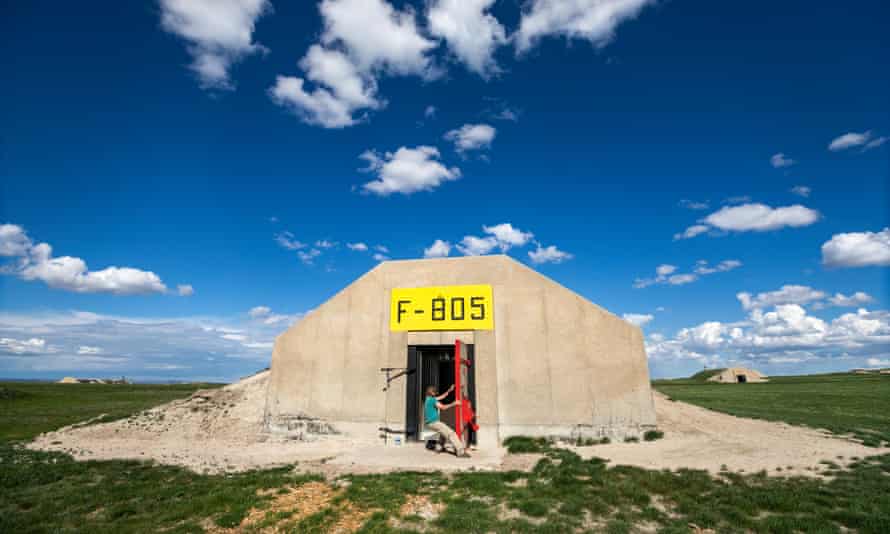
Bunker repurposed for a US ‘doomsday’ community. A study proposes that countries able to grow food for their populations, protect their borders from unwanted mass migration and maintain an electrical grid, are best placed to withstand severe shocks. Photograph: Jim Lo Scalzo/EPA


Damian Carrington
Environment editor
THE GUARDIAN
Wed 28 Jul 2021 23.00 BST


New Zealand, Iceland, the UK, Tasmania and Ireland are the places best suited to survive a global collapse of society, according to a study.

The researchers said human civilisation was “in a perilous state” due to the highly interconnected and energy-intensive society that had developed and the environmental damage this had caused.

A collapse could arise from shocks, such as a severe financial crisis, the impacts of the climate crisis, destruction of nature, an even worse pandemic than Covid-19 or a combination of these, the scientists said.

To assess which nations would be most resilient to such a collapse, countries were ranked according to their ability to grow food for their population, protect their borders from unwanted mass migration, and maintain an electrical grid and some manufacturing ability. Islands in temperate regions and mostly with low population densities came out on top.

The researchers said their study highlighted the factors that nations must improve to increase resilience. They said that a globalised society that prized economic efficiency damaged resilience, and that spare capacity needed to exist in food and other vital sectors.

Billionaires have been reported to be buying land for bunkers in New Zealand in preparation for an apocalypse. “We weren’t surprised New Zealand was on our list,” said Prof Aled Jones, at the Global Sustainability Institute, at Anglia Ruskin University, in the UK.

Jones added: “We chose that you had to be able to protect borders and places had to be temperate. So with hindsight it’s quite obvious that large islands with complex societies on them already [make up the list].

“We were quite surprised the UK came out strongly. It is densely populated, has traditionally outsourced manufacturing, hasn’t been the quickest to develop renewable technology, and only produces 50% of its own food at the moment. But it has the potential to withstand shocks.”

The study, published in the journal Sustainability, said: “The globe-spanning, energy-intensive industrial civilisation that characterises the modern era represents an anomalous situation when it is considered against the majority of human history.”

The study also said, that due to environmental destruction, limited resources, and population growth: “The [academic] literature paints a picture of human civilisation that is in a perilous state, with large and growing risks developing in multiple spheres of the human endeavour.”

Places that did not suffer “the most egregious effects of societal collapses and are therefore able to maintain significant populations” have been described as “collapse lifeboats”, the study said.

New Zealand was found to have the greatest potential to survive relatively unscathed due to its geothermal and hydroelectric energy, abundant agricultural land and low human population density.

Jones said major global food losses, a financial crisis and a pandemic had all happened in recent years, and “we’ve been lucky that things haven’t all happened at the same time – there’s no real reason why they can’t all happen in the same year”.

He added: “As you start to see these events happening, I get more worried but I also hope we can learn more quickly than we have in the past that resilience is important. With everyone talking about ‘building back better’ from the pandemic, if we don’t lose that momentum I might be more optimistic than I have been in the past.”

He said the coronavirus pandemic had shown that governments could act quickly when needed. “It’s interesting how quickly we can close borders, and how quickly governments can make decisions to change things.”

But he added: “This drive for just-in-time, ever-more efficient, economies isn’t the thing you want to do for resilience. We need to build in some slack in the system, so that if there is a shock then you have the ability to respond because you’ve got spare capacity.

“We need to start thinking about resilience much more in global planning. But obviously, the ideal thing is that a quick collapse doesn’t happen.”
The truth behind corporate climate pledges

Facing a reckoning over their contribution to the climate emergency, companies are coming out with a record number of pledges


A record number of companies are making climate pledges, but experts say action remains far too slow.
 
Illustration: The Project Twins/The Guardian

by Jocelyn Timperley
THE GUARDIAN
Mon 26 Jul 2021 08.00 BST

For climate campaigners, 26 May seemed like the start of a long-awaited reckoning for oil and gas companies.

Over a single 24-hour period, a Dutch court ordered Shell to dramatically cut emissions, shareholders voted to force Chevron to reduce emissions from the products it sells, and a tiny activist investment firm secured three positions on ExxonMobil’s 12-member board for candidates committed to climate action.

Green light: a new series on the critical role of companies in the climate crisis


When trying to ascribe responsibility for the climate crisis, it’s hard to overstate the outsized role fossil fuel companies have played. The products of just 100 private and state-owned fossil fuel companies were linked to 71% of global industrial greenhouse gas emissions since 1988, according to a groundbreaking 2017 report.

A subsequent Guardian investigation in 2019 found 20 fossil fuel companies, including Chevron and ExxonMobil, were responsible for more than one-third of all greenhouse gas emissions since 1965 – the point at which experts say fossil fuel companies were aware of the link between their products and climate change.

But it’s not just fossil fuel companies fueling the climate crisis. Even if we immediately phased out oil and gas, emissions from agriculture alone may make it impossible to limit warming to the 1.5C goal in the Paris agreement.

Across a slew of sectors from food and fast fashion to construction and heavy industry, companies have helped drive climate chaos. As climate impacts accelerate – the world is boiling, burning, flooding and melting – there is unprecedented pressure on all companies to start taking their own role in the crisis far more seriously.

This pressure is translating into action. A record number of companies are making climate pledges, but experts warn the pace of action remains glacially slow in the face of a barreling climate crisis.

Even if all current Paris agreement climate pledges are met, the world is still set to see temperature rises of about 2.4C by the end of the century – well above the 1.5C of warming that scientists say will already lead to severe climate impacts.

As countries are under pressure to up their climate ambitions in the run-up to Cop26, the vital UN climate talks in November, the private sector is also being increasingly pushed by investors, employees, activists and consumers to take meaningful action.

In response, corporations have put out a flurry of climate commitments. At least a fifth of the world’s 2,000 largest public companies have now made some kind of “net zero” pledge to cancel out their carbon emissions. They are investing billions in clean energy, moving to electric vehicles, pledging to halt deforestation, and urging the US government to step up climate action.


Tech companies have perhaps some of the most far-reaching goals. Last year, Microsoft pledged to be “carbon negative” by 2030, meaning it would remove more carbon from the atmosphere than it emits. By 2050, it aims to have compensated for all of its historical emissions through carbon removal projects.

Apple says its products and supply chain will be carbon neutral by 2030 and Google has committed to be powered exclusively by renewable energy by 2030 and claims it has already wiped out its carbon footprint by offsetting emissions.

Most oil companies are moving far more slowly. Shell, BP, Total and Equinor have announced plans to reach “net zero” emissions by 2050, but few have committed to halt fossil-fuel exploration. Some have gone much further and completely transformed their business model: Danish firm Ørsted sold its oil and gas business in 2017 and has now installed more than a quarter of the world’s offshore wind capacity.

The transport industry, responsible for around one-fifth of global CO2 emissions, is gearing up for bolder climate pledges. GM Motors announced in January it would be carbon-neutral by 2040 and sell only zero emissions vehicles by 2035. The aviation sector, which has been slow to make climate pledges, is considering whether to set a goal of becoming net-zero by 2050.

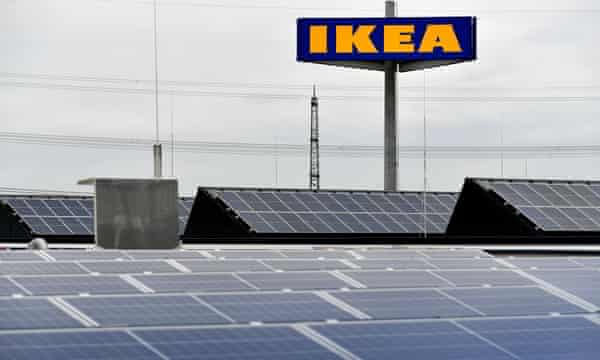
Large numbers of companies, including consumer-facing firms such as Ikea, PepsiCo and Levi’s, are also signing up to the Science-Based Targets initiative (SBTi), which helps companies calculate emissions targets aligned with the Paris agreement ambition of 1.5C. More companies have signed up in the first half of 2021 than in the whole of 2020, according to a Bloomberg report.
Rooftop solar on Ikea’s store in Kaarst, Germany. The company plans to spend an extra $4.7bn by 2030 to build wind and solar farms. Photograph: Sascha Steinbach/EPA

“A decade ago, companies were setting these very incremental targets,” said Cynthia Cummis, co-founder of the SBTi and director of private sector climate mitigation at the World Resource Institute. “Now science-based target setting is becoming standard practice.”

And it’s having an impact. An SBTi analysis of 338 large companies with science-based pledges found they had reduced combined emissions by 25% between 2015 and 2019.

Corporations are losing the ability to “fudge the numbers” on climate policies, said Ketan Joshi, an Oslo-based climate analyst who tracks company climate pledges. “Companies are increasingly starting to understand that they’re losing their grip on the public relations hit of announcing a climate ambition and then doing nothing about it.”

There are still big caveats.

Global emissions are rebounding post-pandemic and 2023 is on track to see the highest levels of CO2 emissions in human history, according to the International Energy Agency.

Despite the record number of corporate climate pledges, an analysis of 9,300 listed companies from index provider MSCI published in July found that they are still on course to exceed their “carbon budgets” – the total amount of emissions they can release and still keep in line with 1.5C of warming – within the next six years.

This finding highlights the need for these companies to “dramatically accelerate climate action”, said Remy Briand, head of environmental, social and governance at MSCI. “It is easy to say that becoming net-zero is a high priority, but it is another to take action, especially immediate action.”

While some companies have placed climate change at the top of their agenda, he added, others have made weak pledges or failed to act at all. “For those not matching their commitments or lagging, there should be nowhere left to hide.”

Analyzing what companies are actually doing, however, can be painstakingly difficult when there is no requirement to disclose all key climate information and little consistency in corporate pledges making it all but impossible to benchmark progress.

The changes required are so vast that many companies struggle to even articulate them. In an evaluation of some of the world’s largest greenhouse gas emitters, the investor engagement group Climate Action 100+ found no company has fully disclosed how it plans to reach net-zero.

With many corporate net-zero pledges still several decades out, often with few interim targets, monitoring their effectiveness can be hard. “We cannot wait for 2050 to see whether we fulfil the commitments or not,” said Gonzalo Muñoz, UN high-level champion on climate for Cop25. “It’s what we do today, and in these next five to 10 years, that will determine whether we succeed or not.”

Figuring out how to quickly cut emissions is not an easy task for companies, which must work out not only how to reduce direct emissions and those from the energy that they use (scope 1 and scope 2 emissions), but also those which come from the use of their products (scope 3 emissions).

Some of the boldest pledges rely on carbon removal technologies that don’t even exist yet, or at least not at the scale required. Many more are heavily reliant on carbon offsets, which allow companies to invest in “nature-based” programs like tree planting or forest protection to counteract their own emissions. Offset projects, however, have been plagued by allegations of flawed accounting, greenwash and sometimes even of actively fueling climate change.

These climate pledges are also voluntary. To some, this shows that industry is trying to take responsibility for its own emissions. For others, it looks more like an effort at self-regulation to avoid government intervention.

“I don’t think we have time for voluntary corporate initiatives any more,” said Jennifer Morgan, executive director of Greenpeace International. “We’ve done them for decades and they haven’t worked. I think there’s a real need for governments to be coming in and putting in place some legislative and regulatory frameworks.”

Many companies have publicly called for governments to take stronger climate action; behind the scenes it can be a different story.

Amazon and Microsoft, for example, have been criticized for pitching themselves as climate leaders while also donating tens of thousands of dollars to politicians who oppose climate action. An Amazon spokesperson said it actively advocates for clean energy policies and a spokesperson for Microsoft said that to make progress the company “must engage with candidates and officeholders who hold a range of views”.
If business leaders truly grasped the seriousness of the crisis they would immediately pivot their entire business modelJamie Beck Alexander, Project Drawdown

The lobbying efforts of fossil fuel majors, meanwhile, are well documented. The five largest publicly traded oil and gas companies spent over $1bn on misleading climate-related branding and lobbying in the three years following the Paris agreement in 2015, according to a 2019 report by InfluenceMap.

A host of investigations has revealed big fossil fuel companies knew about the link between their products and climate change for decades but continued to argue that climate science was uncertain and to push against climate action. Just last month an Exxon lobbyist was caught on tape by the investigative outlet Unearthed describing how the company was actively working against key US climate policies through lobbying and membership of trade associations.

These same firms also encouraged a public narrative of individual responsibility for the climate crisis. British Petroleum notoriously helped to popularize the term “carbon footprint” with an online calculator that encouraged people to measure their own emissions.

This focus on personal responsibility is echoed in other sectors, which advertise “more sustainable” products while continuing business-as-usual models of consumption and production.

“The discussion that moves us away from corporate responsibility to personal responsibility is a huge distraction,” said Shannon Lloyd, an assistant professor of management at Concordia University in Canada. “As an individual, your choices have very little impact in terms of reducing the carbon or other environmental footprint of products. It’s more about getting laws put in place or policies in place than individual purchasing decisions.”

Reaching a net-zero world will entail “wholesale transformation” in both infrastructure and how things are done, said Steven Clarke, director for corporate clean energy leadership at non-profit Ceres. “Some people refer to it as on the scale of a second industrial revolution.”

Certain key sectors will face big challenges. There’s a lack of easy answers for some energy-intensive industries with huge carbon footprints, such as steel, cement, aviation and shipping, which are notoriously hard to decarbonize. Sectors which rely on high consumption of products with big climate footprints, such as fast fashion and meat, will also need to adapt significantly for the world to limit temperature rise to 1.5C.

But there is huge potential for innovation and action. Most solar and wind projects are now expected to be cheaper than coal. Investment is flowing into “green hydrogen”, which could provide zero-emissions fuel for ships and airplanes and replace fossil fuels in steel manufacturing.

Meanwhile, pressure on companies is intensifying. More than 1,500 lawsuits have been brought against fossil fuel companies. This number could accelerate thanks to advances in climate science making it easier to link climate damage to corporate activity.

 Employees are another lever for change.

In 2020, hundreds of Amazon workers criticized the company for climate inaction last year. This year the non-profit ClimateVoice launched a campaign mobilizing employees to demand that big tech companies spend more of their lobbying dollars on climate policy.

Companies cannot tackle the climate crisis by themselves, said Jamie Beck Alexander of Project Drawdown, a non-profit focused on climate solutions, “regulation will absolutely be required to transform entire sectors.” But this doesn’t let them off the hook, she added. “If business leaders truly grasped the seriousness of this crisis, they would immediately pivot their entire business models and resources toward scaling climate solutions full stop.”

We have to pay the price’: Oslo’s plan to turn oil wealth into climate leadership

The mayor of the Norwegian capital argues that the ‘moral’ duty to cut emissions from burning waste can be met by carbon capture


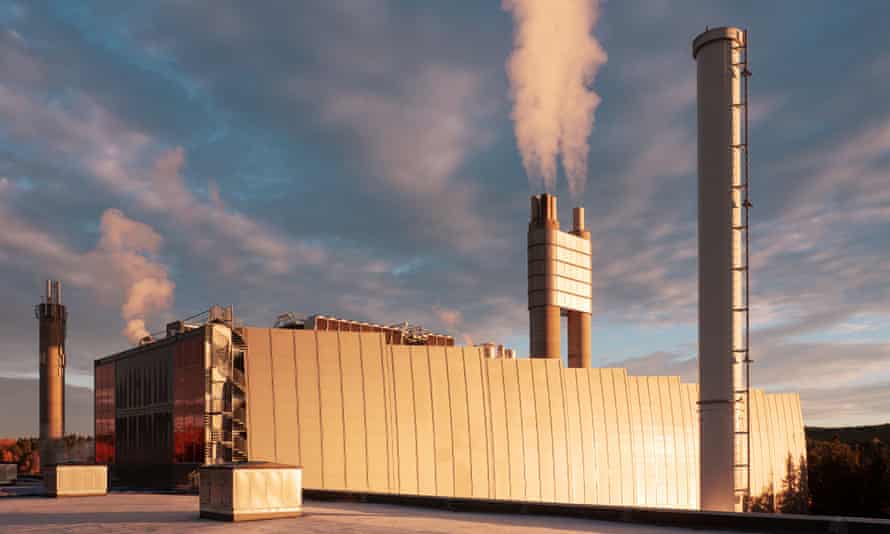
The Fortum Oslo Varme incinerator burns 400,000 tonnes of waste a year. 
Photograph: Einar Aslaksen


Jillian Ambrose
THE GUARDIAN
Wed 28 Jul 2021 


The city of Oslo was built on wealth generated by the North Sea, which for decades has produced billions of barrels of oil and gas. But Oslo now hopes to lead Norway’s transformation from one of the world’s largest exporters of fossil fuels to a global green pioneer.

For Raymond Johansen, Oslo’s governing mayor, helping to lead global efforts to tackle the climate cisis is both a pragmatic economic response to Norway’s declining fossil fuel industries, and a moral obligation to provide solutions for a crisis it helped to create.

At the heart of Johansen’s plan stands an otherwise unassuming industrial waste incinerator. The Oslo Varme plant, on the outskirts of the capital, generates heat and electricity by burning rubbish and is by far Oslo’s biggest carbon polluter. But the plant was shortlisted earlier this year among schemes competing for €1bn in support from the EU’s low-carbon innovation fund. Johansen says Oslo wants to turn the incinerator into a blueprint for how cities across Europe can cut carbon emissions while tackling their waste.

“It is one of my biggest ambitions as the leader of Oslo,” says Johansen. “We are small enough and big enough at the same time to provide a test bed for western Europe.”

The city’s plan is to retrofit the waste plant with carbon capture technology to trap its emissions before they can enter the atmosphere and contribute to global heating. The plant burns 400,000 tonnes of non-recyclable waste a year, of which between 50,000 to 100,000 tonnes comes from the UK’s household rubbish. Incinerators make up 15% of Oslo’s carbon emissions.

Raymond Johansen, governing mayor of Oslo. 
Photograph: City of Oslo/Oslo municipality

If it succeeds the project could play a major role in Oslo’s goal to cut its carbon emissions by 95% by 2030 compared to levels in 2009, says Johansen. But it could also be the first step in developing the technology for deployment at similar waste-to-energy plants across Europe. At its most ambitious the project hopes to provide a foothold for Norway’s wider plan to create a full-scale carbon capture chain, capable of storing Europe’s emissions permanently under the North Sea.

“From both an ethical and a moral point of view, I think it’s important that we are willing to contribute [to climate efforts] on a more advanced scale and develop the new technologies we need,” Johansen says.

Norway believes that it can build on its half-century legacy of piping fossil gas from the North Sea to Europe by doing the same in reverse for carbon emissions. The Northern Lights carbon capture project plans to ship liquid CO2 from industrial sites fitted with carbon capture technology to an onshore terminal on the Norwegian west coast. From there, the liquified carbon will be transported by pipeline to a storage location under the North Sea, where it will be stored permanently.

“A rich oil- and gas-dependent country like Norway is to some extent obliged to develop such technology and make it more available to the rest of Europe. We have to do that. We have to pay that price,” Johansen says.

The €700m cost of the Oslo Varme incinerator carbon capture project would require EU funding of €300m, in addition to investments from the Norwegian government and the plant’s joint owners, the Oslo municipality and utility company Fortum. Beyond the cost, there are concerns over its climate credentials too.

Johansen says some of the scepticism derives from fears that carbon capture will make governments “more lazy when we come to recycling waste, reusing materials”. Others fear that relying on carbon capture technology – which typically traps 80-95% of emissions – will give a licence to maintain the world’s carbon-intensive status quo at the expense of pursuing cleaner alternatives.

Friends of the Earth Europe has called Norway’s carbon capture and storage plans “a spoke in the wheel of the energy transition” and warned that relying on the technology could delay a full-scale commitment to energy efficiency and renewables.

Johansen says both waste incineration and carbon capture will still be needed as “last resort” approaches to tackling pollution – even after rigorous efforts to opt for renewable and recycled materials while consuming less overall. The mayor claims that between 20% and 25% of Europe’s waste would be destined for landfill even after “quite advanced recycling”, where it would create far more carbon emissions than in an incineration plant.

For Johansen, the inevitable criticisms are dwarfed by the scale of the potential benefits in tackling the twin challenges of waste pollution and rising carbon emissions. It does not, he insists, mean that Norway can ignore the need for a more fundamental economic shift away from fossil fuels and towards sustainable growth.

“From a long-term perspective we must dismantle our own oil and gas industry,” he says. “It will take a lot of time because we are so dependent on the industry for labour. So many people work in the fossil fuel industry that it means many traditional working-class people are more and more sceptical about some of the green parties’ arguments because they feel they are taking away their jobs.”

The new industrial opportunities presented by carbon capture offer what the Johansen refers to as “normal jobs, for normal people”, which are within reach without the need for a university degree.

Johansen trained as a plumber before going into politics for Norway’s Labour party. “One of the most important things for me is to avoid the shift to green becoming a middle-class project,” he says. “We need to get all people on board, and they need to see that there is a prosperous future for them as well. It’s a new kind of industrialisation.”

Planet's Vital Signs Are Reaching Dangerous 'Tipping Points' Amid Climate Crisis, Scientists Warn

"We need to stop treating the climate emergency as a stand-alone issue—global heating is not the sole symptom of our stressed Earth system."


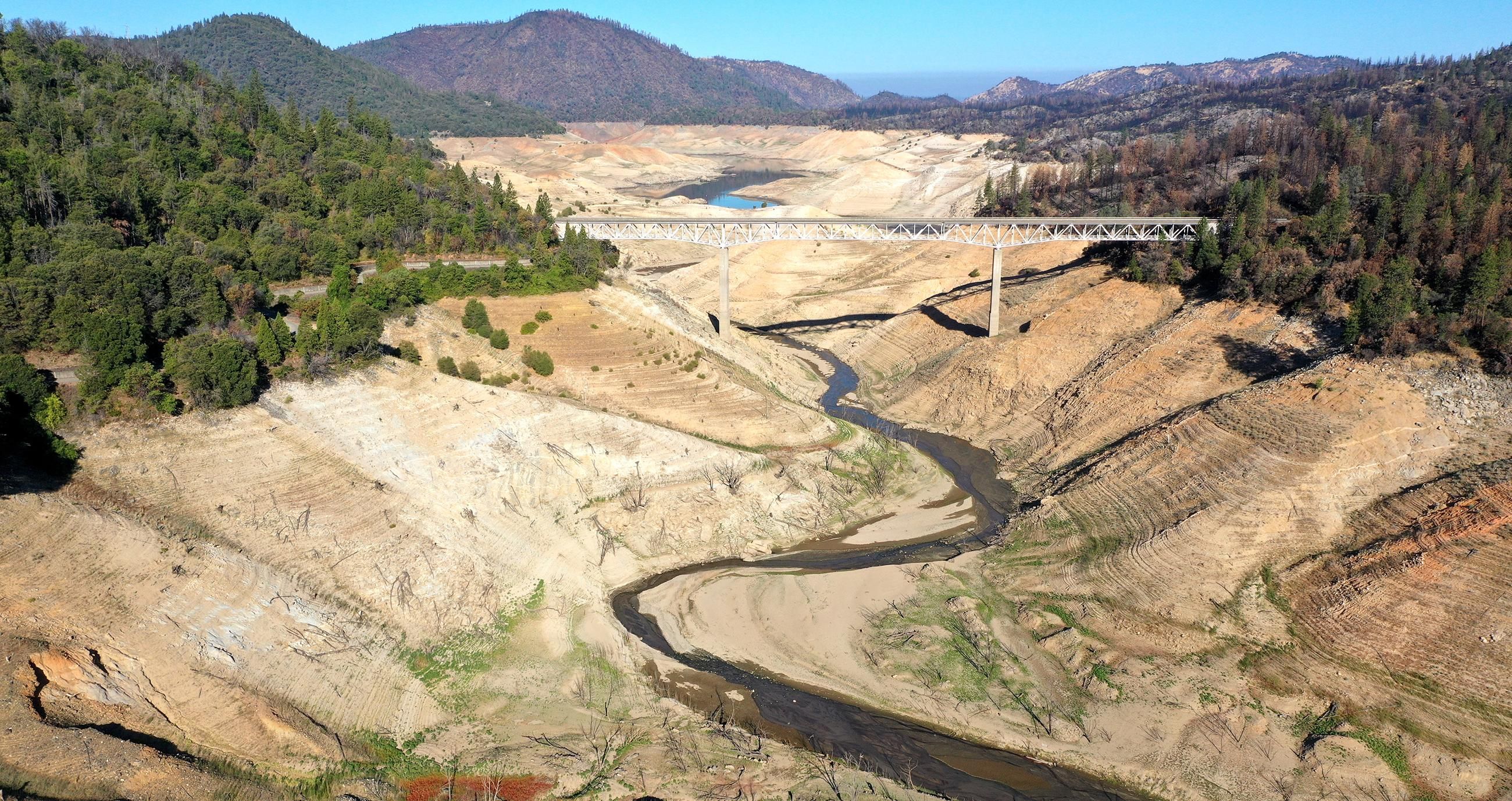
Human activity may be pushing the climate beyond dangerous 'tipping points,' say 14,000 scientists. As the extreme drought emergency continues in California, historically low water levels are visible at Lake Oroville on July 22, 2021 in Oroville, California. (Photo: Justin Sullivan/Getty Images)

JULIA CONLEY
July 28, 2021

More than a year after the Covid-19 pandemic shut down economies around the world and sharply reduced worldwide travel—sparking speculation among some that emissions would plummet as a result—a coalition of scientists said in a paper published Wednesday that the planet is nonetheless reaching multiple "tipping points," with levels of sea ice melt, deforestation, and other markers revealing that urgent action is needed to mitigate the climate emergency.

"The extreme climate events and patterns that we've witnessed over the last several years — not to mention the last several weeks — highlight the heightened urgency with which we must address the climate crisis," said Philip Duffy, co-author of the study and executive director of the Woodwell Climate Research Center in Massachusetts.

The "World Scientists' Warning of a Climate Emergency 2021" which was published in the journal BioScience, states that 18 out of 31 planetary vital signs have hit record-breaking high or low points in recent years.

"A major lesson from Covid-19 is that even colossally decreased transportation and consumption are not nearly enough and that, instead, transformational system changes are required."
—William Ripple, Oregon State University

The paper detailed how despite fossil fuel use dipping slightly in 2020, levels of carbon dioxide, methane, and nitrous oxide "have all set new year-to-date records for atmospheric concentrations in both 2020 and 2021." The authors emphasized, however, that fossil fuel emissions and the global heating with which they're associated are far from the only indicator that the planet is in danger.

The researchers recorded other tipping points or near-tipping points in levels of ocean heat; ice mass; the deforestation of the Amazon, which serves as a vital carbon sink; ocean acidification, and the amount of ruminant livestock, which now number more than four billion and are a significant source of planet-warming gases.

"We need to stop treating the climate emergency as a stand-alone issue—global heating is not the sole symptom of our stressed Earth system," William Ripple, a distinguished professor of ecology at Oregon State University's College of Forestry and a co-author of the report, said in a statement.

The research was released two months after researchers in Germany and Norway released a study showing Greenland's ice sheet was "at the brink" of reaching a "tipping point," with trillions of tons of ice having flown into the sea.

The paper published Wednesday showed the rate of forest loss in the Brazilian Amazon reached a 12-year high of 1.11 million hectares deforested last year and that the concentration of carbon dioxide in the atmosphere reached 416 parts per million in April 2021—"the highest monthly global average concentration ever recorded," according to The Guardian.

The tipping points recorded in the analysis are all the result of "human overexploitation of the planet," Ripple said.

While emissions from people commuting to work and plane travel went down in 2020 as a result of stay-at-home measures for some, the report still showed "the consequences of unrelenting business as usual," he added.

"A major lesson from Covid-19 is that even colossally decreased transportation and consumption are not nearly enough and that, instead, transformational system changes are required," Ripple said.

To mitigate the rapidly worsening crisis, the authors said, global policymakers must set "a significant carbon price" and link it to financing adaptation measures in the developing world and climate action policies; begin a phase-out of fossil fuel extraction and move towards a ban; and pass policies aimed at restoring and maintaining carbon sinks and natural habitats that support biodiversity, like the Biden administration's recent decision to restore protections like the Tongass National Forest.

"Policies to alleviate the climate crisis or any of the other threatened planetary boundary transgressions should not be focused on symptom relief but on addressing their root cause: the overexploitation of the Earth," the researchers wrote.

One climate action organizer in Minnesota linked the findings to the Line 3 tar sands pipeline, which the Biden administration has so far permitted to continue.

"It’s not too late to stop Line 3 and enact a just climate transition," said Andrew Ulasich of the faith-based initiative Isaiah. "But time is short. Now is the time for action."


The paper noted some positive developments, including record-high levels of fossil fuel divestment by cities, financial institutions, universities, and other entities, and a record low level of fossil fuel subsidies.

The research was published as a follow-up to a 2019 paper in which thousands of experts declared the climate emergency, named the planet's vital signs, and called for six courses of action to mitigate the crisis: eliminating fossil fuels, slashing pollution, restoring ecosystems, shifting to plant-based diets, transitioning away from economies that prioritize indefinite growth, stabilizing the human population.


"We're going to have, as we're witnessing, significant human suffering, but if we make the big changes soon, we can limit that suffering," Ripple told Fast Company on Wednesday. "We want to give an update with these vital signs, but we also want to emphasize the importance of moving fast at this point, and thinking big."


Our work is licensed under Creative Commons (CC BY-NC-ND 3.0). Feel free to republish and share widely.

Critical measures of global heating reaching tipping point, study finds

Carbon emissions, ocean acidification, Amazon clearing all hurtling toward new records

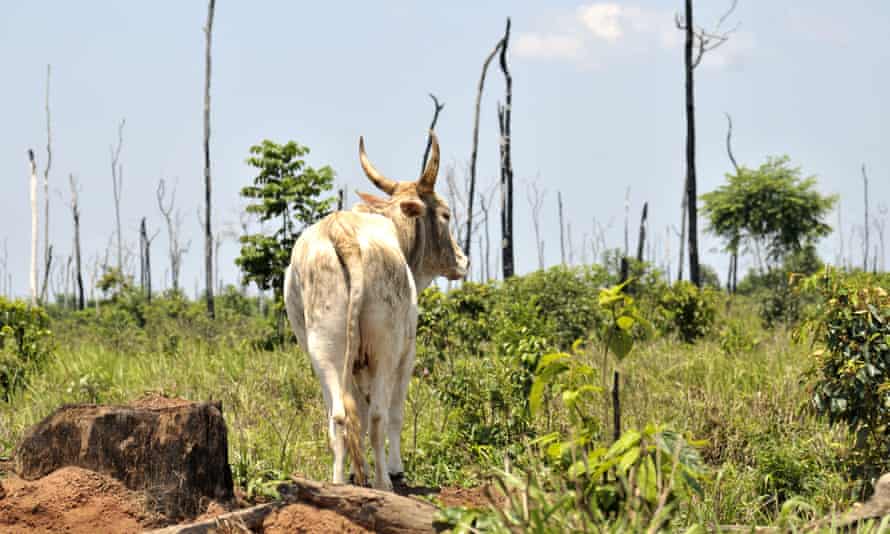
Vast areas of the Amazon rainforest are being burned and cleared for grazing cattle — a double blow to global warming, as cattle produce methane and cleared forests release carbon into the atmosphere
Photograph: Florian Kopp/imageBROKER/REX/Shutterstock

Katharine Gammon
THE GUARDIAN
Wed 28 Jul 2021

A new study tracking the planet’s vital signs has found that many of the key indicators of the global climate crisis are getting worse and either approaching, or exceeding, key tipping points as the earth heats up.

Overall, the study found some 16 out of 31 tracked planetary vital signs, including greenhouse gas concentrations, ocean heat content and ice mass, set worrying new records.

“There is growing evidence we are getting close to or have already gone beyond tipping points associated with important parts of the Earth system,” said William Ripple, an ecologist at Oregon State University who co-authored the new research, in a statement.

“The updated planetary vital signs we present largely reflect the consequences of unrelenting business as usual,” said Ripple, adding that “a major lesson from Covid-19 is that even colossally decreased transportation and consumption are not nearly enough and that, instead, transformational system changes are required.”

While the pandemic shut down economies and shifted the way people think about work, school and travel, it did little to reduce the overall global carbon emissions. Fossil fuel use dipped slightly in 2020, but the authors of a report published in the journal BioScience say that carbon dioxide, methane and nitrous oxide “have all set new year-to-date records for atmospheric concentrations in both 2020 and 2021”.

In April 2021, carbon dioxide concentration reached 416 parts per million, the highest monthly global average concentration ever recorded. The five hottest years on record have all occurred since 2015, and 2020 was the second hottest year in history.

The study also found that ruminant livestock, a significant source of planet-warming gases, now number more than 4 billion, and their total mass is more than that of all humans and wild animals combined. The rate of forest loss in the Brazilian Amazon increased in both 2019 and 2020, reaching a 12-year high of 1.11 million hectares deforested in 2020.

Ocean acidification is near an all-time record, and when combined with warmer ocean temperatures, it threatens the coral reefs that more than half a billion people depend on for food, tourism dollars and storm surge protection.

However, there were a few bright spots in the study, including fossil fuel subsidies reaching a record low and fossil fuel divestment reaching a record high.

In order to change the course of the climate emergency, the authors write that profound alterations need to happen. They say the world needs to develop a global price for carbon that is linked to a socially just fund to finance climate mitigation and adaptation policies in the developing world.

The authors also highlight the need for a phase-out and eventual ban of fossil fuels, and the development of global strategic climate reserves to protect and restore natural carbon sinks and biodiversity. Climate education should also be part of school curricula around the globe, they say.

“Policies to alleviate the climate crisis or any of the other threatened planetary boundary transgressions should not be focused on symptom relief but on addressing their root cause: the overexploitation of the Earth,” the report says. Only by taking on this core issue, the authors write, will people be able to “ensure the long-term sustainability of human civilization and give future generations the opportunity to thrive”.
As scientists finalize a long-awaited update on global climate research, recent extreme weather events across the globe have been startling: Historic rains and deadly flooding in central China and Europe. Dramatic heatwave in Canada, and tropical heat in Finland and Ireland. The Siberian tundra ablaze. Monstrous U.S. wildfires, along with record drought across the U.S. West and parts of Brazil.

 While climate modeling has evolved over the decades, scientists are still trying to determine how climate change will manifest in the years to come. Dr. Sharon George, Lecturer on Environment and Sustainability at Keele University, explains that we're already witnessing, in real time, "what climate change looks like."

 Dr. George points out that for years "scientists around the world have warned" of the impending dangers of climate change across the globe, and now "the frequency of these (severe weather) events is increasing and the severity is increasing as well." 

And while we're making strides, transitioning to cleaner forms of energy, Dr. George warns that "we need it to happen faster: every single molecule of CO2 that we put into the air will stick around for 100 years, doing its damage. Every day that we waste, talking about these things and not taking action is going to have a long-term effect. So we need fast action." Dr. George strikes an optimistic tone in her belief that we all have reason to be hopeful for our capacity to come together and rise to this global challenge. The worldwide response to Covid-19 has "shown us that we can adjust our behavior on a massive scale very quickly... whole nations changed their whole working patterns and behaviors to deal with a global combined problem to find a solution. And I think that gives us hope."

AFP


How many years until we must act on climate? Zero, say these climate thinkers:
and Peter Kalmus

We asked a panelist of experts on when we need to start changing our economies and ways of consuming and producing. Their answer: now


‘Phasing out fossil fuels, and supporting other countries in exiting fossil fuels, is the best bet for a peaceful future.’
Photograph: Barry Lewis/In Pictures/Getty Images

Wed 28 Jul 2021


Peter Kalmus: ‘Zero years’


We have zero years before climate and ecological breakdown, because it’s already here. We have zero years left to procrastinate. The longer we wait to act, the worse the floods, fires, droughts, famines and heatwaves will get.

Don’t blame men for the climate crisis – we should point the finger at corporations


The primary cause of these catastrophes is burning fossil fuel. Therefore, we must shut down the fossil fuel industry as quickly as we can. Fossil fuel subsidies must end today. New fracking wells, pipelines and other fossil fuel infrastructure can no longer be built; that we continue on this path is collective insanity. Fossil fuel must be capped and rationed, and diverted to necessities as we transition to a zero-carbon civilization. If we fail, the planet will continue to heat up, creeping past 1.5C, then 2C, then 3C of global heating as we keep squandering precious time. With every fraction of a degree, the floods and fires and heat will get worse. Coastal cities will be abandoned. Ocean currents will shift. Crops will fail. Ecosystems will collapse. Hundreds of millions will flee regions with humid heat too high for the human body. Geopolitics will break down. No place will be safe. These disasters are like gut punches to our civilization.

There are tipping points lurking in our future, but it’s impossible to know when they will be triggered. What’s certain is that every day we fail to act brings us closer. Some, like the loss of the Amazon rainforest, may already have been passed.

Peter Kalmus is a climate scientist at Nasa’s Jet Propulsion Lab. He is the author of Being the Change: Live Well and Spark a Climate Revolution


Jennifer Francis: ‘We cannot wait’

We need to immediately stop subsidizing all aspects of the fossil fuel industry. According to this report, the fossil fuel industry received $66bn in 2016, while renewables (excluding nuclear) only received $9.5bn. We should instead use those billions of subsidy dollars to ramp up the renewable energy industry: generation (wind, solar, nuclear), distribution (smarter grid), storage and electric transportation.

If we do not succeed in changing our destructive behavior, the increasing trends in extreme weather, sea levels, government destabilization and human misery will continue and worsen.

Extreme heatwaves, drought, wildfires and flooding events like those we’ve seen in recent summers will become commonplace. Many coastal cities and communities around the globe will be increasingly inundated by high tides and storm surges. Longer, more intense droughts will destroy cropland and force agricultural communities to uproot their families in search of a better life. The devastation of coral reefs around the world will worsen, wiping out fisheries that provide staple protein for millions of people. All of these impacts are happening now. If we don’t act fast, many communities, cultures and species will cease to exist.

Jennifer Francis is senior scientist at the Woodwell Climate Research Center


Michael Mann: ‘Strictly speaking, zero’


How many years do we have to act? Strictly speaking, zero – which is to say, that we must act, in earnest, now. We have a decade within which we must halve global carbon emissions. As I argue in The New Climate War, this requires dramatic systemic change: no new fossil fuel infrastructure, massive subsidies for renewables, carbon pricing and deploying other policy tools to accelerate the clean energy transition already under way.

We are seeing unprecedented public awareness, renewed leadership from the US and diplomatic progress with China, the other of the world’s two largest carbon polluters. There is reason for cautious optimism that we can rise to the challenge. But there is much work to do, and precious little time now to do it. We must now choose between two paths as we face our future. One leads to massive suffering and collapse of our civilizational infrastructure. The other leads to a prosperous future for us, our children and grandchildren. But it requires that we leave fossil fuels behind. The choice is ours.


Michael E Mann is distinguished professor of atmospheric science and director of the Earth System Science Center at Penn State University. He is author of the recent book, The New Climate War: The Fight to Take Back our Planet

Holly Jean Buck: ‘We need action now’


We need to ramp up action now in order to transform all of our major systems by 2050: energy, transportation, industry, agriculture, waste management. We’ll need to eat less meat, farm in ways that store more carbon in the soils, reforest degraded or abandoned land and restore wetlands.

We need to force companies to outfit cement plants and other industrial facilities with carbon capture technologies. When it comes to energy, we need to electrify everything. This means replacing gas-fired heating systems with an electric heat pump in your home and swapping out gas-fired stoves. It means inventing new types of energy storage for those times when the wind isn’t blowing and the sun isn’t shining, and getting used to responding to the grid – for example, turning down your air conditioning when the power company says there isn’t enough power (or letting them control your thermostat).

It means shutting down fossil fuel power plants and ramping up wind, solar, geothermal and probably nuclear, as well as building new transmission lines. Our targets should be 60% renewable electricity by 2030, and 90% by 2050. This means tripling renewable installations by 2030, or installing the equivalent of the world’s largest solar farm every day. If those power lines and solar panels look like they are industrializing the landscape, just think about the less visible but deadly costs of the old infrastructure. Fossil fuel combustion was responsible for 8.7m deaths in 2018.

Fossil fuels need to be phased out around the globe. What will people in those industries do? We will need entire new industries in hydrogen and carbon management, industries that turn captured carbon dioxide into fuels and other products as well as store it underground. We can’t just let fossil fuel companies pivot to becoming petrochemical companies, and find ourselves awash in more plastic. We can recycle, use products made from carbon, and innovate new bioproducts. It’s not just an energy transition, it’s a materials transition.

And it needs to be global. If we don’t succeed in transitioning away from fossil fuels globally, we could face an uneven world where a few rich countries congratulate themselves for going green, and a few oil producer nations are supplying the rest of the world with dirty fuel, which they use because they don’t have alternatives. In that world, greenhouse gas concentrations keep rising. Climate change exacerbates the risk of war and conflict. It’s hard to measure or model this for exact quantitative projections, but it’s a serious concern. Phasing out fossil fuels, and supporting other countries in exiting fossil fuels, is the best bet for a peaceful future.


Holly Jean Buck is a postdoctoral research fellow at UCLA’s Institute of the Environment and Sustainability. She is the author of After Geoengineering: Climate Tragedy, Repair, and Restoration