Thursday, July 29, 2021

Climate tipping points are now imminent, scientists warn

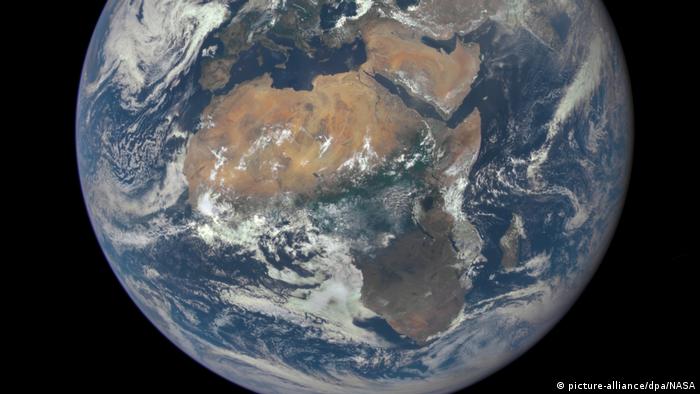
Around 13,000 researchers have called for urgent action to slow down the climate emergency as extreme weather patterns shock the world. They listed three core measures.


The call comes as extreme weather causes catastrophes across the world


Thousands of scientists reiterated calls for immediate action over the climate crisis in an article published Wednesday in the journal BioScience.

"The extreme climate events and patterns that we've witnessed over the last several years — not to mention the last several weeks — highlight the heightened urgency with which we must address the climate crisis," said Philip Duffy, co-author of the study and executive director of the Woodwell Climate Research Center in the US state of Massachusetts.

Two years ago, more than 10,000 scientists from around 150 countries jointly declared a global climate emergency. They are now joined by over 2,800 more signatories in urging the protection of life on Earth.

Since the 2019 declaration, Earth has seen an "unprecedented surge" in climate-related disasters, researchers noted.


IN PICTURES: DEADLY EXTREME WEATHER SHOCKS THE WORLD
Fierce flash floods in Europe
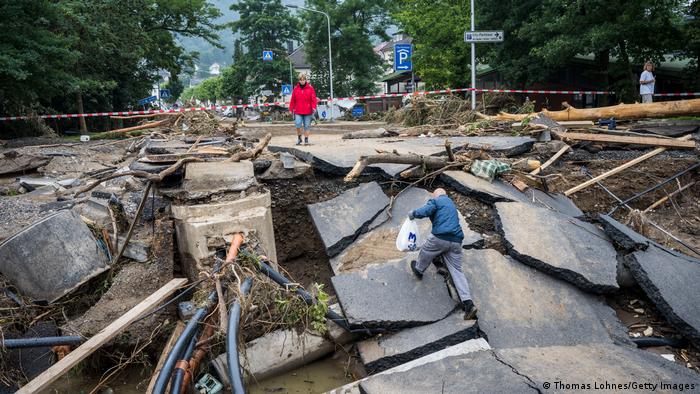
Unprecedented flooding — caused by two months' worth of rainfall in two days — has resulted in devastating damage in western Europe, leaving at least 209 people dead in Germany and Belgium. Narrow valley streams swelled into raging floods in the space of hours, wiping out centuries-old communities. Rebuilding the ruined homes, businesses and infrastructure is expected to cost billions of euros.
1234567891011

What are the signs?

For the study, researchers relied on "vital signs" to measure planetary health, including greenhouse gas emissions, glacier thickness, sea-ice extent and deforestation. Out of 31 signs, scientists found that 18 hit record highs or lows.

The year 2020 was the second-hottest year since records began, scientists said. And earlier this year, the carbon dioxide concentration in the Earth's atmosphere was higher than at any time since measurements began.

The authors noted that all-time low levels of ice mass have been recorded in Greenland and Antarctica. Glaciers are melting 31% faster than they did just 15 years ago, they added.

Meanwhile, the annual loss rate of the Brazilian Amazon reached a 12-year high in 2020.


Watch video04:09 WMO Scientist: 'Extreme events will increase in future'

Tim Lenton, director of the University of Exeter's Global Systems Institute and co-author of the study, said the recent record-breaking heat wave in the western United States and Canada showed that the climate had already begun to "behave in shocking, unexpected ways."

"We need to respond to the evidence that we are hitting climate tipping points with equally urgent action to decarbonize the global economy and start restoring instead of destroying nature," he said.


How can we respond to the climate crisis?


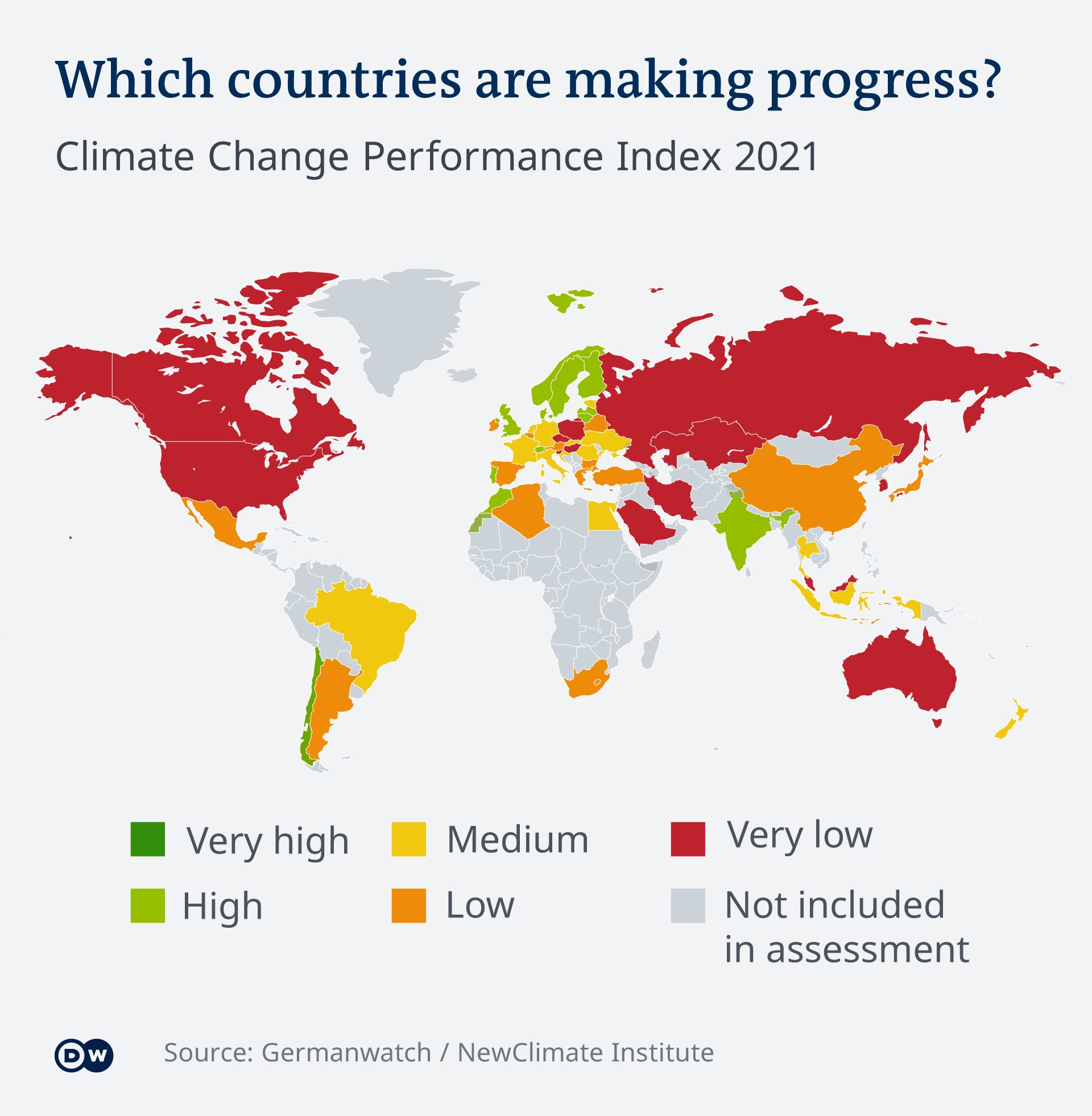
Researchers reiterated calls for transformative change, listing three main emergency responses in the immediate term:
Phasing out and eliminating fossil fuels
Implementing "a significant carbon price"
Restoring ecosystems such as carbon sinks and biodiversity hotspots

Climate change should be included in core curricula in schools worldwide to raise awareness, the authors said.

Scientists also urged slashing pollutants, stabilizing the human population and switching to plant-based diets.

"We need to stop treating the climate emergency as a standalone issue — global heating is not the sole symptom of our stressed Earth system," said William Ripple, a lead author of the study and professor of ecology at Oregon State University's College of Forestry.

"Policies to combat the climate crisis or any other symptoms should address their root cause: human overexploitation of the planet."

Watch video03:34  Jill Duggan: We need to take drastic action this decade

NORTH AMERICA TOO, YEG IS AN EXAMPLE

Why are German chemical plants located near big cities?

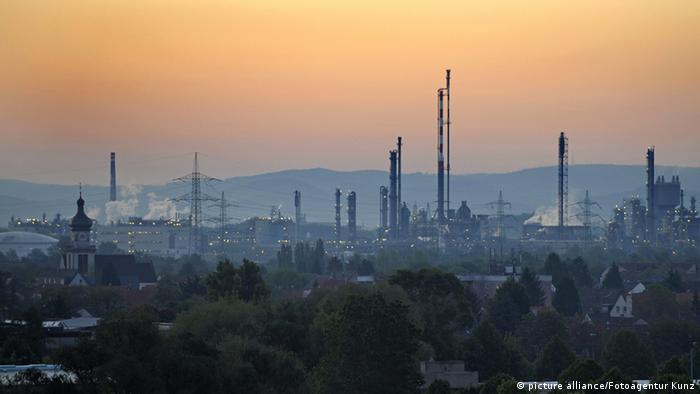
A fatal explosion at a chemical complex near Cologne has raised concerns about the park's proximity to one of Germany's biggest cities. Chemical plants located near major cities are a common sight in the country.


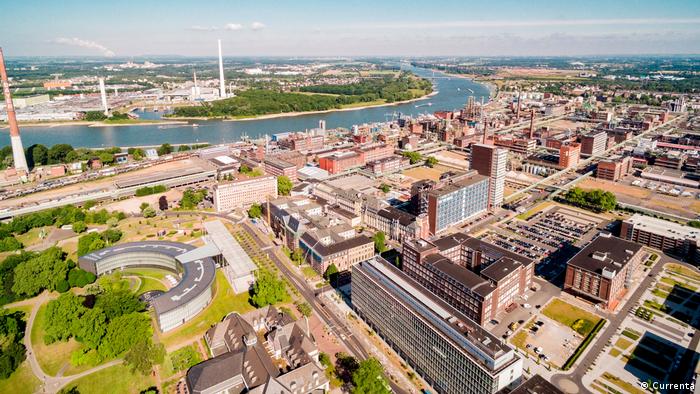
The Chempark in Leverkusen is one of the largest chemical hubs in Europe

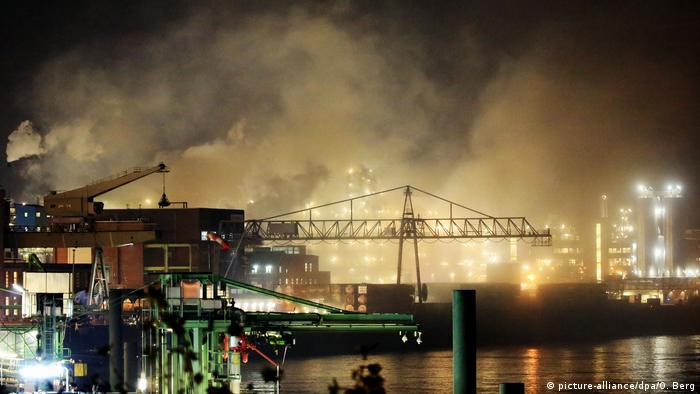
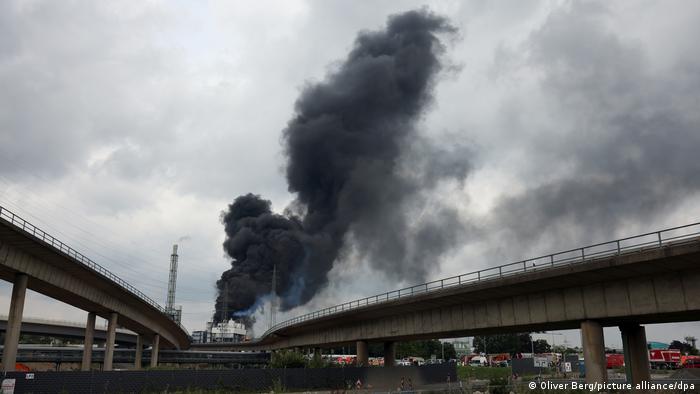
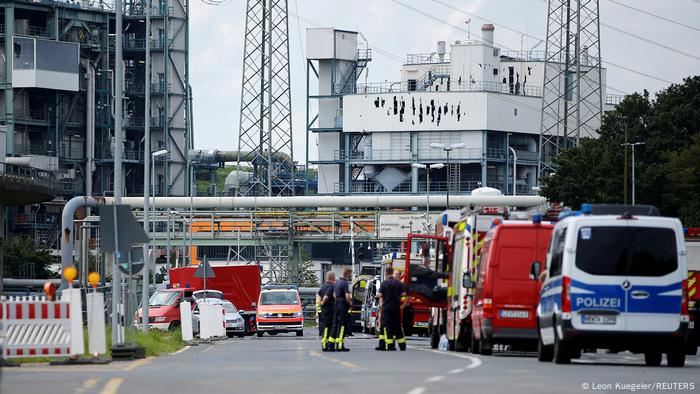
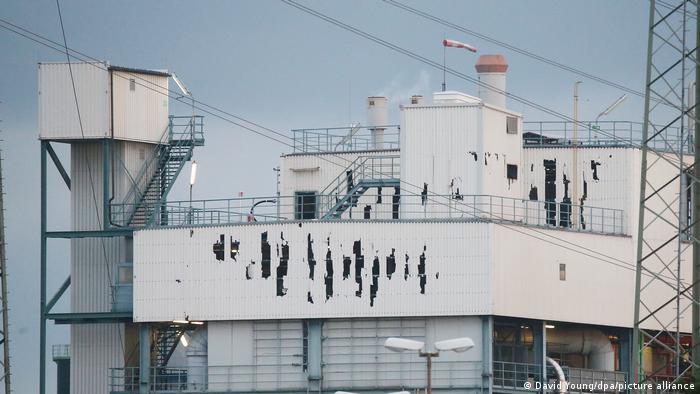
An explosion at a chemical plant in Leverkusen, about a 30-minute drive from the western German city of Cologne, has killed at least two people and left many more injured. Experts say the blast probably released toxic compounds into the surrounding area.

The tragedy has left many wondering what a massive chemical complex is doing so close to one of Germany's biggest cities, in the first place. In fact, other major German cities such as Mannheim and Leipzig also have large chemical complexes in their vicinity. 

The chemical industry in the Rhineland — a region of the German state of North Rhine-Westphalia — which includes the chemical park in Leverkusen, is one of the largest hubs for the industry in Europe. The region has over 260 chemical companies employing more than 70,000 people. The firms are often clustered together in so-called chemical parks.

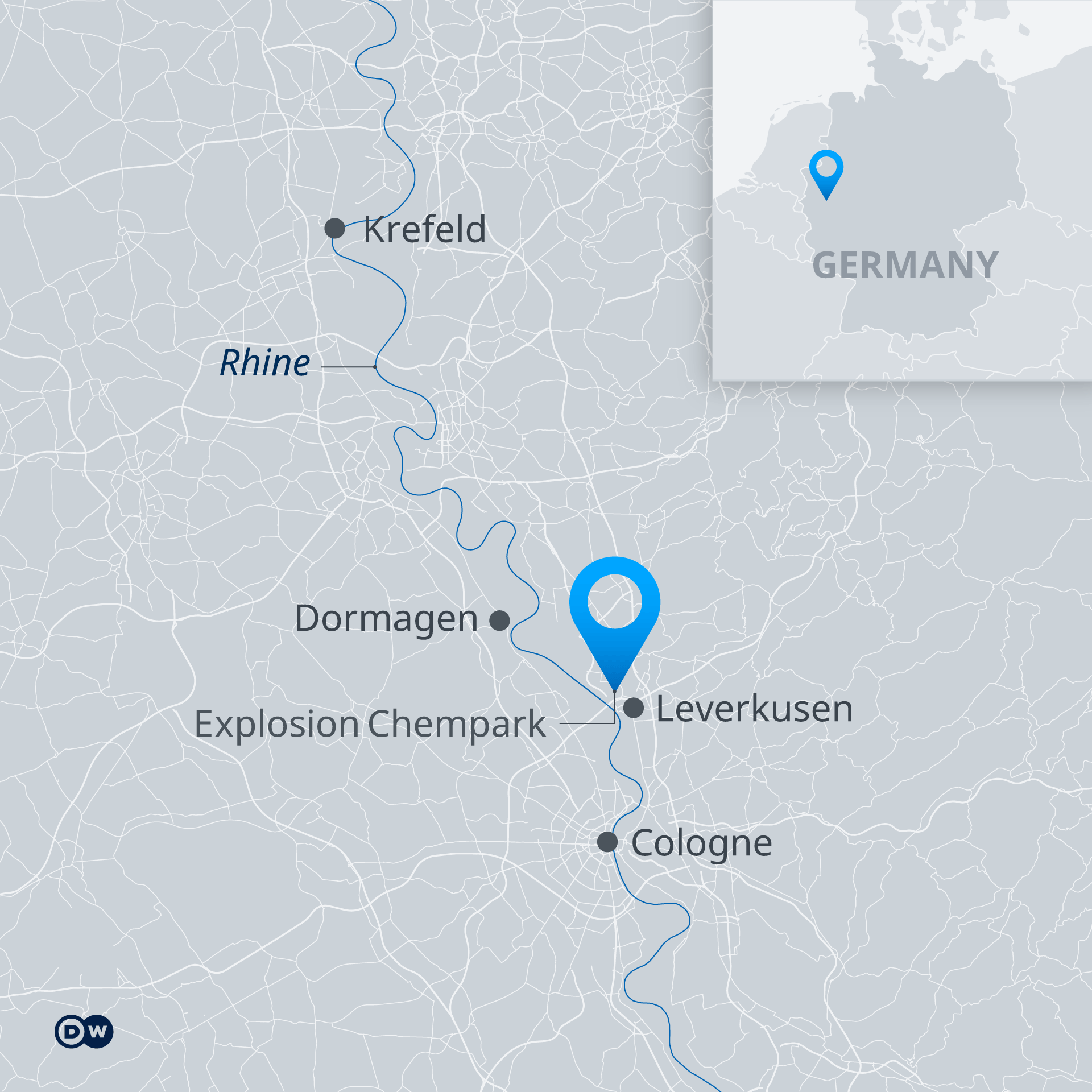
From Wesseling in the south to Dormagen in the north: Global companies such as Bayer, ExxonMobil Chemical, Ineos, Covestro, Lyondellbasell, and Lanxess are located within a few kilometers of Cologne, a city with a population of over 1 million people.

To understand how a major city and a chemical park can exist in such close proximity, one has to look back at the long history of the Rhineland as an industrial powerhouse. 

Carl Leverkus and the paint factory

The Rhine river played a decisive role. The river's usefulness as a commercial transport route ensured that many chemical companies set up their bases in the region at the end of the 19th century.

The city of Leverkusen even owes its name to the industry: In 1860, chemist Carl Leverkus moved his factory from Wermelskirchen to the nearby small town of Wiesdorf, on the Rhine. Less than 20 years later, the predecessor to the international chemical group Bayer, Farbenfabriken vorm. Friedr. Bayer, also moved to Wiesdorf from Elberfeld, which had become too small for the company's needs. Thanks to Leverkus' factory, all the important facilities needed for production were already available on the banks of the Rhine.


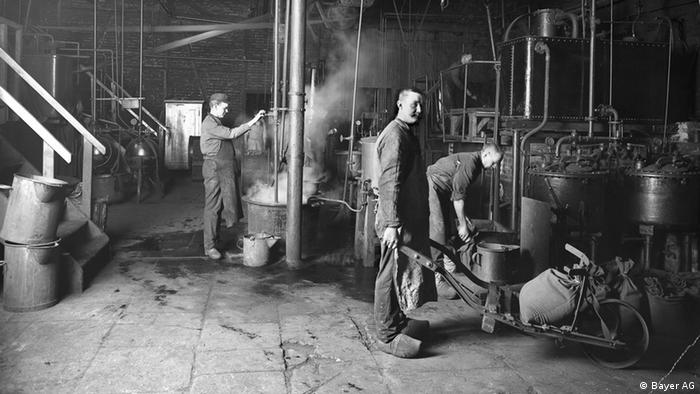
The beginnings: Production of chemicals in Elberfeld in 1888

In order to ensure that workers had a short commute to work, housing estates were built in the immediate vicinity of the factory. Soon the surrounding villages grew into towns, which eventually became today's Leverkusen. This is why the city's residential areas are still located in the immediate proximity of the factories today. At the same time, the growth of the industry led to the creation of more jobs, which led to an influx of people into cities like Cologne. 

During the economic miracle of the post-war years, the corporations located in the Rhineland grew considerably. Around the turn of the century, several chemical parks emerged from the restructuring of what had previously been individual chemical plants and operations. The idea was to combine the production activities of different companies at a single site, promote collaboration and create the necessary infrastructure — with success.

Chemical parks an 'export hit'

"The German chemical park model is an export hit," says Ernst Grigat, who headed the Chempark with its plants in Leverkusen, Dormagen and Krefeld-Uerdingen for more than 10 years. In China, more than a thousand chemical parks have been built on the German model, says Grigat, who holds a doctorate in Chemistry. This is because the concentration of expertise and resources enables better safety and environmental management.


Location of Chemical Park sites along the Rhine


The Rhineland also offers the chemical companies based there a competitive advantage. The density of the chemical parks allows the firms to cooperate with each other, Grigat says.

"There is a very strong relationship between the Rhineland plants, between Dormagen, Leverkusen and Wesseling," he told DW.

To that end, the site has access to seaports, is located at a main European transport intersection, and is connected to a unique pipeline system through which 50% of all materials can be transported.

"The people of Cologne may not know this," Grigat said. "But Cologne is the chemical capital of Germany, perhaps even of Europe."


A fire burns at the Chemical Park in Leverkusen in 2016

Risky prospect?

But isn't it dangerous to have chemicals being produced so close to cities? Not necessarily, says Grigat.

Of course, products created in the chemical industry could be dangerous. But a major advantage of the chemical parks is that they have the necessary safety infrastructure in place, such as fire departments that are specially trained in handling hazardous substances, he said. 

As a result, new companies are preferring to set up bases in chemical parks to ensure they are legally protected. Factories that were once located in an industrial area, but are now suddenly in the middle of the city due to urban growth, also prefer to move to a chemical park.

These parks are often planned at such a large scale that safety standards can be maintained despite the proximity to residential areas, Grigat said.


The article has been translated from German.

CHEMICAL INDUSTRY GIANT BASF TURNS 150
A global corporate player
There's no corporation in the chemical industry that has bigger revenues or a larger market cap than BASF. Sales in 2014 amounted to a hefty 74.3 billion euros ($79.9 billion). The company has 113,000 employees in more than 80 countries. The corporate HQ is in western Germany at Ludwigshafen am Rhein (pictured). BASF has more than 390 production sites around the world.
PHOTOS 12345678910


AFTER LYING THAT THE POISION FUME CLOUD WAS NOT TOXIC

Leverkusen explosion: What exactly are dioxins, furans, PCBs and PAHs?

After an explosion in Leverkusen in western Germany, authorities are warning that a series of toxins were probably released into the atmosphere. Locals have been told not to eat fruit and vegetables from their gardens.


ALL CHEMICAL PLANT EXPLOSIONS OR FIRES ARE TOXIC TO THOSE AROUND THEM


Locals have been warned not to touch any soot particles

During an explosion at a hazardous waste incineration plant at Chempark near Leverkusen in western Germany earlier this week, tanks containing chlorinated solvents burst into flames. The solvents, as well as greases, waste medicines, tar and other pollutants are usually incinerated at temperatures of around 1,100 degrees Celsius (2,012 degrees Fahrenheit).

Only when they are incinerated at temperatures of over 850 degrees Celsius can it be ensured that no dioxins, furans, polycyclic aromatic hydrocarbons (PAHs) or polychlorinated biphenyls (PCBs) remain in the combustion gases.

But if the incineration is not done properly, certain toxins, which belong to what are known as the dirty dozen of organic environmental pollutants, can remain or even be produced and then be dispersed into the atmosphere.

Thus, following this week's explosion, authorities have warned local residents not to touch any particles of soot or eat any fruit or vegetables from their gardens.

DW looks into what these different toxins are:

Dioxins and furans

This is a collective term for a group of 75 polychlorinated dibenzo-para-dioxins (PCDD) and 135 polychlorinated dibenzofurans (PCDF). One of the most toxic is the compound 2,3,7,8 tetrachlorodibenzo-p-dioxin (TCDD), which is associated with the 1976 Seveso disaster when between one and three kilograms (between approximately 2.2 and 6.6 pounds) were released into the surrounding area after an accident at a chemical manufacturing plant in Meda, not far from the Italian city of Milan. Some 3,300 animals died and there were about 200 cases of severe chloracne among humans.

Although the amount of dioxins released in the limited area around Seveso was significantly higher than the amount possibly released by the Leverkusen accident, German authoritieshave advised caution because dioxins can be harmful to health and carcinogenic even in the lowest concentrations.

The World Health Organization (WHO) has set a monthly tolerable intake of 70 picograms (a trillionth of a gram) per kilogram of body weight.


Chempark is a big industrial complex in western Germany

Depending on the specific compound, the toxins can attack the human reproductive system, immune system and nervous system and cause a hormonal imbalance. They accumulate in the body's adipose tissue and lipid stores and remain stable for a long time. They can remain in soil and plants for decades.

There are already many dioxins and furans in the environment around us. They are the by-products of improper combustion processes involving chlorine at temperatures of between 300 and 600 degrees Celsius. They are produced by smoking cigarettes, using frying oils, in the metal industry, when certain toxic waste is incinerated or wood is burnt. Forest fires and volcanic eruptions also release dioxins into the environment.

It is particularly problematic when varnished or treated wood is burnt on a campfire or plastic waste and car tires are burnt. Primitive methods of recycling e-waste also expose people to significant concentrations of toxins.

Dioxins and furans can be transported over long distances when dispersed into the air and enter the food chain via the soil and plants, eventually entering the human organism.

In 2011, German authorities discovered dioxins in eggs after fats intended for use in industry was mixed with animal feed. Thousands of poultry farms were closed.


The explosion in Leverkusen might have released damaging toxins into the air

PAHs

Like dioxins and furans, Polycyclic Aromatic Hydrocarbons (PAHs) are also released by improper combustion processes, for example, when coal, oils, solvents, wood or even tobacco are not incinerated completely.

They can also be caused by grilling, and particularly, burning meat and are found in tar and asphalt, waste oil and in ash.

These too are carcinogenic and damaging to genetic material and can remain in the environment for a long time.

PCBs

Polychlorinated biphenyls (PCBs) might also have been released into the atmosphere by the explosion in Leverkusen. These industrial chemicals were widely used in the chemical and electrical industries until the 1980s, for example in capacitators and transformers or in plasticizers in paints and sealants and other synthetic materials.

When they are incinerated, dioxins and furans are produced, but PCBs can also be released straight into the environment. These too are considered to be carcinogenic to humans and harmful to the immune system and hormonal balance.

Though many countries have banned their use, such large quantities were released into the atmosphere that there remain large quantities in the food chain.

This article was translated from German

Malta failed to protect murdered journalist, says inquiry

A public inquiry into the assassination of Daphne Caruana Galizia has concluded that the Maltese state failed to protect the journalist from threats to her life.


Daphne Caruana Galizia was killed in a massive explosion near her home village of Bidnija in October 2017


The government of Malta failed to adequately protect anti-corruption journalist Daphne Caruana Galizia and bore responsibility for creating a "culture of impunity," an independent inquiry into the car bomb murder concluded on Thursday.

The inquiry, conducted by one serving judge and two retired judges, found that a culture of impunity was created by the highest echelons of power within the government of the time.

"The tentacles of impunity then spread to other regulatory bodies and the police, leading to a collapse in the rule of law," said the panel's report.

Prime Minister Robert Abela, who made the inquiry report public, said that the report merited "mature analysis."

"Lessons must be drawn and the reforms must continue with greater resolve," he said.
Who was Daphne Caruana Galizia?

Caruana Galizia, an outspoken and well-known Maltese journalist, started looking into the Panama Papers leaks in 2016 and eventually uncovered offshore companies connected to Malta's business and political world.

Her anti-corruption career, partly as an opinion writer interested in politics, had led her to one of the most important investigative projects in Europe.

Watch video 26:06 Who is protecting the murderers? Maltese Foreign Minister Evarist Bartolo on Conflict Zone


When Caruana Galizia began uncovering high-level corruption in the country, she was slapped with both libel and defamation lawsuits that increased dramatically in the final year of her life.

Caruana Galizia was killed in a massive explosion near her home village of Bidnija in October 2017.

The murder caused international outrage, prompted sustained public protests across Malta and close scrutiny by the EU.
What did the judges say?

A public inquiry into Caruana Galizia's murder began in June 2019 following domestic and international pressure.

In their report, the three judges — two retired and one sitting — leading the inquiry said that the risk to Caruana Galizia's life escalated from the moment she exposed the corruption and offshore dealings of Malta's political and business elites through the 2016 Panama Papers leak.

That confrontation with the government continued to escalate "until the moment she was assassinated," the panel said.

They stressed that the state failed to recognize the real and immediate risks to Caruana Galizia's life and failed to take reasonable steps to avoid them.

The judges called for immediate action to rein in and regulate the close ties between the political and business elites.

They also recommended altering the criminal code to ensure better protection for journalists working in Malta.

Watch video 01:45 Pressure on Maltese government grows over murder case

Who is accused of masterminding the murder?


Prosecutors believe top businessman Yorgen Fenech, who has close ties with senior government officials, masterminded Caruana Galizia's murder.

Fenech, who is awaiting trial, denies all responsibility.

At a court hearing, Fenech implicated Keith Schembri, the chief of staff to former PM Joseph Muscat, who resigned in January 2020 following Fenech's arrest.

Muscat was never accused of any wrongdoing.

Three men suspected of setting off the bomb were arrested in December 2017. One has since pleaded guilty as part of a plea bargain and is serving a 15-year jail term. The other two are awaiting trial.

sri/aw (Reuters, dpa)
Protesters in Guatemala call for president's resignation


Issued on: 30/07/2021 - 
Demonstrators carry signs reading "Power to the People" during a protest to demand the resignation of Guatemalan President Alejandro Giammattei and Attorney General Maria Porras, in Guatemala City, Guatemala July 29, 2021. © REUTERS/Sandra Sebastian

Text by: NEWS WIRES


Thousands of Guatemalans took to the streets in protest on Thursday, lighting fires and blocking roads across the Central American country, to demand the resignation of President Alejandro Giammattei after the firing of a well-known anti-corruption prosecutor.

The protests have gained momentum since Guatemala's Attorney General Maria Porras last week removed anti-graft fighter Juan Francisco Sandoval as head of the Special Prosecutor's Office Against Impunity (FECI), a move that drew condemnation from Washington.

Sandoval, who fled Guatemala last weekend, said he was fired after the attorney general prevented him from trying to investigate corruption cases with links to Giammattei. The president has denied being involved in corruption.

In an interview with a local television channel last weekend, Porras said she always acted with transparency. "(Sandoval) exercised selective justice since he tried to prosecute people of opposite ideology," she said.

In Guatemala City, a crowd of thousands of people marched from the presidential palace to the attorney general's office holding signs that said "Giammattei, Resign."

Demonstrators set fire to tires and threw paint over police deployed to protect government buildings.

"Today we are in front of the presidential palace but a president does not live here: a traitor does," said Samuel Pérez, an opposition lawmaker who joined protesters.

By 5pm local time (2100 GMT) the protester numbers began to dwindle, while the remaining demonstrators were peacefully camped out in front of the National Palace of Culture, an imposing museum building that also houses some of the offices of the president.

The demonstrations in Guatemala City were part of a national strike called by indigenous leaders, social groups and student organizations to demand the resignations of Giammattei and Porras.

The latest protests highlight growing internal frustrations in Guatemala over corruption and the dismantling of judicial independence. In 2015, waves of such anti-corruption demonstrations brought about the downfall of then-president Otto Perez Molina.

On Thursday, across the impoverished nation of 17 million people, protesters blocked traffic at major intersections and marched with banners calling for the departure of the president, elected two years ago.

"We are here to tell the president that we do not recognize him as president because he no longer represents the interests of our country," said Martín Toc, an indigenous leader from Totonicapán, in western Guatemala.

Since he fled, Sandoval has told various media outlets that the president was linked to an incident last year, where 122 million quetzals, equivalent to over $15 million, were found stuffed in suitcases in the house of a former infrastructure minister.

Sandoval also said he was investigating how unidentified businessmen from Russia had allegedly delivered bags of cash to the president in a meeting at his house, an event, he said, which was in some way linked to the Sputnik V coronavirus vaccine.

Giammattei this week strongly denied all the claims, and added that the allegations involving the businessmen were "false comments bordering on slander and defamation."

U.S. suspends cooperation

The United States, which strongly condemned Sandoval's dismissal, said on Tuesday it was pausing some cooperation with Guatemala's attorney general, as it tries to apply pressure on Central American governments to end impunity.

U.S. President Joe Biden's administration has made the fight against corruption a central plank of its strategy towards the region as it aims to address the root causes of illegal migration to the United States, which has increased this year.

In a statement shared on Twitter, Giammettei said on Thursday that the U.S. decision to suspend support to the attorney general was "counterproductive" in the fight against organized crime and corruption.

U.S. Special Envoy for the Northern Triangle Ricardo Zuniga, when asked about Giammattei's comments, told reporters in Washington that Sandoval's dismissal had raised serious questions Guatemala's commitment to fighting graft.

"We made very clear in our response that we had lost confidence in the attorney general," he said.

While police guarding government buildings faced off with protesters in the capital, no incidents of violence were reported.

Thursday's demonstrations came after hundreds of Guatemalans protested outside the presidential palace on Saturday after Sandoval's firing.

Giammattei's government also faced protests last November when a group of demonstrators set fire to the Congress building over cuts to education and health in the 2021 budget. Days later, Congress retracted the budget.

(REUTERS)
1984

Hong Kong police investigate Olympic chants, China anthem booing


Issued on: 30/07/2021 - 
Some Hong Kongers booed China's national anthem after watching Edgar Cheung win fencing gold 
ISAAC LAWRENCE AFP


Hong Kong (AFP)

Hong Kong police on Friday said they had launched an investigation into Olympic Games fans who booed China's national anthem and drowned it out with chanting during a public screening at a mall.

The Chinese international finance hub has had its best Games on record with Edgar Cheung winning gold in fencing and Siobhan Haughey taking two silvers in swimming.

But the sporting success also comes at a politically turbulent time for the city as China cracks down on dissent in response to huge and often violent democracy protests two years ago.

Hundreds of fans gathered in a mall on Monday night to watch Cheung's winning bout, erupting into rapturous applause and cheers when he came out on top.

At the subsequent medal ceremony, some fans initially booed China's national anthem and then chanted "We are Hong Kong" in scenes that were broadcast live.

"We are Hong Kong" is often chanted by Hong Kong football fans, many of whom revel in the city's unique identity and Cantonese culture compared to the primarily Mandarin-speaking Chinese mainland.


It was often chanted by football fans when China's national anthem played ahead of matches.

Hong Kong authorities passed legislation last year banning any insults to China's national anthem and flag with officials specifically citing football fans as one of the reasons they deemed the law necessary.


On Friday, police confirmed they were looking into whether the Olympic mall fans had broken the law.

"The police have initiated an investigation into the incident and will collect relevant evidence," a spokesperson told AFP.

Police did not give further details.

A senior police source told AFP the investigation would cover "any insulting acts" towards the national anthem.

Hong Kong is a former British colony that was handed to China in 1997.

Beijing promised the city could maintain key liberties and autonomy for fifty years after the handover.

The city was a bastion of free speech inside authoritarian China and democracy protests bubbled for years until they exploded in a huge popular street protest movement two years ago.

Since then, China has sought to remould the city in its own authoritarian image.

It has imposed a sweeping national security law that criminalises much dissent and pushed an official campaign to root out anyone deemed unpatriotic.

© 2021 AFP
'Our homeland is burning': Volunteers join Siberia wildfire fight

Issued on: 30/07/2021 
With emergency services struggling, hundreds of volunteers have joined the efforts to contain the blazes, which experts have linked to climate change
 Dimitar DILKOFF AFP

Byas-Kyuel (Russia) (AFP)

The father and son stood in the forest burning around them, the elder with a shovel in hand, the younger with a plastic bottle filled with gasoline.

As the son poured the fuel onto the forest floor, watching as the rising flames rendered white birch trunks black, his father shovelled dirt onto embers that popped across the other side of a trench marked for a controlled burn.

Ivan Fyodorov, 65, and his 42-year-old son Pyotr were helping firefighters on an afternoon in late July to prevent a wildfire from reaching their land in the Siberian region of Yakutia.

While large wildfires are an annual occurrence in Siberia, the blazes have hit Yakutia with an increasingly ferocious intensity the past three years, scorching its legendary vast northern forests known as the taiga.#photo1

With firefighters and emergency services struggling, hundreds of volunteers have joined the efforts to contain the blazes, which experts have linked to climate change.

Fyodorov said the first fire had come close to his farmland around the village of Byas-Kyuel in June, but they were able to beat it back.

Then came the second. Then the third.

"At that point we didn't have the strength. It's good these guys came," he said of the dozen firefighters working nearby.

Citing government inaction, Fyodorov said that he and his family have taken the fight into their own hands.

Pyotr had been helping him for 17 days straight, while his other three sons and daughter travelled four hours by car from the regional capital Yakutsk at the beginning of July to do their part.#photo2

"We haven't been able to cut our hay yet because we've been busy fighting the fires," Fyodorov said.

Asked what he would do if the fires keep intensifying in the coming years, he said: "I'll fight the fires, what else can I do."

"I've lived my whole life in the taiga. I'm dependent on nature," he added. "We have to protect it."

- 'Nothing to breathe' 


The fires have not only affected the taiga.

For days in July Yakutsk was covered in a smog that monitors called one of the world's worst-ever air pollution events.

In the city of some 300,000 people on a late July weekend evening, volunteers were preparing to leave in a convoy for the Gorniy district, which is home to Byas-Kyuel and where some of the most intense fires had raged that month.

Some three dozen members of a local athletics club gathered around a dummy on the floor in a volunteer centre where two emergencies ministry officials conducted a rapid rescue training session.

"Our job is to get you ready as quickly as possible," one yelled out to the group.

The men, eager to get moving, half-listened as they shuffled back and forth.#photo4

"When our homeland is burning, we can't stand on the sidelines," said the club's 50-year-old head, Turgun Popov.

He told AFP that their goal was not to put out the fire on their own, but to give professionals "the chance to rest for a couple of hours or a couple of days because they have been putting out the fires for months."

Earlier that day the centre had sent 10 volunteers by helicopter to the Lena Pillars national park -- a natural rock formation on the UNESCO heritage list -- and was planning to send more that week.

As the emergencies ministry officials trained the sporting club members, 25-year-old volunteer Lili Odun received two phone calls from others interested in deploying.

"There's nothing to breathe," he said.

© 2021 AFP
Myanmar democracy movement moves out of jailed Suu Kyi's shadow

Issued on: 30/07/2021 - 05:28Modified: 30/07/2021 - 05:26
Aung San Suu Kyi remains a revered figure in Myanmar for her courageous opposition to military rule, despite her international reputation suffering after she governed in a power-sharing deal with the generals 
STR AFP/File

Yangon (AFP)

Imprisoned by the military, detained Myanmar leader Aung San Suu Kyi is isolated from the young protesters now forging their own struggle for democracy outside of her shadow.

Sunday marks six months since her National League for Democracy (NLD) government was ousted, setting off a mass uprising and violent military crackdown that has killed nearly 1,000 people.

Suu Kyi remains a revered figure locally for her courageous opposition to a previous junta, despite her international reputation suffering after she governed in a power-sharing deal with the generals.

But for many still fighting, the revolution must go further than the movement the Nobel laureate led decades ago, and permanently root out military dominance of the country's politics and economy.

"We're on strike not because of the NLD, but because we don't want our next generation to live under the military like we did," a 33-year-old doctor -- fired after joining protests -- told AFP.

Flash mob rallies organised on social media and adoption of the three-finger pro-democracy salute show Myanmar's younger activists share more in common with contemporaries in Hong Kong and Thailand than the elderly veterans of their own country's political struggles.

Suu Kyi still has the respect and love of many in Myanmar, said Manny Maung, a researcher at Human Rights Watch, "but more as a historical figure."

The democracy campaign "no longer wants an icon", she added.

"They have a much more decentralised approach to power and want to see the emergence of diverse political forces."

Some have also shunned nonviolence -- a core principle of Suu Kyi's.

Hundreds are believed to have trekked into jungle areas to receive combat training from veteran rebel groups, with hopes of returning to fight the military.

Urban guerrillas have also clashed with junta forces, with the military reporting two officers killed in a gun battle with a local group in the central city of Mandalay last month.

- 'Eager for renewal' -


Suu Kyi has largely disappeared from view, seen only in grainy state media photos from the bare courtroom hosting her trial and relying on her lawyers to relay messages to the outside world.

It is a far cry from her long spells under house arrest during the last period of military rule, where she sometimes appeared before thousands gathered on the other side of her garden fence in Yangon.#photo2

Off the streets, a shadow "National Unity Government" of ousted lawmakers from Suu Kyi's party is working to garner international support and direct opposition to the junta without her.

But within its ranks are "strong divisions between the old guard loyal to Suu Kyi and the progressive wing that is eager for renewal," Maung told AFP.

The group recently invited the country's Rohingya community to join the fight against the junta, promising an end to discriminatory policies against the stateless minority.


The use of the word "Rohingya" was new -- Suu Kyi's government had refused to even use the term.

Her refusal to condemn a brutal 2017 crackdown that sent 750,000 Rohingya fleeing to Bangladesh sorely damaged her reputation abroad, especially after she travelled to The Hague to defend the generals against genocide charges.

- 'A generation's struggle' -

The coup has shown the world that Myanmar's battle for democracy was more complex than an earlier era when freeing Suu Kyi from house arrest was considered "the solution," said Richard Horsey of the International Crisis Group.

He added, however, that Suu Kyi remained a "potentially potent political force" in Myanmar.

People across the country paid homage to her on her 76th birthday in June by wearing flowers in their hair -- a signature Suu Kyi look since she began campaigning for democracy in the 1980s.

The regime has levelled a number of charges against the detained leader that could see her imprisoned for more than a decade if convicted on all counts.

For those still free to fight, there is no room for a repeat of Suu Kyi's last compromise with the generals.

"It wouldn't work if we discuss with them," said one organiser of the sporadic flash mobs still popping up in Yangon.

"They are always armed and oppress people. The people expect to go to overthrow their military dictatorship."

© 2021 AFP
'They are wicked': Myanmar's strike holdouts keep up junta defiance

Issued on: 30/07/2021 -
Ongoing strikes have left Myanmar's junta deprived of staff to manage utilities, issue bills and collect taxes STR AFP/File


Bangkok (AFP)

Doctors healing patients from hiding, teachers giving up their classrooms and bankers losing their savings are among the stubborn holdouts still on strike to protest Myanmar's military coup six months ago.

Thousands of civil servants joined a mass walkout in the days after the February ouster of Aung San Suu Kyi's government in an effort to deny the junta legitimacy, manpower and resources.

It is difficult to know how many are still participating in the campaign, with many sacked for joining protests and a severe coronavirus outbreak likely keeping others away from their desks.

The strikes have left the junta deprived of staff to manage utilities, issue bills and collect taxes.

It has appealed for medical workers, engineers and IT specialists to come forward to help its coronavirus response -- and dangled the promise of vaccines for those who do.

A state-backed power company in the commercial capital Yangon warned customers this month that a running boycott on bill payments was bleeding it of cash and affecting electricity supply.

AFP spoke to a doctor, a teacher and a banker about how they were resisting the junta regime. All asked to use pseudonyms for safety reasons.

- 'I will choose to die' -


Shwe Ya Min worked for Myanmar's central bank for 17 years but she and her husband both went on strike soon after the coup, joining colleagues in a walkout that paralysed the banking system.

Businesses have since struggled to pay employees and buy supplies, the World Bank said this week in a report forecasting the country's economy would contract by 18 percent in 2021.#photo1

Shwe Ya Min and her husband were both fired in May for not coming back to work, a dismissal she said was a "relief" -- even though it came with a demand they return their back pay.

"We loathe (the junta) very much," she says. "They are wicked."

She and her family are not paying any government bills and have stopped sending their daughter to school in the commercial capital Yangon, but money is tight.

"We have been eating with what we saved, which will last only until next month," she says.

Some of her colleagues "are selling eggs and betel nut to pay the rent", she adds.

But she says has no regrets about the decision.

"I will choose to die from starvation instead of going back to work."

- 'We won't turn back' -


Doctor Yin Maung, 33, left his job to work in a clinic providing free treatment for wounded protesters in Mandalay, Myanmar's cultural capital.

He was one of nearly 500 doctors studying for advanced degrees in the city to be expelled from the programme after defying repeated calls to come back to work.

He now practices medicine underground with other doctors, giving online and phone consultations to Covid-19 patients who still boycott junta-run hospitals.#photo2

He lives in fear of being arrested -- or worse.

"I fear they will kill me from behind while I am treating the patient," he tells AFP.

Remote medicine is hard: "Doctors are happy only when they are in contact with patients," he says.

"The goals I lived with my whole life are now hopeless."

"But, it also gives a stronger determination that we won't turn back."

- 'All of us are depressed' -

Khin Lin, her mother and her sister all worked as teachers until they joined the civil disobedience movement, giving up salaries they used to support their relatives.

Her mother was just eight months shy of retirement and a pension when the coup hit, but ignored requests from her extended family to keep working.#photo3

Many fellow teachers have also stayed away -- the beginning of the academic year in June saw shuttered schools and empty lecture halls across the country.

Khin Lin now goes from house to house to teach, work she finds "exhausting", but she needs the money.

The 28-year-old says she is dismayed that some colleagues would "betray and return to work, instead of fighting together."

The strike is taking a toll on her family life, with the added stress of spending more time at home together as Myanmar battles its latest coronavirus surge.

"All of us are depressed," she says.

But she says that no matter what difficulties lie ahead, she will continue to participate in the civil disobedience campaign.

"I am naturally stubborn and determined... I continue what I have to do," she adds.

"They don't treat us like human beings."

© 2021 AFP
Flawed scientific papers fueling Covid-19 misinformation

Issued on: 30/07/2021 -
Anti-vaccination activists protest in New York City on June 20, 2021 Roy Rochlin GETTY IMAGES NORTH AMERICA/AFP/File
3 min
ADVERTISING


Washington (AFP)

Scientific studies with poor methodology and inaccurate findings are exacerbating a Covid-19 misinformation crisis that is discouraging vaccination and putting lives at risk.

The intense public interest in the pandemic and divisive debate in the United States over how to address it facilitates the spread of faulty research papers online, including by vaccine opponents. And even if a study is retracted, it is too late.

"Once the paper is published, the damage is irrevocable," said Emerson Brooking, resident senior fellow at the Atlantic Council's Digital Forensic Research Lab, which focuses on identifying and exposing disinformation.

Flawed papers "have been fuel to the fire for Covid-19 skeptics and conspiracy theorists. They are frequently the subject of viral online activity. Their findings are further filtered through salacious and misleading articles from fringe websites," Brooking told AFP.

Inaccurate information about vaccines is especially dangerous at a time when uptake of the shots has slowed in the United States, where health officials say almost all recent Covid-19 deaths occurred among those who were not immunized.

- 'Shock your socks off' -


Medical journal Vaccines published a peer-reviewed paper in late June titled "The Safety of Covid-19 vaccinations -- we should rethink the policy." It concluded that Covid-19 shots were causing two people to die for every three they saved -- findings that quickly spread on social media.

A tweet from scientist and Covid-19 vaccine critic Robert Malone summarizing the paper garnered thousands of retweets. A video in which conservative pundit Liz Wheeler discussed the study -- which she said "will shock your socks off" -- has been viewed more than 250,000 times on Facebook.

But Vaccines then retracted the paper, saying it contained "several errors that fundamentally affect the interpretation of the findings."

At least four Vaccines board members resigned as a result of the study's publication, including Katie Ewer, an associate professor and senior immunologist at the University of Oxford's Jenner Institute.

"It should have been recognized that this paper would have a big impact," said Ewer, who was not involved in its publication. "That no one at the journal picked up on that... is very worrying, especially for a journal dedicated to vaccines."

Malone's tweet about the paper is no longer available, but Wheeler's video still appeared on Facebook weeks later.

The Gateway Pundit, a website that frequently publishes inaccurate claims, reported earlier in the year that a Stanford University study found mask wearing, which US health authorities recommended to help slow the spread of Covid-19, to be "ineffective" and harmful.

- 'Do a better job' -


The study -- "Facemasks in the Covid-19 era: A health hypothesis" -- was subsequently retracted by the journal Medical Hypotheses, which said it selectively cited published papers and included "unverified" data.

The Gateway Pundit's article -- which has been shared tens of thousands of times as a link or screenshot on social media -- was updated to say the study's author was unaffiliated with Stanford, but it failed to mention the retraction.

Some of the biggest scientific journals, including The Lancet and the New England Journal of Medicine, have retracted papers related to the coronavirus crisis, and even a limited number of faulty studies can cause extensive damage online.

Scientific papers have been drawn into the public eye in "an unprecedented way," so experts must "do a better job" of explaining their work to a lay audience that may lack the skills to assess them, said Maimuna Majumder, a computational epidemiologist at the Harvard Medical School.

"Not all of the studies that have been produced and widely shared during the pandemic have been scientifically robust," Majumder said.

"This is particularly troubling because poorly-executed studies have proven to be capable of influencing individual-level decision-making during the pandemic, including those pertaining to vaccination."

© 2021 AFP


HERE IS THE MOST RECENT EXAMPLE OF RIGHT WING KNOW NOTHINGS CHALLENGING SCIENCE AS POLITICS


THE RIGHT PRESCRIPTION

Nope, I Won’t Mask Up Again

The science doesn’t support the latest CDC whim. 

by DAVID CATRON

July 30, 2021, 


Last March, I followed the CDC’s advice and got fully vaccinated against COVID-19. I did so more out of a sense of civic duty than any actual fear that I might contract the virus. It was just an easy and scientifically sound way to help slow its spread. Naturally, I was delighted when the CDC finally announced that fully vaccinated people could safely participate in indoor and outdoor activities without wearing inconvenient and clinically useless face masks. Now, the CDC has reversed itself and issued new guidance telling 163.6 million fully vaccinated Americans to put our masks back on. Sorry, no sale.

First, the CDC published no data supporting its bizarre reversal. The Washington Post reports: “In the text of the updated masking guidance, the agency merely cited ‘CDC COVID-19 Response Team, unpublished data, 2021.’” Moreover, CDC Director Rochelle Walensky is struggling to produce a plausible explanation. She claimed without evidence on ABC News that “new science” has emerged showing that fully vaccinated people should be masking.

Meanwhile, Rep. Dan Crenshaw (R-Texas) points out that the CDC decision was based on a defective study involving a vaccine that hasn’t been approved in the U.S.:


The “game-changer” data the CDC used for the mask mandate is from a single study from India. The study was rejected in peer review. . . . And just before the new decision was made, the study’s status was mysteriously changed — it no longer listed the study as “rejected after peer review.” The site said it was a “glitch.” Pretty convenient glitch. . . . The “party of science” isn’t listening to science. They never have. This latest mask guidance is proof. But Democrats don’t care. Because this isn’t about public health. It’s about public control.

Crenshaw is right. The Democrats never approved of lifting any of the “temporary” mitigation measures they imposed on us last year, ostensibly to get COVID-19 under control. When the CDC finally acquiesced to public pressure last spring and permitted the vaccinated to return to our normal lives, they immediately revealed themselves as anti-science zealots. We began to hear calls for vaccine passports despite the absence of public enthusiasm. A recent Gallup survey found that majorities oppose such passports for restaurant dining, staying in hotels, and entering the workplace. But Democrats don’t trust us with so much liberty.

After the CDC set the vaccinated free last May, former Obama administration official Kavita K. Patel wrote in The Hill that trusting Americans to follow an honor system on vaccinations was magical thinking: “People are much more likely to lie, especially if they enter a business or establishment with the majority of persons unmasked and they are simply asked to self-report vaccination status.” This provides a valuable insight into the contempt Democrats have for the voters.

Harvard’s Martin Kulldorff and Stanford’s Jay Bhattacharya explain in the Wall Street Journal how inequitable and dangerous vaccine passports would become.

Vaccine passports are unjust and discriminatory. Most of those endorsing the idea belongs to the laptop class — privileged professionals who worked safely and comfortably at home during the epidemic. Millions of Americans did essential jobs at their usual workplaces and became immune the hard way. Now they would be forced to risk adverse reactions from a vaccine they don’t need. Passports would entice young, low-risk professionals . . . to get the vaccine before older, higher-risk, but less affluent members of society. Many unnecessary deaths would result.

Also, as a practical matter, mandating vaccine passports would inevitably create a black market through which forgeries could easily be purchased. Indeed, they are already available. Second, it isn’t necessary to rely on the honor system. If you have been fully vaccinated, your chances of contracting COVID-19 or the dreaded Delta variant in a restaurant or grocery store are very nearly zero. Even considering the immunocompromised, it isn’t reasonable to impose a passport mandate on the entire country to accommodate 3.6 percent of the population. Consequently, the public should reject vaccine passports and face masks.

All of this brings me back to my refusal to wear a mask that no one who recalls middle school biology believes will protect me. The last time I was in a doctor’s office, I asked if it was really necessary to wear a mask. He took off his own mask and said, “I’ve been vaccinated, and you’ve been vaccinated. You have a higher chance of being struck by lightning than of contracting the virus.” Another physician with whom I cycle from time to time put it a little more coarsely (this is the cleaned-up version): “If you can detect flatulence through your face mask, it won’t protect you from COVID-19, the Delta variant, or any other virus.”


So, I’m not going to wear a mask. If any employee of any retail establishment asks me to put on a mask, I will take my custom elsewhere. If anyone in any public building paid for by my tax dollars tells me to don a mask, I will tell them, “No,” and invite them to call the police if they dislike that response. If anyone bothers me in any place of public accommodation, I will politely tell them to mind their own business and advise them that I myself will call the police if they continue to harass me. I’m not wearing a face mask.


David Catron
FOLLOW THEIR STORIES:VIEW MORE
David Catron is a recovering health care consultant and frequent contributor to The American Spectator. You can follow him on Twitter at @Catronicus.