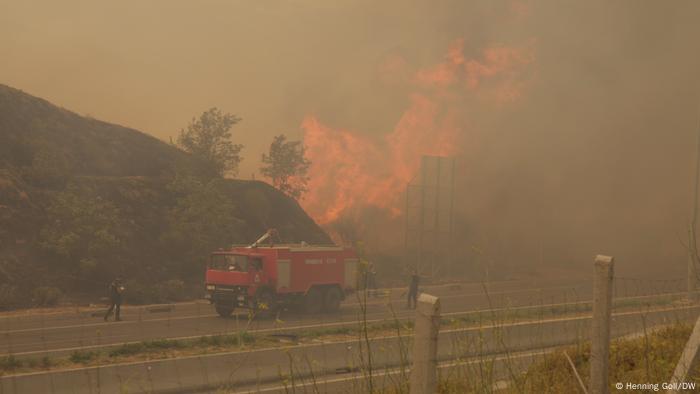
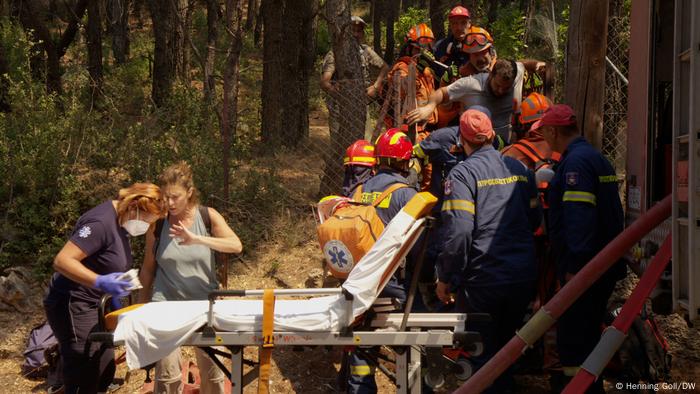
A new assessment of the science of climate change makes grim reading for the world as governments prepare for the critical Cop26 United Nations summit in Glasgow in November.
By Bob Ward
Tuesday, 10th August 2021
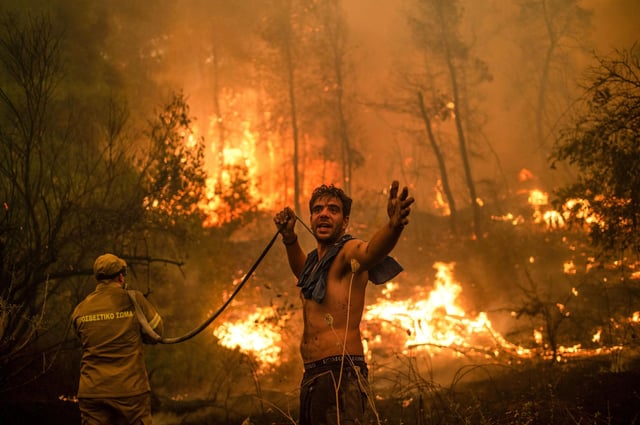
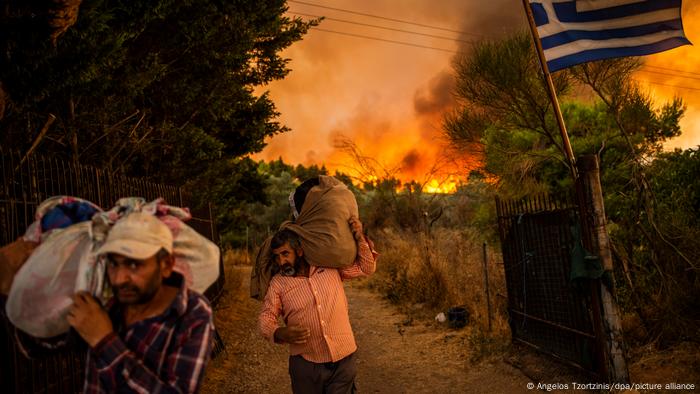
A local resident gestures for help as he tries to tackle a wildfire approaching the village of Pefki on Evia island in Greece. No water is getting through to the hosepipe
(Picture: Angelos Tzortzinis/AFP via Getty Images)
The report by the Intergovernmental Panel on Climate Change (IPCC) concludes that many of the consequences which it forecast in its previous reports are now happening. And it warns that we are perilously close to missing the targets agreed in Paris six years ago to avoid dangerous climate change.
This is the first comprehensive assessment of the state of knowledge about climate change science that the IPCC has issued since 2013. It is nearly 4,000 pages in length, prepared by 234 authors from 66 countries who have spent the last three years reviewing more than 14,000 studies.
The report includes a 41-page ‘Summary for Policymakers’ that was approved line by line over the past two weeks by representatives from almost every government in the world.
It finds that the global average surface temperature has increased by just over one degree Celsius since the second half of the 19th century. The Earth is now warmer than it has been for since 125,000 years ago, when the polar ice caps were smaller and global sea level was about five to ten metres higher than today.
Unlike earlier assessments, this report blames all of the rise in temperature on human activities, particularly the burning of fossil fuels. It notes that the warming has been slightly offset by cooling from fine aerosol particles we have released into the atmosphere, which have been blocking out some of the Sun’s energy.
The consequences of this warming are laid out in stark terms. Glaciers around the world have shrunk, the surface of the vast Greenland ice sheet has started to melt, and all the extra water has led to an accelerating rise in global sea level.


Read MoreCOP26: The five key takeaways from international report on climate change catast...
While the IPCC has documented these impacts before, the authors are now confident that our greenhouse gas emissions are making extreme events more frequent and intense. The summary states: “Human-induced climate change is already affecting many weather and climate extremes in every region across the globe.”
It draws attention to stronger evidence for “observed changes in extremes such as heatwaves, heavy precipitation, droughts, and tropical cyclones, and, in particular, their attribution to human influence”.
However, as the report only reviews the evidence that had been documented by scientists before February this year, it excludes the most recent heatwaves, floods and wildfires that have occurred over the past few months.
But it is the forward-looking part of the report that is the most worrying. It lays out five different scenarios for global emissions. The most extreme assumes that the annual amount of global emissions of carbon dioxide triples over the next 60 years, leading to a global temperature by the end of the century that could be almost 6C higher than in the second half of the 19th century.
In its scenario assuming the strongest action against emissions, carbon dioxide output falls rapidly and reaches net zero soon after the middle of the century, before becoming negative. It would mean cutting emissions as much as possible and any residual amounts after about 2050 would need to be outweighed by human activities that remove carbon dioxide from the atmosphere through planting more trees and other vegetation, or by using synthetic means to filter it out and permanently store it, including in disused North Sea oil and gas wells.
In this case, global temperature would probably reach 1.5C above the late 19th century baseline by 2050 before dropping slightly by the end of the century.
In another scenario, carbon dioxide emissions reach zero and become negative by about 2075. Warming would exceed 1.5C but would stay below 2C by the end of the century.
These two scenarios would meet the upper and lower limits of the target set in the Paris Agreement, which commits governments to “holding the increase in the global average temperature to well below 2C above pre-industrial levels and pursuing efforts to limit the temperature increase to 1.5C”.
But the IPCC report makes clear that even if we succeed in meeting these targets, the climate will continue to change for at least the next 30 years. It warns that there will be “increases in the frequency and intensity of hot extremes, marine heatwaves, and heavy precipitation, agricultural and ecological droughts in some regions, proportion of intense tropical cyclones as well as reductions in Arctic sea ice, snow cover and permafrost”.
In other words, the world will have to become more resilient to these impacts while also making every effort to stop global warming.
The nastiest part of the IPCC assessment lurks towards the end of the summary, in a section that it describes as “low-likelihood outcomes”. These are sometimes described as tipping points or climate thresholds because they result in irreversible, unstoppable or accelerating global or regional impacts. They include destabilisation of the polar ice sheets, leading to rapid or large sea-level rise, and the death of major forests, such as the Amazon.
The summary states: “The probability of low-likelihood, high-impact outcomes increases with higher global warming levels. Abrupt responses and tipping points of the climate system, such as strongly increased Antarctic ice sheet melt and forest dieback, cannot be ruled out.”
Given that these could have the most serious consequences for the world, it is surprising that the IPCC report does not give them greater prominence.
Some will regard this IPCC report as another depressing indicator that we are already doomed. But it is important that it leads to a strengthening of resolve by individuals, companies and governments to accelerate and strengthen all our efforts to tackle climate change.
Bob Ward is policy and communications director at the Grantham research institute on Climate Change and the Environment at the London School of Economics and Political Science
The report by the Intergovernmental Panel on Climate Change (IPCC) concludes that many of the consequences which it forecast in its previous reports are now happening. And it warns that we are perilously close to missing the targets agreed in Paris six years ago to avoid dangerous climate change.
This is the first comprehensive assessment of the state of knowledge about climate change science that the IPCC has issued since 2013. It is nearly 4,000 pages in length, prepared by 234 authors from 66 countries who have spent the last three years reviewing more than 14,000 studies.
The report includes a 41-page ‘Summary for Policymakers’ that was approved line by line over the past two weeks by representatives from almost every government in the world.
It finds that the global average surface temperature has increased by just over one degree Celsius since the second half of the 19th century. The Earth is now warmer than it has been for since 125,000 years ago, when the polar ice caps were smaller and global sea level was about five to ten metres higher than today.
Unlike earlier assessments, this report blames all of the rise in temperature on human activities, particularly the burning of fossil fuels. It notes that the warming has been slightly offset by cooling from fine aerosol particles we have released into the atmosphere, which have been blocking out some of the Sun’s energy.
The consequences of this warming are laid out in stark terms. Glaciers around the world have shrunk, the surface of the vast Greenland ice sheet has started to melt, and all the extra water has led to an accelerating rise in global sea level.
Read MoreCOP26: The five key takeaways from international report on climate change catast...
While the IPCC has documented these impacts before, the authors are now confident that our greenhouse gas emissions are making extreme events more frequent and intense. The summary states: “Human-induced climate change is already affecting many weather and climate extremes in every region across the globe.”
It draws attention to stronger evidence for “observed changes in extremes such as heatwaves, heavy precipitation, droughts, and tropical cyclones, and, in particular, their attribution to human influence”.
However, as the report only reviews the evidence that had been documented by scientists before February this year, it excludes the most recent heatwaves, floods and wildfires that have occurred over the past few months.
But it is the forward-looking part of the report that is the most worrying. It lays out five different scenarios for global emissions. The most extreme assumes that the annual amount of global emissions of carbon dioxide triples over the next 60 years, leading to a global temperature by the end of the century that could be almost 6C higher than in the second half of the 19th century.
In its scenario assuming the strongest action against emissions, carbon dioxide output falls rapidly and reaches net zero soon after the middle of the century, before becoming negative. It would mean cutting emissions as much as possible and any residual amounts after about 2050 would need to be outweighed by human activities that remove carbon dioxide from the atmosphere through planting more trees and other vegetation, or by using synthetic means to filter it out and permanently store it, including in disused North Sea oil and gas wells.
In this case, global temperature would probably reach 1.5C above the late 19th century baseline by 2050 before dropping slightly by the end of the century.
In another scenario, carbon dioxide emissions reach zero and become negative by about 2075. Warming would exceed 1.5C but would stay below 2C by the end of the century.
These two scenarios would meet the upper and lower limits of the target set in the Paris Agreement, which commits governments to “holding the increase in the global average temperature to well below 2C above pre-industrial levels and pursuing efforts to limit the temperature increase to 1.5C”.
But the IPCC report makes clear that even if we succeed in meeting these targets, the climate will continue to change for at least the next 30 years. It warns that there will be “increases in the frequency and intensity of hot extremes, marine heatwaves, and heavy precipitation, agricultural and ecological droughts in some regions, proportion of intense tropical cyclones as well as reductions in Arctic sea ice, snow cover and permafrost”.
In other words, the world will have to become more resilient to these impacts while also making every effort to stop global warming.
The nastiest part of the IPCC assessment lurks towards the end of the summary, in a section that it describes as “low-likelihood outcomes”. These are sometimes described as tipping points or climate thresholds because they result in irreversible, unstoppable or accelerating global or regional impacts. They include destabilisation of the polar ice sheets, leading to rapid or large sea-level rise, and the death of major forests, such as the Amazon.
The summary states: “The probability of low-likelihood, high-impact outcomes increases with higher global warming levels. Abrupt responses and tipping points of the climate system, such as strongly increased Antarctic ice sheet melt and forest dieback, cannot be ruled out.”
Given that these could have the most serious consequences for the world, it is surprising that the IPCC report does not give them greater prominence.
Some will regard this IPCC report as another depressing indicator that we are already doomed. But it is important that it leads to a strengthening of resolve by individuals, companies and governments to accelerate and strengthen all our efforts to tackle climate change.
Bob Ward is policy and communications director at the Grantham research institute on Climate Change and the Environment at the London School of Economics and Political Science
Immediate changes required to limit global
warming: IPCC
Tuesday, 10 August, 2021

Scientists are observing changes in the Earth’s climate in every region and across the whole climate system, according to the latest Intergovernmental Panel on Climate Change (IPCC) report.
The IPCC Working Group I report, Climate Change 2021: The Physical Science Basis, features 234 authors from 66 countries, as well as 517 contributing authors, and includes over 14,000 cited references. Approved last week by 195 member governments of the IPCC, it is the first instalment of the IPCC’s Sixth Assessment Report (AR6), which will be completed in 2022.
warming: IPCC
Tuesday, 10 August, 2021
Scientists are observing changes in the Earth’s climate in every region and across the whole climate system, according to the latest Intergovernmental Panel on Climate Change (IPCC) report.
The IPCC Working Group I report, Climate Change 2021: The Physical Science Basis, features 234 authors from 66 countries, as well as 517 contributing authors, and includes over 14,000 cited references. Approved last week by 195 member governments of the IPCC, it is the first instalment of the IPCC’s Sixth Assessment Report (AR6), which will be completed in 2022.
Faster warming
The report provides new estimates of the chances of crossing the global warming level of 1.5°C in the next decades, and finds that unless there are immediate, rapid and large-scale reductions in greenhouse gas emissions, limiting warming to close to 1.5 or even 2°C will be beyond reach.
The report shows that emissions of greenhouse gases from human activities are responsible for approximately 1.1°C of warming since 1850–1900, and finds that averaged over the next 20 years, global temperature is expected to reach or exceed 1.5°C of warming. This assessment is based on improved observational datasets to assess historical warming, as well as progress in scientific understanding of the response of the climate system to human-caused greenhouse gas emissions.
“We now have a much clearer picture of the past, present and future climate, which is essential for understanding where we are headed, what can be done and how we can prepare,” said IPCC Working Group I Co-Chair Valérie Masson-Delmotte.
Every region facing increasing changes
The report projects that in the coming decades climate changes will increase in all regions. For 1.5°C of global warming, there will be increasing heat waves, longer warm seasons and shorter cold seasons. At 2°C of global warming, heat extremes would more often reach critical tolerance thresholds for agriculture and health, the report shows.
But it is not just about temperature. Climate change is bringing multiple different changes in different regions — which will all increase with further warming. These include changes to wetness and dryness, winds, snow and ice, coastal areas and oceans.
For example:
Climate change is intensifying the water cycle. This brings more intense rainfall and associated flooding, as well as more intense drought in many regions.
Climate change is affecting rainfall patterns. In high latitudes, precipitation is likely to increase, while it is projected to decrease over large parts of the subtropics. Changes to monsoon precipitation are expected, which will vary by region.
Coastal areas will see continued sea level rise throughout the 21st century, contributing to more frequent and severe coastal flooding in low-lying areas and coastal erosion.
Further warming will amplify permafrost thawing, and the loss of seasonal snow cover, melting of glaciers and ice sheets, and loss of summer Arctic sea ice.
Changes to the ocean, including warming, more frequent marine heatwaves, ocean acidification and reduced oxygen levels have been clearly linked to human influence.
For cities, some aspects of climate change may be amplified, including heat (since urban areas are usually warmer than their surroundings), flooding from heavy precipitation events and sea level rise in coastal cities.
The Sixth Assessment Report also provides a more detailed regional assessment of climate change, including a focus on useful information that can inform risk assessment, adaptation and other decision-making, and a new framework that helps translate physical changes in the climate — heat, cold, rain, drought, snow, wind, coastal flooding and more — into what they mean for society and ecosystems. This regional information can be explored in detail in the newly developed Interactive Atlas as well as regional fact sheets, the technical summary and the underlying report.
Human influence on the past and future climate
Many of the changes observed in the climate are said to be unprecedented in thousands, if not hundreds of thousands of years, and some of the changes already set in motion — such as continued sea level rise — are irreversible over hundreds to thousands of years. As noted by Masson-Delmotte, “It has been clear for decades that the Earth’s climate is changing, and the role of human influence on the climate system is undisputed.”
The new report reflects major advances in the science of attribution — understanding the role of climate change in intensifying specific weather and climate events such as extreme heatwaves and heavy rainfall events. It also shows that human actions still have the potential to determine the future course of climate, finding that strong and sustained reductions in emissions of carbon dioxide (CO2) and other greenhouse gases would limit climate change — though it could take 20–30 years to see global temperatures stabilise.
“Stabilising the climate will require strong, rapid and sustained reductions in greenhouse gas emissions, and reaching net zero CO2 emissions,” said IPCC Working Group I Co-Chair Panmao Zhai. “Limiting other greenhouse gases and air pollutants, especially methane, could have benefits both for health and the climate.”
Image credit: ©stock.adobe.com/au/Melinda Nagy
Climate change is intensifying the water cycle. This brings more intense rainfall and associated flooding, as well as more intense drought in many regions.
Climate change is affecting rainfall patterns. In high latitudes, precipitation is likely to increase, while it is projected to decrease over large parts of the subtropics. Changes to monsoon precipitation are expected, which will vary by region.
Coastal areas will see continued sea level rise throughout the 21st century, contributing to more frequent and severe coastal flooding in low-lying areas and coastal erosion.
Extreme sea level events that previously occurred once in 100 years could happen every year by the end of this century.
Further warming will amplify permafrost thawing, and the loss of seasonal snow cover, melting of glaciers and ice sheets, and loss of summer Arctic sea ice.
Changes to the ocean, including warming, more frequent marine heatwaves, ocean acidification and reduced oxygen levels have been clearly linked to human influence.
These changes affect both ocean ecosystems and the people that rely on them, and they will continue throughout at least the rest of this century.
For cities, some aspects of climate change may be amplified, including heat (since urban areas are usually warmer than their surroundings), flooding from heavy precipitation events and sea level rise in coastal cities.
The Sixth Assessment Report also provides a more detailed regional assessment of climate change, including a focus on useful information that can inform risk assessment, adaptation and other decision-making, and a new framework that helps translate physical changes in the climate — heat, cold, rain, drought, snow, wind, coastal flooding and more — into what they mean for society and ecosystems. This regional information can be explored in detail in the newly developed Interactive Atlas as well as regional fact sheets, the technical summary and the underlying report.
Human influence on the past and future climate
Many of the changes observed in the climate are said to be unprecedented in thousands, if not hundreds of thousands of years, and some of the changes already set in motion — such as continued sea level rise — are irreversible over hundreds to thousands of years. As noted by Masson-Delmotte, “It has been clear for decades that the Earth’s climate is changing, and the role of human influence on the climate system is undisputed.”
The new report reflects major advances in the science of attribution — understanding the role of climate change in intensifying specific weather and climate events such as extreme heatwaves and heavy rainfall events. It also shows that human actions still have the potential to determine the future course of climate, finding that strong and sustained reductions in emissions of carbon dioxide (CO2) and other greenhouse gases would limit climate change — though it could take 20–30 years to see global temperatures stabilise.
“Stabilising the climate will require strong, rapid and sustained reductions in greenhouse gas emissions, and reaching net zero CO2 emissions,” said IPCC Working Group I Co-Chair Panmao Zhai. “Limiting other greenhouse gases and air pollutants, especially methane, could have benefits both for health and the climate.”
Image credit: ©stock.adobe.com/au/Melinda Nagy
IPCC report: 'Reality check' as widespread climate changes rapidly intensify
World leaders will fail to honor their climate pledges unless they make "immediate, rapid and large-scale reductions" to greenhouse gas emissions, a long-awaited assessment finds.
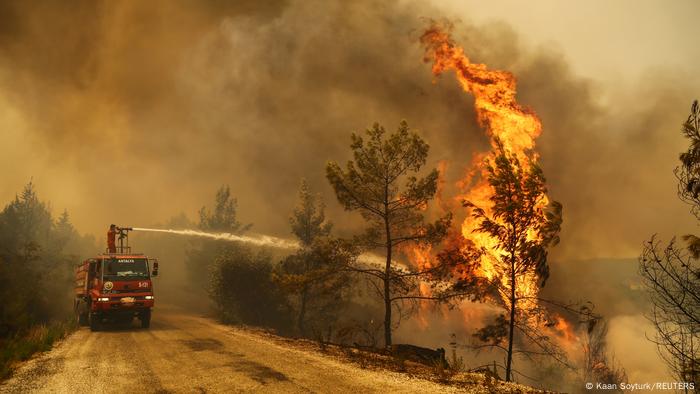
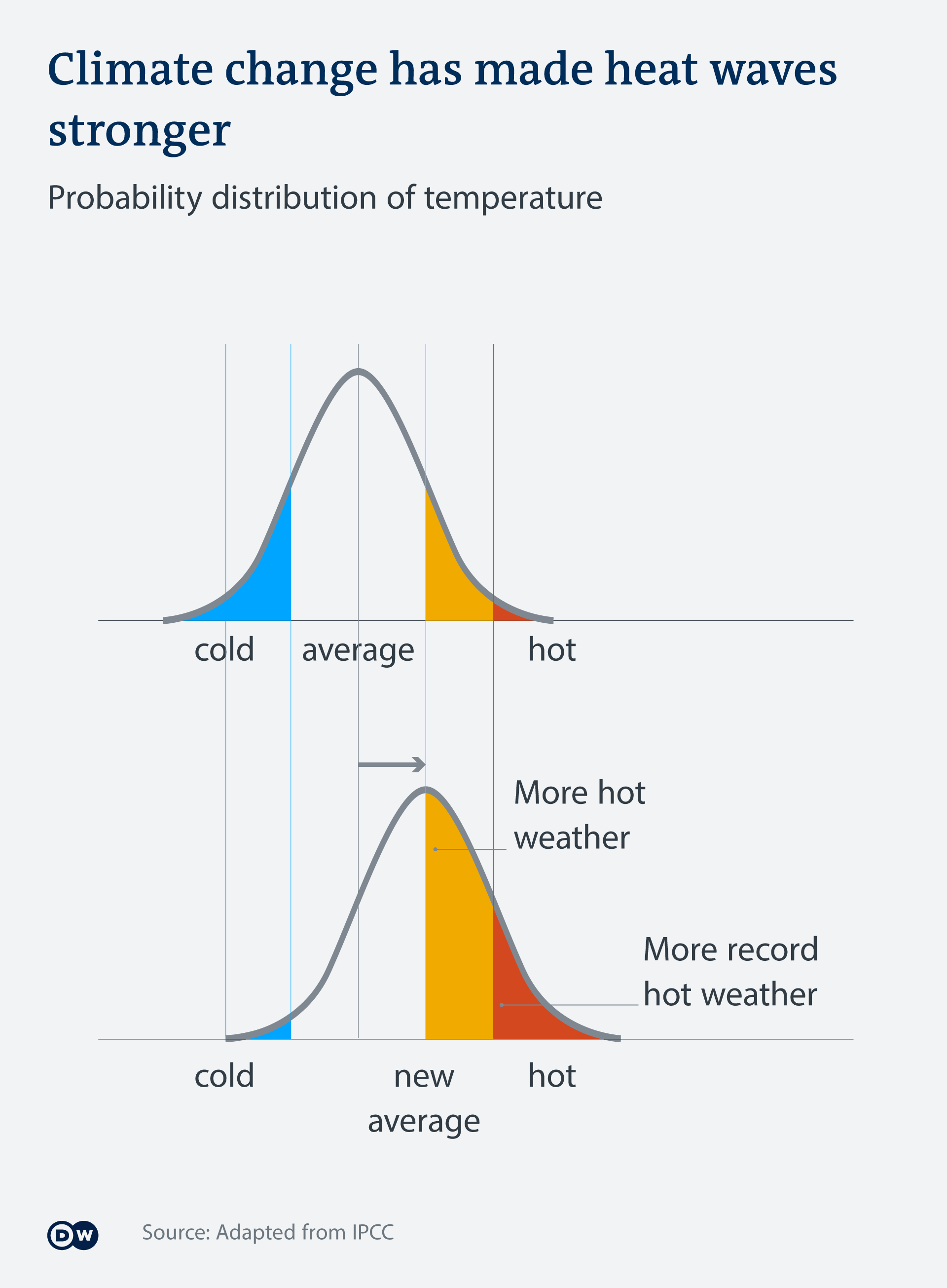
Climate change has made heat waves hotter and more frequent
Carbon pollution has risen to such extremes that a key threshold in the fight to stop climate change — limiting global warming to 1.5 degrees Celsius (2.7 degrees Fahrenheit) by the end of the century — will be crossed within the next 15 years.
That is one of the key findings from a landmark report approved by delegates from 195 countries and published Monday by the Intergovernmental Panel on Climate Change (IPCC). The analysis, which comes amid record-breaking heat and rains that have rocked rich and poor countries alike, draws on more than 14,000 peer-reviewed studies to assess the physical science of climate change. It paints a sober picture of a planet warped beyond recognition by members of a single species in the space of just a few hundred years.
"This report is a reality check," said Valérie Masson-Delmotte, co-chair of the IPCC working group that prepared it.
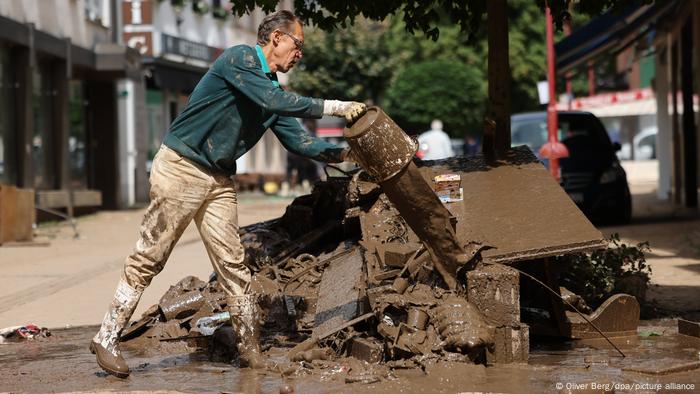
Also the world's richest countries are suffering from worsening weather extremes
By burning fossil fuels and releasing gases that heat the Earth like a greenhouse, people have warmed the planet by about 1.1 C. Across the world, the report shows, this has made heat waves and heavy rains stronger and more common. The share of tropical cyclones with high wind speeds has risen. In many regions, droughts are drier and last longer.
Since the fifth major IPCC assessment of the physical science in 2013, scientists have also grown more certain that climate change has made individual fires, floods and storms stronger. There is a simple solution to prevent weather getting worse — to stop burning fossil fuels — but governments, businesses and individual people are failing to do so fast enough.
"When I look at the results we found on climate extremes, then I'd say we are in a climate crisis," said Sonia Seneviratne, a scientist at the Institute for Atmospheric and Climate Science at ETH Zurich in Switzerland, and co-author of the report. "We really have a very big problem."
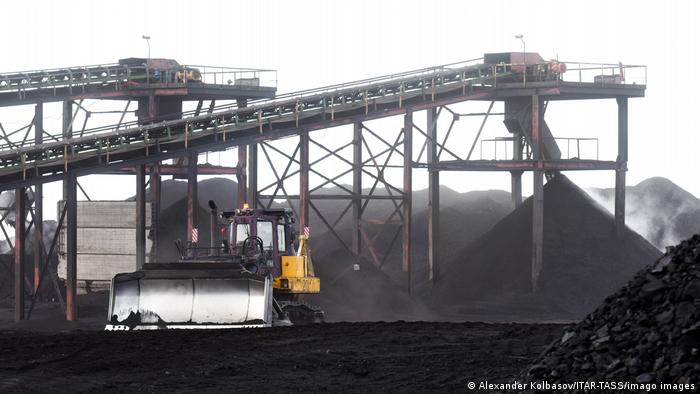
Greenhouse gases continue to accumulate in the atmosphere as people burn fossil fuels
How fast is climate change heating the world?
In 2015, world leaders pledged to limit warming by the end of the century to well below 2 C — ideally 1.5 C — in a global effort to avoid escalating catastrophes. But they are instead pursuing policies that put the planet on track for 3 C, according to German-based research group Climate Action Tracker.
While the 1.5 C target will be broached within a couple of decades, temperatures could be brought back below it by the end of the century under the report's most ambitious scenario for cutting pollution. As well as rapidly decarbonizing the global economy, it would involve sucking enormous amounts of CO2 out of the atmosphere. But the technology to do so is expensive, and there is little evidence to suggest it could work at the scales needed.
"It's much easier to avoid emissions now rather than blowing past our carbon budget and having to take a lot of emissions out of the atmosphere again," said Malte Meinshausen, a scientist at the Potsdam Institute for Climate Impact Research in Germny and co-author of the report. "That price tag is higher than a lot of the low-hanging fruit that we have today."
What is climate change doing to the planet?
Across the globe, extreme rains will grow 7% heavier for each degree Celsius of global warming. More tropical cyclones will be classed in the highest categories 4 and 5. Asian monsoon rains will fall harder and at different times.
"With every additional increment of global warming, changes in extremes continue to become larger," the authors wrote.
Heavy rains that used to hit once a decade have already grown 30% more likely. But with a further 3 C of warming, they will strike two or even three times per decade, and unleash a third more water when they do fall. Droughts that used to occur once every 10 years will leave soil barren and infertile four times per decade instead. Heat waves — already 2.8 times more likely and 1 C hotter than before the industrial revolution — will be 9.4 times more likely and 5 C hotter.
And the greater the warming, the greater the risk of the climate warping out of step in terms of temperature rise. The report projects heat waves that used to scorch the land once every 50 years will, in a world with 4 C of global warming, instead strike 39 times over the same time period instead. "The report clearly sets out the evidence of the urgency of action," said Veronika Eyring, an Earth systems scientist at the German Aerospace Center and another co-author of the report.
Will feedback loops accelerate warming?
Some of the changes to the climate will spur further warming. Natural carbon sinks in the ocean and on land become less effective as the planet heats. Higher temperatures will thaw even more permafrost — releasing vast quantities of methane into the atmosphere — while melting snow and ice cover that reflects heat away from the planet. The Arctic is likely to be practically free of sea ice in September at least once before 2050.
Still, scientists say permafrost thaw, the most worrying of these, is not enough to lead to runaway warming within a dramatic, self-reinforcing acceleration of climate change. But that would make the fight to stabilize the climate harder. Higher levels of atmospheric pollution mean stronger feedback loops that become harder to predict.
Some processes have also started that cannot be stopped. Sea levels are expected to rise more than 0.5 meter (1 foot 8 inches) this century. This has already started to make coastal floods stronger and more likely, and will continue to do so in the future. Scientists say that uncertainties in how ice sheets respond to warming mean that far worse extremes – 2 meters by 2100 and 5 meters by 2150 under a "very high" emissions scenario – can't be ruled out.
Every bit of climate protection helps, said Douglas Maraun, a scientist at the Wegener Center for Climate and Global Change in Austria and also a co-author of the report. "Every degree – or 10th of a degree – of warming that is avoided reduces the risk of extreme events. Perhaps that helps us not to bury our heads in the sand."
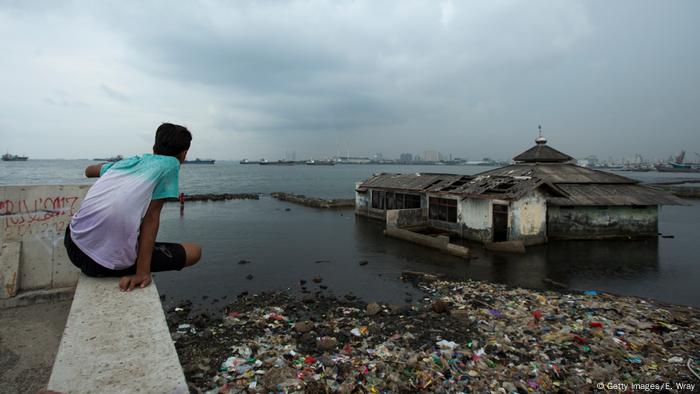
Sea levels will keep rising long after greenhouse gas emissions stop
Issued on: 10/08/2021 -

In its first major scientific assessment since 2014, the IPCC said by mid-century, the 1.5C threshold will have been breached across the board, by a tenth of a degree along the most ambitious pathway, and by nearly a full degree at the opposite extreme.
UN Secretary-General Antonio Guterres said greenhouse gas emissions from fossil fuel burning and deforestation are "choking our planet and putting billions of people at immediate risk" and said countries must "combine forces" to avert catastrophe.
Many world leaders reacted to the report by calling for immediate action to curtail the rise of the world's temperature.
But Australia's conservative prime minister rejected growing calls on Tuesday to adopt more ambitious emissions targets, while China insisted it was implementing its climate commitments and signalled no new policies despite the report's findings.
© 2021 AFP
World leaders will fail to honor their climate pledges unless they make "immediate, rapid and large-scale reductions" to greenhouse gas emissions, a long-awaited assessment finds.
Climate change has made heat waves hotter and more frequent
Carbon pollution has risen to such extremes that a key threshold in the fight to stop climate change — limiting global warming to 1.5 degrees Celsius (2.7 degrees Fahrenheit) by the end of the century — will be crossed within the next 15 years.
That is one of the key findings from a landmark report approved by delegates from 195 countries and published Monday by the Intergovernmental Panel on Climate Change (IPCC). The analysis, which comes amid record-breaking heat and rains that have rocked rich and poor countries alike, draws on more than 14,000 peer-reviewed studies to assess the physical science of climate change. It paints a sober picture of a planet warped beyond recognition by members of a single species in the space of just a few hundred years.
"This report is a reality check," said Valérie Masson-Delmotte, co-chair of the IPCC working group that prepared it.
Also the world's richest countries are suffering from worsening weather extremes
By burning fossil fuels and releasing gases that heat the Earth like a greenhouse, people have warmed the planet by about 1.1 C. Across the world, the report shows, this has made heat waves and heavy rains stronger and more common. The share of tropical cyclones with high wind speeds has risen. In many regions, droughts are drier and last longer.
Since the fifth major IPCC assessment of the physical science in 2013, scientists have also grown more certain that climate change has made individual fires, floods and storms stronger. There is a simple solution to prevent weather getting worse — to stop burning fossil fuels — but governments, businesses and individual people are failing to do so fast enough.
"When I look at the results we found on climate extremes, then I'd say we are in a climate crisis," said Sonia Seneviratne, a scientist at the Institute for Atmospheric and Climate Science at ETH Zurich in Switzerland, and co-author of the report. "We really have a very big problem."
Greenhouse gases continue to accumulate in the atmosphere as people burn fossil fuels
How fast is climate change heating the world?
In 2015, world leaders pledged to limit warming by the end of the century to well below 2 C — ideally 1.5 C — in a global effort to avoid escalating catastrophes. But they are instead pursuing policies that put the planet on track for 3 C, according to German-based research group Climate Action Tracker.
While the 1.5 C target will be broached within a couple of decades, temperatures could be brought back below it by the end of the century under the report's most ambitious scenario for cutting pollution. As well as rapidly decarbonizing the global economy, it would involve sucking enormous amounts of CO2 out of the atmosphere. But the technology to do so is expensive, and there is little evidence to suggest it could work at the scales needed.
"It's much easier to avoid emissions now rather than blowing past our carbon budget and having to take a lot of emissions out of the atmosphere again," said Malte Meinshausen, a scientist at the Potsdam Institute for Climate Impact Research in Germny and co-author of the report. "That price tag is higher than a lot of the low-hanging fruit that we have today."
What is climate change doing to the planet?
Across the globe, extreme rains will grow 7% heavier for each degree Celsius of global warming. More tropical cyclones will be classed in the highest categories 4 and 5. Asian monsoon rains will fall harder and at different times.
"With every additional increment of global warming, changes in extremes continue to become larger," the authors wrote.
Heavy rains that used to hit once a decade have already grown 30% more likely. But with a further 3 C of warming, they will strike two or even three times per decade, and unleash a third more water when they do fall. Droughts that used to occur once every 10 years will leave soil barren and infertile four times per decade instead. Heat waves — already 2.8 times more likely and 1 C hotter than before the industrial revolution — will be 9.4 times more likely and 5 C hotter.
And the greater the warming, the greater the risk of the climate warping out of step in terms of temperature rise. The report projects heat waves that used to scorch the land once every 50 years will, in a world with 4 C of global warming, instead strike 39 times over the same time period instead. "The report clearly sets out the evidence of the urgency of action," said Veronika Eyring, an Earth systems scientist at the German Aerospace Center and another co-author of the report.
Will feedback loops accelerate warming?
Some of the changes to the climate will spur further warming. Natural carbon sinks in the ocean and on land become less effective as the planet heats. Higher temperatures will thaw even more permafrost — releasing vast quantities of methane into the atmosphere — while melting snow and ice cover that reflects heat away from the planet. The Arctic is likely to be practically free of sea ice in September at least once before 2050.
Still, scientists say permafrost thaw, the most worrying of these, is not enough to lead to runaway warming within a dramatic, self-reinforcing acceleration of climate change. But that would make the fight to stabilize the climate harder. Higher levels of atmospheric pollution mean stronger feedback loops that become harder to predict.
Some processes have also started that cannot be stopped. Sea levels are expected to rise more than 0.5 meter (1 foot 8 inches) this century. This has already started to make coastal floods stronger and more likely, and will continue to do so in the future. Scientists say that uncertainties in how ice sheets respond to warming mean that far worse extremes – 2 meters by 2100 and 5 meters by 2150 under a "very high" emissions scenario – can't be ruled out.
Every bit of climate protection helps, said Douglas Maraun, a scientist at the Wegener Center for Climate and Global Change in Austria and also a co-author of the report. "Every degree – or 10th of a degree – of warming that is avoided reduces the risk of extreme events. Perhaps that helps us not to bury our heads in the sand."
Sea levels will keep rising long after greenhouse gas emissions stop
Stopping fossil fuels
The biggest sources of the greenhouse gas emissions changing the climate are coal, oil and gas. But the report's 43-page summary for policymakers, a document prepared first by scientists and then approved line-by-line by government delegates, does not contain the words "fossil fuels."
IPCC authors are not allowed to comment on the approval meeting itself, which is confidential, but "in the material that the scientists write, absolutely, fossil fuels get mentioned," said climate scientist Meinshausen. But "even while we lose some words, it is a remarkable achievement to have in the end the agreement from all governments. Not a single government in the world can now turn around and say they don't believe what the IPCC wrote."
"The science stands for itself and was not watered down in the process," added Friederike Otto, a climate scientist at the University of Oxford and co-author of the report.
The IPCC report is the first installment of three and comes ahead of the COP26 climate summit in the United Kingdom in November. World leaders will discuss solutions like promising to stop burning coal by 2030 and fulfilling a pledge made by rich countries to pay poorer ones $100 billion a year to adapt to climate change by 2020. They have so far failed to do so.IN PICTURES: DEADLY EXTREME WEATHER SHOCKS THE WORLD
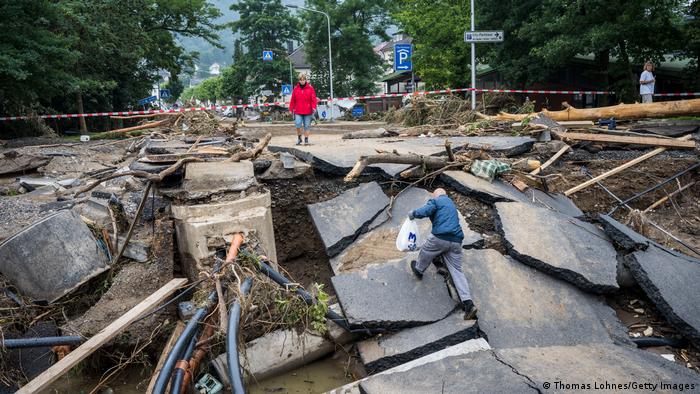
Fierce flash floods in Europe
Unprecedented flooding — caused by two months' worth of rainfall in two days — has resulted in devastating damage in western Europe, leaving at least 209 people dead in Germany and Belgium. Narrow valley streams swelled into raging floods in the space of hours, wiping out centuries-old communities. Rebuilding the ruined homes, businesses and infrastructure is expected to cost billions of euros. 1234567891011
Issued on: 10/08/2021 -
An alliance of island nations at risk from climate change have called on the world to take decisive action Jewel SAMAD AFP/File
New York (AFP)
Dozens of small island states most vulnerable to the effects of climate change have called on the world to save "our very future" after a landmark UN report said accelerating global warming and rising sea levels threaten their existence.
The call to action comes after the climate report warned that catastrophic global warming is occurring far more quickly than previously forecast, an assessment met with horror and hopefulness by world leaders and green groups.
"We have to turn this around," Diann Black-Layne, lead climate negotiator for the Alliance of Small Island States (AOSIS) and ambassador of Antigua and Barbuda, said in a statement late Monday.
"The stark fact is that if we keep warming to 1.5C we are still facing half a metre of sea level rise. But if we stop warming from reaching 2C, we can avoid a long term three metres of sea level rise. That is our very future, right there."
The group comprises 39 states including Cuba, Jamaica, Papua New Guinea and the Maldives, the world's lowest-lying country.
It said the report confirmed that governments around the world must take critical action to cap warming to the 1.5C temperature goal of the 2015 Paris Agreement.
The UN's Intergovernmental Panel on Climate Change report, published on Monday, said the world is on course to reach that level around 2030, a decade earlier than predicted just three years ago.
That level of global warming will have devastating impacts on humanity, including more extreme weather events such as fires, typhoons, droughts and floods.

New York (AFP)
Dozens of small island states most vulnerable to the effects of climate change have called on the world to save "our very future" after a landmark UN report said accelerating global warming and rising sea levels threaten their existence.
The call to action comes after the climate report warned that catastrophic global warming is occurring far more quickly than previously forecast, an assessment met with horror and hopefulness by world leaders and green groups.
"We have to turn this around," Diann Black-Layne, lead climate negotiator for the Alliance of Small Island States (AOSIS) and ambassador of Antigua and Barbuda, said in a statement late Monday.
"The stark fact is that if we keep warming to 1.5C we are still facing half a metre of sea level rise. But if we stop warming from reaching 2C, we can avoid a long term three metres of sea level rise. That is our very future, right there."
The group comprises 39 states including Cuba, Jamaica, Papua New Guinea and the Maldives, the world's lowest-lying country.
It said the report confirmed that governments around the world must take critical action to cap warming to the 1.5C temperature goal of the 2015 Paris Agreement.
The UN's Intergovernmental Panel on Climate Change report, published on Monday, said the world is on course to reach that level around 2030, a decade earlier than predicted just three years ago.
That level of global warming will have devastating impacts on humanity, including more extreme weather events such as fires, typhoons, droughts and floods.
Global warming: key points of the UN report Alain BOMMENEL AFP
In its first major scientific assessment since 2014, the IPCC said by mid-century, the 1.5C threshold will have been breached across the board, by a tenth of a degree along the most ambitious pathway, and by nearly a full degree at the opposite extreme.
UN Secretary-General Antonio Guterres said greenhouse gas emissions from fossil fuel burning and deforestation are "choking our planet and putting billions of people at immediate risk" and said countries must "combine forces" to avert catastrophe.
Many world leaders reacted to the report by calling for immediate action to curtail the rise of the world's temperature.
But Australia's conservative prime minister rejected growing calls on Tuesday to adopt more ambitious emissions targets, while China insisted it was implementing its climate commitments and signalled no new policies despite the report's findings.
© 2021 AFP
Issued on: 10/08/2021 - 07:20

China has been criticised for pushing ahead with opening dozens of new coal power plants to ensure economic growth Johannes EISELE AFP/File
Beijing (AFP)
China insisted Tuesday it was implementing its climate commitments, while signalling no new policies following a UN report warning much more urgent action was needed to fight global warming.
Many world leaders responded to Monday's report, which said climate change was occurring faster than estimated, by calling for decisive and immediate moves to curtail fossil fuels.
When asked for a response to the report, China's foreign ministry emphasised the government's current policies and commitments.
"China has insisted on prioritising sustainable, green and low-carbon development," a spokesperson told AFP in a statement.
The Chinese government has set a target of reaching peak carbon emissions by 2030, and becoming carbon neutral by 2060.
The statement referenced the carbon neutrality target, and said the global community should have full confidence in China's climate actions.
China has been criticised for pushing ahead with opening dozens of new coal power plants to ensure economic growth.
The statement said President Xi Jinping intended to "strictly control" the growth of coal power plants.
But it pointed to a continued increase in the next few years, saying that coal consumption would start to gradually reduce from 2026.
The report, from the UN's Intergovernmental Panel on Climate Change (IPCC), warned that global warming would reach 1.5 degrees Celsius above pre-industrial levels around 2030.
That level of global warming will have devastating impacts on humanity, including more extreme weather events such as fires, typhoons, droughts and floods.
Beijing (AFP)
China insisted Tuesday it was implementing its climate commitments, while signalling no new policies following a UN report warning much more urgent action was needed to fight global warming.
Many world leaders responded to Monday's report, which said climate change was occurring faster than estimated, by calling for decisive and immediate moves to curtail fossil fuels.
When asked for a response to the report, China's foreign ministry emphasised the government's current policies and commitments.
"China has insisted on prioritising sustainable, green and low-carbon development," a spokesperson told AFP in a statement.
The Chinese government has set a target of reaching peak carbon emissions by 2030, and becoming carbon neutral by 2060.
The statement referenced the carbon neutrality target, and said the global community should have full confidence in China's climate actions.
China has been criticised for pushing ahead with opening dozens of new coal power plants to ensure economic growth.
The statement said President Xi Jinping intended to "strictly control" the growth of coal power plants.
But it pointed to a continued increase in the next few years, saying that coal consumption would start to gradually reduce from 2026.
The report, from the UN's Intergovernmental Panel on Climate Change (IPCC), warned that global warming would reach 1.5 degrees Celsius above pre-industrial levels around 2030.
That level of global warming will have devastating impacts on humanity, including more extreme weather events such as fires, typhoons, droughts and floods.