Tuesday, October 26, 2021


What causes disease outbreaks?
What causes disease outbreaks?
Credit: CDC

Since 1974, contaminated water has been the most common driver of large-scale zoonotic infectious disease outbreaks, according to new research from the Center for the Ecology of Infectious Diseases (CEID) at the University of Georgia. The next two greatest drivers are unusual weather patterns and changes in the abundance of disease vectors such as mosquitos and ticks.

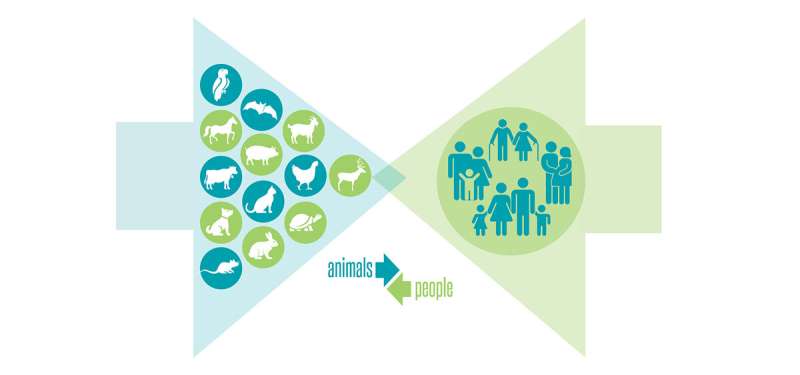
Zoonotic diseases occur when pathogens are transmitted from animals to humans—prominent recent outbreaks include Ebola hemorrhagic fever and COVID-19. However, most zoonotic disease outbreaks involve fewer than 100 cases and are quickly brought under control. So what factors drive large-scale outbreaks?

In a study published in the Philosophical Transactions of the Royal Society B: Biological Sciences, researchers investigated over 4,400 zoonotic infectious disease outbreaks. They identified the 100 largest in terms of numbers of human cases, all of which infected thousands to hundreds of thousands of people. From the full list they also selected 200 outbreaks at random to serve as "case controls." The majority of these control outbreaks included 43 or fewer cases. They then compared the characteristics of large-scale and control outbreaks, particularly how the primary causes of infection and disease spread varied between them.

Lead author Patrick Stephens, an associate research scientist with the Odum School of Ecology and CEID, said that this research is one of the first peer-reviewed studies to quantify the variation of infectious disease outbreak drivers across the globe.

"In the age of COVID-19, it is understandable that many people may not realize how many outbreaks of other infectious diseases are caused by complex, intertwined ecological and socioeconomic conditions," he said. "We know that factors like exposure to wild mammals, habitat disruption, international trade and travel and contact with contaminated food and water are important considerations. Our research was designed to understand what proportion of outbreaks various drivers contributed to. To our knowledge, this study is the first to do so for a global sample of outbreaks of many diseases."

Stephens worked with CEID researchers Nicole Gottdenker of the College of Veterinary Medicine and John Drake, Annakate Schatz and John Paul Schmidt of the Odum School to compile a list of contemporary zoonotic infectious diseases documented in peer reviewed scientific literature. They identified and scored 48 specific infectious disease drivers related to the large-scale and control outbreaks in ecological, environmental and socioeconomic categories.

Water contamination is a key driver of disease outbreaks

Both large-scale and control outbreaks were associated with water contamination, which was the most common driver of large outbreaks and the second most common driver of the smaller control outbreaks. Examples of these water-associated diseases include hepatitis E, typhoid and shigellosis (dysentery). The remaining drivers differed, however.

In addition to , large outbreaks were most often associated with unusual weather patterns, changes in the abundance of vectors—carriers of disease like mosquitos or ticks—and sewage management.

Large outbreaks were also much more likely to be caused by viral pathogens such as SARS coronavirus, influenza virus and Japanese encephalitis virus than were smaller outbreaks. The typical smaller outbreaks were associated with food contamination, local livestock production and human-animal contact. Finally, individual large outbreaks tended to be driven by a greater variety of factors than control outbreaks.

"There is still a lot of work to do to understand how large-scale infectious disease outbreaks can be avoided and controlled," Stephens said. "Perhaps two-thirds of future infectious  outbreaks are expected to be caused by zoonotic pathogens, and the number of these diseases is growing worldwide. Our research is an extremely important first step to better understand global variation in the drivers of outbreaks."


CDC IDs outbreak trends tied to treated recreational water

More information: Patrick R. Stephens et al, Characteristics of the 100 largest modern zoonotic disease outbreaks, Philosophical Transactions of the Royal Society B: Biological Sciences (2021). DOI: 10.1098/rstb.2020.0535
Provided by University of Georgia 


Sex, drugs, and genes: Moral attitudes share a genetic basis

sex
Credit: CC0 Public Domain

Few hallmarks of the 1960s counterculture stand out like sex, drugs, and rock-n-roll—elements of a "lifestyle" that Life magazine once branded as "antithetical in almost every respect to that of conventional America." Over the decades, as rock music became more mainstream, public condemnation of casual sex and illicit drugs endured. Why was that? Part of the answer may reside in our genes.

New research published in the journal Psychological Science suggests that there is a common genetic basis underlying a person's disapproval of noncommittal sex and their condemnation of recreational drug use. This research helps psychologists better understand how heredity may relate to some of our deeply held .

"People adopt behaviors and attitudes, including certain , that are advantageous to their own interests," said Annika Karinen, a researcher at Vrije Universiteit Amsterdam in the Netherlands and the lead author on the paper. "People tend to associate recreational drug use with noncommitted sex. As such, people who are heavily oriented toward high commitment in  morally condemn recreational drugs, as they benefit from environments in which high sexual commitment is the norm."

Past studies have shown that openness to engage in noncommittal sex is partially explained by genes; the rest is explained by the unique environment not shared by siblings.Karinen and her colleagues wanted to study if moral views concerning drug use, which surveys have shown closely correlate with openness to noncommittal sex, were influenced by the same .

To tease out hereditary from , the researchers surveyed 8,118 Finnish fraternal and  to examine how open they were to recreational drug use and to sex outside of a committed relationship. Participants answered questions that gaged their moral views of situations in which people used recreational drugs, such as at a party or with friends. The participants were also asked questions that evaluated their openness to noncommitted sex.

The researchers then compared fraternal and identical twin pairs to assess the extent to which condemnation of recreational drugs, openness to noncommittal sex, and the relationship between the two was explained by (a) genes, (b) the shared environment—such as growing up in the same household or community, or (c) unique experiences and environments not shared by the twins. The researchers found that moral views concerning both recreational drugs and openness to noncommitted sex are approximately 50% heritable, with the remaining 50% explained by the unique environment.

Furthermore, approximately 75% of the relationship between openness to noncommitted sex and moral views concerning recreational drugs was explained by genetic effects, and the remainder was explained by the unique environment. The researchers also found substantial overlap in the genetic effects underlying both factors—namely, that approximately 40% of the genes underlying openness to noncommitted sex also underlie moral views concerning recreational drugs.

"These findings suggest that the genetic effects that influence openness to noncommitted sex overlap with those that influence moral views concerning ," said Karinen. "Important parts of hot-button culture-war issues flow from differences in lifestyle preferences between people, and those differences in lifestyle preferences appear to partly have a genetic basis."

Recreational ketamine use has increased in recent years, but remains rare
More information: Annika K. Karinen et al, Sex, Drugs, and Genes: Illuminating the Moral Condemnation of Recreational Drugs, Psychological Science (2021). DOI: 10.1177/0956797621997350
Journal information: Psychological Science 
Provided by Association for Psychological Science 

 NO NEED FOR MILLION DOLLAR LOTTERIES

Even a $25 cash card can motivate some to get vaccinated

Even a $25 cash card can motivate some to get vaccinated

Can offering small cash cards, say for $25, be the difference between someone choosing to get their COVID-19 vaccine or waiting?

Yes, according to a study in North Carolina that offered $25 cash cards to people who got vaccines last spring at sites in four participating counties.

About 9% of those surveyed after getting their vaccines said that they would not have come to get vaccinated if it were not for the cash card. About 15% said they had waited to get a vaccine until they found an event with an incentive.

"We were really interested in North Carolina and at the Department of Health and Human Services to use multiple strategies to help North Carolinians get vaccinated as quickly and fairly as possible," said study author Dr. Charlene Wong. She is chief health policy officer for COVID-19 of the North Carolina Department of Health and Human Services.

"We actually planned the evaluation of this pilot incentive program from the very beginning because we knew that we wanted to better understand what was working, what we might want to modify, as we thought about scaling this program to other places in the state, as well as other strategies to increase vaccinations in North Carolina," Wong said.

Public health officials added a twist to the program: paying $25 to both the vaccine recipient and the person who drove them to the event, though not two $25 cards if people drove themselves.

Paying the driver may have reduced transportation barriers for some. It also may have encouraged the types of one-to-one conversations with people who are known and trusted by those who still needed to get vaccinated, Wong said.

"We were very intentional about doing that because we knew that for some individuals in North Carolina there were real transportation barriers to be able to get to a vaccine site," Wong said.

In designing its incentives and evaluation of their success,  looked back at past behavioral science research, including incentives offered for other vaccinations and cancer screenings, Wong said.

Guaranteed incentives can offset costs, such as lost wages, transportation and child care, according to the study.

Different types of incentives may make a difference for individuals. Tickets to an amusement park may have been influential for people with kids, for example, Wong said.

In particular, these small incentives helped address cost barriers to vaccinations for historically marginalized populations, including those who are lower income, Hispanic and Black, Wong noted.

"We were so pleased to see that. And that was why, that was certainly part of the reason that we wanted to do these surveys so that we could actually really look down to that level of equity so that we could better understand for whom was this important and was it really helping to address some of these barriers," Wong said.

The program distributed 2,890 cash cards to vaccine recipients and another 1,374 to drivers. The incentive program offered different amounts of money at times. The researchers found the rate of decline in vaccine uptake, at a time when numbers were declining across the country, was halved in places that had these incentives.

The findings were published online Oct. 25 in JAMA Internal Medicine.

Now, in North Carolina, about 71% of adults have received at least one dose of one of the three approved COVID-19 vaccines. In the United States, about 77.4% of eligible ages (12 and up) had received at least one dose of the vaccine by Oct. 21 and about 66.9% were fully vaccinated, according to the U.S. Centers for Disease Control and Prevention.

Mitch Rothholz, chief of staff for the American Pharmacists Association, which was not involved in this study, wondered if the incentive for drivers may have made the difference in vaccine uptake in the North Carolina program.

Sometimes, incentives have backfired because people have been suspicious of their intent, Rothholz said.

"I think every individual has different perspectives that's going to motivate them to get vaccinated. We found it's really an individual decision," Rothholz said. "In the work we've done on vaccine confidence, a lot of it has also been the relationship and the discussions that they've had with other individuals that they respect in their community, like their pharmacist."

It can take several interactions—while listening, providing information and being nonjudgmental—for someone to decide to get vaccinated, Rothholz said.

In its research profiling who was still unvaccinated in late May, the Kaiser Family Foundation (KFF) determined that unvaccinated adults were younger, less educated, more likely to be Republican, people of color and those who did not have health insurance.

The key demographic differences between the "definitely not" and "wait-and-see" groups were racial and  and political partisanship, according to the foundation, with the definitely nots having a larger number of people who were white and considered themselves to be Republican and the waiting group being more diverse, with about half of all those included being people of color.

By September, KFF found that more than seven in 10 adults reported being at least partially vaccinated, across racial and ethnic groups. It continued to find large gaps in vaccine use by partisanship, education level, age and health insurance status.

Various incentives, including time off work to recover from a vaccine or paid transportation, were effective in moving the wait-and-see group, said Ashley Kirzinger, associate director of public opinion and survey research at KFF. She also noted that these programs do seem to have helped with vaccine equity.

"I think it's important to realize that these kind of incentive programs can move the needle, especially in populations that are more open to getting a  but are facing access issues, but we haven't found any evidence that it's going to persuade the most resistant populations," Kirzinger added.

Mortality study reinforces safety of COVID-19 vaccinations

More information: The U.S. Centers for Disease Control and Prevention has more on COVID-19 vaccines.

Charlene A. Wong et al, Guaranteed Financial Incentives for COVID-19 Vaccination, JAMA Internal Medicine (2021). DOI: 10.1001/jamainternmed.2021.6170

Journal information: JAMA Internal Medicine 

Copyright © 2021 HealthDay. All rights reserved.


Green tea catechins promote oxidative stress

green tea
Credit: Unsplash/CC0 Public Domain

Green tea is seen as healthy and promotes a longer life, supposedly due to its high level of antioxidants. Researchers at ETH Zurich have now cast doubt on previous assumptions about how these ingredients work.

Green tea has long been known to have health benefits. In particular, it contains catechins called ECG and EGCG that are said to prolong life. These two substances belong to the group of polyphenols. They are considered antioxidants, which means they counteract or prevent oxidative stress in the body caused by aggressive free radicals of oxygen.

Until now, research has assumed that the catechins neutralize these free radicals and thus prevent damage to cells or DNA. One source of oxygen free radicals is metabolism; for example, when the mitochondria—the powerhouses of the cell—are working to produce energy.

ETH researchers led by Michael Ristow, Professor of Energy Metabolism at the Department of Health Sciences and Technology at ETH Zurich, together with colleagues from the University of Jena, have now taken a closer look at how catechins act in the nematode worm C. elegans. And they have come to a different, seemingly paradoxical conclusion: Rather than suppressing oxidative stress, the catechins in green tea promote it.

Temporary increase in oxidative stress

In a study just published in the journal Aging, Ristow's team shows that these polyphenols from green tea initially increase oxidative stress in the short term, but that this has the subsequent effect of increasing the defensive capabilities of the cells and the organism. As a result, the catechins in green tea led to  and greater fitness in nematodes that were fed them.

"That means green tea polyphenols, or catechins, aren't, in fact, antioxidants, but rather pro-oxidants that improve the organism's ability to defend itself, similar to a vaccination," explains study leader Ristow.

However, this increase in defensive capability manifests not through the , but rather by activating genes that produce certain enzymes such as superoxide dismutase (SOD) and catalase (CTL). It is these enzymes that inactivate the free radicals in the nematode; they are essentially endogenous antioxidants.

Sport and calorie reduction have a similar effect

Ristow isn't surprised to see this kind of mechanism at work. His research group showed back in 2009 that the reason sport promotes health is because sporting activities increase  in the short term, thus improving the body's defenses. Consuming fewer calories has the same effect, as has been shown several times in animals. Mice fed a reduced-calorie diet live longer than those fed a normal, high-calorie diet. "So it made sense to me that the catechins in green tea would work in a similar way," Ristow explains.

He goes on to say that the findings from this study translate well to humans. The basic biochemical processes by which organisms neutralize oxygen free radicals are conserved in evolutionary history and are present in everything from unicellular yeast to humans.

Green tea yes, concentrates no

Ristow himself drinks green tea every day, a practice he recommends. But he advises against taking green tea extracts or concentrates. "At a certain concentration, it becomes toxic," he says. High-dose catechins inhibit mitochondria to such an extent that cell death ensues, which can be particularly dangerous in the liver. Anyone consuming these polyphenols in excessive doses risks damaging their organs.

While the most catechins are to be found in Japanese varieties of green tea, other green teas also contain sufficient amounts of these polyphenols. Black tea, on the other hand, contains a much lower level of catechins, since these are largely destroyed by the fermentation process. "That's why  is preferable to black tea," Ristow says.

Is green tea a fad or a real health boost?

More information: Jing Tian et al, Green tea catechins EGCG and ECG enhance the fitness and lifespan of Caenorhabditis elegans by complex I inhibition, Aging (2021). DOI: 10.18632/aging.203597
Provided by ETH Zurich 

New study finds black spruce trees struggling to regenerate amid more frequent arctic fires


The resulting ecological shift could have rippling impacts on the boreal region, including acceleration of permafrost thaw and loss of biodiversity.

Peer-Reviewed Publication

WOODWELL CLIMATE RESEARCH CENTER

A new study, published in the Proceedings of the National Academy of Sciences (PNAS), finds that black spruce trees — a key species on the boreal landscape for millennia — are losing their resilience and capacity to regenerate in the face of warming temperatures and increasingly frequent Arctic wildfires. A continuation of this trend could result in a landscape-wide ecological shift that would have a complex and rippling impact on the region, including an acceleration in permafrost thaw, and a loss of valuable biodiversity. 

In boreal North America, the thick, spongy soils on which black spruce grows are made of peat moss and lichens that retain moisture very well but when they do dry out are highly flammable. Black spruce rely on fires for regeneration — their cones open up in the heat and drop seeds onto the charred organic soil — but this latest study indicates that more severe fires that burn deeper into these peat soils are leading to a short-circuit of the regeneration process. 

In synthesizing data from more than 1500 fire-disturbed sites, researchers found that black spruce’s ability to regenerate after fire dropped at 38% of sites and failed completely 18% of the time — numbers never before seen in a species evolved to thrive after fire. Significant shifts in wildfire regimes are pushing black spruce forests to a tipping point, beyond which the iconic species may lose its place as the dominant tree species in boreal North America.

“This trend is especially alarming given its potential impact on Arctic carbon storage,” said Dr. Brendan Rogers, Associate Scientist at Woodwell Climate Research Center and study co-author. “In many parts of the boreal region, the mossy soil layers that promote black spruce regeneration also insulate permafrost. As fires increase and these forests dry out, however, loss of black spruce forests could accelerate permafrost thaw and trigger a warming feedback loop, pushing black spruce to its tipping point and facilitating the release of massive amounts of carbon from the permafrost into the atmosphere.”

Widespread loss of black spruce also has implications for biodiversity, particularly caribou species that overwinter in the forest and feed on lichen. Both barren-ground and boreal caribou, important cultural species for northern communities, are already in decline across the continent and would suffer more losses if the ecosystem shifts away from the black spruce-lichen forests that provide food and refuge.

“Basically, as the climate warms, rising Arctic temperatures are causing black spruce forests to dry out, and the drier the system is, the more vulnerable it is to fire,” said Dr. Jennifer Baltzer, Canada Research Chair in Forests and Global Change at Wilfrid Laurier University and study lead. “As climate change continues to push these systems to an ever drier state, these tipping points are more likely to be reached, with devastating impacts on the boreal biome and the rest of the world.”


About Woodwell Climate Research Center: 

Woodwell Climate Research Center is an organization of renowned researchers who work with a worldwide network of partners to understand and combat climate change. We bring together hands-on experience and 35 years of policy impact to develop societal-scale solutions that can be put into immediate action. Our Falmouth, MA headquarters are located on the traditional and sacred land of the Wampanoag people who still occupy this land, and whose history, language, traditional ways of life, and culture continue to influence this vibrant community. Woodwell Climate has earned Charity Navigator’s highest rating of 4 stars, as well as a Gold Seal of Transparency from GuideStar.

Researchers evaluate and identify consistent indicators to support sustainability on U.S. ranches

Standardized ecological, social and economic indicators can help ranchers track and communicate about sustainability.

Peer-Reviewed Publication

POINT BLUE CONSERVATION SCIENCE

Livestock grazing on well-managed rangelands can help secure clean water, enhance habitat, address climate change, and sustain rural communities. Ensuring the sustainability of livestock agriculture is not only vital to feeding a growing world, but it’s essential to a healthy future, which is why a research team led by The Nature Conservancy (TNC) and World Wildlife Fund (WWF) set out to help ranchers more consistently measure, manage, and communicate about the sustainability of their operations. The 20-person team produced a study detailing 20 core indicators commonly used to support ranch-level sustainability.

The study, “A Synthesis of Ranch-Level Sustainability Indicators for Land Managers and to Communicate Across the U.S. Beef Supply Chain,” was recently published in Rangeland Ecology & Management.

Rangelands span some 770 million acres across the United States. As the stewards of such a vast area of land, cattle ranchers need to be equipped with the tools necessary to measure, manage, and communicate the sustainability of their ranches, especially given the increasing commitments by food companies and demand by consumers to advance sustainability across the beef supply chain.

“There’s increasing interest and effort among multiple beef supply chain players to measure and track sustainability at the ranch level, but there’s currently a lack of uniform measurements,” said Patrick Lendrum with World Wildlife Fund’s Northern Great Plains Program.  “To effectively track sustainability in the U.S. beef industry, notably one of the most complex food systems in the world, we need common indicators that are actionable on the ground, measure progress toward sustainability goals of companies and consumers, and enable ranchers to consistently communicate improvements to their operations.”

Taking steps toward this goal, the researchers focused on summarizing commonly used ecological, social, and economic indicators that could inform adaptive management toward enhanced sustainability.  They evaluated 21 range and pastureland assessments from organizations, agencies, and academics that totaled 180 indicators. From this, the team selected 20 commonly used “core” indicators (12 ecological and 8 socioeconomic), which are designed to detect change over time for management practices, are common among many approaches, and/or are critical for outcomes of common interest to producers, companies, and consumers. While these indicators are relevant for rangelands across the United States, they may be measured differently in different parts of the country, due to regional variabilities.

“We found consistent ecological indicators that rose to the top, but we also found less emphasis on the economic and social indicators in current frameworks, which are equally important when striving to achieve a sustainable operation,” said Marissa Ahlering, Ph.D., lead scientist with The Nature Conservancy in Minnesota, North Dakota and South Dakota.  “We do, however, recognize that social and economic indicators – such as community health and income – include much more sensitive and context-dependent information, thus presenting a greater challenge.” Only 5 of the 21 assessments reviewed included socioeconomic indicators

More consistently used and agreed upon indicators spanning ecological, social and economic interests will lead to a better understanding of sustainability at the ranch level, which in turn would better equip ranchers with the information necessary to communicate how they are making progress toward sustainability goals in their own operations.

 “Ranching is a complex business.  Thriving in that business, particularly for any rancher who relies on the ranch for a livelihood, requires close attention to every detail.  And the most fundamental detail is that of rangeland health,” said Mickey Steward of Seacross Ranch in Lodge Grass, Montana. “Constant monitoring, both formal and informal, is necessary to ensure that ecological health across the spectrum of plant and wildlife communities, soil, and hydrology is constantly improving. Drought resilience and every aspect of sustainability depend on the keen eye of the rancher buttressed by data collection and analysis on many levels.  And, as with any other endeavor, documentation is essential to understanding and applying the knowledge gained from unceasing observation and application of the results of that observation,” Steward said.

Grazing has the largest footprint of any agricultural activity, making it imperative that producers can track and manage these lands for clean water, climate and biodiversity benefits, social and economic outcomes. By developing a consistent standardized set of sustainability indicators to measure on-ranch progress, determine adaptive management strategies, and communicate results is an essential first step to ensuring that ranchers, companies and consumers are closer to achieving their sustainability goals.

Additional co-authors on the paper include Clare Kazanski, Pablo Borrelli, William Burnidge, Lexi Clark, Chad Ellis, Kirk Gadzia, Jonathan Gelbard, Sasha Gennet, Jeff Goodwin, Jeffrey E. Herrick, Emily Kachergis, Corrine Knapp, Nancy Labbe, Kristie Maczko, Elizabeth Porzig, David Rizzo, Sheri Spiegal, and Christopher Wilson. 

# # #

About The Nature Conservancy

The Nature Conservancy is a global conservation organization dedicated to conserving the lands and waters on which all life depends. Guided by science, we create innovative, on-the-ground solutions to our world's toughest challenges so that nature and people can thrive together. We are tackling climate change, conserving lands, waters and oceans at an unprecedented scale, providing food and water sustainably and helping make cities more sustainable. Working in 72 countries, we use a collaborative approach that engages local communities, governments, the private sector, and other partners. To learn more, visit www.nature.org or follow us on Twitter at @nature_press.

About World Wildlife Fund (WWF)

WWF is one of the world’s leading conservation organizations, working for 60 years in nearly 100 countries to help people and nature thrive. With the support of more than 5 million supporters worldwide, WWF is dedicated to delivering science-based solutions to preserve the diversity and abundance of life on Earth, halt the degradation of the environment, and combat the climate crisis. Visit worldwildlife.org to learn more; follow @WWFNews on Twitter to keep up with the latest conservation news; and sign up for our newsletter and news alerts here.


Google takes up to 42% from ads, states say in antitrust case

Google
Credit: CC0 Public Domain

Google takes up to 42% of the money paid for digital ads published online, according to a newly unsealed court filing by states that claim the search and advertising giant abuses its monopoly power in online advertising to limit competition and harm consumers.

The Alphabet Inc. unit runs the biggest electronic marketplace in the world, according to the , processing 11 billion online ad spaces every day through its AdX exchange.

"More daily transactions are made on AdX than on the NYSE and NASDAQ combined," a group of 16 states and Puerto Rico said in their complaint, saying they were quoting "Google's own words."

The document was filed in August, with redactions to shield information that could be commercially sensitive. It was refiled in a mostly unredacted form Friday, after a judge in Manhattan ruled last week that most of the material should be publicly available.

"Google now uses its immense market power to extract a very high tax of 22 to 42% of the ad dollars otherwise flowing to the countless online publishers and content producers such as online newspapers, cooking websites, and blogs who survive by selling advertisements on their websites and apps," the states said in the unredacted filing.

The lawsuit, filed by a group of states led by Texas, is one of four government antitrust complaints against Google. The Justice Department and a different group of states have sued Google in separate cases over its dominance in Internet search, while another state case was filed this year over Google's Android mobile operating system.

The case is: In re Google Digital Advertising Antitrust Litigation, 21-md-03010, U.S. District Court, Southern District of New York (Manhattan).

California to bring antitrust lawsuit against Google

©2021 Bloomberg L.P.
Distributed by Tribune Content Agency, LLC.

Research reveals powerful lure of gambling adverts on social media to children

betting
Credit: Unsplash/CC0 Public Domain

A new report has exposed how children and young people are vulnerable to the growing popularity of gambling adverts on social media, prompting calls from leading experts for much tighter regulations.

The research, published today as part of a policy briefing led by the University of Bristol, found gambling  is vastly more appealing to children than adults.

Most notably, the study findings showed disguised gambling marketing and ads for betting on esports—professional online competing in computer games—were nearly four times more appealing to children than adults. It also revealed nearly half of children are exposed to such advertising weekly and around a quarter encounter it daily.

Whereas results showed the vast majority of adults were wary or annoyed when faced with gambling ads, children mainly reacted positively.

Co-lead investigator Dr. Raffaello Rossi, who is conducting first-of-its-kind research into the use and impact of gambling advertising on , said: "The overwhelming strong appeal of gambling advertising on social media to children is of huge concern, as it is known the earlier people start gambling the more likely it will become habitual and problematic.

"That's why there needs to be much stricter and clearer rules in place to clamp down on the issue, which could easily spiral out of control given how long children and young people spend on social media these days. Many of the adverts may look entirely innocent and harmless, but they in fact pose a serious risk of getting a whole new generation of gamblers hooked on a serious addiction which has devastating consequences."

The report, in light of its findings and previous studies, is calling for:

  • Esports gambling advertising, which automatically appeals to children and young people, to be banned.
  • Gambling content marketing, which masquerades as something appealing, to be rigorously regulated and informed by what is proven to attract young people.
  • Regulators to broaden the age range of a 'young person' from 16–17 to 16- to 24-year-olds.
  • Social media platforms to only allow gambling ads on social media when users actively opt-in to receive them.

The report comes as the Gambling Act is currently being reviewed by the government, and the Committee of Advertising Practice (CAP) has launched a consultation to better protect children from gambling advertising which appeals to them.

Although Advertising Standards Authority (ASA) codes currently forbid gambling advertising from being of 'particular appeal to children and young persons," there are no previous investigations into what exactly appeals to them. While adverts using cartoons may be banned on such grounds, the research findings showed posts featuring cartoons were least appealing to children and the most appealing ads, which were more subtle, would not breach regulations.

This study surveyed online 210 children aged 11 to 17 years, 222 young people aged 18 to 24, and 221 adults aged 25 to 78 years in the UK from May to July last year.

It showed nearly half (45.2 percent) of children and almost three-quarters of young people (72.4 percent) saw gambling advertising on Twitter at least once a week. A quarter of children (25.2 percent) and more than a third (37.3 percent) of young people reported seeing it daily.

Findings also revealed the vast majority of gambling ads on Twitter (19 out of 24) were twice as likely to appeal to children and young people than older adults, with young people reacting most favorably. While nearly two-thirds (15 out of 24) gambling adverts prompted  for young people, such as excited, happy, or delighted, less than a third (seven out of 24) resulted in a positive emotional response among adults. By contrast, adults were found to be four-times more likely to react negatively, feeling distress, anger, or tension when exposed to gambling ads.

These trends were most pronounced with gambling content marketing, which was found to be nearly four-times more appealing to children and young people than adults with almost all the ads (11 out of 12) triggering positive emotions in children and young people, compared to less than half of them (seven out of 12) doing so for adults.

Esports gambling adverts were also found to be much more appealing to children and young people than adults, who were shown to be four-times more likely to feel extremely negative emotions about the ads than children.

Co-lead investigator Agnes Nairn, Professor of Marketing at the University of Bristol's School of Management, said: "We know from previous research that children are actively following and engaging with gambling content on social media and regulators are struggling to keep up with this trend. This new research shines a spotlight on two specific types of gambling adverts: content marketing and esports that are strongly and significantly more appealing to children and young people than to older adults.

"Importantly, the current regulations do not address these types of advertising at all. The esports market is forecast to exceed a billion dollars this year. It has an audience of 500 million people, most of them children and . The regulations need to be reformed as a matter of urgency."

The Young Gamers and Gamblers Education Trust (YGAM), a leading UK gambling-harm prevention charity, provides a range of education programs, working with thousands of schools and youth practitioners to help engage with and safeguard future generations against gambling harms.

Kev Clelland, Strategic Alliance Director at YGAM, said: "A key part of our programs focus on gambling advertising, as well as the growth of esports, and this latest research will further inform our evidence-led resources. The findings support the evidence we submitted to the Gambling Act Review where we called for more to be done to minimize the exposure that children have to gambling advertising. All  advertising should be designed and displayed in a way that is appropriate for adults and avoids marketing techniques that appeal to . There is opportunity to strengthen advertising protections and both the advertisers and the platforms which host adverts should use technology and data to do more."

Personalised gambling adverts: A troubling new trend

More information: What are the odds? The appeal of gambling adverts to children and young persons on Twitter. www.bristol.ac.uk/policybristo … s/what-are-the-odds/
Provided by University of Bristol 


Study finds that social justice and health issues impact electric vehicle uptake

electric car
Credit: CC0 Public Domain

A new study led by the University of Cambridge and based on public attitudes expressed in 36,000 Facebook posts, has found that consumer uptake of electric vehicles (EVs) can be boosted by promoting the social justice and health aspects of the technology.

The researchers found that effective communication of social and health benefits of EV ownership can be a motivating factor for influencing higher EV uptake.

The study, published in the journal Renewable and Sustainable Energy Reviews, analyzed Facebook postings in the United States related to EVs, using machine learning based on a PESTLE (Political, Economic, Social, Technological, Legal and Environmental) framework that examines the intersection of various words and phrases.

"Social media offers a treasure trove of information to better understand how the public views the energy transition from carbon-emitting internal combustion engine to EVs," said study co-author David Reiner from Cambridge Judge Business School.

Reiner and his collaborators used machine learning and social network analysis to identify via Facebook posts what aspects people valued in electric vehicles, and found that social justice, clean air, better health and a shift toward EVs becoming a service industry emerged as key themes.

The social justice theme was quite pervasive in the researchers' findings. One important discourse that shaped EVs' social justice and welfare dimensions was centered around the idea that 'We all can benefit from more electric vehicles', as this links to environmental benefits like cleaner air, less pollution, climate change mitigation, and better health for all. There was also broad agreement on the need for state support to make EVs more affordable.

"While governments around the world have launched aggressive targets for EVs, increasingly through regulatory measures rather than direct subsidies, there has been little academic research into the drivers of EV adoption," said Reiner. "This new study helps fill that knowledge gap, and can be a useful tool for energy policymaking in this vital area."

Breaking down the PESTLE framework, the study found that Facebook posts relating to Political aspects were most related to EV tax and subsidies; posts on the Economy focused on consumer fees and EV market expansion; the Social dimension centered on job creation, investment and clean air; Technology posts centered around charging and batteries; while Legal and Environmental posts looked mostly at climate change and EV-related sustainability discussion.

The 36,000 Facebook public posts on EVs that were analyzed, all posted in 2020, generated a text corpus of 600,000 words or terms that formed the data for the study's topic modeling.

As car manufacturers consider the potential for EVs as a subscription-based service, the study also underlines the importance of understanding how EVs are now being adopted at a community level as this will influence the future design of subscription-based and shared ownership schemes.

EV sales exceeded 2.1 million globally in 2019, with 90% of sales in China, Europe and the U.S., the study observes, with sales of all-electric light-duty vehicles in the U.S. growing from zero in 2010 to 242,000 in 2019.

Social media analysis shows support for public health measures

More information: Ramit Debnath et al, Political, economic, social, technological, legal and environmental dimensions of electric vehicle adoption in the United States: A social-media interaction analysis, Renewable and Sustainable Energy Reviews (2021). DOI: 10.1016/j.rser.2021.111707


From waste to resource: Turning exhaust heat into energy with unprecedented efficiency

energy
Credit: CC0 Public Domain

Thanks to the ongoing digital revolution, we are on the verge of transitioning to a hyper-connected world. However, the Internet-of-Things (IoT) devices and remote sensors that promise such a reality require energy. With sustainability as a top priority, the energy source must be abundant, ubiquitous, and renewable. Fortunately, low-grade waste heat (temperatures below 100 °C) could fit the bill provided we develop efficient energy harvesting technologies.

The conversion of a temperature difference into electricity is already possible through thermoelectrochemical cells (TECs). These devices can leverage waste heat to sustain a reduction–oxidation (redox) reaction that, in turn, produces electricity. However, current state-of-the-art TECs are lacking commercial implementations due to their low energy conversion efficiency, lackluster output power, and costly fabrication. A breakthrough in energy conversion is, therefore, needed for TECs to become viable for untethered low-power devices.

Against this backdrop, a team of scientists at Daegu Gyeongbuk Institute of Science and Technology (DGIST), Korea, devised an effective strategy to take it up a notch. Led by Professor Hochun Lee, these researchers combined the operating principle of TECs with that of concentration galvanic cells, creating a hybrid thermoelectrochemical-concentration cell (TCC). Although TCCs are not a new concept, the design put forward by the team overcomes some critical limitations of existing TECs.

The TCC reported in this study, which was published in the Chemical Engineering Journal, is based on redox reactions involving iodine ions (I) and triiodide (I3). Unlike in conventional TECs, however, these reactions occur in a non-aqueous carbonate solution that uses dimethyl carbonate (DMC) as a solvent. This particular selection of materials creates a peculiar effect.

The researchers found that as the temperature of the hot side increased beyond 40 °C, the DMC reacted with I to produce a porous, gel-like layer of Li2CO3 near the hot electrode that helped maintain a large difference in the concentrations of I and I3 throughout the cell, greatly boosting its performance. "Our hybrid cell demonstrates a remarkable thermal conversion efficiency (5.2%) and outperforms the current best n-type TECs," says Prof. Lee. "In addition, the simple structure and fabrication process of our TCCs offer a practically feasible platform for thermal  harvesting."

Further studies will be needed to refine this unprecedented approach to TCC design and, hopefully, achieve the goal of connecting multiple TCCs in series to reach commercially acceptable capabilities. "IoT-connected societies will require economic and autonomous power sources for their IoT devices and sensors, and we believe TECs will be the ideal candidate to meet their need," concludes an optimistic Prof. Lee.

Hopefully,  will lead us to sustainable and more efficient ways to make good use of waste heatSpace energy technology restored to make power stations more efficient

More information: Kyunggu Kim et al, Hybrid thermoelectrochemical and concentration cells for harvesting low-grade waste heat, Chemical Engineering Journal (2021). DOI: 10.1016/j.cej.2021.131797

Provided by DGIST (Daegu Gyeongbuk Institute of Science and Technology)