Sunday, November 07, 2021

Instead of writing big cheques to fight climate change, billionaires should just pay taxes: environmentalist

Experts say that structural change, not donations from the

 wealthy, is needed

Amazon founder and former CEO Jeff Bezos pledged $2 billion to fund climate change mitigation projects at COP26 this week, as part of the Bezos Earth Fund. (Pablo Martinez Monsivais/The Associated Press)

Our planet is changing. So is our journalism. This story is part of a CBC News initiative entitled Our Changing Planet to show and explain the effects of climate change and what is being done about it.


Billionaires, celebrities and royalty were front and centre at this week's COP26 climate conference in Glasgow. Jeff Bezos pledged to donate $2 billion. Leonardo DiCaprio met with world leaders. Prince William criticized billionaires who seemed more focused on flying to space than fixing the planet.

But some experts say the billions pledged by Bezos, the founder and former CEO of Amazon, are little more than a distraction from the real issues at hand.

"People hear $2 billion and they're like whoa, $2 billion," said Jessica Dempsey, an associate professor in the department of geography at the University of British Columbia.

She points to a study that found the largest banks funnelled $2.6 trillion into sectors known to degrade biodiversity in 2019. So, Bezos's donation is great. But it's a drop in the bucket.

"Two billion dollars, while it's huge, is actually very small," she said. "What we should be talking about is much more structural."

Dempsey says the climate crisis should not depend on the charity of billionaires. Governments need to set up proper taxation systems to make sure people like Bezos and companies like Amazon pay their fair share.

Amazon paid no federal income tax in 2018 even though it made more than $11 billion in profits. Bezos personally uses tax loopholes to pay himself through low interest loans against his Amazon stock. Debt isn't taxed, so Bezos lives largely tax free, even though he's one of the richest men in the history of the world.

World's wealthiest are top carbon emitters: report

Meanwhile, one new study found that by 2030, the carbon footprints of the richest one per cent are expected to reach 30 times the level compatible with the 2015 Paris Agreement.

The author of that report says it's not just the space tourism that Bezos and other billionaires have been promoting that's leading to higher emissions.

  • Have questions about COP26 or climate science, policy or politics? Email us: ask@cbc.ca. Your input helps inform our coverage.

"It's the private jets, it's the mega yachts, it's the multiple homes — all of this stuff comes with a massive carbon footprint," said Tim Gore of the Institute for European Environmental Policy.

"The idea that these are the people we need to listen to understand how to tackle the climate crisis is really bonkers," he told the CBC Radio program Day 6.

WATCH | Greta Thunberg denounces COP26 as a failure: 

Greta Thunberg denounces COP26 as a failure

2 days ago
2:22
Teen climate activist Greta Thunberg spoke before a climate rally in Glasgow on Friday, where she criticized the political leaders of the COP26 UN Climate Change Conference, also taking place in Scotland, for failing to produce any real change for the environment.(Credit: REUTERS/Russell Cheyne) 2:22

Gore says the voices we need to hear from now are not the billionaires and celebrities. He says we need to hear from the people living on the front lines of climate change.

He wishes conferences like COP26 spent more time fighting for and talking about issues such as inequality that allow for billionaires to flourish while the global poor suffer the harshest effects of climate change.

"If Bezos wants to put up a few billion, that's obviously welcome," Gore said. "I think it would be much better, though, to see fair systems of taxation through which that money is directed in an accountable way by governments."

'There's a problem in capitalism,' says business prof

It's not just environmental activists clamouring for change.

Andrew Hoffman, a professor at the University of Michigan's Stephen M. Ross School of Business and the School for Environment and Sustainability, wrote an op-ed in the publication The Conversation late last year.

He says there's a fundamental business case for a more transparent, more fair system.

A banner on a building in Glasgow is critical of the COP26 climate conference taking place in the city. Experts say that while donations from billionaires are welcome, more direct steps — such as taxation — should be taken, as a recent report finds the world's wealthiest are among the highest emitters of carbon. (Alberto Pezzali/The Associated Press)

"Markets can't function properly when government doesn't work," he wrote about Bezos's announcement last year to pour more than $10 billion into climate-related projects. "[His] gift is emblematic of the broader issue of money and the ways it clouds our society's ability to address the fundamental challenges we face."

In an interview with Day 6, Hoffman said the looming climate catastrophe sits at an uncomfortable intersection of economics, environment and governance. To fix one, the others must be in working order.

"Right now there's a problem in capitalism and that is the government is extremely weak and fractioned and divisive and unable to do things," he said.

"The idea of a billionaire coming forward and saving the day, that may feed the ego of the billionaire — but I'm not so sure it's going to solve the problem."

And the problem is getting worse by the day. Hoffman says everyone on the planet is contributing to the crisis, and everyone must do their part to keep emissions low. That includes billionaires.

But more than anything else, it requires global, co-ordinated efforts and a clear way to make sure everyone can pay the bill.

Interview with Tim Gore produced by Annie Bender. With files from Jason Vermes.


World's richest 1 per cent will emit too much to limit global warming to 1.5 C: study


Jackie Dunham

CTVNews.ca Writer
Friday, November 5, 2021

TORONTO -- The carbon footprints of the world’s richest one per cent are expected to be 30 times higher than the level needed to limit global warming to the 1.5 C target set out in the Paris Agreement in 2030.

That’s according to a new study commissioned by Oxfam and based on research carried out by the Stockholm Environment Institute and the Institute for European Environmental Policy.

The researchers sought to estimate how governments’ pledges will affect the carbon footprints of richer and poorer people around the world. To do this, they treated the global population and income groups as if they were a single country.

They found that the richest one per cent and the richest 10 per cent of the population are on track to emit 30 times and nine times, respectively, more carbon dioxide than the level compatible with the 1.5 C goal.

To put this statistic into perspective, someone in the richest one per cent of the population would need to reduce their emissions by approximately 97 per cent compared with today in order to meet the required level.

The poorest half of the global population, on the other hand, will still emit far below the 1.5 C-aligned level, according to the study.

“Over the past 25 years, the richest 10% of the global population has been responsible for more than half of all carbon emissions… Rank injustice and inequality on this scale is a cancer. If we don’t act now, this century may be our last,” Antonio Guterres, UN Secretary-General, was quoted as saying in the study.

As for why the carbon footprints of the super-rich are so much higher than those of the rest of the world’s population, the researchers cited billionaires’ houses, vehicles, private aircraft, and yachts as the main culprits.

The study’s authors pointed to a recent study in which 82 databases of public records were analyzed and showed that billionaires’ carbon footprints easily run to thousands of tonnes per year, with superyachts being the biggest contributor, each one adding 7,000 tonnes per year.

The researchers said that earlier studies have shown that flights, especially on private jets, have also played a large role in increasing the carbon footprints of the rich and famous.

So has – more recently and “most egregiously,” according to the study – the introduction of “hyper-carbon-intensive luxury travel space tourism” in 2021. For example, a single 10-minute flight for around four passengers can burn hundreds of tonnes of carbon, the researchers said.

“Looking at total global emissions, instead of per capita emissions, the richest 1 per cent – fewer people than the population of Germany – are expected to account for 16 per cent of total global emissions by 2030, up from 13 per cent in 1990 and 15 per cent in 2015,” the researchers said.


With global leaders meeting to discuss climate change priorities at the COP26 conference in Glasgow this week, the study’s authors urged governments to commit to a timetable to mitigate greenhouse gas emissions to meet the 1.5 C goal on an equitable basis.

“It is time for governments to raise major taxes on or to outright ban highly carbon-intensive luxury consumption, from SUVs to mega yachts, private jets and space tourism, that represent a morally unjustified depletion of the world’s scarce remaining carbon budget,” the study’s authors wrote.

While the study painted a grim picture for the planet’s future climate targets, there was one glimmer of hope among the findings.

The Oxfam report found the middle 40 per cent of the world’s population are on course for per capita emissions cuts of nine per cent from 2015 to 2030, a sign that the 2015 Paris Agreement is having some impact.

“This is a turnaround for a group, which is mostly made up of citizens in middle-income countries like China and South Africa, that saw the fastest per capita emissions growth rates from 1990 to 2015,” the researchers said.

Fossil fuels made our families rich. Now we want this industry to end


Aileen Getty and Rebecca Rockefeller Lambert

Congress must help usher in a new energy age - a clean energy age with the same level of support that fossil fuels companies have received for over a century


A demonstrator dressed as a dinosaur protests the BTG Pactual Bank, which does business with companies that explore fossil fuels in the Amazon region. 
Photograph: Carla Carniel/Reuters
Sat 6 Nov 2021

Over a century ago, our families were central in unlocking fossil fuels. Government embraced this technological advancement and invested in the infrastructure and production needed for its growth. Our personal histories compel us to publicly acknowledge what we have known for many years: the extraction and burning of fossil fuels is killing life on our planet.

Fossil fuels killed 8.7 million people globally in 2018 – disproportionately impacting Black, Brown, Indigenous, and poor communities. Human lives aren’t the only ones being lost. More than 1 billion sea creatures along the Canadian coast were cooked to death during this summer’s record-breaking heatwave in the Pacific Northwest.

Fossil fuels are a technology of the past – leftovers of a bygone era when we believed we could force our will on nature and disregard the connectivity of all living beings.

The latest report of the United Nations’ Intergovernmental Panel on Climate Change (IPCC) showed that some climate impacts are already irreversible and that only through immediate, internationally coordinated action can we hope to avoid the most severe consequences. UN Secretary General António Guterres called the report “a code red for humanity.” The terrifying reality is that inaction, or even half-measures, will cost countless lives. Yet Congress is still not reacting to the climate emergency with the urgency that a humanity-threatening crisis demands.

There is nothing left to debate. The science is clear on what needs to happen and many organizations have already created a blueprint to follow.

To start, Congress must help usher in a new energy age – a clean energy age with the same level of support that fossil fuels companies have received for over a century. A rapid managed transition off fossil fuels – including an end to new refineries, infrastructure, and pipelines like Line 3 that lock in more dangerous pollution and warming emissions – can prevent the worst of the climate crisis while securing a future where our communities and the planet thrive. Including safeguards to ensure good jobs for workers in transition and responsible land management will help revive our economy while tackling environmental injustice, and systemic racism.

In addition, in the coming weeks, Congress must use the budget reconciliation bill to end all federal support for the fossil fuel industry. Every year, $15bn of our taxpayer money goes directly to fossil fuel companies in the form of subsidies. That’s just the tip of the iceberg of the corporate welfare received by the industry most responsible for the climate crisis.

These handouts don’t mean jobs. Research from the Stockholm Environment Institute revealed that over 96% of the subsidies in the tax code go directly to profits. This point was hammered home last year when large fossil fuel companies received $8.2bn from the CARES Act pandemic relief bill and still laid off 16% of their workforce. Tax dollars need to support people, not polluters.

In addition to policy shifts, we must also find our way back to a deeper connection to the Earth, its well-being and our place in it. The global response to climate change must acknowledge our interconnection with nature and re-awaken our love for and connection with each other and the natural world. And we must realize that this interconnectedness is, itself, a natural resource that should not be discounted.

The two of us are intensely aware that our families’ history with oil has granted us tremendous privilege. With that privilege comes the opportunity to contribute to a world where all have the chance to thrive. We are joining so many others who are urging our elected leaders to listen to the science and understand the fundamental truth that we can’t build back better unless we build back fossil-free. We can harness the great American ingenuity and resourcefulness to steer us and the world toward a safer and more just future.

Aileen Getty is the founder of the Aileen Getty Foundation and the co-founder of the Climate Emergency Fund

Rebecca Rockefeller Lambert is the co-founder of the Equation Campaign and serves on the boards of the Rockefeller Family Fund and the David Rockefeller Fund

Half world’s fossil fuel assets could become worthless by 2036 in net zero transition

$11tn fossil fuel asset crash could cause 2008-style financial crisis, warns new study

Q&A: how fast do we need to cut carbon emissions?

Jonathan Watts, Ashley Kirk, Niamh McIntyre, Pablo Gutiérrez and Niko Kommenda
Thu 4 Nov 2021

About half of the world’s fossil fuel assets will be worthless by 2036 under a net zero transition, according to research.

Countries that are slow to decarbonise will suffer but early movers will profit; the study finds that renewables and freed-up investment will more than make up for the losses to the global economy.

It highlights the risk of producing far more oil and gas than required for future demand, which is estimated to leave $11tn-$14tn (£8.1tn-£10.3tn) in so-called stranded assets – infrastructure, property and investments where the value has fallen so steeply they must be written off.

The lead author, Jean-Francois Mercure of the University of Exeter, said the shift to clean energy would benefit the world economy overall, but it would need to be handled carefully to prevent regional pockets of misery and possible global instability.

“In a worst-case scenario, people will keep investing in fossil fuels until suddenly the demand they expected does not materialise and they realise that what they own is worthless. Then we could see a financial crisis on the scale of 2008,” he said, warning oil capitals such as Houston could suffer the same fate as Detroit after the decline of the US car industry unless the transition is carefully managed.

The challenge is evident at the ongoing Cop26 climate conference, where some of the nations most at risk of being left with stranded assets – such as the oil and gas exporters Russia and Brazil – are likely to try to slow down the transition as they have done at previous climate meetings, while those most likely to gain – such as the fuel-importing EU – are pushing for faster action.

The new paper, published in Nature Energy, illustrates how a drop in demand for oil and gas before 2036 will reshape the geopolitical landscape. Current investment flows and government commitments to reach net zero emissions by 2050 will make renewable energy more efficient, cheaper and stable, while fossil fuels will be hit by more price volatility. Many carbon assets, such as oil or coal reserves, will be left unburned, while machinery will also be stranded and no longer produce value for its owners.

The most vulnerable assets are those in remote regions or technically challenging environments. Most exposed are Canadian tar sands, US shale and the Russian Arctic followed by deep offshore wells in Brazil and elsewhere. North Sea oil is also relatively expensive to extract and likely to be hit when demand falls.


By contrast, current oil, gas and coal importers such as the EU, Japan, India and South Korea, will reap hefty economic dividends from the transition because they will be able to use the money they save on overseas fuel purchases to invest in their own countries, including money for renewables that will modernise infrastructure, create jobs and improve energy independence.

The situation for the world’s two biggest emitters – the US and China – is more complex as they have more diversified economies with both substantial fossil fuel assets and powerful renewable sectors. The UK is in a similar situation, but as a net energy importer, stands to benefit overall.

Much depends on the speed and spread of decarbonisation, along with the tactics used by fossil fuel exporters to sell off their assets before they lose value. To assess the impacts, the study explored several different scenarios.
Big oil wisely acts as a climate ally, but the rising crude price is far from net zero

The likes of BP and Shell promise a ‘transition’ to green energy backed by their revenues. They need to convince us further

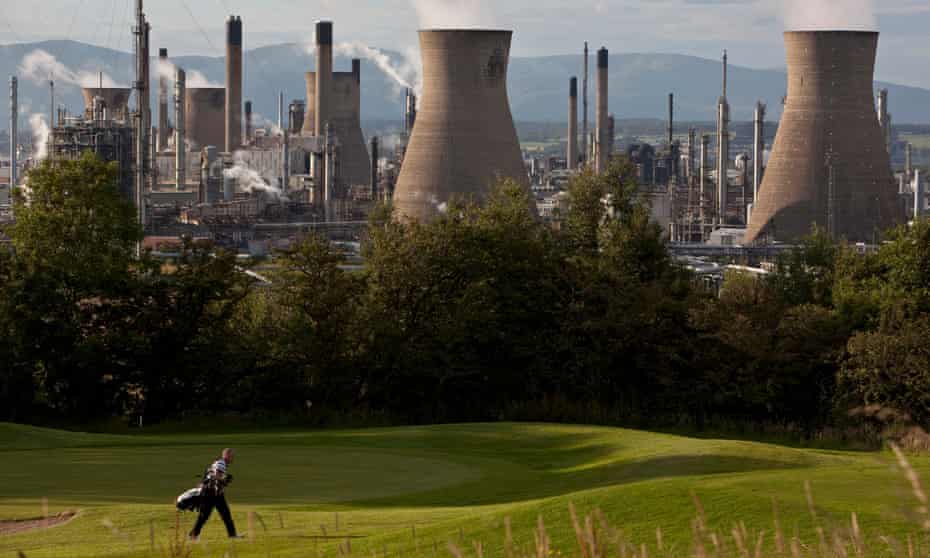
Petroineos’s Grangemouth refinery in Scotland. The traditional oil business is generating cash once again. Photograph: Bloomberg/Getty Images
Sun 7 Nov 2021 07.00 GMT

Executives at big oil and gas companies, at least the European ones, have spent the past two years trying to change the narrative. The likes of BP and Shell have trumpeted their net zero plans, declared themselves to be “transitioning” to a cleaner energy future and talked up the historical significance of new targets. Think of us as part of the solution, was the message.

To climate activists and politicians demanding faster decarbonisation, the industry’s reply has been that switching off investment in oil and gas too quickly would create a supply crisis: instead what’s needed are “integrated” energy companies that can recycle cashflows from hydrocarbons and build the green infrastructure of tomorrow

And, up to a point, the pitch has worked. The heaviest pressure has been directed instead at those industry giants viewed as disengaged laggards or refuseniks. Remember how tiny hedge fund Engine No 1 managed to ge transition-minded candidates on to the board at ExxonMobil, while at Chevron, 61% of investors backed a proposal from Dutch campaign group Follow This to force faster cuts in emissions.

But a year on from BP and Shell’s big announcements, their boards are mistaken if they think they now have a clear run to 2050 and that it’s just a matter of executing shareholder-backed plans. Trouble is bubbling on at least three fronts.

First, note the absence of oil executives, even the transitioning sort, in formal roles at Cop26 in Glasgow. Executives were confined to side meetings because their net-zero goals aren’t deemed to be science-based. That’s because the measurement methodology doesn’t yet exist, the companies would argue. But they are open to the charge of marking their own homework. Governments or voters may yet conclude that last year’s grand declarations simply don’t go far enough.

Second, Shell has been challenged on its integration-is-best thesis. High-profile US hedge fund Third Point says the company has “too many competing stakeholders pushing it in too many different directions, resulting in an incoherent, conflicting set of strategies attempting to appease multiple interests but satisfying none”. It suggests an alternative: split Shell into several standalone units and allow the renewables-focused arm to invest more aggressively, backed by a united set of shareholders. The climate would benefit, it argues.

That last point is debatable, it should be said. The legacy upstream and refining business wouldn’t necessarily cut capital expenditure, as Third Point assumes. And Shell’s renewables business isn’t yet large and may require years of backing from oil and gas cashflows.

Jessica Uhl, Shell’s chief financial officer, also argued recently that 120 years of accumulated technical expertise in energy is vital for delivering complex technological projects such as integrated carbon capture, biofuels and hydrogen facilities.

An activist hedge fund like Third Point primarily just wants, one suspects, a higher share price, but it has ignited a debate. Its argument that “sentimental” attachment to a “super major legacy” results in “incrementalism” may run and run.

Third – and far less nuanced – it’s impossible to miss the vast sums of cash currently being generated by oil companies when a barrel of Brent fetches $85. “We’re a cash machine at these types of prices,” said BP chief executive Bernard Looney last week, promising investors $1bn-a-quarter share buybacks as long as the price remained above $60.

According to this script, none of the spoils of the unexpected cash bonanza will be redirected towards extra investment in renewables, beyond the increase to $5bn a year by 2030 that BP has already pledged.

Is that fair? It’s what was agreed with investors, Looney might argue, but that answer would appear very self-satisfied. Expectations change. What sounded like a big strategic reset a year ago feel less impressive today. Even under its own definition of transitioning, big oil can afford to pick up the pace. To properly change the narrative, it should.

Bailey needs to learn how to lower and raise expectations


Andrew Bailey went on a media blitz after Thursday’s meeting of the Bank of England’s monetary policy committee. It wasn’t just the usual short clips either; Threadneedle Street’s governor did a long turn on Radio 4’s Today programme the next morning.

Nothing unusual in that, it might be thought. But the Bank normally goes to these lengths only when it has actually done something, whereas Bailey was popping up everywhere to try to explain why he and his colleagues had left policy unchanged. That’s a measure of how bad the Bank’s communications have been.

At one point in the press conference announcing the decision to leave interest rates at 0.1%, Bailey said it was “not our responsibility to steer markets on interest rates” – a comment that would raise eyebrows at the US Federal Reserve and the European Central Bank (ECB), where managing expectations is part of the job description. What’s more, when Bailey said last month that the Bank would have to act to curb inflationary pressure, it was a clear attempt to steer markets. As it turns out, a rather ham-fisted one.

Nor is anything much clearer now. After surprising the markets by its inaction, the Bank’s current message is that interest rates will need to rise in the coming months – but only if post-furlough data from the labour market is strong enough to warrant such a move.

Bailey deserves to be cut some slack. He is still relatively new to the job and deciding what to do about interest rates is not easy when the economy is both slowing and being hit by cost increases for the most part beyond the control of the Bank.

That said, he needs to study how other bank governors communicate. Mario Draghi, former head of the ECB, was an absolute master at getting his message across. By comparison, Bailey looks a novice.

London’s flotations look a lot less buoyant


Two months ago, London’s crop of newly floated businesses appeared in fine fettle. In September, THG, Britain’s great e-commerce hope formerly known as The Hut Group, was valued at £8.3bn, while Darktrace, the cybersecurity firm set up by mathematicians and former spies, had a market capitalisation of £7bn. Today, investors value both combined at barely north of £6bn.

Shares in loss-making Manchester-based THG, which runs retail websites such as Lookfantastic and Zavvi, have cratered as investors reassess the prospects of the business model and the level of control held by its leader and 22% shareholder, Matt Moulding. From a high of 800p in January, the shares hit a low of 198p last week, far below last September’s 500p launch price – at the time the biggest London Stock Exchange debut since Royal Mail in 2013. The gyrations suggest investors are struggling to value tech plays on the capital’s market.

The same is true of Darktrace, which floated in April at a conservative 250p, before racing in value from £1.7bn to £7bn. However, a recent critical analysts’ note and fears of a mass sell-off of stock by insiders have seen its share price almost halve.

While the LSE still has some winners – notably fintech firm Wise, which has held its value since becoming the largest-ever listing of a UK tech company earlier this year, and the stellar debut of biotech firm Oxford Nanopore in September – there is now caution in the air.

Last week, industrial products provider Rubix Group canned a planned IPO in London, citing “difficult ongoing conditions”, having announced the intention to float only last month. Similarly Marley, the biggest producer of roof tiles in Britain, abandoned its £500m IPO – blaming “market volatility” – less than three weeks after announcing it.

Add the experience of Czech fleet services firm Eurowag, described as the Uber of trucking, which endured a disastrous debut last month, and it would appear that investors fuelling the red-hot IPO market could be leaving London in the cold.

Victoria climate rally part of global day of action

The event, organized by Climate Justice Victoria, saw about 70 people take part in a 40-minute long march from Centennial Square to the B.C. legislature.
web1_copy_vka-climate-11886
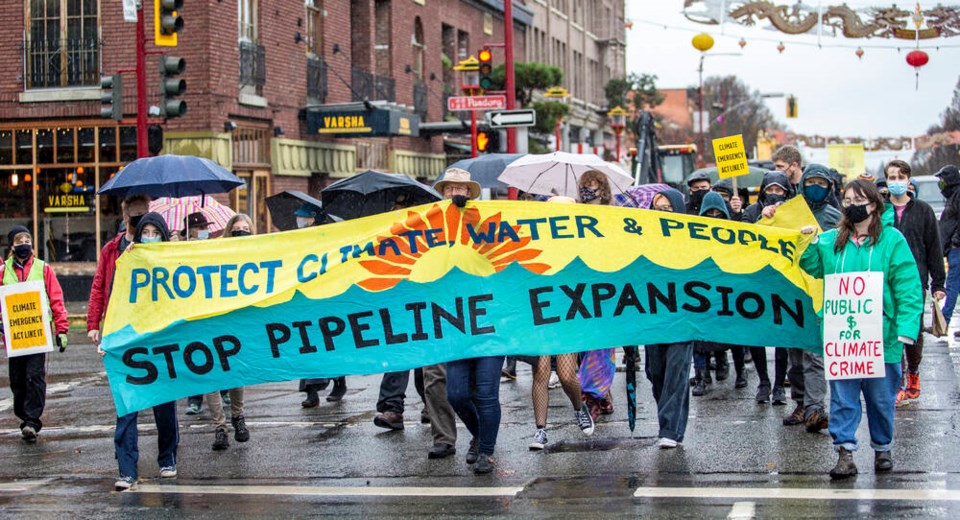
Climate activists march down Government Street on Saturday, Nov. 6, 2021 as they make their way from Centennial Square to the B.C. legislature as part of a global day of action coinciding with the COP26 UN global climate summit in Glasgow. DARREN STONE, TIMES COLONIST

Concerned citizens in Victoria marched in tandem with others from around the world on Saturday as part of a global day of action coinciding with the COP26 UN global climate summit in Glasgow.

The local event, organized by Climate Justice Victoria, saw about 70 people take part in a 40-minute long march from Centennial Square at 11 a.m. — timed to match similar demonstrations taking place across the world. The global events were organized by the U.K.-based COP26 Coalition.

Vancouver and Toronto were among the cities where similar events were held.


“The event was a push to get the message out for the need for a change in economic policy — both federally and internationally — to make climate justice a reality,” said D’Arcy Briggs, spokesperson for Climate Justice Victoria.

“Although today’s march was the most visible action, we have also been working hard in the background to make a transition to a climate friendly economy and to build a safe and healthy world.”

The group also endorses an end to urban highway expansion and having public transit switch to using renewable energy, such as electricity.

After the march, the group stayed to listen to a cross-section of speakers, including representatives from Our Earth Our Future, a youth environmental group.

Briggs said that they received positive feedback from the public during their event, with many motorists honking their horns in support.

parrais@timescolonist.com

 BC  

Fight over old-growth logging grows out of the rainforest and into B.C.'s Interior

Old-growth fight hits Interior

The B.C. government dropped a bombshell this week on the province’s forestry sector, but at this point, nobody knows how hard, or where, it will hit.

The province has announced plans to defer logging of 2.6 million hectares of Crown forest that contain “ancient, rare and priority large stands” of old-growth trees.

The decades-long fight over the harvesting of old-growth forests in B.C. has long been centred on Vancouver Island. Majestic ancient cedars, several hundred years old, have become a symbol of that fight featured in environmental campaigns that attract headlines globally.

The public overwhelmingly finds the harvesting of those giants intolerable and activists have drawn a line in the sand at Fairy Creek.

Meanwhile, concerns about logging practices in the B.C. Interior have manifested in entirely different ways — drinking water, recreation impacts, wildlife and wildfire — with not much attention given to the age of the trees being taken.

That changed this week when the B.C. government published mapping of proposed logging deferrals, or temporary protections, spread across the entire province. Previous deferrals focused on temperate rainforests.

Nobody is fully satisfied with the plan.

Environmental groups say the deferrals don’t go far enough or move fast enough, industry says it will be a “devastating” blow to jobs and First Nations say they are being brought into the process too late.

JOB LOSSES

When making the announcement, the provincial government said it expects 4,500 direct forestry jobs could be lost in B.C. due to the deferrals.

At the other end of the spectrum, the Council of Forest Industries (COFI) says 18,000 jobs and 14 to 20 sawmills will be lost.

Roly Russell, NDP MLA for Boundary-Similkameen and Parliamentary Secretary for Rural Development, in an interview with Castanet News, called COFI’s job loss estimates a “dramatic over exaggeration.”

“That frustrates me because I think it breeds more fear among the workforce. And that's not what we need. Right now we need to help figure out how to support those employees to get to where they want to go, given the situation,” he said.

COFI, however, has been forthcoming with how they came to their 18,000 job loss estimate. The government has not fully explained their 4,500-job figure.

COFI says 2.6 million hectares of old-growth deferrals will reduce the harvest by 10 million m3 per year. An average sawmill consumes between 500,000 and 700,000 m3 per year. The lobby group says Stats Canada’s input/output model shows that 1,800 jobs are created for every million hectares of forest harvested.

Castanet asked the provincial government to explain how it came to its own 4,500 job loss estimate and received a one-line answer.

“This analysis is based off of the decreased volume associated with the deferral area,” the Ministry of Forests said.

The government says it will provide support to forestry workers who lose their jobs due to the policy changes.

Russell said the support of impacted workers is “the task at hand right now.” His community of Grand Forks hosts a mill owned by Interfor that has seen curtailments in recent years. He suggested retraining and early retirement support would bridge the gap for workers.

“The vision here, and I really believe it, is to help develop a sustainable forest sector for years and generations to come,” Russell said.

Prince George-Mackenzie Liberal MLA Mike Morris, who perhaps has more forestry workers in his riding than any other, suggested the job losses were an inevitable tragedy in an interview with the CBC.

“That is something that should have been looked at decades ago to make this more sustainable,” Morris said. “Regardless of what action the government is taking now… we are simply out of harvestable wood in B.C. and a lot of those jobs are going to disappear anyways.”

WHERE WILL THE IMPACT BE?

Whether 4,500 or 18,000 jobs are lost, it is not yet clear where those losses will occur geographically.

The maps created by a panel of appointed advisors and released by the provincial government detailing proposed deferral areas are built on top of a data set many foresters consider unreliable, the “Vegetation Resources Inventory.”

The VRI includes data going back to the 1980s and relies entirely on satellite imagery, aerial photography, forest licensee submissions and growth projections. Updates are not routine.

It’s not uncommon for a forester to arrive at a planned cutblock expecting to see mature century-old trees, but find something else like a dead forest or young pine stand.

There are mapped areas slated for deferral that have already been logged or are currently being logged right now. The Wilderness Committee has highlighted examples of this in the Caycuse Valley of Vancouver Island, but foresters say it is happening throughout B.C.

At the same time, the deferral map appears to show forests that are not economically viable to harvest or never will be harvested because of riparian or wildlife habitat considerations — although they are not technically protected.

The provincial government would not answer how much of the 2.6 million hectares of forests planned for deferral is economically harvestable, only saying the lands are “currently unprotected.”

Environmental groups, meanwhile, are cheering the mapping as a confirmation of what they’ve been “saying for years.”

Jens Wieting of the Sierra Club BC told the Narwhal the importance of the new maps cannot be overstated.

“Now that this information exists, the B.C. government must show the same courage and leadership to act on these important findings,” he said.

FIRST NATIONS FEEDBACK

The government says it is asking First Nations for input on the areas slated for deferral over the next month.

The First Nations Forestry Council said it was just as surprised by the plan as industry, calling the whole premise “fundamentally flawed.”

“The identification of old growth deferral areas is an initiative that should be led by (First) Nations, not an exclusionary panel telling Nations what they see as ecologically important areas – based on information and criteria they chose to use,” said Matt Wealick, an Indigenous Registered Professional Forester.

“This is not just about protecting old growth; this is a land use planning decision that will impact the ability of Nations to make decisions about the use of forest lands and resources in their territories for decades,” added Wealick.

The Union of B.C. Indian Chiefs said in a release Thursday the government has “passed responsibility to First Nations without providing financial support for Nations to replace any revenues that might be lost if they choose to defer logging old-growth in their territory.”

MLA Russell said a 30-day timeline set out by the provincial government to get feedback from First Nations is not firm.

“That 30 days is the window of time in which the government is hoping to get an indication from First Nations about where they want to go,” he said.

"PARADIGM SHIFT"

The deferrals are just that — temporary. The government says it will pause logging in those areas until a “modernized” old-growth management strategy can be implemented.

With environmentalist groups fighting against old-growth harvests for decades, successive governments have been accused of “talk and log” — talking about conservation while trees fall.

When the B.C. NDP announced changes last month to the Forests and Range Practices Act — the primary piece of legislation that underpins how the forest industry operates in B.C. — Russell suggested it was a start of a "paradigm shift" for B.C. forestry.

It has finally become politically acceptable to suggest that the forestry sector will have to get smaller if it wants to become sustainable.

When Premier Horgan said in 2019 that there were "too many mills" in B.C., the Liberal Opposition attacked vigorously. But after this week, despite the cries from industry, Liberal criticism of the NDP plan has been limited to a few tweets and questions in the Legislature.

Russell, meanwhile, said he's excited B.C.'s biggest industry is changing, despite the short term pain.

"I'm really happy we're moving down the path of a new vision here to help serve our goals better and serve our communities and, you know, I want my kids to have the potential work in the industry in the future if they want to."

Churchill port to close for two years

By Glen Hallick, MarketsFarm
Published: November 4, 2021

The sight of grain vessels being loaded at the Port of Churchill in northern Manitoba won’t happen for two years, according to Sheldon Affleck, chief executive officer of the Arctic Gateway Group. | Facebook/Arctic Gateway photo

The sight of grain vessels being loaded at the Port of Churchill in northern Manitoba won’t happen for two years, according to Sheldon Affleck, chief executive officer of the Arctic Gateway Group.

AGG consists of 29 Indigenous and a dozen non-Indigenous communities that own and operate the rail line from The Pas to Churchill and the grain terminal at Canada’s only deep-water Arctic port.

AGG morphed from the consortium led by Regina-based AGT Food and Ingredients Inc., which acquired the line and port from Omnitrax when unrepaired washouts cut rail service to Churchill for three years.

Affleck said AGG decided in April to proceed with an extensive rehabilitation of the rail line that includes laying a honeycomb-type form to help stabilize the track bed that sits on top of muskeg. Construction began in August after the federal government announced it was providing $40 million for the project, with work focussing on the stretch between Gillam and Churchill. Passenger and freight service have continued, albeit with delays due to the construction.

“It would have been very difficult to run grain trains at the same time,” he said, stressing the need for the work.

“If you don’t bite the bullet and do your permanent solutions to the track, it’s like a pot-holey road that’s always under construction and you never get anything productive done. You are damaging what you are doing while you are doing it inefficiently,” he added.

Besides the rail line, Affleck said work continued on the roof of the grain terminal to prevent water leaks. Otherwise the 92-year-old structure is sound.

With grain shipments drastically curtailed, he said it would have been too costly to get the terminal up and running for a season until work is completed. To do so entails getting personnel in place from the Canadian Food Inspection Agency, the Canadian Grain Commission, plus stevedores and acquiring the needed certifications.

“You need a fair bit of shipping to make it worthwhile to open,” Affleck said.

On top of that is the drought that deeply cut prairie crop production. The huge decrease has already meant the port won’t have a grain shipping season in 2022. Affleck said there won’t be any leftover grain from 2021 to transport.

Timing is one of drawbacks for grain shipments through Churchill, despite it being closer to a number of markets including those in Europe.

“The growing season on the Prairies doesn’t coincide with the shipping season in Churchill very well,” Affleck said. There is at best a two-week period to get a current year’s grain to the port, if everything is lined up between seller and buyer, and there are no major glitches.

Petroleum can also be shipped through Churchill using CanaPux, developed several years ago by Canadian National Railway.

“(This is) a heavy oil combined with a small amount of recycled plastic … that turns into a granular product that is not oily and floats on water,” Affleck said.

The port is already capable of handling CanaPux and the rehabilitation of the rail line will provide Churchill the opportunity to ship the product.
N.B. health-care workers turned away after back-to-work order: union

Steve Drost, president of CUPE New Brunswick


By Danielle Edwards
Updated Nov. 6, 2021 

FREDERICTON -

Several striking New Brunswick health-care sector employees were turned away from their jobs hours after the province issued an emergency order sending them back to work, the union representing the civil servants said Saturday.

Local presidents within CUPE New Brunswick held an afternoon press conference to discuss the fallout after the provincial government announced it was calling health-care employees back to work. That order came on Friday, a week after 22,000 CUPE members across the province walked off the job in response to an ongoing labour dispute with the province.

CUPE Local 1252 President Norma Robinson told reporters the back-to-work order seems to have caused "chaos" within the health-care system.

RELATED STORIES
N.B. premier issues back-to-work order for CUPE health-care workers
Higgs, CUPE confront one another on front steps of N.B. legislature
CUPE, N.B. premier say little after wrapping up first meeting in almost two weeks

"It was not clear who was to report to work and now this morning we're getting reports that there are people that were not to report to work because that's what they're being told at the door," she said, adding that some members were told they were still on strike scheduling.

The union is now calling on the government to explain the parameters of the order, Robinson added.

The provincial government issued an emergency order forcing striking health-care workers to go back on the job as of midnight in an attempt to help stabilize the system that's been overburdened by the COVID-19 pandemic.

In a release issued Friday, officials said more than 11,800 appointments, procedures and surgeries have been cancelled since Nov. 1 and the health-care system is dealing with delays in processing laboratory test results.

But Robinson said anecdotes from health-care employees who are still currently working tell a different story.

"We've had reports from people on the inside of the health-care facilities that it is not as bad as what was reported by the government," she said.

The province says the order covers all workers in CUPE 1252, who work directly in the healthcare system, as well as workers in CUPE 1190 and CUPE 1251 who work in the health services supply chain and laundry and linen services. It does not pertain to the rest of the CUPE members who went on strike last week, a group that includes employees in the corrections and education sectors among others.

The province issued a news release later on Friday, saying anyone who fails to report to work risks being fined between $480 and $20,400 per day. CUPE itself has been threatened with a minimum fine of $100,000 for each day that a worker doesn't comply with the order.

Steve Drost, president of CUPE New Brunswick, said the government has not been in contact with the union since the order was enacted.

Salaries have been the central issue at the heart of the ongoing labour dispute.

The province is offering a wage increase of two per cent per year for five years, as well as a 25-cent-per-hour increase each year. It also proposed pension changes for two locals.

The union, however, said it countered with a pay raise of two per cent per year over five years, as well as an extra 25-cent-per-hour raise for the first three years, followed by a 50-cent increase per hour in the final two years. The counter-proposal also rejected the prospective pension changes.

Drost called the order and the government's offer "outrageous."

"It's simply a tool to interfere with these members legal rights and to be used as punishment against these workers because they understand their value and they've finally decided to stand up," he said.

This report by The Canadian Press was first published Nov. 6, 2021.

NWT
Union and marine services company reach tentative deal


Published: November 5, 2021
CABIN RADIO
EMILY BLAKE
A barge, operated at the time by NTCL, is pictured overwintering in Cambridge Bay in 2008

A union representing marine services workers in the Northwest Territories says it has reached a tentative agreement with employer ORSI, preventing strike action hinted at earlier this week.


Details of the agreement were first reported by the CBC.The agreement was reached following conciliation on Wednesday between the union – the Public Service Alliance of Canada, or PSAC, with its affiliate the Union of Canadian Transportation Employees – and ORSI, or Offshore Recruiting Services Inc.

Lorraine Rousseau, regional executive vice-president for PSAC, told Cabin Radio she was “very happy” the tentative agreement had been reached but could not yet disclose many details.

“A long-term collective agreement has been secured until the year 2024 with annual increases that we think will protect our members from the high cost of living in the North,” she said. The deal must now be ratified by the union’s members.

Prior to Wednesday’s meeting, the union said negotiations had “reached an impasse” with ORSI over the wages being offered to employees.

While previous agreements saw annual increases of two percent, Rousseau said ORSI had offered incremental increases of one percent, 1.25 percent, and 1.5 percent each year, based on consumer price indexes in southern city centres that she said were not reflective of the North.

ORSI is based in Newfoundland and Labrador but provides marine services to the Mackenzie River supply chain under a contract with the NWT government. Many of the employees delivering those services live in the North.

The NWT government took over barging services in the territory in 2016 when it purchased the assets of Northern Transportation Company Ltd – known as NTCL – for $7.5 million. At the time, the GNWT said it planned to partner with private businesses to contract out marine services.

Rousseau said while strike action was averted in this case, the union will consider ORSI’s “inaction of coming to the table with bargaining in good faith” when it negotiates the next contract in 2024.


“It was so close to some type of job action that, next time around, we really have to remember that and be cognizant of what we’re getting into, because we were not unreasonable,” she said.