It’s possible that I shall make an ass of myself. But in that case one can always get out of it with a little dialectic. I have, of course, so worded my proposition as to be right either way (K.Marx, Letter to F.Engels on the Indian Mutiny)
Thursday, April 28, 2022
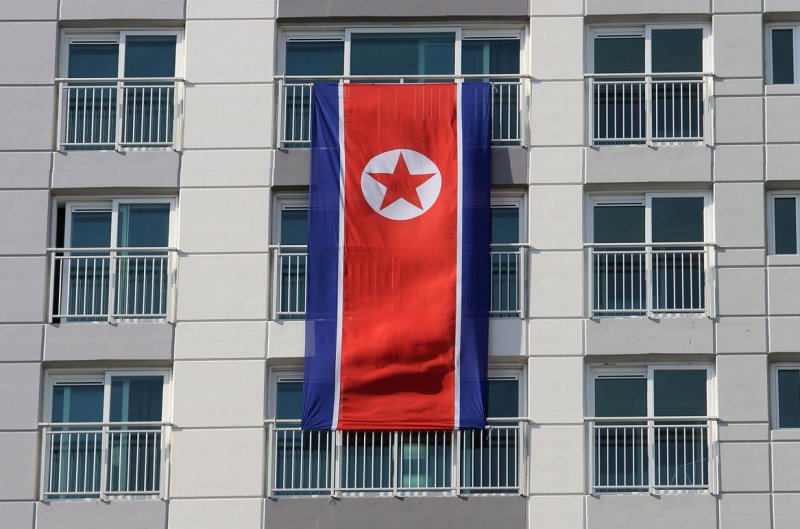
North Korean hackers stealing military tech, cybersecurity experts say
The hackers were able to break into servers belonging to an engineering firm in the energy and military sectors and install backdoor malware that allowed them to secretly steal data over several days, security officials said. File Photo by Andrew Wong/UPI | License Photo
SEOUL, April 27 (UPI) -- A North Korean-linked hacker group recently breached an engineering company with military ties, U.S. cybersecurity firm Symantec said Wednesday, in Pyongyang's latest cyberattack aimed at bolstering its weapons development program.
The hackers, known as Stonefly, have been in operation since at least 2009, but in recent years have narrowed their focus "solely to espionage operations against select, high-value targets," security experts with Symantec said in a blog post.
"Virtually all of the technologies it appears to be interested in have military as well as civilian uses and some could have applications in the development of advanced weaponry," the post said.
Stonefly's most recent known attack was in February against an engineering firm working in the energy and military sectors. The hackers were able to break into one of the firm's servers and install backdoor malware that allowed them to secretly steal data over several days.
"The group's capabilities and its narrow focus on acquiring sensitive information make it one of the most potent North Korean cyber threat actors operating today," Symantec said.
A trio of U.S. agencies warned last week that North Korea was stepping up cyberattacks on cryptocurrency and blockchain platforms as the secretive regime looks for ways to evade international sanctions.
Despite an economy that has grown even more isolated by the COVID-19 pandemic, North Korea is prioritizing its weapons program. Pyongyang has unleashed a flurry of missile launches since the beginning of the year and officials in Washington and Seoul have warned that a nuclear test may be on the horizon.
On Monday, North Korea held a military parade that displayed its latest intercontinental ballistic missiles while leader Kim Jong Un vowed to continue "developing the nuclear forces of our state at the fastest possible speed."
Democrats accuse Trump administration of improper $700M COVID-19 aid loan
The subcommittee said then-Treasury Secretary Steven Mnuchin approved the loan for the trucking company after a meeting with Defense Secretary Mark Esper.
April 27 (UPI) -- The Trump administration improperly overruled career Defense Department officials' recommendations not to provide a $700 million loan to a trucking company as part of coronavirus relief in 2020, Democratic lawmakers said Wednesday.
The allegations came in a report released by Democrats on the House Select Committee on the Coronavirus Crisis, which was set up in April 2020 to oversee the use and dispersement of COVID-19 pandemic-related aid.
Congress passed the $2.2 trillion Coronavirus Aid, Relief and Economic Security Act to assist Americans and U.S. companies negatively impacted by the pandemic. Some $17 billion was designated for a program to provide loans to companies considered critical to national security. The largest chunk of funding from that program went to YRC Worldwide, which now goes by the name Yellow Corporation.
But the subcommittee overseeing the funding said it's uncovered evidence that the $700 million loan was pushed by political appointees with links to Yellow over the objections of career defense officials.
"Today's select subcommittee staff report reveals yet another example of the Trump administration disregarding their obligation to be responsible stewards of taxpayer dollars," said subcommittee Chairman Rep. James Clyburn, D-S.C.
"Political appointees risked hundreds of millions of dollars in public funds against the recommendations of career DOD officials and in clear disregard of provisions of the CARES Act intended to protect national security and American taxpayers. The select subcommittee is committed to accountability for government officials and other unscrupulous actors who sought to use a public health crisis as an opportunity for political gain and personal profit."
The report says career defense officials recommended against granting the loan, saying Yellow had misrepresented how critical its services were to the Defense Department and had overcharged for its services. Officials said the services provided by Yellow could be replaced by another company.
There were also questions about Yellow's previous financial and legal troubles. The Justice Department had previously sued the company for overcharging the government and Yellow lost some $100 million in the year before the pandemic.
The subcommittee report said that when the Treasury Department -- which made the final approval on loans under the CARES Act -- caught wind that the Defense Department didn't plan to certify the loan to Yellow, former Secretary Steven Mnuchin's office set up a direct call with then-Defense Secretary Mark Esper.
According to the report, Esper overruled career defense officials and certified the loan was critical to national security.
Then-White House Chief of Staff Mark Meadows was instrumental in securing the loan for Yellow and was regularly in contact with representatives from the company, the report said. James P. Hoffa, head of the Teamsters union, which represents truckers employees by Yellow, was in direct with Trump about the loan, and some Democratic and Republican lawmakers appealed to Mnuchin to approve the loan.
Others believed the loan was a mistake, including Rep. French Hill, R-Ark., a member of the Congressional Oversight Commission that also reviews use of COVID-19 aid.
"As I've previously said, the $700 million taxpayer-backed loan treasury made to Yellow, formerly YRC, was a mistake, and now the commission is focused on how we can prevent this from happening again," he said, according to The New York Times.
The report said there were a number of ties between Yellow, Apollo Global Management, which provided financial backing to the company, and the Trump administration -- Former Apollo CEO Darren Hawkins served on Trump's coronavirus economic task force and Trump nominated former Yellow CEO William Zollars to the U.S. Postal Service's board of governors.
In response to the report, Yellow accused the subcommittee of "baseless speculation and innuendo."
"Yellow strove hand-in-hand with senior union leadership to garner support for its loan application, and in fact received broad support from numerous members of Congress on both sides of the aisle who recognized Yellow's criticality and urged treasury to approve Yellow's application," company lawyer Marc Kasowitz said, according to The Washington Post.
Analysis says most U.S. workers need major pay increase to earn living wage
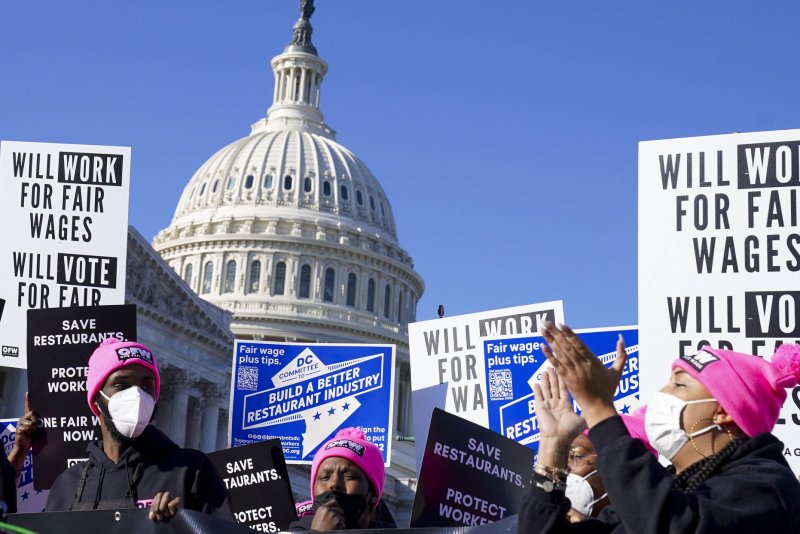
A LIVING WAGE BEGINS AT $20 PR HR Restaurant workers and owners rally on Capitol Hill in Washington, D.C., on February 8 to call for a federal government wage increase.
April 27 (UPI) -- A health-related report that examines numerous issues for American families, such as wages and rising costs, said on Wednesday that economic security is out of reach for many people in the United States -- particularly women and women of color who are still at a fiscal disadvantage compared to men.
The assessment, the 2022 County Health Rankings & Roadmaps report, looks at a number of key issues facing working Americans and found that most need a pay increase of more than 70% before they can earn a living wage.
At worst, in some counties across the United States workers need a 229% pay increase to earn a living wage.
The 20-page report was created by the University of Wisconsin Population Health Institute, which is funded by the Robert Wood Johnson Foundation.
"The data reinforces what we've known for some time. People in both rural and urban communities face long-standing barriers, systemic barriers -- avoidable barriers -- that get in the way of groups of people and places in our country from being able to live long and well," Sheri Johnson, co-director of County Health Rankings & Roadmaps, told ABC News.
Wednesday's report said that researchers compiled data and offered guidance for leaders and communities to improve the lives and health of Americans. The data paint a picture of economic insecurity that's impacting the health of working Americans.
According to the analysis, an average living wage of $35.80 an hour is needed across all U.S. counties for a household with one adult and two children. That wage figure ranges from $29.81 per hour and rises to a high hourly rate of $65.45.
Wednesday's assessment said that the pay gap between men and women "is especially harmful to the health of working women responsible for covering basic needs and providing for those who depend on them."
File Photo by Brian Kersey/UPI
Researchers found that working women and women of color are particularly affected by the disparities in pay.
"For decades, working women, particularly women of color, have navigated employment discrimination, been segregated into female-dominated sectors such as service, education and health care, and received less pay for equal work," the report states, adding that racial and gender discrimination are still constant factors at all stages of employment.
The COVID-19 outbreak, it said, compounded economic insecurity and worsened conditions for millions. Over the course of the pandemic, it found that women's participation in the workforce fell to a 30-year low.
"The pandemic both revealed and worsened the burdens and barriers that women, people of color, and people with low incomes face," the authors said. "It also underscored that resources have not been distributed fairly within and across communities." Although strides have been made over recent decades toward closing the wage gap between men and women, Wednesday's analysis said that women are still earning only about 80 cents for every dollar that men make.
A Hispanic woman, it said, would have to work roughly 300 more days to earn the average annual salary of $61,807 given to White male workers in the United States.
The pay gap, it explained, between men and women "is especially harmful to the health of working women responsible for covering basic needs and providing for those who depend on them."
The assessment also noted that working Americans continue to struggle with paying for child care. It found that a household with two children spends an average of 25% of its income on childcare -- more than three times the affordability benchmark of 7%.
Further, public schools are underfunded and education centers in half of all U.S. counties are operating on budget deficits.
Researchers said that about $3,000 more per student, per year is needed to support achievement of national average test scores.
"By recognizing how historic and current policies and systems create disadvantage, we can allocate resources where they are most needed so that economic inclusion, good health, and prosperity are shared by all," the authors said.
"This report is a call to action to strengthen relationships across sectors to advance economic security and health for everyone."
Poll: A third of U.S. college students consider withdrawing due to stress
April 27 (UPI) -- Emotional stress is forcing a large number of college students to consider taking a break.
A third of all college students in the United States considered withdrawing from their studies in the past six months, according to a Lumina Foundation and Gallup poll released Wednesday.
"Those who had stopped out or had never enrolled are still reporting that they think an education beyond high school is a pathway to a better job and a better life," said Stephanie Marken, executive director of education research at Gallup.
Emotional stress caused by COVID-19, the cost of tuition and difficult coursework were the three most-reported reasons students considered taking a break.
"Mental health crises have been popping up on campuses across the country for several years, pre-pandemic, but COVID-19 really exacerbated these issues for students," Marken said.
Colleges are adding mental health counseling to existing academic help. Virtual classes, which became a quick necessity during the pandemic, make education accessible to those students who need a break. And many schools are offering de-stressing activities to reduce anxiety before midterm and final exams.
A Washington State University study in 2021 found dogs are a big help for stressed students. Students reported feeling less anxiety after petting therapy dogs than they did after taking stress management courses.
"Dogs are such a great, happy distraction from our troubles. I think they bring you out of your head," Amy Hrin, national director of special projects at American Human, said at the time. "And when you think about this particular population -- students who are away from home -- and here they can have this chance to give and receive affection with this warm, friendly animal. If you can't have a hug from Mom right now, this is the next best thing."
Minneapolis police engaged in pattern of racial discrimination, report finds
Protestors and local residents gather at the George Floyd Memorial in 2021, while on Wednesday, the Minnesota Department of Human Rights published a report that found Minneapolis Police repeatedly engaged in a pattern of racial discrimination.
April 27 (UPI) -- Minneapolis police engaged "in a pattern or practice of race discrimination," according to a report issued by the Minnesota Department of Human Rights on Wednesday.
The report found the Minneapolis Police Department violated the state's Human Rights Act, repeating a pattern that saw officers use higher rates of more severe force against Black community members than White community members in similar circumstances.
The pattern was caused by an organizational culture, including flawed training, deficient accountability systems, and an overall lack of collective action by the city and police department leadership, according to the report.
Training emphasized "a paramilitary approach to policing," said state human rights commissioner Rebecca Lucero, who co-authored the report.
The Department of Human Rights launched the investigation in June 2020 following the death of George Floyd to look at "a pattern or practice of race discrimination" within the city's police force. Lucero said Wednesday that Black residents in Minneapolis represented around 78% of all police searches between 2017 and 2020 but represent about 19% of the city's population of approximately 420,000 people.
The human rights department will work with the city to develop a consent decree, a court-enforceable agreement that identifies specific changes to be made to the police department and timelines for those changes to occur.
It will then work to identify what should be included in the decree to address the racial discrimination.
"We will work with the city to develop a consent decree and engage with community members, police officers and other stakeholders," the department said on Twitter after releasing the report.
"We have a hell of a lot of work to do as a city. We have a hell of a lot of work to do in this nation," Minneapolis Mayor Jacob Frey told reporters Wednesday afternoon.
"I found the contents to be repugnant, at times horrific. They made me sick to my stomach and outraged and I think that our community feels the same way."
The report was issued the same day lawyers for former police officer Derek Chauvin asked an appeals court to overturn his conviction. Chauvin was found guilty a little more than a year ago of killing Floyd.
The City of Minneapolis announced a $27 million settlement with Floyd's family in March 2021.
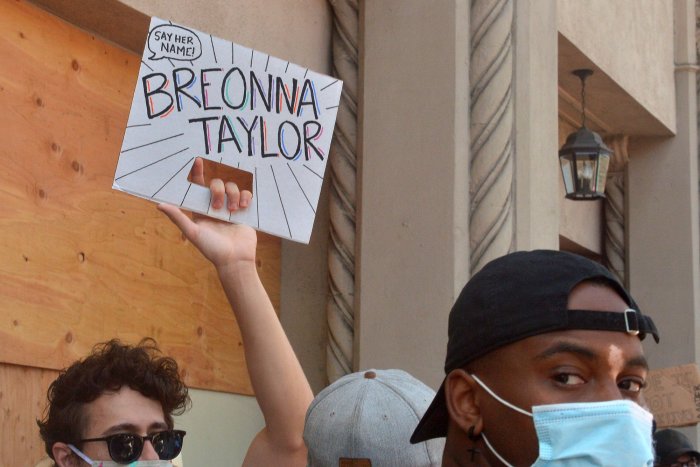
Demonstrators hold a sign in Los Angeles on June 14 for Breonna Taylor, a black woman who was shot by police in her home while she was sleeping.
New York (AFP) - US authorities on Wednesday arrested Archegos founder Bill Hwang and charged him with securities fraud and market manipulation following the fund's spectacular implosion last year that cost large banks billions of dollars.
The family-owned hedge fund run by Hwang had taken huge bets on a few stocks with money borrowed from banks, and when several of those bets turned sour, the fund was unable to meet "margin calls" to cover the losses.
The 2021 collapse of the fund sent shockwaves through financial markets and caused $10 billion in losses for Credit Suisse, Nomura, Morgan Stanley and other leading financial institutions.
Hwang and Patrick Halligan, chief financial officer of Archegos, were both arrested by the FBI early Wednesday.
"Their alleged crimes jeopardized not only their own company but also innocent investors and financial institutions around the world," Deputy Attorney General Lisa Monaco told reporters.
Both men pled "not guilty" in court appearances, said attorneys for Hwang and Halligan.
A searing 59-page indictment said Hwang and Halligan used the firm "as an instrument of market manipulation and fraud, with far-reaching consequences for other participants in the United States securities markets," according to the indictment.
Hwang and other conspirators, including head trader William Tomita, sought to defraud investors by convincing them that shares in the fund's portfolio were on the rise when in fact the stock price increases "were the artificial product of Hwang's manipulative trading and deceptive conduct that caused others to trade," the indictment said.
They also repeatedly made "false and misleading statements" to convince others to trade with and extend credit to the firm. Inflating share prices
The fund used derivatives to take large stakes in top Chinese names such as Baidu Inc, Tencent Music Entertainment Group and Vipshop Holding, plus US giants such as ViacomCBS and Discovery.
The plan initially worked and the fund tripled in size in just a year, while Hwang's personal fortune soared to $35 billion from just $1.5 billion and turned him and the firm into "significant economic forces in the United States securities markets," the filing said.
The US financial markets regulator, the Securities and Exchange Commission (SEC), also charged Hwang, Halligan, Tomita and Chief Risk Officer Scott Becker for their roles in the scheme.
The move to inflate share prices caused the firm to expand rapidly, "increasing in value from approximately $1.5 billion with $10 billion in exposure in March 2020 to a value of more than $36 billion with $160 billion in exposure at its peak in March 2021," the SEC said in a statement.
Both Becker and Tomita also pled guilty to criminal charges, according to a Justice Department press release that said both men were cooperating with the government.
Hwang studied in the United States and went to work for Tiger Management, rising to form his own Tiger Asia Management. In 2012, Hwang paid $44 million to settle with the SEC over an insider trading case and shuttered the firm.
U.S. charges investors with deceitful Wall Street scam to make billions Stock traders work on the floor of the New York Stock Exchange on Wall Street in New York City on April 25. Photo by John Angelillo/UPI | License Photo
April 27 (UPI) -- Federal regulators said on Wednesday that it's charged a Wall Street investors with securities and wire fraud in a racketeering conspiracy that they say included lying to other Wall Street firms.
The Securities and Exchange Commission said the charges were filed against Archegos Capital owner Bill Hwang and Chief Financial Officer Patrick Halligan.
Prosecutors say Hwang used his personal finances to manipulate markets and commit fraud in a scheme that increased his wealth from about $1.5 billion to more than $35 billion.
"Hwang purchased on margin billions of dollars of total return swaps," the SEC said in a statement. "These security-based swaps allow investors to take on huge positions in equity securities of companies by posting limited funds up front.
Also indicted were Archegos head trader William Tomita and Chief Risk Officer Scott Becker.
SEC Chair Gary Gensler said the case underscores the importance of updating the security-based swaps market to enhance the investor protections, integrity and transparency.
"As alleged, Hwang frequently entered into certain of these swaps without any economic purpose other than to artificially and dramatically drive up the prices of the various companies' securities, which induced other investors to purchase those securities at inflated prices."
Prosecutors say Archegos deliberately misled parties about the firm's exposure, concentration and liquidity to get increased trading capacity so Archegos could continue buying swaps and driving up prices.
The scheme unraveled last year when prices declined in Archegos' most concentrated positions, which drew sizable margin calls that overwhelmed Hwang. The result was billions of dollars in credit losses.
"Hwang and Archegos propped up a $36 billion house of cards by engaging in a constant cycle of manipulative trading, lying to banks to obtain additional capacity, and then using that capacity to engage in still more manipulative trading," Gurbir Grewal, director of the SEC Division of Enforcement, said in a statement.
"But the house of cards could only be sustained if that cycle of deceptive trading, lies and buying power continued uninterrupted, and once Archegos's buying power was exhausted and stock prices fell, the entire structure collapsed."
BW Offshore Denies NGO’s Claim of Ship Recycling Accident in India
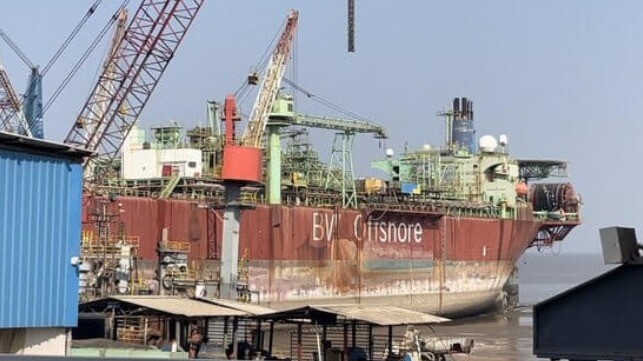
BW Offshore's former FPSO is being dismantled in India (NGO Shipbreaking Platform)
BW Offshore, one of the largest operators of floating offshore energy vessels (FPSOs) finds itself involved in a “war of words” with an NGO over the company’s efforts to properly recycle its end-of-life FPSOs. NGO Shipbreaking Platform issued a statement picking up on a report from German media saying that one of BW Offshore’s former vessels had been the site of an accident at a scrapyard in India and questioned the company’s recycling efforts. The ship operator responded with a statement denying the NGO’s statements and directing questions to the scrapper.
In February 2022, BW announced that its retired FPSO BW Cidade de São Vicente was going to be recycled at Priya Blue Industries in Alang, India. While the Indian shipyards are not accredited by the European Union, BW Offshore highlighted that it was taking steps to ensure the responsible recycling of the vessel. They said that the yard is certified to ISO standards and has been issued with a Statement of Compliance by Class NK following the IMO as well as the Hong Kong International Convention for the safe and environmentally sound recycling of ships.
Further, the company said a recycling plan had been prepared with the yard and that it would have third-party monitoring for compliance with health, safety, and environmental regulations. They also said they would pay a “safe recycling” bonus upon completion to incentivize safe operations by the scrapper.
NGO Shipbreaking Platform issued a statement today saying that there had been an accident at the yard killing one worker. They contend that the accident took place at the BW Cidade de São Vicente when a nitrogen tank was removed from the vessel and exploded killing the worker.
“The company can confirm that it, on April 21, was informed about a fatal accident at Priya Blue plot V1. The accident was unrelated to the ongoing recycling of former BW Offshore FPSOs at the yard,” BW Offshore responded in its statement. The company said its representative was in touch with the yard and offered to assist while referring all further questions to the scrapper in India.
In addition to saying that the FPSO was the site of the accident, the NGO also commented on the Indian yard while contending that BW Offshore had taken a higher value offer from the Indian yard versus a “more sustainable solution for the recycling of the vessel,” at a dry-dock and steel production facility in the Middle East.
Priya Blue Industries was amongst the first yards in India to obtain a so-called “Statement of Compliance with the Hong Kong Convention” from Japanese ClassNK, and is also a member of the Sustainable Shipping Initiative since 2018, acknowledged the NGO. They however contend that the yard along with others in Alang was cited in a European Commission audit for a series of structural deficiencies. They said this includes the lack of infrastructure to contain pollutants in the primary cutting area, the non-existence of capacity to handle several hazardous wastes originating from ships downstream, the absence of medical facilities, and breaches of labor laws.
Ingvild Jenssen, Executive Director of NGO Shipbreaking Platform said the group was encouraging BW Offshore to ensure that its end-of-life fleet is managed exclusively in facilities that can ensure the highest environmental and social standards. “When safer alternatives to beaching exist, ignoring the social and governance failings in Alang and contributing to the greenwashing of an outmoded and polluting method for the sake of more money is simply not acceptable anymore."
BW Offshore announced a month ago that it had sold a second vessel, FPSO Umuroa, also for recycling in India. They again stated that the yard is certified to ISO standards and has been issued with a Statement of Compliance by Class NK. They again will have a third-party representative and were offering a safe recycling incentive.
The debate over the use of South Asian yards for the end-of-life vessels continues with NGO Ship Breaking reporting in its annual report that those yards accounted for three-quarters of all vessels sold to be dismantled in 2021. They said that 583 of the largest tankers, bulkers, floating platforms, cargo- and passenger ships ended up on the beaches of Bangladesh, India, and Pakistan while citing reports of injuries, fatalities, and environmental pollution at the yards.
12 Years Later: The Deepwater Horizon Spill
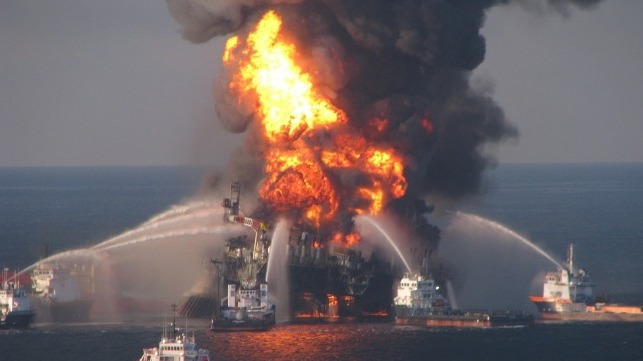
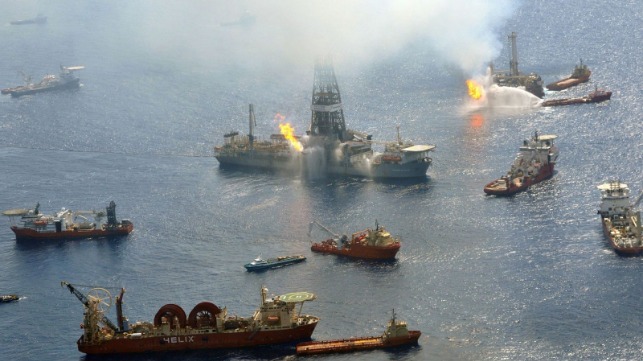
The fire aboard the Deepwater Horizon, April 2010 (USCG)
"Even Exxon Valdez pales in comparison to the volume, scale, number of Coast Guard resources, how much time has been devoted to [Deepwater Horizon]—all far exceed any previous event." - Capt. Duke Walker, Federal On-Scene Coordinator, U.S. Coast Guard, 2012
On the evening of April 20, 2010, the Deepwater Horizon oil rig blew up at the Macondo well site, 45 miles southeast of Venice, Louisiana. The explosion resulted in the deaths of 11 workers and, within two days, the loss of the rig. The resulting spill of over 200 million gallons of crude oil became the largest discharge of oil in U.S. waters.
A century earlier, petroleum products had fueled tremendous growth in industrial, government and civilian uses. Oil products became common ship fuel and cargo and, offshore oilrigs grew in numbers as land-based reserves dried up.
The Coast Guard’s role in oil and chemical spill response officially began in 1924, when Congress passed the Oil Pollution Act. This act included the first federal statutes regulating the discharge of fossil fuels from seagoing vessels. In 1948, Congress passed the Federal Water Pollution Control Act to protect public water supplies for public, agricultural, recreational and industrial uses. Coast Guard veterans will remark how laws mandating the service’s search and rescue mission were written in blood, but the service’s pollution response mission laws were written in oil.
After World War II, chemical spills and hazardous waste events began to occur frequently. Major spills in the 1960s brought attention to oil and chemical pollution, including the tanker Torrey Canyon oil spill in 1967 and the 1969 fire on Cleveland’s polluted Cuyahoga River. The 1969 Santa Barbara Oil Spill focused attention on the dangers of spills from offshore oil rigs. With these environmental disasters came greater awareness of chemical pollution spurring enactment of the U.S. National Oil and Hazardous Substances Pollution Contingency Plan (a.k.a. “NCP”) in 1968 and, in 1970, passage of the Water Quality Act and establishment of the nation’s annual Earth Day observance.
By the 1970s, tanker oil spills averaged nearly 80 per year worldwide. With these frequent spills came regulation of oil tankers and better technology for responding to spills. Congress tasked the Coast Guard with monitoring unauthorized substance discharge, enforcing ballast water regulations and ensuring that commercial vessels met U.S. environmental standards. In 1972, Congress made sweeping amendments to the Water Pollution Control Act, which came to be known as the Clean Water Act and resulted in establishment of the Coast Guard’s National Strike Force (NSF). In the 1970s and 1980s, the NSF’s oil and chemical spill responsibility expanded under several more environmental protection laws passed by Congress.
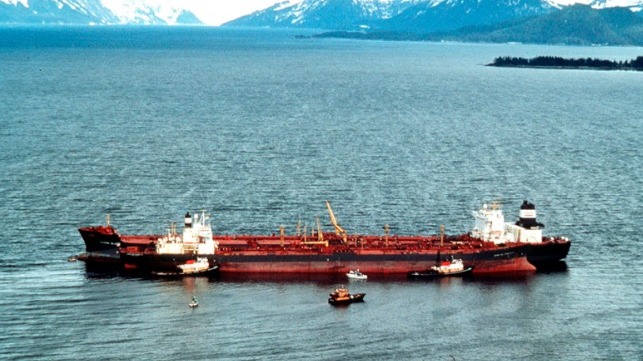
In 1989, the tanker Exxon Valdez ran onto a rock ledge near Valdez, Alaska, causing the worst oil spill in U.S. waters up to that time. The disaster led to passage of the Oil Pollution Act of 1990 (OPA 90). OPA 90 regulations created the Oil Spill Lability Trust fund and codified the “polluter pays” principle. OPA 90 also required alcohol and drug abuse monitoring of licensed mariners, and established legal penalties and a claims system for oil spill remediation. Enforcement of OPA 90 and protection of U.S. territorial waters became a vital part of the Service’s mission and led to a more robust Coast Guard response capability.
Picture of the tanker Exxon Valdez in 1989 after she ran aground in Prince William Sound, Alaska, and spilled 15 million gallons of crude oil. (U.S. Coast Guard)
After Exxon Valdez, Coast Guard assets and personnel continued to respond to all kinds of oil and hazardous material releases, even some beyond U.S. waters. These events included the sabotaged oilrigs of the 1990 Persian Gulf War and consequent oil spills—considered one of the largest discharges of oil in history. Other spills included those caused by hurricanes Floyd, Katrina and Rita; barge and tanker oil spills of the 1990s and early 2000s; and aviation accidents, such as the 1999 Egypt Air and 2000 Alaska Airlines crashes.
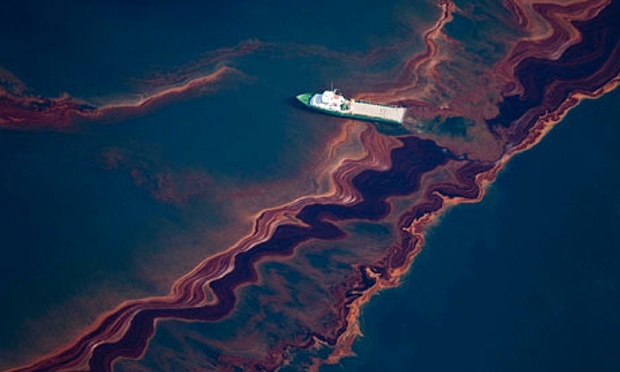
Coast Guard units, including the NSF, played a leading role in responding to the Haiti Earthquake in 2010. That same year, the Deepwater Horizon rig explosion occurred. The resulting spill is considered the world’s largest maritime oil spill and the largest environmental disaster in U.S. history. The Deepwater gusher spewed oil into the Gulf of Mexico at a rate of 60,000 barrels per day for nearly 90 days. The oil slick covered thousands of square miles of water and nearly 4,500 miles of Gulf shoreline.
Relief well drilling operations at the Deepwater Horizon response site (USCG)
Daniel Beltra / Greenpeace
From April 2010 through April 2014, the Coast Guard led the effort to clean and evaluate shoreline segments along the Gulf of Mexico. In 2012 and in 2013, the shoreline-cleaning program collected around seven million pounds of oily material. By the summer of 2013, shoreline remediation was deemed complete on the Gulf shores of Texas, Mississippi, Alabama and Florida. In 2014, the program collected around 30,000 pounds of oily material, about one percent of the previous year’s total. By 2014, the bulk of oily material found consisted primarily of small tar balls dispersed along the shorelines. By then, it became difficult to distinguish between oil from Deepwater Horizon and oil from other sources found along the shoreline. By late February 2015, the Coast Guard shifted operational oversight of response effort to local commands along the Gulf Coast.
The Coast Guard’s response to the Deepwater Horizon spill became the largest for an environmental disaster in the Service’s history. At the height of the effort, the Coast Guard-led command oversaw an armada of over 6,000 vessels, including skimmers, vessels of opportunity, research vessels, Coast Guard cutters, and specialized vessels. This command also established an Aviation Coordination Center that oversaw more than 120 aircraft vital to the response effort. To ensure the flow of commerce in the impacted area, the Coast Guard established a Marine Transportation System Recovery Unit. The combined efforts of these assets involved nearly 50,000 Coast Guard and civilian personnel.
Today, as part of its homeland security obligations, the Coast Guard responds to human and environmental impacts of oil discharges, hazardous material releases, and other disasters. The Coast Guard remains ready, relevant and responsive to adapt and expand its environmental protection mission to ever-changing natural and manmade threats to the nation and its marine environment.
William Thiesen is the Coast Guard Atlantic Area historian. This article was first released in 2020, and it is reproduced here courtesy of Coast Guard Compass. The original is no longer available online.
The opinions expressed herein are the author's and not necessarily those of The Maritime Executive.
IMO Urges Ratification of Cape Town Agreement on Fishing Vessel Safety
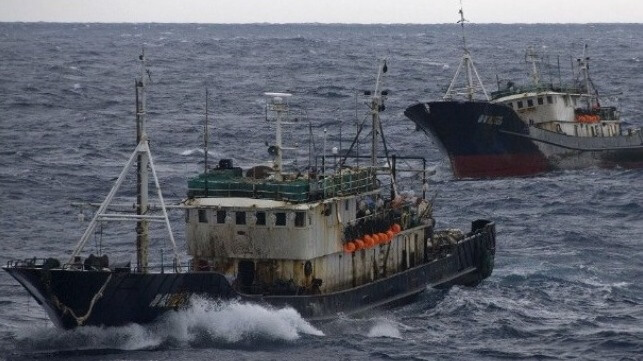
The International Maritime Organization (IMO) has renewed the push for countries to ratify the Cape Town fishing vessel safety agreement to help tackle the perennial problem of illegal fishing.
A decade after it was adopted in 2012, the international treaty that aims to make fishing safe, sustainable and legal as well as protect fishers has yet to come into force because too few countries have ratified it.
The treaty aims to establish standards for vessel construction and seaworthiness, nonslip decks, heating, ventilation of unmonitored machinery spaces, fire safety regulations, life-saving appliances, emergency procedures and radiocommunications, with the overall objective of making commercial fishing safe and sustainable.
“I remain confident that by working together, we will ensure the agreement enters into force to complete the missing pillar for safe, sustainable and legal fishing,” said Kitack Lim, IMO Secretary General.
He added the world cannot afford to be complacent when it comes to addressing the safety of fishers and fishing vessels, thus the need for countries to ratify the agreement to enable it to come into force.
To enter into force, the agreement must be ratified by 22 countries with a combined fleet of 3,600 fishing vessels with an aggregate 24 meters in length. Once that happens, fishers would be legally entitled to the same level of protection at sea that is enjoyed by merchant seafarers. So far, the Cape Town agreement has been ratified by 17 states with 1,925 fishing vessels declared.
Following a ministerial conference in 2019, more than 50 states have signed the Torremolinos Declaration to indicate their determination to ratify the agreement by its tenth anniversary, which will be in October. If the agreement is fully ratified by October, it could enter into force as early as October 2023.
According to Peter Horn, Project Director International Fisheries at the US-based NGO Pew Charitable Trusts, by ratifying the agreement, states will make it clear that they want fish and seafood that was caught only in a safe and sustainable way to enter their markets.
“The agreement is relevant anywhere fish and seafood products are consumed, which means everywhere in the world. Besides, consumers are increasingly demanding that the seafood they buy be sustainably caught,” he said.
Entry into force of the agreement will usher in an international regime that would contribute to the broader fight against illegal, unregulated and unreported fishing activities. This would help to protect world fish stocks, ensure fair competition in fishing, better working conditions, and safeguard fishers from human rights abuses.
Additionally, the regime would help to reduce marine litter from fishing vessels. It would also reduce search and rescue missions responding to distress calls from poorly-maintained fishing vessels.
The journey for bringing a binding safety regime for fishing vessels into force began in Torremolinos, Spain in 1977 with the adoption of the Torremolinos international convention for the safety of fishing vessels. In 1993, the Torremolinos Protocol was adopted, but it also did not achieve the desired level of ratification, acceptance, approval or accession due to legal and technical difficulties.
In 2012, the Cape Town agreement was adopted to address the difficulties and to facilitate ratification of a binding instrument establishing an international safety regime for fishing vessels.
New Zealand Unions Call for Safety Review After Two Cargo-Ops Deaths
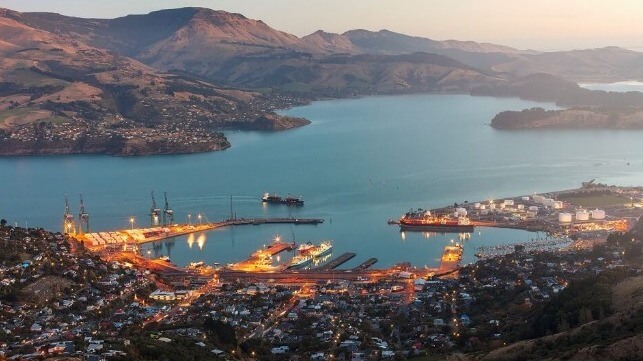
A stevedore was killed at the Port of Lyttelton, New Zealand on Monday, marking the second longshore fatality in the small island nation in the span of a week.
The casualty occurred aboard the bulker ETG Aquarius at Lyttelton's Cashin Quay. The worker was employed by the Lyttelton Port Company (LPC), which confirmed the accident in a brief statement.
"Sadly an LPC staff member has passed away while the vessel was being loaded with coal for export," LPC CEO Kirstie Gardener said. "Our focus right now is on supporting our staff and the family of our LPC team member at this tragic time."
Just last Tuesday, another stevedore died in an accident at the Ports of Auckland on New Zealand's North Island. 26-year-old Atiroa Tuaiti, an employee of Wallace Investments, was killed aboard the boxship Capitaine Tasman when he sustained a fall on April 19.
"We've got a terrible record in the industry in the last few years," Maritime Union national secretary Craig Harrison told Radio New Zealand. "It's not a big industry and if you compare us to the Australian steel and mining industries, which have far greater volumes and not anywhere the fatalities or harm we seem to be facing, we can't be doing this every week - we shouldn't be doing it at all."
New Zealand's Minister of Transport has directed the Transport Accident Investigation Commission (TAIC) to look into the circumstances of the two accidents and provide an independent safety investigation, including an examination of any potential system-wide factors in the ports sector.
A safety review at the Ports of Auckland in 2021 found "systemic" issues with safety management and safety culture, and the port's CEO stepped down after the results were published. Auckland has experienced four fatal port accidents since 2017, including a well-publicized incident in which a swimmer was struck by a speeding pilot boat.




.png)