Thursday, April 28, 2022

Analysis-Complex web of creditors, politics threatens Sri Lanka restructuring

By Jorgelina do Rosario

LONDON (Reuters) - Social unrest, political uncertainty and a complex web of creditors could scupper Sri Lanka’s push for a swift overhaul of its $12 billion overseas debt, analysts warn, saying the South Asian nation is fast running out of road.

A mix of Japanese, Chinese and Indian loans, a pile of bonds held by overseas investors and talks on an International Monetary Fund (IMF) bailout have added complexity to the South Asian nation’s worst financial crisis since independence in 1948.

S&P Global Ratings on Monday cut Sri Lanka’s foreign-currency debt rating to “selective default” after it missed interest payments.

In a flurry of activity over the past week, the World Bank agreed to provide $600 million to help pay for essential imports, the IMF said the government must raise interest rates and taxes and adopt flexible exchange rates, and Sri Lanka said it has begun debt-refinancing discussions with China.

“The IMF response has been very positive and the sense we get is they will try to expedite a programme within their parameters,” cabinet spokesman Nalaka Godahewa told Reuters. “We are in discussions with India, the World Bank and (Asian Development Bank) for additional support, so Sri Lanka is in a better position now to manage until IMF funds come.”

The Finance Ministry declined to comment.

The economy of the nation of 22 million people melted down after a large 2019 tax cut by President Gotabaya Rajapaksa drained government coffers and COVID-19 hit the lucrative tourism industry. Foreign reserves fell 70% over the past two years to $1.93 billion, leaving Colombo struggling to pay for such essentials as fuel, medicines and food.

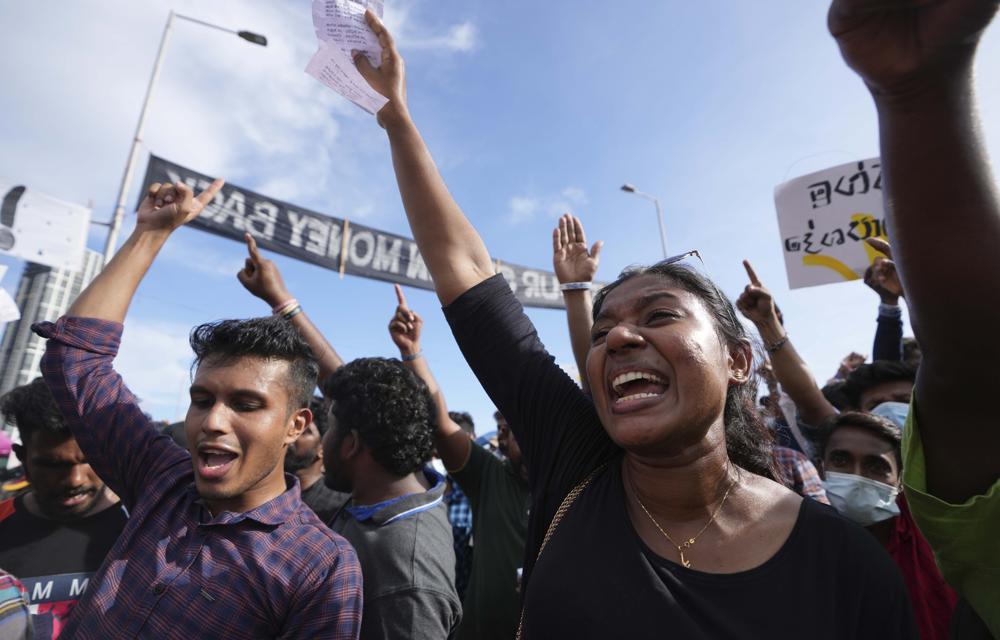
Facing soaring inflation in addition to shortages, thousands have been protesting for weeks, demanding the resignation of Rajapaksa and his brother, the prime minister.

Colombo hopes it can conclude the IMF aid talks in about six months but it cannot control how long negotiations will take.

“Six months is quite ambitious,” said Guido Chamorro, emerging market portfolio manager at Pictet Asset Management, which holds the country’s bonds. “Sri Lanka resisted for years to go to the IMF, and that means that the Fund is going to ask for reforms to be completed before it provides a package.”

But investors may not be that patient.

“Waiting six months with the current state of affairs is not something viable, as we see a very fast and fluid situation on the ground,” said Joe Delvaux, portfolio manager at Amundi Asset Management, which holds the country’s bonds.

The government has yet to pick financial and legal advisers, a key step before debt talks with overseas creditors.


Godahewa, who is also the country’s media minister, said the government has had more than 50 responses to its search for financial and legal advisers, “and we will proceed quickly”.

CHINA’S ROLE

Sri Lanka is seeking about $3 billion in bridge financing. In addition to the World Bank pledge, India has committed $1.9 billion and is in talks for an additional $1.5 billion in credit for fuel and other essential imports.

Many of the government’s recent decisions have “added more pressure to the debt sustainability,” said Nathalie Marshik, head of emerging market sovereign research at Stifel.

Only recently have policymakers taken concrete steps to pave the way for the country’s 17th IMF programme, devaluing the rupee by around a third in early March and nearly doubling interest rates with a 700 basis-point hike this month.

It is not clear how Sri Lanka can ramp up revenues after posting a 2021 fiscal deficit of over 10% of GDP, given opposition to reversing tax cuts after a hike in fuel and cooking gas prices worsened public discontent.

“Measures would likely hurt the pockets of most of the population,” said Pictet’s Chamorro.

China’s influence is visible: The world’s second-largest economy has invested in such projects as highways, a port, an airport and a coal power plant.

Cabinet spokesman Godahewa said the government’s “only concern is the position of China”, adding, “We will have to use our good relationship with China.”

Sri Lanka owes Beijing some $6.5 billion in financing from development bank loans to a central bank swap, according to the Institute of International Finance (IIF).

“The IMF needs assurances that China, India and Japan will provide some type of financing,” said Sergi Lanau, deputy chief economist at the institute.

Recent talks on Suriname’s debt, with a combination of Paris Club support for an IMF programme and Chinese participation, are a “case to look at closely”, said Stifel’s Marshik.

But not all debt talks where China was a major creditor have seen quick progress recently. Beijing only last week agreed to join Zambia’s creditor committee, two years after the southern African country’s default.

And that was despite Zambia, unlike Sri Lanka, qualifying for an overhaul under the Common Framework - a G20 initiative designed to streamline restructurings for poorer nations.

Sri Lanka’s investors are in wait-and-see mode until there is more clarity on what an IMF programme would look like, but time is running out.

“Sri Lanka has a $2.5 billion gap to be filled for 2022 and 2023,” said the IIF’s Lanau, adding Sri Lanka needs at least $1 billion from the IMF. “The country needs fresh money to spend. If not, it’s going to collapse.”

Reporting by Jorgelina do Rosario in London; Additional reporting by Uditha Jayasinghe in Colombo; Editing by Karin Strohecker and William Mallard

General Strike cripples Sri Lanka as president faces new pressure


Thursday's general strike was the first time since recent anti-government protests began that the entire country had been brought to a standstill 
(AFP/ISHARA S. KODIKARA)

Amal JAYASINGHE
Thu, April 28, 2022, 

Millions of workers staged a crippling strike in Sri Lanka on Thursday, adding to pressure on President Gotabaya Rajapaksa and his ruling family to quit over the country's worst-ever economic crisis.

The island nation of 22 million people has been hit by months of acute shortages of food, fuel and medicines, prompting widespread protests.

But Thursday's nationwide strike was the first time the entire country had been brought to a standstill since the demonstrations began, with both state and private sector employees taking part.

Public transport was stopped, teachers quit school while shops and offices closed, police and regional officials said.

Rajapaksa invited leaders of his party to discuss the crisis on Friday, but former coalition partner the Sri Lanka Freedom Party (SLFP) said they will not attend and instead told him to step down.

Prime Minister Mahinda Rajapaksa, Gotabaya's elder brother and a former two-term president, has said he is confident he will not be fired over the crisis.

In Colombo's main commercial area of Pettah, wholesale trading shops were shut and workers joined a march chanting: "Go home Gota. Go home Gota," referring to the president.

More than 100 trade unions, some even affiliated with the Rajapaksas' ruling Sri Lanka Podujana Peramuna (SLPP) party, joined the general strike, demanding the president, prime minister and other senior officials resign.


"Today is like a public holiday in the country," a police official monitoring the situation, speaking on condition of anonymity, told AFP. "Hospitals are treating only emergency cases."

Across the nation, vegetable markets were closed, while tea plantations, a main export earner, were also shut, residents and local media said.

Tens of thousands of workers in the country's free trade zones came out of their factories and staged protests demanding the powerful Rajapaksa family step down.


Most banks were closed while a few provided reduced hours of service.

On the brighter side, a daily power cut that has become a feature of the crisis was not implemented Thursday as electricity employees took part in the work stoppage.

The main international airport operated without interruption, officials said. Trade union leaders said they ensured the airport functioned normally as an essential service.

- Deadline to resign -

By afternoon, shops across the country had closed in solidarity with the trade unions, local television reported.

Union leader Ravi Kumudesh said Thursday's action was a success and issued a one-week deadline to Rajapaksa to step down or face a continuous strike.

"What we are asking the Rajapaksa family is to go within a week," Kumudesh said in a statement. "If they don't we are ready to launch another island-wide strike until they leave."

The country's economic crisis took hold after the coronavirus pandemic hammered income from tourism and remittances from Sri Lankans abroad. Protesters also blame the Rajapaksa clan for years of mismanagement.

The government has defaulted on its $51 billion external debt and is in talks with the International Monetary Fund for an emergency bailout.

Unable to pay for fuel imports, utilities have imposed daily blackouts to ration electricity, while long lines of people snake around service stations for diesel, petrol and kerosene.

Hospitals are short of vital medicines and the government has appealed to citizens abroad for donations.

Thousands of demonstrators have been camped for weeks outside the president's seafront office calling on him to resign.

aj/stu/axn

Sri Lanka Crisis: Workers to go on strike to pressure government to resign

© Provided by Free Press Journal


Over 1,000 trade unions in Sri Lanka across multiple sectors have planned a massive island-wide one-day token strike for Thursday in support of the ongoing wave of protests against the government, a spokesman for a union alliance said.

Convenor of the collective of unions Ravi Kumudesh told reporters that the campaign aims to pressure the government to resign.

Unions representing ports, railway, petroleum, health, banking and education sectors will take part in the strike, he said.

Kumudesh said about 50 percent of hospitals and employees will also join the strike without disrupting hospital services. Health workers on duty are to be dressed in black and engaged in emergency services. He also said that the hospital workers would go on strike for two hours from 12.00 noon to 2.00 pm.

Protests and marches will be held in front of all hospitals from 12.00 noon today and protests have also been organized in cities across the country.

Sri Lanka is on the verge of bankruptcy with huge foreign debts and a shortage of foreign currency, causing shortages of imported essential goods like fuel and food.

Protesters who have crowded the streets since March 31 hold President Gotabaya Rajapaksa and his powerful family responsible. Government officials have blamed Russia’s war in Ukraine and the coronavirus pandemic for the crisis and say they have been discussing rescue plans and loan repayment with the International Monetary Fund, Chinese officials and others.

Protestors around the country demand that both the president and prime minister resign.

“The general public is protesting asking the government to go home,” said Kumudesh.

“President Rajapksa, due to his incompetence, ego and ignorance, has dragged the citizens of this country into a hole they’re struggling to get out of,” he said.

Over 1,000 unions will join the token strike planned for tomorrow to extend support to public protests, said Kumudesh.

“So far, no union has gone against the ongoing protests. On Thursday, all the worker forces in this country will protest against the government. We will raise black flags and all essential services will be carried out dressed in black,” he said.

“We ask the government to not to escalate this union strike to a continuous protest and leave for good,” he added.

Kumudesh said the organisation plans to expand the protest into a hartal on May 06 if the government does not listen to the public demand and step down.

Sri Lanka earlier suspended repayment on its foreign debts, $7 billion of which was due this year.

It has foreign reserves of less than $1 billion, depleting available foreign currency. The resulting shortages of imported essentials like fuel, cooking gas, medicine and milk left people standing in lines for hours to buy limited stock.

The whole Cabinet except the president and prime minister resigned in early April, and the president invited opposition parties for a unity government. But opposition parties refused to be part of a government headed by the Rajapaksas.

Their family have dominated nearly every aspect of life in Sri Lanka for most of the last 20 years.

The opposition is divided and weak and has been unable to show a majority and take control of Parliament.


Workers strike to pressure Sri Lankan president to step down

KRISHAN FRANCIS,
 Associated Press
April 28, 2022
Young Sri Lankan Muslim traders hold placards demanding president Gotabaya Rajapaksa resign at a closed down business street during a country wide strike in Colombo, Sri Lanka, Thursday, April 28, 2022. Businesses were closed, teachers absent and public transportation interrupted as Sri Lankans heeded a call for a general strike Thursday to pressure the president to step down over a growing economic and political crisis.
Eranga Jayawardena/AP


COLOMBO, Sri Lanka (AP) — Businesses were closed, teachers absent and public transportation interrupted as Sri Lankans heeded a call for a general strike Thursday to pressure the president to step down over a growing economic and political crisis.

Business districts in the capital, Colombo, were closed, and bankers, teachers and other professionals held parades and joined the main protest site opposite the president’s office where demonstrators have gathered for weeks. Doctors and nurses have said they will support the strike with demonstrations during their lunch break.

Sri Lanka is on the verge of bankruptcy with huge foreign debts and a lack of foreign currency, causing shortages of imported essential goods like fuel and food.

Protesters who have crowded the streets since March 31 hold President Gotabaya Rajapaksa and his family — who have dominated nearly every aspect of life in Sri Lanka for most of the last 20 years — responsible for the crisis.

Sri Lanka earlier suspended repayment on its foreign debts, $7 billion of which was due this year. It has foreign reserves of less than $1 billion, depleting available foreign currency. The resulting shortages of imported essentials like fuel, cooking gas, medicine and milk left people standing in lines for hours to buy limited stock.

Government officials have blamed Russia’s war in Ukraine and the coronavirus pandemic for the debt crisis and say they have been discussing rescue plans and loan repayment with the International Monetary Fund, Chinese officials and others.

Rajapaksa reshuffled his Cabinet and offered a unity government in an attempt to quell protests, but opposition parties refused to be part of a government headed by the Rajapaksa brothers. The weak, divided opposition has been unable to show a majority and take control of Parliament on its own.


Sri Lanka workers go on strike to pressure president to step down

Apr 28, 2022 -


Businesses were closed, teachers absent and public transportation interrupted as Sri Lankans heeded a call for a general strike Thursday to pressure the president to step down over a growing economic and political crisis.

Business districts in the capital, Colombo, were closed, and bankers, teachers and other professionals held parades and joined the main protest site opposite the president’s office where demonstrators have gathered for weeks.

Doctors and nurses have said they will support the strike with demonstrations during their lunch break.

Sri Lanka is on the verge of bankruptcy with huge foreign debts and a shortage of foreign currency, causing shortages of imported essential goods like fuel and food.

Protesters who have crowded the streets since March 31 hold President Gotabaya Rajapaksa and his family — who have dominated nearly every aspect of life in Sri Lanka for most of the last 20 years — responsible for the crisis.

Sri Lanka earlier suspended repayment on its foreign debts, $7 billion of which was due this year. It has foreign reserves of less than $1 billion, depleting available foreign currency. The resulting shortages of imported essentials like fuel, cooking gas, medicine and milk left people standing in lines for hours to buy limited stock.

Government officials have blamed Russia’s war in Ukraine and the coronavirus pandemic for the debt crisis and say they have been discussing rescue plans and loan repayment with the International Monetary Fund, Chinese officials and others.

Rajapaksa reshuffled his Cabinet and offered a unity government in an attempt to quell protests, but opposition parties refused to be part of a government headed by the Rajapaksa brothers.

The weak, divided opposition has been unable to show a majority and take control of Parliament on its own.

Read more:

Senior police officer arrested over Sri Lanka protest death

Sri Lankan veterans protest against president Gotabaya who led them during war

Sri Lanka in talks with China for another loan to cover earlier debts
AUTHORITARIAN PARLIMENTARIANISM
A political reckoning in Sri Lanka as debt crisis grows

By KRUTIKA PATHI and KRISHAN FRANCIS

1 of 15
People shout slogans against the government during an ongoing protest outside president's office in Colombo, Sri Lanka, Saturday, April 23, 2022. Thousands of Sri Lankans have protested outside President Gotabaya Rajapaksa’s office in recent weeks, demanding that he and his brother, Mahinda, who is prime minister, quit for leading the island into its worst economic crisis since independence from Britain in 1948. (AP Photo/Eranga Jayawardena)


COLOMBO, Sri Lanka (AP) — Sherry Fonseka joined millions in 2019 in electing President Gotabaya Rajapaksa, a military strategist whose brutal campaign helped end Sri Lanka’s 30-year civil war 10 years earlier.

Now he is one of thousands who, for weeks, have protested outside the president’s office, calling on Rajapaksa and his brother, Mahinda, who is prime minister, to resign for leading the country into its worst economic crisis since its independence from Britain in 1948.

With the island teetering near bankruptcy, Fonseka, who owns a small garment business in the capital, Colombo, has resorted to spending his own savings to pay the salaries of his 30 employees. But he knows he will soon have to let them go and is clear about who is to blame.

“All of us thought we made the correct decision (to elect Rajapaksa), but we’ve realized we were wrong. We should have the backbone to tell people, and the world, that we made a mistake,” he said.

In recent weeks, protests have erupted across the country demanding that Rajapaksa quit.

The protests highlight the dramatic fall of the Rajapaksas from Sri Lanka’s most powerful political dynasty in decades to a family grasping to retain power. Despite accusations of atrocities during the civil war, Gotabaya and Mahinda, who was previously president, remained heroes to many of the island’s Buddhist-Sinhalese majority and were firmly entrenched at the top of Sri Lankan politics before the revolt by previous supporters like Fonseka.

“The pendulum has swung from ‘it’s all about the Rajapaksas, they are the people who saved this country,’ to ‘it is because of the Rajapaksas that the country is now ruined,’” said Harsha de Silva, an economist and opposition lawmaker.

The unravelling of Sri Lanka’s economy has been swift and painful. Imports of everything from milk to fuel have plunged, spawning dire food shortages and rolling power cuts. People have been forced to queue for hours every day to buy essentials. Doctors have warned of a crippling shortage of life-saving drugs in hospitals, and the government has suspended payments on $7 billion in foreign debts due this year alone.

“The Rajapaksas, like an octopus, have held on to every aspect of public life in Sri Lanka,” de Silva said. “They have been running it as if it was their kingdom. They wished and they did –- that’s how it was and people were with them.”

President Rajapaksa has defended his government, partly blaming the pandemic and Russia’s war in Ukraine. “This crisis was not created by me,” he said in a speech last month, adding that his government was working hard on solutions. They include approaching the International Monetary Fund and World Bank for assistance, after repeated calls to do so.

But as protesters seethed, the president and prime minister have changed tact in recent weeks. They have admitted to mistakes they made that exacerbated the crisis, such as implementing a short-lived ban last year on importing chemical fertilizers that badly hurt farmers and conceding that they should have sought a bailout sooner.

Influential Buddhist monks have urged Rajapaksa to form an interim government under a new prime minister, signaling a further decline in the family’s image as protectors of the country’s 70% Buddhist-Sinhalese majority. Some observers say it’s too soon to measure how much support for the Rajapaksas has fallen among their hardcore base, but for many their response has been too little and too late.

“There is now recognition across the government of several missteps, but it’s one that’s come at a huge cost to the people,” said Bhavani Fonseka, a senior researcher at the Colombo-based Center for Policy Alternatives.

The Rajapaksas were a powerful land-owning family which for decades dominated local elections in their rural southern district, before rising to the helm of national politics in 2005 when Mahinda was elected president. He remained in power until 2015, overseeing the end of the civil war against ethnic Tamil rebels in 2009, before losing to the opposition led by his former aide.

Suicide bombings that killed 290 people on Easter Sunday in 2019 paved the way for the Rajapaksas’ return, this time as Gotabaya launched a high-pitched nationalist campaign that tapped outrage and disillusionment with the previous government over the attacks.

He vowed a return to the muscular nationalism that had made his family popular with the Buddhist majority, and also to bring the country out of an economic slump with a message of stability and development.

Tourism had dropped sharply after the bomb attacks and Sri Lanka needed badly to boost revenue to service a slew of foreign loans for splashy infrastructure projects. Some involved Chinese money and were commissioned under his brother’s presidency, but had failed to create profits, instead collecting debt.

Just days into his presidency, Rajapaksa pushed through the largest tax cuts in Sri Lanka’s history to spur spending even as critics warned that it would shrink the government’s finances. According to Nishan de Mel, executive director of Verité Research, Sri Lanka’s tax base fell by 30%.

“When you do something like that, you have some kind of internal analysis or document that shows why these cuts could help the economy. There was nothing of that sort,” de Mel said.

The move triggered immediate punishment from the global market as creditors downgraded Sri Lanka’s ratings, making it impossible for it to borrow more money as its foreign exchange reserves continued to dwindle. Then the coronavirus hit, further crushing tourism as debts snowballed.

Analysts say the Rajapaksas’ response to the economic challenges underscored the limitations of their strongman politics and their family’s near-monopoly on decision making, heavily relying on the military to enforce policy and passing laws to weaken independent institutions.

Three other Rajapaksa family members were in the Cabinet until early April, when the Cabinet resigned en masse in response to the protests.

“Their entire political ideology and credibility is in serious crisis,” said Jayadeva Uyangoda, a veteran political scientist.

But many fear that things will only get worse before improving. A divided and weak opposition without a majority in Parliament has kept the Rajapaksas in power. An IMF bailout could see austere measures intensifying hardships for people before there is relief.

Meanwhile, the focus remains on the protests, which are drawing people across ethnicities, religion and class. For the first time, middle-class Sri Lankans have taken to the streets in large numbers, Uyangoda said.

They include Wijaya Nanda Chandradewa, who joined the crowd outside the president’s office on Saturday. A retired government employee, Chandradewa said he fell for Rajapaksa’s promise to rebuild a Sri Lanka scarred by the 2019 bombings.

“He said there will be one country and one law -- now there is neither the law nor the country,” Chandradewa said, adding that the only option now is for Rajapaksa to quit.

“He showed us a fairyland and cheated us and misled us,” he said. “We have to fix our mistakes and build a system to bring in the right leader.”

___

Pathi reported from New Delhi.
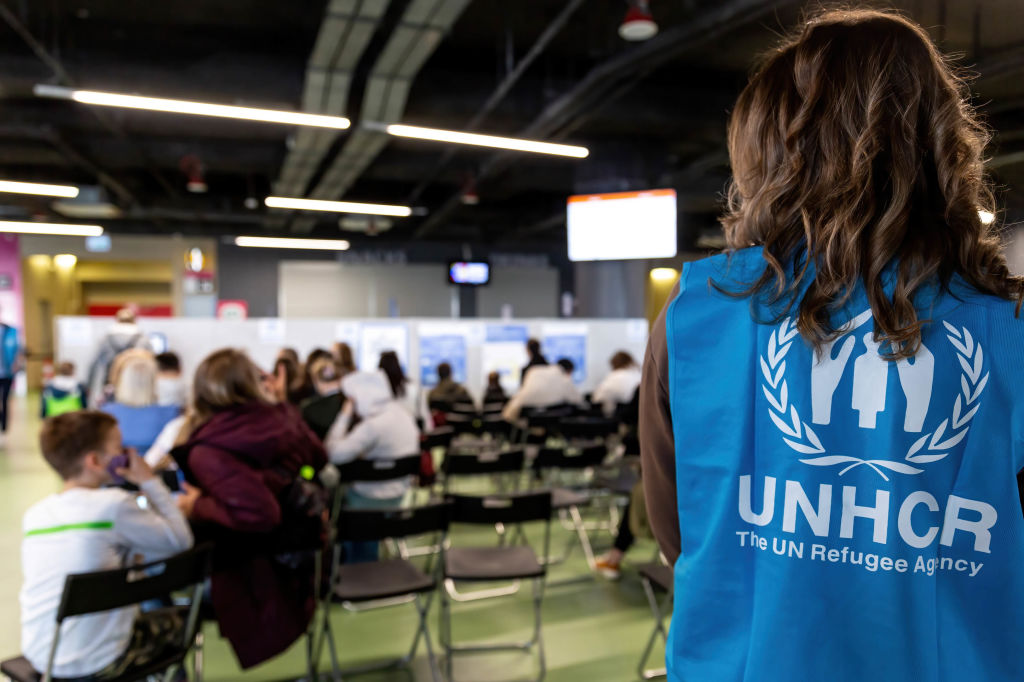
UNHCR 'regrets' UK Lords' passing of Borders Bill, says refugees facing 'real suffering'


The UNHCR expressed its strong disappointment and disapproval over the passing of the Borders Bill in the House of Lords on Wednesday.


The bill will now go back to the House of Commons, where it is expected to become law [source: Getty]

The New Arab Staff
28 April, 2022

The United Nations' refugee agency criticised the passing of the UK Nationality and Borders Bill in the House of Lords on Wednesday, saying the legislation “undermines international refugee law”.

The controversial bill has previously faced several defeats in the Lords, as peers challenged clauses which differentiate asylum seekers based on their method of arrival and sought to ensure legislation complied with the 1951 Refugee Convention.

However, on Wednesday evening the upper house of the British parliament voted to pass the bill after hard-sought amendments were dropped.

The bill has now been handed back to the House of Commons, which has a Conservative majority that repeatedly supported the legislation.

The UNHCR said it “regrets that final amendments to the [bill] were rejected,” in a tweet on Wednesday.

UN High Commissioner for Refugees Filippo Grandi said: “It is disappointing that [the UK] would choose a course of action aimed at deterring the seeking of asylum by relegating most refugees to a new, lesser status with few rights and a constant threat of removal.”
The bill includes clauses that allow for indefinite detention, offshore processing and “pushbacks” in the English Channel.

The British government officially withdrew their “refugee pushback” policy ahead of legal challenges by refugee charities just this week. But, UK Home Secretary Priti Patel also stressed that nothing was “off the table” when it comes to migration policies.
UK charities and rights groups, including The Refugee Council and Amnesty International, have slammed the Borders Bill for penalising asylum seekers.

“It truly is a bleak day for refugees fleeing conflict and persecution," said Amnesty's Steve Valdez-Symonds.

The rights group say the law will intensify the exploitation of vulnerable people and do little to create a fairer, safer system in which people fleeing war and prosecution can seek refuge in Britain.

The UK Home Office, however, told The New Arab that the bill “will fix [the] broken asylum system, helping those in genuine need while tackling people-smuggling gangs”.

The 1951 Refugee Convention stipulates that a refugee should not be returned to a country where they face serious threats to their life or freedom. This is now considered a rule of customary international law. UNHCR serves as the "guardian" of the 1951 Convention and its 1967 Protocol.

Controversial asylum reforms become law in UK

Wed, 27 April 2022, 


Record numbers of migrants crossing the Channel from northern France have heaped political pressure on the government in London to act
 (AFP/BEN STANSALL)


Britain on Thursday hailed what it said was a "world-leading" reform of its asylum system, despite widespread condemnation and claims that it breaks international law.

Home Secretary Priti Patel called the passing of the controversial Nationality and Borders Act a "landmark" that created changes fit for the 21st century.

The act, which cleared parliament late on Wednesday, notably introduces maximum life sentences for people smugglers blamed for facilitating irregular migration.

But it also imposes tougher jail terms for anyone arriving illegally in the country, which has raised fears it could be used against asylum-seekers.

The act provides greater powers to speed up the removal of failed asylum claimants and "dangerous foreign criminals", as well as stops what Patel called "meritless" legal challenges to prevent deportation.

Immediate entry has been made tougher for arrivals who have travelled to Britain through a safe country before making their claim.

"The UK has a proud record of resettling those who are most vulnerable and we will now be able to strengthen our safe and legal routes for those most in need of resettlement," said Patel in a video statement.

"These measures in this new law are what the British people have asked for: a fair but firm asylum system fit for the 21st century."

Prime Minister Boris Johnson made "taking back control" of Britain's borders a key plank of his successful campaign to leave the European Union.

But Patel -- whose own parents fled Idi Amin's Uganda -- and the government have found implementing that pledge more problematic.

Last year, record numbers of migrants crossed the Channel from northern France, ratcheting up political pressure on ministers to act.

Earlier this month, the government signed a deal to send migrants who have arrived by the risky sea route since January 1 for resettlement in Rwanda.

Human rights groups and charities supporting refugees and migrants slammed the plan, and some organisations are threatening to take the government to court.

- 'Devastating blow' -


UN refugees chief Filippo Grandi said the new laws could break both the letter and spirit of global refugee conventions to which Britain is a signatory.

He said he was disappointed the country was looking to shut its doors to asylum-seekers and give refugees a lesser status, with the constant threat of removal.

"Wide-ranging inadmissibility rules have the potential to deny refugees their right to seek asylum in the UK," he added.

"Such provisions are potentially at variance with the Refugee Convention."

Oxfam's head of government relations, Sam Nadel, called the new law "heinous" and a "devastating blow for families fleeing conflict and persecution".

"The government should be protecting, not punishing, refugees," he added.

Britain in March relaxed its immigration requirements for Ukrainians fleeing Russia's invasion, after criticism it was not going far enough to accommodate refugees.

According to the latest government figures, some 86,100 visas had been issued as of Wednesday under amended rules for family members and a host family scheme for Ukrainians fleeing Russia's invasion.

But even here, less than a third of those granted visas had actually arrived in Britain, with red tape blamed for holding up travel plans.

Queen Elizabeth II's eldest son and heir, Prince Charles, waded into the issue on Thursday, as he visited a community centre in west London.

One woman, a qualified psychotherapist who fled Turkey 19 months ago, told him she was seeking asylum but was unable to work while her claim was being processed.

"We need to do something," he said.

Ukrainian arrivals will be allowed to work and access welfare payments.

phz/cjo/har


UK plan to send asylum seekers to Rwanda draws outrage

An asylum reform bill proposed by the British government is set to become law after overcoming a final hurdle in parliament on Wednesday. Faced with criticism, the government has defended the bill as necessary to break lucrative smuggling networks and to dissuade migrants from making dangerous sea crossings.


Mexico ‘crime scene’ skulls turn out to be from 900 AD


When Mexican police found a pile of about 150 skulls in a cave in 2012, they thought they were looking at a crime scene.

There were more females than males among the victims, and none of them had any teeth, according to the tests [File: EPA]

Published On 28 Apr 2022

When Mexican police found a pile of about 150 skulls in a cave near the Guatemalan border, they thought they were looking at a crime scene, and took the bones to the state capital.

It turns out the discovery in 2012 was a very cold case.

It took a decade of tests and analysis to determine the skulls were from sacrificial victims killed between 900 and 1200 AD, the National Institute of Anthropology and History (INAH) said on Wednesday.

“Believing they were looking at a crime scene, investigators collected the bones and started examining them in Tuxtla Gutierrez,” (the Chiapas state capital), according to a statement by the INAH.

The border area around the Frontera Comalapa town in southern Chiapas state has long been plagued by violence and immigrant trafficking.

Pre-Hispanic skull piles in Mexico usually show a hole bashed through each side of every skull, and were usually found in ceremonial plazas, not caves.

But experts said on Wednesday the victims in the cave had probably been ritually decapitated and the skulls put on display on a kind of trophy rack known as a “tzompantli”.

Spanish conquistadores wrote about seeing such racks in the 1520s, and some Spaniards’ heads even wound up on them.

While usually strung on wooden poles using holes bashed through them — the common practice among the Aztecs and other cultures — experts say the cave skulls may have rested atop poles, rather than being strung on them.

Interestingly, there were more females than males among the victims, and none of them had any teeth.

In light of the cave experience, archaeologist Javier Montes de Paz said people should probably call archaeologists, not the police.

“When people find something that could be in an archaeological context, don’t touch it and notify local authorities or directly the INAH,” he said.
In Zimbabwe, churches are among the few places where the poor can access Wi-Fi

In a sprawling township in Mutare, a border city in Zimbabwe, Laurence Moyo, 24, spends five hours each day resting his back on the wall of a gigantic church building that belongs to the United Baptist Church. He grasps a rusty Asus laptop and an old Samsung smartphone and is immersed in his own online world.


Young Zimbabweans stand as close as they can get to the free Wi-Fi coming from a church compound


“Daily we poach the church’s Wi-Fi. It’s our gateway to the limitless digital world outside there,” Moyo explained.

In Zimbabwe, Baptist churches, Catholic cathedrals, Anglican or Lutheran seminaries are places where free, high-speed Wi-Fi is lavishly available around the clock because local churches are comparatively awash with money from tithes and foreign philanthropy charities in the U.S. and Europe. Yet these church premises in Zimbabwe are islands of wealth in the sea of impoverished urban townships that dot the country. Immaculate church buildings in Zimbabwe are surrounded by thousands of homes where jobless, highly educated youths live, youth who are desperate to connect to high-speed broadband internet and better themselves digitally.


Zimbabwean young people stand outside a church using the free Wi-Fi for their phones.

‘It’s such a contrast: church premises are zones of high-speed Wi-Fi in a country where millions are so poor that their experience of the internet is simply cheap WhatsApp messaging and nothing more,” said Carter Mavhiza, an independent public economist in the capital Harare.

The Alliance for Affordable Internet says Zimbabwe is home to one of Africa’s most expensive broadband internet access. Few residents in this deeply Christian but impoverished country can afford to buy 1.4GB of data, which costs a whopping $15, a figure that’s double AAI’s global benchmark of 2% of average monthly income.

This leaves hundreds of church premises across the country as unofficial Wi-Fi hotspots where internet-hungry township residents, especially digital-savvy Millennials, can hop on high-speed signals from Wi-Fi routers installed in church premises.

“We don’t invite the internet poachers or expel them,” said Pastor Ruda Moyo, a Baptist minister in Harare who is used to seeing a bevy of teenagers strolling around his church premises, tapping into Wi-Fi signals.

“They just show up with their old laptops and smartphones, stand against the church walls whilst we conduct our services — and they are busy poaching into our free Wi-Fi. Rarely do they show interest in church sermons, just free Wi-Fi. We know they are poor and hungry for any free internet connection.”

“They just show up with their old laptops and smartphones, stand against the church walls whilst we conduct our services.”

Zimbabwe’s youth, who are among the world’s highest victims of joblessness, desperately poach church Wi-Fi to do online assignments for students worldwide who can pay; to seek jobs abroad and escape the blighted country; to keep in touch with relatives in the U.S. or Europe who can send remittances for desperately needed medicine and food.

“It’s hard being young in Zimbabwe — educated but jobless yet hungry to connect to a whole internet world out there,” said Slyvester Kaneta, 24, who holds a bachelor of environmental science degree but says he never has found employment two years after graduation.

This Zimbabwean youth lives next door to a church, and the Wi-Fi signal is strong enough that he can capture it from home.

Sylvester walks a mile each day to the endowed Presbyterian church premises in his township to poach the free church Wi-Fi, teach a one-hour Skype mathematics class for 10 students in Johannesburg, South Africa — 1,000 miles away — for a weekly flat fee of $10.

“At the end of each remote Skype math lesson which I teach via free church Wi-Fi, I desperately apply for water engineering jobs in Dubai and other Gulf Arab countries, hoping for any luck,” said Kaneta, whose ultimate hope, like thousands of other deprived Millennial Zimbabweans, is to exit the country.

“We don’t put a password on our church premises Wi-Fi to lock out free riders who come to poach our signals,” said Taurai Makuza, a pastor at All Nations Faith Church in Bulawayo, the country’s second largest city.

In resource-poor countries like Zimbabwe, churches — which are also great humanitarians, supplanting some state roles — do have considerable wealth (from Western donations, tithes, tax-free investments). However, church premises often are surrounded by urban squalor and deprivation. The poor who live around church premises feel they have a moral justification to poach some trapping of the churches’ riches like broadband internet.

“Honestly churches are our last Wi-Fi zone hope because our Zimbabwe government refuses to roll out affordable or free basic broadband. Hotels, corporate offices, gas stations, shopping malls in Zimbabwe too are selfish and don’t host free Wi-Fi on their premises like they do in neighboring South Africa,” explained Shylet Nezandonyi, 25, a Millennial in Mutare city who poaches Catholic premises Wi-Fi to research nursing jobs vacancies in England and hopefully exit Zimbabwe.

Church ministers in Zimbabwe say ideally they would wish those who poach their free broadband internet would become converts and attend services, but it doesn’t always happen. Churches can’t expel the poor who are using their internet resources because that, too, would be morally insensitive.

“It’s the moral catch-22 situation of Zimbabwe churches,” said Deline Chikoshana, a theology lecturer at Rusitu Bible College, a Baptist training seminary in east Zimbabwe. “Expel free Wi-Fi poachers and violate Christ’s commandment to cater to the poor. Tolerate free Wi-Fi poachers on your cathedrals, and see your premises crowded by rowdy crowds totally uninterested in sermons.”

Audrey Simango is a Zimbabwe freelance reporter. Her work appears in New Arab, Newsweek; The Africa Report, and The New Internationalist.

by Bankless Times
28.4.2022

Soaring food prices due to Ukraine war may stoke 'unrest' in Africa, says IMF

Surging food and energy prices stoked by the war in Ukraine may lead to "social unrest" in Africa, the International Monetary Fund (IMF) warned Thursday.
© Jekesai Njikizana, AFP

Most countries south of the Sahara are already seeing a slowdown in economic growth from last year, and the impact will be amplified by the rising cost of cereals and fuel, it said.

"The war in Ukraine has triggered a sharp increase in energy and food prices that could undermine food security in the region, raise poverty rates, worsen income inequality, and possibly lead to social unrest," the Fund said in its annual Regional Outlook for Africa.

"The war compounds some of the region's most pressing policy challenges, including the social and economic scarring effects of the Covid-19 pandemic, security risks in several countries, and the challenges posed by climate change."

GDP growth in African countries in 2021 was 4.5 percent, an upward revision from the earlier estimation of 3.7 percent, but this is expected to slow to 3.8 percent over 2022, the IMF said.

The head of the IMF's African department, Abebe Aemro Selassie, told AFP he was "very worried" by the twin impact of food and higher fuel costs -- something that was particularly felt in the great majority of African countries that are not oil or gas exporters.

"This is a shock that hits in a laser light, directed at the poorest," he said.

"Fuel price increases feed into transportation costs, and people providing goods and services will raise their prices because they are now facing higher input costs," he said.

Food prices monitored by the Food and Agriculture Organization (FAO) surged 12.6 percent between February and March, reaching their highest levels since the index was launched in 1990, the UN's agency said on April 8. The previous record high was set in 2011.

Vulnerability

The IMF report placed the spotlight on the price of wheat.

Africa is dependent on imports for 85 percent of its wheat consumption, and this dependence is especially high in Tanzania, Ivory Coast, Senegal and Mozambique.

In Botswana, Lesotho, Mauritius and Cape Verde, imported wheat, rice and corn, also called maize, account for more than 40 percent of calorie intake, the IMF said.

Food insecurity, it noted, is already high in the conflict-hit states of the Sahel, in Madagascar and the Democratic Republic of Congo.

So-called food riots broke out in Africa, notably in Senegal, as well as in parts of Asia and the Caribbean in March 2008 when the last major food crisis erupted.

FAO chief Qu Dongyu, presenting his agency's latest report, said there were parallels between then and now, with sharp rises in food, fuel, fertiliser and transport.

But he also underlined the aggravating effect today of the Covid-19 pandemic and the Ukraine war.

Selassie sounded the alarm over the financial state of African countries in 2022 compared with the 2008 crisis.

"In sub-Saharan Africa in 2008-2009, there were many more governments that were in a better position fiscally to be able to absorb the shock," he warned.

"Governments had flexibility to be able to make more intervention. This time with public debt as elevated as it is in many countries, that room for manoeuvre is much more diminished.

"The international community needs to step up to support countries as aggressively as possible," he said.

(AFP)
Measles cases soar 400 percent in Africa this year


Most of the measles outbreaks were in Africa and the eastern Mediterranean (AFP/LUCA SOLA) (LUCA SOLA)

Thu, April 28, 2022

Africa is facing an explosion of preventable diseases due to delays in vaccinating children, the World Health Organization (WHO) said Thursday, with measles cases jumping 400 percent.

Twenty African countries reported measles outbreaks in the first quarter of this year, eight more than in the first three months of 2021.

The Africa region recorded almost 17,500 cases of the highly contagious virus between January and March.

The WHO and the UN's children's agency UNICEF announced Wednesday in Geneva that measles cases surged by nearly 80 percent worldwide this year, warning that the rise of the "canary in a coal mine" illness indicates that outbreaks of other diseases are likely on the way.

Most of the outbreaks were in Africa and the eastern Mediterranean.

WHO's Africa regional bureau said outbreaks of other vaccine-preventable diseases have also become more common on the continent.

Some 24 African nations confirmed epidemics due to a variant of polio in 2021 -- four more than during the previous year.

Thirteen countries had epidemics of yellow fever last year, up from nine in 2020 and three in 2019.

"Inequalities in accessing vaccines, disruptions by the Covid-19 pandemic, including a huge strain on health system capacities, impaired routine immunisation services in many African countries and forced the suspension of vaccination drives," WHO said.

"The rise in outbreaks of other vaccine-preventable diseases is a warning sign," WHO's regional director for Africa Matshidiso Moeti told an online briefing.

"As Africa works hard to defeat Covid-19, we must not forget other health threats," she added.

The measles virus attacks mainly children with the most serious complications including blindness, brain swelling, diarrhoea and severe respiratory infections.

at/bp/raz
Contrary to popular belief, a dog's breed won't predict behavior
IT'S THE OWNER NOT THE BREED


Mase a pit bull plays in the grass with Delonte Hillery in a park in Escondido, California (AFP/ARIANA DREHSLER)


Issam AHMED
Thu, April 28, 2022, 

They're well-known stereotypes: rottweilers and pit bulls are aggressive, while Labradors and golden retrievers are extra friendly.

But a genetic study published in the journal Science on Thursday involving more than 2,000 dogs paired with 200,000 survey answers from owners demonstrates that the widespread assumptions are largely unfounded.

To be sure, many behavioral traits can be inherited -- but the modern concept of breed offers only partial predictive value for most types of behavior -- and almost none whatsoever for how affectionate a dog will be, or conversely, how quick to anger.

"While genetics plays a role in the personality of any individual dog, specific dog breed is not a good predictor of those traits," said senior author Elinor Karlsson, of UMass Chan and the Broad Institute of MIT and Harvard.

"What we found is that the defining criteria of a golden retriever are its physical characteristics -- the shape of its ears, the color and quality of its fur, its size -- not whether it is friendly," she added.

Lead author Kathleen Morrill explained that understanding the relationship between breeds and behavior could be the first step in understanding the genes responsible for psychiatric conditions in humans, like obsessive disorders.

"Although we can't really ask a dog themselves about their problems or thoughts or anxieties, we do know that dogs lead rich emotional lives and experience disorders that manifests in their behavior," she said on a press call.

- Implications for legislation -


The team sequenced the DNA of 2,155 purebred and mixed-breed dogs to search for common genetic variations that could predict behavior, and combined this info with surveys from 18,385 pet-owner surveys from Darwin's Ark.

The site is an open-source database of owner-reported canine traits and behaviors.

Because existing stereotypes are so powerful, the team designed their questionnaires to account for owner bias.

They established standard definitions for reporting traits such as biddability (dog response to human direction), dog-human sociability (how comfortable dogs are with people, including strangers), and toy-directed motor patterns (how interested they are in toys).

Physical and aesthetic traits were also surveyed.

In all, Karlsson and Morrill found 11 locations on the dog genome associated with behavior differences, including biddability, retrieving, pointing at a target and howling.

Among these behaviors, breed did play some role -- for example, beagles and bloodhounds tend to howl more, border collies are biddable, and Shiba Inus are far less so.

However, there were always exceptions to the rule.

For example, even though Labs had the lowest propensity for howling, eight percent still did. While 90 percent of greyhounds didn't bury their toys, three percent did frequently.

"When we looked at this factor that we called agonistic threshold, which included a lot of questions about whether people's dogs reacted aggressively to things, we weren't seeing an effect of breed ancestry," Karlsson added.

Overall, breed explained just nine percent of variation in behavior, with age a better predictor of some traits, like toy play. Physical traits, however, were five times more likely to be predicted by breed than behavior was.

The idea runs counter to widespread assumptions that have informed legislation. For example, Britain has banned pit bull terriers, as have many US cities.

- Human disorders -


Prior to the 1800s, dogs were primarily selected for functional roles such as hunting, guarding and herding, the team said in their paper.

"By contrast, the modern dog breed, emphasizing confirmation to physical ideals and purity of lineage, is a Victorian invention," they wrote.

Modern breeds carry genetic variations of their ancient predecessors, but not at the same frequencies -- explaining the behavior divergence within breeds.

The next steps, said Morill, would be digging more into compulsive behaviors in dogs, and connections to human obsessive-compulsive disorder.

One intriguing finding was that dog sociability toward humans was "incredibly heritable in dogs," even though it wasn't breed dependent.

The team found a location in dog DNA that could explain four percent of the sociability differences between individuals -- and that location corresponds to an area of the human genome responsible for long term memory formation.

"It could be that understanding human sociability in dogs helps us understand how brains develop and learn. So we're kind of just scratching the surface," said Morill.

ia/caw
UN panel rules Brazil court violated Lula's rights


Former Brazilian President Luiz Inacio Lula da Silva was jailed from April 2018 to November 2019 in an anti-corruption probe 
(AFP/EVARISTO SA) 

Thu, April 28, 2022, 

The UN Human Rights Committee found Thursday that the prosecution of Brazilian ex-president Luiz Inacio Lula da Silva on corruption charges violated his right to an impartial trial.

The decision by the expert panel in Geneva came as a victory for the leftist leader, who was jailed from April 2018 to November 2019, just as he seeks a presidential comeback in elections this year.

"The investigation and prosecution of former President Lula da Silva violated his right to be tried by an impartial tribunal, his right to privacy and his political rights," the committee said in a statement.

The decision by the 18-member panel is non-binding, but was closely watched in a Brazil still deeply divided over "Operation Car Wash," the anti-corruption probe that ensnared Lula and exposed a massive graft scheme with tentacles around the political system, business world and state oil company Petrobras.

The committee concluded that prosecutors and the lead judge in the investigation, Sergio Moro, showed bias in Lula's case, violating his right to be presumed innocent.

Lula, who says the case against him was "fabricated," called the decision "a victory for every Brazilian who believes in the rule of law and democracy."

"Independent and impartial international judges have heard all of the evidence and have concluded that Judge Moro was utterly biased against me," he said in a statement.

Lula (2003-2010) left office as the most popular president in Brazilian history, but fell spectacularly from grace when the Car Wash investigation exploded.

Moro sentenced him to nine years in 2017 for bribe-taking, increased to 12 years on appeal in 2018, sidelining Lula from that year's presidential elections.

The Supreme Court annulled Lula's convictions last year on procedural grounds, finding Moro had not been impartial.

That cleared the charismatic ex-steelworker to run for president again, setting up an election showdown this October between him and far-right incumbent Jair Bolsonaro.

Moro, who went on to serve as Bolsonaro's justice minister until 2020, said he had not seen the full findings.

But the ex-judge, who has also eyed a presidential run this year, underlined in a statement sent to AFP that Lula "was convicted of corruption in three proceedings, at the hands of nine different judges."

msi/jhb/caw