Monday, May 02, 2022

Finnish group scraps nuclear plant deal with Russia's Rosatom

Fennovoima had said last month it expected sanctions to have an effect on the project but stressed it had not been put under pressure to scrap the deal
 (AFP/Vesa Moilanen)

Elias HUUHTANEN
Mon, May 2, 2022, 

Finnish-led consortium Fennovoima said on Monday it has terminated a contract with Russian group Rosatom to build Finland's third nuclear power plant, citing risks linked to the Ukraine war.

"The contract has been cancelled due to delays and the inability to deliver, and we have seen that the war has increased these risks," Fennovoima chairman of the board Esa Harmala told reporters at a press conference.

Rosatom said it was surprised by the announcement.

"The reasons for such a decision are completely incomprehensible," the group said in a statement, adding that the project had been "progressing" and Fennovoima's management had not discussed the termination of the contract with shareholders.

Rosatom said it might take the matter to court.

"We reserve the right to defend our interests in accordance with the current contracts and current law", the firm stated.

The proposed 1,200-megawatt Russian-designed reactor was to be built in Pyhajoki, about 100 kilometres (60 miles) from the port of Oulu in northern Finland.

The Hanhikivi 1 project, in which Rosatom owns a 34-percent stake with the remainder held by a Finnish consortium, had been delayed several times and the construction permit had not yet been granted.

Construction was to have begun in 2023 and electricity production in 2029.

Fennovoima, which had already poured 600-700 million euros into the project, said issues with the delivery had accumulated "years before" and the contract was not terminated solely because of the war.

It was not immediately known whether the Finnish consortium would completely scrap its plans to build a new reactor, or seek out a new partner to replace Rosatom.

"It is too early to speculate on the future of the project", Harmala told reporters.

"This decision does not have a direct impact on the shareholder agreement between the owners of Fennovoima."

However, Fennovoima chief executive Joachim Specht added it was "too early" to comment on whether Rosatom would stay on as an owner in Fennovoima.

- 'Significant complexities' -

The project, which employed 450 people, had been one of the major industrial projects involving a Russian company in the European Union, though there had been many uncertainties about its future.

Two days before Russia's invasion of Ukraine, the Finnish government had said it was re-evaluating the security risks for the 7.5-billion-euro deal.

Russian nuclear power groups are currently not subjected to European sanctions over the Ukraine war.

Nevertheless, Fennovoima had said in early April it expected the existing sanctions to have an effect on the project.

Harmala stressed on Monday that "we were not pressured in any way".

Fennovoima said the decision to cancel the contract was "not made lightly".

"In a such a large project there are significant complexities and decisions are made only after thorough considerations", it said in a statement.

Finland currently has five nuclear reactors at two plants, both located on the shores of the Baltic Sea, providing about 30 percent of the country's electricity.

The fifth reactor, Olkiluoto 3 built by the French-German consortium Areva-Siemens, went online in March and will provide 15 percent of Finland's electricity when it begins producing at full capacity in September.

ehu/po/cdw
MODI'S MAN IN THE CIA
Indian-origin Man Becomes CIA's First-ever Chief Technology Officer: Who Is Nand Mulchandani?

Nand Mulchandani, an Indian-origin man has become CIA's first-ever chief technology officer (CTO).
Nand Mulchandani Linkedin

 Latest Issue MAHARASHTRA
UPDATED: 02 MAY 2022 

Nand Mulchandani, an Indian-origin man who went to the United States for his college and higher studies, has been appointed by The US Central Intelligence Agency (CIA), as their first ever Central Technology Officer (CTO).

CIA director William J Burns made an announcement through a blog post, shared by the agency on Twitter. "With more than 25 years of experience, Mr. Mulchandani will ensure the Agency is leveraging cutting-edge innovations to further CIA's mission," the CIA said in a tweet.


CIA director William J Burns said, “Since my confirmation, I have prioritized focusing on technology and the new CTO position is a very important part of that effort. I am delighted Nand has joined our team and will bring his extensive experience to this crucial new role” according to media reports.

Nand Mulchandani has over 25 years of expertise working in Silicon Valley according to the CIA. He will report directly to William J Burns, as per reports based on the CIA statement.

What we know about CIA’s first-ever CTO Nand Mulchandani:

Nand Mulchandani studied at Bluebells School International, which is based in Delhi and for his undergraduate, he went to Cornell University and studied Computer Science and Math. For his Master, he went to Stanford to secure a Science degree in Management. He also has a Master in Public Administration degree from Harvard.

Nand Mulchandani most recently served as the CTO and acting director of the US Department of Defense’s Joint Artificial Intelligence Center before joining the Central Intelligence Agency (CIA). He was also a CEO of many startup companies like Oblix (acquired by Oracle), Determina (acquired by VMWare), OpenDNS (acquired by Cisco), and ScaleXtreme (acquired by Citrix).

The CIA's newly-appointed CTO, after CIA director Burns's announcement for the coveted position, said, “I am honoured to join CIA in this role and look forward to working with the Agency’s incredible team of technologists and domain experts who already deliver world-class intelligence and capabilities to help build a comprehensive technology strategy that delivers exciting capabilities working closely with industry and partners” according to media reports.

Michelle Goldberg: The awful advent of reactionary chic


MICHELLE GOLDBERG
The New York Times

MAY 1, 2022
10:00 PM

David Brock, the conservative journalistic hit man turned Hillary Clinton acolyte, described how he first became a reactionary in his 2002 book “Blinded by the Right.” He’d arrived at the University of California, Berkeley, at the dawn of the Reagan era as a Bobby Kennedy-worshipping liberal but grew quickly alienated by the campus’s progressive pieties.

“Rather than a liberal bastion of intellectual tolerance and academic freedom, the campus was — though the phrase hadn’t yet been coined — politically correct, sometimes stiflingly so,” he wrote.

A formative experience was seeing a lecture by Ronald Reagan’s U.N. ambassador, Jeane Kirkpatrick, shut down by left-wing protesters. “Wasn’t free speech a liberal value?” he asked. The more Mr. Brock challenged the left, the more he was ostracized, and the more his resentment pushed him rightward.

By the time he got to Washington, where he became an influential conservative journalist, he’d developed what we might now call an “edgelord” sensibility. He traveled to Chile to write a defense of murderous dictator Augusto Pinochet. “I was flippantly engaging in the extremist one-upmanship that characterized not only me, but many young conservatives of the era,” he wrote.

Of course, not just that era. The dynamic Mr. Brock described — extremist one-upmanship meant to scandalize hated left-wing persecutors — is a major driver of right-wing cultural innovation. That’s why stories about the American New Right (also called the dissident right, national conservatism and neo-reaction) seem so familiar, even if the movement’s ideology is a departure from mainstream conservatism.

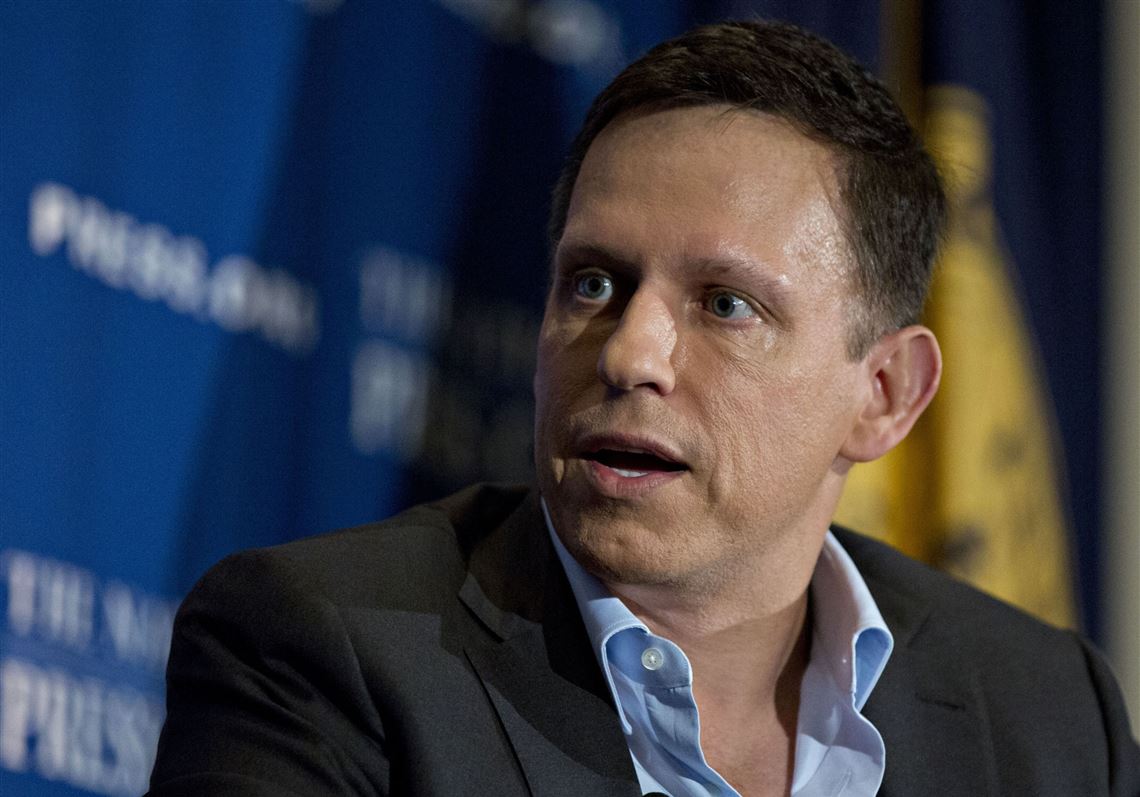
Last week, Vanity Fair published James Pogue’s fascinating look at the American New Right’s constellation of thinkers, podcasters and politicians, many funded by Peter Thiel, a tech billionaire who once wrote that freedom and democracy are incompatible. It’s hard to summarize the scene’s politics; a milieu that includes both the aggressively anti-cosmopolitan Senate candidate J.D. Vance of Ohio and the louche hipster podcast “Red Scare” doesn’t have a coherent worldview. What it does have is contempt for social liberalism and a desire to épater le bourgeois.

“It is a project to overthrow the thrust of progress, at least such as liberals understand the word,” Mr. Pogue wrote. One of the movement’s leading intellectual lights is Curtis Yarvin, a blogger who sees liberalism as creating a Matrix-like totalitarian system and who wants to replace American democracy with a sort of techno-monarchy.

According to Mr. Pogue, the movement “has become quietly edgy and cool in new tech outposts like Miami and Austin, and in downtown Manhattan, where New Right-ish politics are in, and signifiers like a demure cross necklace have become markers of a transgressive chic.” This might be an overstatement, but it’s pretty clear that there’s cultural energy in the opposition to the progressive norms and taboos that are derisively called “wokeness.”

BuzzFeed News writer Joseph Bernstein captured this energy in a March article about an anti-woke New York film festival funded by Mr. Thiel and headed by a Black queer provocateur named Trevor Bazile. “Call it, if you must, a vibe shift: a new generation of internet-native tastemakers — like many of the people crowded into Mr. Bazile’s party — who find the moralistic gatekeeping of millennials all a bit passé,” wrote Mr. Bernstein.

This vibe shift was predictable; when the left becomes grimly censorious, it incubates its own opposition. The internet makes things worse, giving the whole world a taste of the type of irritating progressive sanctimony Mr. Brock had to go to Berkeley to find. As a result, an alliance with the country’s most repressive forces can appear, to some, as liberating.

I suspect this can last only so long as the right isn’t in power nationally. Eventually, an avant-garde flirtation with reaction will collide with the brutish, philistine reality of conservative rule. (As Brock would discover, being a gay man in a deeply homophobic movement was not cheeky fun.)

In the short term, however, it’s frightening to think that backlash politics could become somehow fashionable, especially given how stagnant the left appears. In New York magazine, Sam Adler-Bell recently wrote about a dispiriting lull in progressive movement-building: “There appears almost no grassroots energy or urgency of any kind on the Democratic side.” The one thing the left could count on in recent years is its cultural capital. What happens if that is squandered?

Michelle Goldberg is a columnist for The New York Times.

First Published May 1, 2022, 10:00pm
E15 is the Wrong Fuel to Drive America's Energy Plan


By Gabriella Hoffman
April 28, 2022

There’s no better way to enjoy warmer weather than road-tripping or some sort of water sport. But an updated biofuel rule permitting the sale of E15 gasoline could derail many summer plans.

The White House recently announced its intention to sell E15 (15% ethanol and 85% gasoline) to offset high prices at the pump — attributing it to the so-called “Putin Price Hike.” In an unprecedented move, the Environment Protection Agency (EPA) is expected to fall in line and will issue a rare emergency waiver greenlighting the sale between June 1st to September 15th —which was previously forbidden under the Clean Air Act, given air pollution concerns.

But this rule change would be sustainable for neither working families nor the environment.

With rising inflation, increasing production of corn-based fuel will further add to economic woes. Though it’s been lauded as a viable alternative to conventional fuel, E15 has vast shortcomings as a reliable fuel source.

First, its availability is quite scarce, and market demand is low. According to the EPA, E15 is currently sold in 2,300 gas stations across 30 states. Of the 150,000 gas stations nationwide, that’s a paltry 1.5%. Moreover, the reported savings of 10 cents cheaper per gallon at the pump are exaggerated, at best. One conservative estimate only shows a $0.02 reduction in fuel costs. Ethanol’s profitability is also dependent on the price of corn and gasoline. If corn prices rise, farmers won’t be able to meet demand and will, in turn, produce a lower-quality, alcohol-like fuel.


The White House erroneously claims shoring up production of homegrown ethanol-based gasoline bolsters the environment. The evidence, rather, points to the opposite. A February 2022 study published by Proceedings of the National Academy of Sciences claims U.S.- corn-based ethanol is worse for the environment than conventional gasoline, concluding “land to grow corn can negate or even reverse any climate advantages of corn ethanol relative to gasoline.” Worse news for the administration: The findings also concluded ethanol is 24% more carbon-intensive than regular gasoline. The EPA previously experimented with cellulosic ethanol and deemed it a colossal failure.


E15 gas isn’t ubiquitous and can’t adequately fuel most vehicular motors. Why? It’s limited to cars built after 2001-excluding motorcycles, lawn mowers, or boats as the fuel is incompatible with their engines. More troubling for E15 backers in the White House: Flex-fuel cars get 15% to 27% fewer miles compared to cars running on regular gasoline.


With respect to outbound marine motors, E15 isn’t compatible with plastic and rubber components, is highly corrosive, and will lead to engine failure. One boating magazine wrote, “Ethanol also raises the oxygen content of fuel, which can cause a lean condition and cause the engine to run hot and eventually fail due to excessive carbon build-up, over-heated exhaust valves and bearing failure in older two-stroke outboard engines.” A 2011 National Renewable Energy Lab study on ethanol fuel endurance similarly found these motors running on E15 cannot accommodate fuels containing more than 10% ethanol.

Unfortunately, there is a bipartisan addiction to biofuels due to entrenched special interests. In 2019, former President Donald J. Trump authorized the full-year emergency sale of the biofuel under the guise of helping farmers. But a federal court ruled the former president’s actions countered federal law.


This White House has similarly expressed interest in having this rule be applied year-round but not a peep from environmentalists. Talk about a double standard.


Who will benefit from this rule change? Sadly, not America’s working families. The Biden administration will give kickbacks to industry backers and already-subsidized biofuel manufacturers. The Biden administration will allocate $100 million dollars for homegrown biofuels infrastructure, award $700 million in subsidies to biofuel producers, and give another $5.6 million in grants through the Higher Blends Infrastructure Incentive Program.

The White House leans on performative environmentalism that’s costly to Americans and won’t bolster the environment. Instead of embracing this unsustainable biofuel standard, it should continue to boost production of cheap, clean oil and gas.

Gabriella Hoffman is a Young Voices Contributor and host of the District of Conservation podcast. Follow her on Twitter at @Gabby_Hoffman.

As Utility-Scale Renewables Expand, Some Midwest Farmers Are Pushing Back

Rural communities are concerned about losing agricultural land in a region long-defined by its farming roots.

by Diana Kruzman / GristApril 28, 2022

An example of a solar farm in Ithaca, New York. As panels spread across the landscape, some farmers in the Midwest worry about the potential loss of farming areas. 
(AP Photo/Heather Ainsworth)

This story was originally published by Grist.

In mid-March, about 80 people gathered in the auditorium of a local high school in Licking County, Ohio, a rural area about 40 minutes outside the state capital. The public hearing, set up to discuss a proposed 350-megawatt solar project, lasted more than four hours.

Supporters of the project said it would bring in much-needed tax revenue for local schools and promote energy independence in a state reliant on coal and natural gas. Opponents raised concerns about the loss of 1,880 acres of prime farmland, the impact on property values, and the potential environmental effects of the development.

“It’s becoming like the Hatfields and McCoys,” one resident told the Newark Advocate at the meeting, referring to the infamous feud between two families in Appalachia in the late 1800s. “This is destroying the community. Family members are pitted against each other. Church members are pitted against each other. And it’s neighbor against neighbor.”

The United States is experiencing a boom in utility-scale renewable energy projects, as solar and wind prices continue to fall and the Biden administration pushes for a fossil fuel-free electricity sector by 2035. Throughout the process, developers seeking vast expanses of cheap land for utility-scale facilities have faced pushback from the likes of Massachusetts fishermen, coal plant supporters, and environmental groups concerned about desert tortoises. Now, rural communities around the Midwest are mobilizing to restrict or ban large renewable energy projects. Experts say that some residents have been swayed by misinformation about the health impacts of solar and wind. But for most, the issue is tied to concerns about the loss of agricultural land in a region long-defined by its farming roots.

In March, researchers from Columbia Law School found that 121 local governments in 31 states have developed restrictions on new renewable energy projects, a 17.5 percent increase from just six months ago. About half of those local laws are in the Midwest. A congressman from Wisconsin proposed a nationwide ban on tax incentives that encourage renewable energy development on farmland, while community groups have packed local meetings to oppose solar and wind farms in Indiana, Ohio, and Iowa. One Michigan man filed recall petitions against all five members of his township board, saying they failed to properly regulate wind and solar development or “provide sufficient protections for the health, safety, and welfare” of residents.

Solar energy in particular has taken a lot of the heat, even in states that have long embraced wind. Iowa was the first state to generate more than 30 percent of its electricity from wind turbines, and has more wind energy installed than any other state except Texas. But while farming can take place alongside wind turbines, solar farms typically take agricultural land out of large-scale production. In response, Iowa legislators introduced a bill earlier this year that would have prevented solar farms from being built on land that’s considered particularly good for farming — about two-thirds of the state’s counties.

The bill would also require solar panel fields to be at least 1,250 feet away from the nearest neighboring landowner. Iowa law only requires oil and gas wells, by contrast, to be 330 feet from any nearby property.

Rural residents are far from united in this opposition, said Lindsay Mouw, a clean energy policy associate at the Nebraska-based nonprofit Center for Rural Affairs. Many support renewable energy projects because of the extra income they provide, especially as farming becomes less financially viable and soil becomes increasingly degraded. But while every rural landowner is able to decide for themselves whether or not to sell their land to renewable energy companies, those choices can affect others nearby who may not feel the same way, Mouw added.

Wall Street Breakfast: Woodstock Of Capitalism

May 02, 2022 

Woodstock of Capitalism

Thousands of Berkshire Hathaway (BRK.ABRK.B) shareholders and other investors flocked to Omaha, Nebraska, this weekend to hear Warren Buffett and Charlie Munger speak at an event known as the "Woodstock of Capitalism." The pandemic forced the conglomerate, which owns and invests in a wide range of businesses from insurance to industrials, to shift to an online format over the last two years, so the return to an in-person gathering garnered some extra attention. "It really feels good to be back," Buffett announced at the beginning of the show, saying it "was a lot better seeing actual shareholders and partners."

Back in action: Berkshire was a huge net buyer of stocks in the first quarter, loading up on $51.1B worth of equities. Those included big holdings in Occidental Petroleum (OXY) and Chevron (CVX), acquiring an 11.4% stake in HP (HPQ) and arbitrage play Activision (ATVI) (as Microsoft (MSFT) acquires the videogame developer). All of the buying shrunk Berkshire's cash hoard to $106B, but echoed Buffett's classic dip-buying he also conducted during the financial crisis. "One thing that won't change is we will always have a lot of cash on hand," added Buffett, who is known to be nimble when mispriced opportunities arise.

Also sitting on the dais were Greg Abel, Buffett's successor and currently head of Berkshire's non-insurance businesses, and Ajit Jain, the head of the company's insurance operations. Assuring some investors, Buffett detailed that when the time comes for Abel to take over, the board will "put some more restrictions" on him, compared to the degree of carte blanche historically granted to Buffett. A proposal that would have stripped Buffett of his dual chair and CEO was also voted down at the meeting, along with other measures like one that would have required Berkshire to publish a yearly assessment of how it's handling issues related to climate change.

Report card: Operating earnings at Berkshire Hathaway rose slightly from a year ago to $7B as manufacturing and retail businesses thrived, though net earnings plunged 53% Y/Y to $5.5B as insurance underwriting declined heavily. "The amount of investment gains (losses) in any given quarter is usually meaningless and delivers figures for net earnings per share that can be extremely misleading to investors who have little or no knowledge of accounting rules," Berkshire noted, pointing to its recent stock track record: While the S&P 500 has dropped more than 13% YTD, Berkshire's stock is up more than 7%. Will it send a signal to some investors that are running for the exits, or even trigger a shakeout that could help some value investors? (95 comments)

No to crypto

Just a month after Peter Thiel called Warren Buffett the "enemy No. 1" of Bitcoin (BTC-USD), describing him as a "sociopathic grandpa from Omaha," Buffett doubled down on his outlook of the popular crypto at Berkshire Hathaway's (BRK.ABRK.B) annual shareholder meeting. "Nobody wants their windpipe stepped on and I don't blame them. I don't like people to step on my windpipe, but I will say this," declared Buffett, who has previously referred to Bitcoin as "probably rat poison squared."

Quote: "If you said... for a 1% interest in all the farmland in the United States, pay our group $25B, I'll write you a check this afternoon. For $25B, I now own 1% of the farmland. If you tell me you own 1% of all the apartment houses in the United States and you want another $25B, I'll write you a check, it's very simple. Now if you told me you own all of the Bitcoin (BTC-USD) in the world and you offered it to me for $25 I wouldn't take it because what would I do with it? I'd have to sell it back to you one way or another. It isn't going to do anything. The apartments are going to produce rental and the farms are going to produce food. That explains the difference between productive assets and something that depends on the next guy paying you more than the last guy got."

"Assets, to have value, have to deliver something to somebody. And there's only one currency that's accepted. You can come up with all kinds of things - we can put up Berkshire coins... but in the end, this is money," he announced, holding up a dollar bill. "Anyone that thinks the United States government is going to change the way they let Berkshire money replace theirs is out of their minds. Whether it goes up or down in the next year, or five or 10 years, I don't know. But the one thing I'm pretty sure of is that it doesn't multiply, it doesn't produce anything. It's got a magic to it and people have attached magic to lots of things."

Munger chimes in: "In my life, I try and avoid things that are stupid, and evil, and make me look bad in comparison to somebody else - and Bitcoin (BTC-USD) does all three. In the first place, it's stupid because it's very likely to go to zero. In the second place, it's evil because it undermines the Federal Reserve system that we desperately need to maintain its integrity and government control... and third, it makes us look foolish compared to the Communist leader in China. He was smart enough to ban bitcoin in China, and with all of our presumed advantages in civilization, we are a lot dumber than the Communist leader in China." (53 comments)

Politics and business

Geoff Morrell appears to be taking the fall at Disney (NYSE:DIS) as the chief corporate affairs officer, who helped architect Disney's public response to Florida's so-called "Don't Say Gay" bill, decided to resign from the company. Morrell had only been three months into the new job before announcing his departure following prior stints as a spokesperson at BP (BP) and the Pentagon. Kristina Schake, who Disney hired earlier this month, will lead the company's communications efforts going forward, while Disney General Counsel Horacio Gutierrez will pick up government relations and public policy. They will both report directly to CEO Bob Chapek, who has had to navigate the coronavirus pandemic - and a big hole left by longtime CEO Bob Iger - after taking the top spot in February 2020.

Backdrop: According to people who worked with him, Morrell set out to be more transparent than his iron-fisted predecessor, Zenia Mucha, who closely guarded Disney's public image. With regards to "Don't Say Gay," Morrell guided Disney and Chapek to publicly explain why it hadn't taken a stand regarding the legislation that limits some classroom instruction on sexual orientation and gender identity. "Corporate statements do very little to change outcomes or minds," Chapek wrote, but the declaration opened up a can of worms that sparked company-wide protests and walkouts for employees that felt otherwise.

Instead of remaining quiet on the matter with no public position (a similar stance it takes with regards to China's reported human rights abuses), Disney went on to double down on support for the "Don't Say Gay" legislation. "This bill should never have passed and should never have been signed into law," the company declared. "Our goal as a company is for this law to be repealed by the legislature or struck down in the courts, and we remain committed to supporting the national and state organizations working to achieve that." What followed was an uproar that saw the Florida legislature revoke Disney's special tax district status and a fight over who is liable to pay the $1B bond linked to dissolving the Reedy Creek Improvement District.

Go deeper: There is much debate in this case if public officials should target private companies, as well as if private corporations should comment on the public sphere. The bottom line is that top business leaders across Corporate America are now on alert for navigating charged topics. "The No. 1 concern CEOs have is, 'When should I speak out on public issues?'" said Bill George, former CEO of Medtronic and current professor at Harvard Business School. "As one CEO said to me, 'I want to speak out on social issues, but I don't want to get involved in politics.' Which I said under my breath, 'That's not possible.'" (32 comments)

'Work from anywhere'

Many tech firms and other companies embraced remote work during the pandemic, only to wean off the model in favor of a hybrid approach or a return to the office once the initial waves of COVID-19 subsided. Not Airbnb (NASDAQ:ABNB). The home rental provider that changed the way people travel just announced a policy that will allow its employees to live and work from anywhere, calling it the "predominant way companies will work in 10 years from now." The plan:

1. You can work from home or the office - whatever works best for you.

2. You can move anywhere in the country, like from San Francisco to Nashville, and your compensation won't change.

3. You have the flexibility to live and work in 170 countries for up to 90 days a year in each location.

4. We'll meet up regularly for team gatherings. Most employees will connect in person every quarter for about a week at a time (some more frequently).

5. To pull this off, we'll operate off of a multi-year roadmap with two major product releases a year, which will keep us working in a highly coordinated way.

Quote: "We had the most productive two-year period in our company's history - all while working remotely," explained CEO Brian Chesky. "Two decades ago, Silicon Valley startups popularized open floor plans and on-site perks. Today's startups have embraced flexibility and remote work." Companies will also be at a "significant disadvantage if they limit their talent pool to a commuting radius around their offices. The best people live everywhere."

Human connection? "The most meaningful connections happen in person. Zoom is great for maintaining relationships, but it's not the best way to deepen them. And some creative work is best done in the same room. The right solution should combine the efficiency of Zoom with the meaningful human connection that happens when people come together. Our design attempts to combine the best of both worlds."

Wild Bison, Taking Over Europe and North America, Will Once Again Roam England

This year, a $1.4 million project is about to release a herd of bison in an ancient English woodland, bringing back an animal that hasn’t been in the country for millennia.


May 1, 2022 by Mongabay

This year, a $1.4 million project is about to release a herd of bison in an ancient English woodland, bringing back an animal that hasn’t been in the country for millennia.
The European bison is expected to help regenerate the forest and boost insect, bird and plant life.

Bison rewilding projects are springing up across Europe, contributing to the species’ conservation status improving from vulnerable to near threatened.
North America is also rewilding with its bison species, including on Native America lands, helping to revitalize not only the ecosystem but Indigenous culture and heritage.

Each morning as the sun rises into the sky, ranger Donovan Wright stands on the outskirts of Blean Woods in the United Kingdom. The ancient woodland in southern England covers 509 hectares (1,257 acres) and is filled with broadleaf oak trees, birch and hazel. The former South African safari ranger of 20 years is welcomed by the chirping of native birds in the treetops. He might spy an inquisitive fox or rabbit darting through the undergrowth, or find badger tracks dotted along the leaf-strewn pathways. Yet, as he walks deeper into the ancient woods, the atmosphere changes.


“It is surprisingly quiet,” Wright told Mongabay. “If you look at an aerial view, you will go, ‘Wow, it’s so green and full of life.’ But that richness and biodiversity is not there.”

But soon a new animal, the biggest land mammal in Europe, will change everything.

In May 2022, Wright and fellow ranger Tom Gibbs will be introducing a herd of European bison (Bison bonasus) into the primeval woods in a $1.4 million project run by the Kent Wildlife Trust.

The last kind of bison that walked on this land was the ancient steppe bison (Bison priscus) some 12,000 years ago. The steppe bison’s closest living relative will now be transported from Poland, Germany and Ireland, and left to roam free among the glades. It is hoped these eco-engineers will use their sheer size and grazing habits to revitalize this ancient woodland.

“We have a serious problem with biodiversity at the moment,” Wright said, citing the latest “State of Nature” report, published annually by the Royal Society for the Protection of Birds (RSPB), one of the U.K.’s biggest wildlife conservation NGOs. The report, Wright said, showed that “the lack of woodland management is the biggest reason for the lack of biodiversity in the U.K.”

From tip to tail, bison are expected to change the look of the woodland. Their massive size helps them punch through the undergrowth and let sunlight enter the forest floor. By eating bark and rubbing against trees, they create deadwood in the forest, a vital habitat for fungi and insects. And bison’s love of dust bathing creates natural glades that will become habitats for sand lizards and pioneer plants. Bison are also walking seed banks, as plant seeds get trapped in their fur and distributed when they fall out. Even their dung is also a food source for insects.

Yet as valuable as they are to forests, European bison nearly went extinct after World War I. In 1924, only 54 remained in zoos.

“It’s an amazing opportunity not only to restore the woods, but to help save the species and help create a genetic pool,” Wright said. The idea is that the Blean Woods bison release can become a blueprint for other bison projects in the U.K. Just a 10-minute drive from the city of Canterbury, the ancient woodland was once a former tree plantation and still contains pockets of pine trees. Researchers are interested in how the bison will affect the areas of monoculture.

The Wilder Blean team also plans to introduce feral moorland Exmoor ponies and Iron Age pigs (a wild boar and domestic pig hybrid) into the woods. Each will have its part to play, but it’s believed that the bison, at around 840 kilograms (1,850 pounds), will have the biggest impact. While the pigs will root in the soil and encourage the growth of wildflowers, the ponies will keep grasses in check. But the bison will create new environments for other creatures to survive and thrive.

“Through creating microhabitats in the area, it will attract different species and create a healthier ecosystem,” Wright said.

To judge the effectiveness of this eco-experiment, the Wilder Blean project will create three zones in the woods and manage them in different ways. The first zone will be managed by free-roaming wild bison; the second will feature English longhorn cattle; and the third will be managed in a more traditional manner by chainsaws. The animals will be tracked with the help of satellite collars so the rangers can see where they spend most of their time and how they affect the landscape. The data should help improve scientists’ understanding of how to keep the ancient woodland healthy and biodiverse, given its role as a massive carbon sink.

The rangers are now busy preparing for the bison’s arrival. They’re installing fences, digging watering holes, and building bison tunnels that provide viewing platforms while stopping the massive animals from coming into conflict with the public. In the future, they intend to offer safari walks, but not until the bison have settled into their new environment.

Europe’s new eco-warriors


Wright and Gibbs recently visited the Kraansvlak bison project in the Netherlands. Even after 15 years, the Dutch team is still discovering how these animals impact the ecosystem. Only recently, the rangers found that birds were using bison fur to line their nests, increasing the survival rate of the chicks.

Wilder Blean and Kraansvlak are just a couple examples from numerous rewilding projects in Europe using these nomadic grazers to help restore ecosystems. Conservationists have recently reintroduced bison into Denmark’s largest nature area, filled with raised bogs, primeval forests, grasslands, heaths and meadows. The first 10 animals arrived at the Lille Vildmose nature reserve in April 2021 from three different projects in the Netherlands, and by the middle of the year had welcomed their first calf.

“The bison will eat the grasses that the red deer don’t eat and they will also debark the trees and roam more,” said Jacob Palsgaard Anderson, forester and Lille Vildmose’s vice CEO. “They will keep the landscape open, make the nature area more diverse and able to hold more species. Without them it will just become a dense forest.”

Romania also recently released 100 bison into its mountainous Southern Carpathian region. Team leader and biologist Marina Drugă of WWF Romania said the decision to transfer this number of free-roaming bison into the area was based on scientific reasons.

“We view this as a founder population, which has the potential to grow and form a viable population with enough genetic variety,” Drugă said. The IUCN, the global conservation authority, has marked an improvement in the species’ conservation status from vulnerable to near threatened because of efforts such as these. Through natural breeding, this program aims to have 300 wild bison by 2024.

However, bison rewilding projects have not been without controversy. Bison are known to sometimes carry brucellosis, a bacterial disease that induces abortions in bison, cattle and elk. The animals, which can roam up to 1,000 kilometers (600 miles) a year, have also come into conflict with landowners who don’t appreciate the giant eco-engineers removing bark from the trees on their land.

Still, the story of the European bison across the continent is a rare one of near extinction followed, after nearly a century of work, to rising abundance.
Strides to save a species in the United States

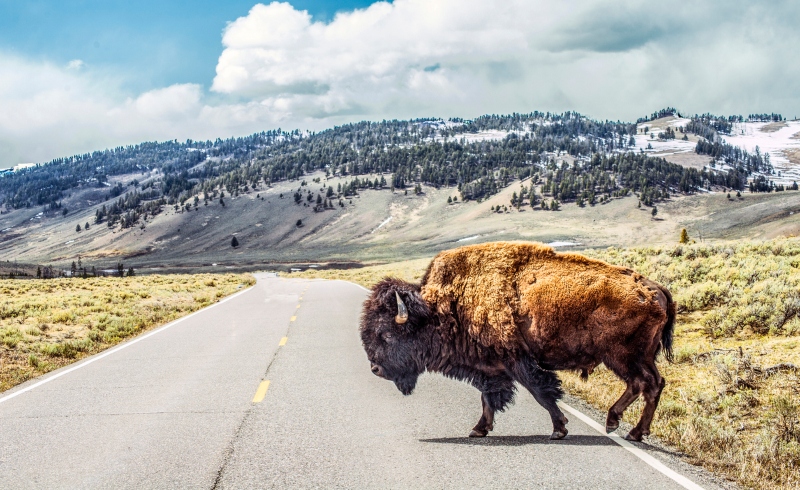
Europe is not the only continent to embrace bison rewilding projects to help revitalize ecosystems. In North America, Yellowstone National Park has joined with the Fort Peck Tribes in Montana and the InterTribal Buffalo Council to reintroduce American bison (Bison bison), which are slightly shorter and stockier than the European bison, to tribal lands.

The relocation of the Yellowstone bison, or buffalo, is a conservation solution that is expected to aid the animal’s long-term survival and, like in Europe, transform ecosystems. Each year, Yellowstone officials capture hundreds of bison and send them to slaughter as there are limits on how many bison the park can hold, especially with pressure from nearby cattle ranches.

The Bison Conservation Transfer Program is currently diverting disease-free bison from Yellowstone to Fort Peck. The first transfer of bison was completed in 2019, but the bison remained in quarantine for a year on Fort Peck’s pastures before they were transferred to other tribal lands around the United States.

“We have sent the buffalo as far away as Alaska. We’ve probably sent buffalo to 19 different tribes already,” said Robert Magnan, director of the Fort Peck Tribes’ Fish and Game Department. In December 2021, Fort Peck transferred 56 bison, after quarantine, to the Yakama Nation in Washington state and the Modoc Nation in Oklahoma.

Magnan, who was born on the reservation, has already seen the impact that bison can make. Fort Peck was without buffalo for 137 years.

“We ran a study with the University of Michigan and found the way that the buffalo graze makes the grasses healthier, and they even brought back bird species that were missing,” he said.

While European bison feed on leaves and bark, American buffalo feed on grass. Unlike cattle, they don’t stay in one area and eat, however; they browse, moving and eating throughout the day.

“They create different heights of grasses in pastures, which makes it healthier, and they also graze the tops of the grasses, which gives it a chance to regrow faster,” Magnan said.

Thirty million bison once roamed across North America, from Canada to Texas. By 1884, only 325 wild buffalo were left, some of which were in Yellowstone. While there are now 400,000 bison in North America today, most are domesticated and have been interbred with cattle at some point. The bison sent to Fort Peck from Yellowstone are the direct descendants of the bison that managed to survive the slaughter of the 19th century.

To the people of Fort Peck and the Yakama and Modoc nations, the return of the buffalo is more far-reaching than ecological health. Not only are the animals revitalizing the land, but the people themselves. Magnan said that Native American communities are rediscovering ceremonies that died out with the loss of the bison, they’re renewing their ability to farm bison, and they’re also boosting their health. With the incidence of diabetes high in these areas, lean bison meat provides a healthier alternative to processed foods.

“Buffalo has been connected to Native Americans since the beginning of time,” Magnan said. “They are even in our creation stories. They have a belief that the creator put the buffalo there for us because humans weren’t smart enough to live like the wildlife.”

The Fort Peck community has dubbed its new $4 million wellness center the Thundering Buffalo Wellness Center, and the community college basketball team is now called the Buffalo Chasers.

Magnan helped bring the first truck carrying buffalo into Fort Peck.

“It was a very religious moment. I felt good that we were reconnecting to them again,” he said. “Every day I am learning more and more.”

Not only have the buffalo helped revive the landscape, but their arrival has also helped bring Native American families together as they relearn the rituals and their roles.

“It is a family affair,” Magnan said. “The family accompany the herd and when the hunter takes the animal’s life they will go and help them cut up the meat.”

Magnan said they haven’t set a limit on the buffalo they currently transfer onto tribal lands. As long as Yellowstone is happy to continue the program, they will keep relocating these wild animals to other tribal areas.

“There is a competition in Indian country now who is getting the biggest herd. We used to have a competition on who has the largest group of buffalo, now we’ve outpaced that,” Magnan said with a laugh.

While the rewilding programs on either side of the Atlantic differ, they both understand that the best wildlife manager is nature itself. It doesn’t need human interference.

“If you just give nature the time and space to heal, it will,” said Wilder Blean’s Donovan Wright. “By replacing vital keystone species, such as bison, back into the system, they can kick-start these changes and help us restore these habitats.”


This post was previously published on news.mongabay.com and under a Creative Commons license CC BY-ND 4.
Sneakers, elastic pants: People 
WHITE MEN IN WHITE COLLAR JOBS
 alter office wear amid COVID

By ANNE D'INNOCENZIO

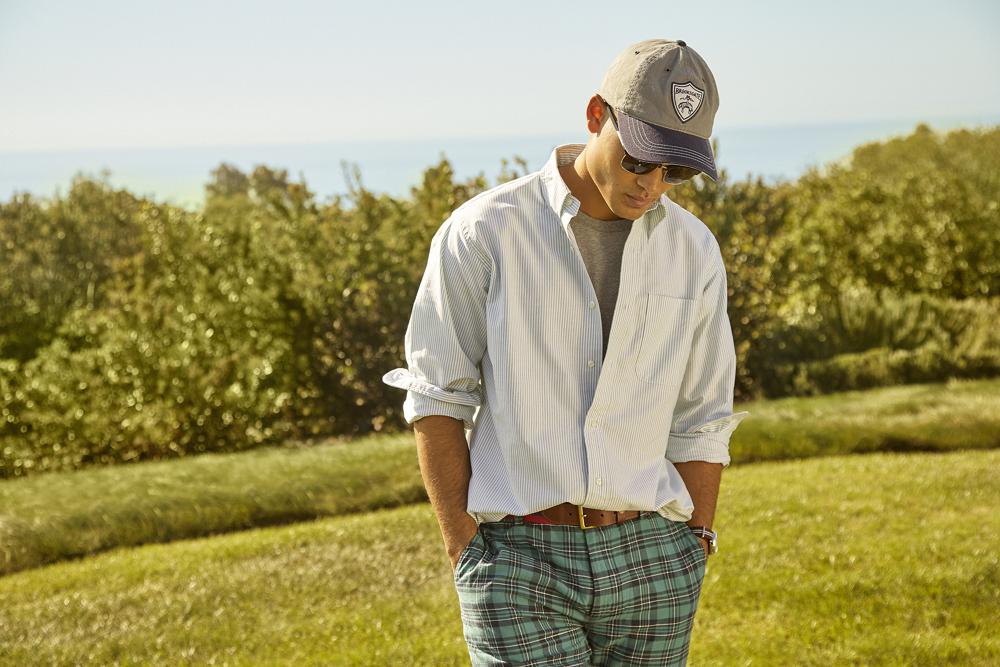
This photo provided by Brooks Brothers shows a model showing a Brooks Brothers casual office wardrobe. Going back to the office, many don't want to return to structured looks like suits, zip-front pants and pencil skirts from the pre-pandemic days. But they also don't want to look unprofessional. So they're experimenting with new approaches, forcing retailers and clothing brands to respond with colorful blazers in knit or sweatshirt fabrics, pants with drawstrings or elastic bands, and new casual twists on the collared button-down dress shirt. (Matt Albiani/Brooks Brothers via AP)


NEW YORK (AP) — Blazers in knit fabrics, pants with drawstrings or elastic waists, and polo shirts as the new button-down.

Welcome to the post-pandemic dress code for the office.

After working remotely in sweats and yoga pants for two years, many Americans are rethinking their wardrobes to balance comfort and professionalism as offices reopen. They’re giving a heave-ho to the structured suits, zip-front pants and pencil skirts they wore before the COVID-19 pandemic and experimenting with new looks. That has retailers and brands rushing to meet workers’ fashion needs for the future of work.

“Being comfortable is more important than being super structured,” said Kay Martin-Pence, 58, who went back to her Indianapolis office last month in dressy jeans and flowy tops after working remotely in leggings and slippers for two years. “Why feel buttoned up and stiff when I don’t have to?”

Before COVID-19, Martin-Pence used to wear dress pants with blazers to the pharmaceutical company where she works. She’s gone back to heels, but they’re lower, and she says she will never wear dress pants again to the office.

Even before the pandemic, Americans were dressing more casually at work. The time spent in sweats accelerated the shift from “business casual” to “business comfort.”

Still, return-to-office dressing remains a social experiment, said Adam Galinsky, a social psychologist at Columbia Business School who coined the term “enclothed cognition,” or how what people wear affects how they think.

“My guess is that it will go more casual, but maybe it doesn’t,” Galinsky said. “People are going to be consciously thinking about: ‘Am I wearing the right outfit for being in the office?’ They’re going to be thinking about what they’re doing, the context they’re in, and the social comparisons of what others will be doing.”

Steve Smith, CEO of outdoor sportswear brand L.L. Bean, said people are stepping out of their “typical uniform” — whatever form that may take.

“They’re going to expect more flexible hours, to be able to work in hybrid model, and to be comfortable — as comfortable as they were at home,” he said. “Some of the office uniforms, office wardrobes, are shifting and changing. There’s no reason why it can’t be permanent.”

Data from market research firm NPD Group and retailers reflect the shifting trends.

Wire-free bras now represent more than 50% of the total, non-sports bra market in the U.S., reversing a long-term trend, according to NPD. Sales of dressy footwear have been rebounding since 2021, but they’re still 34% below 2019 levels and more likely fueled by the return of social occasions, not the office, NPD said. Instead, casual sneakers are now the most common shoes for work.

Clothing rental company Rent the Runway said rentals for blazers were up nearly twofold in February from last year, reflecting a return to offices. But its customers are choosing colorful versions like pastel and fabrics like lightweight tweed, linens and twill. It said “business formal” rentals — traditional workwear like basic sheaths, pencil skirts and blazers — are roughly half of what they were in 2019, said Anushka Salinas, president and chief operating officer.

Stitch Fix, a personal shopping and styling service, noted men are increasingly choosing options like hiking and golf pants for the office. For the first three months of the year, revenue for that type of clothing was up nearly threefold over a year ago.

Polo shirts have replaced the collared button-down for men, and there’s strong demand for pull-on pants, the company said. The ratio of elastic-waist work pants to those with buttons or zippers on Stitch Fix was one to one in 2019; now it’s three to one.


Other workers, however, are feeling excited about dressing up again.


Emily Kirchner, 42, of Stevensville, Michigan, who works in communications for a major appliance manufacturer, said she’s investing more in her wardrobe as she returns to the office. She used to wear tunic tops and leggings from Stitch Fix in the pre-pandemic days. Now, she’s turning to the service for high-end jeans, blouses and blazers.

“It’s kind of fun to dress up,” said Kirchner, who had a baby early in the pandemic and wants to wear clothes that don’t make her look like what she calls a “frumpy mom.” “It’s kind of like that back-to-school feeling.”

Retailers had to pivot to Americans’ changing demands throughout the pandemic and now again with many returning to offices. Upscale department store Nordstrom, for example, has opened women’s denim shops to highlight its expanded selection as it sees more women wearing jeans to work.

Even Ministry of Supply, a company looking to make work clothing as comfortable as exercise wear, had to make big changes. When the pandemic hit, it was stuck with piles of tailored pants and jackets in performance fabrics deemed irrelevant for a remote workforce.

The Boston-based company started by graduates from the Massachusetts Institute of Technology quickly reengineered the items, sticking in elastic waistbands and removing zippers. It also slimmed down hems on pant suits to give them “sneaker″ cuts.

As workers return to the office, Ministry of Supply is keeping those relaxed looks and sneaker cuts and has permanently eliminated zippers — all its pants have elastic waistbands or drawstrings. It’s also reinventing its tailored suit.

“The new challenge is: How do I look presentable when I am in person without sacrificing comfort?” said Gihan Amarasiriwardena, co-founder and president.

The 200-year-old haberdashery Brooks Brothers had a bigger challenge — it never followed the casual office attire trend several years ago like its rivals. Under a new owner and CEO Ken Ohashi, the company has found success in offering relaxed styles in a post-bankruptcy reinvention.

Now, 45% of its offerings are casual sportwear like sweaters and polo shirts. Before the pandemic, that figure was 25%, Ohashi said.

He said dress shirts are making a comeback as workers return to the office. But Brooks Brothers is adding a twist: a stretch version of its cotton-knit shirts with the comfort of a polo. It also is offering colorful jackets.

“The guy is attracted to novelty right now, novelty color, novelty print, novelty pattern,” Ohashi said. “Historically, that guy came in, and he was buying a navy, a charcoal and black suit. He definitely wants to mix it up. And I think that is here to stay.”

___

Associated Press writer David Sharp contributed from Freeport, Maine.
Fran Drescher, head of actors' union, seeking tax breaks for group's 'middle class members'

Sitcom star wants to see Congress pass the Performing Artists Tax Parity Act.


By Nicholas Ballasy
Updated: May 1, 2022 

Actress Fran Drescher, president of the Hollywood labor union SAG-AFTRA, is seeking tax breaks for "middle class members" of the union.

Drescher wants to see Congress pass the Performing Artists Tax Parity Act, which would amend the 2017 tax reform bill signed by former President Trump to "increase the adjusted gross income limitation for above-the-line deduction of expenses of performing artist employees, and for other purposes." The bill has bipartisan cosponsors.

Drescher described the legislation pending in Congress as a "big deal" that would help actors and actresses.

"We're looking for tax breaks for our middle class members, it's called PATRA, the Performing Artists Tax Parity Act, and that's a big deal because actors spend a lot of money before they even get a job just in trying to secure a job," she said.

Drescher noted that the tax benefit is on the books but "we just want to expand it a little bit."

Her organization also wants to see passage of the American Music Fairness Act, which is to "close up the loophole on AM/FM radio; it's the only last area where a performer gets played and a singer or a musician doesn't get paid."

Drescher said that the broadcaster currently makes money off of the performers.

"So we want them to pay like Pandora does, and Spotify and iTunes, and it's time for that to happen," she said.
There's a 'new boogeyman' freaking out Americans susceptible to conspiracy theories

Bob Brigham
April 30, 2022

Man wearing tinfoil hat (Shutterstock)

Following birtherism, PizzaGate, QAnon, Great Replacement, and Donald Trump's delusions about election fraud, there is now a "new boogeyman" gaining traction.

"In late 2020, conspiracy theorists started telling everyone who’d listen about a sinister plot called the 'Great Reset.' The global elites of the World Economic Forum (WEF) had either co-opted or outright concocted the COVID-19 pandemic, they falsely claimed. Then world leaders and technocrats, almost all of whom are supposedly active agents or compromised puppets of the Forum, adopted what conspiracists see as senseless and draconian policies, like lockdowns, ostensibly to curb the spread of the virus—but really to destabilize and traumatize the globe," Mark Hay reported for The Daily Beast.

He reported on a Telegram channel with around 28,500 subscribers.

"But the channel specifically suggested the WEF and its allies’ next big world domination gambit may be a 'cyber pandemic,' an ill-defined but massive false flag cyberattack, or series of attacks, on financial institutions. Or the entire power grid. Or the internet as a whole," he explained. "That’s not an isolated take. There’s been sporadic talk of an incoming, elite-orchestrated 'cyber pandemic' in Great Reset circles for well over a year. But the idea of this digital threat, and its imminence, has seemingly gained traction across the conspiratorial web since around the end of last year—and especially since the start of this March."

In March, Rep. Marjorie Taylor Greene (R-GA) discussed the "Great Reset" with Alex Jones, who declared bankruptcy after being sued by Sandy Hook families for pushing a conspiracy theory that the mass shooting was a false flag operation.

"The idea of a cyber pandemic is not actually new. Broadly, it’s in keeping with the cybersecurity world’s use of biological disease metaphors to explain digital risks. (Think: computer virus.) As early as 2004, cybersecurity researchers used the term to talk about the risks associated with increasingly interconnected digital ecosystems, in which a novel virus or exploit could hit one weak link, then cascade outwards through wider systems," he reported. "All conspiracy theories evolve, blending with other ideas they come in contact with to adapt to new audiences or changing circumstances. The Great Reset itself, experts explained, appears to just be an update of older conspiracy theories about the dark machinations of global elite cabals that’ve been circulating since at least the 1700s, always identifying new foes and plots."

He noted a post that recently appeared on a Reddit forum linking the conspiracy theory to Vladimir Putin's invasion of Ukraine.

“This is a fixed war sponsored by WEF [sic]. Putin is as much WEF as the western leaders are, don’t you be fooled,” the user wrote. “If EVENT 201 was the precursor to COVID 19, then last year’s CYBER POLYGON will be the predictive event for the coming CYBER WINTER of total global telecommunications collapse which will be achieved through Russian Nuclear Submarines. We will be fooled once again!”

Read the full report.


'Clock show' 60 Minutes does epic interview with 'Birds Aren't Real' parody conspiracy theorists

Sarah K. Burris
May 01, 2022


Travel booking site Kayak recently mocked conspiracy theorists with a commercial depicting a middle-aged woman imploring her family to "open your eyes!

Now, one of the more famous fake conspiracy theories used to mock QAnon followers and the far right is getting the "60 Minutes" treatment.

Speaking to the network, the chief architect of the conspiracy theory that birds aren't real, explained that the government is actually using surveillance drones to monitor people of the world.

Peter McIndoe explained that seagulls are a perfect example that birds aren't real. He noted that if one watches them swoop down and grab your food, they don't actually eat it. According to McIndoe, the birds take it back to the Pentagon to be studied.

“[We’re] fighting lunacy with lunacy,” said Claire Chronis, who works with McIndoe on the Birds Aren’t Real campaign.

"How do you feel about '60 Minutes' I'm surprised you've decided to sit here with us," asked reporter Sharyn Alfonsi.

"I'm not gonna go on news shows, but shows about clocks and time, I'm okay sharing my information with," said McIndoe with a dead-panned expression. "I understand this isn't anything like the media. So, thanks for having me on your clock show."

The group also includes Cameron Kasky, a Parkland student who survived the mass shooting at his high school and also joined the campaign. Many conspiracy theorists have disputed that mass shootings actually happened. The most famous example comes from Alex Jones and other far-right news outlets who claimed for years that the Sandy Hook Elementary School shooting wasn't real. They went so far as to attack family members of murdered children. One family had to move several different times because they were so inundated with threats. Jones was ultimately ordered to pay the parents millions of dollars in damages for his role in promoting the conspiracies.

Kasky explained that their key way to fight the lies of older generations is with their own lies that mock their elders.

"We don't want to use language that actual harmful and hateful conspiracy theories use to target people," said Kasky. He was harassed, doxxed and attacked online. He was called a crisis actor and his father and grandfather were called sex traffickers, an allegation that QAnon throws around without any real accountability.

See excerpts from the show below: