Wednesday, May 25, 2022

Monkeying Around with the People?


Facebook

Allen Forrest is a writer, painter, graphic artist and activist. He has created covers and illustrations for literary publications and books, is the winner of the Leslie Jacoby Honor for Art at San Jose State University's Reed Magazine for 2015, and his Bel Red landscape paintings are part of the Bellevue College Foundation's permanent art collection in Bellevue, WA. He lives in Vancouver, BC, Canada. Read other articles by Allen, or visit Allen's website.

India: Birds Drop Out of the Sky, People Die

In case you have lingering doubts about the reality of human-caused global warming, hop on an airplane to parts of India or Pakistan and spend a few days. And, as long as you’re there, maybe be a good citizen and pick up a few of the dehydrated birds that drop out of the sky. Then, use the syringe you brought along to feed it some water before it dies in your hands.

And, maybe do the same for some of the people sprawled out on the roadside before they die right before your eyes. After all, people are already dying from the humid heat. Maybe you could help them survive and while at it maybe bring along that friend who’s a climate denier to assist in saving some lives. It’s good for their soul to open his or her eyes to reality.

According to a recent Business Insider article: “Birds Are Falling From the Sky in India as a Record Heatwave Dries up Water Sources”, May 14th, 2022. And, it’s not just a few random instances: “Vets in an animal hospital in Ahmedabad said they had treated thousands of birds in recent weeks.”.1

According to Yale Climate Connections: “The nearly ‘unsurvivable’ heat is increasingly as the result of human-caused climate change.”

Here’s a snippet from the Yale Climate Connections article entitled “India and Pakistan’s Brutal Heat Wave Poised to Resurge: Inferno-like temperatures of up to 50 degrees Celsius (122°F)”. The heat, when combined with high levels of humidity – especially near the coast and along the Indus River Valley – will produce dangerously high levels of heat stress that will approach or exceed the limit of survivability for people outdoors for an extended period.”

According to the prestigious UK Met Office: “The blistering heat wave in northwest India and Pakistan was made over 100 times more likely because of human-caused climate change.”2

The extraordinary blistering heat has prompted Umair Haque, a British economist (former blogger for the Harvard Business Review, but he attended University of Oxford, London Business School, and McGill University) to compose a special article about the scenario entitled: “The Age of Extinction Is Here — Some of Us Just Don’t Know It Yet”published in Eudaimonia and Co, May 2022 in which he describes a world that has “already crossed the threshold of survivability.”

Umair has friends in the Indian Subcontinent. So, he hears first hand what’s happening without the filter of a news organization. Here’s one quote: “The heatwave there is pushing the boundaries of survivability. My other sister says that in the old, beautiful city of artists and poets, eagles are falling dead from the sky. They are just dropping dead and landing on houses, monuments, and shops. They can’t fly anymore.”

Here’s some more reporting directly from the streets, as related by Umair: “The streets, she says, are lined with dead things. Dogs. Cats. Cows. Animals of all kinds are just there, dead. They’ve perished in the killing heat. They can’t survive.”

People spend all day in canals and rivers and lakes. Some people in the streets are passed out and at the edge of a life or death scenario. He suggests the death count will not be known for some time and many probably won’t be counted.

Here’s an interesting take from Umair’s perspective: “You see, my Western friends read stories like this, and then they go back to obsessing over the Kardashians or Wonder Woman or Johnny Depp or Batman. They don’t understand yet. Because this is beyond the limits of what Homo sapiens can really comprehend, the Event. That world is coming for them, too.”

He claims: “We are at the threshold of the Cataclysm. Some of us are now crossing over to the other side, of a different planet, one that’s going to become unlivable. This isn’t ‘going to happen’ or ‘might happen,’ it is actually happening now.”

Here’s one more quote: “At 50 degrees, which is where the Subcontinent is now, life dies off. The birds fall from the sky. The streets become mass graves. People flee and try to just survive. Energy grids begin to break. Economies grind to a halt.”

Umair claims civilization collapses somewhere between 50 -60 degrees Celsius. “Nothing works after that point.” Animals die and systems shut down, economics crater, inflation skyrockets, people grow poorer, fascism erupts as a consequence. People become frightened and turn to fundamentalist religion or authoritarian rule to “give them answers.” The regular ole economics and politics don’t work any longer. Sound familiar?

Death by humid heat in India equates to the tolling of bells, slowly, repeatedly, as black pennants flutter along the distant horizon. Another one has died and another, and one more, and another and another, as the monotonous tolling becomes an atrocious irritation.

Postscript: It’s in every bird falling from the sky, every animal dropping dead from the heat, every democracy being shredded by lunatics, in all the deaths we will never count. Our systems — all of them — economic, social, political — are beginning to fail. (Umair Haque)

  1. Ibid. [↩]
  2. “Climate Change Has Made India’s Heat Wave 100 Times More Likely, UK Weather Service Says”, CNBC, May 18, 2022. [↩Facebook
    Reddit
Robert Hunziker (MA, economic history, DePaul University) is a freelance writer and environmental journalist whose articles have been translated into foreign languages and appeared in over 50 journals, magazines, and sites worldwide. He can be contacted at: rlhunziker@gmail.comRead other articles by Robert.

https://www.businessinsider.com/india-birds-fall-from-sky-india-amid-record-122f-heatwave-2022-5

May 14, 2022 ... Dehydrated birds are falling from the sky in India as a record heatwave dries up water sources. · In India's Gujarat state dozens of high flying .....

Tuesday, May 24, 2022

‘Almost nobody is happy with Putin’

Meduza’s sources say a new wave of pessimism in the Kremlin has Russia’s hawks demanding more brutality in Ukraine while others scout for presidential successors

May 24, 2022
Source: Meduza

As of today, Russia’s full-scale invasion of Ukraine has been underway for exactly three months. Throughout Moscow’s “special military operation,” representatives of the Russian elite have repeatedly changed their positions on the war in Ukraine and the crisis at home. Moderate optimism replaced what was initially extreme pessimism, only to be ousted by a wave of moderate pessimism. Sources close to the Kremlin told Meduza that these moods have shifted again, as more elites express dissatisfaction with Vladimir Putin directly. Frustration with the president, moreover, is rising among both supporters and opponents of the invasion.

In the three months since Russia launched a full-scale invasion of Ukraine, the general mood among the elites in Moscow has flipped more than once. In early March, insiders told Meduza that President Putin’s decision to go to war horrified most Kremlin and ministerial officials, who feared that Western sanctions would ruin their careers and maybe even their lives. Shortly thereafter, however, a “patriotic surge” took hold. By April, several prominent figures were calling publicly to fight “to the bitter end.”

Now, three months into the war, pessimism is staging a comeback. “It won’t be possible to live like before. Any talk of development is out the window. But life goes on. There are gray imports. There’s trade with China and India,” said a source close to the prime minister’s cabinet.

At the same time, officials in the Kremlin still see no realistic scenario in which President Putin could end the hostilities in Ukraine and retain his high approval rating in Russia. As Meduza reported previously, the administration’s domestic policy team has been brainstorming strategies to “withdraw with dignity” since just a few weeks into the invasion, but officials have yet to come up with anything.
Unhappiness on all sides

“There’s probably almost nobody who’s happy with Putin. Businesspeople and many cabinet members are unhappy that the president started this war without thinking through the scale of the sanctions. Normal life under these sanctions is impossible. The ‘hawks’ are mad about the pace of the ‘special operation’; they think more decisive action is possible.”

This is how a source close to the Kremlin described the mood among Russian elites. Another two sources with knowledge of the Putin administration’s operations confirmed this analysis, as did two more individuals with ties to the prime minister’s cabinet.

Sources close to the Kremlin said the “hawkish” position (most popular among Russia’s security elites) is simple: “They figure, since we’re entangled there already, there’s no going soft now. We need to go even harder.” This would entail a broad mobilization of reservists, and “playing to win,” ideally by capturing Kyiv itself.

The Kremlin, however, isn’t ready to declare a full mobilization. In early April, citing the results of closed sociological studies, sources with knowledge of the Putin administration’s domestic policy work told Meduza that even the Russians who say they support the “special operation” in Ukraine are reluctant either to volunteer for the fight or to send their own relatives to the frontlines.

At the same time, Russia’s major businesspeople and most of the “civilian” state officials are also unhappy with the president’s actions and criticize him for failing to take real steps toward peace with Ukraine. Meanwhile, economic difficulties mount by the day.

“The problems are already visible, and they’ll be raining down from all sides by the middle of the summer: transportation, medicine, even agriculture. There was just nobody thinking about the scale [of the sanctions],” a source close to the government told Meduza, adding that no one in the Kremlin calculated the consequences of European countries completely boycotting Russian oil and gas. While such a boycott is still being discussed in the EU, Meduza’s sources say the president and his more “militant” advisers nevertheless dismiss the prospect as an empty threat by the West.

Vladimir Putin simply doesn’t want to think about the economic difficulties that are obvious to most officials, and he’s especially unwilling to link these problems to the war in Ukraine, two sources with ties to the Kremlin told Meduza.

The president has expressed this perspective publicly, as well. For example, when Anton Alikhanov met with Putin on May 20, the Kaliningrad governor described the decline in the region’s construction industry, saying, “After the start of the special military operation, our logistics links were temporarily disrupted. We still managed to buy a lot abroad, and we’ve been focused on transit through neighboring states’ territories. It took us some time to adapt the supply chain to the new realities, but it’s done now.”

In response, Putin repeatedly told the governor not to blame the region’s supply problems on the war: “There’s no need in this case to link this to our special military operation. You had a recession back in 2020 and 2021, too, and there was a noticeable decline in construction. So, the military operation in the Donbas has absolutely nothing to do with this.”

Meduza’s sources with ties to the Kremlin and the federal government say talk about “the future after Putin” is increasingly common among Russia’s elites. “It’s not that they want to overthrow Putin right now, or that they’re plotting a conspiracy, but there’s an understanding (or a wish) that he won’t be governing the state maybe in the foreseeable future,” explained one individual. “The president screwed up, but he might still fix everything later, coming to some agreement [with Ukraine and the West],” added another source, admitting that some Kremlin officials are quietly discussing Putin’s potential successors. (The list supposedly includes Moscow Mayor Sergey Sobyanin, National Security Council Deputy Chairman and former President Dmitry Medvedev, and First Deputy Chief of Staff Sergey Kiriyenko.)

Kiriyenko is reportedly in regular contact with Putin about the economy and the Donbas (where the president recently made him the administration’s point man). Meduza’s sources offer conflicting information, however, about Kiriyenko’s own plans: some say he aspires at least to the office of prime minister, while others guess that his current activity is intended to demonstrate his effectiveness inside the Kremlin.

Among Meduza’s sources, the consensus view is that Kiriyenko, like National Guard director Viktor Zolotov, for example, belongs to Putin’s “inner circle.” “[This group] now includes those participating in the operation — the ones leading the troops and dealing with the Donbas. The president is at war. These are the people who can cross the ‘red line,’ meaning they can wake the president with a phone call,” said one source.

Even when discussing Kiriyenko and Putin’s other hypothetical successors, Meduza’s sources said Russia’s elites recognize that only a major health issue could drive the president from office. As a result, dissatisfaction among senior officials amounts to little but idle conversations in private. As one source with ties to the government put it: “People are disgusted, but they’re still at their jobs, helping to put the country on a war footing.”

For instance, the Kremlin hasn’t abandoned the idea of annexing more of Ukraine by staging referendums in the self-declared Donetsk and Luhansk “People’s Republics” and in the Kherson region, which Russian troops currently occupy. The situation at the frontlines will determine when these plebiscites can go ahead. Currently, the soonest voting could realistically take place is on September 11, when Russia holds its own local and regional elections. Meduza’s sources say Georgia’s breakaway Republic of South Ossetia might synchronize its own referendum on joining Russia for September, as well. Also, South Ossetian officials have announced a vote on July 17, but two sources close to the Kremlin told Meduza that the plebiscite’s date might be moved. (Anatoly Bibilov, South Ossetia’s former president who recently lost a reelection bid, is the one who set the July 17 date.)

The same sources didn’t rule out that Belarus might also hold a September plebiscite on the long-discussed question of “merging” with Russia. “But that depends on steamrolling [Belarusian President Alexander] Lukashenko, who resists this scenario in every way possible,” explained one individual.

Kremlin spokesman Dmitry Peskov did not respond to Meduza’s questions for this article.


Text by Andrey Pertsev

Translation by Kevin Rothrock
The Philippines unleashed 'death squads' on suspected drug users. 

Will Bongbong Marcos end the war?

By East Asia correspondent Bill Birtles and Mitch Woolnough in Manila
The war on drugs in the Philippines has left thousands dead.
 (Reuters: Erik De Castro)

In the final days of his wild and bloody presidency, Rodrigo Duterte was wistful about a few things he had yet to achieve for the Philippines.

"Before I leave, let's finish three or five drug lords," he said.

"I want to kill them. I do not want them alive."

From the moment he was sworn into power in 2016, Mr Duterte declared that Filipinos had one common enemy: the drug trade.

Claiming that there were 3 million addicts in need of "slaughter", he said he would offer bounties to police for killing suspected users and dealers.

A bloodbath ensued.


Estimates vary, but the Philippines government says more than 6,000 people have been killed in police anti-drug operations over the past six years, and there have been more than 300,000 arrests.

Some human rights groups believe the death toll is closer to 30,000 when including anti-drug deaths at the hands of vigilantes.

But the shock-and-awe enforcement methods have failed to severely reduce the nation's drug trade, leaving even passionate supporters of the outgoing the President to call for a more compassionate approach.

Now, his successor, Ferdinand "Bongbong" Marcos Jr, is under pressure to overhaul the brutal tactics.

Assassins, bounties and dead children


While Mr Duterte often portrayed the Philippines as a near "narco-state" awash with methamphetamines, the available data suggested a more complex situation.

The UN Office on Drugs and Crime claimed in 2007 that the Philippines had the highest prevalence of meth use in the world.

But just a few years later, the same office said the nation had a low prevalence rate of drug users compared to the global average.
Critics say Rodrigo Duterte used flawed and exaggerated data to support his claim that the Philippines was becoming a "narco state".
(AP: Bullit Marquez)

But Mr Duterte's war on drugs was still a broadly popular campaign, which was initiated after his election win in 2016 and saw mass arrests, police shootings and killings of alleged drug dealers and users.

He established a national task force to target drug use and the gang-related trade, encouraged shootings in multiple public speeches, and even called for the killing of critics of his violent campaign.

Human rights groups believe the shootings not attributed to police officers were often carried out by vigilante assassins linked to law enforcement, so called "death squads".

Dozens of children and teenagers were killed, as were more than a dozen mayors and other public officials.

Critics say many victims were not even related to the drug trade.

Due to its location and long coastline, the Philippines has been a major hub for drug traffickers.
 (Reuters: Romeo Ranoco)

A separate campaign against an alleged Communist insurgency has simultaneously seen the police and the military facing accusations of extra judicial killings.

Last year the International Criminal Court (ICC) was set to investigate some of the anti-drug killings, including allegations that police fabricated evidence to suggest the shootings were in self-defence.

But the ICC backed off when Mr Duterte's Department of Justice pledged to open its own investigation into the cases.
The poor were often in the crosshairs of Duterte's war

While the campaign peaked in the initial years of the Duterte government, there were still dozens of deaths linked to the anti-drugs effort in 2021, according to data from US-based research organisation ACLED.

And while Mr Duterte vowed to target drug lords in his war, it was overwhelmingly the poor who were killed and jailed.

Bilog spent more than two years in jail for drug dealing, but continued offending when he was released. (ABC News: Mitch Woolnough )

"In order to feed your family, you need to sell drugs," said Bilog, a methamphetamine dealer in Masambong.

Bilog's neighbourhood is a drug war hotspot in Quezon city — part of Manila's capital region.

The 49-year-old was jailed for more than two years during Mr Duterte's crackdown.

But as soon as he was released, he went back to dealing.

He lives in a humid one-room shack he shares with two teenage sons. Both boys are also meth dealers.

"It's our basic source of income so we'll keep doing it in spite of what happened," he said.

"The drug war devastated my family and every family in the Philippines that sells drugs."

Bilog and his sons deal meth. He says it is the only way they can make ends meet. 
(ABC News: Mitch Woolnough )

His two years of incarceration plunged his family even further into poverty, but he told the ABC he was now finding it easier than ever to make money because he had a reliable supplier.

"The dealers who were jailed in the crackdown of course returned to selling after they got out of prison," he said.

One social justice campaigner told the ABC there were other ways for those at the bottom to earn an income but drug dealing was seen as "easy money".

Nonetheless, advocates for victims of the drug war say it is the persistent nature of the illicit drug trade among the country's poor that should prompt the incoming administration of Bongbong Marcos to rethink it.
Giving the dead a proper burial

Father Flavie Villanuevahei was once upon a time in the throes of drug addiction.

Father Flavie Villanueva helps organise proper farewells for those killed in the drug war. (ABC News: Mitch Woolnough )

These days he helps the families of drug-war victims who were buried in temporary graves to have a proper cremation.

Some of the dead may have been small-time dealers, but the families of others say they weren't involved in drugs at all.

"What Mr Duterte has left us with is a legacy of blood and an enterprise of killing," he said.

He fears the drug war will continue even after Mr Duterte leaves office.

"The problem with Duterte's administration is that instead of approaching it as a medical and psychological issue, they brought in fear and used law and order as the solution," he said.
Lourdes, who lost her husband in the drug war, wants the incoming government to "no longer kill innocent and helpless victims". 
(ABC News: Mitch Woolnough )

Among the relatives at Father Flavie's church is Lourdes De Juant.

Her husband was killed in the early years of the anti-drugs campaign.

"My husband's ambition was that some day our children will finish school," she said through tears.

"All I wish now is that our new president will give us justice and that they no longer kill innocent and helpless victims."
Families who lost loved ones in the drug war are able to give them a proper Catholic funeral, thanks to Father Flavie Villanueva.
 (ABC News: Mitch Woolnough )

Another woman attending a ceremony in Quezon City had two sons shot dead. She is now helping to look after 12 grandchildren.

"It's mainly the family breadwinners — the sons and husbands — who have been targeted," Father Flavie said.
As Duterte steps down, his daughter rises

During his presidential campaign, Ferdinand Bongbong Marcos Jr promised to maintain Mr Duterte's anti-drugs effort, but to "do it with love".

He has pledged more funding for rehabilitation programs and to shift the enforcement side of the campaign towards the big fish, rather than those at the bottom.

Supporters of the incoming president tend to defend the anti-drugs campaign, even if they think it needs an overhaul.

Vince Avena says the crackdown has been necessary. (ABC News: Mitch Woolnough )

"Duterte did the tough part to shake the country, to shake the people, to wake them up," said Vince Avena, a Manila-based political commentator who supported the Marcos campaign.

And the appointment of Mr Duterte's daughter Sara as the new vice-president to Bongbong Marcos underscores the "tough on crime" continuity the new government is seeking.

"I can only hope the new administration doesn't just look at [the drug issue] from a criminal perspective," Gwen Pimental Gana, the country's outgoing human rights commissioner, said.

"The drug war should be recalibrated to recognise the multidimensional nature of drug dependence in the country."

Aside from a change in tactics, she's hoping victims of extrajudicial killings get justice.

Sara Duterte, the daughter of the outgoing the President, will be the country's new deputy leader. (AP: Aaron Favila)

"The perpetrators need to be held accountable," she said.

The pressure of a potential International Criminal Court investigation appears to have prompted the Mr Duterte's government to review dozens of cases alleging unjustified shootings by police.

The Department of Justice has already recommended prosecutions against 154 police officers, stemming from a review of 52 cases last year.

It was a rare admission of misconduct from the government. And authorities have pledged to review thousands more police operations that involved shootings.

But it is a long wait for answers and justice for the families of those killed.

And without a change in the overall culture of the anti-drugs policy, critics fear there will be many more deaths.

Some of those killed during the drug war were previously buried in temporary graves. (ABC News: Mitch Woolnough )
WITH NO REICHSTAG FIRE REQUIRED
Hungary's government gets emergency powers due to Ukraine war, PM Orban says


Hungarian PM Orban takes the oath of office
 in the Parliament in Budapest

Tue, May 24, 2022

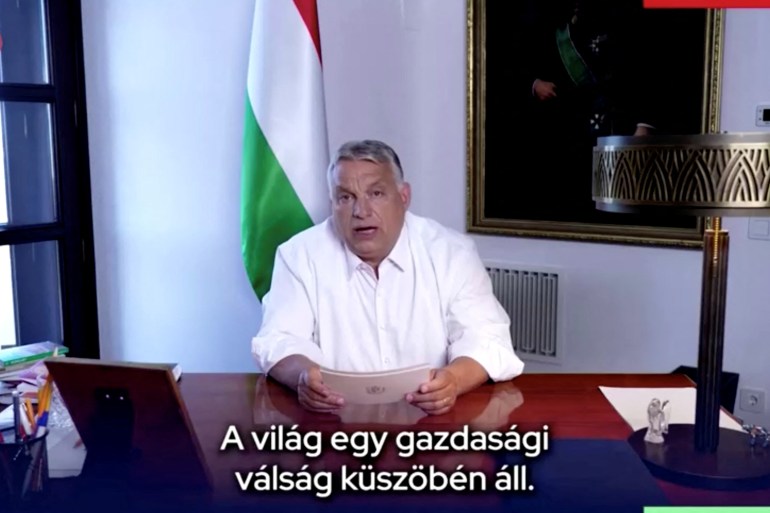
BUDAPEST (Reuters) -Hungary's government will assume emergency powers in order to be able to respond more quickly to challenges created by the war in neighbouring Ukraine, Prime Minister Viktor Orban said in a Facebook video on Tuesday.

Orban, who won a fourth consecutive term in an election on April 3, has used the special legal order in the past, once due to Europe's migration crisis and later during the COVID-19 pandemic. The new state of emergency similarly empowers Orban's government to approve measures by decree.

"The world is on the brink of an economic crisis," Orban also said in the video, reiterating that Hungary must stay out of the war in Ukraine and "protect families' financial security."

Orban said his government's first measures would be announced on Wednesday.

Orban's government is having to deal with the consequences of the war in Ukraine, annual inflation of 9.5% and a budget deficit that ballooned in the first quarter due to a pre-election spending spree. He also needs to avoid a marked slowdown in the economy.

Orban, whose nationalist Fidesz party again won a two-thirds majority in parliament in the April election, has gradually increased his powers during his 12 years in office, often drawing criticism from the European Union and rights groups over what they say is an erosion of democratic checks and balances.

(Reporting by Krisztina Than; Editing by Frank Jack Daniel and Chris Reese)

Hungary: Orban says gov’t to assume new powers over Ukraine war

Prime Minister Viktor Orban says the war in Ukraine represents ‘a constant threat to Hungary’.

The state of emergency empowers Orban's government to approve measures by decree [Facebook/Viktor Orban/Reuters TV]

Published On 24 May 2022

Hungary’s government will assume emergency powers in order to be able to respond more quickly to challenges created by the war in neighbouring Ukraine, Prime Minister Viktor Orban has said.

Orban, who won a fourth consecutive term in an election early last month, has used the special legal order in the past, once due to Europe’s migrant and refugee crisis and later during the COVID-19 pandemic.

The new state of emergency similarly empowers Orban’s government to approve measures by decree.

In a video posted on Facebook on Tuesday, Orban said that the war in Ukraine represents “a constant threat to Hungary” which was “putting our physical security at risk and threatening the energy and financial security of our economy and families”.

Orban said his government’s first measures would be announced on Wednesday.

The move came after Orban’s ruling party passed a constitutional amendment on Tuesday allowing for legal states of emergency to be declared when armed conflicts, wars or humanitarian disasters were taking place in neighbouring countries.

The special legal order permits the government to enact laws by decree without parliamentary oversight, and permits the temporary suspension of and deviation from existing laws.

Hungary’s government implemented similar measures in response to the COVID-19 pandemic to outcry from critics and legal observers, who argued they gave the government authority to rule by decree. That special legal order was set to expire on June 1.

Orban’s government has been accused of eroding democratic freedoms in Hungary since taking power in 2010, and using state resources to cement its power. The governing Fidesz party won a fourth-straight election victory on April 3, giving Orban, the longest-serving leader in the European Union, an additional four-year term.

In a statement on Tuesday, Emese Pasztor of the Hungarian Civil Liberties Union wrote that Hungary’s government was “once again adapting the rules of the game to its own needs”.

“By always allowing the possibility of introducing a special legal order in the future, it will lose its special character. It will become the new normal, which will threaten the fundamental rights of all of us, and rule by decree will further diminish the importance of Parliament,” Pasztor wrote.

Governmental decrees issued through the special legal order are valid for 15 days unless extended by Hungary’s parliament. Orban’s Fidesz party has held a two-thirds majority in parliament since 2010.
Transparency International urges Sri Lanka to fight corruption to overcome crisis

by Melani Manel Perera

No economic recovery plan can work without strong action against kleptocratic practices. The NGO makes 15 recommendations for Sri Lankan leaders. They include an open digital platform on donations and loans and use of funds, external audits of public companies and the establishment of an Authority for the recovery and management of illegally acquired assets held abroad.


Colombo (AsiaNews) – Corruption is a major cause of Sri Lanka’s current economic crisis, this according to Transparency International Sri Lanka (TISL).

For decades, public resources were misappropriated and poorly managed as a result of kleptocratic practices, systemic corruption and a general lack of transparency and accountability among elected officials and in the public service.

If a solid economic recovery plan is the top priority at present, any effort is likely to fail if the people and agencies tasked with its implementation are corrupt or perceived as such.

For this reason, TISL recently made public 15 recommendations to fight corruption.

The first step is obviously to make sure that government agencies are entrusted to people with a track record showing their integrity and genuine commitment to public service. Along with this, however, certain concrete actions are required.

One is an open digital platform to share all information relating to donations and foreign loans obtained by Sri Lanka with detailed information on their use.

The NGO calls for the repeal of the 20th amendment to the constitution since it removed essential accountability measures in governance.

Provisions should be introduced to strengthen Parliament's oversight of public finances, and mandatory accountability measures should be put in place to supervise public procurement under a National Procurement Commission with supervisory authority.

The NGO has strong reservations about the country’s presidential system because it concentrates power in the hands of a single person, and insists on depoliticising the public service through constitutional changes that would boost the independence of public servants.

TISL goes further, recommending that all state-owned enterprises be subject to external audits to monitor the use of public funds, while concrete action should be taken to recover stolen assets. An independent Asset Management Authority should be established to recover and manage stolen wealth held abroad.

Lastly, a new law is urgently needed to regulate election campaign financing.

“We urge citizens to continue to actively seek information and knowledge on the types and impact of corruption and to be informed of the essential systemic and cultural changes needed to uplift the country,” said Nadishani Perera, TISL’s executive director.

“We stand with citizens in demanding accountability and corrective action from our public representatives in a peaceful manner,” she added. “Together we can weather this storm and create the change we thought may not be possible in our lifetime.”
Delaware Gov. John Carney vetoes marijuana legalization bill

Delaware Gov. John Carney has vetoed a bill to legalize possession of up to one ounce of marijuana by adults for recreational use

By Randall Chase Associated Press
May 24, 2022


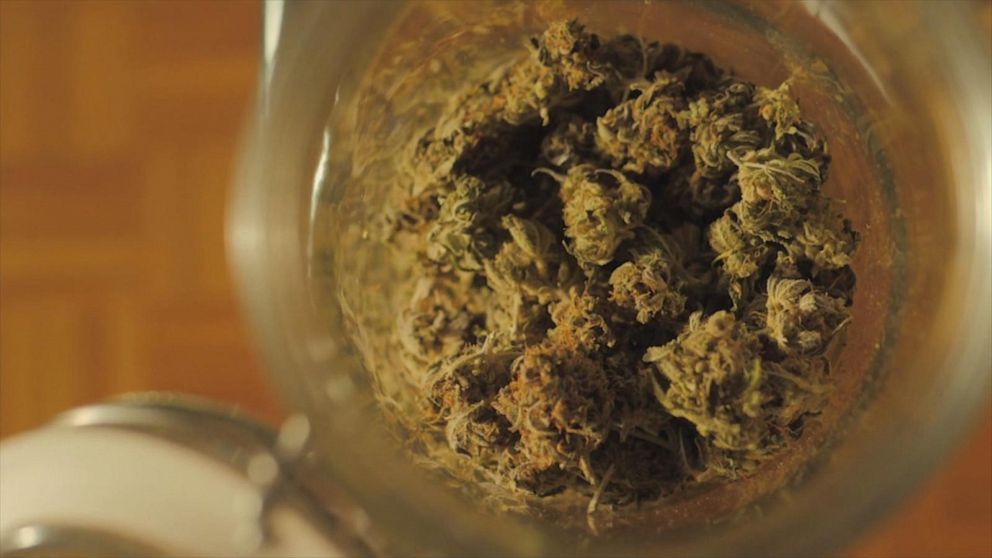
DOVER, Del. -- Delaware Gov. John Carney on Tuesday vetoed a bill to legalize possession of up to one ounce of marijuana by adults for recreational use, drawing the wrath of fellow Democrats who have fought for years to make weed legal.

In vetoing the measure, Carney reiterated his previously expressed concerns about legalizing recreational pot — concerns that did not dissuade fellow Democrats from pushing the legislation through the General Assembly.

“I recognize the positive effect marijuana can have for people with certain health conditions, and for that reason, I continue to support the medical marijuana industry in Delaware,” Carney said in returning the bill to the state House. “I supported decriminalization of marijuana because I agree that individuals should not be imprisoned solely for the possession and private use of a small amount of marijuana — and today, thanks to Delaware’s decriminalization law, they are not.

“That said, I do not believe that promoting or expanding the use of recreational marijuana is in the best interests of the state of Delaware, especially our young people. Questions about the long-term health and economic impacts of recreational marijuana use, as well as serious law enforcement concerns, remain unresolved.”

Carney’s veto comes just days after legislation to establish a state-run marijuana industry in Delaware failed to clear the state House for a second time. The Democrat-controlled chamber voted 23-15 on Thursday to approve the bill, which fell two votes short of the required supermajority. The proposal requires a three-fifths majority in both the House and Senate because it creates a new tax, consisting of a 15% levy on retail marijuana sales.

Last week’s vote came two months after a similar measure failed in the House on a 23-14 vote, and just hours after Carney’s office received the companion legalization bill. Without legalization, the creation of a state-run pot industry is a moot issue.

It’s unclear whether Democratic lawmakers will try to override Carney’s veto, which would be a rare occurrence. The last time Delaware lawmakers held a vote to override a veto was in 1990. The last time they succeeded was in 1977, when the House and the Senate voted to override then-Gov. Pete du Pont's veto of the state's budget bill.

Rep. Ed Osienski, a Newark Democrat and chief sponsor of both bills, said in a statement that he was “deeply disappointed” by Carney’s decision and would review his options.

Senate Democrats echoed Osienski's assertion that Carney had chosen to “ignore the will” of Delawareans.

“The members of the Delaware General Assembly have been fighting for years to end the failed war on marijuana and we will not be stopped by this latest setback,” read a statement from chief Senate sponsor Trey Paradee and Senate president Dave Sokola.

Betsy Maron, chairwoman of the Delaware Democratic Party, said she was confident that lawmakers could trump Carney's veto and make legalization a reality.

“Last year, we went as far as to include it in our party platform, which passed unanimously at the 2021 state convention,” Maron said in a statement. "Delaware’s voters have further solidified their voice on the matter by electing Democratic candidates to the legislature that support legalization. We are confident those legislators will override the veto knowing they have the support of Delaware’s Democrats.”

Osienski carved the legalization and industry-creation proposals into two separate bills in late March after the House rejected broader legislation that sought to do both. That cleared the way for passage of the legalization bill, which did not include any tax provision and thus required only a simple majority.

The legalization bill cleared the Democrat-controlled Senate with no Republican support. Sen. Bruce Ennis of Smyrna was the only Democrat joining GOP lawmakers in opposition. Two Democrats, including Speaker Pete Schwartzkopf, voted against the l egalization bill in the House, along with 12 of the 15 GOP representatives. Ennis and Schwartzkopf are both retired state troopers.

Supporters of a state-run marijuana industry argue that it would create jobs, boost state coffers and shrink the illegal black market.

Opponents contend that legalization and a state-licensed cultivation and sales would lead to increased marijuana use among teens and young adults, expose business owners to liability, and result in more traffic deaths and injuries. They also say establishing a state-run market with a 15% tax on retail sales would do little to eliminate illegal sales.

The Associated Press reported earlier this year t hat legalization had done little to discourage black market sales in California, and that some licensees there are simultaneously participating in the black market in order to make a profit. California’s governor has now proposed a temporary tax cut for the marijuana industry to help struggling businesses.

Currently, recreational marijuana use is permitted in 18 states and the District of Columbia.
‘No excuses’: limited conservation efforts could save at least 47 Australian animals from extinction

Scientists hope Albanese government addresses extinction crisis as new research shows 63 vertebrates face annihilation by 2041
Victoria’s Baw Baw frog is at high risk of extinction, however new research shows a small amount of extra conservation effort could bring it back from the brink.
 Photograph: Zoos Victoria


Lisa Cox
Tue 24 May 2022 

More than 40 Australian animals at the highest risk of extinction in the next two decades could be saved – and it would take only a small amount of extra conservation effort to achieve this, according to new research.

A team of Australian scientists has identified the 63 vertebrates they believe are most likely to go extinct by 2041, and found at least 47 can be brought back from the brink.


They say while the data is alarming it presents an opportunity for the new Albanese government to invest in conservation improvements.


‘Worst it’s ever been’: a threatened species alarm sounds during the election campaign – and is ignored


The 47 animals include 21 fish, 12 birds, six mammals, four frogs and four reptiles, with nine of those species estimated to have a greater than 50% risk of extinction in the next 20 years.

Among the most desperate are small freshwater fish from the group known as galaxiids, including the stocky galaxias – found in the Kosciuszko national park – and Victoria’s Yalmy galaxias and West Gippsland galaxias.

These fish live in the headwaters of streams where the main threat to their survival is invasive trout.

Other animals considered at high risk include the western ground parrot, found in Western Australia, the swift parrot, which is under pressure from logging in its habitat range, and Victoria’s Baw Baw frog.

Prof John Woinarski, one of the paper’s co-authors, said the research was an opportunity to take action to prevent extinctions.

“We have no excuses for not saving these species. We know which species they are, where they occur and what threatens them,” he said.

There was greater concern for another 16 animals – five reptiles, four birds, four frogs, two mammals and a fish – on the list of 63, for which there were no recent confirmed records.

The scientists said at least four of those species were almost certainly already extinct, including the Christmas Island shrew, which was last seen in the 1980s, and the Victorian grassland earless dragon.

“That’s a sobering reminder that what we know of the extinction of fauna in Australia is probably a fraction of what have really become extinct,” Woinarski said.

He said the picture was also likely to be worse for invertebrate species, which were often overlooked in conservation planning.

Research leader Stephen Garnett, of Charles Darwin University, said the future for the remaining 47 species was more hopeful and that the actions required to save them were affordable.


‘Overlooked’: 14,000 invertebrate species lost habitat in Black Summer bushfires, study finds


More than half of the habitat for those animals falls within conservation reserves and the habitat range for several was small, meaning targeted conservation efforts to address threats such as invasive species were possible.

“These are not hugely expensive projects because they are localised,” Garnett said.

Some animals, such as the King Island brown thornbill and the swift parrot, would require tougher protections to prevent clearing of their habitat.

A King Island brown thornbill. Photograph: Chris Tzaros/Birds Bush and Beyond

Other simple steps for government would be to ensure all of the species were officially listed for protection under national environmental laws.

At the time of research, the scientists wrote that 25 of the species, including 18 fish, were not on the national threatened species list.


Sarah Legge, one of the paper’s co-authors and a member of the threatened species scientific committee which advises the federal government on new listings, said work had begun to address this.

She said all of the species identified in the paper were now either listed for protection or were being considered for listing.

The federal election campaign delivered little focus on nature, despite multiple official reviews in the last term of government recommending major changes to arrest to decline of Australian wildlife.

But the swing to more environmentally minded candidates has sparked hope within the conservation movement.

Two days before the election, Labor announced several new environmental commitments, including that it would establish an independent environment protection agency and would commit to conservation targets on land and in marine areas.

Euan Ritchie, a professor in wildlife ecology and conservation at Deakin University, he said the scientists who worked on the paper had demonstrated more wildlife species were likely to go extinct in the near future unless there were “urgent and substantial improvements to conservation policy and actions”.

“It’s well established that Australia’s conservation record and ongoing predicament is utterly abysmal,” he said.

“With the recent change of government, perhaps we’ll also see a sorely needed change of heart and a far stronger commitment towards ending Australia’s extinction crisis.”

War in Ukraine sets energy transition in "hyperdrive"

GZERO Media caught up with Microsoft's Chief Environmental Officer Lucas Joppa at the World Economic Forum in Davos to discuss ways to keep nations focused on climate change amid the converging crises of war and pandemic.

Tony Maciulis: When you have these very immediate and acute crises happening concurrently like pandemic and now of course the war in Ukraine, has it been a challenge to keep the focus on climate change?

Lucas Joppa: I would say yes and no. It's a challenge because obviously these are crises in and of themselves and they need to be dealt with and focused on. But on the other hand, I think that these crises, what they've done is they've really shown society that we have things that are going to happen to us. And if we know that they are coming, it would behoove us to do something about them now to prepare for it now. The biggest thing that we have coming for us is the impacts of a rapidly changing global climate system. It's front and center of our minds. We know we have to get out and do something about it. And so on the one hand, yes, we're focusing on these crises, but it hasn't shifted focus off of climate either.

Tony Maciulis: One thing that the war in Ukraine has certainly done is make some countries like Lithuania, for example, rethink their dependence on Russian gas. To what extent do you think the war has an opportunity to change the way countries think about energy in general? And will it in some way hasten a shift toward alternative energies?

Lucas Joppa: Well, it's really put everybody's thinking about the energy transition in hyperdrive. It has forced people to start thinking about the future of energy in a way that they hadn't had to before. We are at a critical juncture where people can choose a more clean, just, equitable future from an energy perspective or double down on the energy sources of the past. I think we know what a mistake that latter option would be. And so I'm just really excited about the fact that people are getting out there really thinking through and starting to put in place the infrastructure investments that they're going to need to pull off that net zero carbon transition.

Tony Maciulis: We last spoke to you, of course, in Glasgow for COP26. That's more than six months ago. What kind of progress has been made since then? And are you optimistic that by the time we get to Sharm el-Sheikh, there'll be something tangible to show?

Lucas Joppa: Well, I think that the world has been occupied with dealing with some of these crises that are in front of them. But I think that, especially with the energy crisis in Europe, there is actually a lot of progress, a lot of unexpected progress in a clean energy transition. And so that's fantastic. I think as we go from Scotland to Egypt, from COP26 to COP27, you're going to see a significant shift from not just focusing on mitigation from a climate perspective, but also adaptation and helping to build a more just and equitable future. And so I think that that's going to be an incredibly important addition to the conversation that the world's been having over the past decade or so.

Tony Maciulis: When you say adaptation, explain what that means exactly.

Lucas Joppa: Well, adaptation simply recognizes that climate change isn't something that's going to happen into the future. Climate change is something that's already happening today. And no matter how quickly we achieve a net zero economy, there are going to be human impacts of climate that have changed. And so we need to be able to help people adapt to that. We need to be able to shift our energy, our agriculture, and our other socioeconomic systems to help people adjust to the changing climates that we know are going to come. Whether that's a 1.5 degree celsius temperature increase, a two degree celsius increase, or something in between. We know that that temperature increase is going to lead to changes for human society and it behooves us to start focusing now on how we're going to help people adjust to those climactic changes.

Tony Maciulis: So one thing that you hear as a solution out there when it comes to adaptation is, okay, the temperatures are getting hotter. So we have to rely on more coolants, more air conditioning, right? How do you adapt to climate change without creating a bigger carbon emission problem?

Lucas Joppa: Well, that is the question. You can either adapt to climate change by making it worse or you can adapt to climate change by making it better. I mean, even if you just think about the built environment, the built environment is one of the largest sources of emissions across all sectors. And why is that? Well, it's because we've never been all that efficient with the way that we build, the way that we design, site, build, and then operate these buildings all around us. And so we know there are incredibly simple things, whether it's just the directional facing that we put buildings, the insulation and the energy efficiency that we build into these buildings. I think all of that is stuff that we can start doing now. It's not rocket science. We've known how to do it. But really it just sharpens the focus on making sure that all of this is coming together in a way that, as you said, adapts people to the changing climates, but does so in a way that also hastens our net zero transition as opposed to postpones it.

Tony Maciulis: And finally, here we are in Davos as the world economic forum is now in day two. Obviously climate and energy are on the agenda, but what are you hoping to hear and see? And what do you think would be a great result to have come out of this?

Lucas Joppa: Well, I think, A, it's fantastic to see that climate and sustainability remains as a top priority on the world economic forum agenda. That's fantastic. And now we really need to see the organizations, whether that's public, private sector that are here really start moving the conversation from pledges, which was really a focus of Davos in 2020, people pledging the progress that they were going to make. We need to move from the pledges to actually the progress that we need to make. And so seeing people really doubling down on their commitments, seeing people really doubling down on operationalizing and executing against their commitments, that's going to be critical.

Grieving against the neoliberal university’s collusion with apartheid Israel, Zionist donors, and private tech companies

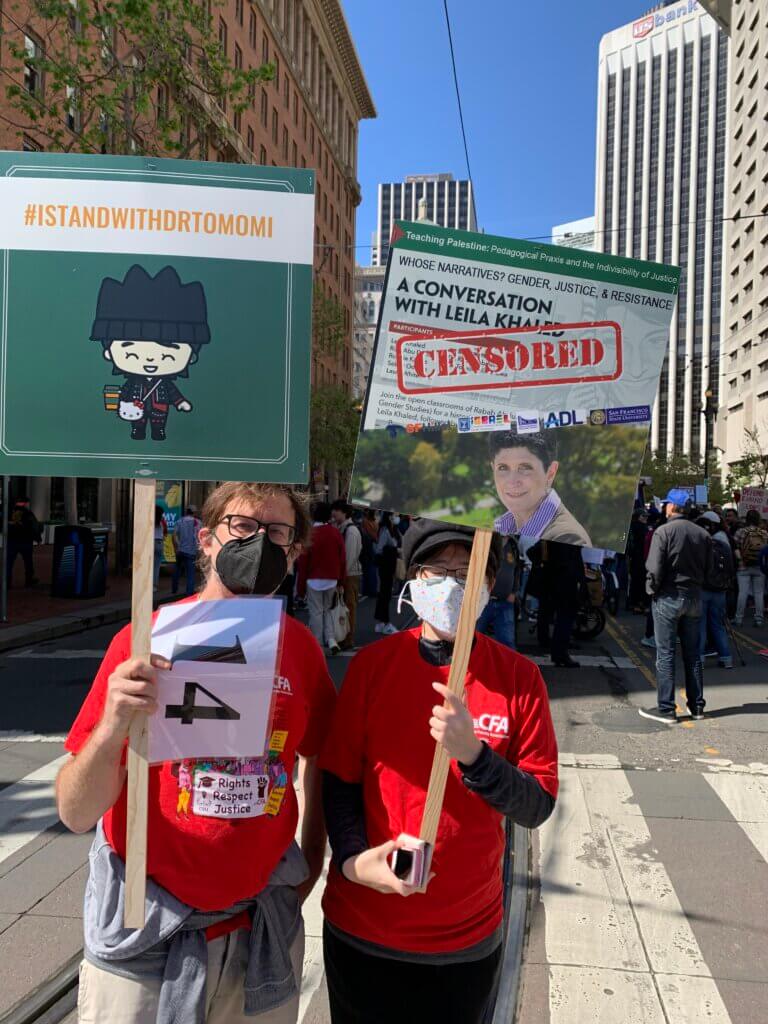
Dr. Tomomi Kinukawa shares their opening and closing statements in their grievance hearing against San Francisco State University for suppressing justice-centered pedagogy critical of Israel.
DR. TOMOMI KINUKAWA

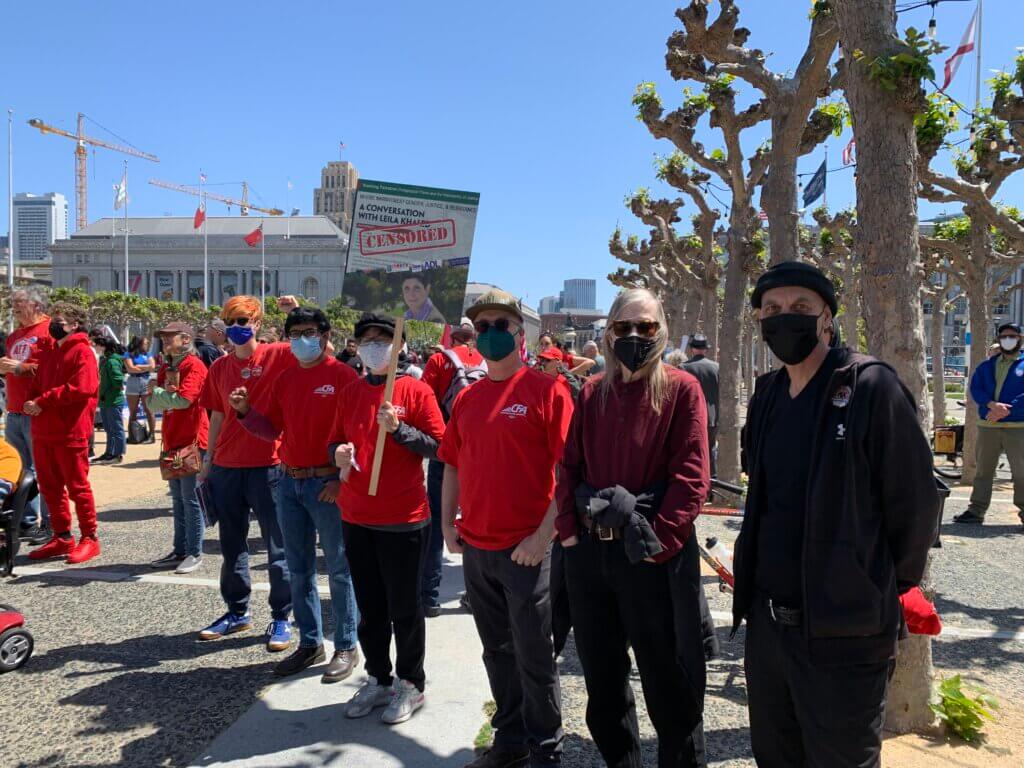
On March 18, 2022 the hearing was held for the grievance that I, faculty lecturer in Women and Gender Studies (WGS), filed against San Francisco State University for its Administration’s role in silencing the AMED/WGS open classroom on “Whose Narratives? Gender, Justice, & Resistance: A Conversation with Leila Khaled,” that I had a great honor to co-organize with Dr. Rabab Abdulhadi, Director of Arab Muslim Ethnicities and Diasporas (AMED) Studies. After an adjournment, the remaining part of the grievance hearing was held on April 12, 2022.


On April 26, 2022, Faculty Hearing Panel (FHP) ruled unanimously in favor of our academic freedom; ordered SFSU to apologize to Drs. Rabab Abdulhadi and myself, and promptly hold our open classroom, “Whose Narratives? Gender, Justice and Resistance: A Conversation with Leila Khaled.” (see here). The landmark decision affirms:

“We unanimously conclude that the Employer [SFSU] violated the Grievant’s [Professor Kinukawa] right to academic freedom. The Grievant has carried their burden of persuasion in demonstrating the grievance.

Given the nature of the injury, we conclude the following remedies are appropriate:

1. San Francisco State University issues a public apology to Dr. Kinukawa for failing to uphold their right to academic freedom.

2. Develop a workaround from Zoom for delivery of the event (or similarly situated events) to avoid disruption of academic scholarship and teaching. This remedy may not (and likely will not) require creation of a new platform from scratch. Rather, the remedy orders the Employer to coordinate a good-faith resolution of this matter and bring an end to the continuing violation of working conditions.”

In addressing the remedies, the FHP stated:

“Pursuant to the Faculty Hearing Manual, this Faculty Hearing Committee is given ‘discretion’ in fashioning remedies. See Faculty Hearing Manual IV. Relevant considerations include: (a) how serious was the violation; (b) was the violation prejudicial; (c) what loss did the faculty member suffer as a result of the violation; and (d) based on the nature of the loss, what remedies will make the faculty member whole for any losses suffered. Id. at IV(B).”

The FHC meticulously built their case using the “broken pipe” theory that Dr. Abdulhadi discussed in her testimony and that which she had conceptualized right after the silencing in September 2020 (Abdulhadi, October 23, 2020). The FHC’s righteous decision underscores our colleagues’ resolve in refusing to remain silent against injustice and defy what Dr. Abdulhadi (2014, 2015, 2016, 2017) has called the New McCarthyism replicating the McCarthy witch hunt era–an unfortunate abdication of academic integrity which took decades to rectify.

The decision is our collective victory and a vindication for the movement fiercely led by Dr. Abdulhadi to defend AMED and Teaching Palestine: Pedagogical Praxis and the Indivisibility of Justice at SFSU and beyond, supported by CFA SFSU Chapter and the amazing and invincible members of the International Campaign to Defend Professor Rabab Abdulhadi, whose names I will list and recognize each and everyone for their steadfast support and having our backs.


Following the unanimous decisions by two Faculty Hearing Panels’ that sided with Dr. Abdulhadi in her two statutory grievances, the third FHP’s decision sent a powerful message to SFSU administrators, condemning their collusion with private tech companies, the apartheid state of Israel, Zionist organizations and their multi-year attempts to censor our teaching, control our curriculum, silence Dr. Abdulhadi and AMED Studies, and smear, bully and seek to dismantle the justice-centered critical AMED pedagogy that is inspired by the spirit of ’68 SFSU Strike, led by the Black Student Union and the Third World Liberation Front.

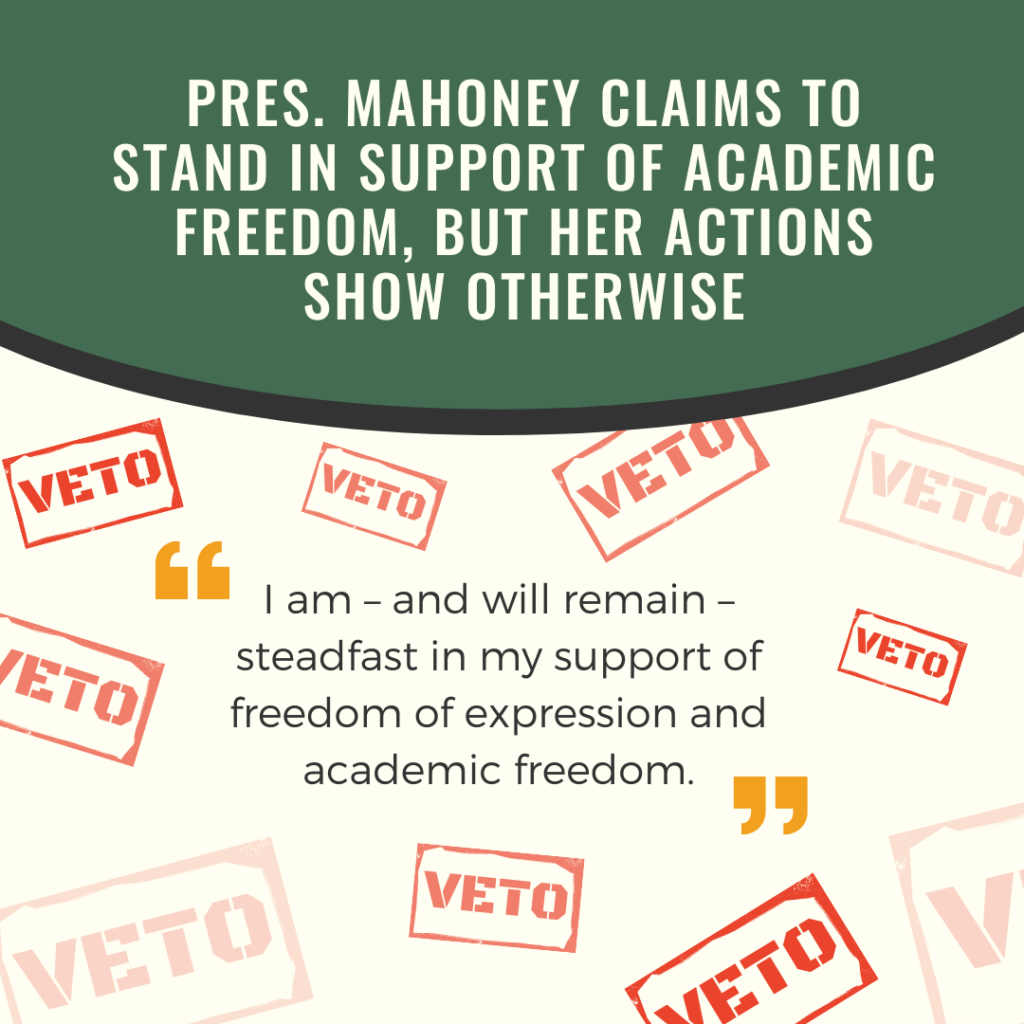
In a complete disregard for the faculty shared governance, however, SFSU President Lynn Mahoney vetoed all the three rulings by the faculty panels. On May 17, 2022, following her vetoes of the faculty panel rulings for Dr. Abdulhadi’s grievances, President Lynn Mahoney yet again vetoed the unanimous ruling in favor of my grievance. As Dr. Abdulhadi’s friend, the late Palestinian Al Jazeera reporter, Shireen Abu Akleh, who was assassinated by the Israeli occupying army in Jenin, affirms, “Dissemination of truth is the biggest fear and threat” to Israeli Zionists. President Mahoney’s vetoes only prove her fear of Dr. Abdulhadi’s work that deeply resonates with Shireen Abu Akleh’s insistence to speak truth to power, for which she lost her life.


In protesting against the massive injustice, I am publishing the opening and closing statements that I read at my grievance hearing. I wrote both statements in a close collaboration with Dr. Abdulhadi. Throughout the grievance process, Dr. Abdulhadi generously shared her decade-long critical theorizing with me and ensured that I am always intellectually empowered. Dr. Abdulhadi also even helped copy-edit my drafts of the statements and sharpen my argument at the earliest hours in the morning of the hearing. The capitalist and colonial notion of authorship does absolutely no justice to our collaborative working process.

CONTINUE READING