Wednesday, May 25, 2022

Climate inaction could cost the world $178 trillion

If the world decarbonizes, according to a new Deloitte report, the global economy could add $43 trillion in value instead.


BY ADELE PETERS
FAST CO.

Climate change is already costing the world billions. Last year, Hurricane Ida caused an estimated $75 billion in damages and killed dozens of people. Floods in Germany that swept away homes cost more than $40 billion; floods in China caused $17 billion in damages. In the Western U.S., wildfires caused $10 billion in damages, and widespread drought cost another $8.9 billion. And the list goes on.

In a new report, Deloitte estimates the economic impact of letting climate change continue unchecked, including the cost of an increasing number of disasters along with failing crops, land lost to sea level rise, lost productivity because of extreme heat, and increased disease, among other impacts. By 2070, if emissions continue on the current path, the model estimates that it will cost the global economy $178 trillion. But if nations can decarbonize by the middle of the century, we could add $43 trillion in value instead.

Most economic models don’t take the full costs of climate inaction into account. “Because the climate has changed, our economics, too, need to change,” the report authors wrote. (In the 1990s and early 2000s, oil companies also hired economic consultants to write reports that inflated the projected cost of climate action, and ignored the benefits.) Decarbonization will cost more in the initial stages, the Deloitte report says, and continuing disasters will add to strain on the economy. But reaching net zero will ultimately create much more value. The economic turning point could happen as soon as this decade in Asia—the region that also faces the largest long-term costs if emissions don’t drop—but closer to the middle of the century in the United States.

Much of the technology that we need for the transition already exists but needs to be deployed faster, with investments from both governments and businesses to enable structural change. “To achieve this comparatively better future will require an industrial revolution over the next 50 years,” the authors wrote. “And the time to act is now. With global emissions continuing to rise over the past two decades, we have squandered the chance to decarbonize at our leisure.”

ABOUT THE AUTHOR
Adele Peters is a staff writer at Fast Company who focuses on solutions to some of the world's largest problems, from climate change to homelessness. Previously, she worked with GOOD, BioLite, and the Sustainable Products and Solutions program at UC Berkeley

Supreme Court rules against Arizona inmates in right-to-counsel case

The ruling will make it harder for certain inmates who believe their lawyers failed to give them proper representation.

May 24, 2022

WASHINGTON (AP) — U.S. The Supreme Court ruled along ideological lines on Monday against two Arizona death row inmates who had argued that their lawyers did a poor job representing them in state court. The ruling will make it harder for certain inmates sentenced to death or long prison terms who believe their lawyers failed to bring challenges on those grounds.

The ruling involves cases brought to federal court after state court review. Justice Clarence Thomas wrote for the court’s six-justice conservative majority that the proper role for federal courts in these cases is a limited one and that federal courts are generally barred from taking in new evidence of ineffective assistance of counsel that could help prisoners. He wrote that “federal courts must afford unwavering respect to the centrality” of state criminal trials.


In a dissent, Justice Sonia Sotomayor called her colleagues’ decision “perverse” and “illogical.” She said it “hamstrings the federal courts’ authority to safeguard” a defendant’s right to an effective lawyer, a right guaranteed by the Constitution’s Sixth Amendment. Sotomayor said the decision will “will leave many people who were convicted in violation of the Sixth Amendment to face incarceration or even execution without any meaningful chance to vindicate their right to counsel.”
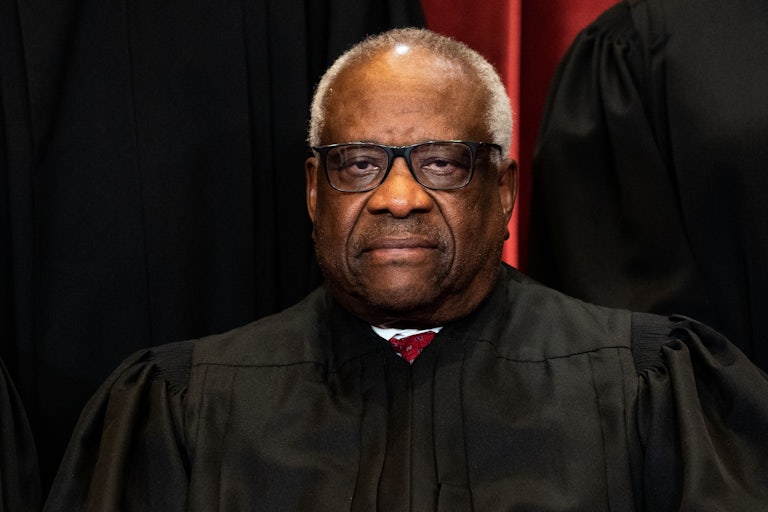
U.S. Supreme Court Justice Clarence Thomas wrote the 6-3 majority opinion in the ruling against two Arizona death row inmates who claimed that they received inadequate counsel in their trials. (AP Photo/John Amis, File)

Sotomayor was joined by fellow liberals Elena Kagan and Stephen Breyer, who is retiring this summer.

The case before the court involved Barry Lee Jones, who was convicted in the death of his girlfriend’s 4-year-old daughter, who died after a beating ruptured her small intestine. It also involved David Martinez Ramirez, who was convicted of using scissors to fatally stab his girlfriend in the neck and fatally stabbing her 15-year-old daughter with a box cutter.

In both cases the men argued they were failed by lawyers who handled their initial state court trials and then by lawyers, called post-conviction counsel, that handled a state review of their cases after appeals failed. The post-conviction lawyers allegedly erred by not arguing that the trial counsel was ineffective. The men then took their cases to federal court.

A Supreme Court ruling from 2012 opened an avenue for prisoners to make ineffective assistance of counsel claims in federal court. But on Monday the court said the federal Antiterrorism and Effective Death Penalty Act bars federal courts from developing new evidence related to the ineffectiveness of the post-conviction lawyers. Sotomayor and an attorney for Jones and Lee said the decision takes out the “guts” of the earlier ruling.

In Jones’ case a federal court judge ordered him released or retried after finding lawyers failed first by not presenting evidence he was innocent and then, after his appeals failed, neglecting to argue his lawyer was ineffective. The Supreme Court’s decision reinstates his conviction, his lawyers said.

Ramirez, for his part, argued his trial lawyer failed to investigate or present evidence he has an intellectual disability and experienced severe physical abuse and neglect. A lawyer he was assigned after appeals failed didn’t raise an ineffective assistance of counsel claim. Ramirez argued presenting that evidence should have ruled out the death penalty. The high court’s decision means he won’t get that chance, his lawyers said.

In a statement, Arizona Attorney General Brnovich praised the ruling.

“I applaud the Supreme Court’s decision because it will help refocus society on achieving justice for victims, instead of on endless delays that allow convicted killers to dodge accountability for their heinous crimes,” he said.


Also Read:
EXPLAINER: How South Carolina execution firing squad works

But Robert Loeb, who argued Jones and Ramirez’ case at the high court, called it a “sad day.” The ruling “leaves the fundamental constitutional right to trial counsel with no effective mechanism for enforcement in these circumstances,” Loeb said in a statement.

Nearly 20 states, led by Texas, urged the justices to side with Arizona. The case is Shinn v. Ramirez, 20-1009.

This SCOTUS Decision Makes Plain the Entire Sweep of the Conservative Majority

The court has a sweet tooth for vengeful law enforcement against certain groups of citizens.

ESQUIRE
May 24, 2022


THE WASHINGTON POSTGETTY IMAGES


It was a Monday in spring and so it was time once again for the Supreme Court to explain why some poor sods of whom you’ve never heard are screwed eight ways from Sunday. Monday’s lucky winners were David Ramirez and Barry Lee Jones, temporarily housed on Death Row in Arizona. These two argued that their lawyers in their state trials were sufficiently incompetent as to violate their Sixth Amendment guarantees. Ramirez said his trial counsel failed to investigate his intellectual disability and Jones said his lawyer blew off evidence that Jones may not have committed his crime at all.

In 2017, a federal judge overturned Jones’ conviction and offered he prosecution the choice of retrying Jones or releasing him. The state of Arizona found a third option. It appealed that judge’s ruling and, on Monday, through its carefully engineered 6-3 conservative majority, agreed with the state. Barry Lee Jones will stay on Death Row.

Writing for the majority, Justice Clarence Thomas—who has a lot on his mind these days—explained the Court’s decision thusly:

In our dual-sovereign system, federal courts must afford unwavering respect to the centrality “of the trial of a criminal case in state court.” Wainwright, 433 U. S., at 90. That is the moment at which “[s]ociety’s resources havebeen concentrated . . . in order to decide, within the limits of human fallibility, the question of guilt or innocence of one of its citizens.” Ibid.; see also Herrera v. Collins, 506 U. S. 390, 416 (1993); Davila, 582 U. S., at (slip op., at 8). Such intervention is also an affront to the State and its citizens who returned a verdict of guilt after considering the evidence before them. Federal courts, years later, lack the competence and authority to relitigate a State’s criminal case.

Man, this is some bloodless shit right here. We must maintain what appears to be an unjust death sentence lest people begin to question how our state courts parcel out unjust death sentences. You don’t have to be completely familiar with all aspects of our two-tiered justice system to realize that Thomas’ opinion is another demonstration that the carefully engineered conservative majority on the Supreme Court is deliberately obtuse about the world in which the rest of us live. Justice Sonia Sotomayor certainly can see a church by daylight in this regard, as she demonstrates in her flamethrower of a dissent.

This decision is perverse. It is illogical: It makes no sense to excuse a habeas petitioner’s counsel’s failure to raise a claim altogether because of ineffective assistance in post- conviction proceedings, as Martinez and Trevino did, but to fault the same petitioner for that postconviction counsel’s failure to develop in support of the trial-ineffectiveness claim. In so doing, the Court guts Martinez’s and Trevino’s core reasoning. The Court also arrogates power from Congress: The Court’s analysis improperly reconfigures the balance Congress struck in the Antiterrorism and Effective Death Penalty Act of 1996 (AEDPA) between state interests and individual constitutional rights.

Ah, the old AEDPA, a gift to the American judiciary from the triangulations of the Clinton White House. Passed in April of 1996, the law was a key piece of President Clinton’s re-election pitch, and it was one of the biggest whacks taken out of habeas corpus since the Founders wrote the Great Writ into the Constitution. Sotomayor points out that, on Monday, the Court diluted even the habeas guarantees that the AEDPA left in place, as well as de facto reversing a precedent that would have allowed the two prisoners to press their claims.

In this godawful decision, the entire sweep of the carefully engineered conservative majority is made plain — disrespect for precedent, disrespect for the plain language of inconvenient parts of the law, untoward respect for what this Court believes to be the prerogatives of state governments, and a sweet tooth for vengeful law enforcement against certain specific groups of citizens. These two men are not the only things under sentence of death these days.


DEATH WISHES


The Supreme Court Decides Death Row Prisoners Don’t Deserve Competent Lawyers

The court’s conservatives have pared back the Sixth Amendment’s protections so that it won’t impede the state’s ability to erroneously execute the innocent.


ERIN SCHAFF/GETTY IMAGES
The majority opinion authored by Justice Clarence Thomas in Shinn v. Ramirez will severely restrict many Americans from using their Sixth Amendment protections.

If you’re charged with a serious crime and you can’t afford a lawyer, the government has to provide you with one. (That is, for now.) There are about 1.5 million lawyers in the United States. Many of them are good at their jobs. But some of them aren’t, for various reasons. Maybe they’re overworked and juggling too many cases. Maybe they don’t have the resources they need to vigorously advocate for their clients. Maybe they’re out of their depth on a particular case. Maybe they just aren’t cut out for their current line of work.

David Martinez Ramirez and Barry Lee Jones, two Arizona death-row prisoners, think that their respective lawyers did a bad job of defending them. (Their cases are unrelated, except for this particular legal issue.) The two men told the Supreme Court last year that they were harmed by “ineffective assistance of counsel,” as the courts call it, at two separate stages: first, by their trial lawyers not representing them well in front of a jury and then, again, by their state appellate lawyers not properly challenging their convictions because of their trial lawyers’ allegedly shoddy work. They wanted a new trial to fix the problem.

When you think your constitutional rights were violated by a state court, you can theoretically challenge your conviction in the federal courts. The Sixth Amendment protects the right to legal counsel, and the courts have logically interpreted this as the right to effective legal counsel because otherwise, the right to an attorney wouldn’t be worth the parchment on which it was printed. Ramirez and Jones now have federal appellate lawyers—and effective ones, to boot—who asked a federal district court to overturn their clients’ respective convictions because their previous lawyers weren’t good enough at their jobs. Since the two men are on death row, the stakes are as high as they get.
Introductory offer: 50% off fearless reporting.1 year for $10.Subscribe

On Monday, the Supreme Court said no. The court, in a 6–3 decision that fell along the usual ideological lines, ruled that the two men couldn’t introduce new evidence that their previous lawyers were ineffective when asking the federal courts to intervene. The decision is a chilling reminder that the court’s conservative majority need not overturn a constitutional right, as it will in Dobbs v. Jackson Women’s Health Organization, to destroy it—the justices can simply pare it back into oblivion.

“This decision is perverse,” Justice Sonia Sotomayor wrote in dissent, joined by Justices Stephen Breyer and Elena Kagan. “It is illogical: It makes no sense to excuse a habeas petitioner’s counsel’s failure to raise a claim altogether because of ineffective assistance in post-conviction proceedings … but to fault the same petitioner for that post-conviction counsel’s failure to develop evidence in support of the trial-ineffectiveness claim.”

An Arizona jury convicted Jones of the murder of his girlfriend’s four-year-old daughter. Prosecutors argued that her fatal injuries occurred while she was in Jones’s custody; Jones’s lawyer failed to introduce “readily available medical evidence that could have shown that Rachel sustained her injuries when she was not in Jones’ care,” Sotomayor noted in her dissent. The Intercept’s Liliana Segura has also reported on serious flaws in the prosecution’s case—and, just as troublingly, glaring oversights by Jones’s defense during his trial that could have affected his conviction.

Ramirez was convicted of murdering his girlfriend and daughter and received a death sentence. During the sentencing phase in capital trials, lawyers from both sides present mitigating and aggravating evidence for the jury to consider when passing its sentence. Ramirez said that his trial lawyers failed to build evidence about his intellectual disabilities, including his mother’s history of drinking when pregnant with him, evidence of her abuse toward him as a young child, and his signs of developmental delays. On appeal, Ramirez’s lawyer admitted in an affidavit that she was not prepared enough to handle “the representation of someone as mentally disturbed” as him.

In theory, these ineffective-assistance claims could be resolved on appeal by better lawyers. But indigent defendants are all too often represented by ineffective lawyers during their state appeals, as well, compounding the constitutional problems. These shortcomings are clear enough that the Supreme Court sided with defendants on the issue in the 2012 decision Martinez v. Ryan and then in the 2013 decision Trevino v. Thaler. In those decisions, the justices allowed federal courts to hear ineffective-counsel claims from the trial phase even if the defendant’s state appeals lawyer (also ineffectively) failed to preserve that claim on appeal. One bad turn, in other words, did not deserve another.

Monday’s ruling clawed back those protections without overturning them. One problem with having an ineffective lawyer during state appeals is that they might not develop evidence of ineffective assistance by their trial court predecessor. The Ninth Circuit Court of Appeals, ruling in both Jones’s case and Ramirez’s case, held that federal courts could hold evidentiary hearings so that the two men could prove their cases. In his majority opinion, Justice Clarence Thomas said that these hearings weren’t allowed.

“In our dual-sovereign system, federal courts must afford unwavering respect to the centrality of the trial of a criminal case in state court,” he claimed, paraphrasing from past Supreme Court decisions. It is there, Thomas argued, that evidence should be presented, even if the defendant is assigned an incompetent lawyer. “Such intervention is also an affront to the State and its citizens who returned a verdict of guilt after considering the evidence before them,” he went on to add. “Federal courts, years later, lack the competence and authority to relitigate a State’s criminal case.”

Thomas even complained that the federal court had held a seven-day hearing in Jones’s case where it heard from 10 witnesses, all of whom cast serious doubt on the validity of Jones’s conviction. “Of these witnesses, only one of the forensic pathologists and the lead detective testified at the original trial,” Thomas noted. “The remainder testified on virtually every disputed issue in the case, including the timing of Rachel Gray’s injuries and her cause of death. This wholesale relitigation of Jones’ guilt is plainly not what Martinez envisioned.” A layperson who hears of this might reasonably think that the problem here isn’t really with the evidentiary hearing itself.

This is a perennial theme in death-row cases before these justices, where abstract interests like the finality of state convictions, the economy of judicial resources, and respect for state-federal relations are prioritized over the real substance of a defendant’s constitutional rights. Typically, in our system it is the people who have rights, while the government has only powers that are bound by them. But in the Roberts court’s imagination, the states have the right to execute death-row prisoners, and all these pesky attempts by death-penalty abolitionists and capital defense lawyers to stop them from carrying out executions are just an infringement of that right.

Sotomayor argued that, as a consequence of Monday’s ruling, indigent defendants in these circumstances in states like Arizona won’t be able to develop the factual record necessary to seek Sixth Amendment relief. “For the subset of these petitioners who receive ineffective assistance both at trial and in state post-conviction proceedings, the Sixth Amendment’s guarantee is now an empty one,” she wrote. “Many, if not most, individuals in this position will have no recourse and no opportunity for relief. The responsibility for this devastating outcome lies not with Congress, but with this Court.”

As I’ve noted before, this roster of Supreme Court justices appears committed to letting executions go forward in almost every circumstance imaginable. Principles that are cherished in other contexts, most notably religious freedom, are set aside so that states can administer lethal injections to their citizens. The justices’ enmity toward death-row prisoners and their lawyers is a breeding ground for constitutional violations—and if Monday’s ruling for Jones in particular is any indication, the possibility that they will sanction the execution of someone who might be actually innocent of their crimes.

Matt Ford @fordm is a staff writer at The New Republic.
NGOs urge Biden to push for changes to WTO's COVID waiver text


By Andrea Shalal

WASHINGTON (Reuters) - Oxfam America, Partners in Health and other civil society groups urged U.S. President Joe Biden to press for changes in a draft agreement on waiving intellectual property rights for COVID-19 vaccines, underscoring divisions over the current text.

In a letter sent to Biden on Monday, and viewed by Reuters, the groups said an "outcome document" reached after months of discussions between the main parties - the United States, the European Union, India and South Africa - fell short of his "righteous goal" of removing IP barriers for COVID vaccines.

Trade ministers attending the World Economic Forum in Davos, Switzerland, are expected to discuss the issue at an informal meeting on Wednesday after an initial meeting on the draft by the World Trade Organization's 164 members in early May.

WTO Director General Ngozi Okonjo-Iweala is pushing for a deal to be agreed ahead of a ministerial meeting beginning June 12.

The groups petitioning Biden said the text "does not waive even the patent barriers necessary to deliver the increased vaccine production that you rightly identified as necessary to save lives from the extraordinary threat of the pandemic."

And they warned that it "adds new obstacles and conditions" limiting countries’ use of existing flexibilities in WTO rules.

A majority of WTO members support the waiver idea, first proposed by India and South Africa in October 2020, but some members worry that the current proposal is too narrowly focused on vaccines, leaving aside treatments and diagnostic tests.

The deal must pass by consensus and any member of the organization has the right to a veto.

The groups, which also include ReThink Trade, Citizens Trade Campaign, and NETWORK Lobby for Catholic Social Justice, sent Biden a detailed chart mapping out changes needed to ensure the draft achieved the goals that he first laid out in May 2021.

They urged Biden to push for changes despite EU resistance, and to expand the waiver to include test and treatments.

(Reporting by Andrea Shalal; Editing by Aurora Ellis)
In Memphis, Poor People’s Campaign demands ‘resurrection’ of MLK’s vision

May 24, 2022  BY MARK GRUENBERG
PEOPLES  WORLD

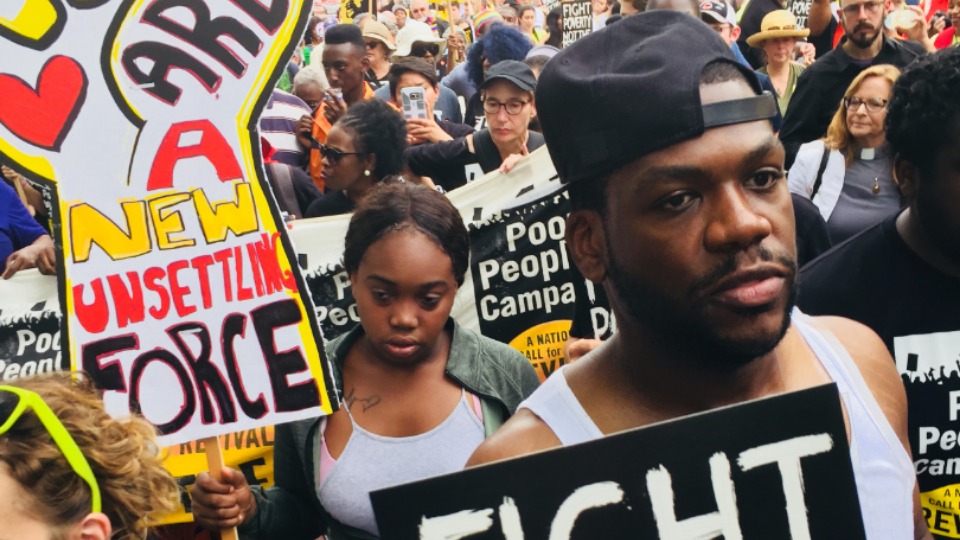
Poor People's Campaign on the march in Memphis.
| @unitethepoor via Twitter

MEMPHIS, Tenn.—Wending its way towards its March on Washington on June 18, the new Poor People’s Campaign stopped May 22 in Memphis to demand “resurrection” of causes the late Dr. Martin Luther King Jr., fought for—including workers’ rights.

Speaking literally in front of the site where King was assassinated in April 1968—the Lorraine Motel, now the National Civil Rights Museum—campaign co-chair the Rev. Dr. William Barber II said King’s causes of equality on the job, civil rights, voting rights, and the right to organize are endangered once again.

“We don’t need nostalgia” for Dr. King, “we need a resurrection” of his causes, Barber said. That’s the point of June 18.

One big cause is the right to organize.

Fifty-four years ago, King was aiding the “I Am A Man” sanitation workers who were trying to unionize with AFSCME Local 1733. Now, Kylie Throckmorton, one of seven Memphis Starbucks workers trying to organize a union there, told the crowd of that struggle. The seven are part of a national Starbucks organizing drive aided by Workers United, a Service Employees sector.

“Because I was trying to build a union, my co-workers and I were fired,” said Throckmorton, the second of a group of poor and low-wealth people to speak.

“They would rather have us living on the streets” than recognize the union and pay decent wages, Throckmorton said of Starbucks’s bosses. “You deserve to be safe on the job. You deserve to live comfortably. You deserve to have health care.”

All of that is lacking at Starbucks, workers from coast to coast tell organizers.

The National Labor Relations Board went to federal court in Memphis on May 10 seeking an injunction ordering Starbucks to immediately stop its labor law-breaking and take the seven back.

Barber took up her theme during his remarks, linking it to employer exploitation of “essential” workers during the ongoing coronavirus pandemic. “How many of you know some of them?” he asked the crowd of more than 1,000 people gathered in front of the podium in the hotel-turned-museum’s parking lot. People raised their hands.

“How many of you are some of them?” just like the sanitation workers whose cause Dr. King espoused 54 years ago, he asked. More hands went up.

“During COVID, poor people are dying at a rate of two to five times that of others,” he explained. “We need to show America people still have to wait” for social, civil and economic justice “because we haven’t yet done” as a country “what we should do.”

Dr. King, Barber noted, was getting more outspoken about those causes, though he—like the Poor People’s Campaign now—emphasizes non-violence, including non-violent civil disobedience, to raise the profile of its goals and to push leaders to act.

Quoting from the speech Dr. King planned to give but never did, Barber said the U.S. “was on a path to go to hell” until it addresses the underlying problems of systemic racism, poverty, overspending on the U.S. military, poor education, shortage of decent affordable housing and lack of health care for all.

King spoke out for those same causes. For those views, especially his opposition to the Indochina War, Barber noted, King faced ostracism from leaders of his own denomination and even disagreements with colleagues at the Southern Christian Leadership Conference.

Like other Poor People’s Campaign events, most Memphis speakers were poor and low-wealth people, exploited and/or unemployed, and a mix of races. That reflects the bottom-up mass movement of the PPC and its success at getting people to recognize their causes and complaints against an exploitative system are intertwined.

Memphis resident Scottie Fitzgerald described a long-running local campaign against a pipeline whose construction would rip through a working-class, mostly Black neighborhood, all to enrich a private corporation.

“A business group connived with the government to take your land” through eminent domain “for a pipeline that could poison your water?” Barber asked Fitzgerald. “That’s right,” she replied of yet another example of corporate environmental racism.

Shirley Smith, a lifelong resident of Mason, Tenn., a majority-Black town whose prior white leaders took it into bankruptcy, told how the lack of jobs there forced her to take weekend work industrial cleaning in a Nabisco factory—in Chicago, a two-and-a-half-hour one-way drive away.

Then Ford came to Mason to build a plant in Tennessee, which happens to be a Republican-run, and gerrymandered, right-to-work state whose voters will be asked in November to enshrine that anti-union tenet in its constitution. “They (Ford) want to buy up all our land” for their 4,100-acre facility “and people didn’t really have a choice.”

Of the economic elite, Smith added: “They want to take you out of prosperity.”

“In this city, if you are not fighting for change still, you are distorting the legacy” of Dr. King and the civil rights movement, Barber said—a statement that could apply not just to Memphis, but nationwide.

Nearly 1 in 5 Amazon delivery drivers get hurt on the job each year, new report says

2022/5/24 17:36 (EDT)
© The Seattle Times

Labor and Industries cited Amazon’ s DuPont, Washington, fulfillment center in May for violating workplace safety laws. - Ellen M. Banner/Seattle Times/TNS

One in five delivery drivers working for Amazon was injured on the job in 2021, a new report says.

The same report, released Tuesday by a coalition of labor unions, found 1 in 7 was injured so severely they had to either change their job or take time off following an injury.

"Amazon's delivery quotas and production pressure are contributing to an escalating injury crisis among workers in every segment of Amazon's delivery system," the Strategic Organizing Center's report read.

"Amazon claims to have taken several steps to promote safety," it continued. "Amazon has refused, however, to address the core issue that fuels injuries in its delivery system: abusive delivery production demands."

Injuries for workers in Amazon's delivery system — including delivery drivers as well as employees at delivery stations and sortation centers — jumped by 38% in the past year, according to the organizing center, which has pushed Amazon to changes workplace policies previously. The same group released a report in April that found injuries at Amazon warehouses increased about 20% from 2020 to 2021.

The rate of serious injuries for drivers jumped 47% in the past year, according to the most recent report.

Amazon spokesperson Kelly Nantel said the report used a small sample of workers and drivers to "intentionally misrepresent the facts."

"Safety is a priority across our network, which is why we've rolled out technology like innovative camera systems that have helped lead to an overall reduction in accident rates of nearly 50%," Nantel said in an emailed statement. "We'll keep investing in new safety tools to try and get better every day."

On the heels of a successful union drive at an Amazon warehouse in Staten Island, the company is facing pressure from employees, state and federal regulators, and some shareholders to improve working conditions for its blue-collar workforce. Federal lawmakers have called for an investigation into Amazon's practices after six people died while working at an Amazon warehouse in Edwardsville, Illinois. Washington regulators have issued four citations, alleging the company's pace of work is leading to unsafe working conditions at Amazon facilities.

During some shifts, a delivery driver working with Amazon in Sacramento, California, is expected to make a delivery every minute or two, the Strategic Organizing Center report found.

Injury rates at Amazon's sortation centers, where employees sort orders by final destination, increased 20%, while rates at its delivery stations, where workers prep packages for the delivery to customers doorsteps, went up 15%.

The SOC analyzed data that Amazon and its delivery service partners — independent delivery companies who staff and operate Amazon-branded vans to bring packages from distribution centers to customers' doorsteps — submitted to the Occupational Safety and Health Administration. It analyzed data from 201 of Amazon's roughly 2,500 U.S.-based delivery service partners.

Amazon says injury rates at the company are actually going down, citing a $300 million investment in new technologies and new protocols to improve working conditions. Amazon's own analysis found the lost-time incident rate, a measure of the number of injuries that resulted in missed work, improved 43% from 2019 to 2020, according to a report the company released this year. The report did not include an analysis of 2021.

Researchers at the Strategic Organizing Center don't agree. Amazon is relying on outdated numbers, the report said, and is leaving out a large chunk of its workforce by not including contracted delivery service partners who account for about half of all Amazon delivery system workers.

Amazon "cherry picked" the data they chose for their own analysis, said Eric Frumin, the health and safety director with the Strategic Organizing Center. In addition to leaving out contractors, Amazon compared itself only to industry competitors with at least 250 workers, he said, despite the fact that many of Amazon's delivery stations and sortation centers don't fall into that category.

In a letter to shareholders in April, CEO Andy Jassy said Amazon's injury rate was "misunderstood," explaining that Amazon actually split its workforce into two categories when comparing itself to others in the same industries: warehouse workers, and courier and delivery service workers.

By that logic, Amazon's injury rate was higher than its warehouse peers — 6.4 versus 5.5 — but lower than its delivery peers — 7.6 versus 9.1. Amazon is "about average relative to peers," Jassy wrote in his letter. "But we don't seek to be average. We want to be best in class."

Amazon has come under fire for its expected pace of delivery in the past, most notably when some drivers said publicly they had to resort to urinating in bottles, bushes and coffee cups because the number of deliveries expected each shift didn't leave time for a bathroom break.

In April, a delivery company in Wyoming sued Amazon on behalf of the 2,500 delivery service partners working with the company in the U.S., alleging Amazon set unrealistic and unsafe expectations for drivers. Owner Max Whitfield said in the lawsuit he often had to send out a "rescue" driver to help an "overburdened" worker already on the road.

In Colorado, an insurance company found Amazon delivery drivers had a higher rate of animal-related injuries or slip-and-fall incidents than drivers for other companies, the SOC report said.

Drivers "make it crystal clear the source of the problem — it's the production pressure," Frumin said. "These are conditions that the company imposes and the company can take away."
Is Trumpism this generation's version of the Confederacy?
Thom Hartmann
May 24, 2022

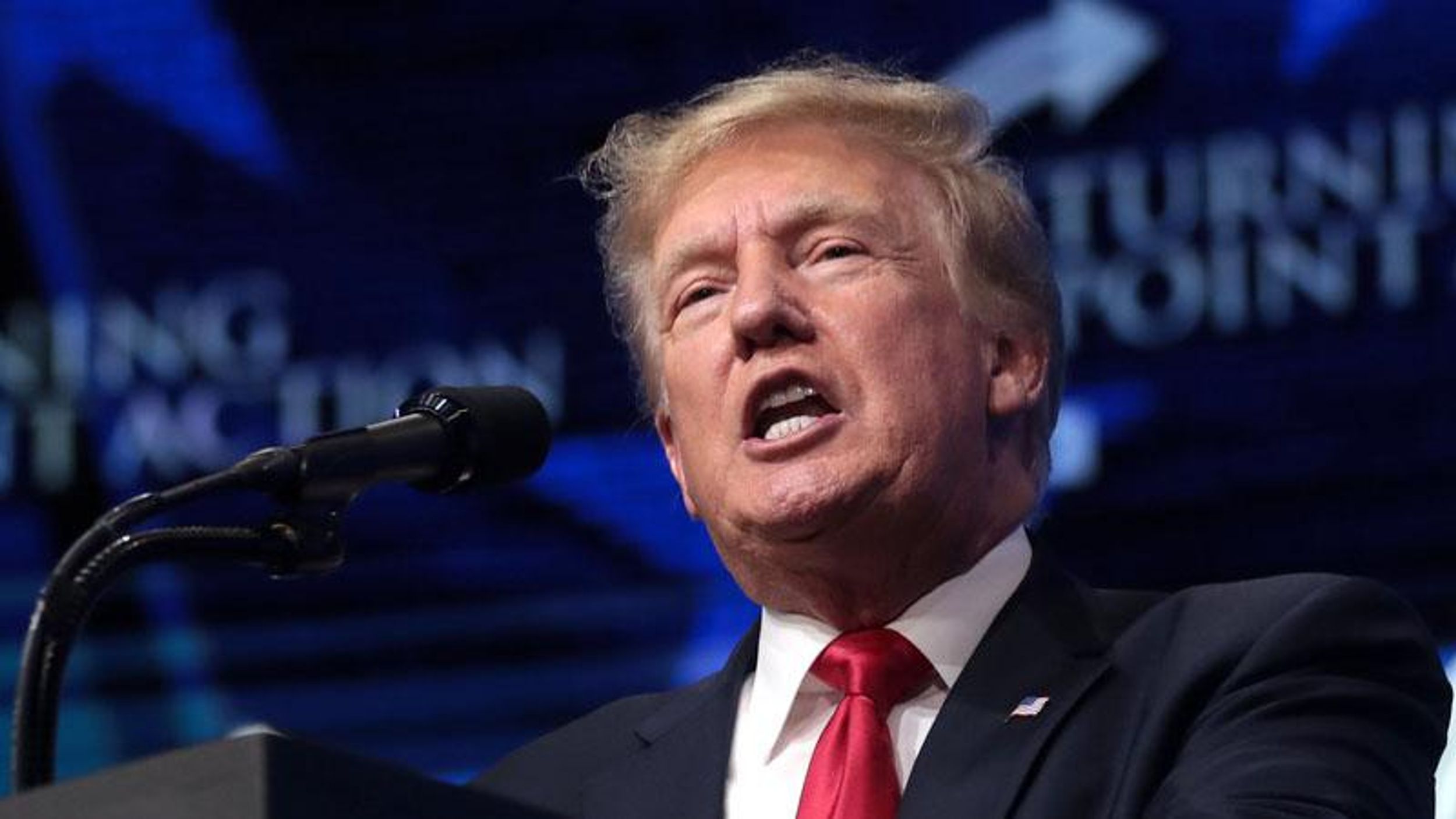
Donald Trump speaking with attendees at the "Rally to Protect Our Elections" 
hosted by Turning Point Action. (Gage Skidmore/Flickr)

Donald Trump promoted a modern Civil War in America this week on his social media platform. Civil War?

Further confounding things, Republican candidates like Pennsylvania’s Kathy Barnette are openly running as ultra-MAGA candidates, having hijacked Trumpism without Trump himself. It’s causing the media and political elites to have a “Huh? What?” moment.

Trumpism without Trump? Could it even be a thing?

Apparently so: candidates Trump has openly disavowed are claiming Trumpism as their standard, the flag they’ll carry into the election and into office if they win.

Trumpism, they proclaim, is a coherent political philosophy of its own that has replaced conservativism as the dominant system of political theory in the “new” Republican Party.

But is Trumpism really new?

Consider its main principles:*Assert white supremacy
*Fetishize rule by a wealthy elite
*Brand the movement with its own flag and slogans separate from the country’s
*Put the “rights” of business above those of workers
*Marginalize and destroy trust in the media
*Maintain a strict racial and gender hierarchy
*Arm the movement’s foot soldiers
*Regulate school curriculum to promote a racist worldview
*Embrace authoritarian preachers to claim the appearance of Christianity
*Make alliances with foreign authoritarians
*Rig elections and prevent minorities from voting
*Embrace a police state for all but the richest
*Accuse political opponents of demonic or perverse behavior
*Criminalize abortion
*Heavily criminalize minor behaviors like drug use
*Normalize violence as a political tool
*Oppose worker organizing efforts
*Claim the mantle of “the average man” fighting against the tyranny of the “deep state”
*Make it hard for all but the wealthy to get a college education
*Minimize government regulation of working conditions and products
*Establish a mythology of victimhood and fear of “replacement”

This is not Barry Goldwater’s, Ronald Reagan’s, or even George W. Bush’s Republican Party.

Sure, those guys were happy to suck up to the wealthy and pass legislation favored by big business, but they didn’t go so far as to separate themselves from the mainstream of American governance.

They didn’t accuse Democrats of drinking the blood of tortured children, openly proclaim their racism, or encourage violence. Before Trumpism, Republicans had for generations opposed nations that suppressed democracy and called out murderous dictators like Hitler, Putin, and Kim.

This is something new.

Or is it? Is it possible Trumpism is simply a very old American invention making its return to the US political stage?

In the early 1800s the invention of the Cotton Gin, which could with one very expensive machine do the work of 50 enslaved people, transformed the American South. It was a technological revolution that made possible the traitorous Confederacy.

For the previous thirty or so years, the slave-holding South had been a democracy, albeit one where only white men had a say in things. But even poor white men could vote, and the region identified as “America” with the American flag and American songs and textbooks.

Wealth disparities weren’t as severe as some northern regions, particularly New York City whose bankers and traders had been made rich by the cotton export trade. (When the South seceded in 1861 the Mayor of New York City argued that the city should secede along with them, but back in 1820 there wasn’t even a whisper of what would tear the nation apart in a mere forty years.)

The Cotton Gin, invented in 1794 by Eli Whitney and widely sold in the South in the 1810s and 1820s, changed all that. Only the wealthiest plantation owners could afford to buy a Gin, and it enabled them to out-compete the hundreds of thousands of small cotton farms that dotted the South.

Large plantations, after driving smaller local farmers out of business, bought up their land and hired their former owners to work the land as sharecroppers.

Wealth inequality exploded across the South as a new, powerful aristocracy rose up and seized control of Jefferson’s Democratic Party. By the end of the 1830s, most of the land and nearly all the wealth and political power in the South was in the hands of a few thousand families.

But that wasn’t enough for the Lords of the New Plantations in the New South of the 1840s and 1850s. They wanted total control of the entire country and were chafing under the restrictions of the American brand and its two-party system of government.

As I wrote in detail in The Hidden History of American Oligarchy, by the late 1830s, with the rise of John C. Calhoun and the Nullification Crisis, the South was firmly in the economic, political, and social hands of a small number of morbidly rich plantation-based oligarchs.

It was no longer a democracy or a republic: the South had turned into a neofeudal state, what today we’d call a fascist state.

History Professor Forrest A. Nabors notes in his book From Oligarchy to Republicanism: The Great Task of Reconstruction, by the 1860s:

“A new generation of rulers reshaped the south around their new ruling principle…


“The development of Southern oligarchy portended the rupture of the union, regardless of the ties that bound them together, because no ties, physical, legal, or otherwise, can overcome the difference between fundamentally opposed types of political regimes.”

Nabors cites a speech to Congress by Senator Timothy Howe of Wisconsin, who argued that the oligarchy in the South had become so strong that they weren’t just trying to be left alone; they wanted to seize control of the North and end democracy in America altogether:

“Such, then, I find to be the cause and the purpose of the rebellion. It was not to secure the independence of slaveholders, but to subject you to abject dependence upon slaveholders. It was not to build a new capitol for a new government, but to place a new government in possession of your Capitol.

“It was not to frame a new constitution for a new republic, but it was to impose a new constitution upon the Republic of the United States. It was not to secure toleration for slavery within the seceding Slates, but to compel the adoption of slavery by the nation.”

Congressman John Farnsworth, representing the Chicago area of Illinois, laid it out clearly on Wednesday, June 15th, 1864 in a speech on the floor of the House of Representatives:

“The slave-owner is cutting at the heart of the nation; yes, sir, he is cutting at the throats of your sons and brothers, of your neighbors and friends; he is with mad desperation seeking to destroy the beautiful fabric of this nation, and to quench in our blood the fires of republican liberty which have burned so long, a beacon of light to other nations, and the hope of the world. All this [he] is trying to do that he may erect a slave empire instead…”

By the time of the Civil War, the oligarchs of the South had rejected all pretense of belief in democracy, a republican form of government, or even the core idea of the peaceful transition of power in the United States of America.

Instead, they:*Asserted white supremacy
*Seized total control of the political systems of the South
*Branded their movement with its own flag and slogans separate from the country’s
*Passed laws putting the “rights” of plantation owners above those of workers, including poor whites
*First marginalized and, by 1861, completely destroyed any opposition media (often lynching or imprisoning publishers and editors)
*Established a strict racial and gender hierarchy, both in society and in law
*Armed the Confederacy’s foot soldiers
*Carefully regulated school curriculum to promote a racist worldview
*Incorporated authoritarian preachers into the political Confederacy to claim Christianity
*Tried unsuccessfully to make alliance with French emperor Napoleon
*Rigged elections to prevent all minorities from voting
*Embraced a police state for all but the richest plantation owners who could never be prosecuted
*Accused their political opponents in both the North and South of demonic or perverse behavior, particularly interracial or gay sex
*Enforced anti-abortion laws when white women became pregnant
*Heavily criminalized minor behaviors like loitering
*Normalized violence as a political tool
*Crushed a generation of Southern worker organizing efforts
*Claimed the mantle of “the average man” fighting against the “tyranny” of the North
*Made it impossible for all but the wealthy to get a college education
*Ended what few government regulations existed for working conditions and products
*Established a mythology of victimhood and fear of “replacement” later known as “The Lost Cause”

In other words, Trumpism is simply the politics of the American Confederacy reinvented for the 21st century. And even now Trumpists — whether affiliated with Donald or not — are openly talking about starting a second civil war.

They’re lionizing killers for the cause like Kyle Rittenhouse.

They’re embracing foreign authoritarians like Putin and Orbán.

They’re building and funding their own media empires while destroying American’s faith in mainstream media.

And they’re successfully using the filibuster to block the passage of any legislation that may strengthen democratic principles in our republic.

Today’s Republican Party, under the control of Trumpism, is every bit as real a threat to the survival of our republic as was the Confederacy in the 1860s.

It’s emerged from similar conditions and reflects a nearly identical worldview grounded in the fear of losing white supremacy. It’s based in the American South, as was the Confederacy.

The media needs to wake the hell up. The American government, the American people, and the Democratic Party must see the Trumpist Republican Party for the threat it is.

The FBI and intelligence agencies need to bring the seditionists within it to ground. Democrats must loudly call out its naked embrace of racism and fascism and make clear where this will lead if unchecked.

Every day that goes by without action brings us closer to the new Republican Party’s goal: tearing apart democracy in America and transforming this country into this generation’s version of the Confederacy, complete with its own Lost Cause mythology.
Trump to address NRA convention in Texas — only days after school shooting massacre: report
Bob Brigham
May 24, 2022

Official White House photo by Tia Dufour.

Donald Trump is scheduled to address the National Rifle Association (NRA) national meeting in Houston only days after a school shooting massacre in Uvalde, Texas.

On Tuesday, a gunman killed 14 children and a teacher in Robb Elementary School. Police reportedly killed the suspect, an 18-year-old man.

The shooting occurred only ten days after the mass shooting at a supermarket in Buffalo, New York.

On Friday, Trump is scheduled to address the NRA's annual meeting for the 6th time, posting a video of Trump discussing his "love" for the organization.


The group says the exhibit hall "will showcase over 14 acres of the latest guns and gear from the most popular companies in the industry."

"From entertainment to special events, it’s all happening in Houston over Memorial Day weekend. Make plans now to join fellow Second Amendment patriots for a freedom-filled weekend for the entire family as we celebrate Freedom, Firearms, and the Second Amendment!" the NRA says.

In a video hyping the event, NRA chief Wayne LaPierre says Lee Greenwood and Don McLean will provide musical entertainment.

Watch below or at this link.

NRA CEO Wayne LaPierre: Join Me at the NRA Annual Meetings & Exhibits in Houston, TX
Canadian national security task force is preparing for the collapse of the United States
RAW STORY
May 24, 2022

While the United States appears to hold true to the ideals of democracy, Freedom House, an international group that promotes global democracy, has warned that the country is backsliding.

"Its democratic institutions have suffered erosion, as reflected in partisan pressure on the electoral process, bias and dysfunction in the criminal justice system, harmful policies on immigration and asylum seekers, and growing disparities in wealth, economic opportunity, and political influence," the site said.

The watchdog group said that the U.S. slipped 11 points in the past ten years. The U.S. is now ranked below Argentina and Mongolia.

According to the Canadian Broadcast Corporation (CBC), the government to the north is fearful of what that might mean for them. Former national security advisers and directors at the Center for Strategic and International Studies warned Canada that the U.S. could become a "source of threat and instability" in the coming years.

Writing for CBC, Catharine Tunney cited those experts pondering a reconsideration of the alliance with the U.S.

Citing things like Fox News' Tucker Carlson, Donald Trump's attempt to overthrow the government, and the Jan. 6 attack on the U.S. Capitol, they have a growing list of anti-democratic warnings. Their data gathering comes from top-secret information and a briefed cabinet on emerging threats. It warns that Canada has been complacent and warned it's time to tackle things like Russia and Chinese espionage.

"The United States is and will remain our closest ally, but it could also become a source of threat and instability," the report says.

"The 'democratic backsliding' in the United States, a rise in cyberattacks and climate change," are cited as examples in the report.

"We believe that the threats are quite serious at the moment, that they do impact Canada," said former Canadian national security adviser Vincent Rigby, a co-author of the report. "We don't want it to take a crisis for [the] government of Canada to wake up."

The main point for Canada to pivot has to do with the U.S. While Canada has its own extremist groups, according to intelligence reports, they are coordinating with the United States.

"There are growing transnational ties between right-wing extremists here and in the U.S., the movement of funds, the movement of people, the movement of ideas, the encouragement, the support by media," Rigby said.

The trucker convoy was a big wake-up call, he said. The small minority of angry truckers furious over the Canadian vaccine mandate resulted in a stand-off on the streets of Ottawa. Approximately 90 percent of truckers were vaccinated, but those under 10 percent were infuriated by the mandate. They sat in the streets blocking residents from work and home. They honked until all hours of the night. American anti-vaccine activists have adopted a similar protest, but their endeavors have been less successful.

"When we think about threats to Canada, we think about the Soviet military threat, we think about al-Qaeda, we think about the rise of China, we think about the war in Ukraine. All of these are true. But so is the rising threat to Canada that the U.S. poses," said Thomas Juneau, co-director of the task force.

"It certainly would not be couched in a way of, 'You're the source of our problems.' That would not be the conversation. The conversation would be, 'How can we help each other?'" he said. "We had those conversations during President Trump's tenure and business continues. Does it become a little bit more challenging when you have a president like Mr. Trump? Absolutely, without a doubt. But we are still close, close allies."

Rigby and Juneau are hopeful that the report will launch a new strategy moving forward.

"I know there's a certain cynicism around producing these strategies ... another bulky report that's going to end up on a shelf and gather dust," said Rigby. "But if they're done properly, they're done fast and they're done efficiently and effectively — and our allies have done them — they can work and they're important."

Read the full report at CBC and watch below:
INSIDE THE GRUESOME EUROPEAN SPORT THAT INVOLVED THROWING FOXES

Wikimedia Commons

BY MATT REIGLE/MAY 24, 2022 1:12 PM EDT

There was a time when the choice of leisure activities was slim pickings. Leisure wasn't at the forefront of peoples' minds during times when getting a splinter meant the likelihood of a tetanus infection that could lead to your ultimate demise. Even if people wanted to blow off steam, it's not like they could kick back and play some Xbox on your 50-inch TV screen.

However, as times started to change and medical treatments advanced beyond bloodletting, there was time to have some fun. Some sports we play today were in their earliest stages hundreds of years ago and evolved into the version we know today. Of course, there were other ideas that didn't catch on long enough to be enjoyed by 21st-century audiences. One of these was the sport of fox tossing, although, it's tough to imagine how any audience — 21st century or otherwise — could enjoy this, but according to Listverse, they did.

FOX TOSSING WAS ESSENTIALLY WHAT IT SOUNDS LIKE


Wikimedia Commons

Fox tossing is, as the name implies, a sport in which live foxes were thrown skyward, but foxes weren't the only animals used in this cruel game, they just got top billing. According to WBUR, author Edward Brooke-Hitching penned a book about the lost sports called "Fox Tossing: And Other Forgotten and Dangerous Sports, Pastimes, and Games." Brooke-Hitchings said that he learned about the sport in an old German hunting manual that dates back to 1720, which featured an image of 18th-century aristocrats playing the bizarre game.

Fox tossing was played on a grassy field, with players partnered up, generally in mixed couple teams comprised of a man and a woman. Members of each team held opposite ends of a long sling (roughly 20 feet apart) that Brooke-Hitchings described as "a cloth a bit like a badminton net." The sling was held loosely between the two participants so that the middle of it sagged and laid on the ground. When the game was ready to start, foxes (or, on occasions where fox tossing organizers wanted to shake things up, badgers and wildcats) were set loose and started running around the playing area. If any of the animals stepped on one of the slings, the players gave their ends a quick tug, which tightened the cloth and launched the helpless animal into the air. The winner was whichever team launched an animal the highest, with the all-time top score being a toss that was measured at 7.5 meters, or 24.6 feet, into the air (via Topend Sports).

FOX TOSSING ENDED BY KILLING ALL THE FOXES


Wikimedia Commons

Obviously, fox tossing was wildly inhumane, and the animals that were getting thrown into the atmosphere were facing serious injury risks, especially when you consider that none of them volunteered to be part of an 18th-century German aristocrat's field day. According to Listverse, the terrified animals sometimes caused injuries to the human participants while trying to escape from the game. Sadly, any animals that weren't killed during the game were euthanized afterward (not humanely either).

Additionally, foxes are known to carry an array of parasites and diseases. According to The Fox Project, many animals — foxes included — can carry a parasite called toxoplasmosis that can affect various parts of the human body. Fox tossing was one of the few sports of the era that women played alongside men, however, modern doctors often warn pregnant women about the dangers of contracting toxoplasmosis.

Another concern — albeit a rarity in modern times, per The Humane Society — is that a fox could be carrying rabies. However, in the era of fox tossing, the frequency of foxes carrying rabies was much higher (via Fox Rabies Blueprint).

US Federal Reserve says its goal is ‘to get wages down’

US Federal Reserve chairman Jerome Powell said his goal is “to get wages down,” complaining workers have too much power in the labor market. Economist Michael Hudson says this is “junk economics,” and corporate monopolies are driving inflation, not wages.


ByBenjamin Norton
Construction workers in Houston, Texas in 2021

The chairman of the US Federal Reserve, Jerome Powell, said his goal is “to get wages down.”

In a press conference on May 4, Powell announced that the Fed would be raising interest rates by half a percentage and implementing policies aimed at reducing inflation in the United States, which is at its highest level in 40 years.

According to a transcript of the presser published by the Wall Street Journal, Powell blamed this inflation crisis, which is global, not on the proxy war in Ukraine and Western sanctions on Russia, but rather on US workers supposedly making too much money.

“Employers are having difficulties filling job openings, and wages are rising at the fastest pace in many years,” Powell complained.

The Fed’s proposed solution: bring down wages.

There are more job vacancies than there are unemployed people in the United States, as the economy recovers from the Covid-19 pandemic.

Powell claimed this discrepancy between job vacancies and unemployment is due to high wages, which discourage workers from taking bad, low-paying jobs with few benefits, and therefore give them too much power.

“Wages are running high, the highest they’ve run in quite some time,” the Fed chairman lamented.

Workers need to be disciplined by the labor market, he insisted.

Powell argued, “There’s a path by which we would be able to have demand moderate in the labor market and have—therefore have vacancies come down without unemployment going up, because vacancies are at such an extraordinarily high level. There are 1.9 vacancies for every unemployed person; 11½ million vacancies, 6 million unemployed people.”

Powell aims to do this by reducing wages.

“By moderating demand, we could see vacancies come down, and as a result—and they could come down fairly significantly and I think put supply and demand at least closer together than they are, and that that would give us a chance to have lower—to get inflation—to get wages down and then get inflation down without having to slow the economy and have a recession and have unemployment rise materially. So there’s a path to that,” he said.

The Federal Reserve chairman did concede that “these wages are to some extent being eaten up by inflation.” But Powell blamed that rising inflation on increasing wages, which economist Michael Hudson says is an example of ridiculous “junk economics.”

Powell was first appointed Fed chair by Donald Trump in 2018. On May 23, 2022, he started his second four-year term, after being re-nominated by President Joe Biden and confirmed in a landslide bipartisan Senate vote of 80-19.
Inflation is rising faster than US wages

The US federal minimum wage is just $7.25 per hour, and has remained at that level since 2009, despite significant increases in inflation.

In 1968, the US federal minimum wage was $1.60, which would be equivalent to $13.29 in 2022 dollars.

It is true that the minimum wage has increased in recent years in numerous US states, especially ones that have significantly higher costs of living like New York and California. But real wages have not kept up with inflation.

Even the Washington-based think tank the Peterson Institute for International Economics, which is infamous for its avid promotion of neoliberal policies, acknowledged in a January 2022 study, “US wages grew at fastest pace in decades in 2021, but prices grew even more.”

The report explained:
Since December of 2020, nominal wages and salaries were up 4.5 percent, the fastest increase since 1983. These increases bring nominal wages and salaries to 1.2 percent above their pre-pandemic trend.

Prices, however, have also risen rapidly, and so inflation-adjusted wages fell by 4.3 percent at an annual rate over the last three months, 2.4 percent over the last year and 1.2 percent lower than they were in December 2019.

Inflation-adjusted wages should have grown 2.1 percent over this period if pre-pandemic trends had continued, leaving real wages well below their pre-pandemic trend.

While nominal wages have still grown faster in some sectors relative to its pre-pandemic trend, all sectors have seen below-trend real wage growth.
Michael Hudson: Inflation is caused by corporate monopolies, not labor

Economist Michael Hudson responded to these remarks by the Fed, analyzing the inflation crisis in a May 13 panel organized by the International Manifesto Group.

“Inflation is basically the excuse that right-wing governments have for trying to lower wage levels by blaming the inflation on rising wages,” he said.

“What economists like to blame it [inflation] on is labor, on rising wages, on government social spending, and of course on Russia trying to break away from America’s unipolar international order,” Hudson explained.

He recalled his time working at Chase Manhattan Bank in the 1960s. Hudson’s boss was Paul Volcker, who would go on to serve as Federal Reserve chairman under US presidents Jimmy Carter and Ronald Reagan.

He noted that Volcker had “always said that the big concern of finance is wage gains will mean that the purchasing power of all of our investors, who have bank accounts, and stocks, and bonds, will have less power over wages. And our class interest is in increasing our power over wages, so we’ve got to keep wages down, even if it causes a recession. That’s basically the Federal Reserve’s policy.”

“The present Federal Reserve chairman, Jay Powell, came right out and announced that the Biden administration, Democratic Party policy is quote, ‘to get wages down and then get inflation down without having to slow the economy and have a recession and have unemployment rise materially’,” Hudson continued.

“In other words, you want to keep the finance, insurance, and the stock market, real estate sector going; you just want to squeeze down wages somehow.”

“So the objective of all this is that, if labor wants to get a job, and the health insurance that goes with it, then labor will have to lower its wage levels. That’s the current US government policy.”

“Well it’s junk economics, of course,” Hudson continued. “Today’s inflation throughout the world, not only in the United States but now in Europe, is led by pure monopoly powers, headed … by energy and food prices.”

“The United States and NATO are trying to blame inflation on Putin and Russia not exporting oil and gas to Europe, as a result of the NATO sanctions against it, but gas hasn’t stopped yet, and … the US oil companies have said that, looking forward, they see a supply problem, and they’re raising prices now even though the supply of oil hasn’t really changed at all.”

“So you have supply being fairly constant, but prices going way up, because the oil companies say, ‘We anticipate they’ll go up, therefore we’re raising oil prices, because we can.’ Well, the same thing is happening in agriculture.”

“You’re also having rent rising as a result of the plunge in home ownership rates, that started with President Obama’s mass evictions of the victims of junk mortgage lending.”

“And the private capital investors that are taking over all of the houses, the owner-occupied houses that have defaulted, they’re being sold off, and you’ve had home ownership rates falling by about 10 percent in the United States since 2008.”

“Well now you have companies like Blackstone very sharply rising rents. In New York they’ve been jumping by about one-third in the last year. So again, with the same amount of real estate, prices are going way up.”

“So none of this can be blamed on labor,” Hudson stressed.