Wednesday, May 25, 2022

A World Where Finance Is Democratic

No, blockchain won’t democratize finance. Instead, we need to assemble groups of citizens to deliberate on where public investment should go.
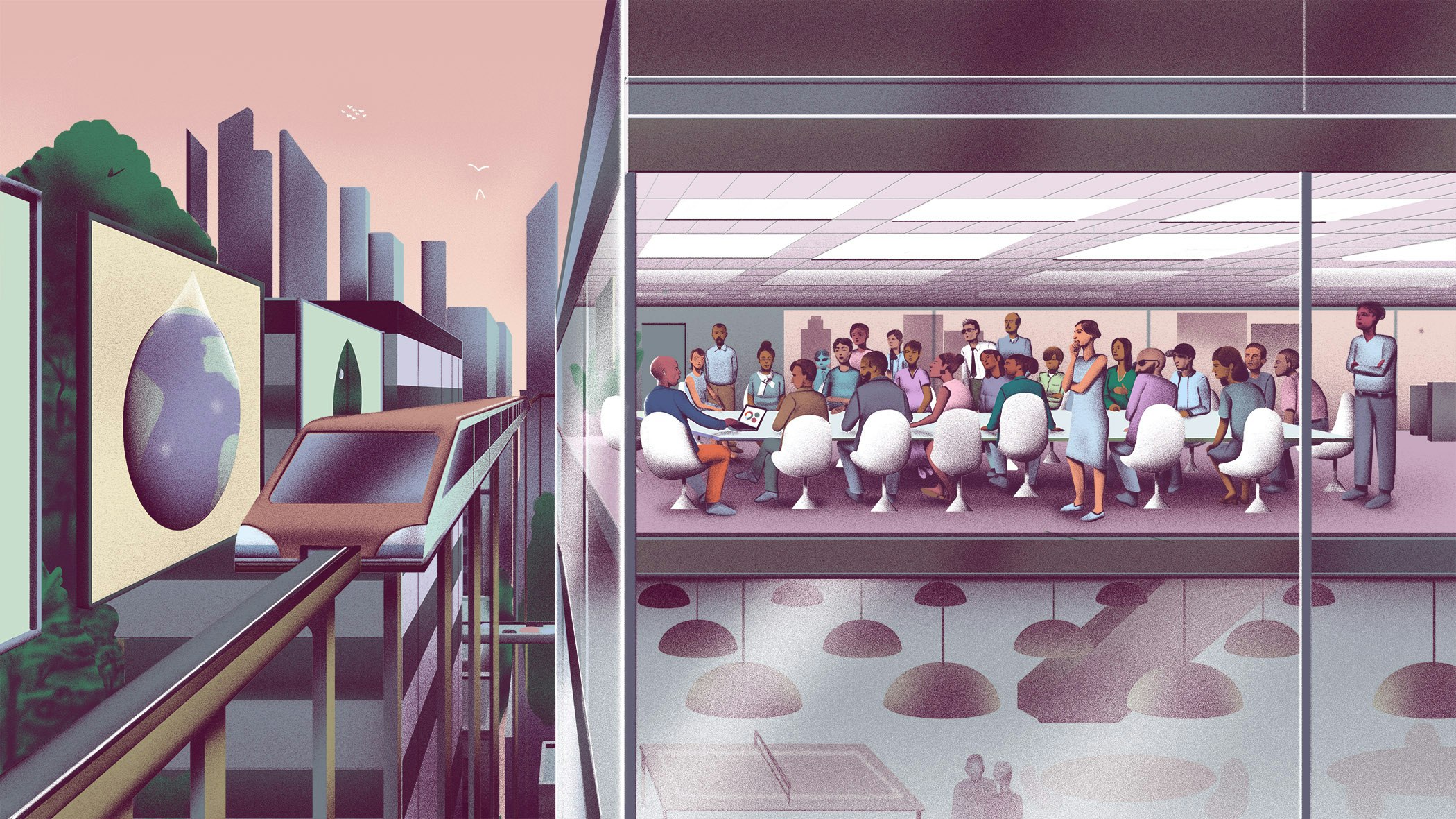

Richard A. Chance for Noema Magazine
APRIL 12, 2022

Michael A. McCarthy is an economic democracy activist and an associate professor of sociology at Marquette University. He is a 2021-22 Berggruen Institute Fellow.


It’s the year 2043 and you’re running late for a meeting that will shape the future of the place you live.

You’re riding Los Angeles’ new electric speed rail instead of driving on congested freeways, because a new democratic process for allocating funds has completely reshaped the city in recent years. You step off the train in the Public Finance District, where the streets were converted into pedestrian zones after huge investments in transportation eliminated the need for cars downtown.

The cleanliness of the sidewalks would have come as a shock even 10 years ago. Gone are the days when people with nowhere else to go lived on them. Instead, the city has allocated finance into public housing and health projects that have gone a long way toward solving the problems of the city’s worst off.

Today, you have a chance to participate in the process that helped these changes come to be. You pull out your phone to check the message you received months ago: “Minipublic Duty Notification: You have been selected at random to participate in the citizen assembly for the People’s Bank of Los Angeles in its Green Futures division. The assembly will make decisions about financing that will determine what green public goods our city will invest in in the future. Your voice and judgement are essential.” So you pick up the pace, heading in the direction of the public bank.

This vision of the future can become a reality by democratizing finance. Finance capitalism has generated a litany of social ills: tremendous upward redistribution, stagnant growth, increased worker precarity, macroeconomic instability and the hastening of ecological demise. When we look to the failures of global coordination, finance seems to always be right there, holding the smoking gun — or financing its sale and the pulling of its trigger.

Small-scale deliberative bodies drawn from much larger-scale groups of stakeholders — known as deliberative minipublics — can help change that. These minipublics would bring together smaller groups of citizens through random selection or stratified sampling (to ensure demographic representativeness) who would learn about public investment and deliberate on key allocation questions. Yet today, many financial futurists advocate for the decentralization of finance, which would only serve to reproduce its worst aspects.

Why Decentralization Isn’t Enough To Democratize Finance

Since the Great Recession, the call to democratize finance has animated activists, planners, electeds and technologists to design alternative systems of credit and investment allocation. Many financial futurists see decentralization as key to a more desirable alternative. After all, global finance capitalism is concentrated largely in just a few locations — New York, London, Shanghai. In the U.S., just four financial institutions (JPMorgan Chase, Wells Fargo, Bank of America and Citibank) account for nearly half of all deposits. This concentration has only deepened since the 2008 downturn, as asset managers like BlackRock and Vanguard are now the dominant shareholders in the world economy. Finance is dominated by titans.

Some financial futurists see new technologies, like Bitcoin and Ethereum, as a means for ordinary people to bypass extractive financial and public institutions and take control of their own futures. But advocates for decentralized finance (DeFi) and Web3, a new iteration of the internet on the blockchain, largely leave the central problem of finance capitalism untouched: the fact that most decisions about the allocation of credit and investment are made by private financial institutions or investors — and are not subject to collective decision-making and public participation.

The popular notion of democratizing finance began to circulate in the wake of the Great Recession. Championed by Yale finance economist Robert Shiller’s trendsetting “Finance and the Good Society,” democratizing finance entailed “the opening of financial opportunities to everyone.” For Shiller, increasing ordinary people’s access to financial instruments for wealth creation is the democratization of finance. The more people have access to opportunities to invest their own money, the more the democracy.

“Robust democracy with true equality of access requires a degree of centralization of power in democratically controlled institutions.”

But the picture of democratization as increased access alone isn’t very rosy. Some of the most toxic assets, such as subprime mortgages, have been so destructive precisely because they have been made more available. More of a bad thing isn’t a good thing.

Shiller’s view of access is now the standard narrative invoked by those with vested interests in seeing certain stocks go up and platforms used. One common explanation for the Reddit-fueled short squeeze of the GameStop stock casts the new wave of retail investors in precisely this Shillerian framework. New users are empowered by the gamified investment app Robinhood, which, like voting booths for financial assets, creates a new infrastructure for financial democracy. Ironically, its creators were inspired to make the app after some soul-searching triggered by Occupy Wall Street.

But when the “stonk” bubble — a bubble of overly speculative assets like AMC and GameStop — popped, many established investors and hedge funds made out with fortunes. Citadel Securities, the market maker, pulled in billions of dollars executing the retail trades on Robinhood during the short squeeze. Retail investors, on the other hand, were left holding the bag, with suitcases packed for trips to the moon they never took.

Access + Decentralization


Enter today’s finance utopians, who put a critical twist on Shiller’s approach. In their view, democratizing finance = access + decentralization.

These technologists sing the praises of DeFi, an umbrella term for blockchain projects that promise to make traditional money and banking institutions obsolete. In this view, crypto-based assets such as Bitcoin or Ethereum have the potential to replace money, decoupling it completely from central governments and banks. They see blockchain as the new financial infrastructure to give individuals the ability to store and move money without banks, brokers or transaction costs. In such a view, “smart contracts” that use NFTs can become the digital infrastructure for a creator economy, which is not mediated by third party platforms that take their cut from the transaction. Hello Web3, goodbye Spotify.

But in practice, how different are assets attached to a blockchain from speculative stocks? While Bitcoin promises scarcity — a limited supply of no more than 21 million coins — and a public decentralized ledger, it and other blockchain assets, such as CryptoPunks and Bored Ape Yacht Club NFTs, have principally attracted speculators searching for the possibility of rapid wealth. The initial novelty of NFT art sales will likely make some of the more well-known pieces durably valuable, as they are now recognized by many art insiders as part of art history. But when it comes to the proliferation of copycat NFT launches, at a certain point you are no longer buying Duchamp’s readymade sculpture “Fountain,” you are just buying an overpriced urinal.


“Far from democratizing finance via decentralization, equality of access in principle is just concentration of ownership in practice.”

The speculative frenzy around blockchain assets has resulted in incredible financial volatility of the coins. Even Bitcoin, the established token on the block, is far more volatile than other commonly traded financial assets. We might expect the intensification of other forms of volatility as well. Crypto spread has also hastened environmental degradation due to the carbon intensity of crypto mining.

But another problem has often gone unremarked upon. Though projects for decentralizing finance are often advanced under the banner of democratization, the democracy they advance is an impoverished one. Far from democratizing finance via decentralization, equality of access in principle is just concentration of ownership in practice. A National Bureau of Economic Research working paper finds that just a fraction of the top 1% of Bitcoin holders hold about a third of all Bitcoin. Robust democracy with true equality of access, in fact, requires a degree of centralization of power in democratically controlled institutions.

Democracy As Decision-Making


The core ambition of DeFi and Web3 advocates is to increase the scope of people who might make decisions about the allocation of credit and investment privately. But even if more people are drawn into the electronic herd, they would be doing so as individual investors, not as participants in a process of shared decision-making. And as individuals, they would be incentivized to allocate their own capital in ways that prioritize returns, not public goods. This would either reproduce or worsen the status quo, where public goods are battered and beleaguered.

This is the well documented coordination problem of game theory, which tech futurists and crypto evangelists explicitly say they are solving for. Yet when pressed, the solutions are near universally technical and inward-looking, such as grants to work on one blockchain or another. And they are largely left to the goodwill of charitable donations
 from investor whales. This simply wishes away the problem of how public goods are produced and maintained.

How might we invest in projects that do not produce an immediate profit and may be costly in the short run, such as green tech and infrastructure, but that create social goods, such as a livable planet, that benefit us and future generations? How do we invest in projects that do not generate short-term profits for those who provide them, such as public education or social housing, but nonetheless lead to the positive social outcomes of having more educated citizens and less street suffering? Surely, in the long-term, this is economically beneficial, too. DeFi offers no solution to these real coordination problems, which markets are historically bad at solving.

Therefore, a key principle for subjecting circuits of finance to democratic processes is in creating centralized institutions of finance that are the subject of democratic deliberation, participation and decision-making. We might embrace a policy of state recapitalization and nationalize banks, or we might set up public banks that supplement the private banking industry. The former may be more democratic, but the latter are more feasible. Regardless of the path, the ownership model should be one in which stakeholders — the public — has a claim and is therefore privy to its governance so that allocation can be made in the public good.

Mechanisms Of Participation

One relatively new solution proposed by Web3 advocates are DAOs — decentralized autonomous organizations. These are organizations that are governed by an open-source code that execute smart contracts to make the organization work. They are typically organized around a founding constitution, are member-controlled and governed by one coin, one vote. Normally, the more coins you have in a DAO, the more votes you get. Some even experiment (in theory, to my knowledge this has not been implemented) with quadratic voting, which allows members to save up their voting influence or have greater say on issues that are more meaningful to them.

Vitalik Buterin, co-founder and de facto boss of Ethereum, has toyed with the idea of making governance rights in a city — say CityDAO, a nontransferable NTF — tied to the individual, much like a “soulbound” item in World of Warcraft, which once looted cannot be sold or given away to another player in the game. Yet as Buterin himself acknowledges, in the main, the current DAO model functions more like a plutocracy. As in the shareholder governance system for publicly traded corporations, those with the most shares rule the DAO.

“The critical missing ingredient in contemporary democracy is deliberation.”

Perhaps, then, it would be best to set up an institution of public finance, such as an investment bank, and allow it to be run by elected representatives. That would be in keeping with the dominant mode of participation in public decision-making, which is to vote for representatives that act on your behalf. But two major dilemmas have emerged with representative democracy that have only been deepened by the digital age: confirmation bias and principal-agent problems.

Scholars have amassed evidence showing how a person’s prior views shape their reaction to new information. Whether it be views associated with their identity, group status or party affiliation, people can be motivated to reason in ways that confirm their preexisting biases. This problem, known as confirmation bias, has worsened with more deeply held partisan divisions and party signaling, such as the use of racial dog whistles. As a result, sections of the electorate ignore facts and process information in ways that reinforce pre-held views rather than help to facilitate the discovery of more accurate views — thus weakening representative democracy.

Furthermore, politicians have access to more information than their constituencies and therefore often govern in ways that are not fully transparent. And by virtue of either their different social origins (typically, politicians are wealthier than their constituents) or their professional roles as state bureaucrats bombarded with lobbying and campaign contributions from interest groups, constituencies and their representatives will often come to have different goals — raising concerns that representatives in fact aren’t acting in their constituents’ best interests. Thus, even without confirmation biases, principal-agent problems would persist in a public bank governed by elected representatives.

For both reasons, voting alone does not work. The critical missing ingredient in contemporary democracy is deliberation. But how is deliberation on financing for public goods possible when the public is so large?

Deliberative Finance Through Minipublics


Here’s where deliberative minipublics — smaller, representative groups of citizens brought together through random selection to discuss and decide on key questions — come in.

This practice of legislation by lot dates to ancient Greece. The Athenians even created a machine, the kleroterion, to generate random citizen samples. Much like juries, filled based on civic duty or voluntarily, the minipublic is a democratic institution that ensures ordinary people reason through deliberation about how finance be allocated.

Finance is extraordinarily complicated. It is unreasonable to expect that most people, if polled, would be able to produce a top-of-mind comprehensive account for how public financial institutions should allocate credit and investment. And because of issues of scale, it is impossible for everyone to deliberate.

Democratized finance requires, then, that some people make reasoned judgements on the behalf of others. Deliberative minipublics directly address this need for cognitive divisions of labor in decision-making processes. Were public banks broken down into several divisions with clear mandates areas governed by minipublics, workers and ordinary citizens could, to quote Aristotle in “Politics,” “rule and be ruled in turns.”

Democratized finance requires that some people make reasoned judgements on the behalf of others.”

And social scientific evidence suggests that this mode of judgement creation can help the broader public overcome previous biases that would otherwise be confirmed by “messaging from experts, interest group organizations or political organizations.” Therefore, deliberative minipublics can be a better source of improved knowledge for the population than typical party signaling or interest group messaging. Not only do they create a space for thoughtful deliberation about investing for the public good, they both inform broader public opinion and operate with some legitimacy because they are composed not of interest groups, but of peers.

Around the world, governments are turning to deliberative minipublics with greater frequency to grapple with issue complexity and to find common solutions to problems. The Organization for Economic Cooperation and Development (OECD) has even described the batch of new experiments as a “deliberative wave.” These experiments empower ordinary citizens to make democratic decisions. They give hard decisions a degree of popular legitimacy that they wouldn’t otherwise have and democratize governance itself — making it more inclusive, helping to root out political corruption and enhancing social trust among citizens. As the OECD has laid out, they work because citizen participants are independent, they draw from a very diverse population of possible participants and they create good conditions for quality judgements — ensuring there is adequate information, time and bias-free facilitation. They focus on the common good and they engender a high degree of trust among the population at large.

A Democratic Future For Finance?

Deciding how public finance might be allocated to further decarbonize the city might sound like a dry exercise in bureaucracy and a possible waste of time. But in the year 2043, you emerge from the People’s Bank of Los Angeles enlivened by a sense of civic duty that participation and deliberation on meaningful public decisions produced.

For several weeks, you and 98 others drawn by lot have discussed fact-based proposals for green projects for the city. Your task was a simple but important one: decide upon the decarbonization investment areas for the Green Futures division of the People’s Bank that would constitute its mandate until the next assembly in four years.

In Los Angeles, the deliberative minipublic follows the midterm election cycle, but it varies, at other levels of governance, how often assemblies meet and for how long. The People’s Bank has many divisions, including ones on housing, financial inclusion and cooperative development — each governed by an assembly process. In the city, public investment for the social good has come to crowd out private investment for personal gain.

Los Angeles has already eliminated its oil derricks and fields, retrofitted its buildings and connected itself to the North American public energy grid. A just transition off fossil fuels is well underway. But more work still has to be done for the Green Futures division. The last assembly to convene before yours commissioned an exploratory citizen jury. With organized labor now much stronger than it once was and the ecology of production moving away from private firms toward cooperatives and public utilities, ordinary Angelenos find themselves with more and more time for leisure as productivity gains have increased.

The exploratory citizen jury commissioned several studies to identify possible areas of green leisure investment. Your assembly reviewed their findings and considered options ranging from the wilding of the Los Angeles River to the creation of another energy-efficient sports arena. In the end, you settled on a plan to create housing units with green space incorporated between them.

With the disappearance of billionaires and the extreme energy inefficiency of their sprawling homes, it’s been unclear what to do with the mansions. Some have already been converted into spaces to host deliberative minipublics, others into schools. Yet several remain. Among the many decisions reached during your assembly’s deliberation process, one settled on public investment to convert several mansions in Beverly Hills into co-operative housing units. The development both increased the stock of housing and created gardens, parks and playing fields to use for worker leisure.

Public banks run by deliberative minipublics have fundamentally transformed finance. No longer is banking principally based on extraction and short-term gain. Instead, public banks now invest and lend credit for the social good. And your participation has made you all the more aware of the place you live and your responsibilities to it and the people that inhabit it. Such a future is no mere fantasy. With political will and public support, what seems like a utopia can be a reality.


We Need To Talk About The Carbon Footprints Of The Rich

Dramatically unequal consumption lies at the heart of the climate crisis.


Ishaq Fahim for Noema Magazine
APRIL 19, 2022

Dr. Genevieve Guenther is the founding director of End Climate Silence and affiliate faculty at The New School, where she sits on the board of the Tishman Environment and Design Center. Her next book, “The Language of Climate Politics,” will be published in 2024 by Oxford University Press.


What can you do, as a single individual, to help halt global heating? Social science research suggests that one of the most powerful things you can do is talk about the climate crisis in your networks. But according to many climate activists, the one thing you should not do is discuss people’s personal carbon footprints.

Talking about individual carbon footprints, these activists argue, is, at best, a distraction from the essential work of raising a climate movement and, at worst, a naive and counterproductive embrace of propaganda developed by oil and gas companies to dishearten people and divert them from building a movement for collective action. But this view of climate communication and carbon footprints rests on the mistaken idea that there is a universal individual whose personal carbon footprint is always an irrelevant distraction. The truth is we need to talk about curbing the individual carbon footprints of the rich in order to halt global heating.

First, let’s look at the argument that it’s bad to talk about personal carbon footprints. In the early 2000s, the major oil company BP weaponized the scientific concept of the carbon footprint, placing it at the center of a multimillion-dollar advertising campaign that made resolving the climate crisis a matter of individuals reducing their consumption. The effect of their strategy was and is to make people feel personally responsible not only for causing the climate crisis by simply living their lives, but also for solving it by no longer driving or flying or eating beef or using plastic straws or whatever the case may be.

This strategy is a feint that puts public attention on the wrong things. The responsibility for causing the climate crisis lies with the oil and gas executives and government officials who, for decades, knew and covered up that fossil fuels cause global heating — and who continue to block the kinds of climate policy that can end the general use of fossil fuels. And the burden of resolving the climate crisis lies on governments. Only governmental institutions have the capacity to meet the systemic challenges of decarbonization. Even if every individual person on the planet reduced their discretionary carbon footprint to zero, the electrical, industrial and agricultural systems of our economies would continue to emit greenhouse gases and make global heating worse.

For precisely that reason, some of the clearest voices in the climate movement have devalued the concept of the climate footprint almost entirely, recommending instead that everyone should embrace and even celebrate the “climate hypocrisy” of their consumption in order to invite more people into the climate movement without any price of admission — without any need for impossible moral purity or even sacrifice. They would argue, for instance, that flying multiple times per year to give talks on the climate crisis is offset by the political effects of those talks themselves — their putative power to inspire other people to join the climate movement, pass climate policy or even reduce their own carbon footprints.

“The discretionary carbon footprints of the 1% are not only unjust on a symbolic level. They are also quite literally a material cause of the climate crisis.”

But there is not only one kind of individual in the world — not everybody is so inextricably entangled in the fossil fuel system that they have no choice but to emit too much carbon. Individuals are situated in their class; their identities are inflected by their privilege. “Driving” signifies something very different for the American worker at a big-box store who is forced to commute in her car to the mall versus the private equity manager speeding a gleaming Lamborghini around the cliffs of the Italian Riviera. One act is the expression of entanglement in an exploitative economic system that makes it impossible not to emit carbon; the other is the expression of the injustice of that very system.

The discretionary carbon footprints of the 1% are not only unjust on a symbolic level. They are also quite literally a material cause of the climate crisis. Researchers estimate that more than half of the emissions generated by humanity since our emergence on this planet have been emitted since 1990. But in these past 30 years, the emissions of the poorest 50% of people have grown hardly at all: They represented a little under 7% of global emissions in 1990, and they remain a little over 7% of global emissions today. By contrast, the richest 10% of people are responsible for 52% of cumulative global emissions — and the 1% for a full 15%.

This means that the richest 63 million are producing fully double the dangerous greenhouse gases that half of all humanity, or nearly four billion people, emit. When scientists include the embodied emissions — or what it takes to make the products bought by the rich — in the calculation of their individual carbon footprints, the numbers become even more grotesque: That makes the average carbon footprint of the richest more than 75 times higher than that of the poorest. An estimate looking into 20 of the most prominent billionaires in the U.S. and Europe found that their carbon footprints in 2018 ranged from about 1,000 metric tons to nearly 32,000.

Meanwhile, much of the Global South is already being destroyed by global heating. The latest Intergovernmental Panel on Climate Change (IPCC) report shows that, from 1991 to 2010, climate change lowered African countries’ per capita GDP by around 13.6%. Declining rainfall due to climate change between 1960 and 2000 alone caused a GDP gap between 15-40% in affected countries, compared to the rest of the world. The climate movement must call for the end of the fossil fuel system that produces and justifies the wealth of the rich while making the Global South uninhabitable.

At the same time, the people who live in the Global South have the right to create economies that take them out of poverty, and fossil energy is, of course, currently available to fuel this development. The challenge is that the whole world’s remaining carbon budget for even just a 50/50 chance of halting global heating at 1.5°C is 420 gigatons of CO2, or about 11 years at current emission rates. This means that governments in the Global North must make good on their commitments to provide aid and pay for the loss and damage already caused by the Global North’s historical emissions — and banks must lend money at cost for climate-safe energy and infrastructure projects in developing countries — so that the Global South can leapfrog into a zero-emissions economy rather than locking in further fossil fuel dependency.


“The richest 10% of people are responsible for 52% of cumulative global emissions — and the 1% for a full 15%.”

Yet even then, economic development will require at least some steel and cement production, which generates emissions that will also spend down our minuscule remaining carbon budget. The idea that even one metric ton of that budget should be used for yachts, private jets, new wardrobes every three months (fashion brands usually produce four “collections” a year) or even unnecessary commercial flights relies on the dehumanization of the people — generally people of color — who live in the places where the planet is unravelling first.

Dramatically unequal consumption lies at the heart of the climate crisis. In calling for justice, the climate movement must call for the wealthy to reduce their individual carbon footprints — or have their individual carbon footprints reduced by regulation — to as close to zero as possible.

Of course, many Americans are wealthy in global terms. Oxfam has defined the world’s 1% as the 60 million people earning over $109,000 a year. They defined the 10% as the 770 million people earning over $38,000. Yet even those who are affluent in a global sense might not have the extra cash to replace their gas furnace with a heat pump, put solar panels on their roof or replace their car with an EV. Nor might they have the choice to buy clean power from their utilities. The U.S. government has yet to pass policy that makes private zero-carbon options available or that provides public options like community solar or suburban public transportation.

And that is exactly why you should not tell people who live paycheck to paycheck, or who are not already deeply engaged in the climate fight, that they should worry about their individual carbon footprints. Social science research and common sense show that telling these people they need to consume less makes their support for climate policy go down. That’s why BP popularized the idea of the individual carbon footprint in the first place. The vast majority of Americans, even those of us who are rich by global standards, are entrapped by our current economic system and quite literally unable to make transformative changes in our lifestyles.

People who are locked in or stuck should never be made to feel ashamed, frustrated or helpless. And no one should embrace moral absolutism. Movements are built from connections, and connections are made when people approach each other with empathy, embracing their common imperfections and ambivalences, their shared complicity and entanglement. Having the courage to start thinking about the climate crisis at all is hard enough: People entering the climate movement should be welcomed into a community of care.

Yet for us to have any chance to resolve the climate crisis, the climate movement needs to call for climate justice — for new norms and policies targeting the luxury consumption of the super-rich and the upper-middle-class consumption that emulates it. As Bloomberg News recently reported, the personal emissions of the top 0.001% — those with at least $129.2 million in wealth — are so large that these people’s individual consumption decisions “can have the same impact as nationwide policy interventions.” And the super-rich are not reducing their individual carbon footprints voluntarily. On the contrary. In 2021, sales of superyachts, by far the most polluting luxury asset, surged by 77%.

“People who are locked in or stuck should never be made to feel ashamed, frustrated or helpless.”

But, you may ask, why shouldn’t the rich enjoy the fruits of their success? Isn’t it possible for us to simply innovate our way out of the climate crisis, abating the emissions of the wealthy and everyone else, by using technology to decarbonize fossil fuels or remove excess carbon from the atmosphere?

Well, carbon capture doesn’t capture anything close to 100% of power-plant emissions — it still allows global heating to get worse, just at a more gradual pace. You can think of it like maintenance chemotherapy for metastatic cancer. And the innovations that will supposedly enable us to remove atmospheric carbon — such as bioenergy with carbon-capture and storage (BECCS) or direct air capture (DAC) — face hard planetary constraints that make them infeasible at multi-gigaton scales.

If we used BECCS to remove 12 gigatons of CO2 a year from the atmosphere — around a quarter of global annual emissions — we would have to grow bioenergy on a land area about one and a half times the size of India, according to the National Academies of Science, Engineering, and Medicine. This is nearly half the land area on which the whole planet grows food. Using this land to deploy BECCS could itself compound injustice by causing food prices to rise steeply and thereby producing a sharp rise in world hunger.

DAC is often touted as a relatively small-footprint carbon removal solution, but we must also take its energy requirements into account. In order to capture one million metric tons of CO2 — about 15 minutes of annual emissions — with the lower-energy version of DAC, the National Academies estimates that we would need anywhere from 1,355 to 2,450 acres of land to host the required methane gas plants and solar panels. To give you a sense of the scale: An American football field is 1.32 acres. New York’s Central Park is 843 acres. This level of land use surely presents feasibility — not to mention justice — issues.

Further, the climate crisis is not simply a problem of excess carbon in the atmosphere. It’s also an entirely unsustainable extraction and distribution of material resources. We would need a second Earth if everyone on the planet ate the way Americans do. As revered environmental scientist Vaclav Smil put it in the pages of this magazine, if only one billion more people started consuming at American levels, even then, “the planet would be stripped.”

Resolving the climate crisis will require more than innovation. It will require remaking our systems — including our class system, or at least the unequal levels of consumption that our class system justifies. Ultimately, this transformation will be delivered by government policies in the context of international negotiations. But it requires a revolution in values, too. We’ll know that we’re on our way when Instagram posts about jet-setting vacations inspire disgust rather than excitement and aspiration.

“The personal emissions of the top 0.001% ‘can have the same impact as nationwide policy interventions.'”

To seed that revolution, you can talk about the personal carbon footprints of the super-rich and the people who emulate them. You can call for climate justice. And you can communicate your commitment to these principles by reducing your own discretionary consumption as much as you can.

Having as low a carbon footprint as possible may be all the more important when you’re talking to people who may have doubts about climate change or feel ambivalence about its solutions. Social psychology has long since identified what it calls a “bystander effect” in group dynamics, whereby people will remain in a room filling with smoke, even as they talk about the possibility of fire, until someone perceived as a leader actually gets up and walks out of the room. If climate communicators talk about our burning world and the need for climate justice without at least trying to embody and perform carbon equality, they will end up sending a mixed message that reinforces people’s cognitive dissonance.

Reducing your own discretionary consumption will also enable you to talk about how to have pleasure, take a break, find joy, discover new places and celebrate success without using fossil fuels. Did you decide not to fly, but take a train — which, unlike a plane, can run on clean energy? Did you enjoy the experience of having time to read or watching beautiful scenery go by? Talk about that experience. Are you really into how quickly your induction stove boils water? Talk about that, too. Do you want a world in which everyone is guaranteed six weeks of paid vacation, enough time to travel overseas in elegant solar- and wind-powered clipper ships? Yes, talk about that, too.

In one theory of change, movements build power by placing new people in the rooms where things happen — by raising the profile of climate leaders and amplifying their voices until they are invited to sit at the table of decision-making and transform the way things work. But this theory of change is itself an idea of individual action. It gives one or another person more access and influence within our current system, but it doesn’t change the system itself.

To change the system is to transform its social norms and ideological assumptions as much as it is to transform its means of production and consumption. This work has historically preceded the passage of policy, which only later codifies new norms in legislation whose goals have been so “normalized,” as it were, that opposition or reversal becomes fringe or even unthinkable.

We have to make it normal not just to use zero-carbon forms of energy, but also to pursue our ambitions and enjoy our pleasures without making global heating worse. The material possibility for that life will be produced only by policy, but its cultural and imaginative possibility will be created only by behavior.

The climate crisis is profoundly unfair. The wealthy are currently destroying the Global South — and, if nothing changes, eventually the whole planet — for their own profit and pleasure. Most of their voracious consumption is entirely voluntary. We need to start talking about the personal carbon footprints of the rich and, as much as we can, walking our talk in order to resolve the climate crisis in time to have a livable future.

Correction: This essay originally stated that the low-energy version of DAC would require 1,355-2,450 acres of land to capture one thousand metric tons of CO2, or one second of annual emissions. It should have said one million metric tons of CO2, or about 15 minutes of annual emissions.

Long Live Participatory Socialism!

I used to believe socialism was a failed idea. But then capitalism went too far. Now, I believe we need a socialism that is decentralized, federal and democratic, ecological, multiracial and feminist.


Niklas Wesner for Noema Magazine

NOVEMBER 18, 2021
Thomas Piketty is the director of studies at the School for Advanced Studies in the Social Sciences and a professor at the Paris School of Economics. He is the author of “Capital in the Twenty-First Century” and “Capital and Ideology.”

If someone had told me in 1990 that I would one day publish a collection of articles entitled “Time for Socialism,” I would have thought it was a bad joke.

As an 18-year-old, I spent the autumn of 1989 listening to the collapse of communist dictatorships and “real socialism” in Eastern Europe on the radio. In February 1990, I took part in a French student trip to support the young people in Romania who had just gotten rid of Nicolae CeauÅŸescu’s regime. We arrived in the middle of the night at the Bucharest airport, then went by bus to the rather sad and snowy city of BraÅŸov, nestled in the arc of the Carpathian Mountains. The young Romanians proudly showed us the impact of bullets on the walls, witnesses of their revolution.

In March 1992, I made my first trip to Moscow, where I saw the same empty shops and the same gray avenues. I was participating in a Franco-Russian conference entitled “Psychoanalysis and Social Sciences,” and with a group of French academics, who were a bit lost, I visited the Lenin Mausoleum and Red Square, the shrine of the Russian Revolution where the Russian flag had just replaced the Soviet one.

Born in 1971, I belong to a generation that did not have time to be tempted by communism, and which came into adulthood when the absolute failure of Sovietism was already obvious. Like many, I was more liberal than socialist in the 1990s, as proud as a peacock of my judicious observations, suspicious of my elders and all those who were nostalgic. I could not stand those who obstinately refused to see that the market economy and private property were part of the solution.

But now, more than 30 years later, hypercapitalism has gone much too far, and we need to think about a new way of going beyond capitalism. We need a new form of socialism, participative and decentralized, federal and democratic, ecological, multiracial and feminist.

History will decide whether the word “socialism” is definitively dead and must be replaced. For my part, I think that it can be saved, and it remains the most appropriate term to describe the idea of an alternative economic system to capitalism.

In any case, one cannot just be “against” capitalism or neoliberalism; one must above all be “for” something else, which requires precisely designating the ideal economic system that one wishes to set up, the just society that one has in mind, whatever name one finally decides to give it. It has become commonplace to say that the current capitalist system has no future, as it deepens inequalities and exhausts the planet. This is not false, except that in the absence of a clearly explained alternative, the current system still has many days ahead of it.

The Long March Toward Equality And Participatory Socialism

Let’s start with a statement that some may find surprising. If we take a long-term perspective, the long march toward equality and participatory socialism is already well underway. No technical impossibility prevents us from continuing along this already open path. History shows that inequality is essentially ideological and political, not economic or technological.

This optimistic point of view may certainly seem paradoxical in these times of gloom, yet it corresponds to reality. Inequalities have been sharply reduced over the past few centuries, in particular due to new social and fiscal policies introduced during the 20th century. Much remains to be done, but it is possible to go much further by drawing on the lessons of history.

Consider, for example, the evolution of property concentration in France over the past 200 years. First of all, we can see that the richest 1% held an astronomical share of total property (the total real estate, financial and professional assets, net of debt) throughout the 19th century and until the beginning of the 20th century — which shows, by the way, that the French Revolution’s promise of equality was more theoretical than real, at least as far as the redistribution of property is concerned. It can then be observed that this share fell sharply during the 20th century: It was around 55% of total wealth in France on the eve of World War I and is now close to 25%.

However, it should be noted that this share is still about five times higher than that held by the poorest 50%, who currently own just over 5% of France’s total wealth (despite the fact that they are by definition 50 times more numerous than the richest 1%). According to my research, this low share has also been declining since the 1980s and 1990s, a trend that can also be observed in the United States, Germany and the rest of Europe, as well as in India, Russia and China.

“History shows that inequality is essentially ideological and political, not economic or technological.”

The concentration of ownership (and therefore economic power) has clearly decreased over the past century, but it is still extremely high. The reduction of property inequalities has mainly benefited the “property-owning middle class” (the 40% of the population between the top 10% and the bottom 50%) but has benefited very little the poorest half of the population. In the end, the share of wealth of the richest 10% has fallen significantly, from 80-90% to around 50-60% (which is still considerable).

But the share of the poorest 50% has never stopped being tiny. The situation of the poorest 50% has improved more in terms of income than in terms of wealth (their share of total income has grown from barely 10% to around 20% in Europe), although here again the improvement is limited and potentially reversible (the share of the poorest 50% has fallen to just over 10% in the U.S. since the 1980s). The poorest 50% of the world’s population is still the poorest 50% of the world’s population.
The Social State As A Vehicle For Equal Rights

How can we account for these complex and contradictory developments and, in particular, how can we explain the reduction in inequalities observed over the past century, particularly in Europe? In addition to the destruction of private assets as a result of the two world wars, the positive role played by the considerable changes in the legal, social and tax systems introduced in many European countries during the 20th century must be emphasized.

One of the most decisive factors was the rise of the welfare state between 1910-20 and 1980-90, with the development of investment in education, health, retirement and disability pensions, and social insurance (unemployment, family, housing, etc.). At the beginning of the 1910s, total public expenditure in Western Europe amounted to barely 10% of national income, and a large part of it was regalian/public expenditure related to policing, the army and colonial expansion. Total public expenditure reached 40-50% of national income in the 1980s and 90s before stabilizing at this level, and was mainly expenditure on education, health, pensions and social transfers.

This development has led to a certain equality of access to the basic goods of education, health and economic and social security in Europe during the 20th century, or at least a greater equality of access to these basic goods than had been available to all previous societies. However, the stagnation of the welfare state since the 1980s and 90s — even though needs have continued to increase, particularly as a result of longer life expectancy and higher levels of schooling — shows that nothing can ever be taken for granted.

“To achieve real equality, the whole range of relationships of power and domination must be rethought.”

In the health sector, we have just bitterly noted with the COVID-19 health crisis the inadequacy of the hospital and human resources available. One of the major issues at stake in the current epidemic crisis is precisely whether the march toward the social state will resume in rich countries and will finally be accelerated in poor countries.

Take the case of investment in education. At the beginning of the 20th century, public spending on education at all levels was less than 0.5% of national income in Western Europe (and slightly higher in the U.S., which at the time was ahead of Europe). In practice, this meant extremely elitist and restrictive education systems: The mass of the population had to make do with overcrowded and poorly funded primary schools, and only a small minority had access to secondary and higher education.

Investment in education increased more than tenfold over the 20th century, reaching 5-6% of France’s national income in the 1980s and 90s, allowing for a very high level of educational expansion. This development has been a powerful factor driving both greater equality and greater prosperity over the past century.

Conversely, stagnation in total educational investment observed in recent decades, despite the sharp increase in the proportion of an age group moving to higher education, has contributed both to the rise in inequality and to the slowdown in the rate of growth of average income. It should also be pointed out that extremely high social inequalities in terms of access to education persist.

This is obviously the case in the U.S., where the probability of access to higher education (largely private and fee-paying) is powerfully determined by parental income. But it is also the case in a country such as France, where total public investment in education at all levels is very unevenly distributed within an age group, particularly in view of the huge inequalities between the resources allocated to selective and non-selective courses of study.

In general, the number of university students in France has risen sharply since the middle of the 2000s (from just over 2 million to almost 3 million today), but public investment has not followed suit — especially in general university courses and short technical courses, so that investment per student has fallen sharply. This is a considerable social and human waste.

Enabling Greater Circulation Of Power And Ownership

Educational equality and the welfare state are not enough. To achieve real equality, the whole range of relationships of power and domination must be rethought. This requires, in particular, a better sharing of power in companies.

In many European countries, particularly in Germany and Sweden, the trade union movement and social democratic parties succeeded in imposing a new division of power on shareholders in the middle of the 20th century, in the form of co-management systems: Elected employee representatives have up to half of the seats on the boards of directors of large companies, even without any share in ownership.

The point is not to idealize this system (in the event of a tie, it is always the shareholders who have the decisive vote), but simply to note that this is a considerable transformation of the classic shareholder logic. This implies that if employees also hold a minority stake of 10% or 20% in the capital, or if a local authority holds such a stake, then the majority can be tipped, even in the face of an ultra-majority shareholder in the capital. But the fact is that such a system — which gave rise to loud cries from shareholders in the countries concerned when it was set up and which required intense social, political and legal struggles — has in no way harmed economic development. Quite the contrary — there is every indication that this greater equality of rights has led to greater employee involvement in the long-term strategy of companies.

“The tax and inheritance system must also be mobilized to encourage a greater circulation of property itself.”

Unfortunately, shareholder resistance has so far prevented a wider dissemination of these rules. In France, the United Kingdom and the U.S., shareholders continue to hold almost all the power of the company. It is interesting to note that French Socialists, like British Labour, favored a nationalization-centered approach until the 1980s, often finding the Swedish and German Social Democrats’ strategies of power-sharing and voting rights for employees too timid.

The nationalization agenda then disappeared after the collapse of Soviet communism, and both French Socialists and British Labour almost abandoned in the 1990s and 2000s any prospect of a transformation of the ownership regime. Discussions on Nordic-German co-management have been going on for about 10 years now, and it is high time to generalize these rules to all countries.

Next, and more importantly, it is possible to extend and amplify this movement toward a better sharing of power. For example, in addition to the fact that employee representatives should have 50% of the votes in all companies (including the smallest), it is conceivable that within the 50% of voting rights going to shareholders, the share of voting rights held by an individual shareholder may not exceed a certain threshold in sufficiently large companies. In this way, a single shareholder who is also an employee of his company would continue to have the majority of votes in a very small company, but would have to rely more and more on collective deliberation once the company becomes more significant in size.

Important as it is, this transformation of the legal system will not be enough. In order to ensure a genuine circulation of power, the tax and inheritance system must also be mobilized to encourage a greater circulation of property itself. The poorest 50% own almost nothing, and their share in total wealth has barely improved since the 19th century. The idea that it would be enough to wait for the general increase in wealth to spread ownership is not very meaningful; if this were the case, we would have seen such a development long ago.

This is why I support a more proactive solution in the form of a minimum inheritance for all, which could be on the order of 120,000 euros (about 60% of average wealth per adult in France today) or $180,000 (about 60% of the average wealth per adult in the U.S. today) paid out at the age of 25. Such an inheritance for all would represent an annual expenditure of around 5% of national income, which could be financed by a mixture of an annual progressive property tax (on real estate, financial and professional assets, net of debts) and a progressive inheritance tax.

What I have in mind is that this minimum inheritance for all (which can also be referred to as a “universal capital endowment”) should be financed by a combination of annual wealth taxes and inheritance taxes and would constitute a relatively small part of total public expenditure. One can indeed envisage, in the context of the ideal tax system, revenues of around 50% of national income — close to the current level in Western Europe, but this would be more fairly distributed, which would allow for possible future increases.

These would be composed of, on the one hand, a system of progressive property and inheritance taxes, which would bring in around 5% of national income and finance the universal capital endowment. On the other, we would have an integrated system of progressive income tax, social contributions and carbon tax — with an individual carbon card to protect low incomes and responsible behavior and to concentrate efforts on the highest individual emissions, which would be heavily taxed.

This would bring in a total of about 45% of national income and finance all other public expenditures. It would in particular articulate all social expenditure (education, health, pensions, social transfers, basic income, etc.) and environment-related measures (transport infrastructure, energy transition, thermal renovation, etc.).

“The just society is based on universal access to a set of fundamental goods that enable people to participate fully in social and economic life.”

Several points deserve to be clarified here. First of all, no valid environmental policy can be carried out if it is not part of a global socialist project based on the reduction of inequalities, the permanent circulation of power and property and the redefinition of economic indicators. I insist on this last point: There is no point in circulating power if we keep the same economic objectives. We therefore need to change the framework, both at the individual and local level (in particular with the introduction of an individual carbon card) and at the national level.

Gross domestic product must be replaced by the notion of national income, which implies deducting all capital consumption, including natural capital. Attention must focus on distributions and not averages, and these indicators in terms of income (essential for building a collective standard of justice) must be complemented by environmental indicators (in particular regarding carbon emissions).

I would also stress that the “universal capital endowment” represents only a small share of total public spending, because the just society as I see it here is based above all on universal access to a set of fundamental goods — education, health, retirement, housing, environment, etc. — that enable people to participate fully in social and economic life and cannot be reduced to monetary capital endowment.

However, as long as access to these other fundamental goods is guaranteed, including of course access to a basic income system, then the minimum inheritance for all represents an important additional component of a just society. The fact of owning 100,000 or 200,000 euros or dollars in wealth indeed changes a lot compared to owning nothing at all (or only debts). When you own nothing, you have to accept everything — any salary, any working conditions, almost anything — because you have to be able to pay your rent and provide for your family.

Once you have a small property, you have access to more choices: You can afford to refuse certain proposals before accepting the right one, you can consider setting up a business, you can buy a home and no longer need to pay rent every month. By thus redistributing property, we can help to redefine the whole set of relations of power and social domination.

I would also like to point out that the rates and amounts given here are for illustrative purposes only. Some people will consider excessive the tax rates in the 80-90% range that I propose to apply to the highest incomes, estates and assets. This is a complex debate, which obviously deserves extensive deliberation. I would simply like to recall that such rates have been applied in many countries during the 20th century (notably in the U.S. from 1930 to 1980) and that all the historical elements at my disposal lead me to conclude that the record of this experience is excellent.

This policy has not hindered innovation in any way. Quite the contrary: Growth in national income per capita in the U.S. was twice as low between 1990 and 2020 (after fiscal progressivity was halved under Reagan in the 1980s) as it had been in the preceding decades. American prosperity in the 20th century (and more generally, economic prosperity in history) has been based on a clear educational lead and certainly not on an inequality lead.

“By redistributing property, we can help to redefine the whole set of relations of power and social domination.”

On the basis of the historical elements at my disposal, the ideal society seems to me to be one where everyone would own a few hundred thousand euros, where a few people would perhaps own a few million, but where the higher holdings (several tens or hundreds of millions and a fortiori several billions) would only be temporary and would quickly be brought down by the tax system to more rational and socially more useful levels.

Others will find the rates and amounts too timid. In fact, under the tax and inheritance system outlined here, young adults from modest backgrounds who currently inherit nothing at all would receive 120,000 euros, while wealthy young adults who currently inherit 1 million euros would receive 600,000 euros (after operation of the inheritance tax and the universal endowment). We are therefore a long way from the complete equalization of chances and opportunities, a theoretical principle that is often proclaimed but rarely applied consistently. In my opinion, it is possible and desirable to go much further.

In any case, the rates and amounts indicated here are for illustrative purposes only and are part of an exercise of reflection and deliberation on the ideal system that one wishes to build in the long term. All of this does not prejudge the gradualist strategies that may be chosen here and there, depending on the particular historical and political contexts. For example, in the current French context, it can be considered that the first priority is to reintroduce a modernized wealth tax based on preprepared wealth declarations and much stricter control than in the past. This would at the same time reduce the property tax, which is a particularly burdensome and unfair wealth tax, especially for all indebted households in the process of becoming homeowners.

Social Federalism: Toward A Different Organization Of Globalization

Let’s say it again clearly: It is quite possible to move gradually toward participatory socialism by changing the legal, fiscal and social system in this or that country, without waiting for the unanimity of the planet. This is how the construction of the social state and the reduction of inequalities took place during the 20th century.

Educational equality and the social state can now be relaunched country by country. Germany and Sweden did not wait for authorization from the European Union or the United Nations to set up co-management, and other countries could do the same now. France’s wealth tax revenues were growing at a brisk pace before the tax was abolished in 2017, which shows the extent to which the argument of widespread tax exile was a myth and confirms that it is possible to reintroduce a modernized wealth tax without delay.

In the U.S., given the size of the country, governments can be even more ambitious. I continue to believe that President Joe Biden’s administration should take up some of the key proposals made by Bernie Sanders and Elizabeth Warren during the primary campaign, for instance, regarding the wealth tax on top billionaires. The U.S. federal government has the capability to effectively enforce such a tax, whose proceeds could help upgrade the modest U.S. welfare state.

“It is quite possible to move gradually toward participatory socialism without waiting for the unanimity of the planet.”

Having said that, it is quite clear that it is possible to go even further and faster by adopting an internationalist perspective and trying to rebuild the international system on a better basis. In general, to give internationalism a chance again, we need to turn our backs on the ideology of absolute free trade that has guided globalization in recent decades and put in place an alternative economic system, a model of development based on explicit and verifiable principles of economic, fiscal and environmental justice.

The important point is that this new model must be internationalist in its ultimate objectives but sovereigntist in its practical modalities, in the sense that each country — each political community — must be able to set conditions for the pursuit of trade with the rest of the world, without waiting for the unanimous agreement of its partners. The difficulty is that this universalist sovereignty will not always be easy to distinguish from the nationalist type of sovereignty that is currently gaining momentum.

I would like to emphasize once again here how the different approaches can be distinguished, which seems to me to be a central issue for the future. In particular, before considering possible unilateral sanctions against countries practicing social, fiscal and climate dumping (sanctions in any case must remain incentive-based and reversible), it is essential to propose to other countries a cooperative model based on universal values of social justice, reduction of inequalities and preservation of the planet.

This requires indicating precisely which transnational assemblies should be in charge of global public goods (climate, medical research, etc.) and common fiscal and climate justice measures (common taxes on the profits of large companies, the highest incomes, wealth and carbon emissions). This applies in particular at the European level, where there is an urgent need to move away from the unanimity rule and meetings behind closed doors. The proposals contained in the Manifesto for the Democratization of Europe make it possible to move in this direction, and the creation in 2019 of a Franco-German Parliamentary Assembly (unfortunately without real powers) shows that it is perfectly possible for a subgroup of countries to build new institutions without waiting for the unanimity of the other countries.

Beyond the European case, these discussions on social federalism also have a much broader scope. For example, the countries of West Africa are currently trying to redefine their common currency and definitively break away from colonial rule. This is an opportunity to put the West African currency at the service of a development project that is based on investment in youth and infrastructure, and not only for the mobility of capital and the richest.

“Gender parity must advance in tandem with social parity.”

Moreover, it is too often forgotten in Europe that the West African Economic and Monetary Union is in some ways more advanced than the eurozone. For example, in 2008 it introduced a directive establishing a common corporate tax base and obliging each country to apply a tax rate of between 25% and 30%, which the European Union has so far been unable to agree on. More generally, the new monetary policies set up at the global level over the past 10 years require a rethinking of the balance between monetary and fiscal approaches, and a comparative, historical and transnational perspective is again essential.

At the global level, I believe that social-federalism and transnational parliamentary assemblies will also be necessary to regulate international economic relations and design adequate financial, fiscal and environmental regulations (e.g., between the U.S., Canada and Mexico; between the U.S. and Europe; between Europe and Africa and so on).

For A Feminist, Multiracial And Universalist Socialism

The participatory socialism I am calling for is based on several pillars: educational equality and the social state, the permanent circulation of power and property, social federalism and sustainable and fair globalization. On each of these points, it is essential to take stock without concession of the inadequacies of the various forms of socialism and social democracy experienced in the 20th century.

Among the many limitations of the multiple socialist and social-democratic experiences of the past century, it must also be emphasized that the issues of patriarchy and postcolonialism have not been sufficiently taken into account. The important point is that these different issues cannot be thought of in isolation from one another. They have to be addressed within the framework of a comprehensive socialist project based on the real equality of social, economic and political rights.

Nearly all human societies up to the present day have been patriarchal in one way or another. Male domination has played a central and explicit role in all the inegalitarian ideologies that succeeded one another until the beginning of the 20th century, whether ternary, proprietarist or colonialist. Over the course of the 20th century, the mechanisms of domination became more subtle but no less real: formal equality of rights has gradually been established, but the ideology that a woman’s place is in the home reached its apogee in the prosperous 1945-75 period, known as the “30 glorious years” in France. In the early 1970s, almost 80% of wage earners were men.

Here again, the question of indicators and their politicization is crucial. All too often, we are simply informed that the gender difference in pay for the same job is 15% or 20%. The problem is that women are not getting the same jobs at the top of their fields that men do. At the end of their careers, the average pay gap (which will then continue throughout retirement, not including career breaks) is actually 64%. If we look at access to the best-paid jobs, we can see that things change only very slowly: At the current rate, it would take until the year 2102 to reach parity.

In order to truly move away from patriarchy, it is essential to put in place binding, verifiable and sanctioned measures for positions of responsibility in companies, administrations, universities and political assemblies. Recent work has shown that this improved representation of women could go hand in hand with an improvement in the representation of disadvantaged social categories, which are currently virtually absent from assemblies. In 
other words, gender parity must advance in tandem with social parity.

“The participatory socialism I’m calling for will not come from the top.”

The issue of gender discrimination must also be considered in relation to the fight against ethno-racial discrimination, particularly in terms of access to employment. This also involves the necessary collective and civic reappropriation of colonial and postcolonial history. Some people are surprised today to see demonstrators of all origins attacking the statues of slave traders that still adorn many European and American cities. Yet it is essential to consider the extent of this shared history.

In France, it is all too often ignored that Haiti had to pay back a considerable debt to the French state between 1825 and 1947, all in order to have the right to be free and to provide financial compensation to slave owners (according to the ideology of the time, they were unjustly deprived of their property). Today Haiti is seeking reparations from France for this iniquitous tribute; it is difficult not to agree with Haiti, and this issue should no longer be postponed, particularly when today restitution is still being organized for spoliations that took place during the two world wars.

More generally, it is easy to forget that the abolition of slavery in France and the U.K. was always accompanied by the payment of compensation to the owners and never to the slaves themselves. Compensation to former slaves had been mentioned at the end of the U.S. Civil War (the famous “40 acres and a mule”), but nothing was ever paid out, not in 1865 or a century later, when legal segregation ended. In 1988, however, $20,000 in compensation was awarded to Japanese Americans unjustly interned during World War II. Compensation of the same type paid today to African Americans who were victims of segregation would have a strong symbolic value.

However, this legitimate and complex debate on reparations, which is essential to build confidence in a common standard of deliberation and justice, must be framed within a universalist perspective. In order to repair society from the damage of racism and colonialism, one cannot be satisfied with a logic based on eternal intergenerational compensation. Above all, we must also look to the future and change the economic system, based on the reduction of inequalities and equal access for all to education, employment and property. This should include a minimum inheritance for all regardless of their origins, in addition to compensation. The two perspectives, that of reparations and that of universal rights, should complement, not oppose, each other.

The same is true at the international level. The legitimate debate on reparations must take place in conjunction with a necessary reflection on a new universal system of international transfers. The pandemic can be an opportunity to reflect on a minimum health and education allocation for all the world’s inhabitants, financed by a universal right for all countries to a share of the tax revenues paid by the most prosperous economic actors around the world: large companies and households with high incomes and assets. This prosperity is, after all, based on a global economic system — and, incidentally, on the unbridled exploitation of the world’s natural and human resources for centuries. It therefore now requires global regulation to ensure its social and ecological sustainability.

Let’s conclude by insisting on the fact that the participatory socialism I’m calling for will not come from the top: It is useless to wait for a new proletarian vanguard to come and impose its solutions. The devices mentioned here aim to open the debate, never to close it. Real change can only come from the reappropriation by citizens of socioeconomic questions and indicators that allow us to organize collective deliberation. I hope that these words can contribute to this.

This essay is a modified excerpt from “Time For Socialism: Dispatches from a World on Fire, 2016-2021” (Yale University Press, 2021).

Fight Inflation With Surplus, Not Scarcity

We have the opportunity to create surplus and manage away scarcity through government supply-side policy and smarter institutional design.


Jose Berrio for Noema Magazine
MAY 19, 2022

Nina Eichacker is an assistant professor of economics at the University of Rhode Island.

Jason Oakes is a research associate in the program in science, technology and society at UC Davis.


Earlier this year, the U.S. saw the greatest jump in year-on-year inflation rates since the 1980s. This generated hardship throughout the economy, especially for people living on low or fixed incomes. Some share of this recent inflation is related to global uncertainty about oil — but excluding even oil and food, inflation rates in April were at 6.2%.

Though some argue that this rapid inflation is a direct legacy of the U.S. government and the Federal Reserve’s expansive responses to the pandemic, it owes more to sustained pressures on the supply side of the economy. The reorganization of U.S. industries in response to globalization set the stage for the economy to be vulnerable to these pressures. The good news is that we can organize things differently now to make the economy more resilient.

Government intervention to address the pressure points and bottlenecks that have emerged during the pandemic can alleviate frictions caused on the supply side. Intervention in the realms of energy and transportation, in particular, can help relieve two major sources of the current inflationary pressure, while reducing demand for fossil fuel energy, lowering health costs and improving living conditions. The result would be a high-investment, dynamic economy characterized by a growing understanding of constraints and distributional trade-offs. In short, we would rebuild the capacity to plan “on the fly” by embracing “unbalanced growth” — that is, the economics of surplus.
How We Got Here

From the 1980s onward, U.S. industries reduced their domestic capacity in response to globalization — a shift that would ultimately leave the economy more prone to being destabilized by sudden fluctuations in demand. The defining feature of this reduction of capacity was a change in which parts of the economic system bore excess uncertainty.

Across economic institutions, surplus capacity was engineered out, and systems were engineered to be as lean and efficient as possible. The emphasis was on increased efficiency of supply chains, utilizing just-in-time delivery of materials and relentless cost-cutting and productivity improvement. The complex network of contracts and firms doing business across international borders and supply chains placed the management of uncertainty onto the constituent firms, meaning a cessation of activity from any one of them would have ripple effects onto the others.

After the construction boom and bust of the global financial crisis, for example, construction of new housing declined precipitously, and domestic producers of lumber and other construction materials decreased their capacity in response. Union power diminished, and with it, workers’ power to demand wage increases commensurate with productivity gains. In some cases, local power brokers, such as NIMBYs in housing, blocked efforts to increase the supply of needed capacity. All of this created scarcity conditions that have persisted into the present — but this scarcity is a choice, not an inevitability.

The pandemic highlighted how vulnerable the U.S. economy now is to shortages, as American economic institutions could not ramp up production of vital medical supplies and technology fast enough to keep up with demand. There were suddenly not enough tests, life-saving drugs or hospital beds, and staffing levels at hospitals were not adequate to avoid overwork and burnout.

Additionally, when the government provided direct cash support and loans to households and business, patterns of consumption shifted toward goods and away from services, further stressing the lean and efficient supply chains and causing a shocking bout of inflation. Prices rose sharply in food, energy, used cars and especially housing.
“Government intervention to address pressure points that emerged during the pandemic can alleviate frictions caused on the supply side.”

But interestingly, housing prices had been high and rising for years before COVID, along with the price of health care, education and child care. The price inflation in these sectors points to a deeper problem: the intrinsic shortages created by the way the institutions that provide them have been organized.

Three questions are helpful for addressing these problems: what resources are scarce, why are they scarce, and should they be scarce? Most economists avoid these questions because they assume a given distribution of resources; how those resources were created or distributed is irrelevant to their models. However, if we agree with the transformative ideas of John Maynard Keynes, we can begin to design an economy in which, to paraphrase, we can afford anything we can desire.

Some resources, like platinum, are scarce because they are geologically rare. Other resources, like housing at present, are rare due to production decisions, zoning policies or other human-level interventions. Still others may be rare because of unexpected vulnerabilities: consider, for example, unexpected decreases in agricultural yields that resulted from droughts, floods and wildfires in recent years.

When resources are scarce due to human decisions at the individual, firm or government level, direct action by the public sector can increase abundance. And if resources may become scarce due to predictable environmental outcomes created by climate change, policies to actively reduce carbon emissions or protect environments from likely weather patterns can likewise hedge against scarcity.
How We Can Organize Our Institutions Away From Scarcity

Economists typically consider government spending on goods and services to be a form of aggregate demand because it is public consumption. But government spending policies have the potential to stimulate production, depending on their design.

By reducing reliance on international supply chains for components that are effectively catalysts for producing high-demand durable goods, the federal government can reduce delays in producing output that households want to purchase now. Measures that reduce the cost of producing and repairing cars and housing could, together, drive down aggregate price levels from the current unprecedentedly high levels.

Government production of housing, for example, would moderate housing prices over time. New residential construction has shrunk as a share of the U.S. population, from an average of 0.8% in the early 1970s to an average of 0.6% in the 1990s, then to an average of 0.3% in the aftermath of the sub-prime mortgage crisis in 2007. The broad decrease in home construction has led to a chronic shortage of housing for a growing population. The shortage is even more acute in high-growth areas like cities, where families and workers face the tradeoff of paying more for housing near where they work or moving to more affordable areas with lower employment prospects. The combination of low or fixed supply and high demand is a perfect storm for rising prices, which have resulted from bidding wars between high-income households and asset management corporations that have purchased increasing shares of housing.

These prices spill over for renters in these areas, as landlords raise prices for captive tenants. Concerted public home construction projects, matched with zoning reforms to allow new construction of high-density and multi-use buildings, would relieve pressure in these communities and bring down the overall price of housing. Increasing home permitting rates for multi-unit construction would likewise address these supply problems, while more active construction of homes specifically designated for low-income households would increase accessibility for populations routinely priced out of cities.

National production of energy resources and technology would likewise push down key drivers of domestic inflation. The recent hike in oil prices owes much to recent developments: in April 2020, President Trump negotiated a reduction in oil production to raise prices and profits for global and domestic fuel producers. This stabilized prices in oil markets during a time when the global economy was largely locked down, but supply of oil has remained low, even as households have resumed travel and workplaces have opened back up.

Though price hikes on gas directly affect households’ budgeting decisions, creditors for oil producers have continued to mandate low production in order to drive up profits. The Biden administration’s decision to increase production was an example of public intervention to increase the supply of oil, which has shown some downward pressure on gas prices — though prices remain above $4 per gallon in almost every state. Some part of this reflects typical gas price movements — gas prices rise in the summer when people drive more — but also reflects both the willingness of smaller oil producers to restrain output to benefit shareholders.

Federal investment to repair transit infrastructure and build new rail and other mass transit, meanwhile, would decrease maintenance and transportation costs for households looking to decrease their reliance on cars while benefiting the environment. These construction projects would employ workers and benefit producers selling necessary inputs. The government can also expand programs that train workers whose current occupations are becoming obsolete, provide grants to states tagged to infrastructure projects, clean up environmental hazard sites near predominantly nonwhite communities and build more green housing to alleviate pent up demand.
“When resources are scarce due to human decisions at the individual, firm or government level, direct action by the public sector can increase abundance.”

And industry-specific policies may have deflationary effects in sector-specific locations. For example, policies designed to reduce the costs of health care — including deals to lower the prices of prescription drugs like insulin — adjustment of Medicare reimbursement rates and shifts away from fee-for-service medical business models can together lower the prices that households pay for necessary goods and services.

As the very contagious Omicron variant spread in late 2021, there was a shortage of rapid antigen tests. This happened because manufacturers decided to stop producing and destroy inventory after COVID rates had begun to decline earlier in the year. If the government had purchased and subsidized production of tests despite declining private sector demand, it would have fostered redundancy that could have relieved these pressures.

Improving the government’s capacity to produce key goods and services can also increase the flexibility of the national economy, as the government may have a greater willingness and ability to wind down production of goods and services no longer in such great need or demand than firms that spend a lot on high start-up costs. If there is a widespread move away from some resource like coal in favor of cleaner energy sources, governments could better smooth the transition process by compensating private producers in the coal industry for their exit, while further subsidizing cleaner technology substitutes to increase their scope of production. These transitions would reduce risk for financial institutions that have historically lent to older industries being replaced by new ones, while providing resources for employees of older industries to find new employment elsewhere.

Increasing government employment would also increase the economy’s productive capacity. Rushes to austerity after the 2008 Global Financial Crisis led to widespread termination of government jobs across the country. These jobs were engines for upward mobility for predominantly nonwhite and non-male workers. The early months of the pandemic revealed the material consequences of antiquated unemployment infrastructure; many households applied for enhanced unemployment insurance, only to meet long backlogs because of the overloaded system. Some households gave up applying, according to an EPI survey, due to their frustrations with the system.

While households that succeeded in applying for enhanced benefits might have received a lump sum to account for accumulated earnings, their material stress and delayed payments on obligations like food, housing, utilities and more were unnecessary.

Improvements in the government’s welfare infrastructure would also increase its capacity to nimbly respond to crises. Sustained consumption expenditure and declining poverty rates early in the crisis showed the potential systemic benefits of these policies. These supply-side interventions, taken as a whole, would have the effect of buffering the volatility of the existing system by reallocating uncertainty away from individual firms and towards the organization best able to bear it: the public sector.
Why This Approach Will Combat, Not Worsen, Inflation

Typical arguments against government spending say that it will generate inflation and “crowd out,” or take the place of, private sector spending. This logic requires several assumptions. First, that firms are already producing at full capacity. If they are, then they will not be able to produce more output to meet current demand without increasing their average costs of production. Second, it assumes that firms will pass all costs onto consumers, presumably to maintain profit margins. Cost increases are more likely to translate into price increases in some industries than others; while some producers currently appear to be passing rising costs on to consumers, not all are doing so. Third, it assumes that the public sector will purchase goods and services that the private sector might have ordinarily purchased or that any spending by the government is implicitly zero-sum relative to the private sector. Since many opponents of government intervention in the economy assume that private sector actors make more efficient choices than the public sector, they assume it will likely reduce the output available for households and firms and reduce overall productive capacity.

Why might we be skeptical that these interventions will encourage long-term inflation? First, we might note that before the second half of 2020, inflation had systematically undershot targeted rates of 2%. The inflationary pressures we have observed since May 2020 have been concentrated in particular areas defined by diminished productive capacity following the Great Recession: durable goods prices increased much faster than the core inflation rate during the pandemic, due to supply bottlenecks and lack of domestic capacity to satisfy increased demand. As producers adjusted to skyrocketing demand for wood in 2021 and increased their productive capacity, commodity prices in lumber gradually fell.

“If we agree with the transformative ideas of John Maynard Keynes, we can begin to design an economy in which we can afford anything we can desire.”

Spikes in lumber prices in December and January of 2022 are a result of diminished supply due to wildfires in British Columbia and the Pacific Northwest this past summer. This supply problem was compounded by mudslides and flooding after record November rainfall which delayed shipments from the Port of Vancouver. As climate change increases the volatility of commodity prices, the stabilizing effects of a green transition on supply costs seem clear. In realms like housing, active construction of supply will bring down prices gradually. Where the U.S. depends on foreign markets, there will always be a vulnerability to supply chain shocks and logistical SNAFUs that can delay deliveries of crucial components. In these arenas, industrial policy that deliberately builds redundancy and capacity can accommodate rising demand.

Recent history is also full of examples of government policy successfully shaping productive capacity. The CARES Act provided low-cost credit to firms at risk of bankruptcy in the early months of the pandemic; the Paycheck Protection Program was designed to ensure that firms could maintain their workforces while closed for lockdowns.

The government has a history going back to the Civil War of contracting with large firms to foster industrial development. Through a combination of investment and regulation, the government fostered American industrial production of munitions and military materiel used in the Second World War. Similarly, the U.S. military has helped develop technologies adopted at low cost by companies like Apple in their innovation of market-making projects. The development of the COVID vaccine was a contemporary example of these practices: grants to pharmaceutical firms in pursuit of a cure for COVID followed decades of federally funded scientific research in the development of vaccines.
Why Climate Change Makes All Of This Even More Important

The government’s ability to steer production toward under-provided goods and services by direct intervention has the potential to address short-term price hikes as well as longer-term sustainability challenges.

Weather events linked with climate change, whether they are droughts, floods, fires or insect swarms, have wreaked havoc on production of agricultural products like grapes for wine or cultivated cacao beans for chocolate. Global prices for peas — a central component of many alternative meat products and high-protein energy bars — spiked in 2021 after droughts in Canada and floods and France reduced yields. Changes in their price could likely translate into higher prices for all manner of consumer goods. Government investments that facilitate the transition away from fossil fuels and mitigate the effects of climate change can minimize these damages.

Developing certain kinds of infrastructure, for example, can ameliorate the consequences of exponentially increased carbon emissions, while bolstering physical capital against the consequences of warming, rising sea levels and more volatile weather. Existing firm-level investment in these technologies will necessarily be insufficient, as entrepreneurs have a perverse incentive to wait and see how things will turn out. Uncertainty again inhibits innovation and investment in needed areas.

Private trends in funding these transitions are promising. Some banks are pledging less support to fossil fuel producers and selling off assets linked with carbon emissions. These pledges are not universal; large banks are still investing in carbon-intensive agriculture projects, and American banks’ commitment to cutting carbon lags their European bank peers. At the same time, the spike in oil prices has, ironically, encouraged many Democratic politicians to promote oil production through public means. This temporary assistance should be matched with more robust support for alternative energy and public infrastructure.

None of these programs in isolation may generate the rapid and large-scale change necessary to combat the already visible consequences of climate change. Furthermore, regulations and private sector activity that make fossil fuels more expensive are insufficient to push societies past depending on carbon-intensive technologies and may alienate voters from re-electing governments willing to respond to these monumental challenges. Local populations will resist measures that could mitigate carbon emissions if they lack affordable alternatives, which themselves require funding to develop and implement.

Governments and central banks can spur this kind of innovation in several ways. They can provide indirect incentives for firms to pursue certain courses of action, like subsidies, tax rebates, grants and preferred lending terms. The government can directly purchase output and provide a ready customer base for firms producing particular goods and services. Finally, the government can produce goods and services to sell or distribute to the broader public.

In the U.S., the Department of Energy has lent to firms including Tesla that have promoted renewable energy production and transmission. The federal government has also created public banks to promote different economic aims, like the Export-Import Bank, which assists firms entering global markets, and the North American Development Bank, funded by both the U.S. and Mexican governments, which lends to green development projects in border areas of Mexico, California, Arizona, New Mexico and Texas. State-level publicly funded green banks now operate in 15 states and Washington, D.C., and they have collectively lent nearly 2 billion dollars between 2011 and 2020. Creation of a federal-level public infrastructure bank would expand the scope of funding and further propel investment potentially by hundreds of billions of dollars over the next 10 years.

“Private investment alone can enable some of these changes, but it is insufficient to the scope of transformation necessary for present challenges.”

The Federal Reserve could follow the recommendation some European analysts have given the the European Central Bank: to create green long-term refinancing operations (LTROs), monetary policy instruments designed to promote lending to firms producing renewable energies in Europe. While some argue that guiding industrial policy is beyond the Fed’s remit, the potential negative effects of climate change on economic output and financial volatility may recommend such actions.

The government can also spend directly on climate initiatives. The U.S. government’s commitment to work with unions to purchase more electric vehicles encourages their production and provides disincentives to union bust in the process. Infrastructure projects that build more energy-efficient housing and climate change-resilient architecture generate employment, increase the supply of tight resources driving inflation and lower households’ and communities’ repair costs when coping with the ongoing damage from climate change.

Governments can also contribute directly as producers. The federal government accounts for roughly 15% of physical capital expenditure in U.S. GDP. Increasing the government’s contribution to utility services like energy production, both to increase domestic supplies of fossil fuels where needed and to transition away from those products as capacity grows, would address shortfalls in fuel availability boosting inflation rates at present. These programs would present employment opportunities for workers in volatile industries, and they would also increase domestic capacity for transitioning away from more environmentally degrading practices in the short and medium term.

Private investment alone can enable some of these changes, but it is insufficient to the scope of transformation necessary for present challenges. Indeed, the past two years have shown that many individual firms will cut back on their own activities when confronted with shortages or supply bottlenecks rather than bear the uncertainty of overproduction.

Rather than pulling back, governments should double down on their interventions, and particularly focus on the supply side in order to sustain these gains for the long run. Dynamic economic activity responding to an exogenous shock such as COVID-19 will inevitably produce lags and whiplash effects. These friction points produce distributional trade-offs in purchasing power, which we have seen in price inflation in consumables and durable goods.

While some degree of “reshoring” is possible, the U.S. economy will remain highly globalized. This means that exogenous shocks from various causes — including but not limited to pandemic disease, geopolitical conflict and climate change — will continue. Hence, it is reasonable to buffer the inherent uncertainties of such an economic system through government attention to and intervention in key points of friction, bottlenecks, lags and trade-offs. Greater government involvement in guiding industrial policy has the potential to improve people’s quality of life and promote equity. It could dramatically increase economic capacity in the U.S. and the world at large.